Archive for the ‘Novel’ Category

Well, looks like I’m not the only one who’s having a dream come true. And I’m very excited about this interview. She’s a rather unique voice I’ve come to know recently.

I first met Rabbi Leiah Moser back in December, when I ran across one of her posts on her blog, Dag Gadol (Hebrew for “big fish”). Her post was about why, as a rabbi, she was writing a fantasy novel. I read through it, and I found that not only did she have some good points, but there was something about this blog and its writer’s voice I found compelling. As I read further, I found out that not only was she a Member of the Tribe, a rabbi, and a writer, but a member of the LGBT community. And here’s me, not just a writer, a Member of the Tribe and of the LGBT community, but the son of two rabbis, one of whom is also LGBT. I think the first line of my first comment on her blog was something like, “An LGBT female rabbi who writes fiction. Where has this blog been my whole blogging life?” Thus started our acquaintanceship.

Recently, Rabbi Moser announced that her YA fantasy novel, Magical Princess Harriet, had been published and was live on Amazon. Me being me, I offered to give her an interview here on my blog. Thus are we here today to here about Rabbi Moser and Magical Princess Harriet. Enjoy!

Rami Ungar: Welcome to my blog, Rabbi Moser. Tell us a bit about yourself and how you got into writing.

Rabbi Moser: I think I’ve wanted to write a fantasy novel since I was in the sixth grade, but the road to actually achieving that ambition has been a long and convoluted one. Throughout my teenage years and into adulthood I tried my hand at writing fiction from time to time, but never managed to actually finish anything to my satisfaction, partially I think because I still hadn’t managed to get the whole identity thing nailed down. Trying to write without really knowing who you are is like trying to run on loose sand — the ground keeps shifting beneath you and you never seem to make any progress. After a while I kind of gave up on the dream of being a writer. I tried to find other dreams to pursue, but in a lot of ways I was just drifting.

Then while I was living in Japan I had this really intense religious experience. It’s kind of hard to explain, but the practical upshot was that afterwards I had this absolutely unshakeable conviction that God was real and that I needed to be Jewish. When I got back to the United States I found a synagogue and began attending, and after a while converted to Judaism. Later on, I decided I wanted to deepen my Jewish learning so I could do more work in the Jewish community, and that’s how I ended up moving out to Philadelphia to go to rabbinical school.

Rabbinical school was amazing, but before too long I was running into the same problem there that I’d had with my writing, namely that to do this kind of work you really have to bring your authentic self, whereas I’d been doing my best to hide from my authentic self ever since I was in middle school. After a great deal of soul searching I decided to come out as transgender and start my process of transitioning, and that, of all times, was when I finally realized that I had an idea for a book that I wanted to write. It was really that closely connected — converted to Judaism, came out as trans, and then the idea for Magical Princess Harriet popped up out of nowhere begging to be written.

If anything what I’ve learned from all this is that in this life things sometimes have to happen in a certain order and I am in no way the one who gets to decide what that order is. As they say in Yiddish, a mensch tracht un got lacht (a person plans and God laughs).

The cover of Magical Princess Harriet.

RU: Reminds me of the old country. So tell us about your new book, Magical Princess Harriet. I’ve heard some good things.

RM: Magical Princess Harriet is a young adult fantasy novel that draws its inspiration in roughly equal amounts from the “magical girl” genre of anime, Jewish mysticism, and my own strong feelings about LGBT inclusion and neurodiversity in Judaism. It’s about a young trans girl named Harriet Baumgartner who is doing her best to avoid having to think about the persistent feeling she has that she’s not supposed to be a boy, when a pushy angel named Nuriel shows up and tells her that she’s a magical princess now and that it’s her job to protect her town from the forces of darkness. (A quick side note: You have no idea how difficult it is to figure out how to talk about a book in which the main character changes their name and pronouns a third of the way in without misgendering them. Of all the challenges I’ve faced in figuring out how to explain this book to people, that has been the most difficult!)

RU: Tell us about some of the characters, and why we might like (or if applicable, hate) them.

RM: Harriet I’ve talked about a little already, so let me talk about her friend Frances.

Frances and Harriet have been best friends for years, ever since they met in Hebrew school. When Frances was six years old she was diagnosed with Autism Spectrum Disorder (ASD), and ever since she’s been pushing back against peoples’ tendency to regard her as stupid or crazy because she sometimes has trouble speaking. Obsessed with architecture, she has an inherent talent for understanding spatial relationships, which serves the kids well in the labyrinthine corridors of Arbory Middle School where the ordinary laws of space and geometry tend to break down.

The girl on the cover with the lavender hair and the dark holes where her eyes ought to be is Kasadya. She looks like that because she’s one of the nephilim, a group of creatures who got their start as angels unwilling to devote their existences to service. As a nephil-girl, she has the power to influence human minds, and she has used this ability to turn the middle school into her own private domain… well, private except for her brother Azrael, that is, but as far as she’s concerned she is the one in charge. Kasadya likes to think of herself as an epic villain from a TV show or comic book, and she’s been waiting for a hero to come along to challenge her. When Harriet shows up, glowing like a disco ball, it occurs to Kasadya that she might fit the bill — much to Harriet’s chagrin.

RU: What was the inspiration for MPH? Did any of your own life experiences make their way into or influence your writing of the story?

RM: I think all of my life experiences made it into the book in one way or another. This was an intensely personal project for me.

RU: MPH had an illustrator, Magdalena Zwierzchowska. How did you two meet and what was it like working with her on the book?

RM: When I got to the point where I was thinking seriously about publishing this book for real I knew I wanted to find an illustrator. I’ve always been a very visual person myself, and know how helpful illustrations can be in solidifying one’s sense of the world an author is presenting. How we met was fairly prosaic — I posted an ad on DeviantArt indicating that I was looking for someone to illustrate this book, and she was one of nine or ten people who responded. I was totally charmed by her work, by the gorgeous, surreal creepiness of it, and so she got the job.

Working with her was easy in some ways, difficult in others. She was extremely professional and always willing to listen to my input and feedback regarding how the characters and setting elements should look. The tough part was figuring out how to translate the images I had in my head into concrete instructions she could use. In the end I was very pleased with how it all turned out. I think it has a very unique look.

An illustration of a seraph by Magdalena Zweirczkowska.

RU: You address several issues in the pages of MPH: autism spectrum disorder, Jewish identity, gender identity, intersectionality, etc. Was it hard to talk about those subjects in the book?

RM: Yes. Not because I normally find it difficult to talk about these topics (on the contrary, most of the time I can’t shut up about them!) but because I didn’t want to address them in a way that would come across as preachy. That may sound a bit weird, coming from someone whose job literally involves preaching, but I was writing with the assumption that these were things my target audience, middle schoolers and teens, are dealing with every day, and the awareness of that fact demanded that I approach what I was doing with a self-critical eye.

RU: MPH is a crowdfunded, self-published book. What made you decide not only to self-publish, but to crowdfund your story?

RM: While it is theoretically possible that I could have found a publisher for a book like this, my hopes were not high. That has nothing to do with the quality of the book, mind you, but rather its subject matter. MPH in many ways defies categorization. I mean, Jewish fantasy is not exactly a well-represented subgenre, is it? Add on top of that the transgender element and… well, I felt like I might be able to find a publisher for a Jewish fantasy book, and I might be able to find a publisher for a queer fantasy book, but a queer, Jewish fantasy book with a transgender protagonist? That’s where I wasn’t so sure.

Also, I’ll admit, there was a part of the decision that was about actively wanting to do it myself. I’ve always been fascinated with every aspect of the publishing process, and with print-on-demand and online sales venues making it so easy to self-publish these days, it seemed like a waste to write the book and then turn it over to someone else to produce. I probably bit off more than I could chew, and I had to spend a lot of time learning about things like layout and formatting for print, but in the end I’m really happy with the way it turned out.

RU: What has the reception for MPH been like so far (from congregants, friends and family, random Internet people, etc.)?

RM: It’s still early days, but so far all the feedback I’ve been getting has been very positive. The first question of everyone who’s actually finished the book has been, “When is the next one coming out?”, so that’s pretty great to hear. My one thing is that because my Kickstarter backers are obviously all adults, I haven’t yet received any feedback from the young people who are the primary audience of the book. I’m really looking forward to that.

RU: Are you working on anything new? And what are your plans for the future?

RM: Right now I’m mainly focusing on getting the word out about Magical Princess Harriet, but I have plans for at least two more books in the series. After that… well, who knows? It all depends on what kind of response I get, I guess. I really loved writing this book, and now that I know I can, I feel like there’s very little stopping me from writing another, and another, and…

RU: What advice would you give another writer, regardless of background or experience?

RM: Write! But that’s ridiculously obvious and patronizing, so I take it back. Here’s the best piece of advice I can give: Take the time to figure out who you are and to learn how to be okay with that. Writing can be this incredibly daunting thing because those ideas and feelings on the page you just handed to someone else to read are basically you. It’s hard not to get intimidated by that and start pulling back, to restrain the words, force them into a mold that’s more about what you think others are expecting than it is about what you have to write. Edit your writing, not yourself.

And also: It is ridiculously easy to publish a book these days. Give it a try, you’ll see what I mean.

RU: Final question: if you were stuck on a desert island for a little while and could only take three books with you, which ones would you picks?

RM: Ack! That’s so hard! Assuming that “three books” refers to three actual bound volumes and that bringing an entire set would be cheating, I have to go with:

  • Volume 2 of my portable Talmud set (the one with massechet Chagigah)
  • 1Q84 by Haruki Murakami
  • A copy of The Star of Redemption by Franz Rosenzweig, because then I might be able to actually finish the darn thing.

RU: Thanks for being on the show, Rabbi Moser. We all hope the book does well.

If you’re interested in checking out Magical Princess Harriet, you can check it out on Amazon. And I highly recommend checking out her website Dag Gadol. Trust me, it’s a great site and I always enjoy seeing new posts in my inbox.

And if you would like to have an interview for your new book, hit me up on my Interviews page or email me at ramiungar@ramiungarthewriter.com, and we’ll see if we can make some magic happen.

I’m really not sure where to start with this one. I mean, how do you tell people about the realization of your childhood dream in one blog post, let alone be coherent? I feel like going in fifty different directions with this post, that’s how excited I am!

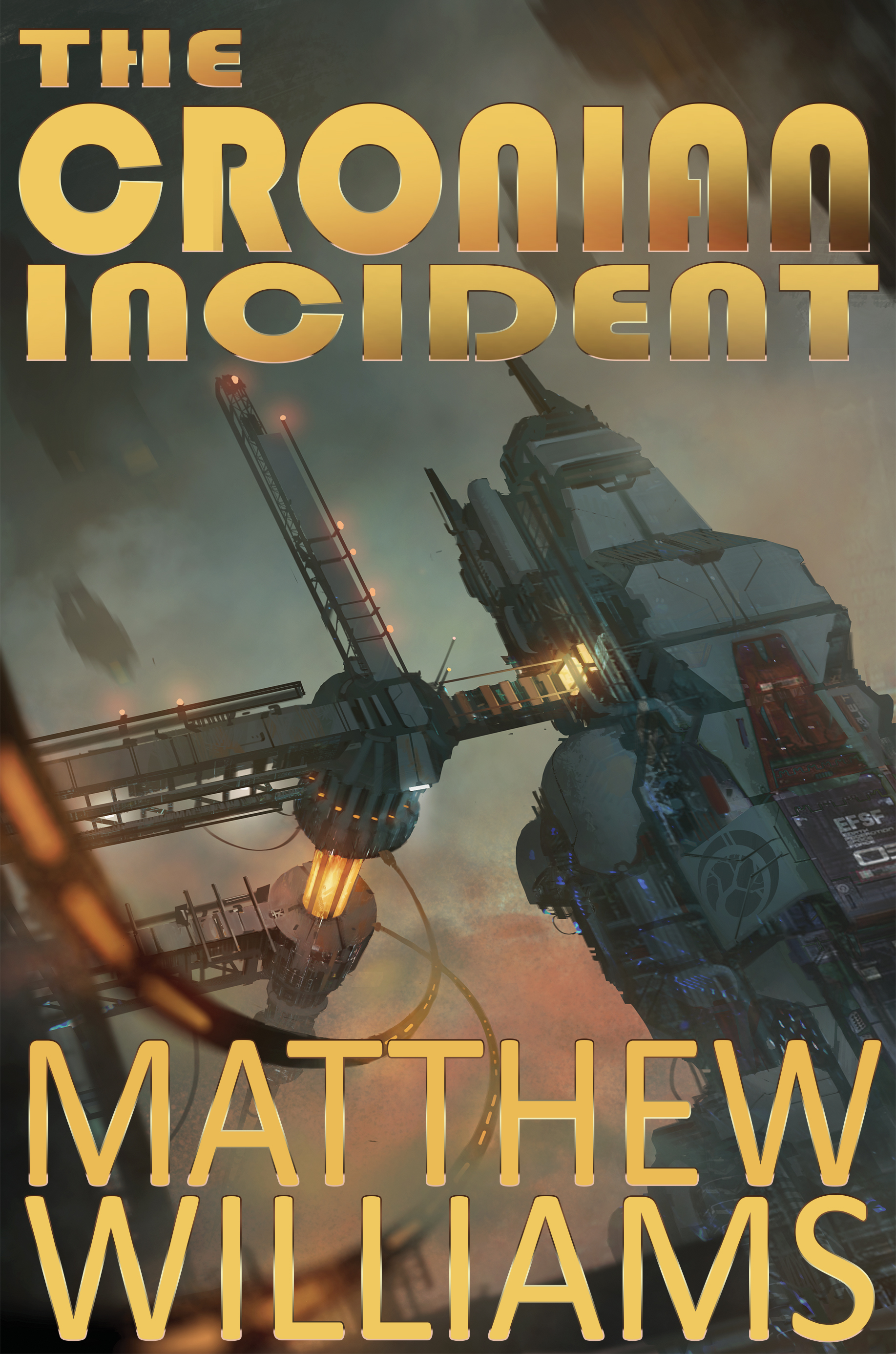
Well, I guess I’ll start at the beginning. Or what I think makes a good beginning, anyway: back in March of last year, my friend and fellow novelist Matt Williams (check out his blog HERE) announced that his novel, The Cronian Incident (which I recommend if you’re into science fiction and detective stories, by the way)  had been accepted for publication by Castrum Press, a company based out of Belfast in North Ireland which, in the year since Matt’s been accepted, has gained a bit of a reputation for publishing great speculative fiction and treating its authors very well. Later that year I did an interview with Matt and then received an eARC copy of Incident from Castrum to read and review. After hearing how Matt liked the company and seeing how well his book was doing, I asked if he’d make an introduction for me to the company’s editor. He said yes.

I talked with Castrum’s owner, Paul, and he asked to see some of Rose. This was after the third draft had been finished, if I remember correctly. I sent him the first ten pages, letting him know I planned to do one more draft after the beta readers were done with the manuscript. He sent back some notes and asked to see more of the book when it was done. One draft later, I sent him the fourth draft of Rose, hoping against hope that they’d like it enough to publish it.

Cut to last Friday, and I receive an email when I get home from work. It was Castrum: they wanted to discuss publishing Rose. After jumping up and down like a kangaroo and screaming high enough to break glass, I replied saying I’d be happy to work with them. Paul sent a contract yesterday, and after having some of my questions answered, I signed the contract and sent it back to him this afternoon, with the realization that my dream has been accomplished. A novel of mine is getting published by a company.

To which there’s only one thing to say:

By the way, if you’re unfamiliar with Rose, this is a novel I first wrote as my college thesis during senior year. It follows a young, amnesiac woman who starts turning into a plant woman. And that’s just the events of Chapter One. And trust me, it’s a full-on horror novel from there, complete with psychological and supernatural terrors galore. I tried editing it again in 2016 and couldn’t make it work, tried again in 2017, and after that things kind of just snowballed from there. And now it’s getting published.

Obviously, I’m feeling a number of emotions right now. Excitement about the publication process and seeing Rose out in print, nervousness about how it will be received by the book-reading public, satisfaction that this dream has been achieved, hope for the future, and a feeling of goodwill about things to come. Especially that last one. Since at some point during the third draft of Rose, I had a feeling that things were about to change, that something big was about to start. And since the New Year, I’ve had this very strong feeling that not only was 2018 going to go slower than 2017 did, but that 2018 was going to be my year. And so far, it seems I was right on both counts. And I hope I can continue to be right on both counts.

Rose will appear in this medium very soon.

There’s so many people to thank for this wonderful event. Firstly, my friend Matt Williams for connecting me to the company, my beta readers Joleene Naylor and Dr. Black (my chiropractor, believe it or not), as well as Paul Camper, Maura Heaphy, and Manny Martinez for looking at the book back in college, and of course to Castrum for taking a chance on this indie author from Ohio. But most of all, I’d like to thank you, my Followers of Fear. For nearly seven years, you’ve stood by me and supported me through my various writing endeavors, my college experience, finding and getting a job, my ups and my downs, and so much more. You’ve all supported me and helped me get this far, and I can’t thank you enough for that. I hope you continue to support me (and maybe even read Rose when it comes out) as I continue down this road and try to make sure Rose is a huge success.

So what happens next? Well, I’ll work with Castrum to produce a fifth and hopefully final draft of the novel. We’ll get to talking about cover art and at some point we’ll set a release date (I’m hoping before Halloween, but we’ll see). And of course, I’ll make sure to let you know of any major developments.

Until next time, my Followers of Fear, I wish you pleasant nightmares (I’ll, of course, be having nothing but pleasant dreams)!

I have not been blogging much in the last week or so, though I’ve read just about every blog post that shows up in my inbox. This is partly because I haven’t had anything I’ve felt passionate enough to blog about and because of time constraints, but it’s mostly because of the story I’ve been working on lately. You see, this story is challenging me as a writer, and the challenge has me engrossed, more so than a test engrosses Hermione Granger around exam time (oh Harry Potter, you always give me something when I ask). It’s so engrossing, that it’s taking up all my creative energies, leaving me unable to blog or even come up with new ideas for stories (though I already have more ideas than I know what to do with, so that’s not a huge problem).

Some of you may remember that I started working on a story I thought might become a novelette or novella in between drafts of Rose back in October or November. After finishing the short story Do-Over the other day, I started working on this story again, and as I said, it’s been challenging. On a number of levels, actually: for one thing, there’s an anthology I’ve heard about that’s looking for stories of a certain word length, so I’m trying to write this story to keep it within the anthology’s word limits. Yeah, I know I should let the story be whatever length it’s meant to be, but after expanding Rose to twice its word length last year because it was suggested I do just that, I feel like I can aim for a certain word count and still get a good story out of it.

Another reason it’s challenging is because of the narrator. Like Rose, I’m telling this story through the eyes of a first-person narrator, which means I’m reliant on her as a narrator to tell the story and to create a good horror ambiance. But at the same time, she’s got a history, a personality, and observations that she’s putting into her story. It’s less like I’m writing the story and I’m channeling my narrator as she’s telling the story, though I do have the power to go in and make changes as needed. And creating that horror ambiance while balancing my narrator’s voice and what she feels is necessary to put into her story, such as her interactions with her husband, isn’t that easy.

Did I mention that this story also takes place over thirty years before I was born, in a state I’ve only visited once? Well, it does, so in addition to being a horror story, it’s also historical fiction, and I’m working hard to recreate an age and place I’ve never experienced, with all the fashions, technology, and attitudes in place. It’s a lot of work, to say the least.

And on top of that, you have all the normal challenges of storytelling: making a story interesting, pacing, showing vs. telling, dialogue, word choice, et cetera, et cetera. I’ve got my work cut out for me.

But honestly, I think it’s all worth it. Because in my experience, if a novel challenges the writer, it’s going to be a better story in the end. Look at Rose: that novel challenged me every time I worked on it. The first draft alone, I had to go back to the very beginning and start over again because I had to totally reroute the path the story was taking. During the third draft, I added forty-thousand words, a whole new plot line, and even a character or two just to make the story not only longer, but better. And in the end, I created one hell of a story that I feel has a great chance of publication. Hopefully with this story I can get a similar outcome.

Stories can be challenging to write sometimes. It may be difficult to get the words on the page, but in the end, with a lot of work, I think it can lead to a really compelling story. And I’m looking forward to seeing if, after a lot of blood, sweat and tears, I can wrangle out a good story here.

Well, I didn’t expect this to happen today. I figured it would happen at some point this week, but I never expected to get through the last three chapters so fast (especially since one of those three is thirty-three pages long). But yeah, I finished the fourth draft of Rose, the one edited with beta reader feedback! And all in a single month. Damn. I’m kind of proud of that rate of progress.

So if you’re among the many new Followers of Fear who are hopping onto this blog recently (hi! How are you? Are you enjoying my ramblings and opinions?) and you have no idea what Rose is, it’s a novel I started writing in college as my thesis project. The story is about a woman wakes up with amnesia and starts turning into a plant creature (and that’s just Chapter One). I did two drafts of it during my senior year of college, left it alone for a year, tried to pick it up again after I got my job, found progress very slow and dropped it, picked it up again this past summer with a new plan of going about editing the story, got through the third draft in four months, had some great beta readers look at the book and give me their feedback, and then somehow edited the book in a month (still gotta toot my horn on that one).

And you know what? This has been the most challenging story I’ve ever had to work on. I know I’ve said that before, but it’s the truth. Throughout the writing and editing process, this story has mutated more than the titular character does (because how else are you going to describe what she’s going through?)! Even during the very first draft, the story went through major changes. I initially had a different direction entirely for the story, which involved a lot more elements of Japanese folklore than appears in the novel (already heavily influenced by Japanese folklore), and involved some apocalyptic elements too. Thankfully, my thesis advisor helped me see how unfocused that direction would’ve been, and how much more intimate and scarier it would be if I went in another direction. This ended up being the route the story took, and if my beta readers can be believed, it’s a good thing I did, because the novel works the way it is now.

But honestly, that’s just the tip of the iceberg. So much changed with each draft, sometimes during the editing of a draft. Elements were added, subtracted, moved about, propped up and knocked down every day as the writing and editing needed. I added an entirely new plot element to the third draft to both add some length to the story and to foreshadow something that would be revealed later about one of the character. In the fourth draft, I changed the location of one minor element just so it wouldn’t seem unnecessary. I even wrote a whole new chapter for the third draft because I I needed it to do some necessary revelations about the antagonist.

Hopefully this happens to Rose very soon.

I keep thinking of those weird metal amalgams where if you add the right sort of current to it, you can change its structure (I’m pretty sure that’s a thing). Rose is very much like that: ever-changing with each new iteration, and hopefully becoming better each and every time.

Now that I’ve made that deep metaphor, I think I’ll talk about page and word counts, because I like talking about that. And while the shift from second to third draft was pretty dramatic, owing to the fact that I added about forty-thousand words of material to the story, third to fourth wasn’t that dramatic. If anything, it’s a bit smaller: the third draft was 266 pages (8.5″ x 11″, 12-point font, Times New Roman, double-spaced) and 84,677 words. The fourth draft was 264 pages and 84,390 words. A total drop of two pages and 287 words. I honestly thought it’d be a bit more, but I guess I was wrong.

So what’s next for Rose? Well, after four drafts and great feedback from my beta readers, I’m going to try looking for a publisher. I’ve been doing my research and I’ve got a few leads that I think could pan out, so hopefully I’ll have news within the year to share. And in the meantime, there are a couple of short stories, one novelette, and a blog post for Self-Published Authors Helping Other Authors I’ve been waiting to work on till I was done with the fourth draft, so I’ll likely start on those tomorrow. Hopefully I can get them all done before any publisher takes an axe to my door in their eagerness to publish me (I wish!).

Well, Followers of Fear, that’s all for now. It’s getting late, I’m tired, and I’ve got a big day tomorrow. I’ll let you know how things are going as they happen. Until next time, pleasant nightmares!

So good news, folks: as of around 6 PM today, I’ve received feedback from both of my beta readers for Rose, which means I can start the fourth draft of the novel! Why is the fourth draft so significant, you may be asking. Well, this is the last draft I plan to do until I get an agent and/or publisher! And I think that is significant enough to write a blog post (which would’ve been written earlier this evening, but I was at my dad’s for Hanukkah dinner).

Now if you have no idea what Rose is, it’s a novel I wrote as my thesis in college, which I started working on again earlier this year and finished editing back in October. The story follows a young woman with amnesia whose body starts going through incredible, magical changes. The only person she can rely on for help and information about these changes and about herself is a young man who says he’s her boyfriend, but he’s keeping things from her, and things are not at all what they seem.

Yeah, it is not a fun story. Not by a long shot. But I think it’s a good story, made even better after the most recent draft, which fixed a few issues with the story and doubled the word count (don’t less that scare you, it’s shorter than the second Harry Potter book).

Of course, before you start submitting it to publishers or agents, you want to make sure your novel is actually good. Not just good in your opinion, but in others’ opinions, and that’s where beta readers come in. They take a look at stories you write, and let you know what works, what doesn’t, and give you feedback on what can be made better.

One of my beta readers for Rose was my dear friend, Joleene Naylor.  She read the novel in about a month, and got back to me with a ton of notes, as well as plenty of feedback. Overall, she enjoyed the novel. She thought my characters and their development was deep and reminded her of anime characters, which are often complex and never completely good nor completely evil, but often a mix of both (you can now tell who inspired that post about why writers should check out anime). That made the characters within Rose not only multilayered, but often very surprising. For one particular character, Joleene hated him at first, but then she found out some things about him and actually became kind of sympathetic towards him. Then she learned some more things about that character, and her feelings changed again. It’s very hard to do that in fiction, to have your emotions about characters change that rapidly, and Joleene liked that.

However, she did have some thought about a few things, including grammar and word usage, and she thought some things could be fixed, changed, or worked around in order to make the novel that much better. Her feedback makes a lot of sense to me, so I’m going to be incorporating a lot of it into the story.

My other beta reader got back to me earlier today, and I was very glad to see his feedback. Who is this beta reader? Believe it or not, he’s my chiropractor. As many of you know, I have back problems, so I’ve been seeing Dr. Black since June to remedy them (and the progress has been amazing!). You see someone so much, you get to talking, and it turns out Dr. Black is a huge horror fan, so obviously we got to talking about Stephen King, HP Lovecraft, and my writing. When I was getting close to finishing Rose, he offered to read it as a horror fan, and I said I’d like that.

This is what a beta reader or two can lead to: a published novel.

Now, Dr. Black is not a writer, but a reader. However, it is important to have the feedback of readers, as they are who we write for. And Dr. Black did give his reader approval. He thought the novel kept his attention throughout, and that he especially enjoyed the flashbacks in the novel. I’m glad he told me that, because those were parts I actually worried about. Flashbacks are difficult to do, and different readers and writers react to them in different ways. I’m glad Dr. Black enjoyed them, and what they added to the story.

He also mentioned one issue he had in the story while reading one chapter, which I hadn’t realized was a problem, so I’ll make sure to fix that up so that the end result won’t have that same problem.

So I have both of my beta readers’ feedback, and I can start on the fourth draft. To be honest, I’m really glad I finally have all that feedback. I haven’t really been in a writing mood lately, waiting on getting that much-needed feedback. Sure, having my laptop in the shop for over a week didn’t help, but even when I had it, I just wanted to work on Rose (even if I was working on a great story in the meantime. A story I’ll have to put on hold for now, but whatever. I’ll get it done eventually). When you put this much work into a novel, and you think it has so much potential, you really want to see that potential fulfilled, I guess.

And now that I’ve gotten my feedback, I’ll put out a couple of blog posts I’ve been meaning to write for a while, and then I’ll get to work. I doubt it’ll take very long to get through this time, so hopefully that means I’ll have some good news soon.

Thanks to Joleene and Dr. Black for their valuable feedback. It means so much to me that you took the time to do this for me.

And thanks for keeping in touch with me, my Followers of Fear, and following my progress of this novel. I hope that if it comes out, that you decide to pick up a copy and that you enjoy it. Until next time, pleasant nightmares and Happy Hanukkah!

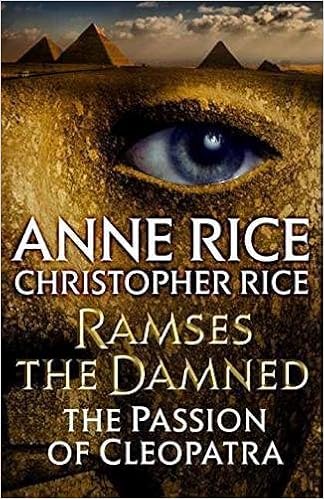
I haven’t read the original Ramses the Damned novel since I was bar mitzvah age, but I remembered enough of the details (and remembered more during the reading of the book) to be very excited upon learning earlier this year that Anne Rice had written a sequel twenty-eight years after the original with her son, author Christopher Rice (whose books I need to put on my reading list one of these days). And now that I’ve read the Rices’ first collaboration, what do I think?

Well, you know how George Miller revisited the Mad Max franchise with Fury Road several years after the last entry, with a new cast and crew to help shape his vision, and the results were pretty awesome? It’s kind of like that.

 Ramses the Damned: The Passion of Cleopatra revisit Ramses and Julie Stratford shortly after the events of the last novel, preparing for their engagement party and their lives as globe-trotting immortals. However, news that Cleopatra is still alive reaches their ears, and there’s a chance she still holds a grudge against them. And as if that weren’t enough, new forces threaten the immortal couple, including an ancient queen whose very existence will turn the immortals’ world upside down.

Honestly, I could not tell this was a collaborative work. This may be because I’m unfamiliar with Christopher Rice’s work, but it’s more than likely he’s very good at imitating his mother’s style. Whatever the reason, the novel has a great story and moves along at a nice pace. The expansion of this fictional world to include new elements and characters didn’t feel forced or weird, and the twists and dramatic moments really allowed you to feel the surprise and attention when they occurred. You can’t complain about that.

And let’s talk about the new characters, because they were great! Bektaten’s addition to the cast was a real shake up, as was her companions Enamon and Aktamu (I hope I didn’t butcher those names trying to spell them). There’s a gravitas to them that leaps off the page and commands respect not just from characters, but from readers. It’s as if their many centuries have allowed them to transcend many human flaws and become something more. Imagine what they could be like in our modern world! It’d be truly something to see.

But of course my favorite new character (and possibly my new favorite character) is the aptly named Sybil Parker, an American author whose dreams cause her to be roped into this strange and magical world.* From the moment she appears on the page, she is just so interesting to follow, as her part in the story is so full of mystery and a bit of intrigue. And her arc, going from this timid homebody to this brave young woman who doesn’t bat an eye at immortals, was masterfully written. 

I don’t have any real problems to point out with this story. Possibly a bit more of Elliot Savarell would have been nice, but that is probably nitpicking on my part.

All in all, Ramses the Damned: The Passion of Cleopatra is a great return for a story we had thought finished long ago. On a scale of 1 to 5, I give the novel a 4.8. Pick it up, and get wrapped up in the story (been waiting a week to make that pun, and it was worth it).

But tell me, what did you think of this novel? What immortal creatures will we get from Anne (and possibly Christopher) Rice next year (I’m hoping angels)? And which Christopher Rice novel should I put on my reading list? Let’s discuss.

*Sounds like my dream life right there. Well, hopefully the former will be achieved someday soon.

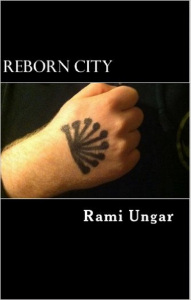
Reborn City, Book 1 of the Reborn City series.

I almost totally forgot this was happening today. I’ve been attending a training this week for work, so that’s been occupying most of my thoughts, and on top of that, yesterday was Halloween, so I totally forgot that anything else was happening this week. Lo and behold though, one look at my Facebook memories today showed me otherwise, and reminded me that today is the four-year anniversary of the publication of my first novel, Reborn City.

Now if you don’t know what Reborn City is, it’s a science fiction novel I wrote back in high school, and which I published back in my third year of college. The novel follows the Hydras, a street gang in a dystopian future whose leaders have incredible powers, and the shadowy government corporation that shows a great interest in the gang. A sequel, Video Rage, came out last year, and the third and final book in the series, Full Circle, is in the works.

Of the stories I’ve published, Reborn City is probably the one that’s gotten the best response from readers, even if it doesn’t have as many reviews as The Quiet Game. A lot of people have gravitated to the world of the story, and to the struggles of the characters, as well as to the intrigue and action that takes place within. But don’t take my word for it. Here are some of the top reviews:

This is an extremely commendable effort by a new young writer, whom I believe we will see much more of in the years ahead. Rami Ungar’s vision of a frightening dystopian future is peppered with those elements that make us all human. There are quite a few surprises in the book, and I am anxious for the next volume in the series to be released.

–Marc M. Neiwirth

This is not a genre I typically delve into, but I took this book on vacation and couldn’t put it down. The plot had me turning pages at quite the clip. The characters were unique and interesting and the imagery had me creating my own visual of what Rami’s interpretation of the future looked like. For first time novelist, Rami Ungar, this was an outstanding showing of talent and commitment to his passion of writing. Looking forward to seeing what he comes up with next!

–Michele

As a reader who does not read books in this genre, I must admit that I could not put down the book. I attribute this to the talent of the author. I am looking forward to reading the next books published by Ungar. I recommend this book to readers who enjoy action with features of supernatural powers and sci-fi.
–ENJ
These and other reviews are the reason why RC has a 4.6 out of 5 rating on Amazon (Video Rage has also gotten some good reviews, but I won’t post them here).

Video Rage, Book 2 of the Reborn City series.

If that short description of Reborn City and the reviews made you want to read the book, I’ll include the links to check it out down below, as well as links to Video Rage. You can also click this month’s featured novel, which happens to be Reborn City, to get taken directly to its Amazon page. And if you end up getting a copy and reading it, please let me know what you think in a review. Positive or negative, I love feedback and I would love to hear (as well as probably post) yours.
Feedback also makes me a better writer in the long run, so you’d be doing me a couple of solids as well.
And if you’re wondering how Full Circle is coming along, please know that I haven’t forgotten about it. I’m just taking a break to work on some horror stories, as well as to make sure Rose eventually gets published. As more news materializes, I will let you know.
Until next time, my Followers of Fear. Pleasant nightmares, and HYDRAS!!! (That makes so much more sense if you read the book).


It’s always satisfying to finish a manuscript. No matter the length, it’s satisfying to know that you’ve put in so much time, sweat, blood and creativity into writing a story and that it’s finished, that you were able to get over your fears before starting, keep going, and see it to the end. And after attempting a third draft a little year ago, failing miserably, and taking a year to work up the courage to try again, it’s especially satisfying. Hell, I even bought fancy honey-wine to celebrate this momentous evening.

Now if you’re unfamiliar, Rose is a novel I originally wrote as my college thesis. It follows an amnesiac woman named Rose whose body starts to go through incredible, terrible, magical changes. The only source of information on her condition is a man who claims to be her boyfriend, but he’s got some terrible secrets and isn’t all he claims to be. It’s a dark and bizarre story, with themes of dependence and abuse, perception and memory, in a story influenced by Stephen King’s Misery and Japanese mythology.

It’s also been the most challenging story I’ve worked with. I had to scrap my first attempt to write it because I made the story too bizarre, sprawling and complex, then go back and make it a bit simpler and contained. Then I had to write an entire first draft, then a second draft within a few months. Then I had an internship in Germany and a job search, followed by an attempt at the third draft. That draft, as I said before, was a complete and utter disaster due to the lack of routine I had at the time. I took it up again back in late June, after I needed a break from sci-fi and Full Circle and, with a routine, I managed to get through the draft in about four months, incorporating the suggestions from my thesis advisors to great effect while I was at it.

And I’m very proud of this draft. Every time I’ve worked on this story, it’s changed significantly. Plot points, emotional connections, characterizations, they’ve all gone through some incredible rewrites. With this particular draft, I feel like I’ve been editing the work of a different author, giving his work a much-needed makeover. I even added an original chapter to the manuscript, which also took the top spot as the longest chapter in the novel (I spent two week with Dragon Speech-to-Text software writing that chapter so it wouldn’t take a month or longer). And while this story is far from “done” (my high school English teacher said that stories are never “perfect,” because that’s impossible. But they can be “done,” where you can’t do anything more to improve it. It’s just “done”), it’s definitely in a much better shape than it was at the end of the second draft. It’s a draft I’d actually be proud to show other people.

Now before I show you what’s up next for Rose, indulge me in my bad habit of looking at page and word counts. Which with this novel is actually necessary: my advisor told me to double the word count of the novel when I did the third draft (I’m pretty sure it’s double the word count now, not add ten or twenty-thousand words). So how did I do with that? Well, at the end of the second draft in spring of 2015, the page count was (with 8.5″ x 11″ pages, double-spaced, Times New Roman 12-point font) 164 pages. With the third draft, the page count is 266 pages, an increase of 102 pages. With the word count, the second draft was a whopping total of 48,914, a respectable novella-length story. In the third draft, I got the word count up to 84,677, a good-size novel,  just a bit shorter than Harry Potter and the Chamber of Secrets. And I like to think that every new word was necessary. I really had the chance to delve deeper into the characters, as well as the events that made them who they are. All in all, I think it’s a more fleshed-out novel.

Of course, critics, readers, and editors are free to disagree with me. We’re a democracy, we’re allowed to do that, even if others don’t like that.

And that brings me to what’s next for Rose and for me. And I have a few ideas on that:

  1. No return to Full Circle just yet. I’m still not ready to return to the world of Reborn City and finish the trilogy. Yes, the first draft needs ending, but I need a bit more time and a bit more horror before I do any more sci-fi. And since I don’t exactly a legion of fans breaking down my door to know when the story will be out, I think I can afford to take some time (George RR Martin wishes he was me in that respect).
  2. Beta readers and submissions. I have a couple of beta readers who have agreed to take on Rose, read it and give me some feedback (I’m sending the manuscript to them right after I’m done with this post, as well as backing up my flash drive so I don’t lose the novel). The plan is to take their feedback and incorporate it into the novel if I feel it works for the story. And after that, I’ll start submitting Rose to publishing houses and agents that specialize in horror. Hopefully it’ll find a home soon, and I can get it published. After that…well, I’ll see when I get there.
  3. Some shorter works. I have a list of short stories and novelettes that I keep so I don’t forget any of the fabulous ideas I have. It’s currently 57 pages long and closing in on 800 ideas. I figure I should at least get through some of those, as only a few of them are crossed off with at least having a first draft written out. I already have another list of stories I’d like to work on in particular, and I’ve picked my first from that list. I might even get started on it in the next week, after I do a bit of research for it. And maybe after a few of these stories are written, they’ll get published. Fingers crossed, right?

And that’s where things stand right now. I hope you continue to stay with me as I move onto the next stage of this novel’s evolution, and maybe write the next stage of my writing career. Until my next post, goodnight Followers of Fear, and pleasant nightmares.

Wow, thought it would take at least a couple more nights for this happen. And again, it’s like an hour before I’m supposed to go to bed! Ooh boy. At least if I’m tired tomorrow morning getting into work, I’ll have a good excuse as to why it happened.

For those of you who don’t know, Rose is a novel I wrote as senior thesis in college, and which has had quite the crazy time just getting edited (click HERE to read my last post on Rose for more background on this crazy time). The story follows an amnesiac girl who wakes up one day and finds herself suddenly turning into a plant creature (and that’s just the start of her problems). It’s as bizarre as it sounds, but also very dark. Not as comical as it might sound if I were to tell you about it at a party.

As I’ve said before, the last time I tried editing this story, it took me months just to get through a couple of chapters. Now, it’s been just over three weeks since I last posted an update on Rose, and I’m two-thirds of the way through the story. The latest chapter, I managed to get done in one sitting, in only an hour and a half, with a cup of tea on my bedside table and a New Age spiritualism lecture on YouTube to keep me focused on the writing. Consider my normal writing/editing speed, I consider that a really big deal. May the last seven chapters be as easy to edit as this chapter.

Though to be honest, I’m really enjoying the editing process. The story feels new to me, like I’m discovering the characters and twists for the first time as a reader. And going over it, seeing where the descriptions can be expanded or the language brushed up and improved is a pretty satisfying experience. It’s going to be really interesting to see what happens in the last seven chapters, which contain some of the biggest revelations of the story, and most of the scenes I’m looking forward to expanding/making better.

If I’m lucky, I’ll even be able to make good on my thesis advisor’s suggestion to add about ten to twenty-thousand words to the novel (or did he say  double the novel? I forget so much in my young age).

Speaking of which, time for me to annoy you with page and word counts. At this point in the second draft, the number of pages in the novel (8.5″ x 11″ paper, 12-point Times New Roman font, double-spaced) was a total of 103, with the word count measuring up to 32,765. In the third draft, I’ve expanded the story to this point to 137 pages, and 42,768 words. That’s an increase of 34 pages, and 10,003 words. I think I’m doing quite well. The second draft was only a couple thousand words longer than where the third draft is now, so once I expand it, I could get it beyond sixty-thousand or maybe even seventy-thousand words. That would be pretty incredible, wouldn’t it?

Well, I’ve probably taken up probably enough of your time and/or phone data. I’m going to head to bed and savor this milestone as I sleep. Goodnight Followers of Fear. Pleasant nightmares!

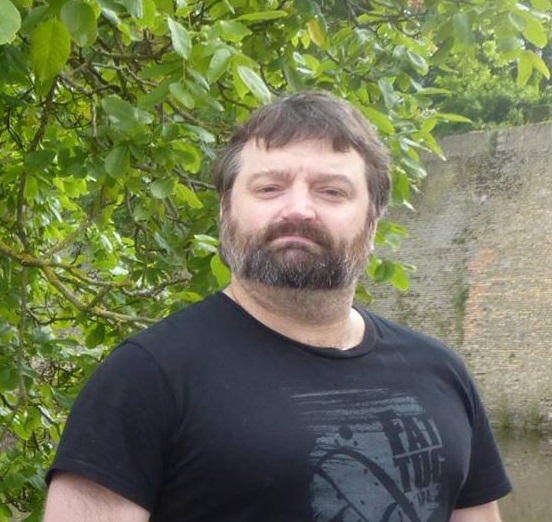
Today, we have a new interview that I’m very excited to share with you, because it features someone very special. Matthew Williams is one of the oldest friends I have in the blogosphere (by length of relationship, not age), as well as something of an inspiration and mentor for me. A science-fiction writer out of British Columbia, Canada, he’s created quite a few stories over the years, as well as written a number of science articles for Universe Today.

And today, I’m bringing him onto this show to discuss a very special book, The Cronian Incident, being published by Castrum Press next month. Let’s get this party started!

Rami Ungar: Welcome to the show, Matt. Tell us a little about yourself, both as a person and a writer.

Matthew Williams: My name is Matt Williams. I was born in Ottawa, moved to the West Coast in 2006, and have lived on Vancouver Island with my wife and family ever since. I studied history and the social sciences in University and was a high school and elementary teacher for about ten years. I quit teaching in 2015 to pursue writing full-time and am now a regular contributor to Universe Today and the Curator of their Guide to Space section. In my spare time, I write science fiction that’s focused on hard science and the human condition.

RU: Why does science and science fiction appeal to you so much?

MW: A good question. On the one hand, I spent my formative years watching some of the best science fiction movies and series’ of all time – Star Wars, Star Trek, Battlestar Galactica, Babylon 5, etc. I was always drawn to SF because as a child, I was always a daydreamer, the kind of kid who would rather be thinking about fictitious universes than paying attention in class! As I grew older, I began to contemplate creating my own SF, the kinds of things I knew fans like me would enjoy.

I was also drawn to science from a very young age. In addition to having a starter chemistry set, I loved circuit boards and broken electronics, which I would take apart and play with for hours on end. As Arthur C. Clarke once said, “Any sufficiently advanced technology is indistinguishable from magic.” To me, these things were magic! That fascination has not diminished by time. The more I’ve come to know about science, technology, and the complex relationship we humans have with them, the more fascinated I have become.

RU: Tell us about your new book, The Cronian Incident, and how you came up with it.

MW: The Cronian Incident takes place in the late 23rd century, where humanity has colonized the Solar System. On every planet, moon, asteroid, and in rotating cylinders at the Sun’s Lagrange Points, human settlements have been established. Whereas people in the Inner Solar System (known as Extros) live lives characterized by post-scarcity, clinical immortality, and endless augmentation, people in the Outer Solar System (Retros) live a simpler life. For generations, this situation has been the norm. But as the story begins, we find that some people have plans which could threaten to upset the delicate balance.

The inspiration came largely from my professional writing. For years, I have been doing articles about the planets of the Solar System for Universe Today. After finishing an article about the planet Mercury, I began talking to a friend about how humans could live there someday. Before long, I felt the seed of an idea being planted in my mind! I then went about planning a story that would realistically address how humans would go about living on all the planets of the Solar System.

For years, I had also been contemplating the idea of how changes here on Earth would drive human colonization of space. I eventually came up with an idea for a Solar System that was divided between people who embraced the development of AI, nanotechnology and biotechnology (and all the revolutionary changes that will follow) and those who chose to stick to a more traditional way of life.

Not long ago, I decided to marry these two sources of inspiration together. And from that, The Cronian Incident was born!

RU: What sort of research and work went into writing the book?

MW: The research was actually pretty incidental. For years, I’ve been studying climate change, technological change, and all the predictions that are constantly being made about the future. And my day job, as a writer for Universe Today, involved a tremendous amount of research into space exploration, planetary science, physics and astronomy. It wasn’t long before the things I was researching and writing about started to give me ideas! After a while, I came up with one I was particularly fond of and began committing it to paper.

RU: How do you approach writing sci-fi? Is there a particular sub-genre or style you prefer?

MW: My preference is towards speculative and hard science fiction. As long as I can remember, I was fascinated by those stories that made predictions about the future that were based on hard science. Granted, most of these predictions do not come true. But it’s the very act of predicting where we are going based on what we are currently experiencing that makes it all worthwhile.

RU: Do you see yourself writing further stories in the universe of The Cronian Incident?
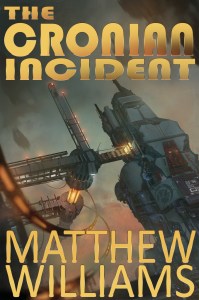
MW: Indeed! In fact, I am currently working on the sequel and the publisher and I hope to have it ready for release in a few months. The book was never meant to be a standalone, and I plan to take this fictional universe (known as the Formist Series) as far as I possibly can.

RU: You used to be exclusively a self-published author, but now you’re working with a publishing house. What made you decide to become what is known as a hybrid author?

MW: In truth, I always wanted to follow the traditional publishing route. However, I had decided that rather than wait to be discovered, I would promote myself. And the interesting thing was that it was precisely the strategies that I was pursuing as an independent that landed me an offer from a publishing house.

In today’s world, a writer needs to promote their writing and their ideas using social media and all other digital means at their disposal. And publishers – the good ones at least! – make sure to peruse these sites in order to find aspiring writers they think have promise.

RU: What’s on the horizon for you at this point?

MW: Well, there’s the work I’m putting in on The Cronian Incident’s sequel. That will certainly eat up plenty of my time for now! And once the two books are out, I hope to attend book signings, science fiction cons, and other events. Basically, I would like to connect with the readers and see what they have to say about the Formist Series.

Beyond that, I hope to expand the Formist Series further. And of course, I have many other ideas I want to work on and eventually bring to light, ranging from near-future stories to a few space opera ideas. And of course, there’s my day job and writing about space news. That’s something I hope to do for many years to come!

RU: If you had to give advice to any writer, regardless of experience or background, what would you tell them?

If ever I find myself in the position to give advice, I like to share the five main lessons I have learned over the years. Many of these were passed on to me by other writers of note, or just people I have come to respect a great deal. And some is stuff I learned on my own

  1. Do what you love, the money will follow – It sounds cliché, but if you love what you’re doing, it won’t feel like work. And in the end, all the hard work and sacrifice you put in are sure to pay off!
  2. In the meantime, keep your day-job – Whatever you’ve been doing to pay the bills, keep doing it until you know for a fact that you can commit to your writing full-time.
  3. Don’t wait to be discovered – You don’t need to limit yourself to shopping out manuscripts to publishers and waiting six months just to hear back. Utilize new media – blog, tweet, post, share, link, reblog, and share – to let the world know you are a writer and what you have to offer.
  4. Find your voice – When committing to writing, make sure you do your homework first and find out who (if anyone) has written something similar. Also, it pays to know the difference between different subgenres and styles of writing, so you can find the one that works best for you.
  5. Be patient – as my father would tell me, “It takes 20 years to become an overnight success”. No matter what you are doing, it will take time for it to get off the ground. Don’t expect instant results or even to succeed on the first try.

RU: Finally, if you were stuck on a desert island for a while and could only take three books with you, which would you take?

MW: Ouch, tough one! But I guess I would have to choose 1984, Neuromancer, The Diamond Age, Accelerando and Finnegan’s Wake. The first four are masterpieces of science fiction that had a profound influence on me. While the last book is not a science fiction novel, it is a classic of western literature. And I think that if I were trapped on a desert island, I might just have the time and mental energy to figure it out!

RU: That actually sounds more like five, but I’ll let it pass this time. Thanks for being on the show, Matt! I hope the book does well.

If you would like to check out The Cronian Incident, due out September 15th, you can pre-order it from Amazon. And if you would like to know more about Matthew Williams, you can check him out on his blog, Stories by Williams, as well as Facebook, Twitter, and Goodreads. He’s a great guy, so give his stuff a look.

And if you are an author and would like to be interviewed, check out my Interviews page and we’ll make some magic happen.

That’s all for now. Until next time, my Followers of Fear!