Archive for the ‘Writing’ Category

So do you remember the other day, when I posted about the character of Momo, who supposedly reaches out to kids and teens online, and tries to hurt them or make them hurt themselves? I outlined the myth and how the character took off in the public consciousness, before mentioning that I was working on my own story inspired by Momo and other terrifying figures that originate online and gain a life of their own in the real world.

Well, I just finished that story a few minutes ago. As you can tell by the title, I’m calling the story Queen Alice, and it follows an investigative reporter who delves into the burgeoning legend of a cult leader named Queen Alice who uses social media to bring harm to her targets. Or does she? Is she even real? The reporter is determined to make it to the bottom of this mystery, and what happens when he releases his report will change his world forever.

Writing this story was a lot of fun and I found it easy to write it, despite how much went on in my life (it’s gotten to the point where I’m going to bed earlier and setting lower writing goals so I can get more rest during the work week). The online world is as much a play and communal space as the campfires were for early humanity, when our first boogeymen were created. Today we’re creating boogeymen through the Internet, and people are taking them seriously in ways that would’ve been unimaginable even just ten years ago. Tapping into that fear, even though I sometimes have trouble understanding the most basic of human emotions and motivations, allowed the story to really flow for me and I was able to get it out much quicker than I thought I would.

It probably also helped that I pictured actor John Noble in the role of the reporter. Not sure why, he just fit the part in my head when I was visualing the character.

So what now? Well, I think I could get it published somewhere. At 27 pages and under 7,600 words, the story isn’t too long for many publications. I’ll get it looked at first and see if a beta reader can’t give me some good feedback before I edit it. With any luck, I can get it published somewhere very soon.

Well, that’s all for now, my Followers of Fear. I have some stuff to take care of before the day is over, so I’ll see you all later. Until next time, pleasant nightmares!


And while I still have your attention, I’m still looking for advanced readers for my novel, Rose. The book is a fantasy-horror story about a young woman who starts turning into a plant creature (and that’s just the start of her problems). In exchange for an early electronic copy, all I ask is you read it and consider posting a review on or after the release date. If you’re interested, send me an email at ramiungar@ramiungarthewriter.com.

Hello, and welcome back to another interview. I’m so glad I’m able to spotlight so many different authors lately. Really livens things up a bit, and it’s a great way to connect with new friends and new readers. And today’s interview is with a new acquaintance whom I met through the Horror Writers Association. She’s a writer, editor, and she’s hear to talk about her work.

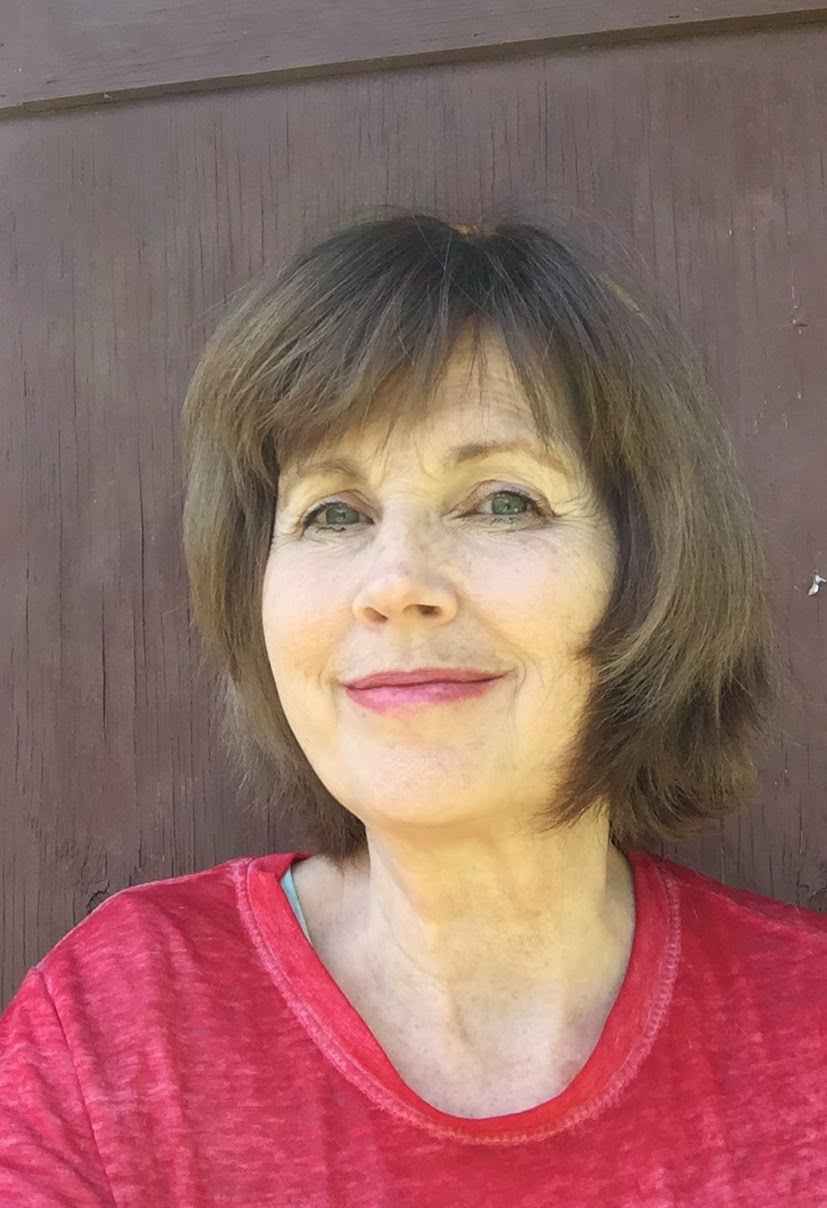
Please welcome KG Finfrock.

Rami Ungar: Welcome KG. Tell us about yourself and your novel House of Redemption.

KG Finfrock: I love to listen to people’s stories. I had a friend in high school who was a pathological liar and I didn’t care. I loved to hear the stories she would weave as truth. I love to get people to open up about what’s going in their lives and where they’ve gone. Being a homebody, I’m happy to live vicariously through their experiences and yes it’s true. Anything and everything you say to me may end up in a story.

House of Redemption is about eight strangers who come to Blackstone Resort, a large luxurious plantation house in the middle of nowhere. After a lovely evening of good food, drinks, and music, the guests discover they cannot leave the house. All the doors and windows are sealed shut. As they try to find an escape, they each meet the ghosts of the people they have harmed. There is no escape for the guests until they repent their evil ways.

RU: It sounds like an interesting idea. How did you come up with it and what was it like writing it?

KGF: One of my favorite films is Agatha Christie’s Ten Little Indians. I play the DVD repeatedly as my comfort background noise. I was attracted to the large house. The idea of the whole island to your self is heavenly and I realized, when I wrote Good Thoughts for Bubble Off-Plumb, I like the concept of people not being able to escape punishment for bringing harm to others.

There are eight characters in House of Redemption and I began by writing each person’s situation and how they ended up at Blackstone. I then realized one quarter of the book was all backstory and it was several pages in before the real story began. I had to cut it all out and, that was all right, as I had a firm grasp on who they and what kind of person they were. The story begins with the arrival of the guests, as it should. As a bonus, I included the characters stories at the end of the novel.

RU: You’ve also been involved as an editor for the collection Good Thoughts for Bubble Off-Plumb and put together The Daily Ten-Minute Writing Prompt (Volume I). How did those projects come about?

KGF: I believe being offered the position of editor for Bubble Off-Plumb was the result of good networking and being in the right place at the right time.  And I would like to add, it was a blast working with the other authors. Some stories in the anthology still stick with me. I also learned something about my own writing in my story contribution Good Thoughts. I realized I write about the bad guys getting their comeuppance which is probably why I enjoy House of Redemption so much.

I host a monthly writer’s group with small selected membership. The Daily Ten-Minute Prompt came about when I saw how much fun the members in my writer’s group had when I set the timer and gave them a sentence. They had ten minutes to write and in some part of their story, the sentence had to be in the story. I saw what fantastic stories could be written in only ten minutes. Even as a first draft, they were great. There were moments of hysterical laughter (because the story was funny) and moments of stunned surprise.  Since I had been posting a daily writing prompt on my blog for three years, I figured I might as well put them all together and publish them in a few books.

RU: What are you working on now?

KGF: I’m working on a sequel to House of Redemption, I have two more volumes of the ten-minute writing prompts, and I have a ghost story on the back burner which is more on the side of a cozy murder mystery that happens to include a ghost living with the main character.

RU: When it comes to writing, do you have a routine or a process?

KGF: I need a routine, and I keep trying to stick to a routine, but life events constantly interrupt and thus I have not been as productive as I should be. I’m hoping that will change when the youngest child in my family starts school full time later this year.  As far as process goes, I’m off to a good start as soon as I put fingers on the keyboard and I just go with the flow.

RU: Is there any kind of story you’re particularly drawn to, as a reader and a writer?

KGF: I like mythical monsters, beasts, and a bit of the paranormal.  I like reading about large houses and places I’ve never been.  I admire Fredrik Bachman’s style of writing where he brings the community together and is able to show the faces behind the masks.

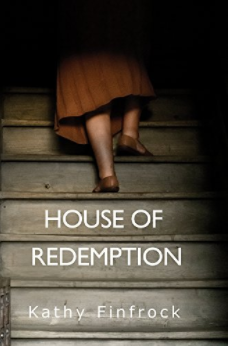
House of Redemption by KG Finfrock.

RU: What advice would you give other writers, no matter the background or experience?

KGF: Put your butt in the chair and just start to write. It can be done if you make it a priority, a must do, but it won’t be accomplished without you actually writing.

RU: And finally, if you had to go to a desert island for a while and could only bring three books with you, which would you bring?

KGF: I would pick the three that are on my table waiting to be read. The Nightingale by Kristin Hannah (a book my sister gave me) Kill Creek by Scott Thomas (May’s book-club selection) and Parasite Life by Victoria Dalpe, a book I chose supporting women horror writers (and the synopsis caught my attention).

RU: You’re going to love Kill Creek. It’s my current favorite. Thanks for joining us, KG. I hope you join us again soon.

If you’d be interested in reading House of Redemption, you can get it from Amazon. And if you’d like to find out more about our guest today, you can find her on her very own WordPress blog, as well as on Twitter and Instagram.

If you would like to see some more of the conversations I’ve had with various authors, head over to my Interviews page. And if you yourself are an author with something coming out you’d like to promote, then send me an email at ramiungar@ramiungarthewriter.com with the subject line “Author Interview” and we’ll see if we can’t make some magic happen.

That’s all for now, my Followers of Fear. Until next time, pleasant nightmares!

My latest article from Self-Published Authors Helping Other Authors has just gone live. This post talks about a serious issue that has been plaguing the writing community, particularly online. Many writers have become the target of bullying and public shaming online from their genre’s community, leading to them withdrawing their novels from publication and being publicly shunned. Often the reasons that start these attacks are taken out of context, and the “punishment” is too harsh or goes on for too long, leaving those at the receiving end psychologically scarred and unable to move forward.

That, plus a recent segment from comedian John Oliver’s TV show Last Week Tonight on public shaming, motivated me to write about the subject. Thus my latest article, Public Shaming in the Writing Community. And I hope it leads to some positive discussion and maybe some positive change in the writing community.

If you have a moment, please check it out. I did a lot of thinking before posting this, and I don’t normally talk about controversial topics on this blog unless I think I really need to. That’s how important this topic is to me.

And I realize by writing about this subject, I may be painting a target on my back. Well, as I noted in the article, I’m a Jewish, bisexual man with disabilities and eccentricities. My very existence and interests probably offends someone for dumb reasons. Plus writing horror probably offends someone who thinks all horror does is create and satiate depraved individuals. That’s never stopped me before, and this won’t either.

Besides, I BITE.

Anyway, while you’re there, please feel free to check out the other articles on the site. Self-Published Authors Helping Other Authors is a great site for advice on writing, editing, publishing and marketing efficiently. No matter your background or experience, there’s something here that can help you. Believe me on that. I’m not just a contributor, I’m also a beneficiary of the articles.

That’s all for now, Followers of Fear. Unless the horde of online trolls shows up at my doors, I’ll likely see you next on Saturday with a review of Jordan Peele’s new film, Us. Until next time, pleasant nightmares!

Well, I’m sick today, so I’m writing this a bit earlier than I normally might’ve. Either way, I would’ve written this post.

It was a year ago today, March 12th, 2018, that I signed the contract with my publisher, Castrum Press, to publish my novel Rose. I remember it being a Monday, and I’d received the contract on the preceding Friday after some back and forth with Castrum. I looked over the contract, signed it, scanned it in at my local library, and then emailed it to Castrum once I walked home. And then I broke out the celebratory beer. Or was it wine? Either way, I was drinking.

For those of you who don’t know, Rose is a novel I wrote as my senior thesis back in college. The story follows a young woman who turns into a plant creature (and that’s just the start of her problems). Since I first started writing the book back in 2014, the story has gone through numerous drafts and revisions. It’s still going through changes, if I’m honest. But I think every change has been for the better. And I feel every day we’re a bit closer to releasing the novel.

Speaking of which, I’ve been corresponding a bit with Castrum today. They were just as surprised that a year has gone by, but they also suspect the publication date is on the horizon, especially with six or so drafts done on the story. We also talked some business details relating to PR and whatnot, so you know we’re getting further along in the process. Given the way the conversation is going, it makes me optimistic.

And of course, when we do set a publication date, I will let you all know when that is, as well as any other pieces of news that comes down the pipeline. With any luck, I’ll have some good news soon.

That’s all for now, my Followers of Fear. I’m going to try to stay healthy and get some rest. With any luck, tomorrow I’ll be feeling a whole lot better. Until next time, pleasant nightmares.

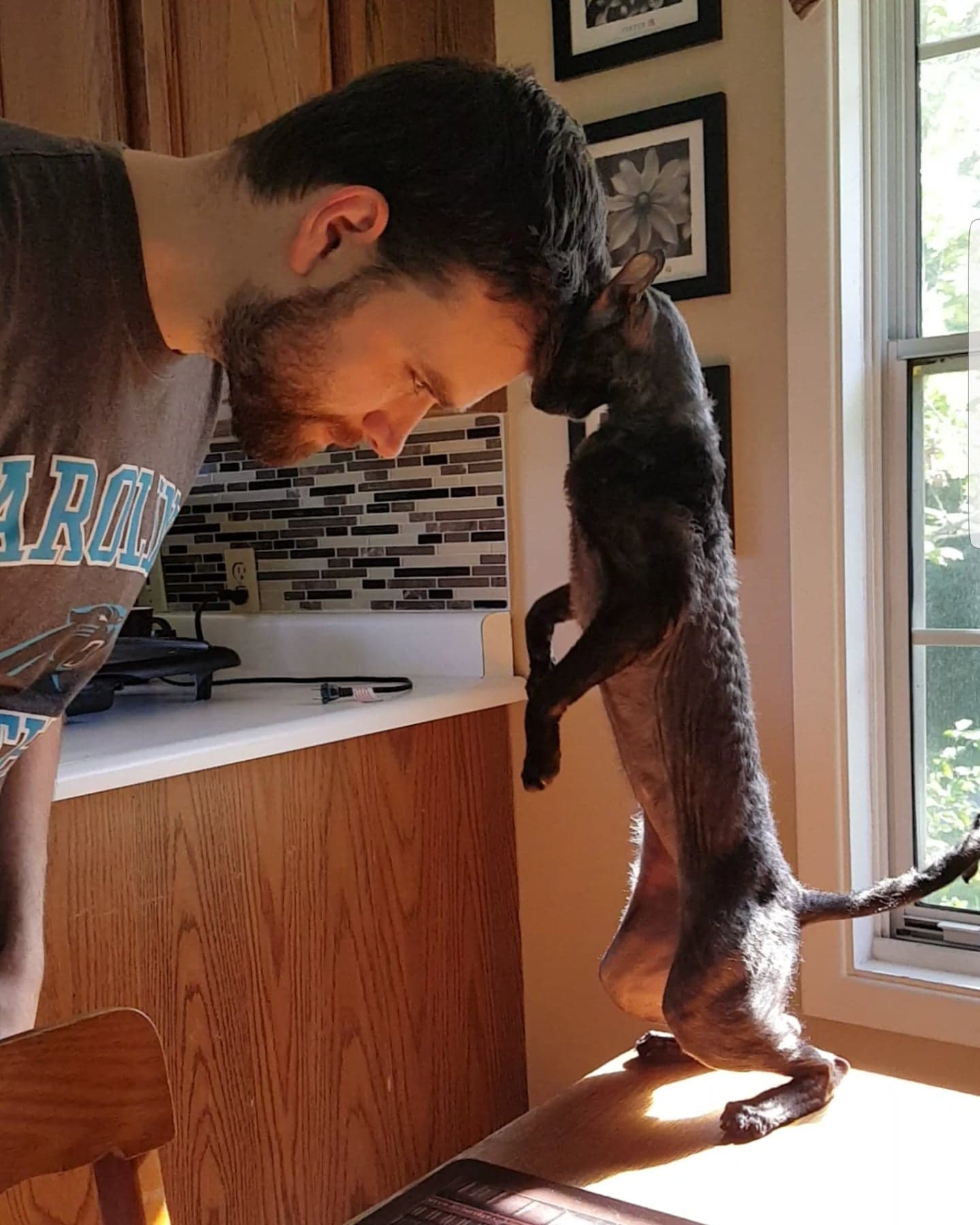
Author Jason Stokes in an adorable photo with one of his cats.

It’s been a while, but I have a new author interview to share with everyone. This one is with an author with an extraordinary story, both in terms of the novel he’s published and his own life experiences. Allow me to introduce Jason Stokes, author of the new novel Watcher.

Rami Ungar: Welcome to the show, Jason. Please tell us about yourself and about Watcher.

Jason Stokes: My name is Jason Stokes. I am a writer and artist currently living in the mountains of western North Carolina.

Watcher is about a young woman diagnosed with Multiple Sclerosis who witnesses a horrific crime via hacked webcams. Due to her own lifestyle, she is forced to make a decision between preserving her own safety and seeking justice for a woman she’s never met. In the process she finds herself against the most powerful citizens in her city and untangling a web of corruption that involves nearly everyone she meets.

RU: You wrote Watcher while taking care of your life, who has MS, and who gave a lot of input on the story. Can you tell us what that was like?

JS: It felt like it was time for a character that had the same struggles I’ve seen her go through and exposed the way caretakers in chronically ill lives support those they care about. I wanted her to have a hero she could relate to. She was invaluable, answering questions about how she would handle specific situations, helping me walk in her shoes and uncovering things I had never thought of.

RU: Did the idea for the novel evolve out of your wife’s diagnosis? Or did it influence an already-existing idea?

JS: I had an idea but It was all wrong. It was overdone and I wasn’t feeling excited by it. When I asked myself, how would she (my wife) handle this? It started to come together. I saw a story that had more depth and stakes that were higher than your average mystery/suspense story. When she (the MC)  wakes up every morning she is already at a disadvantage and it doesn’t get any easier from there.

RU: You founded the company, Gestalt Media, that published Watcher. Why go that route?

JS: Ultimately I’m a control freak but I also want to have a role in bringing forward original projects. I wanted full control over my own work and knew the stigma of self-publishing but I also know several creators and I wanted to help bring their projects to fruition. I’m currently working with an artist/writer to publish a series of offbeat comics sometime this year.

RU: On Twitter, you spoke about how a local bookstore refused to carry Watcher. Can you tell us why and how that made you feel?

JS: The store in question refused to carry Watcher because the main character has MS but I (the author) do not. Their stance is not unique. It is a trend among publishers and retail stores to insist on own voices and to refuse books by those outside of the represented  community. I felt that as my wife’s caretaker for the last six years, I have lived this as much as anyone aside from her. I wrote it with extreme care and respect and sought her input through the entire process. The fact is, there are people whose stories deserve to be told that may not be able to for whatever reason put it into words. As authors it is our responsibility to interpret and share the world. We often take ourselves out of the equation. If it’s done with respect, care and attention to the group being represented that should be enough.

I don’t think the store itself is wrong for their viewpoint. It’s their choice but I disagree with the narrow lane it provides for future literature. As I’ve said, it’s a good intent with misguided execution.

RU: I know this is tough to ask, but how are you and your wife doing these days?

JS: As well as we can. It’s a brutal disease and every day is a little worse than the last but we stay in good spirits. She’s a fighter, a true inspiration and I’m proud to stand beside her on this journey. As long as research continues we have something to look forward to. Anything can happen.

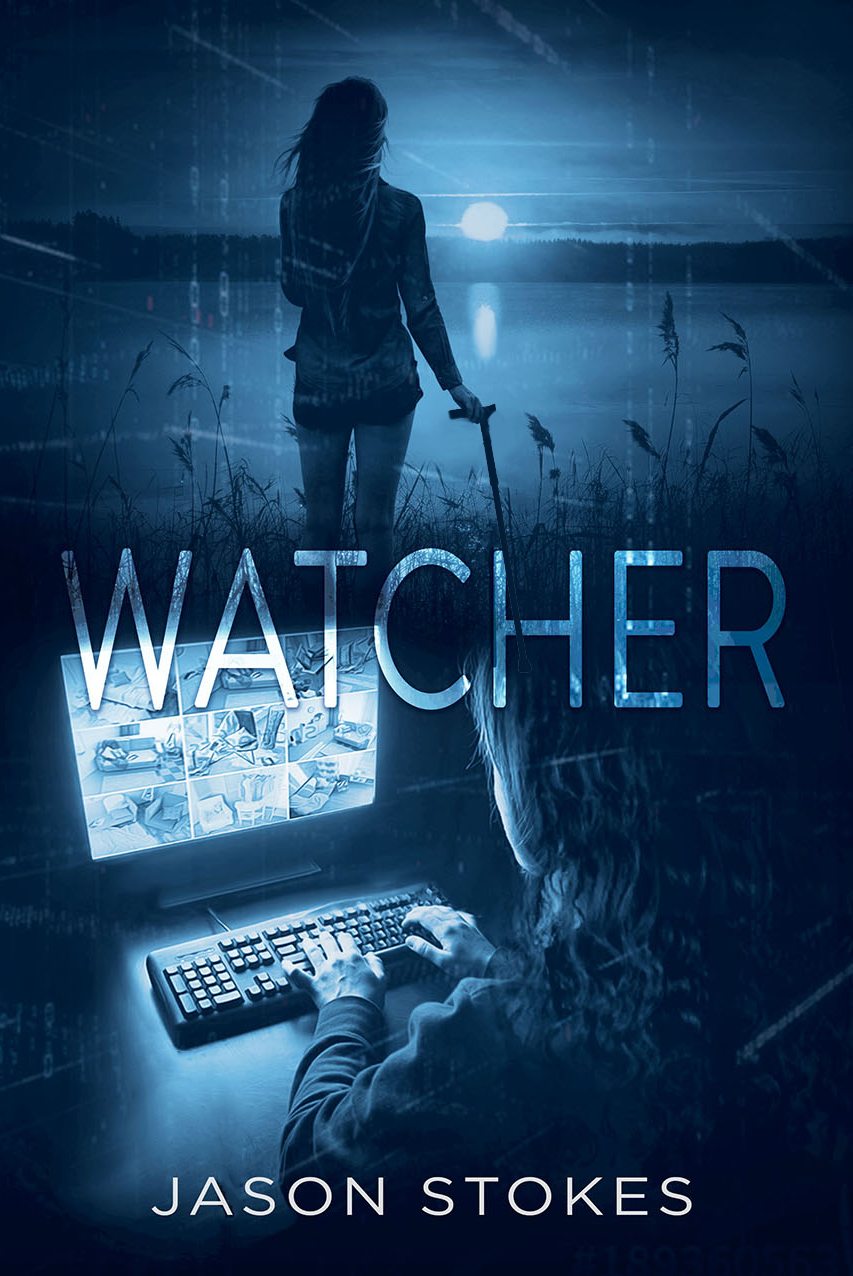
The cover for “Watcher” by Jason Stokes.

RU: That’s good. Can you tell us what your writing process is like, if you have one?

JS: I subscribe heavily to the tenets of the Snowflake theory outlined by Randy Ingermanson. Generally I will come up with a character or a situation I find appealing. Something that isn’t often seen or a new angle. Then I’ll place it in a world and find a central scene, something that brings the story to life. From there I’ll build out starting with a two or three sentence synopsis, then a few paragraphs, then a list of scenes, until the whole things appears.

RU: Are you working on anything now or have any future plans as far as writing goes?

JS: Too many things! There’s never a shortage of ideas and projects begging for time. I have another novel coming in time for Halloween. Ghost Story is the beginning of a series involving a protagonist that can see the dead on a road trip to discover more about his exceptionally unusual past.

RU: What advice would you have for other writers, no matter their background or level of experience?

JS: I’m going to quote Chuck Wendig ‘Finish your sh*t.’ You have to finish. As scary as it is. As difficult as it can seem. The real journey begins when you write ‘the end.’

RU: And finally, if you were stuck on a desert island for a while and could only bring three books with you, which ones would you take?

JS: Well, I think it would be only prudent to include the Worst Case Scenario Survival Guide. Alternately the Boyscouts of America field book if it was available. Next I’d bring along Robinson Crusoe for obvious reasons and Jurassic Park because it is the single most entertaining novel I’ve ever read.

RU: Thank you for being on the show, Jason, and the best of luck to you and your wife, both with Watcher and in life.

If you would like to check out Watcher (I’ve already sent a request into my local library to order a couple copies), you can get it for Kindle and in paperback from Amazon. If you’re interested in more of Jason Stokes, check him out on Twitter. I highly recommend you consider doing both.

And if you would like to be interviewed for an upcoming or recent release, either check out my Interviews page or send an email to ramiungar@ramiungarthewriter.com, and we’ll see if we can’t make some magic happen.

That’s all for now, my Followers of Fear. Until next time, pleasant nightmares!
The other day, one of the YouTube channels I follow, Tale Foundry,* asked a question on their social media about the difference between an author’s writing style and voice. Since I saw it first on their Twitter, I answered their question there. It went something like this over the course of two tweets:

Writing style is the technical part of writing: the author’s word choice, how thoughts are written out, etc. Voice is that and more: what sort of stories the author likes to tell, their favorite characters, the elements they like to include to make the story exciting.

That was my answer at the time, but I wanted to make sure it was right and I wasn’t just pulling stuff out of my ass like most politicians. So I went to Google and took a look. To my surprise, I was pretty on the dot. According to that lovely resource none of my teachers or professors liked us using even when they used it themselves, Wikipedia, writing style “is the manner of expressing thought in language characteristic of an individual, period, school, or nation. Thus, style is a term that may refer, at one and the same time, to both conventions that go beyond the individual writer and to singular aspects of individual writing.” And according to TheBalanceCareers.com,** voice is “the author’s style, the quality that makes his or her writing unique, and which conveys the author’s attitude, personality, and character.”

For example, let’s look at HP Lovecraft’s writing style and voice, as they’re both so distinctive.*** His writing style is easy to pin down: an overly-wordy and stuffy Victorian patois filled with fancy words. Yeah, he liked to pretend he was a contemporary of Edgar Allen Poe. I think in his later works he tried to modernize his style, but he never got over using too many words and too many fancy ones.

As for his voice, that’s also easy to pin down: stories centering around terrors that give no care for mankind. Secrets and sights terrible enough to cause insanity. Entities so powerful they see humanity as nothing more than ants in the grand scheme of things. All with an unhealthy helping of xenophobia, racism, fear of women, fear of sex, fear of technology and progress, inability to grasp many sciences and maths, and an obsession with sophisticated upbringing and breeding.

Yeah, dude had his issues, and this was before getting help for your problems was effective and smiled upon by society. On the plus side, it had a lasting influence on the horror genre that’s still felt today. And the combination of the two makes it easy to point out an HP Lovecraft story when you come across one, even if his name is obscured.

As for my own style and voice, they’re still evolving. But I’ve noticed a few things for each. I prefer to write my characters blunt with their feelings, possibly because I have enough trouble understanding real humans and their confusing mix of emotions. And I love writing stories with unlikely heroines or nice-guy heroes, usually but not always in the their teens, supernatural enemies and horrors, plenty of either realistic or twisted love and romance, and more than a dash of weird to make it fun.

I think there are people out there who like that sort of thing. Not all of them are close relatives. I hope.

Writing style and voice are both very important aspects of writing, both for the writer using them and for the audience reading their work. It’s how we come to know the storytellers, how we identify them just from looking at a page, and it’s what allows them to stay relevant and immersive long after they’ve stopped typing on keyboards or holding pens.

That’s all for now, my Followers of Fear. I’ll have a review out this weekend, so if nothing else comes up in the meantime, I’ll see you then. Until then, pleasant nightmares!

Have you noticed anything about your writing style or voice? What about your favorite authors?

*Which you should check out if you’re interested in stories and looking past the surface to the mechanics and deeper meaning of storytelling, by the way. Here’s the link to their YouTube channel.

**They also mention voice can refer to a character or narrator’s voice. But since I think Tale Foundry was referring to the author’s voice, I’ll stick with that one.

***Speaking of which, yesterday was the 91st anniversary of the publication of The Call of Cthulhu, the first appearance of the titular character and the namesake of the Mythos. Happy Birthday, Cthulhu. May you someday rise out of the sea to irrevocably change the world (preferably before the 2020 election becomes super depressing/annoying).

Good morning, everyone! It’s about one in the morning, but I can’t sleep yet. Not until I update you on the latest with Rose!

Now for those of you who’ve joined the Followers of Fear since my last update (Hi, by the way. Pleasure to have you), Rose is a novel that I started in college as my thesis project and which is being published by Castrum Press. The story follows a young woman who turns into a plant creature (and that’s just the start of her problems). Yes, I wrote a horror novel around that bonkers concept, an it’s just bonkers enough to work.

Honestly, I worried it was too bonkers. But based on this latest edit, I think it’s just bonkers enough to work.

So if you read my last update on the novel, you know Castrum wanted me to take a look at word choice and do some touch-ups with the text. Thanks to a couple of thesauruses and plenty of motivation, I was able to go through the entire novel within the space of a couple of weeks and get rid of the unnecessary and repetitive words. The result is that the novel is a few thousand words shorter, but still a decent length of 57,051 words (for context, Harry Potter and the Sorcerer’s Stone was about twenty-thousand words longer). And I think it may be the best version of the novel yet.

Of course, that’s my bias. But given that with every draft of this novel I’ve had to change major aspects of the story every time–characters, plot points, locations, etc.–it’s nice to see Rose is finally getting into a shape worth publishing. Perhaps this might be the draft that goes to press. We’ll see. We may have more work to do before all is said and done.

Done. You know, my high school English teacher once said something that’s stuck with me through the years. He said that a story is never “perfect.” You can only get it “done,” i.e. edited and polished up to the point where doing anything else to it would be a disservice to the story. You’re done with it, and that’s that. And I think Rose has taken a few more steps to being done.

I hope, anyway.

So what’s next? Well, I’ve already sent the new draft off to Castrum. I’m way ahead of the scheduled deadline of March 31st, so that means they’ll either get through it that much quicker or it’ll wait for a little bit until the end of March, when they carved out time in the calendar to review the manuscript. Either way, I think after this draft things should speed along.

Well, in the meantime, I think it’s time I hit the hay. Tomorrow’s another day to write and edit and come up with concepts to scare people down to their cores. Good night, Followers of Fear. Thanks for your continued support as I work hard to get this novel out.

Until next time, pleasant nightmares!
In my last post, I said that I’d heard back from my publisher, Castrum Press, and that they’d given some feedback to help me with the next draft of my novel Rose. Well, I woke up sick today, so I spent my day working on it. As of this afternoon, I’m one-fourth of the way through the sixth draft. If I keep going at this rate, I could be done well before the end of March (God willing).

I also said in my last post that the main issue Castrum pointed out for me was word choice. I’d like to go a bit more into that, as it’s been pretty eye-opening for me.

First issue: adverbs. I’ve heard this before from beta readers before, but I tend to rely on them too much. You know, “really,” “seriously,” “suddenly,” etc. And I thought I’d gotten better at that, but Castrum gave me graphs of my use of adverbs in Rose‘s fifth draft. Whoo-boy. Looking at the draft now, I’ve a lot of work ahead of me. There are adverbs littered all over the place! In future stories, I’m going to have to work on that. Because seriously, how madly, negligently, horribly a writer must I be to readily sprinkle these adverbs all over the draft so willy-nilly?

See the problem?

Second issue: overuse of unnecessary words. Another one of those graphs showed me that I tend to overuse certain words in a story. “That,” “just,” “even,” etc. Technically the sentences still work when I use those words, but they work just as well when they’re absent. Therefore, by the rules of editing, I should excise them. I’m still wrapping my head around the idea of getting rid of them, as when I wrote those sentences, they sounded so necessary. But I’m adjusting. It’s a process, but I’m doing it. Hopefully this is another habit I can kick as a writer. If anything, this draft is a good start.

And third issue: repeating words. I kid you not, I had over 360 instances of the word “look” or its variants. And while it does the job, literature is built on a variation of words that say the same thing. Instead of “look,” I switch it out with words “gaze,” “stare,” “gawk,” “observe,” “survey,” “scrutinize,” etc. I’ve been learning to do that when I encounter words like this, as well as others I’ve repeated one too many times.

If anything, all this has taught me how much farther I’ve to go as a writer. A lot of people know me as the “resident writer,” which sometimes they equate with “expert writer.” And occasionally, when I have successes in my career or when I’m expounding on the art of writing or the craft of horror from behind my keyboard, I can feel like an expert. But the truth is, I’ve only made some progress. It’ll be a long time till I’m able to call myself a real expert writer. If ever.

If there’s such a thing to begin with.

Still, I’m glad I don’t know it all. I have room to grow and improve as a writer. That’s never a bad thing, in my opinion. And if I knew it all, who knows? Things might get boring.

Anyway, I hope to have more news on Rose soon. I’ll keep working steadily on the sixth draft and give you another update as soon as I have one. In the meantime, I’m getting ready for bed. I don’t want to be sick tomorrow as well. Goodnight, my Followers of Fear, and pleasant nightmares!

I know some of you have been waiting for an update on Rose. And I’m happy to say that I received word today from my publisher, Castrum Press, regarding the last draft I sent to them.

Now if you’re new here and haven’t heard me mention Rose a billion times by now, this is a novel I wrote as my senior thesis in college. It follows a young woman named Rose Taggert who starts turning into a plant creature. Yes, that’s what it’s about. I wrote that novel, and it’s being published. And believe me, what I just described is only the beginning of Rose’s troubles.

Anyway, Castrum Press accepted the novel back in March 2018, and I’ve been doing a lot of work on it since. Actually, I’ve been doing work on it and changing things up since the first attempts to write it. This story’s been written and rewritten more times than I care to mention. I was telling my dad earlier today, every draft has featured almost alchemical changes to the story. Trust me, that amount of change every draft is exhausting!

But based on Castrum’s latest feedback, I have reason to hope the story’s nearing its final stage. The suggestions I got were mainly of the word choice and grammar type. These are mainly problems I’ve been told about before in the past: using words like “that,” “which” or “just” too often, or too many adverbs. At least they were able to give me some visual aids that I can use to help me during the next draft (number 6, if you can believe it). I’ll take some notes, and then get to work.

I won’t say this is the last draft before publication. It depends on what Castrum says, and they have a lot more experience than I do and the suggestions they’ve given so far has worked out for me so far, so I’m willing to listen to their advice. I will say that we are nearing that stage, and both Castrum Press and I are looking forward to getting this story out there for all of you to read. We’re just taking our time to make sure it’s the best product it can be before it’s released.

I mean, it would really suck if we released a sub-standard novel, wouldn’t it?

Well anyway, it’s getting late and I was feeling really tired for most of today, even with caffeine, so I’ll call it a night and start on the work after I get home tomorrow.

That’s all for now, my Followers of Fear. I’ll keep you guys updated as news comes in. Until next time, pleasant nightmares!
Writing any part of a story is difficult. Starting it, the long slog through the middle, trying to wrap it up in a satisfactory way. Any part of it has its own challenges. But lately for me, trying to write the ending–those last paragraph or couple of paragraphs–difficult. I’m not talking about how the story ends, for me that’s usually already in my mind when I start writing the story. I’m talking about the actual words. What I use in the story to finish it out.

Those of us who read regularly think of how stories end, and it’s the most perfect ending, like “and they all lived happily ever after,” only not so cliched and unlikely to happen. More like, “All was well,” or “He turned over and went back to sleep,” or “He reached out to him with a single, terrible, slimy claw.” The words close up the story so well, and it feels perfect. Replace one word or one sentence with something else, and it ruins the whole story, or at least the ending.

It’s those words that close the story out that are so important.

And I’ll admit, with some of the last few stories I’ve worked on, I struggle with finding the right words for those stories. I start to feel too wordy, or that I’m not giving an eloquent closing to the story. Consequently when I end the story, I feel a little unsatisfied. This may be in part due to the fact that I see a movie in my head when I’m reading and writing, so translating something from a mental visual to words is somewhat difficult. Or it could just be finding the right words are difficult. Especially when my brain decides to forget a word or two (kid you not, I forgot the word “agenda” for a week, which sucks because I needed it for something).

Luckily, on a few stories, I think I enjoy the endings of my stories a bit better on the second draft. And those that I don’t, I can change them a bit and that usually helps. But I think–and I’m pretty sure I’m not the only author to feel this way–I would like to not feel so dissatisfied when I finish a story. That the words I use to finish the story ring true to me and feel right. That they’re as close to perfect as “All is well” or “He turned over and went back to sleep,” or “He reached out to him with a single, terrible, slimy claw.”

Well, the good news is that with more practice, I can get more stories done and perhaps figure out what it is that makes those near-perfect endings. Fingers crossed, at any rate.

But tell me, How do you write the best ending for your stories? Is there a trick to doing it? Please let me know, I’m dying to know. Okay, not actually dying, but it would be nice to know.

Until next time Followers of Fear, pleasant nightmares!