So, a couple of things happened recently, and I thought I would put out a quick post so that you know. Not sure you’ll actually be interested, but I thought I’d let you know anyway.
First off, I have a new event I’ll be vending at. I found out about it, submitted an application, and was confirmed for it yesterday, all in the span of a few hours. The event is called ShamROCK, and is being held by the Magical Druid, the same store that sponsored the Columbus Witches Ball I attended back in 2022. This will be a spring variant, meant to welcome spring in with Irish music and ritual and a cash bar. Sounds like fun, no? Anyway, it takes place on Saturday, March 16th, 2023 from 3 PM – 11 PM at the Courtyard by Marriott West Columbus in Columbus, OH. You can buy tickets using this link.
So, for a quick recap, here are the events I’ll be attending in 2024 as of December 9, 2023:
ConFusion SF in Novi, MI. Taking place at the Novi Sheraton from January 19-21, 2024. More information on the website here.
ShamROCK in Columbus, OH. Taking place at the Courtyard by Marriott West Columbus on March 16, 2024. Tickets can be bought here.
ParaPsyCon in Mansfield, OH. Taking place at the Ohio State Reformatory on May 17-19, 2024. More information can be found here.
Indie Author Book Expo in Terre Haute, IN. Taking place at the Terre Haute Convention Center on August 10, 2024. You can find out about Indie Author Book Expo here.
Wow, my schedule is getting pretty busy. And I’m waiting to hear back on a few more, so we could see a longer post in the future.
On another note, I had an article published yesterday in Space and Time Magazine. Yep, that Space and Time Magazine. The article is called “From Mushrooms to Writers’ Minds: How Alice in Wonderland Continues to Metamorphose in Our Imagination.” As you can tell from the title, it explores Alice in Wonderland. Specifically, why we keep using and reinterpreting Alice in Wonderland in our fiction.
And yes, I mention “Queen Alice” in the article. How could I not?
Anyway, if you would like to check it out, the article is in Space and Time Fall/Winter #145. You can buy a copy from Amazon, which you can check out here. I would love to hear what you think. I’m proud of the article.
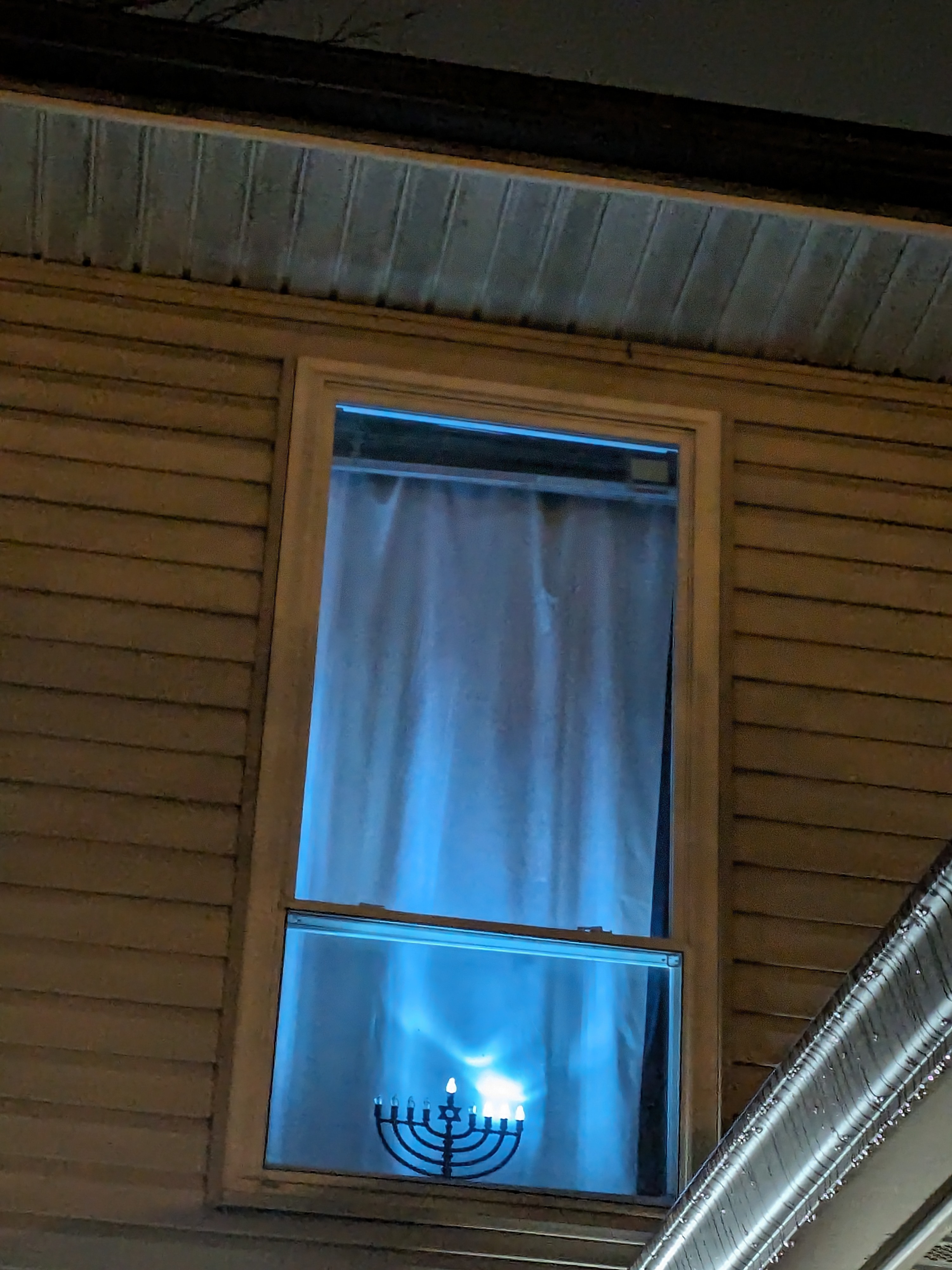
That’s all for now, my Followers of Fear. If anything comes up in the near future, I will let you know. Until next time, good night, read plenty of horror (not necessarily mine, though I appreciate it when you do), pleasant nightmares, and Happy 3rd Night of Hanukkah!
Well, we’re back again, folks. #FirstLineFriday is back, just as promised. And this time, the story we’ll be quoting from tends to get…curiouser and curiouser.
So, if you weren’t here last week, #FirstLineFriday is a tag I’m bringing back in honor of the upcoming release of Hannah and Other Stories. Last week, I did the opening lines from Hannah (you can check out that post here), so it only makes sense to do the next story in the collection.
But first, the rules of #FirstLineFriday:
Create a post on your blog titled #FirstLineFriday, hashtag and all.
Explain the rules like I’m doing now.
Post the first one or two lines of a potential story, a story-in-progress, or a completed/published story.
Ask your readers for feedback and try to get them to try #FirstLineFriday on their own blogs (tagging is encouraged but not necessary).
And today, the story from Hannah and Other Stories will be Queen Alice, AKA the story that crosses Alice in Wonderland with Slender Man. Enjoy:
In the WIDI studios on State Street in the heart of downtown Columbus, Joshua Blumfield patiently sat as the make-up artist brushed an eyelash from his cheek. She then put her brush on the vanity.
Not the most terrifying beginning…but then, Alice in Wonderland‘s opening was pretty quiet in and of itself.
Anyway, what did you think of the opening of Queen Alice? Is this Blumfield a reporter? And what’s he reporting about? For the first question, let’s talk in the comments below, and for the latter two, you’ll have to read Hannah and Other Stories, which you can preorder using the below buttons. And if you like what you read, please leave a review online so I know what you thought.
And if you would like to try this tag as well, by all means please copy the rules above and try the tag yourself for next week.
That’s all for now, my Followers of Fear. I’ll be back next week for the next story in Hannah and Other Stories. Until next time, good night and pleasant nightmares.
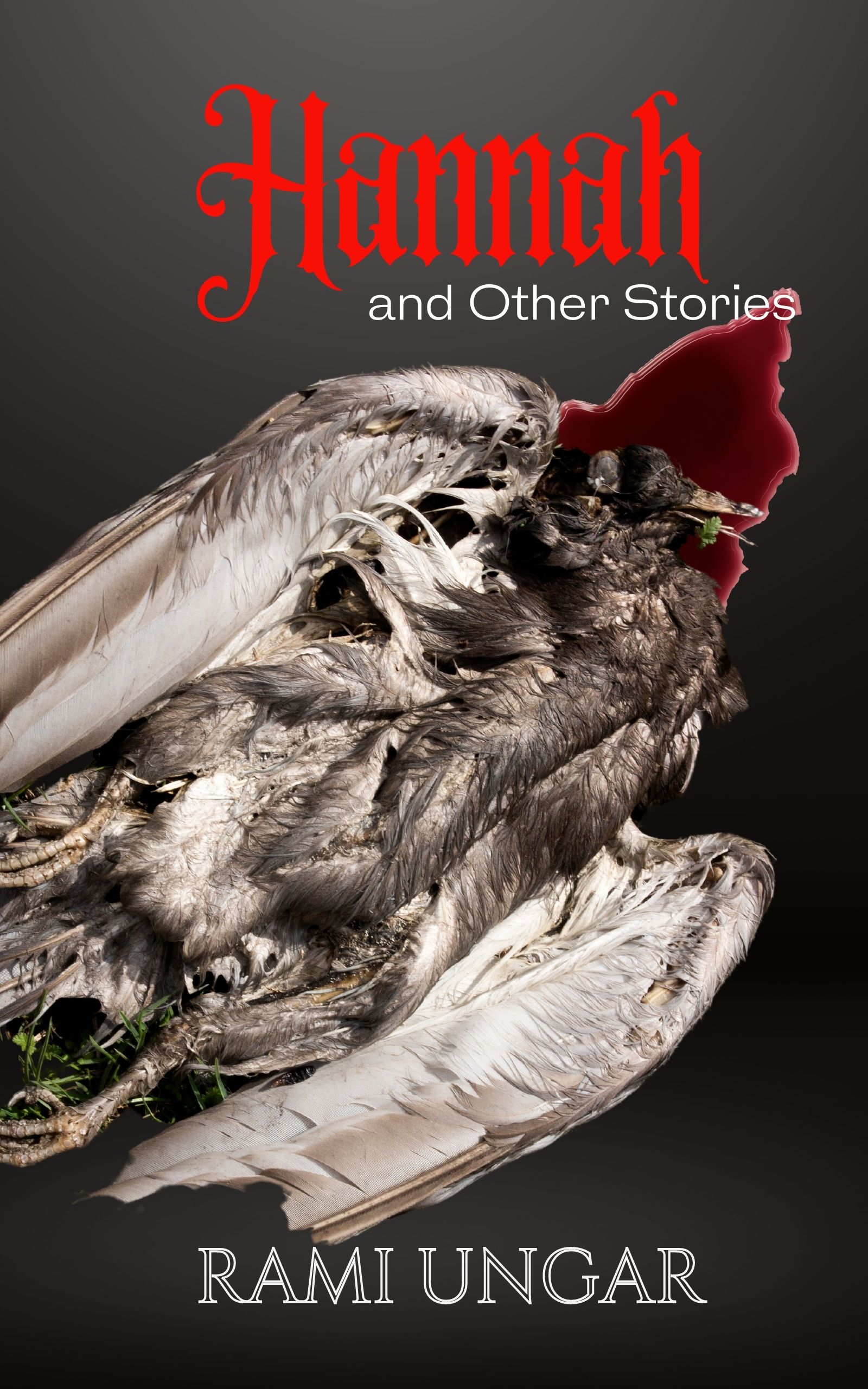
Run for your lives! Light a magic candle! Pray to the Great Old Ones to be left alone! Hannah and Other Stories releases in just one month!
As you’re probably aware, Hannah and Other Stories is my new collection of short stories which is releasing on September 23rd, 2023. This collection contains seven original tales, featuring tales of ghosts, budding serial killers, and carnivorous horses, among other things. My publisher, BSC Publishing Group, and I have been working on this book for two years, so we’re very excited for people to read it. Hell, I’m kind of hoping it becomes one of the most talked about books for the Halloween season this year.
At the very least, I want to get the book in paperback. Right now, it’s only available in ebook, but if it does well, it’ll get a paperback. Maybe even an audio book.
With that in mind, we’re also doing everything we can to get people interested in the book and in maybe preordering a copy. On my end, I’ve been posting YouTube videos where I read sections from the book. A couple of the videos I’ve done are below.
Not bad, right? I tried to create an atmosphere to go with the stories, and I plan to do the stories I haven’t covered before it releases.
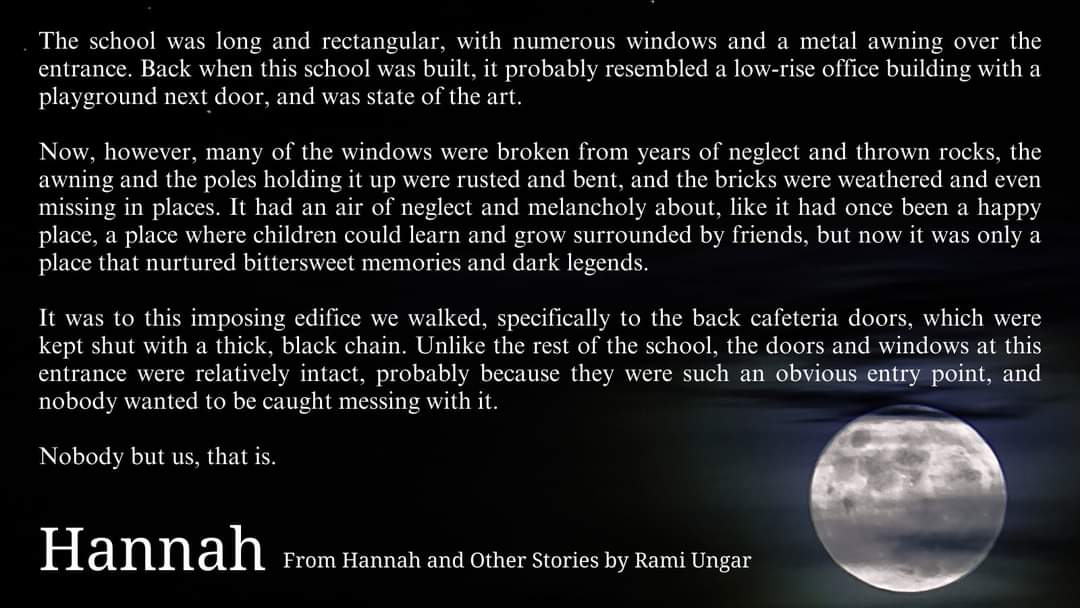
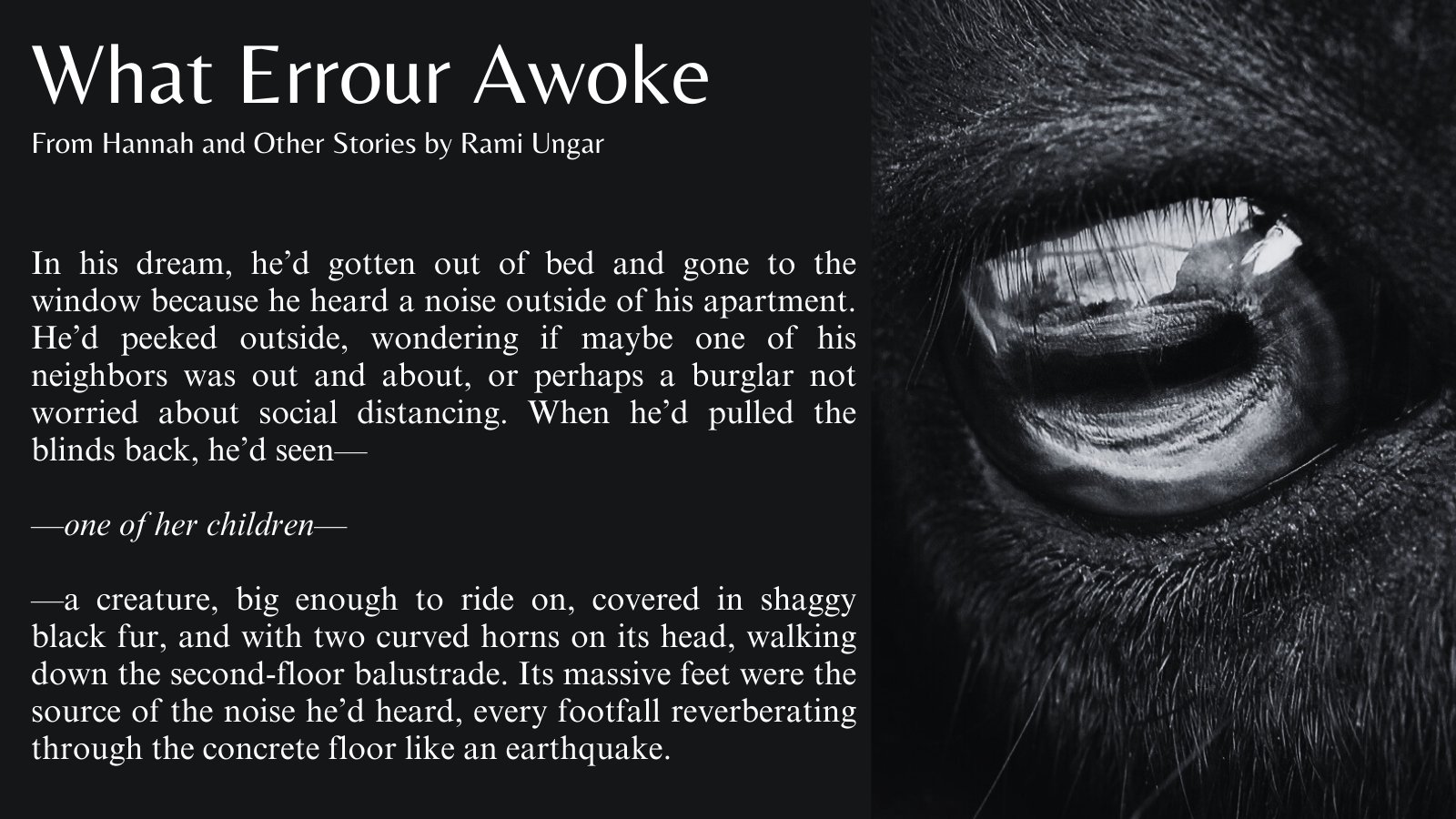
And BSC has been doing some amazing excerpts as well, only they’ve been posting these beautiful graphics that they do in-house! I absolutely love them. Here’s some of the most recent.
Anyway, I’m super excited for people to read it. These stories are all beloved to me in each their own way. What Errour Awoke is a story that not only allowed me to tap into my love of cosmic horror, but helped me to deal with world events that were causing me anxiety at the time of writing. Hannah and Queen Alice were both fun to write, with the former being inspired by a ghost story that’s always fascinated me, and the latter being an interesting mashup of Alice in Wonderland with Slender Man. The Autopsy Kid and Doctor Sarah was a story where I experimented with extreme horror and splatterpunk that I hadn’t done before, while Poor, Unfortunate Souls made for a heartfelt story of acceptance and hardship in the midst of the Paris catacombs. The Red Bursts gave me an unexpected story of finding faith in dark situations, and Fuseli’s Horses allowed me to have fun with a new monster while also playing with some teenage drama.
I can’t wait to see what people think when they read them.
And if any of this has made you want to read Hannah and Other Stories, I’ll include the links to preorder it below. That’s right, “links.” As of this past weekend, Hannah and Other Stories is available to preorder from Amazon, Barnes & Noble, and other retailers, including a few international ones. I’ll include links for all the shops below, and I’ll be sure to update future posts as BSC lets me more stores are carrying the book.
And if you like what you read this September, please be sure to leave a review online somewhere. Positive or negative, I love reader feedback, and it helps me and other readers in the long run.
That’s all for now, my Followers of Fear. I’ll be sure to post more updates as we get closer to the release date. Until next time, good night and pleasant nightmares!
Did you know that we’re only a hundred days away from Halloween? It’s true. And I can’t think of any way to celebrate the opening of spooky season than preordering what will surely be one of the best horror releases of 2023.
Okay, terrible opening aside, it is both 100 days away from Halloween and two months till the release of Hannah and Other Stories. For those of you who don’t know (I’m sure there are a few of you out there), Hannah and Other Stories is my new collection of short stories. It’s being released on September 23rd by BSC Publishing Group and features tales of ghosts, budding serial killers, and carnivorous horses, among other things.
And I am so excited for people to read these stories. The seven stories are all plenty fun and strange and unique, which is what I love. The title story, “Hannah,” is about a pair of ghost hunters who get more than they bargain for when they investigate a haunted school. The one that follows it, “Queen Alice,” combines Alice in Wonderland with Slenderman, which I’m sure would intrigue many of you. The story “What Errour Awoke” combines classic English literature, cosmic horror and some of the biggest events of the past few years into an epic tale of magic and horror. “Fuseli’s Horses” contains those carnivorous horses I mentioned, and come on! Don’t you want to know how that works?
Plus, half of the stories contain LGBT characters and “What Errour Awoke” deals with a lot of the conspiracy bullshit we’ve been dealing with these past few years, so I’m sure someone’s going to try to get it banned from a library or school at some point. I’m sure more people will want to read it just for that.
But back on track. I’m so excited for people to read these stories, and I’m doing all I can to get people interested in preordering copies. It hasn’t been easy (see my recent post on marketing), but I feel I’m making headway. For example, I’ve posted some videos on my YouTube channel, and they’ve gotten some attention. Below are some of the ones I think really help with the sell.
If you watched all those videos, or even just one, thank you. That helps immensely.
I’m also releasing tons of excerpts, some of which are below. And I’m appearing on podcasts soon. Plus, with the eARC almost ready, that will mean I can do a lot that will surely heighten Hannah‘s profile, not the least of which will be the eARC readers, some of whom are very well known in horror, may help spread the good word about it.
Hopefully by September 23rd, there will be plenty of buzz for Hannah.
In the meantime, I’ll leave a button down below. If you click it, you’ll be taken to the preorder page for Hannah. I hope you do and you decide to preorder a copy. Every copy helps immensely. And I know it’s only going to be in ebook at first, but if Hannah does well, a paperback version isn’t out of the question. Maybe even an audio book.
So if you’re at all interested, preorder a copy. And be sure to talk about Hannah on your social media. The more people talking about Hannah, the likelier it is to be ordered and read and reviewed. All that will help this book be as successful as possible.
Anyway, that’s all for now, my Followers of Fear. I look forward to Hannah‘s release and what you think of it. Until next time, good night, pleasant nightmares, and–look out! There’s a carnivorous horse behind you!
So a few weeks back, I posted some excerpts for Hannah and Other Stories that my publisher and I had created. These excerpts each had beautiful backgrounds and graphics to match each story, and I was really proud of each and every one of them (even though I only made three). And at the end of that post, I promised to post the other graphics as soon as they were available.
I should have said as soon as there were more of them and I had the time, which is what happened. But oh well. All the excerpts are out on my other social media, so let’s post them all here.
For a refresher, here are the ones from the last post. These first two are from BSC Publishing Group and are from “The Autopsy Kid and Doctor Sarah” and “Fuseli’s Horses.”
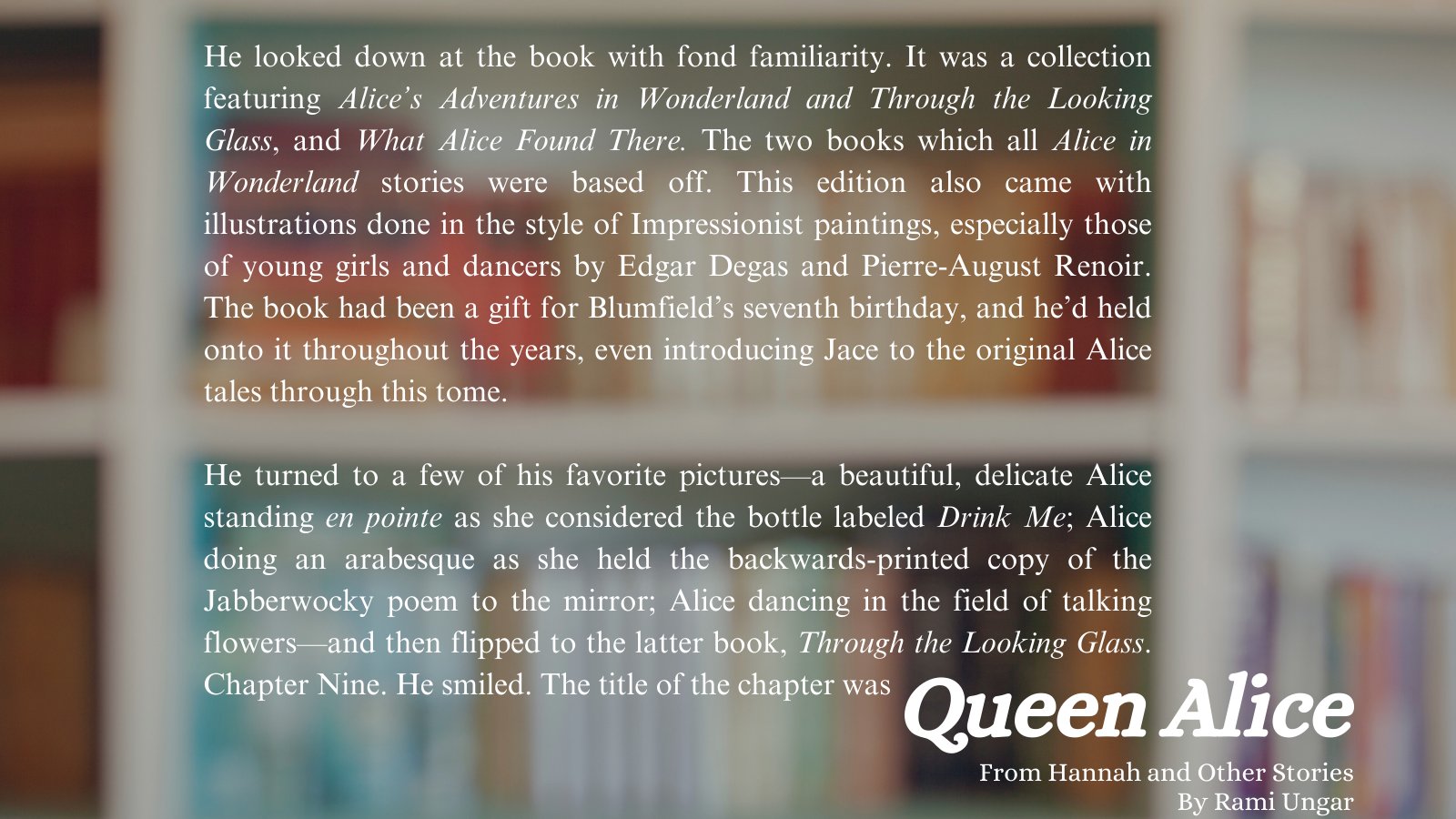
Then we had one from “Queen Alice,” which I made. If you can’t tell, Alice in Wonderland is a big influence on this particular story.
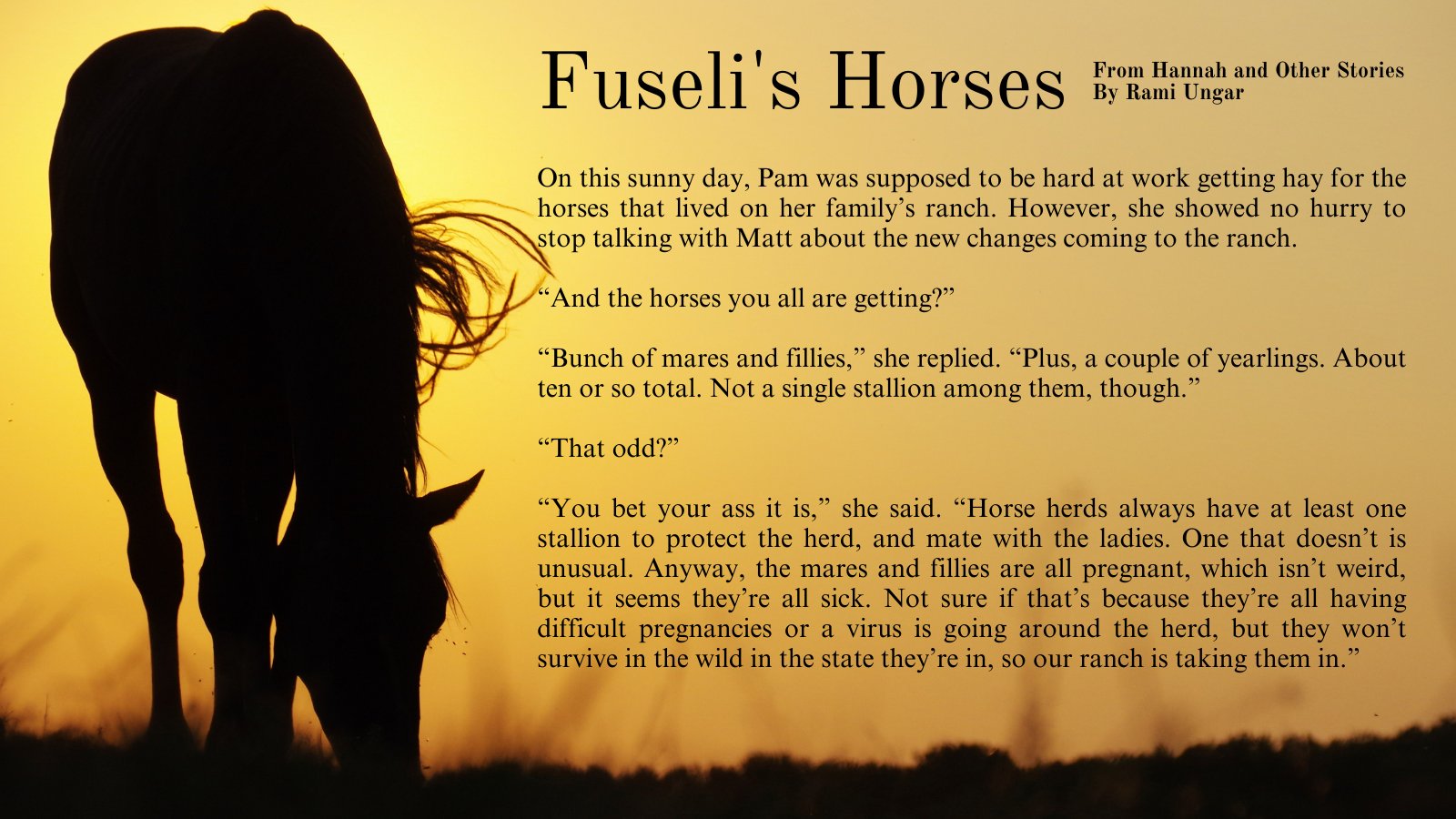
And now for the new stuff. Here’s two more from me. One is another from “Fuseli’s Horses,” while the other is from “Hannah.”
Pretty neat, right? I wanted to use some atmospheric quotes and combine them with matching images. I’m happy to say, I think I succeeded.
Now, check out these excerpts from BSC Publishing Group. I swear, Peyton, my editor, went all out on these and they’re amazing. First, we have “The Red Bursts,” with the most scenic background.
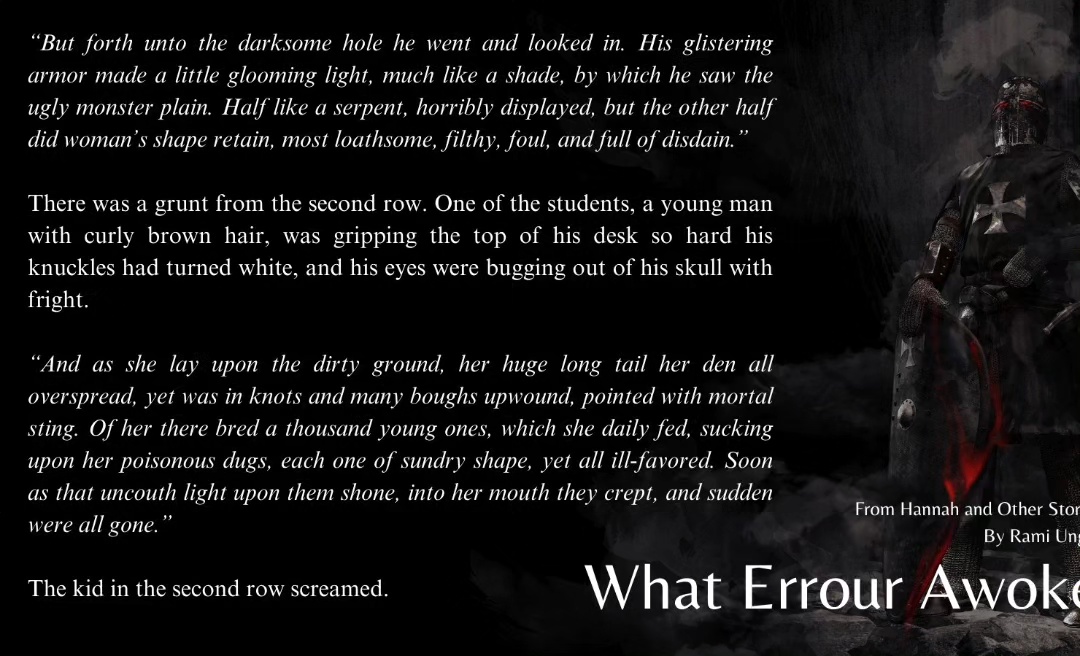
Then we have the inciting incident, “What Errour Awoke,” which combines classic English poetry with cosmic horror and contemporary events.
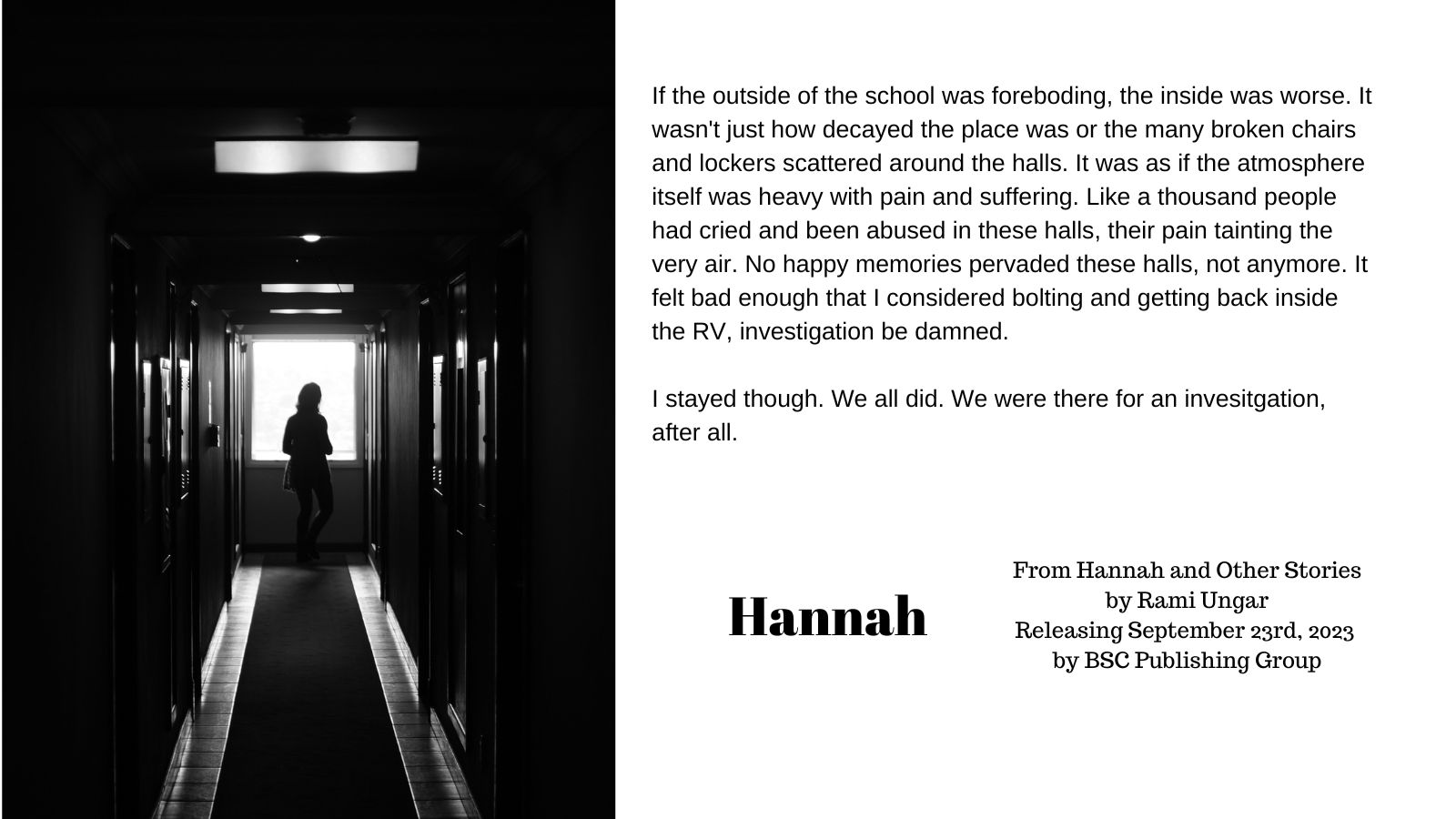
I wonder what he’s screaming about? Well, I know, but I’ll never tell. Next, we have another from “Hannah” which introduces the main characters, Dominic Holmes and Diesel Berkowitz. They’re ghost hunters with their own ghost hunting show. Maybe you’ll want to check it out?
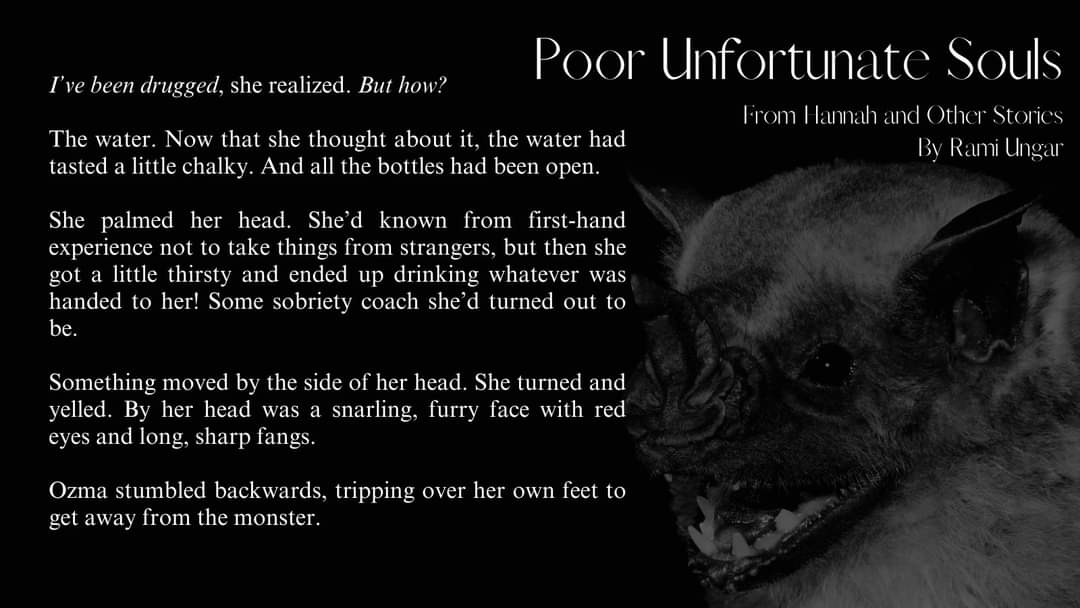
After that, we have an excerpt from “Poor, Unfortunate Souls,” which takes place in the Paris catacombs. Finally get to publish a story with that beautiful and terrifying location as the setting.
Did that make you feel claustrophobic? I’m hoping it did.
Finally, we have another one from “Queen Alice,” which BSC dropped yesterday. Don’t be fooled by the sweet prose or unassuming background, however. This tale is as dark as a pool of water on a moonless night.
So there you have it. Ten excerpts, seven by BSC Publishing Group and three by me. And who knows? Maybe more excerpts will drop between now and September 23rd. Maybe even other types of content. I already put a video about “Queen Alice” on my YouTube channel (you can check it out here), and I will probably add more videos (so subscribe there as well). Whatever there is, I’ll be share it with you, no matter the platform.
And, of course, you can preorder Hannah and Other Storieshere if these excerpts have intrigued you at all. Right now, it’s only available as an ebook, but if it does well in preorders, sales and reviews, we may see a paperback and even an audio book version in the near future. That’s even more incentive to preorder a copy, if you ask me.
And if you want one more excerpt, you can click here for that. It’s a digital copy of the chapbook I’ve been giving away at events. It’s quite popular.
That’s all for now, my Followers of Fear. I’ll be back soon. Until then, good night and pleasant nightmares. I’m off to do some reading before bed.
I’ve heard certain stories and writers described as weird fiction and weird fiction writers. I’ve also heard of New Weird, which refers to writers whose work is representative of a new wave of weird fiction. And I can think of examples of fiction that is described as “weird fiction.” Yet, I still find myself wondering from time to time, “How do you define weird fiction?”
Most people I’ve talked to–and I’ve talked to many–say “I know it when I see it” when it comes to weird fiction.* However, being a non-human entity and having a very loose definition of “normal” in a world that seems to defy anyone’s definition of normal, that still isn’t enough for me. And I know HP Lovecraft and the Cthulhu Mythos is considered weird fiction, but is that because it involves tentacled monsters?
As usually happens when these sort of questions bug me to no end, I do research. And after talking to a lot of people, reading some articles, and watching a few YouTube videos on the subject, I think I’ve finally come to some conclusions.
For one thing, “weird fiction” isn’t a specific genre like literary, romance, sci-fi or horror fiction. Rather, it’s a designation given to stories and writers who take traditional concepts within their genre and then find some way to turn them on their head and make them weird. Lovecraft and his friends’ fiction was called “weird horror” because it featured ancient cosmic beings with lots of tentacles instead of ghosts, werewolves and vampires. And today, you can call Junji Ito “new weird” because his work features women with their tongues being replaced by snails and their heads becoming the shells, or towns cursed by the concept of a spiral.
And this can apply to all sorts of other genres and kinds of stories. Magical realism, cryptozoological erotica, bizarro fiction, they can all be considered weird. And you can add weird to any sort of story. For example, perhaps you can write a romance story where the couple is actually a single person and their reflection. Or weird Western, where cowboys ride into a wilderness resembling that melting clock painting by Salvador Dali.
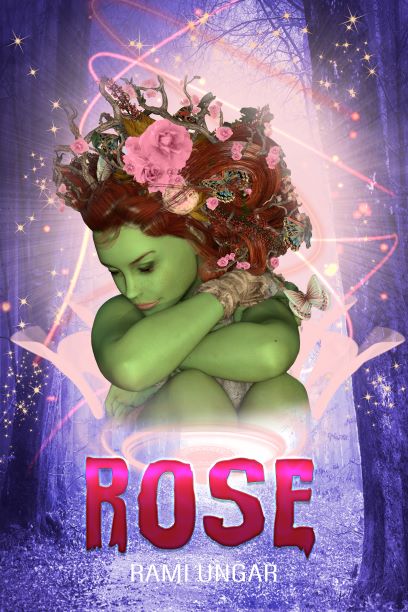
And now that I think about it, my own novel Rose could be considered weird fiction. I mean, I usually categorize it as “fantasy horror” or “paranormal fiction,” but it’s about a young woman turned into a plant/human hybrid (and that’s just the start of her problems). If that’s not weird, then I’m a sea lion (and I’m not).
Apparently, Rose could be considered “weird fiction.” I never realized.
So, how does one write weird fiction? Well, I don’t think anyone sets out to write exclusively weird stories. I think they’re just trying to create something original and that leads to going down a weird route. That being said, if you want to write something weird, here are a few things you can try to make it weird:
Disrupt the real. Weird fiction comes from being weird, so it helps if your story breaks either the characters’ or the readers’ sense of reality. In terms of the latter, you could modify the world in some way so that something weird by our standards is considered normal in the world of the story. One example I can think of is a story I once read where imaginary friends were real entities and an accepted part of the human life cycle, similar to losing your baby teeth or going through puberty. In terms of the former, write the story in a way where you and the characters share a similar reality, but then that definition of real goes out the window in a big way. Think Alice falling down the rabbit hole into Wonderland, or perhaps Little Red Riding Hood’s trip to her grandmother’s house becomes Lovecraftian and surreal.
Tentacles and cosmic elements. It’s a little stereotypical, but as I said, much of what made Lovecraft’s stories weird were the tentacles and the other elements that became the foundation of cosmic horror. So, if it works, why not use it?
Ask “what if I added this?” Plenty of times, we writers create our own stories by encountering another story and thinking of what we would add if we were the ones writing it. Just do the same thing, but think in terms of strange things you can add. And not just to other stories, but to just daily situations. What if you added surrealism to a religious matchmaking search, or if there was some visible way to instantly identify someone as having committed a crime? Thinking along those lines could allow you to write a weird fiction story.
Defy genre. While genres are categories we created, they do play a big role in writing and publishing. If you can write a story that doesn’t fit any particular genre but has elements of several, especially fantasy, sci-fi, and horror, it could be considered weird. There’s a bit more to it, but that can be a clear indicator of weird fiction.
Other than that, the only thing I can recommend is read plenty of weird stories and practice writing them. And while writing weird fiction isn’t exactly necessary for any writer, it can be a lot of fun and lead to some memorable stories. Hell, it may help you write more mainstream fiction. So, why not? Go ahead and get weird with it!
What tips do you have for writing weird fiction? Do you have any favorite stories that are considered weird?
*Fun fact: that phrase was coined by US Supreme Court Justice Potter Stewart in 1964 in his opinion on the case Jacobellis v. Ohio regarding a definition for obscenity, specifically hard-core pornography. The more you know.
Thanks for reading, everyone. It was a long article, but I wanted to get it out before I tried to intentionally write a weird fiction story (usually it happens by accident). I hope you enjoyed a post without a mention of Hannah (which, now that I think about it, has a weird story or two as well).
Anyway, I’ll be back soon enough. There’s some exciting stuff happening this week, after all. So, until next time, my Followers of Fear, good night and pleasant nightmares!
Hello, Followers of Fear. There are sixty days till Halloween. What have you done to prepare?
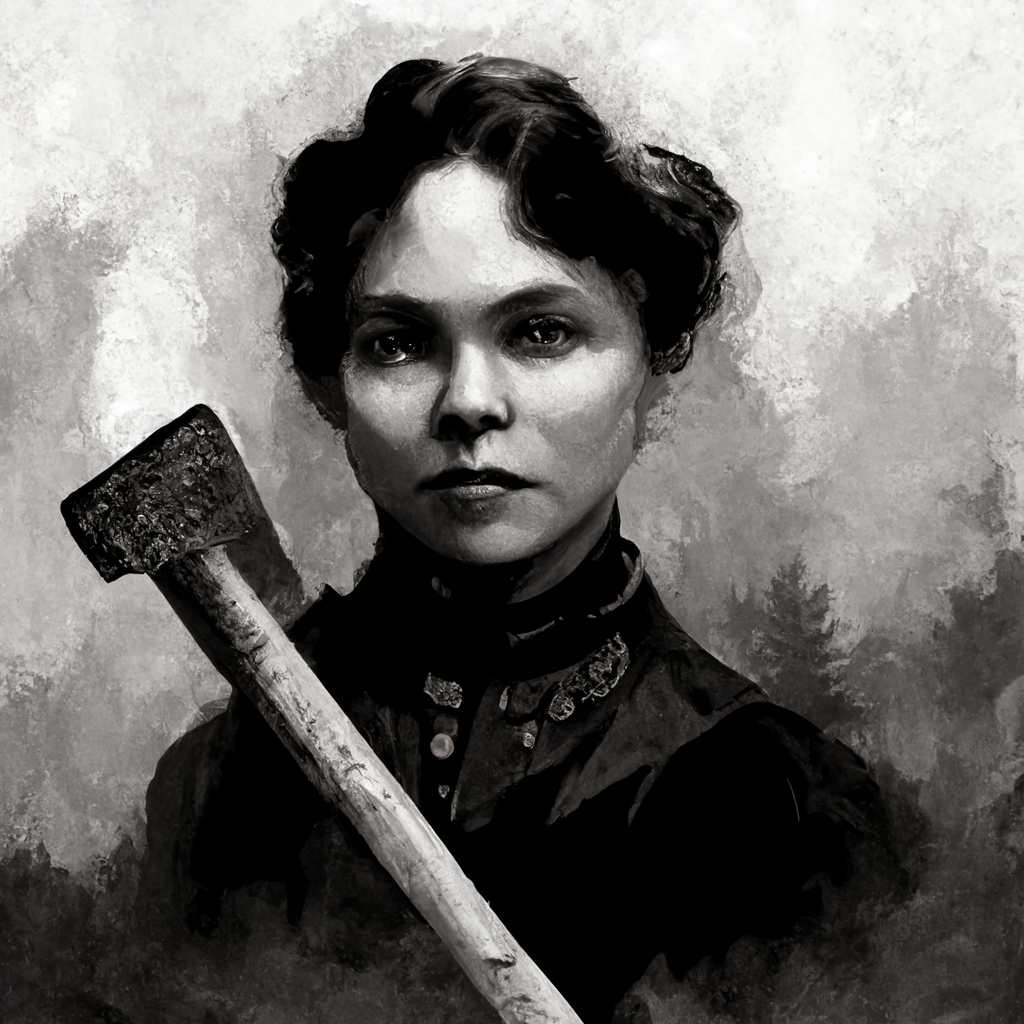
Artwork produced by artificial intelligence, or AI art, has become kind of a thing as the technology has advanced. In fact, some months back, there was an app that became a fad for horror writers to generate images and even book covers. And earlier this week, John Oliver featured it on his TV show, Last Week Tonight with John Oliver. Here’s the video, if you’re interested. It’s hysterical.
John Oliver’s wife and children must have such a blast telling people who don’t know who he is what he does for a living. “Oh, my husband/dad? He sexually harasses Adam Driver and marries cabbages on TV once a week.”
Anyway, it got me interested enough to want to play around with AI art, so I made an account with one of the recommended companies, Midjourney, and went to work. The results were not only fascinating, but gave me some thoughts on the nascent AI art industry.
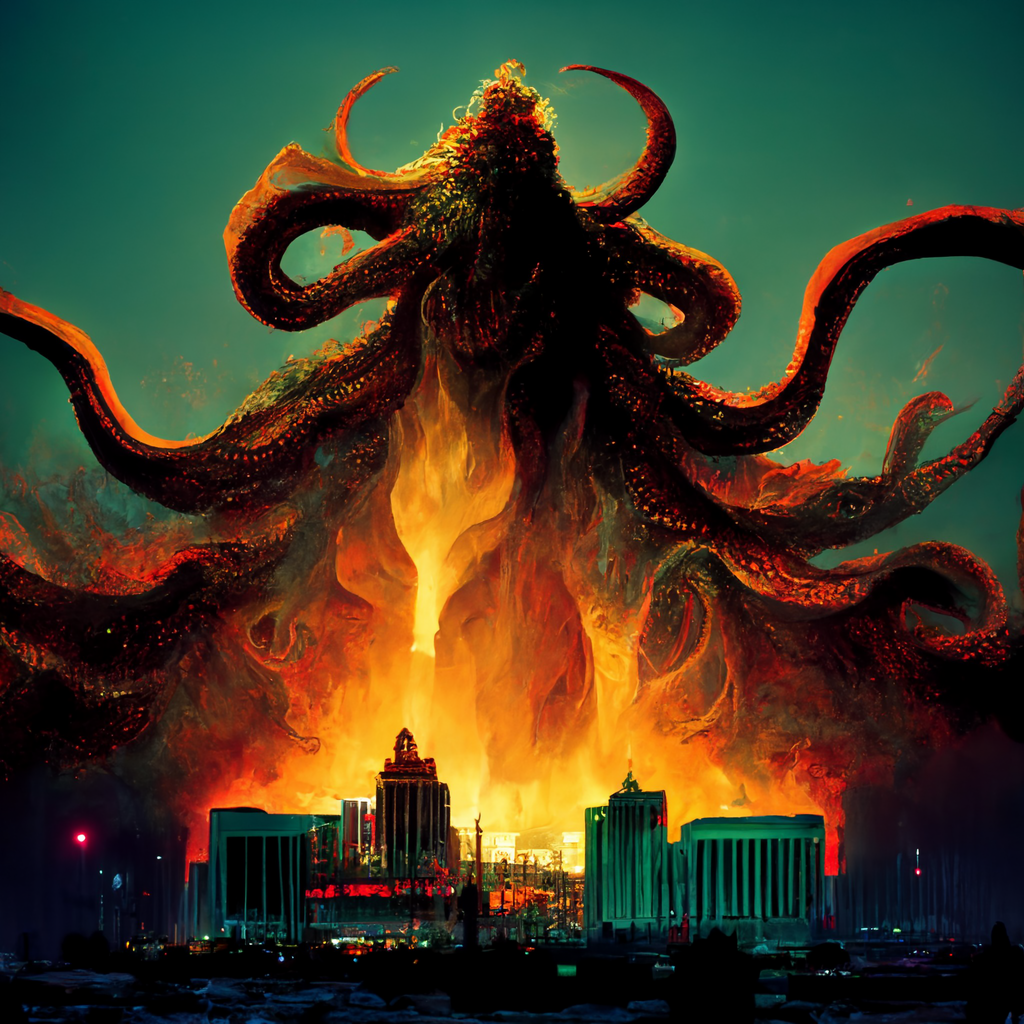
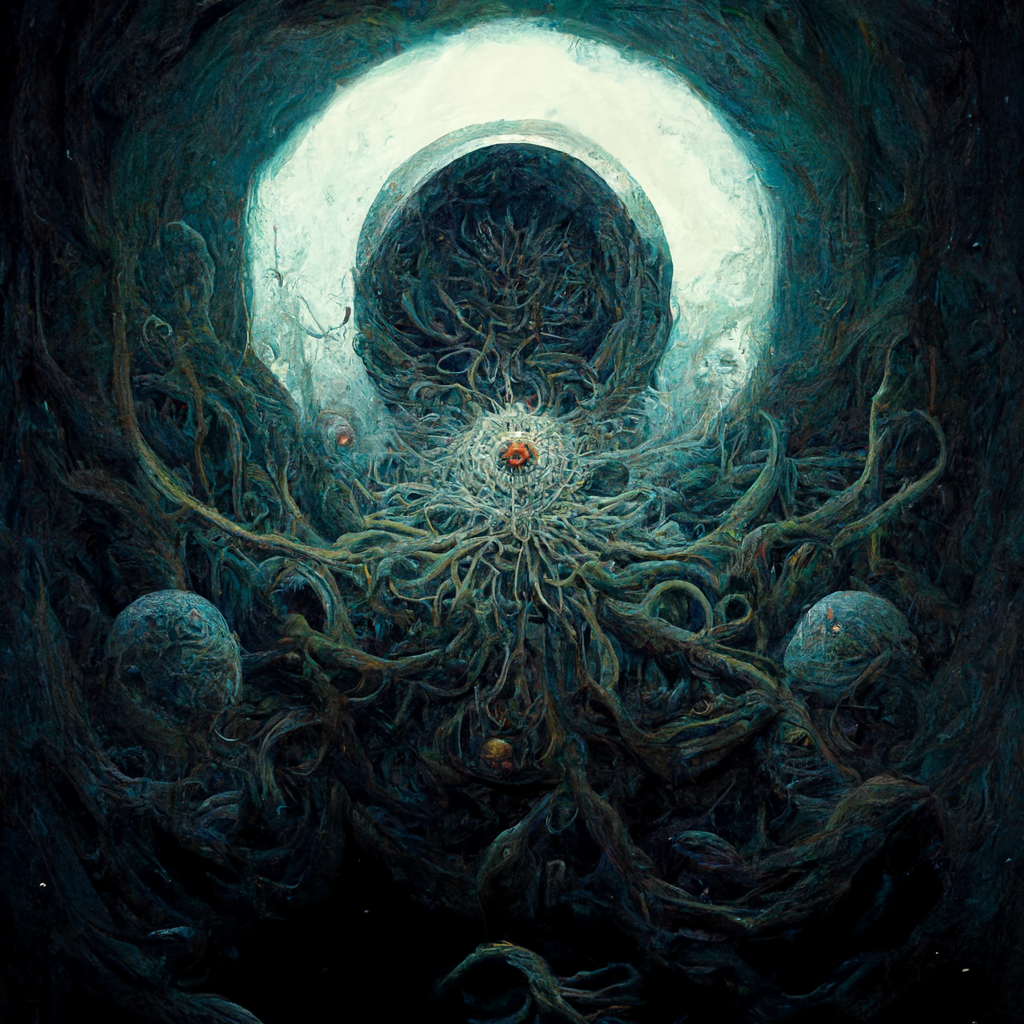
First, here are some of my successes. As it turns out, Midjourney’s AI program does very well with Lovecraftian/cosmic horror entities. For example, here’s Cthulhu destroying Las Vegas because I’m not a big Vegas fan (though under the right circumstances I’d visit again).
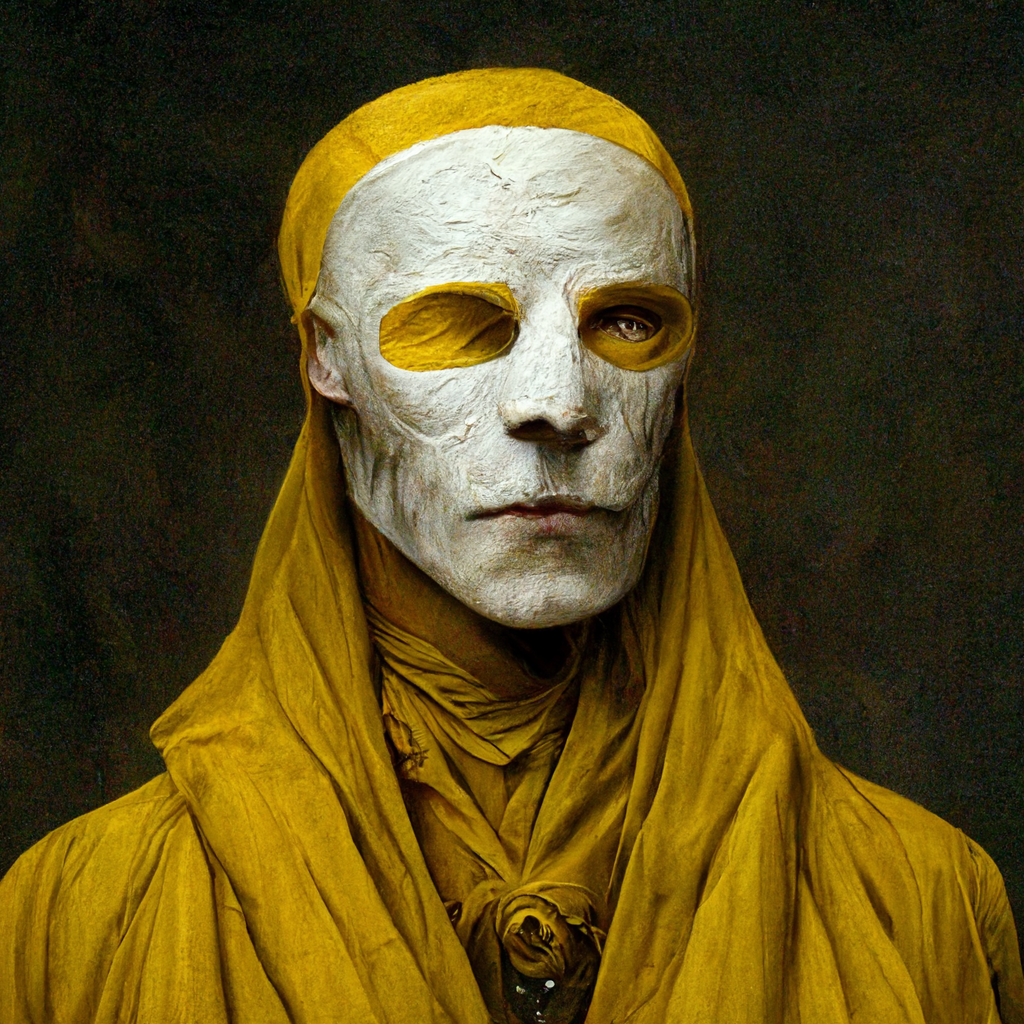
Then, in order, we have Yog-Sothoth, Shub-niggurath, Nyarlathotep, Azathoth, two pictures of the Deep Ones, the Color from Outer Space, and the King in Yellow.
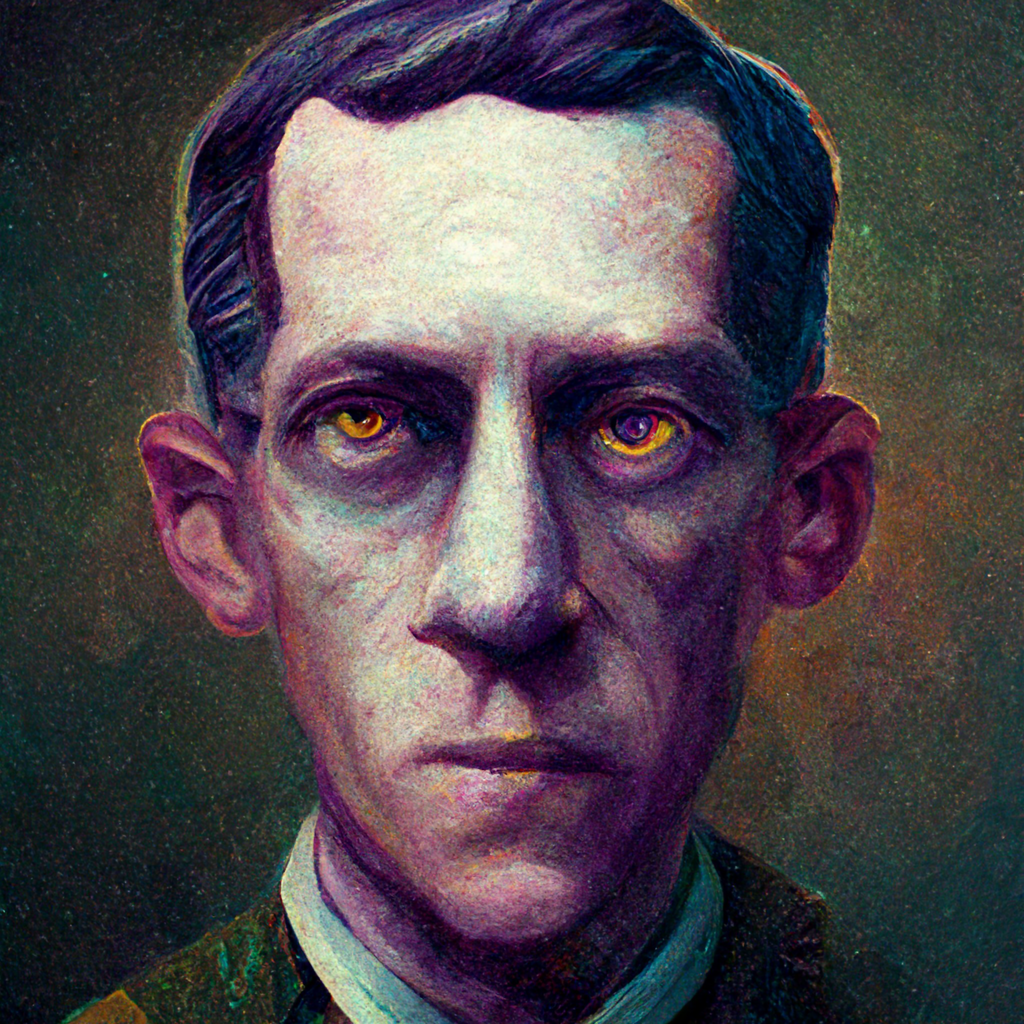
And portraits of famous people tended to go well with the program. Here are Stephen King, Anne Rice, and HP Lovecraft, three of my biggest influences as a writer, as well as one of Lizzie Borden with an axe. Because why not?
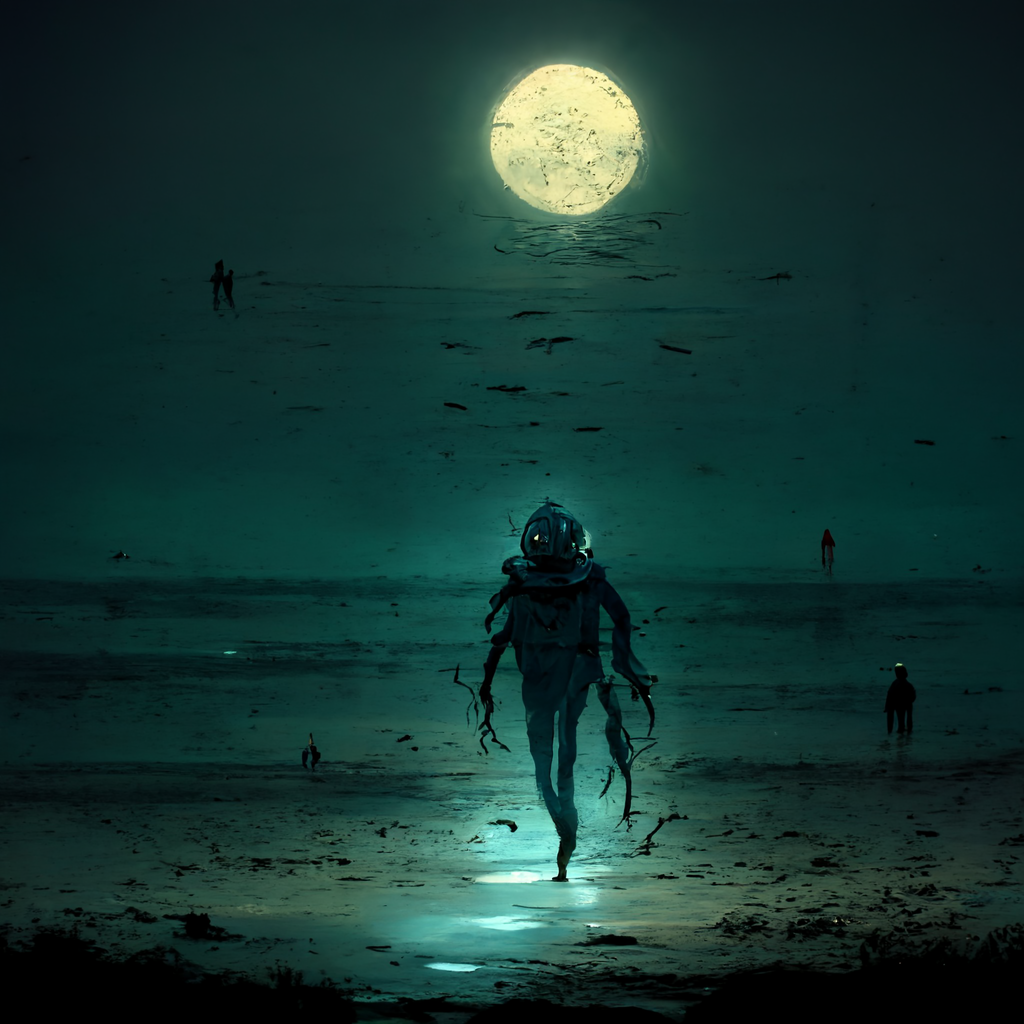
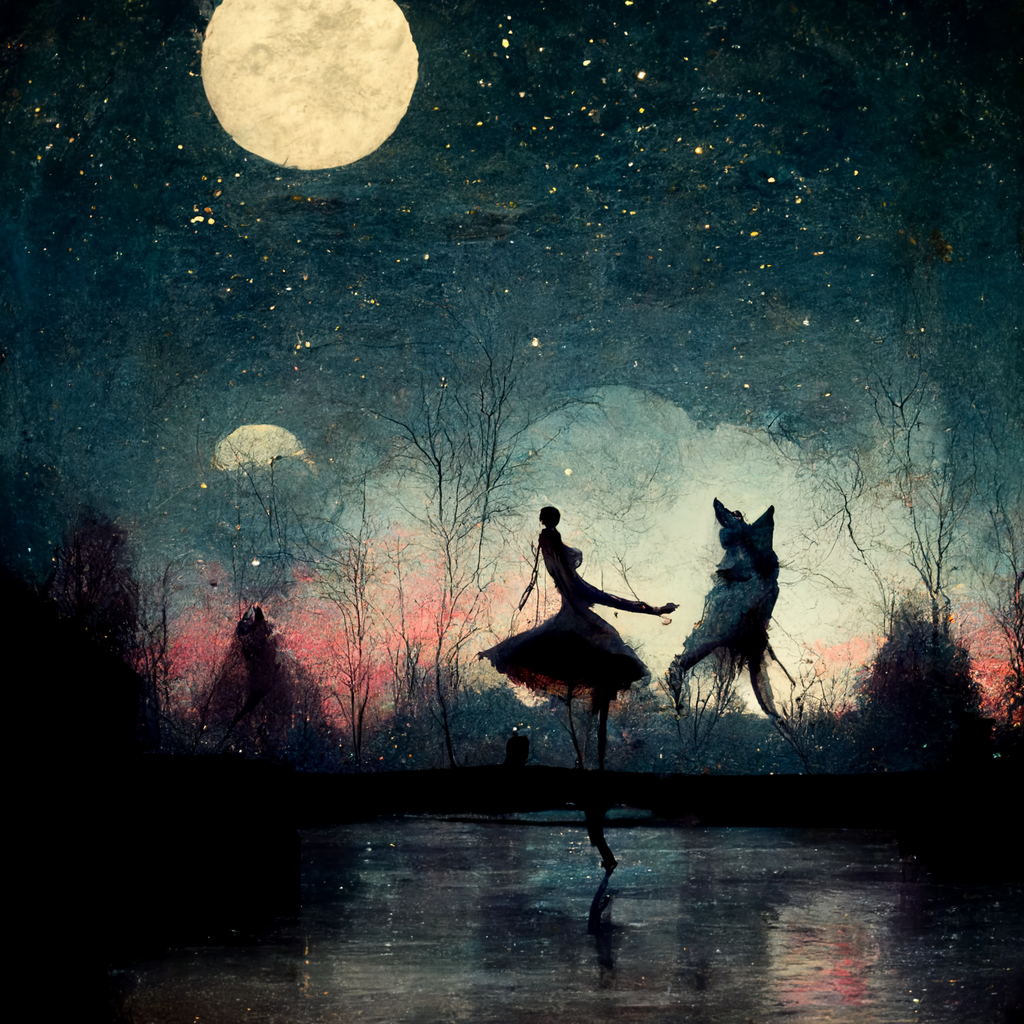
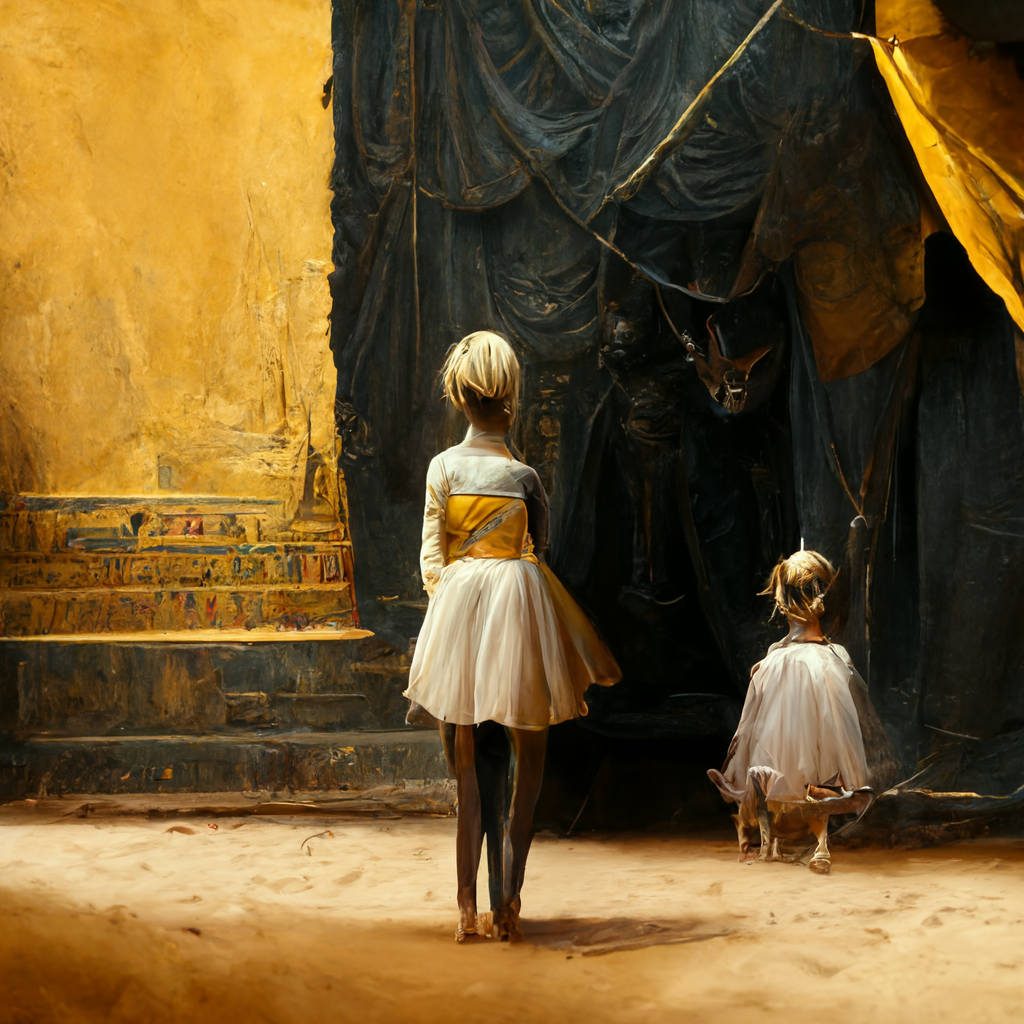
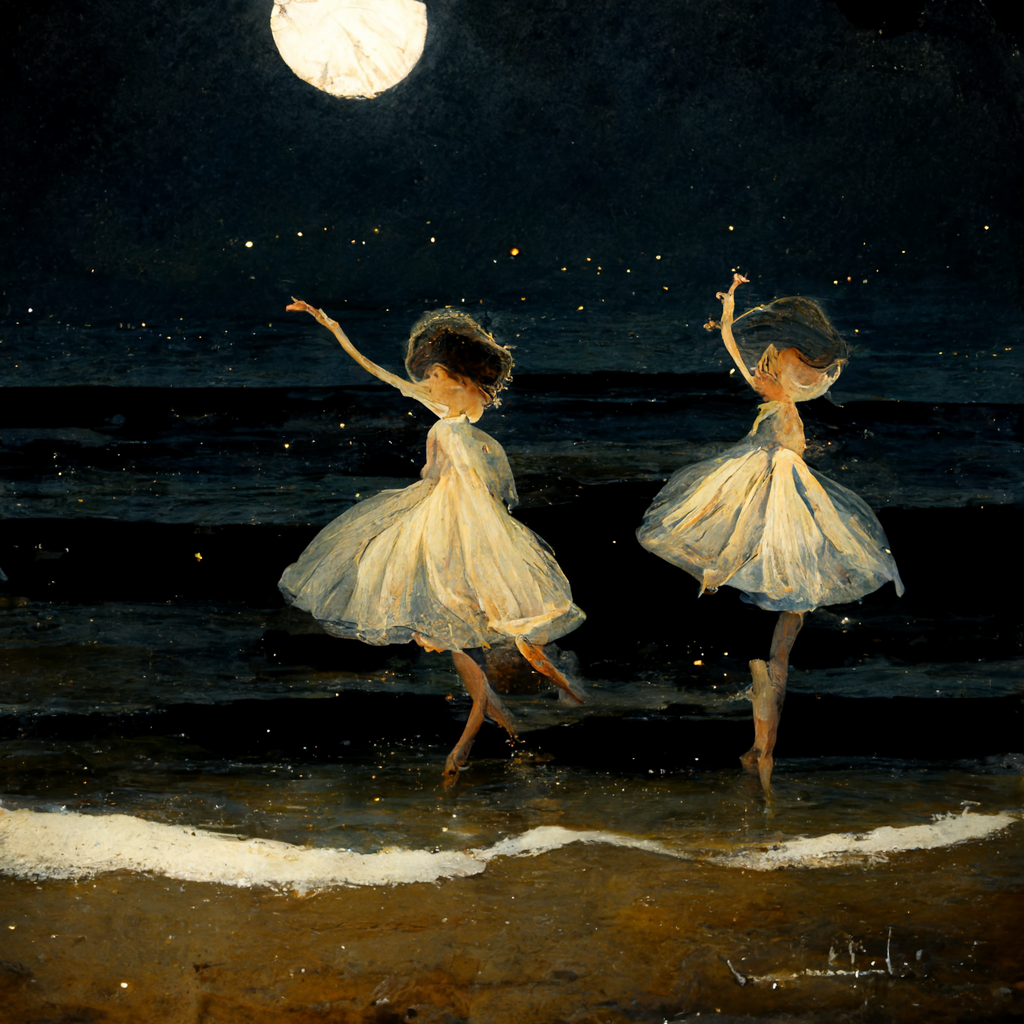
And because I love ballet and try to put dancers in my stories when I can, I made a series of ballet posts, with their titles in the captions.
Dancer and Wolf on the lake
The Little Ballerina Ghost
Dancer in the Egyptian Temple
Dancers on a Moonlit Beach
Little Dancers Running from Lava
Little Dancer and Anubis
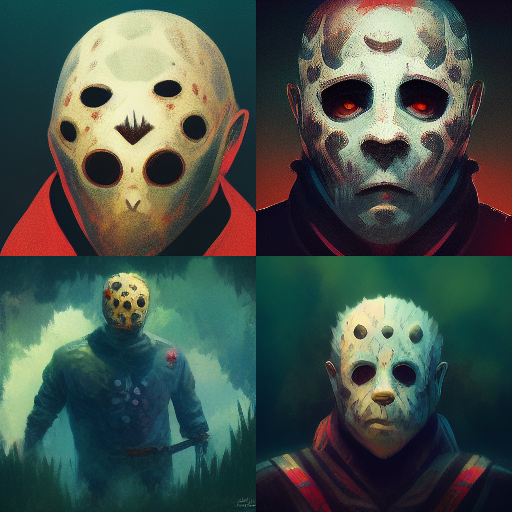
Pretty cool, right? Most of them look really good. However, those were success stories, like I said. Here’s what happened when I tried to create Jason Voorhees from the Friday the 13th films.
Yeah, I know. None of those come close to looking like Jason! He’s arguably more famous than Cthulhu, but these were the results. And then there was my attempt at Freddy Kreuger from A Nightmare on Elm Street. Oy freaking vey!
Yeah, who is that? Not Freddy Kreuger, who is definitely more famous than Cthulhu! Honestly, it looks more like my conception of Leland Gaunt, the antagonist from Needful Things by Stephen King. How could the AI get our favorite subconscious serial killer so wrong?
And those are just a few examples. I went through several failures trying to get anywhere close to a specific idea or image, only to give up when I realized the program just couldn’t create it. I couldn’t even create a decent Sailor Moon or an accurate tiger image, and both those prompts have enough references out there that they should have been easy to create something accurate.
Even some of the successes took a lot of work and experimentation, such as The King in Yellow or Little Dancer and Anubis. I won’t even go into detail about how hard it was to get a good Alice in Wonderland pic that wasn’t too trippy. I mean, I know the source material is plenty weird, but not all art based on it has to be super-surreal!
And while I call some of them successes, they aren’t perfect. You can especially see it in the ballerina series, where features like the head and limbs look odd or bent in ways you wouldn’t see on a normal dancer or a Degas painting. Only the tutus and bodices come out well. The rest of their bodies can be a mixed bag.
It kind of reminds me of that scene in 1986’s The Fly, where Jeff Goldblum puts steak through the teleporter and it comes out tasting weird. He figures out that the computer hasn’t learned how to move organic materials, and is instead creating an interpretation or bad imitation of what it thinks steak is. That’s what we have here: the AI has learned how to mimic and create, but it’s still leagues away from making certain things.
And honestly, I’m glad. Art is art because there’s someone behind it with a vision or a passion. You can program a computer to recreate famous art pieces or original pieces, including Batman comics and scripts or horror screenplays. And the computer might even do a good job at times. But there won’t be any passion or soul behind it. Art is art because we’re putting our love and soul into our creations.
And getting to work with a creator? That’s even more special. Believe me, I’ve done it before, and it’s amazing to see your vision come to life with their help. Especially when working on art pieces like book covers. That truly is something special.
That being said, I can see AI-generated art being used for cheap book covers as the technology improves, and the services of artists becoming more expensive. This could especially apply for small presses or independent publishers who need to lower costs while maximizing profits. The only time publishers may use a real artist is if the author is big enough to warrant it.
Hopefully that doesn’t happen, because it would mean we wouldn’t get to see some really amazing collaborations. So, for the meantime, I’ll stop with the AI art (I’ve scratched that itch and I don’t want to pay a subscription for Midjourney, anyway), and continue supporting the artists who create amazing art. Especially horror art.
And now, here are some more pieces I created. Except for a few I’m waiting to reveal till the time is right, here are my other successes. You can ask what was going through my mind when I created these in the comments below. Enjoy, and until next time, my Followers of Fear, pleasant nightmares!
Voice. Sometimes, I feel this can be the hardest thing to create in a story, especially when you’re writing in first person. You, as the writer, have to create this unique person, someone with a personality, desires, fears, likes, and pet peeves. And then you have to give them a unique speaking voice, including vocabulary and word choice, syntax, grammar, accent, and all that can be really difficult. A lot of us have that distinct writer’s voice* in our heads that is always arranging our sentences on the page (or on the blog post) in a way that reads like what we consider good literature.
And it’s even more hindered when you consider where our writer voices come from. You see, I have this hypothesis that every writer’s storytelling voice is born when they read a great story and the narration resonates with them on a deeper level. This could be their own voice reading their first chapter book as a child, a parent reading to them a fantasy novel by their bedside and making the story come alive, or an audio book narrator with a great speaking voice behind the words. No matter how many other stories we may read or listen to later in life with their own amazing narrative styles–the childlike humor and observations of Alice in Wonderland, Stephen King’s odd characters and descriptions, or the three women from The Help and how they each view their situation from vastly different backgrounds and dispositions–it will always be this original narrator who contributed the base DNA for your writer’s voice, and whom a part of you will always spend a good amount of time both trying to emulate in power and break away from so you don’t sound like a copycat.
For me, I always go to Jim Dale’s narration of the Harry Potter audio books. Harry Potter was a big part of my childhood, and caused me to start writing in the first place. My first attempt at writing was something like a Harry Potter gender-bend fanfiction. And Jim Dale made the text come alive, in ways the movies and the books alone couldn’t. Whenever I wrote, in the back of my mind, I was comparing and contrasting to Jim Dale’s work. And while I’ve managed to develop my own voice, it’s still a fight that goes on in the back of my head up to this day.
So basically, I’m fighting Jim Dale in my head while trying to create an original narrator’s voice on the page.It’s an image perfect for a Family Guy cutaway gag.
Struggling against this guy in my head every time I write.
So what can you do when you’re trying to create a distinct voice for your narrator or narrators? What do you do when you want to make Skeeter sound different from Abilene and Abilene from Minnie, or Cormoran Strike from Harry Potter, or Lestat from Louis? And can I come up with any other characters for comparison? The answer to the latter question is yes I can, but I’ll stick to the former if you don’t mind too much.
As many of you know, I’ve been working on a new story while I wait to hear back from my beta readers. And as I mentioned in a previous post, I’m taking a more organic approach by writing this story without much planning and seeing what evolves from that. And weirdly, that approach has allowed me to tap more fully into my narrator’s head. I’m not exactly sure why, but I think it might have something to do with the plotting vs. pantsing thing I talked about in that previous post. When I’m plotting, I think out every detail of the story, not leaving much room for change or experimentation. Thus, the narrator’s voice becomes secondary to telling the story I want to tell, in the way I want it to be told, and the narrator’s voice ends up as something close to default writer’s voice.
But while I’m pantsing it (or plantsing it, as my friend Kat Impossible informs me), that particular mental clamp isn’t in place. Thus, without having to worry about getting my story from Point A to Points B, C, D, E and F (I’m not even sure if I have a Point F at this point), I can focus more on my narrator and develop her voice. I’ve actually discovered through, just by letting my character be herself and make her observations about the world, she’s a pretty frank and kind of funny. At one point, after saying “her heart fluttered,” she says she sounds like a romance novel, which she hates reading, and her friends consider that a horror “on par with the bombing of Pearl Harbor.” I wrote that in, and I ended up laughing!
I might have to pants/plants my stories more often in the future.
But what if you already write by pantsing or plantsing, or plotting is the only style that works for you? Well, I might have a few suggestions:
Write out the traits of your narrator. If your narrator is a character in the story, then obviously they have a personality (unless this is an 80’s movie, in which case they’re bland and white). Think about them and what their role is a story. What do they want? What do they stand to lose if they fail? What’s in their past? Who do they hang out with? Figuring this out can give an insight into the character and therefore to the voice that they give.
Have a conversation with the narrator. I forget where I got this, but it’s a good one to use. Grab some paper and a pen, and have a conversation with your character. Ask them questions, and then write down what you’d imagine their responses to be. It seems a little mental, but it’s pretty effective, and can be used for other issues in a story (motivation, plot holes, etc).
Spend time narrating scenes in your head. I’m the kind of guy who spends a lot of time planning the story in my head before I write it (the consequence of having a full-time job and only one me to write). Consequently, there are scenes I’ve written and rewritten several times over in my head. During that time, a character’s personality, worries, beliefs, and of course their voice will emerge through several mental revisions. By the time you get the actual writing, you already have the narrator’s voice down pat.
Voice is always difficult to get right for any narrator, but there are a variety of ways to help you get that voice. Whether it’s writing something differently than usual, or having an imaginary conversation, you can discover your narrator and their voice. And from there, you can make your story that much better.
What do you think of finding a narrator’s voice? Do you have any tips for doing so?
*The writer’s voice, by the way, is very different from our speaking voices. I’m never this eloquent in real life. I actually stammer a bit, my mind racing to get the best sentence out while my mouth is already saying the words. It’s quite annoying, and sadly the only time I’m not plagued with it is probably when I’m telling a joke (usually a stupid one). Oh, wouldn’t it be nice if we could speak like we write blog posts or stories? It might make a few things easier.
I recently came across a very fun article from the AV Club, which talked about how any opening in a story could be improved by replacing the second (or in some cases, the third) line with the phrase “And then the murders began.” This idea was formulated by author Marc Laidlaw, which has since become known as Laidlaw’s Rule, and is based on some of the advice of author Elmore Leonard, who said you should start your stories with more action-based openings rather than more quiet stuff like describing the weather or doing some sort of backstory.
As you can imagine, Laidlaw’s Rule can make for a rather fun parlor game. I shared the AV Club article in one of my writing groups on Facebook, and we had a ball with this. Here’s my contribution to the game:
It was the best of times, it was the worst of times. And then the murders began.
Charles Dickens has never been less boring.
And you find that this works with almost any story. Harry Potter, for example:
Mr. and Mrs. Dursley of Number 4, Privet Drive, were proud to say they were perfectly normal, thank you very much. And then the murders began.
Just as JK Rowling intended it, I’m sure. How about Alice in Wonderland?
Alice was beginning to get tired of sitting by her sister on the bank, and of having nothing to do. And then the murders began.
Well, in this LSD-inspired story, anything’s possible. What about Stephen King?
The terror, which would not end for another twenty-eight years–if it ever did end–began, so far as I can tell, with a boat made from a sheet of newspaper floating down a gutter swollen with rain. And then the murders began.
That’s Stephen King’s IT in a nutshell. New movie out September 8th! Check out the trailer that’ll be coming out some time tomorrow. Let’s see, what else? Oh, I know! How about Wuthering Heights?
1801 – I have just returned from a visit to my landlord – the solitary neighbour that I shall be troubled with. And then the murders began.
It’s already improved greatly. And even works on non-fiction works and speeches. For example, the Gettysburg Address:
Four score and seven years ago our fathers brought forth on this continent, a new nation, conceived in Liberty, and dedicated to the proposition that all men are created equal. And then the murders began.
America in a nutshell, everybody! Our nation is dangerous to your health.
How about my work? Let’s try Reborn City:
Zahara and her family had decided to eat out at a restaurant in North Reborn that served kosher meat, the closest they could get to halāl. And then the murders began.
Well, there are a few murders in this book (spoilers!). What about Video Rage?
The sunbaked concrete and metal in the hundred-plus degree heat, the many cars and trucks reflected light off their chrome bodies like blinding beasts zooming down the highway. And then the murders began.
Ooh, chilling! How about Snake?
Paul Sanonia had been touched by a nightmare, an unbelievable disaster that had manifested in reality where it shouldn’t belong. And then the murders began.
This novel in a nutshell (more spoilers!).
And the best part is, Laidlaw’s Rule works with pretty much any story. Usually it works best with third-person omniscient narrators, though other narrating styles can work. Take a look at To Kill a Mockingbird:
When he was nearly thirteen, my brother Jem got his arm badly broken at the elbow. And then the murders began.
Jeez, Atticus Finch’s job just got a lot tougher. I think he’s going to have to play detective as well as defense lawyer and dad.
Marc Laidlaw, the formulator of the Laidlaw Rule.
Yeah, Laidlaw’s Rule is a lot of fun. But it also could make for a fun writing exercise. How many stories have actually begun with “And then the murders began” as the second sentence? As a lot of these kinds of stories like a bit of mystery before you discover a body or two, I’d say not many. So it would be fun to start a story this way. Just come up with a random set up for the first sentence, do “And then the murders began” for the second, and see where it goes from there. We could call it the Laidlaw Exercise (coming to a high school or university writing class near you!). And if I wasn’t neck-deep in finishing a sci-fi trilogy, I might try this! God knows I could tell more than a few stories starting out this way.
Maybe I will when I have a bit of free time. Who knows? I might end up writing something totally awesome.
But what do you think of the Laidlaw Rule? And do you have any contributions you’d like to add? Author friends, I want to hear what your books sounds like when given the Laidlaw treatment! Let’s discuss in the comments below.
That’s all for now, my Followers of Fear. I’ll have another post out later this week, so keep an eye out for it. Until next time!




















 Rami Ungar The Writer