Posts Tagged ‘authors’

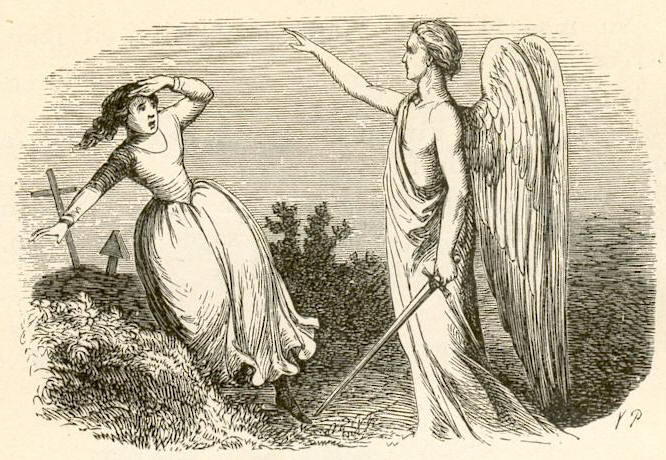
Illustration from The Red Shoes.

Illustration from The Red Shoes.

When I was growing up, every protagonist I came across in fiction–comic books and manga, novels, TV shows, movies–were people you automatically liked. They were sympathetic, they had problems you could identify with, or they found themselves in situations and something about them made you want to root for them, even if they were just good guys set up to fight the evils of the world. At that age, I probably couldn’t have imagined a protagonist who wasn’t likable.

As I got older though, I did come across protagonists who, for some reason or another, I just couldn’t like. And I realized, in some cases, that was the intention. Their creators, for whatever reason, wanted these characters to be assholes, or losers, or just so hateful you found yourself cheering a little when they failed. This had me asking: why would you want an unsympathetic protagonist? And can you actually have a good or even a successful story based around one?

I figured out answers to these questions a while back, but I’ve always wanted to blog about them. Now I’ve got the time, so I’d like to go into the strange phenomena that is the unsympathetic protagonist.*

First, why do authors sometimes write unsympathetic protagonists? It seems almost counter-intuitive: why would you want a character whom readers/viewers might hate? Well, one reason is as a moral warning. In the fairy tale The Red Shoes, the protagonist is vain and selfish, and her attitude leads her shoes being enchanted so that when she dances in them, she can’t stop until someone chops them off. I bet a lot of kids got the message loud and clear from that! Another example is from the novel The Coldest Winter Ever by Sister Souljah, in which the protagonist, the daughter of a crime boss, tries to regain her lifestyle and reputation after her father loses his empire. However, the protagonist uses mainly crime and manipulation to get what she wants, and looks down on getting a real job or an education. The result is that she ends up in jail and loses everything she ever cared about. The lesson? Crime doesn’t pay, go legit, and listen when people try to help you on the right path.

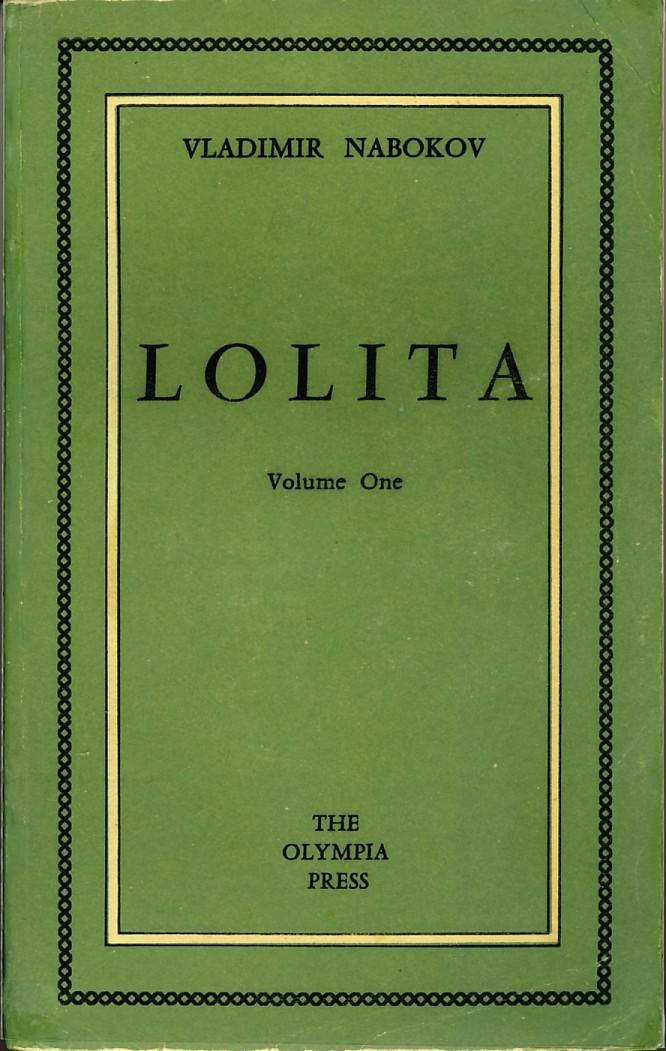
Another reason is that creators might want to explore territory previously unexplored, and characters whom you might sympathize or consider as heroes doesn’t allow that. Ever heard of Lolita? The entire story revolves around a man having a sexual/romantic relationship with a preteen girl and his attempts to control her and keep her with him forever. It’s a strange novel about desire, unreliable storytelling, and corruption (I think, anyway. I haven’t read this one yet, and given the subject matter, I’m not sure I want to), and it’s not a story we’d usually explore through the eyes of a likable protagonist.

Lolita: a great example of a book with an unlikeable protagonist.

Lolita: a great example of a book with an unlikeable protagonist.

And finally, there’s another reason: sometimes it’s just great fun! In certain stories with unsympathetic protagonists, you get a sort of excitement  that you don’t get from other stories, and this can come from the plot or the characters. In Gone Girl, for example, protagonist Nick Dunne is unlikable for any number of reasons, but you still follow along because you want to know if he really did do something to his wife, and if he’ll wiggle out of trouble whether or not he did do something. Another example we can look to is certain horror films, especially in the slasher genre, where the only mainstay is usually the villain and a lot of gory deaths. As part of that, slasher sequels often come to focus more and more on their villains, and people come back just to see these villains. Just ask anyone who enjoys a good Nightmare on Elm Street or Hellraiser film: they’re there for Freddy or the Cenobites, not for the horny teens who happen to be starring in the movie this time around.

So we’ve established why people create unlikable protagonists. The next question is, can you have a good and/or successful story with an unlikable protagonit? Well, I think that question was also answered above. The Red Shoes has been retold and revamped hundreds of times since Hans Christian Andersen first published his little morality tale. Lolita is considered one of the greatest works of modern and modern Russian literature, as well as one of the most controversial. Gone Girl was a runaway hit with a huge movie based on it. There is plenty of proof that unlikable protagonists can still be part of very good stories.

Neon Genesis Evangelion: great series, annoying lead.

Neon Genesis Evangelion: great series with an annoying lead.

Of course, this brings up another question: what makes a story with an unlikable protagonist good? Well, I often find that either the character is doing something pretty amazing, or the story or world is so amazing that even if you don’t like the character, you keep going for that story/world. Going back to Gone Girl, the protagonist is easy to dislike, but the mystery he’s wrapped up in is so intriguing that you want to find out more. That’s the example of a character doing something interesting. With an amazing story or world, I’d point to the anime Neon Genesis Evangelion: the protagonist is seriously unlikable, but the world he lives in is so cool–it involves teenagers piloting giant robots to fight aliens–that you just want to keep watching.

So you can have a story with a main character whom people may not like. As long as you give people a reason to keep reading or watching, it’s entirely possible. And who knows? Perhaps it’ll be one of the greatest stories ever written.

Just don’t do one centering around a pedophile. I think one of those is enough!

What’s your take on unlikable protagonists? Did I miss any good examples of the trope here in this post? 

*Oh, and in case anyone who’s not familiar is wondering, there is a difference between a hero and a protagonist. A hero is just that: a hero. They save lives, they fight evils, they are the ones we root for. A protagonist can be a hero and vice versa, but a protagonist is the main character, the person whom the story focuses on or from whose perspective we get the story. And as I outline in this post, that difference is bigger than one might think.

The NaNoWriMo logo/coat of arms.

Well, it’s December 1st. That means a couple of things: start of the holiday season and prep for the new year, the days get to their shortest point, I try to push a tag with the hope that it will become a trend (so far, it’s been hit and miss with those I’ve tagged). For writers around the world, however, it means National Novel Writing Month, and assessing how each person did and how their manuscripts turned out.

I’ve actually always found National Novel Writing Month, or NaNoWriMo for short, full of strange contradictions. For one thing, it takes place around the world, but it’s kept “national.” Heck, even the month’s official website puts you in touch with participants from all over the world! Why don”t we change the name?

For another thing, it’s amazing how many authors take this challenge seriously. For those of you who don’t know, during the month of November, many writers try to write a fifty-thousand word novel within 30 days (that’s about 1667 words per day if you want the math). And I’ve seen so many author friends on Facebook and in blogs lament how they only got so many words down. “I only got eight-thousand words.” “I was so close to 50K!” “This NaNoWriMo sucked! I hardly got any work done.” I don’t even want to know what they thought of the material they wrote.

Just for clarification, there’s no actual prize if you write a 50K novel in 30 days. You just get bragging rights. But plenty of authors see it as a reflection of themselves if they can’t get the words down. And I actually kind of understand this: on nights when I didn’t write anything down (and those nights occurred quite often, sadly), I felt like it was some sort of reflection on my skills or on myself as a writer. It didn’t matter if there just wasn’t enough time before bed, or if I had a book I really wanted to read, or if I just didn’t feel like writing that night. I felt bad. Maybe not as bad as I could have felt, I have a day job that takes up a good chunk of time, so I at least have an excuse for why I’m not writing more. But I bet for those who write full-time, it could be very frustrating when they didn’t reach their goals.

So how did I do, now that we’re on the subject? Well, I knew that with a job and that unfortunate habit of sleeping seven hours a night, plus eating and bill-paying and grocery shopping and everything else that goes on in my life, I had only so much time to do any work. Therefore, I decided that I would keep my expectations reasonable. I decided that I would aim to get ten-thousand words done, and if I got past that, I would aim for another five-thousand afterwards. If I somehow managed to get past that, I’d aim for five-thousand more, and so on and so forth. The result was I probably felt less stress than my colleagues, and I consequently met my first goal, and got more than halfway to my second goal.

To be exact, I got 13,821 words down by the end of the month, about four-and-a-half chapters worth of story. It wasn’t easy, but I managed to do it. How did it turn out? Well, I guess as well as a first draft can turn out. I mean, it’s only in the subsequent drafts that novels actually become the brilliant stories we all hold so dear. During the first drafts, they’re like pre-Fairy Godmother Cinderella: full of beauty and potential but in need of some serious clean up. My own NaNoWriMo project, Full Circle, has a lot of good stuff in it so far. It’s the third book in my Reborn City series, and considering that I started this series about eight years ago, this novel is already showing my growth over that time the most more than any recent story I’ve written.

Still, I think Chapter 1 could use a lot of clean-up. There’s a lot of exposition there, so making it work with the real storytelling moments is important. And possibly the prologue could use some polish as well. Yeah, I included a prologue with this book. New thing for this series, but I think it’s good for this book. Just needs some edits.

In the meantime though, I still have an entire novel to finish, and it’ll probably be a lot longer than 50K. I’m hoping that I can finish it by mid-spring 2017, and have it out early 2018 at the latest. We’ll see what happens.

Well, that’s all for now. Unless there’s something worth posting about, I’ll try to put out a Writing/Reflections-themed post out at some point during that month. In the meantime, it’s writing, writing, writing, and hopefully a lot of it.

Until next time, my Followers of Fear!

first-day-first-paragraph-tag

It’s that time again. Time for the “First Day, First Paragraph” Tag. This is a tag I created myself, and I’m still trying to see if I can make it take off. And who knows? Perhaps this month I’ll see this tag take off on other blogs.

So once again, let’s go over the rules. Once tagged for “First Day, First Paragraph,” you have to do the following:

  1. Publish your own post on the first day of the month.
  2. Use the graphic above
  3. Thank and link back to the person who tagged you.
  4. Explain the rules like I’m doing now.
  5. Post the first paragraph of a story you’ve written, are writing, or plan to write someday.
  6. Ask your readers for feedback.
  7. Finally, tag someone to do the post next month (for example, if you do the tag on the first of August, the person you tag has to do it on the first of September), and comment on one of their posts to let them know the good news.

As you can see, this came out on December 1st. I’ve used the graphic above, which is of my own design. I won’t thank myself, as I talk to myself too often, and I don’t need to start talking back. Explained the rules. And now to post a paragraph. Last month I did the first paragraph of Reborn City, in honor of the three-year anniversary of that novel coming out. I think this month I’ll do Video Rage, RC‘s sequel, which came out back in June. If you would like to check out either novel, make sure to head to the series page above this post for descriptions and links. Enjoy.

The sunbaked concrete and metal in the hundred-plus degree heat, the many cars and trucks reflected light off their chrome bodies like blinding beasts zooming down the highway. As truckers listened to country and rock music and children played video games on the backs of their parents’ car seats, some occasionally looked out to see a marvel of the modern world on the road. Five black hoverbikes, each with two people straddling the seats, zoomed between vehicles as they floated a few feet above the ground. Those who saw them marveled, paying no attention to the riders, who would’ve warranted their own attention if the drivers knew who they were.

Thoughts? Comments? Let’s discuss.

Okay, now I have to tag someone. This month, I’m going with a good friend who enjoys reading my books when she has the time. Ruth Ann Nordin, you’ve been tagged. You’ve got to do this on January 1st. Better schedule this post to come out ahead of time!

That’s all for now, my Followers of Fear. I plan to have another post out later today with a wrap-up of NaNoWriMo, so keep an eye out for that. Until next time!

An author’s career is never a linear progression. It will often twist and turn and even take detours on occasion. It’s like driving through the American Appalachian mountains from Ohio to New York that way.

Similarly, my own writing career has not been linear in its progression. Back in college, as some of you may remember, I had trouble breaking into the traditional publishing scene. I couldn’t find an agent, and I was getting frustrated. Some friends of mine online had found some success self-publishing, so I went that route. And that’s kind of been my route since 2012 or so.

The problem is, self-publishing hasn’t gone the way I expected. I did it in the first place so that I could reach readers faster. And four books later, while I have reached readers, I haven’t reached as many readers as I would like. And while writers write to get stories out of our heads and onto the pages, and as a labor of love, writers publish because they want to share their stories with as many people as possible.

Now, one could argue that I just have to give it time, and the cosmos will make things work out. But if I’ve learned one thing in this business (and I’ve learned many things over the many years of writing), it’s that you have to try new things. And if one thing doesn’t work out, then to keep going at it just isn’t an option. In fact, that’s one definition of insanity. So, I have to try doing something different.

And I think that now is a really great time for me to try the traditional route again. Over four years, several college courses, reading works by a variety of excellent authors (and a few bad ones), and tons and tons of practice, I’m a much better novelist than I was. I think it could go well for me.

At the moment I’ve sent a few query letters out for Reborn City, which is my strongest work, and which I think, in the wake of the American presidential election, might go over well with agents. It’s a story set in a world very similar to what ours seems to be coming to, but with a bit more hope mixed in. If that doesn’t go well, I’ve got a million ideas, plenty of time to write, and a paying job to tide me over until I hit something that works.

Hey, if I can survive a nearly year-long job search and land a great job with an excellent organization, I can surely do this, maybe even over several years.

And if I’m lucky enough to get a contract with an agent and a publishing company, I might still self-publish from time to time. There are plenty of authors who do that. They’re called hybrid authors, and they usually self-publish when a story they wrote and really liked isn’t really what the publisher tends to go for. Heck, I think His Royal Scariness, Stephen King does this from time to time. Or maybe just the once.

In the meantime, I hope you continue to support me as a person and as a writer. And if you want to read one of my books, I’d be so happy if you did. It would certainly make my day.

Wish me luck, my Followers of Fear, as I set out on this latest fork in the road that is my writing career.

NaNoWriMo update: As of this weekend, I’m over ten-thousand words on Full Circle. And my God, it’s coming along great. True, it’s the usual quality of first drafts,  but I think FC really shows how much I’ve progressed as a writer from Reborn City. I can’t wait to see what people think of it when they read it.


Last night, I went to a dinner for young Jewish professionals in Columbus, the kind where one can socialize with other members of the tribe in the same age group while enjoying a kosher meal and an open bar. I love these dinners when they’re held: you can see people you know or have never met before, have conversations with similar threads about a thousand times over, forget most of what’s said, and still have a good time, all while enjoying a kosher meal. And, on occasion, I meet people who are interested in reading my books, so I make sure to have the latest business card with me when I do go to these things.

At last night’s dinner though, I had an interesting encounter that I feel like blogging about, if only to get it out of my system. While walking around between conversations, I ran into a guy I was acquainted with, who we’ll call “Eric,” a friend of a friend I knew in high school. The first time I’d met Eric had been at one of these dinners, and he’d seemed pretty impressed when I’d mentioned I was a published author I ‘d given him my card then, and had hoped that he would maybe check out one of my books and let me know what he thought.

To my surprise, pretty quickly Eric told me he read my books, and enjoyed them, had said I was talented and had an amazing style. I was flattered…for a second. But there was just something that felt…a little off. The amount of enthusiasm, the look in his eyes, the body language. I asked if he would consider writing a review for one of my books online, and he said he would, he totally would. Again, the way Eric said “totally” and the way he moved his body while he said it, like he was trying to distract me with the movement of his arms, just seemed off. Finally I asked him to name one of the books he’d read and enjoyed. As I half-expected, he couldn’t name a single one. At that point, I just gave him a card and moved on.

There are a lot of reasons why people don’t read my books. I’m not still very well-known, my books cost money and aren’t available at a lot of libraries, some people don”t like to read, some people don’t care for the genres I tend to write in, busy lives, they lose my card, or a number of other reasons. If Eric had said any of those from the beginning, I would’ve been cool with it. I’ve dealt with close family and friends who haven’t read Video Rage yet. I’m not happy about it, but I accept it because I know that I can’t control other people’s lives or what they do in their lives. But outright lying? I’m just not cool with that.

I put a lot of work into the stories I write. Yes, they’re mostly a labor of love (or a reason to get them out of my head and onto the page so it’s a bit less cluttered up there), but I want others to enjoy them as well. And Eric may have felt guilty that he said he’d check them out the last time we’d spoke and that he hadn’t, but lying about it, especially when it’s so obvious, doesn’t help. For one thing, it gets my hopes up needlessly that I’ve touched another person with my work before causing those hopes to plummet into my shoes. For another, lying about reading a book (let alone four) is one of the easiest to debunk. I debunked it in a single sentence! And that just make things awkward.

I guess what I’m trying to say here is, if you haven’t read a book, just say so. Don’t try to lie about it. We authors are used to it, and most of us aren’t sensitive enough that we throw hissy fits when we find out you didn’t read our books. And if you do read our books, thank you. We hope you enjoy them, and let us know if you did.

NaNoWriMo update: Five days in, and I’m a bit over twenty-four hundred words into Full Circle. I haven’t had that much time to write since Thursday, so this is the most I’ve been able to get. Still, the fact that I made it this far in the first week is still pretty nice. Hopefully I’ll get a bit farther along tonight. Wish me luck!

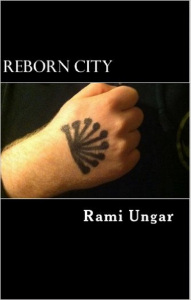
Reborn City, my first published novel

Reborn City, my first published novel

One hot summer day eight years ago, a young high schooler was walking home from the library with the plan to stop by Dairy Queen and grab some ice cream. While he was walking, he was listening to a new CD he’d picked up from the library, the soundtrack to a movie he really liked. And while he listened to the first track, a rock/hip-hop style song called “Stoopid Ass,” he found himself thinking of another movie he’d seen recently and really enjoyed, Freedom Writers. He loved that movie, about how gangsters were inspired by a teacher to be more than what they and others thought they could be. The high schooler thought about how the song he was listening to might have fit well on the soundtrack for that movie as well. And then, very casually, he thought to himself, “I should write a gangster story.”

And like that, ideas started exploding like fireworks in his head. He began thinking of ways to make it more unique compared to other gangster stories, where to set it, what sort of characters there should be. He spent the rest of the afternoon thinking of his new story and what kind of story it could become. The very next spring, he started writing it, making a few notes in a notebook before creating an outline on a laptop in his mother’s basement, which was his usual writing space in those days. Over two years, he wrote and wrote, until about a month before he graduated high school, he finished his new novel, Reborn City, a story about street gangs in a dystopian future and the trials they face while trying to find a life better than the ones they’re currently living in.

In college, he edited and edited, and had a friend help him make sure he missed nothing with the final draft. Because he wasn’t having that much luck finding an agent or a publisher, he took advantage of the growing self-publishing industry, and published Reborn City on November 1st, 2013. Some months later he finished writing the sequel, Video Rage, which he’d begun writing over the previous summer, and which he published in June 2016, the day after he moved into a new apartment to be closer to a new job. And today, on November 1st, 2016, he’s going to start the final novel in the Reborn City series, Full Circle.

Video Rage, the second book in the RC series.

Video Rage, the second book in the RC series.

Switching to first person, I’m very excited that I’m finally at this juncture at this series. The Reborn City series has been a labor of love for so long, about seven or eight years worth of sweat, blood and tears. And it’s been worth it. A lot of people–some of whom are not related to me and obligated to read my books, surprisingly–have discovered the series and enjoyed reading it. Nobody’s told me yet that the series has changed their lives (I hear that’s rare anyway), but they’ve told me how they identified with the characters, or how imaginative the world of the story is. And one person told me that some of the themes in the book–racism, Islamapohobia, terrorism, urban violence, etc.–make the series pretty relevant to today’s problems, which I feel is quite the compliment.

And tonight after work, I’ll be starting the final book, Full Circle. Honestly, I’m a little surprised that I’ve made it so far. Even after Video Rage came out, I kind of felt towards Full Circle like George Washington and Benjamin Franklin probably thought about the end of the millennium: it’ll happen, but it’s so far away, why even bother thinking about it?  And now I’m about to start work on it, on the same day I published the first book in the series. Boy, did it creep up on me.

You know, in a strange way, I feel like I’ve come full circle, just like this book’s title. When I published the first book, I felt like I was starting something really big, even if the book never sold a million copies or was well-reviewed. And now that I’m starting the final book, it feels like I’m starting the beginning of the end of something, in more ways than one. It’s really exciting, and I can’t wait to see where it brings me.

So, what can readers expect from the last book? Well, I’ll keep the spoilers away for readers who haven’t read the books yet and might want to, but I’ve got some fun stuff planned for Full Circle. For example:

  • I’ve got a great line-up of antagonists. I always knew for the final book, I wanted bad guys like nothing seen before in the series. And I’ve come up with those villains. As a group, they’re called the Navagraha, which is a Hindu form of astrology revolving around seven gods and two demons, and they’re going to push the main characters in ways they’ve never been pushed before. You’ll also get to see an old foe of the main characters, Jason Price, transformed in ways that make him even more evil than he was before. I’m going to have fun exploring his character in this new role for him.
  • New revelations and challenges. In addition to the Navagraha and the challenges those guys pose, the main characters will have to deal with some changes that they never saw coming. Our male lead Rip will learn things about his past, a past that he thought was lost to him. And Iori will find herself in an unimaginable position, and what she decides to do once there will affect her in so many different ways. Not to mention, finding herself in this position brings about new choices for the main characters, new paths they can take on the road of life that they thought closed to them.
    I know, sounds very vague. But I’ve been setting some of these things up since as far back as the first book, and I’m looking forward to writing them. When you, dear Followers, read them, I hope you find them just as enjoyable.
  • I’ll be doing my best George RR Martin impression. By that, I mean I’ll be killing off a lot of characters, including ones that readers may really like and be attached to (you thought that I was going to have lots of politics and gratuitous sex, didn’t you? Nope, not that kind of series). I really don’t want to kill off some of these characters, but I feel like it’s best for the story if I do. So get your tissues ready. I’m wielding an executioner’s axe with my laptop, and it’s about to rain heads.

That’s all for now. As it’s National Novel Writing Month, I don’t know if I’ll be very active on the blog this month. You know, trying to get as much of fifty-thousand words in a month written as possible. But I hope you’ll still continue to support me as I work hard to finish this series and bring the final book to you guys. In the meantime, if you would like to check out Reborn City and Video Rage, I’ll post the links below. If you end up getting a copy, and you like what you read, please let me know what you. Positive or negative, I love feedback from readers on my work, and I would love yours.

Until next time, my Followers of Fear!

Reborn City: Available from Amazon, Createspace, Barnes & NobleiBooksSmashwords, and Kobo

Video Rage: Available from Amazon, Kindle, CreatespaceBarnes & Noble, iBooks, Smashwords, and Kobo
first-day-first-paragraph-tag

So I’m doing this again. I created this tag, and I’m hoping that I can really make it take off. In order to do that, I need to do it a few more times in order to see if I get results. Hence round two.

So, let’s reiterate. Once you’ve been tagged for “First Day, First Paragraph” tag, you have to do the following:

  1. Publish your own post on the first day of the month.
  2. Use the graphic above
  3. Thank and link back to the person who tagged you.
  4. Explain the rules like I’m doing now.
  5. Post the first paragraph of a story you’ve written, are writing, or plan to write someday.
  6. Ask your readers for feedback.
  7. Finally, tag someone to do the post next month (for example, if you do the tag on the first of August, the person you tag has to do it on the first of September), and comment on one of their posts to let them know the good news.

Published on November 1st? Check. Used the graphic above? Check. Thank and link back to the person who tagged you? I’ll pass, because I’m the one behind this tag, and I talk to myself too much already. Explaining the rules? Kind of doing that right now.

As for the first paragraph from a story (potential, WIP, or already written), I’ve got a special one for today. It’s November 1st, which has a special meaning for me. Three years ago, I published my first novel, Reborn City, a science-fiction novel about street gangs in a dystopian future. Today, as part of National Novel Writing Month, I’m starting work on the final book in the series, Full Circle. So, I figured it was just right to post the first paragraph from Reborn City here. Enjoy:

Zahara and her family had decided to eat out at a restaurant in North Reborn that served kosher meat, the closest they could get to halāl. “I know it’s for Jews mostly, but it’s a very nice place and the Jews were very nice to us in New York.” Zahara’s father, Emir Bakur had said when he’d suggested it. “They know they don’t have to fear Muslims anymore. And the Chaplinsky family in 4F was nice enough, right?”

Reborn City, my first published novel

Reborn City, my first published novel

Thoughts? Comments? Let’s discuss.

And finally, let’s tag someone! I mentioned last month that there were two people I really wanted to tag for this thing, and I had to choose. Now it’s time to choose the person who didn’t get it last month. Joleene Naylor, you’ve been tagged for “First Day, First Paragraph.” On December 1st, you have to do the tag. Have fun!

That’s all for this post. Make sure to check out the post for Reborn City‘s three-year publication anniversary and my plans for Full Circle after you finish this. See you there!

My latest post from Self-Published Authors Helping Other Authors, Reestablishing a Writing Routine, has just gone live. This one is based on very recent and personal experiences, and I’ve been waiting for just the right moment to release it. Now it’s out, and I hope you check it out. It has great advice on how to get back into writing after a major life-change shakes up an already established writing routine.

If you check it out, I hope you like it. And if you have the time, I hope you check out the rest of the site. It’s brought to you by authors, the articles are from authors, and they’re for authors. If you need help writing, editing, publishing, and marketing when you’re doing it mostly on your own, this is the site for you.

That’s all for now, my Followers of Fear. I hope to have another post out in the middle of the month. Until next time!

My copy of To Kill a Mockingbird by Harper Lee.

My copy of To Kill a Mockingbird by Harper Lee.

So I recently bought my own copy of To Kill a Mockingbird, something I’ve been contemplating on doing since I listened to and reviewed Go Set a Watchman last year (more on that later). Reading the book, which I hadn’t read since eighth or ninth grade, I realized two things: one was that a lot of my memories of the Mockingbird book had been clouded and confused with the Mockingbird movie. The other was that this merited discussion. And where better to discuss it than on my blog?

I finished the book on Tuesday and watched the movie that night, but couldn’t really blog about it till now because I only have so much time, and what little I have goes by rather quickly (dammit Time, you’re still a quick bastard, aren’t you?). This article will be part review, part reflective essay, but all about what is obviously one of the best pieces of American literature ever written. So without further ado, let’s get into it.

The Book. To say the least, I’m glad I reread the book. I’m not sure if I just didn’t absorb the details as well the first time around, or if I just have a worse memory than I thought, but a lot of what made the book so wonderful hit me like it was my first time reading it. The text is beautiful, full of a smart child’s observations about events that an adult might have trouble absorbing, and all with a somewhat poetic innocence and beauty. You find yourself discovering all sorts of ironies and hypocrisies with Scout Finch, and you find yourself also wanting to explain to her these ironies and hypocrisies that, to her, are too confusing and that the adults can’t seem to explain to her very well.

And like I said earlier, I had quite a revelation about how much I confused the book and the movie. For instance, Scout’s a lot girlier in the book than in the movie. Yes, she’s still quite the tomboy in the book, but the movie emphasized that more, even to the point where she says she hates dresses. In the book, Scout doesn’t seem to outright hate dresses, she just prefers overalls. She also wants to be a good housewife when she grows up and take care of her husband, and she dreams of being a baton twirler when she’s in high school, which are something I can’t imagine Mary Badham’s Scout ever wanting to do. Yeah, these aren’t big differences, but they’re differences nonetheless.

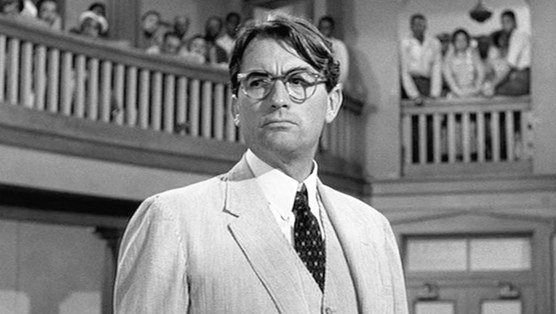
What really surprised me though was the difference in Atticus’s character.* I’ve had this image of Atticus being like this perfect being, a giant of a man with the wisdom of Merlin and the morals of Abraham. However, this is only the movie’s version of Atticus. While Atticus is definitely a moral force, he does struggle in the book. You see it, every decision he struggles with. At times, you can feel him trying to figure out what’s the best move, whether it’s raising his children or trying to be a good lawyer and a good citizen. It was quite the surprise, but I like this version of Atticus more. A character who struggles to do the right thing is always easier to identify with and root for than a character who always does the right thing without question, and that makes the story all the more powerful.

Atticus Finch in the movie, as played by Gregory Peck.

Atticus Finch in the movie, as played by Gregory Peck.

The Movie. I love how the movie started with Scout just humming and coloring. It embodies the innocence that Scout somehow manages to maintain throughout the story. The actors all do very well in their roles, though I thought that the actor who played Bob Ewell could have looked a bit more unkempt and hateful, because he looks like just a regular farmer here. The film is smart in how it sticks to the most important points of the story, namely the trial and the children’s relationship with Boo Radley, as well as the family moments that allow the audience to get to know the characters. I would’ve liked to see more of Dill Harris, as his role is really scaled down in the film, and his exit from the movie is abrupt and not commented upon. Still, it is a really wonderful film. I’m glad I watched it again, and I hope it never gets remade (though if Hollywood is desperate enough to do so, cast Zachary Quinto as Atticus. He’s a bit young for the role, but he’s just an amazing actor. He could pull it off).

Overall thoughts. This book is just as relevant today as it was when it came out in 1960. Now I know to some people, that seems like a no-brainer. After all, the book is taught in schools every day, illustrating the racial climate of both the 1930’s and 1960’s. And yes, that is true, but Mockingbird‘s themes can be applied today. Look at the Black Lives Matter movement: it’s a movement that’s fighting against racial injustice in the justice system, trying to keep black men, women, and children alive when many are accused and sometimes even killed for crimes they did not commit. And people who would readily smack down Adolf Hitler have called these protesters thugs, criminals, terrorists for wanting things to change, and to not have to feel fear while walking down the street. Exactly like Mockingbird. And all too often, you hear people make sweeping generalizations about minorities, especially minorities who are “dangerous,” or a threat to social order. This happens in Mockingbird as well, and it’s scary to see something in a novel about the past happening in my present. And it makes you question how far we’ve really come since then.

One of the best lessons from Mockingbird is that you can’t really know someone until you walk in their shoes. I don’t remember if this point was emphasized as much in my classes back in the day (and as students at an all-Jewish school, we’re all-too familiar with what it’s like to be a persecuted people), but it’s something that should be emphasized more in examinations of Mockingbird. Because it’s all too easy to be scared of someone, but it’s difficult as hell to empathize and see things from their point of view.

Whether it’s the book or the movie, really, To Kill a Mockingbird is just a powerful story. It’s beautifully written and told, the characters are timeless, and its lessons are things we can all take to heart, no matter what age it is. I’d be lucky to write something just as earth-shattering someday. Because Mockingbird isn’t just a great example of American literature. It’s an exploration in what it means to be a human being.

That’s all for now, my Followers of Fear. My next post will be at some point Saturday, so keep an eye out for it. Until next time!

*Speaking of Atticus’s character, something I just want to talk about real quick. When Watchman came out last year, there was all this controversy about Atticus being revealed as having racist leanings. Not the best thing to have in a sequel, is it? Well, I didn’t know this when I wrote my review, but apparently Watchman was not a real sequel. In actuality, it was most likely a very early draft of Mockingbird. This makes all sorts of sense to me, especially in light of my rereading Mockingbird. For instance, Watchman spends a lot of time going back and forth between events in Scout’s childhood and in her adulthood, which doesn’t happen at all in Mockingbird. A weird move for a sequel. That, and Atticus isn’t the only character who’s changed a bit: Uncle Jack Finch is portrayed as more eccentric in Watchman than in Mockingbird, which seems unusual as I’m sure Scout would have noticed his uncle’s oddness as a child. Most damning of all, though, is that the trial in Mockingbird is only barely in Watchman, and Boo Radley, who’s so essential to Mockingbird, isn’t even mentioned in Watchman! Very odd, to say the least.

And from a writer’s experience, I can tell you that stories can change dramatically between drafts. Some of my own stories have gone through great transformations from first draft to final publication (I should do an article on that!). That’s why Watchman, an early draft, is so different from Mockingbird, the final product.

So fear not, folks. Atticus isn’t really racist. An early version of him was, but I think the final version, who defended Tom Robinson and who said cheating a black man was ten times worse than a white man, isn’t a racist at all. He’s still a great idea of what we can be. He’s human, he struggles with his decisions, he’s not perfect. But he is a good man without prejudice. And that’s the version we love the most.

And Watchman? Well, it’s a pretty blatant attempt to capitalize on an already-famous book, but it’s good in its own right. Just remember its origin and don’t get too depressed over certain characterizations when you read it. That’s all I can say at this point, friends and neighbors.

RC cover

So my friend and colleague Ruth Ann Nordin (check out her blog here) emailed me at some point last night, saying that she had read Reborn City and had posted a review on Amazon. Obviously, this got me excited, as I love getting feedback from readers, and I especially like hearing it from authors I respect and admire (which reminds me: Ruth, thanks for reading RC! I hope you enjoy Video Rage when you get to it!). So I was eager to see what she posted online. As I hoped, the review had only nice things to say.

Now if you don’t know what Reborn City is, it’s the first book in a science fiction trilogy I started writing in high school. It follows the trials of a street gang called the Hydras living in the titular city, the leaders of which have strange powers. The story has a lot of themes that are relevant to today’s world, including Islamaphobia, racism, drug addiction, gang violence, and, perhaps most importantly, overcoming what you think of yourself and what others think of you. Reborn City‘s sequel, Video Rage, was released this past June, and I hope to start on the final book, Full Circle, later this year.

Now back to Ruth’s review. I was very happy to see that she gave RC a five-star review (bringing the book’s total rating to a 4.8 out of 5), and titled her review Read like a movie. Here’s what she had to say on the book (and I’m warning you now, her review does have a couple of spoilers! So be aware before proceeding):

I decided to read this book because I know the author and have enjoyed his other works. I’m not a fan of books about gangs, so I wasn’t sure if I’d enjoy this story, to be honest. But I felt an immediate connection to the main characters right away, and this compelled me to keep reading.

SPOILER ALERT: This book took an unexpected turn. About halfway into it, it became apparent that the main gang members were special, and it was the unusual interest a shady government operation was showing in them that really pulled me in. There is an awesome genetic engineering component that I love in books and movies. The gang’s backstory was one of the best I’d ever read. This is a book that didn’t disappoint the sci-fi thriller lover in me. In my opinion, this would make a great movie.

As a warning, there is a lot of cussing. The violence wasn’t all that bad (maybe a PG-13).

Funnily enough, I usually write my books like a movie in my head, so the movie comparison is pretty on the spot. Not only that, but I think a Reborn City movie would be pretty awesome. Especially if we get Tyler Posey from Teen Wolf to play male lead Rip and Samuel L. Jackson from to play main antagonist Jason Price.

If anyone here knows those guys and can get them to read the book, please do so! I’d love for them to read it, and maybe like it enough to help produce a movie version. Let’s make that happen, okay?!

Anyway, this review matches what a lot of other people have said about RC in their reviews:

This is an extremely commendable effort by a new young writer, whom I believe we will see much more of in the years ahead. Rami Ungar’s vision of a frightening dystopian future is peppered with those elements that make us all human. There are quite a few surprises in the book, and I am anxious for the next volume in the series to be released.

Marc M. Neiwirth

This is not a genre I typically delve into, but I took this book on vacation and couldn’t put it down. The plot had me turning pages at quite the clip. The characters were unique and interesting and the imagery had me creating my own visual of what Rami’s interpretation of the future looked like. For first time novelist, Rami Ungar, this was an outstanding showing of talent and commitment to his passion of writing. Looking forward to seeing what he comes up with next!

Michele Kurland

Gangland violence, superhero-like enhancements, a futuristic setting, and social commentary that stems from a semi-post-apocalyptic theme. And then there’s a story where people come together as a family to deal with mutual loss and tragedy. What’s not to like?

Matthew Williams, author of Whiskey Delta and Papa Zulu

VR CS front cover

If any of this has made you want to check out Reborn City, I’ll provide the links below, as well as for its sequel, Video Rage. And if you do end up reading the book(s), I hope you’ll let me know what you think. Positive or negative, I love and appreciate getting feedback from readers, and it makes me a better writer when you folks tell me what works and what doesn’t.

Well, tomorrow’s Friday, so you know what that means. While I prepare for that, I’m also posting the link to an interview with Awesome Book Promotions that came out yesterday. So check that out, if you so desire. It’s pretty awesome, as the title suggests.

Until next time, my Followers of Fear!

Reborn City: Amazon, Createspace, Barnes & NobleiBooksSmashwords, and Kobo

Video Rage: Amazon, Kindle, CreatespaceBarnes & Noble, iBooks, Smashwords, and Kobo