Posts Tagged ‘celebrities’

Only the worst of the worst get to hang out here.

Yesterday we took a look at my choices for #10-6 for my top villains list for 2014. Today we look at the Big Bads, the worst of the worst, the folks and creatures we should all fear in our sleep. These top 5 villains are the ones that have amazed, impressed, and/or terrified me the most.

And remember to click here if you’d like to compare #10-6 and #5-1 from last year. Here we go! Mwa-ha-ha!

5. Jennifer Blake (from Teen Wolf)

Once again we have another villain from Teen Wolf, this one from the first half of season three. At first, you think the only thing that the main characters have to worry about is a pack of Alpha werewolves, but then Jennifer Blake comes into the picture. At first just an innocent English teacher who becomes Derek Hale’s love interest after a close encounter, she is actually the Darach, a Druid gone bad, and she has all sorts of dangerous magic on her hands, which she enhances through elaborate human sacrifices. All in the name of revenge against t;he Alpha werewolves who betrayed her several years ago. Her devious tactics, her theatrical flare, and the lengths she’s willing to go are enough to put her above the wily Nogitsune, who was only out for some twisted laughs.

4. The Murder House (from American Horror Story)

I’ve always maintained that a setting can be as much a character as your other characters, and that especially goes for haunted houses. In this house in particular, we feel it as a character, a force with a devious and wily personality for drawing in the innocent and guilty alike, twisting their minds and then trapping their souls forever. All for a very dark purpose that isn’t revealed until the very end of the first season of the groundbreaking FX show. Trust me, you do not want to spend the night in this place. EVER!

3. Dr. Oliver Thresden/Bloody Face (from American Horror Story: Asylum)

Movie and TV serial killers are hard to make unique. A few even come out looking like carbon copies of Jason Voorhees or Michael Myers. In AHS‘s second and much darker season, they not only give us a serial killer with character development, but with a soul. Dr. Thresden originally arrives at Briarcliff Manor to perform a psych evaluation on protagonist Kit, who is believed to be the infamous serial killer Bloody Face. Dr. Thresden ends up staying on to help update Briarcliff’s outdated methods to treating insanity. He takes a special interest in leading lady Lana Winters, a lesbian who, after some failed aversion therapy, he deems sane. After helping her to escape the asylum though, he reveals himself to be Bloody Face, and he is looking for a woman to be his mother, his real mother having abandoned him years ago. With an unhealthy preoccupation for human skin and for his mommy, Bloody Face may at first seem like a bad copy of Leatherface, but in reality he’s unique in so many ways. Played by actor Zachary Quinto, it’s no wonder this character was nominated for so may awards, and won a few as well.

2. Hannibal Lecter (from the books by Thomas Harris)

Our only returning villain from last year, Hannibal Lecter earns his spot for his incredible ability to continue to terrify and manipulate us on the NBC show Hannibal. Honestly, watching Mads Mikkelsen perform in the iconic role is a dark pleasure. In this previous season, he managed to keep the authorities dancing around him, even as some of them began to suspect that he was the Chesapeake Ripper. What’s most horrific is that he almost manages to get protagonist Will Graham to become just like him, a monster without a conscience who likes to see what happens on impulse. And the way he sets things in motion is like watching a Rube Goldberg machine in motion, only with people involved. Until the very last episode and the awesome twists and turns, you’ll be on the edge of your seat wondering what will happen next I’m looking forward to season 3 next year. I hope they can keep up the fun!

1. The Weeping Angels (from Doctor Who)

Our winner this year for Top Villain is another creature from Doctor Who, but this one is slightly stranger and more sinister than the Daleks. The Weeping Angel is a strange being. It can only move when it isn’t seen, thus it keeps its hands over its eyes in case its working with one of its own kind. When they take their hands off though, they reveal monsters that are anything but angelic. And you literally can’t even blink in front of them, because they can move even between the opening and closing of your lids to get you. Once they do, they’ll send you back in time so that you die maybe hundreds or thousands of years before you were born, while they feed on the displaced time energy that results from your timeline into the future being erased. Created by show runner Steven Moffat, these are probably one of the Doctor’s most terrifying enemies, enough to make my sister scream in fright when they feature in an episode. If you ever watch the episode in which they debuted, Blink, you’ll know why.


That’s all for this yer. Join me in 2015 for another Top 10 list. Maybe making the list will be thesis deadlines, because that will be one of the scarier things I’ll have to deal with in this coming school year.

Anyway, hope you had fun reading my Top 10 Villains list. Have a good day, my Followers of Fear. And let me know what you think of the list. Who do you think should have gotten on? And was there anyone here you agreed or disagreed with? I’d love to hear your thoughts.

I’ve been meaning to do this post for a while, but with Laura Horn still needing to be finished and everything…

Anyway, last year I did a countdown of my favorite villains from fiction (to read that contest, click here for #10-6 and here for #5-1). I’m doing it again this year to show case the awesome villains that have impressed and terrified me since that list last year. And a lot has happened over the last year: we’ve got only one person is returning to the list from last year, which just goes to show that Hollywood/New York/everyone else can come up with some really amazing villains sometimes. In fact, I’d like to announce our honorable mention now: Peter Pan from Once Upon a Time. The revisionist fairy tale show came up with a unique take on the classic character as a manipulative sociopath living in a magical Lord of the Flies kingdom who will go to any lengths to stay young, free, and powerful forever. Creepy!

Now let’s get this show started with the first half of the list!

10. The Daleks (from Doctor Who)

Despite their at-first rather ridiculous appearance, the Daleks are terrifying to behold. A genetically-engineered creature living inside a cyborg transport machine, the Daleks are a powerful metaphor for racism, particularly Nazi racism. That, their pure destructive force, their popularity with fans, and many other reasons is why they’ve continued to terrify children and adults since their debut in 1963, and are still part of DW lore and pop culture today. Honestly, even though I love Daleks, if one of them shouted “EXTERMINATE” near me, I might freak out myself.

9. Bughuul (from Sinister)

Sinister is probably one of the best horror films in the past ten years, and Bughuul, also known as Mr. Boogie, is one of the main reasons for that. Portrayed by Nick King, Bughuul is a reimagined boogeyman, a Babylonian god that causes children to murder their families and then feeds on their souls for centuries in his spirit world. Throughout the movie, Bughuul weaves a web of psychological terror around the main character and around the viewer, even up until the final moment of the film. It’s no wonder a sequel is in the works, and no wonder Bughuul deserves a place on this list.

8. The Headless Horseman (from the Sleepy Hollow TV series)

In this reimagining of the classic short story by Washington Irving, the Headless Horseman is one of the Four Horsemen of the Apocalypse, specifically Death, and he’s looking to find his head so he can continue with his mission to start the end of the world. Not only that, he is looking to gain his revenge on Ichabod Crane, whom he has a strange history with, and the revelation of that history just makes things that much more exciting in this awesome show. Also, it’s so cool to see the Headless Horseman riding down the street with an axe and automatic weapons. Total badassery right there.

7. William Lewis (from Law & Order: Special Victims Unit)

Portrayed by Pablo Schreiber, Lewis appeared in the finale of Season 14 and throughout Season 15 and is probably one of the worst villains ever to be on the show in its 16-year run. A monster who gets his kicks from terrorizing his victims and putting them in pain and agony, Lewis kidnapped Detective Benson and tortured her even as he was running from the cops who were looking for him. Even after he was caught, Lewis continued to find ways to harass Benson both in person and in her nightmares, and even escaped to cause more terror. Even after committing suicide, he nearly destroyed Benson and a few other people too. A man like that is the worst, and deserves his place on this list.

6. The Nogitsune (from Teen Wolf)

Season 3 of the hit MTV series was unique in several ways, particularly because it was literally two seasons in one, each half comprising of 12 episodes. The latter half of the season featured the Nogitsune, a fox spirit of chaos who causes murder and mayhem wherever he goes. And all for the sake of a few laughs. When he possesses one of the main characters, you know you have reason to be afraid. Especially when he starts out his day by telling his potential victims riddles.


That’s all for now. Tune in later this week when I list #5-1 of my top villain list. And let me know what you think of these villains. Like them? Hate them? Who do you think should have gone on the list? Let me know in the comments below.

Today during my lunch I started watching the Fourth Doctor serial The Sontaran Experiment. Later this week or next I’ll start watching the Fifth Doctor serial Arc of Infinity, and by the end of the summer I’ll probably have watched quite a few more serials. In short, I’ve been bingeing and will continue bingeing on Classic Doctor Who for a while.

Classic Who is pretty interesting. The show lasted for 26 seasons, usually around 20 or so episodes a season, and ran from 1963-1989. They went through seven different leads, at least fifty companions, and a whole host of supporting actors, cameos, writers, directors, producers, and other crew members during that time, becoming one of sci-fi’s biggest staples and was revived twice, once in a TV movie and again in a new TV series whose eighth season (or series, as they call it in the UK) will premiere in a month and a week. This is all quite amazing, considering that Classic Who had a fairly limited budget for special effects.

And I mean fairly limited budget. Like Star Trek in its early years, and occasionally even worse than that. The first couple of years under the Third Doctor, most serials were confined to defending the Earth because of budget cuts preventing the filming of stories taking place in fantastic and strange locales. And even at the best of times, the special effects weren’t that great. Check out this clip from the Third Doctor serial The Three Doctors (also the first serial ever to feature a former Doctor return to the role). Near the end, you’ll see what I mean:

Yeah, that stuff at the end was an anti-matter monster. And apparently it teleported them somewhere. Not exactly high tech, was it? You watch enough classic episodes, you see that they had to make do with not a lot of money, which sometimes made the monsters look very homemade and laughable, or they had to be filmed in certain ways so that the kids at home wouldn’t see an actor’s two feet sticking out of a monster’s butt. Occasionally that even led to criticism of the whole story: the Third Doctor serial Invasion of the Dinosaurs was derided by viewers because the stop motion dinosaurs weren’t very good and seemed to take away from the overall story.

But that just goes to show how amazing the stories the writers told were, both then and now. What they didn’t have in terms of budget, they made up for in telling compelling tales where the Doctor had to fight in order to save the world (or worlds). Stories like the First Doctor serial The Edge of Destruction or the Fourth Doctor serial The Horror of Fang Rock are very suspenseful stories that rely on very little special effects to instead tell very character-driven horror/suspense stories, and the Seventh Doctor serial The Curse of Fenric was actually so terrifying I was a little scared! Not bad for a story whose special effects were mostly make-up and costumes.

Just a glance at that photo is enough to unnerve me!

These old stories contained much more than special effects. They had mystery, pretty funny jokes, history and science, and compelling plots that kept viewers coming back for more and more each episode. Not to mention how these episodes could confront and tackle complex social issues so that even very small children could learn from them. Dalek stories, from the original First Doctor serial The Daleks to modern-day stories are rife with Nazi Germany metaphors, which have been mentioned by various characters over the years. The Green Death dealt with environmental themes by showing what can happen when you let corporations run rampant over natural resources without enough regulation. And American viewers probably squirmed a little when they saw The Power of Kroll and saw in the conflict between the colonists and the Swampies the fight between white Americans and the Native Americans. I’m surprised the Doctor hasn’t been used as a teaching tool for different causes or issues.

And it wasn’t just the stories that drew the viewers in. The characters the writers created were pretty amazing as well. Heck, it was the writers who managed to keep the show going after First Doctor William Hartnell had to leave the show for health reasons and was replaced by Patrick Troughton. In any other show, the main character being replaced by someone who was a completely different character (but still the same person) would’ve ruined the show. It says something about the writers that they could keep the show going after such a change.

And not just the changes in Doctors. The other characters were amazing as well, helping the viewers to connect with the Doctor and see him and the events surrounding him from a human perspective (literally). Yeah, some of them were annoying (Peri Brown got on my nerves), but for the most part they were all a pretty awesome group of characters. Some of my favorites include Jo Grant, played by Katy Manning, who learned much from the Doctor and became quite a heroine in her own right during her time as his assistant. Or Ace, the last companion of the classic series and played by Sophie Aldred, a punk teen from London who nicknamed the Doctor “Professor” and was in many ways his protege. And I’d be remiss if I didn’t mention Sarah Jane Smith, played by Elisabeth Sladen, one of the longest running companions and by far the most popular. She even had her own spin-off show for a few years. God, we Whovians miss her.

Not just the stories, but the characters made this show amazing.

All in all, it’s not surprising that nearly fifty-one years after two teachers followed one of their students home and into a police box that was much bigger on the inside than on the outside, the show is still going on all these years later. Sure, ther have been hiatuses and breaks, but there’s been a fandom big enough that the show has gone on to become one of the most popular and probably the longest running sci-fi franchises in the world. And I believe the writers over the years, especially the writers in the classic series, have played a huge part in that.

Anyway, I’m certainly having fun watching the old Doctor Who serials. I just wish it was easier to get hold of them. Well, that’s all for now. I’ve got the first draft of a novel to finish up, so I’m going to get on that hopefully tonight, but first I need to reverse the polarity of the neutron flow. Wish me luck with that.

This is a post I’ve been wanting to write for a while, but I had to find time (and enough films) to actually settle down and write an article worthy of this subject.

If you’ve seen movies like Scream or Cabin in the Woods, you realize they are not just really good scary movies, but they’re also great commentary on the horror genre itself. Scream was basically saying that, rather than restricting the creativity of film directors, the conventions of horror films, especially slashers, gave them considerable freedom to work with and explore new areas of fear, as well as being a sort of examination of slashers themselves. Cabin in the Woods gave you the impression that horror filmmakers were somewhat like slaves in the entertainment industry, having to abide by certain rules in order to please audiences or be ruined (occasionally that’s true).

These horror films below have their own lessons to teach on the genre, and I’ll try my best to convey them here (and possibly convince you, dear reader, to go and see them for yourself). Whether it’s on unique ways to tell a story, reinventing a familiar story, or even just finding a way to insert some philosophical musings into your movie, these movies all have something to share on the genre.

Urban Legend

The slashers that come after the classics of the eighties and the early nineties come in three categories: really bad sequels, movies that try to copy the classics and fail disastrously, and the ones that go above and beyond, often finding ways to redefine the slasher genre while they do it. Urban Legend is definitely part of the third category, and it shows how the slasher genre can change itself despite some critics’ claims of  “same story, different killer/kids/location/motive”. In this case, a killer begins attacking students and faculty at a remote college campus, but kills them in ways that mirror popular urban legends. Who is the killer, why are they killing like this, and what does all this have to do with one young student and her connection with the original victim? The answers will not only shock you, but it’ll make you appreciate adaptable slashers and those urban legends you all heard as kids and teens in new ways.

Devil

You know how in most horror films the audience knows there’s a supernatural explanation for why freaky stuff is happening and the characters in the film are looking for a rational explanation? In this movie, it’s different: you suspect there’s a supernatural explanation, but at the same time you look for ways it could be rationally explained. In this film based off an M. Night Shyamalan story, five people get stuck in an elevator and are murdered under mysterious circumstances while trapped inside. Who is the killer? Why are they killing? Is it a bizarre murder plot? A psychopath at work? Or maybe, as one security guard believes, it’s a mystical meeting between the damned and the Devil himself. A terrifying film, just watching how the filmmakers portray the unfolding events and make us wonder exactly what is happening is enough to give you some ideas on how to switch up your own stories. Or give you nightmares. That’s always a possibility.

Pulse

Known as Kairo in Japan, this supernatural horror film is as deeply philosophical as it is terrifying. In this movie, spirits manage to find a way into our world through the Internet, and start killing the living, though why they kill the living isn’t always clear. The movie follows several different people, particularly a young woman who is among the first to notice what is happening, and a college student who finds himself delving into the mysterious ghosts with a computer science co-ed he knows. The film besides being scary, offers great insight into our strange, modern world, which can be full of connections and isolating all at once, and why ghosts would want to return to this world in the first place. There’s an American remake of this film, but it loses some of its philosophical/psychological bite in favor of special effects and some more Western horror conventions. It’s not bad, but it’s not as good as the original. Anyway, check out both if you can. They’re both interesting takes on our Internet-obsessed society, if you ask me.

Behind the Mask: The Rise of Leslie Vernon

Our last entry is not even true horror, but horror-comedy and mockumentary. Behind the Mask follows a group of students filming a documentary in a world where famous killers like Jason Voorhees, Freddy Kreuger, and Michael Myers are as real as you or I. The subject of their documentary is a man named Leslie Vernon, a would-be killer who is in training to become a famous killer himself and is preparing for his own night of carnage.  The film switches between documentary-style footage and the more traditional horror-movie footage, breaking down the conventions of the slasher genre as well as their philosophical and Freudian psychological meanings (particularly the role of the “survival girl” motif in these films). Not only is it a great story that examines, pokes fun of, and psychoanalyzes the slasher sub-genre, it also depicts a very doomed romance that is stll rather beautiful and lovely in a weird way. Whether or not you like horror, this is definitely not a film to be missed, because what you can learn from it is great.

Have you seen any of these films? What were your thoughts on them?

What are some great horror films you think can teach people about the genre itself? What is great about them?

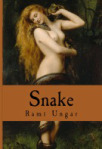
snake

How far would you go for love and revenge?

If you haven’t heard yet, Snake‘s e-book is only on sale for a few more days, until July 7th. After that there won’t be any more sales for a while…no, wait. The Quiet Game‘s one-year anniversary is ten days later. Never mind.

But yeah, Snake‘s e-book will only stay $1.99 for a few more days, so if you’re interested in reading the book one author compared to a Stephen King novel, now’s the best time to check it out. All you have to do is head to Amazon, and from there it’s easy to obtain the story of how one young man is willing to become the most horrific of killers in order to save the woman he loves and bring his enemies down to their knees.

Have a great weekend, everyone. I hope to have a review out tomorrow night on the new horror movie Deliver Us From Evil, so stay tuned for it. I hear it’s going to be great.

With the Columbus Pride Festival coming up this weekend, LGBT people from around the country (including George Takei as Grand Marshal for events this year) will be descending upon Columbus for a huge parade and festival to celebrate their sexual orientations, fight discrimination and injustice, and to push for same-sex marriage in Ohio, which is on the ballot this year. It’s sure to be a great time for many.

For some though, the Pride Festival will not be so welcome, and while Columbus may be one of the Midwest’s LGBT hotspots, there is the very real chance that protesters will show up and decry what they see as perversion, sin a horrible lifestyle, or some sort of disease/genetic defect/psychological disorder. Usually I ignore these sorts of people, but I figured that since I’ll most likely be attending the Pride Festival this year (my first), I thought it would be interesting to do a post on these protestors, most of whom have a Biblical basis for why they’re opposed to homosexuality, and show how the Bible could actually endorse homosexuality rather than outright ban it.

Before I do though, I wanted to post this video I found, which I think is very eye-opening, and gives some very good points on the Bible and homosexuality:

Interesting, isn’t it? And that thing about Sodom and Gomorrah mirrors pretty closely what I learned growing up about why those cities were destroyed. In fact, I remember a pretty graphic tale about how two girls met at a well, one realized the other’s family was very poor and gave her some flour for her family. When the town elders heard about it, they basically took the first girl and stoned her in public (I’m not sure what happened to the second girl, but she probably came away from that emotionally scarred and still hungry, if not dead). And if you want to know more about that book they talked about in the video, here’s a TIME magazine article on it.

I would like to add some points on to these, based on my own upbringing, experience, and understanding of the Old Testament (I’m not very familiar with the New Testament of course, being Jewish). First, that famous verse in Leviticus that anti-gay pastors love to quote, “Thou shall not sleep with a man as thou sleeps with a woman”. First off, what can women do? Second, this sounds like a prohibition against homosexuality, but it could have other meanings.

Of course, there’s the anatomical one: men can’t sleep with other men like they can with women, because men don’t have vaginas. But I’m pretty sure that argument, although obvious, won’t sway many people, so here’s two more that might. Firstly, there’s the patriarchal argument: women in the days when the Bible was written were expected to attend to their husband’s sexual needs, and most likely that meant they had no say in it unless they were impure and couldn’t have sex anyway. In an age where men were expected to be dominant in all matters, especially in the home, forcing one man to attend to another man’s sexual needs at the latter’s beck and call would be considered the ultimate emasculation, so therefore sex between men was forbidden.

The other reason (and the one I feel makes the most sense), is based on pagan idol worship. Many Near East and Mediterranean societies practiced homosexuality, not as a distinct orientation, but as an activity. The Greeks were famous for having relationships between other males before marriage, and there were other societies at the time that had cultures that permitted men to have relationships with each other before or after marriage. Some of these relationships were especially prevalent in military circles to increase unit cohesion, and a few were ritualized in the form of idol worship. God would have seen this latter act, worship of idols through sexual intercourse, as detestable, so He created a form of worship and sacrifice that did not involve sex, and forbade a form of sex that does not lead to procreation, as well as because it was used in idol worship.

There’s a pretty big difference between this and emasculation or idol worship, wouldn’t you say?

Since today there is no idol worship through sex (as far as I know), it would be permissible for same-sex relations to occur. Besides, these interpretations deal with a form of emasculation or idol worship. They do not apply to men, women, or other gender-types who are in loving, committed relationships like we see today.

There are other factors to consider here as well. For example, there is the belief that marriage should be as it is in the Bible. If that’s the case though, why do we outlaw polygamy and women can choose who they marry? Not to mention the definition of marriage and marriage roles have changed throughout the years, so it’s no surprise that it’s being changed in our day and age and “pro-marriage” activists shouldn’t be alarmed. And even if not always legally accepted or endorsed by religious establishments, same-sex relationships have been taking place for many, many years. There have been relationships between high-ranking clergymen and other men since the early days of the Church, but it was tolerated because of fear of worse sins, ones that at the time that were considered venereal.

Even during waves of religious upheaval, reformation, or resurgence, same-sex relationships flourished: Queen Elizabeth may have been a lesbian, and several members of her court were gay and able to get away with it due to their status. King James–of the Bible translation–actually had several relationships with men as well as women. And recently there was an article from The Boston Globe about two women who lived together and were treated as married…in 1807! So even if it’s not exactly legal, same-sex marriage is not exactly as new as cell phones.

This post is getting very long, so I’m going to continue this discussion in another one. I hope some of you who read this post found it informative and may have given you some food for thought. I don’t think it’ll sway anyone who’ll protest at Pride this weekend, but it may sway some people who are undecided on the issue. Or that it may prove helpful for those who want to try to reconcile homosexuality with religion.

Oh, and before you wonder what sort of religious authority I am, I can only say that I’m the son of two Conservative rabbis, I went to a Jewish day school from Grades 4-12, I’ve gone to synagogue for most of my life, and I still learn and keep in touch with my religion. So I may not be a rabbi or pastor, but I’ve done as much studying as some, and more than some others. I guess I can speak with some authority on these matters. What do you say?

*I will be screening the comments for offensive, inappropriate, or just plain rude comments. Be warned.*

It seems that my prayers have been answered. Either that or I and the many people lobbying for this video to come have finally gotten what we desired.

Anyone who spends enough time on YouTube will probably come across the Epic Rap Battles of History videos. They are funny, have more history than the History Channel does these days, and are really well done. Several of them, such as the Adolf Hitler vs. Darth Vader series, the Doctor Who vs. Doc Brown battle, and the famous Donald Trump vs. Ebenezer Scrooge Christmas special, have become viral sensations. And in a stroke of creative genius, these guys have put out what has to be my favorite video yet: Edgar Allen Poe vs. Stephen King!

The video stars slam poet and rapper George Watsky as Mr. Poe, while Zach Sherwin (aka MC Mr. Napkins) plays his Royal Scariness King. It’s a delightful back-and-forth between the two horror greats, with Poe even rapping in trochee (the form of verse The Raven was written in) and King making references to both his and Poe’s work, as well as poking fun at a certain kid’s movie’s protagonist’s name. Plus the soundtrack is just perfect. But why just read me praise it? Check it out below:

Awesome, right? And it’s very hard to choose a winner, though I have to go with King (he’s got the best disses). Funnily enough, Mr. King himself had some different thoughts:

Mr. King, don’t put yourself down. Frankly, I thought you were sharper than Annie Wilkes’s axe. And I look forward to reading Doctor Sleep and Mr. Mercedes, once I can find the time to do it. In the meantime, can I interest you in one of my books?

Who do you think won? Why? And who would you like to see in another rap battle?

Personally I’m hoping for Walt Disney vs. Stan Lee or Freddy Kreuger vs. Jack the Ripper (yes, that is disturbing. But would you expect any less from me?).

There have been a spate of articles, petitions, and organizations and groups popping up lately, all with one purpose in mind: to expose the evil of people who bully authors and others online, leaving hurtful reviews and comments all for the sake of their own cruel pleasure. I thought I’d add my two cents in and write an article about what one should do if exposed to this sort of harassment from “Internet trolls”, as they’ve come to be called.

If you head over to Self-Published Authors Helping Other Authors, you’ll be able to read my article When Trolls Attack! which has some very good tips on what to do if, God forbid, you are exposed to that sort of bullying. And if you have been exposed to any trolling on the Internet, I hope things are better now. And if they aren’t, I hope that maybe some foo these tips might be of service.

And if you’re a self-published author, I highly recommend taking the time to look through this site. Self-Published Authors Helping Other Authors is full of many helpful articles that are designed to make self-publishing not only cheap, but easy and fun. I’m proud to be one of the writers on the blog, and the others are very amazing writers whom I admire for their work and dedication.

And speaking of Self-Published Authors Helping Other Authors, I thin I mentioned the other day that I wrote five articles coming out in the next couple of weeks on that site before I leave for my study-abroad trip. The first article, Doing An Excerpt, came out last Tuesday if I remember correctly. Today’s article is the second one. On the 22nd we have Creating Character Names. On the 27th we have Creating an Acknowledgements Section. And finally on May 1st we have What Makes A Strong Character? All good stuff, and I can’t wait to share it with you all.

That’s all for now. I’ve homework to do, so I’m going to go and do it. If I get a chance, I’ll write another post later. Until then, have a good day, my Followers of Fear!

It’s been a while since I reviewed anything. What was the last thing I reviewed? Oh my God, it was American Horror Story: Coven! That was back in January. It’s been a while. Well, no time like the present. Let’s get started.

Well, Captain America is one of my favorite Avengers (the other is Iron Man), and I was really hoping that this movie would be a lot better than Thor 2 (that one sucked). I got my wish: Captain America 2 was awesome! The story starts out with Steve Rogers (Chris Evans) finishing up a morning run and making a new friend before heading off on a rescue mission. Or so he thinks: events on the mission take a turn for the dark, and from there things just get worse. Before we know it, Rogers is running for his life with Black Widow (Scarlett Johanssen) and they discover a plot that will not only threaten to destroy SHIELD, but possibly destroy the free world as we know it.

Although I’m of the camp that wants less franchises spanning several movies and more original films that bring new ideas and concepts to the screen, I have to say this is Marvel Cinematic Universe at its best. There’s not only action and explosions, but an actual plot where we see character growth and themes that reflect our modern world. The actors were stunning, the story kept you guessing, and the ending made you wish for more (unfortunately, Age of Ultron isn’t due out till next year, and I don’t think Guardians of the Galaxy will have that many connections to the other films in the series). Oh, and near the end of the film, there’s one moment that’ll remind you of another one from Man of Steel. Even Marvel can do that better than DC. Yes, Marvel beat you at your own scene, one you used in advertisements but one Marvel didn’t include in a single ad. Must be sad to know your biggest success in the movie industry ended because the director wanted a perfect ending and decided against a spin-off, doesn’t it?

And if you do go see the film, stay through the credits. There will be two special bonus scenes that’ll contain hints of what is to come in possible future films. Don’t miss it.

Overall, I’m giving Captain America 2 a 5 out of 5. Yes, it’s that good a movie. And if it makes you want more, it deserves that score. I just hope they end the movies in 2028, which is how far they’re apparently planning this franchise. After a while, things tend to get repetitive and boring. God knows it’s just sad to see a franchise that should’ve ended long ago still putting out movies that nobody wants to see (*cough cough* Transformers 4, Jurassic Park 4, Indiana Jones 5, Harry Potter spin-offs *cough cough*).

Now if you need me, I’ll be writing. For some reason, NBC is having trouble broadcasting SNL, so that’s out for tonight. Too bad, too. It was starting to get fun before the broadcast started getting f***ed up.

Some of you may be acquainted with Angela, or have heard me gush over her awesome feedback to my novel Snake. But did you know that Angela’s first novel, Jewel of the Thames, has just been released (I’ve already got it on my Kindle)? When I heard about it, I was so excited for her, and I got the chance to interview her before JotT came out.

Angela was born in London, England, but currently she lives in Toronto, Canada with her family. She has been writing for a number of years, most notably for CBC Radio as a journalist. She also does freelance and digital projects on the side, but currently she’s been devoting her time to the Portia Adams books she’s been writing (last I checked she’s got around eight or nine casebooks in the series).  She is a fan of mysteries, Doctor Who, and most stuff Sherlock Holmes (but not Elementary).

RU: Hello Angela, it’s a pleasure to talk to you. Give us an idea about what Jewel of the Thames is about.

AM: Sure Rami: Jewel of the Thames is the first book in a series of stories about aspiring detective Portia Adams. It is also an homage to my favourite detective novels – the Sherlock Holmes books, the Nancy Drews, the Hercule Poirots. All of the books I read from childhood till now, and all the great authors who inspired me to create this character. So far in this series, I have written ten casebooks – cases that Portia has taken on – and the first three make up Jewel of the Thames.

There is a lot that had to happen in the first book – Portia needs to find out what her link is to the property she has inherited in London, and she needs to start standing on her own. The whole book is three casebooks wrapped in a mystery driving towards a big reveal at the end. You’re gonna have to read it to find out what the heck I’m talking about.
RU: Considering my level of confusion and intrigue, I will. Now tell us a little about your protagonist, Portia Adams. Who is she exactly?

AM: Hmm, what can I tell you without spoiling it? She’s a 19 year old Canadian who at the very beginning of the books loses her mom, leaving her a poor orphan in 1930s Toronto. It is at the reading of her mother’s will that she discovers she has been left a mysterious property in London and that she has a guardian – Mrs. jones from New York.

Portia is an intelligent introvert who has always preferred books and quiet to social situations, she loves school, hates fashion, often forgets to eat and has no friends. This is partially because she’s viewed as odd and anti-social despite her mother’s best efforts. Her overwhelming curiosity leads her to what interests her rather than what others are focused on, and gives her a focus most don’t understand.
She’s tall and slim, with dark brown hair which she wears unfashionably long and usually in a bun, with startling blue eyes. Feel like you know her a little better?
RU: Maybe just a bit. What do you say your writing process is?
AM:  write long-hand in Moleskin notebooks, so for Jewel, my writing time was my commute back and forth to my full-time job in downtown Toronto. So for 30 minutes in each direction on transit twice a day I would write about Portia Adams, ignoring the smells, sounds and closeness of the Toronto Transit crowd. As a result, I have about 30 Moleskin notebooks filled with my handwriting in lots of colours detailing Portia’s adventures.

Angela and her moleskin notebooks

RU: Wow, that kind of writing schedule requires tenacity. What do you think will draw people to Jewel and to Portia?

AM: Hmm… I guess the same things that drew me to her – a young female protagonist who is learning to stand on her own – I find that premise compelling. Her relationships are part of what make her the woman she is, and as those develop I think she will become an unforgettable character, as will the recurring characters around her like Brian, Sergeant Michaels and Mrs. Jones. That’s how I feel about her at least, I find that even when I’m not writing about Portia, I’m thinking about her. I’ve got a bit of a WWPD mentality in my own life, so that when things happen, I often think What Would Portia Do?

It doesn’t hurt that the setting is London in the 1930s, a really interesting time in history between the two great wars and smack in the middle of the great depression. I hope that people come to care for Portia, because I know from my own experience as a reader that a connection with the characters is key. I guess I will be looking for that kind of feedback from book 1 as I get into the editing phase of books 2 and 3.
RU: Speaking of Books 2 and 3, are you going to continue writing and editing on the bus to and from work, or have things changed since you found out Jewel of the Thames was going to be published?

AM: Things have indeed changed, but actually before I got my contract for Jewel. Last June, after I finished writing the third book in the series, I decide it was time to concentrate my time on this part of my life. I’ve spent the past 14 years working as journalist for the CBC, I think it’s fair to try ‘something else’ for a while.

So I work from home now as a freelance journalist and so far I’m loving it. I try to write a few hours every morning (in the series on book 4, blogging, research) and then spend the afternoons working my freelance contracts. I think I’ve hit a rhythm that works for me, so we’ll see how it goes.
RU: I’m glad it’s working out for you. And you know, I feel kind of bad, because I forgot you were also a journalist for the CBC. How did you get into writing and journalism in the first place? What inspired you to go down that path?

AM: (Laughs)  Don’t feel bad about that! But to answer that question, I’m going to steal from the bio I wrote for my publishers last week:

“Everything changed for young Angela Misri one spring day in 1992 at an assembly in the gym where, as per usual, she was giggling and whispering with her friends in the audience. Suddenly her name was called by the Principal of the school and she was jostled out from the safety of the herd and to the front of the room. Having not really listened to the preceding speech, she was shocked to learn that a poem she had written as part of a school assignment had been published in an anthology of like-quality poems by Canadian children. The Principal smiled the biggest smile she had ever seen on a teacher, and handed her a copy of the coil-bound anthology, turning the young poet towards the audience of her schoolmates and starting the applause that followed her back to her safe haven between her best friends.
That was the moment when Angela discovered that despite being of Indian descent, there were in fact other options for your life’s work than medicine or engineering.”
So there you are! That was the moment for me, and I’ve been writing ever since. I wrote my first book when I was your age, Rami. It’s a historical fiction called ‘Savitri’ and it’s sitting upstairs in a binder. The only other copy is on a floppy disk (no, I’m not kidding, that’s how long ago it was since I was your age ; ) . I haven’t read it in about 15 years and I will admit, that I am scared to. I’m worried that the vision of the story (which I still think is the best I ever wrote) will not live up to reality.
RU: That’s a problem that a lot of authors face when they think of their early stories. So how did you come up with the Portia Adams stories?

AM: It was after reading the Stephen King short story called ‘The Doctor’s Case’ that the idea for Portia came to me. If you haven’t read it, I suggest you do, it’s one of my favourites. As the title suggests, its an original Holmes-Watson story with a twist – Watson solves the case before the great detective. I loved that idea, and Portia started to form in my mind as a kind of homage to King and Conan Doyle.

The first case I wrote jumped straight into the jewel thefts and was over in less than 12 thousand words. I read it over a few times and realized that if this was going to be more than a short-story, I need to write some backstory for my detective. So I went back, created a beginning for Portia, and did a whole bunch more research into the time period, the whole family tree of Holmes, Watson and many others from the original canon. Once I had expanded Portia’s world to about 20 thousand words, I had the idea for the third case in the book – the one that happens on the train. I wrote that in two days and then, rereading it, decided I needed another case between the jewel thief and the train story because she was moving around too much. I felt she needed more time to get to know London and to get comfortable with her new College, so I wrote the casebook I called “A Case of Darkness.”
RU: What’s next for you?
AM: Wonderful, an easy question! I have written books 2 and 3 of this series already, so my next steps are to edit the heck out of them for my publishers and get them into production! I have also started a new dystopic novel that I’d like to carve out some time to write.
RU: Ooh, that sounds interesting. Now just a couple more questions. First, how have your family and friends reacted to the news about Jewel?

AM: They’re very excited but not really surprised. I guess it’s normal for me to be the most nervous about putting my work out there (since it’s mine) but most of my friends and family told me it was just a matter of time before I would get published. I don’t know if they were just saying that to be supportive, but I was no where near as confident. Now that it is really happening and there is a date when a physical book will be available in stores, their excitement has doubled. Seriously, I have the most supportive network – and that includes this blog and you Rami!

RU: I’m happy to be a part of that network, and I’m glad you’re a part of mine. Now here’s a fun question: if some big Hollywood producer came up to you and said they wanted to make a movie or TV show about Portia, who would you want to play the characters?

AM: I LOVE this question as you well know, because I’ve spent too much time thinking about it.

So I would love Katie McGrath (of BBC’s Merlin) to play Portia. I think she has the right balance of beauty and bark that my detective needs. I believe Jensen Ackles (of the CW’s Supernatural) would make a kick-ass Brian. And I think Irene Jones would benefit from the beauty and wit of someone like Lynda Carter (original Wonder Woman).
RU: Since I don’t know who those people are, I’ll take your word for it that they’re perfect for the roles. Final question: If you were stuck on a desert island and could only take three books with you, what would those books be?
AM: Hmm.. I guess Stephen King’s The Stand, Tolkein’s The Two Towers, and Conan Doyle’s Complete Adventures of Sherlock Holmes. If I had a fourth option I’d have to take an Ann Rice. Can I please take my iPad instead Rami? I’m going to need more books than the average human.
I’d say yes, but there’s the question of charging it when the battery gets low. And the lack of a Wi-Fi network. Anyway, thanks for joining us, Angela.
If you would like to find out more about Angela, you can find her on Facebook, Twitter, Google+, and Pinterest, as well as on her blog a Portia Adams adventure.