Posts Tagged ‘entertainment’

Only the worst of the worst get to hang out here.

Yesterday we took a look at my choices for #10-6 for my top villains list for 2014. Today we look at the Big Bads, the worst of the worst, the folks and creatures we should all fear in our sleep. These top 5 villains are the ones that have amazed, impressed, and/or terrified me the most.

And remember to click here if you’d like to compare #10-6 and #5-1 from last year. Here we go! Mwa-ha-ha!

5. Jennifer Blake (from Teen Wolf)

Once again we have another villain from Teen Wolf, this one from the first half of season three. At first, you think the only thing that the main characters have to worry about is a pack of Alpha werewolves, but then Jennifer Blake comes into the picture. At first just an innocent English teacher who becomes Derek Hale’s love interest after a close encounter, she is actually the Darach, a Druid gone bad, and she has all sorts of dangerous magic on her hands, which she enhances through elaborate human sacrifices. All in the name of revenge against t;he Alpha werewolves who betrayed her several years ago. Her devious tactics, her theatrical flare, and the lengths she’s willing to go are enough to put her above the wily Nogitsune, who was only out for some twisted laughs.

4. The Murder House (from American Horror Story)

I’ve always maintained that a setting can be as much a character as your other characters, and that especially goes for haunted houses. In this house in particular, we feel it as a character, a force with a devious and wily personality for drawing in the innocent and guilty alike, twisting their minds and then trapping their souls forever. All for a very dark purpose that isn’t revealed until the very end of the first season of the groundbreaking FX show. Trust me, you do not want to spend the night in this place. EVER!

3. Dr. Oliver Thresden/Bloody Face (from American Horror Story: Asylum)

Movie and TV serial killers are hard to make unique. A few even come out looking like carbon copies of Jason Voorhees or Michael Myers. In AHS‘s second and much darker season, they not only give us a serial killer with character development, but with a soul. Dr. Thresden originally arrives at Briarcliff Manor to perform a psych evaluation on protagonist Kit, who is believed to be the infamous serial killer Bloody Face. Dr. Thresden ends up staying on to help update Briarcliff’s outdated methods to treating insanity. He takes a special interest in leading lady Lana Winters, a lesbian who, after some failed aversion therapy, he deems sane. After helping her to escape the asylum though, he reveals himself to be Bloody Face, and he is looking for a woman to be his mother, his real mother having abandoned him years ago. With an unhealthy preoccupation for human skin and for his mommy, Bloody Face may at first seem like a bad copy of Leatherface, but in reality he’s unique in so many ways. Played by actor Zachary Quinto, it’s no wonder this character was nominated for so may awards, and won a few as well.

2. Hannibal Lecter (from the books by Thomas Harris)

Our only returning villain from last year, Hannibal Lecter earns his spot for his incredible ability to continue to terrify and manipulate us on the NBC show Hannibal. Honestly, watching Mads Mikkelsen perform in the iconic role is a dark pleasure. In this previous season, he managed to keep the authorities dancing around him, even as some of them began to suspect that he was the Chesapeake Ripper. What’s most horrific is that he almost manages to get protagonist Will Graham to become just like him, a monster without a conscience who likes to see what happens on impulse. And the way he sets things in motion is like watching a Rube Goldberg machine in motion, only with people involved. Until the very last episode and the awesome twists and turns, you’ll be on the edge of your seat wondering what will happen next I’m looking forward to season 3 next year. I hope they can keep up the fun!

1. The Weeping Angels (from Doctor Who)

Our winner this year for Top Villain is another creature from Doctor Who, but this one is slightly stranger and more sinister than the Daleks. The Weeping Angel is a strange being. It can only move when it isn’t seen, thus it keeps its hands over its eyes in case its working with one of its own kind. When they take their hands off though, they reveal monsters that are anything but angelic. And you literally can’t even blink in front of them, because they can move even between the opening and closing of your lids to get you. Once they do, they’ll send you back in time so that you die maybe hundreds or thousands of years before you were born, while they feed on the displaced time energy that results from your timeline into the future being erased. Created by show runner Steven Moffat, these are probably one of the Doctor’s most terrifying enemies, enough to make my sister scream in fright when they feature in an episode. If you ever watch the episode in which they debuted, Blink, you’ll know why.


That’s all for this yer. Join me in 2015 for another Top 10 list. Maybe making the list will be thesis deadlines, because that will be one of the scarier things I’ll have to deal with in this coming school year.

Anyway, hope you had fun reading my Top 10 Villains list. Have a good day, my Followers of Fear. And let me know what you think of the list. Who do you think should have gotten on? And was there anyone here you agreed or disagreed with? I’d love to hear your thoughts.

I’ve been meaning to do this post for a while, but with Laura Horn still needing to be finished and everything…

Anyway, last year I did a countdown of my favorite villains from fiction (to read that contest, click here for #10-6 and here for #5-1). I’m doing it again this year to show case the awesome villains that have impressed and terrified me since that list last year. And a lot has happened over the last year: we’ve got only one person is returning to the list from last year, which just goes to show that Hollywood/New York/everyone else can come up with some really amazing villains sometimes. In fact, I’d like to announce our honorable mention now: Peter Pan from Once Upon a Time. The revisionist fairy tale show came up with a unique take on the classic character as a manipulative sociopath living in a magical Lord of the Flies kingdom who will go to any lengths to stay young, free, and powerful forever. Creepy!

Now let’s get this show started with the first half of the list!

10. The Daleks (from Doctor Who)

Despite their at-first rather ridiculous appearance, the Daleks are terrifying to behold. A genetically-engineered creature living inside a cyborg transport machine, the Daleks are a powerful metaphor for racism, particularly Nazi racism. That, their pure destructive force, their popularity with fans, and many other reasons is why they’ve continued to terrify children and adults since their debut in 1963, and are still part of DW lore and pop culture today. Honestly, even though I love Daleks, if one of them shouted “EXTERMINATE” near me, I might freak out myself.

9. Bughuul (from Sinister)

Sinister is probably one of the best horror films in the past ten years, and Bughuul, also known as Mr. Boogie, is one of the main reasons for that. Portrayed by Nick King, Bughuul is a reimagined boogeyman, a Babylonian god that causes children to murder their families and then feeds on their souls for centuries in his spirit world. Throughout the movie, Bughuul weaves a web of psychological terror around the main character and around the viewer, even up until the final moment of the film. It’s no wonder a sequel is in the works, and no wonder Bughuul deserves a place on this list.

8. The Headless Horseman (from the Sleepy Hollow TV series)

In this reimagining of the classic short story by Washington Irving, the Headless Horseman is one of the Four Horsemen of the Apocalypse, specifically Death, and he’s looking to find his head so he can continue with his mission to start the end of the world. Not only that, he is looking to gain his revenge on Ichabod Crane, whom he has a strange history with, and the revelation of that history just makes things that much more exciting in this awesome show. Also, it’s so cool to see the Headless Horseman riding down the street with an axe and automatic weapons. Total badassery right there.

7. William Lewis (from Law & Order: Special Victims Unit)

Portrayed by Pablo Schreiber, Lewis appeared in the finale of Season 14 and throughout Season 15 and is probably one of the worst villains ever to be on the show in its 16-year run. A monster who gets his kicks from terrorizing his victims and putting them in pain and agony, Lewis kidnapped Detective Benson and tortured her even as he was running from the cops who were looking for him. Even after he was caught, Lewis continued to find ways to harass Benson both in person and in her nightmares, and even escaped to cause more terror. Even after committing suicide, he nearly destroyed Benson and a few other people too. A man like that is the worst, and deserves his place on this list.

6. The Nogitsune (from Teen Wolf)

Season 3 of the hit MTV series was unique in several ways, particularly because it was literally two seasons in one, each half comprising of 12 episodes. The latter half of the season featured the Nogitsune, a fox spirit of chaos who causes murder and mayhem wherever he goes. And all for the sake of a few laughs. When he possesses one of the main characters, you know you have reason to be afraid. Especially when he starts out his day by telling his potential victims riddles.


That’s all for now. Tune in later this week when I list #5-1 of my top villain list. And let me know what you think of these villains. Like them? Hate them? Who do you think should have gone on the list? Let me know in the comments below.

After a year, a week, and two days, with twenty-six minutes before midnight, I am finally finished with the first draft of my fourth novel Laura Horn. I wish I hadn’t had to take so many breaks to focus on schoolwork (not to mention writing was nearly impossible during my study abroad trip), but I’m glad I was able to get it done. And even though it’s a first draft and obviously will need a lot of editing when the time comes for that so it can look something resembling publishable quality, I’m quite happy with the result.

For those of you who are not very familiar with LH, it follows the story of a girl with a very traumatic past who, through an odd series of accidents, stumbles upon a conspiracy that could destroy the United States of America. With a few good friends to help her, she sets out to save her nation from the threat that looms over it, and confronts her demons as well.

So it’s kind of like White House Down or Olympus Has Fallen, only it’s got less explosions and a little more character development. Actually, a lot more character development. Our titular character goes through a lot of changes throughout the book, and it’s astounding even to me, the guy who created her, how much she changes in the course of the story.

It’s also a lot more thriller than I tend to write, but my next big project will be some pure psychological/supernatural horror, so it all pans out in the end.

Anyway, I’m happy to announce that I’m finally done with LH, and that in a few months (schedule permitting) I can start editing the book and getting it ready for eventual publication. I’ll be setting up a page for the book on this blog with the notice “Coming Soon”. With any luck, I can have this book out sooner rather than later, and maybe work on a sequel or two (I have a couple planned out, I just need to commit to them).

So now for the page and word counts. I wasn’t actually too far off. I did say the three chapters that would make up the epilogue would be around five-thousand words and it turned out to be more like nine-thousand, but hey, it could’ve ended up much longer. Anyway, the Epilogue in total was 32 pages and the word count ended up as just under eighty-nine hundred. That brings the total page count to 356 pages and 94,774 words. About average for a Rami Ungar novel. Of course, these counts might change drastically by the second draft, but this is a good placeholder until then.

In the meantime, let me tell you guys what projects I plan to take up next (though they may or may not be in this order):

  • Work on the outline for the novel that’ll be my senior thesis (more on that at another time)
  • Edit Video Rage
  • Write several articles on writing for Self-Published Authors Helping Other Authors
  • Write a few blog posts I’ve been putting off so I could finish LH.
  • Write several short stories, and hope I can get a few of them published in magazines
  • Start assembling a new collection of short stories
  • Experiment with writing erotic fiction (yes, I plan on doing that. I meant to do it earlier this summer, but things got in the way).
  • Try and get through the many books I still have to read for pleasure.
  • And just have a good time as usual.

Not too hard to do, right? At least, I hope so.

Anyway, that’s all for now, my Followers of Fear. It’s late, so I’m going to read a little and then sleep. It’s my day off tomorrow, so I’m going to find plenty of time to celebrate before I get back to writing (it’s a work hazard, I just can’t stay away from it). Anyway, that’s all for now. Have pleasant nightmares tonight. I know I will be!

When most people hear that I work, they ask me where I work. I inevitably reply, “I work part-time at the financial aid office at OSU.” What I often forget to add is, “I’m also a fiction writer in my spare time.” The reason I bring this up is because I recently read this article on the Huffington Post (which you can check out here) in which she learns that her friends don’t see her as working because she writes full-time, and reasons why writing full-time should be considered working (some of those reasons I will reiterate here).

The thing is, writing is work. Hard work. Some people envision writers as sitting on their butts with a notebook, typewriter, or a laptop and watching a story unfold before our eyes. In their minds, we might as well be playing video games or watching Netflix for all the energy we’re expending.

The reality is far from that image. Here’s my process for writing a novel, for example: I outline the story, which usually takes a couple of weeks depending on how crazy my life is. Then I do my preliminary research, which is usually done when I’m not working at the office or doing schoolwork (so summers make a great time to do research because I’m not in classes, but sometimes I’m not lucky enough to be in summer when I do research). Then I start to write. And there’s nothing more daunting than the blank page at the beginning of a project. My novels are usually upwards of eighty-thousand words, so seeing that first blank page is terrifying. I have to force myself to get the first words onto a page and from there try to get into a groove.

Usually I’m doing schoolwork and working part-time while I’m writing, so I often save my writing during the evenings, and usually during the commercial breaks when I have something on TV I really want to watch. So how much I get done is dependent on time, how distracted I am, if anything else comes up in my life, and a million other things. With this sort of schedule, writing a novel can take anywhere between six months (which was the case with Snake) to almost two years (as was the case with Reborn City). I’m in the final chapters of Laura Horn, and I’ve been working on that for over a year, taking breaks for all of life’s crazy moments.

And that’s another thing: sometimes I have to take a break from writing in order to work on school or anything else going on in my life. When that happens, it usually takes longer to get words down on the page. As was the case with RC and is the case with LH.

Your average writer.

And if I need to do some additional research? That takes a bite out of writing time too.

And after I finish a novel, it usually requires one to three more drafts before I’m ready to publish it. Even then I usually send it to someone (usually another author and a friend, though in the future I might be looking at professional beta reader/copy editor to help me with the technical stuff) to make sure I haven’t missed any plot holes or horrible typos. Then I design the interior and the cover, apply for a copyright, and set a release date.

And after the book comes out, there’s all the marketing to do. Heck, even before the book comes out, I’m advertising in every place I can so that as many people as possible will know about the book and maybe want to read it. I’m blogging, Facebooking, tweeting, updating business cards, e-mailing, slipping mentions of my new book into articles, updating my resume, telling people by word-of-mouth, and asking people who do end up buying the book that once they’re done, I’d really appreciate it if they’d write a review or do something else to let me know what they think. And that’s just the tip of the iceberg when it comes to all the marketing I have to do in order to get word of my book out there.

Because let’s face it, I don’t have a team of advertising professionals. I’m self-published, so part of the territory is that I’m doing all my advertising on my own. It isn’t easy, but it’s something I take upon myself so that my book can sell well and people will read it.

Does that sound like sitting on my butt playing video games or watching Netflix? No, it’s work. We don’t have time cards or an office cube or water coolers, and very rarely anything like a regular paycheck. But yeah, we are working. It’s as grueling a job as working in the Sales Department or on an assembly line or going to a meeting with execs from another company. Our job just allows us the perks of setting our own hours and picking our own projects.

In summary.

So I think from now I’ll be adding that writing is my other part-time job when people ask me where I work. And I hope people who read this article who aren’t writers will realize we’re not just relaxing in our living rooms or home offices (if we’re lucky enough to have those) playing solitaire or watching funny cat videos on our computers. We’re working, and we’re working hard.

Still don’t believe me? Then go ahead and write your own novel that’s halfway decent, and then tell me it’s not work. I’ll wait.

How do you feel about writing as work?

Has anyone ever mistook what you do for free time? How did you respond?

As any author can tell you, there’s no one way we get our ideas. In fact, we get our ideas from everything: stuff that goes on in our lives, the people we know, current events, books, TV shows, movies, video games, from a phrase, from a place, from something we like or something we hate, and from more things than I can list. It’s the actual spinning of the story that can be rather difficult. We have the start of an idea, but we need to build up the story around it. Who’s the protagonist, what’s going to happen, where and when is it going to happen, why is it happening, etc. And depending on the author, the idea, and where it came from or what it consists of, the story based on the idea can come either very quickly or take a while.

For me usually it doesn’t take too long to come up with a story once I have the idea. There’s one notable exception however, and that’s when the idea revolves around a character and nothing else. By this I mean a character pops into my head, maybe no more than just an image but still a character, and I want to write a story around that character. And it isn’t easy for me to come up with that idea.

Other inspirations don’t take that long. I saw the movie Schindler’s List and came up with a whole book series based around the idea of someone actually leading a rebellion against the Nazis. Remember when I went to the Sky Steele show a week back? I had an idea from something we talked about after the concert involving a supernatural crime story. And a creature featured in a fantasy TV series I watched last year inspired a story about how religion can actually kill you. All of this happened within minutes or hours of being inspired.

But starting out with an intriguing character and little to nothing else? It takes me days to come up with a story to match. In fact, of the last ten ideas for novels I’ve had, half of them were based around characters and took me days to actually come up with an idea I could write down on my list of feature-length ideas (I’m up to 145 of those, by the way. Unless I can become successful enough to write full-time, I’m not sure I’ll be able to write them all!). They all started with one or two characters, maybe a setting, but all of them took days to come up what they would be doing or what would happen to them. The most recent one, which I first started trying to brainstorm a story around on Tuesday, I finally got something today.

Sometimes, the gears in my head turn so loudly, you can hear them.

What happened was that I saw this Halloween-themed video (which I will have to post about when October rolls around) and I got a little scared by it. Not only that, but I also kind of fell in love with one of the characters in the video and decided to base an entire Halloween-based story around her. Just one question: what kind of story? Finally figured out today to base the story around ancient myths about Samhain, the holiday Halloween is based on, but up until then I could not think of a single thing to base the story around. Well I did, but none of them really worked for me. I couldn’t see myself writing something around those other story possibilities, let alone anything I thought would be good. I’m glad that I was able to finally come up with something though, or might have gone a little madder than usual.

You know, as much as I love getting ideas for stories, I hope that in the future these sort of ideas, the ones that take several days to form and usually start with a single character, pop into my head less often. And when they do, I hope it takes less time to come up with a story based around them.

What about you? What sort of ideas do you struggle to create stories around?

What do you do when you’re struggling with an idea and can’t think of anything?

tqg cover

One year. I can’t believe it’s been exactly one year since my first book, The Quiet Game: Five Tales To Chill Your Bones was released. Maybe that’s because so much has happened in that year: I finished my third year of college, went on a study abroad trip to England, France, and Germany. I began and finished Video Rage, the sequel to Reborn City, and I’m very close to finishing Laura Horn. And I also released two more books. Am I forgetting anything? Oh yeah, I moved into an apartment off-campus with a friend and I also turned 21, which causes certain members of my family endless worry about my drinking habits (though I usually only drink alcohol 1-3 times a week, and usually not that much).

Anyway, back on point. The Quiet Game emerged from an idea I had while the editing process of RC was going on. That process was going slower than I thought it would, so I thought to myself, Why not release a collection of original short stories? I ended up doing just that, writing all those stories during winter break and rewriting one of them during spring semester. I also included at the end of each story a little bit about how the story came about and what influenced me while writing it, which was fun because it gave me more ways to relate with my readers. And after many long months, I released it on July 17, 2013, not too long after the copyright process ended. And it’s been selling and scaring here and there ever since.

Besides also being my first published book, The Quiet Game is also my most popular book. I think that might be because it’s a lot shorter than the other two and it’s a lot cheaper. But that doesn’t mean people don’t like it. I’ve gotten ten reviews over the course of a year on The Quiet Game, and people have had some positive things to say:

5 wonderfully crafted tales! I purchased this as an eBook originally and put off reading it for quite a while, I really wish I hadn’t waited. Sometimes when one purchases a collection of short stories you expect some of them to be less entertaining or of lower quality than the others, but none of these disappoint. Well worth the money, especially considering after you read each story the author gives you creative insight into what inspired him to write each tale, which is really wonderful.

–Jeff D

Imagine if you will a young Stephen King penning dark scenarios inspired by his youth, and what you get is this anthology. Through this collection of short stories, Rami Ungar brings us into the world of dark urges, childhood traumas, ghosts, phantoms, and dark psychological thrillers. An inspired creation, and definitely a good intro to this indie author’s world!

–Matthew Williams, author of Whiskey Delta

All of the stories were really diverse and fun to read. I also enjoyed the authors blurbs about each stories origination and development. Keep up the good work!

–kimberly broulliard

These and other reviews have lead to The Quiet Game gaining a 4.3 rating on Amazon, which I am very happy about. It also encourages me and makes me think that this and my other books will continue to do well and that I will be able to write very good and very scary stories for years to come.

To the people who helped me create The Quiet Game, thank you so much for everything you’ve done for me. You don’t know how much I appreciate it. To the people who have already read and/or reviewed The Quiet Game, thanks for your patronage and I hope in the years to come you’ll enjoy reading my books and getting scared by them. And to those who will read The Quiet Game and my other books, I hope you enjoy them. And whatever you think of my books, please let me know in a comment or a review. Bad or good, I love feedback.

If you’d like to know more about The Quiet Game, click here for its page here on the blog, or check it out for yourself on Amazon and Smashwords. It’s available in both print paperback and e-book, though the former is only available on Amazon.

That’s all for now. If I have anything else, I’ll let you know later in the day. Have a good one, my Followers of Fear.

Today during my lunch I started watching the Fourth Doctor serial The Sontaran Experiment. Later this week or next I’ll start watching the Fifth Doctor serial Arc of Infinity, and by the end of the summer I’ll probably have watched quite a few more serials. In short, I’ve been bingeing and will continue bingeing on Classic Doctor Who for a while.

Classic Who is pretty interesting. The show lasted for 26 seasons, usually around 20 or so episodes a season, and ran from 1963-1989. They went through seven different leads, at least fifty companions, and a whole host of supporting actors, cameos, writers, directors, producers, and other crew members during that time, becoming one of sci-fi’s biggest staples and was revived twice, once in a TV movie and again in a new TV series whose eighth season (or series, as they call it in the UK) will premiere in a month and a week. This is all quite amazing, considering that Classic Who had a fairly limited budget for special effects.

And I mean fairly limited budget. Like Star Trek in its early years, and occasionally even worse than that. The first couple of years under the Third Doctor, most serials were confined to defending the Earth because of budget cuts preventing the filming of stories taking place in fantastic and strange locales. And even at the best of times, the special effects weren’t that great. Check out this clip from the Third Doctor serial The Three Doctors (also the first serial ever to feature a former Doctor return to the role). Near the end, you’ll see what I mean:

Yeah, that stuff at the end was an anti-matter monster. And apparently it teleported them somewhere. Not exactly high tech, was it? You watch enough classic episodes, you see that they had to make do with not a lot of money, which sometimes made the monsters look very homemade and laughable, or they had to be filmed in certain ways so that the kids at home wouldn’t see an actor’s two feet sticking out of a monster’s butt. Occasionally that even led to criticism of the whole story: the Third Doctor serial Invasion of the Dinosaurs was derided by viewers because the stop motion dinosaurs weren’t very good and seemed to take away from the overall story.

But that just goes to show how amazing the stories the writers told were, both then and now. What they didn’t have in terms of budget, they made up for in telling compelling tales where the Doctor had to fight in order to save the world (or worlds). Stories like the First Doctor serial The Edge of Destruction or the Fourth Doctor serial The Horror of Fang Rock are very suspenseful stories that rely on very little special effects to instead tell very character-driven horror/suspense stories, and the Seventh Doctor serial The Curse of Fenric was actually so terrifying I was a little scared! Not bad for a story whose special effects were mostly make-up and costumes.

Just a glance at that photo is enough to unnerve me!

These old stories contained much more than special effects. They had mystery, pretty funny jokes, history and science, and compelling plots that kept viewers coming back for more and more each episode. Not to mention how these episodes could confront and tackle complex social issues so that even very small children could learn from them. Dalek stories, from the original First Doctor serial The Daleks to modern-day stories are rife with Nazi Germany metaphors, which have been mentioned by various characters over the years. The Green Death dealt with environmental themes by showing what can happen when you let corporations run rampant over natural resources without enough regulation. And American viewers probably squirmed a little when they saw The Power of Kroll and saw in the conflict between the colonists and the Swampies the fight between white Americans and the Native Americans. I’m surprised the Doctor hasn’t been used as a teaching tool for different causes or issues.

And it wasn’t just the stories that drew the viewers in. The characters the writers created were pretty amazing as well. Heck, it was the writers who managed to keep the show going after First Doctor William Hartnell had to leave the show for health reasons and was replaced by Patrick Troughton. In any other show, the main character being replaced by someone who was a completely different character (but still the same person) would’ve ruined the show. It says something about the writers that they could keep the show going after such a change.

And not just the changes in Doctors. The other characters were amazing as well, helping the viewers to connect with the Doctor and see him and the events surrounding him from a human perspective (literally). Yeah, some of them were annoying (Peri Brown got on my nerves), but for the most part they were all a pretty awesome group of characters. Some of my favorites include Jo Grant, played by Katy Manning, who learned much from the Doctor and became quite a heroine in her own right during her time as his assistant. Or Ace, the last companion of the classic series and played by Sophie Aldred, a punk teen from London who nicknamed the Doctor “Professor” and was in many ways his protege. And I’d be remiss if I didn’t mention Sarah Jane Smith, played by Elisabeth Sladen, one of the longest running companions and by far the most popular. She even had her own spin-off show for a few years. God, we Whovians miss her.

Not just the stories, but the characters made this show amazing.

All in all, it’s not surprising that nearly fifty-one years after two teachers followed one of their students home and into a police box that was much bigger on the inside than on the outside, the show is still going on all these years later. Sure, ther have been hiatuses and breaks, but there’s been a fandom big enough that the show has gone on to become one of the most popular and probably the longest running sci-fi franchises in the world. And I believe the writers over the years, especially the writers in the classic series, have played a huge part in that.

Anyway, I’m certainly having fun watching the old Doctor Who serials. I just wish it was easier to get hold of them. Well, that’s all for now. I’ve got the first draft of a novel to finish up, so I’m going to get on that hopefully tonight, but first I need to reverse the polarity of the neutron flow. Wish me luck with that.

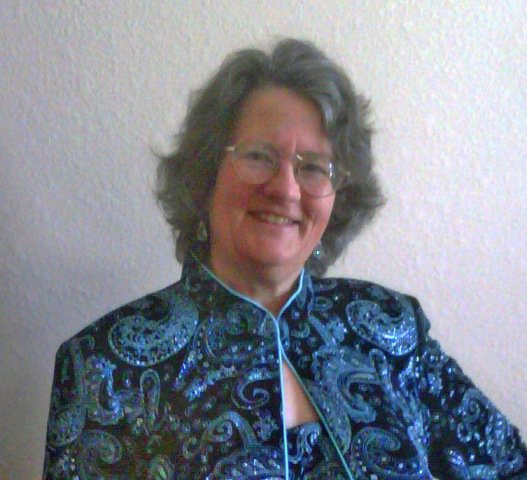
pat bertram

Today’s interview is with an author who has a lifetime of experience and some really great books too. Pat Bertram is an author with Second Wind Publishing, whose books include the thriller novels More Deaths Than One and A Spark of Heavenly Fire, as well as the non-fiction book Grief: The Great Yearning, a book about dealing with grief based on personal experiences. Pat also is an administrator and active participant in a Facebook group for suspense and thriller writers, and has two blogs, one of which she writes posts for at least once a day.

I was lucky to have a chance to ask Pat, whom I consider a friend, some questions on her life, her writing process, and what she’s up to these days.

How did you get into writing in the first place?

When I was in my mid twenties, I set out to be a writer. I quit my job, gathered up paper and pens, and sat down at the kitchen table to write. I thought writing was a type of automatic writing, that I just needed to put pen to paper and words would come. Didn’t happen. When I tried to force words on the page, I discovered I had no talent for writing, so when real life got in the way, I let go of my desire to write and turned my mind to other things. About fifteen years ago, I had some predicaments I wanted to work through, so I decided, talent or no, that I would write the story, which I did. And it was terrible! During the subsequent years, I have learned how to write, to pace a story, to write sparse but picturesque prose, but most of all, I have learned how to rewrite and edit.

How would you characterize the stories you write?

The unifying theme in all of my books is the perennial question: Who are we? More Deaths Than One suggests we are our memories. A Spark of Heavenly Fire suggests we are the sum total of our experiences and choices. Daughter Am I suggests we are our heritage. Light Bringer suggests we are  . . . ? So, perhaps my genre is “identity quest,” though I can’t see that as ever being a big draw. My only hope is to build an audience for “Pat Bertram books.”

What is your writing process?

I have no real process. When I do write, it’s usually late at night because all is quiet. I don’t set a daily goal — the words come hard for me, so I’m grateful for whatever words I manage to get on paper. Oddly, considering this is the electronic age, I still prefer to write longhand, though I am gradually doing more writing on the computer. As for the story, I know the main characters, I know the beginning of the story, I know the end of the story, and I know how I want the characters to develop, but I don’t flesh out the individual scenes until I start writing them.

You blog at least once a day, and you often talk about your personal life, both the good and the bad. What gives you the courage to share such information with your readers?

Before my life mate/soul mate died, I wrote innocuous — and fairly impersonal — posts about the books I read, the stories I was writing, general thoughts I had. After he died, I was shocked both by the true scope of grief and people’s ignorance of the process, so I made it my mission to tell the truth of what I was going through to help dispel the myth that after a couple of months, life goes on as it did before. I gained so much by opening up, that I have continued to be open as other traumas enter my life, such as my efforts to cope with both my aging father and my dysfunctional brother.

Are you working on anything at the moment?

Yes. When the members of my dancing class found out I was a writer, they suggested I write a book about them. It’s been fun —  all the characters have real life counterparts, so it has become something of a group project.

What is some advice you would give to potential writers?

Writing is not always about writing. Some authors can sit down and let the words flow and lo! There is a story! Other authors have to think about what they’re doing. So ask yourself, what story do you want to write? Why? What do your characters want? Why? How are they going to get what they want? Who is going to stop them getting what they want?

If you were stuck on a desert island and could only take three books with you, what would they be?

Three blank notebooks. And pencils, of course.


If you’d like to find out more about Pat, you can find her at her personal blog Bertram’s Blog and on Pat Bertram Introduces, where she interviews authors, publishers, and even book characters, as well as on her Facebook page.

Last night I didn’t feel like being cooped up in my apartment on a Friday night, so I went to this coffee shop near my place called Kafe Kerouac. Well, I say “coffee shop”, but it’s a bit more than that: it’s a cafe, a bar, a bookstore, a record shop, and a performance space. It’s a real cool place, sort of hipster-ish, and I felt going out and fishing for life there. I even brought my computer, in case I wanted to do the whole writer-in-a-coffee-shop thing. What I ended up doing was watching a small concert from singer Sky Steele, a singer who has been touring around the country before the release of his first album this winter.

It was actually quite fun. I’m not usually into the sort of music he plays (for samples of it, you can go onto his website with the link above), but he had some good songs, and I actually got lost in a few of them. And after the concert, I and a few people stuck around and talked with him. Sky was nice and very down-to-Earth, telling us about his goals and how he came to music.I even got an idea for a novel from something that was said during the conversation. And during the course of the talk, I had an opportunity to mention that I was a published author and that led to him and a few others showing interest in my books. One girl (I wish I could remember her name. Curse you, very poor memory for names and faces!), who styled herself as a big sci-fi enthusiast, said she’d check out Reborn City when she had the chance. It was definitely a good time, and I also said I’d check out Sky when I got the chance.

After the concert, I also went to the bookshelves, particularly the horror, suspense/thrillers, and sci-fi ones, and put my business cards in some of them. One of the readers on Self-Published Authors Helping Other Authors had suggested putting your business cards and bookmarks into books similar to yours, with the hope that anyone reading said books might be interested in reading yours. Since the books at Kafe Kerouac can be read in the store or bought and taken home, I decided to try and see if I could get anyone interested in my work that way (and the next time I get a library book that’s similar to what I write, I’ll definitely try it there as well. In the meantime, I hope the cards I left in the books will lead to at least one or two more people reading my work. Maybe even a review if I’m lucky.

To round the evening off, I ended up doing the whole writer-in-a-coffee-shop thing and finishing a chapter of Laura Horn, which got me really excited, as I’m close to finishing up the first draft of the book. After that was done, I said goodbye to Sky and some of the other people who’d been at the concert (they’d all decided to hang out at the bar for a drink), and went home, where I somehow managed to knock out another chapter of LH before going to bed.

All in all, it was a pretty good evening. I met some really awesome people, saw a concert by a musician I might not have even bothered to listen to under other circumstances, possibly sold some books, and made some headway on a book that, after a year, I’m nearly finished writing the first draft. Not a bad evening at all. I hope tonight I can have a similar sort of nigh: I’m going to a friend’s 21st birthday party, so if there’s any time afterwards I’d like to do some more writing ad see where I get.

In the meantime, I think I’ll have a late lunch, write, and then maybe go for a workout. Have a good day, my Followers of Fear.

snake

How far would you go for love and revenge?

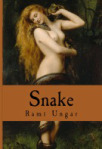
I swear, unless there’s a review, this’ll be the last post I write about Snake for a while. I know by now some of you are so sick of hearing about it you want to strangle me, but hey, I’d be remiss in my job as an author if I didn’t do my fair share of advertising for my books. And the one month milestone is pretty big.

For those of you who aren’t aware, Snake is my second published novel, and my third published book overall. It follows a young man whose girlfriend is kidnapped by mafioso after she overhears something she shouldn’t. In order to get her back, this young man becomes the Snake, a serial killer who takes his cue from techniques used by the Russian mafia, and starts hunting down members of the family who kidnapped his girlfriend in order to find her. He will go to any lengths to get her back, including becoming a worse monster than the ones he is hunting.

I’m very happy with how this book’s been doing during its first month. I’ve had plenty of people checking it out, including two people from England and Germany who downloaded e-books within the past week (first time that I can remember having someone from outside of North America checking out my work). And I even got my first review on Snake, from fellow author and good friend Angela Misri. Here’s what she had to say on Snake in her four-star review:

Rami Ungar makes a promise to (the reader) in all his writings: he WILL scare you, and if he does “his job is done.” Snake will scare you. I am a huge Stephen King fan, so this should give you some idea of my tolerance level for gore, death and mayhem – I was scared. Rami takes you into places you would never have believed possible, and manages to pull his hero (and eventually his heroine) out of them against all odds. If you like to be scared. If you LOVE to be scared. You should read this book.

Considering that I’m a huge fan of Stephen King and I got favorably compared to him, this is probably one of my favorite reviews of all time. And I hope it leads to more people giving it a chance and checking it out.

If you’d like to get a copy of Snake, you can follow this link to Amazon and check it out (though I will be uploading it onto other sites soon). And if you like or hate it after reading it, please don’t hesitate to write a review and let me know what you think. I love feedback, positive or negative, so if you have some for me, please don’t hesitate to share it with me.

You can also check out the page for Snake here for excerpts and more information, if you wish.

That’s all for now. I’ve got a few things to take care of this morning before work, so I’m going to get on that. Have a great day, my Followers of Fear.