Posts Tagged ‘fiction’

Well, its a week before classes start, and I turned in the first round of tuition fees when I go off to work today. So it’s time for me to do what I do before the start of every semester: let everyone know, whether they care or not, what my semester is shaping up to be like and what I’ll be doing this term. And this is a special update, because it’s my last year at Ohio State. Meaning this is my last autumn semester. And one of the last times I’ll be able to look forward to a new term and new classes and new experiences…

Please excuse me while I go pretend to cry.

…….

Okay, I’m back. Still here? Excellent! Well, as usual I’m going into the semester with hopes that I can get A’s in all my classes (though my past track records suggest that I’ll probably get at least one or two B’s). I’m taking a total of seventeen credit hours this semester, far more than I’ve ever. Fifteen of those are divided among five three-hour classes, while the other two are for my thesis work (more on that down below). This semester, I’m taking two classes for my English major, two for my History major, and one course to fill out all my general requirements. For English, I’m taking an advanced creating writing workshop and a special course on Shakespeare. Regarding the workshop, I wanted to take one more before I graduated, having taken two during my sophomore year. I’m not too keen on the fact that we’ll be focusing mostly on literary fiction, but hey, I’m adaptable, I’m sure I can write something that’ll pass as literary and get me good grades. As for the Shakespeare class, it looks like we’ll be focusing more on the comedies, such as Taming of the Shrew and The Merchant of Venice. I’ve got a complete collected works of William Shakespeare’s, so I hope that’ll be allowed for class. If not, I won’t mind having to buy copies of the plays, though I do wish we could explore some of the tragedies, like Titus Andronicus. When I saw that in London, I absolutely loved it (though that shouldn’t surprise anyone who knows me and knows the play’s subject matter).

For History, I’m taking a class that goes over the history of war, from early Mesopotamia to today’s wars and a class that looks at the early history of East Asia. Both should provide an interesting look into both subjects, and the former class should be interesting for me as a guy who’s done plenty of study on WWII.

Movie time.

And as for the one general requirements course, it’s an interesting one. It’s a Biology class, the last class I have to take for my science requirements and my general requirements. However, this one seeks to explore the subject of biology and anatomy through film. Yeah, I have no idea what that means either. But I’m just going to go with it. Besides, it sounds very, very interesting and it means watching films two nights a week, so who’s to complain?

And as for my thesis, it’s going to be a tough but fun project. As I’ve said before, I’m working on a novel called Rose, about a woman who dies on the night of her engagement party and is resurrected by her stalker. However the magic that brings her back changes her biology and makes her totally dependent on her stalker for survival, even as she tries to escape from him, and from whatever evil the magic let into the house. I’m hoping it’ll shape up to be an awesome horror novel with plenty of room for introspection and character development.

Well, that’s all for now. I’m tired and heading to bed. You all have a good night, my Followers of Fear. Pleasant nightmares, one and all!

Or at least the first draft is. There’s always a chance that my adviser will make me rewrite certain parts of it, but I hope to keep it like it is.

Anyway, late last night I went about finishing the outline, and somehow I managed to do it before it was too far past midnight. This outline gave me more problems than outlines usually do, because up until I started writing the outline I had only a few scenes planned out, so I had to come up with the rest as I was writing. Once or twice I had to actually go back and erase what I’d written before because I didn’t like which direction the story was going. Around the third attempt though I managed to get this story going in the right direction and from there it was just a matter of figuring out where I wanted to go, what would be the logical step to get there, and what sort of events could happen without stretching the limit of credulity.

In the end, I think this story will turn out very well. It’s about twenty-eight chapters, and will probably be around the normal length for one of my books, between eighty-five thousand and one-hundred thousand words. I often wrote the outline looking for plot holes and trying to find good ways to plug them up (I hope I succeeded). And I hope I create an interesting and somewhat scary story about a woman who dies but is resurrected by her stalker through magic and finds herself trapped in his house with not only him, but very malevolent supernatural forces. Thank goodness I have an adviser who will be helping me out with that part. He’s a published writer himself, so odds are he’ll have a few lessons to help me.

And while I’m waiting for my research books to arrive in the mail and for the new semester to start (three weeks from today, by the way), I think I’ll edit Video Rage. God knows it’s about time, and I have time to do it now before things get really crazy! In fact, I’ll start it today! But first I need to run an errand, then I need to vacuum the apartment, then I need to run the dishwasher, then I need to have lunch before I go to work, then I have work, and later tonight I’m supposed to be at a friend’s birthday party…life’s crazy sometimes.

Anyway, that’s all for now. I’ll keep you updated on Rose, Video Rage, and other projects as time goes on and I have news to give. Have a great day, my Followers of Fear.

Every now and then I look to do a post musing on the mechanics or subtleties of writing fiction, and today is one of those days. And as you can tell from the title of this post, I want to talk about unreliable narrators, those strange voices in the books we read (and occasionally in the films and TV shows we watch) whom we can’t always trust.

According to that awesome source of usually-factual info that is Wikipedia, an unreliable narrator is a narrator, usually in some medium of fiction or another, whose veracity has been called into question. Usually this happens very early in the story, where the narrator may make a plainly false or delusional claim, or it may happen elsewhere in the story, perhaps near the end where a twist in the story turns everything we thought we knew upside down or slowly through hints that are given to us in the narration. Stories with unreliable narrators can feature a single narrator, or multiple narrators giving their own versions of events, or even a supporting or side character who tells a story in such a way that we question whether or not they’]re being entirely truthful about what happened.

A great example of an unreliable narrator is Patrick Bateman from the novel American Psycho. As a man suffering from psychoses and the occasional hallucinations, Bateman makes a great unreliable narrator. Other examples include Nell from Wuthering Heights, most of the characters from the Japanese movie Rashomon, and Ted Mosby from How I Met Your Mother (according to show creator Craig Thomas, anyway). Oh, and any story that has children narrating it could possibly have unreliable narrators, because kids sometimes remember things incorrectly.

(If you want to think about it though, every one is an unreliable narrator, because no matter how they see events, they are biased, they may mis-remember details, and they may cover things up in order to make themselves look good or to hide their own guilt. But let’s not get too philosophical about this. Otherwise we’ll be here all evening)

One of the characters in my thesis project, the antagonist, is an unreliable narrator. Because of his mental problems and his infatuation with protagonist Rose, he sees things through a very certain light, so when he tells a story it is often through that lens, which probably won’t reflect reality too well. As I’ve never written a story from the point of view of an unreliable narrator, so exploring the device through this character should be interesting. (Or have I used unreliable narrators before? Technically, any time I tell a story from the protagonist’s first-person point of view, it could be construed as unreliable, but i’m not sure if it counts. Oh darn it! Now I’m an unreliable narrator of my own writing career!)

But why are unreliable narrators used so much? And why do they appeal to readers and writers alike? It’s a very difficult question, and I’m not sure I have an answer. Perhaps for writers, it’s the chance to tell a warped version of events. When we tell a story, especially through the lens of an omniscient or almost-omniscient third-person narrator, it’s almost expected that the story being told is what actually happens, one-hundred-and-ten percent factual. Even when the story is limited to the viewpoint of a single character, that third-person narrator’s portrayal of events is assumed to be accurate. Heck, even when we read a novel told in the first-person, we tend to see the depiction of what happens as true. Especially if we like the character.

An unreliable narrator allows the writer to break from that, to tell a story that might not be accurate, and that the reader and maybe even the writer will have to guess how true the story is or how much we can trust the narrator to tell the truth. In fact, maybe that’s what the reader gets from these sort of storytellers: they have to figure out how trustworthy the storyteller is, or where the line between truth and the storyteller’s own delusions or beliefs is laid down. It’s like solving a mystery or a puzzle, in a way, and the only way to really solve it is to read on until you finish the story. And even then, you might not be able to tell how reliable the narrator is (which is why there are e-forums to discuss these issues).

In any case, I’m going to enjoy exploring the antagonist’s own unreliable stories and seeing how much we can or should believe him. It’ll make for an interesting discussion point when talking about my thesis with my adviser during the next semester.

What do you think of unreliable narrators?

Have you ever used them in your own writing? How did it go?

I’ve been meaning to do this post for a while, but with Laura Horn still needing to be finished and everything…

Anyway, last year I did a countdown of my favorite villains from fiction (to read that contest, click here for #10-6 and here for #5-1). I’m doing it again this year to show case the awesome villains that have impressed and terrified me since that list last year. And a lot has happened over the last year: we’ve got only one person is returning to the list from last year, which just goes to show that Hollywood/New York/everyone else can come up with some really amazing villains sometimes. In fact, I’d like to announce our honorable mention now: Peter Pan from Once Upon a Time. The revisionist fairy tale show came up with a unique take on the classic character as a manipulative sociopath living in a magical Lord of the Flies kingdom who will go to any lengths to stay young, free, and powerful forever. Creepy!

Now let’s get this show started with the first half of the list!

10. The Daleks (from Doctor Who)

Despite their at-first rather ridiculous appearance, the Daleks are terrifying to behold. A genetically-engineered creature living inside a cyborg transport machine, the Daleks are a powerful metaphor for racism, particularly Nazi racism. That, their pure destructive force, their popularity with fans, and many other reasons is why they’ve continued to terrify children and adults since their debut in 1963, and are still part of DW lore and pop culture today. Honestly, even though I love Daleks, if one of them shouted “EXTERMINATE” near me, I might freak out myself.

9. Bughuul (from Sinister)

Sinister is probably one of the best horror films in the past ten years, and Bughuul, also known as Mr. Boogie, is one of the main reasons for that. Portrayed by Nick King, Bughuul is a reimagined boogeyman, a Babylonian god that causes children to murder their families and then feeds on their souls for centuries in his spirit world. Throughout the movie, Bughuul weaves a web of psychological terror around the main character and around the viewer, even up until the final moment of the film. It’s no wonder a sequel is in the works, and no wonder Bughuul deserves a place on this list.

8. The Headless Horseman (from the Sleepy Hollow TV series)

In this reimagining of the classic short story by Washington Irving, the Headless Horseman is one of the Four Horsemen of the Apocalypse, specifically Death, and he’s looking to find his head so he can continue with his mission to start the end of the world. Not only that, he is looking to gain his revenge on Ichabod Crane, whom he has a strange history with, and the revelation of that history just makes things that much more exciting in this awesome show. Also, it’s so cool to see the Headless Horseman riding down the street with an axe and automatic weapons. Total badassery right there.

7. William Lewis (from Law & Order: Special Victims Unit)

Portrayed by Pablo Schreiber, Lewis appeared in the finale of Season 14 and throughout Season 15 and is probably one of the worst villains ever to be on the show in its 16-year run. A monster who gets his kicks from terrorizing his victims and putting them in pain and agony, Lewis kidnapped Detective Benson and tortured her even as he was running from the cops who were looking for him. Even after he was caught, Lewis continued to find ways to harass Benson both in person and in her nightmares, and even escaped to cause more terror. Even after committing suicide, he nearly destroyed Benson and a few other people too. A man like that is the worst, and deserves his place on this list.

6. The Nogitsune (from Teen Wolf)

Season 3 of the hit MTV series was unique in several ways, particularly because it was literally two seasons in one, each half comprising of 12 episodes. The latter half of the season featured the Nogitsune, a fox spirit of chaos who causes murder and mayhem wherever he goes. And all for the sake of a few laughs. When he possesses one of the main characters, you know you have reason to be afraid. Especially when he starts out his day by telling his potential victims riddles.


That’s all for now. Tune in later this week when I list #5-1 of my top villain list. And let me know what you think of these villains. Like them? Hate them? Who do you think should have gone on the list? Let me know in the comments below.

After a year, a week, and two days, with twenty-six minutes before midnight, I am finally finished with the first draft of my fourth novel Laura Horn. I wish I hadn’t had to take so many breaks to focus on schoolwork (not to mention writing was nearly impossible during my study abroad trip), but I’m glad I was able to get it done. And even though it’s a first draft and obviously will need a lot of editing when the time comes for that so it can look something resembling publishable quality, I’m quite happy with the result.

For those of you who are not very familiar with LH, it follows the story of a girl with a very traumatic past who, through an odd series of accidents, stumbles upon a conspiracy that could destroy the United States of America. With a few good friends to help her, she sets out to save her nation from the threat that looms over it, and confronts her demons as well.

So it’s kind of like White House Down or Olympus Has Fallen, only it’s got less explosions and a little more character development. Actually, a lot more character development. Our titular character goes through a lot of changes throughout the book, and it’s astounding even to me, the guy who created her, how much she changes in the course of the story.

It’s also a lot more thriller than I tend to write, but my next big project will be some pure psychological/supernatural horror, so it all pans out in the end.

Anyway, I’m happy to announce that I’m finally done with LH, and that in a few months (schedule permitting) I can start editing the book and getting it ready for eventual publication. I’ll be setting up a page for the book on this blog with the notice “Coming Soon”. With any luck, I can have this book out sooner rather than later, and maybe work on a sequel or two (I have a couple planned out, I just need to commit to them).

So now for the page and word counts. I wasn’t actually too far off. I did say the three chapters that would make up the epilogue would be around five-thousand words and it turned out to be more like nine-thousand, but hey, it could’ve ended up much longer. Anyway, the Epilogue in total was 32 pages and the word count ended up as just under eighty-nine hundred. That brings the total page count to 356 pages and 94,774 words. About average for a Rami Ungar novel. Of course, these counts might change drastically by the second draft, but this is a good placeholder until then.

In the meantime, let me tell you guys what projects I plan to take up next (though they may or may not be in this order):

  • Work on the outline for the novel that’ll be my senior thesis (more on that at another time)
  • Edit Video Rage
  • Write several articles on writing for Self-Published Authors Helping Other Authors
  • Write a few blog posts I’ve been putting off so I could finish LH.
  • Write several short stories, and hope I can get a few of them published in magazines
  • Start assembling a new collection of short stories
  • Experiment with writing erotic fiction (yes, I plan on doing that. I meant to do it earlier this summer, but things got in the way).
  • Try and get through the many books I still have to read for pleasure.
  • And just have a good time as usual.

Not too hard to do, right? At least, I hope so.

Anyway, that’s all for now, my Followers of Fear. It’s late, so I’m going to read a little and then sleep. It’s my day off tomorrow, so I’m going to find plenty of time to celebrate before I get back to writing (it’s a work hazard, I just can’t stay away from it). Anyway, that’s all for now. Have pleasant nightmares tonight. I know I will be!

As any author can tell you, there’s no one way we get our ideas. In fact, we get our ideas from everything: stuff that goes on in our lives, the people we know, current events, books, TV shows, movies, video games, from a phrase, from a place, from something we like or something we hate, and from more things than I can list. It’s the actual spinning of the story that can be rather difficult. We have the start of an idea, but we need to build up the story around it. Who’s the protagonist, what’s going to happen, where and when is it going to happen, why is it happening, etc. And depending on the author, the idea, and where it came from or what it consists of, the story based on the idea can come either very quickly or take a while.

For me usually it doesn’t take too long to come up with a story once I have the idea. There’s one notable exception however, and that’s when the idea revolves around a character and nothing else. By this I mean a character pops into my head, maybe no more than just an image but still a character, and I want to write a story around that character. And it isn’t easy for me to come up with that idea.

Other inspirations don’t take that long. I saw the movie Schindler’s List and came up with a whole book series based around the idea of someone actually leading a rebellion against the Nazis. Remember when I went to the Sky Steele show a week back? I had an idea from something we talked about after the concert involving a supernatural crime story. And a creature featured in a fantasy TV series I watched last year inspired a story about how religion can actually kill you. All of this happened within minutes or hours of being inspired.

But starting out with an intriguing character and little to nothing else? It takes me days to come up with a story to match. In fact, of the last ten ideas for novels I’ve had, half of them were based around characters and took me days to actually come up with an idea I could write down on my list of feature-length ideas (I’m up to 145 of those, by the way. Unless I can become successful enough to write full-time, I’m not sure I’ll be able to write them all!). They all started with one or two characters, maybe a setting, but all of them took days to come up what they would be doing or what would happen to them. The most recent one, which I first started trying to brainstorm a story around on Tuesday, I finally got something today.

Sometimes, the gears in my head turn so loudly, you can hear them.

What happened was that I saw this Halloween-themed video (which I will have to post about when October rolls around) and I got a little scared by it. Not only that, but I also kind of fell in love with one of the characters in the video and decided to base an entire Halloween-based story around her. Just one question: what kind of story? Finally figured out today to base the story around ancient myths about Samhain, the holiday Halloween is based on, but up until then I could not think of a single thing to base the story around. Well I did, but none of them really worked for me. I couldn’t see myself writing something around those other story possibilities, let alone anything I thought would be good. I’m glad that I was able to finally come up with something though, or might have gone a little madder than usual.

You know, as much as I love getting ideas for stories, I hope that in the future these sort of ideas, the ones that take several days to form and usually start with a single character, pop into my head less often. And when they do, I hope it takes less time to come up with a story based around them.

What about you? What sort of ideas do you struggle to create stories around?

What do you do when you’re struggling with an idea and can’t think of anything?

Oh, I doubted I would actually get this far. I mean, with all the delays and breaks and whatnot I had to take with this novel, I really despaired about getting to the climax of the book. I’m happy to say that after four or so days of working through Chapter Fifty, I whizzed through Chapters Fifty-One and Fifty-Two and finally finished Part IV: Inauguration Day of Laura Horn.

This part of the novel actually got longer and shorter while I was writing it. I added two chapters to give the antagonists more page time, and then I combined two chapters into one so that the flow of the novel would…well, flow smoother. I’m glad to say that it all went very well in the end. Now I’ve only got ten chapters left of the novel, seven of which are in Part V: Triumph, and three in the Epilogue. I can’t wait to see if I can’t get through these last ten chapters in the next seven days. Ten or twelve at the most.

And now for the page and word counts (and by page counts, I mean 8.5″ x 11″ pages). Part IV was fourteen chapters, comprising about seventy-five pages and seventeen-thousand, seven-hundred and ninety-four words. Combined with the preceding thirty-seven chapters, that’s a total of 292 pages and 77,274 words. Wow, we’re right up in the novel range. I’m going to make a guess between 85,000 95,000 words at the end of it all. Well, that’s around normal for one of my books, I guess. Video Rage was around eighty-four thousand, while Snake was 110,000. Reborn City was somewhere between them, around ninety-one or ninety-three thousand.

Huh…funny now that I look at it. The novels that had longer chapters but less of them had smaller word counts, while the novels with shorter chapters but more of them are much longer. I’m not sure why that is, but I’m sure it might have something to do with the books I read growing up and how I began writing with the goal of being as good as the books I was reading.

Well, I’m going to probably write an article for Self-Published Authors Helping Other Authors and a blog post or two and then get to work on finishing this novel about a girl with a very dark past who confronts her demons and ends up saving her country from a horrific coup. Should be fun. Wish me luck on it.

Well, I’ve got a big day tomorrow. I’m meeting someone who’s helping me find a job after graduation tomorrow morning, and if I’m lucky I might be able to pick up my new glasses beforehand. Plus another shift at work, so that’ll be my whole afternoon. I might as well go to bed now and get some sleep. Goodnight, my Followers of Fear. Pleasant nightmares to you all.

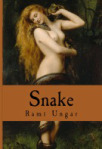
snake

How far would you go for love and revenge?

If you haven’t heard yet, Snake‘s e-book is only on sale for a few more days, until July 7th. After that there won’t be any more sales for a while…no, wait. The Quiet Game‘s one-year anniversary is ten days later. Never mind.

But yeah, Snake‘s e-book will only stay $1.99 for a few more days, so if you’re interested in reading the book one author compared to a Stephen King novel, now’s the best time to check it out. All you have to do is head to Amazon, and from there it’s easy to obtain the story of how one young man is willing to become the most horrific of killers in order to save the woman he loves and bring his enemies down to their knees.

Have a great weekend, everyone. I hope to have a review out tomorrow night on the new horror movie Deliver Us From Evil, so stay tuned for it. I hear it’s going to be great.

tqg cover

Ten reviews. I’ve never gotten ten reviews on a single book before. I only have three right now, but still, this is a major milestone that I’ve been hoping would happen for a long time. And today it finally happened.

The Quiet Game: Five Tales To Chill Your Bones was my first book, a collection of short stories I wrote and assembled while still working on the final draft of Reborn City. By far it’s also my bestselling book, which doesn’t surprise me considering that it’s my oldest book and I’m still very early in my writing career. It’s taken nearly a year for it to get to ten reviews, but I’m so glad that it finally did. This one comes from reader kimberly brouillard, who named her review liked this book a lot and gave The Quiet Game four stars out of five, bringing the book’s average to a 4.3 out of 5. Here’s what she had to say:

All of the stories were really diverse and fun to read. I also enjoyed the authors blurbs about each stories origination and development. Keep up the good work!

Thank you kimberly, I’m glad you enjoyed the book. And I’ve got two more if you want to read either of those, one sci-fi and one thriller. I’m also very glad to you and all those who provide feedback on my work. It’s very touching and it means a lot to me, because it shows where I’m doing well and where I could stand to improve. And this early in my career, I’m sure there’s spaces and places to improve.

If you would like to read The Quiet Game: Five Tales To Chill Your Bones, you can find it on Amazon and on Smashwords. And if you do decide to get a copy and read it, please let me know what you think in a comment or in a review. I love feedback, positive or negative, so I’ll be happy to get yours.

That’s all for tonight. I’m tired, so I’m going to get read for bed and do a little reading. Goodnight, my Followers of Fear. Have some pleasant nightmares.

Not literally, of course. I mean how to make one for a horror novel, movie, or TV show.

Haunted houses are such a staple of horror, tales of them dating farther back than The Fall of the House of Usher, and have continued to terrify readers and viewers alike over the years, whether they be watching The Shining or American Horror Story or even that episode of Doctor Who with the haunted house. The question is, with so many famouse haunted houses out there, both real and fictional*, how do you construct one that stands out from the crowd (and once again, I mean metaphorically)? Here are some tips that might help.

*For those of you who don’t believe in ghosts or hauntings, you can interpret this as houses in the real world that have history of or are purported to be haunted. For those of you who believe in ghosts…well, I don’t need to finish that sentence, do I?

1. A haunted house doesn’t have to be old and dilapidated. I know the standard image in our minds of a haunted house is one that’s an old manor, with shingles falling out and holes in the porch and plenty of leaks in the pipes, or sometimes a castle with no glass windows and plenty of dungeons and hidden chambers.  That’s great if you want to market it to the Addams Family, but haunted houses don’t necessarily have to look like that. They can be only a few years old, very modern-looking, and in the middle of a nice neighborhood. Heck, you can even make the house a haunted apartment building if you so desired (there was a movie that did that a few years back. Would’ve been good if it hadn’t been a direct-to-DVD sequel).

Not your average haunted house, is it?

In this one novel I plan to write, I plan on the haunted house being only about three decades old, and without any sort of dilapidation or other trademarks to make it a haunted house. What makes it terrifying is its current occupant, as well as the atmosphere that hangs over the place.

For some good examples of haunted houses that don’t fit the standard mold, try the remake of When A Stranger Calls, the first season of American Horror Story, the Buffy episode Where the Wild Things Are, and (if you really want to) The Grudge 3 for that haunted apartment building. Oh, and Ghostbusters as well, that has a haunted apartment building. Or is that a doorway? You decide for yourself.

2. You don’t always need ghosts for a haunted house. For example, you can zombies, witches, a serial killer, vampires, werewolves, just something out of the ordinary. A haunted house doesn’t become haunted because it has ghosts in it, but when something (usually malevolent) is inside. That’s why the movie Cabin in the Woods is so genius: besides breaking down and exploring/philosophizing on the tropes of the horror genre, it also shows how much variety there is to the haunted house and what can haunt it. Anything from zombies to wraiths to werewolves to evil dolls to giant bats to merman to scarecrow people and everything in between, you can use.

3. Use plenty of description when describing the house. In a horror movie, you don’t need to describe the house, because you can see it just fine. But in a novel, the author has to supply the information. What does the outside look like? Is there a distinctive style of architecture involved? Is it painted in really ugly colors that don’t compliment one another? What’s inside? Accessories, knick-knacks, the odd little mirror that’s always in the northwest corner of a house? Is there a yard? What’s in the yard? Does a colony of rabbits live in the yard? Keep all this in mind the moment you introduce your characters (and by contrast, the readers) to your haunted house.

4. Don’t go all out as soon as the door’s closed. By this I mean one should use a subtle build-up in order to properly scare the reader. You can’t just come out with a ghost or an axe murderer showing up and attacking people the moment the door is closed and the character or characters are settled in. There should be a steady build-up. First small things go awry or weird things that can easily be explained but are still creepy nonetheless. Then weirder stuff happens: you might see a form out of the corner of your eye, or you walk into a room and the furniture is all moved or ruined. There might be voices you can’t explain, or perhaps something catches on fire inexplicably. You touch a certain section of the wall, and you feel intense pleasure or pain. And then finally, there’s no denying that weird stuff is going on: the ghost has appeared, the threat is revealed, you’re going to have to deal with it or die. Using the house to do all that and more can really ramp up the suspense and terror of the story and make your haunted house terrifying and distinctive.

Don’t reveal THIS too quickly.

A great example of this ramping up of the terror is the original Amityville Horror, as well as the movie Sinister.

5. Your house should have a history. Whether the house is ten, a hundred, or several hundred years old, it should have a history, and the author should know what it is, even if they won’t reveal all of it to the reader. What is the history of the house, or the land it sits on? Does it involve an Indian burial ground? Was there a really nasty murder there? Or was there something even darker than that lurking beneath the floorboards and behind the walls? This will help you flesh out the story, the haunting, and whatever is happening in your story. Also, often times one can figure out how to defeat the antagonist of the story through its history (like Jason Voorhees and water, or Goblin from Blackwood Manor by Anne Rice). And if this history involves certain people or objects, make sure to have that worked out as well.

There are many great examples of haunted houses with history, just watch any episode of a show for investigating haunted locations. If that isn’t your thing, try movies like The Conjuring, or the TV mini-series version of The Shining (not the movie though, that was a terrible adaptation).

6. Research common signs or symptoms of hauntings. I know some of you will be like, “What’s he talking about?” Well, besides sightings of ghosts or voices being heard, people often report certain things when experiencing a haunting: inexplicable areas where it is cold, electrical devices being drained, objects being moved, and even attacks, and each can happen for very different reasons. I like to include these things in my story because they seem to give my stories an air of authenticity (if you want to call it that). You don’t have to go this route with your haunted house, but if you do and you want to do some research, ghost-hunting shows or manuals on ghost-hunting can be great resources. Also do some research on why these signs and symptoms might not be caused by a haunting, because…

7. A little bit of uncertainty goes a long way. One of the scariest things with a haunted house is not knowing. Not knowing if you’re going crazy, not knowing if there’s actually a ghost in the house, not knowing what it wants or how you’re going to stop it. It’s scary not knowing, which is why a writer should exploit it for as long as they can in a story. It’ll make your story that much better. So knowing explainable ways for a “haunting” to occur can help to add to that uncertainty. Could it be electrical fields? Could it be a spirit? Or is it just the pipes and my new medication? It’s scary just not being sure.

Ultimately, it’s how the writer writes the story that makes the story scary. But if these tips have helped make your story scarier, then I’m glad to have helped and I hope that you have fun constructing your haunted house. I bet it’ll be very terrifying.

That’s all for now, I–that’s odd. My water bottle just fell off the counter. I could have sworn I put it farther back on the counter. Wait, what was that I just saw out of the corner of my mind. I must be working too hard or watching too many movies. I–oh my God! AAAAAAAAAAAAAAAAAAAAAAAAAAH!!!!!

….

….

….

He’ll be coming for you next.