Posts Tagged ‘films’

I’m not sure if I’ve ever mentioned this, but Rose has a lot of flashback sequences and other dips into the past within the story, especially in the last two-thirds. I did this for a number of reasons: exploring the characters’s pasts; making them more complex; and just an opportunity to write some sequences to add to the horror element of the story. And there are a lot of horrifying things in those sequences, things that I can’t go into without revealing too many plot details, but they did make my beta readers gasp and stare at the page wide-eyed. They were horrifying moments in the story.

Not to mention, I think that flashbacks can be scary if done right. A good example of this is Gerald’s Game by Stephen King: while the protagonist’s current situation is scary enough, going into her past midway through the story and seeing how her father abused her as a kid was horrifying in its own right. Another good example would be the movie Oculus: that film flashes between the present and the past throughout its runtime, and it’s freaky no matter what year it is (see my Rewatch Review of that film).

Well, it looks like I didn’t do the flashbacks right for Rose. In the notes on the fourth draft from my publisher, they mentioned that all those flashbacks are just bad stuff happening to those characters, and while that stuff is horrifying, it’s not scary. I’ve had a lot of back and forth with them on this, and after a lot of thought, I can see where they’re coming from. After all, while in the real world “horrifying” can be a synonym for “scary,” especially in relation to current events, in fiction that’s not necessarily the case. Think about it this way: Harry Potter is horribly mistreated by his relatives, and what he goes through is horrifying. But if you ask any normal Potterhead what person or creature from the books they would be scared to face, the Dursleys wouldn’t rate very high on that list. The dementors, Voldemort and his Death Eaters, or the basilisk, sure. But the Dursleys? Considering most Potterheads are Muggle in biology and can’t perform magic, anyone who had to face them would probably be invited into Privet Drive and served tea and cookies in front of the TV!

So while showing how many terrible things happened in the characters’ pasts may be horrifying, it might not be scary. And considering how much experience my publisher has and how well-received their books are (have you checked out The Cronian Incident by Matthew Williams yet?), I’m taking this piece of feedback to heart.

I won’t lie, though, I’m a little disappointed, and I’ve been wondering where I went wrong. Or maybe to phrase it better, I’m wondering how I might have done the flashbacks better.

Well, in the case of Gerald’s Game, whose flashback is most similar to mine, they only do one big flashback sequence, not several. That way, it doesn’t become a repetitive cliche or trick. That, and its connection with the current events of the story: the protagonist’s abuse by her father is very much connected to her current predicament, on psychological and symbolic levels as well as literal levels. And with Oculus, the horror behind the story–a cursed/haunted mirror–is scary no matter when it happens. Spinning a tale of two siblings who experience the mirror both as children and adults, and then going back and forth between those two experiences, makes for some great psychological/supernatural horror.

And maybe that’s the thing: connection. In both those examples, the flashbacks, no matter how they’re staged, have very strong connections to what’s happening in the story’s present. Of the ones in Rose, while they do have connections to the characters’ pasts, only one of them has a direct correlation to the current events of the story. And that one’s told to us by the antagonist rather than shown in flashback. And that’s why the flashbacks in this story didn’t work as well as they could have.

So what’s next? Since so much of the novel is in flashback, I may have to do a whole lot more revising. Hell, I may even have to rewrite a good chunk of the novel. Which isn’t something I’m unfamiliar with: as many of you may recall, I had to go back and start over on the first draft back in college because the first attempt went in a direction that didn’t help the story.

Still, it’s a little annoying, and I haven’t figured out exactly what I’m going to do for these changes (though I have ideas). Hopefully, whatever I come up with, it’ll come out for the novel’s betterment, and bring it one step closer to publication.

Fingers crossed.

Whenever you hear a movie getting a ton of hype, especially a horror movie, you tend to be a bit skeptical. And when you hear that Platinum Dunes, Michael Bay’s production company for horror movies, is involved, you’re even more skeptical. I mean, have you seen Ouija? Or that crappy, way-too-sexual middle finger to a franchise that was the Friday the 13th reboot (I’m sorry, but I’ll never forgive Michael Bay for that film. Did not understand what made Jason Voorhees or the Friday the 13th films great at all).

I’m glad to report that this film was not only very good, but actually scared me a bit. And I credit that to how much its director, John Krasinski, who also starred in the film with his real-life wife Emily Blunt and co-wrote the script (rather than a certain director who thinks explosions, boobs, and unsteady camera movements make good cinema).

A Quiet Place follows a family–a father (Krasinski), a mother (Blunt), their deaf daughter (actually deaf actress Millicent Simmonds), and hearing son (Noah Jupe)–living in the first years of a post-apocalyptic world where a predatory race of creatures that hunt through sound have exterminated most of the human race. The family tries to survive each day without making a sound, speaking only with sign language and going to extreme lengths to muffle or suppress every noise (which makes you very aware of how much noise we make in our everyday lives). Which is getting more and more complicated because the mother is heavily pregnant (you can understand why that might be an issue). The film chronicles one particularly nasty night, when the mother goes into labor, and what happens afterwards.

This film is a great horror film. For one thing, the emphasis on sound in this film, both in terms of the lack of ordinary sounds like speech, electronics, and whatnot, the sounds we do hear, from nature to the monsters’ roars and growls, to the music, help to create this creepy, unearthly atmosphere. This helps in suspenseful moments, where characters have to be very careful not to make a sound or they’ll get killed, as it heightens the terror you feel. Hell, I was afraid to make a sound during those moments, and I was in the audience! Coupled with a some well-timed jump scares, you get a really scary film.

I also really liked the monsters in this film. Even in broad daylight, the monsters aren’t very easy to make out through most of the film, keeping them mysterious and making their deadliness all the scarier. And when we finally do see them, they are still really terrifying to look at, even if they may look like the monsters from a certain popular science-fiction/horror franchise (those who’ve seen the movie know what I’m talking about). And I love how not much about the monsters is revealed in the film. You learn enough to understand how they hunt and why they’ve been so successful in hunting down humanity, but you never really learn where they came from or how they appeared on Earth. And that, like the Xenomorphs from the Alien franchise before Prometheus, just makes them all the scarier.

But the best part of this film are the relationships between the family members. With little to no spoken dialogue, you really get to see how this life has been wearing on them, how little mistakes and arguments, along with the constant need for survival, have given each character their own struggles and fears, and how all that creates tensions between them. Seeing them work together, fight, and try to overcome this life is not only enthralling, but contains a great metaphor for the struggles of a family–any family–during difficult times.

That all being said, the lack of sound and action at times does make it hard to stay invested or pay attention to the story. I also thought that the ending could’ve been darker, which would’ve made it a much more memorable and powerful film. At least in my mind.

All in all, I’m giving A Quiet Place a 4.3 out of 5. This is a scary film that will draw you in not just with its premise and atmosphere, but with its intelligence and depth. Take a look and see why silence is truly golden.

Last week I had a dream that started pleasantly and ended up being kind of nightmarish: it involved me and a friend of mine from high school navigating an area with lots of rivers and creeks on surfboards. We were looking for a mythical golden treasure trove that many had searched for and failed. We’d heard the treasure we were looking for was cursed, but we went searching for it anyway, because nothing bad has ever come from seeking and finding cursed objects. Somehow we found the treasure where so many others had failed, split it up between us, and go home. However, soon after that, weird stuff starts happening: things move on their own, the faces on the coins change shape, and that’s just the start of our problems. Well before it gets really bad though, my friend and I realize that we have to return the treasure to where we found it.

At some point, someone in the dream says I could write a story about what’s happened to us. To which I replied, “Someone already did. It’s called Pirates of the Caribbean.”

After we agree to take the treasure back, I woke up. It didn’t take me long to figure out the main message of the dream (besides the fact that I can point out when my situation resembles a famous film in my dreams). You see, the night before I’d taken a swipe at starting the fifth draft of Rose, based on my publisher Castrum’s comments and suggestions. I got about a page in, and I hit a metaphorical roadblock. I couldn’t figure out how to advance. So I ended up going to bed not sure how to move further in editing this novel while at the same time integrating my publisher’s suggestions (many of which I agree with and think could elevate the quality of the novel).

That dream was my subconscious giving me a rather creative presentation of my doubts and anxieties regarding the editing and publishing process for Rose: that signing with a publisher was a really bad idea, that there’s nothing I’ll be able to do to make this novel publishable, that even if I somehow get it released, it’ll suck and anybody who reads it will leave bad reviews. A dark side to achieving my dream and finding a publisher, represented expertly by cursed gold.*

And then on Saturday, I tried again. And it went extremely well. I got thirteen out of sixteen pages in that chapter done. Yesterday, I got the last three pages done, plus all eleven of the next chapter (and while taking in a double feature on the Blu-Ray Player in the afternoon). And then today, I got another chapter done within a couple of hours. That’s an average of a chapter a day! Take that, conscious and subconscious fears involving working with a publishing process.

Obviously, these are still early stages of the fifth draft, and I’m going to encounter moments where I’m not sure what to write or how to integrate a suggestion from the publisher. Luckily though, my publisher has been great about answering any questions I have (thank God they don’t see me as a pushy American) and offering feedback to my ideas on how to integrate their suggestions. And with these last three chapters, I’ve been able to move forward mostly on my own. And with time, I’m sure I can get through the rest without trouble, and well before May 16th. I just have to keep being creative and persevere.

Obviously, doubts about what I’m doing and where I’m going will plague me throughout my writing career from here on out. I’ve passed a new turning point in my career, and it’s a whole new playing field from here on out. But the next time I feel those worries start to get to me, I’ll remember the dream about the cursed gold, and the productive weekend that followed. And I’ll just keep editing through my doubts.

And while I still have your attention, I’d like to give a shout out to my good friend and fellow novelist at Castrum, Matt Williams. He just finished writing his novel The Jovian Incident, Book Two of the Formist series, and will hopefully have it out later this year. I can’t wait to read it, as I really enjoyed the first book, The Cronian Incident, which currently holds a 4.7 out of 5 on Amazon based on 12 reviews. If you would like to read some hard-boiled detective fiction in a futuristic universe, this series may be the one you’re looking for. Check it out and leave Matt a review while you’re at it.

Until next time, my Followers of Fear, pleasant nightmares (hopefully none that resemble popular contemporary movies, though).

*Still not sure why I was using a surfboard to navigate rivers and creeks (obviously a reference to the various paths we authors take to finding a publisher), as well as why that particular friend was with me (I love the guy and it always seems like no time has passed at all when we see each other, but he’s not a fiction writer, so I can’t think of why he would be in the dream).

Veronica dropped onto Netflix back at the tail end of February. A Spanish film directed by Paco Plaza, best known for the critically acclaimed REC films, it quickly gained a reputation as “the scariest film on Netflix.” I try not to pay attention to that sort of hype, but any film that was getting that sort of recognition is likely going to make it onto my watchlist. Last night I watched it, and I would’ve reviewed it right then and there, but it was late, so I went to bed. And then today I had a busy morning and early afternoon. So I hope you don’t mind that I’m getting this post out so late.

Based on actual events,* the film follows Veronica, a Spanish schoolgirl living in Madrid in 1991. Since her father’s untimely passing, her mother has been working long hours at a restaurant/bar, leaving Veronica to care for her younger siblings. One day, Veronica and a couple of classmates bring out a Ouija board so that Veronica can contact her father’s spirit. Instead she contacts a dark entity that seems intent on not only haunting/killing Veronica, but her younger siblings as well.

While I won’t say this is the scariest film on Netflix (Lord knows I haven’t seen enough of their selection to say that), it is a damn good scary movie.

While the film is filled with the normal tropes of many possession movies–things moving on their own, scary invisible or shadowy entities, people acting totally creepy uner the influence of the evil spirit–they’re done so well that you forget that you’ve seen these tropes before. The actors all do a very decent job, especially newcomer Sandra Escacena as Veronica, who really makes you believe she’s this character and sympathize with her troubles. I also seriously loved Sister Death, a blind, elderly nun who helps Veronica realize what she has to do to fight the spirit after her (because of course there’s going to be a nun who gives advice). For an old blind woman, she’s a bit of a badass, and was never dull when she was on screen.

But on top of that, the film doesn’t go overboard with the fact that it’s a period film. Most properties taking place in popular recent decades do everything in their power to remind you that they take place in that decade. And while that’s not necessarily a bad thing and is sometimes part of the charm (see Stranger Things or Ready Player One), it’s kind of refreshing to see a film that’s more focused on its story than on its culturally-popular decade.

There are a couple of things that take away from the film. For one thing, there are trippier moments in the film, like a scene where Veronica is running across the print of a page from an occult magazine on the way to her mother’s restaurant, that feel rather unnecessary and add nothing to the film. On top of that, for being the titular character, Veronica isn’t the most developed character. Yeah, she’s a responsible teenager taking care of her younger siblings and misses her father, but those are just character tropes. They don’t make Veronica herself memorable like Carrie on prom night was memorable, or how Annabelle the doll is memorable without being anything more than a creepy, possessed doll. In the end, I’m going to remember the film more than I remember the actual character the film is named after.

And as I said, this film is filled with a lot of familiar tropes. And while I’m fine with that, I know there are a lot of other horror fans who won’t care for that, no matter how well done they are.

But all in all, Veronica is a definitely a new gem in the horror film genre. On a scale of 1 to 5, I’m giving this film a 4.5. Head to Netflix, turn it on, and get ready for an experience you won’t be able to look away from.

*No seriously, something did happen. Apparently in 1992 a bunch of Spanish schoolgirls did use a Ouija board, only to have the ceremony interrupted. One of the girls later died because of a mysterious illness, which some have suggested might’ve been due to demonic possession. So while we’re not exactly sure what happened, there’s enough there that this film has more of a claim to the “based on actual events” tagline than Texas Chainsaw Massacre ever did.

I started this series of rewatching movies I previously disliked with an Asian horror film, and it seems I’m ending it with an Asian horror film, albeit from a different country. I swear, that wasn’t intentional.

But before I get into the review, I want to thank you all for keeping up with this series and making it a success. Watching films I’ve hated has been no easy task. It’s time-consuming and can be almost physically painful to watch some of these duds. If it weren’t for the constant reads, likes, and comments you guys gave me, I would’ve probably stopped after film number 3 or 4. So thank you for being there and enjoying these rewatch reviews. I hope you got something from them (particularly ideas about which films to enjoy and which to avoid). I certainly did (some of which my doctor can’t find a diagnosis for).

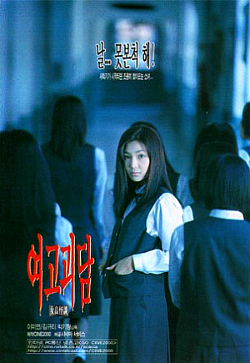
So onto the final Rewatch Review, the 1998 landmark South Korean horror film, Whispering Corridors.

WHAT IT’S ABOUT: The film follows Ji-oh, a strong-willed but slightly superstitious artist at an all-girls high school and Eun-young, a young teacher who was once a student at the school. They become aware that there may be a ghost at the school targeting teachers. As Ji-oh tries to figure out if perhaps she’s connected to the deaths, Eun-young knows she has a connection to the deaths, and must try to stop them before they get any worse. Both women will find out, they both have a connection to the deaths, and to the ghosts causing them.

WHY I DIDN’T LIKE IT: I was watching a lot of Asian horror films when I saw this one, and I thought this one didn’t compare well to the others I’d seen at the time. Just not scary enough, and too much focus on daily life instead of spooky, scary spirits.

WHY I REWATCHED IT: I found out this was one of the first horror films made in South Korea after the end of the dictatorship, and that it came with a lot of commentary on that time and on the South Korean school system, which made me see it in a whole new light. It also started a successful series of horror films set at all-girls schools, one of which involves a ballet school (and you know I’m a sucker for ballet) and was influential on Korean horror and Korean cinema as a whole. And finally, I needed a tenth movie to round out the series. Hence, Whispering Corridors.

THOUGHTS: Okay, it’s not as intense as other horror films I’ve seen, but it is a decent film.

For one thing, the story does set up a great mystery: it’s established early in the film that the ghost is masquerading as a student, and does a good job of making you guess who the ghost is. And while the body count in this film is small, they’re shot well and at times executed (pun intended) very creatively. All this contributes to create a unique, fairly creepy atmosphere.

There’s also the non-supernatural horror in the film: the school system itself. As I said above, the film features heavy commentary on the South Korean educational system, in this case the darker sides coalesced into one school. A number of the teachers make the school into an uncomfortable place to be. They’re often verbally abusive, set the students against one another and, in the case of one teacher, physically abuse and sexually harass students! I mean, my God! And all on top of a rigorous education philosophy designed to emphasize academic excellence to the point of crowding out everything else. To say the least, it’s horrifying.

That being said, the film does have its problems. The pacing can be very slow, with lots of moments involving people just talking rather than anything supernatural and/or exciting. I know some horror stories are slow-burns, but I don’t think this one should be one of them. Also, the ending is a little sappy, with a special effect that I’ve seen done better in other films.

But that’s the extent of the problems I’ve found. And considering other films with more problems that I’ve seen, I’ll take that.

JUDGMENT: I’m glad I made this film part of this series. On a scale of 1 to 5, I’m giving Whispering Corridors a 3.7 out of 5. Not the scariest movie I’ve ever seen, but I recommend seeing it. In a good way, it’s like Texas Chainsaw Massacre: while it may not be that terrifying, you should see it for the impact it has. And I guarantee that if you do see it, you won’t be as disappointed as you might be with TCM.

Just be aware that this is an extremely difficult film to find. Not kidding, I had to jump through a few hoops to find this film (hopefully the sequels will be easier to find). And you’ll likely have to go through a few too to get this one. Just warning you.


And that brings an end to the Rewatch Review series, for now anyway. We had laughs, we had tears, we had screams of terror or boredom. And who knows? I may do this again someday, if I can find enough films to rewatch and the will to go through it again. But right now, I think I’ll try getting through my Netflix queue.

You know, you often get great horror films. You get great science-horror films. And every now and then, you get a great horror film that makes you think, like Get Out or As Above, So Below. But I’ve never seen a science-horror film that’s not only good, but made you want to speculate so much about its deeper meanings and the questions it raises.

Based on the novel by Jeff VanderMeer,* Annihilation focuses on Natalie Portman as a biologist who goes on an expedition with four other women into “The Shimmer,” a place where everything is mutating and changing and no previous expedition has come back alive, after her husband returns from there gravely ill and seriously changed. Once inside, they will be tested in ways they cannot even imagine, and discover something horrifying.

This was an absolutely amazing movie. For one thing, the main cast (which is all women but not treated like a huge deal at all by the film, which I love) are all absolutely amazing. They really make you believe they are these characters, even if they aren’t given that much development. Gina Rodriguez, who plays Anya Thorensen, was especially great, and seeing her transformation through the movie is worth the ticket price alone.

Visually, this film is a feast. There’s so much to look at and take in, but it never really feels overwhelming. Sometimes the imagery is beautiful, sometimes it is baffling, and sometimes it’s creepy, but you’re never going to look away because you want to take it all in. And as for atmosphere, this film does a really good job of just building up an air of strangeness. So much of what’s in the Shimmer is unreal and surreal. It’s unknown to everyone, and the characters have to guess most of the time as to the meaning of things. And that’s what they’re doing: guessing. Very little is confirmed, and so much is unknown. So you kind of feel their fear and paranoia as they start to wonder what is real, what is happening, how it could be happening.

But what I love most about this film is how intelligent it is, and how it makes you wonder. As I said, very little is confirmed with this film. A lot of what we see, we the audience have to draw our own conclusions and decide what is happening, or what the deeper meaning is. Or if there is a deeper meaning. Or if what we’re seeing is actually real. It’s so strange, but at the same time so thought-provoking. And it’s been a while since a film made me wonder this much, made me want to examine it more.

If I’m going to ding the film on anything, it’s the CGI. Except for the film’s climax, the CGI doesn’t work well. It’s not awful, but I feel it would work better in a video game instead of in a live-action film. I would’ve preferred if they’d tried for a more animatronic approach, like with the Jurassic Park films.

On a scale of 1 to 5, I’m giving Annihilation a 4.5 out of 5.  A visual thrill-ride of the strange and otherworldly, fronted by a great cast. Definitely check it out and get lost in a world of the hallucinatory and engaging.

*By the way, I tried listening to this book on audio. But the narrator’s voice made me sleepy, so only so much of the novel actually made it into my brain. From what I remember though, the novel and movie differ on a lot. But in a good way.

The great thing about three-day weekends is that there’s plenty of opportunities for catching a few flicks. So far I’ve watched Black Panther (really good, 4.2 out of 5), Halloween III: Season of the Witch (surprisingly decent, 3.5 out of 5), and this morning I caught the ninth entry in my Rewatch Review series, Mama. I honestly thought this film would be painful to watch, but…you know what, let’s get into the review.

WHAT’S IT ABOUT: Mama is about Victoria and Lilly, two young sisters who disappear after their father goes on a murder spree after the 2008 market crash. They show up several years later after living in the woods all this time and are sent to live with their uncle Lucas and his girlfriend Annabel. Pretty soon they start experiencing weird things and find out that the girls weren’t exactly alone in those woods. Someone, or something, was there with them. And it’s come back to civilization too.

WHY I DIDN’T LIKE IT: You know, I honestly don’t remember. I just remember not liking it when I saw it back in college.

WHY I REWATCHED IT: The director, Andy Muschietti, produced 2017’s It, and that rocked. What the hell did I miss in Mama that made studio heads select him to be the director after Cary Fukunaga signed off?

THOUGHTS: Apparently I missed quite a bit. Mama‘s a great horror film.

For one thing, the actors put their all into their characters, and it works. You really see the arc of Annabel, played by Jessica Chastain, going from a carefree rocker girl who doesn’t want to be a mom at all bonding with the girls and growing into the role of a mother. And watching the girls adjust to civilization is fascinating for each one. And seeing these three very different and clashing people come together as a family is heartwarming, but in a way that doesn’t take away from the horror of the film (*cough* unlike Before I Wake *cough*).

Not only that, but the film does know how to set up a creepy atmosphere while also using jumpscares. I found myself hopping in my seat more than a few times. And as the film goes on, it manages to up the creepiness without showing too much of the titular Mama, who for a horror movie villain is actually kind of sympathetic once you get her backstory. It was genuinely scary.

Of course, the film isn’t without its problems. At times, while Mama’s design is creepy*, the CGI used to make her can be a bit distracting at times. And the music in the final scene kind of makes this really heartbreaking scene kind of melodramatic and sappy. I’m sure the idea was to heighten the sad emotions, but it backfires for me.

And hoo boy, that movie was loud. I turned down the volume and I was sure my neighbors would knock on my door and ask me to turn it down!

JUDGMENT: I honestly don’t know why I disliked the film anymore, and I can see why Muschietti was tapped to direct It.

Mama is a terrifying but heartwarming horror movie with a great premise and wonderful characters played by accomplished actors. On a scale of 1 to 5, I give this film a 4.5 out of 5. I’m so glad my opinion changed on this one.


Well, that’s nine films rewatched. My last one might take some time to find, as it’s not usually available in the States. Still, I’m looking forward to it, and I hope you are too. Until next time, pleasant nightmares, my Followers of Fear.

*And is probably the inspiration of the look for the abstract painting woman from It. Not kidding, look at those two side by side. They’re basically the same character with a different style…so there’s a King/Muschietti shared cinematic universe now? It’d make sense, this movie does feel like it would fit as a Stephen King adaptation.

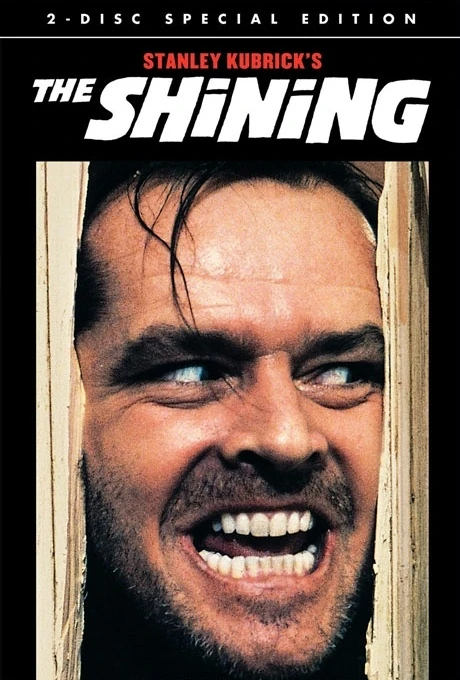
The Shining is considered one of the greatest horror films ever made, based on one Stephen King’s greatest novels. It’s still widely enjoyed today, has been very influential on a number of films and filmmakers, and has led to numerous theories about its deeper meanings, ranging anywhere from the Holocaust or Native American genocides to faking the moon landing. Yet when it was released, audiences and critics didn’t care for the film. Variety actually called it “a disappointment,” and Stephen King himself hates this film with a passion. Director Stanley Kubrick himself has garnered controversy for overworking and even abusing cast and crew during the production of this film.

I disliked this film immensely after I saw it in middle school, which was right after I read the novel. But I’ve since learned a lot about the film’s production and influence. And given the reasons I hated the film (see below), I’m wondering if my opinion needs a change. Let’s find out.

WHAT IT’S ABOUT: The Shining follows the Torrance family, who have come to the historic Overlook Hotel to be its winter caretakers. Isolated and cut off from the world, the Hotel’s supernatural side comes out to play, leading to a horrifying descent into madness and murder.

WHY I DIDN’T LIKE IT: It strayed too far from the source material. Not kidding, I hated the film simply because of how much changed from book to movie, to the point it drove out all my other reactions to the film (I can be a real purist sometimes). I actually preferred the 1997 television miniseries based on the movie because it was more faithful to the book,* and no other reason.

WHY I’M REWATCHING IT: Well, you hear so much about how great the film is, and you learn a bit about its production and legacy, and you realize how much a movie differs from its source material isn’t always a bad thing. Kind of warrants rewatching it.

THOUGHTS: That was a rather unsettling slow-burner, wasn’t it?

I’ll give the film this, it knows how to set up a creepy atmosphere with great visuals and sound. For one thing, the hotel is so distinct that it’s a character all onto itself. But it’s the way that Kubrick films the hotel and the characters in it that’s great. The whole film is shot with a wide-angle lens, which means we always see the characters alone in these vast spaces. On top of that, when close-ups are done, the wide-angle lens distorts the characters’ faces, giving the film a sense of surrealism and unreality. Add in the soundtrack, which sounds more like several clashing soundtracks playing at once. Heartbeats, eerie chanting, electronic music, symphonic pieces, all playing at once. It is creepy as hell.

I also like the reveals of scares. The camera always focus on the characters’ reactions to a scare before they show the scare. We see Wendy’s reaction to what Jack has been writing before we actually see it. We see Danny’s reaction to the little girls before the little girls are actually shown. That’s not something normally done in horror.

And finally, the film takes its time setting up the horror. It doesn’t rush in to showing us the gruesome haunting nature of the Overlook, but gives us time to see how isolated the characters are before introducing elements to show how their insanity is growing/the hotel is alive. It’s pretty effective.

However, I did have some issues with the movie. For one, the actors and the characters they portray. I didn’t care for either, really. Jack Nicholson is pretty good at playing a madman, but in my experience, that’s all his performances, and there’s not much transition between normal Jack Torrance to insane Jack Torrance. Shelley Duvall as Wendy…I don’t know what it was, but I just got annoyed with her every time she was on screen. And Danny Lloyd as Danny (ha!) was passable, but let’s face it, the character in the movie isn’t as fleshed out or as deep as he is in the movie. You could change the actor out, and it wouldn’t make that much difference, because Danny in the movie is very flat.

On top of that, I wasn’t ever that scared by the film. True, seeing Jack go after his wife and son with an ax is pretty threatening, but he doesn’t actually hurt them or get close to doing so. And while the film is good at keeping that creepy atmosphere going, it never truly escalates to the point where I feel myself shift from terror.

And like I said, the novel is phenomenal. Was it really that necessary to make so many changes from the source material? Also, what’s with that photo in the last shot? Was Jack reincarnated from a previous caretaker? Did he travel through time? I don’t get it! Explain movie! Explain!

FINAL JUDGMENT: I have a feeling this opinion is going to rile some people. On a scale of 1 to 5, I’m giving The Shining a 3.5. It’s creepy and visually creative, but the actors/characters aren’t that great, and the lack of terror, unexplained final shot, and important changes from the source material are issues that detract from my viewing.

Sad to say, it’s just not a film for me.


Well, at least I got that film out of the way. And with The Shining watched, I only have two films to go. Though I have a feeling this next one might be painful to watch…

Until next time, Followers of Fear, pleasant nightmares.

*And now I may have to get that miniseries again just to get a fresh opinion (Rewatch series 2?). And I’ll have to rewatch Room 237, the documentary on The Shining movie and people’s interpretations of it. And maybe reread the book? It’s been at least a decade, so I don’t remember it that well. And I should really get to reading Doctor Sleep, the sequel to The Shining. Especially since a movie version’s on the way.

I have a lot of work ahead of me.

A bit of background before I start this review: in case you didn’t know, or you’ve never read my third list of haunted locations I want to visit, the Winchester Mansion, known today as the Winchester Mystery House, is quite real. It was first started in 1884, but was continually worked on and added onto, around the clock, for nearly forty years. Sarah Winchester, the widow of the owner of the Winchester Rifle Company, believed that the spirits of those killed by her husband’s company’s rifles were after her family and had previously killed her husband and infant daughter. On the advice of a medium, she moved out to California and started building a house that doubled as a maze, meant to confuse the spirits who were after her family. She kept adding onto the house until her death, after which work completely ceased. The house is now a national landmark, and is reputedly haunted to the brim. It is this house, its mistress, and its hauntings that this movie is based on.

Everyone got that? Good.

Winchester follows Jason Clarke as a troubled psychiatrist who is sent by the Winchester Rifle Company to evaluate Mrs. Winchester’s mental state to see if she’s still fit to be a majority shareholder. Mrs. Winchester, played by Helen Mirren, allows the psychiatrist into her home at the same time as a powerful and angry spirit arrives. Together, they must confront this spirit before it kills every member of the Winchester family, and then some.

I went with a friend to see this film. I don’t know what my friend was expecting, but I was hoping, based on the trailer and what the film is based on, that it would be decent at least. At the end, we both agreed it wasn’t that.

Winchester suffers from a number of issues. One of the biggest issues is script. The film’s story is underwhelming, bogged down in exposition and with a villain who, while in concept sounds cool, in execution seems kind of boring. The villain actually reminds me of people’s reactions to Helmut Zemo in Captain America: Civil War. This is a character that’s supposed to be powerful and menacing, but for a lot of audience members (not me, though), the character’s film treatment was not intimidating and lacked menace. For me, Winchester’s villain was like that.

Another issue is the scares. There are a few good jumpscares and creepy imagery, but other than that, the movie isn’t that scary. It tries to build atmosphere, but it doesn’t go as far as it could to build an atmosphere. In other films, we’d see ghost children running in the background, shadows threatening to attack a character before someone walks in and interrupts. Stuff in other films that works very effectively. If we had more of that, the film might actually be a little scary.

I also didn’t care for Jason Clarke’s performance. He’s never been my favorite actor, but this time he was just terrible. Half the time he just mumbled his lines. After the film I just looked at my friend and I was like, “Would it have killed him to speak up?”

But the biggest thing going against the film, at least in my opinion, is the house itself. Or rather, the lack of the house. The actual Winchester Mystery House is a gargantuan structure: four stories, 161 rooms, two bathrooms, seventeen chimneys, two basements, three elevators. Stairs going nowhere, doors that open onto sheer drops, skylights and windows, etc. Even fake bathrooms. An entire maze of a house. But we wouldn’t know it, based on how little we see. A few key hallways and rooms, and some stairs for the arthritic, but barely anything else. If you never saw one set of stairs or a few key exterior shots, you would never know that the house was as huge and confusing as it is. I know the film didn’t have a huge budget, but come on! If you’re going to make a film about a giant maze-house, utilize the maze-house! You could probably make for a more exciting climax if you did that!

Did the film have any good points? Well, Helen Mirren as Sarah Winchester was actually kind of badass. She’s portrayed as this strong woman who works through her grief by battling the supernatural every day, and she doesn’t care what you think of that. It’s pretty cool. That, and the costumes and rooms, what rooms we see, anyway, look true to the time and are absolutely beautiful.

But that’s it. It’s not exactly awful, but it’s not very good either. It’s just below average.

On a scale of 1 to 5, I’m giving Winchester a 1.5. There’s a lot of potential in the concept, but this film definitely did not live up to it, producing an unremarkable period piece trying to be a good horror film. So if you’re looking to be scared, I suggest skipping this one entirely. It’s all bark, and absolutely no bite.

So I’m seven films into this series (click here to see the whole series), where I rewatch horror films I previously disliked to see if there was something there I missed the first time. And this time around, I’m going with a classic. By which I mean, it’s probably older than any of my grandparents. Nosferatu, one of the earliest horror films and the first Dracula adaptation, as well as an example of German expressionist film. It’s become something of a cult classic since it’s release over ninety years ago, and its villain, Count Orlok, has become almost a meme, but longer lasting.

And can I just say, my own opinion aside, it’s a freaking miracle we even have this movie? Not kidding, we nearly lost this film to copyright infringement. Prana Films, the studio that made this film, was started and owned by two businessmen who never made a film before, and apparently had no idea you had to ask permission before doing an adaptation of a non-public domain work. Bram Stoker’s widow sued the company when she found out, and the company was forced to destroy all their copies…except or two copies, which have been copied and cobbled together to preserve the film to this day. Which is why if you watch the film today, sometimes the film is pure black-and-white, and at other times it’s sepia-toned.*

Okay, enough of that. Time to talk about the actual film.

WHAT’S IT ABOUT: It’s Dracula, just with everyone’s names changed: Dracula is now Orlok, Harker is Hutter, Mina is Ellen, etc. Do you need more information than that?

WHY I DIDN’T LIKE IT: I was fifteen or sixteen when I saw this film for the first time. And while I enjoyed older films well before then, I just didn’t get into it. I knew the plot, so I was never surprised or scared. It was just…boring. Really poisoned silent films for me.

WHY I REWATCHED IT: I just thought it would be good for this series. And in any case, while I still don’t read it that much, I appreciate classic literature much more than I did then. Maybe that extended to films too.

THOUGHTS: Um…it’s not good, but I find it hard to hate.

Look, you need to have a certain frame of mind to enjoy silent films, and I’ve only enjoyed one of the silent films I’ve seen (which was made in 2005, so…), so it’s safe to say I don’t have that frame of mind.

But I did enjoy it at times…as a comedy. Yeah, I know it’s a horror film, but I just couldn’t help but laugh at the film. There was so much to make fun of! For one thing, the make-up makes every guy look like a serial killer about to take a victim, especially when they laugh or smile, and every girl like a drag queen. I just couldn’t help but giggle. (Also, the character Knock is probably the inspiration for Count Olaf in A Series of Unfortunate Events. Thank the make-up department for that!).

And because it was a silent film, I could just sit in my living room and make goofy voices. I remember during one moment, when Hutter comes home to tell Ellen he’s going abroad, I responded to the dialogue card by saying, “Hi husband, good to see you too. I had a wonderful day, thank you for asking. Now what are you talking about?” And when Hutter runs into another room to start packing, I said, “So this is what Marge and Lois are talking about when their husbands announce they’re about to do something stupid.” It was hysterical.

Unfortunately, the best of on-the-spot comedy couldn’t help the film from dragging. For a 95-minute film, it felt so much longer, and like nothing was happening at all. Characters just took their time, said things, and reacted to things. There was nothing to get your blood pumping at all.

I could go on with the problems I had with this film, but that’d be a veeeery long blog post. I’ll just save time by saying, I had many more issues that kept me from enjoying it.

Still, Count Orlok is cool looking, and the sets are really pretty. I’ll give the film that.

JUDGMENT: I’m sorry, but it’s just not my kind of film. I know it has its fans, but I’m not one of them. 1.5 out of 5. I’m sad to say that, due to its place in film history, but that’s just how I feel.

Well, I think I might enjoy this next film a bit more. And if I don’t, there’s a good chance I’ll be reviled in the comments for it. in fact, people might shout “REDRUM” at me. That’s right, I’m rewatching Stanley Kubrick’s The Shining next.

Until next time, pleasant nightmares!

*Also, the version of the film I watched was restored in Wiesbaden, the city in Germany I lived in for four months back in 2015! That’s really cool, if you ask me. My former home helped to create a beautiful print of a classic movie. I wonder if my supervisors knew about that?