Posts Tagged ‘ideas’

I had a very exciting day today. A couple members of my study abroad group and I, along with one of the professors leading the trip, went to an assisted-living home to meet some veterans of WWII and Korea. It was quite the edifying experience, and we all enjoyed it immensely.

We arrived there around a quarter to one in the afternoon and were shown up to the multipurpose room on the second floor. There, we met several veterans and one survivor of the Holocaust, a man by the name of Mr. Cohen, whom we all got a chance to speak to first. Mr. Cohen was a German Jew who lost his family at Auschwitz and was lucky enough to survive the camps. It was very humbling to listen to him speak about his experiences, about being evacuated from the camps when the Russians got close, about meeting his wife and moving into America, and most of all about getting the tattoo on his arm and ceasing to be anything more than a number. Mr. Cohen’s granddaughter was there as well, and she urged her grandfather t tell more stories, but he didn’t want to. I can’t blame him, considering the horrors he survived. It must be really difficult to relive them.

Afterwards we split up and went around the room speaking to different people about their experiences. There were two Navy men named Earl and Herb who had served on different ships and tried to give us an idea of what it was like living on a crowded ship like that. Not only did they do that, but they gave me an idea for a novel (sometimes I worry I get too many of those. Lord knows I won’t be able to write all of them at the rate I have ideas). We also spoke to a man who fought in both wars and a woman who packed the parachutes used by paratroopers in the European theater. Apparently she wrote her name on every parachute so that if something went wrong, they could find out who packed the parachute (luckily that eventuality never came up).

And that was just the experiences of me and a friend; the others spoke to vets we never got a chance to speak to. And every time we sat down to speak to someone, time just flew by. Before we knew it there were the final photo ops and the last chances to grab snacks and examine the WWII memorabilia brought in by a man whose father fought in the war (everyone got a little nervous when I started examining a Hitler Youth dagger and a German Luftwaffe short sword. Well, I’m sorry I write horror stories, but there’s no reason to think I’d actually use them! I don’ t kill people outside the books). And before we left, we all got some souvenirs: tiny can openers to open C-rations with. I’m not sure how we ended up getting those, but I was definitely grateful to receive mine.

But most of all, I was grateful to speak to so many veterans. The people who experienced WWII first-hand are a dying breed, as one vet observed during the final photo-op. And it’s true. We are losing more WWII vets and Holocaust survivors everyday. Getting to speak to them is a privilege that my children (should I have any) won’t be able to have. If the chance to speak to these living treasure troves of history presents itself to you, I hope you take advantage of it. I’m certainly glad I did.

I have to get back to the homework I have. The day just got away from me and I have a little bit more I want to work on before the day is out. And if I can get my hands on those photos, I will try to post them here on this blog, because it’d be an honor to share them with you all. See you later, my Followers of Fear.

I just finished going over what I have so far of Laura Horn. I honestly thought it wouldn’t take this long to get through less than twenty chapters, but at least I got it done sooner rather than later. Now I can start working on original material.

For those of you who are not very familiar with my WIP yet, Laura Horn is the story of a girl who inadvertently becomes the one person who can save the United States from forces within its own government. However Laura is a damaged soul, a girl with a traumatic past that often paralyzes her in the face of danger. So in order to save her country’s future, she has to confront her painful past. I came up with the idea for the story by wondering if I could write a genre story where a character with a seriously damaged past could grow in spirit throughout the story and become a hero at the same time. The rest of the story came from that.

I started LH last July but had to put it on hold in October because of an increasing amount of homework and because I was working on Video Rage, the sequel to Reborn City, at the same time. It was just too much to cope with, so I had to cut back (which may have actually added to my stress levels, but that’s a story for another time). When the semester ended in early December, I focused on getting Video Rage done first. Then when I finished that back in January, I worked on several short stories and articles, and finally during spring break I began looking through Laura Horn again.

My first impression going through the first twenty chapters was this: I remembered writing much better prose than what I encountered going through those chapters. Then again, this is a first draft so it’s supposed to suck a little. Anyway, while reading through the early chapters I found myself doing a lot of editing work so that the story would flow better and so that I could continue without obsessing over this or that mistake or inconsistency. At the same time, that extended my rereading of the early chapters so that I ended up needing a few more days to get through the first twenty chapters.

Well, I’m here at this juncture in the writing process now, the point where I can contribute some new original chapters to the manuscript. Better late than never. And now I’m going to reread the outline for the book, and then I’m going to see about starting on the next chapter before I get ready for bed tonight. With any luck, I’ll be able to get a few new chapters of LH done before I leave for my study abroad trip in May (trust me, I won’t be doing a lot of writing or blogging during that time).

Well, wish me luck, my Followers of Fear. I’m going to get back to work now. Have a good night and a great weekend.

I got The Hunger Games: Catching Fire on DVD on Friday and watched it this afternoon. If I were to do a review, I’d say it was a very good adaptation of a book I absolutely hated for a number of reasons. However, I’m not writing this post as a review for Catching Fire. I’m writing this post because, after I took the DVD out and went to make my dinner, I thought to myself, “There is such a difference between Katniss Everdeen and Zahara.”

And indeed, there is a great difference between the two characters. And I’m not just talking about upbringing, religious identification, and their experiences. I think the biggest differences between Katniss and Zahara is their access to choices in their lives. (Okay, there’s also major differences in character development, but since all three books of The Hunger Games are out and only one book of the Reborn City series is out, I won’t go into that lest I spoil something).

In THG, Katniss rarely has any sort of choice in what she can or can’t do. Except for certain memorable instances, Katniss follows a script that someone else wrote, whether that be the Capitol or someone associated with the Capitol, or District 13 and someone in the rebellion. Sure, the moments when she gets a chance to make her own choices are pretty momentous. She volunteered for the Hunger Games, she nearly committed suicide using poison berries, and she killed President Coin in an act of revenge. But other than those moments, she’s mostly dancing to the tune of someone else’s fiddle. And she’s either unaware of it or she’s aware of it and so pissed off about it.

Zahara, on the other hand, has a little more leeway. When I wrote Reborn City and started planning its sequels, I obviously wasn’t planning on writing about Zahara’s choices. But after she’s forced to join the Hydras, she does find that she has a bit of choice in the events that occur later on in the story. And those choices do end up affecting the Hydras in several ways, whether  it involve a gang war about to go wrong, or by a simple encouragement that changes the way someone thinks. And as the series goes on, Zahara will get to make more choices, some of which will have greater effects than the previous ones she’s made.

Why the difference? Well, I guess you’d have to ask the authors. In addition to wanting to create a story that was a commentary on both our addictions to violence and reality TV, Suzanne Collins also wanted (I’m assuming) to allow readers to relate to the feeling that our lives are not our own. We’ve all been there, had those moments when we felt our lives weren’t our own, where we felt like our lives are being directed by someone else. Maybe our parents, our employers, our teachers, our government, our spouses, etc. Basically we have to subordinate our lives to the needs or whims of others. This speaks to plenty of people, particularly teenagers and young adults who are constantly pressured to fulfill the wishes and pressures of the adults around them. I can only guess as to why Mrs. Collins wanted to weave that theme into her trilogy, or if she even realized what she was weaving in until it was already there. What is obvious that Katniss exemplifies that theme of lack of control over one’s life, and it’s part of why people identify with her.

With Zahara and RC on the other hand, the intentions were very different. I realized early on in writing a novel about street gangs that people in gangs or in slums or broken families or several other similar situations that they feel like they can’t leave the situations they’re in. This attitude, which seems to perpetuate itself over generations in a terrible self-fulfilling prophecy, horrified me. Imagine people who didn’t try to change their horrible lives because they felt that trying was impossible, that it would only lead to pain and regret. Where they were was where they belonged. Throughout the trilogy I try to fight that belief through the travails of Zahara and the Hydras, making choices and fighting for not only their lives, but also to live their lives as they wish.

So I guess this difference in opportunity and choice for Katniss Everdeen and Zahara Bakur really just boils own to the intentions of the authors when we were writing our stories. I strove to write about teens fighting against a world that oppresses them and tries to control them, while Mrs. Collins seems to have written a story about a world where, among other things, the lives of others are maddeningly not their own.

It’s interesting what the intentions of the autor can do for a single story, isn’t it?

That’s all for now. Tomorrow school starts up again, so I’m heading to bed to get ready for the big day. Goodnight, Followers of Fear, and have a great week.

Today at work, I had a mostly usual day. Went through a ton of files, ate lunch, went through another ton of files, and had conversations with some of my coworkers about life, the weather, and the job. Pretty average. Oh, except for the fact that I came up with several different ideas for short stories and articles today. About 16 new ideas total, if I remember correctly.

And this is not unusual for me: just yesterday I had an idea for a psychological horror novel. The day before that, I came up with a science-fiction/horror novel, all while sitting calmly at my desk and going through file after file after file. So while coming up with so many ideas in a single day is somewhat unusual for me, coming up with ideas while working or going to classes is a pretty regular occurrence for me.

Why am I making a blog post out of this? Because there are some writers–not many, but some–who are under the mistaken impression that holding any sort of job will stifle creative juices and ruin them as an artist. For example, I used to be on friendly terms with a writer and blogger over in Europe. He wrote a lot of poetry, took plenty of photos, and was working on a novel. For reasons that I never found out, he and his wife separated and he ended up living on the streets. Because he didn’t want to get a job that would most likely force him to be a slave to a corporation or a government (at least based on his political views I assume that’s why he didn’t get a job), along with his views that a job would ruin his artistic power, he asked his readers to donate money to him through PayPal so that he could buy airline tickets to America where his parents were. Nobody donated, which he felt was a personal insult and he got really nasty afterwards. When I tried to be nice and encouraging to him, he swore at me, leading me to stop following him. Last I checked he’s still in Europe and living on the streets billing himself as a starving artist.

Now, I’m not saying that all artists who refuse to get jobs are like this. Many are the kindest, sweetest people you’ll ever meet. They’re sincere about wanting to do well in their chosen fields. But I do want to let artists of all kinds know that a job won’t necessarily ruin your career and your skills, whether you’re selling only a few books or several thousand books. In fact, sometimes a job can help you. Several of the people in my office read my work when it comes out; I wouldn’t have made some of the money I’ve made without their help. Not only that, but I’ve made a few connections through my job, including with a screenwriter I met today who’s working on a screenplay while helping students out with financial aid and other questions during the day. Tomorrow I’d like to give him the name of a professor at school who also has connections to Hollywood. I figure that’d help him.

So don’t worry about losing your creative streak if you get a 9 to 5 or even just a part-time job. It may actually make you more creative, or give you the drive to produce better work just so you can get out of that job. I’ve certainly benefitted from working. I’ve come up with so many ideas over the years while working in the financial aid office. I don’t think I would’ve come up with those ideas if I was in a different setting.

Not to mention the fact that I would’ve had to move back in with my parents or become homeless long ago if I hadn’t gotten a job. Trust me, I’m very grateful for that. Especially since I’m sheltered from the cold. Do you know how bad the weather can be in Ohio in winter?

If you’re still not sure, just go ahead and try it. Give it a month or two. If a job does kill you creatively, then I’m sorry that you can’t write while holding a job. And if you don’t find any change or instead find yourself becoming more creative, then I’m glad things are working out for you and I wish you luck in whatever occupation you’re currently working in.

How has holding a job affected your creativity? What advice do you have for authors who are concerned about how a job might affect their writing?

This particular short story could also be called “My tribute to Stephen King’s Carrie without any psychic or telekinetic elements”. I basically took the idea of a girl getting revenge on the bullies in her life through supernatural means and wrote a dark and powerful story around it. And it involved tigers, too (my favorite animal), so I definitely had fun writing it.

The Day The Tigers Came To School is a story with a very interesting evolution. It merely started out as a story about a school being invaded by tigers and wolves with some sort of strange twist about how they got there. Then I dropped the wolves because that’s just too much for one short story and I like tigers more. Then I added the bullying/revenge theme. Then I played around with different ways the plot could go, even while I was writing the story. 4,159 words later I have a new short story that pushed boundaries even for me.

By boundaries, there were a couple of moments where things got incredibly graphic in detail. It was enough to make me wonder if I shouldn’t hold back a little in writing something so terrifying. But then I reasoned, if it makes me a little hesitant, it will probably scare the pants off of anyone who reads it. And that’s basically my goal in writing. So I relaxed the restraints and just went with it. I’m glad I did, because the story’s much better that way.

Well, I’m going to let a friend give me some feedback on it, and then I’ll…save it for my next short story collection. Yes, I’m doing another short story collection, which I’ve tentatively entitled Dead and Dying (it was going to be Dead and Dying Teens but I thought that since some of the stories might not involve teens, I dropped that part). I can’t confirm content or release date, but I can tell you that this time around I want at least eight short stories, this one and a couple of others among them. When it gets closer to me actually releasing the book, I’ll make sure everyone knows.

In the meantime, tomorrow evening (work and homework permitting, of course), I plan to start up again work on Laura Horn. It’s been put on hold long enough and I want to get it at least halfway done before I leave for my study abroad trip. Then this summer I can edit it along with Video Rage. Wish me luck on the project. I still have more than half the novel left to write! It’s not going to be easy.

Well, I’ve got work tomorrow, so I’m heading to bed. You all have a lovely evening and have pleasant nightmares. Goodnight, my Followers of Fear.

becket

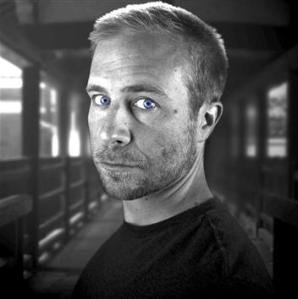
Today’s interview is with indie author Becket, whose books include The Blood Vivicanti series and the Key The Steampunk Vampire Girl books, including the recently released The Tower Tomb of Time. When not writing, Becket works for author Anne Rice and is supplementing his education with a degree in psychology.

I had the chance to email Becket and learn a little bit about him, his books, and what it’s like to work for Anne Rice. It was definitely an enjoyable correspondence.

RU: So Becket, you’ve had quite the interesting life, working as an author, working for an author, and at one point you were a Benedictine monk. Makes me curious about what else you’ve done, so could you give us a brief history of yourself?

Becket: I entered the seminary when I was 21 because I wanted to deepen my relationship with God as well as be a minister of hope, faith, and love. I spent three years in the seminary, during which time I also finished my BA in music composition. Then in the summer of 2000, I entered a Benedictine monastery, St. Joseph Abbey in Covington, LA. The spiritual charisma of the monastic life appealed to my personality type. The monks lived a very silent life, guided by two principals of work and prayer. During my first year in the monastery, Anne Rice requested a harpsichord for a book signing in New Orleans. We monks had a very nice one; and the abbot asked me to deliver it because of my musical background – I had studied the instrument in college, along with several others. That was when Anne and I first met. We developed an email rapport over the next few years while I was earning my MA in theology. When I completed my degree in 2005, I decided that it was time for me to re-enter lay life and, needing a job, I emailed Anne, asking her fi she had a job on her staff for a former monk with a few degrees. She replied with a job offer. I’ve been with Anne ever since, studying the craft of writing under her guidance while also earning an MS in psychology.

RU: What is it like, working for Anne Rice? Besides the amount of jealousy you must receive from fans including myself, I mean.

Becket: What is it like, working for Anne Rice?

Working for Anne Rice is like working for a childhood hero. I first read Anne’s books when I was a teen. Being a lonely adolescent, an outsider, Anne’s words spoke to me powerfully – because her words have a wonderful way of showing empathy for the outsider/reader. Many days she and I talk about literature and the book publishing business. It is a continual learning experience. Every day I learn something helpful and significant about my writing, about the publishing of my own books, about my own capacity for problem-solving, about many things. But every day is a new experience because every day I’m presented with a new challenge. Before I started working for Anne, I had never used Photoshop. So to assist her as best as I could, I learned many new skills, such as photography, shooting video, proper lighting, sound engineering, etc. I also learned several programs in the Adobe Creative Suite, namely Photoshop, Illustrator, and even Premier Pro and After Effects. Most of those programs I use every day, whether it is creating an app for Anne, or posting an image, or editing a video for Youtube. And today all those programs have helped me greatly in my own work; they are invaluable book publishing tools. A successful indie author cannot live on Word alone.

RU: Tell me about it. iMovie and Photoshop have been great tools in the past for me. Now, you’re new book is the latest adventure for your character Key the Steampunk Vampire Girl. Tell us about her and the new book.

Becket: Key’s new adventure picks up where the last book left off: Key has just escaped from the Dungeon of Despair. Yet unlike the last book, which takes place over the course of 250 years, the course of this book happens in a single night. Key gets to do what she has not done in over two centuries: She gets to explore the City of the Dead. She rides a Hobbeetle, she meets the Worm King, she visits the Grave of the Grim Goblin, whose not as grim or dead as some people might think, and she does so much more! Ultimately she finds herself at the Tower Tomb of Time, which allows her to visit the moment when she was first made a vampire. She discovers the mystery behind her mom and dad’s disappearance, as well as the reason she was taken to the City of the Dead in the first place. In other words, The Tower Tomb of Time explores questions that were raised in The Dungeon of Despair.

RU: Some people would hesitate to write a vampire novel these days when most people associate vampires with Twilight. What made you decide to write about vampires?

Becket: Before there was Twilight, there was Anne Rice. She was ground breaking (and indeed she still is) in the sense that she made the vampire a Byronic hero – someone whom we could easily identify with. Moreover, being a vampire isn’t the story of Key the Steampunk Vampire Girl – which is fundamentally the case with Bella, the heroine of Twilight. Bella actively seeks to become a blood drinker. Key, on the other fang, like Anne’s Louis or Lestat, never wanted to be a vampire at all. Becoming what she is happened to her, and then lots more terrible things happened to her, and so she has to make the best of her situation. That kind of narrative ambience is what I strove to create when I wrote Key. I hope readers will associate with her story and say to himself or herself, “I know how she feels being in the Dungeon of Despair, or confronting the Worm King, or revisiting a past that was hitherto forsaken.” Additionally, I hope readers would also feel inspired by Key’s successes and victories over personal demons. Key’s story is a coming of age story.

RU: What is your writing process like for you?

Becket: Generally my process begins with an idea, which usually comes to me while I’m writing another book. I write down that idea, and if it stays with me for some time, I will jot down notes about potential plot development, prose style, themes, and so on. When I finish one novel, I immediately begin another; there is no waiting for me. I write every day. It is a routine. And the routine for starting new novels is grounded in two goals: (1) the long-term goal of my book, and (2) the short-term goal of my daily writing. My long-term goal is the size of the book that I want to write, and I generally determine that by comparing it with other books. For instance, I know that Alice’s Adventures in Wonderland is about 25,000 words. So if I am seeking to create a children’s story, such as Key the Steampunk Vampire Girl, I will make the long-term goal of my first draft comparable to 25,000 words. My short-term goal is the amount of words that I will write in a day. On average my goal is at least 1000 words a day; usually I write more, often twice as much; and some times I write fewer words. The point isn’t perfection: It’s progress. As long as I am writing, I am coming closer to the completion of a book.

RU: I admire your tenacity. Now what are some tips you might have for other self-published authors, such as myself, on writing and getting your work out there?

Becket: The beauty of indie-publishing is in the word “indie” – independent. This is a quintessential word to keep in mind because, if a writer gets embroiled in the industry of professional book publishing, that writer would lose some degree of control. The writer would usually not be able to control, for instance, interior or exterior formatting. In other words, you would probably have little to say in the creation of your book jacket. I can’t tell you how many times I have heard professionally published authors complain about their book jacket, how it does not look like the story they told. Other authors have complained about the struggle they have with their editor or copy editor, how important words will be edited out, or how sometimes sentences or pages completely rewritten. There are some authors who want to be controlled like that. And that is good! Great books have been written with the help of excellent editors. But finding such an editor is like finding love in your life: It usually happens when you least expect it. Being an indie-author means controlling every element of your work. I like this, not micro-managing, but being purposeful and meaningful with every element that I produce.

RU: I love that independence too. It’s gone well for me. So what’s next for you, Becket?

Becket: The Blood Vivicanti Parts 5 and 6 will come in March and April. And after that, I will be publishing a book titled, The Door to Heaven, which is about a boy whose life is changed forever when he encounters an old man’s face on the doorknob to the Door to Heaven.

RU: That “Door To Heaven” sounds very Stephen King-ish. Last question: If you were stranded on a desert island and could only take three books with you, which books would you take?

Becket: Well, I am a man of faith and prayer, so I would probably take the ESV Bible (because I like that translation), The Imitation of Christ, and a book of blank pages, so that my mind could fill it up with my own stories.

RU: I love it when authors say they want to bring a blank notebook with them. Shows their true writing spirit, in some ways. Well, thanks for joining us, Becket, and best of luck to you.

If you’d like to find out more about Becket or check out some of his books, you can check out his website, his Facebook page, Twitter feed, and get personally autographed copies from the Changing Hands Bookstore.

Our next scheduled interview is March 31st with author and dear friend Angela Misri, who will be talking about her debut novel Jewel of the Thames. So get excited for that!

b2da2-9ddeee92a3dd2120ed55e789959dfff5

Recently a fellow horror author and blogger I admire brought up a good point about horror, one that I’ve made in countless other posts. The point that he made was that a lot of horror out there is actually pretty terrible because of an over-reliance of gore and gross-out elements (blood, knives, etc.). Real horror is made not by grossing people out continuously over the course of a horror story, but by creating a feeling of dread, that feeling that something bad is going to happen and that it is going to get worse. That feeling builds and builds, until (hopefully) the reader is scared stiff by ensuing events.

Creating that dread feeling is difficult, to say the least. Like I’ve said in previous posts about terror (and I’m not yet convinced that they can’t be the same thing, depending on the circumstances), it’s one of the hardest parts of creating a good horror story. Creating that feeling takes time, precision, keen insight, and skill, cultivated over years and years of practice. It’s why plenty of would-be horror writers and filmmakers just opt out of trying to use terror in favor of just plain old blood and guts and gore as a so-so substitute. And when that doesn’t work so well, they add in sex as well (don’t believe me? Watch the Friday the 13th remake in all its crummy filmmaking and see how much dread there isn’t and how much sex and blood and gore there is. And no, I’ll never stop harping on how bad that film was).

Here’s an exercise that can help authors of all kinds visualize creating that dread feeling for your story: close your eyes and imagine yourself in a dark, dank, eerie hallway. This hallway goes on for some length, so far that you may not be able to see the very end. And it also takes many twists and turns, so that doesn’t help. As you walk down this hallway, you get the strange feeling that something horrible is going to happen just around the next corner or right behind that table or from that ceiling lamp with the crackling bulb. And as you get farther along, this feeling that something bad will happen grows and grows. Sometimes the places you think something will happen prove to be harmless, but other times you are correct and you’re only just able to get away with your head still on. Even so, you continue on, even though the feeling of ill-boding keeps growing, and you wish you could turn back or even just stop and stay where you are but you can’t, those aren’t options. The only option left is to continue on, reach the end with hopefully all your body parts still attached, and find a safe room located at the end of the hallway.

That hallway is your horror story. And it can be as long as it needs to be, have as much furniture under which monsters can hide as needs be, and have as many twists and turns as needs be. You just got to find a way to create that feeling of ill-boding, which is the feeling of dread that all the best horror stories are able to create. The exercise above is meant to help give people an idea of how creating that terror and dread can happen and to give them something to work with if they need help or practice creating that dread.

I hope that helps in some ways. Also, if you want to check out some books, TV shows, or movies that do a great job creating that feeling of dread, I highly recommend Stephen King’s IT, The Amityville Horror, and the first two seasons of American Horror Story. They do a very great job with creating dread in the reader/viewer. Trust me, I was afraid to go to sleep after I encountered one or two of these titles. They’re that scary.

All for now. I’m going to try to get some of my own fiction written and full of that dread feeling. Goodnight, Followers of Fear.

I just published my latest post on the blog Self-Published Authors Helping Other Authors. Today’s article is called Stuck For An Idea?, which explores osme of the methods and techniques I use when I can’t think of anything to write about. It’s based on a lot of personal experience, but I think a lot of authors might get something out of it. If you’re interested, please go check it out.

And if you’re an author who’s already self-published or considering self-publishing, please check out the rest of Self-Published Authors Helping Other Authors. It’s written by a variety of authors, myself included, who are dedicated to writing articles to help other authors out in writing and publishing in the indie market. I certainly find it helpful, and I recommend it every time I get the chance. And if you find the blog helpful, please subscribe to posts. You’ll learn tons, and what you learn may help catapult your writing and your career to new levels.

Good luck and enjoy!

It’s rare that I begin a short story and that I finish it within a day. It’s even rarer when I finish it a few hours after starting it. But that’s what happened tonight. And my God, was it amazing.

You remember in my last post I said I was trying to rewrite the science-fiction story I’d started on Sunday. Well, I’m still trying to figure out where it should go from here and how to make it exciting. So while I’m working on that little problem, I decided to devote my time to a different short story. What resulted was Dear Alice, a story of a woman in England who writes letters to her childhood friend (Alice, obviously) about how as children they were kidnapped by a farmer who used them as slave labor. It’s a very interesting story, and I rather liked how it turned out, especially the twists near the middle-end portion of it.

The whole story is about 3,600 words (give or take a few), and I somehow wrote it in only a couple of hours. That’s a personal record for short story writing. It also shows what happens when I really get into a story and I eschew most distractions that I can really amaze myself. I think I’ll send this to a friend or family member within the next couple of weeks to get some feedback on it. I seriously hope that they like it, and that they can offer some good suggestions on it.

In the meantime though, I’m going to head to bed and get some rest. Tomorrow may be Sunday, but that doesn’t mean I get to rest (being Jewish, Saturday is the day I rest, and sometimes not even then). I may even start another short story if I’m unable to figure out what to do with my short-story-in-progress by then. Wish me luck.

Goodnight, my Followers of Fear. Or good morning, depending on what time you’re reading this. I’m sure some people are a few time zones behind me, some are just having their morning coffee while they read this, and maybe one or two are insomniacs or staying up late. If I think about this more than I have, it’s going to get weird. Anyway, goodnight (because it is for me at this point).

I started a short story this past Sunday, a science-fiction story with LGBT characters and themes about how complicated relationships can get. It had a great concept, and it was an exciting story. I’ve been looking forward to writing it ever since I had the idea for it, and I made sure it was on the list of short stories I was going to work on when I decided it was time to limit how many more I was going to write. And I was making great progress on it too. I mean really good progress. Except for Tuesday night (I was busy that night with other stuff) I was getting 500-1000 words written each night.

But as I got further in this evening, I realized that I was slowing down, that something wasn’t working. I realized that the way I was going I was going to hit a wall with this story, so I had to stop and figure out what exactly was bugging me about this story. And I realized: like Resurrection, the way this story was going it’d be better off as a novel or a novella.

Normally I’d be okay with that, but for many reasons I don’t want to convert this particular short story into a novel. Not only do I already have so many ideas for novels to write that I’m not sure I want to add this story to that list, but I feel that if I can find some way to keep the short story as a short story, it’ll be a thousand times better than any novel I could ever write based on it. It’s a very strong feeling, too. So I’m not going to turn this particular story into a novel.

Instead, I’ll go back to the beginning. Most likely I’ll end up rewriting this story, and instead of writing a whole bunch of expository lead-up to the main scene, I’ll write that main scene, which is what inspired and excited me about this story in the first place. I feel overall it’ll be a better story that way, one that a sci-fi magazine would be proud to host within its pages.

So tonight I’ll end my writing spree by saving the short story and taking a break to think about how I can improve it. I have some ideas now, but nothing I want to act on just yet. I just need a little time to let the ideas cook and see what works and what doesn’t work. After all, this is one amazing short story idea I have. And it deserves to be written in a way I can be proud of.

That’s all for now. I’m going to watch something I’ve taped, and see what my brain can come up with in the morning. You all have a lovely night, and a fantastic weekend, my Followers of Fear. And I hope wherever you are, you’re warmer than I am. It’s Arctic temps here in Ohio. Trust me, I’m looking forward to spring and summer a lot more than most. Good thing I’ve got my Snuggie to keep me warm.