Posts Tagged ‘mental illness’

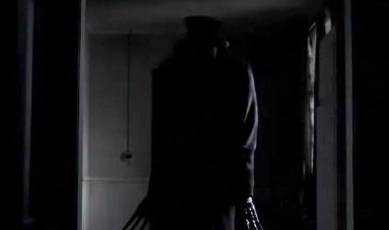
Norman Bates, a prime example of a man with a mental illness in horror fiction.

I’ve been wanting to do a post for a while now that examines horror or literature but wasn’t my usual Reflections or Writing post. And then I read this article not too long ago on how mental illness is portrayed in anime (surprisingly anime takes a very honest and powerful take on the subject) and it got me thinking. It’s no secret that mental illness—or its more common designation, “insanity”—has been a huge part in horror fiction since the earliest days. The problem is, most of it tends to be pretty negative portrayals.

This is actually pretty sad, to say the least. Approximately one in three people worldwide will show enough symptoms to qualify as having a mental disorder at some point in their lives. In the United States alone, that number is nearly is nearly one in two. And a majority of these people are nonviolent. I should know. I’ve known various people throughout my life with some form of mental illness, both family and friends, and I have been open in the past about being on the autism spectrum myself. None of these people I know would hurt a fly, and I could never hurt anyone outside of one of my own stories.

This is quite different from horror fiction, where we have a variety of characters with all sorts of mental illness–Annie Wilkes, Norman Bates, Jason Voorhees, etc.–who are as violent and dangerous as they come. What gives?

So I’m going to do a series of posts, over the many months, about how mental illness is portrayed within horror fiction. Now, I’m not a psychologist or psychiatrist. I’m a horror novelist. And God knows I haven’t seen or read every horror story out there. Not even some of the classics. But like I said, I will try my best to go over this subject with the respect and care it deserves. I will do case studies, maybe make some recommendations, and maybe even ask the question: is the portrayal of mental illness in horror fiction good or bad.

And if one can write characters, particularly villains, with mental illnesses. And by one, I might mean me.

In the meantime, if you, my Followers of Fear, can give me any recommendations to help me write this series of posts–whether it’s films or books to check out, articles that have already gone over the subject, etc.–let me know. I could use all the help I can get for this massive undertaking.

Heck, if you’d like to write a guest post, I’d be more than willing to consider it.

That’s all for now. In addition to this series, I’ve got a bunch of posts I plan to put out over the coming days and weeks, so keep an eye out for them! Have a good week, my Followers of Fear.

anxiety

What is the trouble with psychological horror? Actually, there’s not much trouble to it. It’s just very hard to do well.

What do I mean by this? Well, let’s look at the definition of psychological horror: “a subgenre of horror fiction, film, and video games (as a narrative) which relies on the characters’ fears and emotional instability to build tension”, according to Wikipedia (I know you’re not supposed to rely on that site for information, but I couldn’t find a better website for a definition). It’s a sub-genre that, rather than relying on a traditional monster that’s out front and center for all to see, the monster is restricted to quick glimpses and shadows. If there’s a monster at all: sometimes the true villain is a character’s own brain, their fear, distrust, paranoia, suspicion, isolation.

I’ve used psychological horror before, particularly in the stories in my collection The Quiet Game (which if you haven’t read, I wish you would) and in the short story “Buried Alive”, which was published in the Strange Portals anthology last year (again, I wish you would read it). And I’ve come to the decision that while it isn’t as difficult as physics or writing comedy, it is walking a very fine line. Almost like a tightrope. And if you fall off, you can wind up veering either into the realm of the comedic with how obvious that it’s all in the character’s head, or it’s just so confusing that you find yourself losing patience with the story.

Let me give some examples (and it’s my blog, so you have to let me give some examples): have you read “Buried Alive”? I’ll keep the spoilers to a minimum for those who haven’t, but like I said above, I use quite a lot of psychological horror in that story, and for the most part, I think that I use it well (so do most of the readers I hear from on this one). For the rest, though…it’s pretty obvious that the circumstances of the main character are taking a toll on her mental state. I don’t think it gets to the point of comedic, but it is obvious, and the point of psychological horror is to make you guess whether it’s all in their heads or if it’s real or…who knows?

Perfect Blue. Trippy, has its moments, but also has its problems.

On the opposite end of the spectrum, there’s the anime film Perfect Blue, based on a novel that I wish was available here in the States. The film is about a singer-turned-actress who starts to confuse reality and fiction when her first acting job takes a turn for the traumatic. It’s a good story, but it’s not a perfect story. There’s a good section of the movie where they spend time trying to confuse both the protagonist and the viewer, and it gets a little difficult to not only what’s going on, it gets difficult to pay attention or be patient with the movie. While I admire the visuals of the movie, and I get what they were going for by showing what the protagonist is going through mentally, and I recommend checking it out if you’re interested, psychological horror shouldn’t get so strange or trippy that the reader gets frustrated with or loses interest in the story.

A great example of a psychological horror story though, manages to toe the line very easily and keeps you guessing as to what’s real or what’s mental delusion. A good contemporary example of this is The Babadook. If you read my review of that movie last year, you’ll remember that I noted that the movie kept you guessing as to whether the film’s protagonists were dealing with an actual monster or a shared psychosis, and I eventually settled on a bit of both because…I’m mostly human, and humans need to categorize things to make sense of the world. And I still say that I don’t know for sure which it is, and that’s one mark of the film’s greatness. You’re never quite sure what’s real and what’s in the heads of the characters, it stays interesting throughout, and it never gets to the point of ridiculous or obvious. All told, it’s great psychological horror.

This movie will surely get you on so many different levels. I’m getting chills just thinking of it.

So how do you psychological horror well? How do you toe that line?

Well, I’m definitely no expert on the subject. I usually deal in traditional horror, the monster is out front and is usually either some twisted form of human or a creature not easily defined by our standards. I dabble in psychological horror, usually making it part of a bigger story. But I can try, and I think–beyond reading/viewing as much psychological horror as possible, both good and bad, and practicing like you want to get to Carnegie Hall, of course–I’d suggest trying to write a story where you’re not sure what’s really happening. Create a scenario where strange things start happening to your character or characters, and you can’t tell what’s real or what’s just in the minds of your characters. Keep it interesting, don’t get too ridiculous or obvious, and just see where the story goes. If you can do that but still be unsure for most of the story of what’s real or not, then it’s likely your reader will be the same and want to know more.

Another marker of psychological horror is that there’s usually a twist somewhere along the way, and if it’s good it’ll change how you view the entire story (a great example is the Korean film A Tale of Two Sisters and its American remake The Uninvited). Characters are also often driven or plagued by powerful internal battles: am I doing the right thing? Is this right or wrong? Are they really out to get me? It doesn’t have to be full-blown persecution belief or fear of some unknown. It can be something as simple as a growing suspicion that something’s off or that our desires are actually evil. Again, A Tale of Two Sisters is a great example of the former.

Not a fan of the movie, but even I admit it shows Jack’s breakdown very well.

And finally, psychological horror is often not the main focus of a story, but part of a bigger story. Take a look at The Shining by Stephen King. Obviously that hotel is actually haunted, and the kid and the cook are both psychic. But a good deal of the story deals with Jack Torrance trying to sort out what’s going on for himself. Is he just dealing with a powerful desire to get wasted again? Is he going insane? Is the hotel playing tricks on his mind? There are scenes where you really can’t tell, and that’s part of the terror. Part, but not the whole thing. After all, there’s all the stuff the hotel is doing to them, right?

Unless Jack, Danny, and the cook are all sharing some sort of shared delusion, or folie a trois, in which case…wow. New conspiracy theory right there.

In any case, it’s something to experiment with yourself. And for me to experiment with more often. Just try and see what happens…or does it happen? You’ll never know until you try.

How do you feel about psychological horror? Do you have any good examples in film or literature you’d recomend? What are some tips for effectively writing in the subgenre?

Gene Simmons, frontman of KISS

Since the unfortunate death of Robin William on Monday, there’s been a lot of memorials, tributes, and discussions about the loss of this famous entertainer and his battles with depression, substance abuse, and, as we learned recently, with Parkinson’s disease. While most of the discussion has been rather good and dedicated to healing and trying to understand the tragedy, there’s been a lot of people whose contributions have been less than helpful. After the coroner’s report came out, some news networks chose to focus on the degree of rigor mortis that had set into Williams’ body or how he killed himself rather than have a meaningful discussion on the effects of depression or on the actor’s life (why would we want to know that CSI stuff on a real actor?). Rush Limbaugh said that the reason Williams took his life was that, as a leftist, he was never satisfied with what he had and kept wanting more, and his dissatisfaction led him to ultimately take his life (why does anyone listen to this guy anymore?). And that group of ignoramuses who think they’re Christians but are not, Westboro Baptist, has announced plans to picket Robin Williams’ funeral (do any of these people have day jobs, or do they make and sell crystal meth to finance their protests?). And I’d be remiss if I didn’t mention that numerous people sent hurtful and abusive tweets to Robin Williams’ daughter Zelda on Twitter, causing her to shut down her account (sometimes I think the Internet just brings out more of the worst in us than the best).

But the worst reaction I’ve heard is from Gene Simmons, frontman from popular band KISS. Mere days after telling immigrants to the United States to “learn goddamn English” on a HuffPost Live interview, Simmons said during an interview with SongFacts.com that he doesn’t “get along with anybody who’s a drug addict and has a dark cloud over their head and sees themselves as a victim.” He went further to say:

Drug addicts and alcoholics are always, “The world is a harsh place.” My mother was in a concentration camp in Nazi Germany. I don’t want to hear fuck all about “the world as a harsh place.” She gets up every day, smells the roses and loves life. And for a putz, 20-year-old kid to say, “I’m depressed, I live in Seattle.” Fuck you, then kill yourself.

I never understand, because I always call them on their bluff. I’m the guy who says “Jump!” when there’s a guy on top of a building who says, “That’s it, I can’t take it anymore, I’m going to jump.” Are you kidding? Why are you announcing it? Shut the fuck up, have some dignity and jump! You’ve got the crowd.

Now, I’ve never exactly been a big KISS fan to begin with, but Simmons’ comment have definitely made it very unlikely that I ever will become one. Sure, your representative has sent a message to the HuffPost saying that you regret your comments and that they were spur of the moment, but I’m not sure how many people will be forgiving you any time soon for this. Especially since you didn’t come out and say it yourself but had your representative shoot off an email.

And let me take the time to point out a few things about depression, and other mental disorders that can cause suicidal thoughts and behaviors. First, let’s get one thing in the open right now. Depression is an illness. Sometimes it’s even a chronic illness, like diabetes or cystic fibrosis. Plenty of people forget or don’t realize that depression is an illness, maybe because it’s in the brain and isn’t caused by a virus. Even so, telling people with a chronic illness that they should kill themselves is just wrong. We don’t tell people with MS, Crohns disease, and lupus to kill themselves. Instead we tell them to have hope that treatments will emerge someday and give money to the charities that raise money for research. I don’t see why people with depression have to be treated differently.

Not to mention that if every person with serious depression followed your advice and actually took their lives rather than mope around, we’d have a lot of deaths. According to the National Institute of Mental Health, approximately 16 million adults aged 18 and over suffered from at least one major depressive episode in 2012, or 7% of the US population. Some of those people would be people I know. I and many of my friends and family have dealt with depression or know someone who has dealt with it over the years. That’s how prevalent depression is. At one point in my life my own depression was bad enough to make me consider suicide. Should I kill myself then? Or should I work on treatment and making myself better?

And I applaud your mother for being able to continue living and finding meaning in life after her experiences with the Holocaust. It’s not easy to do that. Many survivors suffered from problems afterwards, including depression, paranoia, anxiety, and many other disorders. A few even took their own lives. And they probably felt the same sort of feelings of darkness that the kid in Seattle felt.

That’s the insidious thing about depression. It affects people in different ways, from all walks of life, and it affects so many. And still we have no idea what causes it. There’s plenty of research that points to it to being a biological or genetic disorder, as well as research that points to environmental or social causes. And there’s even evidence to support that a combination of these factors could cause depression. Depression can also be a side effect of other chronic illnesses. Plenty of people with cancer, Parkinson’s, or MS end up developing depression. We don’t entirely understand what causes depression like that either, but we do research and we try to fight back.

And don’t be the person who yells at the person on the ledge to just jump and get it over with. Very rarely is anything ever grained by taking a life, especially one’s own. And people kill themselves for a number of reasons: depression, anxiety, paranoia, schizophrenia. Sometimes they feel they are actually helping people or the world by taking their lives. Other times they feel that they don’t matter in the long run and no one will miss them. And occasionally we can’t understand the reasons why people take their lives. But that does’t mean we should ignore them or egg them on. That’d just be too cruel and would mean humanity isn’t worth savng after all.

Rest in peace, O Captain, My Captain.

So let me do what you obviously couldn’t do, Chaim Witz. I’m not going to tell people with depression or considering taking their lives to either have an attitude adjustment or just get it over with and kill themselves. If you are depressed or considering suicide, talk to a licensed therapist. If you can’t afford one or there’s none in your area, talk to a teacher, counselor, clergymen, or someone you trust who is in a position to help you. Or if you live in the US, call the National Suicide Prevention Lifeline at 1-800-273-8255, where therapists and counselors are standing by to help you.

And I know things won’t always be sunshine and daisies. In fact, even with treatment there are plenty of people who have trouble and feel down or upset. But that doesn’t mean it’s hopeless. Like any illness, you’ve just got to keep working at it and hoping that things will improve. Perhaps then, things will get better.