Posts Tagged ‘proper decisions’

In case you’re not friends with me on Facebook or you don’t follow me on my author page or Twitter feed, my trip to Russia has been delayed. I won’t go into the reasons why, but just know we’re working hard to get a new date and as soon as I know, everyone else will know, including you, my wonderful Followers of Fear. In the meantime, I’m doing what I’d been doing before the delay: preparing, practicing German, packing, and of course, writing and blogging and editing (bet you expected something beginning with a “p”, didn’t you?). Which leads to this post, which is something I’ve been contemplating quite a bit:

It’s considered healthy in your personal life to get out of your comfort zone and try something new, whether that be a new hobby, a new group of friends, or just a change in routine or attitude. I think at times it’s the same thing with the stories you write. Sometimes you want to stick to writing content you feel is safe, that you as the author feel comfortable dealing with. I’m not saying that’s a bad thing–I’d say most writing is writing in an author’s comfort zone–but occasionally as an author you have to get out of that area and go in directions you normally wouldn’t go.

When we authors try to push our boundaries like this, we may do it for several reasons. On a personal level, an author may want to push themselves in the hopes that they won’t become boring or stale staying in what feels like safe territory, or they might want to see how far they can go. On the level of the story they’re working on, an author might feel he or she is helping to make things more exciting or keep it from becoming too much like some of their other works. Another reason could be for the audience’s sake: authors may feel that something different has to be done with the story, something untried and maybe even a little scary, so that either the audience stays interested or so that they too are pushed out of their safety spots.

An example of this happened to me while writing Rose. In one of the later chapters, my protagonist Rose Taggert remembers some of the formative events in her life. In the first draft, the first flashback in that chapter  ends with Rose being traumatized but not seeing any of the things that would cause the trauma. The flashback after that, while Rose does see and experience some traumatic stuff, it was all things I felt comfortable writing about, nothing that made me personally squirm.

While I won’t post excerpts here on the blog (too much space would be taken up and besides, the book’s still far from ready), I can tell you that in the second draft things changed quite a bit. I looked at that scene, those flashbacks, and I thought to myself, “You know Rami, this is supposed to be horror. You’re not horrifying enough in this part. Perhaps you should go deeper, show more and maybe try to go places you normally don’t. Besides, some other authors you admire would add some very nasty and hurtful dialogue in that second flashback. You should at least try it and see how it works.”

And I did. I expanded the first flashback so that Rose, rather than experiencing her trauma from afar, experiences it up close and personal. With the second flashback, I added a bit more dialogue that was meant to make Rose (and possibly myself) a little uncomfortable, just a bit more afraid than she normally would be. And you know what? It actually worked out pretty well. The flashbacks were much more intense, the tension and terror were heightened, and you got much more of a sense as to why these moments affected Rose so much in her later life.

This experience taught me that sometimes you had to push yourself and your boundaries and be bold, try writing stuff you might not at first be comfortable with, see how it fits with you, your story, and what you’re trying to do with the story. I think that’s especially important to me as a horror writer. Often I’m diving into subjects or going into directions meant to scare people, to make them afraid of what might be lurking outside the house or what is underneath their beds. If I’m scared to go someplace with my story, then perhaps that means I should try it and see how it fits in the story. If it scares me, imagine what it’s doing to my readers!

And I think for a bunch of other writers, from many different genres, backgrounds, and training, pushing those boundaries can be a good thing. It can lead to new and interesting stories, or within the stories themselves bring new twists that make what you’re writing (and what hopefully people are reading) that much better. It also can be considered part of the continual evolution that writers go through, constantly learning and getting better as they craft new stories to tell. And by going outside your comfort zone, an author grows not only as an author, but as a person too.

So I’ll keep pushing boundaries when I feel it’s necessary, see if it works out like it did with the second draft of Rose. Heck, maybe when I get to the third draft, I’ll push some more boundaries, add what happens from doing that to all the other edits my advisor and second readers suggested for me. You never know what could happen. But I think it could make the story much better much better than it already is.

Do you push your boundaries a little or maybe even a lot while writing? How so?

What was the results of pushing those boundaries? Would you do it again if given the chance?

I’m going to tell you right now, I’m a little disappointed with this film. That might be because I hyped myself over this film due to the trailer being so awesome. However, I think a lot of it was because…well, it was a bad film. Not kidding. There was a little girl in the audience, I thought she was brave for coming to see this. She didn’t need to be brave. It just wasn’t scary.

I should’ve known a Poltergeist remake wouldn’t be good.

We all know the story, so I don’t think anyone will mind if I spoil this movie. If you don’t know the Poltergeist story, then spoilers ahead, and I wonder what rock you’ve been living under. Basically the filmmakers decided that since almost everyone knows the story about a family moving into a haunted house and the cute, innocent kid being abducted by the dead and her family having to go after her, they’d just update it for 2015, change some minor details, and throw the mythology at the audience, who will hopefully find it scary. Really, they would’ve done better going in a new direction, which Insidious did with a new mythology and some slight twists on the familiar formula, adding atmosphere, mystery, and surprise to scare us to death.

Here, like I said, they just throw the mythology at the audience. We’re drowned in it so that we  aren’t scared at all and the moments that actually halfway close to being scary were either included in the trailer and don’t have the same impact, or the sense of danger is just not there. For instance, there’s a moment with a power drill that could’ve been very scary, but the way it’s done you just know things will turn out fine before it does.

The thing about the original Poltergeist was that it took its time. It slowly built up the strangeness and horror and helped us wade into a mythology that would be expanded in the later two films. Here, the filmmakers are so concerned about paying homage to the original film that they rush us into it and pay homage to all that made the original scary in ways that just don’t terrify. “Look here!” “Here’s this reference!” That’s literally what they do.

Another thing is the humor in this movie. They try and insert humor at various times in the movie, and while humor in horror does help in some horror stories in-between terrifying moments, the ones here are all at the wrong places and seemed forced. They’re only barely funny. I think they would’ve done better not to insert humor at all the wrong places and instead try and expand on the character development of these barely-developed characters. Maybe show how the dad is trying to be a good provider even though he’s jobless and refuses to allow his wife to get a job and then show how he fixes that?

Also, why does the the little boy have a sink in his attic bedroom? There’s no bathroom up there, so why’s there a sink? Is it an unfinished bathroom or something? And I don’t care how much wiggle room there is on a house in a neighborhood with plenty of foreclosures and that was built on a cemetery. You don’t buy a freaking huge house like that when you have no steady income! Move into an apartment until you can find something better! You’ll avoid the ghosts too!

There are some good points to this film though. The few variations they make from the original are inventive and interesting, and the scene in the afterlife is much more visually interesting and creepy than the weird green screen effect they had in 1986’s Poltergeist II. And I like how the movie incorporates the ghost-hunting field and how some ghost hunters have become famous through reality TV. As a fan of some of those shows, I had a little laugh at that. Plus I don’t think this version has a curse on it (unless the curse either left the movie alone because it was so bad or it made the movie bad, in which case it’s a very intelligent curse we’ve got here).*

But other than that, not much going for this film. Even the “They’re here” falls flat where it should soar, which is just sad. On a scale of 1 to 5, I’m giving the Poltergeist remake a failing grade of 1.4. It’s almost as bad as the Friday the 13th remake. Almost as bad. Poltergeist wasn’t ruined by Michael Bay, and it didn’t use sex to try and utterly fail to liven things up (which is good, because two of the main female characters are under the age of 18).

All for now, my Followers of Fear. I’m signing off for the night. Let’s hope I find a good horror film next time around. I’ve gotten so many duds lately.

*If you didn’t know, the original Poltergeist is supposedly cursed because during one scene it cost too much to make fake skeletons and instead they used real ones dug up from actual graves. Between the first and third films, several members of the cast and others associated with the film died strange and/or violent deaths. Well, if you let monetary considerations overshadow your respect for the dead, you have to expect some sort of karmic backlash. Too bad it came down on the ones who didn’t deserve it.

[Writer’s Note: The following post does contain some slight spoilers about the new Avengers movie, but it’s all very minor stuff, nothing that would ruin your viewing of the film if you plan to go and see it. Just wanted to let you know.]

So last night I went with a friend of mine to catch Avengers: Age of Ultron. It was fantastic, great action scenes, some really dark moments of character development, and plenty of that humor we’ve come to enjoy from the MCU films. If I were to give this film a rating, I’d probably put it between a 4 and a 5.

However, there were some things that bothered me, and I want to talk about them here. One of those things, as said by Maria Hill during that party (which we’ve known about for months, so it’s not a spoiler): “Where are all the women?” Yes indeed, where all the women? If you think about it, while there are plenty of women in these movies who hold their own against the men, the women are still underrepresented in the MCU. Black Widow has shown up in four films so far and set to appear in the next Captain America film, but a solo film isn’t even in the works (though a treatment apparently has been written) and she’s only got 24 action figures compared to over a hundred various Iron Man toys.

It’s even more sad when you consider how she’s such a great, well-rounded character who can be a great role model for girls, and Scarlett Joahnnson’s costars make fun of her and call the character “a slut” and “a whore”. Yeah, they did that. Women are so much more than their sexuality and gender, and yet these guys reduce a character to being sexually promiscuous just because she’s comfortable around a bunch of testosterone-high males. Seriously, half or more of the audiences of these films happen to be female, as I understand. At least half the people in the theater with me last night were women, and I don’t think they were there just for Captain America and Thor’s good looks. You’d think the people making these films would remember that more often before saying something so hurtful and wrong.

Seriously, where’s her time? Where’s her solo film?


Now, there is a Ms. Marvel film in the works, Agent Carter was a real hit when it came out as a TV miniseries earlier this year and AKA Jessica Jones is being made into a series on Netflix, but the Ms. Marvel film isn’t due out until late 2018, a full year after DC plans to release a Wonder Woman film. Really Marvel? You’ve been doing this for way longer than the other studios, and you’re going to let DC get a superheroine flick out before you? I’m ashamed. You could’ve at least put more priority on getting more female characters out there.

Another thing that gets my goat (and again, this won’t ruin your experience of the movie, so don’t bite my head off), is that while Nick Fury, James “Rhodey” Rhodes/War Machine and Sam Wilson/Falcon make appearances, the latter two’s involvement in this film is minimal at best. War Machine shows up near the very end but ends up contributing very little. And Falcon is maybe in the film for a little over forty seconds, making me wonder why he was in the film at all if they weren’t going to really use him.

Really? Look, by 2050 minorities are going to be the majority in this country, and shows like Scandal or How To Get Away With Murder and movies like the Fast & Furious franchise are popular partially because of their extremely diverse casting. People like seeing characters like them that they can look up to in these stories, and these franchises and shows give that to so many people who have been shut out of the entertainment industry for years. Yet the most diverse casting so far in these films is the group from Guardians of the Galaxy. And I think with so many different non-white heroes in the Marvel universe, the filmmakers are making a big mistake by not trying to have more diverse casts in their movies.

Then again, there is room for hope. A Black Panther film is in the works with Chadwick Boseman as the character, there are rumors that the new Spider-Man might be black or Latino*, and hints from Age of Ultron that the next couple of movies will feature more diverse casts, which I can only say is a good thing. And with Marvel planning on putting out more of these films at least through 2028 as long as people are still willing to see them (my God, this franchise will never end!), so there’s still opportunity to make sure the women of the MCU get their chance in the spotlight as well.

They’ve got plenty of time, so I hope thy use that to put out a few films with more diverse casts.


We just have to hope that Kevin Feige and the folks producing these films take the hints their audiences are sending them.

What’s your take on this? Is it a big problem, or are critics taking this issue way too seriously?

Which character would you like to see given a solo film?

*I’m sorry, I’m going to take the end of this post to rant a little and blow some steam. I kind of liked the Marc Webb Spider-Man films with Andrew Garfield. He was funny, they were clearly setting up a cinematic universe of their own, and I liked the characters very much. But Rise of Electro makes less than $750 million at the box office and what does Sony do? Cancel all immediate plans for a sequel and sell out to Marvel so that Spidey can join the Avengers! I mean really! Why even bother making the films in the first place? I just hope Spidey 3.0 is funny and engaging, otherwise one of my childhood heroes is going to be ruined for me.

Yesterday, arguments on four consolidated cases relating to same-sex marriage began in the Supreme Court. The cases mostly have to do with the legality and constitutionality of same-sex bans in certain states, and if states have to recognize same-sex marriages from out of state, that sort of thing. According to the New York Times article I just read, things went about as expected: the justices were divided along the traditional party lines, though Justice Kennedy seemed to show some sympathy towards the couples opposing the ban. Not a bad start, in my opinion. And considering how the Supreme Court ruled in 2013 and the recent tide of marriage victories in states across the country, LGBT advocates have good reason to be hopeful.

If you’ve been with me for a while, you already know that I am openly bisexual (if you’re new here and this is your first time hearing this, surprise!). I also have friends and family who are gay, lesbian, bisexual, and transgender, as well as many different straight people. I’ve written an article about how the Bible could actually allow homosexuality rather than demonize it and I wrote a follow up article to that defending my beliefs. And from my perspective on this, these cases are about more than just marriage, though that’s a big part of it. It’s about making people feel equal to everyone else. It’s about acknowledging that LGBT are people, and deserve to be treated as people.

I first started realizing my sexual orientation during the fall semester of 2013, though I’d had inklings of it over the years. You know what the first emotion I felt was upon realizing I was bisexual? Fear. Because even though I knew so many LGBT people, that they and many others are accepted by the general populace, that the country is moving towards being more accepting and that by the time I had kids LGBT people will be fully-accepted members of society.

I was afraid. Because in many places, including places where the LGBT community is strong and loved, there are people who are scared to come out, that there are places where being out or suspected of being LGBT can get you ostracized or even killed, that there are plenty of people who hate me and the LGBT community because of our very existence, maybe even kill us in some cases.

And that scared me. Nobody wants to be hated, to be cursed to death for our existence, We all want to be accepted. But I had to accept myself and eventually I did. And then I came out, and I was loved and supported. But what about other people, those who can’t come out or be themselves because they’re afraid of how the people in their lives will treat them? Where they’re considered less than human, monsters masquerading and mistreating the human body? Why should they be unable to accept who they are?

Now I know that granting a marriage license won’t solve homophobia in America or worldwide overnight. But it’s a good start. Marriage is something that every kid knows about before they grasp the concept of death or where babies come from. It’s one of those things that’s made to be something magical, powerful, a bond that is not easily questioned or taken for granted without consequences. Imagine the good that can do if we as a nation extend that to everyone no matter their genetic predisposition (yes, it’s genetic, they’re finding more and more evidence of that every damn day, and no amount of praying is going to change that, just as no amount of praying is going to turn me into Vin Diesel) towards whom they’re attracted.

And extending marriage to same-sex couples isn’t going to cheapen marriage, or negatively impact heterosexual marriage, or hurt kids. All the research that says it will has been proven false or doesn’t actually exist. Clergy aren’t going to be forced to perform marriages they don’t believe in, because there is always going to be a clergyperson who does want to perform such a ceremony or there’s a courthouse where the marriage can be performed. And traditional marriage won’t be thrown out the window, because traditional marriage isn’t really a thing to begin with. Marriages used to be business deals between the heads of two households, with the creation of a new family as part of the deal. It was only during the late 17th and early 18th centuries that daughters had any say in their spouses, and only much later on that love became a major consideration in marriage arrangements. So marriage as we know it might only be 100 years old or so.

And believe it or not, there have been partnerships in this country between people of the same sex that were considered like marriage or as marriage. Several Native American tribes allowed for same-sex marriages (people attracted that way were considered special in the tribe) and after America was established there were same-sex marriages by their neighbors, including James Buchanan. Yeah, one of our Presidents. Prior to his time in the White House, Buchanan had a ten year partnership with a man named William Rufus King (later Vice President to Franklin Pierce) and in later years wrote to a member of the Roosevelt family about wooing several gentlemen without much success.

With all this, I think it’s important that the Supreme Court make a decision that reflects what I know is true: that just because someone is born a certain way doesn’t mean they are wrong or evil or they need to be changed. They just need to be given the same protections and opportunities as everyone else. In other words, they need to be treated like everyone else. And making that the law of the land with one of the most beautiful bonds one can create between two people is a good way to begin with that.

Thank you for reading.

I’ve two short stories, one that has had two drafts already and another that I’m trying to get through the last act of. Both stories involve the supernatural, and both focus on two characters, a man and a girl (though in each story the relationship dynamic is quite different). As I’m thinking of the different things I could do with each story in order to improve it, one thing comes to mind for both of them and it’s really got me thinking about the possibilities.

One story is State Fair, which I’ve mentioned here before and is about fairgrounds haunted by ghosts. The other is called Streghe (that’s Italian for “Witches”) and is based off a witch mythology I learned about in my History of Witchcraft (that class is already pretty useful). At their current stages, both short stories are told mostly from the male character’s point of view. So I’m thinking to myself, one of the ways to improve them might be to tell part of the story from the female character’s point of view.

Two narrators in a single story isn’t unusual. I’ve read a couple of well-known short stories that were told in this manner, one of which immediately comes to mind is The Falls by George Saunders (boy, is that one a trip). And the Bartimaeus books, which I loved as a kid, often had two to four narrators, depending on which book you were reading. And most of my novels are told from multiple points of views (and people tend to like those). So I’m wondering why I haven’t tried that with my short stories. Heck, I’m wondering why I haven’t tried it with either of these short stories. I mean, State Fair‘s main character spends most of the story following a girl named Lizzy around the park, so why did I not get her POV on being followed around? And the events of Streghe happen as much as to my young female protagonist Sarah as it does to my nasty male antagonist Tom. Not sure why I’m saving her POV to the end.

Well, it’s something I’ll definitely try. Since I’m still working on the first draft of Streghe, I’ll see about getting Sarah’s POV in this thing, maybe heighten the mystery element of the story by including her. When I get around to another edit of State Fair, I’ll see where where I can put Lizzy’s point of view. It’d be interesting to see how she reacts to a ghost following her around.

But what do you guys think? Am I onto something? Do you use multiple narrators in your short stories? And if so, how does it usually work out for you? Let me know, I’d love to discuss.

The main fear of every fiction writer is whether or not they’re telling a good story, usually meaning they hope they have an interesting story or they’re telling it in the best way possible. After that those, there’s another fear that is just as important and just as scary: you fear your characters aren’t relatable, that they don’t feel real to the reader. The last thing any author wants to read in a review is that the characters seemed “artificial” or “their actions and words felt forced” or instead of seeming like real people, they were “more like robots.”

Unless all or most of your characters are actually robots, of course. Then those reviews might actually be compliments.

But in most other situations, you want to avoid getting these sort of reviews, and there are a number of ways to do that. One is to fill out a full character bio for each of your characters, even if you don’t plan on using everything on that bio in the story. I’m talking full educational history, childhood experiences and traumas, hobbies, likes and dislikes, dirty little secrets, all that good stuff. Having a full picture of your character can help you bring them to life. You can tell a lot about a person just by knowing the full story about them, and you can do the same by knowing everything about your characters, getting in their heads and figuring out everything from reactions to certain situations to their decision-making processes.

Some of these involve writing, which I think adds to the fun.

One of the best parts of some of these is you get to write them out. If you’re one of those types who write a certain amount of words a day, this may help fill it out on a bad day.

Another thing you can do, if you’re wondering if something your character says or does seems believable or not, is to do what I call split-mind writing. I forget where I got this (it might have been a Stephen King novel), but it’s a pretty interesting way to work out problems, if rather schizophrenic. What you do is take a piece of paper, and pretend to have a conversation with someone on that piece of paper. Basically it’s a game of question-and-answer where you bounce ideas off of the person you’re writing to, see if you can work out what’s bothering you about your character and find a solution through this process.

There’s also acting it out, which is as the name implies (and with the perfect partner, is as fun as it sounds). If you have someone to act it out with, fill the in on a scenario in the story and act it out. If you or your partner’s reactions and words are different than what you’d expect or thought might happen, examine why. There might be something in that difference that can help you in your work.

A fourth one, and one that I feel is always worth a try, is to look at your favorite characters in literature. Examine them and ask yourself why those characters feel so real to you, or what about these characters that you identified with. Often we’re inspired by these sort of characters and the stories they’re in. We want to write stories that are just as inspirational as those ones that inspired us. Going back and figuring out why can be very helpful with putting those same qualities into your stories.

And of course, there’s my favorite option: would I do that in the same situation? I find asking myself this sort of question of myself actually helps. Often our characters have a bit of ourselves in them (as they should, seeing as we created them). Asking if we would do the same thing as them, and then exploring the answer, may help you make these characters seem real. After all, if you consider yourself at least fifty-percent normal and your reactions too, then maybe those thoughts and reactions should apply to your characters as well.

Sometimes it’s just a matter of thinking and puzzling it out.

Sometimes it’s just a matter of thinking and puzzling it out.

While making characters seem real to your audience can seem daunting, it’s not impossible to do. We all start out having trouble making our characters seem real, but with time we improve, make them real not just to us, but to our readers. And part of that is just asking a question: why or why does this character not work? The answers you get can be the key to writing something–and maybe even someone–truly awesome.

Running for President in 2016. Glory Hallelujah!

Or maybe I should title this post #HillaryClinton2016. That might get more people to read this. Oh well. Let’s just go simple with it.

This morning, Former Secretary of State and US Senator Hillary Clinton announced her candidacy for President of the United States. And I fully support her. Not because of her husband, that doesn’t even factor into it. Shouldn’t even factor into it (2015 after all). It’s not because she’ got a political dynasty behind her. And it’s certainly not because she has or doesn’t have style (even if I had a good grasp of that sort of thing, I wouldn’t use it to judge whether she should be President. After all, some of the people we elect every year are ugly as hell and yet we think they’re competent for office).

She’s experienced. She’s skilled. She’s respected across the country and around the world. She’s been a lawyer, an advocate for children, an advisor on education, a corporate executive, a US Senator, and Secretary of State, all in addition to being a wife and mother to one of the most famous men of our age. Secretary Clinton knows about domestic policies and she’s traveled and dueled on the world stage more than any other US Secretary in history. She’s pro-gay rights, pro-choice and pro-women. She’s stood up for minorities, and she’s stood up for those without voices, whether it be the poor or children who no one else will listen to.

Plus, she’d be the first female President of the United States. It’s not my main reason, but it’s definitely a draw.

All that and more is why I’m supporting her in this election. I even sent in an application to be a staff member on the campaign, preferably in media or communications but a few other fields as well. Heck, most of this country has basically peer-pressured her into running for President, so the least I can do is at least apply for a job and do my best to help her if I can. And how cool would it be to have a part in electing the first female United States President?

Nice logo.

Well, I’ll probably be writing more about the campaign every now and then (and if I’m somehow lucky enough to get on the campaign staff, much more frequently). You know me, I’m a bit of a political junkie. No, that’s not right. I’m a junkie for watching this messed up world and finding my own ways to fix it. And as a presidential election in this country effects that in so many ways, I’ll be paying attention to it.

Anyway, here’s to the future. To Hillary Clinton. To America. And to making a difference.

Oh, and on an unrelated note, I set up my loan repayment plan and purchased my cap and gown, specially colored tassel for my college included (and I mean purchased. I don’t think you can return these things. Maybe I’ll take it out every now and then, and try it on like a woman with her wedding dress and remembering all that had been promised on that day. God, I hope I don’t get that stuck in the past!). Graduation is less than a month away. Everything’s coming to an end. I hope it doesn’t without a job though! Wish me luck. I’ll let you know if anything else comes up of significance. I’m sure there will be.

daisy-cover

Boy, has my writing time been severely restricted lately. I’ve been so busy with everything that I haven’t been able to do as many blog posts as I wanted to (I wanted to write one about Indiana and Arkansas’s new “religious freedom” laws. Long story short, I’ll be avoiding those states for the foreseeable future).

But back on point, I’ve taken Daisy down from Amazon and Smashwords. For those of you unfamiliar with this title, Daisy is a short story I published as an e-book when I first started down the path to becoming a self-published author, about a girl who is kidnapped by a man who believes that she’s his dead girlfriend and has to hide from him in an abandoned building. I published it more as an experiment to see if people would download it than anything else. Although I am fond of it in my way, it’s definitely not one of my best stories, but its cheap price (free in some places) and how short it was certainly got people reading at the time.

So why did I take it down? Well last night, after what had been a long and arduous day, I lay down to sleep, and just as I’m drifting off, a stray thought pops into my head: You have song lyrics in that story. Isn’t that a copyright violation? Nearly sat up straight in bed and turned on my laptop after that nasty thought went through my head. After all, Daisy’s not the best read story, but if someone were to find it and realize I had those song lyrics in there, I could be in serious legal and financial trouble. Doesn’t matter that I didn’t know better at the time, it could still come back to haunt me.

So I took it down this morning after breakfast, and I’ll be taking down the entry for it on my Stand Alones page. And I might put it back up again. I’m not sure at this point. Like I said, it’s not one of my best works, and I hate having to give people sub-par writing. I also don’t do a lot of advertising for it, so  On the other hand, I’m still fond of it and a lot of people liked it despite its shortcomings. So maybe when I have a chance I’ll edit it and put it back up without anything that could get me in court.

In the meantime, I guess the people who already have copies on their various digital devices have the only copies in existence besides mine. So enjoy that folks, you have the e-book equivalent of a collector’s item. Not everyone can say they have one of those.

Well, that’s all for now. I’ve got homework to do, so I’m going to get on that. Have a good one, my Followers of Fear.

This really interesting article was posted on the Huffington Post the other day. This article, which you can read in full here, discusses how many schools in India are implementing gender studies classes at public schools across India, thanks to cooperation between the Indian government and advocacy organizations. The goal of this, according to the organizers of these programs, is to get students thinking hard about how gender roles affect them and make some changes for the better. Maybe even bring down the  rates of domestic violence.

And so far the programs seem to be working, according to 15-year-old Shakir Parvez Shaikh:

“We talk about how boys and girls are equal as human beings, but how we treat girls differently,” he told Reuters. “For example, girls are not allowed to play cricket or watch as much television as boys because they have to do housework or because it is not safe outside for them. I didn’t realize before … I think it’s unfair.”

A lot of activists see these programs as one answer to a very sad problem. According to the National Crime Record Bureau,  India saw a nearly 27 percent rise in 2013 in reported gender violence, including rape, sexual harassment, and other related crimes. And for many the 2012 gang rape and murder of a woman on a bus in India is still pretty fresh in their minds. This has helped to spur the creation of these programs, which might help today’s youth see things in a different perspective and cut down on instances of institutionalized sexism, gender discrimination, and domestic violence.

When I read this article, two thoughts went through my mind. The first was that it was good that so many teens, boys and girls, were being exposed to these classes. With statistics like the ones cited above, these programs could bring down that rate significantly and help to foster a more egalitarian society. And then I thought, “Why can’t we have that here in the United States?”

And then I marveled at how we didn’t have any of those programs in the United States. Generally speaking, gender studies courses are normally only taught at the university level, which means that students might never be exposed to these ideas in the midst of taking science and literature courses. The concepts of feminism and gender equality do sometimes come up in high school or middle school settings, but they are usually in the backdrop of English literature or history classes, and they may not always be given the attention they deserve.

Current statistics suggest that 1 in 6 women and 1 in 33 men will be victims of sexual assault, though those numbers may be potentially higher due to under-reported. Women still earn only 70 cents for every dollar a man earns, and in fields such as business, politics or STEM, women may face people who believe that women aren’t suited to those fields, that they are only promoted due to their looks or sex rather than their ability, and trying to be assertive is considered “bitchy”. On the flip side, men frequently under-report domestic or sexual abuse and are expected to be tough, virile and sometimes violent to show their masculinity. If you aren’t those, if you’re not depositing your DNA in as many women as possible, then you’re seen as less as a  men, something I see as absurd.

All these reasons and more are why perhaps gender studies courses should be taught in middle and high schools in America. Getting today’s teenagers to engage in these issues may bring down rates of domestic violence, reduce sexism in the workplace, and perhaps get Americans to stop treating the word “feminism” like a swear word. It seems to be working in India anyway, so why not try it over here in the States?

What would it take to get such a program in schools?

Now, I’m no teacher or education major and my formal training in gender studies consists of one class in my first term here at Ohio State (though I’ve informally found ways to expand my training). But even if I’m not, that doesn’t mean I can’t at least get the ball rolling or start a conversation. So tell me, if you’re reading this, have a background in education, gender studies, or anything else that could possibly relate to this, what would it take to create these sort of programs and implement them in a school system? What sort of course materials would be needed? And what sort of obstacles would such a program face? I’d love to hear what you have to say, as well as your thoughts on what I’m suggesting and if it’s at all possible.*

I know that it’s difficult, if not impossible, to change society rapidly or get rid of a prejudice or stereotype. But at the very least that doesn’t mean we shouldn’t try. If anything, it means we should try harder to eliminate it, looking at every available option. And perhaps this can be one of them.

*However, if you use the comments section to be hateful or say really mean things, I will not approve the comments. We don’t need any of that here on this blog. I’ve already gotten plenty of that from Second Amendment and anti-circumcision advocates. Not really interested in seeing that again.

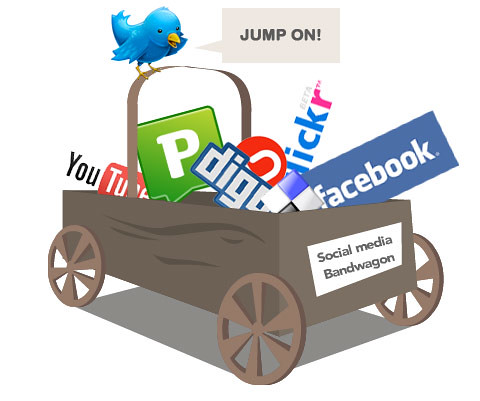
Many authors these days start blogs or websites or Facebook pages or Twitter accounts or any of the other five-thousand different forms of social media, hoping that not only will doing so let them connect to potential readers, but these said readers will go out and buy their books. It was certainly my reason for starting this blog: I began a blog in August 2011 in order to build an audience so that by the time I published my first book I might have some readers willing to buy a copy. It’s also the reason why I started a Facebook page and a Twitter account.

Contrary to this popular belief though, having a blog or any of the other things I mentioned doesn’t actually lead to decent book sales. There are numerous reasons for this, but I’d like to quote a friend of mine who recently posted about this on her own blog:

It’s like going to a movie theater and trying to sell your books to the people around you when all they want to do is watch the movie. Even worse, there are other writers in the theater trying to do the same thing you are, so the viewers are not just focused on the movie, they are purposely shutting out everything else. The challenge is to get their attention and make them more interested in you and your book than in the movie.

And like Pat, I’m not really sure how to get people interested in my book rather than the movie. While I’m lucky in that I’ve got a decent amount of followers (thanks for following, by the way!), if I charged for every time someone read one of my posts, I think my readership would be much smaller. My books cost anywhere between one to three dollars (if e-books) and a little under six to thirteen and a half dollars (if paperback). Plus I mainly write horror and science fiction, which don’t appeal to everyone.

Still, those aren’t the main reasons that I don’t make a lot of sales through social media. Other authors have had this problem as well, from romance and erotica authors to masters of mystery to sci-fi and fantasy lords and your literary connoisseurs. Like Pat said, every author is trying to get you to buy their books. I just happen to work in a genre known for its dark and macabre nature.

I think that’s the problem though. So many authors are using social media to promote their books that it’s difficult for any single one to get heard and make a lot of sales. The first few people who used blogs, Facebook, Twitter, and any other platform did make plenty of sales (or so I hear), but so many people have caught on that social media doesn’t sell as much as it promises.

It’s not easy to get sales through social media. But you can try.


Still, that doesn’t mean you shouldn’t try. Otherwise, I wouldn’t be on my blog, let alone Facebook or Twitter. Each author discovers success on their own. I’ve known authors to gain many readers of the books and many more readers on their blogs. It depends on how you go about writing your posts, what you write about, and how you promote it, among other things.

Do I know what those things are? Well…I’m a bit better at writing a terrifying story. I don’t know all the tricks. But I’m learning them here and there. I let my readers know about important updates, what’s going on in my life, my viewpoints on important issues. I often share funny or reading and writing-related photos on my FB page.Most importantly, I let people know when I get a new review on Amazon, and use direct links to Facebook and Twitter in case anyone wants to look.

And it pays off. Literally: I got two tax forms from Amazon–one for paperbacks, the other for e-books–and together it wasn’t too bad. And I’ve only been published for a little over a year and a half!

So maybe social media isn’t the direct way to bestselling novels like it bills itself to be. But with practice, hard work, and a lot of luck, you can do some amazing things through it. #BelieveIt

Do you find social media helpful for selling books? Why or why not?

What tricks do you have for selling books through social media?