Posts Tagged ‘reflections’

And…ACTION!

You know, I don’t think I’ve had words begin with lowercase letters since I first started writing this blog. Except for “the”, “a”, “is”, and words like that, but that’s beside the point.

In media res is Latin for “in the midst of things” and it is a literary technique where a story begins in the midst of action rather than beginning with some background or exposition. It also details my semester at the moment, but that’s tomorrow’s post and it’s very beside the point! The point is, I noticed that a lot of stories I write tend to start in media res.

Even if we don’t know it, a lot of books we’ve read and movies we’ve seen begin with in media res (and plenty don’t).  They often use flashbacks to help fill in backstory and background information. A prime example of a book that uses in media res is the first book in the Bartimaeus trilogy, The Amulet of Samarkand. Anyone read that? No? Well, for those of you who haven’t read it, the story is about a world where magicians who summon and bind demons into their service rule over modern England. However we don’t find out all that information at the beginning. Instead we see human protagonist Nathaniel summoning the titular demon Bartimaeus into his service before he’s sent to capture the Amulet of Samarkand, and then through flashbacks (and footnotes) we find out that the magicians rule England and its colonies, and that they use demons to do their bidding.

That’s an example of in media res. A good example of a work that doesn’t begin that way would be Charles Dicken’s A Tale of Two Cities, which all of us have probably read in high school or college. “It was the best of times, it was the worst of times, etc.” Only after we realize how much like our current era the era of the novel is do we find ourselves on a dark road in the middle of the night, and the story begins. And believe it or not, the first few lines of Harry Potter were exposition in nature: “Mr. and Mrs. Dursley of Number 4, Private Drive were proud to say they were perfectly normal, thank you very much.” Rowling makes sure we know how absolutely, perfectly, horridly normal the Dursleys are before we realize how weird things are the day before they find Harry on their stoop. That is the exact opposite of in media res.

Now why am I bringing this up, you might be asking. Firstly, I just want to make sure everybody who’s not an author on this page knows what in media res is before I talk about it. And now that I’ve explained it all, I want to get back to what I said previously, which is that a lot of the work I write begins in media res.

This show’s pilot (and several of its episodes) utilize in media res. It is also my most recent TV addiction.

If you’ve read my collection of short stories The Quiet Game: Five Tales To Chill Your Bones, all but the short story I’m Going To Be The Next James Bond start out in media res. Take The Quiet Game itself: “It was a tranquil Saturday morning at St. Dunstan’s School for Girls as Traci opened her eyes and stretched.” I don’t spend a moment explaining that St. Dunstan’s is a Catholic school in the middle of the country, that it’s girls stay on campus, that it’s run by priests and nuns, or that it has a darkness within it. I let that come out later in the story.

And not just The Quiet Game, but most of my other work is told this way. I could begin Reborn City (out November 1st, by the way) by explaining that several years before the story begins, there was a conflict between Western civilization and several radical Islamic terrorist organizations and some Muslim nations that led to a third world war and the devolving of many nations into independent city-states, and then go into how my protagonist Zahara and her family get caught up in some violence in the West side of Las Vegas-style Reborn City. Instead, this is the first paragraph of RC:

Reborn City, former Nevada
28 Anno Bombus (2056 CE)
June 28

Zahara and her family had decided to eat out at a restaurant in North Reborn that served kosher meat, the closest they could get to halāl. “I know it’s for Jews mostly, but it’s a very nice place and the Jews were very nice to us in New York.” Zahara’s father, Emir Bakur had said when he’d suggested it. “They know they don’t have to fear Muslims anymore. And the Chaplinsky family in 4F was nice enough, right?”

Full action, no exposition or backstory. I leave that to the flashbacks I use throughout the story. And it’s the same with my other novel-in-the-midst-of-getting-published, Snake. The first four chapters are a single scene of the Snake taking his latest victim and then leaving the body out. I use several flashbacks throughout the book to explain why he’s doing this, but I don’t say it all in the beginning. I wait, and reveal it at certain points in the story through flashback and characters telling other characters about past events.

Now why am I saying all this? Because I think it’s an interesting stylistic choice that I decide to start most of my stories in the midst of the story and use flashbacks to get into past events that may have led to the current events of the story. In media res requires readers to put themselves right in the action of the story. No time to catch up, just plunge right in and fill in the details along the way. I think that’s a much more fun way to tell a story.

It also allows me to write in a way that keeps readers from getting bored with my work. Instead of explaining everything slowly at the beginning, I impart a bit of mystery instead and task the reader to play detective, to keep going through the novel to piece together how events of the novel came into being. The readers love it, they love unraveling how we got to where we are by reading and seeing what happened before the story and how those events correlate with what the story in their hands (or on their audiobooks).

So the next time a movie/TV show/book starts out like this, you’ll know what it’s called.

So yeah, I like in media res. And I’ll probably use it in the future. But I’ll be conscious of its use., and when I see other writers using it, I’ll wonder if they’re conscious of why they’re using it. Because the story requires it? Because they find that much exposition boring? Because it’s fun to tell a story that way? It’s almost as intriguing to guess why they use that method as reading the story to find out what happens, even if we might not ever know why that author does it. At least, that’s my opinion.

If you are a writer, do you ever use in media res in your fiction? And if so, why? If not, why

Some of you may be wondering what the scariest chapter I’ve ever written so far must be. I write scary stories, so it must be something gruesome. What could it be? Monsters? Evil spirits? Something not of this world or any other world we know of?

If you guessed pure, human evil, then you were correct.

I’ve written several times on this blog that one of my works-in-progress, Laura Horn, has a teenage girl and a survivor of sexual assault as its protagonist. Naturally, the question came up of whether or not to actually show her sexual assault in the novel. I’m not sure when I decided on that issue, though it was probably when I wrote the outline for the novel. But I decided to show her assault, devoting Chapter 17 of the book to it.

The past few weeks, where I knew it was only a matter of time till I reached that chapter, were not terrifying, nerve-wracking, or exciting as I expected writing a sexual assault would be. Instead, I just felt a sort of…acceptance, I guess. I’d committed to writing that sort of scene, and when I finally got to it, I got to it.

And last night, after finishing Chapter 17 of Video Rage, I took a short break, and then I started writing Chapter 17 of Laura Horn. Today, after finishing up my homework and meditation class, I did the last of it. and now the first draft of that chapter is complete.

I don’t know if what I’ve written will resonate with readers or feel real to them. I wrote this scene based on testimonies and memoirs by rape victims that I’ve read, the articles I’ve read on the statistic and psychology of rape, more Law & Order: SVU episodes than I dare mention, and my own overactive and sometimes unhealthy imagination. (Those last two I’m not sure you can count as credible sources). But if I’ve done my job right, then I will be able to put the reader directly into Laura’s state of mind at the time of her assault, make them understand what she’s been through and how it’s affected her three years after the event when the story takes place. And only then will the readers really understand who Laura Horn is, and truly be able to empathize with her.

And speaking of which, I’ve had trouble at certain points of writing this story getting into Laura’s head and understanding her both as a character and as a person. But having just written the formative event of her young life, I now can truly get into her head, understand her motivations, her thoughts, were obsession with avoiding drawing attention to herself. So hopefully writing the rest of Laura Horn will be a little bit easier.

However, that doesn’t change the fact that this is the scariest chapter I’ve ever written. In fact, it scared me personally, because I was terrified of the fact that I could conceive this scene and then write it down without losing my stomach. Even now, I’m wondering how screwed up I truly am to write such a scene. Considering how many times Stephen King’s written that sort of scene, I can say I’m fairly f***ed up.

I’m not sure if I’ll ever do such a scene again. However I do believe that when Laura Horn makes it to print, whenever that is, if I’ve done my job right, then the readers will feel the fear I wish to convey. And maybe they’ll understand the terror and trauma of rape victims. Maybe the book will help people who’ve experienced sexual assault. Maybe it’ll cause some people to think before they say someone deserves to be raped. I don’t know if any of that’ll happen, but it’s my hope that it will.

And now I’m going to take a break from writing. I’ve done a lot in the past 48 hours, and I’d like a little break before I pick up with Video Rage Ch. 18. I’ll need to recharge my batteries, especially after writing that sexual assault scene.

Until next time.

This past week, I’ve seen some things on my Twitter feed that’s got me a little concerned. A few of my friends whose feeds I followed have said or posted some things that I’m not sure they’ll be proud they posted a few years down the road. One acquaintance made references to drugs she wanted to try. All that, plus the crazy Twitter uproar where people said very racist and inaccurate things about the newly elected Miss America, who’s Indian-American, made me decide to do a post reminding people of things they should and should not post on social media.

Now, people who know me personally know that sometimes I have trouble with keeping my mouth shut when it should stay shut. And I know for a fact that regular readers of Rami Ungar the Writer know rules of internet safety like the backs of their hands. But I think sometimes that we’re not doing enough to keep people safe on the Internet, and if this post helps even just one person from making a stupid mistake, I think writing and publishing this post will be well worth it.

Besides, some of the people whose Twitter feeds I follow might bite my head off if I brought up these posts, so this is a safer way to go about doing it.

So to start, here’s some basic things that we should all remember about the Internet and posting stuff on it:

1. Once something’s on the Internet, EVERYONE can see it. Yes, I know your Facebook has a privacy setting adjusted so that only your friends can see it. But honestly, anyone with a computer these days can learn to hack into someone’s account, so don’t delude yourself into thinking your profile is safe from Internet weirdoes.

2. Once something is on the Internet, it NEVER goes away. Yes, I see the Delete button too. But have you ever seen crime shows? The data is never really erased, it’s just been buried. And as any gravedigger can tell you, something that’s been buried can be dug up again.

So now that we’ve established that, let’s go over some common-sense rules of Internet safety:

1. Before you post something, ask if you would say/do this in public and/or in front of complete and total strangers. If the answer is no, then don’t post it. I know, you may feel that airing a couple of N-words and saying sh*t about your ex on your Facebook or Twitter feed may be therapeutic and can get the message across that you’re upset. But people will really see this stuff, people you don’t intend to see it, and they may not like what they see. Would you like a prospective girl you really like to tell you she saw your Twitter feed to tell you she’s not interested in a relationship with a racist bastard who says horrible things about his ex’s vagina? I don’t think so.

2. If you usually hide something under your clothes, don’t take a photo of it! You’d think that this one wouldn’t need to be stated, but as Anthony Weiner and plenty of teenage and college girls have learned, that’s not the case. Every year, people take pictures of their genitals and send it to their lovers thinking they’re being sexy or naughty or risqué. In reality they’re setting themselves up for trouble. These photos have a tendency to get out to the public, and it can lead to all sorts of trouble, including ruined reputations, loss of families, friends, and even jobs, and even legal charges in some cases! So folks, don’t use your phone’s camera to take a picture of your sex characteristics, primary or secondary. It could come back to bite you in the ass.

3. Tweeting/Posting about actual or possible criminal activities is not cool. Don’t even do it sarcastically! I’ve read two stories in the past six months about people who had made passing jokes on their social media accounts about blowing up airports or shooting schools. They got arrested! Also, their was a guy in my state who murdered his wife and posted the proof on Facebook. I think you can guess what happened to him! And even if the police don’t show up on your doorstep, employers these days do look at social media when considering prospective employees. Trust me, they don’t like references to crimes. It makes you look bad in their eyes.

4. Drugs and alcohol should not even be mentioned. Doesn’t matter if it’s excessive or not, employers (and the police) don’t like to hear how you partied it up while drinking a ton of vodka or how you tried shrooms and coke together. For employers, they’re worried that you’ll cost them money coming into work high or drunk, and the police…that’s fairly obvious, isn’t it? So yeah, stay away from those references.

5. That comment you made about minorities or someone in a minority will come back to haunt you. Yeah, we may not think much of calling someone by a term that comes with a connotation of prejudice. In some minorities, these terms are used as an inside joke. But really, it will come back to haunt you when someone sees your racist tweet on Obama or your sexist post on a coworker and posts it on Reddit! Trust me, they will trace it back to your account, and you will be embarrassed.

In addition, if you see something about another culture that baffles you, don’t put it online as a way to ask questions or to ridicule someone. A friend of mine who’s a practicing Sikh has a beard on her face even though she’s a woman. She does it as a show of faith. Someone, perhaps not meaning any harm, posted it on Reddit with the words “What do I make of this?” The photo got some negative attention, and so did the poster. <My fiend though came out of it beautifully, not letting anything hateful get her down and ultimately forgiving the person who took the photo face-to-face.

6. If you usually hide something under your clothes, don’t take a photo of it. Yes, I said that already. But judging how often people forget it, I think it needs repeating.

7. Think about how this could hurt someone. Any time you say or do something, it has the potential to hurt someone. Maybe it’ll hurt you personally, maybe a friend or family member, or maybe someone you’ve never met who lives on the opposite side of the world. Either way, think about that when you post. It’ll make you a bit wiser.

I’m going to finish with that last one and wish everyone luck in future posting. And to the reader who may learn something important from this post, I hope you don’t have any negative experiences in the future with Internet postings, whether they be posted by you or someone else. God bless, and have a nice day.

Today I was walking back from running an errand. The streets were packed with people here to see the game between Ohio State and Wisconsin and drink and have a good time. There were people selling food and T-shirts and Buckeye gear all over the place. I barely noticed any of it. My mind was turning over other things: money and school, my two biggest worries in life these days.

I’m not going to unload my problems on this blog, at least not this post. That’s not what this post is about. But I will say that even with a job and some side gigs and the little money I get from writing, life’s still expensive. Tuition, rent, and groceries is what I pay for the most. And I wonder, as plenty of other people around the world and from all walks of life wonder, how I’m going to write it all.

And as I’m turning all this in my head, walking to the ATM to make a deposit and then head home, an idea for a short story pops into my mind. It’s more magical realism than horror,  but I think to myself, this sounds like a crazy good idea for a short story. I can base it around my own life, giving it an authentic touch. And I get to include some monsters in this story too! Imagine how much fun it’ll be to write that sort of story! A bit therapeutic too, that’s always good for the mind, body and soul.

Now I’m at home, writing up this post before I start on a paper for my English class. I have to say, writing about this had made me happier, even as it had occurred to me that it make my family worry about me because I’m blogging about money woes while talking about an idea for a short story involving my money woes. But like I said, I feel better writing about this, and if it guilt trips someone into buying my work, all the better.

I probably shouldn’t have written that last sentence. Oh well.

Now I’m wondering, does anyone else write about their problems? Do they use fiction of any sort to release and share their problems? I’m pretty sure there are plenty of literary authors who do just that, but I don’t usually read literary fiction. I bet there are plenty of other writers who include their problems in their genre work,, but none come to mind at the moment. But I think that stories like those are probably some of the best. It’s someone sharing their life, having a conversation with themselves and with others through a fiction story. It feels real, even if there are vampires or knights in shining armor or other weird things in their stories. And those sort of stories are the ones where people can really identify with the authors and the characters, because they’re thinking to themselves, I’ve been in that situation before, and it sucks.

Well, I’ve got the idea stored away now, so when I’m done with Video Rage and Laura Horn I’ll be able to remember it. I’ve got a little over thirty different ideas for short stories written down right now, so I’ll definitely have plenty of stuff to write about when I finish my two current works-in-progress. I could even write another, longer collection of short stories if I wanted to.

Hmm…another collection of short stories. Not a bad idea.

Until then though, I’ve got a paper to work on. Wish me luck! I’m aiming to get an A on this paper. I’ll settle for a B if I have to, but an A’s the goal at the moment.

Do you ever incorporate your life’s problems into your fiction? How do you do it? And what has been the result of that?

Adam & Eve: the original sex story that’s been denounced as evil and immoral.

I’m actually kind of sick while I’m writing this post, so if it’s not up to my usual quality, I apologize. Also, if you want to make me matzo ball soup or something, please make sure it’s prepared in a manner that is acceptable under the laws of kashrut. For an easy guide to cooking kashrut, please contact your local rabbi or read a guidebook to Jewish cooking.

Okay, enough rambling that unfortunately we cannot blame my current condition on. I don’t know if anyone’s noticed this, but the horror genre–whether it be books, movies, comic books, or TV shows on FX–has a lot of sex. It’s one of the draws of the genre, and it’s also one of the things horror authors are criticized for the most (besides the whole–you know–the fact that we write about scary, bloody things that often kill/maim/cover us in blood). Sometimes it seems that there’s more sex in a horror movie than there is horror.

The question is, why? Why is there so much sex in horror stories?

Well, I’m not exactly sure. Besides demons that use sex as a weapon in ancient legends and folklore, there doesn’t seem to be a lot of material on this subject before the 19th century. I do know that works by early horror writers like Edgar Allen Poe and Mary Shelley, who wrote around the same time, didn’t have a lot of sex in their work, and any that did was only subtly hinted at (for example, “The Fall of the House of Usher” hinted at an incestuous relationship between Usher and his sister, but never exactly came out and said it). However things started to change around the turn of the century. Dracula contained several themes about Victorian sexual mores, and theater productions of horror stories often used sex to draw crowds in. I’m not as familiar with the works of HP Lovecraft as I should be, but I bet there might be some naughtiness hinted at in those stories.

(And if I am wrong, I apologize and ask that you please notify me immediately of the fact)

“Bleh! I am so chaste! Bleh!”

Early horror films like the original Phantom of the Opera film with Lon Chaney, Nosferatu, the Universal horror films and some others skirted around sex (mostly because Hollywood had much more stringent censorship back then), but it was still present in books and comics of the time, which led to comic books being censored as well. However with the fifties and sixties came the sexual revolution, and mores surrounding sexuality loosened. This started being reflected in horror, with Stephen King in the seventies debuting with Carrie and Salem’s Lot, which had plenty of sex and sexual themes in them. Slasher films made use of sex as well, showing sex alongside blood and gore well into the late eighties and nineties. Buffy the Vampire Slayer debuted in the late nineties, during which the connection between sex and horror was often explored and commented upon within the show and by its viewers.

Fast forward a little bit, and you have the Scream movies, which poked fun at the supposed “rules of horror movies” (see video below), the Friday the 13th remake which had so much sex, it kind of lost the point of the film till near the end (but still couldn’t salvage the story), and American Horror Story, which actually manages to use sex in an artful way without taking away from the terror of the show.

(If anyone feels my history lesson in horror and sex is lacking something, once again I apologize.)

But like I said, all this sex in the horror genre has its consequences. Some will say that horror is using sex to draw in its audiences, like when you have a pretty girl being tortured while in her underwear (I think that’s a new way of looking at torture porn). Others say that horror authors are making a morality statement when they say “sin” like sex, drugs or booze causes you to die horribly, and the sweet virgin is the only one who survives (albeit with severe trauma). Plenty of critics believe that all the sex, along with the gore and killing, are warping the minds of children and teenagers (I don’t believe that for one minute). And feminists criticize horror authors for objectifiying and sometimes demonizing women and their sexuality in their work.

For that last one, I have to admit, we’ve been guilty of that a few times. So has certain evangelists and nutcases and whatnot, but yeah, horror authors have done this a few times. The video below provides some examples on this.


But this still doesn’t explain how sex has gotten to be such a part of the genre of horror. Maybe it serves as a relief for audiences. After seeing something so scary, a little sex can actually serve to relax people. In some funeral parlors, they’ll actually have lewd statues or paintings in order to make the grieving feel a little better (not kidding). At the same time, sex could act as a way to ramp people up, show them a little nudity, and then when they’re excited, scare them silly with some blood and death.

Personally, I’m of the opinion that if there’s more sex in a horror movie than there is horror, it’s probably because the filmmakers realized they have a pretty weak story to begin with, and need something to draw the audiences in with. I don’t know if anyone else shares that opinion, but I definitely believe it. And it certainly would explain a lot.

And occasionally, sex serves as part of the plot, like how in AHS: Asylum Kit and Grace having sex is used to further certain elements of the story. So occasionally sex can be used in a good way in the horror genre, instead of just making us worry that the people behind the story you’re watching or reading about just needed something after a very bad dry spell.

Here’s another question to ask yourself: Is my story more likely to get this rating than an R or PG-13 rating if I use sex?

I’m still not sure why sex is so intrinsically a part of the horror genre. However, because it is, I think it should be used more wisely. If you write horror stories, unless you’re trying to use sex as part of your story in a tasteful way or as a tool to further character development, then you should probably leave the sex out. Ask yourself this: what does this story gain from me using sex in it?

If you can’t think of a valid reason, then don’t put the sex in. (You can also ask this question for gore, and I highly recommend that you do).

(This is the sequel to my previous post The Rabid Fans. In this installment, the fans are nuttier, the anger is much more bloodthirsty, and the references to Charlaine Harris’s work…is basically not part of this post. Sorry, but it’s an old story, and frankly there’s more to this phenomenon than vampires in the Bible belt. Onto the sequel, which may or may not be better than the original, depending on your opinion)

He’s Batman, deal with it.

Hollywood is being terrorized. Well, not really terrorized. More like annoyed. A few weeks ago, Warner Bros. announced that in the Man of Steel sequel, good ol’ Bats will be played by Ben Affleck. Now personally I have no problem with Affleck. He’s a capable actor, I liked him in Daredevil, and I’m sure, given the chance, he will break new ground in the role of Batman (if they force him to play a Bale copycat or something else that’s been done before, then God help the producers of the film). However, some fans were not so happy with the casting decision, taking to Twitter to voice their discontent in a tweeting storm. Many sent angry letters to Warner Bros. to tell them they hated their casting decision, and some even started a petition on the White House We the People page to get the White House involved.

That petition was taken down because, for all the obvious reasons, the White House isn’t going to take part in a casting call in Hollywood. They’ve got some bigger problems to deal with, in case you haven’t noticed. But then things got crazier, when this past week Universal Pictures and Focus Features announced that Sons of Anarchy star Charlie Hunnam and Ben and Kate actress Dakota Jonston were cast in the roles of the leads for the upcoming film adaptation of Fifty Shades of Grey. Moms and middle-aged women and a former neighbor of mine who just happens to be a fan weren’t happy when the announcement came out. Instead, they started a petition, this one on Change.org apparently, asking that instead of Hunnam and Johnston, Matt Bomer and Alexis Beidel play the roles.

I’m surprised this is being made into a movie, but hey, if it makes money, why not?

Obviously, Hollywood ignored both outpourings of fan reactions. And I’m not surprised. After all, a lot more goes into a casting besides good looks. Talent, availability, willingness to play a role, chemistry, and a bunch of other factors go into the casting of a single character. And if the fans don’t like it, that’s their decision. In a meantime, there’s a movie to make, and not enough time to bother with annoyed men and women on their computers.

That’s Hollywood’s line of reasoning, anyway. But honestly, I think even the elites in LA are a little annoyed and worried. Heck, I find it worrying. Fans these days seem so…entitled. It’s not just casting calls, but demands for sequels (or threats should a sequel/remake be made), certain characters be made couples or else. It’s insane.

So let me take this moment to let all you rabid fans out there know one very important thing: THERE’S A F***ING LIMIT TO HOW MUCH OBLIGATION HOLLYWOOD HAS TO YOU, AND YOU’RE BLOODY WELL OVER THAT F***ING LIMIT!!! I mean honestly, the people who make these pieces of entertainment don’t have to make these films/shows/books. They could easily find other things to do or make. Yes, they’ll try and stay close to the original vein of the story, and they will do what they feel is best. You may not like it, but to assume that you know better than the producers and directors and writers is just plain snobbish arrogance. I mean come on! They have money and creating a brilliant story on their minds when they make these things. To assume they’re not trying to make the best story possible or that for some reason a simple fan knows better, well before the story is even made, seems imbecilic to me.

Yes, I understand there are people who want sequels to John Carter or Dredd 3D despite their miserable box office intakes (I wouldn’t mind the latter personally). And I know you want the characters you love to be portrayed by competent actors who look like they would fit the parts (I’m a little skeptical because the person playing Sue Snell in the Carrie remake isn’t a brunette). And I know you want certain characters to end up with each other at the end of the series (I was a Harry-Hermione supporter until Book 5 or 6, I’ll admit it now). But listen, you’ve got to let these things go. Give the filmmakers and writers and directors a chance, and stop thinking you know better. I’m willing to see if the new Sue Snell can impress me. I want to see if Affleck can break new ground at the Dark Knight. And I think Harry-Ginny and Ron-Hermione has a sort-of harmony to it.

There will not be a sequel. Harassment must cease. Failure to comply will result in the ultimate punishment provided by law.

Besides, the world won’t end if there’s no sequel to your beloved film. People won’t die if the favorite actor/actress plays a certain part. The universe won’t cause a storm if Character A and Character B end up in love and having cute babies together. The world moves on, because everything I’ve listed above–50 Shades, Superman vs. Batman, Carrie and John Carter and Dredd 3D and others–they’re all FICTION. Not real, fake, born from the imaginations of people who are paid to lie. Yes, they feel real and I understand that, but at the end of the day, it’s all fictional and therefore irrelevant to the workings of the world.

Help those being treated like mutants now.

Stop Assad with me!

If you must get angry about something, then think about this: people in Syria are being killed like humans when faced with General Zod. In many nations, LGBT communities and women are treated like Marvel’s mutants. In many nations, women can’t decide between two hunks who look good without their shirts on or have sex with mysterious and tortured partners. They get married off to men sometimes much older than them by their parents and if they protest they can get tortured or killed without any protection from the law.

Now that’s something to get upset about!

But if you still disagree with me on all that I’ve discussed above, I’ve some friends I want you to meet. They’re very animated, but I think they’ll take good care of you and you’ll learn a lot from them and their foundation.

Get the picture? Good. Have a lovely evening, everybody. Hope you’re not planning on sending me hate comments or discussing casting and writing decisions for the latest Star Trek movie (yes, there were obvious flaws in that movie, but that’s a post for another time. Probably never).

I’m going to share with you a story that’s been developing all this weekend, and has had me pretty steamed off every time I think about it. I had one of my blog posts plagiarized. Yes, plagiarized. Someone took one of my blog posts and tried to pass it off as my own work. Anyone who creates something, puts their heart and soul into it, and gives it to the world fears that someone will try to take advantage of their work for reasons we can’t understand. And it happened to me.

I found out about it because I left links to other blogs and blog posts in my post. Whenever someone on WordPress gets their blog or their blog post linked to another blog or blog post, they get a funny little comment in their comment box that shows how the link was used. You know, it looks like this:

[…blah blah blah, this was the link, blah blah blah, are you smiling reading this right now?…]

One of the links in a recent blog post I wrote linked to another post on my blog. So when someone decided to copy and paste the text and pictures from my blog onto a post of their own, they inadvertently pasted in a link to my blog and I was alerted that someone had left a link in the form of one of those comments. I followed the link to the blog of the person who had used the link to my blog, and imagined how surprised and then angry I was that someone was trying to pass off my work as theirs. Because there was the blog post in its entirety, against a green background and with the author’s name at the bottom of the post, trying to suggest he wrote it.

I looked up Word Press’s policy on this and I sent a warning to this guy, whose name and blog I will not mention because A) he doesn’t deserve getting mentioned and B) I’d like to think he’ll learn from this lesson, so a public shaming won’t be very conducive to that. It was suggested by WordPress that I leave a comment asking him to take down the post. I did so, but I never heard back. So I told the DCMA, the authorities who monitor WordPress blogs for this sort of stuff. They were on it and within a day they’d taken down the post and notified me.

I checked the blog for the last time to see if my stolen post was still there. It wasn’t. And I felt such a well of happiness, like all that simmering anger had been swept away.

I’m telling you, plagiarism is a nasty thing to happen to you. But the good news is that I was able to handle it in a mature way, that the guy made no money off of it (which would mean his troubles would be far from over if he had made money off my work), and that now I can put it all behind me. And if, God forbid, any of you get plagiarized, you can  fight back. Not just for blog posts, but for any work you create (helps to get a copyright for things you intend to make a profit off of, by the way).

But right now, I’m glad this business is behind me and I won’t have to deal with it again, at least not any time soon. And for anyone who’s been plagiarized before, you have my sympathy and my understanding. It’s horrible when it happens, but we can fight back. And we become stronger when we do.

Writing is a mostly mechanical exercise, making practiced movements with a pen and paper or seeking the correct key on a keyboard. And putting those words together is part of the higher mental powers given to the human species through millions of years of evolution. But the act of imagination, the power it gives us to bring those words together into a coherent narrative and even tell stories with those words, to me that it is transcendent of all the abilities we’ve garnered from evolution. To me, it’s almost a gift of the soul.

I keep three separate lists on my flash drive. One list has short summaries and blurbs of novels, films, TV shows, comic books, and even video games I’d like to write. I’m up to sixty-one ideas at the moment. The second list gives short descriptions of short stories I plan to write (seventeen at the moment). And the third list has subjects for articles I can write for Self-Published Authors Helping Other Authors (great blog, by the way. Totally recommend it). That’s a total of eighty-eight ideas, and all of them are possible through my imagination. Heck, I wouldn’t have any of the ideas for stories I write if it wasn’t for imagination.

And imagination is influenced by so many things. Everyday life influences imagination, allows it to be transformed into stories. I read an article about efforts to stop forced marriages with metal spoons and I got an idea for a short story from that. When I went to my science fiction class, I had an idea for a novella that I had to blog about almost immediately (see this post for the actual article). Speaking to some friends about the recent death of an actor to suicide, I thought of an idea for a crime novel. When the lights in the Super Dome went out early this year, I got an idea from that too.

And not just events in life fuel the imagination. When I read or watch TV or a movie, I get ideas from them too. Just today, a book I’m in the middle of reading gave me an idea for a short story taking place in Jerusalem. Watching a favorite episode of Doctor Who the other day, I had an idea for a six-book series featuring Agatha Christie (Whovians, I bet you can guess which episode that is). I even have an idea for a movie to bring back a TV franchise I used to love as a kid. And how many fairy tales and childrens books have I taken and turned into new stories that boggle the mind and scare the soul? All this is possible through these works’ influences on my imagination, and my imagination’s influence on me.

Imagination. It is the ability to absorb events or old ideas and–pardon the adjective used–regurgitate it into a new form. It is the application of ideas and concepts in a new light, in a new way. It’s the churning of our subconscious, which spits out, like in a Greco-Roman Creation myth, something new and fabulous and beautiful. It is a force that I contemplate, that I look at and wonder about its complexity.

And perhaps one day I’ll write a story about its impact…oh wait. I’ve already got one or two ideas based on that! Never mind.

The point is, the imagination is something that is such a benefit to the act of writing, the act of living, that without it life would be so much less beautiful and powerful and amazing. It’s given me a ton of ideas, and I hope it’ll give me some more in the future. Because if my imagination can allow me to create a large body of work to leave me behind, even if I don’t get famous off of it all, I’ll feel like I’ve left behind an amazing legacy for the world.

Though if I can get famous I won’t complain.

What’s your view on the imagination and its impact on writing and on life?

Nice to meet you.

I finally sat down this evening, after finishing a whole lot of biology homework, and I watched the movie Warm Bodies. It’s amazing when people can take a tired, old plot and make it seem fresh and new. If you don’t get what I’m talking about, just see the movie. You’ll get it.

But it put me in mind of a zombie story I’ve written myself. Well, it’s not exactly a zombie story. Zombie-like or zombie-ish. If I call it a zombie story, it seems like it gets categorized into a larger body of work that people see as overused these days…and increasingly getting as dumb as its main antagonist. But my short story, “Buried Alive”, actually features some zombie-story elements. And even though I’m satisfied with the ending, I feel…I feel like the story could continue after it finished. And, I realized, I kind of wanted it to continue.

Just one problem: I don’t want to make a bleeding novel out of this story. I’ve got enough on my plate without another novel at this point.

Looks like Sean Connery in the League of Extraordinary Gentlemen.

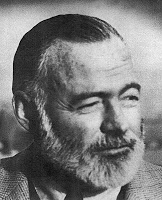
But then I thought of an old high school memory: in some of my English classes, particularly the AP courses I took when I was an upperclassman, we read a lot of Ernest Hemingway. My teacher just had this thing for Ernest Hemingway. Don’t know why. I didn’t particularly care for him, but we read quite a bit of him. Indian Camp, I think we read twice in my four years of high school.

And I remember, there was a character in many of Hemingway’s stories, a guy by the name of Nick Adams. This guy appeared everywhere, sometimes a kid, sometimes a teenager, sometimes an adult. I once asked my teacher about this guy, and he replied that Nick Adams appeared in plenty of Hemingway’s stories. Two dozen, to be exact. What made Nick Adams so appealing to Hemingway? He was supposedly based on a lot of Hemingway’s personal experiences, so maybe that had a lot to do with it.

In any case, I thought, “Why can’t this short story be my Nick Adams?” It would be short stories I write every now and then, featuring the same world and the same protagonist, all originating from “Buried Alive”. I could even release them in a collection someday, far, far in the future. Who knows what could happen?

In any case, I’ll see what I come up with when I have the time and the energy to write some short stories. There are definitely possibilities here for a series of interconnected stories.

Have you ever written a short story and wished you could write a sequel/spin-off/related story to it? What happened?

Today we had a rather interesting discussion in my Science Fiction and Fantasy class (for those of you new to the blog, yes there’s such a thing. Apparently Ohio State’s English Department has been studying the foundations of nerd culture since 2007. And possibly there’s a grad student in the Sociology Department who’s studying the actual people of nerd culture, but that’s an investigation for another time). Anyway, we were talking about the differences between heroes in science fiction stories from pre-WWII and the stories written after WWII.

In the pre-WWII stories, the heroes were always larger than life, able to overcome evil and fight off any villain with ease. In a sense, they were Supermen without superpowers, and they still won every battle, got the girl, saved the world, and were home in time for tea. Some great examples were John Carter of Mars from the Barsoom novels by Edgar Rice Burroughs and Freder from the movie Metropolis.

But then you have World War II. There you see death camps, POW marches, bombings, jungle warfare, beaches that run red with blood, mortars and claymores and bullets, racism and nationalism, beheadings, and several other bits of Hell made incarnate. Those who came back from the war were given a darker outlook on the world, and those whose talents were more geared to the written word and who in turn enjoyed a little space travel incorporated that new world view into their work. The best examples I can give you of the sort of hero that became popular after WWII are Barton from the short story The Cold Equations and Han Solo from Star Wars. They are not Supermen. They are simply men. They have problems, conflicts, flaws. Barton is haunted by what his job requires him to do when he finds a stowaway on his ship. Solo is looking out for himself and his ship and nobody else, though the Expanded Universe of Star Wars says that he’s like that because his lover died leaving him cynical and jaded. And then he met Jabba the Hutt.

The point is people liked these characters. A lot. They’ve been around since then in some way or another. Look around at science fiction and fantasy stories today. Harry Potter admits he’d be lost without his friends, and as Hermione is fond of pointing out, he’s useless with girls. Katniss Everdeen is troubled by her feelings for both Peeta and Gale and her memories of the Hunger Games, and is only in the situations she’s in so that she can protect her sister and stay alive, in that order…though she does love a little revenge every now and then. Max de Costa from Elysium is trying to be a better man, but with his life on the line he becomes the definition of a survivalist, willing to do anything to live. And Buffy Summers from Buffy the Vampire Slayer has a host of issues that inhibit her life, especially in season six of the series. Jeez, that season was psychologically dark!

And it’s not just science fiction. Other genres of speculative fiction have these sorts of character. My own fiction has these sort of flawed characters:

Zahara Bakur (Reborn City): low self-esteem and a sometimes overwhelming timidity and fear of violence.

Rip (Reborn City): recovering drug addict with image issues.

Snake (Snake): highly disturbed serial killer due to abusive childhood.

Laura Horn (Laura Horn): pathological shyness, social anxiety and general anxiety due to sexual assault.

Why are these characters so popular when they are so far from perfect? I think it has something to do with the fact that’s what they are: imperfect, They care deeply and try hard, but occasionally they fail and they fall and the consequences are terrible. To the readers, that makes them real. We don’t want to read about infallible heroes, because we know all too well that they don’t exist. We want heroes who are a little more like us. They depend on people, they hurt, they need a good smack occasionally to see that what they’re doing is hurting both themselves and their loved ones. We’ve all been in positions like that to some degree in our lives. And that makes these characters relatable to us, and our problems, even if they don’t involve magic or spaceships or fighting in an arena with other young kids.

Not only that, but these protagonists tend to grow in the story. They tend to become better than what they were before. And I don’t mean better warriors or fighters or healers or wizards or whatnot. I mean better people. They learn what’s really important in life, or how to express their love for others, or they come back as true leaders who put the lives and interests of those who depend on them first. In other words, the sort of people we want to be.

I personally prefer using these characters with their flaws and warts and troubles. I used to be more into characters that were impervious, Granted, I was a kid at the time, and all my favorite TV, movie, and book heroes seemed impervious to me. But I’m older now, smarter, wiser, and a bit more aware that the world doesn’t usually produce such heroes. So I like to use the heroes with problems, with something that’s keeping them back. Along with the conflict of the story, it gives me something to grapple with and for the characters to grapple with as they fight onwards. After all, a story is not just getting from Point A to Point B, it’s also about letting the characters grow and become better people.

“I’m not even perfect, and I’m bloody brilliant in all my forms.”

Now are these sorts of characters here to stay? I’m tempted to say yes, at least for the meantime. If you look at the latest movies, TV shows, novels, and comic books, the main characters all have problems of some sort that makes life difficult for them. Watching them grow, take on these problems, and overcome them is part of the appeal of the story. And I certainly plan to use these flawed characters in the future, as do other writers I know. So yes, it’s quite possible these flawed protagonists will be staying for quite a while.

How do you feel about flawed characters? And are there any that you particularly like above all others?