Posts Tagged ‘short story’

Today I was walking back from running an errand. The streets were packed with people here to see the game between Ohio State and Wisconsin and drink and have a good time. There were people selling food and T-shirts and Buckeye gear all over the place. I barely noticed any of it. My mind was turning over other things: money and school, my two biggest worries in life these days.

I’m not going to unload my problems on this blog, at least not this post. That’s not what this post is about. But I will say that even with a job and some side gigs and the little money I get from writing, life’s still expensive. Tuition, rent, and groceries is what I pay for the most. And I wonder, as plenty of other people around the world and from all walks of life wonder, how I’m going to write it all.

And as I’m turning all this in my head, walking to the ATM to make a deposit and then head home, an idea for a short story pops into my mind. It’s more magical realism than horror,  but I think to myself, this sounds like a crazy good idea for a short story. I can base it around my own life, giving it an authentic touch. And I get to include some monsters in this story too! Imagine how much fun it’ll be to write that sort of story! A bit therapeutic too, that’s always good for the mind, body and soul.

Now I’m at home, writing up this post before I start on a paper for my English class. I have to say, writing about this had made me happier, even as it had occurred to me that it make my family worry about me because I’m blogging about money woes while talking about an idea for a short story involving my money woes. But like I said, I feel better writing about this, and if it guilt trips someone into buying my work, all the better.

I probably shouldn’t have written that last sentence. Oh well.

Now I’m wondering, does anyone else write about their problems? Do they use fiction of any sort to release and share their problems? I’m pretty sure there are plenty of literary authors who do just that, but I don’t usually read literary fiction. I bet there are plenty of other writers who include their problems in their genre work,, but none come to mind at the moment. But I think that stories like those are probably some of the best. It’s someone sharing their life, having a conversation with themselves and with others through a fiction story. It feels real, even if there are vampires or knights in shining armor or other weird things in their stories. And those sort of stories are the ones where people can really identify with the authors and the characters, because they’re thinking to themselves, I’ve been in that situation before, and it sucks.

Well, I’ve got the idea stored away now, so when I’m done with Video Rage and Laura Horn I’ll be able to remember it. I’ve got a little over thirty different ideas for short stories written down right now, so I’ll definitely have plenty of stuff to write about when I finish my two current works-in-progress. I could even write another, longer collection of short stories if I wanted to.

Hmm…another collection of short stories. Not a bad idea.

Until then though, I’ve got a paper to work on. Wish me luck! I’m aiming to get an A on this paper. I’ll settle for a B if I have to, but an A’s the goal at the moment.

Do you ever incorporate your life’s problems into your fiction? How do you do it? And what has been the result of that?

tqg cover

Boy, it’s been a crazy day. I was afraid I’d never have a chance to write this post. But I’m in front of my computer, my homework for tonight is done, and I’ve called back everyone who’s left me messages, so here’s the post to celebrate the two-month anniversary of The Quiet Game: Five Tales To Chill Your Bones, my collection of short stories and first published book.

So far, I’ve sold about 41 or 42 copies, which isn’t too bad given I’m still pretty new to the indie-publishing scene and this is my first book. In addition, I’ve got a 4-star average on Amazon at the moment based on four reviews, which makes me happy. I like to think that people like what I write, so the reviews are proof that at least some people like the book.

I’ve also gotten some interesting responses to my book. For instance, the first short story in the collection, “Addict”, has turned quite a few heads with its content. But it’s a story about a man with sex addiction, so I can see why that might attract some attention. I’ve also gotten some great feedback on some of the other short stories. My dad thought the titular short story, “The Quiet Game”, was very creepy and well-done, and coming from him that’s some really awesome praise. And of course Jason Haxton, author of the book The Dybbuk Box, loved my original dybbuk story, “Samson Weiss’s Curse”. He’s the one who gave me my sole five-star review.

If you’re interested in reading The Quiet Game, please check it out on Amazon and Smashwords, available in both paperback and e-book versions.

I’m on a writing craze lately. In the past two days, I’ve finished a chapter of Laura Horn, wrote an entire chapter of Video Rage, and even did an entire article for Self-Published Authors Helping Other Authors. This time around, I did a little research on The Length Debate, seeing all the opinions on how long a piece of flash fiction, a short story, a novel, and/or everything in-between should be. It was a fun article to research, and I hope you read it and share your thoughts on the debate too.

And as always, I encourage you to subscribe and follow Self-Published Authors Helping Other Authors. If you independently publish, it’s a wonderful site full of information for authors on everything from creating your own cover to information on developments with CreateSpace and Kindle Direct Publishing to just general tips on writing fiction of any sort. I’m sure you’ll find it extremely helpful and informative, just like I did the first time I logged on.

Oh, before I forget and sign off, I just wanted to let you know I updated the About Me page on this blog. It’s just a little bit more general information, but if you’re curious, go ahead and check it out. You’ll find my somewhat-funny bucket list among the material I’ve added there.

See you in the morning, everybody. Have a good night, and I hope you don’t have any dreams about people with schizophrenia performing exorcisms in the street like I did last night (yes, I dreamed that. It seems even in my dreams I can’t escape the weirdness that is my somewhat macabre interests and hobbies).,

Writing is a mostly mechanical exercise, making practiced movements with a pen and paper or seeking the correct key on a keyboard. And putting those words together is part of the higher mental powers given to the human species through millions of years of evolution. But the act of imagination, the power it gives us to bring those words together into a coherent narrative and even tell stories with those words, to me that it is transcendent of all the abilities we’ve garnered from evolution. To me, it’s almost a gift of the soul.

I keep three separate lists on my flash drive. One list has short summaries and blurbs of novels, films, TV shows, comic books, and even video games I’d like to write. I’m up to sixty-one ideas at the moment. The second list gives short descriptions of short stories I plan to write (seventeen at the moment). And the third list has subjects for articles I can write for Self-Published Authors Helping Other Authors (great blog, by the way. Totally recommend it). That’s a total of eighty-eight ideas, and all of them are possible through my imagination. Heck, I wouldn’t have any of the ideas for stories I write if it wasn’t for imagination.

And imagination is influenced by so many things. Everyday life influences imagination, allows it to be transformed into stories. I read an article about efforts to stop forced marriages with metal spoons and I got an idea for a short story from that. When I went to my science fiction class, I had an idea for a novella that I had to blog about almost immediately (see this post for the actual article). Speaking to some friends about the recent death of an actor to suicide, I thought of an idea for a crime novel. When the lights in the Super Dome went out early this year, I got an idea from that too.

And not just events in life fuel the imagination. When I read or watch TV or a movie, I get ideas from them too. Just today, a book I’m in the middle of reading gave me an idea for a short story taking place in Jerusalem. Watching a favorite episode of Doctor Who the other day, I had an idea for a six-book series featuring Agatha Christie (Whovians, I bet you can guess which episode that is). I even have an idea for a movie to bring back a TV franchise I used to love as a kid. And how many fairy tales and childrens books have I taken and turned into new stories that boggle the mind and scare the soul? All this is possible through these works’ influences on my imagination, and my imagination’s influence on me.

Imagination. It is the ability to absorb events or old ideas and–pardon the adjective used–regurgitate it into a new form. It is the application of ideas and concepts in a new light, in a new way. It’s the churning of our subconscious, which spits out, like in a Greco-Roman Creation myth, something new and fabulous and beautiful. It is a force that I contemplate, that I look at and wonder about its complexity.

And perhaps one day I’ll write a story about its impact…oh wait. I’ve already got one or two ideas based on that! Never mind.

The point is, the imagination is something that is such a benefit to the act of writing, the act of living, that without it life would be so much less beautiful and powerful and amazing. It’s given me a ton of ideas, and I hope it’ll give me some more in the future. Because if my imagination can allow me to create a large body of work to leave me behind, even if I don’t get famous off of it all, I’ll feel like I’ve left behind an amazing legacy for the world.

Though if I can get famous I won’t complain.

What’s your view on the imagination and its impact on writing and on life?

Nice to meet you.

I finally sat down this evening, after finishing a whole lot of biology homework, and I watched the movie Warm Bodies. It’s amazing when people can take a tired, old plot and make it seem fresh and new. If you don’t get what I’m talking about, just see the movie. You’ll get it.

But it put me in mind of a zombie story I’ve written myself. Well, it’s not exactly a zombie story. Zombie-like or zombie-ish. If I call it a zombie story, it seems like it gets categorized into a larger body of work that people see as overused these days…and increasingly getting as dumb as its main antagonist. But my short story, “Buried Alive”, actually features some zombie-story elements. And even though I’m satisfied with the ending, I feel…I feel like the story could continue after it finished. And, I realized, I kind of wanted it to continue.

Just one problem: I don’t want to make a bleeding novel out of this story. I’ve got enough on my plate without another novel at this point.

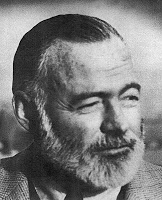
Looks like Sean Connery in the League of Extraordinary Gentlemen.

But then I thought of an old high school memory: in some of my English classes, particularly the AP courses I took when I was an upperclassman, we read a lot of Ernest Hemingway. My teacher just had this thing for Ernest Hemingway. Don’t know why. I didn’t particularly care for him, but we read quite a bit of him. Indian Camp, I think we read twice in my four years of high school.

And I remember, there was a character in many of Hemingway’s stories, a guy by the name of Nick Adams. This guy appeared everywhere, sometimes a kid, sometimes a teenager, sometimes an adult. I once asked my teacher about this guy, and he replied that Nick Adams appeared in plenty of Hemingway’s stories. Two dozen, to be exact. What made Nick Adams so appealing to Hemingway? He was supposedly based on a lot of Hemingway’s personal experiences, so maybe that had a lot to do with it.

In any case, I thought, “Why can’t this short story be my Nick Adams?” It would be short stories I write every now and then, featuring the same world and the same protagonist, all originating from “Buried Alive”. I could even release them in a collection someday, far, far in the future. Who knows what could happen?

In any case, I’ll see what I come up with when I have the time and the energy to write some short stories. There are definitely possibilities here for a series of interconnected stories.

Have you ever written a short story and wished you could write a sequel/spin-off/related story to it? What happened?

tqg cover

I just recieved my fourth review for my collection of short stories, The Quiet Game: Five Tales To Chill Your Bones. This review comes from my aunt, Michele Siegal (actually, it says my uncle’s name on Amazon, but that’s because they have a joint account). The review, which gave the book 4 stars, went like this:

“This is the first time I’ve read any of Rami’s stories. I was very impressed with the wide variety of stories and the way he wove the paranormal into each piece. Paranormal is not something I usually read and I enjoyed this collection very much. The collection reminded me of the Twlight Zone. The descriptions were especially well developed. Keep on writing Rami!”

Thanks Aunt Michele! I’m glad you enjoyed the variety and the descriptions, and I’m flattered that you think I reminded you of The Twilight Zone. And with this review, I’m maintaining my 4.0 average on Amazon, which I’m very happy with. And with book sales slowly but steadily rising, I can only hope that more reviews will come.

If you decide to read The Quiet Game, please don’t hesitate to write a review, whether you enjoyed the book or not. I always appreciate feedback, positive or negative, and reviews really help indie writers such as myself move up in the world.

Hope you’re having as good a day as I am. If I have anything else to write, I’ll post it later in the day (and if I can get my homework done in a timely manner, I might just have something to write about).

If you see a pun in that title, you’ll realize it’s one of THE worst puns in existence. I’m not even sure why I made it.

Earlier today I had an idea for a story that I’m tentatively calling “Rose”. I’m not going to get into details about it, though I will say that flowers and plants do play a big role in the story, if the title didn’t give it away, and when I write it I’ll probably listen to a lot of songs about obsessive love and stalkers. I somehow came up with it while sitting in my Science Fiction and Fantasy class today (I’ll probably be able to recall the thought process behind it better at a later date, because it’s a bit of a mystery now), and I wrote it down when I got home today.

Now at first I thought it would make a great short story. But then…I realized that this story would be longer than your average short story. Then I thought, “Perhaps it could be some weird, creepy novel.” But that was too long. So I thought to myself, “How about a novella?”

Now, I’ve never had any definite opinions on novellas. I’ve only read a few in my entire lifetime, most of them by Stephen King (anyone familiar with “N.” or “Everything’s Eventual”, by any chance?). I’d never considered writing one before. Short stories, which are the foundations for a career in fiction writing, are hard enough to write for me, and novels are my true passion. Why would I have time for a novella, that strange middle-ground between the art of short stories that is sometimes so elusive for me and the novel that is my freedom and passion?

But when I thought of this story, it somehow clicked that a novella format would be best. I wouldn’t have to struggle to extend the story, and I wouldn’t have to pack it into a neat little package. The story would fit in the format of a novella. And from there I formed my first real opinion on novellas: they are perfect for those stories that can’t fit into the format of a short story but would suffer as a novel.

I’m not exactly sure when I’ll write this novella–though I have an idea or two–but I look forward to writing it, like I look forward to writing all the stories I come up with. Until then, I’ll probably churn this one in the bowels of my imagination until I have a better idea of the story I’d like to write with it. After all, my stories are usually a bit better when I’ve given them a little time to mature in my imagination.

Oh, fun fact before I finish this post: this novella is the 60th idea for a story I’ve had, not counting short stories or articles I’ve written. With the amount of ideas I have, I’ll at the very least never run out of ideas for stories to write, and at the very best I’ll be very prolific. Either way, it’s good news.

tqg cover

It has exactly been one month since The Quiet Game: Five Tales To Chill Your Bones came out. Yes, one month. Feels like a lot longer, but it’s only a month. A pretty crazy month too. I moved into my new apartment with my roommate Morgan, I worked most days, I saw some old friends and met some new ones, and in four days the fall semester starts (more on that later).

I’ve sold 25 print paperback copies and ten or eleven digital copies so far (there’s a guy I met who said he’s going to be downloading the book tonight. Depending on how long it takes for KDP to register a download, I may not find out till tomorrow). Also, I’ve gotten another review on Amazon, this one from Jason Haxton, owner of a box that is said to be possessed by a dybbuk, a demon from Jewish folklore. You may also know him as the author of the book The Dybbuk Box, a book detailing his experiences with the box, and the movie The Possession, which is based on Haxton’s book.

Here’s what he had to say on the book, which he gave 5 stars. The title of the review is Nailed It:

I happened across The author Rami Unger about a year ago when he was researching the paranormal online.
He nailed the Dybbuk story. Write more… soon! Jason Haxton Author of “The Dibbuk Box:.

Pretty awesome, huh? And coming from an author of a really excellent book and someone who’s experienced the supernatural before, I take it as a compliment. Plus his review has brought The Quiet Game‘s rating to a 4.5 average. I cannot complain. Oh and Jason, I have a book coming out in November. If you want me to let you know about that one too, I will.

If you’re interested in reading The Quiet Game, check it out on Amazon or Smashwords. And however you feel about the book, please write a review if you have the time. I always appreciate feedback, whether it be positive or negative feedback that I’m hearing.

Hope things are going well with you tonight. I’ve got another blog post and some writing to do before I go to bed tonight. Wish me luck.

Earlier today I posted the first half of an interview made by some friends of mine, Rui Li and Josh Mangel. Now I’d like to post the second part, which was recorded and then transcribed on July 1st, before The Quiet Game: Five Tales To Chill Your Bones came out.

Before you read it, I’d like to point out that part of the ending of the interview is a little hard to read. That’s because there was some problems with the audio that recorded the interview, and what was said was therefore unintelligible. What is here is my friend Josh’s attempt to get down exactly what was said. So please pardon that, and just enjoy what you read, should you find yourself reading the entire interview.

Once again, thanks to Josh and Rui. I really appreciate you two taking the time to come over to my place and interview me about my writing. It means a lot that you show an interest in it.

~~~

Rami Ungar, a young up-and-coming horror author, has been writing stories since he was the tender age of six. He has one book already published, The Quiet Game: Five Tales That Chill Your Bones, and another coming out in November, Reborn City, a science fiction novel. He also writes for two blogs, one that showcases his personal work, and one that offers advice to self-publishing authors. Rami is sharp as a knife, talented, and certainly has the uncompromising attitude needed for a writer.

We covered several topics with Rami, and he provided us with a wealth of information on writing and the publishing process. The first part of this interview focuses on Rami’s personal story and his influences and experiences, and the second half covers publishing and some of Rami’s other secrets.

Take us through the publishing process. How does that work? I don’t know very much about publishing, and it seems like kind of a crazy process.

Would you like to hear it for a novel or a short story or an article, what?

All (laughing). Sorry.

We could be here for a while.

I think it’s interesting, for people who are reading an interview, because not a lot of people know how that happens.

Well, for a novel… publishing novels has changed over the past couple of years. How much do you know about indie publishing?

Nothing.

Well, it used to be that you wrote a novel, and you had to get an agent, and that agent had to find you a publisher. That publisher had to publish your novel for you, and the marketing department had to do some work in order to make sure that people actually knew about your novel, and bought it. Having a publisher depended on how well your novel did, so if your novel didn’t do well, your publisher could drop you. With indie publishing, authors are able to create novels on their computer, design a cover, and distribute and market themselves. Basically, they’re doing all the work, and they’re making most of the profits. Amazon has really helped with this. Amazon offers the chance for authors to get out there and actually write themselves, publish themselves, and distribute themselves. I’m using Amazon myself in order to distribute my own work, so it’s actually been very helpful. The publishing industry is reacting to that. The Big Six, as they call the big six publishing companies, which includes groups like Penguin, or Doubleday, Random House; they’re reacting to this in ways they never expecting to, because they never saw this coming, and so they have to react. They’re letting fewer books in now, they’re publishing less, because they’re driven by profit, the books they believe will make money. Authors who have really good novels, but publishing houses aren’t accepting them, they’re like, forget the publishing house, I’m going to self-publish. They’re kind of facilitating their own deaths.

So, it’s very similar to the music industry in a lot of ways.

Yeah, the artists are taking control.

What do you think about – I don’t want to admit piracy, but if you go on the Internet, you can read dozens of interesting things just by clicking the button for free. What incentive is there for audiences to read something being published, something that costs money?

Well, the thing is, piracy is taking published works and distributing them illegally, so I’d like to think that the whole legal thing is keeping people from reading pirated work. A lot of authors choose to get copyrights, which is something that I recommend. You pay a small fee to get a copyright for your work, and the legal protection is very good. I’ve copyrighted my work, and so far it’s served me well; people can’t use any of my work without getting in trouble.

Who taught you these things? How did you learn the publishing process?

It’s all out there on the Internet, there are blogs devoted to teaching people how to publish on their own; in fact, I write for a blog.

What’s the blog called?

Self-Published Authors Helping Other Authors. It’s me and four other writers helping other writers writing articles that are meant to help other authors publish on their own. I’ve only been working for them for the past couple of weeks. I don’t get paid for this, but I love doing it. I write articles for them as they come to me, and I publish them and hopefully they help people to write better.

Have you ever had anyone who read an article write you back and say that the information that you shared helped?

Well, the thing is with a blog that people are free to comment, and they do, so I’ve gotten a lot of feedback on my work, most of it, thank God, has been very positive. For novels, though, I often do what’s called a beta reader, and that is, I’ll ask someone, usually a friend who’s also a writer, or maybe just a very avid reader, to take a look at the novel, or sometimes a short story, and to give me feedback. I often get very helpful feedback that tells me what I should change, what I should rewrite, what I should keep…

When you do the blog and the website stuff, sometimes there are very hurtful comments. Have you ever been hurt by an online comment?

I once wrote an article on people that had been very rude to an author because she was against female genital mutilation, sometimes called female circumcision. They didn’t want her to be against this unless she was also against male circumcision. I wrote an article about that, and some people found the article, and they kept trying to convince me that male circumcision and female circumcision were just products of the devil. I just said, that’s not my belief, one may have health benefits, the other is actually very sexist in nature and serves no purpose other than to subjugate women and cause them harm.

How and when did you have the idea to publish a book, to write a book? Did you get the idea yourself or did your parents or family suggest it to you?

Well, I’ve always wanted to be a published novelist, but the whole idea of self-publishing came to me over time. At first I wasn’t sure if I wanted to go this route, but I thought maybe I should… after hearing from people who had had positive experiences with self-publishing, I said, “Heck! Let’s do it!”

The Quiet Game is coming out in seventeen days. I’ve got another novel, my science fiction novel, Reborn City, is coming out in November. Pretty soon I’ll be able to start the process to self-publish my serial killer novel, Snake.

When you self-publish something, do you print copies yourself?

Amazon has a service called Print-On-Demand, which means that someone will order a book, and Amazon will print the order then and there and the send it to them. A little bit of the money from the sale goes to actually printing a copy of the book. With e-books, it’s even easier, because it’s just like replicating a file.

I know that a lot of this is probably already on the blog that you wrote about helping authors self-publish, but do you think that there is a future out there for a lot of the young authors? If you were giving specific advice to young authors about the very best things they could do, the best way to become an author…

Well, to become an author takes a lot of dedication: a lot of reading, a lot of writing, and a lot of passion. I would mostly say that if you want to become an author, you have to read a lot. You have to read many books from many different people. You have to write a lot, and try to learn as much as you can about writing as possible. Most importantly, you can’t lose your nerve; you have to keep going, because you’re basically typing four-letter words forty thousand times. There’s forty thousand words in your average novel, usually a lot more.

What have you done to market yourself? Do you talk to people even though you don’t want to, just to let them know what you’ve done so that others will share your story?

Marketing myself is actually not as difficult as it sounds. Sure, talking to people and telling them about my novels is part of it, but there are many other ways to market yourself; for one thing, I use Twitter a lot to get people interested in my work. These past couple of days, I’ve been using Facebook and Twitter to count down the number of days until The Quiet Game comes out. I also write a blog, a personal blog about my writing that has close to three hundred people following it and hopefully some of them will read my book. As I said, I also write for another blog that helps self-publish authors, so maybe some people will get interested through that.

Since you believe in God, do you carry around a personal item that can protect you from other things, like an amulet?

I do wear a necklace, my necklace is a mezuzah – that’s an object in Judaism that’s put on doorposts – it’s supposed to be like a protective amulet of sorts. I usually wear that all the time, and I feel it will protect me when I wear it. I’m very happy I have it. It was a bar mitzvah gift. I also have a ring with some words on the Talmud on it.

What does it say?

“He who saves a life, it is as if he saves the world entire.” Considering that I kill off a lot of the characters in my books, I have not been doing very well with that commandment (laughing)!

Have you ever wrote anything that opposes Judaism and been criticized by your father?

My dad has wanted me to write stuff based upon my own life or based upon Judaism, but things that go against Judaism in general, I’m not sure that I’ve ever written anything exactly like that that. I have written scenes full of murder, blood, and gore; I have written from the perspectives of Christians, Muslims, others. I also did write a sex scene once! It was between two people that weren’t married to each other, and Judaism does encourage people to wait until they’re married.

Would you say there are other things like Judaism that have influenced you that don’t necessarily relate to horror stories?

Things that have influenced me?

Some people would say, “I read R.L. Stine all the time when I was a kid, so I just loved R.L. Stine.” But have there been things that influenced you to write horror that have nothing to do with horror?

I do read a lot of Japanese comics as well, and those range so much in genre from comedy, to romance, to action – I’ve been able to derive ideas from those. There are stories that take place in other universes or the past, stories that involve magic, and stories that give me a glimpse as to how certain people view romance.

Is there anything else – maybe a park you like and its scenery, or a building, and you imagine the building…

I also use meditation. That’s helped me think more clearly when I write, so that’s helped.

Do you always meditate before you write?

I meditate twice a day, every day. I feel more creative and focused, when I meditate, so try and do it right before I start writing.

What I wanted to know was if there are some writers who have similar problems with writing: they don’t have a regular schedule, they sometimes sleep at night, sometimes during the day, and they don’t want to exercise because they want to just keep writing.

I’m sure there are people like that but I don’t know any personally. Most writers are on a pretty consistent schedule.

Do you have a pretty consistent schedule?

Yeah, I’d be worried if I didn’t have a pretty consistent schedule. It might point to a health problem, it might point to an unhealthy lifestyle, or it might point to something entirely different, I’m not sure. It depends on the circumstance.

How were you educated about writing before college?

I just wrote! I wrote and I wrote and I wrote. I did it for the love of writing.

I meant to ask you that before, actually. Was there someone in particular who taught you about writing?

No, the school I went to didn’t have a lot of writing classes. In fact, we only had one writing workshop in fifth grade, and afterwards everything was meant to prepare you for writing essays in college. I didn’t really have any training in fiction, not until college. But getting this far without that training; people tell me that’s something else. I’ve got to say I got where I am with the support of my friends and my family.

Do you believe you have a talent for writing?

I believe that I’ve developed a talent for writing.

Do you have any events coming up, or readings?

Readings, no. I am trying to develop a stand-up comedy act (laughing). So if it’s any good, we’ll have to see. The Quiet Game is coming out on July 17th. It will be available from Amazon and other retailers in paperback and e-book format. The price is yet to be set; I should set it soon. Reborn City, my science fiction novel, will be available November 1st, so I’m going to be doing a lot work to get ready for that, including creating a Facebook page.

Do you have a favorite writer?

Oh my God, that’s a tough question. I really like Stephen King and Anne Rice.

I know a lot of famous people, before they become famous, they really admire another famous person and sometimes they imitate them until they realize that they need to find their true personality. Did you do that?

Yeah, there were times were I sounded a lot like a hybrid of Stephen King and Anne Rice. But over time, that’s really changed, so that I sound less like them and more like me. By sounding like me, I’ve been published a few times: short stories in magazines. I like my style as it is now; I hope to improve it over time. Like I said, my writing’s improved, and I like writing like I write. My style. Rami Ungar style.

I read some of your stories; I liked them.

Thank you.

I read one about the succubus and Hunter.

Oh yeah, that one.

I liked that one.

You would (laughing).

What do you mean by that (feigns insult)?

Well, you did mention the succubus, and those are…

What are those?

They’re demonesses that have sex with you while you sleep.

Oh, I didn’t know that.

Can you repeat that?

Demonesses that have sex with you while you sleep.

Can you say that again (laughing)?

Now you’re being sarcastic!

How can that be?

Well, they’re not real.

Oh, it’s not a real thing.

Well, it might be real, it might not be. You never know… He’s actually not human, he’s actually a space alien.

(unintelligible muttering)

Actually he’s a space alien. I’m pretty sure I saw her walking around with two antennae.

Oh, is that how you say it? I thought it was antenna.

Antennae. (pause) Well, thanks for coming over.

Thank you very much.

Thanks.


About a month back, I had an interview with some friends, Josh Mangel and Rui Li, who were interviewing various people for a variety of reasons, mostly having to do with a class they were both taking. The interview is in two parts, mostly because all together it’s about 14 pages worth of interview. And here’s the interview’s first half, which was recorded at my house one lovely Wednesday afternoon with some soda and snacks in my living room.

Thanks to Josh Mangel and Rui Li for interviewing me and sending me the transcripts. I appreciate all you’ve done for me and I hope this project of yours was a success.

For all readers, please be aware that the interview was recorded July 1st, meaning that it was about 17 days before The Quiet Game: Five Tales To Chill Your Bones came out. Just something to keep in mind. Also, the bold parts are questions from Josh and Rui, while the regular script is my responses. Just for clarification’s sake.

~~~

Rami Ungar, a young up-and-coming horror author, has been writing stories since he was the tender age of six. He has one book already published, The Quiet Game: Five Tales That Chill Your Bones, and another coming out in November, Reborn City, a science fiction novel. He also writes for two blogs, one that showcases his personal work, and one that offers advice to self-publishing authors. Rami is sharp as a knife, talented, and certainly has the uncompromising attitude needed for a writer.

We covered several topics with Rami, and he provided us with a wealth of information on writing and the publishing process. The first part of this interview focuses on Rami’s personal story and his influences and experiences, and the second half covers publishing and some of Rami’s other secrets.

How did you get started writing?

I think it was Harry Potter. I read it when I was five or something and just got hooked on it. I wanted to write like that. I wanted to write about magic, and mystery, and I’ve been writing ever since. Though, when I got into horror I got into a different area.

What attracted you to writing horror?

Well, you know, there’s a funny story about that. I’ve always enjoyed scaring people – I’ve always enjoyed sneaking up behind them and going “Boo!” Sneaking up behind people isn’t always acceptable, so I guess writing scary stuff is a better alternative. And I like doing it – I really enjoy it.

Did you decide to write out of a motivation to become famous?

I think that influences me a little bit. I think that influences every writer who’s ever gone through publication – to be the famous guy whose books are in all the bookstores, who’s recognizable anywhere on a busy street. But it’s really a lot less about that and a lot more about writing what I love and sharing it with the world. I’ve got a collection of short stories coming out in about seventeen days and I’m just looking forward to sharing these stories that I’ve written with the world. So if I can make a little money off it that would be nice.

What’s your collection of short stories going to be called? Can you take us through them?

The Quiet Game: Five Tales That Chill Your Bones. It’s five separate stories that I wrote mostly over winter break. One was written over the beginning of spring semester. One, The Quiet Game, the titular short story, is about an all-girls school in the middle of nowhere that wakes up one morning cut off from the rest of the world. Everyone’s deaf, and they can’t hear a word. They soon find out that there’s something strange going on at the school, something very sinister.

Another short story is called Addict, and it’s about a man with sex addiction who’s trying to go cold turkey. He has some really freaky hallucinations when he attempts it. Another short story is called I’m Going To Be The Next James Bond, but it doesn’t have a lot to do with James Bond. It’s about a bunch of kids who go into a hospital, an abandoned hospital, in order to prove they’re brave and the freaky stuff that happens there.

There’s another short story that I’m really proud of called In The Lady Ogre’s Den. It follows a child with autism who’s in the hospital and the crazy stuff that happens there. Really terrible stuff happens to him there. The last short story is called Samson Wise’s Curse, and it involves a dybbuk – that a spirit from Jewish mythology, it’s kind of like a possessing ghost.

Is there something about being scared that attracts you personally? Do you enjoy being frightened?

Well, yes actually. Some people enjoy having a drink every now and then, some people enjoy skydiving – me, I enjoy being scared through a story. That gives me something like a natural high, and I really enjoy that. I went to see World War Z last weekend with my mom and my sister. There are some really scary parts and I was enjoying myself every minute. I had to have my hand cover my mouth, cause I was freaked out – like, what’s gonna happen? I was really enjoying myself.

What would you say is the best zombie movie?

You know, I don’t actually watch a lot of zombie movies or read a lot of zombie novels…

Best horror movie, in general…

Oh, that’s a tough one.

Best five. Or three, or…

The original Amityville Horror is definitely an awesome movie, because you really don’t understand what’s causing the haunting, or why it’s happening – a lot of the stuff that’s happening is very mysterious, and that just serves to make it scarier. At one point during the movie, the male lead, he sees a giant pig with glowing eyes looking out of a window, and just sends a silent message to him, and we don’t know what that message is or why that pig is there. It’s just really scary.

Also, there are movies like Halloween or Friday The 13th or Nightmare On Elm Street. They’re much bloodier than a lot of other horror films but they really scare people, and if you see the original films, they’re very good. They’re really well thought out.

Do you think that all of your stories need magic in some form?

Not necessarily. I’ve written a novel about a serial killer in New York City, and there’s no magic at all. It’s basically humans against humans.

Do you think that in some ways that’s the scariest thing?

For me, the darkness that humanity is capable of, the evil, that is fascinating. I mean, I don’t like it at all when it’s really happening. I don’t really like it when there’s an actual killer on the loose, or someone’s actually planning murder. But, within a literary context, it’s fascinating to think about what cause someone to want to become a killer – what causes someone to want to do something so heinous, so atrocious.

Overall, what are you scared of the most in the world?

Overall – that’s really tough. I’ve got to say I’m not too fond of wasps, or bees, or large spiders. I can deal with a small spider, once I get used to the fact that there’s one right over my shoulder and I’m like – uggh! But large spiders like tarantulas just freak me out.

I think that all of those things that you are scared of are just because they can cause you to die. Would you say that death scares a lot of people?

I think that death is a huge factor in what people are afraid of. It harkens back to our survival instincts, to look for ways to live, and fear developed from that. But, there are a lot of things that can’t hurt us but scare people to death. That makes it much more interesting – something that can’t hurt you, like the sound of thunder. That can scare people to death. The fact that that happens, that people are afraid of thunder, or people are afraid of water, even just a small kiddie pool – that fascinates me to some degree.

Talking about death, do you think that you would be more afraid of your own death or the death of family members?

Definitely more of my family members. I’m not afraid of death, per se – I’m not willing to meet it anytime soon! But I’m very spiritual, I do believe in life after death, so I’m not afraid of dying. Though, like I said, I’m not willing to meet it anytime soon. I’d be much more concerned about the death of a family member.

So have you thought about how most others are afraid of the death of their family members, so when you write, you write about causing the death of their family members instead of them? I think that now most scary stories just cause the death of the people that’s reading the book.

Yeah, or it’s already realized, like in I Am Legend or something.

That’s a really complicated question, cause when I write, I’m not necessarily thinking that I’m going to write it this way so that people are more afraid or their family members’ deaths or their own deaths. I’m writing in the way that I feel will cause the most terror. For my serial killer novel, which is called Snake, there’s a scene – I’m not gonna get into too much detail, but there’s a scene where one of the characters, one of the killer’s victims, is horribly wounded, and that terrified me a little when I read it. When I read what I had written I was actually kind of afraid. So, I’m aiming to cause the most fear, I’m not aiming to cause any particular kind of fear. But I’m aiming to cause fear in itself.

Do you ever sit around, and just think of normal everyday household objects or actions that could cause fear if changed to be just the right way? Like a picture like that, if it broke and you slipped on a puddle of water, and you landed in the broken glass, that would be horrifying.

Yeah, but I don’t usually think like that; I think that that’s more random chance, and random chance isn’t usually terrifying. People aren’t usually afraid of random chance. They’re more afraid of what may be lurking around the corner of their eye, or what they feel could actually harm them or has intent to harm them.

Based upon the description of your short stories, it seems like you have a lot of topics related to kids. So you write a lot about kids and children – could that be because you have a personal story from when you were little?

Actually, yes. Though I don’t always write because of that. Children are much more easily scared than adults are. They’re afraid of things that don’t exist or aren’t tangible: the dark, the bogeyman, and the monster in my closet. Kids are much more easy to scare, much more easy to influence. That’s why they make great protagonists in scary stories.

Do you think that people are more scared of the tangible things or the intangible things and why?

I have a theory that as we grow up we actually just change our fears to be more rational. The monster under my bed, the thing living in my closet…

It’s the IRS now (laughing).

…the IRS, terrorists, an overprotective government. We change our fears to suit what we believe is rational or irrational.

So your target audience is children?

My target audience is not children because some of these novels are definitely not for children. In fact, I would argue that none of them are for children. They’re for young adults and full adults (laughing). People who have a sense of maturity and are attracted to scary stuff but aren’t so easily influenced by that and it warps them. Say, I would never give one of my books to a ten-year old and say “go read” because I know it’s gonna freak them out if they read it.

Could you share your personal experience from when you were little that served as the origin for your love of scary stories?

Every horror writer seems to have one of those stories. Stephen King, actually – he’s considered one of the greatest horror writers in our time and he saw a friend of his hit by a train, supposedly, and that caused him to get into horror. Me, my story’s a lot less bloody. You see, when I was young, couldn’t have been more than six, these two – I was at the synagogue one Saturday afternoon, cause, I’m Jewish, and I go to synagogue a lot – and I was wandering around. These two staff members, these two people who were hired by the synagogue to work there on Saturday mornings – like take books that were left in the aisles. This was before I moved to Columbus. These two staff members, they decided to play a prank on me. So, one of them snuck ahead of me without me noticing and the other one was behind me – there was a hallway where you could do that – and this was near the furnace room, or the boiler room, or whatever you call that. There was a humming noise going through the walls, and they just gave me this weird smile, a smile I would not see until I saw Heath Ledger as the Joker (laughing). It was that freaky. And they say to me,  “You hear that sound?” And I, being no more than six, and scared, just nod my head, because I’m freaked out, and they’re like “It’s the sound of de-eath! Death is coming for you!” (laughing) That humming became the sound of buzz saws in my ears – it sounded like buzz saws or chainsaws coming from the other room – and I just ran! I ran and I ran and I didn’t stop running until I was halfway between one end of the synagogue and the other half, and that’s a big distance for a six-year old.

A few weeks later, I went to that exact same spot, just to show that I wasn’t going to die. I went through, I survived, and I guess subconsciously I reacted by learning to love horror, learning to love scaring people, and learning to love to be scared.

How do you think your background, particularly your Jewish heritage, has influenced writing horror?

Well, that’s a really good question. A lot of my stories have to do with the supernatural, and I would argue that despite Judaism and Christianity not really believing in anything like ghosts, they’re very magical religions – I mean, the splitting of the Red Sea, or the ten plagues – that is one of the best horror stories out there. The ten plagues…

What about the sacrifice of Isaac (as a horror story)?

That would make a great thriller, if I didn’t already know the ending. I would argue that religions are very magical, because they’re filled with stories of people doing amazing things. Occasionally, spirituality does appear in my stories. I’ve also written a sci-fi novel, and the main character is a very religious Muslim. Like I said, I’ve written a short story including a demon of Jewish origin, a dybbuk, so that would also count a s being influenced by my Judaism.

So, just now, you also said your short story involves an all-girls school and a sexually abusive man. Does all the sex and girls have some origin in your real life? Like, you like a girl and…

The one, Addict, which is about a man with sex addiction, that’s actually based on the experiences of a friend of mine. He has suffered from sex addiction for a number of years. He knows about this short story, he’s ok with it, but he’s suffered from it for a number of years, so that could be an influence. As for the all-girls school story, that’s just from… I just thought it was an interesting concept. I mean, from what I understand, private schools, especially ones where you live on campus, can be very closed; people can be a very small community. If you cut that off from the world, and you introduce some very unsettling circumstances, strange things can happen, things that wouldn’t happen in a normal society. It’s very similar to what Stephen King did with Under The Dome, only I did it very differently.

Do you think that in some cases horror is not universal? Like, if you put it in a certain place… someone in New York doesn’t have the same experience as someone in the Midwest, they don’t have the same fears.

Well, that’s something that’s the job of the author to get the point across to the reader no matter who they are. So I’m not so much worried about a man in New York understanding the reasoning of a man in the Midwest, it’s more can anyone understand this (laughing). If people are understanding what I’m writing, if they’re able to identify, to empathize with the character then I’m doing my job.

So, you are writing for other people to read. If no one read what you write, would you still write?

Probably. I’ve got so many stories in my head that I need to get them out on paper, just so that they can get out of my head and somewhere else. But I think that with the publishing industry as it is today, a single person at home has the ability to create a novel all by themselves and distribute it to the entire world. There’s always a chance that there will be someone who’s going to read your work, you just have to make sure that people know that you’ve written something and that it is available somewhere.

Have you ever felt so sucked into your stories that you forgot your own life and the real world?

I’ve sometimes got very into my story and spent hours just writing. I’ve never exactly just sat down and read my own work for hours on end. I do get very much into my stories. I’ll usually go around planning them for several days before I write them, and when I do, it usually just flows out. I can get very taken with other ideas as well.

Have you taken character ideas from people you know and directly incorporated them into stories?

You mean, put a friend in a novel? I’ve done that before, but only for certain reasons, because there are a lot of problems with actually putting people you know in a story. They may get a huge head (laughing) if they find out there’s a character based on them in a story, or they may object to how that character is treated. They’ll say, “I don’t think my character should do this or that” or “Why is my character a ginger?” or “Why is my character killed off? I want him to live! Why isn’t he the main character?” Oy yoi yoi! (laughing) But there are circumstances in which I will put someone I know into a story as a character. For example, one time at my high school they were doing an auction to raise money for the yearbook, and I auctioned off a role in my sci-fi novel. It didn’t sell for a lot, but a friend of mine did buy that spot, and I wrote them in, and I actually really did end up liking that character, so they may appear in the sequel. I actually ended up making him the villain’s assistant.

How many stories have you written altogether?

Oh my god, I don’t even want to put a number on that. I’ve been writing since I was five (laughing) and there are stories that have been lost and never found again, and there are stories that haven’t been published, there are stories that are published, there are stories that are in the midst of getting to be published.