Posts Tagged ‘television shows’

(For all you non-nerds out there, Stephen Moffat is a writer and current show-runner for my latest obsession, Doctor Who. You may skip this entire post if you would like. I understand that not everyone is a fan of the show. Though if you are interested in checking out the show and want to know what the heck I’m talking about, please check out the show. It is mind-blowing.)

Stephen Moffat, current showrunner of Doctor Who.

Dear Mr. Moffat,

First off, congratulations on the selection of a new Doctor. Peter Capaldi, although not the actor I thought would play the Doctor, seems like a good choice and will do well with the part as long as he doesn’t wear the Master’s beard in the role.

Second, I’d like to suggest some ideas for future stories or story arcs for the upcoming series of Doctor Who. Now I know you are a busy man, and that you have enough on your plate and enough talented writers with much more experience than I do when it comes to Doctor Who. But I have plenty of ideas that I can’t just keep stuck in my head, so I thought I’d share them on my blog. If ever this letter goes viral and you stumble upon it, I hope you at the very least take a look at them, just to see what you think of them.

Okay, here’s some stuff I think could be interesting to use in Series 8 and 9:

A new villain. Yes, I know every story in DW has a villain of some sort, whether it be Vespiform, Sontaran, or Martian water virus. But I’m thinking more about an iconic villain, something on par with the Daleks or the Cybermen. With the Master dead and the Daleks and Cybermen being the most used (and therefore most easily defeated) villains, I’m thinking a new villain that will challenge the Doctor and come back several times to haunt him. Some suggestions include:

Imagine Peter Capaldi against this femme fatale.

—The Rani: A Time Lady full of evil and a love of freaky experiments, it would be a great throwback to the classic series if the Rani returned to menace the Doctor and Earth. And I know that all the Time Lords are supposed to be dead, but if the Master could survive the Time War, why can’t the Rani?
—An anti-UNIT organization: UNIT protects the world from alien invasions and works for the good of humanity. But what if there were people who collected alien technology and monitored their movements just to take over the world? It’d be Torchwood meets the Master, in a sense, with a bit of James Bond SPECTRE mixed in. It would certainly be a change of pace for the Doctor, considering he likes to see the good in all people and here he’s seeing the worst of humanity with the worst of alien tech.
—Something from the Time War: The Doctor mentions in The End of Time that the last few days of the war were hell, with “the Skaro Degradations, the Horde of Travesties, the Nightmare Child, the Could-Have-Been King with his army of Meanwhiles and Never-Weres”. What would happen if something from that era made an appearance in the Doctor’s current time? The Doctor would have to confront some really dark memories and defeat an impossible enemy that would wreak all sorts of destruction like in the Time War.
—Something from before the Universe: In DW and its spin-offs, there have been villains who are said to have come from before Time itself (ex. The Impossible Planet/The Satan PitEnd of Days, Secrets of the Stars). What if there was an arc where the Doctor encounters several different creatures and forces that existed before the Universe, and none of them being exactly good or evil? Sounds like a lot of fun, if you ask me.
—The Valeyard: An enemy of the Sixth Doctor, the Valeyard is supposed to be an amalgamation of the Doctor’s dark sides from every previous incarnation that shows up between his twelfth and final incarnations (between Peter Capaldi and whoever comes after him, in other words). Evil and scary, he could be brought into being through some wibbly-wobbly timey-wimey trick and cause all sorts of havoc, the kind the Master never could create. I’d love to see that!

Who would work best with our new 12th Doctor?

New companions. I’m not saying you should get rid of Clara Oswald. I like her, and now that the mystery of her appearance in other eras has been solved, we can delve a bit deeper into who she is as a person, which to me is a pretty big mystery in itself. I’m thinking a companion to go with her, or to come after Jenna Louise Coleman decides to retire. And here are my suggestions for that:
—Luke Smith and K-9: Last seen at the end of The Sarah Jane Adventures, Sarah Jane Smith’s alien/human hybrid son Luke had just gone off to college with mechanical K-9 in tow. Now that Sarah Jane’s actress Elizabeth Sladen is dead, I’m wondering what happened to Luke afterwards? Perhaps he and K-9 could meet up with the Doctor and go for some rides on the TARDIS, reminisce about his dear old mum, and maybe even form a father-son bond. If you ask me, Luke’s like a younger version of the Doctor in some respects, so they’d probably hit it off as mentor and protege. And I know there may be copyrights issues with bringing K-9 on, seeing as he has his own show in Australia, but it’d still be fun to have him along.
—Someone more enigmatic than the Doctor: In some books and movies, you get a character that’s so mysterious, that’s always keeping a secret hidden, who always seems to know more than you do. They don’t lie, but their words are so wrapped up in riddles that you have to really figure through their words to understand them. Pair that with the Doctor, who always is keeping secrets even when you think you have him figured out, and it could make for some interesting conversations.
—Jenny: The Doctor gained a daughter through some weird technological bio-genetic processes in Series 3. He thinks she’s dead, but she’s still alive. What would happen if she popped back in for a visit?
—A grade schooler: I know, the Doctor doesn’t usually take anyone younger than 14 onto the TARDIS, and when he does usually it’s at the behest of one of his companions. But imagine if the Doctor was forced to take a child onto the TARDIS with him, perhaps one that has been displaced in time and space, and take care of said child for a story or two? The Doctor hasn’t had any parenting experience for a while, so at the very least he’ll be able to give us a few laughs and one or two heartwarming scenes.

New Stories. Yes, every series has new stories with new aliens and new villains and whatnot. But here’s my ideas for some new stories:
—A Visit To Earth’s First City: The Doctor stops at a Mesopotamian city that has been forgotten by history. There, he encounters aliens trying to pass themselves off as gods, and not the benevolent kind.
—The Big Race: When setting the TARDIS on random, the Doctor lands at a space port where every year there’s a space race. When the Doctor’s companion(s) are held for ransom as prizes, the Doctor has to use his wits to win the race and save the day with the TARDIS.
—TARDIS-Hunters: The Doctor encounters a group of aliens who hunt down TARDISes and their pilots. Why are they hunting TARDISes? And what do they plan to do with the Doctor’s TARDIS?
—The Convention Center: Landing in 21st century Los Angeles, the Doctor finds himself at a convention for a TV show that bears a remarkable similarity to his own life. Why does such a thing exist? And who is behind it? Or what?

Well, that’s really all I have to say in terms of what you should do for the upcoming series. I hope you like these ideas, should you ever read them. And if you want me to, I’d be happy to write some of these ideas into episodes. I’d literally hop across the pond on one foot, if that’s what it took.

I wish you luck with the upcoming episodes of Doctor Who and I hope for at least another 5-10 years of the Doctor at least.

Hoping you are well,

Rami Ungar

PS Before I forget, can you do a spin-off of Doctor Who featuring Vashtra, Jenny Flint, and Strax, aka the Paternoster Gang? Torchwood‘s on hiatus for nearly two years, The Sarah Jane Adventures has ended, and the K-9 TV series is not really a Doctor Who property, so a show revolving around Vashtra and the gang would be great entertainment, especially if they clash with Torchwood sometimes.

I may or may not have mentioned it before, but I’m a fan of The Daily Show with Jon Stewart (or these days, The Daily Show with John Oliver, seeing as Jon Stewart is in the Middle East directing a drama). The show makes digesting politics a bit easier for me, the way they lampoon everything that’s happening in our broken political system. No subject is safe or free from exploration, and that can sometimes lead to some very interesting epiphanies on our society in general.

Last night I had one of those epiphanies. The show’s two women correspondents (and considering that every correspondent has at least a dozen different correspondent titles, from tax reform to royal family to fishing and wildlife to weird news, they really are the women correspondents for the show), Samantha Bee and Jessica Williams, did a segment on how people are afraid to talk about race and racism in this country, and how far we are from eliminating it. If I am successful, the video should appear below. If not, I apologize and I advise you to follow this link.

Although very funny, this video shows some incredibly thought-provoking things. For one thing, those who don’t experience racism on a day-to-day racism in New York–those with white privilege, in other words–feel that because of President Obama and other factors, racism is on its way to being eliminated. However those who experience racism on a daily basis–the members of the black panel–have a much more cynical view. And why shouldn’t they? They face discrimination, profiling, problems getting good jobs, and utter cluelessness on the parts of certain members of the white panel. I mean talking about race exacerbates the problem? Black people should be interested in your fashion-related job?

First off, does talking about the things in your life that can cause you depression exacerbate the problem? Therapists don’t believe so, and they’d advise you to discuss it rather than not talk about it. And as for black people not being interested in your job despite the job being fashion, does it seem a little stereotypical that you think that they should be? I mean, there’s more to white people than the clothes they wear, so why can’t it be the same for minorities.

And like the one panelist said, this affects more than just black people. Hispanics face the stop-and-frisk policy too, and crooked police will use this policy to intimidate, hurt, and deport Hispanics unfairly and on bulls**t charges. Muslims, particularly Arab Muslims, face a constant PR campaign to let the world know that only a tiny minority of Muslims actually have radical leanings, let alone terrorist ties or inclinations. And in many areas of the country, the LGBT community has to struggle not just for marriage rights, but for the right to housing, jobs, insurance, security, and other rights that their straight neighbors taking for granted.

And finally, to the fashionista in the white panel, even if an issue doesn’t affect you, you should still take part in it! Why? Because it’s the right thing to do. I’m pretty sure that the genocide in Eastern Europe during the 1940s didn’t affect mainstream Americans, but still it became a part of the war effort to stop Germany. And for a more modern example, though the tsunami in Indonesia, the earthquakes in Haiti and Japan, and the ongoing genocide in Darfur (yes, it’s still happening, and rapes over in that area have skyrocketed with it), we still intervene, even though it doesn’t directly affect us. Why? Because we have a moral imperative to do so.

So even if you’re not directly affected by the plight of minorities because of your race, your religion, your nationality, your ethnicity, your gender, your sexual orientation, or any other factor, you should still try to help. Otherwise, when you’re affected by an issue and nobody’s speaking up for you, you’ll feel pretty ashamed that you didn’t do a single thing to help others out in their time of need.

So let’s start that discussion about race. Here’s a start: racism is still a long way from being eliminated in the United States, no matter what race you belong to or where you’re from. What is something you can do in your community to fight against racism and foster equality?

I love writing. It’s my passion, it’s my dream, and it’s what I’m good at and getting better all the time at. But it’s also consuming, not just in time and energy, but in creative steam, that wondrous element to a writer that allows us to continue writing book after book, chapter after chapter, page after page, sentence after sentence, word after word.

That’ll be me after work today, mark my words.

Between Video Rage and Laura Horn, I’ve written fourteen chapters total, almost non-stop. Each book is challenging in its own way, and writing both at the same time, even though I’m switching between books every time I finish a chapter, is a lot of work. It’s like this: I immerse myself in the world of the Hydras and I’m writing about how they’re narrowly avoiding a drone or encountering someone from their past at a diner north of Denver, I write anywhere between five-hundred and four-thousand words, I finish and save the chapter, then I find myself in Washington DC about four years from now right before the 2017 Presidential Inauguration, getting into the complex thoughts of a teenager who has never properly dealt with her trauma, and writing about how she reacts to the world (and this is all before she gets wrapped up in the main plot of the story, which will be in about two or three chapters from now), write anywhere from five-hundred to twenty-five hundred words, and then finish and save that chapter!

Frankly, it’s a lot of work, and I need a bit of a break or I’ll suffer burnout and not want to write another words for days or weeks or even months at a time. So for today, and hopefully only for today, I’m taking a break from writing. By that, I mean any sort of writing. I’m only writing this blog post because I wanted to announce the darn break.

And instead of writing, I’m going to spend the day reading several graphic novels from the library and catching up on my shows. Hopefully tomorrow I’ll be able to resume writing at some point, but for now I just need to relax and take a personal day. I’d like to go to a spa and get pampered with a massage or maybe go to a video arcade and play some games, but I don’t have the time or money for that, so I’ll just read, watch TV, and maybe fit a walk in if I can. By the time I’m done, I’ll be at full writing capacity again.

See you after my break!

Yesterday I saw a video on a Freshly Pressed post on pregnancy in science fiction and fantasy, particularly the “mystical pregnancy”. The full video is below:

This video got me thinking. First I started thinking about all the instances not mentioned in this video: Nymphadora Tonks in Harry Potter and the Deathly Hallows, Scully once again in the seventh-eighth seasons of The X-Files, Amy Pond in the sixth series of Doctor Who, Ruth Gallagher in the second book of The Age of Misrule trilogy, Lady Gaga in the Born This Way music video and live performances, Padme Amidala in Revenge of the Sith–you can stop me anytime, you know.

Then it got me thinking about the use of pregnancy in fiction, particularly the TV shows, movies, and books I like. It was a bit of a shock, how transparent and flat these women can become when they are impregnated by their writers. Some are barely there at all as characters. It’s a little sad, and kind of sexist, reducing an entire complex being to the process of pregnancy of birth. And if you need a great example, take a look at Padme in Revenge of the Sith. She gets maybe twenty minutes of screen-time, has very few significant lines, and in the end dies of heartbreak after giving birth. I think her most memorable line from that movie was “So this is how democracy ends: to the sound of thunderous applause.”

To reiterate, this wasn’t what fans were hoping to see.

But after discussing things with the Suspense/Thriller Writers group I belong to on Facebook and sleeping on the subject a bit, I came to a realization that while pregnancies, and mystical pregnancies as well, are used perhaps a bit too much in fiction, it’s the portrayal of the characters that matters the most. For example, Padme’s pregnancy is a very bad example of how badly the subject of pregnancy can be handled. However there are better examples, such as Aeryn Sun from Farscape. According to writer David Lucas: “Aeryn: surrounded by enemies, gives birth. Later, with the baby in a sling, emerges even stronger as a character and as a fighter as she has something even more precious to fight for.” Note this part of a FB comment, so that’s why there’s two colons there.

Two other writers, John Saunders and Annette Wright, points out the character of Sarah Connor in the first two Terminator films. In the first film, Sarah is naïve and has to struggle a lot. But her pregnancy and its aftermath helps hone her into a fierce fighting machine, pun totally intended.

Don’t mess with Sarah Connor, people.

And there are plenty of other examples where female protagonists and other characters have used their pregnancy to grow as characters rather than become one-dimensional breeding machines. For example, Adalind Schade from Grimm becomes even more of a schemer and antagonist, because now she has something over the other characters: the birth of a new prince. Ripley in Alien 3 had a chest-burster growing in her body, but instead of letting the men do the work, she worked proactively to defeat the Dog Alien and kill the Queen growing inside her (and yes, I’m counting that as a mystical pregnancy). And there are probably loads of examples I can’t even think of, showing that portrayal is most important in using pregnancy in science fiction and fantasy.

This was a woman who didn’t let an alien baby get in her way!

So for future reference, I’ll make sure to take a look at pregnancies in fiction and see how it’s portrayed, what works, what doesn’t work, and what can make up a positive or a negative portrayal. I may even write an article on this for Self-Published Authors Helping Other Authors, if I can find the time.

Plus I’d like to check out the other videos in that Tropes vs. Women series. It looks interesting, and I might just learn something important that’ll improve my fiction writing in the future.

As always, thought and comments are welcome on this subject. What is your take on pregnancy in fiction, particularly mystical pregnancy?

tqg-cover[1]

Between finishing the last post and getting out of the shower, I realized that there wasn’t enough time to watch a movie before bed (another time, perhaps). Which is why I decided to write this post, featuring my first review of The Quiet Game: Five Tales To Chill Your Bones. (If you’re interested in reading but don’t have the link, click here). It comes from one of my beta readers, and it was posted on her Facebook status. And by the way, this happens to be my mother.

Yes, I know your family is supposed to love everything you write, even if you have your character choking a baby (please don’t ever write anything as sick as that). But my mom’s a little different. For starters, my mother was the one who got me into Anne Rice and Stephen King. Yes, she did. Originally a fan of the two authors, she’s the one who lent me Interview with the Vampire and told me to read Stephen King when I’d read several Anne Rice books. She’s also lent me other books and turned me onto other writers like Dean Koontz and Dan Brown. She also introduced me to Buffy the Vampire Slayer and The X-Files, shows which had a profound influence on me and my writing.

So even though she’s family and even though my mother doesn’t get the same sort of thrills I do from horror movies (I feel delightfully terrified while she’s just terrified), she’s definitely helped in molding me into the writer I am. Which was why I was very delighted when I called her and she told me she was about one short story into the book. And later when I logged onto Facebook, I was greeted with my first review. What did Rabbi Wendy Warren Ungar have to say? Why this:

“Reading Rami’s new book of short stories that was just published, (shameless promotion here), and I’ve discovered that my son is yet another author I can’t read at night!”

If you haven’t noticed, the subtitle on this blog is “Scared yet? My job here is done.” Well folks, my job here is done. Because I’ve always dreamed of giving someone a fright with my writing, and hearing that my mother can’t read my work at night gives me a small sense of accomplishment. I like knowing that I can deliver the goods when I say my stories are scary, and I like knowing I’m getting the sort of reactions I’d hoped for.

So Mom, thanks for reviewing and shamelessly promoting and all that. It means a lot to me and I hope to make even better stories as time goes on.

I also hope to post more reviews for The Quiet Game as they come. I know some friends have said they’ll write a review when they’re done, so I’m sure those reviews will show up in the next couple of weeks. Until then I hope you enjoy reading The Quiet Game as much as I enjoyed writing it, putting it together, and sending it out to you.

Good night everybody!

Adaptations are either average, amazing, or really, really bad. Sometimes it’s easy to know which one is which, sometimes it’s not. But when you have Under the Dome, based on the thousand-page novel by Stephen King, it’s difficult to tell what this adaptation will be like. Especially when you consider that there are some big differences to the novel that His Scary Highness himself okayed.

For those of you unfamiliar with the novel, Under the Dome takes place in Chester’s Mill, a small Maine town that is cut off from the world by a giant invisible dome. The novel itself focuses less on where the dome came from and how they get out of it (though that does get its treatment), but on the social ramifications of being cut off from the rest of the world. The TV series, which may have more than one season depending on how well the show does in the ratings, will chronicle how the town does over a period of months (rather than days like in the book). Clashes will occur, people will die, and perhaps we may get a second season.

However at this point it’s too early to tell. There’s the usual weirdness and odd elements that typically define a King story. Two teens have seizures where they see “stars falling in lines” and there’s a cow that’s split in two early on. There’s also hints of something very wrong happening in Chester’s Mill well before the dome fell (I won’t give anything away if you haven’t read the book, but trust me when I say it’s important). And of course, there’s the usual elements of a small town in a King story: the local diner, the townsfolk knowing everybody and everything, and town politics that are bound to get nasty.

The King himself okayed certain changes to the story. What on Earth could that mean for the show?

As for character development though, not much. Dale “Barbie” Barbara (Bates Motel‘s Mike Vogel), our main character, is as mysterious to us as he is to the fellow townspeople. Big Jim Rennie (played by Breaking Bad‘s Dean Norris) isn’t yet the villain he’s supposedly playing (or will that develop later?), while his son Junior (played by Alexander Koch) is disturbed, but a different kind from the one in the novel. Still, very disturbing.

I’m not going to go into all the differences between book and TV show, but I do hope that this story can improve over time and become something I look forward to in the summers should it have a second season. For now, I’m giving it a rating of 3.4 out of 5 for at the very least giving a good attempt at bringing a Stephen King novel to the small screen. Let’s hope they can make it a great attempt as time goes on.

The word that sends people into horrified nightmares.

I’m what’s known as a Lecterite. Like die-hard Trekkies, Whovians, and comic book junkies, I get very revved up by Hannibal Lecter, and love to praise the character and fault the work when it fails to live up to his scary image. Which was why I was very excited–and very worried–when I heard they were making a prequel series that showed the development in the relationship between Lecter and Will Graham (the guy who searched Lecter’s head before Clarice Starling ever graduated high school, if you didn’t know).

I remember watching the pilot (read review here), and I remember being intrigued. I also remember thinking vaguely that I would do a review of the season finale, but that sort of became a prophecy as time went on. And at that time, I would know if I would be disappointed, if I would be happy, or at the very least glad Starling wouldn’t come to TV (I am not a Starling fan).

I’m happy to say that I was not disappointed (and Starling will get her own show on Lifetime apparently, but don’t expect me to watch it). Hugh Dancy, Mads Mikkelsen, and Lawrence Fishburne deliver as Will Graham, Dr. Lecter, and Jack Crawford respectively. For the first time, there’s a Will Graham who actually convinces me he can get into the minds of killers whether he likes it or not (this is mentioned in Red Dragon and its movie adaptions, but very rarely explored), and this is utilized to its best in the season’s plotline. Lawrence Fishburne is tough and ready to do what it takes to catch a killer, even if it means pushing some very dangerous limits.

And Mikkelsen? My God, he’s better than Hopkins! He portrays Lecter like he’s a casually curious kid who’s constantly finding someone’s set up dominoes in front of him and he can’t help but see what happens if he pushes that one domino. And why? As he says in the penultimate episode, “Because I can.” If that’s not psychopathic, I don’t know what is! And the best part is, he’s at the heart of the FBI investigations and a damn good actor and manipulator, so nobody, no matter how good these feds are, can figure out he’s got them around his fingers. And trust me, these feds aren’t portrayed as incompetent as in the novels or the movies.

All that and a tight plot that keeps you on the edge of your seat. Not too much blood but plenty of creepiness and freaky murder and death to draw in the viewers without grossing them out. And the characters and relationships and their developments are incredibly believable. It’s the best adaptation of the Lecter books yet!

So 2014, come soon so I can find out what happens in season 2 (SPOILER: Hannibal isn’t in a cell at the end of season 1). In the meantime, I’m assigning the entire season a 4.2 out of 5. I take 0.8 points out because the fourth episode was pulled for its so-called objectionable material. I don’t know what was so bad with that episode that it had to be pulled prior to broadcast and aired only online and abroad. But maybe I’m just thick-skinned and not easily disturbed (or too disturbed to care) about kids being brainwashed into killing their families.

Anyway, you probably don’t care. But I’m putting it out for those who do. Good night everybody!

If you haven’t heard, then here’s a news piece that’ll at least raise an eyebrow on your forehead: Amazon has announced their intentions to create a new publishing platform for Kindle called Kindle Worlds. The exact nature of this platform is for authors to publish fan-fiction and make money off of it. Yes, you read that right. People can now make money off of fan-fiction.

Naturally, this has set off a storm in the publishing and literary worlds, and a whole lot of discussion across blogs and Internet boards. Fan fiction is, by definition, fans of franchises making up their own stories based on these franchises and display it online or in writing groups for all to see. For many years, fan-fiction, or fanfics for short, have been hidden in the Internet closet. But with this announcement, fanfic writers can now post their stories–some trying to stay true to the original franchises they are based on, some showing unexplored romantic connections between characters, and some of those downright erotic in nature–on the Internet and make money on them.

Of course, there are a few catches. There’s no exact date as to when this platform will be available, and at this moment only certain franchises–The Vampire Diaries, Pretty Little Liars, etc.–are confirmed as allowing their work to be used by Kindle Worlds. In other words, unless the creators give the okay, you can’t publish a short story or novel based on a franchise unless the franchise owners are okay with it. The ones that are confirmed as allowed are franchises with already-large fan bases who write their work regularly in secret and in the Internet version of public. In addition, the owner of the original franchise gets a cut of the money, so they stand to gain too.

However, many authors are seething. Anne Rice is famous for being against fanfics of her work, and the same goes with George R.R. Martin (sorry GoT fans). I’m of this camp, simply because I feel that my stories and the characters within are like my babies, and I don’t want people taking my baby away and telling it what it should or shouldn’t do like it was theirs.

Yeah, he’s not allowing fanfic of his work. I’m not surprised.

Other authors however, have outwardly allowed fanfics of their work. Sci-fi franchises such as Star Trek and Star Wars have always had fanfics, the former at one point having an official fanfic magazine, and the latter creating a specific set of guidelines for fanfics based on the galaxy far, far away. JK Rowling was quoted as saying she was “flattered” that people wanted to write stories based on Harry Potter, while Stephanie Meyer has set up links from her website to fanfic websites where Twilight-esque works are featured.

There are arguments for both camps that each have valid points. For the sake of this post, I’m going to list a few points from both camps. For the pro-fanfic group, here is why they say fanfics are okay:

1. Fanfics encourage reading and writing and imagination. In this digital age when attention spans are short and people are reading less, fanfics allow people to return to reading and writing by giving them the opportunity to read and write things they already love, be it books, TV shows, or movies. If this is encouraging people to guess at what might happen if so-and-so happens to such-and-such character and they read about it or write it down, why should it be discouraged?
2. Good stories can evolve from fanfics. The famous (or infamous) 50 Shades of Grey started out as a BDSM Twilight fanfic. If such a crazy bestseller can result from fanfic, why can’t a best-selling YA series result from a kid in Omaha doing a Naruto fanfic, or a woman in Cardiff create a new type of espionage novel when she has James Bond take on villains with codenames based on The Wizard of Oz, or a new literary novel that has reviewers crying at the end arise from a teen in Johannesburg imagining himself having conversations with Captain Kirk, Darth Vader, and the Doctor and then writing them down?
3. Fanfics could be good source ideas. It is entirely possible–particularly for TV shows with ever-changing storylines and characters–that fanfics could be a source for new material. Perhaps fanfic writers will one day be commissioned to write scripts for new episodes based on a story they wrote when they were exploring a new possibility for a character in their favorite franchise. It could happen.

And now for the opposing camp:

1. Legally, this could be a crime. Many writers don’t approve of fanfics, and in the United States, you can sue a fanfic writer if they created a fanfic based on your work without permission, and the fanfic writer could pay dearly for it. And since most fanfics don’t constitute as fully original works or parodies, they can find themselves at the mercy of a very angry novelist or screenplay writer, especially if the fanfics were sold for money.
2. Fanfics may discourage writers from doing original work. There may be plenty of talent among fanfic writers, but if they spend too much time creating fanfics, how can they achieve their full potential by creating original stories? We may have the next Faulkner, Paolini, or Sparks on our hands, but they may be too busy writing stories based on Scandal or Harry Potter or Friday the 13th to create an original work. Heck, they may be too scared to do an original work, thinking no one will like a story with original characters or that fanfics are the best they can do.
3. Fanfics may create false expectations. You hear of shippers, those people who are rooting for two characters to get together on a show or in a series and talk about it online and write fanfics about it. What if by reading those fanfics, you come only to expect that somehow, some way or another, those characters will be in the relationship by the end of the show? And what if the creators of those characters have other plans? We’ve heard of how some fans were angry about how Charlaine Harris’s final Sookie Stackhouse novel ended and threatened her for it, and years ago when Books 6 and 7 of Harry Potter came out, Harry-Hermione shippers complained that JK Rowling had willfully ignored them or shot them down, particularly in that one scene with the locket Horcrux and Ron holding the Sword of Gryffindor. It’s entirely possible this could happen if fanfics become mainstream.

To do fanfics, or not to do fanfics? That is my question for you right now.

As the debate rages, we may see more and more authors joining the Kindle Worlds platform. Or we may see a retraction, as certain authors launch campaigns against Kindle Words (could happen, you know). I certainly know that I don’t want people making fanfics out of my work, but I can’t speak for other authors.

How do you feel about fanfics? Would you allow fanfics based on your work?

Every author wants to write a great story, one that’ll be remembered for years and years after the author has passed on from this life. It’s the reason why so many of us spend years bettering ourselves, polishing ourselves and learning from as many experts in the field as we can so we can be great at our craft.

But what about writing great lines? Every author also has a desire as the person who coined a phrase like “To be or not to be”, or “Luke, I am your father”, or “When you play the game of thrones, it’s either you win or you die” (That last one I had to find through Google to get the quote right). How do you create a line that will be remembered throughout all time and be dissected in high school and college classrooms for generations to come?

I wish I could offer a trick to creating a great line that’ll stand out in your work. Unfortunately, none exists that I know of. In my experience, the most famous lines happen through accident and luck. Take Stephen King’s The Shining, arguably one of his best novels. The term Redrum has become a part of our social consciousness and is often used for creepy (or sometimes comedic) effect. I bet when King created the term though, he was just looking for something scary and strange, a device to add another layer of menace and mystery to the Overlook Hotel. I also bet that when the novel (and later the movie) became a success, King was very surprised by how popular the term Redrum was becoming.

Or how about “Live long and prosper”? Leonard Nimoy, who played Spock, was drawing on his Jewish roots, as that phrase and accompanying hand symbol were used by the priests in the days of the Holy Temple to bless the nation of Israel. When they were looking for an iconic catchphrase and symbol for the Vulcan character, Nimoy suggested, “How about ‘Live long and prosper’?” It stuck, and thanks to the show’s sometimes mind-boggling fandom, the phrase entered into our culture.

(By the way, that story has been a beloved tale among Jews for decades ever since the show began, and we still get plenty of oppurtunities to tell it and sometimes educate non-Jews about its Biblical significance. L’chaim!)

I guess the best way I can say for someone to create an excellent line is to just write as great a story as you can, and hopefully someday, just by writing a great story, you’ll pen or type out a sentence or phrase or piece of dialogue that’ll really catch the reader’s eyes and resound in their consciousness. Basically, keep doing what you’re doing as a writer and someday a great line may be born.

What’s your take on creating great lines? And what constitutes as a great line in the first place?

Time for the second of this series, where I list my favorite villains for the year. And once again, I’d like to remind everyone that because Judaism has a differing view of Satan than the rest of the world, he will not show up in this list. Also, no villain of mine will show up in this list.

Now for a quick recap of numbers 10-6:

10. Voldemort (Harry Potter)
9. Randall Flagg (Stephen King’s The Stand)
8. The First Evil (Buffy the Vampire Slayer)
7. Lelouch Lamperouge (Code Geass: Lelouch of the Rebellion)
6. Jason Voorhees (Friday the 13th)

And now that that’s out of the way, onto the Top 5:

5. The Mayor (from Buffy the Vampire Slayer)

“Oh that’s swell. I love being a favorite.” He’d probably say something like that.

Properly known as Mayor Richard Wilkins III, he is the main villain of the third season of Buffy the Vampire Slayer and arguably one of the best Buffy villains ever. Played by Harry Groener, he seems like a genial man with conservative values and a phobia of germs. But underneath that surface is a quasi-immortal sorcerer who has ruled Sunnydale for several decades with the end goal of becoming the reincarnation of one of the oldest demons in history (and when they’re old, that also means they’re big). To that end he manipulates much of the evil that occurs in Sunnydale and eventually turns Slayer Faith away from the side of good to his. Many writers have called him a classic villain, and he is certainly a fan favorite. If you’ve ever watched Buffy, you know why he ranks at number 5.

4. Maleficent (from Disney’s Sleeping Beauty)

Where does she get her wardrobe from? Dracula’s wives?

Although this Disney classic was a commercial and critical failure in 1959 due to slow pace and lack of character development, it gained a following and I like to think Maleficent played a huge role in that. Her name a portmanteau of “magnificent” and “malignant”, she is considered one of Disney’s most famous and most dastardly villains. It’s her reputation that won her the honor of being the main villain in the Kingdom Hearts series, where she is often Sora and Mickey’s final antagonist. The strange thing is, she’s loved most her enigmatic personality and her mysterious past. We do not know why she cursed baby Aurora with the sleeping curse, though it’s probably not anything as petty as not being invited to her christening. Perhaps this’ll be explored in the new movie with Angelina Jolie that Disney’s cooking up. I hope so, because I’d like to know more about her.

3. Hannibal Lecter (from the Thomas Harris books)

A true gentleman…until he bites your head off.

Also known as “Hannibal the Cannibal”, Lecter has been featured or starred in four of Harris’s books. A sociopathic psychiatrist who makes meals out of the people who cross him, Lecter is considered one of the most influential villains in thriller history, and has been portrayed in various adaptations. Currently he is played by Mads Mikkelsen in the NBC prequel series Hannibal, where he is portrayed as a calm but calculating killer, someone you wouldn’t think of as a serial killer if you saw him on the streets. Knowledgeable and resourceful, Dr. Lecter has a way of getting in people’s heads and a way of making things difficult for investigators such as Will Graham and Clarice Starling. I highly recommend the NBC series, because if you ask me, Mikkelsen is better than Hopkins at portraying a madness of a whole different sort.

2. Freddy Kreuger (from The Nightmare on Elm Street)

Anyone reading this post before bed?

Jason may be my favorite slasher, but Freddy is something that cannot be stopped. We can put distance between ourselves and Jason or Leatherface, but nobody can run away from sleep, and that is what Freddy uses. A serial killer/molester (depending on what version you’re watching), he was killed by vengeful parents who immolated him. Coming back as a ghost with a bladed glove, Freddy attacks the children of those same parents who killed him by entering their dreams and killing them in their dreams, causing their deaths in real life. Freddy has been played every time by Robert Englund except for the remake, when he was played by Jackie Earl Haley. Trust me, this is one guy you don’t want to dream about.

1. Dracula

I vant to scare you silly!

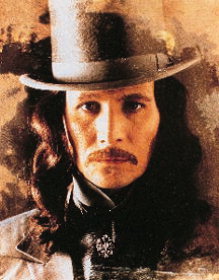
I don’t need to tell you where our top villain comes from, his name says it all. Based on Vlad the Impaler and in some versions the exact same person, Dracula is a centuries-old vampire who travels from Trannsylvania to England to begin a campaign of world domination by taking over the most powerful empire at the time, but is stopped by Johnathan Harker and Dr. Van Helsing as they race to stop Dracula from turning Harker’s fiancée Mina into a vampire. The character has been influential as the first instance of a vampire being aristocratic and gentlemanly, which means Lestat, Edward, and all other vampires must consider Dracula their spiritual father. He has appeared in a variety of works thanks to the novel itself belonging to the public domain, and will be getting new life (so to speak) in an NBC miniseries this fall. I personally recommend Gary Oldman in the 1992 film adaptation and Richard Roxburgh as the count in Van Helsing.

Well that’s it for this year. Check back next year when I do a new list, possibly with some new or some old faces. So Hollywood/New York/whoever, you’ve got a year to impress me. I look forward to seeing new villains on the list.