Archive for the ‘Reflections’ Category

Trope: a common recurring literary and rhetorical device, motif, or cliche. When referring to a character, it often refers to a common or well-known character archetype of stereotype that is instantly recognizable (ex. the noble hero, the avenging antihero, the slightly clumsy socially awkward girl in a romantic comedy, etc.)

There are hundreds and hundreds of these different tropes, each with their own special qualities and characteristics that are recognizable to many different people. Some of these tropes have even become staples in our own culture and in the stories we tell. However, there are a few that are, for many different reasons, just unusable these days. Maybe they’ve become so overused they’re a cliche, or maybe just the way society is or what psychology tells us makes such a character hard to believe in. In any case, there are character tropes and archetypes, not just in literature but on TV and in the movies as well, that just have to be retired, and I list some of them here.

I’d like to thank the people who helped to contribute to this list, including Pat Bertram for her many suggestions (though I have to disagree on serial killers. Sure, they’re overused, but there’s plenty of different ways to write them. Case in point: Snake).

So without further ado, let’s take a look at who/what needs to go:

The orphan who grows up with a heart of gold without any adult intervention whatsoever. Whether it’s Oliver Twist or Harry Potter, this character trope is pretty much the same wherever you go: a kid who grows up in an abusive environment, has never received a smile or a word of kindness from anyone, and yet still grows up with virtues to make statues of angels weep for joy. I don’t buy it. Although it’s possible for a kid to grow up that way (and usually, based on these stories, it’s a boy), it’s very unlikely. Without parental love and affection, kids can grow up to be distrustful and try to find other ways (sometimes really unhealthy ways) to replace the bond they should’ve had with their parents. Like I pointed out the other day, Harry should’ve grown up with some insecurities and trust issues, if not full on sociopathy (I might’ve written him that way anyway).

The drunk, possibly depressed cop. I’m sure there are cops who are drunk and/or depressed. But there seems to be a plethora of them in literature, and they are either meant to be tragic, comical, or go on a spiritual quest where they find the meaning in life, stop drinking, and maybe even get the girl. Unless someone finds a new slant on this trope, or it has got to go.

The killer with an intellectual disability. While I disagree with Pat on the need to get rid of serial killers, there is a strain of that sort of character I think we could do without. This strain are characters who would be classified as mentally retarded, and that’s somehow hinted by the writers (and in film and TV, the directors and actors) to be linked to their violent killing sprees. Leatherface from Texas Chainsaw Massacre is an example, and so is a certain character in the current season of American Horror Story (not saying who, because you know, spoilers). It’s actually rather saddening and disturbing to see this trope constantly resurfacing, because most people with intellectual disabilities are really sweet and wouldn’t harm a fly unless under extreme stress. If you’re going to create a killer with a brain problem, make it someone who kills for their own sick pleasure, rather than suggesting that it might have something to do with some intellectual disability they may have. Not only would I thank you, but I’m sure that many people with intellectual disabilities and their friends, family, and caretakers would thank you as well.

The dystopian dreamboy. I think you could actually extend this to a lot of YA stories as well, but I’m not familiar enough with the genre to make that sort of inference, so I’ll just keep it to dystopia fiction. In any case, this character shows up a lot in dystopian/YA fiction, particularly stories trying to portray a strong, female character (whether or not they do depends upon the story and personal choice). The dystopian dreamboy is very one-dimensional, their whole point is to be a romantic interest, and they have hardly any other aspects to them besides being very handsome, props the heroine up when she’s feeling down, and maybe fights or demonstrates some other helpful skill. Other than that, not much to fill that Wikia page. I’d like to see these characters either more developed or just gone.

The damsel in distress. Like our last entry, this character has very little character development or point besides being a male lead’s romantic interest. Of course, there’s a rich history of this character in literature, so it’s hard to get rid of such an archetype. However, in a world where women are taking breaking the glass ceiling in so many ways, the damsel in distress is the sort of character that we could stand to lose, because all it says is that women need a guy to save them and are otherwise helpless. Either that, or it needs a total revamping, where the damsel is at least somewhat proactive (like Allison from Snake).

The bitch who just needs some love in her life. Again, in an era where women are working hard to break the glass ceiling, this trope could be retired. Not tweaked. Retired. This trope basically says that there’s an ambitious, job-driven woman who is at the top of the business world. But she’s a little lonely, pretty stressed, and more often than not kind of bitchy. That is, until she meets this awesome, handsome guy who is sexually stimulating. And then she realizes as fulfilling as her job is, this guy is what she truly wants, and he makes her a better person, and given a choice between him and her job, she’ll take him. I don’t know, it might just be me, but I think plenty of women can be in business and find fulfillment without a guy. Or have a guy (or girl) and not have to choose between the two to get happiness. I’ve seen it plenty of times. Like my boss.

The barely-Jewish Jew. This is the one that gets my goat. Rachel Berry, Noah “Puck” Puckerman, Howard Wolowitz, Willow Rosenberg, John Munch, Dr. Chris Taub. These TV characters  are all Jewish, but if you looked only at them to form your idea of what a Jew is, you’d think that a Jew is someone who just says a bunch of Yiddish words but isn’t that different than anyone else.  Really, that’s only a small–really small, actually–portion of the Jewish population. I’d really like to see more Jewish characters eating kosher, maybe being involved in synagogue activities or doing Israel activism or something. Show some Hasidic Jews or some modern Orthodox or Conservative Jews who like the Ramones and go to day school (I had a friend or two like that). And for more than one guest episode, thanks! The only character who bucked the trend was Ziva David on NCIS, but the actress who played her left the show, so what’s left?

What are your thoughts on these choices?

What are some character tropes and archetypes that you need to be retired? Any you want to be resurrected?

I come from a family where it’s typical for most of us to obsess over certain TV shows, books or movies. One of those things that we love is Harry Potter. Around my mother’s house you will find copies of each book (sometimes more than one), the movies on DVD or VHS, a couple of wands and my mother’s acceptance letter to Hogwarts (apparently you can get those), and a few other knickknacks. Plus two very strange cats. When I told my mom that on Pottermore I’d been sorted into Slytherin, she considered not talking to me for a while (but does that choice surprise any of you?). And at some point soon, my mom and her partner, my stepmom, will be heading down to Florida, where my mom plans to visit Harry Potter World.

But that doesn’t mean that we’re above poking fun at the thing we love or pointing out the flaws. For example, my family is pretty much in agreement that the fact that Harry grew up with the Dursleys and was such a good person despite the abuse and isolation he suffered is very improbable. As I finished the conversation one evening after a long car-ride discussing HP, “At the very least he should have some self-esteem and trust issues. At the very worst he should be a full-on sociopath to rival Voldemort in evil.”

“I grew up in a broken home. Don’t mess with me, baldy.”

One of these days I’ll have to revisit the trope of the righteous orphan in literature, but now is not the time or the place.

The point is, this small flaw is one of a few that people could point out and make a big deal about in the HP series. In fact, if you look at many different works of literature, TV shows, and movies, you’re bound to find something that doesn’t make sense if you really think about it. Even if you don’t count the prequels, there’s some stuff about the Star Wars films that don’t add up (*cough* Princess Leia’s adoption and royal status *cough*). All of Frozen could’ve been avoided if the King and Queen had actually tried to help their daughter instead of trying to shut up her growing powers (but where would the fun in that be?). And don’t get me started on some of the stuff that happens in some comic books and superhero films. Or Hunger Games.

And there are people who LOVE pointing out these flaws to audience, sometimes making it difficult to enjoy these things ever again. How It Should Have Ended, CinemaSins, Nostalgia Critic, so many more. These guys love deconstructing these things and pointing out their flaws. It’s enough to make you want to root out every plot hole you can find in your story so that you don’t get caught in the web of these guys. Or you might just be too afraid to write at all.

The thing is, no story is perfect. Harry Potter is one of the bestselling franchises in the world, yet it’s not free of flaws. And look at Doctor Who! I’m a huge Whovian, yet I’ll admit that it sometimes  falters in the stories it tells (honestly, I thought I’d throw a shoe at the TV after I saw Kill the Moon. What an awful story that makes no sense!). Heck, I’ll admit I have stories that aren’t problem-free. The latter half of Snake has been criticized in the past of being slightly a little hard to justify (though not outside the realm of possibility). And if I learned one thing from my creative writing class, my short stories “Evil Began in a Bar” and “What Happened Saturday Night/Frauwolf”, will need several drafts. Heck, the latter is going to need one more draft before I can even think about submitting it somewhere. Don’t even get me started on the former.

What you have to keep in mind is that you can’t stress over the teeniest, tiniest detail and hoping there’s not something some blogger or YouTube producer or whatever is going to seize upon and make it into a reason to destroy the book. First worry about the big stuff. For example, if you have a plot that basically goes “In a world everyone has a gun but no one uses them, until someone does”, people are going to definitely look at that one and be like, “Say what?” Hash out the big details first. Then worry about the smaller ones. And know that you won’t get them all. Just try and make sure the ones you don’t get are ones that won’t really matter in the end.

“You are of questionable royal lineage and you will need to undergo a blood test. Take her away!”

Sure, Princess Leia’s adoption would probably draw some questions, maybe even the attention of the Empire. Doesn’t mean that it has to draw the attention of the Empire and Leia’s real father Vader. Or that Star Wars isn’t still one of the most awesome stories in the universe (and I count even the prequels, though I’m a little iffy on Episode III).

Keep that in mind for your own work as well. Nothing’s ever perfect, but it can still be great.

That’s all for now, my Followers of Fear. Hope you enjoyed this slightly-rambling post. I’m taking the rest of the night off. You have a good one, and remember to check out my big holiday sale. All books are marked down till December 31st, so check them out now while you got the chance.

Pleasant nightmares.

I’m not sure how I did it. I’m not sure I care to know how I did it. I just know that I finished the third draft of “What Happened Saturday Night”, formerly known as “Frauwolf”. And boy, what a writing marathon that was! I just didn’t stop writing.

After hearing the criticisms of my classmates, I went through the story, adjusting the first half or so (the half they really liked) and then completely rewrote everything past page 7 or so (the half they disliked). Throughout the editing and rewriting I tried to keep in mind that, even though this was a werewolf story, it was also a story about two people who really care about each other. A story about human interaction, in other words. And isn’t that all literature? It’s about how humans interact with each other and/or their environment. Even in ghost stories, it’s about human interaction, about confronting our fear of mortality and the afterlife.

I’d do well to remember that for future stories, and not try to create an amazing, complicated universe before working on the human aspect. Perhaps now that I’ve written it down I will.

Anyway, I also played around with some of the already apparent symbolism in the story–using a werewolf as a metaphor for awakening to sexuality, I wonder how many others have used that one? Probably a few–as well as switching the story to present tense. I actually had originally planned to do the second draft in present tense, seeing as Rose is written that way as well, but at some point I slipped back into my standard past tense. Well, it’s closer to what I’d planned, and the ending works better now than it did in the second draft, so I’m hoping my teacher approves.

And speaking of endings, when I was typing out the last words of the story, my iTunes started playing “Va, pensiero”, an Italian opera piece as sung by Russell Watson. It’s such a beautiful piece, and it seemed to fit the ending of the story so well.  I think that’s a good sign for this draft.

Anyway, I sent it off to my teacher. She’ll review it and let me know what she thinks. Hopefully I’ll get some good feedback on this story. Because of the LGBT themes, I figure I could send it to a magazine that specializes in that sort of literature. I’ve already found a few that might be good fits. Fingers crossed that they like what I send them.

Well, I’m tired, it’s very late, and I’ve got more work to do tomorrow (still got a thesis to get through, after all). I’ll see you guys in the morning.  Goodnight my Followers of Fear. Don’t let the werewolves bite.

There are various phrases and maxims that authors just dread hearing. “Nobody wants to read that sort of thing.” “Where do you get your ideas?” “Adverbs are your enemy.” That sort of thing. Here’s one that’s been espoused by creative writing teachers, how-to books, and maybe even your parents since writers have tried to teach would-be writers how to write:

“Write what you know.”

By this, they typically mean draw on your personal experience in life to write your stories. Anything you learned from steady research or anything you made up in your head, please leave at the door before opening up your notebook/turning on your computer/sitting down in front of the typewriter. Please keep this in the realm of experience and what is possible rather than what you imagine. If it’s not based on your actual knowledge and life, then you should stay away from it.

Most writers hear that and want to barf. A few do.

There are variety of reasons why no one wants to subscribe to this rule. Some see their lives as too boring or unworthy for writing about. Others feel that their own lives are too small and they don’t want to restrict themselves to just their own subjective experiences. And many (myself included) are attracted to things that can’t be personally experienced (usually, anyway), so they find that rule way too restricting to actually be usable.

I remember back in elementary school or junior high, my dad, my sisters and I were driving home from somewhere or other, and somehow the topic of discussion got onto the sort of stories I write. My dad suggested that I try, instead of vampires and cavemen and Frankenstein monsters and pirates I try writing a story about my own personal life. My reply was something along the lines of, “So you’re saying I should write a story about a Jewish kid who has rabbis for parents and has three annoying sisters?”

My dad’s reply was, “Um, yeah. Maybe.”

I think in that car ride I swore that I would never write based on what I know if it meant writing that sort of story. Let’s face it, it’s just not in my DNA. I can’t write those coming-of-age stories about a kid learning to be an adult in a community of religious Jews or about a man working his way up the corporate ladder at the expense of his humanity and marriage. Not unless those stories involve ghosts, demons, monsters, or serial killers. Otherwise it’s just boring for me, and no writer wants to write a boring story, one they personally can’t get into.

I also swore that I wouldn’t take writing advice from my dad again, though I broke that promise when he ended up giving me pretty good advice, such as “don’t be afraid to open yourself to new experiences” and “maybe you should look into writing and publishing short stories.” Now there’s some good advice for writers!

Seriously doubt these books were written with the rule “write what you know.”

I also did end up writing about stuff I know, but not in the way a high-and-mighty literary writing instructor might think. Probably not in the way my dad thought either. I certainly don’t write stories about college seniors living with a roommate and trying to get the grades and make ends meet. But I do include what I know in other ways.

For example, in a recent story that I wrote, the protagonist and narrator, in addition to having to deal with being a werewolf, also has to deal with the fact that she has feelings for her best friend, who is a girl. When I was coming to the realization of my own sexuality, I felt the same sort of fear and anxiety my narrator feels in the story, and I had a number of the same questions, such as “Would people accept me as I am?” “Am I really this way?” “How many things could go wrong if I came out of the closet?” Just because it was an element of a werewolf story did not make it any less meaningful or not based on my life.

Another example is one based on something my dad told me once (this is becoming a dad-centric post, isn’t it? Abba, I hope you appreciate all these mentions). He once told me that a great-aunt of his was well known for having dreams where she encountered the dearly departed. This inspired a novel involving a large family of Jews of many generations and their own dealings with the supernatural. I base this work on that story my dad told me as well as my own experiences with the supernatural (and I’ve had some freaky ones, to be sure).

Yes, I have experience with this.

In short, for me writing what I know is taking things I know about or have experience with and making them part of a larger story, often with fantastic or terrifying elements. It’s what works for me, and it’s what I love doing.

Of course, this is my version of how this works. For others, it may be different. There may be writers who write entirely based on what they know and what they’ve experienced, and there may be others who write absolutely nothing based on their real lives (I have a feeling that many fantasy writers are like this). It’s a bit of a spectrum, if you think about it in a certain way.

But like I said, every author is different, and no rule works for every author. “Writing what you know” is a prime example of that. It works for some people, and it doesn’t work for many. It all depends on the author, what they like working on, and how much they want to put their own lives in their stories, among other things. I’m the kind of guy who will take elements of my life or my own knowledge and put it into the stories as part of a larger whole rather than as the entire basis for a story. And that’s just how I work. For others, it’s quite different, but I think that’s good. Because no two writers are the same, and that means that no writer is going to produce the same kind of story.

To me, that’s really exciting.

Do you use any elements from your own life in your stories?

How do you do it?

I went to a certain event on campus this evening, but I arrived not realizing that while the event is advertised as happening at a certain time, it only really starts much later (a part of me actually knew that, but the part of me that’s a total freak for being on time or missing something won out in the end). The library being nearby, I decided to pop in and check my email before I decided to go home or not. When I logged onto WordPress though, I saw a notification that I had a comment. I checked, and it was from a post I’d commented on a while back.

The post itself had been from a woman who was relating her experiences being sexually assaulted in the work environment, and how several other women she’d worked with had been in the same situation, and the owners of her workplace had tried to sweep it under the rug for the sake of business and for the attackers’ families’ sakes! Naturally, I was upset when I read that post. Sexual assault is a horrific thing that happens to so many people, mainly women but men as well. And what’s just as upsetting to me is not only the act of rape itself, but those who try to cover it up or downplay it or make it seem likes it not a big deal. This sort of conduct not only adds insult to injury to the victims, but it also sends a message, that rape is okay, that the attacker can go on doing whatever because it’s not a big deal, that if we make it into a big deal than it is then innocent people will get hurt and besides, it’s only one measly person who had a bad experience, right?

So I commented on the post. Since so many women had been attacked at this place, I suggested that maybe they band together and bring to the workplace a class-action suit or something, because sexual assault and covering up for it is illegal and a disgusting act to boot. That comment got a few likes during the preceding week or two after I’d read it, but the post got a lot more! Comments, likes, new stories coming out, stories of tragedy and stories of support. One newspaper even did a story on the place, so I’m assuming that got something rolling. At the very least, that place is seeing a lot less business than it had prior to so many women coming out.

Of course, not all of the people commenting have been supportive. The comment I got was from some woman with a generic sounding name. She basically said that while sexual assault was a crime, so was lying about it. That’s it. Lying about sexual assault was a crime.

Now, I’ve seen this sort of behavior before, and I know not to comment lest I end up getting attacked. Heck, I wrote an article on this very subject a while back, so I didn’t want to be a hypocrite by getting confrontational. But I was curious. Maybe because it was supposed to be a woman who commented, maybe it was the subject matter, maybe it was because I was kind of bored and I didn’t want to walk back to my apartment just yet. But I wanted to know who this person was.

So I clicked on the article to familiarize myself with it again. I also viewed my comment in full, as well as the reply comment. And then I started looking through the comment feed, seeing if anyone else had gotten any comments from this person. Sure enough, there were more than a few comments from this person on other people’s comments and they all had a similar message:

  1. Rape doesn’t happen
  2. The women who say they were attacked at this place weren’t attacked. Whatever happened there, they wanted it.
  3. Any woman who says that they were attacked is lying for attention or some other cockamamie reason and they’re the ones being sexist and cruel by calling supposedly innocent men rapists.

Very curious now, I clicked on the person’s username to see their blog. All I got was a bland background. No blog posts at all. Not even a post saying, “Hi, this is my first post. I’m hoping for good things while I write about so-and-so a subject. Please support me and follow me.” I checked the About page as well. Not a single thing.

At this point, any doubt I have has flown out the window. And while I’m not certain if this is someone who’s personally connected to the case and the workplace in question, or just someone who generally feels that they’re being assaulted as a man (yes, I say a man, because based on the language used by this person they’re probably male) by feminists with too much power and really without hacking skills, of which I’m lacking, there’s no real way to find out. But it does tell me something. That whoever this is feels threatened by women who speak out and feminists in general and will go to great lengths to stop it.

As if there weren’t enough obstacles making it seem like a bad idea to victims to speak out. On university campuses, some of which have really bad sexual assault rates, college administrators have mishandled assault cases, expelling or blaming victims and protecting rapists with light or no sentences at all. U Va recently got into trouble for this, and even my dear Ohio State has gotten into a lot of trouble over this. In the justice system, the system that’s supposed to protect us, there are cops, judges, and many more who will say that rape isn’t a big deal or victimhood is a status to be desired or that the victim knew what they were getting into, or that rape has to be “legitimate”. Some of this is even said by politicians at the highest levels of government. And when women speak out, they can face ridicule or disbelief by strangers, acquaintances, or even their friends and family. If their case gets to court, they risk being attacked by lawyers on the stand and disbelieved by juries. There’s a chance the rapist goes free and they have to live with that every day.

In other words, there’s a great fear, and a legitimate fear too, that speaking out will only make things worse.

And it’s the people like my wayward commenter, someone who seems determined to shut up victims and women in general, who are making the situation worse. There seems to be a great terror among certain sections of the population that giving women any sort of equality or power is akin to castrating all men and forcing them to live in a dystopian society where men are slaves to power-hungry lesbian dominatrices. That is simply not true. Feminists (of which I am one) only want women to have the same economic, social, and political rights as men, without taking away men’s rights. But there are those who believe it, and will go to great lengths to make sure women are afraid to speak out or seek equality.

Last month, feminist media critic Anita Sarkeesian was sent a threatening letter by a man who claimed that feminists had ruined his life and that if she spoke at Utah State University, he would commit a mass shooting at the event. Because of Utah’s ultra-relaxed gun atmosphere, Ms. Sarkeesian had to cancel the event lest she risk her life and the lives of others. What does Ms. Sarkeesian talk about? Her latest videos, articles, and appearances tend to talk about how women are objectified in video games and seen less as actual people and more as sex objects or devices that (often violently) advance the game’s story.

Violence is a common threat from people who don’t want women speaking out. And while the actual incidences of violence are low, these threats, plus the threat of ridicule, of becoming a punchline in a joke, of being called a money-grubbing slut or a power-hungry feminazi man-hater, makes it much more difficult for many women to speak out. No one wants that sort of attention on them, and for victims of assault, it’s even harder to come out when facing all that.

So what is there to do about it? Well, I’m doing it right now: I’m fighting back. I’m writing an article that exposes what is happening and pushes back against it. And I’m letting people who have been attacked and that are afraid to come out that I’ve got their back. Yes, I’m a man, but that doesn’t mean I don’t believe women should be equal in society. Far from it. I’m willing to fight alongside the many women out there who demand to be treated equally and with respect in the world towards men.

So know this, folks. If you’re a woman and/or you’ve been assaulted, know that I support you and I’m there for you. And for those who still think that men are under threat by these women, I’m so sorry you feel this way, but it’s not true and some day I hope you come to this realization.

Thank you, and goodnight, Followers of Fear and everyone else.

Y U NO 1

It’s the truth: authors want their families to read their work.

Whether it’s our first book or our thirtieth or higher. Whether we’ve just published a blog post we wrote during our lunch break yesterday or a short story we’ve been working months on appearing in a prestigious magazine. There’s one thing all us authors want when this sort of thing happens: we want our folks to pay attention to it. Hell, we want our folks to buy at least one copy, drop everything else to read it, and then call us up to comment on it, tell us how much they loved it or hated it, and then go on Amazon or whatever site they got it from and write a (hopefully) three star or higher review.

This isn’t just narcissism on our part (though I’m sure that plays a big role in it). Authors like vindication, it’s one of the reasons we write and publish. And praise from our families on something we toil away at for hours and hours at a time is at the same time both something we kind of expect and something we desperately want. It’s a big deal for authors, no matter what the relationships between us and our families, that they take a look at our work and let us know what they think (and hopefully they actually like it and aren’t just saying it’s the most awesome thing ever to make us happy).

Sadly, that’s not always going to happen. My folks love me and I love them. Sure, occasionally we get on each other’s nerves and more than once I’ve fantasized about Daleks chasing them down the street (or was that my TA who keeps assigning extra work for our recitation class?). But yeah, we care pretty deeply about each other. Still, I know there are certain members of my family who won’t read my books, or won’t read them immediately. And I have to accept that.

The latter is pretty easy to explain: my folks are busy. Everyone above the age of 18 in my immediate family has a job of some sort. Plus my sister has schoolwork, my parents all have kids to still take care of, and bills to pay, and pets to take care of, and chores to do…basically, a lot on their plates. Eventually they get around to it, but until then I just have to be patient. Do I like it? No. But I know I can’t do anything to change it, so I wait and I let those members of my family get around to it in their own time. Eventually they get it done.

OAG 1

For the former, it’s another matter entirely. Some of them just aren’t big readers. It isn’t how they relax in the evenings. And I won’t even pick that fight, so why even bother getting them to read it if I know it’s a losing battle? Others like to read, but they don’t enjoy anything with monsters. Or ghosts. Or murder. Or blood. Or missing limbs. Or the occasional hot and heavy sex scene. Or darkness. Or scares. In other words, what I write is the exact opposite of what they look for in a story. Well, you can try with these people, but I can’t guarantee it’ll work. For some, unless you’re writing comedy, romance, or a highfalutin coming-of-age literary novel, they just won’t read it.

Though if you still want a specific family member or friend to read your work, by all means go ahead and try. You can try by emphasizing to them the aspects of the story they would most likely enjoy (this worked with a friend of mine when I highlighted the romantic aspect of Snake). It’s better than cutting a deal with them or guilt-tripping them (though I think the latter worked for me one time).

And if that doesn’t work, don’t be too glum about it. There are always people out there willing to read your work. You just have to work hard and try to connect to them, wherever they may be. That’s part of the reason why I blog and post on Facebook and tweet and all that: because I know that by doing so it has the potential to open all sorts of doors. Maybe even allow me to find some people who would enjoy my work. You never know.

Does your family read your work?

How do you get your folks to read your work when it doesn’t necessarily appeal to them?

Oh, and if you’re wondering about the meme photos and where I got them, I made them. Yeah, I made them. I found this website that allows you to create your very own memes. It’s amazing! Now I can put hilarious memes in my stories whenever I want.

Oh dear. Maybe that’s not such a good thing after all…

It’s expected in the coming weeks that the grand jury will hand down a decision on whether or not to indict Darren Wilson in the death of Michael Brown. Protesters have threatened to riot if Wilson isn’t indicted, the governor has declared a state of emergency, and police are getting ready for what many see as a second, bigger powder keg after the first one went off back in August. And around the country, in living rooms and coffee shops, in workplaces and on news talk shows, people are asking what caused this and what will happen next.

I’ll keep my own personal views on what should happen to Wilson to myself, lest everything else I try to say in this piece gets forgotten because of one opinion. I will state that I think it’s tragic that a young man who had his whole life ahead of him and was planning to go college and maybe own his own business someday was taken too soon, and that his legacy has to be another awful bullet point in the United States’ long, troubled history with race.

And make no mistake, there is a racial element to this. I know some will say that we shouldn’t be talking about race, that we’re living in a post-racial society, that race is a sociological construct of the mind rather than a biological certainty, and that therefore race should not be brought up. I’ve said it many times before, and I’ll keep saying it: social construct or not, many people treat race as a biological reality, and racism is still a pervasive problem in the United States. In fact, I’ve often compared racism to cancer, and the way you deal with cancer isn’t to avoid it or pretend it doesn’t exist. The way you deal with cancer is to take a multi-pronged approach to cure it, and one of those approaches is to talk about racism.

And for those who continue to insist that race shouldn’t be part of the discussion because we live in a so-called “post-racial” society, here are some facts:

  • In November 2012, students of the University of Mississippi rioted upon learning that Barack Obama was reelected. Several racial slurs were heard shouted out during the riot.
  • In February 2012, a young man in Florida was profiled by a self-appointed neighborhood watchman, who then followed the young man despite being told by police not to pursue, and engaged the young man in a scuffle that ultimately ended with the young man’s life being taken. The young man, Trayvon Martin, was black.
  • There are over 900 documented hate groups in the United States according to a report released by the Southern Poverty Law Center last year. Most of them are primarily focused on race and racial differences.

Still want to argue that racism doesn’t exist? Racism is still very prevalent in the United States, and the fact that so many want to deny its existence or say that discussing race and racism in America makes you racist really disturb me. (The latter claim actually is the most ridiculous, especially since it goes against the very definition of racism, and real racists wouldn’t benefit from discussions on race as a societal problem unless it involved doing horrible things to other races. In fact, when economist Ben Stein went on Fox News the other day and called Obama the “most racist president” ever, I wanted to throw a dictionary and a history book at the guy. If you’re going to call a President racist, it’d be better to refer to possibly Andrew Johnson, Woodrow Wilson, or Franklin Roosevelt for starters.)

I think we owe today’s racism to some of the things that happened during Reconstruction, in part. Slavery itself definitely plays a role, but I want to focus on Reconstruction because during this time, President Andrew Johnson encouraged the return of defeated Confederate states to self-rule and to take part in federal government. The people who ended up seizing control were mostly plantation owners and businessmen, some of whom had been involved in the Confederate government, and had benefited from slavery. They used their power to pass sweeping legislation depriving freed slaves of rights, and used terror in the form of the KKK to prevent push back. There was also some propaganda directed to poorer whites who were told that giving freed slaves power was bad for them. The federal government, including Johnson, didn’t do much to prevent this (Johnson also didn’t support the Civil Rights Bill or the 13th Amendment, which is why I mentioned him above in my examples of racist presidents).

This set a painful pattern in motion that would last for nearly 100 years. The legislatures continued to have people in it who would keep up the status quo, African Americans and whites who sympathized with them were kept in place through lynching, the KKK, and other forms of terror, and efforts on state and federal levels to stop it faced uphill battles. It wasn’t until WWII, when African-Americans were determined to achieve victory at home and abroad after their rough treatment during WWI, that things began to change for the better.

Why do I go into all this, and at the risk of getting a bunch of people shouting at me in the comments about how I know nothing or I’m oversimplifying it or something along those lines? Because there are a lot of painful episodes, going back further than I have covered, that have happened and continue to happen long after MLK and the Civil Rights Acts, and we need to examine the whole picture in order to understand what is happening now. Racism existed then, and although they’re in new forms, racism exists today. So we need to confront the past and examine the present if we’re to better the future.

And now that I’ve led you through this long, somewhat rambling post, I have to ask: how do you think racism can be combated? What approaches should we take to stop racism and make it less prevalent in future generations?

*By the way, I know that some of the arguments here can also be applied to other forms of prejudice and discrimination towards other minorities, women, religions, ethnic groups, socioeconomic levels, and sexual orientations. For simplicity’s sake, I’ve only focused on race here, but I do cover other problems in other posts and in some of my fiction as well.

Today in my creative writing class it was my turn to get critiqued. And as you may recall, my short story was about a woman who turned into a werewolf. Or as she preferred because of her gender, frauwolf, which became the title of the story.Unlike other stories, I thought this first draft was a piece of crap. And it was, too. But it was the only draft I could finish, so it was the draft I ended up sticking with. And last week I bought sugar cookies to bribe my classmates with, so that when they tore my story into little pieces they would be nice about it.

Well, the bribe didn’t work. Apparently cookies that are about 90% sugar don’t work on college students, because  only half of them got eaten, and mostly by the students with sweet tooths. But they were nice while they tore my story apart, I’ll give them that.

Anyway, the biggest problems with “Frauwolf” seem to be that I throw way too much in and that the readers felt yanked along by all that was happening. Well, that’s not surprising, considering it’s me writing this story. I like to write novels, especially long, expansive novels that may in fact involve into series. So I tried to add a huge amount of stuff into 5,000 words and the result was a story that was rushed along so as to get to everything happening in the story. The result is an overly-complicated and insane story that deviates from what I originally intended (as you read two posts ago, that was the problem I had with Rose).

My classmates also had some trouble with the relationship portrayed in the story. They couldn’t get why my main character’s girlfriend still stuck around with her, among other things. Well, I guess that makes sense. I don’t delve that deep into the foundation of the relationship. For the next draft, I think I will do that thoug.

And speaking of next draft, I’ve got one more story to turn in this semester, and it has to be a revision of a previous story. I’m thinking I’ll work on this one, maybe change the setting and the story line and see what comes of it. Besides, I’m not nearly satisfied with this story as I should be, so I’ll put off editing my other short story, “Evil Began in a Bar”, until another time. Besides, my critique gave me some great ideas of where to go with this story, so I really want to see what I can do with them. I might even write something worth publishing.

I’ll let you know what comes of all this editing, and what my classmates say at my final critique. In the meantime, I’ve got to get dinner ready before my evening class, so that’s all for now. Have a great day, my Followers of Fear.

It’s been a while since I updated everyone on my novel-that-also-doubles-as-my senior-thesis Rose, but I have the opportunity to do so now. Especially since I can’t do my job search without updating my resume, and I’m waiting to hear back from a couple of people on whether I can use them as references.

Well, if you’ll remember my post on my first thesis meeting, you know I ended up switching to first person and rewriting some of the early chapters to make them darker. Well, this past Wednesday there was another meeting with my advisor and the other student I’m working with (I keep meaning to ask if I can use their real names, but I keep forgetting. Oh well, I think I’ll stick to M, my advisor, and P, the other student I’m working with). They had a lot of suggestions for me:

  • Probably a hold over from writing Reborn City and Video Rage, but I have a tendency to explain the stranger elements of the story. Works great for science fiction, but terrible for horror. So I’m trying not to explain the stranger aspects and let the story tell it through what happens.
  • There are a few comedy elements that I’m trying to cut out. We’ll see how that goes.
  • There are some things I will need to change for the first couple chapters, but that’ll wait for the second draft.
  • Most importantly, I’ve switched to narrating in present tense.

That last one is a big one for me. In a previous post, I mentioned that I probably shouldn’t narrate in present tense because I’m not very good or familiar with it and because I have the tendency to switch back into past tense. I explained that to M, but he insisted that I at least try it. His reasoning was that since I’ve been narrating the story in past tense with a first person narrator this whole time, it’s pretty much assumed that things will turn out for the best (probably true). Putting the story in first person would probably serve to add a little mystery and uncertainty to the story.

So I thought, might as well give it a shot. I’d switched from third to first person already, and that had brought about a definite improvement, though I have to work harder to make sure that Rose’s constant state of terror doesn’t start to sound boring. On the other hand, I was already comfortable with writing in the first person. One of my early attempts at writing a novel was in the first person, and for a story written in my early-to-mid teens I did a pretty good job. Writing in the present tense was something I’d hardly ever done before.

So I rewrote parts of Chapter Three to start with, the parts that needed some holes to be plugged so that the story could continue to flow.Then I wrote Chapter Four, and over the past twenty-four hours or so I wrote Chapter Five. Both of those chapters and the parts of Chapter Three I rewrote were written in present tense. And it is weird for me. I don’t know many other authors who write that way, so I don’t have an example to refer back to. I’m basically feeling it out as I go.

But I somehow managed to do it. And it’s been a rather dramatic shift, like the DNA of the story has been altered. I keep thinking back to that scene from the first Sam Raimi Spider-Man film, when Peter Parker’s DNA gets rewritten by spider-DNA, causing his whole self to change. It’s that dramatic a shift, like the whole thing has changed in a very important way while still remaining the same basic story. I don’t think I’ve ever seen anything like it before.

Well, I’ll keep writing it in first-person present tense, hopefully gaining a knack for writing stories like this along the way (it could be useful for a future story). I just hope that when we meet again on Halloween, I don’t have to do another major change to the story. Writing this thing’s been hard enough as it is with just a busy schedule. Writing in unfamiliar styles and with so many new rules or ideas to incorporate certainly makes the job a bit tougher.

Well, it’s late, so I’m going to bed. Hopefully I’ll start Chapter Six tomorrow after classes and homework. Wish me luck, my Followers of Fear.

Before I start, I just want to make sure everyone is aware that I’m not actually showing you how to curse someone. I do know how to do that, but I don’t want to share the method lest someone use it on me. That would suck. No, I’m talking about creating a curse for a story, one that would terrify all who read your work.

The thing about curses is that they are relentless and awful. A curse doesn’t discriminate based on how nice you are, how much money you make, what religion you belong to, or any other factor. No, once a curse locks onto you, it’s like you have a target on your back that you can’t get off, and you won’t get that target off until the curse has run its course (usually this means death). That’s what makes them so scary.

So how do you create a curse? First you need to decide on this:

Person, place, and/or thing. A curse is usually associated with a specific object, location, or person, though sometimes a curse can be associated with more than one of these (such as with an entire family, multiple houses, or a person who lived in a house). In the movie The Conjuring and its spinoff/prequel Annabelle (which I just saw recently), a curse was placed on the doll, allowing a demon to possess it and make havoc for anyone who came into contact with the doll. That’s an example of a cursed object. The house in The Grudge is an example of a cursed location, as well as an example of a cursed person (Kayako, the woman who lived in the house, is the one who carries out the curse). Another example of a cursed person is simply someone who has a curse placed upon them, making interaction with others difficult, if not impossible. Boy, would that suck!

This brings me to my next point, though:

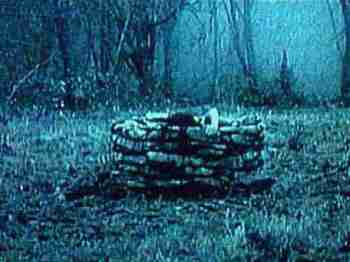
The well is essential to Samara’s curse and origin story.

The origin story. Every curse has its story of how it came to be, and often that the basis of how the curse can be warded off (more on that later). Generally this involves some horrific event happening, causing the curse to manifest or be cast. For example, in the Buffy universe Angel’s curse was caused when he killed the beloved child of a tribe of gypsies, who restored his soul to him through magic. Another example is when Samara/Sadako from the Ring movies was trapped in the well and died, her soul was filled with rage and she infected a blank video cassette. And in The Nightmare on Elm Street franchise, Freddy’s curse came into being when he was killed in a fire by the parents of the children he’d killed/molested (depending on if you’re going with the original movie series or the remake).


The trigger. For a curse to take hold of a target, something specific has to happen. For instance, in the popular Bloody Mary legend (which I’ve tested numerous times, by the way), you have to say Bloody Mary three times in the mirror in order to summon her. In the Stephen King story Bag of Bones, the curse was triggered when a child descended from one of any of the families involved in a gruesome murder, whose name usually began with a K, got to a certain age (in the TV miniseries, this was simplified to just the daughters). And in the popular story The Monkey’s Paw, one had to make a wish on the titular paw in order to start the curse. Which leads to the fun part:

How the curse manifests. A curse manifests after the trigger has been…well, triggered. In Harry Potter and the Half-Blood Prince (yes, I’m pulling Harry Potter out), Katie Bell was put in unimaginable pain when she touched the cursed necklace. Touching the necklace was the trigger, and the pain was the manifestation. Another form of manifestation would be the Tecumseh curse, which was that any President elected in a year divisible by twenty would die in office (though Ronald Reagan and President Bush managed to get away). The election year is the trigger, while the death of the President is the manifestation.

How to ward it off. This is optional for literary curses, but it’s something you want to consider in creating a curse. In Jewish folklore, the demon Lilith tries to take the souls of newborns or eat them. However, if one has a mezuzah, a marker on one’s doorpost  that has the name of three angels on it, Lilith cannot enter the home and attempt to take the child. The angels whose names are on the mezuzah were the same angels who tried to get Lilith to return to Adam when she was still his wife. When she refused, they cursed her to become a demon and made it that she could not enter a home with their names on it (that’s how the origin story relates to warding off the curse).

The hamsa, a symbol prevalent in Judaism and Islam, is also good at warding off evil. It’s no good at warding off taxes though.

In another example, there’s a curse among some actors about saying the name Macbeth in a theater which leads to bad luck. Depending on who you ask, there are different methods to dispelling the curse, a popular one being to leave the theater, walk around the building three times, spit over one’s left shoulder, say an obscenity, and then wait to be invited back into the theater.

Containing/canceling the curse. This is also optional in writing fiction, but it should be considered. Two things one should consider when figuring out how to cancel or seal a curse is that it should be difficult, and that it doesn’t necessarily have to do with the origin story. In the movie The Unborn, the dybbuk couldn’t be stopped until it was exorcised. A similar thing happened in the third movie in the American Grudge movies, in which case an exorcism that sealed Kayako into a little girl was needed before she could be stopped. In Japanese onryo legends, the spirit needs to have whatever is disturbing it resolved or it will continue to seek revenge.And in Bag of Bones, Sarah Tidwell did not end her curse until her bones were dissolved with lye, thereby releasing her from Earth.

That’s how you create a curse. As for creating a terrifying story involving that curse…well, that’s up to you. I’m not going to give you directions on that. Not in this post, anyway.

Oh, and one more thing: I saw Dracula Untold and Annabelle at the movies today with a friend. Both were excellent, getting 4.5 out of 5 from me. But something in the latter film really stuck with me: near the end, the priest character says that evil can only be contained, it’s not created or destroyed (or something like that). I think that when you’re writing a scary story, especially one involving curses, that’s some pretty good stuff to keep in mind. True evil is not something you can easily be rid of. At least, not in my experience.

What advice do you have for creating curses?

Have you written anything with curses recently?

Are there any stories of curses that are your favorite or that I didn’t include? Tell me a bit about them.