Archive for the ‘Scary Stuff’ Category

Fun. That is the best way to describe this movie. Lots and lots of fun.

Happy Death Day is a comedy/horror film starring Jessica Roethe and Israel Broussard. Written by Scott Lobdell and directed by Christopher B. Landon, the movie follows Theresa “Tree” Geibman (Rothe), a selfish sorority girl who is murdered on her birthday by a masked killer, only to wake up at the beginning of her birthday. When she’s killed again by the killer and wakes up at the beginning of the day all over again, she decides to solve her murder and catch the killer before he finally finds a way to permanently kill her. It’s Groundhog Day with a horror twist, and in the best way too.

And yes, they do reference that movie at one point in the movie. After the film’s proven just how good it is despite the familiar premise.*

Honestly, I have very little to pick at with this movie, it was that good. The writing is stellar, balancing humor, horror, mystery and the growth of protagonist Tree with a deftness that you don’t normally see from first-time screenwriters, and the directing and acting matches just as well. Rothe does a great job showing us the evolution of Tree from a very unsympathetic protagonist to a likable and kinder person, and Israel Broussard’s Carter Davis as a sort of advisor and love interest is instantly lovable. The rest of the cast is also a lot of fun. I especially liked the character of Danielle, who was great comic relief as the movie went on.

The movie also does a great job of keeping things light when they need to be light and serious when they need to be serious, and Landon does a great job working with Rothe to show her evolution as a character, in both attitude, clothing, and even make-up. Along with great music and other touches, you get a really well-told film. It’s not exactly super-scary (though there were points where members of the audience gasped and screamed), but it keeps you engaged and trying to guess the ending and resolution, which will probably surprise you, especially if you’re not very good at guessing these sorts of things (I am, and even I had a bit of trouble predicting things).

If there was anything I didn’t like, it’s the mask the killer uses. Not that it’s bad, it’s a psychotic, one-toothed baby, it’s creepy as hell. But it’s revealed early on that the mask is actually that of the school’s mascot, and that plenty of people wear that mask. What school makes a baby its mascot? That’s almost as dumb as the Fighting Artichokes (which is a real thing).

But anything other than that is nitpicking. This is a fun thrillfest that will keep you on the edge of your seat till the end of the movie, and I can see it gaining the same sort of cult following as Groundhog Day has (though obviously for very different reasons). On a scale of 1 to 5, I’m giving Happy Death Day a 4.5. Go check it out, and see for yourself how awesome it is.

That’s all for now, my Followers of Fear. I might have another post out in the next day or two, so keep an eye out for it. Until then, pleasant nightmares!

*Funnily enough, I’ve never seen Groundhog Day, though I know the basic gist of it. I’ll watch it at some point, though. I have an idea for a novel with its own Groundhog Day time loop scenario, so I’ll probably see the movie before I start working on that (whenever that is).

So here it is, finally. The first in my Rewatch Review series, in which I look at horror or thriller movies I’ve seen and didn’t like/had problems with and see if maybe I missed something the first time. I’m kind of just winging it with this first one, with no fixed plan on length or how deep I’m going into these films and their respective qualities, but at the very least, I hope if you haven’t seen these films, you get an idea of whether or not it’s worth checking out. And if you have seen any of these films, you’ll get an idea of what my thoughts are on them these days.

With that out of the way, here are my thoughts on Perfect Blue!

WHAT’S IT ABOUT: Perfect Blue is an anime film that follows Mima “Mimarin” Kirigoe, a Japanese pop idol singer who, on the advice of her agency, is reluctantly leaving the pop idol industry to become an actress on a TV show.  Experiencing a crisis of identity and followed everywhere by a violent stalker, things only get worse for Mima as events conspire to blur her perceptions of reality and fiction, leading to a violent and horrifying head where not just her own life is at stake, but her very identity as well.

WHY I DIDN’T LIKE IT: I thought it was too trippy when I first saw it in college, and it kind of dragged at points. I had expected something much more dynamic, and this felt more slow-burn to me.

WHY I REWATCHED IT: I saw a video essay on the movie a while back, and it pointed out some interesting things about the film that made me want to go back and give it another chance.

THOUGHTS: I’m glad I rewatched this film, because it is really good. I’m actually a little disappointed that I didn’t care for it when I saw it in college. It’s a great psychological thriller, and there’s a lot to talk about on several different levels (I’ll stick to the film quality and not to diving deeper into the psychological aspects. I’ll leave that to the video essay I mentioned above).

First off, the animation is different from most anime, which is very stylistic. The artwork isn’t exaggerated or distinctly cartoony, full of jumpy animations and wild reactions. If you think of most anime, like Sailor Moon, Pokemon, and One Piece as analogues to cartoons like Family Guy or Looney Tunes (just examples for the non-fans out there, don’t kill me, fellow anime lovers), then Perfect Blue‘s style is more analogous to early Disney films, particularly those of Cinderella and Snow White (the latter is actually a lot darker than you probably remember it if you go back to watch it). It’s very grounded and scaled back, with very few characters actually looking pretty, cute or cool. The only ones who do are characters directly involved in the entertainment industry, and that makes the movie feel real to us. It’s a world very much like ours, with violence like ours, and people just like ours. So when you see something violent within the film, the realism makes it all the more powerful. This isn’t just animation, this feels like it could happen. Maybe it has happened, and it’s amazing to see animation portray that.

Speaking of the main character, Mima is presented to the audience with extraordinary skill. There’s no exposition or anything, but who she is and how she feels is made clear to us, which makes her real to us. We’re shown quiet moments for her, such as grocery shopping or getting to and from work, presented in contrast to her life as a celebrity, and that really conveys to us just what sort of character Mima is. And that’s good, because the central conflict is around who she is: Mima has trouble dealing with the fact that she’s been talked into changing careers, and isn’t sure who she is now that she’s changed. With the struggles of her new acting career starting to get to her, as well as visitations from her stalker, Mima’s own grasp on reality starts to go. She starts to lose track on what’s part of her new TV show, which bears some resemblances to her own mental struggle, as well as starts to see a phantom version of her pop-idol persona. And so do we, the audience, unable to tell what is real, what is part of her show, and what is part of her tortured pscyhe.

And when that happens, we feel Mima’s inner anguish. We’re right there with her, trying to unsuccessfully figure out what’s real and what isn’t. And when we can’t come up with those answers with Mima, it only makes the terror of the moment and of the unreality of the situation that much stronger.

JUDGMENT: If you think that anime can’t be deep or anything other than silly cartoons, you need to watch Perfect Blue. It’s a twisted story of a girl trying to find herself under the most terrifying circumstances reality can give her, full of gorgeous but realistic animation, intense scenes and visuals (I’m talking to you, screwdriver scene!), and great questions on the idea of our true selves versus the personas we create for ourselves (that’s a subject for another post). Definite 4.5 out of 5. Pop it in and see what the rabbit hole uncovers.


That’s all for now, my Followers of Fear. I hope you enjoyed the first entry in the Rewatch Review series, and I hope you join me when I get my hands on 2008’s The Strangers.

I read the novel Gerald’s Game earlier this year just in preparation for this movie. I heard what it was about (see my summary below), and I was like, “Shit, I gotta read this.” And I did, and I found it really intense. It was filled with some of the usual Stephen King cliches, those quirky sentences and weird things he likes to do, but my God, it was intense. Nothing I couldn’t handle, but still very intense. I could understand why my mother found it so difficult to read she had to skip to the end just so she could sleep at night.

This evening, after a long training trip for work and after hearing that this Netflix Original was really good according to early reviews, I sat down in my hotel room to watch the film. And I can say without hesitation, this was an amazing psychological thriller, scarier than It, even. And unlike It, I would not recommend my mother see this one.

Gerald’s Game follows Jessie Burlingame, a housewife played by a convincing Carla Gugino, who goes with her husband Gerald, played by Bruce Greenwood, to their lakeside cabin for a weekend away. However when a kinky sex game goes wrong, leaving Gerald dead and Jessie handcuffed to the bed, struggling to survive as the stress causes her mind to unwind and her worst nightmares to come to life.

So like I said, this film is great, with Conjuring-level frights at certain points. The filmmakers used camera angles, light, colors, and especially sound to highlight the horror of the situation. The sound is noteworthy, because it’s used so sparingly once the movie really gets started. After Gerald dies, Jesse starts screaming, and there’s background music, but the shot changes to outside, and all we hear is birdsong and some muffled screaming. This highlights all the more how this could actually happen in the real world. It’s beautiful.

I also like some of the changes made from book to movie. The writers and directors managed to translate what some might correctly term as an unfilmable story very well to the screen by changing some of the weirder elements of the story, namely all the voices in Jessie’s head brought out by the stress with their own distinctive personalities, into just three personalities: a more ballsy version of herself, Gerald, and her father. They also switched from having Jessie being in nothing but panties to wearing a slip, saving this film from being just titillating torture porn. And they actually manage to get in some slightly funny moments to make sure the story doesn’t get too dark (or maybe I’m laughing at weird stuff to relieve myself of tension).

But the best part is definitely the climax. My God, did that scene make me cringe! That could not have been easy to film (on so many levels), but it pays off so well. I actually cringed in my seat and let out exclamations of disgust and horror after seeing that scene.

There were only a few things I didn’t care for. In one scene, Jessie’s narrating a dream she had at one point as a child, and I feel like that would’ve been better shown than told (I sound like a high school English class typing that, but I don’t care, it’s true). There’s also a lot of dialogue in the film that, while it would fit in a King novel, never would fit in real life, let alone in a movie. And while the way the story is wrapped up kind of works in the novel, I feel like it might’ve been done better if it was done differently in the movie. It’s not bad, it’s actually decent, but it could’ve been done differently and possibly much better.

Also, that ending forgot about the dog. Just saying.

All in all though, this is a fantastic movie, a psychological thriller that scares, grosses out, and even manages to integrate themes of misogyny and the effects of sexual abuse into the story without feeling forced. Heck, it’s even got some dark humor at times…if you see it as humor. I could honestly see this film getting some academic examinations in the future just based on how well it’s done. It’s that good a film.

On a scale of 1 to 5, I’m giving Gerald’s Game a well-deserved 4.7 out of 5. Unless you’re my mother, go to Netflix, eat some popcorn, and go to bed with your arms close to your chest because you’re afraid you’ll wake up with your arms cuffed to the bedposts. I know I will, especially that last part.

Goodnight Followers of Fear, and pleasant nightmares!

If you’ve known me for any amount of time, you know I’m a huge fan of horror. I read horror novels, I write horror stories, I sometimes write articles examining various aspects of horror, I watch YouTube videos about dark and creepy subjects, I decorate my apartment with horrifying artwork and dolls and stuff, I…well, you get the idea. And of course, I watch plenty of horror films and shows.

And as every true horror fan knows, it can be hard to find good horror sometimes, particularly in the movie department. We fans watch a lot of horror movies that are really bad hoping that they may be good and even give us a few nightmares (or in my case, some good inspiration). I sometimes think of it examining piles of shit looking for gold nuggets, only you can’t tell the difference without special examination (imagine if that was the actual case. Nobody but the really desperate would ever look for good horror movies!). And I’ve seen plenty of bad horror films over the years while looking for good ones. I’ve even written about them, on occasion.

But lately there’s been something I’ve been wanting to try. You see, some of those horror films that I’ve hated, I’ve heard lots of people praising. They tell me the shit is actually gold. I’ve even seen some very thorough examinations of these films, in essays and videos, and the writers/creators of those videos have made me wonder if maybe I should rewatch some of these films, and reexamine my opinions of these films.

So now that I’ve seen It and there aren’t that many horror films coming out in the next couple months that I’m absolutely dying to see and review, I think it’s time to do what I’m going to call the Rewatch Review series. I’m going to watch ten films that I’ve hated and/or given bad reviews in the past, and see if my opinion has been changed. Some I may have watched in the wrong light, others I just think I missed something the first time around. Either way, I’m going to take a look again and then let you know if I’ve got any new thoughts to share.

And with the first film waiting for me at the library even as you read this, I should be able to start watching in earnest soon. It may take some time, depending on how quickly I can get these movies, but either way, you’re going to get something from me.

As for what these films are, I’ll list them below. When I’ve written my (hopefully changed) thoughts on each movie, I’ll post a link to this article. That way, if you want to read all my thoughts at once, you’ll have that option (though I don’t know if anyone’s THAT bored!).

Perfect Blue (1997)
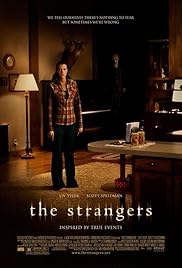
The Strangers (2008)
The Witch (2015)
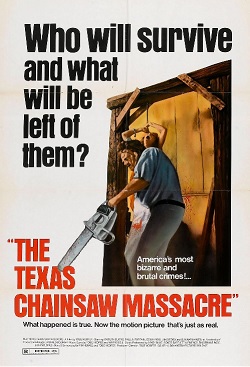
The Texas Chainsaw Massacre (1974)
Oculus (2013)
Evil Dead (1981)
Nosferatu (1922)
The Shining (1980)
Mama (2013)
Whispering Corridors (1998)


Why did I dislike some of these films? You’re going to have to wait till I actually write about them. Haven’t I reviewed a few of them before? Yes. Why am I reexamining them if I already reviewed them? You’ll have to wait till I watch them. And that’s all I’m saying on the subject.

That’s all for now, my Followers of Fear. I’m heading off to bed. Until I write again, pleasant nightmares.*

*And if you have any, let me know. I might write a novel based off it.

I’ve literally been waiting seven years for this movie, since I first heard rumors of a remake. I got hopeful when Cary Fukunaga was brought on board to direct and when he started casting, felt my spirits plummet when he left, felt concern when Andy Muschetti replaced him (I did not care for his film Mama), felt a little hopeful again when I saw the first photos of Bill Skarsgard as Pennywise, and felt really hopeful and excited when the first trailer came out. I waited for months and months, possibly building the film up more in my head than I should. When the time came, I invited friends to come see It with me. And finally, the day came. I showed up early to make sure my friends and I got good seats. And then the show began.

I can say with zero hesitation that this is the It film we deserve.

So if you’ve been living under a rock since 1986, It is a Stephen King novel about a small town haunted by a monster that takes the form of a clown, and the seven brave souls who fight it, first as children and later as adults. There was a TV miniseries done back in the 1990’s that was absolutely terrible (how do you take a King novel and put it on ABC primetime? That’s like trying to take a rabid wolf and pretend it’s a puppy dog!), and now we have a feature film, focusing on the children’s portion of the story. And it tops the miniseries in every way possible.

Now, I’m not going to say this is the scariest film I’ve seen. I actually found Annabelle: Creation to be much scarier in terms of jump scares and atmosphere than It was. However, that doesn’t mean It‘s not a scary film. It did have some scares. The problem is, I’m so well-versed with the source material, I could guess where they would do jump scares or anything like that, and it’s difficult to get scared when you know what’s likely to happen next. However, there were a lot of other people who found the film terrifying, so one should consider my reaction an outsider.

And I did get scared at points. More on that below.

My ticket.

I also liked how this was a much more faithful adaptation. Besides taking place in the 1980’s rather than in the 1950’s, this movie sticks pretty closely to the novel. But more than that, it sticks to the spirit of the story, delving into the darkness the TV miniseries couldn’t because of the channel it was on. The film’s not afraid to go as dark as possible (without risking the R rating, of course), showing actual lost limbs and hinting at sexual abuse, among other things.

But while the film is more faithful to the book, that’s not to say there’s no deviation beyond a change in decade, and this is where the story gets scary for me. Especially during the final third of the film, they change a few things in order to make the story flow better, and I think that’s when I find the film not only the scariest, but the most effective. Not only that, but the film uses Dutch angles, lighting and music quite effectively to emphasize dark or creepy or weird scenes, highlighting the strangeness and horror of the story. Whoever had the bright idea for that knew what they were doing.

The film also had its funny moments, and they weren’t distracting at all. I like it when a horror film is able to do that.

I also loved the actors. Bill Skarsgard as Pennywise the Dancing Clown kicks Tim Curry to the curb! Whereas Curry played the character much more comically, here Pennywise is creepy as It should be. Not only is Pennywise’s whole look here freaky as hell, but paired with Bill Skarsgard mastery of a menacing manner, and a slight lisp, and you can’t helped but be freaked by Pennywise. Even when he’s dancing (and yes, Pennywise actually dances in this film, something we haven’t seen in the book or the miniseries), he’s scary. Best Pennywise ever, and I want to dress up as him for Halloween, if not this year then the next.

Me being silly after the film with friends.


The kids are also great. Every single one of them is masterful in making you believe they are these characters, who are given time to grow and develop throughout the film’s two-hour run time. My personal favorite was probably Beverly, played by Sophia Lillis. She was such a great character, one of the strongest of the Losers Club but also one of the most vulnerable due to her home situation, and I loved that about her (as well as how kick-ass she can get). I also liked Finn Wolfhard of Stranger Things fame, who captured Richie Tozier’s dirty mouth and stupid humor just perfectly. And Jack Dylan Glazer did a great job of capturing Eddie as a hypochondriac who grows into a much braver child. And oh God, Nicholas Hamilton as Henry Bowers was such a scary guy!

Honestly, the whole cast was great, and I could go on with how much I loved them.

My Losers Club for the day. Thanks guys!

There were a couple of things I didn’t like, sadly. For one, the CGI was actually more distracting than scary, and a few more practical effects might’ve been better. I also thought that the filmmakers could’ve pushed the envelope in the third act at a part where the characters are trying to find Pennywise, though as it is that part is very good. And finally, I thought one scene would’ve been better with dramatic music than a song by The Cure (I know this takes place in the 1980’s, but do we really need a montage?).

All in all though, I’m very glad we got the version of It that we did. Faithful, well-told, heartfelt, with great characters and wonderful scares. On a scale of 1 to 5, I’m giving Andy Muschetti’s 2017 adaptation a 4. Go check it out, start floating down here, and pray the sequel is just as good.

I know, I usually try to get these reviews out a day after the movie or show premieres, especially with American Horror Story, because I have to stream it the next day (I don’t need another bill). Unfortunately, the past couple of days I’ve been busy with personal stuff and I didn’t really have time to deal with watching and writing reviews. The only thing I’ve seen for it was a review on Twitter by someone I follow, stating that the season opening was intriguing, but not outright scary.

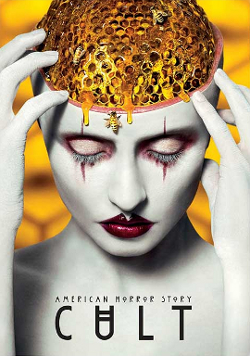
Well, I finally had some time to watch and review the episode, so let’s get into it. American Horror Story: Cult begins with news footage from Donald Trump and Hillary Clinton’s campaigns, starting from when the Donald started running and ending with his election as President. From there, the story follows two very different characters: Allie (played by Sarah Paulson), a woman with an anxiety disorder whose phobias, including clowns and even objects full of holes, come back in full force after Trump’s election. The other is Kai (played by Evan Peters), a purple-haired Trump supporter who has some bizarre beliefs, including that Trump’s election is the beginning of a revolution. From the look of things, their lives are going to be intertwined in strange ways.

As the Twitter reviewer said, Cult‘s first episode is less scary than intriguing. There’s a lot of focus on how the election affects everyone. Allie, being married to and having a child with another woman, is understandably scared that her family will be torn apart under the new administration, and that activates her other phobias, to the point that it’s affecting her marriage and her son negatively. Kai, on the opposite end of the spectrum, feels empowered to speak his views loud and proud, even if not everyone is interested in hearing them. The characters are exaggerated  amalgamations of reactions from both sides of the aisle, but they do get to a lot of what many Americans felt post-election.

Speaking of which, there’s an interesting scene during the first half of the episode where Allie walks into a store, and starts up a conversation with someone, only to find out they’re a Trump supporter, even though at first glance, they didn’t seem like the stereotypical Trump supporter. I had an experience like that at a drug store during the primaries, where I made a comment about the Trump campaign, and a store clerk said he might vote for Trump. And like Allie, I felt a little perturbed afterwards, because I didn’t really care for some of Trump’s policies, and I thought someone working a minimum wage job wouldn’t either. But then you got to remind yourself that the Trump campaign drew people from a number of walks of life, which lead to his election. This scene portrays that well, to the point where I felt a little deja vu.

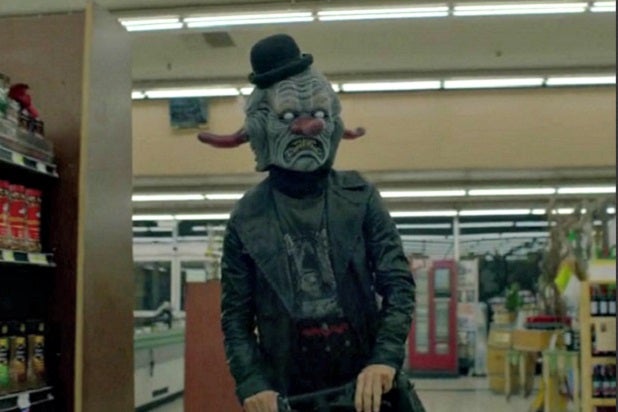
But as for scares, it’s pretty lacking. The design of the clowns is very freaky (especially when you’re not sure if they’re real or hallucinations), and Kai is freaky all on his own, but it’s not going to scare anyone used to horror scenery. If it were more like the opening of the fifth season, where every ten minutes there was a bloody, out-of-left-field scare or death. Here, it’s just not that impactful, they’re more concerned with setting up the story. And while that has worked in other seasons and in the first episode of The Defenders, here it just doesn’t work. After all, this is American Horror Story, and the setup needs to be balanced with that horror we were promised.

It makes me hope that in the next ten episodes it’ll really ramp up on the scares and make for a fun season. And it makes me hopeful that Colton Haynes’s character gets a lot of screentime (I love him whenever I see him in anything).

On a scale of 1 to 5, I’m giving the first episode of AHS: Cult a 3.2 out 5. Good setup with believable characters and excellent tapping into America’s fractured post-election psyche, but definitely a lot more horror is needed.

That’s all for now, my Followers of Fear. Join me Saturday at some point when I review another scary thing with clowns, IT. Prepare to float!

Wow, thought it would take at least a couple more nights for this happen. And again, it’s like an hour before I’m supposed to go to bed! Ooh boy. At least if I’m tired tomorrow morning getting into work, I’ll have a good excuse as to why it happened.

For those of you who don’t know, Rose is a novel I wrote as senior thesis in college, and which has had quite the crazy time just getting edited (click HERE to read my last post on Rose for more background on this crazy time). The story follows an amnesiac girl who wakes up one day and finds herself suddenly turning into a plant creature (and that’s just the start of her problems). It’s as bizarre as it sounds, but also very dark. Not as comical as it might sound if I were to tell you about it at a party.

As I’ve said before, the last time I tried editing this story, it took me months just to get through a couple of chapters. Now, it’s been just over three weeks since I last posted an update on Rose, and I’m two-thirds of the way through the story. The latest chapter, I managed to get done in one sitting, in only an hour and a half, with a cup of tea on my bedside table and a New Age spiritualism lecture on YouTube to keep me focused on the writing. Consider my normal writing/editing speed, I consider that a really big deal. May the last seven chapters be as easy to edit as this chapter.

Though to be honest, I’m really enjoying the editing process. The story feels new to me, like I’m discovering the characters and twists for the first time as a reader. And going over it, seeing where the descriptions can be expanded or the language brushed up and improved is a pretty satisfying experience. It’s going to be really interesting to see what happens in the last seven chapters, which contain some of the biggest revelations of the story, and most of the scenes I’m looking forward to expanding/making better.

If I’m lucky, I’ll even be able to make good on my thesis advisor’s suggestion to add about ten to twenty-thousand words to the novel (or did he say  double the novel? I forget so much in my young age).

Speaking of which, time for me to annoy you with page and word counts. At this point in the second draft, the number of pages in the novel (8.5″ x 11″ paper, 12-point Times New Roman font, double-spaced) was a total of 103, with the word count measuring up to 32,765. In the third draft, I’ve expanded the story to this point to 137 pages, and 42,768 words. That’s an increase of 34 pages, and 10,003 words. I think I’m doing quite well. The second draft was only a couple thousand words longer than where the third draft is now, so once I expand it, I could get it beyond sixty-thousand or maybe even seventy-thousand words. That would be pretty incredible, wouldn’t it?

Well, I’ve probably taken up probably enough of your time and/or phone data. I’m going to head to bed and savor this milestone as I sleep. Goodnight Followers of Fear. Pleasant nightmares!

So last night I got a message from my friend and fellow writer Joleene Naylor (check out her blog HERE) messaged me on Facebook to let me know she’d left a review for my first book, the short story collection The Quiet Game: Five Tales to Chill Your Bones, on Amazon. Immediately I thanked her and told her I’d write a post about it as soon as possible. I managed to do the first thing pretty easily, but I wasn’t able to get to the second part because I had a busy evening in front of me.

I’m happy to say that I’m finally getting around to the latter, and I’m very grateful to Joleene for not only taking the time to read my book, but also to review it. Reviews are important to authors, as they provide valuable feedback to them on their work, and help attract new readers. The more reviews an author has on a particular work, the more people are likely to find and read that particular work. And if they review said work, the cycle continues. So in a way, a review is like telling an author you want them to be successful, and then contributing to that success in a small way.

So if you’re unfamiliar with The Quiet Game, it’s a short collection of horror stories I wrote and published back in 2013, being my first published book. It contains five original short stories, with each being about a different subject. Since it was the first book published, it’s also been one of the most popular, and definitely the most widely-reviewed. Here’s what the blurb says on the back of the book:

In his publishing debut, Rami Ungar brings us five terrifying stories of darkness in magic. You can experience the strange visions of a man battling sex addiction in “Addict”. Or feel the wrath of an enraged dybbuk in “Samson Weiss’s Curse”. Face your fears in Gene Adkin’s Murder House in “I’m Going To Be The Next James Bond” and then journey with a young autistic “In The Lady Ogre’s Den”. But most of all, prepare to play the most insidious game of all: The Quiet Game.

Joleene gave The Quiet Game a five-star review, entitled Five fun horror stories (that’s a compliment right there). Here’s what she had to say on it:

A collection of five varied stories that get stronger as the collection builds, with the final being my favorite. Though I fancy myself able to “solve” the stories before the reveals, there were several surprises here, especially the reveal in the Quiet Game and I’m Going to be the Next James Bond. I also liked that Rami pulled no punches with his characters. In one instance, an anti-semite for instances uses words that would be hard for any author to write -though are necessary to his character. There are other examples sprinkled throughout the stories that show Rami’s commitment to telling the story in the way it needs to be told. A good collection for a stormy night!

Joleene’s review matches up with others The Quiet Game has received:

5 wonderfully crafted tales! I purchased this as an eBook originally and put off reading it for quite a while, I really wish I hadn’t waited. Sometimes when one purchases a collection of short stories you expect some of them to be less entertaining or of lower quality than the others, but none of these disappoint. Well worth the money, especially considering after you read each story the author gives you creative insight into what inspired him to write each tale, which is really wonderful.

–Jeff D.

I liked that each story was unusual. I think that the book was appropriately named. I prefer chilled bones rather than scared out of my whits since I am a bit of a chicken.

–ENJ

Imagine if you will a young Stephen King penning dark scenarios inspired by his youth, and what you get is this anthology. Through this collection of short stories, Rami Ungar brings us into the world of dark urges, childhood traumas, ghosts, phantoms, and dark psychological thrillers. An inspired creation, and definitely a good intro to this indie author’s world!

–Matthew Williams, author of The Cronian Incident

If you would like to check out all of The Quiet Game‘s reviews, or if you would like to pick up a copy yourself, I’ll include the links to check it out below. And if you do decide to read the book,, make sure to leave me a review.

And if you haven’t checked out my good friend Joleene Naylor, then what are you doing with yourself? Head over to her blog and check out her stuff, as well as her books!

That’s all till next time, my Followers of Fear. As you saw in my last post, I’ve got something big coming out next week, so make sure to tune back in then. Until that time, happy reading and pleasant nightmares!

The Quiet Game: Available on Amazon, Createspace, Barnes & Noble, iBooksSmashwords, and Kobo.

A lot of people hated Annabelle when it came out in 2014 as a spin-off of The Conjuring. I didn’t review it on this blog back then because I saw it about three or four weeks after it came out, but I thought it was a decent scary movie. Not as good as The Conjuring, but still very good. So when I heard that the sequel to Annabelle being made was actually going to be a prequel, I was intrigued, hopeful, and confused (wasn’t Annabelle the origin story?). Today, I went to the theater to see for myself if the fourth entry in The Conjuring film series was going to be good, or the start of the inevitable horror film series decline (you know it’s inevitable).

This might actually be the most solid entry since the original Conjuring film, and it’s a lot better than the first Annabelle.

Annabelle: Creation introduces us to the Mullins, a dollmaker and his wife who lose their little girl in an accident. Years later, the Mullins open their home to a girls’ orphanage, only for an ancient and malevolent evil with connections to the Mullins’ little girl to target one of the young girls, and through her, the whole household.

This film scared me pretty badly, using atmosphere, jumpscares, practical effects, and minimal CGI to create a powerful scare factor. There were a number of moments where I was just holding myself, thinking to myself, “NOPE!” or “GTFO,”* which just shows how frightened I was. If you can make me think “NOPE!” and make me want to run (or the characters), you’ve done a good job with your scary movie.

The direction of the film was strong and skillful, the writing for the most part was effective and didn’t have that many issues. This was an almost entirely female cast, and they were all very convincing. I especially loved the interaction between characters Janice and Linda, who have a very sisterly bond between the two of them, to the point that they don’t want to be adopted unless it’s together. It was so adorable, you just wanted to give them that home they wished for! I also liked the character of Sister Charlotte, the nun who takes care of and teaches these girls. Nuns in film, at least in my experience, are either matronly and motherly, or weak and wilting, but Sister Charlotte was strong and decisive, willing to risk her life and even do some things that would make others hesitate when she realizes what’s going on and has to defend her girls.

Me having some fun before the film.

There’s not much else to say on the plus side. The sets and costumes are convincing of their period, there are fun references to both the doll Annabelle’s actual form (a Raggedy Ann doll, if you didn’t know), as well as to the other films in the universe and even a hint of what we might expect in the upcoming film The Nun (coming out in 2018), based off that creepy nun-demon in The Conjuring 2. And they do connect this film to Annabelle, which does explain a lot.

There are some issues, of course, (and here I get a little SPOILER-y). And I don’t just mean the normal ones when watching a horror film (why doesn’t anyone else in this house hear the screaming? Why aren’t they running further away from the house? etc.). I would’ve liked to see more interaction between Linda and Janice, because they were so cute, and because that would’ve made the moment where one of them figures out something’s wrong with the other that much more convincing. I also didn’t care for the moments when they took the demons out of the shadows and showed them full-face, because it looks a little hokey. I would’ve preferred that they showed more of a creepy scarecrow, if truth be told.

And ironically, the way it connects to the original Annabelle leaves a few more questions that we’ll never get answers to.

But, in total, Annabelle: Creation is a great horror film, delivering on its promise of scary dolls making us crap our pants. On a scale of 1 to 5, I’m giving it a 4.6. Go see it, and make sure you bring someone (or a stuffed animal) to hug when you get terrified. Believe me, you may need it.

*GTFO = Get the fuck out. It’s what every person thinks while watching a horror film and seeing when something awful is about to happen in a particular location.

So yesterday I’m having a conversation with the receptionist at my doctor’s office while I wait for my appointment, and we get onto the subject of the stories I’m working on (because if you know me, after a while that WILL come up). I tell her about my WIP Rose, and what that’s about, as well as some of the themes in the story. When she hears that it deals with some pretty heavy themes like abuse, her response was, “Wow, I didn’t know horror could be so deep.”

And that’s a common response from non-fans, not just of horror but of speculative fiction in general. People who are on the outside of this genre tend to look in and see only a stereotypical surface: swords and wizards and weird humanoid species who make weird oaths with the names of oddly named gods for fantasy; funny costumes, silly effects, and incomprehensible in-universe technical jargon for sci-fi; and of course, people screaming and dying in gross ways for horror. And to be fair, a lot of these stereotypes do have examples in the genres that are just that, especially the slasher genre for horror. Whether they emerged as a result of the stereotypes or they were the influence that created the stereotypes, I’m not sure.

But, as any fan can attest to, any one of these genres can delve deep into very complex ideas and themes. And that includes horror, which is what I’ll be focusing on in this post (sorry sci-fi and fantasy. I love you, but you’re not my normal bailiwick). In fact, horror does this quite a bit, it’s just usually more subtext than overt. The reason behind this, obviously, is because horror’s main purpose is to scare, so having exploration of ideas take the forefront of the story over the actual scares and plot actually takes away from the latter, which causes the story as a whole to suffer. In novels, you can sometimes devote a few paragraphs or even a couple pages to that, but it still cannot be the main component of the story.

And because it’s often more subtext, the heavy bits are often overlooked by non-fans and even some fans, who are more likely to focus on how scary/creepy/unnerving the story was. This happens especially in movies and TV shows, which as visual mediums are very good at conveying the scare with their subtext.

A text full of great subtext.

However, even if it’s not obvious, the heavy themes and ideas are still present in the story if you look for them. A good example would be Dracula by Bram Stoker: on the surface, you have a Gothic vampire story. But go a little deeper, you see a commentary and criticism on Victorian ideas and fears. Dracula himself can be seen as a sort of twisted Jesus Christ, offering immortality through the drinking of his blood and the taking of the blood of others; the vampires themselves can be interpreted as corrupting sexuality turning good people, particularly women, into carnal monsters; and the vampires coming to England as a nod to English xenophobia, with Dracula and his kind, who speak and act strangely and must sleep in the soil of their native lands, representing the influx of foreigners to England during the later Victorian era and how they may not be suited to English society, according to some Victorians.

A story that’s more than just scares.

And this can be found throughout horror stories, particularly in novels where there is room to explore these heavy themes. A lot of times, you can see these themes embodied in some way in the supernatural forces that may threaten the character(s). Stephen King does this very well in many of his stories: while explicitly stated that the events of The Shining are supernatural in origin, on another level it’s a great story of a family breaking down due to stress, isolation, alcoholism, and old tensions arising, with the hotel simply being a stage for things to play out rather than a true supernatural entity. Likewise, It is a story about a supernatural force, but that same force is also a representation of childhood fears, what we fear in the dark as well as fear of growing up. And that’s just the tip of the iceberg of this great novel.

You also see this in movies, with a great example being The Babadook. While the titular monster could be real, it could also be a form of shared delusion between a mother and her son, trying to work through their individual and collective issues. There are a number of articles that look at the film from a psychological perspective, and the arguments they make put the story in a whole new light from first viewing. The Babadook is a story laced with deeper meaning, if you just look beyond the surface.

So as we can see, horror is more than just people screaming and dying in gruesome ways. Like any story, it can have a deeper meaning, going into the psychology of characters, the beliefs of society, philosophies on life, death, love and so much more. You just have to pull back a veil and take a closer look, and you’ll see what’s always been there.