b2da2-9ddeee92a3dd2120ed55e789959dfff5

Horror stories usually have three basic types of endings. At least, in my experience they do. There are variants on the the endings, but for the most part horror stories and movies tend to fall into three broad categories: the happy ending, the temporary reprieve, and the monster’s victory. I hope that in the course of this post, I can go through all three and describe the benefits and cons of using each of these methods. This may bring a better understanding not only to other horror authors, but to myself of the stories we write and why we write them and how to improve upon them.

So without further ado, let’s begin the examination of endings in horror.

The Happy Ending. This one doesn’t need much explanation, because this ending appears in most stories. Good conquers evil, the monster is vanquished, and the hero or heroine returns home, maybe sporting some very attractive partner on their arm if they’re lucky. This is a standard ending that all authors use at least once, and it’s a good one because most audiences want a happy resolution to their stories. However, the problem with the happy ending (at least in horror), is that if it is done wrong, the reader could be given the impression that all is flowers and roses and that everyone who survived the terror is left unscathed. And fans of horror have only one response to that sort of Hollywood-sweet ending: “Bullsh*t!” Even though we enjoy realms with monsters, ghosts, and serial killers, we want some things to be realistic, and that includes having your characters somewhat scarred, even after they’ve achieved total victory over the enemy. At the very least, show how the characters are haunted by their experience, how they wish they could’ve done more or they’re sad that their lives are so messed up.

A good example of a happy ending in horror that is well done can be found at the end of the novel Misery. Protagonist Paul Sheldon has barely escaped Annie Wilkes. He hasn’t even escaped in one piece! He’s missing a foot and thumbs, he’s dealing with alcoholism and writer’s block, and he keeps seeing Annie’s ghost wherever he turns. Yet at the end he finds inspiration for a story and starts to cry, because he’s able to start writing again, that he was able to get away from Annie at all, and because of what his life has become post-captivity. That is a really well-handled happy ending for horror if ever I’ve read one.

The Temporary Reprieve. Another common ending in horror, and if you ask me the best of all three. The temporary reprieve is when the hero or heroine has defeated the monster at the end and has had a few pages or minutes of screen time to recover, maybe even celebrate and have a smoke. But then evil rears its ugly head again. The monster has returned, it’s only been stopped a short while, and it plans to continue doing horrible things no matter what happens (you don’t have to end the story with the monster reappearing, though. You can show what happens after it reappears or just end it there). This is a great way to end a horror story, because it gives the readers one last scare and leaves open the possibility of a sequel.

The problem with this ending though is pulling off another good scare (I’d also include whether or not you should do a sequel, but I’ve written about that elsewhere). You want to lull a reader into a false sense of security and get them to really be terrified at the end, and doing that relies largely on your talent and skill as a writer. If you are unable to create that twist at the end, it may come off to readers as cheesy, contrived, or unnecessary. Some good examples of horror stories that do this well are the movies Insidious and Nightmare on Elm Street.

The Monster’s Victory. Strangely for horror this one is a rarer ending, and I think that has to do with people wanting a positive resolution to their stories, even in horror (I have trouble with these endings sometimes). However the monster’s victory is still a great ending, and in the right hands can be a fantastic final note to a good horror story. In it the monster of the story has won, the protagonist has been killed or been rendered a victim, and evil will continue its reign forevermore (or until a sequel is made).

Like I said, this sort of ending does have the possibility of turning off readers, but at the same time, doing it well done will create a very positive response. I would recommend practicing it as well as looking at endings that have done the monster’s victory well. Some good examples would be the movies Sinister and The Skeleton Key. Terrifying and fun.

Now, not all horror stories fall neatly into these categories. Some are a mishmash of these endings, such as Texas Chainsaw 3D, which is arguably a combination of all three endings. And some endings don’t seem to be any of these endings: the novel Carrie has everyone in it, from insane Margaret to most of the cruel and evil teens to poor Carrie herself dying at the end of the book with a bunch of carnage in her wake. How do you categorize that sort of story?

Regardless though, these endings do crop up a lot in horror, and they provide a framework for authors to work and experiment with in their own writing. Using these sort of endings or examining them and identifying their flaws as well as their positive sides can help you identify which would work best for you or your story, or if you should try some sort of different ending that is not among the ones above. And if it produces a great story, then all that examination is worth it, don’t you think.

Some in the American government and in the media have made the proclamation that “racism is dead”, at least here in the United States. If you ask me, the people saying this are either overly idealistic and naïve or they’re willfully ignoring facts. Because the sad fact of the matter is, racism is far from dead. It’s just not as overt as it used to be, it’s become subtler so it can thrive without being reprimanded or outcasted by the majority of Americans who don’t believe in racism or think it’s immoral.

Need proof? The Southern Poverty Law Center estimates that there are over 200 known hate groups in the United States, with Ohio having 31, New York 42, and California 77. Other large states have many different hate groups, most having racist beliefs, and the states with fewer hate groups are more likely to have groups that can be categorized as Neo-Nazi, White Nationalist, KKK, Racist Skinhead, Black Separatist, and General Hate. And that’s just the tip of the iceberg! Just imagine how many small or new hate groups out there the SPLC has yet to document! The numbers are scary if you think about it.

And then there are recent episodes where racism has reared its ugly head and broadcast all over the media. Cliven Bundy recently remarked that he believes that blacks (or as he calls them, “negros”) were better off under slavery than they are now, because apparently not learning to pick cotton has lead to them being on government welfare, aborting kids, and sending their young men to jail (I could write an entire post on the meshuggas of this guy if I wanted to, but why bother? He’s obviously nuts and in the end the federal government will force him to pay the money or send him to jail, possibly with his militia friends in tow). And then he acts like the victim when reasonable people are offended by his words and says MLK Jr. didn’t finish his job.

First off, Mr. Bundy seems to forget that slavery was not a walk in the park. It was inhumane, cruel, and caused the deaths of untold millions. He also doesn’t seem to realize that there is much more to why some African Americans are on welfare, mostly because they are not afforded the economic, environmental, and social resources to help them get off welfare. Plus not all blacks are on welfare, aborting babies, or in jail. Our President identifies as black*, and he’s not on welfare (unless you count living in a government building and receiving your paycheck through taxpayer money welfare), has two beautiful daughters, and has never been to jail unless it’s been to talk to prisoners.

*Yes, he identifies as black. It’s not a biological thing, but a social construct. Amazing that we make such a big thing over a construct of our minds, but there you go. (see this post for more)

And is being on welfare necessarily a bad thing? Mr. Bundy’s ancestors were brought from Nevada on a welfare program, if I remember correctly. So don’t preach like you’re better than them, because your life is the result of welfare programs, Mr. Bundy. And by the way, don’t blame a dead man for what’s in your heart. You have only yourself to blame for your racist beliefs, and if people are offended, it’s because there is still reverberations in our own society resulting from the darkness in our past. No covering up will rid our nation of that darkness, and people are right to be offended by your remarks. At the very least, you can be considered callous, if not outright racist.

And then there’s Donald Sterling, who’s been banned from the NBA and forcibly relieved of the LA Clippers because he didn’t want his biracial mistress seen with black people. Some people say he may be senile, others say he’s worried about his performance, and others just say he’s a racist pig. I think that whatever he is, he is a hypocrite because his team is mostly black and he’s seeing a woman who is half-black, and that his hypocrisy, as we have seen, is his downfall.

It is nice to know that the same weekend we all started talking about Sterling, Family Guy had a wonderful episode that dealt with racism, not just from whites but from blacks as well. And it is nice to know that we are having a dialogue about this, that we are not trying to sweep racism under the rug or deny that it exists. That’s like trying to ignore a serious medical condition or disorder in the hopes that it goes away. Just doesn’t work out in the end.

You know, the Supreme Court is right: a lot has changed since the Civil Rights Acts were passed. We are now a more technological, global, connected society. We recycle in the hopes of not accelerating the destruction of the Earth, and the idea of a black man or a woman running for President is no longer ludicrous, but the former has become a successful reality (twice!) and the latter is welcomed by a huge majority of the country.

However racism is still a problem in this country, and it is something we will have to deal with if this country is to continue to grow and prosper. So denying racism and saying it’s dead isn’t the answer. Rather, open dialogue and a lot of love and understanding is. And we need to have more of it.

Oh, and to the KKK guy in that one news clip who says he has black friends but doesn’t believe in “racial mixing”, where are your black friends exactly? Do they know you wear a KKK robe? And could you bring me an article from an accredited medical journal published in the past ten years that says “racial mixing” is a bad thing? I would love to see it!

I thought this was coming out tomorrow, but it looks like it came out today. This is my final article on Self-Published Authors Helping Other Authors before I leave for my study abroad trip, What Makes A Strong Character? I wrote it because there seems to be an emphasis on creating a diverse array of strong protagonists in fiction, so I decided to write about what makes a strong character in the first place.

Honestly, it wasn’t an easy article to write. What makes or doesn’t make to be a strong character is a difficult thing to pin down. Several times writing this article I had to go back to the first paragraph and delete everything else because the definition I had just didn’t feel right to me. I’m still not sure if the definition I came up with in the end is the right one. Maybe that’s why I asked readers to give me their definitions of what constitutes a strong character.

And while you’re reading the article, make sure to check out my other articles from the past couple of weeks. I’m sure you’ll find them helpful in some way or another. In fact, check out all that Self-Published Authors Helping Other Authors has to offer. It’s a wonderful site with plenty of helpful articles on everything involving writing, editing, publishing, and marketing on a budget. So if you’re a self-published author or considering self-publishing, you should definitely check out this website.

That’s all for now. I’ve got some work to do, so I’m going to get on that. Once again, have a lovely day, my Followers of Fear.

Reborn City

It’s been exactly six months since Reborn City was released. I can’t believe how long it’s been since RC first came out. I’ve sold some copies, gotten five reviews, and I managed to get to the second round of the Amazon Breakthrough Novel Award. Not bad for a first book.

For those of you who don’t know much about RC, the novel is the first in a trilogy. It tells the story of Zahara Bakur, a Muslim teenager living in a world that has emerged from the ashes of a third world war. The society she lives in is made up mostly of small nations and independent city-states, some of which are plagued with Islamaphobia due to the role certain terrorist groups played in the war. This includes Reborn City, where Zahara lives, and this hatred gets her parents killed. Soon afterwards, she is forced to join an interracial street gang, the Hydras, in order to repay one of the leaders, Rip, for saving her life. However things get worse after that: the leaders in the Hydras all have very strange powers, and there is a rumor it’s connected to the corporation that rules over Reborn City, the Parthenon Company. The decisions she and her new friends make will impact not only her life, but the lives of so many others.

And apparently people have enjoyed reading it. Check out some of these reviews:

This is not a genre I typically delve into, but I took this book on vacation and couldn’t put it down. The plot had me turning pages at quite the clip. The characters were unique and interesting and the imagery had me creating my own visual of what Rami’s interpretation of the future looked like. For first time novelist, Rami Ungar, this was an outstanding showing of talent and commitment to his passion of writing. Looking forward to seeing what he comes up with next!

Michele Kurland

Gangland violence, superhero-like enhancements, a futuristic setting, and social commentary that stems from a semi-post-apocalyptic theme. And then there’s a story where people come together as a family to deal with mutual loss and tragedy. What’s not to like?

Matthew Williams, author of Whiskey Delta and Papa Zulu

As a reader who does not read books in this genre, I must admit that I could not put down the book. I attribute this to the talent of the author. I am looking forward to reading the next books published by Ungar. I recommend this book to readers who enjoy action with features of supernatural powers and sci-fi.

Enji

And for the six-month anniversary, I’ve done some really awesome things. For one thing, I’ve uploaded a second edition, free of any editing or technical problems with the book (I hope). Secondly, I’ve put RC‘s ebook on sale. From today, May 1st, to May 31st, RC’s ebook will be available for $0.99. That’s two dollars lower than usual. Afterwards from June 1st to June 14th, RC will be available for $1.99.  So right now is the best time to get the e-book and see for yourself whether or not you like Zahara and the Hydras.

I wish I could say that the print paperback is also on sale. Regrettably though, Amazon controls that, not me. But you can still get the physical book for $8.80, which is a very good price for a book.

So if you decide to check out Reborn City, you can find it on Amazon and on Smashwords. If you’d like to read a bit of it before you do, you can read some of it by checking out this excerpt. And if you do decide to read RC, please let me know what you think. Write a review or leave a comment. Positive or negative, I really don’t care. I just want your feedback.

That’s all for now. I hope you all enjoy reading RC and I hope to do some editing on the sequel, Video Rage, this summer when I get back from Europe. Have a wonderful day, my Followers of Fear!

I can’t believe how soon it will be before I’m flying overseas to study WWII. But everywhere around me, I find the things that remind me how little time is left before I go. The constant email reminders, the calls between my medical insurance company to make sure that I have all my medication before I go, the planned shopping trip with my dad to get me some last minute clothes, the research into plugs so I know if I have to stop by RadioShack for adapters. Any day now I’m going to wake up, get dressed, and then head off to the airport.

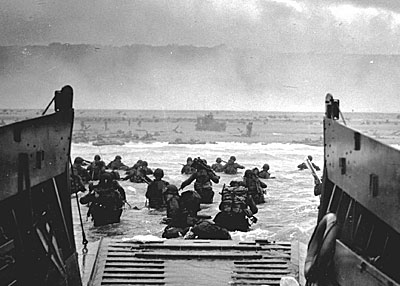
For those of you who don’t know, I’m going on a study abroad trip to England, France, and Germany to study WWII, particularly the European theater. There’s about fourteen students, including me, and two teachers accompanying us overseas. Everyone on the trip has been studying together since the beginning of the semester, so we’ve all gotten to know each other as well. I’m so looking forward to this trip. We’ll be seeing Churchill’s bunker, the place where Turing cracked Germany’s codes, Omaha Beach and the Pegasus Bridge, the Paris Shoah Museum and the place where the Versailles treaty was signed, Wannsee and Sachsenhausen concentration camp, and so many other places. In addition, there are many places I and my classmates want to visit while we’re abroad. There’s been talk of seeing an actual Shakespeare at the Globe (we’re thinking of seeing Titus Andronicus; I wonder if my classmates realize that’s one of Shakespeare’s bloodiest and most violent plays?), and we’re in Paris I plan on going down into the catacombs (God help anyone who gets in my way). Oh, and there’s apparently an actual British police box somewhere in London. I’m so visiting that with my sonic screwdriver.

The TARDIS! Allons-y!

Sadly though, I won’t be doing a lot of blogging or blog-reading while I’m gone. I plan mostly to disconnect from the Internet while I’m abroad, so I can get as much of Europe as I can while I’m there. I’ll also be writing a lot less than I normally would (that’ll be agony in itself, but I’ll survive). However, the university is requiring us to keep blogs while we’re abroad, so I’m posting the link for mine here. And if for some reason there’s a problem with the link, my blog address for when I’m abroad is u [dot] osu [dot] edu [slash] ungar [dot] 19. So if you want to know what I’m up to while I’m abroad, just go to that site and you can read all about it.

So wish me luck while I’m abroad. I promise to come back with plenty of stories and a couple of blog posts about my time there (and whether or not I met any ghosts in the catacombs or if I managed to successfully prank anyone on my trip). And trust me, there will be plenty of photos. I even have plans to make a video slideshow of my trip once I get back. It’ll have the most amazing music too.

Oh, one more thing: I’d just like to remind everyone from May 1st-31st, Reborn City‘s e-book will be on sale for 99 cents. You read that right, 99 cents. So if you’re interested in reading the book and you have an e-reader, now would be a good time to get a copy. Once June 1st comes around, the price will go up to $1.99, and on June 14th the price will go back to the normal $2.99. So check it out while it’s on sale! And if you like or hate RC, please write me a review. I love feedback, whether it be positive or negative.

That’s all for now. I’ve got some work to do, so I’ll do some more blogging later. Have a good day, my Followers of Fear.

Lately I’ve been watching a lot of horror films I haven’t previously watched before, such as Insidious and its sequel, Cabin in the Woods, and the new film Oculus (if I were review that one, I’d give it a 4 out of 5. Psychologically disturbing, but the ending leaves something to be desired. Then again, I prefer certain endings, and the one they used wasn’t one of them). Besides finding these movies extremely relaxing (yeah, I wonder what that says about me too), horror movies, particularly the good ones, teach me a lot about terrifying people, and give me ideas of translating those methods to writing.

For example, in all of those horror movies I listed above, there are moments when something is happening or you expect something to happen and the camera is focusing on one of the characters. It’s in those moments you find yourself wondering, “What’s beyond the camera lens? What if there’s something there that’s about to attack and kill?” If there’s music playing in the background, the tension is heightened, and even if there’s no music playing in the background, the tension is still heightened. Because you can’t tell what’s beyond that camera’s borders, lurking with intent to terrify. Even worse, what you can see in front of you may not be all that it seems. For all we know, that umbrella stand next to the character’s foot may have a rotting arm inside that’ll leap out and grab him. Or the woman fixing her earrings on while looking in the mirror and talking to her daughter may not realize that her daughter isn’t actually behind her. It all adds to the tension, to the terror, and when something finally does happen, it is both a relief and scary enough to cause you to jump or cry out or even scream (I’ve done all but the last one in my time).

So how do you translate this whole thing with the camera into writing fiction? Well, I think a character’s point-of-view acts as a camera, especially when the story is being told in first-person point of view. All you have to rely on to understand the story is the character’s (minimum) five senses and their interpretation of what they’re senses tell them. And in some ways the character’s POV is more limited than a camera, because the character can only see what’s right in front of their eyes, leaving the reader to fill in those spaces where a camera would normally show  what was happening.

Behind you!


So if one can figure out how to do this sort of storytelling with a character’s POV as a camera, I think you have the makings of a very scary story.

Do you think writing can in any way be compared to film making? Are there merits to picking up techniques from movies and TV shows, and if so, what are they?

My penultimate article on Self-Published Authors Helping Other Authors just went live this morning. Creating An Acknowledgements Section basically gives some useful tips on how to create a coherent acknowledgements section for your book. I thought it might be helpful to create an article on this because the acknowledgements section really isn’t talked about that much. I hope someone finds it useful!

And if you enjoy reading this article, check out my other recent articles as well. Doing an Excerpt came out April 7, When Trolls Attack! came out on the 13th, Creating Character Names came out on the 22nd, and What Makes A Strong Character will be out May 2nd. I hope you find them all fascinating reads, or at least helpful reads!

And if you get the chance, check out all of what Self-Published Authors have to offer. It’s a great blog with plenty of awesome articles on everything self-published authors need to know about writing, editing, publishing, and marketing. So if you’re a self-published author or you’re considering become a self-published author, this blog may be a valuable resource for you.

You may be familiar with my WIP Laura Horn, which I started last year and which I’ve had a heck of a time just trying to get halfway through. Between school, work, and other projects, it’s been a struggle to work on this novel, which is sad because I think it has a lot of potential. If I can only get through the first draft, I’d be able to test that theory about its potential!

But as I’ve spoken about before here, my study abroad trip will be in a little over a week (my, how time flies!), and I’ll be taking a break from blogging, writing, and most computer-related activities to go explore England, France, and Germany. This includes working on Laura Horn. Most likely I’ll kill some time in the airport on it while waiting for my flight to Heathrow, but after that it won’t be till late May that I’ll be able to work on it.

The good news is that since I took my finals, submitted my final papers, and now only have the distractions of work, trip preparation, and whatever’s on TV/in theaters/on my bookshelf to keep me from writing, I’ve been able to make a lot of progress on Laura Horn. In the past couple of days, I finished one chapter that I’d started on about two weeks ago and wrote about three more chapters. This has me elated, and I’m planning on getting more done before I go off on my trip. I hope to at least get three more done before I leave, because I’ll be a little over halfway through the novel then and when you know you’re well beyond the halfway point, the process of writing a novel becomes a bit easier and you find yourself being less intimidated by the amount of writing you have to do.

In any case, I plan on making some wonderful progress with this novel, and hopefully when I get back from Europe, I’ll be able to finish it by midway through July at the very latest. If I can do that, then I will probably feel less regret that I took so many breaks with writing the novel and look forward more to the editing and publishing process. That’s the hope, in any case.

In the meantime, I’m going to head to bed with the hopes that, after having watched a couple of scary movies these past couple of days and with the possibility of watching one more tomorrow (Oculus, to be exact), my twisted imagination cam come up with something really fun and creepy to write. In fact, I’ve been playing with this idea in my head for a story. I know how it’d start, but I can’t seem to figure out how to get the story to go beyond the first scene. Here’s hoping I can come up with something in my sleep!

And with that, I wish you a good night, my Followers of Fear. Pleasant nightmares, one and all!

I was very excited to read Angela’s first book (you should read my interview with her back in late March) and I’m sorry it took me so long to get through it. Now that I have, I have to say I had a lot of fun reading the first book of the Portia Adams adventures.

Jewel of the Thames is three stories (or “casebooks”) in one book, each detailing a different case young Portia Adams, a young woman with an inquisitive eye and a thirst for knowledge who moves to London from Toronto upon inheriting a very notorious property from some very distinguished ancestors. When she gets to London with her guardian Irene Jones and moves into 221B Baker Street (yes, you read that address right), she soon finds herself getting into some very interesting mysteries, each one more thrilling than the last, and all will have you scratching your head till the last page. Of course, the most interesting mystery will turn out to be Portia’s ancestry, and its resolution at the end of the book will leave you stunned. Or at least it did me, and I had an inkling on how the story would end.

I only had a few critiques on the story. One is that a couple of moments in the story, Angela uses more telling than she does showing. That’s not a huge problem, but I thought a little more showing would make the scenes a bit more real to me. Also, I would’ve liked to see more delving into the lives and personalities of the other characters, even those that only showed up for one or two pages. Portia’s the most developed of all the characters, and I’d like to know more about Constable Brian Dawes, or about Sergeant Michaels and Mr. Archer, or even that snooty girl from Portia’s class at Somerville (I’d love to see her mentioned in a sequel! Imagine if they became friends).

All in all, JotT is a wonderful book for mystery readers looking for an exciting new read and especially for fans of Sherlock Holmes stories, earning a 4.5 out of 5 from yours truly. I can’t wait to read the sequel.

A while back I wrote a short story called “Travelers of the Loneliest Roads,” a story of a young woman hitchhiking on the back roads of America who gets picked up by a very strange ride. I wasn’t having much success in finding a magazine to publish it in, so I thought I’d share it on WattPad, where short stories rejected by publishers have found some success.

I really like this story. It was my first experimentation with trying to make the story progressively more terrifying using techniques I’ve picked up from various novels and movies, and I thought I did a damn good job. I’m looking forward to seeing what everyone here who checks it out has to say though. After all, you know what they say: authors are often some of the worst judges of their own work.

Anyway, if you’d like to read “Travelers”, please click here. I hope you enjoy reading it and whatever your thoughts about it, please let me know what you think. As I’m fond of saying, I love feedback, whether it be positive or negative.

That’s all for now. I’m going to try to get some more writing done before my shows come on later tonight. So until next time, happy reading my Followers of Fear.