Posts Tagged ‘American Horror Story’

A couple of years ago, I binge-watched the first (and at the time, the only) season of a Canadian horror TV show called Slasher. The show billed itself as an anthology horror series geared more towards slasher fans, so basically American Horror Story with a lot more blood and gore. I reviewed it after I finished it (which you can read here). If you don’t have the time to read it though, let me summarize my thoughts: I thought the first season was intriguing with a great mystery and practical effects, but was horribly hampered by a seriously derivative story and a wooden lead. Also, the killer’s outfit was the definition of impractical.

Based on that, I figured that if the show was to get a second season, the people behind it would have to do a loooot of work to make sure the show didn’t get slashed off the schedule. And with no news of a second season a year later, I guessed the show was done for.

That is, until I saw an ad for it on my Netflix. Yeah, apparently Netflix picked up the show as one of their Originals, and decided to give it a second season (love it when they do that for shows that deserve another season. #LuciferOnNetflix). I decided to give it a watch, and see if they fixed the problems from season one.

Holy shit, did they improve!

Subtitled Guilty Party, season 2 follows five former camp counselors–Peter, Andi, Dawn, Noah and Susan–who accidentally murder a fellow counselor after confronting her for being a total psychopath and then bury the body. Five years later in the midst of winter, they return to the camp grounds, which have since become a small New Age commune, to destroy the counselor’s body when they hear a new resort will be built nearby, possibly leading to the body being discovered. Unfortunately once they get there, they inevitably get stranded there, and a killer starts picking them one by one. But who is this killer? With everyone there having secrets, they’ll have to be careful who to trust, or everyone may end up dead.

So as I said, this show did improve with the second season. For one thing, while the story does take influence and even has callbacks to previous famous horror and slasher stories, especially the Friday the 13th franchise, it’s nowhere near as derivative as the first season was. It works with an extremely tense story that keeps you on the edge of your seat for the whole eight episodes. You never know where the next twist or death will come from, and when they do hand one to you, it just makes you ask the same questions over and over again. And even when you think you know, there’s still a twist ahead to get you. It is a thrill ride, to say the least.

I also have to give props to the actors, they did a very good job. I sympathized with a lot of them, even as I learned just how deep some of their sins (there’s this one character who I felt was a lot like me. I was really disturbed by how deep his darkness went). And even those I didn’t sympathize with, I could not distinguish between the characters and the actors. That’s how good they were.

And ooh boy, was this thing scary! I mentioned how tense it was, but some of what happens to the characters who get caught by the killer* or who finds themselves in a similar jam. They do not skimp on the physical or psychological torment, and it will affect anyone watching it (I still flinch when I think of one particular scene).

All that said, the season did have one problem: there were a couple of characters who showed up for just a single episode, and very out of the blue, too. I feel like if you’d written those characters out of those episodes, there would still be ways to tell this story without sacrificing tension, pacing or anything else.

But all in all, Slasher season two is a monumental improvement over the first season. Intense, twisty and full of memorable characters. On a scale of 1 to 5, I’m giving the second season a 4.8. I cannot wait for the upcoming third season (yes, that’s happening. I wonder what they’ll do for it). Pack some winter clothes, give it a try, and see for yourself.

Who knows? You may even survive the encounter.

*Who I’m pleased to say is appropriately dressed for the work and the weather. No impractical costumes this time! Though if they did wear a hockey mask, this would be a much better Friday the 13th film than Michael Bay’s shit remake. That’s right, I found another way to diss that trash movie! Your film sucks, Bay! It sucks!

You know me, I HAVE to review the season premiere and the season as a whole, every season, for American Horror Story. And with Apocalype being the series’ most ambitious season yet, I was interested to see if they could pull it off. I mean, not only is this an apocalypse-themed season (can’t get bigger than that), but it’s a crossover between the original season, Murder House, and Coven, the season that divides many fans (personally, I like what they were trying to do, but found it all too campy and maybe a little too expansive). So can show runners Ryan Murphy and Brad Falchuk really pull it off?

If the first episode is any indication, yes they can.

The first episode of Apocalypse, appropriately titled “The End,” depicts what you would expect: the end of life on Earth as we know it. Nuclear missiles are launched at every corner of the Earth, sending the planet into a nuclear winter. Everything seems to be gone…or is it? A group called the Cooperative has brought people together–some for their money, others for their genetic makeup–to an underground bunker to become the survivors of humanity. Watched over by Madam Venable (Sarah Paulson), life in bunker is strict and the punishments for disobedience are harsh. As the months go on, the survivors start to go stir crazy and worry how much longer they can tolerate conditions. That is, until a mysterious figure enters from outside the compound. Does he bring hope…or hell?

The first episode is definitely off to a good start, depicting the chaos and fear that would all but surely arise if Armageddon began in the first ten-fifteen minutes: riots, people committing suicide, everyone going insane trying to find shelter. But then a very different tone arises after we’re introduced to the Cooperative and its agents: things become very claustrophobic. Lots of sharp angles that are meant to make you feel closed in, plenty of shadows. It makes you feel as uncomfortable as the characters, and makes the punishments for disobedience all the more awful.

Plus, those hazmat costumes are freaky! If I didn’t already know what I was going as for Halloween, I might try to get one of them and wear it!

As far as acting, Sarah Paulson’s Madame Venable is clearly the best. She’s an icy woman, almost psychopathic in the way she interacts with these characters. It’s quite a change, as Paulson’s never played this sort of character on the show before. I’m looking forward to seeing where she could go from here.

I can’t point to anything that didn’t gel with me. It was a really good episode and a great start to what will hopefully be a memorable season. On a scale of 1 to 5, I’ll give the season premiere of American Horror Story: Apocalypse a 5. I have high hopes for the rest of the season. If you haven’t yet and are curious, check out the first episode. And prepare for the end.

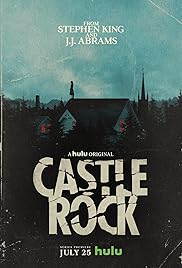
If it’s not obvious by now, I’m a big Stephen King fan (cue everyone who knows me saying in a torrent of sarcasm, “Gee, really? We had no effing idea!”). So when I heard some time last year that Hulu, JJ Abrams and His Royal Scariness Himself were collaborating to create a TV series set in his famous fictional town Castle Rock, you know I was interested. Fast forward to July 25th, and the first three episodes of Castle Rock premiered on Hulu. I didn’t write a review for them (I think that I was busy with a hundred other things that week), but I thought that the series had a strong start, and I was looking forward to seeing where the story went.

At the time I’m writing this, I’ve just finished Season One. How did it hold up?

First, the story. Taking place in the Stephen King multiverse, particularly in one of his frequent settings, Castle Rock, Maine, Castle Rock‘s first season follows Henry Deaver (Andre Holland), a lawyer who returns to his childhood town after receiving a call from nearby Shawshank Penitentiary after a prisoner (Bill Skarsgaard of IT fame) was found in its deepest depths, in a cage, with no name or other identity, only asking for him. Deaver, who left town after disappearing and then being found, only to be accused of murdering his adoptive father, tries to help this mysterious young man. But as he delves into this man’s case, as well as his own disappearance, he finds some strange connections between the two. And as violence starts building in the town, the race to figure out both mysteries takes on a whole new importance.

Okay first off, the cast is the best thing about this show! Every character utterly inhabits their character and make them feel like real people, some of whom you can imagine hanging out with (others, stay the hell away from). I especially liked Melanie Lynskey’s Molly Strand, a realtor with psychic powers and a history with Henry Deaver, and Sissy Spacek (yes, the original Carrie came back for another Stephen King story) as Ruth Deaver, Henry Deaver’s dementia-addled but still feisty and witty adoptive mother. And Scott Glenn as Alan Pangborn (maybe the only character who actually comes from a King story in this show) is a very sympathetic character, though he does come off at first as almost unlikable. Still, Holland as Deaver is the one who carries the story. We see things mainly through his eyes, and see how he struggles with all the baggage he carries as he tries to sift through all the confusion between events past and present.

I also liked the plot and how the story was told. It’s clearly geared towards people who are familiar with King’s works but still makes it accessible to those who haven’t seen the series. The writers also took the approach of a slow burn, taking their time to set up these characters and draw us in with the mystery while every now and then pumping things up to keep it interesting. And the writers weren’t afraid to take risks: two episodes are told entirely from the POV of a single character, and one of these episodes, through the eyes of Sissy Spacek’s character, is probably the best episode of the season.

Love Sissy Spacek in this show.

And finally, this does feel like a Stephen King story made for a television format. It’s not based on any particular story he’s written, but incorporates all of his stories, especially the ones set in Castle Rock, to give us a drama and a place that’s both familiar and new. Plus, you’ve got all the tropes you love (or in some cases, hate) from King: psychics, small towns full of secrets, religious fanatics gone crazy, sheriffs (or in this case, retired sheriffs), and of course, a whole bunch of weirdness that makes you go, “Say what? That works, but still, what the hell?”

Was there anything I didn’t like about Castle Rock? Well, a few things: one is that there’s a little too much weird. King’s been known to include a lot of odd concepts and sci-fi ideas into his work to varying degrees, and Castle Rock has a lot of that. The problem with that is, too much weird can lead to a lot of exposition and slow sequences where not much happens. Consequently, it also bites into moments where we could be totally terrified. And in my opinion, there weren’t enough of those moments, which is sad. Stephen King or Stephen-King inspired, his work is truly at its best when it features a shape-shifting clown hungry for children, or a Nazi war criminal burning cats alive in his oven,* things that make it hard for us to sleep. And that was lacking here.

On top of that, I didn’t like the season finale as much as I thought I would. It had its moments and explained a lot, but the climax could’ve been more epic, and I have mixed feelings on the final scene, both in what it featured and how it was told.

Still, all in all, it’s a great start to a series, and I’m looking forward to whatever they cook up for the upcoming season two (maybe something involving my man Leland Gaunt?). On a scale of 1 to 5, I’ll give Castle Rock a 4.3. Take a visit to the Rock, and hope that while you’re there, you come out with all your fingers attached.

That’s all for tonight, my Followers of Fear. Expect a review tomorrow for the season premiere of American Horror Story: Apocalypse (I’d review it tonight, but it ends after I should be in bed!). Until then, pleasant nightmares.

*I’m reading Apt Pupil right now, and that part had me frozen in my seat!

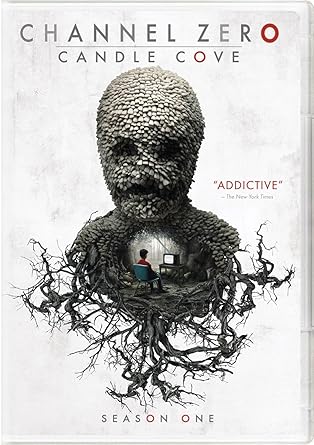
If you’ve been with me for a while now, you know I’m interested in and an admirer of creepypasta, urban legends and scary stories born and spread on the Internet that seem to have some sort of plausibility of truth to them, even if you can’t prove it. Recently I heard about a TV series called Channel Zero that, like American Horror Story and Slasher before it, told a different horror story every season, though in this case the stories were based on creepypasta. I decided to take a look, and found out my local library had all three seasons on DVD. I reserved the first season, subtitled Candle Cove, and picked it up yesterday.

Guess who spent most of his Saturday binge-watching it on his TV and laptop? This guy. And as this is me we’re talking about, of course I’m reviewing it.

Based on the Candle Cove creepypasta by Kris Straub (unknown if he’s related to horror author and friend of Stephen King Peter Straub), Channel Zero: Candle Cove follows Mike Painter, a child psychiatrist who returns to his childhood home of Iron Hill, Ohio (go Ohio!) after leaving twenty-eight years previously, when five children were horribly murdered and the killer was never caught. One of the children was Mike’s twin brother Eddie. Now back to put old demons to rest, Mike reconnects with old friends and finds out that several children in town have been watching Candle Cove, a mysterious TV series that originally aired during the two months the murders occurred. Its return to TV doesn’t just coincide with Mike’s return, but with a series of events that threatens to rock Iron Hill, Mike, and his family to their very cores.

I was very impressed with Channel Zero‘s first season. First off, there’s the story. Candle Cove tells a slow-burn story centered around its unfolding mystery. It’s very hard to look away as you watch the characters try to figure out the mystery of the Candle Cove TV show and how it may have affected events past and present. It’s also extremely twisty, making you question everything and wonder how it’s all connected. Trust me, you won’t see the finale until it happens, and it’ll leave you speechless.

I also sympathized with a lot of the characters. They each had their own demons to deal with, and as events start getting crazier and crazier, you can almost find yourself understanding why they do what they do. Doesn’t mean you’ll always approve or root for them, but you’ll understand.

Special mention goes to Fiona Shaw (the actress who played Aunt Petunia in the Harry Potter movies) who played Marla Painter, Mike’s mother. That character goes through so much, but is probably the strongest character on the show, and Ms. Shaw carries it with every scene. Loved seeing her on screen every time she showed up.

Hello, I’m the Tooth Child. I’ll be in your nightmares tonight.

And oh my God, the visuals on this show! From the clips of Candle Cove, to the figures of the Tooth Child and the Skin-Taker, to even some of the dream sequences, there is so much terrifying imagery! Season One definitely took care to make sure every creepy scene was as disturbing as possible. If any of my works ever get adapted, I hope just as much care is put into the visuals and scares.

If there are any flaws with season one, at times the story tends to focus more on the slow-burn story than on actually making viewers crap their pants. That’s not a bad thing, but for some horror fans who prefer outright scares, the slow-burn quality may be a bit off-putting. But at the moment, that’s the only issue I can point out with this show. And it’s not even my issue!

On a scale of 1 to 5, I’m giving Channel Zero: Candle Cove full marks with a 5 out of 5! Great storytelling with a well thought-out mystery and excellent visuals, it feels like something Stephen King might produce from his own twisted imagination. Tune in, and let yourself be hypnotized.

That’s all for now, my Followers of Fear. With September here, there’s a lot of great horror stories on the horizon to read/watch and review. And believe me, I’ll be sharing my thoughts on most of them. Whether you want me to or not.

Until next time, pleasant nightmares!

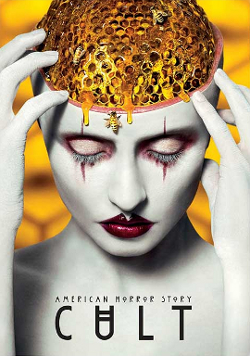
I finally watched the final episode of American Horror Story’s seventh season (one day I’ll be able to give a review right after the season premiere or finale on my own cable package), and I have to say, this has definitely been an interesting season. When people heard that the new season was going to be about the 2016 American Presidential Election, after months of speculation that it would be about either a cruise or something else ocean-related, we weren’t sure what to expect. Would it be preachy and lean towards one end of the political spectrum or the other? Would Trump, Clinton, or some other political figure be featured as a character? And would Sarah Paulson play Trump (if she did, she’d be great at it, no doubt)? And as further details came out, namely that it would be about a cult that arose in the wake of the election and focused on people who felt isolated and galvanized by the election, we got intrigued. Could this actually work as a season arc? Could this be good?

Well, before I get into that, let’s go a bit deeper into the plot. Returning to a normal mode of storytelling after the reality TV show format of Roanoke and being perhaps the most down-to-Earth season in the show’s history, Cult follows two very different people who become intertwined in ways neither would believe. The first is Allie Mayfair-Richards, a business owner and mother with liberal leanings and crippling anxiety who isn’t dealing well in the post-election climate. The other is Kai Anderson, a charismatic young man who begins to gather a group of devoted followers around him as he pursues power in local politics. As their lives start to intersect, they’ll not only make permanent impressions in each other’s lives, they’ll make impressions in the very surface of American politics.

I loved this season. Yes, the first two episodes were kind of slow and clunky, more devoted to commentary than to actually scaring the viewer, but after that the story and scares really picked up. The writers kept things very intimate, so that while this may have seemed like a big story about national politics and American political culture on the surface, it felt incredibly intimate, letting us into the lives and minds of these people. As per usual with American Horror Story, the story was twisty as heck, keeping you guessing where the story would go from one episode to the next and being unable to figure out most of the time where things would go. And after the second episode, they managed to keep the political commentary from getting too over the top. In fact, I think they managed to capture the spirit of American politics very well in this season: confused, divisive, changing from day to day and week to week. Things come up and down, change and merge and break, and become so muddled that you don’t know how it all started. All this was captured very well in this season.

And oh my God, that ending! That’s going to stay in my head for a while.

Beware this guy. He is a villain par excellence.

I also really enjoyed the characters. Obviously, the two main ones are exaggerated distillations of the stereotypes of the liberal and conservative voters, with Kai representing some of the darker views of what Donald Trump is to some Americans, but they also feel like real people whom you want to watch and see where they want to go from episode to episode. Each major character is given time to develop so that they feel real to the viewer, and you feel their struggles and/or death. I especially love Beverly Hope, played by Adina Porter (who played my favorite character last season), whose struggles within her workplace, followed by her struggles within a cult that changes drastically from the time she joins to the time she escapes. Kai is also just terrifying to watch. You know what his final goal is, but you never know what to expect from him from moment to moment. He’s like a pinball, causing something every time he touches something. He makes for a great villain. And watching Allie go from this weak, paranoid woman to this strong, somewhat devious fighter was just stunning.

Now, were there any parts I didn’t care for? Well, as I said, the first two episodes didn’t jibe with me, they were more devoted to commentary and set up than actual scares. Those could have been done better. Another issue I had was that I felt the final episode was kind of predictable. I mean, once I saw where it started, I kind of knew where it was going to go (except for maybe that last scene). I expect better from American Horror Story.

I also didn’t care for Lena Dunham playing Valerie Solanas in the seventh episode. Now, I have nothing against Lena Dunham. I think she’s a great crusader for a number of important issues, and I admire her for the success she’s had in the entertainment business. But sadly, I’ve only seen her in a couple of roles, not enough to get a gauge on whether or not I like her as an actress. And in the seventh episode, she just felt miscast. The episode was written brilliantly, the character she played was interesting, but she just didn’t fit well into the role, to the point that she was annoying (I don’t mean that in a sexist way, I just mean she didn’t fit the role and it had a negative impact. Don’t go after me in the comments).

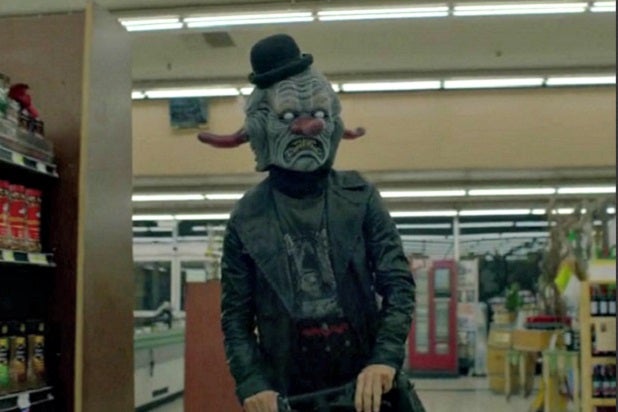
And finally, I felt like the clown costumes could’ve used an explanation. Yes, the character Meadow designed the costumes, but why clowns? Why not a minority abused by the right, or ninjas, or just people dressed in dark clothing? It’s hinted that it has something to do with Twisty the Clown, who makes a surprise guest appearance in the first episode, but we never find out why the cult decides to commit crimes in custom-made clownsuits. I would’ve loved an explanation on that, especially since clowns figured so much in the advertising for the season (speaking of which, where are the bees? They show up a lot in the ads and the opening theme, but barely in the show proper).

This needed more of an explanation.

But other than that, American Horror Story: Cult was a great entry into the series. On a scale of 1 to 5, I give this season a 4.2, as well as the designation of my second favorite season so far (Hotel‘s still the best). It’s engaging, thrilling, and different from any other season so far. Plus it does a better job of talking about oppression and women’s empowerment than Coven ever did, so good on the writers for fixing that mistake. Check it out, and see it for yourself.

Now as for Season 8, details are scarce beyond that it will come out sometime next year, and that Sarah Paulson will return for her eighth consecutive season (yay!). I’m still hoping that I’ll eventually get an Orphanage or Academy/School-themed season. I’m curious as to how, if the theory about each season being a circle of Hell is true, how those themes might apply to those circles that are left. And I’m wondering who will be coming and going for the next season (Lady Gaga! Kathy Bates! Please come back!).

Well, that’s American Horror Story for you. It leaves you wondering up until the moment something happen, and then it blows us all away.

I know, I usually try to get these reviews out a day after the movie or show premieres, especially with American Horror Story, because I have to stream it the next day (I don’t need another bill). Unfortunately, the past couple of days I’ve been busy with personal stuff and I didn’t really have time to deal with watching and writing reviews. The only thing I’ve seen for it was a review on Twitter by someone I follow, stating that the season opening was intriguing, but not outright scary.

Well, I finally had some time to watch and review the episode, so let’s get into it. American Horror Story: Cult begins with news footage from Donald Trump and Hillary Clinton’s campaigns, starting from when the Donald started running and ending with his election as President. From there, the story follows two very different characters: Allie (played by Sarah Paulson), a woman with an anxiety disorder whose phobias, including clowns and even objects full of holes, come back in full force after Trump’s election. The other is Kai (played by Evan Peters), a purple-haired Trump supporter who has some bizarre beliefs, including that Trump’s election is the beginning of a revolution. From the look of things, their lives are going to be intertwined in strange ways.

As the Twitter reviewer said, Cult‘s first episode is less scary than intriguing. There’s a lot of focus on how the election affects everyone. Allie, being married to and having a child with another woman, is understandably scared that her family will be torn apart under the new administration, and that activates her other phobias, to the point that it’s affecting her marriage and her son negatively. Kai, on the opposite end of the spectrum, feels empowered to speak his views loud and proud, even if not everyone is interested in hearing them. The characters are exaggerated  amalgamations of reactions from both sides of the aisle, but they do get to a lot of what many Americans felt post-election.

Speaking of which, there’s an interesting scene during the first half of the episode where Allie walks into a store, and starts up a conversation with someone, only to find out they’re a Trump supporter, even though at first glance, they didn’t seem like the stereotypical Trump supporter. I had an experience like that at a drug store during the primaries, where I made a comment about the Trump campaign, and a store clerk said he might vote for Trump. And like Allie, I felt a little perturbed afterwards, because I didn’t really care for some of Trump’s policies, and I thought someone working a minimum wage job wouldn’t either. But then you got to remind yourself that the Trump campaign drew people from a number of walks of life, which lead to his election. This scene portrays that well, to the point where I felt a little deja vu.

But as for scares, it’s pretty lacking. The design of the clowns is very freaky (especially when you’re not sure if they’re real or hallucinations), and Kai is freaky all on his own, but it’s not going to scare anyone used to horror scenery. If it were more like the opening of the fifth season, where every ten minutes there was a bloody, out-of-left-field scare or death. Here, it’s just not that impactful, they’re more concerned with setting up the story. And while that has worked in other seasons and in the first episode of The Defenders, here it just doesn’t work. After all, this is American Horror Story, and the setup needs to be balanced with that horror we were promised.

It makes me hope that in the next ten episodes it’ll really ramp up on the scares and make for a fun season. And it makes me hopeful that Colton Haynes’s character gets a lot of screentime (I love him whenever I see him in anything).

On a scale of 1 to 5, I’m giving the first episode of AHS: Cult a 3.2 out 5. Good setup with believable characters and excellent tapping into America’s fractured post-election psyche, but definitely a lot more horror is needed.

That’s all for now, my Followers of Fear. Join me Saturday at some point when I review another scary thing with clowns, IT. Prepare to float!

Since we’re still over a month out until the new adaptation of It and the new season of American Horror Story (which apparently will be featuring clowns in its Cult-themed season this year) hit screens, I thought I’d take the time to watch and review a movie I’ve been wanting to see for a while: Eli Roth’s Clown.

This movie actually has something of an interesting history: back in 2010, director Jon Watts and writer Christopher D. Ford uploaded a trailer to YouTube saying that Eli Roth was producing the film, even though he wasn’t involved with the film (I assume this was meant as a joke). Roth was impressed by the concept of the film and their ballsiness, so he offered to help them produce an actual film. However, when this film came out, it did poorly at the box office. Since then, I’ve heard both good things and bad things, making me curious as to its true worth. And when it popped up on my Netflix feed, I knew I had to watch it and see for myself what this film was made of.

Clown follows the McCoy family, real estate agent Kent, wife Meg and son Jack. When the party clown they ordered for Jack’s birthday is double-booked and can’t make it, Kent finds an old clown costume in one of his vacant houses and dresses up as a clown himself. However, he finds himself unable to take off the costume afterwards. In fact, it’s starting to become attached to him, literally. As Kent’s body and mind starts to go through unimaginable changes, Meg must find a way to save her husband from becoming a legendary demon with a hunger for children.

This film was awesome in so many ways.

First off, the costume and Kent’s evolution into the demon. The make-up and costume here is phenomenal, slowly showing Kent turning into this terrifying monster that puts Twisty and Bill Skarsgaard’s version of Pennywise to shame in how scary his look is. The transformation is gradual, but with every change, you see not just how creepy the clown demon is, but also the battle for Kent’s mind playing in his head. From an extra line, a darker color, a colored contact lens, everything in this costume is used to maximum effect.

I also liked how the story at first seems formulaic, but actually takes some routes that keep you guessing about what will happen next and actually surprising you at times. The story also takes some risks in terms of body horror and at some of the stuff that it’s willing to show us, which is a welcome change. It actually makes for a much more terrifying experience. It’s almost like the filmmakers were saying, “We know it’s a movie, but we know real life isn’t nice. Therefore, we’re going to introduce a terrifying concept into the real world and see that concept play out with real world results.”

One interesting thing I noticed was the characters, and how they were written. They’re not that deep or well rounded-out, but the story and the direction allows the characters to feel real. Rather than using dialogue and exposition to explain character traits or relationships between characters, the actors show the audience those aspects. Just from Meg’s interactions with her father and the things he does, you get the sort of feelings he has for his son-in-law. From seeing Herbert Karlsson’s actions during the film, you get an interesting twist on the expert-on-a-monster trope in horror films that doesn’t need to be told to the audience. It’s just there for us to absorb! It’s a brilliant decision to approach characterization like this on the part of the filmmakers, and I kind of wish we’d see that in more horror films.

Not even the scariest image.

The only problems I really had with this film is that it may have dragged at points, and that there’s this one short scene involving Meg and a patient from her dental clinic that I just found slightly contrived. Actually, very contrived, even if it did show how Kent’s transformation is kind of transforming his wife Meg into someone else.

Like I said, this film was awesome. So why didn’t it do well? If I had to guess, I’d say bad marketing. I heard about this film the first time in college with a trailer. I thought it looked cool and I would like to see it when it came out. But that was the last I heard of it, and it dropped off my radar. Occasionally over the next three or four years, I heard whispers, but I somehow got to thinking that Clown was either being delayed or only available outside of the United States. So when it showed up on Netflix, I was honestly very surprised. I was like, “Wait, that’s out now?”

Too many good films are under-advertised.

Well, with any luck this review might get a few more people interested. On a scale of 1 to 5, I give Clown a 4.8 out of 5. It’s creepy, it’s a fun concept, and it’ll leave an impression on you. Sadly, it didn’t get the advertising it deserved, but I can see this becoming a cult hit and a Halloween favorite ten or twenty years down the line. Definitely sit down and watch the film, and prepare for some clown-filled nightmares.

Today I wanted to talk about something that is becoming much more common in fiction these days, and that’s the twist villain. If you’re unfamiliar, a twist villain is when one character in a story seems to be the villain, but later on it’s revealed that another character, usually a character we thought was a good guy, is actually the villain. This twist villain is supposed to be a surprise, something you didn’t see coming while reading the story. Hence the name “twist villain.” The problem is, the twist villain is becoming such a common trope these days. In the past couple years, we’ve seen it in Disney films like Zootopia and Frozen; popular novels like Gone Girl and Harry Potter and the Prisoner of Azkaban; a couple of recent superhero films; and more than I can possibly name in this blog post. And when so many works of fiction are using the twist villain, we become used to not only seeing the trope but also the signs that a twist villain is going to be used (and trust me, there are signs), and then when we see the twist villain, we’re not very surprised. Heck, sometimes we even predict who the villain is well before it’s revealed.

Why is this trope becoming so popular? Simple: people want a good story. Good stories produce good memories and good profits. As standard stories of good vs. evil have been done to death, creators need to think of new stories and story elements to keep consumers interested in their work. One way to do that is a third-act twist, which when done right can really enhance a story. And a twist villain can be a very good third-act twist, if you’re careful with it.

Sadly, I find that a lot of creators aren’t careful with their twist villains, making the twist ineffective when it happens. Which is sad, because I love the idea of a twist villain. Heck, it’s one I might use in the future, if I haven’t used it already. A good twist villain can make your mind reel, make you look back trough a story to see if there were any clues and make you marvel at the genius of the creators for setting up that twist so well.

A bad twist villain, on the other hand, just leaves you feeling neutral at best (my reaction during Zootopia) and disappointed at worst (my reaction looking back on Scooby-Doo 2: Monsters Unleashed). Which is why I’ve come up with a few tips for writing an effective twist villain. With any luck, these tips will help other authors (and myself) avoid making a bad twist villain.

1. Does your story really need a twist villain? Any time you want to include something in a story, ask yourself if it’s really needed. I swear, so many stories just add in elements that aren’t needed (*cough* lots of stuff from BvS *cough*). Ask yourself if your story can stand on its own without any of the extra elements. If it doesn’t, DON’T FORCE IT IN! Especially with twist villains.

2. If you’re going to leave clues behind, don’t make them obvious. You can have a twist villain without leaving a trail (Hans from Frozen, for example), but with twist villains, creators often like to leave little hints of who the real villain is. I think this is narcissism on our part; we like to show how clever we are. But that leads to us leaving some rather obvious clues, which our readers/viewers will pick up on and deduce the twist long before the twist occurs. Take Scooby-Doo 2: it was so obvious that the reporter was the villain! Why else would they include a reporter with poor ethical practices unless she was at least in league with the villains?

3. Have a good herring villain. A herring villain is just that: a herring to keep us off the real villain. In Frozen, the herring villain was the Duke of Weselton. He had obvious malicious goals, is willing to kill Elsa, and he was over-the-top, which felt right for a villain in this movie. Imagine our surprise when we find out he’s not the true villain, but Hans, who had no trail leading to him and was such a nice guy up till that reveal! A good herring villain will often lead to a great twist villain reveal.

Compare that to Zootopia or Wonder Woman: the former doesn’t give us a herring villain, which causes us to consider each character and eventually land on Ms. Bellwether, who has said some interesting things and has actually benefited from these events. The latter gives us a herring villain, but it’s a comic book movie, and the General doesn’t do a thing to make us think he’s a famous DC villain we’re very sure will make an appearance.

In short, have a herring villain, and make sure they’re set up in a way where people will actually consider them as the main villain, so the twist will actually be effective. To do that, be aware of what sort of story you’re writing. Often the story will have certain requirements for villains (motive, opportunity, etc), so make it seem like the herring villain has those. You’ll find your herring villain much more effective.

4. Do the reveal earlier than the third act. A lot of twist villains reveal themselves in the third act. Nothing wrong with this, but it’d also work if the reveal was done earlier. For example, Hydra was revealed as the villain in Captain America: Winter Soldier in the second act, and that was a really interesting twist, as we hadn’t expected it. If they’d done it later in the story, we might have actually figured it out by then, or there wouldn’t be enough time for exposition mixed with a great climax. So consider doing the reveal elsewhere.

5. Try a variation on the trope. The twist villain, like most tropes, has a standard formula: something happens, one character seems like the villain, but another character is revealed at the third act to be the villain and why. Oh, and it’s usually not the protagonist.

Variations on common tropes have proven to be very effective in storytelling, so try something a little different with the twist villain, like these examples below:

  • It’s a villain, but which one? In Doctor Who series 8, we’re introduced to a character named Missy, who seems likely to be a villain, but we’re not sure what her deal is if she is. In the second-to-last episode, she explains that Missy is short for Mistress, making her a female regeneration of the Master, a well-known DW villain. A lot of minds were blown that day, believe me. The idea is you can introduce a seemingly new character into a long-running story, and then link them back to a previously-established character. Trust me, it works.
  • Everyone’s the villain! Agatha Christie’s Murder on the Orient Express ends with every suspect actually having some sort of hand in the murder. It made the novel a sensation back in the day, because it was a seemingly impossible idea, but it worked. So try something impossible and make it possible: everyone’s a villain, no ones’ the villain, or even two very good suspects with alibis both committed the murder. It could work.
  • The hero? American Horror Story: Hotel is my favorite season of the series, and this twist is one reason why. The protagonist, a police detective, is on the hunt for a serial killer, only to find out in the second half of the season that he’s the killer! Trust me, I did not see that coming until the reveal episode, and only by a few minutes! So making a hero or a character who nobody thinks of as a possible villain the villain can work very well.

And these are just some examples of variations that have worked in the past.

Twist villains are a trope that won’t go away anytime soon, but as long as we have them, we should write them as well as we write any other type of character or trope. Because if we’re not going to give people our best, then what are we actually giving them?

What are your thoughts on twist villains? What are some good tips for writing them well?

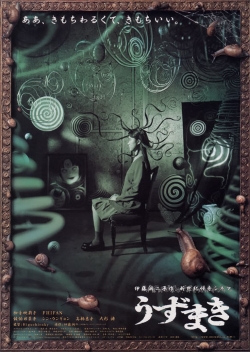
Back in January, I read and reviewed Uzumaki, a Japanese manga by Junji Ito about a small town that comes under a curse centering the idea of a spiral. It was as scary as it was out there (see my review here), and I had mentioned that I would like to get my hands on the film version and see how that compared. Well, some Amazon gift cardd money and a lost package later, I finally watched Uzumaki today. So how does it compare to the manga, andd how does it hold up as a film in general?

Well, it definitely ties down the strangeness of the manga. Uzumaki, like I said, is an out there story, and the film does a very good job of bringing that forth, using odd camera angles, weird visuals, and strange little special effect touches to really add an atmosphere of unreality to the film. There’s this one moment where two characters are walking down a hallway, and they pass a bunch of people standing against the walls just staring at their shoes, and neither character notices the people on the walls, or vice versa. It’s very odd, and kind of unsettling.

I also thought the actors did a very good job. The characters aren’t that multifaceted, but for an hour and a half movie, they work.

Unfortunately, that’s where the film’s biggest problem is: time. The film is an exact 91 minutes, and that means there’s only so much room to tell a story. And unfortunately, with a large story like that of Uzumaki, there’s only so much material that can be done. The end result makes the film feel kind of lacking. In the manga, you get the full scope of this curse. In the film, it feels more like a weird series of events with only mild connections, like walking to work everyday and seeing someone different each day do a dance at a different part of your walk. You might think it’s a weird and there’s a common cause, but your might not go out of your way to find out why this is happening. And that’s where the film ultimately fails.

I also found that some of the edits to the film are a bit more distracting than they should be. There’s one moment where they do a transition that looks like someone’s spray-painting a new scene into the film, and they use a cartoon-y sound effect to go with it. Not that scary. There’s another moment where a girl puts out a cigarette on a wall, and there’s a mini-explosion from the crushed cigarette’s tip. Um…why? It makes no sense. I know this film is going for that surreal sense of horror, but there’s a limit to what you can do without going into goofy territory.

I honestly think that if you’re going to adapt Uzumaki, you should do it as a TV miniseries rather than a movie. That leaves enough room for not only all the material that was cut from the film for time, but gives us more opportunity to get to know the characters and see them react to the strange events going on around them. And you know, I honestly would like to see that. With TV miniseries making a comeback on cable and series with shorter episode orders like American Horror Story being so successful, I honestly think an Uzumaki adaptation for TV would do very well.

On a scale of 1 to 5, I’m giving Uzumaki‘s film adaptation a 3.2 out of 5. Great at atmosphere and creating a sense of unreality, but too short to really leave a lasting impression. Honestly, you’re going to be better off reading the original manga, so go check that out and get lost in the spiral there instead.

Well, I finally watched the season finale of American Horror Story: Roanoke (the horrors of having no TV, right?), and I’m keeping up my tradition of reviewing the season as a whole. And I have to say, this is probably AHS‘s best season yet (though it probably won’t replace Hotel as my favorite season).

So if you didn’t know, Roanoke is about a young couple who move into a colonial house that is actually haunted by the ghosts of the Lost Colony of Roanoke. It’s told in the form of reality TV shows, with the last episode being mostly a compilation of news reports, crime specials, and interviews. I said in my review of the first episode that I thought the season had an eerie beginning, and that it was an interesting hook for the season that’s supposed to begin tying up all the connections between seasons.

Well, interesting quickly evolved into awesome. There is not a moment in Roanoke where it gets boring or you want to look away. It keeps you guessing, with twists in the plot, a constantly creepy and strange atmosphere, and characters that keep revealing hidden depths. I also really enjoyed how the majority of the season was told in the form of reality shows. It’s often said that reality shows are more show than reality, and you really feel that in this season, with the truth being up for debate throughout most of the show (I think we can say it’s the main theme for this season). Not only that, but it’s taking genres that feel tired and done to death, like found footage and crime reality, and puts a new spin on them through the strange world of AHS. And there’s a lot more I loved about this season, but I don’t want to spoil it for people who are still catching up (hit me up in the comments for in-depth discussions).

And while we’re on the subject of faorite things, I think my favorite episode was the last episode, which focuses on Lee Harris, my favorite character. The episode was just so much more than wrapping up loose ends, and it had such a twist in the last ten minutes that I truly loved. And Lee was such a complex character. She was trying so desperately to hang onto the only good thing left in her life, and

There were a couple of things that could’ve been improved upon, of course. This was the season that was supposed to tie things up, but it only offered a few explanations on the origins of a few characters and ideas. We didn’t get that full explanation of how the interconnected world of AHS we’d been hoping for, though maybe that’s for later seasons. Then again, it’s the speculating that’s the most fun, so maybe there’s wisdom in keeping things hidden for a while longer. I also thought that the character played by Taissa Farmiga, everybody’s favorite character from seasons one and three, and the two characters with her during the ninth episode, was shoehorned in. They were almost unnecessary. You could’ve told the rest of that episode without those characters, I’m sure.

But all in all, I truly enjoyed this season, which earns a solid 4.4 out of 5. It’s creepy, inventive, and you’ll want to see it from start to finish all in one go. I’m looking forward to Season 7.

And speaking of Season 7, we’ve already been given a teaser from Twitter about what we can expect next year:

What could it mean? I’ve heard some discussion that it might be cruise themed, as there was a model ship in the season finale that the camera spent quite a bit of time on. It’s possible that they may do a season inspired by that nightmare cruise ship fiasco from a few years ago, which would be cool. Still, I wouldn’t take this teaser too seriously. Roanoke was given a ton of false teasers before the first episode, so it could be a red herring. Which means I can still hope for an Orphanage or Academy season. Maybe with Adina Porter, Lee Harris’s actress, and Lady Gaga as teachers with tons of secrets? PLEEEEEEASE!!!!

What did you think of AHS: Roanoke? What was your favorite part of the season?

What are you hoping for Season 7? Who would you like to see come back?

NaNoWriMo update: At the moment, I’m just under eight-thousand words. Yeah, not good for sixteen days in, but what can I say? I only have so much time to write! Still, I like how Full Circle is coming along so far. It’s the normal quality of a first draft, but it’s a good basis for a great final novel in a trilogy. So even if I’m going very slowly through the draft, I think it’ll be a great story when I finally do finish it. Wish me luck!