Posts Tagged ‘anime’

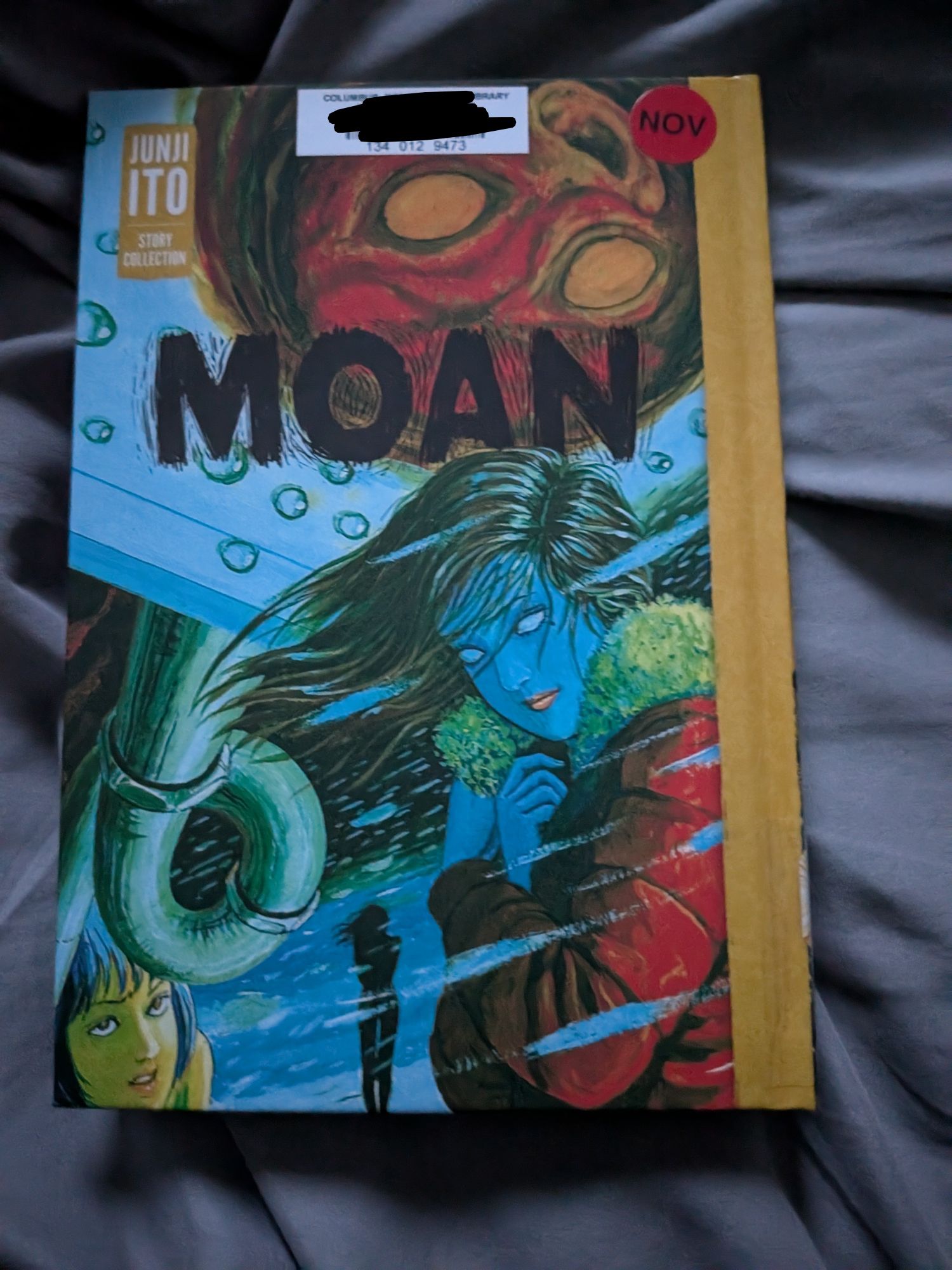
Junji Ito collections, with the exceptions of masterpieces like Remina or Uzumaki, usually rate a 3.8 out of 5 from me. There’s usually some good ones, but the bad ones can really bring down the score of the collection. And with Ito himself admitting in his last collection that as more time goes on, the more he’s scraping the bottom of the imagination barrel, I was braced for a collection full of duds.

In Moan, Ito-sensei gives us four stories of around 60 pages or so, and two shorter ones of about 10-15. And what do you know? This time around, the majority of the stories worked for me.

The first story, “Supernatural Transfer Student,” is fun and imaginative. A small town high school gets a new transfer student, who immediately joins the Supernatural Studies club, which has some possibly-real, possibly-fake psychics. Suddenly, the town is full of weird phenomena right up the club’s alley, and the new kid might be causing it. It’s visually enjoyable and escalates nicely, so I enjoyed it.

The titular story, “Moan,” is about a family whose mother is obsessed with cleanliness to the point of neurotic. When a murder occurs in their home, things start getting weird and a moaning noise comes out of the pipes. Is it the spirit of the murder victim? Or is something else going on here? There’s a sense of claustrophobia and spiraling madness in this story, and the climax is very terrifying. The story ends a bit too abruptly to me, but I attribute that to manga publishers having a limited page count (still would have liked ten more pages to give the story a proper ending). Other than that, the story is chef’s kiss levels of good.

“Blood Orb Grove” is a tale of vampirism that has an interesting twist on the lore of vampires. It’s good, but there’s a bit too much talking and needless info-dumping in the climax. Meanwhile, “Flesh-Colored Mystery” is a great and imaginative story about how much someone’s beauty standards can mess up the lives of others around them. It’s visually creepy and the themes of beauty and abuse really resonate. Perhaps the ending for this one is also a bit too abrupt, but I still enjoyed it.

The fifth story, “Near Miss,” is very short and unimaginative, and is honestly the low point of the collection. However, the last story, “Under the Ground,” makes up for it with an engaging story that has a predictable, but still very well done, twist at the end.

All in all, I really liked Junji Ito’s Moan. On a scale of 1 to 5, I’m giving it a 4.5, much higher than the usual score. There’s some great stories here, and they’re all done with Ito-sensei’s iconic art style. Hell, some like “Moan” or “Blood Orb Grove” might make for great movies, so long as they were live action (at this point, I’m convinced you can’t make a good animated Junji Ito adaptation). Just avoid the fifth story in the collection, and you won’t regret reading it.

Hurricane Debby. She made things very crazy.

You know how, when people go down to Florida during spring or summer break, they have all these wild stories to tell? Odd mishaps, hilarious misadventures, fascinating tales of self-discovery? Yeah, I never had any of those. When I was growing up, the few times I visited Florida was with family. And when I got old enough to go on spring or summer trips, I worked and stayed home because I couldn’t afford the trips. And when I could afford them, I had other things that required my attention.

So, when I learned I was going to be attending a conference related to my day job in Florida with several of my coworkers, I hoped I’d get something I could call my wild Florida story.

Hoo-boy, did I get what I wished for! Because, as I’m sure many of you know, we had a hurricane last week. Hurricane Debby. And she caused the conference to be canceled…while some of us were already in the air.

Yeah, I’m not kidding. Me and about four other coworkers, including my boss, were up at the crack of dawn to get on the plane and head to Florida. And when we got off the plane, about half an hour later than expected due to the rainy weather, and then my coworker Charlotte tells us all, “Hey, I just got an email from Headquarters. The conference is canceled!”

Well, you can imagine how upset and confused we were about that. Here we are, already in Florida, and the reason we paid company money to get here is now up in smoke! In the end, we confirmed our hotel rooms hadn’t been canceled and made our way to the hotel. After that, it was decided that we would all just spend the week working from Florida and try to get home when we could. Worst case scenario, we’d go home on the days we were originally scheduled to.

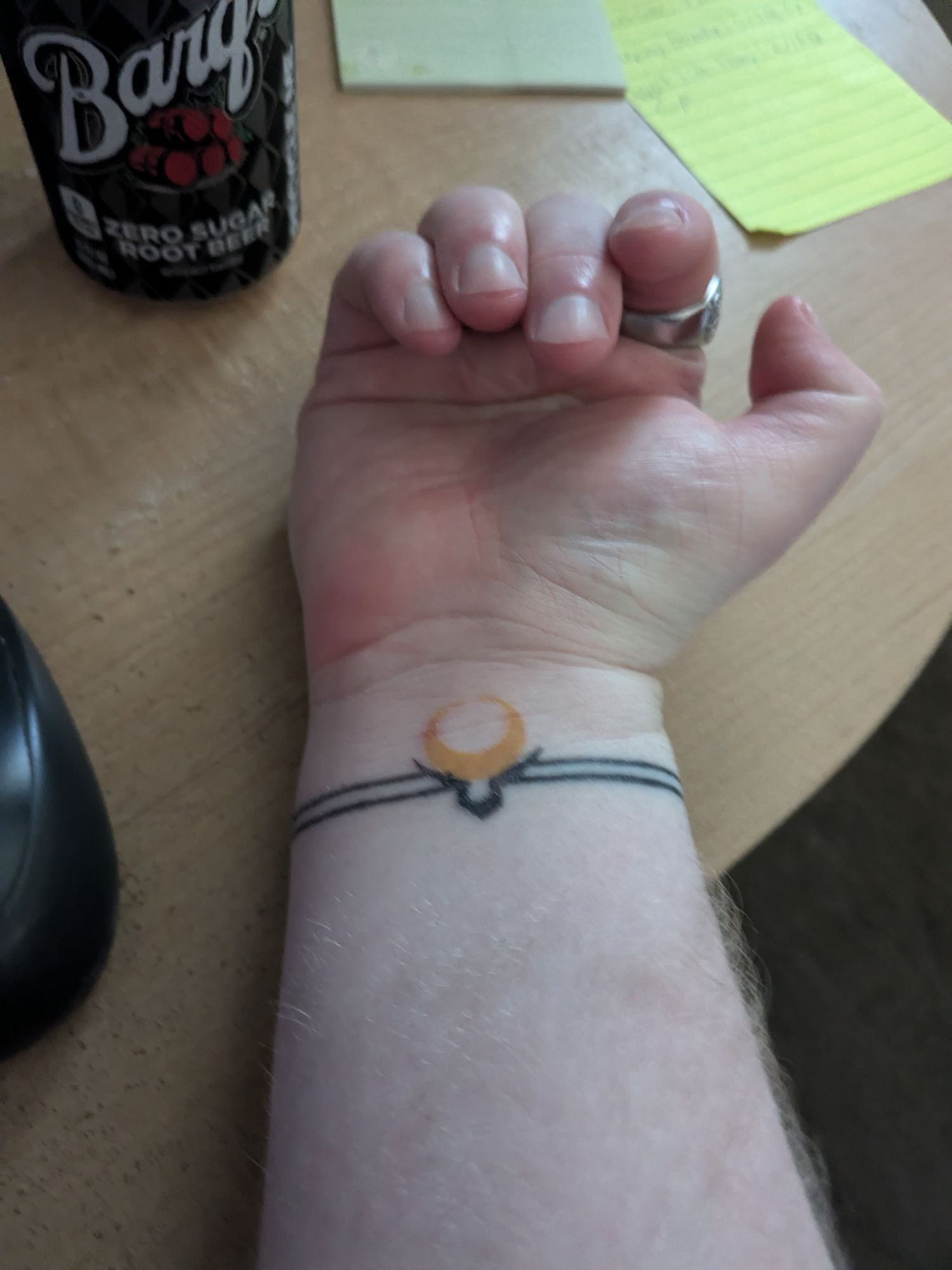
So yeah, that was pretty wild. But it gets wilder. You see, the hotel we were staying at is attached to a mall (begin Googling now to figure out which one we stayed at). And in that mall, there’s a tattoo parlor. And I went into that tattoo parlor. And when I came out, I had….a tattoo!

A pick of my tattoo taken on my desk at home.

Yeah, bet you didn’t see that coming. Still, going to Florida and returning with a tattoo from a local shop does feel like something that would happen on a wild Florida trip. And I’m quite satisfied with the result. The two symbols are from two anime I’m quite fond of, with two bands around my wrist like a bracelet.

And don’t worry, my workplace is generally tolerant of tattoos, depending on the placement and what they’re depicting.

After all that, my week was generally calm. During the days, we would work from our hotel rooms, and I think we all got a ton done from our hotel rooms (I know I did). In the evenings, we mostly stuck around the hotel, since only one of us had a rental car and rideshares are expensive. However, we did go out on Wednesday to a buffet restaurant that served Mexican and Chinese food for some reason. That was fun.

We also spent some time in the mall, which once you ignore the pounding noise and ton of people, could be fun. My favorite part of the mall was the revolving sushi bar, where you were able to grab sushi from a conveyer belt. If you haven’t tried that, it is a blast! See if any are in your area! In addition, there was a bar that served frozen cocktails. Let’s just say I had more than one of those during the week (though always on my own time).

Of course, it wasn’t all finishing work assignments and spiked slushies. For one thing, I found six ants over the course of the week in areas they shouldn’t be (AKA indoors with me!). Those ants are no longer among the living, believe me. And on Thursday, I helped one of my coworkers, who was nervous about flying the next day, with some hypnosis. And she even let me film it and post it to YouTube, which you can watch below! (I recommend putting in your earbuds and turning the volume up for this video.)

After that, it was pretty quiet. I had my last night in Florida, and then I flew home.

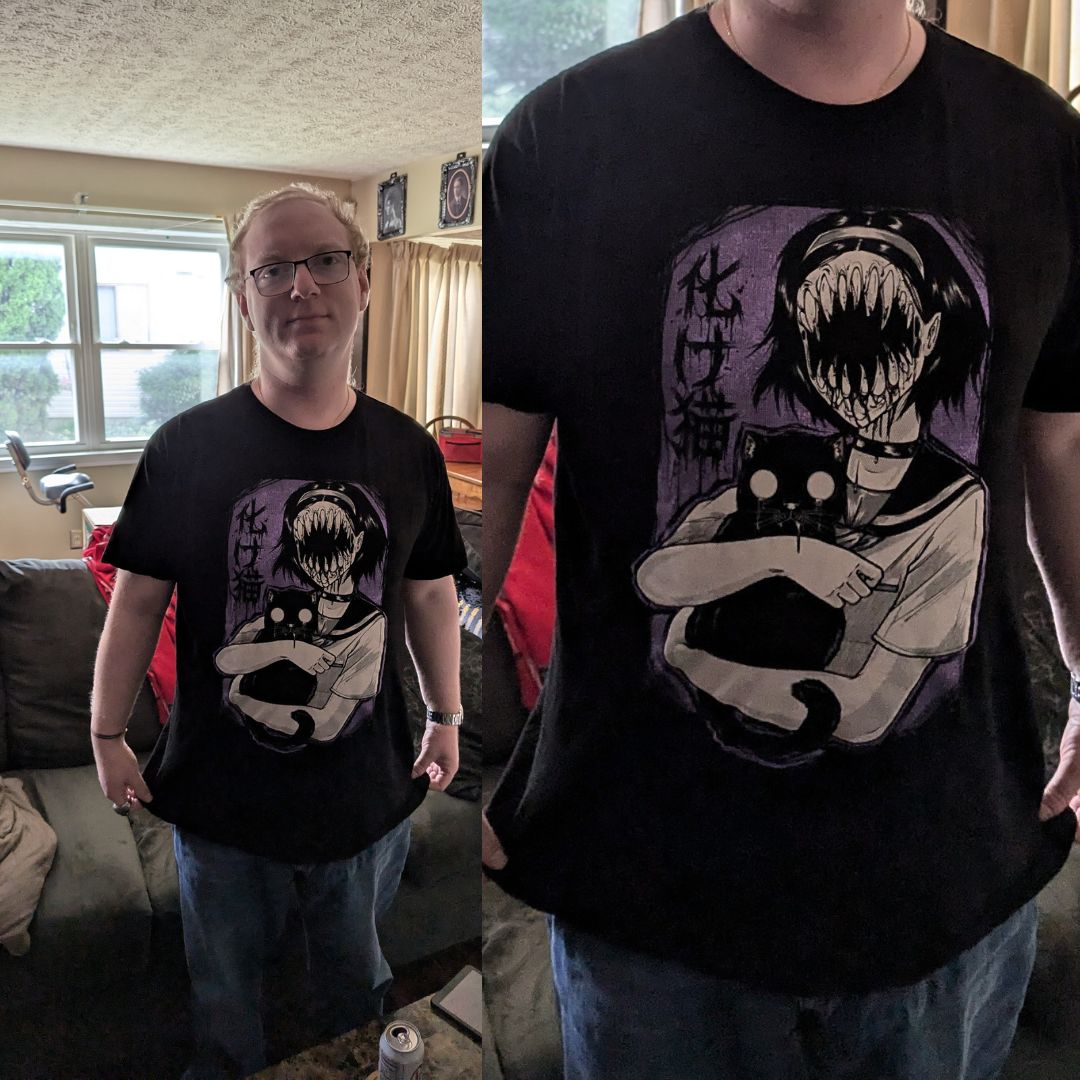
So yeah, I got my wild Florida story. Maybe, at 31, I got it a bit later than other people do, but damn, was it fun and unpredictable and I got some souvenirs out of it (including the utterly creepy tee from the mall’s Hot Topic that I’m wearing below). Whether or I not get a story out of any of it, I don’t know (though the idea of a Florida trip gone wrong is fertile ground for a horror story).

Terrifying tee, isn’t it?

But now, I’m home, and I’m enjoying being here for a good, long while.

And maybe it’s just me, but I think things are going to work out for me over the coming weeks. Here’s hoping that actually happens.

And in the meantime, until next time, good night and pleasant nightmares, my Followers of Fear.

Earlier this week, I tried to write a story about a cursed anime. And I thought I would have a blast writing it. I mean, horror and anime, two of my great loves! And for a bit of added fun, maybe some ballet, because God knows I like putting that into my stories like King enjoys throwing in psychics and other writers.

But for some reason, while working on the outline, I just couldn’t make it work. Every time I tried to add to the outline, I just felt blocked and frustrated. After a while, I just figured that I would need to find a different way to tell this story, so I put it back in the proverbial idea bin.

And you know what? That’s okay. This sort of thing happens to writers of all stripes, not just me. Sometimes, you just need to put the story away and hope a way to tell it eventually comes to you.

That’s what Stephen King did for Under the Dome. He tried numerous times to write that novel, but it just didn’t click for him. Not for around thirty years. But eventually he was able to find some way to get unstuck and knock out one hell of a doorstopper novel.

Who’s to say that couldn’t happen with this anime story? Either that, or I could make a graphic novel out of it, provided I could find a good artist to work with.

For now, though, while I wait for that story to click or an artist to collaborate with, I have something new to work on. A story about a 3D printer from Hell. And judging by the progress I’m making in the outline, I won’t have the same issue. Yeah, I’m still figuring out where it’s going, but I’m figuring it out by leaps and bounds.

Makes me think it could be one hell of a read when I’m done. And I’ll have one fun ride while writing it.

I’ve been saying it all weekend, in person and on my other social media: one of the things I love about writing (among others) is getting to add my interests to the stories I write. And not just interests: I get to play with my favorite tropes, character types/archetypes, locations, and so much more.

And I’m not the only one: Stephen King likes to set his stories mostly in Maine or other parts of New England, have characters who are either writers or psychics (with the latter often being children), and just getting into weird ideas like aliens or extradimensional entities. Anne Rice enjoyed placing her stories throughout history, particularly places that are beautiful in some way or another, and telling stories that delve into our cruel but beautiful world (AKA the Savage Garden) via supernatural but very human creatures. Riley Sager enjoys deconstructing and turning classic horror movie tropes on their heads by making them the entire plots of his books, female leads who have some deep trauma in their pasts that affect their present, and a male romantic interest whom they should have no business getting with. HP Lovecraft–wait, let’s not get into him. We know what he liked, as well as what he hated.

As for me, I’ve got a few. For one thing, I like to include ballet and ballerinas in my stories. Part of that is that I love ballet like some people like football, but there’s also a symbolic reason. As I’ve said before, corruption of the innocent is one of my favorite elements of horror and ballerinas, particularly young ballerinas, are a symbol of innocence to me. With that reason, it’s no wonder I tend to add ballet and ballerinas to my stories when I get the chance. Though given that I write horror, I often put those poor dancers through hell. Just look at Maddy Taggert in Rose and Annie Hummel in “The Dedication of the Hight Priestess.”

Though whether or not that pattern holds with the dancer character in Crawler, I’ll let you guess.

I also enjoy putting my nerdy interests into my stories when I can. For example, in my WIP I’m working on now, I’ve included references to anime, fantasy tropes, and Doctor Who, among other things. In that same story, I also modeled two characters after the original detectives in Law & Order and named them after the actors who played them. And with half the story still left to write, I can probably find more room to add those in. It’s a blast when I do!

Some other things I like adding with my work when I can are:

  • setting my stories in Ohio
  • making some of my major characters Jewish like myself
  • noting the tropes I might be using while the character denies that their life is working like a story.
  • references to famous movies and books, especially those in the horror genre
  • my favorite periods in history (such as The Pure World Comes for Victorian England)
  • and powerful, sometimes godlike entities that often come from realms very much unlike our own
I love it when I get a chance to reference this show in a story.

And these are just the ones that I’m aware of. Some things are more noticeable to authors than others. I’m sure as I write and publish more, others will point out things about my writing that I never noticed before but will find very true.

But yeah, this sort of thing is a perk of writing fiction. They say “write what you know,” but what that actually entails is often quite different than what our writing professors often preach. Instead of basing our stories entirely on our own experiences and reality, we weave what we love into our stories and use it to spice up our stories. To make them the stories we would enjoy reading ourselves. And when you release those stories and find people enjoy them and the elements you add in…well, that makes it all the better, doesn’t it?

What are some elements you enjoy putting into your stories when you can, Followers of Fear? Let’s discuss in the comments below.

That’s all for now, my Followers of Fear. I mentioned this sort of thing to my folks after seeing Nutcracker last night and on social media after the Doctor Who reference was written into the story last night. After all that, it just felt natural to blog about it. Now, if anyone needs me, I’ll be making dinner and then getting back to my WIP. Until next time, good night, pleasant nightmares, and happy second night of Hanukkah!

My favorite films surrounding my remote control.

You know, this may not be the biggest issue in my life. And it may not be the meaningful thing I could write about on this blog. But you know, it’s something I find myself pondering from time to time. What do my Top 6 Favorite Horror Movies say about me and my interests?

(It used to be 7, but I realized while making my list that while I enjoyed the film, it wasn’t something I would gladly watch again and again and again, just say the word go. Also, my tastes change over time, so this list could look very different in ten or even five years, as well as grow or shrink.)

But what does it say about me that I enjoy these particular films? What about them draws me to them? I tried to figure it out by listing them and then listing what I liked about them. Here are the films in question:

Perfect Blue (1997)
Based on the novel by Yoshikazu Takeuchi and directed by Satoshi Kon, Mima Kirigoe is a J-Pop idol who is forced by her agency to transition into acting. This and a violent stalker sends Mima into a violent psychological down-spiral, one which may very well claim her life.

  • One of the few good examples of anime horror I’ve come across in my life. The art style is also excellent, where characters and scenes are animated with a sense of realism rather than the usual anime exaggerations. This gives the horror a certain sense of realism that you wouldn’t normally find in anime.
  • The movie works to make you question, along with Mima, every moment of reality. What is real, what isn’t, what’s a dream, what’s part of Mima’s TV drama and what’s her actual life. It’s all up for debate throughout the movie, with the use of color, quiet scenes vs acting and dancing scenes, and repetition of events making you feel the disorientation Mima feels. All leading up to a final third with a horrific twist.

Color Out of Space (2020)
Starring Nicholas Cage and based on the novella by HP Lovecraft (one of my favorites by him, BTW), a meteor falls in a small West Virginia farm, giving off an odd color that can’t really be categorized. Soon after, strange events start happening on the farm, changing the plant life, the family, and reality itself. All leading to a devastating conclusion.

  • Ask most film critics, it’s one of the best HP Lovecraft/Lovecraftian horror adaptations ever made.
  • The film’s very misleading, at first playing up Cage’s penchant for odd acting and adding in plenty of comedy. Later on, however, Cage’s performance goes from funny to sinister, and the humor vanishes as the number of scary events occur and build, filling with you with dread.
  • The mix of practical effects and CGI is well done, with the latter only being employed as absolutely needed and the former being used enough to make fans of The Thing proud. This allows for the final scenes to be really horrifying, even when chock-full of CGI.
  • Just watch the cutting board and alpacas in the barn scenes. You’ll be scarred for life.

Overlord (2018)
During the D-Day invasion, a small troop of American soldiers sneak into a French town to take out the Nazi’s radio tower, preventing the Nazis from calling for help. What follows is a harrowing ride through hell as the team confronts not just Nazis and the horrors of war, but deadly experiments that may end up changing the tide of the war.

  • Despite being a “Nazi zombie” film, which is usually silly or played for laughs, this film plays it much more seriously. The zombies are almost a secondary feature of the film. The real emphasis is on how war scars and changes you, how horrible the drive to win can make a person, and how war brings out the depravity in all of us. When the zombies are on screen, they’re used sparingly, only to heighten the horror and the stakes.
  • During the scenes where the protagonist explores the laboratory, the emphasis on mood and atmosphere creates a powerful dread of what’s around every corner, under every sheet. If you’ve ever seen or played the game Outlast, it often feels like you’re in the middle of that game, and that is a terrifying thought to have.

Sleepaway Camp (1983)
As a young girl, Angela sees her father and brother killed in an accident on a lake adjacent to Camp Arawak. Years later as a teen, Angela and her cousin Ricky go as campers, only for a strange series of deaths to ruin the summer fun. And in the center of it all, Angela seems to be a fixture.

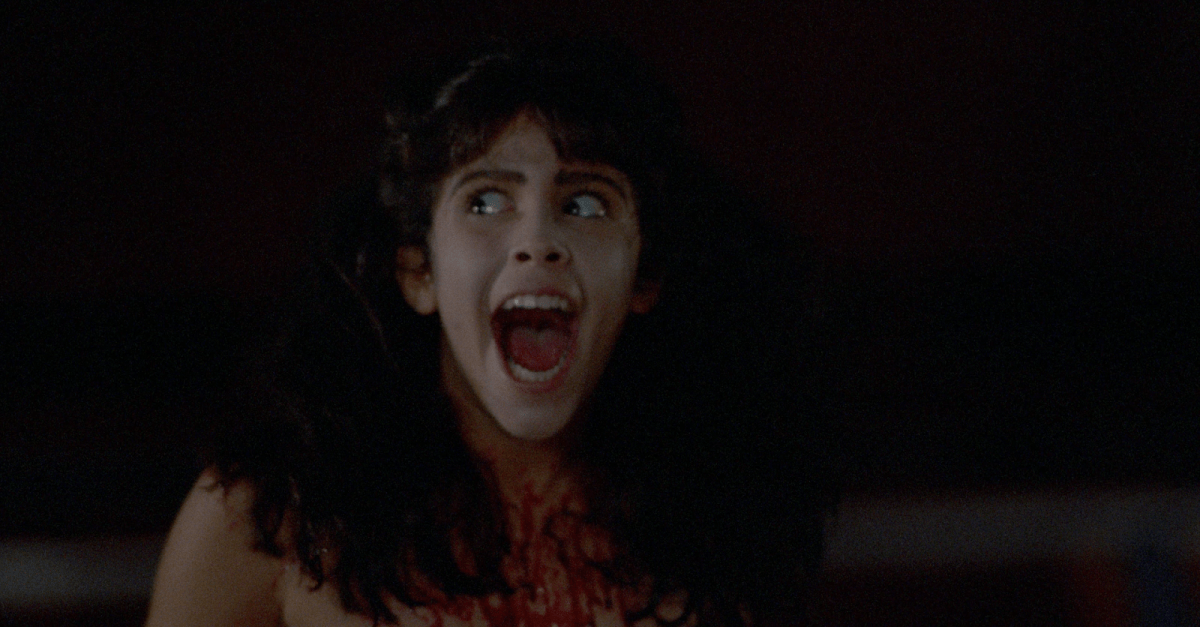
Who else had their mind blown by this moment in the film?
  • This is a rather unique 80’s slasher. For one thing, the campers are all played by actual teens and tweens, rather than adults pretending to be teens. Coupled with the teens language and behavior, it often reminds me of my own camping days, except less Jewish and more murder-y.
  • There are also prolonged periods between (admittedly inventive) kills, which allows you to really get to know the characters and remind you that these are just kids. This makes each instance of death even more shocking and brutal than it would be if they were in your face one after the other.
  • The twist in this movie is rather famous and forces the viewer to recontextualize everything in a new light. I won’t say what happens, but ooh boy, it’s not the sort of thing you could do today. I’d be interested to see how a remake handles this twist and reworks it for a modern audience. Also, I wish there was a novelization for this movie, because it would be great.

The Taking of Deborah Logan (2014)
A medical student is filming a documentary about an older woman’s battle with dementia. While out at her country home, however, it becomes increasingly clear that this woman is dealing with something else besides dementia: a dark presence has come for Deborah Logan, and it’ll use her to accomplish its sinister goals.

  • Both a found footage and a possession movie, the take on the latter is very unique, both in the victim of possession and who/what is doing the possessing. However, since this is a film about a woman with dementia, it misleads you at first so that you don’t know if what you’re experiencing is really supernatural at first. And when it becomes clear that something supernatural is happening, it becomes both terrifying and tragic.
  • Did I mention this film is terrifying? Not just for anyone whose relatives have experienced dementia (and I’ve heard from people that that’s a form of terror in and of itself), but just as a horror movie it is terrifying. From dark and claustrophobic scenes in an abandoned mine to strange happenings in the house and one bloody scene that freaked me the hell out, this is not a film you want to watch with the lights out.

Prince of Darkness (1987)
A Catholic priest discovers an ancient artifact in the basement of an abandoned church that points to the fulfillment of an obscure end-of-world prophecy. Needing to prove it to the world, the priest enlists the help of several prominent professors from a local university and their grad/PhD students to help quantify this strange, evil miracle. As you can guess, shit really hits the fan.

  • One of John Carpenter’s lesser known masterpieces (which I think is a damn shame), the film has a unique take on God and Satan that feels more at home in a UFO cult, but works really well here. It also has some interesting ideas and themes to explore, such as the nature of evil, the relationship between religion and science, and even an allegory for the AIDS epidemic, which was at a peak when this film was made.
  • Also, while not the scariest thing ever, it is pretty damn creepy and has some truly great moments of horror.

So, there you go. These are my favorite horror films right now. And I struggle to find a unifying theme about why I elevate them above all others. Half of them are from the last decade, two from the 1980s, and one from the 1990s. They all place a lot of emphasis on psychological horror, but how and how much varies from film to film. Only two of them are adaptations of anything. No similar genres, directors or writers, different themes are explored in each one, and I own copies of all of them on DVD or Blu-Ray.

Maybe it’s just that they stick in my head more than others, or that they impressed me in some way that other horror films haven’t. Perhaps they’re the kind of stories I wish I’d wrote, or I like thinking of what I’d do with the material. Wait, no, it’s not that. I think that with every horror film.

If nothing else, I’ll be able to discuss films like Perfect Blue and Prince of Darkness with more people.

Well, maybe you’ll help me find some insight. If nothing else, there’s a chance you’ll be curious enough to see these films if you haven’t watched them before, or give them another watch if you have. You may even notice something I don’t.

You may even make some of them part of your Halloween watchlist this year (63 days till Halloween at the time of this writing). And if you do, I also recommend adding Carnival of Souls (1962), Killer Klowns from Outer Space (1988), Rosemary’s Baby (1968), As Above, So Below (2014), The Void (2017), both versions of The Fly (1958 and 1986), the 2013 remake of Carrie, It (2017), and Freaky (2020). All make great additions to your Halloween viewing lineup. Not to mention all the movies coming out starting next month. I’m getting chills just thinking about it!

Anyway, this has been a long post and it’s getting late. I’m going to end it here and call it a night. Until next time, my Followers of Fear, good night and pleasant nightmares!

What are your thoughts on these films? Did you notice anything I didn’t? What are your favorite horror films that you recommend to everyone?

Alma Katsu. Photo by Evan Michio

Some of you may remember at the start of the pandemic I had the pleasure to interview Alma Katsu, author of the critically acclaimed novels The Hunger and The Deep (you can read that interview here). I loved both novels, which took on the historical events of the Donner Party and the Titanic, respectively, and turned them into supernatural horror stories. It won’t surprise you, then, that I’ve been looking forward to her next historical horror novel for a while now.

Two pieces of good news: first, Ms. Katsu has a new novel, The Fervor, coming out in late April! The novel takes place during World War II at a Japanese internment camp and involves a strange disease and a stranger monster from Japanese legend. Yeah, you can tell this is right up my alley!

Second pieces of good news: Ms. Katsu has agreed to let me interview her about the book! So without further ado, let’s talk to Alma Katsu and find out why you should be as excited as I am for her new novel.

Rami Ungar: Welcome back to the blog, Ms. Katsu. Please tell us about The Fervor and how it came about.

Alma Katsu: First came the decision to set the next book in WWII. That had to do with trends in publishing, frankly; I’d sat in on the editors’ panel at the Historical Novel Society conference a few years ago, when it was time to come up with a proposal, and their advice was that historical fiction was pretty much dead except for WWII. I’d always thought it would be interesting to write about the internment camps, but then the question was how to turn that into a horror story? Objectively, the horror should be pretty evident: here was a government locking up its own citizens, people who hadn’t committed a crime, because they didn’t trust them. Because the average citizen (with the help of propaganda) believed that Asians were inherently sneakier and untrustworthy.

RU: You’ve talked about your Japanese heritage and how it influenced the story. Can you go into that for us?

AK: This was the first time where the main character of the book has the same ethnicity as me, and it was pretty eye-opening. For one thing, as I was writing I realized that I had a lot of resentments about the way my mother had been treated coming to America after the war, and the way I’d been treated as a minority (to a lesser extent) bottled up inside. Add to that the preconceptions about Asians and Asian women, in particular. This was an opportunity to write the truth, to dispel myths. It was freeing.

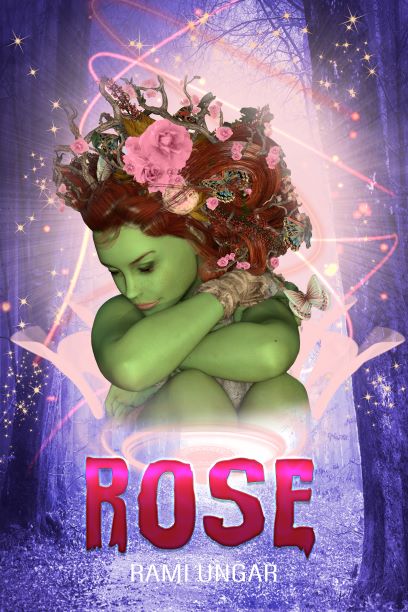
RU: I can only imagine! And speaking of Japanese elements, there’s been a surge of stories inspired by Japanese culture, particularly yokai, in the West. Some examples include Nothing but Blackened Teeth by Cassandra Khaw and my own novel Rose. What do you think of that surge, and where do you think it comes from?

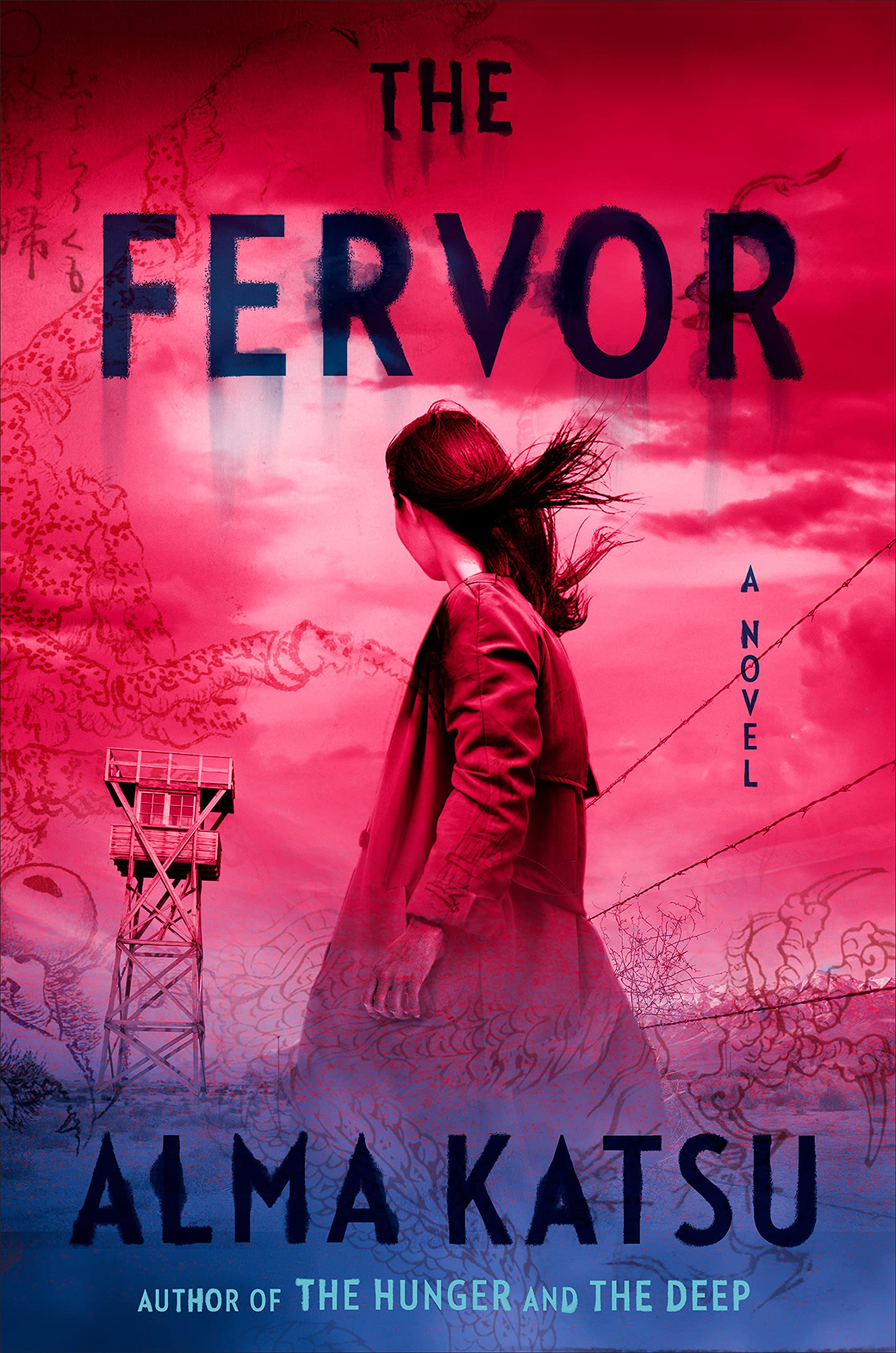
The Fervor by Alma Katsu.

AK: I’m afraid I don’t have much to offer here. I know some folks are big into Japanese folktales and such, so I’m not aware of a surge per say. It always seems to be fairly popular thanks to anime! Japanese yokai and yurei are part of the fabric of life for Japanese, and so I’d heard and read stories when I was a kid, and it didn’t seem you could tell a horror story with Japanese characters without incorporating it in some way.

RU: Well, I can attest that anime was definitely an influence on me. Anyway, The Fervor also involves an epidemic in a Japanese internment camp. Did the COVID-19 pandemic influence your decision to include that?

AK: I drew on COVID, yes, the feelings of mass panic and confusion, but The Fervor is about racism. I decided to write it after watching what’s been happening to this country over the past four years or so. I’m not naïve but it’s been bewildering to see racism go mainstream in America. It’s comforting in a way to think it could be a disease, something you could catch, as that at least is understandable. The January 6th attack on the Capitol also influenced the book: The Fervor was an attempt to look at what this country has been going through and compare it to another horrible incident in America’s past, and show that we haven’t changed much.

RU: I’m looking forward to seeing how that plays out in the book. So, what research did you do for the book?

AK: This was different from The Hunger (the Donner Party) and The Deep (the sinking of the Titanic), events that I didn’t know a lot about. I already knew a lot about life in the internment camps, because I’d heard stories from my in-laws, seen documentaries and read articles. I knew what the issues were, I knew how the interned felt and what they had gone through. For the book, it was more a matter of filling in the gaps. I lucked out in that a neighbor’s family had been interned at Minidoka, which is featured in the book, and had a trove of documents from the camp: maps, rosters, newsletters, all kind of non-official documentation that typically gets lost to time. It was a real windfall.

RU: Yeah, primary sources like that are always a boon when writing about history or using it. And speaking of which, you’ve written about the Donner Party, the sinking of the Titanic, and now the Japanese internment camps. Are there any other ages or historical events you would want to write a story about?

AK: After doing three books and having them change a bit each time (going from being fairly close to the history to becoming reinterpretations of events, maybe just shy of alternate histories), I think it’s time to re-evaluate. I’m sure there are plenty of interesting historical events (I’d love to do another Western, for example) but I’m a little burned out on close reads of history right now.

RU: Fair enough. Switching gears a bit, what are you working on nowadays? And when can we expect to see the TV series based on your spy novel, Red Widow?

AK: I just handed in the second in the spy novel series, and though I’m sure it’ll need some work, I’m glad to have that behind me. I’m working on a new project that I can’t talk about at the moment, and hope to be pitching a few TV proposals soon.

Red Widow, the TV series, is chugging along. The pilot script is being polished right now, and we hope to know whether we’ll be shooting the pilot before too long.

RU: Final question: what are you reading these days? And are there any recent reads that you would recommend others check out?

AK: There are so many great books coming out this year that it’s hard to single out just a few. Let’s see… SA Barbes’ debut Dead Silence just came out. It’s space/horror: think Aliens meets Titanic.  It’s a lot of spooky fun. I had the opportunity to read Andy Davidson’s The Hollow Kind, a wonderfully suspenseful, creepy southern Gothic with a dual timeline. It doesn’t come out until October, however. I’m really excited for Catriona Ward’s next novel, Sundial, which I think I liked even better than Needless Street.

RU: Well, thank you for joining us, Ms. Katsu. It was a pleasure to have you again. Please keep us posted on your progress.

If you are interested in The Fervor, you can preorder it now from most retailers. You can also check out Ms. Katsu’s other books, including The Hunger, The Deep and Red Widow. And, of course, you can find Ms. Katsu on her website, Facebook, Twitter and Instagram.

That’s all for now, my Followers of Fear. I look forward to reviewing The Fervor this coming spring. And in the meantime, I’m sure I’ll be back soon with plenty to share with you. Until next time, good night and pleasant nightmares!

So this past week, I watched an anime series that turned out to be pretty bad (I swear, this is related to writing and isn’t another anime-themed post). There were several reasons why it was terrible, but a major reason was that the main character was the reincarnation of a guy who died in our world and was reborn into a fantasy world with most of his knowledge and memories intact.

As we’ve discussed on this blog before, anime where characters from our world end up in fantasy worlds are called isekai anime. Because the main character(s) are from our world, that usually plays a large part in their character. The audience can’t watch the show without remembering that this character is from another world and the original world influences their personality and decisions in a hundred different ways.

And this anime…didn’t really do that. Like, the protagonist used some of his scientific knowledge from his previous life to make his magic stronger and invent new devices. But other than that, I often forgot he was from another world. At one point, I found myself thinking, “You know, they’ve already established this guy as a quirky magic genius. They could have written out the isekai element, attributed his knowledge of oxygen and the theory of folding space to his unusual brain, and the show would have one less problem. It wouldn’t be great, but it would have one less problem.”

And that long-winded intro leads into the subject of today’s post. How do you find a story element that’s actually hampering the story rather than improving it? What prevents a writer from creating the sort of pitfalls, be it an unnecessary character or adding an isekai aspect to the story when it serves no purpose? Or if they do, how do they find it and get it out before the story is published?

I had to make a lot of these decisions during the editing of “Rose.”

Well, part of it is experience. Namely, as we become more experienced writers, we get used to figuring out what elements work and what don’t. It’s like a voice in the back of our heads is asking, “Does this work? What does it bring to the story? Would the story suffer if I removed it?” This happened a lot when I was doing major rewrites of Rose. Rose’s fiancé Mark had a slightly larger role in earlier drafts, but during the rewrites, when I was taking the plot in a different direction, I realized that Mark couldn’t fulfill that role anymore. He still had a part to play, but the part he’d played previously made no sense in the new direction. If I kept it, it would have not served the story. Thus, Mark’s role was reduced to what it is in Rose now.

Something similar happened while writing The Pure World Comes, but that will have to wait till it’s published.

But if you do miss something, that’s where beta readers and editors come in (and why it’s important to use them before you try submitting/publishing a story). Back to Rose, while I was rewriting the book, my publisher recommended I cut out the flashbacks, which were about a third of the book. I was confused and a little upset, as I was very proud of those scenes. However, I realized that flashbacks need to connect to the main events of the story. And while the flashbacks did explain plenty about Rose‘s character in earlier drafts, it didn’t connect much to the current events, so I nixed them and started rewriting.

See? Editors and beta readers do help.

But what if you really like an element in a story and there’s a strong indication you need to nix it? Well, then you have a choice to make as the creator. In the case of the anime I mentioned, the creator, if confronted with this choice, could have either made the fact that the protagonist was from another world more essential to his character or the plot. Or, like I suggested, he could have nixed it.

You may not like it, but sometimes you have to throw out problematic elements if you can’t find a way to make them work. Photo by Steve Johnson on Pexels.com

And that’s what it often boils down to. Authors can either cultivate those elements so that they actually matter and don’t bring down the story, or they can “kill their darlings” and nix the elements. This can be hard to do, as we may love those elements as much as we love the very stories we write.* However, it’s a decision we eventually have to make with our stories if we want to not only continue with these stories, but share them with as many people as possible.

No author likes to hear that they need to nix something from their story because it adds nothing or brings the story down. However, it’s important to hear and learn to deal with them, as in the end, it helps to improve the story and maybe even get it into the hands of many readers. And besides, it’s better than having a lot of people complaining about the problem elements after release, right?

That’s all for now, my Followers of Fear. I have a busy week ahead of me, but I’ll be back before too long. Until next time, stay safe, pleasant nightmares, and if you’re looking for a good isekai anime, let me know. I have recommendations.

*Though I think the creator of the source material for the anime, he did it because isekai stories are hot right now, to the point that they’re inundating the market. It’s a problem we anime fans both joke and groan about.

In my last post, I mentioned that I was prepping to move into a bigger apartment and was getting ready to do so. While going through some stuff, seeing what I wanted to keep and what I wanted to donate, I was surprised by what I found hidden at the bottom of a box: my three contributor copies of the Winter 2011 issue of TEA, A Magazine. This is significant because this was the first time I was paid for a published story!

While my memory can be very unreliable sometimes, I remember that story, and that magazine, so well. I was still in high school then, and I was just starting to try and get into the short story market. In those days, I was regularly borrowing these annual guides on the short story market, reading the articles for anything I could use to improve my own storytelling techniques and looking at the listings of magazines and small presses I could submit my work to. One of the listings was for TEA, A Magazine. You can guess what it was focused on. Articles, ads, recipes, and even fiction centering on tea.

I was a big tea drinker even then, so I was intrigued. And I thought, Why not try to write a short story about tea and send it their way? And I did, a short story called “Summers with Grandmother Fumika.” And as you can tell from that title, I was a huge nerd for anime, manga, and Japanese culture back then. In fact, I was crazier about it then than I am now! But back to the short story. “Summers with Grandmother Fumika” was about a young Japanese-American girl who stays with her grandmother during the summers, and one summer, they perform a tea ceremony for a kitsune, a multitailed fox spirit.

Definitely more fantasy-based than Rose was, though they both drew upon Japanese culture. And it had a happier ending.

I don’t think I really expected TEA to accept my work, but to my surprise, the editor actually enjoyed the story and wanted to work with me on it. A couple of months of edits, and they sent me a contract. Not too long after, they sent me a $100 check for the story, as well as my contributor copies.

My short story in the issue, “Summers with Grandmother Fumika.”

Edgar Rice Burroughs, the creator of Tarzan, once said that he could make a million dollars in his lifetime, but he would never feel richer than he did the moment he received a $400 check for his first story, A Princess of Mars. For me, I have the same feeling about that $100. Not because I grew older and $100 didn’t seem like such a big deal as it did in high school. But because that check came with more than just monetary meaning. It came with validation.

Imagine, only 17 and someone thought that something you had written was not only good, but they wanted to pay money for it! To include it in a magazine read by hundreds, maybe even thousands of people! “Intoxicating” doesn’t even begin to cover the feeling I had then. And I’ve been chasing that feeling ever since, trying to replicate it.

Of course, like any addiction, nothing ever compares to that first high. Thankfully, with this addiction, there are plenty of other perks when I manage to publish something people enjoy. You can probably guess what they are.

I’m glad I was able to rediscover that story and those contributor copies. It’s been so long, I’d forgotten that I even had them. And with it being around ten years since that issue of TEA was released, it feels almost timely. Makes me want to do something with “Summers with Grandmother Fumika.” Maybe a reading on a YouTube video? It’d be more fantasy than horror, but I’m sure there would be some people interested in hearing me read it. We’ll see after the move.

Anyway, thanks for strolling down memory lane with me, my Followers of Fear. It was a nice, warm, nostalgic moment in my day and I wanted to share it with you. And it reminds me that, even though it’s been awhile since I’ve had an acceptance, it doesn’t mean it won’t happen in the future. Hell, if I can do it at 17, then I can do it at 27. Just a matter of time, work and finding the right publication.

Until next time, my Followers of Fear, good night, Shabbat Shalom, have a good weekend, and pleasant nightmares.

My friend Kat Impossible over on Life and Other Disasters did her rendition of this tag, and it looked fun. So, let’s pretend it’s Halloween year-round and answer some spooky questions about a WIP (as well as general questions on writing)! And since last time I did Toyland, I think this time around I’ll talk about The Pure World Comes, my Victorian Gothic novel that I wrote earlier this year.

But I’m going to need a blurb first. Hmm…how about this:

Shirley Dobbins has very few wants in life: to be able to become the head housekeeper of a great house someday; to not think on her life before she started working; and to earn a reputation as a reliable maid. So when she is hired by the enigmatic baronet and scientist Sir Joseph Hunting to work at his estate after the sudden death of her employers, she can’t believe her luck.
However, things at the “Hunting Lodge,” as Sir Joseph’s home is known, are far from the ideal position she hoped for. Not only is there barely any staff at the crumbling mansion, but terrifying visions oppress those within at random moments. Those Shirley sees bear resemblances to her past. As she becomes more wrapped in the secrets of Hunting Lodge and Sir Joseph’s scientific work, she unearths a terrible threat not only after her life, but the lives of all those around her.

How’s that? Intriguing enough? Anyway, onto the questions.

GHOST: Have you ever originally put a character/scene/theme in the book and then later taken it out?

  • Character – Yes
  • Scene – kind of
  • Theme – No

I originally had this character, the eldest son of an up-and-coming merchant family, whom Shirley would have feelings for despite her practical, no-nonsense self. However, when I finally started plotting this story, I couldn’t find a place for him in the story, so I axed him out. His disappearance from the story led to some scenes that I’d originally had in mind being axed as well, but I wasn’t that fond of them to begin with, so it worked out.

BAT: Most misunderstood character in your WIP?

I had a bit of a debate on this, considering that we see things through Shirley’s eyes and once she sees someone a certain way, it can take a while for her to see them in a different light. But then I remembered that Sir Joseph Hunting is, without a doubt, the most misunderstood character. He’s not a fan of normal Victorian pastimes or conventions, and he’s squandered his family fortune in pursuit of his scientific research. And Victorians, particularly those of the noble and almost-noble classes, placed a lot of emphasis on appearances, so Sir Joseph’s anathema to them.
It doesn’t help that he’s a bit of a jerk.
That being said, once you get to know him a bit, he’s actually a very sympathetic character. You also see why he devotes himself to his research, and maybe even believe in what he’s doing. If that’s not misunderstood, I don’t know what is.

JACK-O-LANTERN: What is your most common source of inspiration to write?

Is it a law that writers get asked that question at least several times in their careers?
The obvious answer is everything. Stories I’ve read, places I’ve been, people I’ve met, conversations I’ve had, subjects I’ve researched. All these and more combine in my weird head to create stories for me. Some of them are even good and border on original. Those are the ones I try to write into something worth reading.

ZOMBIE: What is your preferred form of writerly fuel? Coffee, tea, etc.

Tea most of the time, though if it’s early in the day, I may have a diet soda. On weekends or certain occasions, I may have something alcoholic, but I’m not able to write as well as I would like when even a little buzzed, so I avoid it.

Photo by Lisa Fotios on Pexels.com

VAMPIRE: Cheesiest trope that made it into your novel?

Okay, you know that trope where two people who don’t like each other spend more and more time together and then they fall in love? It was really popular in movies and a few TV shows back in the 1990s? I may have included that one in this story, though I tried to put an original spin on it.
I’ll leave it for the critics to tell me if I succeeded.

Yeah, the trope from 10 Things I Hate About You. I used a version of it. Hopefully I used it well.

SPIDER: What’s a character in your WIP that’s fine from afar, but you would NOT want to interact with if they ever got close?

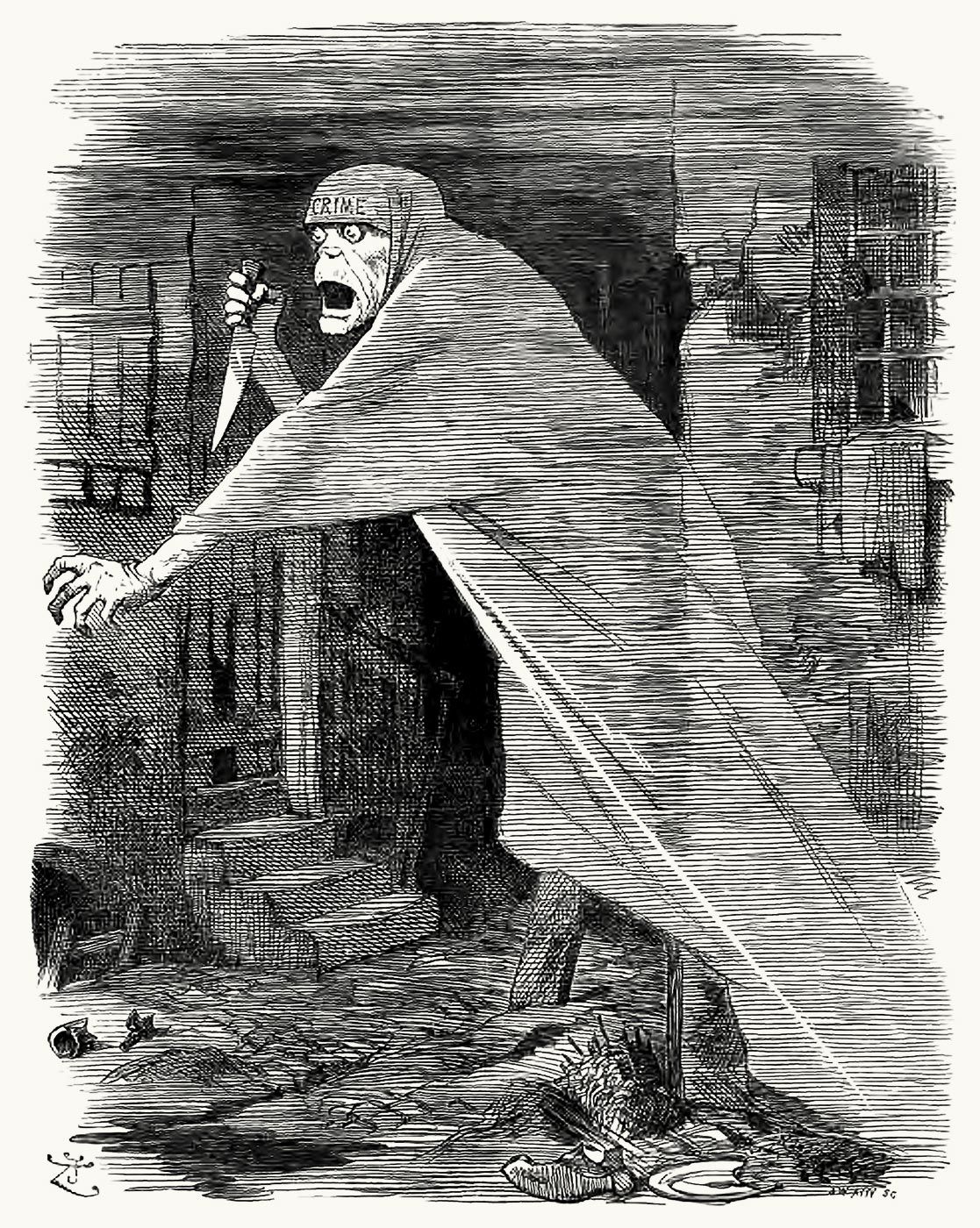
I’ve mentioned before that I worked my theory of who Jack the Ripper really is into this story. Well, that’d be my answer. And I’m not saying any more on that until this book comes out!

Famous illustration of Jack the Ripper from Punch Magazine. He figures into my story, but not in a way you might expect.

FRANKENSTEIN’S MONSTER: Ever split one character into two/combine two characters into one?

Maybe? I can’t recall! I’ve written so many characters over the years, I’ve kind of lost track.

SKELETON: Best advice for adding character baggage without info-dumping?

Ooh, that’s a tough one, especially because it’s a tough subject. I try to spread my characters’ baggage and backstories throughout the story. Think of it like walking on a path, and you find puzzle pieces every now and then. Some are big, some are small, but they fit together perfectly. As you gather the pieces, a picture starts to form. And somewhere along the way, all the pieces come together to form a full picture. That’s how I try to spread character baggage and backstory.
That being said, sometimes I drop very big pieces sometimes if the story calls for it. Not ideal, but it’s necessary. And when that happens, if I’m able to, I at least try to just drop a big chunk here and there, rather than just a whole picture. That way, the information is palatable, rather than an info-dump.

CAT: What’s a polarizing writing/book-related opinion you have?

Why cats? Most of the writers I know are cat people! Often their cats are as sweet as their owners! I plan to get cats as soon as I have a bigger space. Preferably a three-bedroom house with a nice front and backyard and an attached garage.
Never mind. I don’t really have any opinions like that. At least, I don’t think I do. I could tell you about some books I didn’t care for, but they’re the kind of books either people like or they don’t. Sorry I don’t have a scandalous answer. You’d get a better answer with my controversial movie opinion, so I’ll tell you that: I enjoyed The Last Jedi, problems and all. There, I said it. What are you going to do about it?

DEMON: Most frequent writing distraction?

Anime and TV shows. Once I get started on a binge, it’s hard to stop. Either that or my cell phone.


Well, what did you think of my answers? Do you want to read The Pure World Comes now? Let’s discuss.

Now for this tag, tagging isn’t necessary. So if you want to do it, all the power to you. I hope you have fun and make sure to link back to me so I can read it.

That’s all for now. If anyone needs me, I’ll be casting magic to save this country. Until next time, pleasant nightmares!

My friend and fellow blogger Kat Impossible did this tag over on her blog (you can check the post out here). It’s just the kind of thing that’s write up my alley, so of course, I’m doing it as well. And hell, it gives me a good opportunity to talk about my current project, the second draft of Toyland, so why not?

Rules

  • Provide a short description of your story.
    Mason Prather has lived at Auckland Academy with his stepmother, the headmistress of the school, for years and has always thought of it as his home. However, at the beginning of his sophomore year, strange and disturbing events begin to plague the student body. Eventually, Mason and his friends trace it back to a spirit, a ghost with a long history with the school and an obsession with a children’s book. They decide to stand up against the ghost, but with the supernatural, nothing is ever as it seems. Especially at Auckland Academy, where its sordid history is very much alive today.
    Okay, that wasn’t very short. But it’s a decent first draft for a blurb, so I’ll go with it.
  • Don’t use the same character for more than 3 answers.
    I will try my best.

Questions and Answers

It’s Halloween night! What’s your protagonist dressed up as?
Mason’s a nut for anime and manga like me, so his first choice would be to put together some sort of cosplay from one of his favorite shows. That being said, cosplay can be expensive and there’s only a few other anime fans at Auckland, so he’d likely pick something more mainstream. Perhaps a vampire, or some sort of sorcerer.
Though if he were to do the anime character, it would probably be Rimuru Tempest from That Time I Got Reincarnated as a Slime.

Rimuru Tempest (human form) from That Time I Got Reincarnated as a Slime.

Who in your cast refuses to dress up and shows up at the Halloween party without a costume?
My first thought was Emily Fasko, a friend of Mason’s. She’s very religious and would be very conflicted about wearing a costume for a holiday with pagan roots.
However, I feel more like David Simple, an acquaintance of Mason’s, would be less likely to dress up. He’s a bit more introverted and private, so he wouldn’t want to put himself out there in a silly costume.

Which character wears the most outrageous costume, and what would it be?
Probably Abra Brashear, Emily’s roommate and another friend of Mason’s. She’d enjoy putting on a costume, something flashy, and being the center of attention. Maybe a popstar or a vampire queen. As long as the costume has a lot of sparkle to it.

On Halloween, werewolves, vampires and zombies are on the prowl. Which of your characters get caught in their clutches, and which creature do they subsequently turn into?
Well, if I told you that, it might be considered a spoiler. So, unfortunately, I’m going to have to pass.

Who wins the contest for best costume?
Annabelle the ghost. Her powers would easily allow her to put on any sort of costume, but especially one that would win a contest.
And yes, Annabelle was named after the famously haunted doll, made famous and more terrifying by the Conjuring movies.

The namesake for the character of Annabelle in Toyland.

Who hands out toothbrushes to the trick or treaters?
Theresa Auckland, the founder of Auckland Academy. That’s the sort of thing she would do.

Which two of your characters decide to pair up and do an angel/devil costume together?
I can’t really see any of my characters doing that. Emily might like dressing up as an angel, but she would object to going with anyone dressed as a devil. Like I said, religious.

Someone is too scared to even attend the Halloween party. Who is it?
I can’t think of any of my characters being too scared to go. Some, like Carter Kennedy, the class hothead, or Sarah Lewer, Mason’s best friend, might not attend. But more like they’re too cool for the party (though I think Sarah would go with enough prodding).

Who overdoses on candy and gets sick?
Max and Elle, Mason’s younger half-sisters. Yeah, Mason’s dad and stepmom would try to monitor those kids’ candy, but those two are a wily pair. Afterwards, they’d learn their lesson and never do it again, but it would make for a memorable Halloween experience.

Which character is most likely to put a hex/curse on someone and who would they put it on?
That one’s definitely a spoiler, so I refuse to answer that one.

I Tag You!

If you want to try this tag, then please do. But I’m tagging these individuals. By the dark powers of October, I command you to do this tag! Mwa ha ha ha!

  • Priscilla Bettis
  • Iseult Murphy
  • Joleene Naylor
  • Ruth Ann Nordin
  • Matt Williams
  • Angela Misri

How did you like my answers? Did the blurb above get you more interested in maybe reading Toyland someday? Let’s discuss.

That’s all for now, my Followers of Fear. If anyone needs me, I’ll be ghost hunting. Expect a whole lot of posts after I get back. Believe me, I’ll have plenty to talk about. Until next time, pleasant nightmares!