Posts Tagged ‘anime’

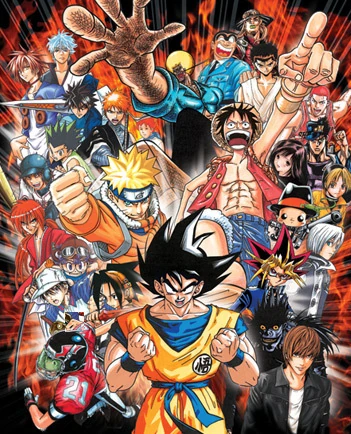
Recently, someone familiar with my writing compared some aspects of my story with anime. This, for me, was a huge compliment, because I am a hee-yuge fan of anime and manga. I’ve read and watched more series than I can count, and I consider some of the stories I’ve read over the years as having a very beneficial influence on my writing style, allowing for better storytelling and characterization. And I believe wholeheartedly that anime and manga can up the game of other fiction writers out there, even experienced ones with plenty of novels or short stories under their belts.

“But wait,” I hear my readers saying, “how can silly Japanese cartoons up my writing game?” Well, my dear Followers of Fear, just like Harry Potter is more than just children’s fantasy stories, and just like I’m more than a dude who enjoys scaring people silly (I actually have a growing doll/figurine collection and enjoy the ballet and the theater), don’t let first impressions about the media get in the way of looking a bit deeper. Anime and manga have so much more to them than meets the eye:

1. It’s an art form. We see literature as important creative works that are a reflection of and an influence on society. So is painting and illustration. But for some reason, the combination of the two mediums are never treated as highly, even when they lead to huge box office and critical success with movie adaptations. And in my opinion, that’s just wrong. Creating decent literature or decent art is extremely difficult, no matter the genre or what is being portrayed. Imagine what must go into doing both well at the same time! If one is good but the other is bad, the series, comic book or animation, will suffer, so these artists are basically combining the two art forms in order to create something appealing to audiences. That is worthy of respect (especially when you consider that manga and anime don’t always get to rely on characters that have lasted 80+ years and have established fanbases).

That being said…

2. There are a multitude of stories to choose from. Despite often going into very deep subject matter, comic books and animation have this reputation for being more family or child-oriented than adult-oriented. And although comic books have been recognized for their serious and mature themes and content, for the most part it’s hard to find animation that, even when aimed at adults, isn’t comedy or relies a lot on comedy. I can only think of one or two off the top of my head.

Anime and manga, on the other hand, span a wide multitude of genres and age ranges. Yes, some are comedic or have lots of comedy elements, but there are plenty of stories that are extremely serious or even plain portrayals of normal lives. Death Note (not the crappy American version) goes deeply into questions of whether the ends justify the means, especially in terms of curing societal ills, all while presented as a psychological cat-and-mouse thriller. Great Detective Conan (or Case Closed, as it’s known in the US), has nearly a thousand chapters/episodes focusing on a kid solving murders a la Sherlock Holmes observation and deduction. With the Light tells the story of a family raising a child with autism. Tell me if any of that sounds like silly cartoons for children.

And that’s just the tip of a very big iceberg. There are all sorts of stories out there, romantic to comedic to scary to inspirational to musical to educational to even some where you wonder who was mad or indecent enough to make them (I’m looking at Makura no Danshi for the former and Kodomo no Jikan for the latter. Google at your own risk). If you can think of it, there’s a chance there’s an anime or manga based around it.

So if you’re looking for inspiration for a new story, try the Japanese. Chances are, there’s a story that could inspire your next work.

3. Characterization. In Western stories, characters are often pretty much defined from the moment you meet them as good or bad guys. Within a few minutes, you not only have a pretty good idea of where they align, but how you feel about them: love, hate, support, fear, root for them to get the girl. This doesn’t usually change, except perhaps if they’re a twist villain revealed in the third act. Rarely do you see a character whom you aren’t sure whether to love or hate, whether they’re good or bad. A character who straddles the fence, in other words, and you’re never sure where they stand until near the end.

If a medium can make me wear this sweatshirt 25 years after a show’s premiere, shouldn’t you at least consider checking it out?

Anime and manga, however, do this very well. They’re very good at telling stories about characters whom you’re not sure how to feel about them, because they’re able to take the time with these characters and show various sides of them over the course of the episodes or chapters. Sasuke Uchiha from Naruto is a prime example: at various points he’s a hero, a villain, a tragic antihero, etc. And you’re never sure whether to hate him or cry for him or what (generally I don’t like him, but that’s just me). And even when a character isn’t given this treatment, they’re often given great character development. Often characters are all good with a few flaws, or all evil with a few good qualities, but anime tends to branch out. You’ve got protagonists who are defined by their anxieties, or heroes who do horrible things but are doing it for good reasons you even sympathize with.  It ranges quite a bit, and it’s done quite well.

4. And finally, it’s entertaining. We all write stories for a variety of reasons, but at the core of it, we want to engage and show people a character worth following, a story worth getting into. And anime and manga do that a majority of the time. Sure, some stories do fail in that regard (looking at you, Clannad), but the vast majority have been tales that have endured the test of time and continue to pull in new audiences. Pokemon is twenty years old and Sailor Moon is twenty-five, but they still continue to entertain and even produce new content. Clearly, there’s something about these mediums that pull people from around the world in far past childhood.

And any medium that can have that sort of influence is worth checking out, if you ask me. Even if it’s not normally up your alley.


And that’s just a few of the reasons writers should check out anime (there may be a Part 2 someday). But tell me, were there any reasons I missed? What series do you find entertaining or influential? Or do you need a recommendation on where to enter the medium? Let’s discuss in the comments below.

Until next time, my Followers of Fear, pleasant nightmares.

At the time this post is being published, it is the American holiday of Thanksgiving. Despite the holiday’s questionable origins (a discussion not for this blog), this is a holiday for being thankful for all you have. And while a lot of us are surprised by how fast this year has gone by (seriously, how the hell is it already late November?), for many of us it has been a stellar year. I know that’s the case for me. I’ve got plenty to be thankful for this year.

And if it’s not too much trouble, I’ll run down some of those things I’m grateful for (I swear, this won’t be too long, and I’ll try not to turn it into bragging):

  • I’ve published two stories, the sci-fi novelette Gynoid and the fantasy romance short story What Happened Saturday Night, on Wattpad, and both were very well received. I also wrote half of the novel Full Circle, edited the entirety of Rose (and will probably edit it again, as soon as I have feedback from both my beta readers), made good progress on a new story, and had more ideas for other stories than I could ever write.
  • While I work on my writing, I also have a good job that allows me to do really rewarding work with a great team. That job also has great pay and benefits, so I can afford to pay my rent and my bills, never go hungry, and even put away some cash into savings. And every now and then, I can even afford a little splurge for things like wall art, a new addition to my doll/figurine collection, or even awesome shows (heck, sometimes the job gets me discount to awesome entertainment in town).
  • Speaking of rent, I have a great apartment in a good area near where I work. I can afford to live on my own, and do what I want within my apartment, so I don’t have to worry about anyone seeing me at my kookiest. And since I’ve lived here for nearly a year and a half, I’ve had time to settle in and make it my happy place, a great place to relax, be creative and occasionally entertain friends (Joleene Naylor knows what I’m talking about).
  • My health has improved greatly since the New Year. I’ve been eating healthier, cutting back on the sweets, and so have lost about thirty extra pounds. My back problems have also improved, thanks to the ongoing treatments of a really good chiropractor and my improved diet. I feel better than I have in ages, and as long as I keep things up, I’ll continue to get better (though I doubt I’ll ever be fit enough to be a prima ballerina or a bodybuilder).
  • I don’t have a driver’s license, but I’ve made incredible progress towards getting one. And with a bit more practice, especially with maneuverability and parking, I could have my license within the next year (though whether a car comes with that is another issue entirely).
  • I live close to my family, and we’re all on good terms for the most part (though I would not want to live with any of them again if I can help it). I also have plenty of friends, and I’m glad to have their love and friendship everyday. I know that if I need them, they will give me their support, and help me through another day.
  • Finally, I have you, my Followers of Fear. Over the six-plus years I’ve been blogging, you’ve stood by me, seen me at some of my best and worst moments, and posted your thoughts and encouragement, and even bought some of my published work. And over this past year, Rami Ungar the Writer has grown significantly, to the point where I’m less than fifty followers away from hitting the thousand follower milestone. It gives me such joy to write for and interact with you guys every day, and I hope I can continue to do so for ages to come.

Of course, this is just a fraction of the many things I’m thankful for, but I’m thankful for them all nonetheless. And I’m glad I’m aware of them and thankful for them, because I can think of a number of people who are just as lucky as me, or even luckier, and yet are miserable. They’re not satisfied with what they have and they constantly want more.

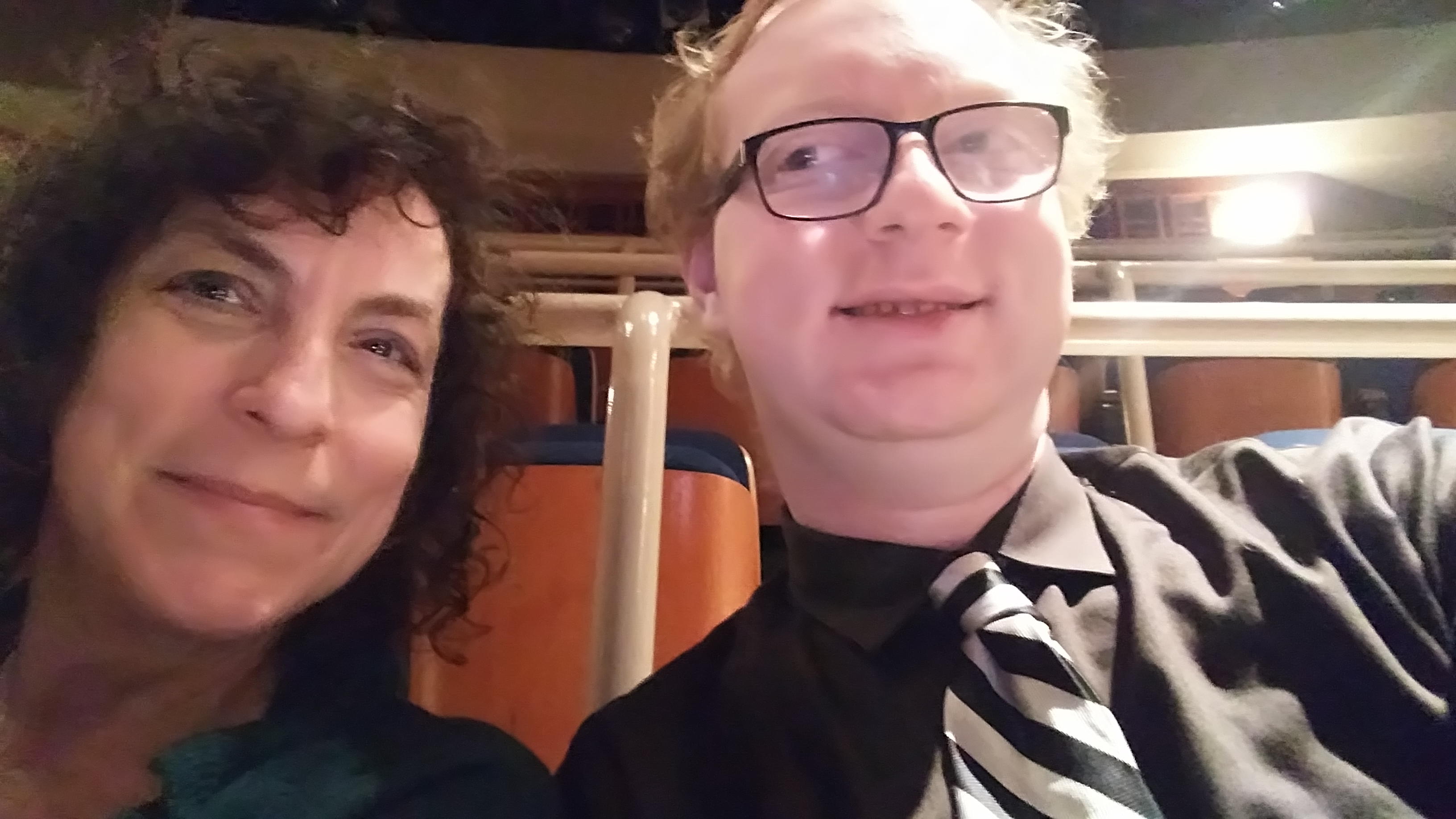
My mother and me when we went to see Swan Lake this past weekend. Not only was it an incredible show, but I got to experience it with someone I dearly love and who gets me on so many levels. I’m incredibly thankful for her and our relationship together. Also, I’m looking at the button on my phone camera, in case you’re wondering where my eyes are looking.


Now, there’s nothing wrong with wanting more than what you have. I want to expand my readership, write more stories, and get more of them published. Heck, I wouldn’t mind being able to write full-time if I could. But some people, they just don’t appreciate what they have. They could have a loving family, a big house (or several), a nice car (or several), and enough money for vacations abroad and fancy gadgets and whatever. But they aren’t happy. They want more. More stuff, more sexual partners, more fame and prestige. A friend once told me he talked to a man who was depressed because he didn’t receive as big a Christmas bonus as someone else in their office, even though he felt they did the same work and the same amount of work. Both bonuses were in the five-figure range, which boggled the both of us. How could anyone be in a position where that sort of money is given as a Christmas bonus and NOT be happy?

And that’s why I’m thankful for one more thing: I’m thankful that I can recognize what I have. Some people can only recognize what they don’t have, and that bites deeply into their happiness. They may feel good when they get a promotion or they bed someone deeply attractive or they get that new house on the Italian coast, but it’s only a temporary drug high, and the crash they feel after the high wears off just leaves them as empty as before. It’s not a true happiness, not at all.

And that’s why I’m grateful for one more thing: that I’m capable of recognizing all that I have and that I’m grateful for. Yeah, I’m not rich or famous (though I could be someday), but I’m glad for everything I have. I worked hard to get it, and I know it could be taken away all in an instant with one bad day. So when something new comes into my life–a new follower, some good news on the writing front, the chance to do something fun with friends or family, or even a new doll for my collection–that drug high will go away, but a good feeling will remain. I’m grateful for it all, and I hope I remain that way for the rest of my life.

So this Thanksgiving, my Followers of Fear, let’s all be grateful for what we have, and express that gratitude as best we can. Because we could have nothing at all, or we could have plenty and not realize it. I prefer to have some stuff, and be glad that I do have them. And if you ask me, that’s a good way to go about things.

Happy Thanksgiving, and until next time, pleasant nightmares.

Me being thankful for all that i have. And thank you, Sailor Moon, for constantly giving me so much to work with, from entertainment to story ideas to illustrative GIFs.

So here it is, finally. The first in my Rewatch Review series, in which I look at horror or thriller movies I’ve seen and didn’t like/had problems with and see if maybe I missed something the first time. I’m kind of just winging it with this first one, with no fixed plan on length or how deep I’m going into these films and their respective qualities, but at the very least, I hope if you haven’t seen these films, you get an idea of whether or not it’s worth checking out. And if you have seen any of these films, you’ll get an idea of what my thoughts are on them these days.

With that out of the way, here are my thoughts on Perfect Blue!

WHAT’S IT ABOUT: Perfect Blue is an anime film that follows Mima “Mimarin” Kirigoe, a Japanese pop idol singer who, on the advice of her agency, is reluctantly leaving the pop idol industry to become an actress on a TV show.  Experiencing a crisis of identity and followed everywhere by a violent stalker, things only get worse for Mima as events conspire to blur her perceptions of reality and fiction, leading to a violent and horrifying head where not just her own life is at stake, but her very identity as well.

WHY I DIDN’T LIKE IT: I thought it was too trippy when I first saw it in college, and it kind of dragged at points. I had expected something much more dynamic, and this felt more slow-burn to me.

WHY I REWATCHED IT: I saw a video essay on the movie a while back, and it pointed out some interesting things about the film that made me want to go back and give it another chance.

THOUGHTS: I’m glad I rewatched this film, because it is really good. I’m actually a little disappointed that I didn’t care for it when I saw it in college. It’s a great psychological thriller, and there’s a lot to talk about on several different levels (I’ll stick to the film quality and not to diving deeper into the psychological aspects. I’ll leave that to the video essay I mentioned above).

First off, the animation is different from most anime, which is very stylistic. The artwork isn’t exaggerated or distinctly cartoony, full of jumpy animations and wild reactions. If you think of most anime, like Sailor Moon, Pokemon, and One Piece as analogues to cartoons like Family Guy or Looney Tunes (just examples for the non-fans out there, don’t kill me, fellow anime lovers), then Perfect Blue‘s style is more analogous to early Disney films, particularly those of Cinderella and Snow White (the latter is actually a lot darker than you probably remember it if you go back to watch it). It’s very grounded and scaled back, with very few characters actually looking pretty, cute or cool. The only ones who do are characters directly involved in the entertainment industry, and that makes the movie feel real to us. It’s a world very much like ours, with violence like ours, and people just like ours. So when you see something violent within the film, the realism makes it all the more powerful. This isn’t just animation, this feels like it could happen. Maybe it has happened, and it’s amazing to see animation portray that.

Speaking of the main character, Mima is presented to the audience with extraordinary skill. There’s no exposition or anything, but who she is and how she feels is made clear to us, which makes her real to us. We’re shown quiet moments for her, such as grocery shopping or getting to and from work, presented in contrast to her life as a celebrity, and that really conveys to us just what sort of character Mima is. And that’s good, because the central conflict is around who she is: Mima has trouble dealing with the fact that she’s been talked into changing careers, and isn’t sure who she is now that she’s changed. With the struggles of her new acting career starting to get to her, as well as visitations from her stalker, Mima’s own grasp on reality starts to go. She starts to lose track on what’s part of her new TV show, which bears some resemblances to her own mental struggle, as well as starts to see a phantom version of her pop-idol persona. And so do we, the audience, unable to tell what is real, what is part of her show, and what is part of her tortured pscyhe.

And when that happens, we feel Mima’s inner anguish. We’re right there with her, trying to unsuccessfully figure out what’s real and what isn’t. And when we can’t come up with those answers with Mima, it only makes the terror of the moment and of the unreality of the situation that much stronger.

JUDGMENT: If you think that anime can’t be deep or anything other than silly cartoons, you need to watch Perfect Blue. It’s a twisted story of a girl trying to find herself under the most terrifying circumstances reality can give her, full of gorgeous but realistic animation, intense scenes and visuals (I’m talking to you, screwdriver scene!), and great questions on the idea of our true selves versus the personas we create for ourselves (that’s a subject for another post). Definite 4.5 out of 5. Pop it in and see what the rabbit hole uncovers.


That’s all for now, my Followers of Fear. I hope you enjoyed the first entry in the Rewatch Review series, and I hope you join me when I get my hands on 2008’s The Strangers.

If you’ve known me for any amount of time, you know I’m a huge fan of horror. I read horror novels, I write horror stories, I sometimes write articles examining various aspects of horror, I watch YouTube videos about dark and creepy subjects, I decorate my apartment with horrifying artwork and dolls and stuff, I…well, you get the idea. And of course, I watch plenty of horror films and shows.

And as every true horror fan knows, it can be hard to find good horror sometimes, particularly in the movie department. We fans watch a lot of horror movies that are really bad hoping that they may be good and even give us a few nightmares (or in my case, some good inspiration). I sometimes think of it examining piles of shit looking for gold nuggets, only you can’t tell the difference without special examination (imagine if that was the actual case. Nobody but the really desperate would ever look for good horror movies!). And I’ve seen plenty of bad horror films over the years while looking for good ones. I’ve even written about them, on occasion.

But lately there’s been something I’ve been wanting to try. You see, some of those horror films that I’ve hated, I’ve heard lots of people praising. They tell me the shit is actually gold. I’ve even seen some very thorough examinations of these films, in essays and videos, and the writers/creators of those videos have made me wonder if maybe I should rewatch some of these films, and reexamine my opinions of these films.

So now that I’ve seen It and there aren’t that many horror films coming out in the next couple months that I’m absolutely dying to see and review, I think it’s time to do what I’m going to call the Rewatch Review series. I’m going to watch ten films that I’ve hated and/or given bad reviews in the past, and see if my opinion has been changed. Some I may have watched in the wrong light, others I just think I missed something the first time around. Either way, I’m going to take a look again and then let you know if I’ve got any new thoughts to share.

And with the first film waiting for me at the library even as you read this, I should be able to start watching in earnest soon. It may take some time, depending on how quickly I can get these movies, but either way, you’re going to get something from me.

As for what these films are, I’ll list them below. When I’ve written my (hopefully changed) thoughts on each movie, I’ll post a link to this article. That way, if you want to read all my thoughts at once, you’ll have that option (though I don’t know if anyone’s THAT bored!).

Perfect Blue (1997)
The Strangers (2008)
The Witch (2015)
The Texas Chainsaw Massacre (1974)
Oculus (2013)
Evil Dead (1981)
Nosferatu (1922)
The Shining (1980)
Mama (2013)
Whispering Corridors (1998)


Why did I dislike some of these films? You’re going to have to wait till I actually write about them. Haven’t I reviewed a few of them before? Yes. Why am I reexamining them if I already reviewed them? You’ll have to wait till I watch them. And that’s all I’m saying on the subject.

That’s all for now, my Followers of Fear. I’m heading off to bed. Until I write again, pleasant nightmares.*

*And if you have any, let me know. I might write a novel based off it.

Death Note is a franchise I’ve been aware of since high school, and despite some issues I have with the source material (*cough* the second half of the manga *cough*), I’ve always looked at it fondly. It’s clever, has some really memorable characters and scenes, and the themes present in the story are always relevant. When I first heard of plans of an American version of the story, I thought it had some potential, which is why I was disappointed when it fell into development hell. But when director Adam Winguard and Netflix finally started to put the film into production, and despite the troubling news I heard leading up to the film’s release,* I still had hope.

Imagine how I feel now when I find the final result is not what I’d hoped for.

So for those of you who don’t know, Death Note is originally a manga about a Japanese high schooler named Light Yagami who discovers a notebook that kills anyone whose name is written in it. With the help of a death god named Ryuk, Light starts a killing spree of the world’s criminals to end all crime and to become a new god named Kira. He is opposed by L, a mysterious detective who has solved several high-profile crimes in the past, creating a cat-and-mouse game that could determine the fate of the world. The story has been adopted into anime, TV shows, novels, and even a couple of Japanese movies. Winguard’s version is the latest addition to the franchise, and unfortunately, it’s like that one relative whom you invite to family gatherings because he’s family, but you’re not happy about it because he’s an embarrassment to the whole family.

The biggest problem I have with this film is the many changes from the source material. Now, I’m open to some changes, like what the Japanese films did. Those were changes that strengthened the story instead of taking away from it. However, the majority of the changes here were unhelpful. Light Yagami, a handsome, charismatic and intelligent young man motivated by a sense of justice and boredom becomes Light Turner, an outsider who’s only a few degrees away from shooting up a high school, whose intelligence is only hinted at, and who screams like he has no confidence. Misa Amane, a blonde and bubbly airhead whom you actually feel sympathy for, becomes Mia Sutton, a cheerleader with no personality or backstory and too much enthusiasm for killing criminals. Lakeith Stanfield is actually pretty good as L for a while, but then in the last third goes completely off the rails.

Something went very wrong with this transition.

There are a whole bunch of other changes that I didn’t care for. The purpose of the Death Note and the reason why Ryuk drops the Death Note is changed, the default method of death for the Death Note isn’t in this adaptation, Mia isn’t given a good reason to want to use the Death Note like Misa Amane has, so her enthusiasm for using it feels strange, and the way L and his assistant Watari interact feels a little creepy rather than the working relationship they had before, and the list goes on and on. In fact, some of these changes open up plot holes in the story. For example, the change in the way L identifies the first victim of Kira, rather than making some sense like it does in the manga, leaves open some questions in this adaptation. Also, why does L have a false name but Watari is actually his real name, with no last name?

I also did not care for Margaret Qualley’s acting in this film, which felt emotionless and uninvested. It seems like she was trying to channel Kristen Stewart’s Twilight performance, which given all I’ve heard of that performance, explains a lot, but it’s obvious it’s not what we’re looking for in this movie. Also, who’s idea was it to make her look like an Emma Roberts impersonator in every shot?

Ryuk, played by William Dafoe, is definitely one of the better parts of the movie.

There were a couple of things I did like about the film, however. Ryuk looks absolutely terrifying, as he should, and is kept sinister throughout the film, thanks in part to William Dafoe’s phenomenal performance as the voice of the character (that man can do villains like no other). Mia is treated more as a partner in this film rather than as a pawn, which I’m sure many Misa fans, including myself, have always wanted to see (what can I say? You feel for her, despite her flaws and the blood on her hands). And if it weren’t for how bad the rest of the film is, the climax and its twist would actually be pretty impressive.

However, the rest of the film outweighs everything else, forcing me to give Adam Winguard’s Death Note a 1.1 out of 5, possibly the lowest score I’ve ever given anything on this blog. This is just the latest example of how NOT to adapt a beloved manga and anime, with way too many changes from the source material and bad choices on the part the people behind it, and a horrible introduction for newcomers to the world of Death Note.

Trust me, this is a much better movie than what we got.

If this left a bad taste in your mouth and you’re still willing to give this franchise a change, I highly suggest you check out the original manga or anime (the latter also on Netflix), or check out the Japanese films based on those. Unlike the Netflix film, any of these will show you how exciting and clever the original source material, as well as how memorable and even likeable, the characters really are. Believe me, there’s a reason why this story is the phenomenon it is. It’s just the Netflix movie isn’t part of it.

Hopefully in the future, if we have any other American adaptations of anime or manga, they won’t be anything like this.

*To be clear, I will not be getting into the whole issue of the races of the cast. Yes, whitewashing is a problem, and the casting decisions made in regards to this film are extremely problematic, but it’s not one I want to explore here. Why? Because it’s an extremely complicated issue and not something I usually get into in a movie review. I’m judging this movie as a movie, and I’m judging the actors for their performances, not for their racial or ethnic heritage. If you don’t like that, I’m sorry, but that’s just how I do things here. And if you want to voice your anger about this, don’t voice it at me. Voice it at Hollywood, because that’s how you can possibly make some positive change, instead of sending it my way while some corporate VP thinks Zac Efron would make a great Kaneda in a live-action American Akira remake or something (that’s an example, not an actual thing as far as I know).


Authors, who are usually as human as the rest of us, are as prone to mistakes and insecurity as the rest of us. That said, sometimes authors worry about creative decisions when it comes to their stories. We’ll look at a scene, or a character, or even a whole plot, and think to ourselves, “Is that the right thing to do here? Should maybe we change it?”

We end up second-guessing ourselves.

Actually, some pretty famous names have second-guessed their creative decisions in the past. JK Rowling went back on her decision to have Hermione end up with Ron in Harry Potter, and that Harry might’ve been a better match for her, which still has the fandom in a tizzy (personally, I still ship Harry and Cho and wonder what could’ve happened if they’d actually gone to the Yule Ball together). Stephen King has expressed regret of ever writing the novel Rage, which has been connected with several incidents of gun violence (I’d still like to read it someday). And Anne Rice has actually said she’s not proud of the crossover novels she’s written with her vampires and witches.

And they’re just a few among many.

I’ve been having this problem at a lot of points in Rose, including last night. I’d just finished editing the latest chapter (only nine more to go!), adding over a thousand words of material while I’m at it, and I find myself thinking, “Wow, there’s a lot of just high-tension moments here. Very little time where the readers and the protagonist can just take a moment and breathe. This whole chapter, it’s just boom! Boom! Boom! One thing after another. I wonder if that’s maybe too much excitement in the story. Maybe I should add some more quiet moments, where we can explore the characters?” And then I find myself arguing back that plenty of great horror movies and novels, such as Annabelle: Creation and Gerald’s Game, that are like this, where there’s very little breathing room and just one thing after another of scares and high-tension scenes. And there are scenes that are “quieter:” they are usually exploring the protagonist’s past, which is a mystery to even her. They’re not moments like in It, where the main characters are just building a dam or something, but they’re slightly calmer and do develop the characters a bit more when they happen.

This argument went back and forth in my head even after I went to sleep, making for some interesting dreams.

But it’s not just this whole “are things too exciting?” issue that’s got me second-guessing. I think I’ve mentioned before that there are scenes in Rose that I would like to expand. Most of these are in the final third of the book, and one particular scene, a flashback scene, has me wondering if I’m making the right decision in what I want to do with it. On the one hand, there are about a hundred ways I can push the envelope with it, and I’ve already set up in previous chapters clues that point to the importance of this scene. But at the same time, if I were to push the envelope on this scene in some ways, it might be indulging in certain cliches I prefer to use sparingly at best. Also, I worry that if I were to go in those directions, it might actually take away from the main reason for this scene rather than reinforce it for the audience. It’s something I’ve been worrying about since well before I started this draft of the novel.

So yeah, authors do a lot of second-guessing. And it can cause a lot of headaches, anxiety, confusion, and the occasional burst of anger. Is there any solution for when this happens?

Not really. Yeah, I usually have solutions for stuff like this, but I think it varies on situations and stories and authors. I think every author will second-guess themselves at several points in their careers, sometimes during the writing, sometimes before, a few times after. And sometimes solutions will present themselves. While writing this post, I’ve figured out one of the problems I’ve been second-guessing in this post, which I honestly didn’t expect.

Honestly, I guess the best advice I can give is to try one way. If you don’t like it, try another if the opportunity is available. If you’re still unsure, let beta readers give you some much needed feedback. That’s what they’re there for.

Honestly, I’m probably going to encounter this issue throughout my writing career. I’m second-guessing some possible routes for a novel I haven’t even written yet, if you can believe it. And if you’re a writer, you’ll probably going to deal with it too throughout your career. All I can say is, you may argue with yourself plenty. You may have to try more than one way to write the same story so as to see what works. But eventually, hopefully, you’ll work through it, and come up with something great.

And if not, there’s always a chance that people will still like who the characters end up with (I hear Harry and Ginny are great spouses and parents. Especially if you don’t read/see the play. Also, Ron and Hermione’s storyline actually mirrors a lot of anime couples, so I guess if it works in those shows, why not?).

What are your experiences with second guessing? Any tips for fixing this problem?

I wanted to get at least one more blog post out before I go off to Boston (spoiler alert: the trip is imminent), and because I didn’t have time to watch and review a movie I’ve been wanting to see for a while, I thought I’d do another post about romance in fiction. Why? Because my last post on the subject did very well, well enough that a writing blog associated with Columbia College in Chicago listed that post in a Valentine’s Day-themed article last year (that’s staying power!), and because I’ve had some thoughts since then about the subject. And those thoughts revolve around this simple idea: for a romance story to be truly successful and compelling, there has to be a conflict of some sort. Let me explain:

A couple of months back, I tried watching this anime I discovered on Hulu. The idea for the series sounded interesting, it was a fantasy series with a big romance element, and it was loosely based on a popular fairy tale. I decided to try it (I’d found anime and manga I loved on less than that), and settled down to watch a few episodes. It had a good first episode…but then the problems set in. One of the major ones was that after the first episode, when it’s pretty obvious that the two leads are attracted to each other, there’s nothing really to make the romance aspect exciting. They just settle into this rhythm that says, “Oh yeah, eventually they’ll get together.” Nothing that came up really served as a threat to their relationship, and because the story’s main focus was the romance aspect, I kind of lost interest.

Thus this post. Every good fiction story has some sort of conflict, something for the protagonist(s) to overcome and aid them while they grow as people. These conflicts can be outer and/or inner conflicts. In Harry Potter, it’s Harry’s battle to stop Lord Voldemort and protect his friends. In Stephen King’s It, there’s a shapeshifting evil clown and the desire to hang onto childhood wonder while also accepting the inevitability of growing up. In When Marnie was There, it’s Anna accepting that she’s the one isolating herself, and that if she only comes out to people, they will accept her. In romance, it’s often the main couple realizing and struggling with their feelings for one another while something tries to keep them apart.

Every good story has a good central conflict.

I’ve read a few romance-heavy novels (not many, but some), as well as watched a few TV shows and taken in several anime and manga with strong romance storylines. What always makes them good or memorable to me is the journey for these characters to fall in love with each other and get together, and all that can potentially tear them apart. Without them, like in the anime mentioned above, the story quickly becomes boring. In The Mammoth Hunters by Jean Auel, the two main characters start out in a relationship, but they nearly lose it when a new suitor tries to sweep the female of the pair off her feet (the outer conflict), as well as the couple’s vastly different cultures/childhoods and their communication issues (the inner conflict). Part of what made that novel so exciting was watching those issues affect their relationship, feeling the mistrust, heartbreak, and anger this couple went through. It was thrilling, because you really felt for these characters and wanted to see them together in the end. And getting to that end and overcoming their issues in the process was what made the novel as a whole good.

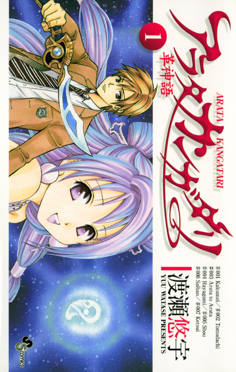
Arata the Legend: great example of how a story can have a compelling romance without that being the main subject of the story.

But this post so far focuses on stories that are mainly romantic. What about stories where romance is secondary? Same concept applies. You see this a lot in manga and anime. Take Arata the Legend by Yuu Watase (highly recommend, by the way), for example. The story revolves around a teenager named Arata who ends up in an alternate universe, where he becomes a messiah figure in the process. Arata ends up traveling around the universe with a band of magical warriors to gather magic items and save both worlds, while also dealing with his own fears and insecurities. These are the main outer and inner conflicts of the story. However, a sub-conflict in the story revolves around a love triangle between Arata and two girls who travel with him, a warrior girl and a healer. Both are attracted to Arata, Arata’s attracted to one of them, and because of various misunderstandings and past experiences, they’re unable to be honest with one another with their feelings, genuinely thinking that one might be better with the other or that one doesn’t like the other. This subplot is a major ongoing part of the story, and one of the reasons I always look forward to new volumes coming out (waiting on #25 since August last year).

As you can see, a story with a romance but no challenge to that romance is more often than not less exciting than a romance with challenges to it. The exceptions, in my experience at least, would be stories where the romance is a minor element in comparison to other issues in the story (the anime Code Geass definitely comes to mind in that aspect. Also highly recommend that one), but if that’s the case, then the romance probably isn’t a big part of why you’re into this story, right?

But when a story’s romance is a major aspect of why people would want to check the story out, having a conflict would definitely make it a more interesting aspect of the story. Otherwise, all you’ve got is an anime where you’re just watching and waiting for these two obviously-attracted-to-each-other people to take that first step and kiss each other and that’s about it.

I love manga and anime, but I often have trouble getting my hands on horror manga and anime that is actually scary. I’ve found plenty with ghosts, zombies, homunculi, serial killers, and death games, to name a few, but often they’re mixed with other genres to make them more palatable for non-horror fans. Other times I have heard of a scary one, but I can’t get my hands on it (still trying to get my hands on Corpse Party), and other times I just don’t know of some series that I should. So when I actually hear and find some manga or anime that is actually scary, I rejoice. Case in point, Uzumaki by Junji Ito, who is considered one of the greatest horror manga artists from Japan, and it shows in this series.

Uzumaki literally translates into “spiral,” which is the essence of the manga. The story follows Kirie Goshima, a teenage girl living in the town of Kurozou-cho. One day, her boyfriend Shuichi tells her that his father has become obsessed with spiral shapes, to the point that he is losing his grip on reality. This leads to a gruesome series of events that reveal a curse upon the town and the surrounding area, a curse involving spirals, spirals that hypnotize and entrance, spirals that terrify and excite, spirals natural and unnatural. And once the curse sets in, it doesn’t let go.

From the very beginning, Uzumaki is quite extraordinary. Ito illustrates with  incredible attention to detail, which in a horror manga  is necessary if you really want to convey a sense of terror. I mean, look at the imagery below.

Holy crap, that is both well-drawn and scary! You can see every detail, how much  work is put into each stroke of ink to make the imagery look realistic despite being an illustration. And the best part is, Ito is not concerned with aesthetic beauty. You look at most animation, and it’s meant to be pleasing to the eye. To be cool, or pretty, or adorable. Ito doesn’t concern himself with that. He’s concerned with just making you squirm, and he does that so well with his illustrations.

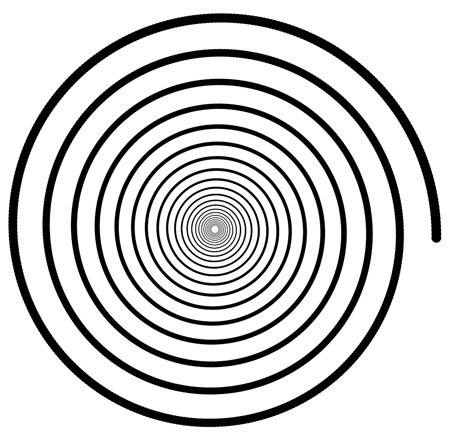
And on top of that, his storytelling abilities are great. Unlike other horror stories, the horror is based on abstract concepts. A geometric shape, the spiral, is what we’re supposed to be afraid of. You’d never think a spiral shape like the one below would be scary, but Ito uses his illustrations, storytelling, and the turn of a page to weave this frightening tale where we’re forced along to find out what happens, fining stranger and stranger things on the succeeding pages. And best of all, Ito just takes things in the most unexpected directions, inserting the spiral into strange places we normally wouldn’t see it. I won’t say what happens, but things like snails or pregnant women get matched with the spiral, and it becomes terrifying. It’s made even better that you don’t actually get a lot of explanation. With ghosts or vampires, you get a mythology on how they work and how to deal with them. In Uzumaki, Ito leaves it up to the imagination as to what’s happening. It’s very unnerving in a Lovecraftian sense to see how this town becomes part of some strange curse around a geometric shape, and never get an explanation.

Doesn't look scary at first. Wait and see.

Doesn’t look scary at first. Wait and see.

If there is one criticism I have, it’s that the people of the town don’t really come to terms with what’s going on as fast as they should. At a certain point, it becomes impossible not to face what’s happening in the town, but up until then, there are plenty of signs that something’s up, and not one of the main characters realize they have to get up and get out before it’s too late. Even the guy who’s constantly saying they should leave doesn’t. At least make an attempt!

But other than that, Uzumaki is a terrifying story of cosmic horror that takes something harmless and give it a weird, disturbing form that will surely stay with you for a while after you finish reading it. On a scale of 1 to 5, I’m giving Uzumaki a 4.8 out of 5. If you enjoy horror and don’t mind visual reading like comic books and manga, definitely check out Uzumaki. I’m glad I did, and I will try to track down the move version as soon as possible. Because after seeing these sorts of pictures, I’m curious as to how they’re translated into the cinematic world.

Until next time, my Followers of Fear. Pleasant nightmares.

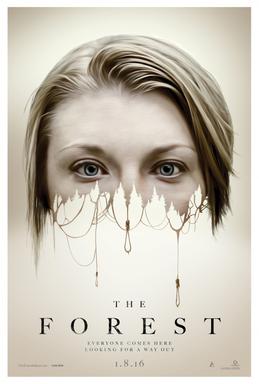
From the moment I heard about this film, I wanted to see it. It’s horror, it takes place in Japan, specifically Aokigahara (one of the places on my first list of haunted locations I’d like to visit), and the trailers made this thing look awesome. I was excited.

Sadly, the trailers were better than the movie itself, and I will explain why:

First, the story. Natalie Dormer plays Sarah Price, a woman with a cliched psychic connection to her troubled identical twin sister Jess, also played by Dormer. When there’s a disturbance in the Force, Sarah learns that her sister, who was teaching in Japan, has gone into Aokigahara, a forest near Mount Fuji that is a common place for suicides and has a reputation for being haunted by the extremely angry spirits trapped there. Sarah heads to Japan to save her sister, and ventures into the forest, which in turn brings all sorts of hell upon her and unearths inner darkness Sarah never wanted dredged up.

I had a lot of problems with this movie. First, there’s the protagonist. Sarah Price is not a very interesting character. It’s no fault of Dormer–I’ve seen her in other stuff, I know she’s a great actress–but beyond the psychic connection and a reckless love for her sister, the character is rather flat and dull. She does border on interesting when talking about her past, but that’s it. In fact, most of the characters are rather boring. Probably the only one that peaks your interest is Aiden, who helps Sarah look for her sister, but that’s mostly because you’re never sure what his motives are or if he can be trusted. And Sarah’s husband? You really could cut him from the film and it wouldn’t affect a thing.

Next, the storytelling and the mood. The movie moves rather slowly through most of the first hour, establishing exposition and introducing us to the relationship between Sarah and Jess. Important, but not particularly interesting. It isn’t until they’re already deep in the forest that the story actually tries to scare you, but even then most of the scares are jump scares, and even the best of jump scares are meaningless if they’re not tempered with other stuff, like a tense, suspenseful and horrifying mood, which the movie only really does just the once. By the end of the movie, when the film tries to surprise you with a few twists, one feels forced and awkward, while the other you saw coming a mile away. Just not very effective in terms of storytelling or making you feel scared.

Finally, there’s the effects. Now, I know on a budget of ten million dollars you can’t do much in the special effects department, but the effects they use in this film are for the most part pretty stupid. There’s a scene where a ghost is revealed in a cave, and I was expecting like out of The Ring or The Grudge (originally Japanese stories, if you didn’t know). Instead we get a goofy fanged monster-girl that looks more like a carnival attraction monster than a real ghost, and in the last few minutes of the film we get some CGI ghosts, which are about as scary as a frying pan. There’s one shot in the last few seconds of movie with such a ghost, and I felt more contempt than fear when I saw it, because it was so obviously fake. They might as well have had an actor put on a sheet with eye-holes, save a few dollars on computer-rendering, because that’s how lame it was.

So did The Forest have anything I liked? Actually yes: besides beautiful shots of Tokyo (always nice to see Tokyo when it’s not animated or hand-drawn), the film does a great job of making you question what’s real. Once Sarah is really trapped in Aokigahara, you find yourself questioning everything: river directions, people’s intentions, whether anything you’re seeing is real or all in Sarah’s head. You even question for most of the film what is the real source of the hauntings Sarah experiences: is it ghosts or a living forest? Or is it maybe psychological or even an infection from some bug? The movie makes a good case for all four throughout the course of the story, and even now I’m not really sure what the true answer is. Not that I’m spending a lot of time thinking about the answer, mind you.

Another thing that the movie has going for it is that when the jump scares occur, you really do jump pretty hard. One woman in the theater even cried out after one particular jump scare. That’s not enough to redeem the film, but it does work in its favor. And finally, the film’s got the wheels in my head turning, looking for stories that could come out of it. In my opinion, inspiring me and other writers and creative types is always a good thing, especially if it leads to good stories.

On the whole though, I find The Forest below average, earning a 2.6 out of 5. It’s premise is promising, and it tries hard, but on the whole can’t deliver. You’d be better off staying at home and renting The Ring or The Grudge if you want Japanese-inspired horror. At least this film didn’t ruin my desire to visit Aokigahara (only to see it and sate my horror author’s interest in creepy stuff, though. I would not visit it for the reason other people do).

And if you would like some good horror, consider some of my work. Right now, all my books are on sale until Thursday from Amazon, Createspace and Smashwords. Check them out now and pick up a great read for an even greater price. Trust me, this is an opportunity you do not want to miss.

anxiety

What is the trouble with psychological horror? Actually, there’s not much trouble to it. It’s just very hard to do well.

What do I mean by this? Well, let’s look at the definition of psychological horror: “a subgenre of horror fiction, film, and video games (as a narrative) which relies on the characters’ fears and emotional instability to build tension”, according to Wikipedia (I know you’re not supposed to rely on that site for information, but I couldn’t find a better website for a definition). It’s a sub-genre that, rather than relying on a traditional monster that’s out front and center for all to see, the monster is restricted to quick glimpses and shadows. If there’s a monster at all: sometimes the true villain is a character’s own brain, their fear, distrust, paranoia, suspicion, isolation.

I’ve used psychological horror before, particularly in the stories in my collection The Quiet Game (which if you haven’t read, I wish you would) and in the short story “Buried Alive”, which was published in the Strange Portals anthology last year (again, I wish you would read it). And I’ve come to the decision that while it isn’t as difficult as physics or writing comedy, it is walking a very fine line. Almost like a tightrope. And if you fall off, you can wind up veering either into the realm of the comedic with how obvious that it’s all in the character’s head, or it’s just so confusing that you find yourself losing patience with the story.

Let me give some examples (and it’s my blog, so you have to let me give some examples): have you read “Buried Alive”? I’ll keep the spoilers to a minimum for those who haven’t, but like I said above, I use quite a lot of psychological horror in that story, and for the most part, I think that I use it well (so do most of the readers I hear from on this one). For the rest, though…it’s pretty obvious that the circumstances of the main character are taking a toll on her mental state. I don’t think it gets to the point of comedic, but it is obvious, and the point of psychological horror is to make you guess whether it’s all in their heads or if it’s real or…who knows?

Perfect Blue. Trippy, has its moments, but also has its problems.

On the opposite end of the spectrum, there’s the anime film Perfect Blue, based on a novel that I wish was available here in the States. The film is about a singer-turned-actress who starts to confuse reality and fiction when her first acting job takes a turn for the traumatic. It’s a good story, but it’s not a perfect story. There’s a good section of the movie where they spend time trying to confuse both the protagonist and the viewer, and it gets a little difficult to not only what’s going on, it gets difficult to pay attention or be patient with the movie. While I admire the visuals of the movie, and I get what they were going for by showing what the protagonist is going through mentally, and I recommend checking it out if you’re interested, psychological horror shouldn’t get so strange or trippy that the reader gets frustrated with or loses interest in the story.

A great example of a psychological horror story though, manages to toe the line very easily and keeps you guessing as to what’s real or what’s mental delusion. A good contemporary example of this is The Babadook. If you read my review of that movie last year, you’ll remember that I noted that the movie kept you guessing as to whether the film’s protagonists were dealing with an actual monster or a shared psychosis, and I eventually settled on a bit of both because…I’m mostly human, and humans need to categorize things to make sense of the world. And I still say that I don’t know for sure which it is, and that’s one mark of the film’s greatness. You’re never quite sure what’s real and what’s in the heads of the characters, it stays interesting throughout, and it never gets to the point of ridiculous or obvious. All told, it’s great psychological horror.

This movie will surely get you on so many different levels. I’m getting chills just thinking of it.

So how do you psychological horror well? How do you toe that line?

Well, I’m definitely no expert on the subject. I usually deal in traditional horror, the monster is out front and is usually either some twisted form of human or a creature not easily defined by our standards. I dabble in psychological horror, usually making it part of a bigger story. But I can try, and I think–beyond reading/viewing as much psychological horror as possible, both good and bad, and practicing like you want to get to Carnegie Hall, of course–I’d suggest trying to write a story where you’re not sure what’s really happening. Create a scenario where strange things start happening to your character or characters, and you can’t tell what’s real or what’s just in the minds of your characters. Keep it interesting, don’t get too ridiculous or obvious, and just see where the story goes. If you can do that but still be unsure for most of the story of what’s real or not, then it’s likely your reader will be the same and want to know more.

Another marker of psychological horror is that there’s usually a twist somewhere along the way, and if it’s good it’ll change how you view the entire story (a great example is the Korean film A Tale of Two Sisters and its American remake The Uninvited). Characters are also often driven or plagued by powerful internal battles: am I doing the right thing? Is this right or wrong? Are they really out to get me? It doesn’t have to be full-blown persecution belief or fear of some unknown. It can be something as simple as a growing suspicion that something’s off or that our desires are actually evil. Again, A Tale of Two Sisters is a great example of the former.

Not a fan of the movie, but even I admit it shows Jack’s breakdown very well.

And finally, psychological horror is often not the main focus of a story, but part of a bigger story. Take a look at The Shining by Stephen King. Obviously that hotel is actually haunted, and the kid and the cook are both psychic. But a good deal of the story deals with Jack Torrance trying to sort out what’s going on for himself. Is he just dealing with a powerful desire to get wasted again? Is he going insane? Is the hotel playing tricks on his mind? There are scenes where you really can’t tell, and that’s part of the terror. Part, but not the whole thing. After all, there’s all the stuff the hotel is doing to them, right?

Unless Jack, Danny, and the cook are all sharing some sort of shared delusion, or folie a trois, in which case…wow. New conspiracy theory right there.

In any case, it’s something to experiment with yourself. And for me to experiment with more often. Just try and see what happens…or does it happen? You’ll never know until you try.

How do you feel about psychological horror? Do you have any good examples in film or literature you’d recomend? What are some tips for effectively writing in the subgenre?