I’m on a writing craze lately. In the past two days, I’ve finished a chapter of Laura Horn, wrote an entire chapter of Video Rage, and even did an entire article for Self-Published Authors Helping Other Authors. This time around, I did a little research on The Length Debate, seeing all the opinions on how long a piece of flash fiction, a short story, a novel, and/or everything in-between should be. It was a fun article to research, and I hope you read it and share your thoughts on the debate too.
And as always, I encourage you to subscribe and follow Self-Published Authors Helping Other Authors. If you independently publish, it’s a wonderful site full of information for authors on everything from creating your own cover to information on developments with CreateSpace and Kindle Direct Publishing to just general tips on writing fiction of any sort. I’m sure you’ll find it extremely helpful and informative, just like I did the first time I logged on.
Oh, before I forget and sign off, I just wanted to let you know I updated the About Me page on this blog. It’s just a little bit more general information, but if you’re curious, go ahead and check it out. You’ll find my somewhat-funny bucket list among the material I’ve added there.
See you in the morning, everybody. Have a good night, and I hope you don’t have any dreams about people with schizophrenia performing exorcisms in the street like I did last night (yes, I dreamed that. It seems even in my dreams I can’t escape the weirdness that is my somewhat macabre interests and hobbies).,
(This is the sequel to my previous post The Rabid Fans. In this installment, the fans are nuttier, the anger is much more bloodthirsty, and the references to Charlaine Harris’s work…is basically not part of this post. Sorry, but it’s an old story, and frankly there’s more to this phenomenon than vampires in the Bible belt. Onto the sequel, which may or may not be better than the original, depending on your opinion)
He’s Batman, deal with it.
Hollywood is being terrorized. Well, not really terrorized. More like annoyed. A few weeks ago, Warner Bros. announced that in the Man of Steel sequel, good ol’ Bats will be played by Ben Affleck. Now personally I have no problem with Affleck. He’s a capable actor, I liked him in Daredevil, and I’m sure, given the chance, he will break new ground in the role of Batman (if they force him to play a Bale copycat or something else that’s been done before, then God help the producers of the film). However, some fans were not so happy with the casting decision, taking to Twitter to voice their discontent in a tweeting storm. Many sent angry letters to Warner Bros. to tell them they hated their casting decision, and some even started a petition on the White House We the People page to get the White House involved.
That petition was taken down because, for all the obvious reasons, the White House isn’t going to take part in a casting call in Hollywood. They’ve got some bigger problems to deal with, in case you haven’t noticed. But then things got crazier, when this past week Universal Pictures and Focus Features announced that Sons of Anarchy star Charlie Hunnam and Ben and Kate actress Dakota Jonston were cast in the roles of the leads for the upcoming film adaptation of Fifty Shades of Grey. Moms and middle-aged women and a former neighbor of mine who just happens to be a fan weren’t happy when the announcement came out. Instead, they started a petition, this one on Change.org apparently, asking that instead of Hunnam and Johnston, Matt Bomer and Alexis Beidel play the roles.
I’m surprised this is being made into a movie, but hey, if it makes money, why not?
Obviously, Hollywood ignored both outpourings of fan reactions. And I’m not surprised. After all, a lot more goes into a casting besides good looks. Talent, availability, willingness to play a role, chemistry, and a bunch of other factors go into the casting of a single character. And if the fans don’t like it, that’s their decision. In a meantime, there’s a movie to make, and not enough time to bother with annoyed men and women on their computers.
That’s Hollywood’s line of reasoning, anyway. But honestly, I think even the elites in LA are a little annoyed and worried. Heck, I find it worrying. Fans these days seem so…entitled. It’s not just casting calls, but demands for sequels (or threats should a sequel/remake be made), certain characters be made couples or else. It’s insane.
So let me take this moment to let all you rabid fans out there know one very important thing: THERE’S A F***ING LIMIT TO HOW MUCH OBLIGATION HOLLYWOOD HAS TO YOU, AND YOU’RE BLOODY WELL OVER THAT F***ING LIMIT!!! I mean honestly, the people who make these pieces of entertainment don’t have to make these films/shows/books. They could easily find other things to do or make. Yes, they’ll try and stay close to the original vein of the story, and they will do what they feel is best. You may not like it, but to assume that you know better than the producers and directors and writers is just plain snobbish arrogance. I mean come on! They have money and creating a brilliant story on their minds when they make these things. To assume they’re not trying to make the best story possible or that for some reason a simple fan knows better, well before the story is even made, seems imbecilic to me.
Yes, I understand there are people who want sequels to John Carter or Dredd 3D despite their miserable box office intakes (I wouldn’t mind the latter personally). And I know you want the characters you love to be portrayed by competent actors who look like they would fit the parts (I’m a little skeptical because the person playing Sue Snell in the Carrie remake isn’t a brunette). And I know you want certain characters to end up with each other at the end of the series (I was a Harry-Hermione supporter until Book 5 or 6, I’ll admit it now). But listen, you’ve got to let these things go. Give the filmmakers and writers and directors a chance, and stop thinking you know better. I’m willing to see if the new Sue Snell can impress me. I want to see if Affleck can break new ground at the Dark Knight. And I think Harry-Ginny and Ron-Hermione has a sort-of harmony to it.
There will not be a sequel. Harassment must cease. Failure to comply will result in the ultimate punishment provided by law.
Besides, the world won’t end if there’s no sequel to your beloved film. People won’t die if the favorite actor/actress plays a certain part. The universe won’t cause a storm if Character A and Character B end up in love and having cute babies together. The world moves on, because everything I’ve listed above–50 Shades, Superman vs. Batman, Carrie and John Carter and Dredd 3D and others–they’re all FICTION. Not real, fake, born from the imaginations of people who are paid to lie. Yes, they feel real and I understand that, but at the end of the day, it’s all fictional and therefore irrelevant to the workings of the world.
Help those being treated like mutants now.
Stop Assad with me!
If you must get angry about something, then think about this: people in Syria are being killed like humans when faced with General Zod. In many nations, LGBT communities and women are treated like Marvel’s mutants. In many nations, women can’t decide between two hunks who look good without their shirts on or have sex with mysterious and tortured partners. They get married off to men sometimes much older than them by their parents and if they protest they can get tortured or killed without any protection from the law.
Now that’s something to get upset about!
But if you still disagree with me on all that I’ve discussed above, I’ve some friends I want you to meet. They’re very animated, but I think they’ll take good care of you and you’ll learn a lot from them and their foundation.
Get the picture? Good. Have a lovely evening, everybody. Hope you’re not planning on sending me hate comments or discussing casting and writing decisions for the latest Star Trek movie (yes, there were obvious flaws in that movie, but that’s a post for another time. Probably never).
I’m done with my writing break, and I started with a new article for the blog Self-Published Authors Helping Other Authors. This article’s topic is Resources For Researching The Unfamiliar. I thought it might be helpful if I wrote an article that gave authors ideas for places they can go if they want to know more about a subject they may not know much about. And who knows? Other authors might have more tips which I can be incorporated into the article at a later time and date.
I hope you check out the website. Self-Published Authors Helping Other Authors is a wonderful blog that can help authors of all types and stripes and is full of useful information. Also, look forward to more posts, because I’ve got plenty to write about now that I’m off my writing break.
I’ve mentioned in many previous posts that I am working on a novel called Snake, about a serial killer in New York who is hunting down members of a powerful mafia family. In the most recent posts, I may have also mentioned that I am working with my friend and fellow writer Angela Misri of the blog A Portia Adams Adventure to edit Snake and make it ready for publication in Spring or Summer 2014.
As of this evening, Angela and I are officially a quarter of the way through the hundred chapter book and are getting the book done on schedule and will probably be done by New Years. I’m very happy with how speedy the process has been and how diligently Angela’s been working on looking through and critiquing my manuscript. Thanks for your hard work and taking time out of your schedule Angela!
Also, I would like to mention that just because the book’s a hundred chapters doesn’t mean you shouldn’t read it. Each chapter is less than ten pages, so I wouldn’t be surprised that by the end of this, the whole book will be less than 400 pages (we’ll see). The only reason you shouldn’t read it is if you think it’s not your type of book (follow this link to see if it is).
I’ll let you know when there’s more news on the editing and publishing front. Wish us both luck and definitely check out Angela’s blog. It is definitely worth a read.
I finally sat down this evening, after finishing a whole lot of biology homework, and I watched the movie Warm Bodies. It’s amazing when people can take a tired, old plot and make it seem fresh and new. If you don’t get what I’m talking about, just see the movie. You’ll get it.
But it put me in mind of a zombie story I’ve written myself. Well, it’s not exactly a zombie story. Zombie-like or zombie-ish. If I call it a zombie story, it seems like it gets categorized into a larger body of work that people see as overused these days…and increasingly getting as dumb as its main antagonist. But my short story, “Buried Alive”, actually features some zombie-story elements. And even though I’m satisfied with the ending, I feel…I feel like the story could continue after it finished. And, I realized, I kind of wanted it to continue.
Just one problem: I don’t want to make a bleeding novel out of this story. I’ve got enough on my plate without another novel at this point.
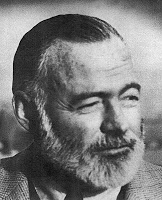
Looks like Sean Connery in the League of Extraordinary Gentlemen.
But then I thought of an old high school memory: in some of my English classes, particularly the AP courses I took when I was an upperclassman, we read a lot of Ernest Hemingway. My teacher just had this thing for Ernest Hemingway. Don’t know why. I didn’t particularly care for him, but we read quite a bit of him. Indian Camp, I think we read twice in my four years of high school.
And I remember, there was a character in many of Hemingway’s stories, a guy by the name of Nick Adams. This guy appeared everywhere, sometimes a kid, sometimes a teenager, sometimes an adult. I once asked my teacher about this guy, and he replied that Nick Adams appeared in plenty of Hemingway’s stories. Two dozen, to be exact. What made Nick Adams so appealing to Hemingway? He was supposedly based on a lot of Hemingway’s personal experiences, so maybe that had a lot to do with it.
In any case, I thought, “Why can’t this short story be my Nick Adams?” It would be short stories I write every now and then, featuring the same world and the same protagonist, all originating from “Buried Alive”. I could even release them in a collection someday, far, far in the future. Who knows what could happen?
In any case, I’ll see what I come up with when I have the time and the energy to write some short stories. There are definitely possibilities here for a series of interconnected stories.
Have you ever written a short story and wished you could write a sequel/spin-off/related story to it? What happened?
If you see a pun in that title, you’ll realize it’s one of THE worst puns in existence. I’m not even sure why I made it.
Earlier today I had an idea for a story that I’m tentatively calling “Rose”. I’m not going to get into details about it, though I will say that flowers and plants do play a big role in the story, if the title didn’t give it away, and when I write it I’ll probably listen to a lot of songs about obsessive love and stalkers. I somehow came up with it while sitting in my Science Fiction and Fantasy class today (I’ll probably be able to recall the thought process behind it better at a later date, because it’s a bit of a mystery now), and I wrote it down when I got home today.
Now at first I thought it would make a great short story. But then…I realized that this story would be longer than your average short story. Then I thought, “Perhaps it could be some weird, creepy novel.” But that was too long. So I thought to myself, “How about a novella?”
Now, I’ve never had any definite opinions on novellas. I’ve only read a few in my entire lifetime, most of them by Stephen King (anyone familiar with “N.” or “Everything’s Eventual”, by any chance?). I’d never considered writing one before. Short stories, which are the foundations for a career in fiction writing, are hard enough to write for me, and novels are my true passion. Why would I have time for a novella, that strange middle-ground between the art of short stories that is sometimes so elusive for me and the novel that is my freedom and passion?
But when I thought of this story, it somehow clicked that a novella format would be best. I wouldn’t have to struggle to extend the story, and I wouldn’t have to pack it into a neat little package. The story would fit in the format of a novella. And from there I formed my first real opinion on novellas: they are perfect for those stories that can’t fit into the format of a short story but would suffer as a novel.
I’m not exactly sure when I’ll write this novella–though I have an idea or two–but I look forward to writing it, like I look forward to writing all the stories I come up with. Until then, I’ll probably churn this one in the bowels of my imagination until I have a better idea of the story I’d like to write with it. After all, my stories are usually a bit better when I’ve given them a little time to mature in my imagination.
Oh, fun fact before I finish this post: this novella is the 60th idea for a story I’ve had, not counting short stories or articles I’ve written. With the amount of ideas I have, I’ll at the very least never run out of ideas for stories to write, and at the very best I’ll be very prolific. Either way, it’s good news.
At Ohio State, the two professors in the English department who are published and celebrated authors (at least locally celebrated) are literary authors. In the two fiction workshops I took last year, the focus was on literary writing. As my undergraduate advisor tells me, “Ohio State is mostly about literary.” And whenever genre is brought up, I hear a lot about how it’s not OSU’s thing, or there’s more of a focus on literary fiction, or that there are no professors who write genre fiction among the staff.
As a genre writer, particularly one of horror, I have to disagree with this. Yes, literary fiction is more focus on character development and on character-driven stories than genre. I am willing to admit that. However, I find it somewhat hypocritical that contemporary genre fiction isn’t worth examination and study in the English department. Yes, there’s a couple of classes that examine science fiction and fantasy, or famous monsters from literature, or YA fiction (I’m taking that first one this semester). But that’s not an acceptance of genre fiction. Ohio State still doesn’t accept genre fiction, at least not any within the past fifty years.
Personally I find that strange, considering how much genre fiction is used in required courses and in general scholarship. I mean, look at it: Shakespeare’s Hamlet and Macbeth are examined in classes all the time. If those were written today, they’d be classified as psychological thrillers with supernatural elements. And A Midsummer Night’s Dream and The Tempest would most likely be fantasy stories.
Ever read Beowulf? That’s in early British fiction courses all the time, and it is fantasy if ever I’ve seen fantasy. Rip van Winkle? Definitely a ghost story, seeing as Captain Hudson came back and put the titular character to sleep for twenty years. Edgar Allen Poe and H.P. Lovecraft? Horror writers and, at least in the case of the former, mystery writers. Frankenstein? The first modern science fiction novel. Dracula, anyone? It’s the basis for the modern vampire legend. Ever read Fahrenheit 451, or 1984, or Atlas Shrugged? They may be philosophical and full of character development, but they are certainly dystopia stories!
So why not contemporary genre fiction, if all this older genre fiction is worthy of attention? Perhaps because it’s popular, or maybe because some of its authors’ fame may not last a hundred years after their death. Maybe the stories haven’t had as much of an influence on literature as others have. Who knows?
But to exclude modern genre fiction just seems wrong. After all, the majority of people see literary fiction as boring or too elite. If English Studies is supposed to examine the English language, how it is used and how it affects the common man, and how it should be used, shouldn’t genre fiction be given as much consideration as literary fiction? Because honestly, genre fiction can have as much an effect on English literature as literary fiction, and sometimes even more.
So don’t exclude it. Include it, with all your academic heart and soul. You may find something there that is worth studying and makes including genre fiction more than worthwhile.
It has exactly been one month since The Quiet Game: Five Tales To Chill Your Bones came out. Yes, one month. Feels like a lot longer, but it’s only a month. A pretty crazy month too. I moved into my new apartment with my roommate Morgan, I worked most days, I saw some old friends and met some new ones, and in four days the fall semester starts (more on that later).
I’ve sold 25 print paperback copies and ten or eleven digital copies so far (there’s a guy I met who said he’s going to be downloading the book tonight. Depending on how long it takes for KDP to register a download, I may not find out till tomorrow). Also, I’ve gotten another review on Amazon, this one from Jason Haxton, owner of a box that is said to be possessed by a dybbuk, a demon from Jewish folklore. You may also know him as the author of the book The Dybbuk Box, a book detailing his experiences with the box, and the movie The Possession, which is based on Haxton’s book.
Here’s what he had to say on the book, which he gave 5 stars. The title of the review is Nailed It:
I happened across The author Rami Unger about a year ago when he was researching the paranormal online. He nailed the Dybbuk story. Write more… soon! Jason Haxton Author of “The Dibbuk Box:.
Pretty awesome, huh? And coming from an author of a really excellent book and someone who’s experienced the supernatural before, I take it as a compliment. Plus his review has brought The Quiet Game‘s rating to a 4.5 average. I cannot complain. Oh and Jason, I have a book coming out in November. If you want me to let you know about that one too, I will.
If you’re interested in reading The Quiet Game, check it out on Amazon or Smashwords. And however you feel about the book, please write a review if you have the time. I always appreciate feedback, whether it be positive or negative feedback that I’m hearing.
Hope things are going well with you tonight. I’ve got another blog post and some writing to do before I go to bed tonight. Wish me luck.
It’s been a little while, but I’ve written my fourth article for that wonderful website, Self-Published Authors Helping Other Authors. I wrote and posted it yesterday, truth be told, but afterwards I started moving into my new apartment, and the cable guy wasn’t scheduled to come and install the Wi-Fi until after I left for work today, and I’m only writing this now because it’s lunch break, so please forgive me for letting you know earlier.
This article, called Can & Should You Ask For Reviews?, discusses whether or not you should ask for reviews from friends and family and how you should go about it if you decide to do so. Already it’s caused quite a bit of discussion, with many people saying they disagreed with my conclusions and with some people adding onto my advice. I’m glad everybody’s discussing the article, even if not everyone agrees with it.
Go check this article out and check out the rest of the website by clicking on the links above. It’s quite a helpful website for authors of all stripes, and I can’t recommend it enough.
These days, you have self-published authors asking their readers to finance their editing fees, the creation of the book cover, and even vacations/plane tickets/living expenses. And when these authors don’t get “donations”, they can throw hissy fits.
This is not acceptable behavior, and will only harm the author in the end. We as readers don’t owe them anything, especially without garauntee of anything back. For more, read this article by novelist and fellow writer for Self-Published Auhtors Helping Other Authors, Ruth Ann Nordin.