Posts Tagged ‘ideas’

It’s time for my weekly exercises. These pieces of flash fiction are part chance to practice my craft, part oppurtunity to get reader feedback on what’s scary and what’s not, and part shameless marketing ploy to get people interested in my published work. Remember, these exercises depend on reader feedback, so please give me your thoughts, good or bad, on the piece below.

The sky turned black as midnight. Everyone stared towards the heavens and the inky blackness. A moment ago the sky had been bright and blue, the sun still high above at four in the afternoon. But then it had turned pitch-black, like looking into an inkpot. No moon, no stars. Not a single source of light burned in the sky, and not even street lamps sensitive to changes in light could dispel away the darkness.

Family huddled together in fear. Lovers held each other, comforting each other in order to forget their disorientation and confusion. People left their offices, homes, and stores just to stare at the impossibly-black sky. For maybe five minutes, nothing changed and nobody moved, just looking at the sky in terrified wonderment.

And then a giant, skeletal hand appeared from the inky blackness and reached down as if to grab them all and take them away. Maybe that was its purpose. And the people who saw the hand and the long arm attached to it screamed.

I’m done with my writing break, and I started with a new article for the blog Self-Published Authors Helping Other Authors. This article’s topic is Resources For Researching The Unfamiliar. I thought it might be helpful if I wrote an article that gave authors ideas for places they can go if they want to know more about a subject they may not know much about. And who knows? Other authors might have more tips which I can be incorporated into the article at a later time and date.

I hope you check out the website. Self-Published Authors Helping Other Authors is a wonderful blog that can help authors of all types and stripes and is full of useful information. Also, look forward to more posts, because I’ve got plenty to write about now that I’m off my writing break.

Have a good night, everybody.

Writing is a mostly mechanical exercise, making practiced movements with a pen and paper or seeking the correct key on a keyboard. And putting those words together is part of the higher mental powers given to the human species through millions of years of evolution. But the act of imagination, the power it gives us to bring those words together into a coherent narrative and even tell stories with those words, to me that it is transcendent of all the abilities we’ve garnered from evolution. To me, it’s almost a gift of the soul.

I keep three separate lists on my flash drive. One list has short summaries and blurbs of novels, films, TV shows, comic books, and even video games I’d like to write. I’m up to sixty-one ideas at the moment. The second list gives short descriptions of short stories I plan to write (seventeen at the moment). And the third list has subjects for articles I can write for Self-Published Authors Helping Other Authors (great blog, by the way. Totally recommend it). That’s a total of eighty-eight ideas, and all of them are possible through my imagination. Heck, I wouldn’t have any of the ideas for stories I write if it wasn’t for imagination.

And imagination is influenced by so many things. Everyday life influences imagination, allows it to be transformed into stories. I read an article about efforts to stop forced marriages with metal spoons and I got an idea for a short story from that. When I went to my science fiction class, I had an idea for a novella that I had to blog about almost immediately (see this post for the actual article). Speaking to some friends about the recent death of an actor to suicide, I thought of an idea for a crime novel. When the lights in the Super Dome went out early this year, I got an idea from that too.

And not just events in life fuel the imagination. When I read or watch TV or a movie, I get ideas from them too. Just today, a book I’m in the middle of reading gave me an idea for a short story taking place in Jerusalem. Watching a favorite episode of Doctor Who the other day, I had an idea for a six-book series featuring Agatha Christie (Whovians, I bet you can guess which episode that is). I even have an idea for a movie to bring back a TV franchise I used to love as a kid. And how many fairy tales and childrens books have I taken and turned into new stories that boggle the mind and scare the soul? All this is possible through these works’ influences on my imagination, and my imagination’s influence on me.

Imagination. It is the ability to absorb events or old ideas and–pardon the adjective used–regurgitate it into a new form. It is the application of ideas and concepts in a new light, in a new way. It’s the churning of our subconscious, which spits out, like in a Greco-Roman Creation myth, something new and fabulous and beautiful. It is a force that I contemplate, that I look at and wonder about its complexity.

And perhaps one day I’ll write a story about its impact…oh wait. I’ve already got one or two ideas based on that! Never mind.

The point is, the imagination is something that is such a benefit to the act of writing, the act of living, that without it life would be so much less beautiful and powerful and amazing. It’s given me a ton of ideas, and I hope it’ll give me some more in the future. Because if my imagination can allow me to create a large body of work to leave me behind, even if I don’t get famous off of it all, I’ll feel like I’ve left behind an amazing legacy for the world.

Though if I can get famous I won’t complain.

What’s your view on the imagination and its impact on writing and on life?

If it was Europa Report Card, I’d give it an F.

Not as good as I expected.

I was very curious about the film when I saw the trailer when I went to see Elysium. So when I finally got the chance to see it, I hoped it was as good as they were trying to make the film seem, which was a documentary/found-footage film that marries Paranormal Activity to modern astrobiology theories and science fiction.

Unfortunately, the filmmakers fail to do this. The film, which is about a manned mission to Europa, one of Jupiter’s moons and the one that scientists believe cold possibly harbor life underneath its icy surface, chronicles from a number of placed cameras the trials and travails of the crew, especially when they finally get to Europa and find they’re not alone (obviously). The events aren’t always in chronological order, and there are a lot of interviews with representatives and scientists working for the company that funded the mission.

Is it a novel idea? Yes, to a certain degree. Is it a good thriller? Not really. The film takes too long to actually get to Europa, reveals who’s going to die too early to make the story very thrilling, and when we finally get to Europa’s surface, there’s more fascination with the scientific experiments than there is of the monster menacing the crew. By the time the focus of the film is to get away from the monster, who has not been revealed except for some deep-pink bio-luminescence underneath the ice, we are more annoyed with curiosity for what the creature is than what is happening to the crew, whose fate we basically have figured out and are bored with.

And when they finally reveal the monster…well, not so scary. In fact, it’s kind of stereotypical for alien movies where the alien is more monstrous than humanoid. It’d be scarier if it were modeled after Godzilla. Even the deep pink bio-luminescence couldn’t make that less terrifying.

All in all, Europa Report is so high on the science and documentary-style footage that its filmmakers forgot to make the film actually entertaining for the people going to see it. I give it a 2.6 out of 5. Don’t even bother to wait for it to come out on DVD. Trust me, it’s a waste of time.

Nice to meet you.

I finally sat down this evening, after finishing a whole lot of biology homework, and I watched the movie Warm Bodies. It’s amazing when people can take a tired, old plot and make it seem fresh and new. If you don’t get what I’m talking about, just see the movie. You’ll get it.

But it put me in mind of a zombie story I’ve written myself. Well, it’s not exactly a zombie story. Zombie-like or zombie-ish. If I call it a zombie story, it seems like it gets categorized into a larger body of work that people see as overused these days…and increasingly getting as dumb as its main antagonist. But my short story, “Buried Alive”, actually features some zombie-story elements. And even though I’m satisfied with the ending, I feel…I feel like the story could continue after it finished. And, I realized, I kind of wanted it to continue.

Just one problem: I don’t want to make a bleeding novel out of this story. I’ve got enough on my plate without another novel at this point.

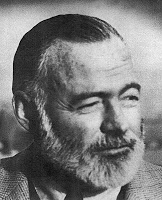
Looks like Sean Connery in the League of Extraordinary Gentlemen.

But then I thought of an old high school memory: in some of my English classes, particularly the AP courses I took when I was an upperclassman, we read a lot of Ernest Hemingway. My teacher just had this thing for Ernest Hemingway. Don’t know why. I didn’t particularly care for him, but we read quite a bit of him. Indian Camp, I think we read twice in my four years of high school.

And I remember, there was a character in many of Hemingway’s stories, a guy by the name of Nick Adams. This guy appeared everywhere, sometimes a kid, sometimes a teenager, sometimes an adult. I once asked my teacher about this guy, and he replied that Nick Adams appeared in plenty of Hemingway’s stories. Two dozen, to be exact. What made Nick Adams so appealing to Hemingway? He was supposedly based on a lot of Hemingway’s personal experiences, so maybe that had a lot to do with it.

In any case, I thought, “Why can’t this short story be my Nick Adams?” It would be short stories I write every now and then, featuring the same world and the same protagonist, all originating from “Buried Alive”. I could even release them in a collection someday, far, far in the future. Who knows what could happen?

In any case, I’ll see what I come up with when I have the time and the energy to write some short stories. There are definitely possibilities here for a series of interconnected stories.

Have you ever written a short story and wished you could write a sequel/spin-off/related story to it? What happened?

Oh, I had a productive day today. I got a ton of homework done, edited The Quiet Game after being told there were some glaring errors in the book (sorry! If you buy/download it now, there will be less errors than before), I did my weekly exercises (see last post), I came up with an idea for a short story and a book series, and–oh yeah, I finished Part One of Laura Horn, one of the two novels I’m working on right now.

I called this part of the story “That Girl’s A Mouse”, based on what one of the girls at Laura’s school describes Laura. As we read the chapter, we find out some of the reasons Laura’s like that, though some things are still in mystery. I rather enjoy writing Laura’s story, but I sometimes have trouble getting into her head. In some ways she’s still a mystery, even to me, which makes her all the more fun and intriguing to write about.

Now for pages and word counts. The prologue, which is about ten pages and two-thousand, three-hundred sixty-four words, is about three chapters long. The first part spans from chapter four to eleven and is forty-five pages and twelve-thousand, one-hundred and eighty-nine words. This brings it a total fifty-five pages and fourteen-thousand, five-hundred and fifty-three words.  With fifty-six chapters left, it’ll probably get much longer. I’m guessing somewhere around 350 pages and maybe seventy-thousand pages. It’ll be awesome when it’s done.

Tomorrow I plan to do my biology and sociology homework, then I’ll hopefully edit chapters ten and eleven of Video Rage. I’m not entirely satisfied with those chapters, so I can’t start chapter twelve until I at least give those two a look-over and see if there’s some way to fix them up a little.

Until then, have a good night everybody.

Today we had a rather interesting discussion in my Science Fiction and Fantasy class (for those of you new to the blog, yes there’s such a thing. Apparently Ohio State’s English Department has been studying the foundations of nerd culture since 2007. And possibly there’s a grad student in the Sociology Department who’s studying the actual people of nerd culture, but that’s an investigation for another time). Anyway, we were talking about the differences between heroes in science fiction stories from pre-WWII and the stories written after WWII.

In the pre-WWII stories, the heroes were always larger than life, able to overcome evil and fight off any villain with ease. In a sense, they were Supermen without superpowers, and they still won every battle, got the girl, saved the world, and were home in time for tea. Some great examples were John Carter of Mars from the Barsoom novels by Edgar Rice Burroughs and Freder from the movie Metropolis.

But then you have World War II. There you see death camps, POW marches, bombings, jungle warfare, beaches that run red with blood, mortars and claymores and bullets, racism and nationalism, beheadings, and several other bits of Hell made incarnate. Those who came back from the war were given a darker outlook on the world, and those whose talents were more geared to the written word and who in turn enjoyed a little space travel incorporated that new world view into their work. The best examples I can give you of the sort of hero that became popular after WWII are Barton from the short story The Cold Equations and Han Solo from Star Wars. They are not Supermen. They are simply men. They have problems, conflicts, flaws. Barton is haunted by what his job requires him to do when he finds a stowaway on his ship. Solo is looking out for himself and his ship and nobody else, though the Expanded Universe of Star Wars says that he’s like that because his lover died leaving him cynical and jaded. And then he met Jabba the Hutt.

The point is people liked these characters. A lot. They’ve been around since then in some way or another. Look around at science fiction and fantasy stories today. Harry Potter admits he’d be lost without his friends, and as Hermione is fond of pointing out, he’s useless with girls. Katniss Everdeen is troubled by her feelings for both Peeta and Gale and her memories of the Hunger Games, and is only in the situations she’s in so that she can protect her sister and stay alive, in that order…though she does love a little revenge every now and then. Max de Costa from Elysium is trying to be a better man, but with his life on the line he becomes the definition of a survivalist, willing to do anything to live. And Buffy Summers from Buffy the Vampire Slayer has a host of issues that inhibit her life, especially in season six of the series. Jeez, that season was psychologically dark!

And it’s not just science fiction. Other genres of speculative fiction have these sorts of character. My own fiction has these sort of flawed characters:

Zahara Bakur (Reborn City): low self-esteem and a sometimes overwhelming timidity and fear of violence.

Rip (Reborn City): recovering drug addict with image issues.

Snake (Snake): highly disturbed serial killer due to abusive childhood.

Laura Horn (Laura Horn): pathological shyness, social anxiety and general anxiety due to sexual assault.

Why are these characters so popular when they are so far from perfect? I think it has something to do with the fact that’s what they are: imperfect, They care deeply and try hard, but occasionally they fail and they fall and the consequences are terrible. To the readers, that makes them real. We don’t want to read about infallible heroes, because we know all too well that they don’t exist. We want heroes who are a little more like us. They depend on people, they hurt, they need a good smack occasionally to see that what they’re doing is hurting both themselves and their loved ones. We’ve all been in positions like that to some degree in our lives. And that makes these characters relatable to us, and our problems, even if they don’t involve magic or spaceships or fighting in an arena with other young kids.

Not only that, but these protagonists tend to grow in the story. They tend to become better than what they were before. And I don’t mean better warriors or fighters or healers or wizards or whatnot. I mean better people. They learn what’s really important in life, or how to express their love for others, or they come back as true leaders who put the lives and interests of those who depend on them first. In other words, the sort of people we want to be.

I personally prefer using these characters with their flaws and warts and troubles. I used to be more into characters that were impervious, Granted, I was a kid at the time, and all my favorite TV, movie, and book heroes seemed impervious to me. But I’m older now, smarter, wiser, and a bit more aware that the world doesn’t usually produce such heroes. So I like to use the heroes with problems, with something that’s keeping them back. Along with the conflict of the story, it gives me something to grapple with and for the characters to grapple with as they fight onwards. After all, a story is not just getting from Point A to Point B, it’s also about letting the characters grow and become better people.

“I’m not even perfect, and I’m bloody brilliant in all my forms.”

Now are these sorts of characters here to stay? I’m tempted to say yes, at least for the meantime. If you look at the latest movies, TV shows, novels, and comic books, the main characters all have problems of some sort that makes life difficult for them. Watching them grow, take on these problems, and overcome them is part of the appeal of the story. And I certainly plan to use these flawed characters in the future, as do other writers I know. So yes, it’s quite possible these flawed protagonists will be staying for quite a while.

How do you feel about flawed characters? And are there any that you particularly like above all others?

Don’t you just love the fans who make this stuff?

With Ben Affleck cast into the role of Batman for the sequel to Man of Steel, I thought I’d take some stabs at predicting what we could expect from this superhero mash-up that will try to rival the Avengers franchise. Now, I know my predictions aren’t always spot on, which is why I haven’t done any since the end of season one of Once Upon a Time (I think the only thing I got right there was Henry’s father). And I’m always afraid someone’s going to come back and tell me that I was off the mark by about 100%.

However, I really want to try again for Man of Steel 2, because for some reason this whole story sounds very familiar, and I want to get into the conversation on what we can expect from the film (which is likely going to be released summer 2015, if Warner Bros. has its way). So without further ado, here’s what I think will happen with various aspects for MoS2 (see what I did there?):

BATMAN. I’m pretty sure they won’t connect this Batman to Christian Bale’s Batman in any way, shape, or form. That trilogy is perfect the way it is, so why possibly spoil it by continuing it on in this new universe with Supes? Better to try and create a new Bats that will be as different from Bale as possible without being comical. I think a serious, more detective-like Batman would work, one who’s not overly violent but not afraid to use martial arts when necessary. That would be an original movie take, in my opinion.

VILLAINS. I’m predicting two villains will be used in the film, one from the Superman universe and the other from the Batman universe. For Supes, I’d go with the obvious choice of Lex Luthor, but if the filmmakers want to save him for the inevitable Justice League film, I’d say Brainiac will make an appearance. I still think Luthor is the likely choice though, so I’m going to throw out Dann Florek as the actor to portray him. As for Brainiac, I’d need more information on what sort of version of Brainiac they’d create for the movie. After all, there are so many versions of Brainiac, it’s hard to keep track. Unless I know more, I can’t recommend an actor (though with a little make-up James Marsters could possibly fill the role).

As for the Batman villain, I’m pretty sure it won’t be any of the villains from the Nolan trilogy, especially not the Joker (it’s too soon after Heath Ledger’s death). And quite possibly they won’t use villains from the Burton/Shumacher films due to the comedic natures of those villains. However if they do, I think cunning, sinister, and quite possibly much more dangerous versions of Penguin, the Riddler, or Poison Ivy could be usable.

If not though, then it’ll probably be a more obscure villain. I doubt that they’d use a crime boss as the villain, seeing as none of the crime bosses are memorable without a cool name and make-up. Perhaps the filmmakers could use a former Robin like Dick Grey or Jason Todd to be the Batman villain, both having come back in some versions of Batman as villains in their own rights. Under what form and in what capacity is a mystery to me, but if so, I’d pick Daniel Radcliffe or Mark Salling in a non-singing capacity.

And as an outlying vote for villain, I think Red Claw from the Batman animated series of the 90s would do great. She’s a feared terrorist with an accent who will do anything for her goals. And having Angelina Jolie, Mila Kunis, or Cote de Pablo play her would work out just fine.

PLOT. Now this goes without saying, first Supes and Bats will be enemies or just not get along as they pursue the same goal, but eventually they’ll team up and actually work very well together. I’m not sure what the evil villains’ plot will be, because I don’t yet have any idea who the villains will be. However, I’m also sure that it’ll cause a lot of destruction (that goes without saying) and may involve alien technology, nuclear technology, bio-warfare, and/or Kryptonite. Any combination of that is just fine with me.

Also, depending on the relationship status of Supes and Lois Lane, we may either get them just fumbling about trying to see if they’re compatible without danger in their lives to cause them to have hormones raging for each other or we may see them well into a relationship where they have to struggle between each other and Supe’s duty to America and the world. Either way, it’ll be put into a 2.5 hour film, so there’s not enough room for character development.

I’ll have more when I know the actual villains for the story and can guess the plot. Until then, what are your thoughts on this sequel? I’d love to hear your predictions…and possibly make a bet with you.

Spooooky!!!

Last night I had an idea during my evening meditation for something I could do to help improve my writing. I would’ve done it earlier in the day, but I’ve been busy since today was the second day of classes. But now I have some time since I finished my homework and I thought I’d share my idea and its fruits before I start cooking dinner.

My idea was to write a short little piece of writing–maybe 1-3 paragraphs–whose sole purpose was to tell a scary story in as few words as possible. Basically, it’s an exercise in scaring people in as few words as possible. BOO!

Why am I doing this? Several reasons: one is that if I can write these vignettes and see how people react, I can get a better grasp on how to polish up my craft in terms of writing and scaring. The second reason is that any one of these little vignettes could lead to a full-length story, should I find them helpful enough in the story writing, if I particularly enjoyed the story depicted within, and if reader response is positive enough. And finally, it’s also a marketing ploy. Yes, a shameful marketing ploy. I’m hoping that if people react positively to these exercises, I can get them interested in my longer works, like The Quiet Game or Reborn City (out November 1st).

I hope to get these out once a week, giving me time to come up with new ones and so that people don’t get sick of them. I also plan to list all the Weekly Exercises on its own separate page, with every exercise listed with the most recent first. I hope at least I’ll benefit from these exercises, and so will my readers in the long run.

So without further ado, here’s Weekly Exercise #1:

She was awoken by the baby screaming and immediately closed her eyes, hoping it would quiet on its own. When it didn’t, she threw the covers off and got her robe on. Was there a night that it would just leave her be? She’d never wanted this stupid thing that couldn’t take care of itself, and it was reminding her of that every night with its ceaseless screaming. Well no more. Either it shut up tonight or she would shut it up for it!

She reached the baby’s room, her fingers clenching and unclenching, ready to strangle it or snap its neck for some decent sleep. But then she saw the baby floating in the air, fast asleep. And then she realized that the screaming she’d heard wasn’t coming from the baby’s room anymore. It was coming from behind her.

If you see a pun in that title, you’ll realize it’s one of THE worst puns in existence. I’m not even sure why I made it.

Earlier today I had an idea for a story that I’m tentatively calling “Rose”. I’m not going to get into details about it, though I will say that flowers and plants do play a big role in the story, if the title didn’t give it away, and when I write it I’ll probably listen to a lot of songs about obsessive love and stalkers. I somehow came up with it while sitting in my Science Fiction and Fantasy class today (I’ll probably be able to recall the thought process behind it better at a later date, because it’s a bit of a mystery now), and I wrote it down when I got home today.

Now at first I thought it would make a great short story. But then…I realized that this story would be longer than your average short story. Then I thought, “Perhaps it could be some weird, creepy novel.” But that was too long. So I thought to myself, “How about a novella?”

Now, I’ve never had any definite opinions on novellas. I’ve only read a few in my entire lifetime, most of them by Stephen King (anyone familiar with “N.” or “Everything’s Eventual”, by any chance?). I’d never considered writing one before. Short stories, which are the foundations for a career in fiction writing, are hard enough to write for me, and novels are my true passion. Why would I have time for a novella, that strange middle-ground between the art of short stories that is sometimes so elusive for me and the novel that is my freedom and passion?

But when I thought of this story, it somehow clicked that a novella format would be best. I wouldn’t have to struggle to extend the story, and I wouldn’t have to pack it into a neat little package. The story would fit in the format of a novella. And from there I formed my first real opinion on novellas: they are perfect for those stories that can’t fit into the format of a short story but would suffer as a novel.

I’m not exactly sure when I’ll write this novella–though I have an idea or two–but I look forward to writing it, like I look forward to writing all the stories I come up with. Until then, I’ll probably churn this one in the bowels of my imagination until I have a better idea of the story I’d like to write with it. After all, my stories are usually a bit better when I’ve given them a little time to mature in my imagination.

Oh, fun fact before I finish this post: this novella is the 60th idea for a story I’ve had, not counting short stories or articles I’ve written. With the amount of ideas I have, I’ll at the very least never run out of ideas for stories to write, and at the very best I’ll be very prolific. Either way, it’s good news.