Posts Tagged ‘publishing’

I’m really not sure where to start with this one. I mean, how do you tell people about the realization of your childhood dream in one blog post, let alone be coherent? I feel like going in fifty different directions with this post, that’s how excited I am!

Well, I guess I’ll start at the beginning. Or what I think makes a good beginning, anyway: back in March of last year, my friend and fellow novelist Matt Williams (check out his blog HERE) announced that his novel, The Cronian Incident (which I recommend if you’re into science fiction and detective stories, by the way)  had been accepted for publication by Castrum Press, a company based out of Belfast in North Ireland which, in the year since Matt’s been accepted, has gained a bit of a reputation for publishing great speculative fiction and treating its authors very well. Later that year I did an interview with Matt and then received an eARC copy of Incident from Castrum to read and review. After hearing how Matt liked the company and seeing how well his book was doing, I asked if he’d make an introduction for me to the company’s editor. He said yes.

I talked with Castrum’s owner, Paul, and he asked to see some of Rose. This was after the third draft had been finished, if I remember correctly. I sent him the first ten pages, letting him know I planned to do one more draft after the beta readers were done with the manuscript. He sent back some notes and asked to see more of the book when it was done. One draft later, I sent him the fourth draft of Rose, hoping against hope that they’d like it enough to publish it.

Cut to last Friday, and I receive an email when I get home from work. It was Castrum: they wanted to discuss publishing Rose. After jumping up and down like a kangaroo and screaming high enough to break glass, I replied saying I’d be happy to work with them. Paul sent a contract yesterday, and after having some of my questions answered, I signed the contract and sent it back to him this afternoon, with the realization that my dream has been accomplished. A novel of mine is getting published by a company.

To which there’s only one thing to say:

By the way, if you’re unfamiliar with Rose, this is a novel I first wrote as my college thesis during senior year. It follows a young, amnesiac woman who starts turning into a plant woman. And that’s just the events of Chapter One. And trust me, it’s a full-on horror novel from there, complete with psychological and supernatural terrors galore. I tried editing it again in 2016 and couldn’t make it work, tried again in 2017, and after that things kind of just snowballed from there. And now it’s getting published.

Obviously, I’m feeling a number of emotions right now. Excitement about the publication process and seeing Rose out in print, nervousness about how it will be received by the book-reading public, satisfaction that this dream has been achieved, hope for the future, and a feeling of goodwill about things to come. Especially that last one. Since at some point during the third draft of Rose, I had a feeling that things were about to change, that something big was about to start. And since the New Year, I’ve had this very strong feeling that not only was 2018 going to go slower than 2017 did, but that 2018 was going to be my year. And so far, it seems I was right on both counts. And I hope I can continue to be right on both counts.

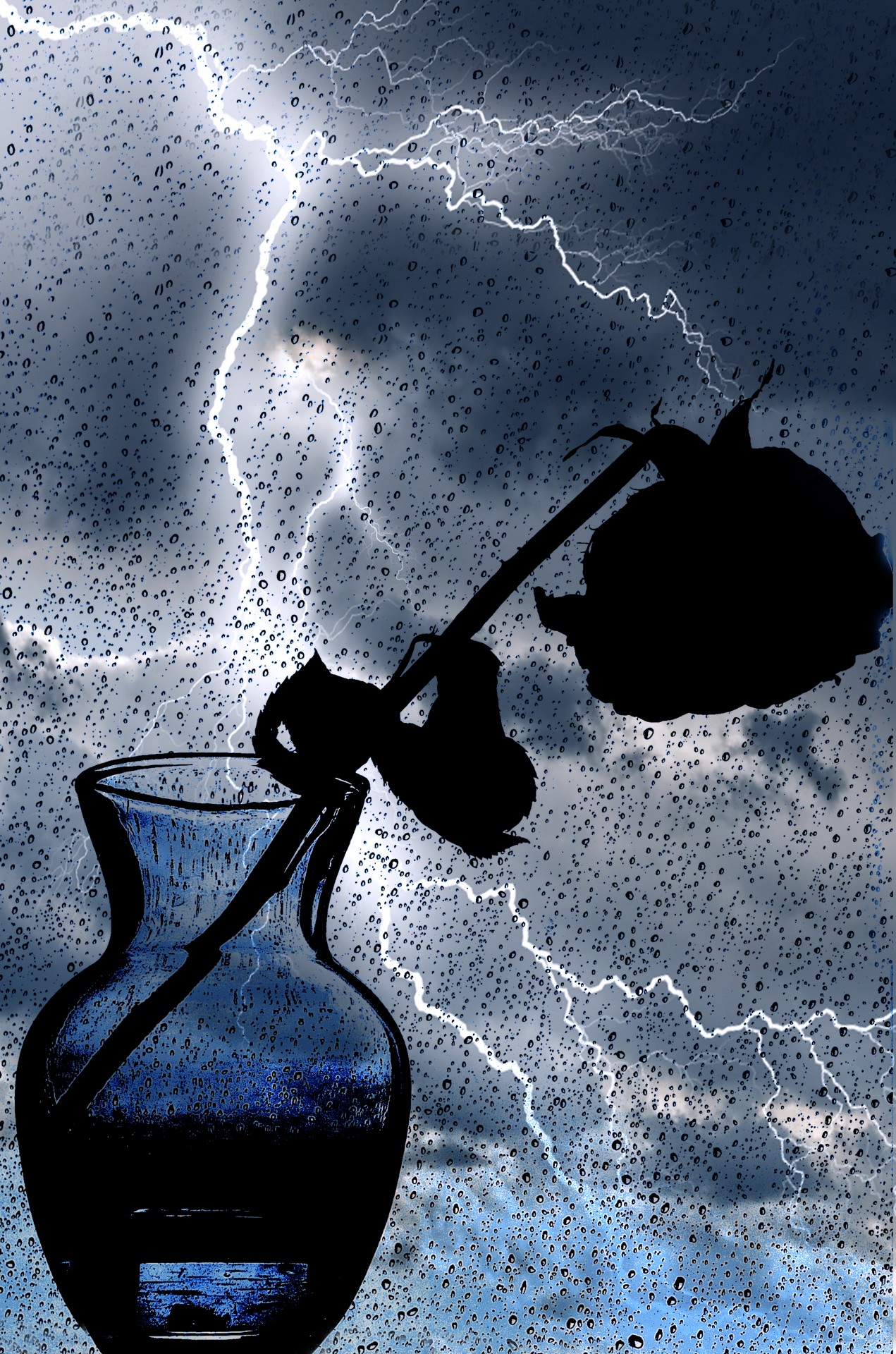
Rose will appear in this medium very soon.

There’s so many people to thank for this wonderful event. Firstly, my friend Matt Williams for connecting me to the company, my beta readers Joleene Naylor and Dr. Black (my chiropractor, believe it or not), as well as Paul Camper, Maura Heaphy, and Manny Martinez for looking at the book back in college, and of course to Castrum for taking a chance on this indie author from Ohio. But most of all, I’d like to thank you, my Followers of Fear. For nearly seven years, you’ve stood by me and supported me through my various writing endeavors, my college experience, finding and getting a job, my ups and my downs, and so much more. You’ve all supported me and helped me get this far, and I can’t thank you enough for that. I hope you continue to support me (and maybe even read Rose when it comes out) as I continue down this road and try to make sure Rose is a huge success.

So what happens next? Well, I’ll work with Castrum to produce a fifth and hopefully final draft of the novel. We’ll get to talking about cover art and at some point we’ll set a release date (I’m hoping before Halloween, but we’ll see). And of course, I’ll make sure to let you know of any major developments.

Until next time, my Followers of Fear, I wish you pleasant nightmares (I’ll, of course, be having nothing but pleasant dreams)!

I have not been blogging much in the last week or so, though I’ve read just about every blog post that shows up in my inbox. This is partly because I haven’t had anything I’ve felt passionate enough to blog about and because of time constraints, but it’s mostly because of the story I’ve been working on lately. You see, this story is challenging me as a writer, and the challenge has me engrossed, more so than a test engrosses Hermione Granger around exam time (oh Harry Potter, you always give me something when I ask). It’s so engrossing, that it’s taking up all my creative energies, leaving me unable to blog or even come up with new ideas for stories (though I already have more ideas than I know what to do with, so that’s not a huge problem).

Some of you may remember that I started working on a story I thought might become a novelette or novella in between drafts of Rose back in October or November. After finishing the short story Do-Over the other day, I started working on this story again, and as I said, it’s been challenging. On a number of levels, actually: for one thing, there’s an anthology I’ve heard about that’s looking for stories of a certain word length, so I’m trying to write this story to keep it within the anthology’s word limits. Yeah, I know I should let the story be whatever length it’s meant to be, but after expanding Rose to twice its word length last year because it was suggested I do just that, I feel like I can aim for a certain word count and still get a good story out of it.

Another reason it’s challenging is because of the narrator. Like Rose, I’m telling this story through the eyes of a first-person narrator, which means I’m reliant on her as a narrator to tell the story and to create a good horror ambiance. But at the same time, she’s got a history, a personality, and observations that she’s putting into her story. It’s less like I’m writing the story and I’m channeling my narrator as she’s telling the story, though I do have the power to go in and make changes as needed. And creating that horror ambiance while balancing my narrator’s voice and what she feels is necessary to put into her story, such as her interactions with her husband, isn’t that easy.

Did I mention that this story also takes place over thirty years before I was born, in a state I’ve only visited once? Well, it does, so in addition to being a horror story, it’s also historical fiction, and I’m working hard to recreate an age and place I’ve never experienced, with all the fashions, technology, and attitudes in place. It’s a lot of work, to say the least.

And on top of that, you have all the normal challenges of storytelling: making a story interesting, pacing, showing vs. telling, dialogue, word choice, et cetera, et cetera. I’ve got my work cut out for me.

But honestly, I think it’s all worth it. Because in my experience, if a novel challenges the writer, it’s going to be a better story in the end. Look at Rose: that novel challenged me every time I worked on it. The first draft alone, I had to go back to the very beginning and start over again because I had to totally reroute the path the story was taking. During the third draft, I added forty-thousand words, a whole new plot line, and even a character or two just to make the story not only longer, but better. And in the end, I created one hell of a story that I feel has a great chance of publication. Hopefully with this story I can get a similar outcome.

Stories can be challenging to write sometimes. It may be difficult to get the words on the page, but in the end, with a lot of work, I think it can lead to a really compelling story. And I’m looking forward to seeing if, after a lot of blood, sweat and tears, I can wrangle out a good story here.

Well, I got another story done this evening. And I honestly didn’t think I’d get it done that quickly tonight. I thought it’d take an hour and forty-five minutes to finish off this story. Somehow I got it done in half an hour. But who cares about that? I got a short story done!

Yeah, I use Bitmoji on occasion. In case you forgot.

Anyway, if you skipped the title the story is called “Do-Over,” and is about the lengths one girl goes to fix her life after she sends out a tweet she doesn’t realize is really offensive, ruining her life. Yeah, pretty relevant, isn’t it? In fact, this story was partially inspired by the story of Justine Sacco, the woman who sent a tweet making a joke how she hoped she wouldn’t get AIDS in South Africa, then saying it wouldn’t happen because she was white. When she finally landed in Cape Town, she was a trending subject on Twitter, had received a lot of hate over the Internet, and had even lost her job! However, I decided to make my protagonist a teenager rather than a thirty-year-old woman, because teenagers are still learning what is considered appropriate and what isn’t (actually, a lot of adults are still learning that, but let’s ignore that for a moment, shall we?), and I felt that would make her more relatable.

At least, it did to me. One thing I’m afraid of is that something I’ve said or done will come back to haunt me, especially if it’s on the Internet where nothing dies. I’ve even had friends and family members look over blog posts and stories just to make sure that nothing offensive was said when I wrote about a sensitive topic (my Aokigahara post is a prime example of that). Tapping into that fear and what it might be like to face that sort of hatred and rejection for making what you thought was just a stupid joke online really allowed me to tap into the character and relay things from her point of view.

And speaking of inappropriate tweets, coming up with what my protagonist tweeted was really the hardest part of writing the story. It actually held me up for about three days while I tried to figure out what my character would tweet. Obviously, coming up with offensive garbage is pretty easy. You only need to look at what makes the headlines to realize that. But coming up with something that a teenager would think is a joke was actually pretty difficult. Eventually I took the suggestion of someone in one of my online writer’s groups to do something close to me and, as I’m bisexual, came up with something that would upset me and my fellow LGBT individuals. After that, the story was fairly easy to write.

This also happens to be the shortest story I’ve written in years, a mere thirty-six hundred words. I can’t remember the last time I wrote a short story that short! And honestly, I wasn’t trying to truncate it that much. I knew it would be short, and I just wrote it. It just became short on its own, I guess.

Still, I know it’s far from perfect, and there may be issues I don’t see at this moment. I’ll probably get it beta read before I submit it anywhere.

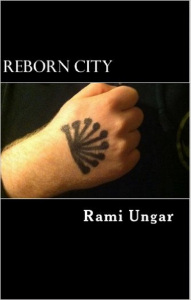
Even so, I’m happy with the story I wrote and I’m glad I got it done this evening. Next time I sit down to write, I’m getting back to a certain story that I left unfinished and tackles themes of prejudice. Surprisingly, it’s not the last Reborn City book.

Goodnight, Followers of Fear! Pleasant nightmares!

I’ve mentioned it before, but short stories are often hard for me. And one aspect of writing those that I often have trouble with is the very first part of any short story. Openings. They give me grief.

With novels, I have a lot of room to maneuver around. After all, even a short novel is around sixty-thousand words (and mine are never that short). With all those words, I can take a lot of time and space just setting up the scenario of the story. Take my novel Rose, for example: if we count Chapter One as the opening, that’s sixteen pages and nearly five-thousand words just devoted to setting up the story. And I’m very used to writing this way. I like long, expansive stories. I grew up on a diet of Harry Potter, and in my teens delved into the novels of Anne Rice, Stephen King, and Dan Brown. No one could accuse those guys of being short.

But if I’m writing a short story, the highest word count to still count as a short story is ten-thousand. And if I want to get published in most magazines, the limit is usually around six-thousand. So while I’m used to opening a story with about five-thousand words, or half the length of the longest short story, I now have to try to contain my openings into a much shorter length.

The struggle is real.

Because of this need for brevity, one of the things I sometimes end up doing when I write a short story, at least in the beginning, is to use a lot of exposition. And in some stories, exposition is good. It helps fill in essential information. But in other cases, exposition is just…bad. Instead of actually presenting the story,  the author is just explaining things. Telling you stuff. It’d be like if instead of actually showing Harry Potter growing up, learning about his heritage, and going to Hogwarts, it’d be like JK Rowling wrote, “There was a boy named Harry Potter. One day he found out he was a wizard, his parents died saving him from an evil wizard, who disappeared and gave him a scar in a process, and then he went off to wizard school.”

I often worry that when I do exposition in short stories, it’s the latter kind. Which probably means it is the latter kind. That may be cynicism on my part, but when you’re still inexperienced at something, you’re prone to making mistakes. So perhaps I really am using exposition, and in all the wrong ways too.

Luckily, there are a few things I’m trying to remedy that. One is that I’m keeping in mind something important: I’m writing first drafts. And first drafts are always terrible. Even if they contain intriguing stories, they’re rife with issues that require lots of fixing. This is why we writers edit, multiple times if necessary, before we publish. Heck, Rose had to go through four drafts before I felt it was ready to be sent out to a publisher. And likely if a publisher does like it, they’ll probably have me do a fifth or even a sixth draft before they’re ready to publish.

So if I feel an opening needs work, I can edit it in the next draft, and remove any bad exposition or other problems with the opening I spot.

Hopefully I can improve this part of short stories.

And sometimes, I don’t even need to wait (and this is my second method, by the way). Sometimes a way to fix a short story’s opening comes to you just while you’re writing it. On Friday, I started a new short story that I think has potential. I think I got four hundred words in before I stopped, but then I was like, “Is this really the opening I want?” And as I thought about it, it wasn’t. But how to fix it? And yesterday at some point–I think it was right before I saw Winchester–a way to change the opening occurred to me.  I think this is the right way to open the story without going into exposition. So the next time I work on the story, I’m going go back and rewrite the opening, see if this produces better results. And if it doesn’t, there’s always something new to try. Or I can go back to my original opening. After all, it’s a first draft. I can make as many adjustments as needed.

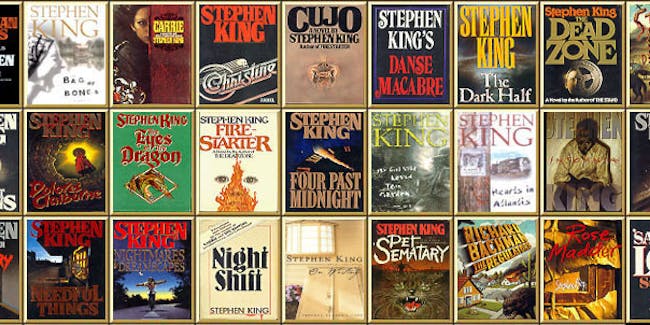
And finally, I’m reading a lot more short stories than I’m used to. I learned how to write novels partly from reading novels, so reading short stories should help me get an idea on how to write them. I’ve already listened to two anthologies on audio book, and I just started reading the Stephen King collection Night Shift on Friday. So far, they’ve been very helpful, but I’ll need to read a lot more to get a better sense of short story writing.

And finally, I just need more practice. After all, you become a writer by writing in the first place, and continuing to write no matter what. With any luck, more practice with short stories will lead to better ones. Hopefully, anyway.

I’m still trying to be a better short story writer, and openings are still hard for me. But with practice and exposure to good ones, I can hopefully make some progress on that. And who knows? Maybe even produce some stories that a magazine will be proud to publish. Anything’s possible, right?


That’s all for now, my Followers of Fear. I’ve been looking at a screen for most of the day, so I’m going to take a break and read something. Until next time, pleasant nightmares!

Well, I didn’t expect this to happen today. I figured it would happen at some point this week, but I never expected to get through the last three chapters so fast (especially since one of those three is thirty-three pages long). But yeah, I finished the fourth draft of Rose, the one edited with beta reader feedback! And all in a single month. Damn. I’m kind of proud of that rate of progress.

So if you’re among the many new Followers of Fear who are hopping onto this blog recently (hi! How are you? Are you enjoying my ramblings and opinions?) and you have no idea what Rose is, it’s a novel I started writing in college as my thesis project. The story is about a woman wakes up with amnesia and starts turning into a plant creature (and that’s just Chapter One). I did two drafts of it during my senior year of college, left it alone for a year, tried to pick it up again after I got my job, found progress very slow and dropped it, picked it up again this past summer with a new plan of going about editing the story, got through the third draft in four months, had some great beta readers look at the book and give me their feedback, and then somehow edited the book in a month (still gotta toot my horn on that one).

And you know what? This has been the most challenging story I’ve ever had to work on. I know I’ve said that before, but it’s the truth. Throughout the writing and editing process, this story has mutated more than the titular character does (because how else are you going to describe what she’s going through?)! Even during the very first draft, the story went through major changes. I initially had a different direction entirely for the story, which involved a lot more elements of Japanese folklore than appears in the novel (already heavily influenced by Japanese folklore), and involved some apocalyptic elements too. Thankfully, my thesis advisor helped me see how unfocused that direction would’ve been, and how much more intimate and scarier it would be if I went in another direction. This ended up being the route the story took, and if my beta readers can be believed, it’s a good thing I did, because the novel works the way it is now.

But honestly, that’s just the tip of the iceberg. So much changed with each draft, sometimes during the editing of a draft. Elements were added, subtracted, moved about, propped up and knocked down every day as the writing and editing needed. I added an entirely new plot element to the third draft to both add some length to the story and to foreshadow something that would be revealed later about one of the character. In the fourth draft, I changed the location of one minor element just so it wouldn’t seem unnecessary. I even wrote a whole new chapter for the third draft because I I needed it to do some necessary revelations about the antagonist.

Hopefully this happens to Rose very soon.

I keep thinking of those weird metal amalgams where if you add the right sort of current to it, you can change its structure (I’m pretty sure that’s a thing). Rose is very much like that: ever-changing with each new iteration, and hopefully becoming better each and every time.

Now that I’ve made that deep metaphor, I think I’ll talk about page and word counts, because I like talking about that. And while the shift from second to third draft was pretty dramatic, owing to the fact that I added about forty-thousand words of material to the story, third to fourth wasn’t that dramatic. If anything, it’s a bit smaller: the third draft was 266 pages (8.5″ x 11″, 12-point font, Times New Roman, double-spaced) and 84,677 words. The fourth draft was 264 pages and 84,390 words. A total drop of two pages and 287 words. I honestly thought it’d be a bit more, but I guess I was wrong.

So what’s next for Rose? Well, after four drafts and great feedback from my beta readers, I’m going to try looking for a publisher. I’ve been doing my research and I’ve got a few leads that I think could pan out, so hopefully I’ll have news within the year to share. And in the meantime, there are a couple of short stories, one novelette, and a blog post for Self-Published Authors Helping Other Authors I’ve been waiting to work on till I was done with the fourth draft, so I’ll likely start on those tomorrow. Hopefully I can get them all done before any publisher takes an axe to my door in their eagerness to publish me (I wish!).

Well, Followers of Fear, that’s all for now. It’s getting late, I’m tired, and I’ve got a big day tomorrow. I’ll let you know how things are going as they happen. Until next time, pleasant nightmares!

I’m far from perfect. And there are lots of areas I can be better (especially my impulse control when it comes to sweets). However, this post will be focused on the writing aspects I can improve upon.

There are a couple of reasons why I want to talk about that here. One is that for personal things I want to improve upon (damn you, sweet tooth! Damn you to hell!), I only talk about those sort of things here when it’s really important. Like if I’m really struggling with my choices in life, or if I want to talk about being on the spectrum. And at the moment, there’s nothing in my life I feel like talking about here at the moment. Second, this is a blog for a writer, so it makes sense that if I’m going to talk about improving stuff, it’ll be about improving my writing. And finally, while a lot of people I know in real life and even a few people online treat me as THE writing expert, especially when it comes to fiction writing, I’m far from an expert. If I were an expert, I’m pretty sure I’d have several bestsellers out by now, a few of them would have been made into movies already, and I’d be writing full-time in a nice three-bedroom, one-and-a-half bath house (I have goals that I aim for).

Point is, as a writer there are areas I’d like to improve in, so I thought I’d list some of those and ask for your feedback. Many of you who follow this blog are writers, and have much more experience than I do. Perhaps you’ve dealt with some of the issues I’ve dealt with, and have some tips on how to deal with them. Anything’s possible, right?

1. I’m addicted to adverbs and gerunds. Now if you don’t remember most of the fancy terms from grammar class, adverbs are words that end in “ly” (wildly, musically, horribly) and gerunds are words ending in “ing” (ending, writing, killing). And I overuse them in my writing (see? Did it right there). One of the biggest criticisms I got from Rose, truth be told, is that I overuse them. In fact, I almost used “actually” instead of “truth be told” in that last sentence. And in the one before this, I started writing “nearly” before I switched to “almost.” And in that last one, “I switched” started as “switching.” And before that–oh, you get the idea!

A couple of years ago, I wrote a post about how I had a similar problem with semicolons. I overused them, especially when they weren’t needed. Once I recognized the problem, I was able to correct it. But I have a feeling correcting these issues won’t come so naturally (see?). For one thing, while the semicolon issue was about fixing incorrect uses of punctuation, what I’m doing here isn’t technically wrong. These are speech patterns used everyday, you just don’t see them in a lot of fiction to the extent I use them. At least, not really good fiction. So one thing I’d like to do is know when to use adverbs and gerunds, and when not to use them.

2. Passive vs. active voice. I have a lot of trouble telling those two apart. Which is bad, because editors and publishers tend to prefer active voices in fiction, and I somehow always end up writing in passive voice. What’s the difference? Is there a video I need to watch or something that explains this? Help!

3. Writing snappier action. This is something I’ve taken steps to improve, but it’s still a work in progress. I tend to write these long sentences that illustrate a character taking a certain action. Example: “She stood, walked to the kitchen, and placed the glass in the dishwasher.” It’s a good sentence, but for fiction, this is better: “She put the glass in the dishwasher.” Boom! And if I’ve already established that the character is on the couch, it works even better. It shows the same amount of action with less words.

I’m trying to implement this sort of snappy action into my stories. Editors and publishers seem to like it, and when there are limits to how many words a submitted story can have, it’s helpful in reducing the word count. Still, it’s going to take some work. This, like the adverbs and gerunds and possibly the passive voice thing, are deeply ingrained habits.

No reason to add this photo. I just want to show you my new author profile pic.

4. Short story writing. I’ve written novels or works meant to be novels for most of my life. That’s what I mostly read, so that’s what I mostly wrote. I’ve learned how to write short stories and read plenty of them since high school and college, but I’m still not as good at them as I am at novels. Which is sad, because I’ve had many, many ideas for short stories and novelettes over the years. And since I’ve spent most of my time on novels, I’ve written only a few short stories, and not many of those have been published.

What I want to do is write more short stories and novelettes, get better at writing them, and get a few of those published. Is it necessary, especially since I prefer novels? No, but a lot of authors I like do great short fiction, so I’d like to do great short fiction too. Good news is, I’ve been reading a lot of anthologies lately, and I should have a bit of time after I finish the fourth draft of Rose. That should give me time to practice.

5. Not listening to my anxieties. All writers deal with anxieties, especially with how their work will be received. Sometimes I let them have too much control of my mind, and I start freaking out Just yesterday, I got panicky over whether certain characters in Rose might be called tacky stereotypes. After a lot of discussion online with friends and colleagues, I don’t believe they are, but the worry ate at me for a while.

The important thing for me is just to be a bit more confident in myself, and the stories I write. And I should work on techniques to combat those anxieties when they try to tear at me. Because at the end of the day, I’ve still written some decent fiction. And I won’t let doubt or fear keep me from improving it and making it into possibly publishable fiction.


Well, those are the things I want to improve on with my writing. What are your suggestions on fixing those issues? Let me know in the comments below.

That’s all for now, my Followers of Fear. I’ve only six chapters of Rose left to edit, so I’ll hopefully get started on the next one tonight. Until next time, pleasant nightmares!

Hello, Followers of Fear, and welcome to our first author interview of the year. Today we have a previous guest who has been my friend for a number of years. She’s written several books and has even visited my house when I was still living with my dad, the first author friend/blog friend to ever do so. And today, she’s here to talk about the two books she published in 2017, Unfinished and Madame ZeeZee’s Nightmare (I’ve requested my local library to order copies, and I’m still waiting to hear back). Ladies and gentlemen, please welcome Pat Bertram!

RU: Welcome back, Pat. It’s good to have you here again. Now as I mentioned above, you published two books in 2017, Unfinished and Madame ZeeZee’s Nightmare. Please tell us what they’re about.

PB: Madame ZeeZee’s Nightmare is about fun, dance, and murder! When Pat’s adult dance classmates discover she is a published author, the women suggest she write a mystery featuring the studio and its aging students. One sweet older lady laughingly volunteers to be the victim, and the others offer suggestions to jazz up the story. Pat starts writing, and then . . . the dying begins.

Unfinished is about buried secrets and a woman finding herself when she finds herself alone. While sorting through her deceased husband’s effects, Amanda is shocked to discover a gun and the photo of an unknown girl who resembles their daughter. After dedicating her life to David and his vocation as a pastor, the evidence that her devout husband kept secrets devastates Amanda. But Amanda has secrets of her own. . .

RU: You weren’t writing fiction for quite a while. What made you get back into it?

PB: I don’t like leaving things unfinished, and besides, both Madame ZeeZee’s Nightmare and Unfinished deserved to be written. So I just . . . wrote.

RU: I love it when a story makes you want to write it. So tell us, what was the inspiration for the two novels?

PB: That’s easy. The inspiration for Madame ZeeZee’s Nightmare came from my dance class. It was their idea, and they provided the fodder for the characters. Inspiration for Unfinished came from my life. Too often, I have read novels where the spouse dies, and after a few perfunctory tears, the one left behind continues as if nothing ever happened. Grief does not work that way. It’s not so much that we go through grief, but that grief goes through us, and I wanted to show the truth, both about the changes such an upheaval brings and the courage it takes to accept those changes.

RU: Now, Madame ZeeZee’s was based on you and your dance class and classmates. How much of them and of you made it into the novel?

Madame ZeeZee’s Nightmare by Pat Bertram

PB: Many of my dance class mates — and the teacher! — made it into the novel. For the sake of reader’s sanity, a couple of times, I combined two or three women into one character. (Too many non-essential characters in a book confuse me as a reader, and I can only assume others are the same). And, though he isn’t a classmate, a fellow I know by the name of Rami Ungar made it into the book. As for me — well, Pat is Pat. At least, I think she is. I know one thing — if I ever decide to write a series, I will use Pat as the main character. It was incredibly easy writing myself as a character — I didn’t have to create characteristics, either positive or negative, and the character arc came naturally.

RU: I love that we’re both characters in your book! And your characterization of me is a lot nicer than what most people give me when they write me into a story.

What about Unfinished? Did you or anyone else you know make it into that book as characters?

PB: I seem to write only about me anymore. Although I gave that poor woman a different name and a different life, she was definitely me. At least everything she felt, I felt.

RU: What were your biggest challenges writing these novels and how did you overcome them?

PB: The biggest challenge is always me. Some writers can sit down at a keyboard and the story flows from their fingertips as if it wants to be written. In my case, I have to drag every word from somewhere deep in my brain, and sometimes the effort is more than I want to make.

For Madame ZeeZee’s Nightmare, when I got tired of trying to figure things out or to search for the proper words, I went to class and asked the appropriate “character” what she wanted me to do. It’s amazing how simple that makes everything! Other times, I used something that happened in class to push me along.

For Unfinished, I had to persevere. Make the determination to finish the book and just do it. It was hard, though, dredging up all those feelings.

RU: Are you working on anything now?

Unfinished by Pat Bertram

PB: I am finishing a fifty-day blog challenge, to blog every day for fifty days. And I have a sort of apocalyptic novel I am decidedly NOT working on. I have a mental block against the poor thing because I was working on it when Jeff (my life mate/soul mate) died, but one of these days, I will get my head in gear and find the determination to work on it.

RU: And finally, what are your writing goals for 2018?

PB: I intend to keep up the daily blogging, at least a while longer. In May, I plan to take a road/camping/hiking trip along the Pacific coast (or near the coast anyway), and I hope that experience will bring me insights for fabulous blog posts. As for fiction — well, real life has me in its clutches. Hopefully, I will be able to free myself one day and get back into the alternate reality of fiction.

RU: Well, thank you for joining us Pat. It’s always a pleasure to speak with you.

If you would like to check out Unfinished, Madame ZeeZee’s Nightmare, or any of Pat’s other books, you can check out her Amazon page. I also highly encourage you to check out her website, her blog, and her Facebook. Trust me, she’s someone full of strength and insight, and you can benefit from knowing her.

And if you have a book coming out in the near future, hit me up on my Interviews page, and we’ll make some magic happen. Have a great evening, Followers of Fear. Until next time (probably Saturday), pleasant nightmares!

I’m not going to lie, 2017 was a tough year in a number of ways. In some ways, it even rivals 2016, which everyone agrees was kind of a shit year, pardon my language. We dealt with really horrible terrorist incidents, learned that some of our most beloved figures in entertainment and other industries were secretly monsters, and saw terrible devastation from hurricanes that left communities without good food, water or electricity. This and a whole lot more affected so many lives, and definitely not in a good way.

However, there were a lot of good things about 2017 too. Many of the things I described above caused people to come together and fight. Not too long after the bombing at Ariana Grande’s concert in Manchester, she and several high profile artists put on a charity concert to raise over ten million pounds for the families of the victims. After the shooting in Las Vegas this October, thousands rushed to donate blood at the Red Cross, with lines reportedly snaking around city blocks and lasting up to six hours, and millions were raised for the families of the victims! Plus in response to the shooting, Massachusetts banned bump fire stocks, which were used in the attack, and several bills were introduced into Congress to hopefully prevent attacks like this from happening again.

Throughout the year, men and women came together to protest sexism and the treatment of women in America and abroad, with marches throughout the year. The revelations of Harvey Weinstein led to dozens of women and men to open up about their experiences with sexual assault and harassment, catalyzing the #MeToo movement and leading to the ousting of several serial abusers from a variety of industries for their crimes which, up till now, they could get away with, and started a conversation that is continuing today about how to combat sexual assault by powerful people who use the system to get away with it. Heck, voters in Alabama came together to keep a man who has been accused of assaulting multiple teen girls from becoming a Senator despite widespread support for him. That’s huge!

A Red Cross station post-Las Vegas shooting.

And while Puerto Rico and other areas of the world are still recovering from natural and man-made disasters, a lot is being done online and offline to help. Thousands are still sending money, supplies, and even solar power equipment (looking at you, Elon Musk) to help Puerto Rico out of the rubble. Despite the United States pulling out of the Paris climate agreement, many corporations, cities, and even states have said they will continue to abide by the agreement’s guidelines in order to combat global warming, which likely contributed to the many hurricanes we saw this year. And plenty of people each day are pressing for relief to peoples in trouble, both at home and abroad, from their leaders. It’s amazing to see that happen.

I could go on (I really want to speak about the entertainment industry’s positive contributions this year), but I fear this post will go on too long if I do, and there’s quite a bit I’d like to talk about. I’ll just summarize by saying that there was a lot of positive things that happened this year. And while the bad stuff does sometimes seem to overshadow the good, it’s important to recognize the good and cheer ourselves for what we accomplished, as well as what we can accomplish in the coming year. Which seems to be plenty, if we put our minds to it.

On a more personal note…

2017 was a pretty good year for me. Yes, the things I listed above, good and bad, may have affected me at times (they affect everybody, don’t they?), but in terms of my own personal life, I had a very good year. A lot of positive things happened to me , and if you don’t mind, I’ll just highlight some of the big ones:

  • My health seriously improved this year. I lost about thirty pounds of unneeded weight, which means I’ve had to take fewer sick days and I’m less likely to develop certain diseases. My back pain has also lessened tremendously, thanks partly to weight loss and to seeing a chiropractor. I can now move as I used to pre-back pain, and while I’m still working on improving my back and my health, the fact that I’ve accomplished this much already is a great motivator for me.
  • This was a good year for writing for me. I got halfway through the first draft of Full Circle (still on break from that until I feel ready to tackle it again), finally pushed out a new draft of Rose, and even wrote and edited some short stories. I also published two short stories, the science romance novelette Gynoid, and the LGBT fantasy romance story What Happened Saturday Night. Not only that, but over sixty new people started following this blog, putting me within striking distance of the thousand-follower milestone! For me, that is huge, and I can’t thank you guys enough for making that happen.
  • As many of you know, I work for a supply organization in a role that involves getting disabled employees accommodations and organizing events to highlight the diversity in our workforce. As of December, I’ve been with the organization for eighteen months, and it’s been great. I’m doing work that helps people with a great team around me, and I get great pay and benefits too. What’s not to love?
  • I went on the best vacation ever to Massachusetts with my dad back in July, and it culminated with a night at the famously haunted Lizzie Borden Bed & Breakfast. I cannot even begin to tell you what a big deal that was for me.
  • All the movies I was super-excited to see this year were awesome, as I’d hoped. Especially the new version of It. That was the It we deserved.

And those are just a few of the highlights of 2017 for me. Yeah, it was a good year. And I hope 2018 goes just as well or even better. Especially if any of these happen:

  • More good news on the writing front, particularly with a fourth draft and maybe the publication of Rose, as well as several new stories and hitting the thousand-follower mile marker.
  • Continued improved health.
  • Continuing to do well at work.
  • Maybe a bit of travel, and definitely a bit of fun, whether that be going to shows or seeing friends.

And that much more.

So guys, I want to wish you a Happy New Year, and to remind you that, as hard as 2017 is, it’s 2018, and there are endless opportunities to have a better year. You just have to be brave enough to try and make a change.

And again, thank you all for being my Followers of Fear and reading my work. I’ve grown so much over the past couple of years, and you guys have been there for every accomplishment and lesson I’ve experienced. I hope you’ll continue to support me for this year too as I try to accomplish all my dreams and scare people silly.

Until next time, pleasant nightmares.

So good news, folks: as of around 6 PM today, I’ve received feedback from both of my beta readers for Rose, which means I can start the fourth draft of the novel! Why is the fourth draft so significant, you may be asking. Well, this is the last draft I plan to do until I get an agent and/or publisher! And I think that is significant enough to write a blog post (which would’ve been written earlier this evening, but I was at my dad’s for Hanukkah dinner).

Now if you have no idea what Rose is, it’s a novel I wrote as my thesis in college, which I started working on again earlier this year and finished editing back in October. The story follows a young woman with amnesia whose body starts going through incredible, magical changes. The only person she can rely on for help and information about these changes and about herself is a young man who says he’s her boyfriend, but he’s keeping things from her, and things are not at all what they seem.

Yeah, it is not a fun story. Not by a long shot. But I think it’s a good story, made even better after the most recent draft, which fixed a few issues with the story and doubled the word count (don’t less that scare you, it’s shorter than the second Harry Potter book).

Of course, before you start submitting it to publishers or agents, you want to make sure your novel is actually good. Not just good in your opinion, but in others’ opinions, and that’s where beta readers come in. They take a look at stories you write, and let you know what works, what doesn’t, and give you feedback on what can be made better.

One of my beta readers for Rose was my dear friend, Joleene Naylor.  She read the novel in about a month, and got back to me with a ton of notes, as well as plenty of feedback. Overall, she enjoyed the novel. She thought my characters and their development was deep and reminded her of anime characters, which are often complex and never completely good nor completely evil, but often a mix of both (you can now tell who inspired that post about why writers should check out anime). That made the characters within Rose not only multilayered, but often very surprising. For one particular character, Joleene hated him at first, but then she found out some things about him and actually became kind of sympathetic towards him. Then she learned some more things about that character, and her feelings changed again. It’s very hard to do that in fiction, to have your emotions about characters change that rapidly, and Joleene liked that.

However, she did have some thought about a few things, including grammar and word usage, and she thought some things could be fixed, changed, or worked around in order to make the novel that much better. Her feedback makes a lot of sense to me, so I’m going to be incorporating a lot of it into the story.

My other beta reader got back to me earlier today, and I was very glad to see his feedback. Who is this beta reader? Believe it or not, he’s my chiropractor. As many of you know, I have back problems, so I’ve been seeing Dr. Black since June to remedy them (and the progress has been amazing!). You see someone so much, you get to talking, and it turns out Dr. Black is a huge horror fan, so obviously we got to talking about Stephen King, HP Lovecraft, and my writing. When I was getting close to finishing Rose, he offered to read it as a horror fan, and I said I’d like that.

This is what a beta reader or two can lead to: a published novel.

Now, Dr. Black is not a writer, but a reader. However, it is important to have the feedback of readers, as they are who we write for. And Dr. Black did give his reader approval. He thought the novel kept his attention throughout, and that he especially enjoyed the flashbacks in the novel. I’m glad he told me that, because those were parts I actually worried about. Flashbacks are difficult to do, and different readers and writers react to them in different ways. I’m glad Dr. Black enjoyed them, and what they added to the story.

He also mentioned one issue he had in the story while reading one chapter, which I hadn’t realized was a problem, so I’ll make sure to fix that up so that the end result won’t have that same problem.

So I have both of my beta readers’ feedback, and I can start on the fourth draft. To be honest, I’m really glad I finally have all that feedback. I haven’t really been in a writing mood lately, waiting on getting that much-needed feedback. Sure, having my laptop in the shop for over a week didn’t help, but even when I had it, I just wanted to work on Rose (even if I was working on a great story in the meantime. A story I’ll have to put on hold for now, but whatever. I’ll get it done eventually). When you put this much work into a novel, and you think it has so much potential, you really want to see that potential fulfilled, I guess.

And now that I’ve gotten my feedback, I’ll put out a couple of blog posts I’ve been meaning to write for a while, and then I’ll get to work. I doubt it’ll take very long to get through this time, so hopefully that means I’ll have some good news soon.

Thanks to Joleene and Dr. Black for their valuable feedback. It means so much to me that you took the time to do this for me.

And thanks for keeping in touch with me, my Followers of Fear, and following my progress of this novel. I hope that if it comes out, that you decide to pick up a copy and that you enjoy it. Until next time, pleasant nightmares and Happy Hanukkah!

Recently, someone familiar with my writing compared some aspects of my story with anime. This, for me, was a huge compliment, because I am a hee-yuge fan of anime and manga. I’ve read and watched more series than I can count, and I consider some of the stories I’ve read over the years as having a very beneficial influence on my writing style, allowing for better storytelling and characterization. And I believe wholeheartedly that anime and manga can up the game of other fiction writers out there, even experienced ones with plenty of novels or short stories under their belts.

“But wait,” I hear my readers saying, “how can silly Japanese cartoons up my writing game?” Well, my dear Followers of Fear, just like Harry Potter is more than just children’s fantasy stories, and just like I’m more than a dude who enjoys scaring people silly (I actually have a growing doll/figurine collection and enjoy the ballet and the theater), don’t let first impressions about the media get in the way of looking a bit deeper. Anime and manga have so much more to them than meets the eye:

1. It’s an art form. We see literature as important creative works that are a reflection of and an influence on society. So is painting and illustration. But for some reason, the combination of the two mediums are never treated as highly, even when they lead to huge box office and critical success with movie adaptations. And in my opinion, that’s just wrong. Creating decent literature or decent art is extremely difficult, no matter the genre or what is being portrayed. Imagine what must go into doing both well at the same time! If one is good but the other is bad, the series, comic book or animation, will suffer, so these artists are basically combining the two art forms in order to create something appealing to audiences. That is worthy of respect (especially when you consider that manga and anime don’t always get to rely on characters that have lasted 80+ years and have established fanbases).

That being said…

2. There are a multitude of stories to choose from. Despite often going into very deep subject matter, comic books and animation have this reputation for being more family or child-oriented than adult-oriented. And although comic books have been recognized for their serious and mature themes and content, for the most part it’s hard to find animation that, even when aimed at adults, isn’t comedy or relies a lot on comedy. I can only think of one or two off the top of my head.

Anime and manga, on the other hand, span a wide multitude of genres and age ranges. Yes, some are comedic or have lots of comedy elements, but there are plenty of stories that are extremely serious or even plain portrayals of normal lives. Death Note (not the crappy American version) goes deeply into questions of whether the ends justify the means, especially in terms of curing societal ills, all while presented as a psychological cat-and-mouse thriller. Great Detective Conan (or Case Closed, as it’s known in the US), has nearly a thousand chapters/episodes focusing on a kid solving murders a la Sherlock Holmes observation and deduction. With the Light tells the story of a family raising a child with autism. Tell me if any of that sounds like silly cartoons for children.

And that’s just the tip of a very big iceberg. There are all sorts of stories out there, romantic to comedic to scary to inspirational to musical to educational to even some where you wonder who was mad or indecent enough to make them (I’m looking at Makura no Danshi for the former and Kodomo no Jikan for the latter. Google at your own risk). If you can think of it, there’s a chance there’s an anime or manga based around it.

So if you’re looking for inspiration for a new story, try the Japanese. Chances are, there’s a story that could inspire your next work.

3. Characterization. In Western stories, characters are often pretty much defined from the moment you meet them as good or bad guys. Within a few minutes, you not only have a pretty good idea of where they align, but how you feel about them: love, hate, support, fear, root for them to get the girl. This doesn’t usually change, except perhaps if they’re a twist villain revealed in the third act. Rarely do you see a character whom you aren’t sure whether to love or hate, whether they’re good or bad. A character who straddles the fence, in other words, and you’re never sure where they stand until near the end.

If a medium can make me wear this sweatshirt 25 years after a show’s premiere, shouldn’t you at least consider checking it out?

Anime and manga, however, do this very well. They’re very good at telling stories about characters whom you’re not sure how to feel about them, because they’re able to take the time with these characters and show various sides of them over the course of the episodes or chapters. Sasuke Uchiha from Naruto is a prime example: at various points he’s a hero, a villain, a tragic antihero, etc. And you’re never sure whether to hate him or cry for him or what (generally I don’t like him, but that’s just me). And even when a character isn’t given this treatment, they’re often given great character development. Often characters are all good with a few flaws, or all evil with a few good qualities, but anime tends to branch out. You’ve got protagonists who are defined by their anxieties, or heroes who do horrible things but are doing it for good reasons you even sympathize with.  It ranges quite a bit, and it’s done quite well.

4. And finally, it’s entertaining. We all write stories for a variety of reasons, but at the core of it, we want to engage and show people a character worth following, a story worth getting into. And anime and manga do that a majority of the time. Sure, some stories do fail in that regard (looking at you, Clannad), but the vast majority have been tales that have endured the test of time and continue to pull in new audiences. Pokemon is twenty years old and Sailor Moon is twenty-five, but they still continue to entertain and even produce new content. Clearly, there’s something about these mediums that pull people from around the world in far past childhood.

And any medium that can have that sort of influence is worth checking out, if you ask me. Even if it’s not normally up your alley.


And that’s just a few of the reasons writers should check out anime (there may be a Part 2 someday). But tell me, were there any reasons I missed? What series do you find entertaining or influential? Or do you need a recommendation on where to enter the medium? Let’s discuss in the comments below.

Until next time, my Followers of Fear, pleasant nightmares.