Having read The Good House before, I knew I was in for a good time (see my review here). But I was not prepared for Tananarive Due’s latest novel. After starting it, I learned the book was based not only on the Dozier School for Boys, a reform school in Florida where numerous atrocities were committed against the kids there, but on a relative she had who died at the school. And even after learning that, I still wasn’t prepared for what was to come.
Set in Florida in 1950, The Reformatory follows twelve-year-old Robert Stevens (named after her relative) and his older sister, Gloria. After kicking a white boy who makes advances on Gloria, young Robert finds himself sent to the Gracetown School for Boys, a reform school where the boys are under threat by both the spirits haunting the campus after years of mysterious deaths, and the Warden Haddock, a terrifying personage with a sadistic streak. When Haddock learns Robert can see the ghosts on campus, he forces the kid to help him catch the spirits. Meanwhile, Gloria attempts to find a way to free her brother from the horrible reformatory, setting them both on a path that will change them forever.
Man, this book was a rough read! Due does not skimp on the human horror the characters face, whether that be the horrible things Robert faces at the reformatory at the hands of the adults and the other kids, or the racism Gloria faces trying to get her brother out of that place (not to mention the utterly disgusting advances Lyle McCormick makes on Gloria in the novel), it feels all too real. Not to mention kind of timely!
Speaking of feeling real, the worldbuilding is amazing! Gracetown, the location of the reformatory and most of the other events of the book, as well as the people in the book, feel extremely real. I noticed that with The Good House, but Due is great with character development, and setting can be as much a character as the characters! I also loved how Gracetown apparently has this reputation as a place where children are able to interact with spirits and lose the ability as they grow older. That’s a pretty cool idea, and Due uses it to flesh out the spirit world of Gracetown and the reformatory so well.
I think the one thing I didn’t like was that I feel we only scratched the surface of the Gracetown School for Boys. I know that might sound masochistic, considering what we saw was pretty horrific, but we only saw a fraction of the school grounds, of life at the school, and the sordid history there. And as much as that would’ve scarred my psyche, I would’ve like to see all that explored more.
Maybe an anthology based around the Gracetown School for Boys? They’re doing one for The Stand, after all. I can dream.
All in all, though, The Reformatory by Tananarive Due is a soul-shaking journey of abuse, racism, and the darkness of humankind that, at times, I had to take a break from, I was that shook. On a scale of 1 to 5, I give it a 4.5 out of 5. I feel like I get why this book was talked about so much when it came out last year, and I wish I’d read it sooner. And if you haven’t read it yet, you should go and read it, too.
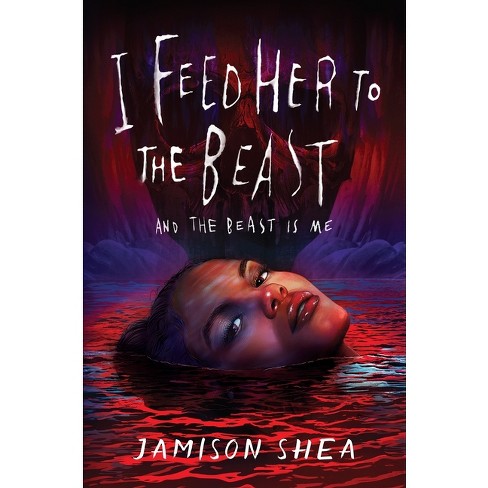
I love horror and I love ballet. I often combine the two in my work. And when I find another author who has combined the two forms of storytelling, I want to read it. And if it’s good? I’m especially glad to read it. Jamison Shea’s novel I Feed Her to the Beast and the Beast is Me is one of those books I’m especially glad to have read.
Taking place at the Paris Ballet and its attached academy, I Feed Her to the Beast follows Laure Mesny, a dance student in Paris who is the most talented in her class, but has had to deal with privilege and racism in the academy and the company every day. When a fellow ballerina she admires leads her into the tunnels of the catacombs, she is introduced to an ancient godlike entity that offers her a deal: her blood in exchange for the power she has always craved. Laure takes it, and it leads her on a path that could end in her stardom, or her destruction.
Where do I start?
Well, let’s talk about the horror. While there is some eldritch occult horror here, the real horror is with the human characters. Not just what the characters are willing to do for their goals, but what they’re willing to do to each other out of spite. Laure’s fellow dancers, often white and privileged, treat her horribly and tell her, behind her back and to her face, that she doesn’t belong and will never be good enough, even though she is amazing. More than a few bring up that she’s black and from a poor background and, in their view, wouldn’t be a good fit for the company. When Laure finally gets some power, it’s kind of scary how quickly she not only gets used to it, but how much she enjoys using it, including to do violence!
Not to say there isn’t some more traditional horror. The gods living beneath Paris are quite cool, as is the destruction they wrought, and there’s a murder mystery throughout the story which resolves in a way that surprised even me and which felt quite satisfying.
I also liked how most of the characters felt real. They’re all extremely complicated, especially Laure. She’s had it rough, coming from a broken family and dealing with racism and poverty, and often being told to be better and be perfect despite doing everything she should. And despite all that, she still wants to belong and feel loved by her coworkers, which honestly feels very human to me. I also empathized with her struggle to try to balance her dreams and her relationships. She’s not all good, and she’s very flawed, but it’s hard not to root for her, even at her worst. And we see her at her worst a lot.
I think the one flaw is that some of the supporting characters could have used some more development, especially Keturah. She sort of becomes a sister figure to Laure halfway through the novel, but I never really felt like we got a chance to see past her surface. Maybe in the sequel. (Yes, there’s a sequel, and I’ll check it out as soon as I can.) And, at times, the story did drag a little.
All told, I award I Feed Her to the Beast and the Beast is Me by Jamison Shea a 4.5 out of 5. This is a riveting slow-burn novel that delights in being bad and in delving into the darkest parts of humanity. Get yourself a copy, put on Stravinsky’s The Rite of Spring, and prepare to be transported. Believe me, it’s worth the read.
I’ve been hearing of this novella for years, but for some reason I haven’t gotten around to reading it until recently. However, recently I felt an itch to indulge in some cosmic horror and the audio book was on sale, so I downloaded it and listened to it.
Followers of Fear, why did I wait so long to check this out? It was awesome! I can see why it was nominated for a Stoker award.
Set in 1924 New York and based on “The Horror at Red Hook” by HP Lovecraft, the novella follows Tommy Tester, a black man living in Harlem with his father, trying to get by as best he can. When he’s asked to play guitar at a dinner party for an eccentric gentleman named Robert Suydam, Tommy finds himself plunging headfirst into a world of magic, insanity, and cosmic forces. Such exposure will not only change his life, but the lives of all humanity.
If you’re not familiar with “The Horror at Red Hook,” this story was written when Lovecraft was living in New York, and, because he’s Lovecraft, he characterizes the non-white characters, many of whom live in Red Hook, as criminals and gangsters. This story is sort of a rebuttal of that, showing things mainly through the eyes of one of the people whom Lovecraft would have disdained. This allows for a great examination of cosmic horror versus the horrors of racism as seen through the eyes of Tommy Tester, later known as Black Tom. As he notes, the indifference of cosmic horror cannot compare to the malice and cruelty of racism, though both are equally horrifying in their own rights.
Beside that, it’s just a well-written and compelling story. You really grow to understand Tommy and sympathize with him, and can’t blame him when he makes certain choices later in the book. Not only that, but the emotional power of this story cannot be underestimated. One scene involving Tommy’s father was so heartbreaking, I wanted to pick up the phone and call my own dad just to check on him. That’s strong storytelling right there.
I also liked how part of the novel was shown through the eyes of Malone, the main character in “Horror at Red Hook.” Here’s, he’s written more as a character than just some vehicle for Lovecraft to transmit his purplish prose through, and he’s not unlikeable, though he’s still subject to the same prejudices that a lot of people back then unfortunately had. His role in the story is also more consequential, which is a nice change, and his final fate is a terrifying but welcome change from the original story.
On the whole, I give The Ballad of Black Tom by Victor LaValle a straight 5 out of 5. I cannot find anything wrong with this story and I’m so glad I finally experienced it. If you’re at all interested, grab a copy, put on some jazz or blues, and give it a read. Trust me, you won’t regret checking it out.
Also, the audio book has my recommendation. The narrator, Kevin R. Free, does a great job with the various voices and the sharp prose. It’s enough that you’ll want him to narrate something you’ve written. That, ladies and gentlemen, is talent.
Recently, the United States celebrated the first occurrence of Juneteenth as a federal holiday. For those unaware, Juneteenth commemorates when General Gordon Granger of the Union Army entered Galveston, Texas on June 19th, 1865 and announced the end of slavery there. This was two-and-a-half years after President Lincoln signed the Emancipation Proclamation, though often emancipation had to be enforced by Union soldiers. Nevertheless, many African Americans count June 19th, known as Juneteenth, Jubilee Day, Black Independence Day, and Emancipation Day, as the day slavery ended and for celebrating African American culture.
President Biden signing the holiday into law makes Juneteenth the first new federal holiday since Martin Luther King Jr. Day in 1983. And hopefully, both holidays will now serve as opportunities to educate the masses on the history of African Americans in the United States and what they’ve gone through. It could even make for an interesting discussion when we contrast it with July 4th, Independence Day, which will be in just a few days.
That is, if teachers in certain states aren’t kept from talking about the stories behind Juneteenth and MLK Jr. Day by law.
If you’re from outside the United States or just haven’t heard, many state legislatures are enacting laws to try and keep teachers in those states from teaching Critical Race Theory, or any form of in-depth discussion of race’s effect on the history and culture of the United States. Opponents say that CRT or any other form of in-depth discussion as “left-wing propaganda” or “trying to shame white people for actions of the past.” Some of these bills have been passed into law, which might technically make discussion of why we have these holidays technically illegal.
Which worries me, because as we’ve seen, ignorance isn’t bliss. It only furthers divisions.
You probably heard of this, but recently, a certain United States congrresswoman compared mask mandates in the US to the Yellow Star worn by Jews in Nazi Germany and Nazi-controlled areas. This same congresswoman then defended herself, saying that any rational Jewish person would agree with her.
Well, I may be eccentric, but I am Jewish and I consider myself rational. And I think there’s a huge difference between public health measures that are meant to protect people from disease–you know, like having proper sewage disposal systems rather than letting poop contaminate our drinking water and cause cholera outbreaks like what happened in 19th-century London?–and measures that were meant to isolate and stigmatize people of a minority religion, keep them from most professions and taking part in a nation’s political, economic and social circles. These same people were then forbidden to practice their religion, forced into tiny communities and concentration camps, and endured harsh slave labor and systematic murder.
Last I checked, no one is trying to do any of that with people who don’t wear masks or aren’t vaccinated. Governments and businesses just want people to continue following measures taken to keep people from getting sick. You know, like not mixing poop into your drinking water? Victorian Londoners learned that one the hard way!
Anyway, that congresswoman realized she made a mistake, went to the Holocaust Museum in DC, and publicly apologized for her comments. And I want to believe she’s at least learned some kind of lesson from this. But I know that there were plenty of people who backed up her ignorance when she was defending herself, and would have resisted any attempts for her, or for themselves, to find out that why what they said and did was wrong.
I can only chalk some of this response to blatant white supremacy and anti-Semitism. It is part of it, no doubt, but ignorance has played its part as well. Since the Civil War, many history textbooks have been written with the aim of keeping people ignorant of the actual causes of the war, the horrors of slavery, or why things are still very unequal. And while Holocaust education has made great strides since WWII, it’s not emphasized enough if the level of ignorance displayed by our elected leaders is anything to go by.
(Not to mention the number of Holocaust deniers out there.)
Look, I’m white. I may not be treated as such sometimes because of my religion (anti-Semitism is weird that way), but I am white. And I’ve never once felt ashamed of my skin color due to learning of how white people treated black people in the past. Our fifth grade history unit mainly focused on the slave trade, Underground Railroad, and the Civil War, and I feel like it allowed me to feel more empathetic to African Americans. At the same time, I wish I had learned about the 1921 Tulsa race massacre, which was basically an American pogrom, or the coup in Wilmington, North Carolina, which I’m still fuzzy on.
Both events, by the way, I only learned about in the last year! And that doesn’t sit right with me.
From the way I’ve been writing this, you would think that I’m going to conclude that a better handle on history would solve these problems. I wish it were so easy. There has to be a multi-pronged approach to fixing not just the ignorance of the past, but the divisions and pain of the present so they don’t continue into the future. But teaching a history that takes in multiple perspectives, follows more than one or a few groups, and takes a look on how those histories affect our modern day world and culture, would be one of those prongs.
Otherwise, nothing will change. No matter our background, us and our descendants will not receive a history that’ll help us deal with the modern world. We’ll just receive some stories with lies, propaganda and fairytales mixed in. And teaching fiction as truth helps no one.
General Mark Miley testifying before Congress on why critical race theory is taught at West Point.
And we also have to learn why certain circles, mainly composed of white conservatives, have come out so strong against CRT. To quote General Mark Miley, who recently testified before Congress on critical race theory being taught at West Point, “I want to understand white rage–and I’m white.” This pairs very well with what my recently retired boss, who is African-American, gave as the reason why we needed a European American group in our organization, alongside groups for African-American, Latinx, Asian Americans, Native American, LGBT, veterans, and disabled employees,* “We need to have EVERYBODY at the table.”
I completely agree. We need everybody at the table. Because all Americans are at the table. And we need to be better able to understand each other if we want this country to continue on. Otherwise, there’s a good chance that, like a table with rotten legs, it’ll simply collapse.
Thanks for reading this essay, everyone. I know this was a rather unusual sort of post for me to write, but given current events in this country, I felt it was necessary. I look forward to discussion in the comments, but I only ask that you keep things civil. After all, the only things that are supposed to intimidate or scare people on this blog are me and my stories! The comments section are neither.
Until next time, Followers of Fear, thanks for reading, and pleasant nightmares.
*For those who don’t know, my day job is at a supply agency where I work in an office that promotes diversity and inclusion in the workforce. My main duties involve getting accommodations for disabled employees so they can do their jobs, arranging interpreting for deaf employees, and assisting with programs meant to highlight the contributions and accomplishments of the various groups above. It’s a fulfilling job in many different ways.
I only like one kind of cocktail, but I haven’t mixed it in years. Recently, I found all the ingredients at the grocery store and decided to pick them up. You mix vodka, sweet n’ sour mix, and blue curacao. I call it an Electrified Lemonade (though it may have another name I am unaware of). Why do I mention it? Because I mixed it this evening in celebration of finishing the third draft of River of Wrath. Woo-hoo!
So, if you’re unfamiliar with this novel, River of Wrath is a novel I wrote on-and-off between October 2017 and October 2018 (which is hilarious, because the main events of the novel take place during Halloween 1961). The novel follows a young couple who find themselves trapped in a small town in Mississippi when a river full of living, violent corpses floods the town. Turns out the river is actually the River Styx as described in Dante’s Inferno, the fifth circle of Hell and the punishment for the wrathful. Trapped in a church in the town, internal tensions rise as the town’s racial differences are brought to light. And believe me when I say, the danger within has an effect on the trouble within and vice versa.
So yeah, you can guess what sort of themes the novel encompasses. I started coming up with the story back in 2017 after reading the book The Blood of Emmett Till by Timothy Tyson, about the infamous murder of a young African-American boy from Chicago in the Mississippi Delta, and the trial of his murderers (spoiler alert, they got off and then admitted they murdered him). I had just learned about Dante’s Inferno and was thinking of where various people and groups in the book might have ended up in Hell according to Dante. That was the impetus for the novel, which originally I didn’t think would be more than twenty-thousand words. A year later, and it was over sixty-thousand words, and I was like, “I gotta stop turning short stories and novelettes into novels.”
Yeah, I have not kept that promise to myself at all.
The Fifth Circle of Hell, as illustrated by Stradanus.
Anywho, I usually try to shop my novels around after three drafts (the third draft of Rose was the one that was accepted for publication, after all). And since this is the third draft, I’ve already sent it off to a publisher. I’ll hopefully get an acceptance somewhere, but we’ll see what happens. It’s not perfect, but I’ve gotten a lot of kinks out of the book and I think it’s a good story. Should be enough to interest someone.
If it does get accepted, however, I’m going to ask for a sensitivity reader. Let’s face it, I’m white, and given the subject matter, I don’t want to accidentally cause offense.
Well, River of Wrath is off. What’s next for me? Well, tomorrow I’ll be getting my second COVID-19 shot, so I might not do anything, creative or otherwise, depending on whether or not I suffer any side effects. That being said, my next project will be the third draft of The Pure World Comes, my Victorian horror novel. After that, I’ll try submitting that for publication. And then…well, who knows? Maybe I’ll work on a new story, or I’ll be editing older stories. We’ll see what happens.
Well, that’s all for now. I’m off to bed, because I have a big day tomorrow. Until next time, goodnight and pleasant nightmares.
I read the book back in 2018 and loved it (would have done a review, but I think by that point it had been out a while). I was excited when I heard that it was getting a show…and then sad when I heard it would be on HBO. However, now I have HBO Max, so I was able to watch the show. Which I finished watching today. As I’m obligated to do, I’m writing a review.
Based on the novel by Matt Ruff, Lovecraft Country follows Atticus Freeman, a black soldier living in 1950s America who returns home to Chicago after receiving a mysterious letter from his estranged father Montrose, stating he is in Arkham, Massachusetts, a location from the works of HP Lovecraft. Turns out, it’s actually a secret community called Ardham, but that doesn’t change how fantastical life gets for Atticus. Pretty soon, his life starts to resemble a Lovecraft story, involving secret societies of sorcerers and magic, ancient history, and entities that defy reality and biology. And it may end up putting Atticus and his whole family in danger.
So, it would be more fair to say this is a variation on the novel’s story than a direct adaptation. The first season acknowledges the concept of a multiverse and uses that to explain the changes from the novel. Some of these changes are minor–some names or genders are changed, roles are reduced or expanded, etc. Others are good, such as the expansion of Montrose’s character to be a meaningful exploration of a man with a troubled past still effecting his present. And others just made me scratch my head.
An example of this would be the creation of the character Ji-ah, a character from Atticus’s past who knows more than she lets on. On the one hand, I get why they added her and they tried to make her inclusion into the story important to the plot. At the same time, I feel like this whole character’s reason was diversity for diversity’s sake, which is an odd choice considering the show.
As for the rest of Lovecraft Country, it was great for the most part. The writing in even the dullest episodes was superb, and the actors were awesome. There were several scary moments, such as the events of the first two episodes and episode eight. The exploration of racism in America was powerfully done as well, drawing many parallels between events then and now (and making me want to know more about the Tulsa race riots. I do not remember learning about that in school).
If you haven’t checked out the novel, that’s also worth the read.
However, there were some downsides. The actress playing the villainess, Abbey Lee, played her role so emotionlessly I wondered if she couldn’t get into her character’s head, let alone play her convincingly. A lot of the music choices were modern rap or music from well past the 1950s, which honestly felt out of place in a historical fantasy-horror piece. And there were a few episodes where things kind of dragged for me.
Like the novel, Lovecraft Country the TV series isn’t perfect, but there’s plenty there to enjoy and make the watch worth it. You’re going to get different things from each iteration of the story, so it’s up to you which one you prefer.
On a scale of 1 to 5, I’ll give the first season of Lovecraft Country a 3.7. Combining horror, magic, heavy themes and great characterization, it’s worth the hype I heard. A second season may be in the works, but until we get confirmation one way or another, there’s still plenty of time to check it out. Get on HBO Max if you can and prepare for a powerful experience.
That’s all for now, my Followers of Fear. I’m off to work on stories I doubt will ever get their own adaptations (though it can’t hurt to try). Until next time, good night and pleasant nightmares.
It’s been a rough week, so I was looking forward to ending it with a horror movie that’s been on quite a few people’s radars since the first trailer dropped. I mean, it has the producers of Get Out and Us on board! Even if Jordan Peele wasn’t part of the project (yeah, I know, I thought that meant he was too, but he’s not), it looked like it was going to be uber-scary and tackle difficult issues that have been plaguing America for centuries. How could I not watch?
Antebellum begins in what appears to be a Civil War-era plantation, and follows a slave called Eden. Suffering from the worst brutalities from her captors, she must find some way out of the nightmare she’s in. But not all is as it seems. What does what’s happening have to do with a woman in the modern era and an almost identical face named Veronica Henley? In the answer lies an evil dating back to America’s bygone days, one built on power, race and cruelty.
I think the film’s biggest issue is that, because of the creative decisions of the filmmakers, its plot is confusing. We start out on the plantation, then it changes to the modern day without any warning, then back again. It’s like two different movies have been edited together, one a historical horror film, the other a slightly supernatural horror film involving contemporary racism. It’s confusing.
And when the big twist of the story is revealed, it took me two or three minutes to wrap my head around it. And I’m the kind of guy who can usually guess a major plot point in a horror movie or at the very least wrap my head around a difficult concept rather quickly. If I’m having trouble, imagine what the casual viewer is going to have.
That being said, the rest of the film is decent. The sections on the plantation during the first third were especially horrifying for their brutality, and the second third had an uncanny, creepy feeling that balanced psychological and supernatural horror. The climax is exciting enough, and the actors are great at portraying pain, terror, hatred, sadistic joy and grief when called upon. Props especially to star Janelle Monae as the lead. The costumes and sets are also amazing, with everything looking like it might on an actual plantation in the mid-19th century. Except for the outdoor furnace, which gave me Holocaust vibes and scared me down to the core of my Jewish soul.
And like Get Out, Antebellum explores its main theme of racism and slavery in an angle that wasn’t expected and made me think. Especially after seeing the documentary 13th and learning how the modern prison system is very much a form of slavery.
On a scale of 1 to 5, I’m giving Antebellum a 3.5. How it tells its story does bring down the score, but there’s plenty there to keep you invested in the film. And if you need some new horror right now, this will scratch the itch for you. Just don’t expect Get Out or Us levels of terror or deep-thinking.
One more thing before I sign off, my Followers of Fear. Tonight begins Rosh Hashanah, the Jewish New Year. On Rosh Hashanah, the Jewish community prays for our past sins to be forgiven, seek to forgive and be forgiven by our peers, and hopefully have a sweet new year. I have no idea what made this past year such a horror, but I’m hoping the next one will be better, and that the news of Justice Ginsburg’s death is the last in a year’s worth of horrors.
Shabbat Shalom and L’Shana Tovah (that basically means Happy New Year) to you, my Followers of Fear. May we all be inscribed in the Book of Life, and may the horrors of last year not follow us into the new one.
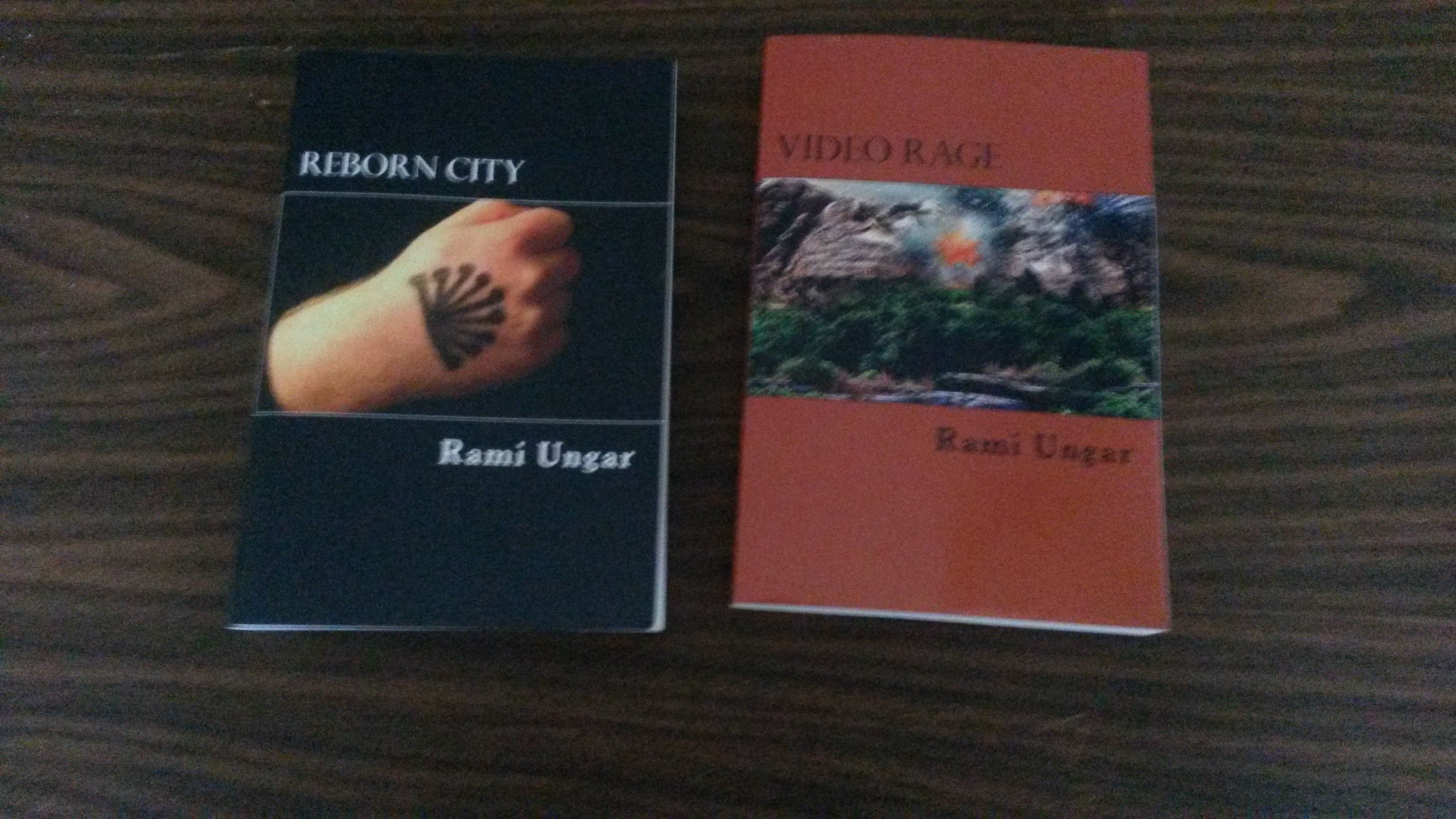
As many of you know, I started this blog while working on a sci-fi series, the Reborn City trilogy. It follows street gangs in a dystopian future, and focuses mainly on the Hydras, a gang whose leaders have strange powers and abilities. At the very core of the series was a theme of overcoming various prejudices, especially racial and Islamaphobic. I self-published the first two books, Reborn City and Video Rage, and started work on the final book, Full Circle.
However, trouble started around the third book. Midway through the first draft, I realized the direction of the story wasn’t epic enough for what I wanted for the series. It neither provided the action, nor the catharsis needed to end the series. So I stopped working on the story, with the hope that eventually I could finish the series.
That was 2017. It’s 2020. And I’ve realized some things about the series. Things that made me change how I feel about those books, and about selling them to people. The biggest thing being that I’m a different person than I used to be. I’m not the same person I was when I first started writing those books.
Let me explain. When I first started that series, it was 2009, I was sixteen, and I was full of the naive, optimistic hope that most teens are filled with. That hope filled Reborn City and its themes of the power of tolerance, which I hoped would do some good in the world. I thought if I could take those themes and work them into a story, I could beat back some of the horrors that were plaguing the world.
In a way, I still think it’s possible to write a story and make a difference through literature. We’ve seen it with multiple books that have withstood the test of time and build conversations around difficult topics. I just don’t think the Reborn City books can do that anymore.
It’s now 2020. Eleven years have passed, I’m twenty seven, and I’m a lot more educated, as well as a lot more jaded, about the very issues I was writing about. I think we all are. We’ve seen too much these past several years, felt too much heartbreak and harsh realities. Knowing that, I look back at the Reborn City books and realize that those stories don’t fit their purpose anymore. It’s like you try to build a better hose to put out house fires, but you find out after the fact that what’s needed is a fire hose, and you built a garden hose. And the whole house is on fire.
See where I’m going? I can’t finish the books because I know the hose I’m building is inadequate, and I don’t feel right selling the books for the same reason.
This, among other reasons, is why earlier this week, I made the decision to take both Reborn City and Video Rage off Amazon and Smashwords.
Reborn City and Video Rage. As of today, I’m not selling copies on Amazon or Smashwords.
Yeah, I can hear some of your shock. Believe me, I’m not happy about it, either. But it is what it is. I won’t sell a product (and make no mistake, that’s part of what I’m doing as a writer) that doesn’t work, and these stories just don’t work. You can maybe still find the last few paperback copies of them on Amazon, but after those are gone, that’s it.
That being said, there are a couple of bright sides. For one thing, I may revisit the world of Reborn City again someday. I still think there’s some potential with those characters and that world, I just need to write a story around them that works with what I know now. And in the meantime, I still like to put the issues I care about into the stories I write, like I did with Rose, or with River of Wrath. The latter of which, by the way, tackles some of the same issues Reborn City and Video Rage did.
Also, while those books are no longer available, my two other books that I self-published, the short story collection The Quiet Game: Five Tales to Chill Your Bones, and the horror-thriller Snake, are both still available. While those stories aren’t perfect, they’ve weathered the test of time better than the Reborn City books did, so I feel more comfortable putting them out there. I’ll include the links for them below.
I’m sorry to drop sad news on you on a Friday night, my Followers of Fear. But I thank you for reading, and for your understanding. Do know that I plan to keep putting out quality stories in the future, and I hope you’ll stick around to keep supporting me while I work on that.
That’s all for now, and I’ll be back soon. Until next time, stay safe and pleasant nightmares.
I’ve kept silent on this matter long enough. Maybe I’ve kept silent so long because, while it made me angry, I wasn’t yet angry enough to post about it on my social media. It was enough for me to let my views be known through the stories I write and the way I conduct myself. However, I think I’ve been silent long enough. I need to speak and to let the world know what I’m thinking.
If you weren’t aware, JK Rowling, author of the Harry Potter novels, has over the past two months voiced problematic views on the transgender community through her social media. I won’t go into a full breakdown of events, you can find that in plenty of articles online, but I will summarize a few major points. Since June, she has: criticized an article that used the phrase “people who menstruate,” meant to include trans men and non-binary individuals; said use of above phrase was “erasing the concept of sex” and “the reality of women globally;” spread misinformation about transgender individuals, including that allowing transgender women to use the bathroom of their choice was giving men license to step into women’s bathrooms and assault them; and on Sunday, equated hormone therapy to gay conversion therapy.
It’s this latest piece of news that has pushed me to speak. I have had the pleasure of being friends and occasionally even colleagues who are trans. None of the above stuff is true of them, or of the trans community at large. Furthermore, as a bisexual man, I am disgusted that Rowling would compare medication that allows trans people to feel more comfortable in their own bodies to a practice that makes members of the LGBT community hate, deny and repress their true selves in favor of someone else’s very narrow worldview on sex and gender.
But I’m not going to talk about all that. I’m going to instead join all the voices who have come out against Rowling’s views. This includes members of the writing community, some of whom I consider colleagues and friends, others I consider role models and teachers; most of the cast of the Harry Potter films; and an overwhelming section of the Harry Potter fandom. What we have to say is this: we are disappointed that Rowling, whose books have always espoused equality and understanding, would support these views, let alone use her platform to influence and possibly turn her fans against the trans community. And while we differ on how we’ll interact with the world of Harry Potter, which is so intertwined with its creator as to be almost inseparable–some are severing their relationship with the franchise, while others are saying they will continue to enjoy Harry Potter while avoiding giving money or other support to Rowling, etc.–we are united and committed to not letting hate go unpunished.*
To be honest, I’m saddened that it has come to this. It’s because of Harry Potter and JK Rowling that I started writing fiction in the first place. You may not have ever heard of me (at least not in the context of a writer) if it hadn’t been for the Wizarding World and what it did for me as a child. I owe Rowling a debt for that, and I’ll always be grateful for the effect she had on my life.
However, I am against all forms of prejudice, including but not limited to racism, antisemitism, sexism, Islamophobia, ableism, ageism, homophobia and, of course, transphobia. I’ve seen the effects of what these prejudices have on people and it disgusts me. My day job allows me to combat these problems within the workforce, something I’m quite proud of. And I won’t stand idly by as an author with a major platform uses theirs to hurt others because of their own prejudice.
And to Ms. Rowling, if you’re reading this, I’m afraid that this is, to quote Albus Dumbledore to Cornelius Fudge, “the parting of the ways.” I will always be grateful to you and to your creation, as I said. But I can’t stand by your views or support your work. Losing me won’t hurt you in the slightest. But if it makes you think, or makes someone else think about how vulnerable the trans community is, or if it helps a trans person feel less alone in a scary world, then it’ll be worth it. With that, Ms. Rowling, I let you go.
Thank you for reading this, everyone. I know this isn’t my normal sort of post, but I had to write it. Thanks for reading. And while I was planning on doing a late-night writing session, I think I’m tuckered out and will hit the hay instead.
Goodnight, Followers of Fear. Until next time, stay safe and pleasant nightmares.
*I know this post may upset some of my Followers of Fear, and they may not want to follow me or read my works anymore. If that’s the case, I’m sad to see you go, but I wish you the best and hope we can someday meet on common ground. And if you decide to get rid of my books, please do so in a manner that doesn’t burn down your house or something crazy like that. I know burning them seems fun, but is it worth your home and life?
Well, I didn’t think I would get it done, and especially not today. But get it done, I did, and now it’s time for a blog post.
As you well know, earlier this month I started working on the second draft of River of Wrath, a novel about a small town in 1960s Mississippi whose dark history is dredged up when one of the circles of Hell described in Dante’s Inferno appears in the town. I’ve been meaning to get to this draft for forever, but the deaths of George Floyd, Breona Taylor, and Ahmaud Arbury, among so many others, forced me to pull this one off the flash drive and get to work on it again. One of this story’s main themes is racism and racial violence, after all, so I can’t think of a better time to work on this story.
And I’m honestly amazed I got this story finished. For one thing, I didn’t think I’d get to keep to that goal of getting one story done a month, but I guess I did, after a fashion. And I didn’t think I’d finish it today. After all, I had about 75 pages left to edit when I got up this morning. However, a lot of work and I just kept going. Before I knew it, I only had 30 left, and I just couldn’t stop. Now it’s a bit after midnight and I’m done with the second draft. Imagine that.
On another note, this draft is now longer than the first draft! When I finished the story the first time around in October 2018, the novel was 192 pages (8.5 x 11 inches on MS Word, double-spaced, 12-point Times New Roman font) and 60,059 words. The second draft…is 204 pages and 63,843 words! I added twelve pages and nearly four-thousand words! I’m not sure if most of those words came from adding more in-depth explanations about Dante’s Inferno, as one of my beta readers advised, but it’s quite an addition. One, hopefully, that’s well worth the work.
So what’s next, both for River of Wrath and for myself? Well, before I start a third draft of River, I’d like to get it looked at by some sensitivity readers. As I said, this story deals with racism, and I want to make sure it’s not accidentally hurtful to African-Americans despite my best intentions. Hopefully, they’ll give me some insight to improve the novel and make it so that the only people who find it offensive are people whose offense I don’t care about, aka white supremacists.
As for me, I’m going to take a break for a short while. You know, watch some movies, read some books, prepare for my upcoming trip to Iowa and South Carolina. However, I’m sure I’ll get in front of the keyboard and start banging out a new story soon enough. I have an idea that’s been rattling in my head for awhile now that I think I can do a lot with, so I’m looking forward to working on it.
But for now, it’s late and I need to sleep. Good night, my Followers of Fear. And until next time, stay safe, be kind, and pleasant nightmares!






 Rami Ungar The Writer