Posts Tagged ‘reflections’

I’ve been reading a lot of articles about how Hollywood is coming to see big horror films are, and that they are looking into making more. It’s even been compared to the explosion of superhero films that came about after the Dark Knight trilogy and Iron Man showed how popular and profitable superhero films could be. Since I am a horror fan in addition to a horror writer, I thought I’d weigh in on the subject.

First off, this explosion in horror is not exactly out of the blue. Studios have been making horror films since the early days of film, and they keep making them every year. There’s obviously always been an interest and a profit to be made in horror. It’s just lately we’ve had a slew of horror films that have shown studios and audiences that horror can be extremely profitable, mainstream, and even deeply thematic. We actually first started seeing this trend years ago with films like the Paranormal Activity series, which kicked off a huge fad of found-footage horror films, and with Blumhouse Productions, which proved you can make horror films cheaply and still have critical and box office success. This is especially so with their Conjuring film series, which in itself is a cinematic universe.

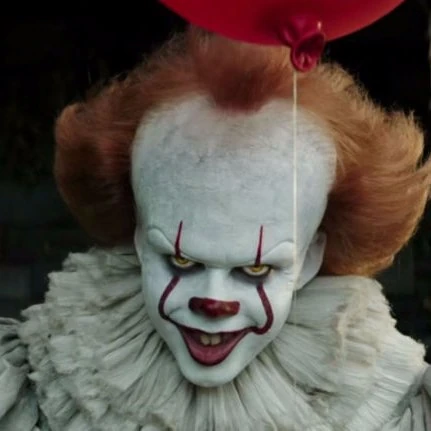
But late 2016 and 2017 brought on a slew of horror films that really brought these points home. Split, with its surprise ending technically making it a superhero film, and Get Out, with its commentary on race on par with some Oscar-nominated films, brought horror into the mainstream in new ways. Later in 2017, Annabelle: Creation and It proved massively successful beyond anyone’s wildest dreams, and in 2018, films like A Quiet Place are raking in the dough and proving how powerful horror can be in creating terrifying atmospheres and emotional narratives.

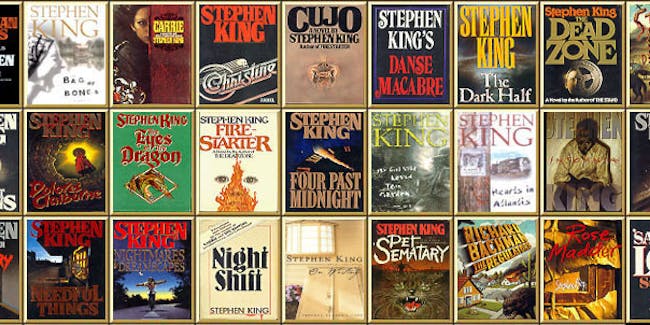
And this is just scratching the surface: Stephen King stories are being optioned at record rates (where’s my adaptation of The Library Policeman?); some of Netflix’s biggest recent original films have been horror movies; and studios are developing more horror movies than ever before. It: Chapter Two starts filming this summer, and a new Halloween film is getting released this year. So while I may say yes, horror is kind of the new superhero film, it’s not because they suddenly became profitable. The potential has always been there, it just took some very specific successes with deeper cultural resonance to really bring that potential to the attention of studio heads.

Remember, don’t do what The Mummy did. Not if you want your horror movie to actually be successful, let alone spawn a franchise.

So yes, the horror genre may be the new superhero film, with every studio wanting its own successful films, film series, or film universe. But to steal a superhero film quote, “With great power comes great responsibility.” So while I have no pretensions that studio heads or directors or writers or whatever will see this post, let alone take its message to heart, I thought I’d offer some advice advice on getting into this horror boom. After all, as a horror fan and a creator, I want the horror boom to continue. The more good horror out there, the better. So here are some of my ideas for ways to make sure the boom doesn’t fizzle out:

  • Focus on telling a good scary story. This seems obvious, but some companies get so caught up in having a successful film or franchise, they forget to make a good horror film. Remember last year’s The Mummy? That film was convoluted, packed to the brim, and not at all scary. Not a good start for a film that was supposed to be the launching point for an entire cinematic horror universe. Which was the problem: Universal was so concerned with getting their franchise off the ground, they forgot what let Iron Man get the MCU off the ground: a good film in and of itself. If Iron Man had not led to the MCU, it still would’ve been an excellent superhero film. The Mummy should’ve been made that way, but unfortunately, it wasn’t, and now the Dark Universe is sunk.
    So remember kids, focus on a good story first, franchise a distant second. At least said franchise is up and running, of course.
  • Take chances on new/indie directors and stories. A lot of great horror films have come from the indie scene and/or from new/emerging directors. It Follows and Babadook were both very successful horror films from directors with less than three films under their belts, and the former was from the indie scene. Get Out was from Jordan Peele, who had never done a horror film before in his life.
    And all these stories are original plots. In an age where every other movie is a sequel, remake, or some variation on a familiar story or trend, adding something new to the horror canon has the ability to draw in a diverse audience, rather than just the smaller audience of devoted fans and some possible new ones.
    So take a few risks. It could lead to some big returns.
  • Adapt more than just Stephen King. Yeah, I’m happy for the many Stephen King adaptations being made (Library Policeman movie, please?). But there is such a thing as too much of a good thing. Even his Royal Scariness: I got sick of him back in high school because I read too much King and had to take a break for a few years. I still make sure to space out my dives into his stories nowadays. And if that could happen to me with his books, imagine what it could do to audiences with too many of his movies.
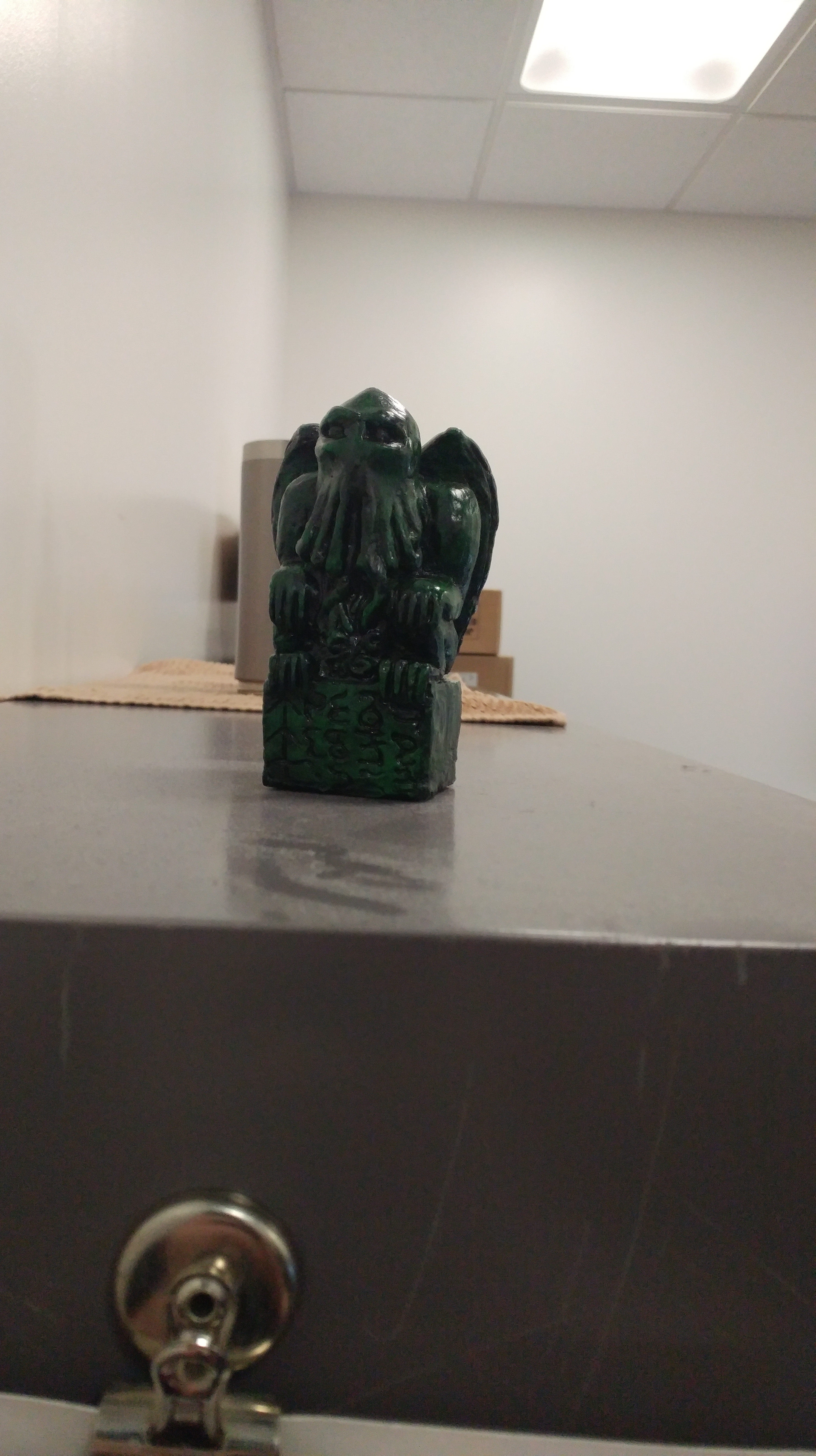
    The point is, there are a number of horror writers out there whose works should be adapted. Scott Thomas’s Kill Creek is one of the best novels I’ve read so far this year; Ania Ahlborn’s Within These Walls would make a great Blumhouse movie; Junji Ito has plenty of stories that could make great films; and as I noted in a previous post, HP Lovecraft is in the public domain and would make for great cinema. It’s something to consider.
    And before you ask, “What about your works, Rami?” I would be flattered if someone showed interest in adapting one of my stories. However, I don’t think that’s a possibility at this stage of my career, so I’m not going to get my hopes up. Still, I’d be flattered.

Horror is finally being given the attention it deserves from Hollywood, and I couldn’t be happier for it. However, it’s going to take a lot of work, and a lot of good stories, for horror to continue to thrive. I hope that filmmakers old and new are up to the task.

Just like the last time I posted about this subject, I’m pretty sure someone is reading that post title and is very, very confused.

So if you’re unaware, there are two styles of writing fiction that most writers can be divided into: pantsers and plotters. To put it simply, plotters like to plan out as much as they can before and during writing, while pantsers tend to plan out only a few things, and leave the rest up to whatever they come up with in the moment. Some people do a mix, but for the majority, they usually fall into one camp or the other.

I’m a big plotter, but for a while I’ve been experimenting with more seat-of-my-pants style writing. I wanted to see if that led to situations within stories that felt more natural, more “organic” than something that might feel forced for the sake of the plot. And my experiment yielded an interesting conclusion: except for some short stories (and not many, mind you), I can’t pants for the life of me. And believe me, I tried. I tried to let situations rise as organically as possible and go with the flow. However, what ended up happening more often than not is that I would just sit there in front of my computer, trying to figure out what comes next. Then I’d get distracted, and I’d end up watching a few videos or reading clickbait articles, and then I’d realize that it’s time to make tomorrow’s lunch and get ready for bed, and only a little work has been done, and that just sucks!

I didn’t fully realize how bad I was at pantsing until I was writing an email to my publisher. We were discussing changes I could make to Rose, and I mentioned that I’d really have to think about what changes I would make, as, and I quote, “I can’t pants to save my life.” It wasn’t until I really wrote out those words that it dawned on me how true they were. I can’t pants to save my life. Except for the rare short story, I need an order and an idea of where I’m going. Otherwise, I just can’t write, let alone make a compelling story.

So I’m back on mainly plotting out my stories. But I’m not sad about that. Like I said, I’m a plotter, so it feels good to be writing in a way I know that works for me. And I’m happy for another reason: this experiment in pantsing was a success in a different manner than what I expected. Thomas Edison once said that his thousand failed light bulbs weren’t actually failed light bulbs, but discoveries on how not to make a light bulb. Similarly, I discovered some more of my limitations when it comes to writing, and how I can improve in the future. Far from a complete and total failure.

And if you have a specific way you write, don’t feel pressured to change it because other writers write differently. We all have our areas and our methods that work for us. If you want to experiment and try something new, go ahead and try it. You never know what’ll happen. But never feel that you have to change how you do things. You could end up going from quality work to not getting anything done at all.

Have you tried both pantsing and plotting? How has it worked out for you?

That’s all for now, Followers of Fear. I know my posts have been a bit more spaced out than usual lately, but I’m hoping to have more to post about in the new month. Hopefully even a couple pieces of good news (fingers crossed). Until next time, pleasant nightmares!

A portrait of King Arthur by Charles Ernest Butler. Probably not what he looked like at all.

So this is a bit outside my normal wheelhouse, but I decided to write a post about it because I’m all fired up about the subject (and really, isn’t that the reason we write anything anywhere?).

Recently, I’ve become very interested in King Arthur. Specifically, I wanted to know whether or not he was real, and how this whole story of him, Merlin, Lancelot and Guinevere, his sister/lover Morgan le Fay and his nephew/bastard son Mordred came to be. I mean, do we really believe a guy who didn’t know he was the bastard son of the previous king was taught by a magician, pulled a sword from a stone, had an idyllic kingdom stretching across Europe for a few years, only for it to be undone by his affair with his sister and his wife’s affair with one of his knights, to be gospel historical fact? I wanted to know the truth, and I wanted to know it as in-depth as possible.

This new obsession of mine started after one of the YouTube channels I follow, Overly Sarcastic Productions, produced a video about Arthur lore, and how that got built up over the past fifteen-hundred years (click here to watch the video, as well as here for their follow-up on some of Arthur’s lesser-known knights). These laid the groundwork for me to get interested in the subject, and to want to find out a bit more. From there, I downloaded a lecture  series from The Great Courses company (college level lecture series you can listen to while you work or drive. Definitely check them out, they’re very informative) on Arthur, narrated by Professor Dorsey Armstrong of Purdue University, and an expert on the subject of Arthuriana.

If you don’t have time to watch either video or to listen to Professor Armstrong’s lecture series (though you should at least spend a half hour on that first video), let me do my best to put it really simply: probably ninety-five percent of what you think you know about King Arthur is complete and utter fiction. There’s some evidence to suggest that during the late 5th and early 6th century, the invasion of the Saxons in England was stopped and in some places reversed, keeping the peace for a few generations, and that someone probably lead a war effort that caused that peace.

This figure was probably the basis of Arthur. The name Arthur, by the way, doesn’t appear until after this time period, but then becomes quite widespread among Bretons. This possibly means that the name “Arthur” wasn’t this figure’s real name, but maybe an acronym, abbreviation, or nickname based on a Celtic or Latin name. A number of figures listed in history annals from around or after that time have been pointed to as possibly the inspiration for Arthur, but documentation from that time is scarce, so no one really knows if any of these figures were Arthur or given that name as a title or nickname.

So, Arthur was possibly real. We’re not sure, because there’s only so much evidence. He could be as made up as Harry Potter, and was a folklore character adapted by the Bretons for their current predicament.

Pages from the Historia regum Britanniae, the first King Arthur bestseller ever written.

At the very least, the legend of Arthur cemented itself and grew over time. From a local warlord to king of all the Bretons, and then other elements started getting added on, such as Merlin, who was probably based on a mad bard who lived a couple of centuries after the Arthur figure. Eventually, a man by the name of Geoffrey of Monmouth wrote this huge book called Historia regum Brittaniae, a pseudo-history of Britain that dealt quite a bit with Arthur. It was spread across the European continent, where other writers from as far as Italy, Scandinavia, and Russia started adding their own spins on Arthur’s story and adding their own elements. These elements include Lancelot, who was the invention of a French writer, Excalibur and the Holy Grail, and Mordred being Arthur’s incestuous offspring. And as years passed, storytellers just kept adding elements and remixing the already-available tales until we have all the Arthur stories available today.

It’s like what might happen if, a thousand years from now, George Washington was known as Walsh; his historicity was debated; he was credited not only with defeating the British but conquering the entire continental United States; had Superman’s powers; and was taught by Mark Twain, who’s been combined with Nikola Tesla and has lightning powers.

Yeah, kind of crazy. Also a huge simplification, but it’s a blog post. What do you expect of me?

Like I said, anyone can add to the Arthur canon. Doesn’t mean it’ll be good.

Anyway, it’s just mind-blowing how great an influence one man who may or may not have existed and probably only ruled a small area of land if he did exist has had on Western society. Most likely, if you’ve lived anywhere English culture has reached, you’ve heard something about Arthur. You just probably never realized that there was so much debate around him or there’s no real canon about him, because so much about him is in flux from storyteller to storyteller.

It’s also very inspiring, in a way. You can write almost any sort of story about Arthur, and it can be considered part of the canon (whether or not it’s any good though, is left up to the storytellers and their audiences). The possibilities are kind of endless, as long as you keep an open mind. I’ve already had an idea for a short story involving the historical Arthur figure and the subsequent works written about him. I plan to write it at some point this year and then submit it to my publisher, Castrum Press, for one of their anthologies (they’re doing some anthologies, BTW. Check them out here if you’re interested. All are welcome to submit). Hopefully it gets accepted, and maybe some people will like it. We’ll see.

Whatever you know or believe about Arthur, it’s undeniable that he’s had an influence on the world. His legend is constantly growing, morphing, and mutating. And all from one man, a man we don’t even know if he was real or not. It’s definitely a mind-boggling, cool, and inspiring subject, and I’m so glad I decided to dive into it.

I hope, if anything, this post makes you curious enough to dive in too.

I’m not sure if I’ve ever mentioned this, but Rose has a lot of flashback sequences and other dips into the past within the story, especially in the last two-thirds. I did this for a number of reasons: exploring the characters’s pasts; making them more complex; and just an opportunity to write some sequences to add to the horror element of the story. And there are a lot of horrifying things in those sequences, things that I can’t go into without revealing too many plot details, but they did make my beta readers gasp and stare at the page wide-eyed. They were horrifying moments in the story.

Not to mention, I think that flashbacks can be scary if done right. A good example of this is Gerald’s Game by Stephen King: while the protagonist’s current situation is scary enough, going into her past midway through the story and seeing how her father abused her as a kid was horrifying in its own right. Another good example would be the movie Oculus: that film flashes between the present and the past throughout its runtime, and it’s freaky no matter what year it is (see my Rewatch Review of that film).

Well, it looks like I didn’t do the flashbacks right for Rose. In the notes on the fourth draft from my publisher, they mentioned that all those flashbacks are just bad stuff happening to those characters, and while that stuff is horrifying, it’s not scary. I’ve had a lot of back and forth with them on this, and after a lot of thought, I can see where they’re coming from. After all, while in the real world “horrifying” can be a synonym for “scary,” especially in relation to current events, in fiction that’s not necessarily the case. Think about it this way: Harry Potter is horribly mistreated by his relatives, and what he goes through is horrifying. But if you ask any normal Potterhead what person or creature from the books they would be scared to face, the Dursleys wouldn’t rate very high on that list. The dementors, Voldemort and his Death Eaters, or the basilisk, sure. But the Dursleys? Considering most Potterheads are Muggle in biology and can’t perform magic, anyone who had to face them would probably be invited into Privet Drive and served tea and cookies in front of the TV!

So while showing how many terrible things happened in the characters’ pasts may be horrifying, it might not be scary. And considering how much experience my publisher has and how well-received their books are (have you checked out The Cronian Incident by Matthew Williams yet?), I’m taking this piece of feedback to heart.

I won’t lie, though, I’m a little disappointed, and I’ve been wondering where I went wrong. Or maybe to phrase it better, I’m wondering how I might have done the flashbacks better.

Well, in the case of Gerald’s Game, whose flashback is most similar to mine, they only do one big flashback sequence, not several. That way, it doesn’t become a repetitive cliche or trick. That, and its connection with the current events of the story: the protagonist’s abuse by her father is very much connected to her current predicament, on psychological and symbolic levels as well as literal levels. And with Oculus, the horror behind the story–a cursed/haunted mirror–is scary no matter when it happens. Spinning a tale of two siblings who experience the mirror both as children and adults, and then going back and forth between those two experiences, makes for some great psychological/supernatural horror.

And maybe that’s the thing: connection. In both those examples, the flashbacks, no matter how they’re staged, have very strong connections to what’s happening in the story’s present. Of the ones in Rose, while they do have connections to the characters’ pasts, only one of them has a direct correlation to the current events of the story. And that one’s told to us by the antagonist rather than shown in flashback. And that’s why the flashbacks in this story didn’t work as well as they could have.

So what’s next? Since so much of the novel is in flashback, I may have to do a whole lot more revising. Hell, I may even have to rewrite a good chunk of the novel. Which isn’t something I’m unfamiliar with: as many of you may recall, I had to go back and start over on the first draft back in college because the first attempt went in a direction that didn’t help the story.

Still, it’s a little annoying, and I haven’t figured out exactly what I’m going to do for these changes (though I have ideas). Hopefully, whatever I come up with, it’ll come out for the novel’s betterment, and bring it one step closer to publication.

Fingers crossed.

So that lovely and occasionally terrifying thing known as the Internet has informed me that April is Autism Awareness Month, and as someone who is on the spectrum, I felt I should contribute something.

The only question is, what should I contribute? I haven’t had any experiences like when I was asked to give advice on how to help someone’s autistic relative; I haven’t been prompted to record a video or anything like the one below, detailing a specific issue involving disability (by the way, that video recently passed the one-year anniversary of when it was uploaded, and also passed five-hundred views soon afterwards. I find that pretty cool); I haven’t had any revelations about my relationship with my autism; and no one’s asked me point-blank if I’m autistic recently. What’s there to talk about? What can I say that not only needs to be said, but I feel strongly speaking my mind about?


Well, I guess one subject I can broach is how autism affects adults, especially in terms of job searching and job security.

A lot of people associate autism with children. When they associate it with adults, I think the popular image is low-functioning adults who are being taken care of by their parents or at facilities. And while there is a segment of the adult autistic population that do need that sort of care, the popular image ignores the segment of the population who don’t require full-time care from facilities or parents, those who can and seek to live independently. And they face their own unique challenges and issues.

Now, I”m just going off my own experience and the experiences of others who have or are related to people with ASD, but the fact that we’re either experiencing or hearing about this says something.

I’ve mentioned before how, between October 2015 and about March or April 2016, I was on the worst job search I’ve ever experienced. Every day I would send out resumes and applications, only to either not hear anything back or to be passed over after being interviewed. One reason this may have happened is because I was open to my potential employers about the fact that I have ASD, and that it sometimes made social situations awkward. I have no proof, but it’s possible that knowing my diagnosis may have scared them off. People have this association with people with disabilities in general that we’re unable to do anything. And even if we’re skilled at something (sciences, writing, mathematics, painting, music, whatever), our needs are too much for them to handle as employers.

The reality, I assure you, is much different. At work, part of my job is being a disability advocate, and I can attest that people with disabilities not only do things, they do them very well. Not only that, but employers who treat disabled employees well find that not only are these employees hard-working and loyal, but several times less likely to turn over than the general population. Not only that, but accommodations for their disability usually aren’t burdensome: a quiet or obstacle-free workspace, or flexible schedules, or leave for medical appointments. And when it does cost money for accommodations, it’s usually not expensive. Seriously, I help handle accommodations at work. I rarely see the cost get anywhere near five-hundred dollars.  My own accommodations cost the organization nothing: I just listen to my iPod or audio books while I work (I pay for any new music or audio books) and I have a chair designed to ease my back pain (we already had the chair to begin with, so it didn’t cost any money to give it to me).

But still, a lot of employers are wary of employing the disabled, especially folks with ASD. They have this idea of a Rain Man-type character, someone who may excel at one very special skill, but needs all sorts of help in every other area of life and can’t do anything but certain tasks. For many autistic adults, this simply isn’t the case. Each of us may present our diagnosis differently, but it doesn’t affect each and every one of us that badly, and we are suited for a variety of tasks.

I’m lucky that I was able to get a job in an office where everyone is kind and gets that I’m not always the savviest person socially, in an organization that emphasizes disability hiring, accommodation, and inclusion. But not many people like me are that lucky. They have trouble finding jobs because employers see their disabilities as a huge barrier. I’ve heard from friends who’ve had this experience, as well as from others. And not just with jobs: I’ve heard from people who have told me that they or their relatives had had trouble finding services that help them cope with their ASD once they reach adulthood or when they’re diagnosed in adulthood. There’s plenty of help for minors, but for adults, it can be a challenge.

So this Autism Awareness Month, I’m writing a post urging people not only to support autism awareness, research, and therapy, but also to rethink how we approach adults with autism (and disabilities in general). The majority of us aren’t helpless individuals. We’re hardworking and want to be part of society. You just have to give us the opportunity, whether that be funding for programs that offer counseling, education, and job training to autistic adults, or actually giving a job to someone with autism. Quite possibly, you’ll be amazed at what you receive in return.

Thank you for reading, and have a good month of April.

I’ve been thinking a lot about what’ll happen after Rose comes out. Specifically, what sort of stories I’ll work on once I’m done with Rose.

I know that’s a crazy thing to think about at this point. I’m still doing revisions on Rose for the publisher, and likely they’ll have me do more revisions before we get to publication, and then there’s the publication, and then a whole ton of marketing and other work just to make sure the book is read and sold and reviewed and whatnot. Thinking about future projects should be the last thing on my mind.

But of course, being “logical” has never been one of my strong suits, and dreaming about the future has been what’s helped me get to this point anyway. So why not wax on about what might happen after Rose?

Well, there are a number of short stories I’ve been thinking about working on. I very much want to edit Hannah, the ghost story I wrote back in January, and I want to write a few stories that have been circulating in my head for a while. I also want to eventually get back to the novelette I was working on that was giving me so many challenges, and see if I can get a bit further in that, if not finish it up entirely. It may end up becoming one of those stories where I revisit it every now and then to see if time has given me a clearer vision of how to improve and/or finish it (I’ve got a few of those). And I’d like a few months to spend on all of those, just to see what I can come up with, and if any of it is publishable.

And of course, I’ve been thinking about what sort of novel I’d like to write next, when I’m ready to write a novel. Probably, that won’t be immediately: Rose has challenged me in ways I’ve never been challenged by a story, and I want some time to refresh my mind before I make a commitment to a project that I could end up working on for years and years. But I have some ideas on what sort of novel I’d like to write next, when I am ready to make that sort of commitment.

For one thing, it won’t be a sequel to Rose. I could write one, and I have ideas I could develop into a sequel for Rose, but I don’t want to return to the world of Rose just yet. Especially when I can’t guarantee I can make the story better or on par with the original so soon after finishing the original.

For another, I’m not yet ready to return to the world of Reborn City. Yeah, I know there are a couple of big fans of that trilogy who want the final book, Full Circle, already (I know a few of you are probably out there), but I’m just not ready to get back to that yet.

And finally, I want to do something that’s different. Think of it like houses: I don’t want to try selling Castrum on a house that’s basically the same one they bought, just on a different block and with a different coat of paint. I want to sell them a house that’s just as good as the first one, but an entirely different design, while still retaining the Rami Ungar architecture (is this metaphor getting too weird/complicated, or does it still work?).

All these books are different from one another. I want to do the same with my books as well.

I mean, look at Stephen King: he followed Carrie (a psychic girl who gets revenge on her psychotic religious mother and the bullies at her high school) with Salem’s Lot (vampires invade a small Maine town, and a writer and his allies have to stop them), and then went on to write The Shining (a family that includes a psychic four-year-old becomes the winter caretakers at an isolated hotel haunted by something dark and evil) before creating The Stand (a super-disease causes most of Earth’s population to die off, leaving the survivors to engage in an apocalyptic war between the forces of good and evil). None of those are carbon copies of the other, so I want to do something very distinct from Rose.

And I have a few novels I can choose from. I have more ideas than I know what to do with, so I have plenty of options, but there are a few stories I can think of that would make great projects. There’s one in particular I’d like to work on when the time comes, but it’ll depend on a number of factors, including if I have to pitch something to the publisher (I’m not sure if that’s something I have to do, but it’s something I’ve thought about).

Still, there’s plenty of time to think about all that. I just know that when the time does come to think about all that, I’ll have plenty of ideas to work with and consider. Hopefully whatever I choose, it’ll make for some good reading.

In the meantime, I’m off to work on Rose for a little bit. Here’s hoping I can make some good progress before I have to hit the hay tonight. Until next time, my Followers of Fear, pleasant nightmares!

Last week I had a dream that started pleasantly and ended up being kind of nightmarish: it involved me and a friend of mine from high school navigating an area with lots of rivers and creeks on surfboards. We were looking for a mythical golden treasure trove that many had searched for and failed. We’d heard the treasure we were looking for was cursed, but we went searching for it anyway, because nothing bad has ever come from seeking and finding cursed objects. Somehow we found the treasure where so many others had failed, split it up between us, and go home. However, soon after that, weird stuff starts happening: things move on their own, the faces on the coins change shape, and that’s just the start of our problems. Well before it gets really bad though, my friend and I realize that we have to return the treasure to where we found it.

At some point, someone in the dream says I could write a story about what’s happened to us. To which I replied, “Someone already did. It’s called Pirates of the Caribbean.”

After we agree to take the treasure back, I woke up. It didn’t take me long to figure out the main message of the dream (besides the fact that I can point out when my situation resembles a famous film in my dreams). You see, the night before I’d taken a swipe at starting the fifth draft of Rose, based on my publisher Castrum’s comments and suggestions. I got about a page in, and I hit a metaphorical roadblock. I couldn’t figure out how to advance. So I ended up going to bed not sure how to move further in editing this novel while at the same time integrating my publisher’s suggestions (many of which I agree with and think could elevate the quality of the novel).

That dream was my subconscious giving me a rather creative presentation of my doubts and anxieties regarding the editing and publishing process for Rose: that signing with a publisher was a really bad idea, that there’s nothing I’ll be able to do to make this novel publishable, that even if I somehow get it released, it’ll suck and anybody who reads it will leave bad reviews. A dark side to achieving my dream and finding a publisher, represented expertly by cursed gold.*

And then on Saturday, I tried again. And it went extremely well. I got thirteen out of sixteen pages in that chapter done. Yesterday, I got the last three pages done, plus all eleven of the next chapter (and while taking in a double feature on the Blu-Ray Player in the afternoon). And then today, I got another chapter done within a couple of hours. That’s an average of a chapter a day! Take that, conscious and subconscious fears involving working with a publishing process.

Obviously, these are still early stages of the fifth draft, and I’m going to encounter moments where I’m not sure what to write or how to integrate a suggestion from the publisher. Luckily though, my publisher has been great about answering any questions I have (thank God they don’t see me as a pushy American) and offering feedback to my ideas on how to integrate their suggestions. And with these last three chapters, I’ve been able to move forward mostly on my own. And with time, I’m sure I can get through the rest without trouble, and well before May 16th. I just have to keep being creative and persevere.

Obviously, doubts about what I’m doing and where I’m going will plague me throughout my writing career from here on out. I’ve passed a new turning point in my career, and it’s a whole new playing field from here on out. But the next time I feel those worries start to get to me, I’ll remember the dream about the cursed gold, and the productive weekend that followed. And I’ll just keep editing through my doubts.

And while I still have your attention, I’d like to give a shout out to my good friend and fellow novelist at Castrum, Matt Williams. He just finished writing his novel The Jovian Incident, Book Two of the Formist series, and will hopefully have it out later this year. I can’t wait to read it, as I really enjoyed the first book, The Cronian Incident, which currently holds a 4.7 out of 5 on Amazon based on 12 reviews. If you would like to read some hard-boiled detective fiction in a futuristic universe, this series may be the one you’re looking for. Check it out and leave Matt a review while you’re at it.

Until next time, my Followers of Fear, pleasant nightmares (hopefully none that resemble popular contemporary movies, though).

*Still not sure why I was using a surfboard to navigate rivers and creeks (obviously a reference to the various paths we authors take to finding a publisher), as well as why that particular friend was with me (I love the guy and it always seems like no time has passed at all when we see each other, but he’s not a fiction writer, so I can’t think of why he would be in the dream).

I started this series of rewatching movies I previously disliked with an Asian horror film, and it seems I’m ending it with an Asian horror film, albeit from a different country. I swear, that wasn’t intentional.

But before I get into the review, I want to thank you all for keeping up with this series and making it a success. Watching films I’ve hated has been no easy task. It’s time-consuming and can be almost physically painful to watch some of these duds. If it weren’t for the constant reads, likes, and comments you guys gave me, I would’ve probably stopped after film number 3 or 4. So thank you for being there and enjoying these rewatch reviews. I hope you got something from them (particularly ideas about which films to enjoy and which to avoid). I certainly did (some of which my doctor can’t find a diagnosis for).

So onto the final Rewatch Review, the 1998 landmark South Korean horror film, Whispering Corridors.

WHAT IT’S ABOUT: The film follows Ji-oh, a strong-willed but slightly superstitious artist at an all-girls high school and Eun-young, a young teacher who was once a student at the school. They become aware that there may be a ghost at the school targeting teachers. As Ji-oh tries to figure out if perhaps she’s connected to the deaths, Eun-young knows she has a connection to the deaths, and must try to stop them before they get any worse. Both women will find out, they both have a connection to the deaths, and to the ghosts causing them.

WHY I DIDN’T LIKE IT: I was watching a lot of Asian horror films when I saw this one, and I thought this one didn’t compare well to the others I’d seen at the time. Just not scary enough, and too much focus on daily life instead of spooky, scary spirits.

WHY I REWATCHED IT: I found out this was one of the first horror films made in South Korea after the end of the dictatorship, and that it came with a lot of commentary on that time and on the South Korean school system, which made me see it in a whole new light. It also started a successful series of horror films set at all-girls schools, one of which involves a ballet school (and you know I’m a sucker for ballet) and was influential on Korean horror and Korean cinema as a whole. And finally, I needed a tenth movie to round out the series. Hence, Whispering Corridors.

THOUGHTS: Okay, it’s not as intense as other horror films I’ve seen, but it is a decent film.

For one thing, the story does set up a great mystery: it’s established early in the film that the ghost is masquerading as a student, and does a good job of making you guess who the ghost is. And while the body count in this film is small, they’re shot well and at times executed (pun intended) very creatively. All this contributes to create a unique, fairly creepy atmosphere.

There’s also the non-supernatural horror in the film: the school system itself. As I said above, the film features heavy commentary on the South Korean educational system, in this case the darker sides coalesced into one school. A number of the teachers make the school into an uncomfortable place to be. They’re often verbally abusive, set the students against one another and, in the case of one teacher, physically abuse and sexually harass students! I mean, my God! And all on top of a rigorous education philosophy designed to emphasize academic excellence to the point of crowding out everything else. To say the least, it’s horrifying.

That being said, the film does have its problems. The pacing can be very slow, with lots of moments involving people just talking rather than anything supernatural and/or exciting. I know some horror stories are slow-burns, but I don’t think this one should be one of them. Also, the ending is a little sappy, with a special effect that I’ve seen done better in other films.

But that’s the extent of the problems I’ve found. And considering other films with more problems that I’ve seen, I’ll take that.

JUDGMENT: I’m glad I made this film part of this series. On a scale of 1 to 5, I’m giving Whispering Corridors a 3.7 out of 5. Not the scariest movie I’ve ever seen, but I recommend seeing it. In a good way, it’s like Texas Chainsaw Massacre: while it may not be that terrifying, you should see it for the impact it has. And I guarantee that if you do see it, you won’t be as disappointed as you might be with TCM.

Just be aware that this is an extremely difficult film to find. Not kidding, I had to jump through a few hoops to find this film (hopefully the sequels will be easier to find). And you’ll likely have to go through a few too to get this one. Just warning you.


And that brings an end to the Rewatch Review series, for now anyway. We had laughs, we had tears, we had screams of terror or boredom. And who knows? I may do this again someday, if I can find enough films to rewatch and the will to go through it again. But right now, I think I’ll try getting through my Netflix queue.

I have not been blogging much in the last week or so, though I’ve read just about every blog post that shows up in my inbox. This is partly because I haven’t had anything I’ve felt passionate enough to blog about and because of time constraints, but it’s mostly because of the story I’ve been working on lately. You see, this story is challenging me as a writer, and the challenge has me engrossed, more so than a test engrosses Hermione Granger around exam time (oh Harry Potter, you always give me something when I ask). It’s so engrossing, that it’s taking up all my creative energies, leaving me unable to blog or even come up with new ideas for stories (though I already have more ideas than I know what to do with, so that’s not a huge problem).

Some of you may remember that I started working on a story I thought might become a novelette or novella in between drafts of Rose back in October or November. After finishing the short story Do-Over the other day, I started working on this story again, and as I said, it’s been challenging. On a number of levels, actually: for one thing, there’s an anthology I’ve heard about that’s looking for stories of a certain word length, so I’m trying to write this story to keep it within the anthology’s word limits. Yeah, I know I should let the story be whatever length it’s meant to be, but after expanding Rose to twice its word length last year because it was suggested I do just that, I feel like I can aim for a certain word count and still get a good story out of it.

Another reason it’s challenging is because of the narrator. Like Rose, I’m telling this story through the eyes of a first-person narrator, which means I’m reliant on her as a narrator to tell the story and to create a good horror ambiance. But at the same time, she’s got a history, a personality, and observations that she’s putting into her story. It’s less like I’m writing the story and I’m channeling my narrator as she’s telling the story, though I do have the power to go in and make changes as needed. And creating that horror ambiance while balancing my narrator’s voice and what she feels is necessary to put into her story, such as her interactions with her husband, isn’t that easy.

Did I mention that this story also takes place over thirty years before I was born, in a state I’ve only visited once? Well, it does, so in addition to being a horror story, it’s also historical fiction, and I’m working hard to recreate an age and place I’ve never experienced, with all the fashions, technology, and attitudes in place. It’s a lot of work, to say the least.

And on top of that, you have all the normal challenges of storytelling: making a story interesting, pacing, showing vs. telling, dialogue, word choice, et cetera, et cetera. I’ve got my work cut out for me.

But honestly, I think it’s all worth it. Because in my experience, if a novel challenges the writer, it’s going to be a better story in the end. Look at Rose: that novel challenged me every time I worked on it. The first draft alone, I had to go back to the very beginning and start over again because I had to totally reroute the path the story was taking. During the third draft, I added forty-thousand words, a whole new plot line, and even a character or two just to make the story not only longer, but better. And in the end, I created one hell of a story that I feel has a great chance of publication. Hopefully with this story I can get a similar outcome.

Stories can be challenging to write sometimes. It may be difficult to get the words on the page, but in the end, with a lot of work, I think it can lead to a really compelling story. And I’m looking forward to seeing if, after a lot of blood, sweat and tears, I can wrangle out a good story here.

You know, you often get great horror films. You get great science-horror films. And every now and then, you get a great horror film that makes you think, like Get Out or As Above, So Below. But I’ve never seen a science-horror film that’s not only good, but made you want to speculate so much about its deeper meanings and the questions it raises.

Based on the novel by Jeff VanderMeer,* Annihilation focuses on Natalie Portman as a biologist who goes on an expedition with four other women into “The Shimmer,” a place where everything is mutating and changing and no previous expedition has come back alive, after her husband returns from there gravely ill and seriously changed. Once inside, they will be tested in ways they cannot even imagine, and discover something horrifying.

This was an absolutely amazing movie. For one thing, the main cast (which is all women but not treated like a huge deal at all by the film, which I love) are all absolutely amazing. They really make you believe they are these characters, even if they aren’t given that much development. Gina Rodriguez, who plays Anya Thorensen, was especially great, and seeing her transformation through the movie is worth the ticket price alone.

Visually, this film is a feast. There’s so much to look at and take in, but it never really feels overwhelming. Sometimes the imagery is beautiful, sometimes it is baffling, and sometimes it’s creepy, but you’re never going to look away because you want to take it all in. And as for atmosphere, this film does a really good job of just building up an air of strangeness. So much of what’s in the Shimmer is unreal and surreal. It’s unknown to everyone, and the characters have to guess most of the time as to the meaning of things. And that’s what they’re doing: guessing. Very little is confirmed, and so much is unknown. So you kind of feel their fear and paranoia as they start to wonder what is real, what is happening, how it could be happening.

But what I love most about this film is how intelligent it is, and how it makes you wonder. As I said, very little is confirmed with this film. A lot of what we see, we the audience have to draw our own conclusions and decide what is happening, or what the deeper meaning is. Or if there is a deeper meaning. Or if what we’re seeing is actually real. It’s so strange, but at the same time so thought-provoking. And it’s been a while since a film made me wonder this much, made me want to examine it more.

If I’m going to ding the film on anything, it’s the CGI. Except for the film’s climax, the CGI doesn’t work well. It’s not awful, but I feel it would work better in a video game instead of in a live-action film. I would’ve preferred if they’d tried for a more animatronic approach, like with the Jurassic Park films.

On a scale of 1 to 5, I’m giving Annihilation a 4.5 out of 5.  A visual thrill-ride of the strange and otherworldly, fronted by a great cast. Definitely check it out and get lost in a world of the hallucinatory and engaging.

*By the way, I tried listening to this book on audio. But the narrator’s voice made me sleepy, so only so much of the novel actually made it into my brain. From what I remember though, the novel and movie differ on a lot. But in a good way.