Posts Tagged ‘reflections’

0471a-fallenangels

I would’ve written this post earlier in the day, but…well, you probably can guess.

Anyway, today was my first critique day in my creative writing workshop. There were three others in the class getting their short stories critiqued, and mine was the third. And it was one of the best critiques I’ve ever had, because they pointed out numerous problems with “Evil Began in a Bar” and gave some really good suggestions on how to improve it. Yeah, the best way to judge a critique is not on how much they praise or hate a story, but on what the critics say that will help you better the story.

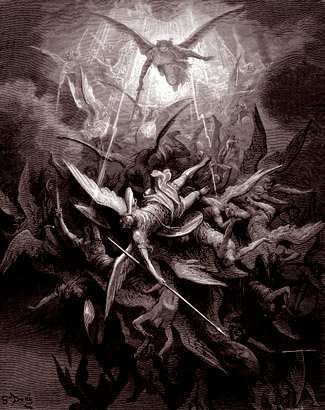
As I said, my classmates felt there was a lot that could be improved upon with “Evil Began in a Bar”, which is a retelling of the story of the Fall a la Milton (or a la Ungar, I guess) Some of the big ones were:

  • The tone seemed to shift wildly between dark and comical, serious and light.
  • They couldn’t tell whether this was a dystopia story or a religious fantasy.
  • People unfamiliar with the story of the Fall might be confused by this.

I think I’ve mentioned this before, but short stories are not my greatest strength. I’m much better at novels.

Still, there’s a bright side to this. After hearing from my classmates and talking to my teacher after class (in which she agreed with me on my predilection for novels: “You seem to be very expansive in your writing”), I got a better idea of what I can do to modify this story. And like a lot of short stories I seem to be working with lately, this one is going to be rewritten entirely during the second phase. I’m fine with it, really. At this point I’m becoming very used to it, and I like where I could go with this short story on the second draft. I just hope I can keep it under five-thousand words, or it’ll be more difficult to get it published in a magazine.

But before I do any revisions, I’m going to work on the next short story I’m going to write for my creative writing class. That one’s due on the Wednesday before Halloween, so you know I’m going to be bringing the terror. And as the hint I gave a while back indicates, this time it’s going to be a werewolf story. Though if I’m able to pull it off, it’ll be a very unusual werewolf story.

Here’s what’s coming next from creepy ol’ me.

And after the werewolf story…well, I may resubmit “Evil Began in a Bar” for the third time around, when I submit a revision. I guess it’ll depend on how my classmates react to the werewolf story, and how much work I have going on then, among other things. In any case, wish me luck with this and all the other projects I’ve got going on at the moment. It’s because of your support that I’m able to keep working even when stressed out.

Oh, and before I forget, this evening starts Rosh Hashanah, the Jewish New Year. According to the Jewish calendar, the Earth is now 5775 years old. So for everyone out there, I hope you have a happy and healthy new year, and I hope you’re inscribed in the Book of Life for the coming year. Also, if I did anything to upset or offend you this past year, I hope you’ll forgive me, because I’ve already forgiven you.

Have a good night, my Followers of Fear!

I know it’s been a while since I last blogged. Five days in fact. Man, I must be busy. And I would’ve blogged about this yesterday, but…well, I had biology and creative writing homework. Yeah, school’s basically taking over my life more than it usually does. God help me.

Anyway, yesterday afternoon was my first meeting with my thesis adviser. It was me, him, and another student who is also working on a novel. The idea is that we all collaborate to help each other out with these projects (of course, my adviser isn’t asking us for advice if he’s working on his own novel, but that’s beside the point). Since I’d already sent them both the first two chapters of my thesis project Rose, they had read what I’d written and had some feedback.

Let me tell you, it was very illuminating. The biggest thing about my work is that I’m always looking for holes to plug up, but they found some holes I’d missed, proving to me that I should not go into the field of repairing ships or they’d sink. What they told me was that the opening of chapter one was a little too lighthearted for a horror novel, and suggested a way to make it more of a dark, creepy story like I’d originally intended. They also gave me some suggestions on how to make our stalker much creepier and also recommended maybe I try switching to first person (and seeing as Rose is all about the main character’s point of view, that might be an idea I’ll keep).

So now I have until Friday to come up with some new material and send it to the both of them, and then we all meet up a week afterwards. I’m going to start with a little experiment to help refine the stalker’s character, and then I’m going to basically start rewriting Chapter One of Rose. The original opening, like I said, was a bit too lighthearted, so going back and redoing it should create the atmosphere I’m going for. And it’s not as if I haven’t rewritten an entire short story before on the suggestions of  my peers. What is Chapter One anyway, besides a short story that can be continued by several succeeding, interconnected short stories?

Obviously a bad analogy, but you get the idea.

Anyway, I’ve got to get to work, so wish me luck on the writing/editing front. And by the way, I turned in my short story Evil Began in a Bar on Wednesday to my creative writing class, so my classmates will be coming back to class Wednesday with feedback. I’ll be blogging about it then, but I’m hoping for good things.

Have a great day, my Followers of Fear.

I’m a feminist. I believe that women should be given equal treatment to men financially, politically, and socially. I believe this won’t disenfranchise men, but instead make women equal partners to men. In fact, men such as myself can be ardent feminists, and there are plenty of them out there. I also believe that there are people who dislike feminism because of ignorance or prejudice. And I believe that those who actively work to dissuade people from identifying feminism or tear down some of the movement’s tenets and beliefs are doing a lot more harm than good. Normally I ignore what is said, but occasionally something is so blatantly wrong or harmful to women that I have to speak up.

So when I read what Rush Limbaugh said today and then heard it for myself, I couldn’t keep quiet. Normally I ignore what Mr. Limbaugh says. Since the Sandra Fluke debacle two years ago, I’ve actually been surprised that he’s still on the air, let alone that he hasn’t learned from his mistakes or maybe hired someone to edit what he plans to say before he says it. But today might be the worst thing he’s said since he talked about Ms. Fluke.

I couldn’t embed the audio of the clip in question onto this post (if you’d like to hear it yourself, you can check out the Huffington Post article where I first read about it), so I’m talking about it here. In short, Mr. Limbaugh said that he finds the idea of “No” means “No” ridiculous.  He says:

How many of you guys in your own experience with women have learned that ‘no’ means ‘yes’ if you know how to spot it?…It used to be used as a cliche.

So under this definition of consent, when a woman says “no”, it really means “yes” under certain circumstances (and I bet to a guy like Mr. Limbaugh, there are few, if any, circumstances where “no” actually means “no”). A guy just has to “spot” it. I’m just wondering, how exactly do you spot the signs that a woman is actually saying “yes” underneath the resounding “no”? Enlighten me.

And if you think about it, this definition could extend not just to women. Perhaps a young child is actually saying yes to being touched inappropriately, even if they’re being touched by a parent or other relative. And according to Mr. Limbaugh’s definition of consent, if a gay man comes onto him or any other man and the second man says no, the gay man is allowed to go on if they believe “the signs” are there telling them to go on.* It’s uncomfortable to think about, but it could happen.

*I’m not actually insinuating that anyone does or should do this, be they straight or gay men, relatives of a child, or anything else. I’m just trying to put this in the context that Mr. Limbaugh outlines and make sense of the implications.

Also notice how Mr. Limbaugh asks for the opinions of the male listeners of his show, but not the female listeners. Why doesn’t Mr. Limbaugh ask about the female listeners’ experiences? I’m sure some of them have quite the stories to tell. According to the website of the Rape, Abuse, And Incest National Network, about 1 in 6 women are the victims of an attempted or completed rape in their lifetimes. 1 in 33 men suffer the same sort of attacks, and 15% of children under the age of 12 are vulnerable to rape or sexual assault. Victims of sexual assault are three times more likely to suffer from depression, four times more likely to suffer from PTSD and/or consider suicide, and 13 and 26 times more likely to abuse alcohol or drugs, respectively. A third of them get pregnant from their ordeals. How many of these women said “no” and that was ignored or interpreted as meaning “yes”? And how many of them listen to the Rush Limbaugh Show?

Mr. Limbaugh also quotes from the student handbook at Ohio State University** on what constitutes consent. Well, actually he isn’t quoting, exactly. Only a small bit of what he says is actually from the Student Code of Conduct (which you can read here). I have no idea where he’s getting this stuff about the thirteen-year-olds consenting to sex. But beyond all that, the point Mr. Limbaugh is trying to make is that all these requirements for having consent is too much and actually getting in the way of romance and seduction. I don’t have the most experience in this, but if you ask me, when two consenting partners are very much in love, care deeply about the other, and want to make each other happy, then all this stuff Mr. Limbaugh believes gets in the way of romance and seduction becomes unnecessary. The couple know each other well enough to know what is safe, what is crossing a boundary, and how to make sure both of them have an enjoyable sexual experience.

And for couples who aren’t at that point yet, perhaps they don’t need to ask permission to do every single thing. But it is common sense to discuss with your partner what you consider safe sexual territory, and to pay attention to what your partner is telling you, verbally or non-verbally. If your partner says no, doesn’t matter if you or your partner are male, female, or some other third gender. No means no, under ALL circumstances.

Mr. Limbaugh makes it seem like you have to go through a maze to have sex, but I don’t think that’s actually the case.

**For future reference, would you please not use my alma mater in your program? It’s not a very good example at the moment, anyway: sad as I am to admit, OSU’s marching band is under investigation for fostering an atmosphere of sexual assault, and there are other investigations occurring as well, last I checked. I still love this school and I’m not proud of what’s happened here, but you can’t fight your demons if you don’t admit to them, so I’m putting them out there.

So Mr. Limbaugh may feel that there are exceptions to the No rule and all those requirements for consent are a bit too much for your average man looking for sex. But with sexual assault so prevalent in our nation, I feel having these things pointed out to us is a good thing. Not only does it make us aware of a problem that needs to be combated, but following these rules helps to make our country safer for all, and helps to eliminate a very terrible problem.

Mr. Limbaugh does make one very good point, and that is we need to change how we teach our boys. I agree, but I think we need to change how we teach our girls too, and maybe how we approach sex in general. Men should be taught that there is nothing wrong with wanting to have sex, provided you are educated about both the benefits and the consequences of sex, particularly unsafe, forced or alternative forms of sex. And girls should be taught about their bodies, all that comes with sex, and that there is nothing they should be ashamed of when it comes to their bodies or their sexuality, no mater what anyone says. And above all, it should be stressed that no one owns your body but you, and you should decide what can and cannot be done with it.

Mr. Limbaugh, I hope what you’ve said today gets talked about by a variety of people. I hope that you make the newsrounds for your comments, because what you said is hurtful and shameful and trivializes a major problem. And perhaps after what you’ve said, there can be some constructive change to stop this ongoing epidemic of sexual assault in our nation. I would very much like to say that.

And Mr. Limbaugh, perhaps after this latest incdent, you might take steps to avoid saying such hurtful and despicable things on your program. And if that’s not possible, then maybe it’d be better for a lot of people (and I say this with all the sensitivity I can muster in such a situation) if you would kindly shut up.
Some of you are probably reading the title of this post and are wondering, Since when is there a purpose to any sort of violence? Very true, but I’m talking about violence in speculative fiction and when it is useful and when it is just excessive.

Granted, I might not be the best person to speak on this subject. If any of you have read or are reading Snake, you are well aware that the main character is very influenced by slasher films and the Russian mafia, so violence abounds. However, in my other books I try to hold back on the violence. Why? Partly because I’m just terrible with writing fight scenes. I actually try to avoid them when I can, which is okay because in horror it’s often more about the atmosphere and character interaction than about describing a punch or a gun fight.

But the other reason is that, when I’m writing and I think about including a very violent scene in my story, I think about whether it can advance a story’s plot.

Let me explain. In Video Rage, the sequel to Reborn City that I’m currently editing when I have the chance (my time is so filled up these days), there comes a scene about midway through the book where some of the characters get into an argument and one of them ends up punching the other in the face. The actual punch occupies about maybe two or three paragraphs, but the result s of it is felt throughout the rest of the novel. Both characters in this little altercation have to reassess their relationship. One has to decide if they want to continue to be friends with someone who punched them, especially since they really cared about this person and the hurt feelings and pride hurt more than the being punched. As for the one doing the punching, he is horrified about what he did in a moment of anger. He has to take a hard look at himself and really decide whether he might need to change his actions and perhaps do some growing up.

Another example is in Rose, my work-in-progress/thesis project. As I’ve mentioned in previous posts, Rose is dealing with a young woman trapped by magic with the stalker who resurrected her. And when she tries to get away from him, he often gets violent and dangerous. While providing some very terrifying scenes, these moments also force Rose into a dark place. She becomes frightened, and, like many abused women, starts walking on eggshells because she’s afraid of arousing his rage. Over the course of the story, Rose finds herself driven into a darker and darker place spiritually because of all she suffers. At least until certain events allow her to seek a change.

So in a way, while I detest violence and I try not to use it when I can, in certain ways like the ones above violence can advance the story and allow for character development. Of course there are many other tools that allow for character development and propelling the plot forward: romantic relationships, deceit and treachery, other non-violent events in the characters’ lives that allow them to move forward in the story. But I think of all those, violence requires a delicacy that is much harder to handle than other methods (and not to mention romance can be a bit overused). You have to use it in just the right way or your readers will be overwhelmed and turned off from reading anymore. One slap or punch or explosion too many and it can really change things, and not for the better. So for the author, it’s up to them to figure out what is the right level of violence and how best to wield it in their story. And hopefully through practice one can figure out just that.

So am I good at wielding the violence? You’d have to find that out yourself or ask one of my other readers. An author can often the worst judge at their work. But I think I do okay at it. At any rate, I haven’t had any complaints about the levels of violence in my stories or how they’re used. In fact, I’ve been told that they’re rather scary, which pleases me to no end.

How do you use violence in your stories? Do you have any advice regarding including or not including violence in your stories?

If you live in the English-speaking world and you pay any attention to scary stories, serial killers, or England, you’ve probably heard of Jack the Ripper, whose legend has become so great that sometimes it’s hard to tell what’s fact and what is fiction (and it blends more often than you think). If for some reason you’ve been living under a rock, here’s a quick overview of Jack the Ripper (even if you’re familiar with the Ripper legends, you might want to read this for a little refresher):

Jack the Ripper was the name given to a supposed killer who operated in the impoverished neighborhoods of Whitechapel and the surrounding areas in 1888 London. It is believed he killed and severely mutilated the abdomens of five women, all prostitutes, as well as possibly killing several more women. The killer gained his now-famous name when a letter, now called the “Dear Boss” letter, was sent to the Central News Agency of London, signed “Jack the Ripper” (whether the actual killer sent this letter and others is up for debate). The press  sensationalized the murders and anything even remotely linked to hte murders, and hundreds of people sent in letters claiming to be the killer (some people are really hungry for fame and attention). However, Jack the Ripper was never caught, and his identity has become one of the greatest mysteries of our modern era.

Almost immediately after the murders, Jack the Ripper became a household name and legend, appearing in numerous works of fiction over the years and becoming a sort of boogeyman for the masses. For numerous years, anything having to do with the Ripper would terrify Londoners and call out the police to investigate. And even today, authors (and more than one or two killers) have been inspired by the Ripper murders. In fact, it seems that at least one book a year is released offering a new story or fresh insight into the identity of Jack. People who dedicate themselves to trying to solve the Ripper mystery are known colloquially as Ripperologists.

One such Ripperologist, businessman and “armchair historian” Russell Edwards, claims in his book Naming Jack the Ripper to have finally figured out the killer’s identity through…DNA evidence?

Mr. Edwards book, claiming to have “definitively” identified the Ripper through DNA evidence

Apparently Edwards owns a piece of evidence from the original murders: the bloodstained shawl of Catherine Eddowes, one of the “canonical” Ripper victims, which he bought at auction a couple of years ago. According to his book, he was able to extract usable DNA from the shawl and have it analyzed by a professor in molecular biology at Liverpool John Mores University. Said professor managed to extract not just blood, but semen from the shawl and isolate DNA from his samples. The blood was eventually matched to Eddowes through a descendant of hers, while the semen was matched to Aaron Kosminski, a man suspected at the time of possibly being the Ripper, through one of his direct descendants.

On the surface, this could be credible. Kosminski, a married Plish Jew who emigrated to London with his family to escape the pogroms in Tsarist Russia. He lived in the area where the murders took place, and he was committed to Colney Hatch Lunatic Asylum in 1891 for paranoid schizophrenia, later transferring to another asylum where he died in 1899. However, there is good reason to suspect he might not have been the killer.

Aaron Kosminski, one of the main suspects of the Jack the Ripper murders.

Setting aside how amazing it is to get any workable DNA off a 130-year-old shawl and that the DNA results still haven’t been peer-reviewed by any scientific journal, Catherine Eddowes was a prostitute, so it wouldn’t have been unusual for her to have some semen on her, especially if it was from a man who happened to live in the neighborhood she worked in. And there’s also no evidence to suggest that Kominski killed her or anyone else. We lack a working timeline or any forensic evidence to possibly implicate Kominski or anyone else.  And Kominski himself, although mentally disturbed, was mostly harmless: except for two incidents while incarcerated in the asylums he lived in, Kosminski was mostly harmless. Indeed, some believe he may have been confused for Nathan Kaminsky, also known as David Cohen, another Polish Jew who was himself sent to Colney Hatch in 1888 a month after the last Ripper victim and was said to be violent and antisocial during his short stay in the asylum (he died in 1889).

The truth is, while this DNA evidence may tell us that Kosminski availed himself of Eddowes’ services prior to her death (as did  probably several other men who could all possibly be the killer), we are no closer to identifying Jack the Ripper than we were 130 years ago. Such is the case with famous serial killers who, due to time or design, have left little or no evidence behind of their murders. And that’s even if there is a killer to begin with (some have argued that some of the “canonical” Ripper victims may have actually been the work of other killers, and that maybe only three of the murders, if any, are related).

But you know what? Maybe that’s okay. A good chunk of the appeal from Jack the Ripper is that he’s unknown, that he could be a polish Jew, a surgeon, or even a member of the Royal House. And that means that there’s room for many more generations of Ripperologists and fans to come up with their own theories and stories about who Jack the Ripper is, why he killed, whom he killed at all, and where he ended up. And maybe someday someone will truly, beyond the shadow of a doubt, solve the identity of the Ripper.

Until that day, he’ll stay among the many famous serial killers whose identities are unknown, such as the Zodiac Killer, the Alphabet murderer, the killer of the Black Dahlia, the Servant Girl Murderer, the Axeman of New Orleans–God, how messed up is it that I know all this?

[Thanks to the Huffington Post for most of the information for this article as well as quick references on Wikipedia.]

I was having a comment conversation the other day with another blogger Caitlin Kelly, a freelance journalist from New York who at the moment is teaching at the Pratt Institute. Her post, which you can read here (and I highly recommend you do), was about how the effect of all the horrors going on in the world and being reported to us by the media. I mentioned in my comments that after digesting all the real horrors, it’s not uncommon for me to immerse myself in fictional horrors. Caitlin replied that one of her students, who “has seen his fair share of horrors”, also prefers the genre of horror. I said that for some people, horror acts as a kind of therapy.

Now, some of you who are reading this will probably be thinking “Horror? As a kind of therapy? We’re still talking about the genre where serial killers can be heroes, what trait your character embodies can determine whether you’re killed or traumatized, and fans debate on how good a movie is based on use of suspense, special effects, and gore, right?” Yes, we are still talking about that genre, but just bear with me.

Look at a news feed, particularly one devoted to global events or major issues facing Americans today. This is probably what you’ll see:

  • ISIS murdering Shiites, Yazidis, journalists, and anyone else that they don’t like.
  • Ukraine fighting both its own people and Russian insurgents.
  • Hamas attacking Israel and Israel firing back (and it’s only a matter of time before that starts up again, mark my words).
  • Several cases where police have shot and killed unarmed black men, with the most recent and famous case in Ferguson, Missouri.
  • Congress’s constant squabbling and bickering
  • An immigration crisis that continues unabated
  • Ebola spreading throughout West Africa and father beyond
  • Kristen Gillibrand, a well-respected senator and possible 2016 presidential candidate, being sexually harassed by older, male senators
  • The suicide of Robin Williams and the hurtful responses from people and groups such as Westboro Baptist Church, Pat Robertson, Rush Limbaugh, and Gene Simmons (my article on that is here)
  • CeeLo Green making horrific remarks on the subject of rape on his Twitter account
  • Justin Beiber is in trouble with the law again.

Depressing to read, isn’t it? What’s worse is that this is only the tip of the iceberg. All over the world, people are facing discrimination, violence, poverty, illness, corruption, greed, incompetence, and just about every other horror under the sun. And these problems are huge, multifaceted, and difficult to resolve. In fact, there are many people who may have multiple opinions on how to resolve just one of these issues. And assuming that the people in positions of power are able to come to an agreement and implement some sort of solution, there’s no guarantee that the issue in question will be fully resolved or not or will leave lingering micro-issues that will eventually grow and become major issues in their own rights.

“It’s true, I got defeated by some snot-nosed brats. I don’t like talking about it, though.”

There’s that. And then there’s the stories told within a horror novel or the latest scary movie. Let’s take Stephen King’s IT, for instance. The antagonist is a shape-shifting demon that can take on the form of your greatest fear and prefers the form of a clown. Well, that looks tricky to defeat, but it isn’t as hard to pin down or as multifaceted as an insurgency group or a virus or children brought to this country illegally fleeing violence and poverty. And guess who defeats It? Seven kids. They face their fears, band together, and defeat the monster in its own lair as kids, and then most of them come back as adults to finish the job. And after they’ve fought It for the second time, It’s dead. It isn’t coming back in any form ever again. Sure, at the end of the book the characters start to lose their memories of their war with It, but the story ends on a happy note.

In this way, horror stories–fictional horror stories–can act as therapeutic. We see very real versions of hell unfolding at home and abroad, and then we dive into a story where the characters are fighting their own hell. And we know deep down it’s fiction, but we don’t care. We sympathize and empathize with the characters. Occasionally we even recognize ourselves and our own brutal, tortured pasts in one or two particular character. And we see them defeating demons, exorcising ghosts, kicking serial killer butt, solving murders, and sometimes even bringing back the dead! Sure, plenty of people die in these stories and a good number of them end up traumatized by their experiences. But they usually defeat the enemy, they come out of the conflict stronger, and they sometimes even find romance.

What a horror novel can do for us.

And that fills us with hope. We think to ourselves, “Sure it’s fictional, but I see myself in these characters and the problems they face. So if they can take on ultimate evil and defeat it, what can I do?” In essence, horror takes the feelings of depression and jaded cynicism out of us and fill us with possibility and optimism. Weird, I know. These are stories that aim to scare us and fill our dreams with terror. But horror can do that and lift up your spirits too.

Horror is certainly one of the things that can lift up my spirits when I’m feeling down.

Has horror ever made you feel better after you’ve been feeling down? What happened? Why do you think you felt better afterwards?

My brain at work.

It’s been not even one full week into the new semester and there have been some interesting developments in the classes I’m taking. As I’ve mentioned in previous posts, I’m taking a creative writing course this semester. The course requires us to turn in two short stories and a revision of one of them at different points throughout the semester, though not necessarily in that order (I wanted to turn in a revision and two original short stories, but I don’t have anything to revise at the moment, so forget that). And as I’ve also mentioned in previous posts, Ohio State’s English and Creative Writing departments tend to focus on classic and literary fiction. Genre fiction doesn’t often get as much discussion in Denney Hall.

I came into class with the idea that we were going to be writing several literary short stories during the semester, and even had a list of ideas for stories I could write. Imagine my surprise when my teacher announced that we could turn in genre fiction, so long as it was interesting. Yes, she said that. As long as it’s interesting and doesn’t hold to time-honored (0r time-worn) conventions, I could turn in something from genre fiction. The following conversation then ensued:

Me: So I could write a terrifying horror story, and as long as it is interesting and doesn’t hold to conventions, I can turn it in?

My Professor: Of course.

Me: Party time.

You can probably tell I’m excited. I love writing horror stories, and with the focus on finishing the first draft of Laura Horn and editing Video Rage taking up most of my time this summer, there hasn’t been all that much time to seriously focus on writing a decent scary story or two. However, there’s been plenty of time to accumulate ideas for short stories, so at the next available opportunity, I plugged in my flash drive and started looking over the Word document that contains all my ideas for short stories.

So much to work with, so little time.

What a list that was, with 294 entries at last count. Yeah, I know. And no time to seriously work on them. One of these days I’m going to have to set aside a period of time where I won’t work on any novels and I’ll just work on reducing the amount of ideas on that list, maybe put out a couple more collections of short stories.

But the other night when I went over the list, remembering ideas I hadn’t thought of in a while (good thing I keep a list!) and trying to remember what I was thinking of when I wrote down the idea I had for certain stories, I was looking for particular stories. They had to be the right length (under 10,000 words), they had to be one of the more interesting ideas I’ve had (I like to think they’re all interesting, but I tried seeing it from the POV of someone who’s not me) and I had to look for a story that wouldn’t be tied down to the conventions of horror.

And as many of the horror fans know, that last one can be tough. As the Scream movies, Cabin in the Woods, and Behind the Mask so wonderfully point out, horror stories often work within a certain narrative framework. This gives the writers who create these stories more freedom than you’d think as we struggle to please our fans who are looking for a certain product in their story, but there has been criticism (some of it well-founded) that horror stories can get a little too predictable, to the point where you get useful advice videos like this:


He does bring up some good points. Actually, a slightly paranoid fear of a horror movie death is why I’ve never smoke weed, drink sparingly, and I’m not violent outside of the books I write (I’m not commenting on the sex and abstinence part). I don’t want to die like that. That would suck! Especially if somehow my soul gets trapped in the place where I was murdered or is digested by whatever killed me or something. That would suck even more!

So in the end, I managed to pick out about eight or ten short stories that I thought fit the bill for what I was looking for, and I selected two out of them. Neither of these stories have any particular reason as to why I chose them. I just thought they were very unique and that they would be choices my teacher and classmates wouldn’t find boring or stereotypical. In fact, I’m hoping to keep them on the edge of their seats with suspense.

And as for what those short stories are, I’ll give you some hints. This is the hint for the short story I’ll probably start work on sometime next week:

And here’s the hint for the one I’ll probably start in late September, early October:

Anyone want to hazard a guess at subject matter and plot line? There are wrong answers, but no consequences if you guess wrong.

Well, that’s all for now. I have some homework to do if I want to get any form of creative writing done, so I’m off to do that. Wish me luck, and have a good weekend, my Followers of Fear. I’ll let you know the progress of each of these short stories as there is news to report and maybe even let you know what my classmates think. Hopefully they will be terribly scared.

Tonight is the last night of summer break, right before the new semester starts. Later I’ll be cracking open a beer and savoring what will most likely be the end of my last summer break before heading to bed. And all around Ohio State, all around Columbus, all around Central Ohio and even farther beyond, many OSU students will be doing the same or similar things, finding ways to relax and get mentally prepared for 16 weeks of classes, studying, part-time jobs, campus events, clubs, trying to eat healthy, not fall off the wagon, maybe talk to that special person you keep seeing around campus and maybe see if a romantic relationship is in the cards.

What none of us want to have to hope for though, is something that we should all be hoping and working actively towards: a year without school shootings.

I know that’s a somewhat silly thing to hope for. According to StopTheShootings.org, since 1992 we’ve had 387 school shootings in the United States since 1992, or about 17.6 a year. Most of the shooters tend to be between the ages of 10 and 19, the same age as a majority of victims. And children ages 5-14 are apparently thirteen times more likely than children from other industrialized nations to be murdered by guns. Statistically speaking, we’re up against some tough odds.

So what can we do to minimize shootings? I do not feel that making guns easier to get hold of is a very good option. Do we fight arsonists by lighting fires ourselves? Or do we stop thieves by stealing from them? Clearly not. Improving mental health is one option that has been advocated for (and is the only one Congress has actually gotten their lazy butts up to pass). Still, mental health won’t make the problem go away. We hear reports every day from Chicago of inner-city violence being committed with guns. In fact in the past twenty-four hours 2 people died and ten wounded from guns. Clearly, not everyone in Chicago who’s fired a gun is mentally unstable or challenged, so more must be done.

Clearly, no one wants to think of a campus like this as the possible scene of a shooting. But nevertheless, reality dictates we consider the possibility for our own safety and the safety of others.

Another option is placing some limitations on what is portrayed in the media. As much as I hate to admit it, there has been correlations between amount of violent content taken in while watching TV or playing video games and aggression. However, that is only showing the correlation between violent content and aggression, not gun violence. People who get aggressive playing games don’t necessarily become killers, and violent content doesn’t always lead to thoughts of murder, if it ever does. Or in short, correlation doesn’t mean causation. Not to mention that media is often a reflection of the society it is created in, so it seems unfair to artists who are trying o create a harmless representation of their worlds because it might contribute to real world problems. And if we were to police media that could cause violent conduct, we’d have to start with the Bible, because long before guns became an issue, the Bible was encouraging people to kill in the name of God, and in far greater numbers.

A third option is placing limits on guns, where they can be sold or distributed, what sort of guns are available, and where they can be openly carried or who can carry them. Studies show that states with stricter laws of this type have lower rates of murders or suicides because of guns than states without them. And a vast majority of Americans support laws like universal background checks, even within the NRA. And in Australia, the number of mass shootings fell steeply after they initiated a ban on automatic weapons. Clearly placing restrictions such as these might be helpful in reducing gun violence.

We don’t want to see any more memorials like this one created after Sandy Hook, do we?

Sadly, there’s a huge lobby against stricter gun regulations in the United States, and more laws seem to have been passed that have eased gun restrictions rather than tightening them. I don’t want to go into the arguments these lobbies have given against tighter regulations, but it is troubling that a lobby made up of companies that sell guns are advocating for laws that will increase their sales. The best way to combat this sort of lobbying might be in cutting corporate influence in elections and lobbying, but of course that is another difficult and controversy-fraught issue altogether, so I won’t delve into that either.

Finally, some have suggested training school officials in firearms or hiring full-time security guards. While I’m sure there are teachers who would be willing to be trained in firearms and keep them in the classroom, I’m sure there are plenty of teachers who would not feel comfortable with firearms in the same building as them, let alone in the same classroom. Some would even refused to be trained. And even if there were teachers or faculty willing to be trained and keep guns in the classroom or office, there are security risks to this method, especially if students were to get their hands on the guns. And while I like the idea of a trained officer or several on campus to protect students, some school districts do not have the funds to pay for a full-time security guard. And in overcrowded school districts, particularly ones with histories of gang violence, it’d be difficult to check students each and every day for firearms.

Perhaps the best option would be a combination of all of these. Sure, implementing any ofthem would require a lot of work, cooperation, dedication, and compromise on the parts of several people and parties, but in the end, a combined approach to a problem often yields more results than a singular approach (especially if that approach features some major logic flaws). And in the end, working together might bring together this highly fractured country and make it a bit more unified than it’s been in recent years.

So let us work together. Let’s stop the partisan and ideological bickering to start working on a solution to a horrific problem. Eighteen shootings are supposed to happen this year. That’s eighteen tragedies we can avoid. Even doing minor things like teaching children about gun safety or by forming neighborhood watches can do worlds of good. Because our children, and the nation at large, deserve so much better than another Virginia Tech, Columbine, or Sandy Hook. At least, that’s what I think, as I hope and pray for a school year without a shooting.

Please note that I will be screening comments for this post, so be aware that any comments that I find insulting, unacceptable, or off-topic will be deleted immediately. Thank you for your participation in this ongoing discussion.

As of last night, I’m a little more than halfway through editing Video Rage, the sequel to my first novel Reborn City. It’s been a long and slow process, not helped by work, preparing for the new semester, and the general craziness of life itself. Still, I am making progress. And I have become a bit more cognizant of the fact that I like to make issues that are important to me part of the stories that I write.

I’ve mentioned this before, but RC and its sequel VR have a lot of themes in them that reflect societal problems we face today, including Islamophobia, racism, and drug addiction, among a few others. I thought that these were the only book I’ve written where these issues have become so embedded within the story’s narrative, but then I realized that wasn’t the case. Snake, my other novel, explores the trade in human beings and in flesh, albeit slightly less prominent due to the focus on a certain serial killer.  And Laura Horn, the novel I finished last month, stars a main character who suffers from the trauma of sexual assault. Even Rose, the novel I’ll be writing for my thesis, has a lot of themes reflecting issues that I find important, including gender dynamics and women being viewed solely for their biology, domestic abuse in relationships, and even gun violence*.

*Speaking of which, I have a post about that. Remind me to write about it later this week.

I think I write in all these themes into my stories for a number of reasons. One is because a lot of what I write is taken from today’s world. You look around you, and you’ll see the world plagued by many issues that are not easy to solve and nowhere close to being solved. Often I will write a story and the problem can either be inserted into the story or it just evolves its way in, showing up throughout the story. Another reason is that, as an author, I have the potential to influence plenty of people through the words I write and the stories I tell. If I can do some good through that, then why shouldn’t I? Third, sometimes you feel so upset about the problems yourself you can only vent about them through words on paper, which is something I sometimes do. And fourth, because I can.

In any case, I look upon this habit of mine as beneficial. Like I said, inserting issues such as racism, gun violence, LGBT rights or whatever into my stories has the potential to perhaps do some good in the world and allow for discussion that sometimes is stifled out of fear or because of strong emotions (or because being politically correct can make you feel like you’re walking on eggshells). And besides, I think it makes the plots of my stories much better. Rose originally didn’t have the gun violence aspect to it, but when I realized that it could make things in the story more interesting and allow me to flesh out the main character more, I decided to go with it, and with fantastic results too.

And if the reviews I’ve gotten on my books are any indication, people like my books better because I add in these issues.

Do you insert issues important to you in your stories? What issues and how do you put them in? What have the reactions been like?

Gene Simmons, frontman of KISS

Since the unfortunate death of Robin William on Monday, there’s been a lot of memorials, tributes, and discussions about the loss of this famous entertainer and his battles with depression, substance abuse, and, as we learned recently, with Parkinson’s disease. While most of the discussion has been rather good and dedicated to healing and trying to understand the tragedy, there’s been a lot of people whose contributions have been less than helpful. After the coroner’s report came out, some news networks chose to focus on the degree of rigor mortis that had set into Williams’ body or how he killed himself rather than have a meaningful discussion on the effects of depression or on the actor’s life (why would we want to know that CSI stuff on a real actor?). Rush Limbaugh said that the reason Williams took his life was that, as a leftist, he was never satisfied with what he had and kept wanting more, and his dissatisfaction led him to ultimately take his life (why does anyone listen to this guy anymore?). And that group of ignoramuses who think they’re Christians but are not, Westboro Baptist, has announced plans to picket Robin Williams’ funeral (do any of these people have day jobs, or do they make and sell crystal meth to finance their protests?). And I’d be remiss if I didn’t mention that numerous people sent hurtful and abusive tweets to Robin Williams’ daughter Zelda on Twitter, causing her to shut down her account (sometimes I think the Internet just brings out more of the worst in us than the best).

But the worst reaction I’ve heard is from Gene Simmons, frontman from popular band KISS. Mere days after telling immigrants to the United States to “learn goddamn English” on a HuffPost Live interview, Simmons said during an interview with SongFacts.com that he doesn’t “get along with anybody who’s a drug addict and has a dark cloud over their head and sees themselves as a victim.” He went further to say:

Drug addicts and alcoholics are always, “The world is a harsh place.” My mother was in a concentration camp in Nazi Germany. I don’t want to hear fuck all about “the world as a harsh place.” She gets up every day, smells the roses and loves life. And for a putz, 20-year-old kid to say, “I’m depressed, I live in Seattle.” Fuck you, then kill yourself.

I never understand, because I always call them on their bluff. I’m the guy who says “Jump!” when there’s a guy on top of a building who says, “That’s it, I can’t take it anymore, I’m going to jump.” Are you kidding? Why are you announcing it? Shut the fuck up, have some dignity and jump! You’ve got the crowd.

Now, I’ve never exactly been a big KISS fan to begin with, but Simmons’ comment have definitely made it very unlikely that I ever will become one. Sure, your representative has sent a message to the HuffPost saying that you regret your comments and that they were spur of the moment, but I’m not sure how many people will be forgiving you any time soon for this. Especially since you didn’t come out and say it yourself but had your representative shoot off an email.

And let me take the time to point out a few things about depression, and other mental disorders that can cause suicidal thoughts and behaviors. First, let’s get one thing in the open right now. Depression is an illness. Sometimes it’s even a chronic illness, like diabetes or cystic fibrosis. Plenty of people forget or don’t realize that depression is an illness, maybe because it’s in the brain and isn’t caused by a virus. Even so, telling people with a chronic illness that they should kill themselves is just wrong. We don’t tell people with MS, Crohns disease, and lupus to kill themselves. Instead we tell them to have hope that treatments will emerge someday and give money to the charities that raise money for research. I don’t see why people with depression have to be treated differently.

Not to mention that if every person with serious depression followed your advice and actually took their lives rather than mope around, we’d have a lot of deaths. According to the National Institute of Mental Health, approximately 16 million adults aged 18 and over suffered from at least one major depressive episode in 2012, or 7% of the US population. Some of those people would be people I know. I and many of my friends and family have dealt with depression or know someone who has dealt with it over the years. That’s how prevalent depression is. At one point in my life my own depression was bad enough to make me consider suicide. Should I kill myself then? Or should I work on treatment and making myself better?

And I applaud your mother for being able to continue living and finding meaning in life after her experiences with the Holocaust. It’s not easy to do that. Many survivors suffered from problems afterwards, including depression, paranoia, anxiety, and many other disorders. A few even took their own lives. And they probably felt the same sort of feelings of darkness that the kid in Seattle felt.

That’s the insidious thing about depression. It affects people in different ways, from all walks of life, and it affects so many. And still we have no idea what causes it. There’s plenty of research that points to it to being a biological or genetic disorder, as well as research that points to environmental or social causes. And there’s even evidence to support that a combination of these factors could cause depression. Depression can also be a side effect of other chronic illnesses. Plenty of people with cancer, Parkinson’s, or MS end up developing depression. We don’t entirely understand what causes depression like that either, but we do research and we try to fight back.

And don’t be the person who yells at the person on the ledge to just jump and get it over with. Very rarely is anything ever grained by taking a life, especially one’s own. And people kill themselves for a number of reasons: depression, anxiety, paranoia, schizophrenia. Sometimes they feel they are actually helping people or the world by taking their lives. Other times they feel that they don’t matter in the long run and no one will miss them. And occasionally we can’t understand the reasons why people take their lives. But that does’t mean we should ignore them or egg them on. That’d just be too cruel and would mean humanity isn’t worth savng after all.

Rest in peace, O Captain, My Captain.

So let me do what you obviously couldn’t do, Chaim Witz. I’m not going to tell people with depression or considering taking their lives to either have an attitude adjustment or just get it over with and kill themselves. If you are depressed or considering suicide, talk to a licensed therapist. If you can’t afford one or there’s none in your area, talk to a teacher, counselor, clergymen, or someone you trust who is in a position to help you. Or if you live in the US, call the National Suicide Prevention Lifeline at 1-800-273-8255, where therapists and counselors are standing by to help you.

And I know things won’t always be sunshine and daisies. In fact, even with treatment there are plenty of people who have trouble and feel down or upset. But that doesn’t mean it’s hopeless. Like any illness, you’ve just got to keep working at it and hoping that things will improve. Perhaps then, things will get better.