Posts Tagged ‘Shaun Hamill’

Took a little longer than I expected, but I finally finished this book tonight and, as promised, I’m writing a review.

Jumping back and forth between the late 1990s and 2019, The Dissonance follows Hal, Athena, and Erin, who, along with their friend Peter, discover that they have mysterious powers. Powers that, according to Peter’s grandfather, stems from the Dissonance, a magical energy that stems from the gap between our broken world and the world as it should be. They start learning how to harness their powers, but tragedy strikes during their senior year of high school. Twenty years later, they return to their old stomping grounds as forces begin to throw the world out of whack. And in the midst of it all, a great evil descends on their hometown, dragging a closeted gay teen in tow…

I’ve heard this book called a cross between The Magicians and IT, and while I’m only vaguely familiar with the first one, I have to say, the comparison to IT is apt. Not only does it hop back and forth between past and present, but Hamill does a great job showing the characters as hormonal teens trying to navigate friendship and their lives in the past, and trying to deal with cosmic shift and their broken lives and relationships in the present.

As for the story, it’s definitely more in line with dark fantasy than horror. For example, the Dissonants conference feels more Harry Potter than The Craft. Still, it’s got some horror elements. The magic itself, which requires tapping into the pain and misery of life, is pretty dark in and of itself, and plenty of aspects of the novel are of the cosmic horror vein.

If there’s one thing I would have liked to see more of, it might have been more of the character Owen. I get that the focus was more on Athena, Hal, and Erin, but Owen was a relatable character and I would have liked to see the kid have a bigger role.

Well, if there’s a sequel, that might be a possibility. The book does present the possibility of being the jumping off point for a shared universe, like The Hobbit was for Lord of the Rings, but with more in common with the Cthulhu Mythos than Tolkien.

But getting back to the review, I award The Dissonance by Shaun Hamill a 4.5 out of 5. It’s an engaging dark fantasy novel with great characters and worldbuilding and a magic system that feels right for this wrong world. Grab a copy, tap into your deep well of inner pain, and prepare for a twisty, magical ride through hell.

That’s all for now, my Followers of Fear. Until next time, good night, pleasant nightmares, and only 61 days and one hour till Halloween!

Some of you may remember prior to COVID a rather unusual novel called A Cosmology of Monsters, about a family in the business of haunted attractions and the entities that seem to haunt them through the generations (see my review here). You may also remember my interview with the author, Shaun Hamill (which you can read here). Well, Shaun’s got a new novel called The Dissonance coming out soon, and I got him to sit down with me to discuss the new book and what went into writing it.

So, without further ado, let’s do an interview!

Rami Ungar: Welcome back to the blog, Shaun. Can you tell us what you’ve been up to in the past five years since Cosmology came out?

Shaun Hamill: Like everyone else, I’ve had a crazy few years! I’ve moved from Alabama to Texas (and then moved three more times to different living situations in the last 3 years). I haven’t written as much as I would have liked, but I managed to write The Dissonance, and I have just turned in another novel I can’t talk about yet.

RU: Tell us about The Dissonance. What’s it about, and what inspired it?

SH: The Dissonance is a dark fantasy novel (with a dash of horror), about a type of magic that feeds on negative emotions: pain, depression, and the like. The only people who can use it are usually “broken” in some way—traumatized or mentally ill or the like. The story focuses on a group of friends who discover this power as teenagers, and how it shapes their lives in good and bad ways. It was inspired during COVID, when I couldn’t see any of my friends in person. I missed them terribly, so I wrote a novel about friendship.

RU: Can you tell us a bit more about the novel’s themes and influences?

SH; As previously mentioned, friendship is a huge theme of The Dissonance. So is trauma, and pain, and regret. It was influenced mainly by Susanna Clarke’s Jonathan Strange & Mr. Norrell and Lev Grossman’s The Magicians. Some reviewers are also comparing the novel to IT (it deals with a group of friends and has a split timeline between their adolescent and adult lives), so that’s in the mix, too!

RU: Nothing wrong about being compared to IT, especially when it’s favorable. So, do you think your writing style has changed at all since Cosmology?

SH: I’m not sure. When I started The Dissonance, I set out to write a more accessible book, with characters who were a little easier to love and root for. I also wanted there to be more action and excitement. Whether that means a change in style? I couldn’t say. Maybe I’ve gotten a little less pretentious? I’ll be curious to see what readers of Cosmology think.

RU: I’ll be sure to let you know. Now, I’ve noticed based on Cosmology and on the description for The Dissonance, but you seem to have a thing for cosmic horror. Can you tell us your thoughts on cosmic horror and what about it you like?

SH: Yeah, I’m a cosmic horror nerd for sure. I think it stems from growing up religious (although I’m not a believer anymore). I was always fascinated by the awe and wonder that came with believing in something bigger than myself, and when I discovered cosmic horror (relatively late, in my early 30s), I found something more in tune with my personal feelings about the universe: a dark wonder, and the sense that reality is bigger and more complex and strange than any of us can ever comprehend. The best we can hope for in this life is a peek behind the curtain. Weird fiction is all about that curtain.

RU: It also seems this book will be delving quite a bit into witchcraft and the occult. Do you have experience with magic and witchcraft, or did you do a bunch of research and then make up the rest?

SH: I have an ex who practiced a bit of witchcraft. I’ve partaken in a couple of rituals (which I found as boring as church), and have spent my fair share of time in wiccan shops, browsing books of spells and baskets full of crystals and whatnot. In The Dissonance I employ a little bit of that knowledge, but mostly stick to made-up stuff, where I get to make the rules. My novel doesn’t discount the idea that pagan beliefs are valid, but it doesn’t engage with them much, either.

RU: Changing gears a bit, in our last interview, you mentioned at one point cutting down Cosmology from 250,000 words to about 100,00. Did you have to do something similar with The Dissonance?

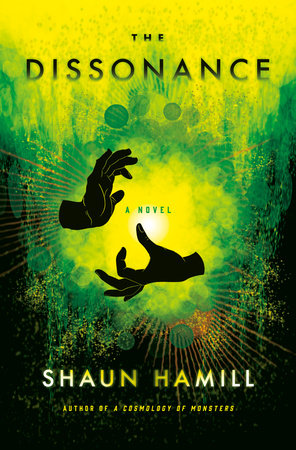
The cover for The Dissonance.

SH: Actually, it’s the opposite! I worked hard to turn in a draft of The Dissonance at about 100,000 words. When my editor bought the book, she encouraged me to open up the world and story, and we ended up adding almost 50,000 words to the novel. Just like the cuts were appropriate for Cosmology, I think the additions ended up helping The Dissonance. The early drafts of the novel were very fast-paced—a little too fast. We needed to slow down (just a little) and give the characters time to breathe and feel between the action beats. We needed to show them having fun in addition to getting into trouble. The resulting novel is almost 50% longer than Cosmology but I have yet to hear anyone complain about the word count, so I think we got it right!

RU: Before we wrap up, are you working on anything new and spooky right now? And do you have any exciting future plans?

SH: I just turned in my third novel (which I can’t really talk about yet). It’s definitely on the spooky end of the spectrum. I’m also in talks for a fourth book (which I also can’t talk about), and have given my agent outlines for two possible other novels. So I’m going to be quite busy for the next few years! Hopefully I’ll be publishing more than once every half-decade from now on.

RU: Final question: what are some horror stories you’ve read recently that you’ve enjoyed?

SH: I loved Rachel Harrison’s latest novel, Black Sheep, and Clay McCloud Chapman’s What Kind of Mother. I’m really excited for Gabino Iglesias’s House of Bone and Rain. I haven’t been reading as much horror recently (because of the fantasy edge of The Dissonance, that’s been most of my reading), but I need to get back into it!

RU: I hope you do! It’s an amazing genre, after all. And thank you again for joining us once more.

If you’re interested in checking out The Dissonance, it comes out July 23, 2024 and is available for preorder from most retailers. And if you want to follow Shaun Hamill, you can follow him using the links listed below.

I hope you’re as excited as I am to read this book, my Followers of Fear. And until next time, good night and pleasant nightmares!

Photo by Pedro Figueras on Pexels.com

I’ve heard this term thrown about a few times since January, first in the new Scream movie and most recently in an analysis of a horror film on YouTube. “Elevated horror.” And the speakers, whether in in the Scream movie or in the YouTube video, made it sound like it’s a recognized subgenre of horror with its own staple of tropes and trappings. Like slasher and its killers and gore, or Gothic with its ancient, diseased settings and corrupting influence.

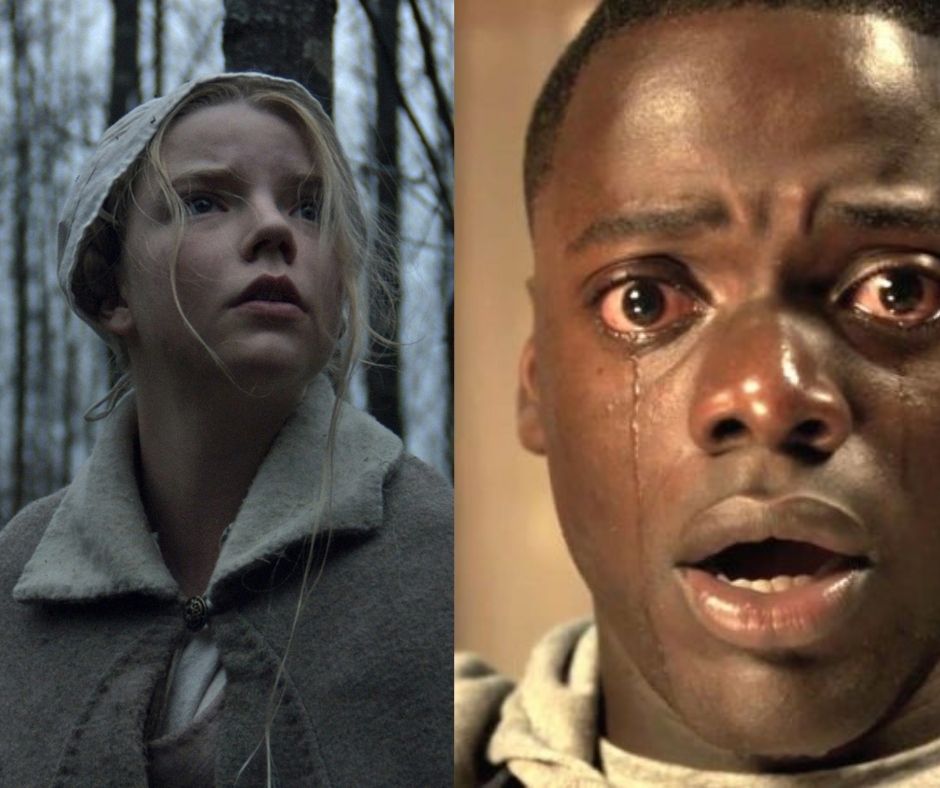
The thing is, it isn’t. Elevated horror isn’t an actual subgenre of horror. I’ve consulted with dozens of writers on this (thank you, Twitter and the Horror Writers Association Facebook group) and it’s not a subgenre. It seems like a subgenre of horror at first glance when you look at works referred to elevated horror. In movies, films referred to as elevated horror include The Witch, Babadook, It Follows and Get Out, among others: they’re horror stories that focus more on probing psychological drama, characters and metaphor than blood and gore or supernatural horrors. Often, there’s a powerful social commentary being presented through the narrative, such as Get Out‘s commentary on race.

In terms of literature, “elevated horror” might have all of these as well as flowery language. It might be almost called “literary horror,” because there’s an emphasis on wording the story nicely and making it just too dark to be called “literary fiction.” Examples include The King in Yellow by Robert Chambers, Interview with the Vampire by Anne Rice, The Deep by Alma Katsu, and A Cosmology of Monsters by Shaun Hamill.

And, most importantly, “elevated horror” can sometimes cross over into other genres, such as thriller, literary, or even comedy.

Can you really say The Witch and Get Out belong in the same subgenre?

Sounds like a subgenre, doesn’t it? But it’s not. The works called elevated horror are all as different from each other as roses are to tulips are to primulas. All flowers, but all different kinds of flowers. Let me explain: The King in Yellow and The Deep are cosmic horror mixed with deep psychological themes, The Witch is some cross between folk, religious and historical horror, and Get Out‘s searing satire makes it borderline horror-comedy. In fact, it was nominated at the Golden Globes under categories for comedies or musicals!

Yet all of them are given the designation of elevated horror. So, if it isn’t a subgenre, what is it?

The conclusion I’ve come to after speaking to numerous other writers is that elevated horror is actually horror films taking place in elevators.

Just kidding, that’s elevator horror, and the only example of that I can think of is 2010’s Devil.

No, “elevated horror” is a marketing term. And like all marketing terms, it’s directed towards a specific audience. Who is this target audience? It’s people who normally wouldn’t check out horror because they fear it’s low class, dangerous, or degenerate. They may want to check out horror or be curious, but the stigma still attached to the genre keeps them from doing so. Either that, or they won’t check it out unless a work is given a specific designation.

Calling something “elevated horror” is basically saying, “This isn’t like other horror stories, where half-naked teens are voyeuristically killed with tons of blood and gore, or where supernatural entities menace children in sewers. No, it has nuance and social commentary! There’s psychology and drama and fleshed out characters! You can be respectable while enjoying this!”

In other words, it’s another way of something is high-brow. “There are no explosions and superheroes here. No aliens or elves. No star-crossed lovers up against the odds. Only real people having real life situations, or real people in situations that are absurd but it’s okay, because it says something important about society.”

I almost wish it was a subgenre. I might have found a home for my ballerina-meets-the-King-in-Yellow story already (still working on that, give it time).

Pinhead may not be from an elevated franchise, but that doesn’t make him or Hellraiser any less awesome.

And the problem with this marketing term is it’s misleading. By calling certain movies or books “elevated horror,” it’s labeling all other horror as “trash,” or at the very least “common.” Either way, the designation puts other horror stories down. And that’s a shame, because there’s such good horror out there. Dark Harvest, Kill Creek and Salem’s Lot aren’t high brow, but they’re great stories that thrill and can leave their readers up late into the night. Same with The Thing or the Hellraiser franchise: they may never win Oscars, but goddamn are they scary, and the latter has led to one of the most memorable characters in the slasher genre.

I’m not trying to put down the term. I’m just saying we should understand what it means, both for works designated as such and those that aren’t. And if it lets you enjoy horror, great. Just make sure to check out works that aren’t “elevated” and whose creators don’t really think or care if their work is called that.

Personally, I can see some of my work being called elevated, but I’ll just say that I was trying to write a fun story and wanted others to enjoy it as well.

That’s all for now, my Followers of Fear. After getting my thoughts on this topic out, I’m off to dream of beasties and ghosts. Until next time, good night and pleasant nightmares.

Today’s guest is an author who’s book, A Cosmology of Monsters, has been blowing up the horror scene since its release in September. I finished it last month, and found it to be an amazing read (see my review here). And I’m not the only one who liked it, because Cosmology ended up becoming a nominee for the Goodreads Choice Awards Best Horror (and yes, I am jealous). So, I’m very excited to have the author today. Hailing all the way from across the Internet, I bring you Shaun Hamill!

Rami Ungar: Welcome to the blog, Shaun. Tell everyone here a bit about yourself and about your novel, A Cosmology of Monsters.

Shaun Hamill: I grew up in the Dallas-Fort Worth Area, and got my bachelor’s in English from the University of Texas at Arlington. In my early 30s I attended the Iowa Writers’ Workshop and got my MFA. I wrote most of A Cosmology of Monsters there.

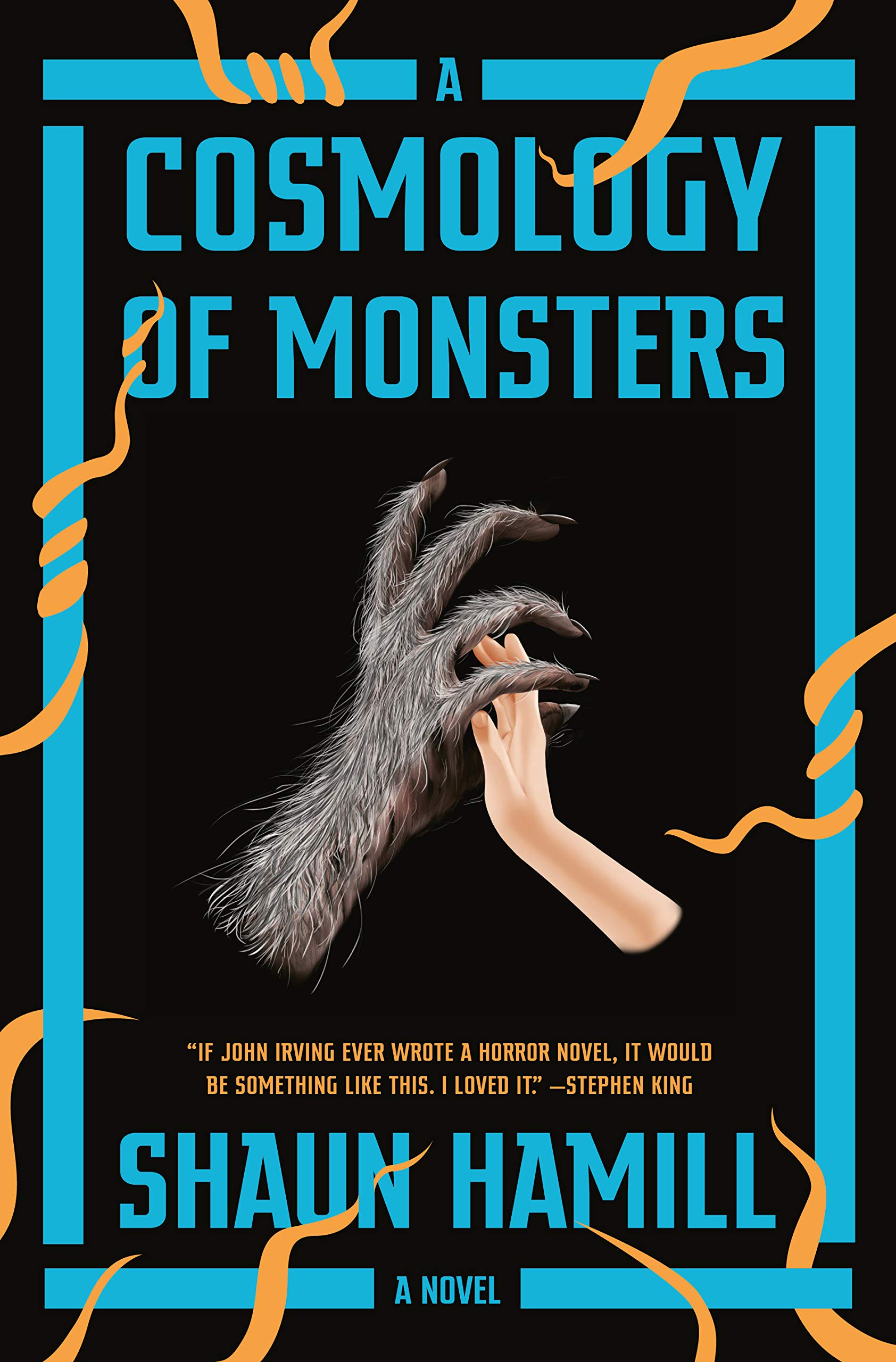
A Cosmology of Monsters is a literary horror novel about a family running a haunted house attraction in the suburbs of Fort Worth, Texas. Narrated by the youngest child, Noah, the novel tracks the family’s fortunes across 50 years, and explores the monsters—both metaphorical and literal—that haunt them. It’s a generational saga, an homage to Stephen King and H.P. Lovecraft, and most importantly, a story about the ways love can either save or damn us.

RU: How did the idea for Cosmology come into being?

SH: This novel was born out of the wreckage of a couple of projects. The first was a sprawling tragi-comic saga in the style of John Irving or Meg Wolitzer, about a family operating a youth hostel in Taos, New Mexico. The second was a short story about a married couple breaking up as they tour a haunted house attraction. Neither piece quite worked, but one day while I was walking my dog, the two ideas put themselves together and I realized that my epic family business novel should be about a haunted house, not a youth hostel. It would give me a chance to merge my taste for character-driven literary fiction with my love for the darker, more eerie tones of the horror genre. Noah’s voice came to me right away, as did Eunice’s suicide notes and the romance that opens the book. The rest of it came organically, as I followed the story where it led, exploring my characters and their ever-darkening world. I was perpetually surprised by what I found. I would never have been able to plan a book like this, and I hope some of that dark joy of discovery carries over for the reader.

RU: What was the research and writing process like for Cosmology? And what challenges did you face in writing the book?

SH: Research was a big part of the process of writing Cosmology. When I started the book I had only read a few Lovecraft stories, and I hadn’t ever worked behind the scenes of a haunted house. I read all of Lovecraft’s fiction, and also spent time reading scholarship about his life and writing. For the haunted house parts of the book I relied on my own knowledge as a patron of the attractions, and a tour of an out-of-season haunted house that I took in my late twenties. I also watched documentaries about haunted attractions, listened to podcasts, lurked on message boards, and so on.

The biggest challenge of writing this book was the revision process. My first draft weighed in at 220,000 words, and the published version is just over 100,000 (my agent insisted that the book would be tough to sell at its initial length). Figuring out which threads of story could be condensed or severed altogether took a long time, as did rewriting the entire ending to make it smaller and more meaningful to the characters. It forced me to carefully consider my characters and themes, and brought them into sharp focus by the end of the editorial process. I’m very pleased with the result, and humbled by how much better my agent and editors made my book.

RU: Haunted houses, both literal attractions and metaphorical haunted homes, are a big part of the book. Are you a fan of haunted houses yourself?

SH: I’m a big coward when it comes to haunted houses. I used to have a group of friends that I went with when I still lived in Texas, in my mid-to-late 20s, but I would never go to one by myself, and haven’t been to one since 2012 or 2013. I’ve always been fascinated by them from a distance, though. I’ve wondered about the people who work there, what it’s like to have the scenes of your life play out against such a fantastical backdrop.

RU: If you could design a haunted house attraction, what would it be like?

SH: The attraction in the book, The Wandering Dark, is exactly my idea of the sort of haunted house I would like to run. If money and practicality were no object, I would love to do a haunted hotel—something more immersive and stranger than the typical spook-a-blast attractions in the genre.

RU: Do you see yourself revisiting the world and characters of Cosmology someday in a future story?

SH: I go back and forth on this question. Some days I think it would be fun to continue the story of the Turner family, and I have done some brainstorming for a sequel. Other days I think that a sequel would lessen the impact of the book’s final pages and cheapen it. I guess I’ll wait and see if there’s a market for a sequel and then decide. Even if I never write a direct sequel, I will probably find ways to weave elements of that world into future stories.

RU: What is it about horror in general that attracts you to it?

SH: I have a melancholy outlook on life, so horror fits my disposition. I’m not attracted to the gore or violence, but rather the atmosphere of dread and dark wonder that I find in my favorite horror stories. I don’t like being terrorized. I like being creeped out. I love the idea that there is something beyond the known world, dark secrets to discover. It’s the sort of thing that Lovecraft does in his best work, as does Thomas Ligotti. I also love character-based horror, like Stephen King writes. I love stories about good people struggling against supernatural threats. It’s an effective way to illuminate the strength of the human spirit, what’s most noble and wonderful about people.

RU: Are you working on anything now? Do you have any future writing plans?

SH: I recently finished a rough (and I mean very rough) first draft of a new novel. I have an outline for another, different novel with my agent. We’re trying to decide which project to pursue first. My hope long-term is to keep doing what I’m doing now—writing books and publishing them and (hopefully) getting paid to do so. Fingers crossed COSMOLOGY won’t be the only thing I get to publish!
RU: What advice would you give to other writers, regardless of background or experience?

SH: Write a lot and read a lot. Read deeply in your own genre, but also outside of it. Join a writing group or take a writing class if you can afford it. If you’re able, get on the reading committee for a journal or prize—I learned more from reading the slush pile for Carve magazine and the Katherine Anne Porter Prize than I ever learned in a classroom or working alone at my own desk.

RU: And finally, if you were stuck on a desert island for a while and could only bring three books with you, what would you bring?

SH: Songs of a Dead Dreamer and Grimscribe by Thomas Ligotti, The Collected Stories by Lorrie Moore, and Three Novels by Stephen King (an omnibus of Carrie, ‘Salem’s Lot, and The Shining).

RU: Good choices. Thank you for joining us, Shaun. I hope we can do it again someday.

If you’d like to find out more about Shaun Hamill, you can find him on his website and on Twitter. You can also find A Cosmology of Monsters on Amazon if you’d like to read the book (which I highly recommend). And if you are an author with a book coming out soon and are possibly interested in having an interview, hit me up on ramiungar@ramiungarthewriter.com, and we’ll see what magic we can conjure.

That’s all for now, my Followers of Fear. Until next time, pleasant nightmares!
I heard first heard of Mr. Hamill and his novel after I came across his article on contending with the legacy of HP Lovecraft as a writer. The idea of his book interested me, so I put it on my reading list. Took a few books to get to it and a few weeks to get through it, but I read A Cosmology of Monsters from front to back. And with that out of the way, it is my pleasure and duty to review the book.

A Cosmology of Monsters follows the Turners, a family living in North Texas and running their own haunted house, The Wandering Dark. Told by the youngest member of the family Noah, the story begins with the meeting of his parents in 1968 and follows them as various tragedies befall the family throughout the decades, as well as the threat following the family through the years and generations.

Cosmology is literary horror at its finest.

Told in the style of Middlesex by Jeffrey Eugenides (which I’m told was a major influence on Cosmology and which I recommend as a read on its own) Noah Turner narrates how his family began, and through the decades the many hardships his family endures. It’s an engrossing way to tell the story, because every decision has far-reaching consequences on the Turner family. You also get a deep understanding of each character through this storytelling method, what their motivations and their troubles are, and how those play into the events of this story.

Noah himself is a fantastic narrator. He’s talking from the perspective of a grown-up looking back over fifty years of history, but he does a good job of calling up his childhood feelings of loneliness and isolation, of feeling alienated and not understanding why the people around him do what they do.

I also like how weird it can be sometimes (makes sense, since it’s me). The supernatural aspect of the story is very slight at the beginning and only gains prominence as you move deeper into the novel, and as you do, you find yourself with more questions than answers. Conventional monsters do play a part, so to speak, but there’s a lot more going on behind the scenes and it gets weirder with every layer revealed. It took me a while after I finished the book to really understand what all these revelations meant, and even now as I write this, I’m only half-certain I understand what everything meant.

All that said, there were things that I had issues with. There’s a section in the book where, instead of black letters against a white page, it’s white letters printed on a black page, and for some people, especially for people with certain eye issues, that might make things difficult to read (and why I don’t use my blog’s original theme anymore). And if you’re looking for a more typical horror story, with monsters popping out every five seconds or the supernatural aspect a constant presence in the story, this won’t be your kind of novel.

That being said, A Cosmology of Monsters is a mesmerizing read and one of the best books I’ve read this year. On a scale of 1 to 5, I’m giving it a 4.8. Grab your flashlight, and prepare to walk through a house haunted by the tragedies of the family. You won’t want to leave till you get to the very end.

And then you’ll want to think about both the deeper meaning of the book as well as what it’d be like to create your own haunted house attraction. Or is that just me?