Author Archive

Hard to believe it’s been a whole year. So much has happened since that early morning, but yes, it’s been 365 days. And Video Rage, published and out in the world, is a year-old.

Now if you don’t know, Video Rage is the second book in my Reborn City series, a science-fiction trilogy revolving around street gangs in a dystopian future, specifically the Hydras in West Reborn. The story is told from the point-of-view of Zahara Bakur, a Muslim teenager who is forced to join the Hydras after the deaths of her parents, and finds herself wrapped up in a world unlike anything she’s ever experienced before. It’s a story about prejudice and violence, drug addiction and loss, as well as how far we will go to take down an enemy and how we can overcome what others think of us and what we think of ourselves.

I released the first book, Reborn City, in college after working on it for several years starting in high school. And while it hasn’t gotten the same response as The Hunger Games (I blame my poor marketing skills), it has gotten some very decent reviews. Here are a few:

It’s a neat exercise in trying to see through the eyes of someone different from oneself. It incorporated a lot of fly comic-book-esque tropes. A good beginning effort of an up an coming new author who has some cool ideas to explore.

–Amazon Customer

This is an extremely commendable effort by a new young writer, whom I believe we will see much more of in the years ahead. Rami Ungar’s vision of a frightening dystopian future is peppered with those elements that make us all human. There are quite a few surprises in the book, and I am anxious for the next volume in the series to be released.

–Marc M. Neiwirth

As a reader who does not read books in this genre, I must admit that I could not put down the book. I attribute this to the talent of the author. I am looking forward to reading the next books published by Ungar. I recommend this book to readers who enjoy action with features of supernatural powers and sci-fi.

–ENJ
Reborn City

Very positive. And while it hasn’t receive that many reviews yet, Video Rage has received some good ones too:

I was really looking forward to the continued journey of the Hydras and Rami was able to produce. Zahara is my favorite character and her development from an insecure girl into a strong woman came out clearly in this book. Some other character development was really unexpected but the book moves at such a fast pace that it didn’t hold me up at all. The story line is quite imaginative and, as usual, there isn’t much predictability there. I think that is what draws the reader in – you just need to keep going to find out what weird twists and turns happen next! Looking forward to continuing this journey with Rami and the Hydras.

–Michael

From what I understand, this is book 2 in a series. That being said, I had expected a cliffhanger of an ending. I’m not a fan of cliffhangers, but in this particular book, I think the author did an excellent job of finding the balance between making the story stand complete within itself while ending the story on a note that let you know another book was coming. Personally, the ending was one of the most intriguing ones I’d read in a long time. It didn’t leave you to figure it out for yourself (which is something I hate). The author let you know what was happening and why while leaving enough to be answered in a future book.

That all being said, the overall book was an enjoyable read. I especially liked that a former bad guy turned things around and redeemed himself. Those types of characters are one of my favorites. I had hoped in Reborn City (Reborn City series Book 1) that he would, and it was very satisfying to see that fulfilled. I also liked the underlying theme in the novel that what the media tells people through the major outlets is slanted by government agendas. In this book, it was up to the main characters to find an alternative way of getting the truth out.

I think this book is best read after reading Reborn City (Book 1) because it really helped to have the background on the characters, and I think this book is far more effective if you have the foundation Book 1 gives you. The science fiction geek in me really loves the genetic aspect. And so that I don’t spoil anything, I will say the real bad guy in this series does a nice twist in this book along that line.

–Ruth Ann Nordin, author of  The Reclusive Earl
Own both books today!

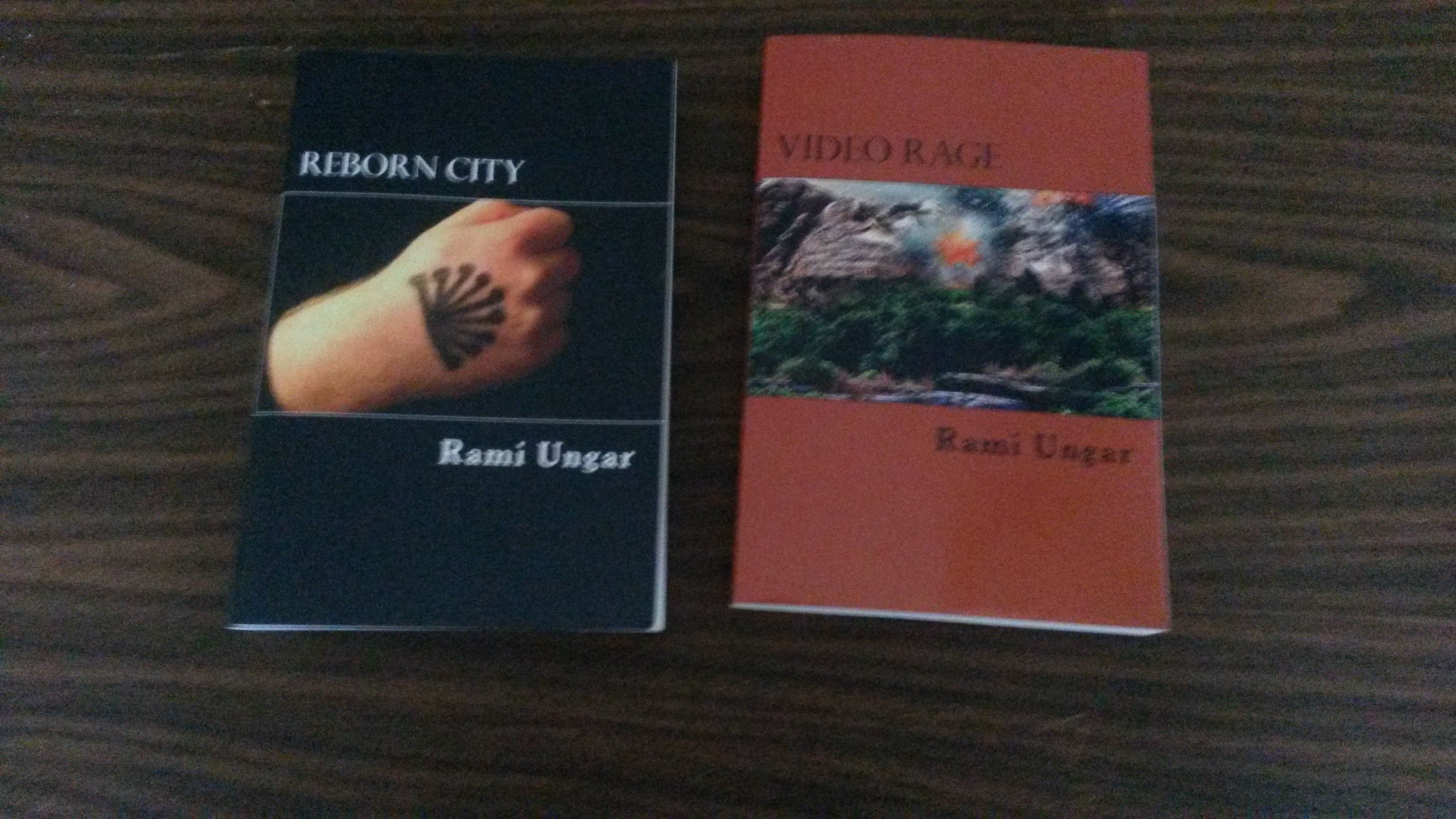
So yeah, things are looking good for this series. And hopefully with time and a few plugs here and there, as well as continuing to publish stories, it might get a larger following. In the meantime I’m working on the final book in the series, Full Circle, and hope to have it done later this year. When will it be released? We’ll just have to wait and see.

In the meantime, if any of this has piqued your interest in either book in the series, I’ll leave the links below so you can check them out. And if you do decide to read the books, make sure to leave a review to let me know what you think. Positive or negative, I love feedback and it’ll help me out in the long run. Plus, reviews allow others to find my books, and I would greatly appreciate you helping me do that.

That’s all for now, my Followers of Fear. I’ve got another anniversary coming up soon, so make sure to check that out. Until then, happy reading and happy June, everyone. It’s certainly one of my favorite months.

Reborn City: Amazon, Createspace, Barnes & NobleiBooksSmashwords, and Kobo

Video Rage: Amazon, Kindle, CreatespaceBarnes & Noble, iBooks, Smashwords, and Kobo.
Me these days.

On May 31st, 2016, I moved out of my father’s house and into my own apartment, a little over a week before my twenty-third birthday. Age 22 was a year of struggle and dark feelings for me. True, I spent four awesome months in Germany, but the rest of that year was spent trying to find a job, clashing with my sisters in my dad’s house, and generally feeling like everyone was looking at me like I was doing something wrong or wasn’t trying hard enough every day I didn’t come home with a job. Plus my back problems were getting worse (truthfully, I could’ve done more to take care of that), and that just made everything else worse. When I finally got a job and was able to move out on my own, I felt like things were finally turning around for me.

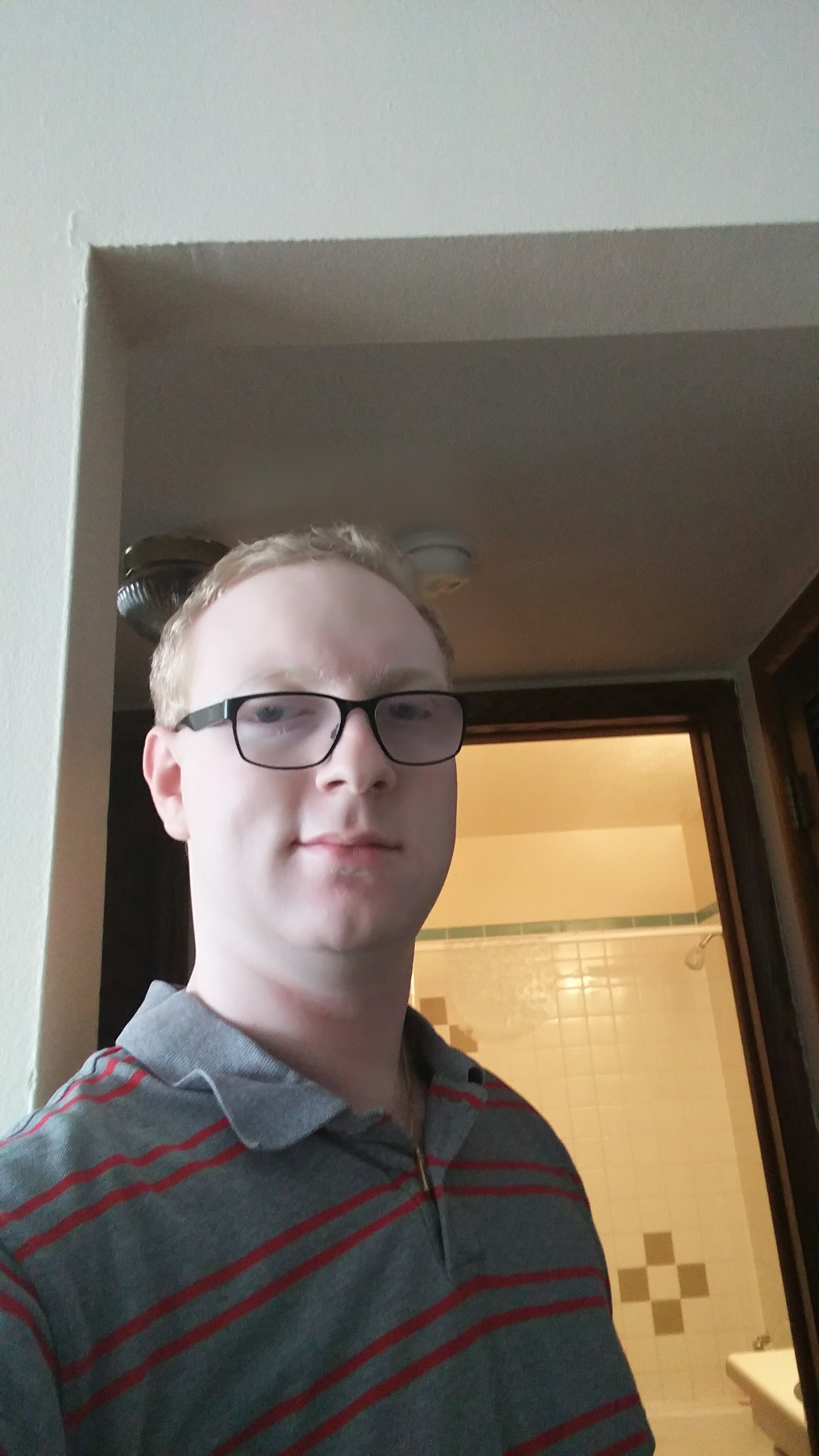
It’s now May 31st, 2017, an entire year since I moved out, as well as nearly a year since I turned twenty-three. And honestly, Age 23 has been awesome! I’m in a very good place right now, possibly the best place I’ve been in my life.

For one thing, I have a job. A good job, nay, a great job. And even when I’m tired of being in the office for forty hours a week, I love it. Now for those of you who don’t know, I work in a sort-of HR position with a large supply organization with a regional HQ here in Columbus. I say sort-of because we go by another name and we answer to the regional head rather than the head of HR (it makes more sense when you’re in the organization). Anyway, our organization hires and employs a large number of people with disabilities, so my job mainly involves making sure they are able to continue working with us. My main duty is assigning sign-language interpreters to interpret for deaf/hard-of-hearing employees at meetings or events. I also help out with getting employees with other disabilities accommodations, including assistive technology, specially-made chairs or desks, and even work-from home agreements. It’s a pretty rewarding job, and the fact that I’ve got good pay and benefits for it is great. Not only that, I’m surrounded by a great team of people who are not only nice and fun to work with, but they know I’m not always good with social situations, and can help me translate when I’m confused or if I make a mistake. Do you know how great having that is?! My job’s almost a golden goose!

Another thing that’s really nice is I have my own apartment! I haven’t had a space of my own since sophomore year of college, and even then I had to share the TV and living room with God knows how many other students. Now, not only do I have to share entertainment devices with people, but I have managed to create a happy space for myself. Every day I can chill and be my normal eccentric self, and believe me when I say I do chill and be my normal eccentric self (this sometimes manifests as bouts of singing, thinking aloud without worrying who might hear, and the occasional magic portal manifesting at my will. Or do I imagine that?).

Not only that, but I have nearly complete control over my space! I decide where thing are stored or stacked, what furniture I have, and what decorations I keep around the apartment. This is really big for me, as even when I was in college, I was restricted by the dorm or had to work with my roommate on stuff like furnishings and decorations. And at my parents’ homes, my interior designing was restricted to my room and to what I could get permission for. What you put in your space can say a lot about you, so when I’ve had the opportunity and the means, I’ve put in what I like. A couch, an anime figurine (or several), a plastic raven bust, a painting of a witch, that sort of thing. It really helps me feel at home here, and shows people my unique style (which sometimes scares people, but what do I care? I am who I am).

There are other things that have contributed to how good my life is now. The two up above are the big ones, but these definitely help: I’m eating healthier now, and I’ve lost a ton of unnecessary weight because of it; my back problems have improved, in part due to my lost weight; I’m slowly but surely building up a savings account; and my readership is growing slowly but surely as well, both on the blog and with my books.

So yeah, life is good for me right now. And with a bit of luck, life will continue to get better. And if you’re going through hard times right now, just remember that things don’t last this way forever. They can and will improve. Mine certainly did.

That’s all for now. Expect another post tomorrow morning. And until next time, my Followers of Fear, pleasant nightmares.

If all goes as planned, this post is coming out on Memorial Day in the United States. It makes perfect sense to do so: Memorial Day commemorates the fallen soldiers in American history, dead from wars and conflicts and attacks and so much more. And the funny thing is, a significant number of those dead would probably have died of old age an not on the battlefield if it weren’t for the fact that at some point, someone couldn’t live in harmony with someone else, and the result was conflict.

Don’t get me wrong, I support my nation’s military, and every person brave enough to put themselves in harm’s way for the sake of their loved ones. But it seems to me that harmony among humanity is a concept that died a long time ago. Or maybe it never even existed, because if you go back through human history, harmony’s exact antonym, conflict, is seen everywhere. Heck, one of the major theories on the extinction of one of man’s early ancestors, Neanderthal, was that Cro-Magnon, killed or competed with them to death. And while not all conflicts today result in death, a lot of the time humanity as a species seems to be locked in a struggle with someone or something. Countries, political or religious beliefs, people, friends, family, even science and truth. It never ends, and increasingly, conflict erupts into violence. In fact, some people like that violence, and celebrate it.

It’s enough to make you wonder if maybe, despite nearly every person on Earth saying that at some point in their lives that they want world peace, conflict is the natural state of humanity, some holdover from our evolutionary past in trying to survive predators with sharp claws and teeth that we didn’t have and kept because after we managed to fend off predators with weapons, we found ourselves fighting other families, clans, and tribes for resources! Our species is so used to conflict, we’ve become too biologically wired to live without it.

And if that’s true, then honestly it’s sad. Because when humanity and its members aren’t engaged in some form of conflict, we actually make some pretty awesome stuff. Ever listened to a tune on the raio or on YouTube and felt your heart lift? Or did you ever see a piece of art in a museum and it filled you with a sense of wonder? Or a movie made you want to go out and do something amazing? Like build something that will change how we use energy, or a new medical treatment, or even your own work of fiction?

Why do we waste so much time living in conflict with each other, and not devoting ourselves to peace, harmony, and creation?

I honestly don’t know. I think sometimes, in the world of fictions, both in the ones I read and write, I seek out those answers. Horror is full of conflicts of a unique sort: creatures, both human and otherwise, that are entirely adverse to harmony and thrive on the conflict they cause. In that sense, the protagonists are often the force of harmony come to right things. Will I ever find the answers? I don’t know that either. But I honestly hope that I can.

Because despite the fact that this species sometimes makes me wish I really was a demon in human form, I think it can still go out there and do great things when its members put their minds to it. And perhaps we can stop acting like children or like a bunch of rabid animals set into a cage and actually work together. Perhaps, without giving up cultural identities or any of the other things we use to define ourselves in our daily lives, we can still find that elusive harmony that we should all live by.

And I’d like to close this post with a slightly-modified quote from HP Lovecraft, which oddly enough, seems to fit this discussion very well. Or at least, it does to me:

That is not dead which can eternal lie,
And with strange eons, even discord may die.

I asked in this post if harmony, the concept and the practice, were dead. But according to this quote, modified though it is, perhaps we can end the clashes that define our species, and find some way to resurrect harmony and make it a permanent part of ourselves. And maybe I’m just blathering on and on about something silly. But maybe, just maybe, I’m giving the people who read this, and myself, an impetus to change things for the better.

Thanks for reading this, my Followers of Fear. Provided nothing comes up to distract me, I’ve got another two posts coming out on Wednesday and Thursday this week. Keep an eye out for those. And until next time, as always, pleasant nightmares.

Think of every childhood monster you thought might be in your closet or under your bed or anywhere else a monster might hide during the day. What did your child-self know about the monster? Probably only that it was big, that it only came out at night and wanted to eat/kill you, and that maybe only the nightlight kept it away. Perhaps there were certain details, like fur or scales or whatever, but that was the extent of it. You didn’t know if the monster had any weaknesses, or where it came from, or why it chose your closet/bed/whatever. The monster just was, it wanted you, and you were only able to keep it away during the day. And it terrified you.

Now perhaps as a young child, you simply weren’t capable of thinking that any of that other stuff might exist for your monster. But if you confronted a creature like that as an adult, a monster where all you knew about it was its location, its active period, and its diet of humans, but nothing else, you’d be freaked. Because a monster is scary, but a monster that you don’t know how to fight is even scarier.

And that can be applied to nearly any antagonist in horror. The less is revealed about it, the scarier it is.

Case in point: vampires. When I first learned about vampires, my knowledge of what they were was limited to that they came out at night and didn’t like the sun, that they drank human blood (which could sometimes create other vampires), and that they could turn into bats. For a few years, that was all I knew about vampires, and they terrified me. If I ever came upon one, the only recourse I had was to try and survive till daylight, or I was dead! But when I found out that vampires were susceptible to stakes, garlic, crosses, and required invitations into private residences, they became a little less scary. Why? Because they were easier to deal with, and things that are easy to deal with are less terrifying than those that aren’t easy to deal with.

Contrast that with many of the works of the manga artist Junji Ito. I’ve had the opportunity to look at a bunch more of his work since reading his masterpiece Uzumaki (read my review of the manga here, as well as my review of the film adaptation here), and his works rarely tell us the hidden history or how to deal with the monsters featured within. He only gives us enough of a look to get the modus operandi of the monster, and then weaves the story around that. One of his works, Tomie, revolves around an immortal girl whose beauty often drives people to murder her/for her, and who keeps coming back to life no matter how much you kill her. We never get a full explanation of how she is able to do that. Is she some sort of genetic aberration? An undead creature brought back by a grudge? Ito doesn’t tell us, and forces the reader to wonder at the possibilities, as well as how much is being kept from us about these mysterious monsters.

Tomie, one of Junji Ito’s signature characters.

And that is terrifying. And Ito is well aware of that. He knows that the less you know about an antagonist, the more possibilities there are, and that makes the horror more effective. And not just Ito: HP Lovecraft, Stephen King, Adan Ranie, and other horror authors, including me, are well aware that adding a bit more mystery to our horror stories, and not letting the readers see beneath the proverbial hood of the monster, heightens the fear the reader will feel.

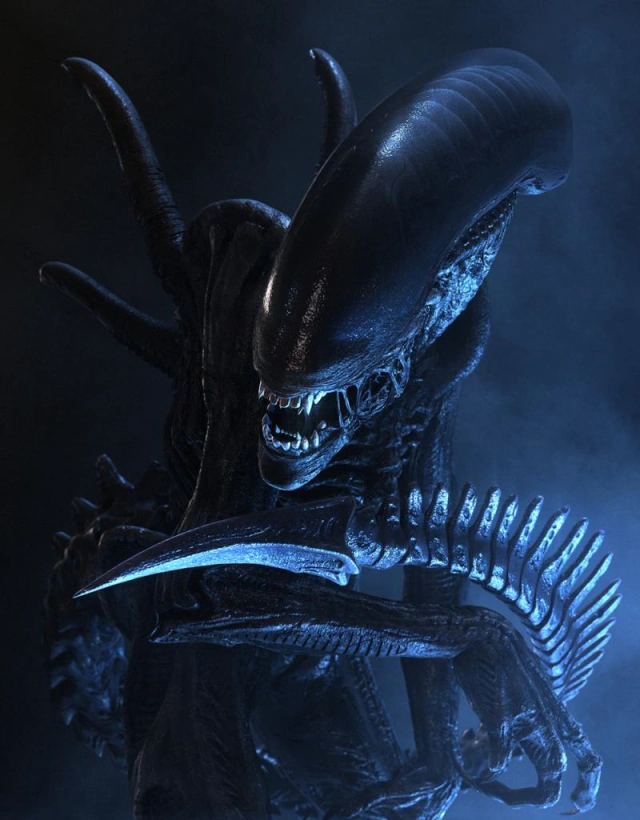
And this is the main reason why I was disappointed with Alien: Covenant this past weekend, as well as the catalyst for this post. Granted, that movie had a number of problems, but one thing that Covenant and its predecessor Prometheus both do is try to give an origin story to the films’ real stars, the Xenomorphs. When it comes to antagonists in horror getting origin stories, it’s on a case-by-case basis, and in the case of the Xenomorphs, I’ve actually come to dislike the idea of giving them an origin story. Part of their power is that, even for man-eating monsters, they’re so divorced from what humans perceive as normal. In fact, the name Xenomorph means “strange form,” and it’s that strangeness that makes them so terrifying and iconic.

So when Prometheus and Covenant try to explain them to us in origin stories, they put them in contexts that we can understand, robbing Xenomorphs of what makes them so amazing. Granted, it’s a question everyone who’s seen the original films has asked at some point: “Where do the Xenomorphs come from?” But it’s not a question that has to be answered. The fact that they had such a shady origin to them was part of their mystique, causing our minds to wander and wonder if maybe, somewhere in that until origin story, there’s a dark truth out there waiting to make us wet our pants. And now, that sense of wonder is gone, because these movies have given us an origin that, rather than being dark and terrifying, is at times confusing and at other times lame.

What I’m trying to get at is that sometimes–not all the time, but a significant portion of the time–you don’t need to reveal everything about your monster. Sometimes, keeping some mystery around adds more to the story, and keeps the source of our terror effective. And in a horror story, keeping things terrifying is one of the most important aspects of horror storytelling.

One of the nice things about being a writer that doesn’t often get talked about is that when a friend/colleague of yours has an achievement, you get to be part of the celebration. Which is why I’m very excited to invite my friend and fellow novelist, the wonderful Dellani Oakes, back to the blog for another interview. She’s got a new book out, Maker, Book 3 of the Lone Wolf series, and I’m looking forward to asking her some questions about it.

RU: Welcome back, Dellani. Now, you’re coming out with Maker, the third book in the Lone Wolf series. Tell us a bit about the series in general.

DO: It’s set in the distant future in the year 3032, and begins on a small mining ship in deep space. Marc and Matilda are working there when something goes horribly wrong. Someone has brought a load of Trimagnite on board. This is a semi-liquid ore which is highly toxic and extended exposure will cause madness and death. Enter the Lone Wolf, Wil VanLipsig. He’s sent to collect the ore, but finds himself highly attracted to Matilda Dulac, who proceeds to aim a pistol at his head because he’s lying to her. Who can resist a woman like that?

Unfortunately, Commandant John Riley of the Mining Guild is determined, not only to discredit Wil, but do as much damage to the Mining Guild as he can. It’s up to Wil, Matilda and Marc to stop him before he brings his plans to fruition.

RU: What about your series would attract readers to the characters and story of the Lone Wolf universe?

DO: Lone Wolf isn’t a Star Wars or Star Trek type universe. It’s unique, I feel, because the characters make it so. There are insectoid characters, giant mercenary cats, sentient ships and AI’s housed in special rings. The main character, Wil VanLipsig, is an 86 year old Colonel in the Galactic Marine’s black ops. Funny thing, though, he looks like he’s in his mid-twenties. The Marine doctors played genetic games with him and a few other select people, stopping their aging process. That doesn’t begin to describe what else was done to them.

RU: What can we expect from your new book, Maker?

DO: The Maker brings in a variety of new characters, as well as following the original ones from books 1 & 2. They discovered in Shakazhan – Book 2, that their planet, Shakazhan, is an artificial construct. What they don’t know is that there is an entity buried deep within the planet, who has many secrets and he’s loathe to part with them.

RU: Ooh, an entity. How HP Lovecraft! Next question: you normally write straight-up romances. Did you find it challenging to change to a sci-fi setting?

DO: I really don’t find it challenging switching genres. There are elements of romance in the sci-fi series, though they are minimal. My original idea was to write futuristic romance, which I suppose the first book could loosely be labeled, but the romantic elements fade out and the action takes over. I love constructing a whole new look at the universe and those in it. An author can do so much with sci-fi that can’t be done with more conventional genres. I had a great time thinking up new planets and races, giving them names and characteristics. Sci-fi is a blast.

RU: It most certainly is. And since it is a blast, here’s a question: how long do you see the Lone Wolf series going for?

DO: There are 6 in the series – plus 1 finished sequel, though at least 2 others are in the works. There is also a companion book, Lone Wolf Tales – A Lone Wolf Companion, which is a collection of 9 short stories and novellas associated with the series. I used them to explore various characters and incidents from the series.

RU: Sounds like a very involved sort of universe. And speaking of universes, what were your biggest influences in writing this series and crating this universe?

DO: Years ago, when I was newly married, we played a role playing game called Traveler. This was rather like Dungeons and Dragons, only sci-fi based. Friends of ours, and I, participated in a game my husband led and the characters of Wil, Matilda and Marc were created. I was going to chronicle their adventures, but it soon became apparent that the characters didn’t want that. They took off running in another direction and I just hung on for dear life. Aside from the character names, nothing remains the same.

RU: I notice characters do that. It’s very hard working with them sometimes. So, you’ve written romance, sci-fi, historical romance, and even some YA. What genres are you planning on diving into next?

DO: I’m not sure where I might venture next. I’ve been challenged to write a murder mystery, which I did (with a heavy romantic tone—what can I say, I love romance!) There are so many genres out there, permutations of one another, it’s hard to pick. One thing I’m fairly certain of, I won’t write horror. I scare easily and I usually write late at night and go to bed after everyone else. I don’t need to see ghoulies and ghosties in the dark!

RU: There goes that collaboration I was going to ask you about, LOL. Now Dellani, you release chapters of your books on your blog. How has your readership reacted to that?

DO: People don’t comment, for the most part, but I am finding more folks following and liking my stories. That seems positive to me. I wish people would comment and let me know what they like (or don’t) but I’m pleased to see new avatars on the page. I hope they enjoy reading the stories as much as I enjoy writing them.

RU: Yeah, the commenting thing affects everyone. Final question: what’s next for you and for your writing.

DO: I have a lot of unfinished novels, and I’ve set myself a goal of finishing one a month. I’ve been doing that for the last 2 ½ years, and am pleased with my progress. My goal is to get more of them published, but getting covers, paying copyrights, and all the other fees associated with self-publishing books, adds up quickly. I plan to send another book in to Tirgearr Publishing, who has already released four of my books. I’m working on getting a good, clean edit before sending it in. I have also begun preliminary edits on The Kahlea – book 4. There’s been action up to now, but this book takes the reader and knocks their socks off. More new characters, action, battles, and a little romance. I finished reading through it recently, and it left me breathless. I’m hoping it will do so to the readers as well.

RU: So do I, Dellani. Thank you for joining us.

If you’d like more from Dellani, please check out her interview here. Also check her out on her blog, on Amazon, on Facebook, and on Twitter.

And if you’d like to be interviewed on my blog, check out my Interviews page, and we’ll see what magic we can work.

That’s all for now, my Followers of Fear. Until next time!

If you’ve been following this blog for a while, if you know me in real life, or you read the things I post on my personal Facebook page, you know that I can be a funny guy. I love a good pun, a funny story, or a well-done prank. Or all three, if it can be done. And I try to insert humor into many facets of my life, much to the enjoyment of some and the exasperation of most others. Where do I get this reverence for humor? I’ll tell you: when a mommy and a daddy really like each other, they–

I’m sorry, but my lawyers tell me I’m not supposed to go into that. Let’s just say it might be a family trait, and leave it at that.

But guess what aspect of my life doesn’t see that many laughs? Surprisingly, not my writing. I actually don’t tell a lot of jokes in my stories. Yeah, imagine that! I don’t put jokes in my horror stories. In fact, my funniest story so far may be Video Rage: it’s got protagonist Zahara making a jab at male lead Rip’s manhood, and at a later point, main cast member Kevlar makes some bondage jokes when speaking to a Native American healer. That’s it.

Okay, now some of you non-horror fans may be reading this and be like, “Isn’t that par for the course? It’s horror.” But that’s the thing: just like how not all horror authors are dark, pessimistic creeps, neither are all horror stories devoid of humor. Stephen King, one of my biggest influences, often finds way to insert humor into his work. Ever read his novel Needful Things? That book is chock-full of comedy! There’s even a plot thread where two housewives buy objects from the antagonist that they believe are connected to Elvis Presley, and they start having hallucinations that the objects let them have a sexual/romantic relationship with Elvis! It’s freaking hilarious! And that’s just one example out of many.

But not just King: a lot of other horror stories make use of humor. One of my favorite Dean Koontz novels makes use of witty observations and funny turns of dialogue to great effect, adding a bit of levity to a very dark thriller. Buffy the Vampire Slayer often has tons of jokes and funny lines. Many slasher films from the 80’s and 90’s have funny moments (hell, Nightmare on Elm Street is often as funny as it is dark). And there are so many more examples of horror stories which sprinkle comedy in to alleviate tension and fear for a few seconds before starting it up again.

So why doesn’t my work have more laughs? Well, there may be a couple of reasons for that. One, in almost Freudian fashion, may stem from a childhood incident. And by childhood, I mean high school, but at this point in my life, the only difference to me is height and hormones. Back before Twilight poisoned the vampire genre, I tried my hands at several vampire stories. One of them was an epic, multidimensional vampire story, which for a while I was getting help with from an English grad at OSU my dad put me in contact with. During one email session, he noted that the story had a lot of humor in it. Every other line was a joke, and he said as a wishful horror writer, it should be more serious. I took that to mean no jokes, and cut the humor from that story in a snap. You may be thinking, “That doesn’t sound like that big a deal!” But to me, it may have been a huge deal. In fact, that memory is what I keep coming to when I think of where humor stopped showing up so much in my writing. You could say it forever scarred me (cue dramatic music!).

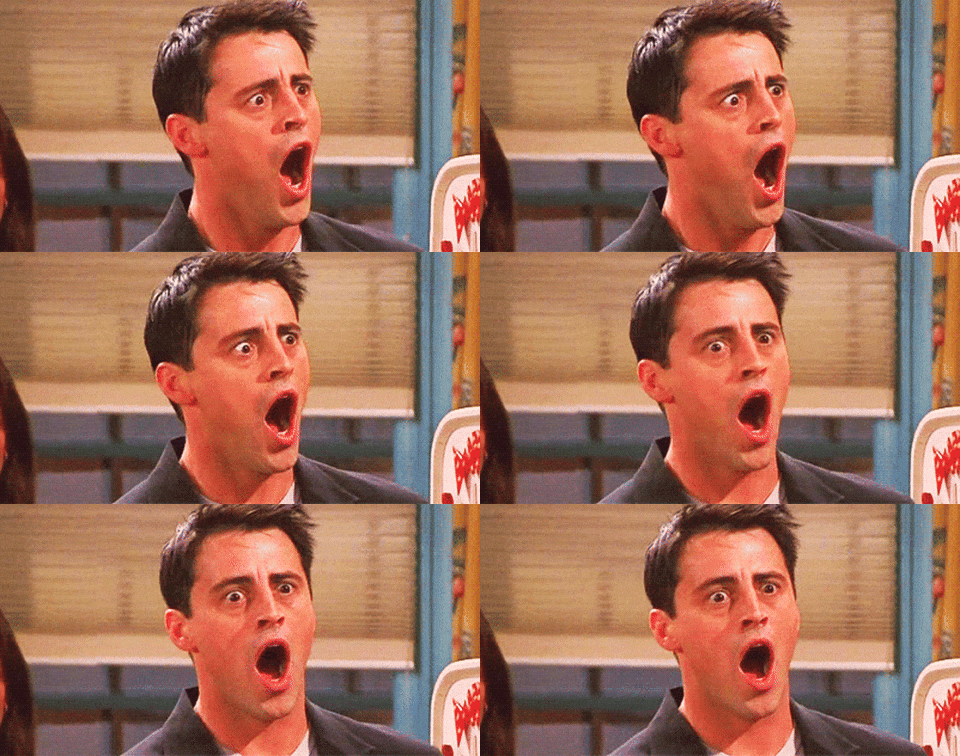
Another reason why I might not write that much humor into my stories is because of the type of humor I excel at. You see, my humor tends to be at its best when it’s situational. It’s like I’m living in a sitcom, and every word spoken has the opportunity for a funny line if I know where to look. That’s my mindset. My favorite jokes to pull on people usually reflect that. You’d be surprised how many times people have asked me how I’m doing, and I tell them, “I’m pregnant.” The reactions! They look something like this:

“YOU’RE PREGNANT?!!”

That being said, being a situational humor guy doesn’t always translate well to my fiction. I’m a plotter, which means I plan out the entire story from beginning to end. Keeping such dark stories in mind, from beginning to end, you don’t have much room to think of funny moments to add. You’re more likely thinking of the sad past of the protagonist and the arc they’re going through with this horrifying story.

Or it could just be the old adage, “Tragedy is easy, comedy is hard,” and all the stuff in the last couple paragraphs is a bunch of bullshit. That’s always possible.

Whatever the reason, it’s not that big a deal. Every author is comfortable with different amounts of humor in their work, and I’m comfortable with minimal amounts in mine (though if I ever write for Doctor Who, that might change). Besides, there’s a good chance if I tried to force more humor into my work, it would suck. In fact, I’m sure it would suck. Last night, I tried writing a horror-comedy short story about a tour of hell. The first paragraph was kind of funny, and then everything after that…not so much. Hence why I’m writing this post.

In any case, I think I’ll stick to what I’m good at. That’s what people like, and that’s what I like, so no problem. I’m sure I can fulfill all my writing dreams by not forcing jokes into my serial killer stories.

Or I could just stay at my job for the rest of my life and never make a thousand bucks off my work, but I don’t like to think like that.

If you write, how much humor do you put in your stories? What do you even think of humor in non-comedy fiction, anyway?

So I just came out with my latest article from Self-Published Authors Helping Other Authors. The subject is Prisma: An Inadvertent Cover-Creating App. And as you can guess from the title, it’s about an app called Prisma. Prisma is an app that allows you to turn photographs on your phone into artwork worthy of hanging up on your wall. I explore some other uses for the app that authors can take advantage of.

If you have a chance, check out the article. And if you can, check out the rest of the website. Self-Published Authors Helping Other Authors. The website is filled with articles on writing/editing/publishing/marketing your fiction independently and on a budget. I’m not only a contributor to it, I’m also a beneficiary, so you can take my word for it.

That’s all for now. Until next time, my Followers of Fear!

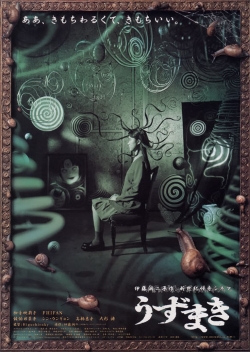
Back in January, I read and reviewed Uzumaki, a Japanese manga by Junji Ito about a small town that comes under a curse centering the idea of a spiral. It was as scary as it was out there (see my review here), and I had mentioned that I would like to get my hands on the film version and see how that compared. Well, some Amazon gift cardd money and a lost package later, I finally watched Uzumaki today. So how does it compare to the manga, andd how does it hold up as a film in general?

Well, it definitely ties down the strangeness of the manga. Uzumaki, like I said, is an out there story, and the film does a very good job of bringing that forth, using odd camera angles, weird visuals, and strange little special effect touches to really add an atmosphere of unreality to the film. There’s this one moment where two characters are walking down a hallway, and they pass a bunch of people standing against the walls just staring at their shoes, and neither character notices the people on the walls, or vice versa. It’s very odd, and kind of unsettling.

I also thought the actors did a very good job. The characters aren’t that multifaceted, but for an hour and a half movie, they work.

Unfortunately, that’s where the film’s biggest problem is: time. The film is an exact 91 minutes, and that means there’s only so much room to tell a story. And unfortunately, with a large story like that of Uzumaki, there’s only so much material that can be done. The end result makes the film feel kind of lacking. In the manga, you get the full scope of this curse. In the film, it feels more like a weird series of events with only mild connections, like walking to work everyday and seeing someone different each day do a dance at a different part of your walk. You might think it’s a weird and there’s a common cause, but your might not go out of your way to find out why this is happening. And that’s where the film ultimately fails.

I also found that some of the edits to the film are a bit more distracting than they should be. There’s one moment where they do a transition that looks like someone’s spray-painting a new scene into the film, and they use a cartoon-y sound effect to go with it. Not that scary. There’s another moment where a girl puts out a cigarette on a wall, and there’s a mini-explosion from the crushed cigarette’s tip. Um…why? It makes no sense. I know this film is going for that surreal sense of horror, but there’s a limit to what you can do without going into goofy territory.

I honestly think that if you’re going to adapt Uzumaki, you should do it as a TV miniseries rather than a movie. That leaves enough room for not only all the material that was cut from the film for time, but gives us more opportunity to get to know the characters and see them react to the strange events going on around them. And you know, I honestly would like to see that. With TV miniseries making a comeback on cable and series with shorter episode orders like American Horror Story being so successful, I honestly think an Uzumaki adaptation for TV would do very well.

On a scale of 1 to 5, I’m giving Uzumaki‘s film adaptation a 3.2 out of 5. Great at atmosphere and creating a sense of unreality, but too short to really leave a lasting impression. Honestly, you’re going to be better off reading the original manga, so go check that out and get lost in the spiral there instead.

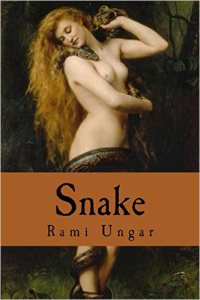
It’s always nice to receive feedback on my stories, and often that comes in the form of online reviews. Not only does this tell me what I’m doing well and what I can improve on in future stories, but a review can occasionally persuade people to check out the book and give me a small boost in readers. And today, I received a new review on my thriller novel Snake. That definitely brightens up my day!

Now if you’re unfamiliar with Snake, it’s a novel I wrote and published between Reborn City and Video Rage. It’s a thriller novel with horror overtones that was highly influenced by the movie Taken, by suspense/thrillers I was reading in college, and by slasher movies I saw during that time period. Here’s the blurb from the back cover of the book:

How far will you go for love and revenge? When a young man’s girlfriend is kidnapped by the powerful Camerlengo Family, he becomes the Snake, a serial killer who takes his methods from the worst of the Russian mafia. Tracking down members of the Camerlengo Family one by one for clues, the Snake will go to any lengths to see the love of his life again…even if it means becoming a worse monster than any of the monsters he is hunting.

Pretty cool, right? And today, I got my eighth review of the novel on Amazon, which was a nice surprise for me. Especially considering that the last time I checked on the novel, one of the reviews, the most recent, was taken down. Yeah, I’m not sure why that happened. I just look, and apparently Amazon took it down. Dammit Amazon, I’m trying to grow a following! How rude.

Anyway, this new review gave Snake four stars, and was left by a reader named sherri. Here’s what she had to say:

A very good read. The mixture of horror and suspense were on point. I now want to read more of Ramis great books.

Oh, how sweet! And I really hope you do read more of my books someday. And this mirrors what other readers have said about Snake:

This book is another awesome creation by Rami. This book is scary and brings the reader to the depths of how evil the human character can be and how anyone can be driven to commit acts of torture. The author does a wonderful job of developing the plot and characters and there are certainly twists and turns. I highly recommend reading this book if you love a good frightening thrill.

–ENJ

Rami Ungar makes a promise to (the reader) in all his writings: he WILL scare you, and if he does “his job is done.” Snake will scare you. I am a huge Stephen King fan, so this should give you some idea of my tolerance level for gore, death and mayhem – I was scared. Rami takes you into places you would never have believed possible, and manages to pull his hero (and eventually his heroine) out of them against all odds. If you like to be scared. If you LOVE to be scared. You should read this book.

–Angela Misri, author of Jewel of the Thames

I really enjoyed this book. When I selected “dark” for the mood, it was almost a toss up with suspenseful. You knew early on who the mafia killer was, but the question of how he was going to find his girlfriend and rescue her was suspenseful. I ended up choosing “dark” because of the level of violence our main character used in getting to the girlfriend. But he was a complex character. Even though he definitely had the dark side to him, there was a surprisingly good side to him, too. You don’t really see this until later on in the book. So early on, you might think this is an unredeemable character. But one of the most intriguing characters are those who aren’t what they initially seem, and for this reason, I enjoyed this character. The pacing was just right. It wasn’t rushed, and in no way did I ever feel it dragged, which is awesome for a book that was over 500 pages in paperback.

This book is violent, and it contains sexual situations. Some of it can be cringeworthy. So I wouldn’t suggest this for young readers. I’d recommend this only to adults. If it was a movie, it would be a strong R. There’s also swearing. These things don’t bother me as a reader, but I know it bothers some, which is why I mention it. But if you don’t mind these elements, I think you will enjoy this book. It’s a great thriller.

–Ruth Ann Nordin, author of The Reclusive Earl

If any of this has made you want to read Snake, you can find links to it below. And if you do decide to read the book, let me know what you think with a review. Positive or negative, I love receiving feedback from readers.

That’s all for now, my Followers of Fear. I may have another post out later this week, so watch out for it. Until next time, pleasant nightmares!

Available from AmazonCreatespace, Barnes & Noble, iBooksSmashwords, and Kobo

Back in January I got into another Lovecraft binge (see my thoughts on that here), and during that binge I read one of Lovecraft’s most famous stories, “The Call of Cthulhu.” Around the same time, I found out there was a movie version of that short story that was made in the style of a 1920’s silent film, matching the period of when the story was written, and knew I had to see it. Which turned out to be easier said than done: it’s not on any streaming service I can find, copies at my library had all been lost or damaged to the point they needed to be taken out of circulation, and I did not want to illegally stream it on my laptop. Finally, with some Amazon gift card money, I managed to buy my own copy, and after Amazon lost the package and had to send me a new copy (was that Cthulhu’s work, I wonder?), I finally got to watch the film with dinner this evening!

“Call of Cthulhu” tells the story of a man as he recollects becoming the executor of his late great-uncle’s estate, and how he discovered his uncle’s research on a cult devoted to the worship of a being known as Cthulhu. As the man goes deeper into the mystery of the cult and even conducts some research himself, he finds himself falling deeper into a rabbit hole of madness and despair that has no way out, and some things waiting within.

Firstly, this movie looks and feels like a 1920’s silent film. It was filmed using Mythoscope, a process that combines older and newer techniques to produce a film that looks like a silent picture but with much better special effects, and it looks great. You can tell that a lot of work went into making this film just right. And what’s truly amazing is that this film was made almost in a DIY sort of way: sets were made with cardboard, tape, and even a few blankets, with cast and crew sometimes working in miserable condition and using props bought off eBay to make this work. If you watch the film and then watch the behind-the-scenes video, like I did, you gain such a deeper appreciation for how well executed this film is.

Another thing I really enjoyed about this film are the actors. They are great at their work! As it’s a silent film, much of the storytelling is done through expression and movement, like in a ballet. You never once doubt for a moment that the actor are feeling the emotions they are trying to convey to us, and that just makes the film all the more amazing. It also helps that these actors are not Hollywood stars. In a major motion picture, the narrator of the story might be cast as Tom Hanks or someone else who’s good at playing an everyday guy put into extraordinary circumstances. The actors in this movie, however, often look like folks you see on a daily basis, and that instantly makes them more relatable to me.

If there’s one thing I didn’t care for, it might be Cthulhu himself. Or maybe I do care for him. I’m kind of split on my opinion of him when he finally appears. On the one hand, he doesn’t appear on film that much, even at the climax of the story, and when he does, it’s often very quick or he’s seen as a shadow. The stop-motion used to animate him is also very well done, and he looks like how he might be styled in a 1920’s film. That’s very good. But, he is the film’s big bad, and I like to feel even jut a little intimidated by the big bads I see in film. And whenever Cthulhu is on screen, I’m just not intimidated. I guess if I had lived in the 1920’s (an age where Lon Chaney’s version of the Phantom of the Opera was so terrifying to audiences, people actually fainted in their seats or ran out the theater screaming), I might have found the stop-motion terrifying, but I’m from the age of CGI, so it takes more to terrify me. So I’m honestly unsure of whether the stuff with Cthulhu himself adds or takes away from the film.

But all in all, this is a great film, an artistic masterpiece courtesy of the HP Lovecraft Historical Society (do they have a museum to the guy yet?). And when you consider that the original short story has been called “unfilmable,” and the conditions during production tried to prove that assertion, you learn to love it even more. On a scale of 1 to 5, I’m giving “The Call of Cthulhu” a 4.8 out of 5 (as well as the title of “one of my new favorite films”). Find yourself a copy, and enjoy the experience.

Now I just need a good adaptation of Shunned House. That story is SCARY! And it feels like the sort of story that would translate very well to film.

That’s all for now, my Followers of Fear. Join me next week when I watch another Lovecraftian-influenced film. No, not Guardians of the Galaxy Vol. 2 (though I probably will see that next weekend with my sister). It takes more than a tentacled monster to make it a Lovecraftian story. No, I mean the film adaptation of Junji Ito’s terrifying manga, Uzumaki.