Archive for the ‘Reflections’ Category

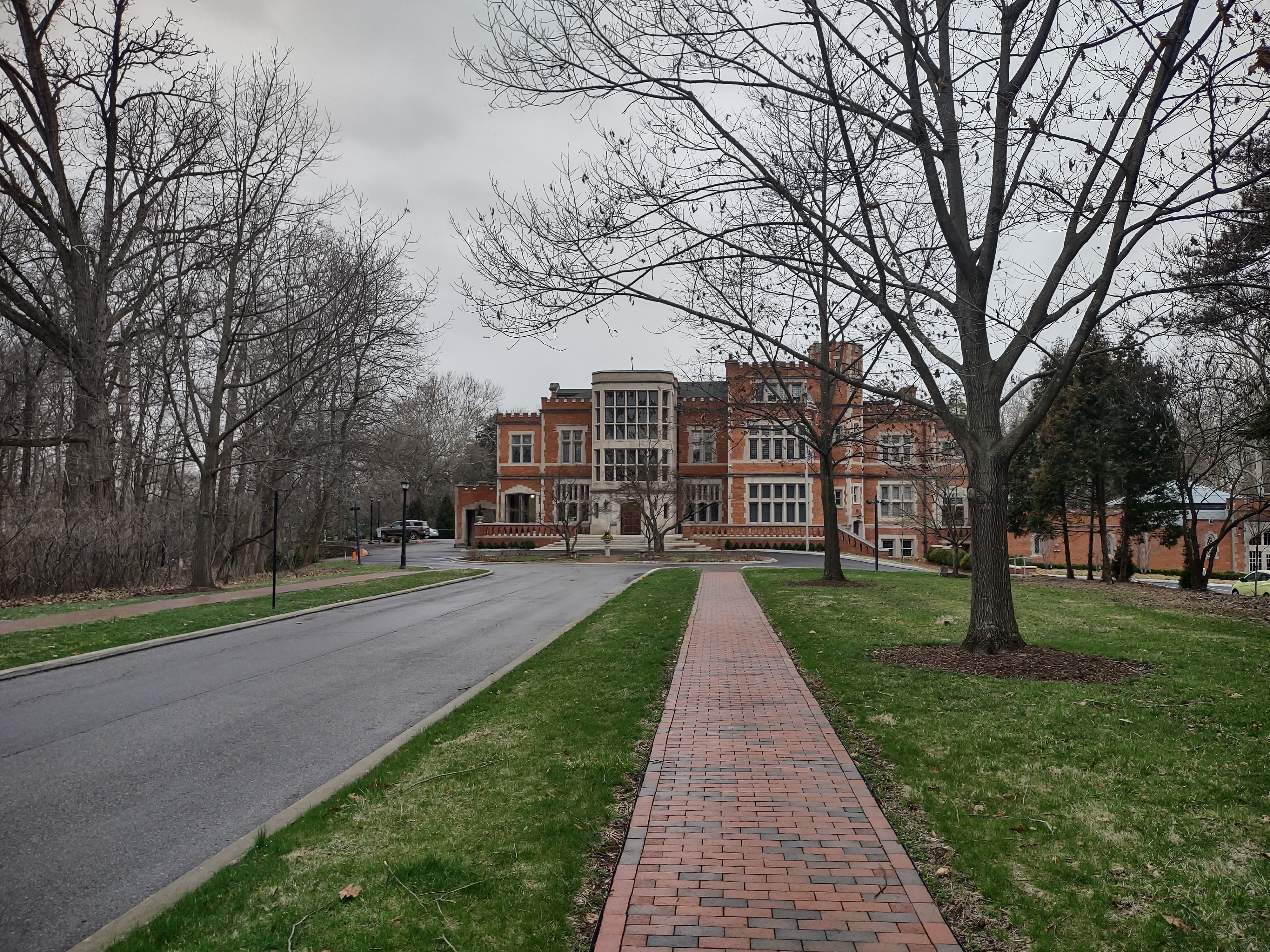
Jeffrey Mansion in Bexley, Ohio.

Been meaning to write this post for about a week now, but life got busy and there was never a good time. Don’t you just hate it when that happens.

Anyway, as I’ve mentioned before, I’m working on short stories in-between edits on Hannah. Or shorter stories, seeing as some of them are novelette or novella length stories. Might work on a novel if the itch gets really strong, though I’m not sure if I’ll edit Toyland again or finally start on Crawler. But for this particular story, which I’m guessing will be a novella, I had a particular location in Columbus that I wanted to check out as a basis for the setting.

I’ve been to the Jeffrey Mansion many times when younger. I used to live a few minutes away from it and sometimes would play on the playground or walk the woods on the property. But I had never been inside before and had never heard of it being potentially haunted.

Then I discovered this video:

I thought since it was so close and easily accessible, and since I had a story in mind taking place in a similar location, I thought I would go and see it. Sadly, I didn’t find any evidence of hauntings. Just a weird moment when, in the library, the camera app on my phone started acting weird and wouldn’t work again until I left the room again. That being said, I could only access the first floor and basement, as the upper floors were reserved and off-limits to visitors. Also, it was daytime, so I couldn’t do a proper investigation. Perhaps the mansion is haunted and there are spooky things just waiting to be found.

Probably not the woman in white or the hanging man spirit from the video, however. The former is likely kids being afraid of the then-living janitor of the premises, and the original owner died in a hospital in the 1960s, so it’s unlikely he’s the hanging ghost if there is one.

But that’s not the point. The point is, I don’t get to stop by actual locations for research for stories that often. Sure, I’ve been to locations and used them as the basis for stories later on, but never to a location with a story already in mind. Going there, walking the grounds and taking photos of the lower two floors, my mind was moving at a thousand miles an hour and thinking up all sorts of great details for the story.

In the garden room: “This would probably double as a ballroom for parties. Oh, and this room will be an important location for the story. That will be in here.”
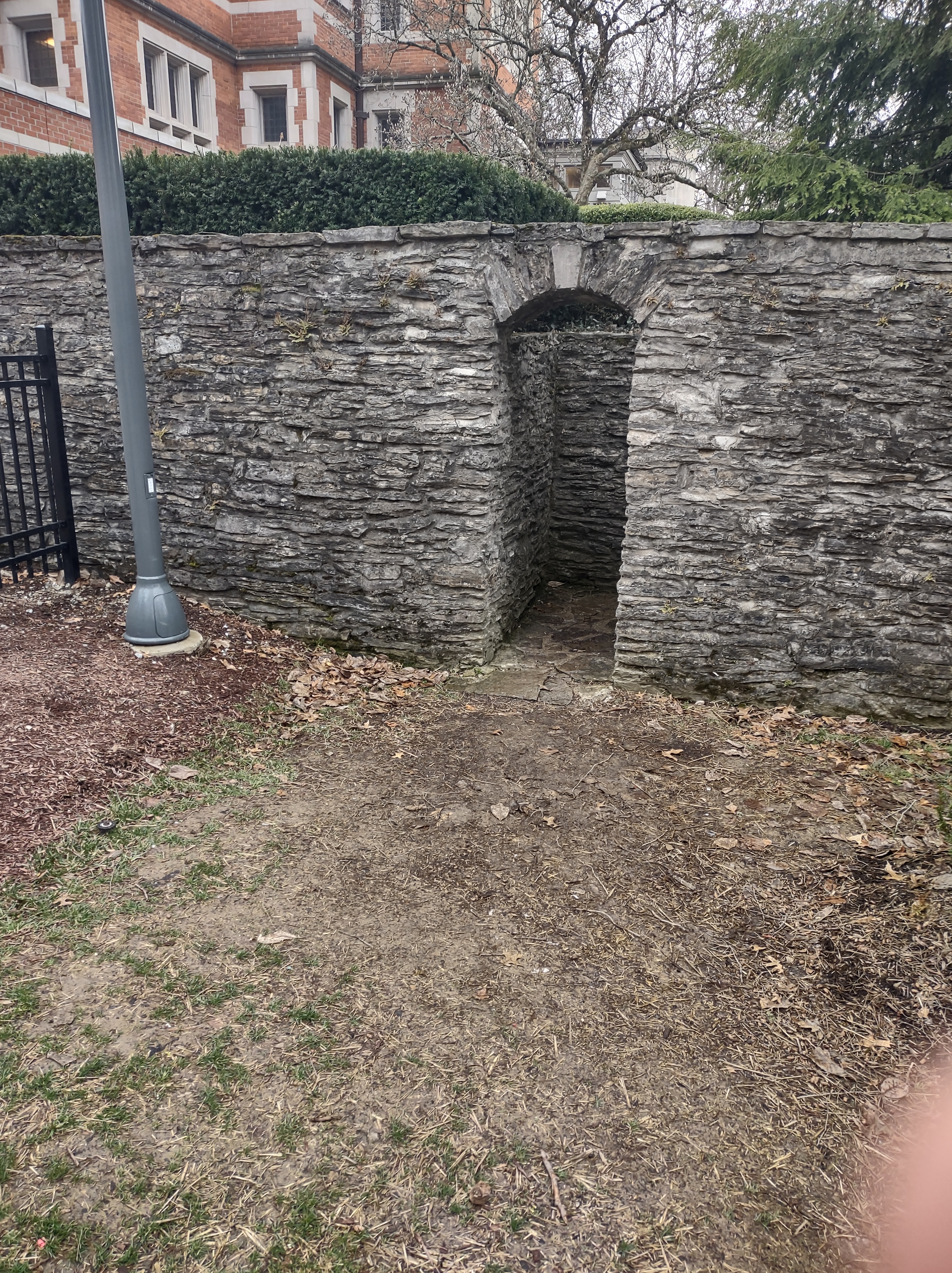
The tiny staircase hidden in the garden wall: “Ooh, I wonder if I could make use of this somehow. Maybe as a location to meet?”

The dance studio: “Didn’t know this was down here. But it works for me. Some of my characters are dancers, after all.”

It’s just insane how much of a boon my imagination got from coming here. It really helped me develop plot points and the location my story would take place in, right down to the location’s history and what would happen in which rooms. If I ever get a chance, I would like to go to another location for a specific story in mind, just to see what would happen to my brain and to the story. Who knows? Doing so might help me create my best work yet.

Anyway, that’s all for now, My Followers of Fear. Next up for me is to do some edits for the short story I’m using for That Which Cannot Be Undone (that’s still coming along wonderfully) and then, if there are no new edits for Hannah, I’ll get started on this new story. And, of course, I’ll let you guys know if anything exciting comes up.

In the meantime, enjoy more photos of Jeffrey Mansion. Until next time, good night and pleasant nightmares!

First photo of the mansion. Beautiful Jacobethan structure. I would love to do a full paranormal investigation there or see it used in a movie based off my work.
Side view of the mansion. Kids at the preschool get picked up there, though I imagine it was used to drop off important guests once upon a time.
Close up of the mansion’s entrance. It’s pretty striking.
Back of the mansion. It looks like it could be a movie set someday. I know plenty of kids like to use them while playing on the playground nearby.
Back of the carriage court. Back in the day, it was where the owners stored their carriages and cars. Now, it’s used as event space.
The editing process can take a toll on authors’ mental health, no matter their experience.

As I’ve mentioned more than once (especially during the past few weeks), the publishing process for Rose was something of a roller coaster for me. At least, it was on the mental health scene. There were days and weeks I was feeling on top of the world, and then there were weeks where I was freaking out and wondering how the hell I would ever get this novel into a state fit for publishing.

It’s been nearly three years since Rose was released, and I’m older, wiser, and I want to say calmer. However, I know that roller coaster could start up again during the editing process of Hannah and Other Stories, so I’m writing this post. Both as a reminder to myself, and to help anyone who might go through something similar with their own upcoming books.

Here’s are some tips for getting through the editing of publishing of your upcoming book and the mental health rollercoaster that it is.

First off, remember that this is natural. There’s nothing wrong with you, you shouldn’t be expected to stay happy because you’ve got a book coming out (whether it’s your first or your 247th), and every author goes through difficult periods in life. We have human brains, and those brains, while being the most advanced supercomputers on Earth, have some quirks built in. Our neurochemicals don’t always act naturally, and life can upset those chemicals as much as genetics. So if you’re having a bad period, don’t heap further stress on yourself by being upset with yourself. Just remember that this will pass and good periods will happen as well.

Our brains. Great supercomputers, but they aren’t perfect. So these feelings are natural.

That being said, if your feelings become too much or last for prolonged periods, consult a licensed doctor/psychiatrist/therapist. They may be able to help you with medication, the talking cure, and strategies for coping with those wacky neurochemicals.

And that brings me to my next point: have a support network and coping methods in place if you can. I know everyone’s circumstances are different, but it really helps to have someone to talk to or multiple people who can come together when you’re feeling down. Having those people who will stand by you and help take your mind off of the craziness of the publishing process can make things all the more bearable.

Not to mention those coping strategies. Taking some time for self-care when you need it improves things immensely. I already have Sailor Moon DVDs awaiting me in my room and ice cream in the fridge. Those are my comfort foods and anime, and they got me through more than a few crazy nights. Not to mention that methods such as hypnosis and meditation, going for a run or dancing, a nice drive, a good book and so many other things, can really help when your mental health starts to spiral.

That being said, certain coping mechanisms should only be done sparingly. For example, I tend to eat more sugary foods and drink alcohol when I’m under stress. Not the healthiest way to deal with my feelings, so I have to be careful not to do it too much.

Okay, now that we’ve gone over the self-care stuff, here are some practical tips when it comes to the editing and publishing of the book:

  • Edit in chunks or manageable blocks. This is something BSC Publishing Group, which is publishing Hannah, is doing with their clients. Rather than sending notes for the entire book all at once, they send notes for a few chapters or a single story at a time. That way, neither author nor editor is overwhelmed by the process and it feels more collaborative.
    I kind of like it, as it means I have less of a giant workload to get through, and I can work on other projects in-between chapters. And if you like it, maybe talk to your editor or publisher to see if you can do something similar.
  • Expect big gaps without activity. You know how you have to wait several weeks or months to hear if a short story is accepted or rejected by a publisher? It’s even worse with a book. Case in point, three months would often go by between submission of a new draft of Rose and getting new notes. And the time between acceptance of Hannah and the first round of notes was about six months.
    So no, you didn’t do anything wrong. And no, the publisher isn’t ignoring you. They’re just juggling a lot of projects, and they have to devote time to all of them.
  • Approach each issue/suggestion individually. Finding out your stories has issues, such as a plot hole or a character that doesn’t make sense, or a scene that doesn’t work like you thought it would, can seem insurmountable. Just know that every novel and collection has issues that need work on, including great ones. For Rose (which I like to think is great), after I got my anxiety under control, I went after each problem individually. First I handled the main problem with the antagonist, then the issue presented with the amnesia, and then the monumental problem with the flashbacks, which led to two-thirds of the book getting rewritten.
    Hopefully that won’t happen to you (though on the plus side, it did rid the book of some problems later in the draft). But taking it one problem at a time does yield results over trying to tackle, and agonizing over, all of them at once.
  • Remember, the publisher believes in your book enough to publish it. Sometimes, editing the book and guessing what people will think of it, we tend to doubt our own abilities. But remember this: the publisher believes your book is not only good, but it’s good enough that it’ll sell copies and they won’t take a loss on it. And that’s in an unedited state with issues!
    So if you could write something that good in that state, you’re more than capable of getting it up to scratch for publication. Just keep reminding yourself that and it might boost your spirits a bit.
  • Finally, keep reading and writing. During the quiet periods in-between drafts or before you go to bed. When you’re wondering how to tackle a problem with your book or when you’re just looking for some down time. When inspiration strikes you or when the new book by your favorite author comes out. Just keep reading and writing. Do it because you love it. Because it’s nice to get lost in imaginary worlds with imaginary problems and imaginary people. Because it’s relaxing and a great way to let the problems of the world slip away.
    Plus you occasionally get insights from the stories of others to improve your own stories. But that’s not important. It’s important to just sit down and enjoy these activities, because they’re what got you into the storytelling business in the first place and have led you here. And they will lead you onwards from here too.
Rose had plenty of issues before publication, and Hannah still has its share. Still, the publishers for both believe/believed in them to publish them, and that’s an important thing to keep in mind.

Well, those are my thoughts on mental health and the publishing process. I’d include some stuff on marketing, but then we’d be here all night. Anyway, I hope you found these tips helpful. If you think of anything I missed, feel free to put it in the comments. And if you have a book you’re working to get up to snuff for publishing, I wish you the best of luck. You’re in the middle of a tough journey, but you can get through it. And if you managed to get through the trials of writing and editing the book in the first place, you can get through the trials of getting it in shape for the publisher.

Until next time, my Followers of Fear, good night and pleasant nightmares.

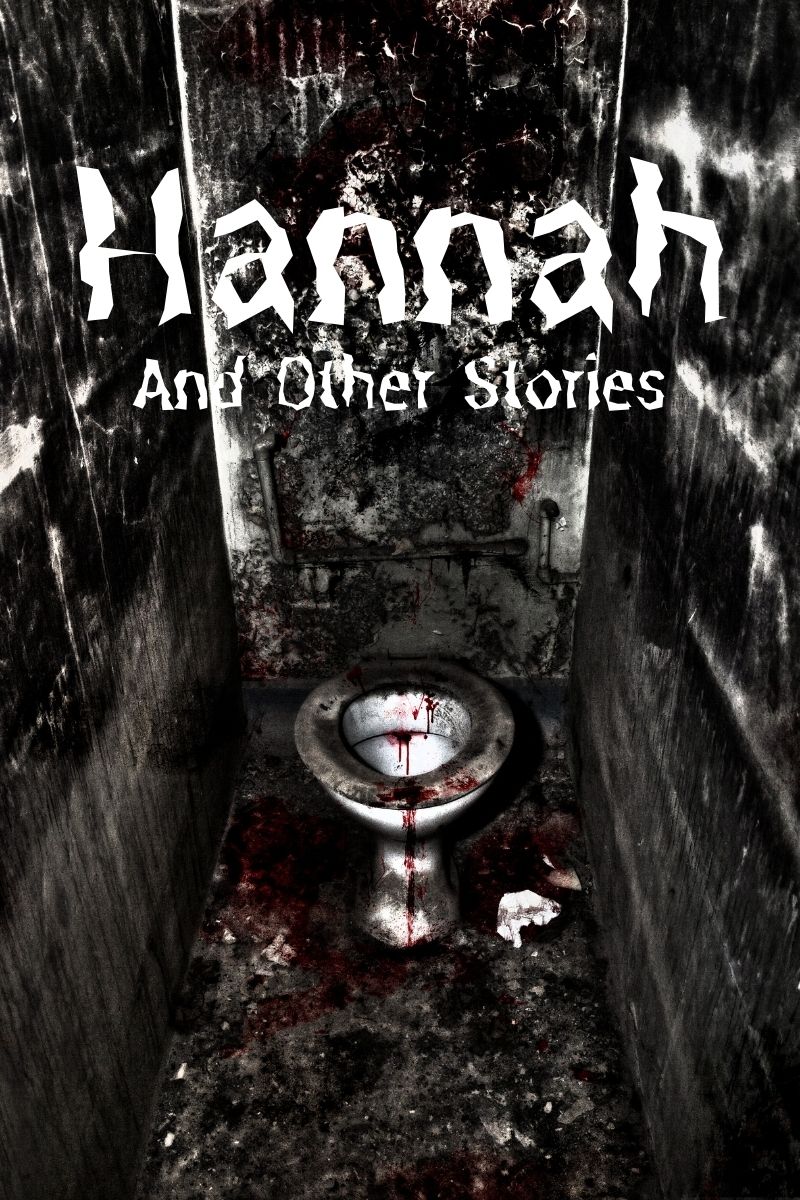
The placeholder cover I made for Hannah and Other Stories. I can’t wait to show you all the official cover someday soon.

Well, the story I was writing for that one anthology will have to be put on pause. Good thing I don’t have to submit till June.

So, as many of you are aware, back in October I signed with BSC Publishing Group to release a collection of short stories. The collection is going to be called Hannah and Other Stories and will consist of seven short stories, novelettes and novellas, including: Hannah, which follows two ghost hunters whose latest investigation has consequences for multiple people; The Autopsy Kid and Doctor Sarah, about a young girl’s relationship with a budding psychopath; and Poor, Unfortunate Souls, in which a rave underneath the streets of Paris receives an unexpected and horrifying guest.

Anyway, since I signed that contract, some time has passed, and I’ve been writing and editing stories like crazy so I don’t get rusty. And today, I finally received the first round of edits. And it looks like I have a lot of work to do!

Man, I wish all those edits I’d done back in spring and summer last year were enough to spruce up the stories. But I guess I wasn’t so lucky.

On the bright side, I still have some pretty clear memories of when I edited Rose back in 2018 and 2019. That was the last time I edited an entire book with a publisher, and it was quite the learning experience. Given what I remember, I will take it story by story, part by part, and try to identify the same issues my editors did, as well as using their suggestions to improve the story.

I will also make sure to take care of my mental and emotional health. It’s not something that’s talked about enough in the writing community, but this path we walk takes a toll on us writers. And that’s especially true when it comes to publishing an entire book! When I got the first edits back on Rose, for example, I went into a tailspin of anxiety. There were a lot of issues with the novel, a couple of which led to me rewriting around two-thirds of the book. Needless to say, I was upset with myself that I missed so many issues and worried I wasn’t going to be able to fix them. It took a lot of work for me to calm down again and start to work on the book again.

This time around, I’ll be better prepared. As I said before, I’ll take each story one at a time, and I’ll try not to let the issues with each story get under my skin. After all, not only have I been through this ordeal before, but I wrote these stories already and the publisher thought they were decent enough in their imperfect state that they wanted to publish them. If I was able to do that, I can edit the stories to a state where they can be released.

Plus, I have a support network I can rely on if things get to be too much, and I’ve already ordered my comfort anime from the library (nothing like a Sailor Moon binge to make you feel refreshed). Add in some ice cream and the occasional pizza delivery, and I’ll be fine.

Anyway, I’ll keep you all updated on the progress of the book, as well as my other projects. I may also write a post on maintaining your mental health during the publishing process at some point. In the meantime, if you’re looking forward to Hannah and can’t wait to read it, or you need something to read in the meantime, I’ll include links to Rose and my other books down below. Who knows? You might just find your new favorite horror story down below. Let me know what you think.

And please also check out the anthology Dead of Winter from the Dublin Creative Writers Cooperative and Spark Street Media, which contains the story “Azazel Dances” by myself and Richard Gerlach. It’s a great story inside a great anthology, so why not check it out?

And with that, I’ll take my leave. Until next time, my Followers of Fear, good night and pleasant nightmares.

Dead of Winter: Amazon

The Quiet Game: Amazon, Barnes & Noble, iBooksSmashwords, and Kobo.

Snake: Amazon US, Amazon UK, Amazon Canada, Barnes & Noble, iBooksSmashwords, and Kobo

Rose: Amazon US, Amazon UK, Amazon Canada, Audible, B&N

Agoraphobia: Amazon US, Amazon UK, Amazon Canada

Mother of the King: Amazon US, Amazon UK, Amazon Canada

The Pure World Comes: Readict app (free with ads)

A handy graphic for understanding the three act structure, courtesy of Wikipedia.

The other day, I was talking with some other writers about how to write a decent short story (an eternal question among writers, including the ones who’ve gotten them published). And I noticed that, with a lot of my recent short stories, most of them fall into a decent three act structure. And then I said, “I know the existence of the three act structure is dubious, but it’s the truth.”

And, like many odd things, that little exchange has stuck in my head.

So for those of you who don’t know, the theory of the three act structure states that all stories, especially longer ones, can be divided into three separate acts or sections: the setup, the confrontation, and the resolution. The acts may then be divided into smaller scenes or subsections, but they all fit into those categories. Some examples given of stories with the three act structure are Star Wars, Die Hard, and Avengers: Endgame (though I sometimes think everything before the five-year jump is its own separate act or prologue).

While many of us are taught this structure in school, most of our teachers will let us know that not everyone believes in the three act structure, let alone say they use it. Some prefer using a five act structure. Others say storytelling is too complicated and diverse to say a story can be divided into a formulaic structure. And nearly all playwrights will agree that if it can’t be told in one act, tell it in two.

Good example of a story in three acts (supposedly).

That last one might be a joke.

I’m usually of the camp that believes storytelling is too complicated and diverse to boil down into a structure. Look at Stephen King stories. Most of his shorts, like Graveyard Shift, Night Surf or The Boogeyman, are simple one-scene stories with maybe a twist at the end, and I dare you to try to fit books like IT or Salem’s Lot into three acts. Then there are stories like Kill Creek by Scott Thomas or Interview with the Vampire by Anne Rice, which feel like they fit into four acts.

As for my own books, Snake is in multiple sections, much like the books I was reading up to and during the writing process, and I see Rose as in-the-apartment and after-leaving-the-apartment (if you read the book, you know what I mean). I can’t see the stories in The Quiet Game as anything but a progression of events. And I wouldn’t even know where to start with The Pure World Comes or the stories in Hannah.

So, is the three act structure a real thing? Well, yes and no. I feel like it’s more of a framework for people to examine fiction, both others and their own. You don’t have to use it if you feel it doesn’t work for you or if you feel a story has too much happening in it to divide the plot into three separate sections.

But if you do find it helpful, use it to your heart’s content. I’m sure many writers, especially plotters like myself, find the three act structure helpful for planning their stories. And as I said above, many of my recent short stories, including the ones that have been published, fall into three acts. Though I think of them less as acts and more like beats, scenes, settings, or occurrences. And if I’m trying to keep a story within a certain word count, I can see using this structure to my advantage.

So what is the three act structure? It’s a prism to understand some fiction stories through, as well as an actual tool for writing. It’s not perfect, and most stories don’t fit into it that well, but that doesn’t mean the idea isn’t useful. Hell, it might even help you hone your craft and get a few more short stories out there. And that is never a bad thing.

Unless you’re trying to write an award-winning musical. Then you might want to keep it to two or maybe just one act.

That’s all for now, my Followers of Fear. March has just started and it’s already looking a lot better than January and February is (world events notwithstanding). I hope I can update you on exciting developments in the near future. And until next time, pleasant nightmares.

Fairy tales have been on my mind a lot lately. Granted, that’s nothing new. When writing Toyland, I knew fairy tales and children’s stories were going to play a part in the story, since it was about a school haunted by a ghost obsessed with a children’s fairy tale. And yes, I still hope to get that book published.

But recently, I took a class offered by the Horror Writers Association on fairy tales, which got my imagination working. And then I watched a couple of TED talks on YouTube on the subject. And last week, I wrote my own twisted, dark fantasy version of Cinderella in just one sitting while everyone else was watching the Super Bowl. This was at the same time I spent two weeks coming up with an idea for a novel involving fairy tale elements, the idea finally crystallizing on Saturday before going to see Giselle. A ballet, by the way, that could be considered a fairy tale. It certainly has enough fairy tale elements to qualify as one.

All this has made me hyper-aware of just how much fairy tales have permeated our society. Not just as stories or elements of our favorite stories, but in advertising, fashion, music, art, and even our expressions (“Cinderella story,” anyone?). They are freaking everywhere, and used/enjoyed not just by children, but by teens and adults too.

“But wait,” you’re probably asking, “aren’t fairy tales just kid stuff?”

Not exactly. In fact, fairy tales were often for adults as much as children. Early written versions of Little Red Riding Hood were told as parables to warn young ladies about getting into bed with the wrong sort of man, or as metaphors about entering womanhood (especially if cannibalism is kept in the story). In fact, that is still the case in some places: in Ireland, many still believe in fairies and tell stories, or “tales,” about them and what places to avoid. And in parts of Scandinavia and Iceland, beliefs in trolls and elves are still popular. Many countries in Asia, especially in southeast Asia, still believe in many types of spirits (and according to the classical definition of fairies, just about any supernatural entity can be considered a fairy, so it counts), and use stories to warn new generations of the dangers of pissing them off.

This adaptation of “The Tale of the Bamboo Cutter” is a prime example of how fairy tales can be recontextualized for new eras.

But beyond warnings, fairy tales, like many other kind of stories, are reflections of how we look at our world. Hansel and Gretel, for example, was probably told in an age of famine, poverty and witch hunts, given its elements and the lessons imparted in it. Even better, fairy tales can be recontextualized for new ages. Cinderella tales are increasingly told to make the lead less passive and more in control of her own life, and the Studio Ghibli film The Tale of Princess Kaguya, based on the Japanese fairy tale The Story of the Bamboo Cutter, retells the story with the theme of how Kaguya wants none of the finery her foster parents gift her, only to be surrounded by people who love her. This feels relevant in an age with rising consumerism, online image-building, and social isolation.

And that’s the cool thing about fairy tales, too. You can retell them in so many different ways. Hell, you can even come up with new ones. Plenty of writers are creating their own fairy tales, such as Diana Wynne Jones did with Howl’s Moving Castle, Melissa Albert with The Hazel Wood and many more. And many stories today use elements of fairy tales. The inclusion of “The Three Billy Goats Gruff” in Stephen King’s IT isn’t just a fun choice by King, after all: King originally started plotting that story as a modern interpretation of “The Three Billy Goats Gruff.”

Makes you wonder what elements of fairy tales and legends you’re putting into your stories, doesn’t it?

And that’s the thing. Even you can make up your own original fairy tales or retellings. In fact, plenty of writers are, and will as the world changes. I wouldn’t be surprised if we get an updated version of Anansi and the introduction of stories to the world in the wake of so many states attempting to rewrite history or schools attempting to ban books. And I wouldn’t be surprised if this pandemic, or any of the major conflicts we’ve experienced in the past several years, make their way into a new or an old fairy tale. I’ve already come up with a few ideas for some, and might write one or two in the near future.

And I bet, no matter who’s telling the stories, they’ll continue to influence society for years to come. From the “Once upon a time” beginnings to the optional “they all lived happily ever after.”

That’s all for now, my Followers of Fear. I spent most of President’s Day writing, so I’ll take the rest of the night off. I’ll be back soon, as I’m expecting to share some good news very soon. Until then, my Followers of Fear, good night, pleasant nightmares, and don’t try to wake me up with a kiss. I bite.

Also, here are some of the videos I watched while researching fairy tales. Give them a watch. They’re quite edifying:

Transforming our Understanding of Fairy Tales by Anne Dugan

Why We Absolutely Need Fairy Tales by Jason Link

Myths, Folklore & Legends: We Still Need Our Fairy Tales by Heidi Shamsuddin

.

Well, this is embarrassing to admit.

I’ve been reading a lot more slowly lately, so I only just started reading an anthology I was published in last year. Last night, I finally got to my own story, which I consider some of my best work. And I found some editing errors I missed.

It wasn’t anything too bad. A couple of words missing here, a couple of phrases that should have been cut there, and one time I used the word “skeleton” instead of “scream.” Not like a horrible run-on sentence, a ton of spelling mistakes, and punctuation and grammar to make a lover of literature cry.

Still, it was disheartening to see how many mistakes were missed. And while part of that was also on the publisher, I should have been more cognizant of my own work. I should have shown more diligence in finding errors. Maybe even using that feature on Word where the story is read aloud, annoying as that is.

You know, my high school English teacher, Mr. G, used to say that a story is never “perfect,” but “done.” You can only do so much work to a story on it, but you’ll never get it perfect. You can just do enough work on it that you can’t fix it anymore. It’s done. I was aware that that applied to cleaning it up as much as it did to story, but this made me more aware of that.

And my American history professor in college, Dr. S, made an analogy about editing. He said he always got students who got annoyed when they were marked down on grammar and spelling when it was a History class. Why should a few spelling mistakes or whatever make a difference, these students wonder. He said, and this is pretty close to quoting:

Well, if this were an engineering class, would it be okay to have a little bad math? Or if this were a physics class, would it be okay to have a few incorrect equations? If the answer is yes, then let me know what bridges you’ve constructed or what planes you’ve built, so I can know to avoid them! Good grammar is important in History, even if it’s not an English class. And I expect good grammar in your papers.”

Dr. S, American History from 1920-1963, 2014

You can apply that right back to storytelling. No matter how good the story is, if the story has a bunch of grammar/spelling/punctuation errors, the story will suffer. And my story, while still good, suffered a bit with these issues.

I’ll remember reading this story and finding these issues from here on out. I’ll use it so that when any future stories come out, they’ll be as error-free as possible. I can’t stand a story of mine being brought low by my own laziness and missing some errors. I’ll work harder to make sure this is the last time I find a story with such glaring problems (or glaring to me, anyway).

Please stop by if you can. I’ll be selling books and doing Tarot readings.

And if this story gets published again, like in a collection someday, I’ll make sure to fix those errors. God knows I only want to give you all my best work.

Anyway, that all for now, my Followers of Fear. I’ve got a lot of writing to do tonight, so I better get to work on everything else that needs taking care of before then (like dinner and laundry). I’ll hit you guys up after the Hidden Marietta Paranormal Expo (especially if I get any paranormal activity on camera). Until next time, good night and pleasant nightmares.

I’ve been wanting to post something for the past several days, but I have nothing to really post about. But I’ve been getting antsy and current events are not helping (type “Texas synagogue” into Google and you’ll understand why), so I’m blogging about things going on in my life. If only just to distract myself and to let you all know I’m still alive.

And if you Googled what’s happening in Texas, please pray to the deity of your choice that everything turns out alright.

So, in my personal life, things aren’t too bad. Work was a little crazy during the first week of January (which is pretty much par for the course), but this week things got calmer, so I didn’t feel like tearing my hair out. And all month, I’ve been looking for a new apartment to move into when my lease ends this summer. I’ve got a few possibilities already scouted out and am on the waitlist for, so hopefully I’ll have a better idea on where I’ll be living soon.

On the writing front, things have been crazy! The work for the Kickstarter campaign has taken up quite a bit of my time (more on that in a bit). However, I have found time to write, or at least attempt to write. As I said in a previous post, I’ve been working on a story where I terrorize neo-Nazis, and that’s been going well. Actually, while finishing up the most recent chapter of that, I managed to fix a few problems with the logic of the story and cut out a superfluous character. It’ll still take me some time to get the first draft finished, but I think it won’t be too bad once it is. It’ll be in need of a lot of editing, but it won’t be half-bad.

On another note, the Kickstarter for “That Which Cannot Be Undone,” the horror anthology I’m helping to create, is 77% funded! Yeah, pretty amazing, huh? We think we can reach our full funding by the time the campaign ends in twelve days, but we’re doing everything we can to make sure that happens. In the spirit of that, I’m offering up signed copies of my books Rose, Snake and The Quiet Game for people who pledge to the campaign. So if you want to read some of my works (signed, no less), and help support the career of me and fellow Ohio horror authors, this is a great opportunity to do so. You can use this link to pledge: https://www.kickstarter.com/projects/crackedskullproject1/that-which-cannot-be-undone-an-ohio-horror-anthology

77% and counting. Why not join us?

As for the other projects, the paperback and ebook editions of The Pure World Comes is on schedule. I’ll be reaching out to a cover designer I’ve worked with before on the cover soon, and once I have that, I can start uploading/formatting the actual book on a publishing platform. And I’ll be starting work on Hannah and Other Stories soon, as well as following up on some submissions this weekend. With any luck, I’ll be able to post a real update on something soon.

Anything else? Oh yeah: in about two weeks, I’ll be driving over to Marietta, Ohio for the Hidden Marietta Paranormal Expo. It’ll take place on the 29th at the Lafayette Hotel, and I’ll be selling books and doing Tarot readings while there. Hope you can make it!

Well, that’s my update. I’m off to heat up dinner, watch a movie, and then do a late-night writing session. Until next time, good night, pleasant nightmares, and please pray for what’s happening in Texas.

I’m not so sure anymore.

Of course, it seems like gospel that the first sentence of a story is important. It’s your hook, isn’t it? It’s how you get the reader into the story. You should put as much thought into that first line as you would as asking your significant other to marry you!

But I’m not convinced anymore. That may be strange, considering how often I used to (and sometimes still do) the #FirstLineFriday meme on this blog. You know, that thing where I post the first line of a story and hope it gets you into the story? But then again, maybe that’s why I’m unconvinced. I’ve posted first lines so many times, I’ve recognized how little effect that they have on the total story.

And you know, if you look at some famous books, you kind of see that. Harry Potter‘s first line is “Mr. and Mrs. Dursley of number four, Privet Drive, were proud to say they were perfectly normal, thank you very much.” Most Muggle-ish opening you’ve ever read. It doesn’t really hint at what’s to come in the story, and I honestly would have cut it from the final product if I had edited the first book.

And Stephen King’s stories don’t usually have those sorts of openings. The first line of IT goes like this:

“The terror, which would not end for another twenty-eight years–if it ever did end–began, so far as I know or can tell, with a boat made from a sheet of newspaper floating down a gutter swollen with rain.”

It’s a nice opening, but it doesn’t exactly scream…well, going to make you scream. It’s actually kind of mellow. And the opening for Needful Things is even more unassuming: “You’ve been here before.” Kid you not, my first time listening to that book on audio, I had to repeat it a few times because it was totally unexpected and confused me a bit. Only as you keep reading does the opening make sense with this story.

Maybe this is why some books have poems, excerpts from other famous stories, Bible verses, or even song lyrics at the beginning, before the story even starts. You read those little epigraphs (that’s what they’re called, I check) and keep reading to see how it relates to the story you’re taking in.

in any case, I’m starting to think that maybe it’s not the first sentence, or even the first paragraph, that’s responsible for making a story’s opening catchy. It’s maybe the first couple of paragraphs or the first page. When the author sets up the story, the characters, the setting, that you really get pulled into the story.

The opening of the story should be like opening a door to guests. Yes, that’s important, but what’s inside is even more important. Photo by Ron Lach on Pexels.com

That’s certainly the case with my current story, where I set up a nice, rural setting, something kind of idyllic…and then one of my main characters reveals that he’s a neo-Nazi. It’s a stark contrast from the first paragraph that takes the reader off-guard, and hopefully will get them reading further along. I’ll have to finish the story first to see if that’s the case, however.

Anyway, the first sentence is important, but it’s not the most important thing about a story. Rather, it’s just the opening of the door and allowing people to take a quick look before stepping inside. What’s beyond that is what’s truly important. You just have to make sure to open the door and open it well.

But what’s your take, Followers of Fear? Let’s discuss openings and if the first lines of a story really are as important as we make them out to be. I’m curious to hear what you think on the subject. Maybe more of you will agree with me than I imagine.


Happy New Year, my Followers of Fear. I wanted to start this year off with a post that’s reflective on the craft of writing, as I enjoy writing those posts. Anyway, I hope you’re having a good 2022 so far. Mine’s been rough so far, but that tends to be the case with the first full week of January. And at least there’s a lot to look forward to right now: editing and releasing Hannah and Other Stories; putting out the paperback and ebook copies of The Pure World Comes; conventions and expos; maybe a bit of travel; and, of course, some good reading and writing.

Oh, speaking of conventions and expos, I’ll be at the Hidden Marietta Paranormal Expo on the 29th in Marietta, Ohio. If you can, stop by the Lafayette Hotel and maybe I’ll sign your book and read your Tarot.

Also, the crowdfunding campaign for That Which Cannot Be Undone is at 58.5 percent! We’re over halfway funded and we just keep going! And if you would like to help me and my fellow Ohio horror writers put out an amazing anthology of horror stories set in our state and revolving around the theme “that which cannot be undone,” click on the link here: https://www.kickstarter.com/projects/crackedskullproject1/that-which-cannot-be-undone-an-ohio-horror-anthology. There are also some amazing perks to pledging, like candles, Ohio-themed Tarot cards, copies of the book, and even end up in one of the stories! How cool would that be?

Anyway, that’s all for now, my Followers of Fear. I hope to have more stuff to tell you soon. Until next time, good night and pleasant nightmares!
Occasionally in fiction writing, you create characters you find utterly repulsive. Maybe it’s their personality, maybe it’s what they do or believe in, but these characters are VILE.

And surprisingly, writing them well is kind of challenging. I should know. I’m working on a story now where I hate most of the characters. Why? I’ll get into that a little later.

(Though if you’ve been paying attention to my Facebook posts or Twitter feed, you might already know why.)

The thing is, while you may hate the character you’ve created, you can’t let that hate show too much in your writing. You have to treat them like you would any other character. Showing your contempt may be easy, but the reader may notice. And while they may agree with you, they will be turned off by the clear aversion and disdain coming off the page, especially if it’s a protagonist. “Why even bother writing this character if you’re going to make it so obvious you don’t like them?” That might be what goes through their minds. Instead, write them like you would a character you like.

A good example of this is how Vladimir Nabokov treats Humbert Humbert in the novel Lolita. In an interview, Nabokov stated he found Humbert a hateful person for obvious reasons. But he didn’t show his dislike for the character and his predilections in the story. Instead, he writes the novel normally and let’s the readers come to hate him by his actions.

That’s something to keep in mind. Instead of showing your disdain for a vile character, let their actions do the work for you. You can do a lot just by showing a cruel teacher depriving a kid of ice cream or a prison warden manipulating his prisoners to attack each other, rather than by describing them as nasty pieces of shit.

Dolores Umbridge. A great example of a vile character.

You can then supplement that by showing other characters’ reactions to the hated characters for being assholes. JK Rowling, despite her faults, did this quite well when Harry and his friends described characters like Umbridge or Pansy Parkinson and focused on their negative traits. Rowling famously hates those characters, by the way, and made sure they suffered or didn’t get happily-ever-afters in the end.

What if you have to show things through the perspective of the hated character, however? Well, that’s where it can get queasy to write them. Because, as much as you might hate them, you’ll often have to write them as any other character. For instance, l’m writing characters who are neo-Nazis.

Yeah, you read that right. The story I’m working on now is full of neo-Nazis, people who would gladly see me dead for being Jewish (among other things). And I am writing them as I would most other characters. I could write them and focus on their hatred and nasty ideology, and in another story I could get away with that. But for this story, I can’t let them just be stock characters or stereotypes, much as I want to. Instead, I’m trying to show the reader how the characters might see the world. And let’s face it, neo-Nazis are people, and they’re as complicated as any other character. So I should try to write them that way.

That being said, I am going to show just how horrible these people and their toxic ideology can be. And then I’ll take great pleasure in showing what horrors occur to them later in the story. Hey, I’m a Jewish horror author who loves visiting terrors upon his enemies. What do you expect?

So, writing characters you consider vile is more than just making them hateful or showing how much you hate them. It’s a combination of actions, character description, and even writing them in a complex manner. And, of course, making sure they get what’s coming to them if it fits the story. It may make you feel sick to write them that way, but it can also lead to a good story becoming that much better.


On an unrelated note, the anthology I’m helping to produce, That Which Cannot Be Undone, is closing in on forty percent funded on Kickstarter! Not only that, but we’ve added a whole bunch of new perks and have announced some new authors joining the project as well. Some of those authors have even volunteered to name characters after backers and kill them off in style should they back certain limited pledges. Isn’t that cool? You could be a character in another author’s story!

If that, and helping our group produce a kickass horror anthology featuring new stories from me and my friends, you can check out the campaign by clicking the link below.

https://www.kickstarter.com/projects/crackedskullproject1/that-which-cannot-be-undone-an-ohio-horror-anthology

That’s all for now, my Followers of Fear. For those who celebrate, I want to wish you a Merry Christmas. If you need me, I’ll be joining my friend John McClane at Nakatomi Tower for Nakatomi Corp’s annual Christmas party. I hear they tend to go out with a bang every year.

Until next time, Happy Holidays and pleasant nightmares!

Last month, I wrote a story that combined art and my love of ballet with the stories of the King in Yellow. This was after finally reading the stories earlier this year, which was after hearing about them and their titular subject for a few years. Recently, I edited that story and then submitted it to a publication that I think will like it. And after doing so, I just wanted to write a blog post about the King in Yellow, and see how many of the Followers of Fear are familiar with the character.

So, for those of you who don’t know, The King in Yellow is a collection of short stories published in 1895 by Robert Chambers. The first four stories revolve around the titular character. Or to be more precise, around a fictional play revolving around the titular character. This play has the uncanny ability to make those who read/see it lose their hold on reality. Or, in another sense, to put them under the sway of the King in Yellow.

If you would like a more in-depth analysis of the character, the play, and stories than I can give here, you can watch this video which goes in depth on the collection and the stories in question.

Not bad, huh? I find the Tale Foundry channel puts out some incredible work on all things writing and literature.

Anyway, The King in Yellow–the book, the play, and the character–have had quite an effect on horror literature. HP Lovecraft was actually heavily influenced by the book, and some of the themes in the book could be considered proto-Lovecraftian. Some writers have even included the King in the Cthulhu Mythos under the name of Hastur, a name from the original collection, as well as the half-brother of Cthulhu. And plenty of other writers have played in the sandbox of The King in Yellow, both in and out of the Cthulhu Mythos. He’s appeared in tabletop games, video games, all sorts of stories, and even was heavily referenced in the TV show True Detective.

Question is, why? What is it about these four stories and the King that has caused them to endure and slowly germinate into our popular culture?

Well, that’s the thing: it does germinate. Or the play does, anyway.

If you’ve read the stories or watched the video, you might have noticed that the King himself only appears once. Even then, you can’t be sure this isn’t the hallucination of a madman. Really, what we see in the stories is the effect of the play. It’s power to corrupt people, as well as the public outcry against it, has ensured that if someone hasn’t read it, they at least know of it and have seen the damage it’s caused.

Sounds like Twilight, but better and horrifying in the right ways, if you think about it. And it’s a great metaphor for how stories can spread through a populace and change people and culture, for better or worse. Not just fictional texts, like Harry Potter or Uncle Tom’s Cabin, but non-fiction tomes like The Travels of Marco Polo and Herodotus’s Histories, and religious texts like the Bible. All of these had huge effects on the societies they spread through, changing cultures, beliefs, and minds in so many ways.

The metaphor is even more apt if you think of the play as a religious text for those who worship the King in Yellow.

Just one edition of the King in Yellow collection. There are as many as there are ways to tell a story with the character.

Add in that the stories are psychological works where a lot is left to the imagination, combined with some decent and eerie storytelling, as well as ideas that resonate with writers the way Lovecraft’s world would years later, and it’s no wonder people began playing with and adding to the concept of the King in Yellow. And this was happening even before the stories entered the public domain.

Is it any wonder the King has been partially absorbed into the Cthulhu Mythos now?

And like the Cthulhu Mythos, the King in Yellow is becoming more well-known and mainstream, albeit slower than the Mythos. Still, the fact that it showed up in True Detective says a lot. And I hope, should the story I wrote be published, that it’s considered a nice addition to the King’s legacy, as well as helps to spread awareness of the original stories.

Speaking of which, I highly recommend checking out the original King in Yellow short story collection. They’re really eerie and you probably won’t regret checking them out. At the very least, you’ll be able to see how another classic work of horror has influenced the genre as a whole.

Just don’t read beyond the first four stories. The ones afterward don’t really connect to the stories about the play and aren’t as good, making you wonder why Chambers included those stories. I heard that if you read the book in reverse, it reveals something, but I can think of a lot of other stuff I would rather do with my time.

Have you read The King in Yellow or come across works inspired by it? What do you think of the stories? Let’s discuss.

That’s all for now, my Followers of Fear. I’m going to make dinner, read a story a friend sent to me for feedback, and imagine putting together a King in Yellow costume. Until next time, good night, pleasant nightmares, and beware the Yellow Sign.


One more thing: the crowdfunding campaign for That Which Cannot Be Undone is at 29% funded! And we’ve added a whole bunch of new perks to the campaign, as well as a new author to the anthology!

If you’re unaware, I’m part of a small publishing press and we’re crowdfunding our first anthology, That Which Cannot Be Undone, which will highlight Ohio writers. It’s an exciting new venture, and we’re very excited for you to read the stories that will be included. I’ve already written one story that will be in the anthology, so I hope you’ll support us in making this anthology a reality.

If you’re interested, you can click on the link below and learn more about the anthology. I hope you’ll lend us your support! Thanks, and have a good night!

https://www.kickstarter.com/projects/crackedskullproject1/that-which-cannot-be-undone-an-ohio-horror-anthology