Archive for the ‘Reflections’ Category

It’s time for another author interview! This one is with a Facebook friend whom I’ve known for a couple of years now. And while what we write and how we write are very different, I’m glad to know her and I think she’s just terrific. She’s got a new book out and she’s got more on the way, apparently. I think we could all learn a thing or two from her.

Oh, and you’ve seen her name on the blog before. Remember that radio show I was on not too long ago? She’s the host. Ladies and gentleman, Dellani Oakes (hey, that rhymed!).

Welcome to my blog, Dellani. Tell us a little about yourself and what you write.

I’m an author of mostly romantic fiction. I have one historical romance, one retro-romance, three futuristic romances and three romantic suspense already published. My latest book, One Night in Daytona Beach, is an erotic romance, due out October 28th.

Many of my books are set here on the east coast of Florida, as I have lived here since 1989 and consider it to be my hometown. I may not be a Florida native by birth, but I am at heart. I think it’s impossible to live anywhere and not have it become a part of you.

What are some books you’ve written that you’d recommend?

Would I be awful if I recommended them all? It depends upon what you like:

Historical Romance set in Florida in 1739. Full of spies and intrigue – Indian Summer

Retro Romance set in Nebraska in 1976. Action packed thrill ride. – Under the Western Sky

Futuristic Romance/ Sci-Fi set in space in 3032, some hot romance, intrigue, action…. – The Lone Wolf Series – Lone Wolf, Shakazhan and The Maker

Romantic Suspense, all set in Florida in the present. Ice meltingly hot, each also features a fast paced suspense – Undiscovered, The Ninja Tattoo and Conduct Unbecoming

Erotic Romance. The genre and title say it all. Ultra hot, this is also a romantic suspense, which takes place in 24 hours – One Night in Daytona Beach

Each book has something different to recommend it. If you want exciting stories that make you laugh, cry and fall in love, then any one of them would be a good fit.

Good thing there’s quite a selection, then. What are you working on now?

I tend to hop around a lot when I write. From time to time, I am inspired and the story flows quickly, finishing as fast as I can type. Other stories come more slowly. I just finished a romantic suspense a few days ago, that I wrote in four days. I am currently working on book 3 in a YA series I started 3 years ago (not yet published).

What made you become a writer?

I never wanted to be anything else. Necessity sent me in different directions, but I always was compelled to write. I have told stories and written poems, songs, short stories and plays for as long as I can remember. I started writing my first novel in 1988, but it’s still unfinished. My first complete novel is my historical romance, Indian Summer.

You also run some online radio programs, including one I was on. Tell us about those.

It all started with April Robins. She came up with the idea of Red River Writers in 2007, a page on Facebook. I happened to join. Shortly after, author JD Holiday suggested that we begin shows on Blog Talk Radio interviewing one another and other authors. I hopped in as an assistant and was terrible at it. A couple other hosts left and April asked me to take over their show slots. Thus, Dellani’s Tea Time and What’s Write for Me were born.

Dellani’s Tea Time, 4:00 PM EST every second Monday of the month, was my first show. I wasn’t quite as bad at that as I was at assisting, and found I quite liked it. Things ran more smoothly once I brought on author Christina Giguere (Rachel Rueben) as my co-host. She keeps things running smoothly for me and is an absolute treasure.

What’s Write for Me was kind of an afterthought. We decided to add more shows to the schedule and we were asked to pick a day. I asked for the fourth Wednesday of the month (also at 4:00 PM EST) because I didn’t want shows back to back. (Though some months they are)

The shows are available, for free, to any author – or soon to be author. Best way to reach me is through Facebook. I also interview authors on my blogs.

What do you do when you’re not writing?

If I’m not writing, I’m reading. (I also admit to a terrible Netflix addiction) I enjoy re-reading books I love, as well as finding new ones to treasure. I also read and edit my own work. Once a week, I volunteer at the local Council on Aging where I facilitate a small writing group. It’s called Fun in Writing and we have a wonderful time. It’s a great way for older people to socialize and keep their minds sharp. I joke that most of my best friends are old enough to be my mother, but it’s true.

What is some advice you would give to other writers, regardless of experience or background?

Write the way that feels right. So many “how to” books will tell you that you must outline, plan carefully and draw up character sketches before you put pen to paper (or fingers to keys). I’m here to tell you that you don’t have to do that. There is no shame in just sitting down to write, often called pantsing (writing by the seat of your pants) by those who are supposedly in the know. (We panters call them plotters). I’ve been told that my way of approaching a story is inefficient, that I can’t possibly accomplish my goals as a writer if I don’t know where my story is going. According to the naysayers, I’m supposed to put all my creative energy into an outline. I beg to differ.

I have written books in as little as four days. I’m not talking about some 20,000 word novella (though I’ve done those as well), I mean a 54,087 word novel. That’s after I completed another novel for NaNoWriMo (National Novel Writer’s Month) the day before, which was just over 50,000. (The Ninja Tattoo, available from Tirgearr Publishing). Tell me my way is inefficient, please!

Just to bring my point home, I’ve spoken to dozens of authors over the last few years and the majority of them write the way I do, rarely planning anything. There is absolutely nothing wrong with plotting and planning, but there’s nothing wrong with my way, either.

And finally, if you were stuck on a desert island and you could only bring three books with you, which three would you choose?

Oh, I hate this question, because I can’t think of only three books I’d want to have. Honestly, give me notebooks and pens so I can write my own. I will keep myself wonderfully entertained.

I’m seeing that response quite a lot these days. Well, thank you Dellani for joining us. Good luck with everything you do in the future.

If you would like to check out more about Dellani and her work, you can check out her blog, as well as Facebook and Amazon.

All for now. I’m going to try and get a few more interviews out, among other things, so look out for those. Until next time, my Followers of Fear!

Mark and Debby Constantino. Courtesy of their website.

Recently I read something online that made me feel downright depressed and mournful. As you know, I’m a huge fan of the TV show Ghost Adventures and the people behind it. I feel they’re actually out to prove the existence of spirits and I find them inspirational for my own writing. Frequently they bring guests on the show, including other paranormal experts. Two of these experts were Mark and Debby Constantino, who specialized in electronic voice phenomena, or EVP examination.

This is where it gets sad: Earlier this week, the Constantinos died horrifically along with one other person. Apparently there had been a history of domestic violence in their marriage, including a prior kidnapping by Mr. Constantino, who had been estranged from his wife. This week, Mr. Constantino, who was out on bail, killed a man at the house his wife had been staying at, kidnapped her, and then later killed her and himself after a standoff with police. You can read the full story of this tragedy here, if you want to.

Since this has happened, I’ve seen a lot of reactions to what has happened. Obviously, there are a lot of people wishing condolences to the victims’ families and to the victims themselves, and there have been a lot of people talking about domestic violence, its devastating effects, and offering help or links for those who have been or are being abused. That’s good. We should mourn those who have been lost in situations like this while also recognizing that what has happened could’ve been prevented and working together to help make sure that incidents like this don’t become a regular occurrence.

However, some reactions I’ve seen to this actually made me feel rather worried and at time disturbed, and they are the reason I’m writing this post. One reaction that’s really upset me is that people are making jokes over the Constaninos’ deaths based on the fact that they were ghost hunters. Examples include “Now come back and show us that ghosts are real” and “They can still star on Ghost Adventures“. That’s just awful. There’s no joke you can make about a woman who was kidnapped from her home, maybe saw someone she knew die, and then was held hostage by someone she’d once loved, trusted, and had children with, only to be murdered by that person in the end. Doesn’t matter what they believed or thought, this was a tragedy, and you’re not being funny or cool by making a joke of it. Doesn’t matter that on the Internet you can be anybody you want to be either. All that’s happening is you’re cheapening someone’s early and awful death and you know it. And if you still don’t see anything wrong with that, then I’m not so sure I would like to associate with you.

Another reaction I’ve seen is that some people think this may have been a case of spirit or even demonic possession, that Mark and Debby Constantino were oppressed and ultimately influenced to die by something otherworldly. Now, I know that for those who believe (including me), a spirit can attach itself to a person or persons and make their lives miserable. However, I don’t think this is a case of demonic possession or something like that. Why? Because domestic abuse happens to uncounted numbers of people worldwide everyday, sometimes leading to the death of victims, few if any related to the supernatural. While it’s tempting to write off what happened in the Constantinos’ marriage to something extraordinary, in truth what happened is all too ordinary, even if it escalated to the point that it did.

And I know some of you will point to how the Constantinos seemed so normal on TV or at conventions. Plenty of people who are abused or abuse others are very good at presenting a happy, perfectly normal public image. It’s in the privacy of their homes that they show their true colors, because that’s the only place where they know they won’t be stared at because a loved one is hurting them. And many abusers are experienced in finding ways to carry out abuse in ways that won’t leave bruises or broken bones, which allows them to continue doing what they’re doing. Sometimes it’s not even physical, it can be completely verbal, financial or psychological. You never know who could be suffering inside.

And the only way to even make demonic influence more than just a wild guess is some sort of recorded proof from the Constantinos themselves that they were being oppressed, and I don’t think that exists. Even if it does, I doubt the family of the deceased would release that documentation. I think the family would prefer to be left alone to mourn, and not have to deal with people focusing on whatever they released, questioning its validity and the motive of those who released it.

Ultimately, the most logical, and the most difficult conclusion, is that the Constantinos had a troubled marriage, those troubles were too difficult for them to solve alone, and this was the terrible result of that. And in the wake of such a tragedy, the best thing we can do is offer help when it is asked for, and look for solutions to the worldwide epidemic of domestic violence, no matter what form it takes.

My condolences to the Constantinos and their loved ones, as well as their colleagues and many, many fans. I can only hope that we can all take positive steps in the wake of such dark events.

If you or a loved one has or is suffering domestic abuse and would like help, to know your rights, or even just to know what constitutes as abuse, you can call the Domestic Violence Hotline at 1-800-799-7233, or visit their website at www.thehotline.org for more information. Or you can talk to a trusted teacher, counselor, clergy member, or even a friend or family member. Wherever you are, there is someone who can help you.

Thank you and the best of luck to you.

Hollywood is stuck in this phase where the studios are obsessed with sequels and prequels and spin-offs and franchises and remakes and reboots and re imaginings and a million other things. I have mixed feelings on this culture. On the one hand, I love the Marvel movies and a clever re imagining of a classic story or stories (like what Once Upon a Time has done with some of my favorite fairy tales when I was young) is a great thing. Plus who doesn’t love a good adaptation of a beloved novel or comic book or even video game into a movie or TV series?

On the other hand, seeing all these stories continued or retold constantly encourages filmmakers ane viewers to seek out familiar stories that are sure bets to be successful rather than new material that they don’t know will work out for them, when there is new material. And plenty of these sequels/prequels/reboots/whatever, when they come out, they are just awful and you wonder how the filmmakers could do this to beloved properties (see my review of the Poltergeist remake or watch these two dudes review the Smurfs movie if you need further proof).

The horror genre has been a big part in this, for better or for worse. Since the success of 2003’s Texas Chainsaw Massacre remake (as opposed to 2013’s remake of the film), there have been a slew of horror remakes, mainly slashers but quite a few others, and they have been showing up with increasing frequency). I’m focusing on the slashers though, because of the horror remakes the slashers are often the ones I see the most advertising for (an exception being Poltergeist, but we know how that turned out), they have some of the most iconic characters in the horror genre (Freddy, Jason, Leatherface, etc.), they’re notorious for putting out too many sequels of varying quality, even for horror, and they’re difficult to get right, because they rely on blood, guts, and gore to scare people rather than suspense and atmosphere.

And for God’s sake, there’s just been so many of them:

  • Texas Chainsaw Massacre and its prequel (the former was good, the latter awful)
  • Halloween and Halloween II (same deal as TCM in terms of quality)
  • My Bloody Valentine (lacks all that made the original so awesome)
  • Black Christmas (awful murder-porn)
  • Prom Night (awful and nonsensical)
  • Friday the 13th (of all the Michael Bay shit movies, this one is the shittiest)
  • Nightmare on Elm Street (I liked it, but others disagree with me)
  • Leprechaun (more of a re-imagining of average quality)
  • Texas Chainsaw 3D (I liked this too, but not everybody else did)
  • Evil Dead (fun and extremely bloody)
  • Scream (got rebooted as a TV series. Only saw one episode before leaving for Germany, but wasn’t impressed by what I saw)

On TV and in the movies at the same time. Like Kevin Bacon or Viola Davis.

And that’s just the ones that I know of that are out. And believe it or not, there are more on the way: Friday the 13th is getting a new movie as well as being re-imagined as a TV series for CW (haven’t heard anything on the movie, but what I’ve heard on the TV series sounds promising), Halloween is getting a new movie (also looks promising), Evil Dead is getting a TV series set years after the original films (excuse me while I skip it, because I’m not much of a fan of the franchise), and Texas Chainsaw Massacre is getting a prequel exploring Leatherface’s origins (I’m skeptical). There was also talk of a Hellraiser reboot, but there’s been no word in two years on that, so I’m going to say it’s been shelved.

So why are slashers being remade by the dozen? Like I said, they’re difficult to pull off, and they’re formulaic. Plus blood and gore is how they primarily scare you, and a lot of horror fans, including myself, find that distasteful. What makes them so appealing?

I think a lot of it has to do with the characters. Slashers have produced some of the most iconic characters in horror and in cinema: Norman Bates, Jason Voorhees, Michael Myers. Heck, Freddy Kreuger isso well-known that he’s made cameo appearances in movies parodying the 1980’s in one form or another. People love these characters as much as they’re scared of them, they love watching them in action and being terrified of them. They like to sit there and think, “What’s he going to do next? What’s he going to do next? What’s he going to do–AAAH!”

Studios are aware of that, as well as they are aware of how much people go back to see the old films (the better ones anyway) and see these beloved characters do what they do best. With huge fan followings like this, and how easy it is to make a horror movie under twenty million dollars with minimal special effects, they know people are going to come and see the films so they can see these beloved characters resurrected again and perhaps in a movie worthy of carrying the franchise’s name.

The problem with that is, these same studios may just be banking on the popularity of a franchise and its character or characters to draw in crowds. Take a look at Friday the 13th, or another horror movie that Michael Bay meddled in, Ouija (read my review here). Both of those sucked, but yet they still made money. I think the latter was because of very good marketing, but the former had the draw of the first Friday the 13th film in six years, and one not bogged down by sequels’ worth of mythologies. Problem was, they didn’t invest in a good story, like the first film did and most of the early films tried to do with varying success. Instead they gave it a passable story and then added in as much drugs, sex, nudity, swearing, and gratuitous death scenes as possible so that the audiences would stay interested.

The result was a waste of film that makes watching people defecate on public streets look more entertaining. And I’m very worried that these other films that are on the way will do the same thing. They’ll be made with just drawing in fans and their credit cards in mind and the results will be absolutely terrible. And no horror fan wants to see beloved characters treated that way.

Hoping for better films for all these guys, and more.

On the other hand, I like to imagine that some of these filmmakers are huge fans of the franchises and really are trying to give these characters the stories they should be in, stories that are worth investing seven dollars and two hours in. The Halloween movie supposedly has an interesting plot, and the one thing I’ve heard on the Friday the 13th sequel indicates it’ll take place in the 1980’s, when the series started and where most of the better films are set. Perhaps there is hope here.

Well, we’ll just have to wait and see…and pray that along with better sequels/franchises/whatever, we get some new material too (*cough* Hollywood, call me *cough*).

All for now, my Followers of Fear. I have to get ready for the High Holidays tonight, so I’ll be busy for a while, but I’ll write again when I can.

See you next year, and Shanah Tovah (that means “Have a good year” if you don’t speak Hebrew).

My latest post from Self-Published Authors Helping Other Authors is out. This time, it’s When Should You Release a New Book? No seriously, when should you? I pondered that question, so I went to find out the answer myself. And this article is the result of what I found out. So if you’ve ever wanted to know when you should release your new book, this might help.

If you like the article, read some of the others on the site. Self-Published Authors Helping Other Authors is full of helpful advice on writing, editing, publishing, and marketing independently and doing it well. I should know, I’ve benefited from it in many different ways.

All for now, my Followers of Fear. Things to do, people to scare. Bye!

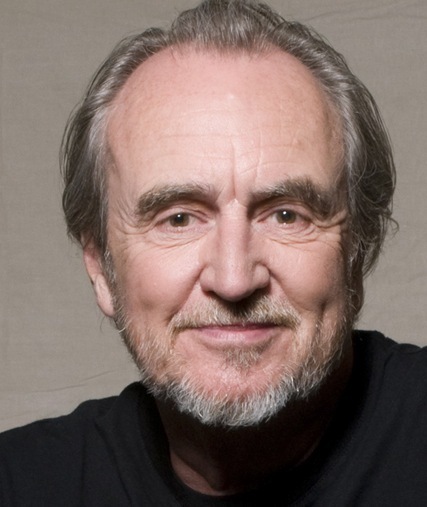
Rest in peace, Wes Craven. You will be missed.

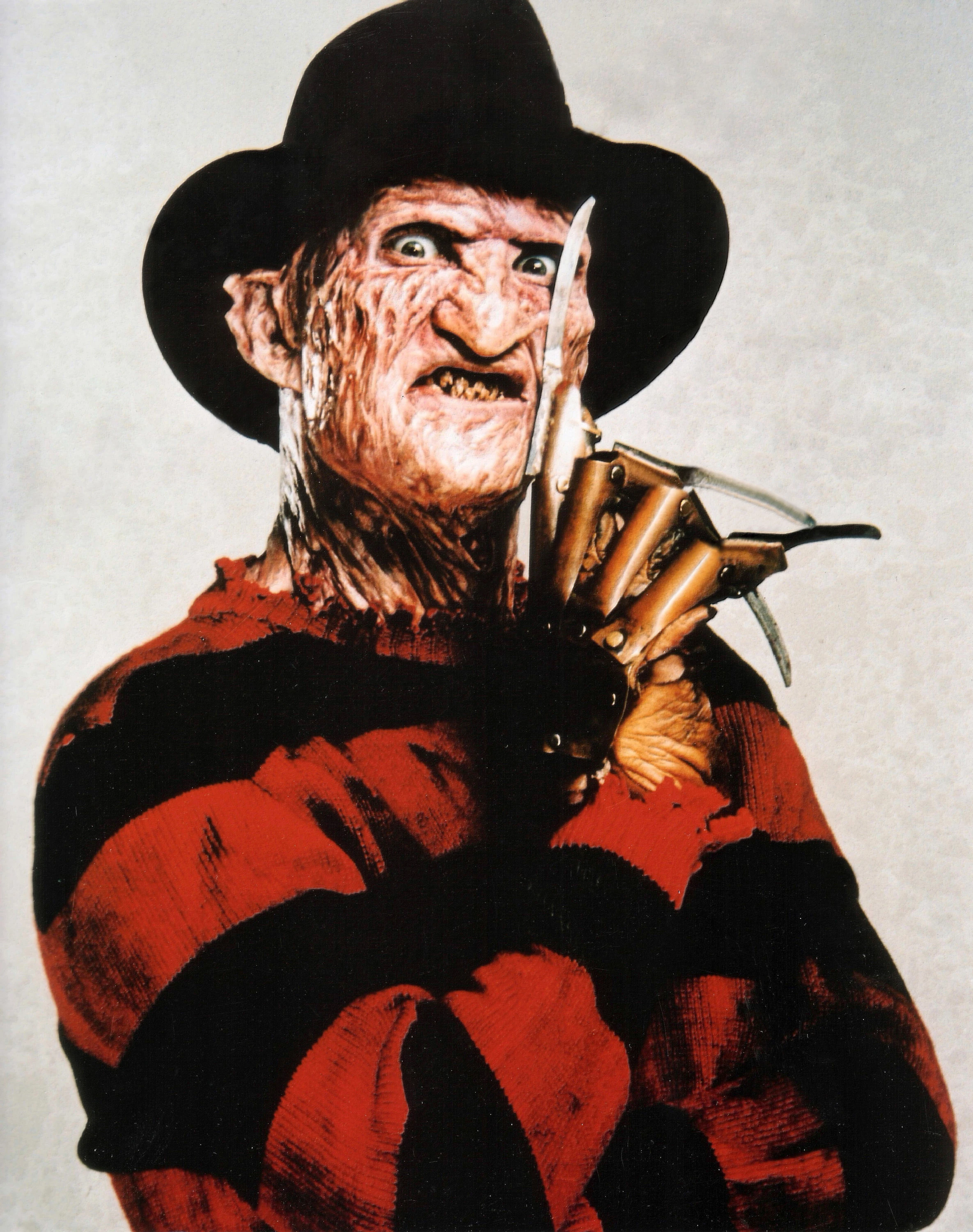
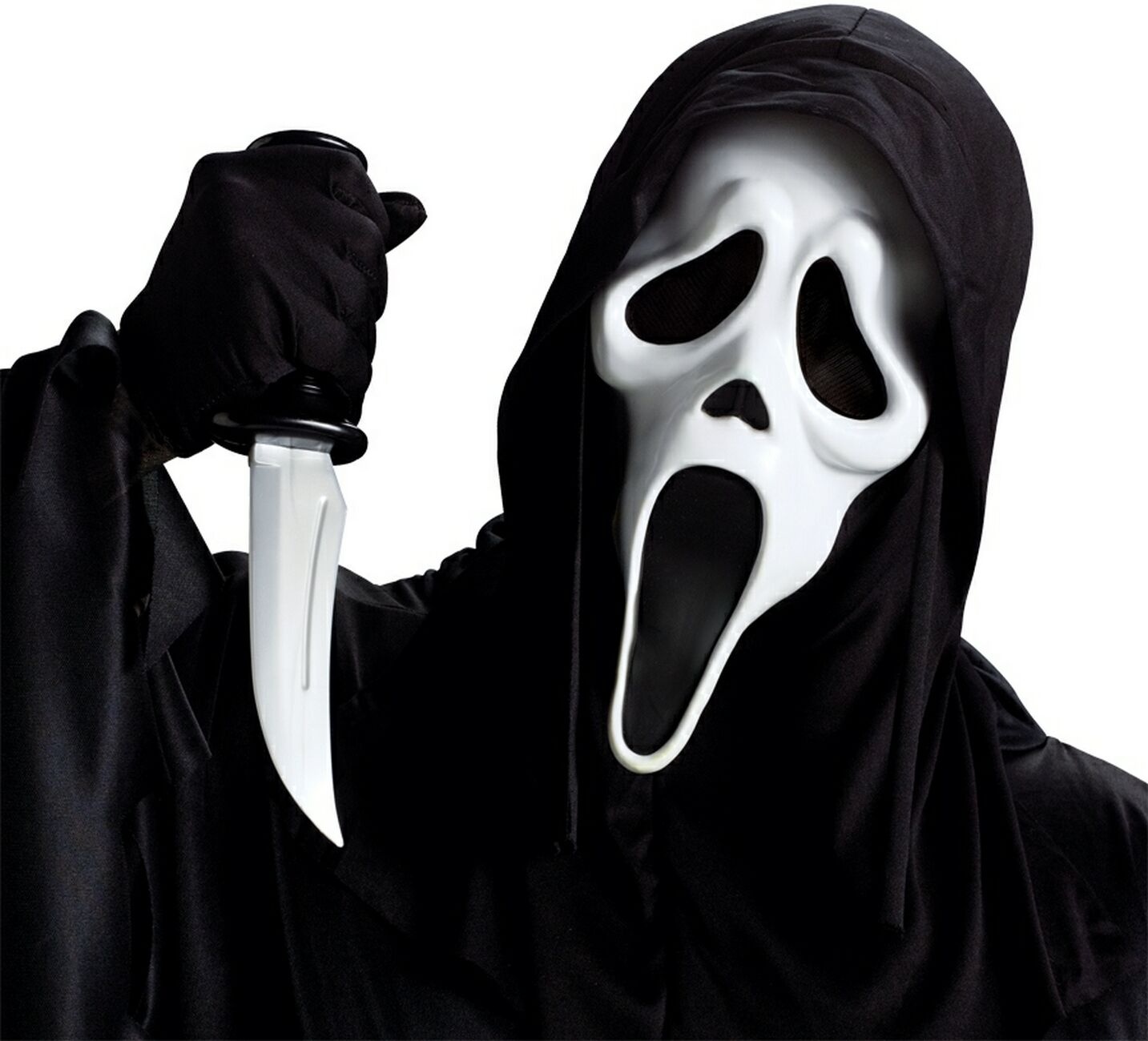
The word craven means “lacking in courage; cowardly.” I’m hard-pressed to find a man who embodied the exact antithesis of the meaning of his last man, and who instead managed to pass it onto the rest of us. Wes Craven was a filmmaking genius, a horror maestro who helped to create some of our most iconic movie monsters, including Freddy Kreuger and Ghostface. It is with great sadness that I have to admit that he passed yesterday after a lengthy battle with brain cancer at the age of 76.

I remember the first time I watched the original Nightmare on Elm Street. I was somewhere in my teenage years, and I was in my dad’s basement watching it on DVD. From the very beginning the movie set itself apart from other horror movies I’d seen in the past. The small box displaying Freddy preparing his trademark clawed glove, as if he were coming out of a long retirement to start some marvelous work again. That first dream sequence and death, and everything that came after it. Nightmare was visceral, it was scary, and at the end you wondered what was dream and what was reality, or if maybe they were all one and the same. For a guy who hadn’t had that much exposure to the horror classics of the 1980s (I might’ve only recently turned seventeen at that time and gotten access to my library’s collection of 80’s horror, most of which was rated R), it knocked me off my feet and made me want more.

You see, horror is my drug, and the Nightmare movies were really good blow. In Wes Craven, I’d found a powerful dealer, someone who could give me what I needed when I needed my horror fix. I would later find terror when I saw the Scream movies, and quite a few more (I really liked what he did with the North American remake of Pulse). You could go to him and usually he could provide the goods. Occasionally Craven produced some bad stuff—every filmmaker does occasionally, and in horror bad stuff is pretty common—but on the whole he did great work.

And how did Craven feel about these many fans, these people who saw him as a person who fed their inner desires for terror and probably gave more than one child nightmares for the rest of his or her life? To use his own words, “I come from a blue-collar family, and I’m just glad for the work. I think it is an extraordinary opportunity and gift to be able to make films in general, and to have done it for almost 40 years is remarkable…If I have to do the rest of the films in the [horror] genre, no problem. If I’m going to be a caged bird, I’ll sing the best song I can…I can see that I give my audience something. I can see it in their eyes, and they say thank you a lot. You realize you are doing something that means something to people.”(1)

Indeed Mr. Craven. You did something to many people. You gave us iconic characters like Freddy or Ghostface to haunt our dreams. You helped launch the film careers of Johnny Depp, Sharon Stone, and Bruce Willis (no seriously, he did). And you inspired generations of horror fans, from your protégé Nick Simon, whose new movie The Girl in the Photographs will premiere at the Toronto Film Festival next month, to me, a self-published novelist who, while not exactly famous yet, is working hard to create his own stories that maybe one day will scare people far and wide.

So while you may no longer be with us in Mr. Craven, you are very much alive. Like one of your creations, you haunt us in our imaginations and our dreams, making those you inspired take to their pens or computers and create their own wonderful nightmares. And as long as people fear Freddy or Ghostface or those Hills that have Eyes, you will continue to walk among us, leaving your mark wherever you go and giving us our fix when we ask for it.

So tonight, I will raise a toast to Wes Craven, a man with a vision, taken from us when we didn’t want him to go. I will get online and see if I can get a fix from one of his movies. And then soon, possibly tomorrow, I will get to work on my next terrifying creation and hope your ghost whispers in my ears while I do.

Lately I’ve been reading Stephen King’s Revival on my Kindle, and I have to say, while a bit more on the science-fiction side and a bit less creepy than other King novels like The Shining, Misery, or IT, I find Revival to still be a very interesting read and I’m looking forward to seeing how it ends.

While I do believe Revival’s not as creepy as other King novels, there is one part of it that is very unsettling: early in the book a lot of time is spent on the question of whether God exists or not. I’m not going to say what any of the main characters decide one way or another in case you haven’t read this one and want to read it sometime soon, but the way they question their beliefs in God and some of the conclusions they come to, coupled with King’s ability to immerse us almost completely in the minds of the narrator, causes us as the reader to question our own faith in whatever god or gods we choose to believe in, if we do.

Doubt. In some ways, a little bit of doubt in our strongest-held beliefs can be one of the most anxiety-inducing things in the world. All we’ve known or believed is called completely into question, and the power of that can send us completely reeling, make us terrified of the possibilities if we come to the conclusion that our beliefs are as false as a three-dollar bill. Even worse is that this doubt is housed entirely within our own minds, so outside attempts to erase that doubt are not always very effective. It’s like standing on the very tip of a structure that until now you thought was completely solid, but suddenly you discover cracks there and that the structure is in danger of caving in on itself. Your friends, your family, your religious leader, and even your favorite YouTube stars (why not?) can put some wood beams under the stones and put sand in the cracks, but they’ll only last so long. Fixing the structure, or letting it fall to ruin, has to come from within.

This makes me think of the lengths people will go to silence doubt. Anyone doubts America’s exceptionalism in the world (which I admit is a philosophy I find silly, seeing as many nations have said the same things about themselves and have later lost power or disappeared from the face of the Earth), those in favor of the philosophy will shout out those who oppose it and say they are un-American or even trying to ruin the country. A parent thinks their kid doesn’t believe in the religion that will get them into heaven, they will surround them with prayer and texts and church music until those kids sing with joy of God. Someone suspects their partner is being unfaithful to them, they will go to any lengths to either prove or disprove this theory, sometimes to the point of paranoia. A member of a secret group or spy ring thinks another member might be disloyal, they make that member go through some sort of bizarre and often sadistic test to ensure loyalty to the cause (at least in espionage novels; I have no idea if this happens in real life, though I wouldn’t be too surprised if it did).

What doubt can do to you.

What doubt can do to you.

Doubt is powerful, its effects on us are powerful, and our efforts to eradicate doubt can border on the extreme sometimes. You can see why a writer like King would use it in the first part of a story. He knows how scary it is, the effect it can have on people. And over the years and through age, experience, and reading, I’ve come to the realization of how powerful doubt can be as well. I even have an idea for a novel where religious doubt plays a major role. I have a feeling it’s going to be quite the unsettling story, whenever I get around to writing it. I doubt it’ll be anytime soon though.

Yeah, I went there.

In any case, it’s pretty obvious that doubt might be as much a part of the horror writer’s toolbox as any of the other fear-inducing tools and devices we have on hand. In a way, it’s also much stranger, because unlike the other fear-inducers, you can’t fight it or flee it for survival. After all, doubt is a product of the human mind, it exists within you. And you can’t outrun your own mind, can you?

And that, my Followers of Fear, might be the scariest part of all.

Andy Weir. E.L. James. Christopher Paolini. What do these three names have in common? If you guessed successful novelists, you’re close. They’re all successful novelists who were originally self-published, their stories caught on, and they eventually began to catch on and one day they woke up with millions of people reading their books, movies in the works and great things in their future.

I’m not sure I’m going to get the millions of people and the movies in my lifetime, but just hearing the success stories of these authors gives me plenty of reason to hope that this could happen to me some day. Self-published writers are having success stories everyday. I even heard of a teen in England whose fanfiction about her and a bad boy version of one of the members of One Direction became a smash hit and got a publishing deal (yeah, I didn’t know that sort of thing was possible either until I heard of it). It’s quite incredible how people can become successes over time in a field that used to be despised by establishment writers.

How do these writers get their successes anyway? Well, it’s different for each one. Andy Weir published through his blog, and it attracted a bunch of readers who wanted to read The Martian in Kindle form. E.L. James published her Fifty Shades trilogy as an e-book and used the emerging field of e-readers as well as word of mouth among erotica fans to gain a following. Christopher Paolini toured around the United States, visiting schools and libraries and dressing up like a man from the Middle Ages to get books into the hands of kids and teens, until the son of author Carl Hiassen found Eragon, loved it, and brought it to his dad’s publisher’s attention. And, if that story about the 1D fanfiction is true, then I think she posted it on WattPad, which is kind of like the YouTube of writers (and which, along with Goodreads, I need to use more often).

One thing that these all have in common, the authors made it easy for interested readers to get their hands on their work. And their work was really good (though from what I hear Fifty Shades is very poorly written), which made people want to read more and keep coming back for more. Thus it sometimes snowballs until…success, I guess.

Now does this happen for all authors? Obviously not, or we’d all be reading books by people whose works may be anything from really good to just plain dreadful. But it could happen to any author who puts in the right amount of dedication to their writing and marketing and who has a little bit of luck on their side.

God knows I’m working hard on all of those when I’m not working or looking for jobs. I’ve had sales that have been very successful and gotten my books into the hands and Kindles of plenty of new readers. And I’m working on an audio book of Reborn City, which is probably my most popular novel right now, so that could open up a whole new field for me: those who like a good story on long car trips or while jogging. And I’ve got a story or two I think would do great as serials published on WattPad and on Kindle, though I’m not sure when I’ll get around to writing them.

And of course, I tell people. I let them know about the books I’ve got out and if they’re interested I give them my cards so that they know where to find them (I’ve already gotten two or three people at work to promise me they’ll get copies of at least one of my books as soon as possible). And I’m always looking for new ways to get readers interested, and usually they work.

So maybe someday I can be, if not the next Stephen King, then maybe the next Christopher Paolini or Andy Weir. Selling enough books to write full time, expanding my media so that more people are exposed to me and maybe find a new favorite author. Anything’s possible. I just got to keep writing, keep working hard, and above all never lose hope.

*Warning: this post contains spoilers on a recent novel. Read with caution.*

I heard something very interesting yesterday that I, as a writer, a Jew, and a scholar on the Holocaust have to comment on. When you read that title and saw the words “Nazi Romance”, what popped through your mind? Probably nothing good if you haven’t heard yet, and probably a ton of controversy and maybe some simmering anger if you have heard yet. In case you’re among those who haven’t heard, let me explain:

The controversy centers around a Christian romance novel called For Such a Time by a woman named Kate Breslin that came out last year. The novel has received nods for awards and positive reviews in that time, including a few from the Romance Writers of America. However, a lot of people are taking offense at the subject matter: it’s a retelling of the Biblical story of the Book of Esther set in a Nazi concentration camp with a Jewish woman with Gentile looks and a Nazi commandant as the heroes. Long story short, the commandant thinks this blonde beauty can’t be Jewish and puts her to work in a supervisory role in the camp under a false name. Thus begins a strange, tension-filled romance that some have likened to sexual harassment coupled with Stockholm Syndrome (sounds a bit like my thesis Rose) that ends with the two heroes getting together despite all obstacles and, because this is a Christian romance novel, the heroine converts to Christianity (not like my thesis Rose at all).

Now I have not read the novel–I only found out about this yesterday, I’m not interested in reading a romance novel, let alone one trying to get me to look at Jesus in a new light, and even if I was by the time I finished it the Internet’s short attention span might have moved onto something else–but you can see why this sort of story might cause some upset feelings. The major criticism is that the novel co-opts one of the greatest tragedies in modern history, and the biggest tragedy in modern Jewish history, so as to advance a particular religious aim.

At the same time, some have come out in favor of the book. Anne Rice actually defended the novel, saying that writers should be able to experiment and that the almost extreme outcry rising on the Internet around this novel is akin to censorship and a lynch mob. The organization Romance Writers of America has said something very similar in response to For Such a Time getting two nods for major awards they hand out.

Now, I don’t like Internet confrontation. But like I said, I’m a writer, a Jew, and a scholar on the Holocaust, so I feel some need to weigh in on this subject. First off, I understand the point of view about experimentation vs. censorship. In several stories I’ve written over the years, including Rose, I’ve pushed boundaries of my own comfort zone and maybe the comfort zones of my readers in order to create a better story. Writers should be able to do just that, experiment and push boundaries in the name of creating a great story. To regulate what writers work on or threaten them if they write something someone finds offensive, which is made all too much easier by the anonymity of the Internet, does smell of censorship and makes me think of extremist vigilante justice using a new medium to intimidate people. Almost like a lynch mob, in fact.

Can you really make fiction–let alone romantic Christian fiction–out of a subject like this?

However, I do see why people are outraged over this book. Like I said, the Holocaust was a tragedy. Of the estimated 12 million victims of the Nazi genocide, around half were Jews. To take what was a horrific and defining moment for modern Jewry and use it as a backstory for a romance meant to draw readers close to Jesus is very insensitive to victims and survivors of the Holocaust who lost their lives because of their heritage, as well as those who carry that heritage today. The conversion to Christianity at the end is also very disturbing, because many Jews were forced to convert before, during, and after the war for survival and it sometimes caused trouble for them later in life. To portray it as an act of love…to say the least it seems unsettling.

Ultimately, I feel the best way to view For Such a Time by Kate Breslin is to view it as a teachable moment. While writers should be able to write and experiment as they wish, they should also be cognizant that writing about some subjects (like the Holocaust) requires more sensitivity and caution than others. When dealing with a subject such as this, it’s important not just to know your facts, but how people–particularly those affected directly by said subject–feel about it. That way when you write about it, you are writing it in a way that, while it may not please everyone, it will not cause the sort of outrage this novel has caused.

This was what I did with Reborn City when I wrote it. I’m as far away from the gangster lifestyle as possible, so I did my research to make sure I represented gangsters in a way that would do the lifestyle justice . So far, I haven’t had any complaints.

Thankfully Breslin has already issued an apology, saying she wrote it with the best of intentions and she’s very sorry for any offense or pain she caused to the Jewish people. And while others may not forgive her, I think I can. I think she’s learned form this experience. And when she puts out her next book, perhaps it’ll get the attention that every author wants their book to have, rather than the nasty kind her first received.

What’s your take on this subject? Is Ms. Breslin out of line or was she just trying to write a good story?

Should authors be more sensitive when experimenting with their stories? And is the uproar over this book overblown or justified?

Let’s discuss.

I’ve often compared being an author to being the God of a fictional realm. And to some degree that is true, but it doesn’t mean we’re almighty. Often times the story you start writing won’t turn out to be that story. It’ll change or need to be changed. The personalities of the characters will act and react in ways that you didn’t think they would, or you find yourself not liking where the story goes. No matter what you do, this story isn’t going to go the way you imagined. And when that happens, you need to rethink the story a bit.

It’s kind of like one of those dance routines on a dance show (I used to watch So You Think You Can Dance). Often with those dance routines, they’re trying to tell a story. In this metaphor, you and your story are working together, using words and images as dance moves to entrance the reader and get them to watch the whole routine, aka read the whole story. But of course no routine starts out perfect and along the way there needs to be changes. And sometimes those changes need to be rather dramatic if the entire routine is going to work. Maybe its a few moves that need to be changed, other times the costumes need to be changed, and every now and then the song needs to be changed as well. Otherwise this story just won’t work.

Now some of you may be thinking, “He’s treating the story like a living person.” Well, why not? If the Bible is the living Word of God, and if the Constitution is a living document, why can’t a story being written in a notebook (paper or digital kind) be alive either? Many authors know what I’m talking about, they feel that the story is a being working with them as it gets laid down on paper, that it is having as much say as what’s put down and what’s not. Rather than resist it and insist that the story obey its Creator, it’s better oftentimes to just listen to the story and see what it says.

I had this situation occur to me on the short story I’m working on now. I finished the outline thinking it was going to turn out great. Unfortunately after ten-thousand words I started to realize that this story was not what I wanted. I mean on the outline the story was still good, but while writing it out I just couldn’t get into it. At the same time, I could hear the story in my mind, speaking to me. It said I shouldn’t give up on it (like I would do that, this is a good story in concept) but that I should explore a new angle for it.

So I took a break. I thought about it. And I found a new angle to tell the story with. I wrote out an outline today and got a couple pages in without any trouble. It’s a good start, though how well that goes for the rest of the story depends on a number of things. Like how I feel about the story. And how the story feels about the direction we’re going in.

Writing a story, like making a movie or performing a play or producing an album, is a collaboration, and all involved need to be in sync in order to make the story truly work. Sometimes that means acknowledging that, maybe even if only subconsciously in your mind, your story is alive and you need to work with it, not just on it. The results that occur when you do are truly spectacular.

Do you ever feel like your collaborating with another person when you’re working on a story?

What’s that like for you?

Oh, and an update on the audio book of Reborn City: I have posted it on ACX, the company I wrote an article about last year. I’ve also contacted a few narrators I’ve found on the site who I think may be able to give that right touch of magic for RC. Hopefully at least one will respond within the next few days, and then we can get to work on producing some audio book magic. Exciting right?

Of course if you want to get some RC action now, you can check out its page here and then find links to where it’s available. Enjoy!

If you’ve known me for a while, I’m big on trying to correct injustices and inequalities. Racism is a big one for me, and when I hear people say “Racism’s dead” or “It’s not as big a deal as people make it out to be”, I’m among those pointing out why those folks are so wrong. In my own fiction I try to create casts that are very diverse, using characters with different sexual orientations, religions, genders, gender identities, ages, and races, among others.

Which brings me to why I’m writing this post. The past couple of days I’ve been working on a new short story that will probably turn into a novelette, based on how many words I’ve written so far. In it, four of the main characters are white, while one of them is black (and in a relationship with another male character, but I digress). While writing the first scene in the story, I was trying to point out the that Fred, my black character, is black. Why? Because I worry that unless I point it out, they’re going to assume he’s white.

Realizing that I was thinking this made me stop and think about my other works. Why do I take the time to point out a character’s race? Do I do the same thing for my white characters? And why do I assume that they’ll think I’m white in the first place?

On that last question, my roommate here in Germany, who has a background in psychology, was able to provide the answer to this question of mine one morning while waiting for the bus: “Most people tend to transfer their own qualities to others, including characters in stories.” That makes sense to me, and I’ve got a personal anecdote to back it up (I know anecdotes don’t count as scientific data, but bear with me): when I was 17 I spent five weeks in Israel and at one point we passed by a bookstore with some books in English. Having already read through the two books I’d brought with me (no surprise there), I went in, browsed the titles, and bought I, Alex Cross by James Patterson. This was my first Alex Cross book, but sixteenth in the series overall, and at first I didn’t find any indications to clue me into the fact that the protagonist was black. It wasn’t till midway through the book that I realized from the conversation between Cross and his grandma that they were black! Had to really adjust my image of the guy in my head right there, as well as several other characters.

Funny what reading out of order and a few misconceptions can do.

But in this line of thinking, wouldn’t this mean I assume all my readers are white? Well, I know for a fact that’s not the case: while I still have a relatively small readership (both in terms of books and blogging), they come from a variety of backgrounds. Some I know personally and off the Internet, and can attest is that they’re not white. What I worry about is that they’re going to transfer my race, which is white, to my characters. And it’s not a crazy concept: if you had never read or seen Harry Potter and heard about it and then saw a picture of JK Rowling, what would you assume the protagonist’s race was? I’d say you’d guess white.

And in a strange way, I’m helping my readers come to these assumptions. Unless I’m noting how pale a characters’s skin is, I generally don’t do anything to indicate a character is white. In Snake, where a majority of the characters were white, I did very little in terms of description when it came to skin color, and yet I’m pretty sure everyone who read the book was able to figure out my characters’ races just fine. The same in Reborn City: except for noting that Ilse has very pale skin, my white characters didn’t get any indications to clue the readers into their whiteness, while every character of another race did get indicators.

So why is there this collaboration between my readers and I? And do other authors do this?

For the second question, I’d say yes. I’ve seen plenty of other authors do this, including idols of mine like JK Rowling and Stephen King. And for the first, I think it might have something to do not just with the transference thing my roommate mentioned, but also with the society I live in. Think about it: while America may have a black president now and there are more people-of-color in the media than ever before, it’s still a very white-centric society. Because of this, I think that means, along with transference, I don’t feel the need to give indicators for white characters because in America, whiteness is still considered “the norm”, and my readers won’t imagine my characters a different color unless told otherwise because they’ve been conditioned to feel that whiteness is still “the norm.”

And I’m sure that if I were of a different race in a different country or culture, the same concept would apply. If I were Middle Eastern writing in Israel, probably all my characters would be Israeli Jews or Palestinians and I’d give indicators for tourists or Ethiopian or Russian Jews. If I lived in China and was Chinese, I’d probably only give indicators for non-Chinese Asians or Americans or something along those lines.

So to wrap this whole post up, the way my mind works, plus the way my readers’ minds work and the society we were raised in all collaborate in this strange need I have to mark my characters so as not to give my readers a false impression. Funny how that works. Even weirder that it makes sense to me as I write about it, and that I’m not sure whether or not I feel anything about it other than it being strange. Maybe that’s just how one should feel about something like this. Not liking or disliking it, but accepting it as one of those weird facts of life.

Well, I’ve gone on and on about this subject for a while now. Now I’d like your opinion on it. Do you think what I’m doing with non-white characters here is strange? Why or why not? And do you ever do the same thing in your writing? Why? Let me know, I’d love to hear your thoughts, Followers of Fear.