Archive for the ‘Review’ Category

So on Facebook, this thing’s been going around my friend circles where you post one picture of the cover of a book that you love or found influential, no explanation, and then tag someone else to do the same. You do this for ten days in a row, posting a different book cover and tagging a different person each day. I knew that eventually I’d get tagged, so I wasn’t surprised when my cousin Matthew tagged me for his second day. However, because I never follow anyone else’s drumbeat, I decided to do this on my blog and talk about why I love the books so much. Who knows? It may get some people to pick it up and read it.

So with any viral Internet tag/challenge/meme/award/whatever, you have a set of rules. Here are mine for this challenge:

  • Thank whoever nominated you with big, bold print. If they have a blog, link to the post where you got tagged there. He doesn’t have a blog, as far as I’m aware, but thanks Matthew! I appreciate it!
  • Explain the rules.
  • Post the cover of a book that was influential on you or that you love dearly.
  • Explain why (because I don’t see the point of just posting a picture of a book cover without an explanation. That goes for Facebook as well as blogs).
  • Tag someone else to do the challenge, and let them know they’ve been tagged.

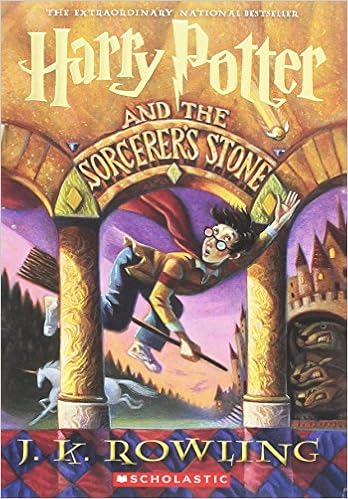
So there we go. We have rules, so let’s start the Ten Day Book Challenge. And with Day One, the choice of book is obvious: it’s Harry Potter and the Sorcerer’s Stone.

It’s fair to say that without Harry Potter, I wouldn’t be a writer. When I saw the first film it blew my mind, but the first book, which I think I read afterwards…I don’t know how to describe it, truth be told. Not just the world of Harry Potter, but the words within truly immersed me in the story. I don’t think before then I knew how words could be used like that. The words were the real magic, because they made places and creatures and people and concepts with rules come to life out of nothing. Like God, in a way. And I worshiped JK Rowling for years like a god, rereading the available four books at the time obsessively. But not only that, but I tried to write like JK Rowling. My first attempt at a novel was a Harry Potter-esque story with a female lead.* And even when I stopped working on that story, I still relied on Harry Potter and the works of JK Rowling to give me a basis on how to write.

It sometimes amazes me how far from Harry Potter ripoffs I’ve come since then. In fact, there’s almost no resemblance between my stories and Harry Potter! Still, without JK Rowling’s initial influence, I might be doing something very different today. And I have no idea what that “something very different” might be.

Ooh, there’s a horror story right there!

Anyway, I’m tagging my friend and fellow author Matthew Williams of Stories by Williams. Good luck, Matt! I hope you have fun with this (as well as time for it, what with a new book out and all).

That’s all for now, my Followers of Fear! I’m going to start prepping for tomorrow’s post…as well as possibly Days Three through Ten. Something tells me I’m going to need the prep.

*For more on my early writing projects, click here for an article on that subject.

Slender Man has been one of the most talked-about fictional figures to be created in the past ten years. It seems that it was inevitable that a major film adaptation of the character would come out, though nine years after the character’s introduction and two or three years after his peak in popularity seems later than I’d expect. But since the film’s trailer came out, there’s been a lot of discussion on the film, not just whether it would be any good or if it was too late for a Slender Man film, but also if there should even be a film based on the character. I won’t touch on that last subject (that’s something for a post for another day), but I can answer the first two.

Starting with if the film is any good, I’m going to say I have the same feelings towards Slender Man as I did to The Forest: a concept with great potential, but an execution with poor payoff.

Based on the famous Internet boogeyman, Slender Man follows four teen girls who find an online video that’s supposed to summon the titular entity. Soon after, they start getting sick and having nightmares. When one disappears, the remaining three realize that something is afoot, that they are being watched and stalked by an entity alluded to in folklore and on the Internet by a variety of names. And it won’t leave them alone.

The problems with this movie are numerous. For one thing, this movie is excessively trope-filled. And while we horror nuts love our tropes, we like them done with a little style, or a bit of love, or even some subversion. And we never like the film to be so trope-filled that it’s hitting us over the head with them. None of that love is here, and thus the tropes ring hollow. In addition, the film fails to build an atmosphere. Watching the film, I didn’t feel creeped out or terrified as I might have with another film. I just felt neutral the whole time, even when they are trying to scare me with disturbing footage (again, in another film this might have been terrifying). When you have a horror film filled with hollow tropes and no atmosphere, that doesn’t bode well for said horror film.

On top of that, the characters are pretty flat. It’s almost like they have variations of the one generic teen girl personality. I know you only have so much time to build personalities in a film that focuses on scaring the shit out of you, but you could literally shift these girls into each other’s roles, and it wouldn’t make much of a difference.

And finally, there are plot threads that are left hanging. They just present some threads, and never wrap them up. I left the theater with a lot of questions: what happened to that one girl we last saw looking out a window? Is the character Wren a preacher’s kid? Shouldn’t that matter more to her character? What happened to that one dude? We kind of just forgot about him.

Such potential for this character. And they wasted it with his first official film outing.

So yeah, Slender Man doesn’t have that much going for it. Does it have any good points? Well, the actors are decent. They’re not given much to work with, but what they do with it is pretty good. There are a few effective jump scares. And for all its faults, the film seems to have some respect for the Slender Man character and mythology. They really tried to incorporate as much as they could of the mythology into the film, and it shows.

But other than that, this film is poorly written and overly-reliant on tropes, with uninteresting characters and a lot of plot threads that just don’t get resolved. On a scale of 1 to 5, I’m giving Slender Man a 1. If you want a horror film based off a popular folklore character, there has to be better than this.* In the meantime, I would skip this one. And hope the next time a film about a creepypasta character is made, it’s done a lot better than this.

And as for whether it was too late for a Slender Man movie, I don’t think so. There’s always an opportunity to make an old story or idea new and relevant again (look at last year’s It, for example). I just feel that Slender Man was too reliant on the character’s past popularity and thus didn’t put that much work into making a good movie. If they had, this could’ve been something awesome, rather than a pointless piece of commercial fluff trying to make a buck off of something popular. Like The Angry Birds Movie.**

*Hell, there’s a better Slender Man film out there! You see, this is the first official Slender Man film, with the permission and blessing of the copyright holders over the character (yeah, he’s not as public domain as I thought he was). There was one a few years ago made without permission, a found footage film also called Slender Man that I honestly enjoyed more than this. It wasn’t the most amazing thing, but it was a good deal better than this piece of crap. Too bad it wasn’t official, because I prefer it over this one.

**Or the Friday the 13th remake. Okay, that’s not commercial fluff, that’s just another crap film that takes a great horror character and does everything wrong with him. And until something better is produced to remove the stain, I’LL NEVER STOP HATING ON IT!!!

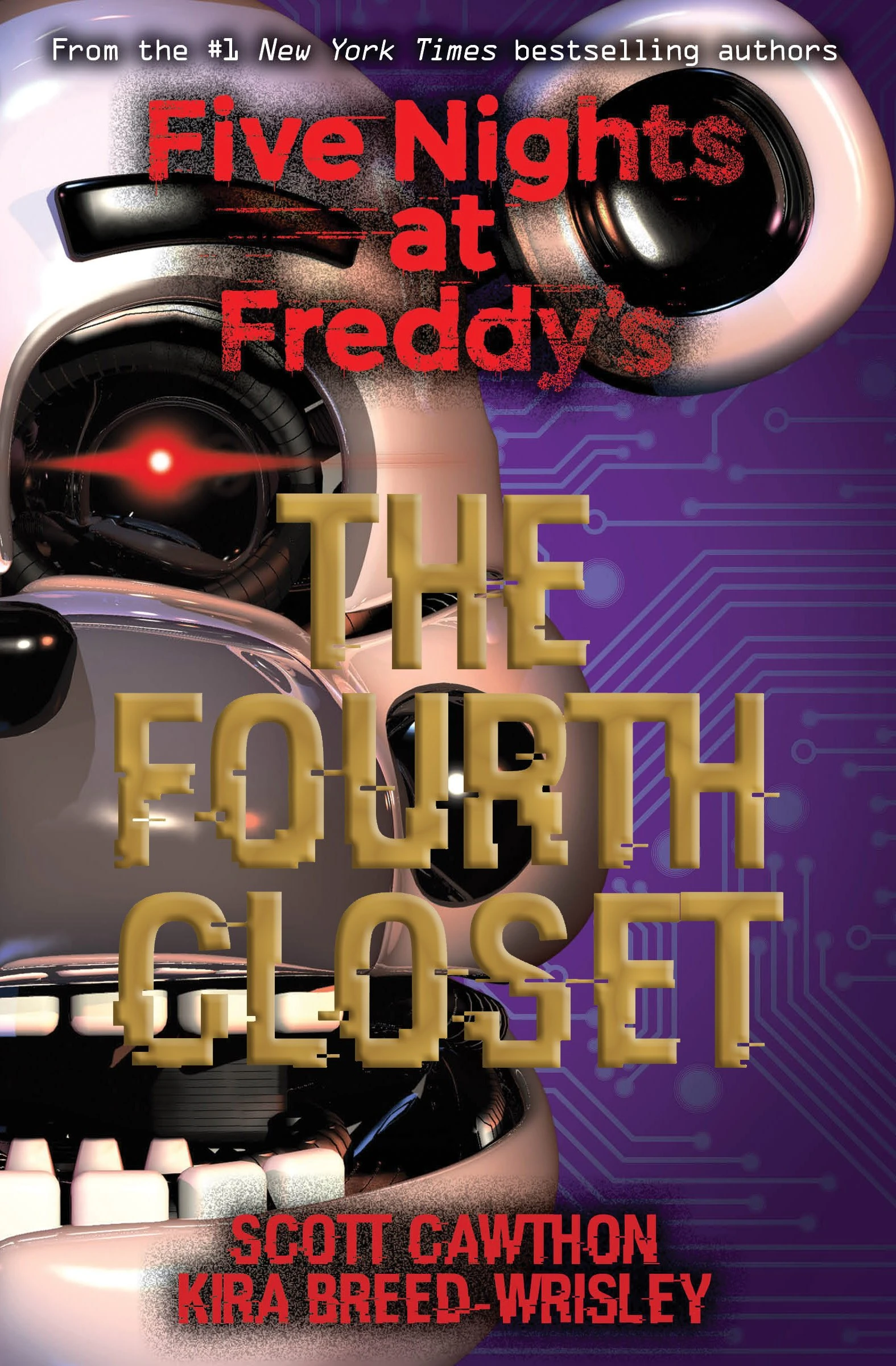
Well, here we are. The latest Five Nights at Freddy’s novel, The Fourth Closet, was released late last month. I’ve spent the past week reading it, wondering if this is the last novel, if this book contains answers to the events of the previous books and the franchise’s lore as a whole, and wondering just how this volume compares to the previous two books. Since I finished it yesterday, I’ve been dying to share my thoughts on it (and all without being shoved into an animatronic suit, I might add). So now that we’re here, let’s dive into what is likely the last FNAF novel (thought considering this novel was co-written by franchise creator Scott Cawthon, who knows if it’s truly the last?).

So for those of you who don’t know, Five Nights at Freddy’s is a video game franchise about security guards having to deal with haunted animatronics that try to kill you during your shift at a pizza place (or in the case of the fourth game, someone’s bedroom). Yeah, I know it sounds ridiculous, but it has proven immensely successful, spawning several sequels and spin-offs, three novels, a movie in development at Blumhouse Productions (which I wish would go into production already), and thousands of fan-made tribute games. Some of the reasons for the game’s success is its simple yet intense gameplay, as well as its deep and mysterious lore (supposedly the events of the game were caused by a serial killer and the ghosts of his victims, but figuring out what exactly went down and when is a challenge).

I’ve reviewed the first two books, The Silver Eyes and The Twisted Ones, and while I wouldn’t count them among my favorite horror novels, I have found them intriguing enough and similar to slasher movies in book form. And I found Twisted Ones to have improved and fixed many of the issues of Silver Eyes, making for a better novel, so I hoped The Fourth Closet would also improve. Did it? Let’s see.

Fourth Closet takes place about six months after the events of Twisted Ones, and tells the story mainly from the POV of the other main characters, especially series’ protagonist Charlie’s love interest John. At the end of Twisted Ones, Charlie had seemingly died, but in this new volume, we see Charlie returned alive two days later. Or did she? While everyone else is convinced this Charlie is their Charlie, John isn’t so sure. And when kids start disappearing in town again, like they did during the tenure of the original Freddy Fazbear’s Pizzeria, John must gather the gang together again to investigate. But will searching for the truth lead to answers, or will it lead to horrors that the characters never anticipated?

So to start, this novel does show improvement over the previous two. The story and mystery is well-told, and the violence, which there is plenty of, is written to be easy to picture in our heads. I also found a number of surprises in the course of the story that were really surprises, rather than predictable twists, and elevated the story. And of course, we got to see a number of famous animatronics from the franchise, including a few of my favorites. I never mind seeing those guys. And finally, the story ends in a way that I can be satisfied with, especially if Cawthon is intending on writing a trilogy.

Of course, this novel does have some issues, as the others did. For one, the main cast is still flat as boards. Yeah, we get some insight into their thought processes in this book, but it doesn’t really allow us to get to know them as characters. That, and there’s a big reveal about Charlie that isn’t as well-written as it could have been. So while I kind of understand what the reveal is, I’m also a little confused and could use some more information to explain things. I know, Cawthon likes to let fans guess and spin theories with this franchise, but doing the same thing in a novel can seriously backfire on you (believe me, I learned that during one of the drafts of Rose). And trust me, it backfired here.

But on the whole this novel is a decent story, and shows its writers’ desire to learn from past mistakes in order to make sure any addition to the franchise is worth it. On the whole, I’m giving Five Nights at Freddy’s: The Fourth Closet a 3.4 on a scale of 1 to 5. If you recall, I gave the first and second books ratings of 2.6 and 3, respectively, for an average of 3 out of 5 for the trilogy. Average as a whole, but considering the source material  is a video game franchise and that the creator isn’t used to writing prose fiction, average is great. After all, under other creators, it could very well turn into the literary equivalent of the Super Mario Bros. movie. And nobody wants that!

From left to right: Sailor Mercury, Sailor Mars, Sailor Moon, Sailor Jupiter, and Sailor Venus.

I’ve been wanting to do this a long time, especially after the post about my favorite manga series did unexpectedly well. Just had to have the right timing. And as this weekend is the first of two Sailor Moon movie screenings,* I figured now would be a good time to discuss one of my favorite anime of all time, Sailor Moon. What it is, why it’s great, and what it means to me personally. There’s a chance that very few people are interested in that, but I’ve often been surprised by what gets read the most on this blog, so who knows? Perhaps you’re as interested in why a 25-year-old horror writer holds a debt to Sailor Moon as I am.

So if you’re somehow unaware of what I’m talking about, Sailor Moon is a Japanese media franchise that started off with a manga by Naoko Takeuchi and has since seen several different adaptations, the most enduring and popular of which is the anime that ran from 1992-1997. Stories vary slightly from iteration to iteration,** but the basic structure across all, especially the anime, involves a 14-year-old teenager named Usagi Tsukino who learns from a talking cat that she is a guardian with special powers bestowed upon her by the moon who must gather allies, find a mysterious princess and her magic gem, and stop dark forces from taking over the world. Thus she becomes Sailor Moon (the Sailor part referring to her superhero outfit being based on the sailor-style school uniform), a magical warrior dedicated to love and justice.

And if you’re unfamiliar with the show, just based on that description and the photo above, you might think that this is the silliest premise ever. And I’ll admit, you’re  not wrong. It is kind of a silly show at times, and not without its problems. Most episodes were formulaic monster-of-the-week stories with the characters discovering a scheme by the enemy of the season and destroying a monster. There was also a lot of reused animations, which was typical for a lot of anime from the 90’s (and today, to a degree). And let’s face it, the main character Usagi Tsukino/Sailor Moon isn’t your ordinary protagonist. She starts out as only caring about sleeping, eating, relaxing and finding a cute boyfriend. Fighting evil is the last thing she wants to do!

Oh, and this show was also being made simultaneously the manga. So while the former took cues from the latter, it often had to make drastic changes and that occasionally led to glaring storytelling issues. (*cough* rainbow crystals? *cough*)

Usagi Tsukino, aka Sailor Moon. Goofy as heck, but a heart and the capacity to grow braver with every episode.

But despite all that, there’s quite a number of things that this anime has going for that. For one thing, the characters: in the 1980s, female characters were in animated shows were either just “the girl” (ex. Smurfette or Arcee) or they all existed to sell toys and didn’t have very distinct personalities from one another (ex. the original My Little Pony). But Sailor Moon was special as each of its female leads had very distinct personalities: Usagi/Sailor Moon is goofy but kindhearted; Ami/Sailor Mercury is smart and bookish; Rei/Sailor Mars is a hotheaded but empathetic psychic; Makoto/Sailor Jupiter is a strong-willed fighter with a passion for baking and gardening; and Minako/Sailor Venus is a fun-loving but ambitious girl and a skilled warrior. Not only that, but throughout the series, the characters would have individual episodes devoted to their growth where they worked on overcoming their flaws and issues. Even Sailor Moon, who always retained her goofiness throughout the series, became a strong leader and fighter who wouldn’t hesitate to fight to protect the world she loves. This ended up creating a mix of role models that people like me growing up could look up to and identify with on a number of levels.

There’s also the fact that this show was hugely empowering for a number of kids back in the day. On the one level, it is highly feminist in its portrayal of its female leads. They are able to fight off their enemies while still retaining their personalities and femininity, and the show doesn’t make a huge deal out of it (like they would if characters regularly shouted “Girl Power!” or something). Even if the male lead of the show often helped out and stepped in during a pinch, it was still the ladies doing the main fighting. That’s really amazing. And on another level, you have regular teenagers saving the world from forces that are cosmic in their power. When you consider the other big superhero shows at the time were shows like Batman or Superman, that’s big. I mean, one’s a billionaire and the other’s an alien. How many kids growing up with those shows were either of those? And then you had Sailor Moon, with ordinary teens, teens we already looked up to, being chosen to be superheros. Do you know how inspirational that could be to kids back then?

And those are just a couple of reasons this show has been so enduring and beloved. It’s also been noted for being very LGBT-progressive at a time when that wasn’t usual; for pumping new life into the magical girl genre of anime that’s still flowing today; for influencing a number of shows, including the American hits Steven Universe and Star vs the Forces of Evil; and so much more. It’s no wonder that the show has endured and continues to find new fans.***

Sailor Moon and Luna Funko Pop dolls. There are good reasons why I bought them, and why I hope to buy more someday.

And as I said, I owe this series a huge debt. Sailor Moon is still one of my favorite anime ever. I identified with many of the characters, and Sailor Moon herself made a big impact on me. She wasn’t hero material at all when she started out, but over the course of the series she truly became a hero. That’s a character arc I still include in my own stories (Zahara Bakur from Reborn City, anyone?). Not to mention this show helped plant the seeds of feminism in my young mind.

And you know what else? I still find reasons to love this show to this day. Just a couple of months ago, this show gave me a pep talk when I was feeling a little disenchanted with writing. It was quite powerful, and it reignited my love for storytelling again. If a show that’s older than me can do that, then I’m glad I still watch it all these years.

To sum up this monster of a blog post, Sailor Moon is just an awesome show, and it isn’t hard to see why it endures to this day. And if you’re at all interested, I highly recommend checking the anime out, or any of the other incarnations out there.  You never know. You may get out of it something special like I did all those years ago.

Are you or have you been a fan of Sailor Moon? What did/do you like about it?

That’s all for now, my Followers of Fear. Thanks for reading this long post of mine. I hope you liked it. Maybe someday I’ll write more posts about anime I love. Would you like that? If so, let me know. And until next time, pleasant nightmares.

*The first two films get screened in theaters this Saturday, and a special and the third movie is next Saturday. Probably won’t surprise you that I have tickets for both.

**And I’m sorry I won’t discuss those here. Perhaps I’ll discuss some of the other adaptations another day.

***Especially with more faithful translations. Back in the 90’s when I found the show, it was heavily edited to make it more geared towards American kids, because that’s what you did with anime in the 90’s. While I still have fond memories of that edited version, I’m glad that nowadays you can get the anime without all those silly edits or American character names. It feels more pure that way, and endears it more to new fans.

I’ve heard everyone from Stephen King to members of Facebook groups I belong to raving about this book. Heck, some of the latter were raving about it months before the book came out (how they were able to do that well before the book came out, I have no idea). I remember listening to the audio book of Tremblay’s previous book A Head Full of Ghosts a few years ago and liking it, though I didn’t find it scary (see my review for my full thoughts), so I thought this was worth a try. And I’ll agree with His Royal Scariness, this is definitely Tremblay at his best.

The Cabin at the End of the World centers on Wen, a young girl and her two dads, Andrew and Eric, who are taking a vacation off the grid in the deepest parts of New Hampshire. At the start of the novel, a man named Leonard appears before Wen and attempts to befriend her. He is soon followed by three others who claim that Wen and her family are the key to saving the world. But to do it, a price must be paid. Thus begins a tense story of belief, insanity, and violence as Wen and her dads are held captive in their own cabin and given an impossible choice.

Like I said, this is a tense book, and an intense one to boot. Like A Head Full of Ghosts, Tremblay focuses mainly on the psychological state of the characters rather than outright answering whether what we’re reading about is actually supernatural or the delusions of troubled individuals (and like the former novel, there’s an argument to be made for either one). The result is that you’re kept guessing as to which it is while getting a very personal look into these characters as they deal with the stress of the situation. It’s powerful, and makes you really connect to the characters and want to keep reading to find out how the story ends for them.

I also liked how unpredictable Cabin was. There were a couple of instances in the story that really threw me for a loop. Heck, following one of them, I kept reading for several pages sure I’d misunderstood what I’d read or that Tremblay was pulling my leg, heightening the emotional impact when this twist finally sunk in.

Add in that the novel was a great example of showing diversity in fiction without being patronizing or just showing diversity for diversity’s sake (Wen is from China and her dads are a gay married couple), and that an actual medical issue is portrayed with accuracy, rather than in 99% of other stories, and you’ve got yourself a decent novel.

I don’t have anything that I feel like saying detracted from the book. Maybe I wasn’t scared as others might be, but then again, I’ve built up a tolerance to being scared. I still found it extremely tense and emotionally powerful, and I enjoyed it for that. And that’s good enough for me.

On a scale of 1 to 5, I’m giving The Cabin at the End of the World a 4.5 out of 5. Gripping with suspense and characters you truly feel for, you’ll have a very hard time putting it down while you read. Take a look and see why it’s one of the most talked about stories this summer (I’m hoping Rose will be one for this coming fall or winter). Believe me, you won’t regret it.

You know, I’ve never reviewed a proper Stephen King story on this blog before. I’ve reviewed plenty of adaptations of his work, but never any of his actual stories. Probably because I’ve either gotten to them too late and so much time has passed that doing a review seems silly (which is true with the vast majority of his bibliography) or I didn’t feel there was enough to talk about to actually write a decent review (such as Gwendy’s Button Box, co-written with author Richard Chizmar). So I’m glad I’m finally able to review one of his books here. And this one is something else: it’s his latest novel, The Outsider.

The Outsider follows Ralph Anderson, a detective in the small city of Flint City, Oklahoma. The novel opens with Ralph and his fellow officers arresting Terry Maitland, a local teacher and boys’ baseball coach who is beloved by Flint City, for the horrific murder of a young boy. The state’s case seems ironclad: there’s not only eyewitnesses, but a ton of physical evidence linked back to Maitland. But soon after the arrest, evidence arises to cast doubt on Maitland’s guilt, and it’s just as ironclad. The contradiction in this case leads to a domino effect as Anderson and his allies try to figure out if the beloved Coach Maitland is hiding a darker personality, or if someone else, someone darker and worse, is at large in the town.

Now before I go into my review, let me just say that this book shares a few characters in common with King’s Mr. Mercedes trilogy, and contains a few spoilers. So if you haven’t read those books yet and would like to be surprised, probably hold off on this book until you’ve read those.

So I have to say, I came away very satisfied with this story. I like how King starts out with this novel seeming like a regular thriller-mystery: he shows the arrest, switching between the action and then showing interviews and documents from the investigation. The Outsider continues in this vein for a little while, but then goes in a different direction that defies your expectations so far. From there it develops into a compelling and strange read with some great characters. I especially liked Holly Gibney, who comes from the Mr. Mercedes trilogy. She’s neuro-atypical, like myself, but is shown to be an integral part of the investigation and makes certain leaps that, without her, the other characters might never be able to. It’s a very real portrayal of someone with disabilities, and I related to Holly on a number of levels. I love those sorts of portrayals of neuro-diverse people in fiction, and I hope to see more in the future.

But probably the novel’s greatest strength is just how hard it is to put down. King takes mystery, the strange, great characters, and much more to make a read that’s hard to put down. Normally I’m able to restrain myself to reading during my lunch break or on weekends, but this novel was so good, I found myself reading it late into the evening at times (which helped me to get to this review today).

That being said, The Outsider does have its issues. One of the biggest ones is that we’ve seen a lot of the concepts used and explored in the book in other King novels, and frankly done better there. I won’t say what, but they’re pretty obvious, and every time they came up, I kept thinking to myself, “This feels like a lighter/duller version of insert-story-name-here.” That, and I felt that the climax could’ve been a bit more epic. It was decent, but I felt it was hampered by too much exposition on the parts of the characters and the story’s villain, who is humanized a little too much (that makes more sense if you’ve read the book). Which, unfortunately, lowers the terror factor with a creative villain that could be as scary as some of King’s other famous villains. I was disappointed about that.

Overall, The Outsider is an entrancing and powerful read, subverting your expectations and leaving you wanting more. On a scale of 1 to 5, I’m giving it a 4.6. Check it out, and get sent down a mine shaft full of the strange and the unsettling.

That’s all for now, my Followers of Fear. I’ve got my own novel to work on, so I’m going to get on that this evening. Until then, pleasant nightmares!

A good number of you probably remember that late last year, I did a series of posts where I reevaluated scary movies I’d previously seen and disliked called the Rewatch Series. The first of those movies was the psychological horror anime movie Perfect Blue, released in 1997. I found that my previous dislike for the film had been based on my not understanding it, and that with a few more years and a better understanding, I found it to be a really good movie.

I’d also known for a long time that the movie was based on a novel, but it wasn’t translated into English and therefore I had no hope of reading it. That is, until I found out a few months ago that Seven Seas Entertainment had licensed and translated the novel for the English-language market. Naturally, I got excited and tried to get my hands on it. And after about four months, I finally did get a copy and sit down to read it.

Boy, that’s different than the movie in more ways than one. But of course, this won’t be a book-vs.-movie comparison (at least not entirely). It’s a review, so let’s get to reviewing.

Perfect Blue: Complete Metamorphosis follows two very different people: Mima Kirigoe, a Japanese pop idol who is trying to leave behind her image as an “innocent” starlet and take on a more mature image; and the other is someone simply identified as “the man,” a man who is obsessed with Mima and her “innocent” image and resolves to keep her innocent by any means necessary. When their paths intersect, their lives will be changed forever.

So right away, I should point out that the movie took a lot of liberties with the original story. Whereas the movie was a deeply psychological story about a young woman struggling with her identity, how people saw her, and how she saw herself after a career change, the novel itself is a very basic stalker story, like what you might find in an episode of Criminal Minds.* The story is mainly told from the viewpoints of Mima, who in this version is okay and even yearns for the changes to her image so she can progress in her idol career, and “the man,” whose sanity erodes the further Mima seems to get away from her innocent image and whose plans get more drastic. There are times when the story is told from the POV of other characters, but they’re always related in some way to the lives of Mima and “the man.”

What I do like about the novel is that “the man,” who in the movie is called “Mr. Me-Mania,” is given more complexity and we see more things from his perspective, why Mima’s innocence is so important for him and some of his ideas about the world. Not only that, but in the movie Mr. Me-Mania is, while intimidating, mostly a passive character, not taking any sort of action beyond stalking until late in the film. But from the beginning of the novel, “the man” is completely active and menacing, committing a horrific crime within the first few pages of the novel. It’s very effective for setting our perceptions of “the man,” and sets things up for the more disturbing actions he takes later in the story.

Speaking of which, there are some really disturbing scenes in the novel, especially as you go later in, that utilize body horror. Now, normally I’m not that big a fan of body horror (I associate it too much with torture porn, which I’m not the biggest fan of), but here it’s done very well, especially when “the man” starts practicing for his plan to “save” Mima. This is followed by a very scary climax, which utilizes tension, body horror, and good old-fashioned chase to effectively keep the reader drawn in and wanting to find out what happens next.

While not the same as the film, the novel is still good on its own merits.

However, the novel isn’t perfect. As I said, the story is a very basic stalker tale. The novel doesn’t go as deeply as it could into who Mima is as a person, and I would’ve liked to go deeper into that, as well as into other aspects of the story (but then again, Takeuchi did say in an afterword that he was simply writing a story around the conflict between an idol’s desire to grow and a fan’s desire to hold onto the image he fell in love with. On that alone, he certainly succeeded). That, and I felt that the novel ended a little too abruptly, without really showing the aftermath of the story’s main events.

Still, t is a decent, if very simple, story of psychotic cat and mouse. And while I like the movie better, I have to say I’m glad I picked up the original novel. On a scale of 1 to 5, I’m giving Perfect Blue: Complete Metamorphosis a 3.8. A gripping story of obsession with plenty of tension and well-written body horror. Take a look and let the story get under your skin (whether you want it to or not).

*In case you’re curious about the author’s feelings about the changes made to the story for the movie version, there’s an afterword at the end of the book written just after the film came out where he seems not only okay with the changes, but also was enthusiastic about the movie itself. Always nice when an author is okay with the changes made from book to film.

It’s hard to believe that a number of things are happening today (believe me, I’m still pinching myself). But among those things, one of them is something I’d like to bring up here, and that’s today is the fourth anniversary of the publication of my second novel, Snake, the cover of which is over there.

Now if you’re unfamiliar with Snake, let me tell you about it. I was between books in the Reborn City series, and I wanted to write something a bit closer to my native horror instead of some more sci-fi. I’d had an idea a while back, partially inspired by the movie Taken and slasher films of the 1980’s, and spent about six months writing it in 2013. The result was Snake, which was published June 10th, 2014.

Here is the blurb on the back cover of the novel:

How far will you go for love and revenge? When a young man’s girlfriend is kidnapped by the powerful Camerlengo Family, he becomes the Snake, a serial killer who takes his methods from the worst of the Russian mafia. Tracking down members of the Camerlengo Family one by one for clues, the Snake will go to any lengths to see the love of his life again…even if it means becoming a worse monster than any of the monsters he is hunting.

I was pretty nervous about this novel when it came out. While it was one of the easiest for me to write, it was also one of the most violent stories I’d ever written, and I had no idea what people would think when they read it. Also,– I was still a college student, fresh off my first trip to Europe, and had only just become legally able to drink in the United States, so I was wondering if people would notice how inexperienced a person I was with the story.

To my delight though, people who read the book tended to enjoy it. At the moment, it has seven reviews on Amazon, with the average rating a very nice 4.4 out of 5. Here’s what some of them had to say:

I really enjoyed this book. When I selected “dark” for the mood, it was almost a toss up with suspenseful. You knew early on who the mafia killer was, but the question of how he was going to find his girlfriend and rescue her was suspenseful. I ended up choosing “dark” because of the level of violence our main character used in getting to the girlfriend. But he was a complex character. Even though he definitely had the dark side to him, there was a surprisingly good side to him, too. You don’t really see this until later on in the book. So early on, you might think this is an unredeemable character. But one of the most intriguing characters are those who aren’t what they initially seem, and for this reason, I enjoyed this character. The pacing was just right. It wasn’t rushed, and in no way did I ever feel it dragged, which is awesome for a book that was over 500 pages in paperback.

This book is violent, and it contains sexual situations. Some of it can be cringeworthy. So I wouldn’t suggest this for young readers. I’d recommend this only to adults. If it was a movie, it would be a strong R. There’s also swearing. These things don’t bother me as a reader, but I know it bothers some, which is why I mention it. But if you don’t mind these elements, I think you will enjoy this book. It’s a great thriller.

–Ruth Ann Nordin, author of Marriage by Contract

A very good read. The mixture of horror and suspense were on point. I now want to read more of Ramis great books.

–Sherri

Rami Ungar makes a promise to (the reader) in all his writings: he WILL scare you, and if he does “his job is done.” Snake will scare you. I am a huge Stephen King fan, so this should give you some idea of my tolerance level for gore, death and mayhem – I was scared. Rami takes you into places you would never have believed possible, and manages to pull his hero (and eventually his heroine) out of them against all odds. If you like to be scared. If you LOVE to be scared. You should read this book.

–Angela Misri, author of Jewel of the Thames

Being compared to Stephen King always makes me giddy.

Anyway, this novel still has a special place in my heart. It was a real form of experimentation for me in terms of writing with violence, writing thriller fiction, and writing a sex scene (that didn’t get cut out of the final draft), among other things. And I’m still open to returning to that story and writing a sequel someday. Maybe two, depending on a number of factors.

And if you’d lie to check out Snake and maybe see if it’s up your alley, I’ll include the links to check it out below. And if you do decide to get a copy and read it, please let me know what you think. Positive or negative, I love receiving feedback from readers, and if you leave a review on Amazon or another site, it helps me in the long run by letting other people know what you think and helping them decide whether or not to check out the book.

That’s all for now, my Followers of Fear. I have a big day ahead of me, so I’ll talk to you all later. Until next time, pleasant nightmares.

Available from AmazonCreatespace, Barnes & Noble, iBooksSmashwords, and Kobo

I’ve been hearing about this film for a few months now, and the earliest whispers I heard was that it was going to be scary. Some event went so far as to call it an instant classic in the horror genre. Well, with rumors like that, I had to see this one myself. So today I went to the theater, trying to go in without preconceived expectations so as to give it a fair rating.

God, Hereditary is unsettling. And I’m still not sure what to make of it.

Hereditary follows the Graham family: father Steve, mother Annie, teenage son Peter, and 13-year-old daughter Charlie. The film begins with the funeral of Annie’s mother Ellen Leigh, who had a very complicated relationship to her daughter. What follows is a strange and twisting journey as the family experiences tragedy, psychosis, and the strange, all in two terrifying hours.

Where to begin? Well, for one thing, the film is excellent at creating atmosphere. It’s a slow burn story that doesn’t pile on the scary stuff all at once or starts small and then continues to escalate. Instead, it features small instances of horrifying and/or possibly supernatural occurrences, followed by big scary moments that stay with you for ages (one early-ish in the film left my mouth hanging with my hand covering it for several minutes) before retreating back to low levels. It’s a method that I don’t usually see in horror, but it’s quite effective. And when paired with odd camera movements and a soundtrack that’s quiet for nearly half of the film and only utilizes music during the most necessary scenes, the unsettled feeling you get while watching is doubled.

And on top of all that, you don’t really know if what’s happening is actually caused by supernatural forces or is taking place in the characters’ heads. Annie admits that her family has a very dark history of mental illness, and it’s hinted that daughter Charlie possibly has some mental/learning disabilities as well. So is what’s happening on screen actually the work of malevolent, supernatural forces, or is it some sort of shared delusion manifeting in a family under stress? Hereditary makes you ask that question throughout the movie, and you may not be able to answer by the end. All these elements come together to create this really freaky atmosphere that where it feels like nothing is stable, and anything can shift under your feet at a moment’s notice. Heck, the camerawork for this film, like sliding one person to the next and then backing up all in one shot or revealing a character’s reaction to a scare before showing us what’s so scary, feels like something right out of The Shining.

Actually, one wouldn’t be wrong in calling Hereditary a modern-day Shining, as its ability to unsettle and make audiences question the characters’ sanity, along with the excellent tricks of music and camera, are reminiscent of the Kubrick film. Of course, knowing my feelings on The Shining, it won’t surprise many of you to know I like this film better.

Of course, none of this would work so well without a brilliant cast to back it up. There are a number of excellent actors in this film, like Toni Colette as Annie, Alex Wolff as Peter and Gabriel Byrne as Steve, and they all do an amazing job in their roles. But the prize definitely goes to young break-out star Milly Shapiro as Charlie, who embodies the strange, creepy kid almost too well. You watch her, and you can’t help but be mesmerized and afraid. I hope she appears in more horror films (or films in general), because if her performance in Hereditary is anything to go by, she’s going to have quite the career in the future.

If there’s one problem the film had, it was the last couple minutes. I mean, they were passable, but I expected more after everything that came before. Other than that, great film.

All in all, I think the moniker “instant classic” is an excellent one for Hereditary. On a scale of 1 to 5, I’m giving it a 4.5. An unsettling, gripping addition to the horror pantheon that you won’t be able to disengage from and will stay with you long after the credits roll. Check it out, and be prepared for scares.

My copy of “The Creepypasta Collection,” as edited by MrCreepyPasta

A couple of years ago while I was in Germany, I became acquainted with a growing genre of horror known as creepypasta. Creepypasta, for those of you who are unfamiliar, are horror stories, images, videos, music and games that originate on the Internet and are meant to be spread around as memes. Sort of like viral Internet-born campfire ghost stories (see my original post from 2015 if you’d like a more in-depth explanation).

While I had to end my acquaintance with the genre rather abruptly (job searching and then landing a busy full-time job, as well as trying to write my own stories, doesn’t leave that much time for perusing the Internet for horror stories), I never forgot about this strange world of creators making and sharing these scary stories, sharing characters and creating entire mythologies out of some of them (Slender Man, anyone?). So when I found out there was actually a couple of anthologies of creepypasta available in book format, which meant I could read them on my lunch break, I decided to get a copy and dive in to see back in.

What did I find?

Well, like every anthology I’ve ever read, there were some stories that spoke to me more than others. A few I didn’t find that scary at all, but others definitely filled me with that feeling I get from good horror, and even set my imagination alight at times. There are writers in that anthology who would and have done well writing commercial fiction (in fact, some of the contributors listed in the back of the book have published or self-published stories). My favorites in the collection were “When Dusk Falls on Hadley Township” by TW Grim, which reminded me of a Stephen King short story; “Smile.Montana” by Aaron Shotwell, featuring the infamous creepypasta character Smile Dog; “Bedtime” by Michael Whitehouse, a classic of creepypasta fiction that really got my imagination going; and my top favorite, “She Beneath the Tree” by Michael Marks, a Lovecraftian tale that I loved from start to finish.

So yeah, if you’re curious, you should give the collection a read. 4.5 out of 5. As the cover promises, these are stories you can’t unread. And I’m not sure you’d want to.

But I found more than just stories in this collection. I also noticed some things about the genre, especially the pieces in the anthology, that showed me just how different they were from more “mainstream” horror stories. For one thing, the narration in the stories struck me as being more…realist in nature. Not like Realist fiction, which is set entirely around stories that happen in the real world, but like they really believed that the things they depicted in their stories could actually happen. In a lot of horror fiction, even by the greatest writers out there, you get the sense that, except for maybe stories involving serial killers, the authors don’t really believe that what they’re writing about could happen. But creepypasta writers seem to feel the opposite. I got the sense, even with some of the more supernatural or strange stories, that the authors really believed that what was happening in their stories could happen in the real world, and treated it as such. And this shown through especially with the first-person narrators.

When something like Smile Dog can be treated as if it’s real, you know you’re reading something different.

This is something I really admire in creepypasta, because it just gives these stories another layer and gives them the power to really make you wonder if some of what happens in these creepypastas could happen. Some of my own stories are based on my own beliefs of what could be out there, and I like to think that gives them this quality of strange realism to them. Seeing that quality brought out so well with these stories is a great guide for me personally as a writer, so I’m glad I exposed myself to them.

Another thing about this anthology is that it made me realize something: the creators of creepypasta are not too different from self-published and hybrid authors. The latter try to recreate the quality and success of books published by traditional presses without having to go through all the hoops that come with the traditional method and presses. They’re trying a new way to achieve an old goal. And a major component of this is through the Internet to reach readers and advertise. Basically, to spread the word.

Similarly, creepypasta creators are trying to recreate something as well. When I called creepypasta viral Internet-born campfire ghost stories, that was a really apt description. They’re recreating the feeling of telling scary stories around a campfire, and spread it farther than any campfire could. And their chosen medium, the Internet, is perfect for that. Spoken word can be used on the Internet, but so can the written word, images, video, music and so much more. They use the Internet to advertise terror as well as any self-published/hybrid author can to advertise their books. Is it any wonder that one can so transition easily into the other?

Overall, I’m glad I took this dive back into the world of creepypasta. It opened my eyes to things that I’d never realized before, gave me ideas for stories, and caused my respect for creepypasta creators to grow immensely. And while I may never write true creepypasta, I can see creepypasta-esque stories or ideas infiltrating my future work. Just like creepypasta, you never know until it happens. And by then, it’s likely too late.

That’s all for now, my Followers of Fear. I’d love to talk a bit more on the subject, but a hole in the fabric of reality has appeared in the fabric of my carpet, so that either means something really pleasant, or something really bad. I’m going to go find out.

Until next time, pleasant nightmares!