Archive for the ‘Writing’ Category

The editing process can take a toll on authors’ mental health, no matter their experience.

As I’ve mentioned more than once (especially during the past few weeks), the publishing process for Rose was something of a roller coaster for me. At least, it was on the mental health scene. There were days and weeks I was feeling on top of the world, and then there were weeks where I was freaking out and wondering how the hell I would ever get this novel into a state fit for publishing.

It’s been nearly three years since Rose was released, and I’m older, wiser, and I want to say calmer. However, I know that roller coaster could start up again during the editing process of Hannah and Other Stories, so I’m writing this post. Both as a reminder to myself, and to help anyone who might go through something similar with their own upcoming books.

Here’s are some tips for getting through the editing of publishing of your upcoming book and the mental health rollercoaster that it is.

First off, remember that this is natural. There’s nothing wrong with you, you shouldn’t be expected to stay happy because you’ve got a book coming out (whether it’s your first or your 247th), and every author goes through difficult periods in life. We have human brains, and those brains, while being the most advanced supercomputers on Earth, have some quirks built in. Our neurochemicals don’t always act naturally, and life can upset those chemicals as much as genetics. So if you’re having a bad period, don’t heap further stress on yourself by being upset with yourself. Just remember that this will pass and good periods will happen as well.

Our brains. Great supercomputers, but they aren’t perfect. So these feelings are natural.

That being said, if your feelings become too much or last for prolonged periods, consult a licensed doctor/psychiatrist/therapist. They may be able to help you with medication, the talking cure, and strategies for coping with those wacky neurochemicals.

And that brings me to my next point: have a support network and coping methods in place if you can. I know everyone’s circumstances are different, but it really helps to have someone to talk to or multiple people who can come together when you’re feeling down. Having those people who will stand by you and help take your mind off of the craziness of the publishing process can make things all the more bearable.

Not to mention those coping strategies. Taking some time for self-care when you need it improves things immensely. I already have Sailor Moon DVDs awaiting me in my room and ice cream in the fridge. Those are my comfort foods and anime, and they got me through more than a few crazy nights. Not to mention that methods such as hypnosis and meditation, going for a run or dancing, a nice drive, a good book and so many other things, can really help when your mental health starts to spiral.

That being said, certain coping mechanisms should only be done sparingly. For example, I tend to eat more sugary foods and drink alcohol when I’m under stress. Not the healthiest way to deal with my feelings, so I have to be careful not to do it too much.

Okay, now that we’ve gone over the self-care stuff, here are some practical tips when it comes to the editing and publishing of the book:

  • Edit in chunks or manageable blocks. This is something BSC Publishing Group, which is publishing Hannah, is doing with their clients. Rather than sending notes for the entire book all at once, they send notes for a few chapters or a single story at a time. That way, neither author nor editor is overwhelmed by the process and it feels more collaborative.
    I kind of like it, as it means I have less of a giant workload to get through, and I can work on other projects in-between chapters. And if you like it, maybe talk to your editor or publisher to see if you can do something similar.
  • Expect big gaps without activity. You know how you have to wait several weeks or months to hear if a short story is accepted or rejected by a publisher? It’s even worse with a book. Case in point, three months would often go by between submission of a new draft of Rose and getting new notes. And the time between acceptance of Hannah and the first round of notes was about six months.
    So no, you didn’t do anything wrong. And no, the publisher isn’t ignoring you. They’re just juggling a lot of projects, and they have to devote time to all of them.
  • Approach each issue/suggestion individually. Finding out your stories has issues, such as a plot hole or a character that doesn’t make sense, or a scene that doesn’t work like you thought it would, can seem insurmountable. Just know that every novel and collection has issues that need work on, including great ones. For Rose (which I like to think is great), after I got my anxiety under control, I went after each problem individually. First I handled the main problem with the antagonist, then the issue presented with the amnesia, and then the monumental problem with the flashbacks, which led to two-thirds of the book getting rewritten.
    Hopefully that won’t happen to you (though on the plus side, it did rid the book of some problems later in the draft). But taking it one problem at a time does yield results over trying to tackle, and agonizing over, all of them at once.
  • Remember, the publisher believes in your book enough to publish it. Sometimes, editing the book and guessing what people will think of it, we tend to doubt our own abilities. But remember this: the publisher believes your book is not only good, but it’s good enough that it’ll sell copies and they won’t take a loss on it. And that’s in an unedited state with issues!
    So if you could write something that good in that state, you’re more than capable of getting it up to scratch for publication. Just keep reminding yourself that and it might boost your spirits a bit.
  • Finally, keep reading and writing. During the quiet periods in-between drafts or before you go to bed. When you’re wondering how to tackle a problem with your book or when you’re just looking for some down time. When inspiration strikes you or when the new book by your favorite author comes out. Just keep reading and writing. Do it because you love it. Because it’s nice to get lost in imaginary worlds with imaginary problems and imaginary people. Because it’s relaxing and a great way to let the problems of the world slip away.
    Plus you occasionally get insights from the stories of others to improve your own stories. But that’s not important. It’s important to just sit down and enjoy these activities, because they’re what got you into the storytelling business in the first place and have led you here. And they will lead you onwards from here too.
Rose had plenty of issues before publication, and Hannah still has its share. Still, the publishers for both believe/believed in them to publish them, and that’s an important thing to keep in mind.

Well, those are my thoughts on mental health and the publishing process. I’d include some stuff on marketing, but then we’d be here all night. Anyway, I hope you found these tips helpful. If you think of anything I missed, feel free to put it in the comments. And if you have a book you’re working to get up to snuff for publishing, I wish you the best of luck. You’re in the middle of a tough journey, but you can get through it. And if you managed to get through the trials of writing and editing the book in the first place, you can get through the trials of getting it in shape for the publisher.

Until next time, my Followers of Fear, good night and pleasant nightmares.
Just a quick update. As you know, I’m trying to post these less and less often. Trying not to spam you with news of these events, especially when it’s unlikely you’ll be able to visit. Still, in case you’re able to visit, I’m going to put these out when a new event is on the schedule and remind you leading up to the event.

So, as previously reported, I’m going to be at ParaPsyCon at the Ohio State Reformatory in Mansfield, Ohio. This will be taking place on May 21st and 22nd, and all you have to do to gain access is to buy a self-guided tour of the prison. You get in, see where they filmed The Shawshank Redemption and where plenty of ghosts still hang out, and you get to meet over 90 authors, ghost hunters and paranormal investigators, psychics, and so much more! Plus some celebrity speakers too. You can find out more from the website here.

But my beloved Reformatory isn’t the only prison holding a convention this summer: the West Virginia Penitentiary in Moundsville, West Virginia will be having its annual Paracon on August 13th, 2022! Like ParaPsyCon, it’ll have plenty of authors, paranormal investigators and equipment vendors, psychics and so much more. More details, such as cost of admission and the full vendor list, will be posted as we get closer to August. In the meantime, you can check out their Facebook event page for more info.

And that’s all for now, my Followers of Fear. Obviously, if I get signed up for any more events, I’ll be sure to let you know ASAP. Same goes for any changes, such as a date change or (God forbid) a cancellation. Anyway, I hope you’ll be able to stop by one of these events and say hi as I sell books and do Tarot readings.

And yes, that post on mental health while publishing a book will be published at some point this month. I promised, didn’t I?

Until next time, my Followers of Fear, good night and pleasant nightmares.

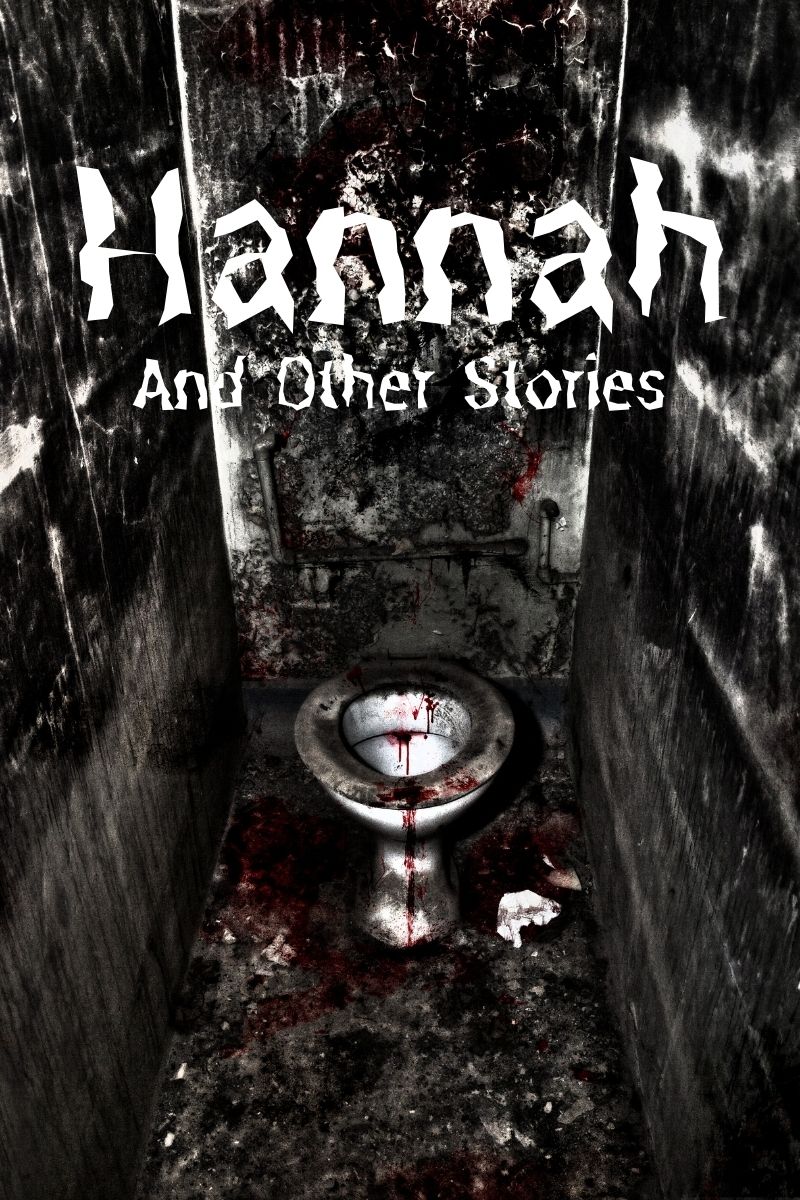
The placeholder cover I made for Hannah and Other Stories. I can’t wait to show you all the official cover someday soon.

Well, the story I was writing for that one anthology will have to be put on pause. Good thing I don’t have to submit till June.

So, as many of you are aware, back in October I signed with BSC Publishing Group to release a collection of short stories. The collection is going to be called Hannah and Other Stories and will consist of seven short stories, novelettes and novellas, including: Hannah, which follows two ghost hunters whose latest investigation has consequences for multiple people; The Autopsy Kid and Doctor Sarah, about a young girl’s relationship with a budding psychopath; and Poor, Unfortunate Souls, in which a rave underneath the streets of Paris receives an unexpected and horrifying guest.

Anyway, since I signed that contract, some time has passed, and I’ve been writing and editing stories like crazy so I don’t get rusty. And today, I finally received the first round of edits. And it looks like I have a lot of work to do!

Man, I wish all those edits I’d done back in spring and summer last year were enough to spruce up the stories. But I guess I wasn’t so lucky.

On the bright side, I still have some pretty clear memories of when I edited Rose back in 2018 and 2019. That was the last time I edited an entire book with a publisher, and it was quite the learning experience. Given what I remember, I will take it story by story, part by part, and try to identify the same issues my editors did, as well as using their suggestions to improve the story.

I will also make sure to take care of my mental and emotional health. It’s not something that’s talked about enough in the writing community, but this path we walk takes a toll on us writers. And that’s especially true when it comes to publishing an entire book! When I got the first edits back on Rose, for example, I went into a tailspin of anxiety. There were a lot of issues with the novel, a couple of which led to me rewriting around two-thirds of the book. Needless to say, I was upset with myself that I missed so many issues and worried I wasn’t going to be able to fix them. It took a lot of work for me to calm down again and start to work on the book again.

This time around, I’ll be better prepared. As I said before, I’ll take each story one at a time, and I’ll try not to let the issues with each story get under my skin. After all, not only have I been through this ordeal before, but I wrote these stories already and the publisher thought they were decent enough in their imperfect state that they wanted to publish them. If I was able to do that, I can edit the stories to a state where they can be released.

Plus, I have a support network I can rely on if things get to be too much, and I’ve already ordered my comfort anime from the library (nothing like a Sailor Moon binge to make you feel refreshed). Add in some ice cream and the occasional pizza delivery, and I’ll be fine.

Anyway, I’ll keep you all updated on the progress of the book, as well as my other projects. I may also write a post on maintaining your mental health during the publishing process at some point. In the meantime, if you’re looking forward to Hannah and can’t wait to read it, or you need something to read in the meantime, I’ll include links to Rose and my other books down below. Who knows? You might just find your new favorite horror story down below. Let me know what you think.

And please also check out the anthology Dead of Winter from the Dublin Creative Writers Cooperative and Spark Street Media, which contains the story “Azazel Dances” by myself and Richard Gerlach. It’s a great story inside a great anthology, so why not check it out?

And with that, I’ll take my leave. Until next time, my Followers of Fear, good night and pleasant nightmares.

Dead of Winter: Amazon

The Quiet Game: Amazon, Barnes & Noble, iBooksSmashwords, and Kobo.

Snake: Amazon US, Amazon UK, Amazon Canada, Barnes & Noble, iBooksSmashwords, and Kobo

Rose: Amazon US, Amazon UK, Amazon Canada, Audible, B&N

Agoraphobia: Amazon US, Amazon UK, Amazon Canada

Mother of the King: Amazon US, Amazon UK, Amazon Canada

The Pure World Comes: Readict app (free with ads)

A handy graphic for understanding the three act structure, courtesy of Wikipedia.

The other day, I was talking with some other writers about how to write a decent short story (an eternal question among writers, including the ones who’ve gotten them published). And I noticed that, with a lot of my recent short stories, most of them fall into a decent three act structure. And then I said, “I know the existence of the three act structure is dubious, but it’s the truth.”

And, like many odd things, that little exchange has stuck in my head.

So for those of you who don’t know, the theory of the three act structure states that all stories, especially longer ones, can be divided into three separate acts or sections: the setup, the confrontation, and the resolution. The acts may then be divided into smaller scenes or subsections, but they all fit into those categories. Some examples given of stories with the three act structure are Star Wars, Die Hard, and Avengers: Endgame (though I sometimes think everything before the five-year jump is its own separate act or prologue).

While many of us are taught this structure in school, most of our teachers will let us know that not everyone believes in the three act structure, let alone say they use it. Some prefer using a five act structure. Others say storytelling is too complicated and diverse to say a story can be divided into a formulaic structure. And nearly all playwrights will agree that if it can’t be told in one act, tell it in two.

Good example of a story in three acts (supposedly).

That last one might be a joke.

I’m usually of the camp that believes storytelling is too complicated and diverse to boil down into a structure. Look at Stephen King stories. Most of his shorts, like Graveyard Shift, Night Surf or The Boogeyman, are simple one-scene stories with maybe a twist at the end, and I dare you to try to fit books like IT or Salem’s Lot into three acts. Then there are stories like Kill Creek by Scott Thomas or Interview with the Vampire by Anne Rice, which feel like they fit into four acts.

As for my own books, Snake is in multiple sections, much like the books I was reading up to and during the writing process, and I see Rose as in-the-apartment and after-leaving-the-apartment (if you read the book, you know what I mean). I can’t see the stories in The Quiet Game as anything but a progression of events. And I wouldn’t even know where to start with The Pure World Comes or the stories in Hannah.

So, is the three act structure a real thing? Well, yes and no. I feel like it’s more of a framework for people to examine fiction, both others and their own. You don’t have to use it if you feel it doesn’t work for you or if you feel a story has too much happening in it to divide the plot into three separate sections.

But if you do find it helpful, use it to your heart’s content. I’m sure many writers, especially plotters like myself, find the three act structure helpful for planning their stories. And as I said above, many of my recent short stories, including the ones that have been published, fall into three acts. Though I think of them less as acts and more like beats, scenes, settings, or occurrences. And if I’m trying to keep a story within a certain word count, I can see using this structure to my advantage.

So what is the three act structure? It’s a prism to understand some fiction stories through, as well as an actual tool for writing. It’s not perfect, and most stories don’t fit into it that well, but that doesn’t mean the idea isn’t useful. Hell, it might even help you hone your craft and get a few more short stories out there. And that is never a bad thing.

Unless you’re trying to write an award-winning musical. Then you might want to keep it to two or maybe just one act.

That’s all for now, my Followers of Fear. March has just started and it’s already looking a lot better than January and February is (world events notwithstanding). I hope I can update you on exciting developments in the near future. And until next time, pleasant nightmares.

Ladies and gentlemen, we have our first publication of 2022!

Some time ago, I met another Jewish horror writer by the name of Richard Gerlach. There was an anthology being created at the time of holiday horror stories, and we thought we’d team up to write one with a little Jewish flair. We wrote a story set around Hanukkah and submitted it. It didn’t get in, but it birthed a friendship and we both believed in the story, so we kept shopping it around.

Dead of Winter from Dublin Creative Writers Cooperative and Spark Street Media, which contains mine and Richard Gerlach’s story “Azazel Dances.” Looking forward to hearing what you think of it!

Some time last year, the story was accepted by the Dublin Creative Writers Cooperative,* who in partnership with Spark Street Media are releasing the anthology Dead of Winter. And our story, “Azazel Dances,” is featured in the anthology! Which is out today!

Honestly, Rich and I are so excited for you to read this story, which centers on a demon who interferes with two feuding Jewish families around Hanukkah. Not only do we get to add to the ever-growing subgenre of Jewish horror (something I’ve been trying to do anyway), but we worked really hard on this story. Like really hard. Like oh my God, the amount of work that went into this story to make sure it was ready for publication! And it was not easy for either of us to find time to edit it, either. Like, I tried to buy the guy a bottle of wine because we somehow made the deadline despite the amount of work and how crazy our lives got! Sadly, mailing alcohol without subscriptions or memberships to special clubs is troublesome.

The point is, we put in a lot of hard work, and I’m very proud of the work we put in to write and edit this story together. So I hope you read it and see what we managed to create together. And if you like what you read, please make sure to spread the word somehow. Goodreads, Amazon, Twitter, Instagram or TikTok, whatever. Leaving your thoughts online somewhere allows us writers to know what people think of our work, as well as helps other readers decide whether or not to check out the book.

Anyway, that’s all for now. I’ll leave a link to check out Dead of Winter below. Ebook is already available, and paperback shouldn’t be far behind. Either edition, there are a lot of great stories in there besides the one by Rich and me, so it’s worth your while. And while you’re at it, you should also check out Richard Gerlach. He’s a great writer with another story in another anthology and has more on the way. He also writes for Divination Hollow Reviews and is a co-host for the podcast Staring Into the Abyss. You can find him on his Twitter account here, his previous publication here, Divination Hollow Reviews here, and the Twitter account for the podcast here.

That’s all for now, my Followers of Fear. I don’t know how we got to the end of February so fast, but I’m looking forward to whatever March brings. So until next time, good night, happy reading and pleasant nightmares!

*Dublin Ohio, which was used for a short scene in Rose. Not Dublin, Ireland. Just clarifying.

DEAD OF WINTER Amazon Page

Fairy tales have been on my mind a lot lately. Granted, that’s nothing new. When writing Toyland, I knew fairy tales and children’s stories were going to play a part in the story, since it was about a school haunted by a ghost obsessed with a children’s fairy tale. And yes, I still hope to get that book published.

But recently, I took a class offered by the Horror Writers Association on fairy tales, which got my imagination working. And then I watched a couple of TED talks on YouTube on the subject. And last week, I wrote my own twisted, dark fantasy version of Cinderella in just one sitting while everyone else was watching the Super Bowl. This was at the same time I spent two weeks coming up with an idea for a novel involving fairy tale elements, the idea finally crystallizing on Saturday before going to see Giselle. A ballet, by the way, that could be considered a fairy tale. It certainly has enough fairy tale elements to qualify as one.

All this has made me hyper-aware of just how much fairy tales have permeated our society. Not just as stories or elements of our favorite stories, but in advertising, fashion, music, art, and even our expressions (“Cinderella story,” anyone?). They are freaking everywhere, and used/enjoyed not just by children, but by teens and adults too.

“But wait,” you’re probably asking, “aren’t fairy tales just kid stuff?”

Not exactly. In fact, fairy tales were often for adults as much as children. Early written versions of Little Red Riding Hood were told as parables to warn young ladies about getting into bed with the wrong sort of man, or as metaphors about entering womanhood (especially if cannibalism is kept in the story). In fact, that is still the case in some places: in Ireland, many still believe in fairies and tell stories, or “tales,” about them and what places to avoid. And in parts of Scandinavia and Iceland, beliefs in trolls and elves are still popular. Many countries in Asia, especially in southeast Asia, still believe in many types of spirits (and according to the classical definition of fairies, just about any supernatural entity can be considered a fairy, so it counts), and use stories to warn new generations of the dangers of pissing them off.

This adaptation of “The Tale of the Bamboo Cutter” is a prime example of how fairy tales can be recontextualized for new eras.

But beyond warnings, fairy tales, like many other kind of stories, are reflections of how we look at our world. Hansel and Gretel, for example, was probably told in an age of famine, poverty and witch hunts, given its elements and the lessons imparted in it. Even better, fairy tales can be recontextualized for new ages. Cinderella tales are increasingly told to make the lead less passive and more in control of her own life, and the Studio Ghibli film The Tale of Princess Kaguya, based on the Japanese fairy tale The Story of the Bamboo Cutter, retells the story with the theme of how Kaguya wants none of the finery her foster parents gift her, only to be surrounded by people who love her. This feels relevant in an age with rising consumerism, online image-building, and social isolation.

And that’s the cool thing about fairy tales, too. You can retell them in so many different ways. Hell, you can even come up with new ones. Plenty of writers are creating their own fairy tales, such as Diana Wynne Jones did with Howl’s Moving Castle, Melissa Albert with The Hazel Wood and many more. And many stories today use elements of fairy tales. The inclusion of “The Three Billy Goats Gruff” in Stephen King’s IT isn’t just a fun choice by King, after all: King originally started plotting that story as a modern interpretation of “The Three Billy Goats Gruff.”

Makes you wonder what elements of fairy tales and legends you’re putting into your stories, doesn’t it?

And that’s the thing. Even you can make up your own original fairy tales or retellings. In fact, plenty of writers are, and will as the world changes. I wouldn’t be surprised if we get an updated version of Anansi and the introduction of stories to the world in the wake of so many states attempting to rewrite history or schools attempting to ban books. And I wouldn’t be surprised if this pandemic, or any of the major conflicts we’ve experienced in the past several years, make their way into a new or an old fairy tale. I’ve already come up with a few ideas for some, and might write one or two in the near future.

And I bet, no matter who’s telling the stories, they’ll continue to influence society for years to come. From the “Once upon a time” beginnings to the optional “they all lived happily ever after.”

That’s all for now, my Followers of Fear. I spent most of President’s Day writing, so I’ll take the rest of the night off. I’ll be back soon, as I’m expecting to share some good news very soon. Until then, my Followers of Fear, good night, pleasant nightmares, and don’t try to wake me up with a kiss. I bite.

Also, here are some of the videos I watched while researching fairy tales. Give them a watch. They’re quite edifying:

Transforming our Understanding of Fairy Tales by Anne Dugan

Why We Absolutely Need Fairy Tales by Jason Link

Myths, Folklore & Legends: We Still Need Our Fairy Tales by Heidi Shamsuddin

Alma Katsu. Photo by Evan Michio

Some of you may remember at the start of the pandemic I had the pleasure to interview Alma Katsu, author of the critically acclaimed novels The Hunger and The Deep (you can read that interview here). I loved both novels, which took on the historical events of the Donner Party and the Titanic, respectively, and turned them into supernatural horror stories. It won’t surprise you, then, that I’ve been looking forward to her next historical horror novel for a while now.

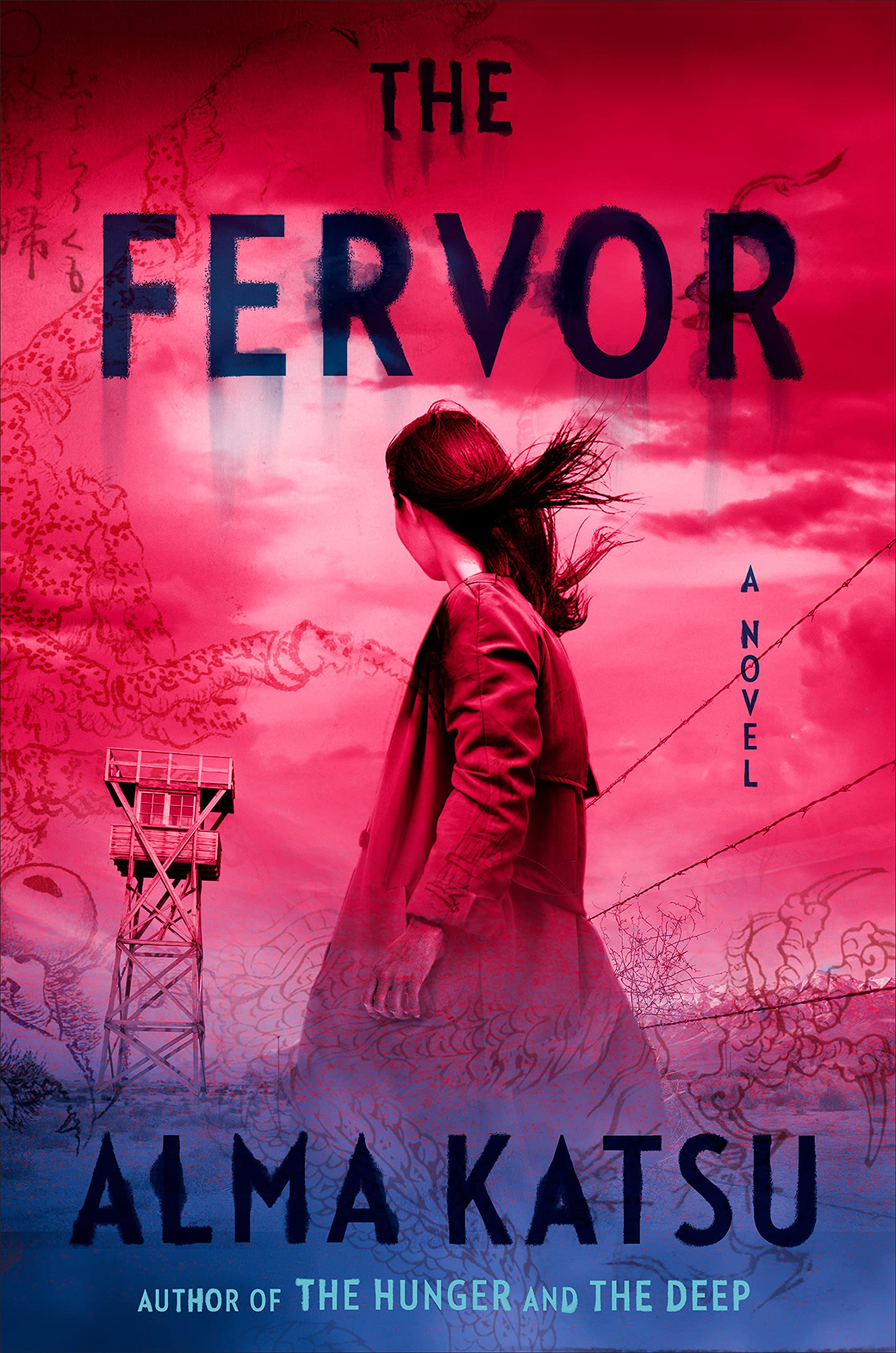
Two pieces of good news: first, Ms. Katsu has a new novel, The Fervor, coming out in late April! The novel takes place during World War II at a Japanese internment camp and involves a strange disease and a stranger monster from Japanese legend. Yeah, you can tell this is right up my alley!

Second pieces of good news: Ms. Katsu has agreed to let me interview her about the book! So without further ado, let’s talk to Alma Katsu and find out why you should be as excited as I am for her new novel.

Rami Ungar: Welcome back to the blog, Ms. Katsu. Please tell us about The Fervor and how it came about.

Alma Katsu: First came the decision to set the next book in WWII. That had to do with trends in publishing, frankly; I’d sat in on the editors’ panel at the Historical Novel Society conference a few years ago, when it was time to come up with a proposal, and their advice was that historical fiction was pretty much dead except for WWII. I’d always thought it would be interesting to write about the internment camps, but then the question was how to turn that into a horror story? Objectively, the horror should be pretty evident: here was a government locking up its own citizens, people who hadn’t committed a crime, because they didn’t trust them. Because the average citizen (with the help of propaganda) believed that Asians were inherently sneakier and untrustworthy.

RU: You’ve talked about your Japanese heritage and how it influenced the story. Can you go into that for us?

AK: This was the first time where the main character of the book has the same ethnicity as me, and it was pretty eye-opening. For one thing, as I was writing I realized that I had a lot of resentments about the way my mother had been treated coming to America after the war, and the way I’d been treated as a minority (to a lesser extent) bottled up inside. Add to that the preconceptions about Asians and Asian women, in particular. This was an opportunity to write the truth, to dispel myths. It was freeing.

RU: I can only imagine! And speaking of Japanese elements, there’s been a surge of stories inspired by Japanese culture, particularly yokai, in the West. Some examples include Nothing but Blackened Teeth by Cassandra Khaw and my own novel Rose. What do you think of that surge, and where do you think it comes from?

The Fervor by Alma Katsu.

AK: I’m afraid I don’t have much to offer here. I know some folks are big into Japanese folktales and such, so I’m not aware of a surge per say. It always seems to be fairly popular thanks to anime! Japanese yokai and yurei are part of the fabric of life for Japanese, and so I’d heard and read stories when I was a kid, and it didn’t seem you could tell a horror story with Japanese characters without incorporating it in some way.

RU: Well, I can attest that anime was definitely an influence on me. Anyway, The Fervor also involves an epidemic in a Japanese internment camp. Did the COVID-19 pandemic influence your decision to include that?

AK: I drew on COVID, yes, the feelings of mass panic and confusion, but The Fervor is about racism. I decided to write it after watching what’s been happening to this country over the past four years or so. I’m not naïve but it’s been bewildering to see racism go mainstream in America. It’s comforting in a way to think it could be a disease, something you could catch, as that at least is understandable. The January 6th attack on the Capitol also influenced the book: The Fervor was an attempt to look at what this country has been going through and compare it to another horrible incident in America’s past, and show that we haven’t changed much.

RU: I’m looking forward to seeing how that plays out in the book. So, what research did you do for the book?

AK: This was different from The Hunger (the Donner Party) and The Deep (the sinking of the Titanic), events that I didn’t know a lot about. I already knew a lot about life in the internment camps, because I’d heard stories from my in-laws, seen documentaries and read articles. I knew what the issues were, I knew how the interned felt and what they had gone through. For the book, it was more a matter of filling in the gaps. I lucked out in that a neighbor’s family had been interned at Minidoka, which is featured in the book, and had a trove of documents from the camp: maps, rosters, newsletters, all kind of non-official documentation that typically gets lost to time. It was a real windfall.

RU: Yeah, primary sources like that are always a boon when writing about history or using it. And speaking of which, you’ve written about the Donner Party, the sinking of the Titanic, and now the Japanese internment camps. Are there any other ages or historical events you would want to write a story about?

AK: After doing three books and having them change a bit each time (going from being fairly close to the history to becoming reinterpretations of events, maybe just shy of alternate histories), I think it’s time to re-evaluate. I’m sure there are plenty of interesting historical events (I’d love to do another Western, for example) but I’m a little burned out on close reads of history right now.

RU: Fair enough. Switching gears a bit, what are you working on nowadays? And when can we expect to see the TV series based on your spy novel, Red Widow?

AK: I just handed in the second in the spy novel series, and though I’m sure it’ll need some work, I’m glad to have that behind me. I’m working on a new project that I can’t talk about at the moment, and hope to be pitching a few TV proposals soon.

Red Widow, the TV series, is chugging along. The pilot script is being polished right now, and we hope to know whether we’ll be shooting the pilot before too long.

RU: Final question: what are you reading these days? And are there any recent reads that you would recommend others check out?

AK: There are so many great books coming out this year that it’s hard to single out just a few. Let’s see… SA Barbes’ debut Dead Silence just came out. It’s space/horror: think Aliens meets Titanic.  It’s a lot of spooky fun. I had the opportunity to read Andy Davidson’s The Hollow Kind, a wonderfully suspenseful, creepy southern Gothic with a dual timeline. It doesn’t come out until October, however. I’m really excited for Catriona Ward’s next novel, Sundial, which I think I liked even better than Needless Street.

RU: Well, thank you for joining us, Ms. Katsu. It was a pleasure to have you again. Please keep us posted on your progress.

If you are interested in The Fervor, you can preorder it now from most retailers. You can also check out Ms. Katsu’s other books, including The Hunger, The Deep and Red Widow. And, of course, you can find Ms. Katsu on her website, Facebook, Twitter and Instagram.

That’s all for now, my Followers of Fear. I look forward to reviewing The Fervor this coming spring. And in the meantime, I’m sure I’ll be back soon with plenty to share with you. Until next time, good night and pleasant nightmares!

I would say pop some champagne, but I decided to abstain from alcohol this month. It’s healthy to do every now and then. I think I’ll stick to tea instead.

Okay, enough weird asides. As of this evening, I’ve finished a novella I started working on back in December, making this my first completed story of the year. The story is called “They Sleep Within the Rock,” it’s exactly one-hundred pages and is about twenty-six thousand, four hundred words. Which is just a bit shorter than I thought it would be.

As for the plot, the story is about a group of white supremacists that try to establish a “whites-only enclave” in the American West, only to find out that the land they’re on has a history to it, and may be cursed. The story was inspired by a news article I read about white supremacists trying to buy up land and housing in rural areas to establish their own mini ethnostates. Yes, that’s something they’re trying to do, and I hope they’re never successful at it.

Anyway, I read that article and thought, “I can write a story about that. There are so many ways to make a story about people trying to establish a place like this scary.” It took some brainstorming, but I managed to come up with something that I liked and, over three months, I got it written out. And I found it quite therapeutic, as well. There’s been such a rise in anti-Semitism in the US and worldwide lately, and the horrors reigned on my people, such as last month’s synagogue hostage situation in Texas, have been rising as well. It was nice to be able to visit some horror back.

That being said, I don’t know if the story is any good. It was therapeutic and I enjoyed writing it, but that’s no mark of a good story. Plus, I’m sure there are plenty of things that could use improvement in the story. Perhaps there’s even a need to rewrite certain parts.

Well, I’ll try to edit it later this year if I can. I say “later this year” and “if I can” because I’ll soon be editing the stories for my upcoming collection Hannah and Other Stories, so that’s obviously going to take up some time. And after so much editing, I may just want to write rather than edit another novella. But hey, at least whenever I do return to it, I’ll be able to see it with fresh eyes. That’ll be helpful, for sure.

So, what’s next? I think I’ll take the weekend to relax and refuel my creativity. I have an important blog post I want to put out before Valentine’s Day, so that’ll take priority. And I want to edit that superhero horror story I wrote last year and see if I can find a home for it. And after that…well, we’ll see what’s going on then.

But for now, though, I think I’ll hit the hay. Good night, my Followers of Fear. I hope wherever you are, the winter storm isn’t causing you too much trouble, and that you have pleasant nightmares.

.

Well, this is embarrassing to admit.

I’ve been reading a lot more slowly lately, so I only just started reading an anthology I was published in last year. Last night, I finally got to my own story, which I consider some of my best work. And I found some editing errors I missed.

It wasn’t anything too bad. A couple of words missing here, a couple of phrases that should have been cut there, and one time I used the word “skeleton” instead of “scream.” Not like a horrible run-on sentence, a ton of spelling mistakes, and punctuation and grammar to make a lover of literature cry.

Still, it was disheartening to see how many mistakes were missed. And while part of that was also on the publisher, I should have been more cognizant of my own work. I should have shown more diligence in finding errors. Maybe even using that feature on Word where the story is read aloud, annoying as that is.

You know, my high school English teacher, Mr. G, used to say that a story is never “perfect,” but “done.” You can only do so much work to a story on it, but you’ll never get it perfect. You can just do enough work on it that you can’t fix it anymore. It’s done. I was aware that that applied to cleaning it up as much as it did to story, but this made me more aware of that.

And my American history professor in college, Dr. S, made an analogy about editing. He said he always got students who got annoyed when they were marked down on grammar and spelling when it was a History class. Why should a few spelling mistakes or whatever make a difference, these students wonder. He said, and this is pretty close to quoting:

Well, if this were an engineering class, would it be okay to have a little bad math? Or if this were a physics class, would it be okay to have a few incorrect equations? If the answer is yes, then let me know what bridges you’ve constructed or what planes you’ve built, so I can know to avoid them! Good grammar is important in History, even if it’s not an English class. And I expect good grammar in your papers.”

Dr. S, American History from 1920-1963, 2014

You can apply that right back to storytelling. No matter how good the story is, if the story has a bunch of grammar/spelling/punctuation errors, the story will suffer. And my story, while still good, suffered a bit with these issues.

I’ll remember reading this story and finding these issues from here on out. I’ll use it so that when any future stories come out, they’ll be as error-free as possible. I can’t stand a story of mine being brought low by my own laziness and missing some errors. I’ll work harder to make sure this is the last time I find a story with such glaring problems (or glaring to me, anyway).

Please stop by if you can. I’ll be selling books and doing Tarot readings.

And if this story gets published again, like in a collection someday, I’ll make sure to fix those errors. God knows I only want to give you all my best work.

Anyway, that all for now, my Followers of Fear. I’ve got a lot of writing to do tonight, so I better get to work on everything else that needs taking care of before then (like dinner and laundry). I’ll hit you guys up after the Hidden Marietta Paranormal Expo (especially if I get any paranormal activity on camera). Until next time, good night and pleasant nightmares.

I should be in bed now, but I can’t! I’m too energized, too excited, too joyous! That Which Cannot Be Undone, the anthology my friends and I have been trying to create, is fully funded!

So, if you’re new around here and have never heard of this anthology, then let me first say hello. I’m happy to have you reading my blog and showing interest in my career as a writer. Secondly, over the course of the pandemic, some of my fellow Ohio horror writers and I came together to form our own publishing press, Cracked Skull Press, with the goal of putting out an anthology of stories that emphasized writers from our state. Furthermore, the stories would all be set in Ohio and would revolve around the theme “that which cannot be undone,” which became our eventual title.

To fund this project, we launched a Kickstarter campaign back in late November, and worked our butts off to get noticed and to get people to pledge to support us. I’m proud to say, with four days left of the campaign, we are fully funded and have exceeded our funding goal!

There are so many people I want to thank. To the people who pledged, of course, you get a huge thank you. We literally could not be doing this without your help. An even bigger thanks to the people from this blog, my Followers of Fear, who pledged their support. It means a lot that you support my projects and my career, and I’m so happy to have you supporting this one. To the writers who said they would contribute works to our anthology if we were fully funded, and to the many individuals who posted and promoted the Kickstarter, we also extend a big thank you. We can’t wait to showcase your stories and list your contributions in the Donor section. And to the other members of Cracked Skull Press, Ray Pantle, Randall Drum, and David Day, I’m so glad to be working with you and can’t thank you enough for the hard work you put into this project. There will be more hard work from here on out, but I’m sure we’ll be up to the challenge.

And if you still want to be part of this project in some way, there are still a few days left of the anthology. You can still pledge your support and thereby help us in case we encounter further costs to this anthology. Or if you’ve already pledged, you can increase how much you pledge before the end of the campaign. You can do so using this link: https://www.kickstarter.com/projects/crackedskullproject1/that-which-cannot-be-undone-an-ohio-horror-anthology

I’m so excited right now, my Followers of Fear. I can’t wait to tell you what’s coming next with this project and our eventually publication in October 2022. As with all my other projects, I’ll make sure to keep you updated on this one, right up until it’s out in print/ebook.

And yes, don’t worry, this won’t be the last project from Cracked Skull Press. We’ll have plenty of ideas for further projects. Keep an eye out and get ready for great stuff on the horizon.

Until next time, my Followers of Fear, good night and pleasant nightmares.