Well, it took me a little while (darn my school load!) but I’m finally done editing Chapter 24 of Video Rage. And since the second installment of the Reborn City series is 37 chapters long, I’m about two-thirds through the second draft.

So excuse me while I do a little happy dance…

Still here? Cool.

I think the hardest thing about editing VR is that a lot of it is rewriting. When you’re doing a first draft, you think  that a lot of what you included (including dialects in the narration) is just genius, the best thing for the English language since Shakespeare put quill to parchment or Hemingway put pen to paper or Stephen King put typewriter keys to…you know. And then you leave it alone for several months so you can look at it with fresh eyes, and then you think to yourself “What the f*ck was I thinking writing this crap?”

But I’m glad I’ve been able to take a second look at this. If I thought that the first draft was okay, I’m sure the second draft is going to impress maybe a few readers. That’s the hope anyway. In any case, I think after the second draft is done I’ll send VR to a certain science fiction writer I’m acquainted with who took a look at RC for me. I’m pretty sure his opinion on things will be very useful indeed.

Well, I’m hitting the hay. Big day tomorrow with lots to do, and I want to be well rested for it. Good night, my Followers of Fear.

I’m a feminist. I believe that women should be given equal treatment to men financially, politically, and socially. I believe this won’t disenfranchise men, but instead make women equal partners to men. In fact, men such as myself can be ardent feminists, and there are plenty of them out there. I also believe that there are people who dislike feminism because of ignorance or prejudice. And I believe that those who actively work to dissuade people from identifying feminism or tear down some of the movement’s tenets and beliefs are doing a lot more harm than good. Normally I ignore what is said, but occasionally something is so blatantly wrong or harmful to women that I have to speak up.

So when I read what Rush Limbaugh said today and then heard it for myself, I couldn’t keep quiet. Normally I ignore what Mr. Limbaugh says. Since the Sandra Fluke debacle two years ago, I’ve actually been surprised that he’s still on the air, let alone that he hasn’t learned from his mistakes or maybe hired someone to edit what he plans to say before he says it. But today might be the worst thing he’s said since he talked about Ms. Fluke.

I couldn’t embed the audio of the clip in question onto this post (if you’d like to hear it yourself, you can check out the Huffington Post article where I first read about it), so I’m talking about it here. In short, Mr. Limbaugh said that he finds the idea of “No” means “No” ridiculous.  He says:

How many of you guys in your own experience with women have learned that ‘no’ means ‘yes’ if you know how to spot it?…It used to be used as a cliche.

So under this definition of consent, when a woman says “no”, it really means “yes” under certain circumstances (and I bet to a guy like Mr. Limbaugh, there are few, if any, circumstances where “no” actually means “no”). A guy just has to “spot” it. I’m just wondering, how exactly do you spot the signs that a woman is actually saying “yes” underneath the resounding “no”? Enlighten me.

And if you think about it, this definition could extend not just to women. Perhaps a young child is actually saying yes to being touched inappropriately, even if they’re being touched by a parent or other relative. And according to Mr. Limbaugh’s definition of consent, if a gay man comes onto him or any other man and the second man says no, the gay man is allowed to go on if they believe “the signs” are there telling them to go on.* It’s uncomfortable to think about, but it could happen.

*I’m not actually insinuating that anyone does or should do this, be they straight or gay men, relatives of a child, or anything else. I’m just trying to put this in the context that Mr. Limbaugh outlines and make sense of the implications.

Also notice how Mr. Limbaugh asks for the opinions of the male listeners of his show, but not the female listeners. Why doesn’t Mr. Limbaugh ask about the female listeners’ experiences? I’m sure some of them have quite the stories to tell. According to the website of the Rape, Abuse, And Incest National Network, about 1 in 6 women are the victims of an attempted or completed rape in their lifetimes. 1 in 33 men suffer the same sort of attacks, and 15% of children under the age of 12 are vulnerable to rape or sexual assault. Victims of sexual assault are three times more likely to suffer from depression, four times more likely to suffer from PTSD and/or consider suicide, and 13 and 26 times more likely to abuse alcohol or drugs, respectively. A third of them get pregnant from their ordeals. How many of these women said “no” and that was ignored or interpreted as meaning “yes”? And how many of them listen to the Rush Limbaugh Show?

Mr. Limbaugh also quotes from the student handbook at Ohio State University** on what constitutes consent. Well, actually he isn’t quoting, exactly. Only a small bit of what he says is actually from the Student Code of Conduct (which you can read here). I have no idea where he’s getting this stuff about the thirteen-year-olds consenting to sex. But beyond all that, the point Mr. Limbaugh is trying to make is that all these requirements for having consent is too much and actually getting in the way of romance and seduction. I don’t have the most experience in this, but if you ask me, when two consenting partners are very much in love, care deeply about the other, and want to make each other happy, then all this stuff Mr. Limbaugh believes gets in the way of romance and seduction becomes unnecessary. The couple know each other well enough to know what is safe, what is crossing a boundary, and how to make sure both of them have an enjoyable sexual experience.

And for couples who aren’t at that point yet, perhaps they don’t need to ask permission to do every single thing. But it is common sense to discuss with your partner what you consider safe sexual territory, and to pay attention to what your partner is telling you, verbally or non-verbally. If your partner says no, doesn’t matter if you or your partner are male, female, or some other third gender. No means no, under ALL circumstances.

Mr. Limbaugh makes it seem like you have to go through a maze to have sex, but I don’t think that’s actually the case.

**For future reference, would you please not use my alma mater in your program? It’s not a very good example at the moment, anyway: sad as I am to admit, OSU’s marching band is under investigation for fostering an atmosphere of sexual assault, and there are other investigations occurring as well, last I checked. I still love this school and I’m not proud of what’s happened here, but you can’t fight your demons if you don’t admit to them, so I’m putting them out there.

So Mr. Limbaugh may feel that there are exceptions to the No rule and all those requirements for consent are a bit too much for your average man looking for sex. But with sexual assault so prevalent in our nation, I feel having these things pointed out to us is a good thing. Not only does it make us aware of a problem that needs to be combated, but following these rules helps to make our country safer for all, and helps to eliminate a very terrible problem.

Mr. Limbaugh does make one very good point, and that is we need to change how we teach our boys. I agree, but I think we need to change how we teach our girls too, and maybe how we approach sex in general. Men should be taught that there is nothing wrong with wanting to have sex, provided you are educated about both the benefits and the consequences of sex, particularly unsafe, forced or alternative forms of sex. And girls should be taught about their bodies, all that comes with sex, and that there is nothing they should be ashamed of when it comes to their bodies or their sexuality, no mater what anyone says. And above all, it should be stressed that no one owns your body but you, and you should decide what can and cannot be done with it.

Mr. Limbaugh, I hope what you’ve said today gets talked about by a variety of people. I hope that you make the newsrounds for your comments, because what you said is hurtful and shameful and trivializes a major problem. And perhaps after what you’ve said, there can be some constructive change to stop this ongoing epidemic of sexual assault in our nation. I would very much like to say that.

And Mr. Limbaugh, perhaps after this latest incdent, you might take steps to avoid saying such hurtful and despicable things on your program. And if that’s not possible, then maybe it’d be better for a lot of people (and I say this with all the sensitivity I can muster in such a situation) if you would kindly shut up.

Some of you are probably reading the title of this post and are wondering, Since when is there a purpose to any sort of violence? Very true, but I’m talking about violence in speculative fiction and when it is useful and when it is just excessive.

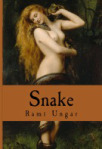
Granted, I might not be the best person to speak on this subject. If any of you have read or are reading Snake, you are well aware that the main character is very influenced by slasher films and the Russian mafia, so violence abounds. However, in my other books I try to hold back on the violence. Why? Partly because I’m just terrible with writing fight scenes. I actually try to avoid them when I can, which is okay because in horror it’s often more about the atmosphere and character interaction than about describing a punch or a gun fight.

But the other reason is that, when I’m writing and I think about including a very violent scene in my story, I think about whether it can advance a story’s plot.

Let me explain. In Video Rage, the sequel to Reborn City that I’m currently editing when I have the chance (my time is so filled up these days), there comes a scene about midway through the book where some of the characters get into an argument and one of them ends up punching the other in the face. The actual punch occupies about maybe two or three paragraphs, but the result s of it is felt throughout the rest of the novel. Both characters in this little altercation have to reassess their relationship. One has to decide if they want to continue to be friends with someone who punched them, especially since they really cared about this person and the hurt feelings and pride hurt more than the being punched. As for the one doing the punching, he is horrified about what he did in a moment of anger. He has to take a hard look at himself and really decide whether he might need to change his actions and perhaps do some growing up.

Another example is in Rose, my work-in-progress/thesis project. As I’ve mentioned in previous posts, Rose is dealing with a young woman trapped by magic with the stalker who resurrected her. And when she tries to get away from him, he often gets violent and dangerous. While providing some very terrifying scenes, these moments also force Rose into a dark place. She becomes frightened, and, like many abused women, starts walking on eggshells because she’s afraid of arousing his rage. Over the course of the story, Rose finds herself driven into a darker and darker place spiritually because of all she suffers. At least until certain events allow her to seek a change.

So in a way, while I detest violence and I try not to use it when I can, in certain ways like the ones above violence can advance the story and allow for character development. Of course there are many other tools that allow for character development and propelling the plot forward: romantic relationships, deceit and treachery, other non-violent events in the characters’ lives that allow them to move forward in the story. But I think of all those, violence requires a delicacy that is much harder to handle than other methods (and not to mention romance can be a bit overused). You have to use it in just the right way or your readers will be overwhelmed and turned off from reading anymore. One slap or punch or explosion too many and it can really change things, and not for the better. So for the author, it’s up to them to figure out what is the right level of violence and how best to wield it in their story. And hopefully through practice one can figure out just that.

So am I good at wielding the violence? You’d have to find that out yourself or ask one of my other readers. An author can often the worst judge at their work. But I think I do okay at it. At any rate, I haven’t had any complaints about the levels of violence in my stories or how they’re used. In fact, I’ve been told that they’re rather scary, which pleases me to no end.

How do you use violence in your stories? Do you have any advice regarding including or not including violence in your stories?

snake

How far would you go for love and revenge?

Before I started work on the next chapter of my thesis (or de-stressed with a shower, I can’t decide which at this point), I thought I’d take a moment to announce something that’s been in the works for a while. I’ve finally uploaded my most recent novel, Snake, onto Smashwords, where it is available as an e-book in a number of formats for only $2.99.

If you haven’t heard me mention Snake before, it’s a novel about a man who becomes a serial killer in order to save his girlfriend when she is kidnapped by the mafia. A dark, terrifying thriller with a running theme of romance, you’ll be terrified as well as entranced by this horrific lover, who is willing to become a monster himself if it means saving the love of his life from other monsters.

I had actually hesitated to put Snake on Smashwords for two reasons: 1. I wanted to try KDP Select through Amazon using Snake, and they don’t like authors distributing through other websites while their books are listed on KDP Select. 2. I don’t get that many sales through Smashwords. But I didn’t see much difference between sales on KDP Select and normal KDP, so I decided to give it a try. Who knows? Perhaps people on Smashwords will really cotton to Snake.

If you’d like to learn more about Snake, you can check out its page or go straight to Amazon (which also has the paperback version) or Smashwords to read about it. And if you decide to get Snake (which has been compared to Stephen King by one reviewer), please let me know what you think once you’ve read it, whether in a comment or in a review. I love feedback, positive or negative (though most of it seems to be positive, so I’ll let you make judgments about that).

I’ll write again if there’s time tonight. Have a good one, my Followers of Fear.

If you live in the English-speaking world and you pay any attention to scary stories, serial killers, or England, you’ve probably heard of Jack the Ripper, whose legend has become so great that sometimes it’s hard to tell what’s fact and what is fiction (and it blends more often than you think). If for some reason you’ve been living under a rock, here’s a quick overview of Jack the Ripper (even if you’re familiar with the Ripper legends, you might want to read this for a little refresher):

Jack the Ripper was the name given to a supposed killer who operated in the impoverished neighborhoods of Whitechapel and the surrounding areas in 1888 London. It is believed he killed and severely mutilated the abdomens of five women, all prostitutes, as well as possibly killing several more women. The killer gained his now-famous name when a letter, now called the “Dear Boss” letter, was sent to the Central News Agency of London, signed “Jack the Ripper” (whether the actual killer sent this letter and others is up for debate). The press  sensationalized the murders and anything even remotely linked to hte murders, and hundreds of people sent in letters claiming to be the killer (some people are really hungry for fame and attention). However, Jack the Ripper was never caught, and his identity has become one of the greatest mysteries of our modern era.

Almost immediately after the murders, Jack the Ripper became a household name and legend, appearing in numerous works of fiction over the years and becoming a sort of boogeyman for the masses. For numerous years, anything having to do with the Ripper would terrify Londoners and call out the police to investigate. And even today, authors (and more than one or two killers) have been inspired by the Ripper murders. In fact, it seems that at least one book a year is released offering a new story or fresh insight into the identity of Jack. People who dedicate themselves to trying to solve the Ripper mystery are known colloquially as Ripperologists.

One such Ripperologist, businessman and “armchair historian” Russell Edwards, claims in his book Naming Jack the Ripper to have finally figured out the killer’s identity through…DNA evidence?

Mr. Edwards book, claiming to have “definitively” identified the Ripper through DNA evidence

Apparently Edwards owns a piece of evidence from the original murders: the bloodstained shawl of Catherine Eddowes, one of the “canonical” Ripper victims, which he bought at auction a couple of years ago. According to his book, he was able to extract usable DNA from the shawl and have it analyzed by a professor in molecular biology at Liverpool John Mores University. Said professor managed to extract not just blood, but semen from the shawl and isolate DNA from his samples. The blood was eventually matched to Eddowes through a descendant of hers, while the semen was matched to Aaron Kosminski, a man suspected at the time of possibly being the Ripper, through one of his direct descendants.

On the surface, this could be credible. Kosminski, a married Plish Jew who emigrated to London with his family to escape the pogroms in Tsarist Russia. He lived in the area where the murders took place, and he was committed to Colney Hatch Lunatic Asylum in 1891 for paranoid schizophrenia, later transferring to another asylum where he died in 1899. However, there is good reason to suspect he might not have been the killer.

Aaron Kosminski, one of the main suspects of the Jack the Ripper murders.

Setting aside how amazing it is to get any workable DNA off a 130-year-old shawl and that the DNA results still haven’t been peer-reviewed by any scientific journal, Catherine Eddowes was a prostitute, so it wouldn’t have been unusual for her to have some semen on her, especially if it was from a man who happened to live in the neighborhood she worked in. And there’s also no evidence to suggest that Kominski killed her or anyone else. We lack a working timeline or any forensic evidence to possibly implicate Kominski or anyone else.  And Kominski himself, although mentally disturbed, was mostly harmless: except for two incidents while incarcerated in the asylums he lived in, Kosminski was mostly harmless. Indeed, some believe he may have been confused for Nathan Kaminsky, also known as David Cohen, another Polish Jew who was himself sent to Colney Hatch in 1888 a month after the last Ripper victim and was said to be violent and antisocial during his short stay in the asylum (he died in 1889).

The truth is, while this DNA evidence may tell us that Kosminski availed himself of Eddowes’ services prior to her death (as did  probably several other men who could all possibly be the killer), we are no closer to identifying Jack the Ripper than we were 130 years ago. Such is the case with famous serial killers who, due to time or design, have left little or no evidence behind of their murders. And that’s even if there is a killer to begin with (some have argued that some of the “canonical” Ripper victims may have actually been the work of other killers, and that maybe only three of the murders, if any, are related).

But you know what? Maybe that’s okay. A good chunk of the appeal from Jack the Ripper is that he’s unknown, that he could be a polish Jew, a surgeon, or even a member of the Royal House. And that means that there’s room for many more generations of Ripperologists and fans to come up with their own theories and stories about who Jack the Ripper is, why he killed, whom he killed at all, and where he ended up. And maybe someday someone will truly, beyond the shadow of a doubt, solve the identity of the Ripper.

Until that day, he’ll stay among the many famous serial killers whose identities are unknown, such as the Zodiac Killer, the Alphabet murderer, the killer of the Black Dahlia, the Servant Girl Murderer, the Axeman of New Orleans–God, how messed up is it that I know all this?

[Thanks to the Huffington Post for most of the information for this article as well as quick references on Wikipedia.]

I’m happy to announce that I’ve just finished the first chapter of Rose, the novel I’m writing for my thesis. I started it yesterday after I’d finished my homework, and worked on it on and off throughout the day. I was really surprised by how quickly I got through it, but I think I can attribute that to this new diet I’ve put myself on. I think cutting out all the diet sodas and junk I’ve been eating has not only helped me lose a couple pounds, but maybe also sharpened my focus and creativity. Or perhaps something’s in alignment and this will pass when we move into Virgo next Tuesday.

Anyway, Chapter One was quite a bit of work. It’s always hardest for me starting a new project, especially with that first page. You want to start off with the right hook that’ll keep a reader’s interest and encourage them to keep going. It actually took me a few attempts to get going with this and find what felt right. But after I found an opening sentence that worked for me and after I managed to get a page typed, it sort of rolled on from there, and I had relatively little trouble writing out the rest. Which leads me to this morning, where I’m announcing for all the world to see and hear that I’ve finished the first chapter of the book.

My first impressions of this chapter is that it’s rather wordy (and phrase-y, too. I use plenty of fun phrases, like “the stars beneath her”). In fact, it’s 4,240 words over 15 pages. Not bad for a first chapter at all, and it wouldn’t surprise me if subsequent chapters were of a similar length.  The first chapter is also pretty uneventful until the last couple of pages, but it allows me to introduce Rose to readers and interest people in her before I actually start eh main events of the story and put her through so much horror that you can’t help but want to hope that she’ll make it out okay.

In the meantime, I’ll hopefully start on Chapter Two later this week and see how that goes. I’m meeting with a professor from the Japanese department on Tuesday to get some phrase translation, so that should be helpful (if I didn’t mention it earlier, Rose’s stalker is Japanese). And unless something comes up in the next couple of weeks worthy of an update or mention of Rose, I probably won’t do another update post until I’m at least seven chapters into it, about a fourth of the way through the book.

On an unrelated note, this morning I had a new idea for a short story and added it to my list, making for a new total of 300 short story ideas (and only nine of them written. God help me get through them all!). And tonight I might be able to do some more editing on Video Rage, so hopefully nothing will come up to prevent that from happening.

That’s all for now. I’ve got a meditation class to get ready for, so I’ll sign off now. Have a good day, my Followers of Fear, and wish me luck.

Man, am I in a good mood lately. Semester’s going well, work hasn’t been too difficult lately, and…oh yeah. I finished the first of two short stories for my creative writing class today. This one, called Evil Began in a Bar, involves a meeting in a dive bar in a magnificent city about certain decisions the city’s leader, known as Father, has made recently. As you get further along in the story, something extraordinary is revealed about the protagonist Luca, and the rest of the characters as well. That something extraordinary has a lot to do with this picture, which was the hint I used when I talked about my creative writing class the other day:

0471a-fallenangels

Can you guess what it is?

I’m actually pretty amazed at how quickly I finished this short story. It usually takes me a week or so to finish a short story, usually longer. I got this one done in three days, a record by my standards. The last time this happened was back when I was writing Addict for The Quiet Game, which I finished in a single day. I’m thinking that’s not just because I found the story exciting to write, but because of changes I’ve been making to my diet these days. I’ve noticed I’m a bit less twitchy and easily distracted, and feeling a lot more energetic too. Maybe I’ll be able to significantly speed up my writing process in the future. Who knows?

I’m really interested to hear what my class will say when they read this story. Like I’ve explained before, my teacher is looking for fiction that is interesting and doesn’t conform to conventions, and I think this story fulfills both of those requirements. It’s that little twist near the middle of the story that explains everything and throws it all into perspective that I think will really get them, but I wonder how many of them will figure it out beforehand.

Anyway, that’s all I have for now. I’ll hopefully have a chance to write a blog post tomorrow, but right now I’ve got to get ready for bed. Goodnight, my Followers of Fear. Have some pleasant nightmares tonight.

I was having a comment conversation the other day with another blogger Caitlin Kelly, a freelance journalist from New York who at the moment is teaching at the Pratt Institute. Her post, which you can read here (and I highly recommend you do), was about how the effect of all the horrors going on in the world and being reported to us by the media. I mentioned in my comments that after digesting all the real horrors, it’s not uncommon for me to immerse myself in fictional horrors. Caitlin replied that one of her students, who “has seen his fair share of horrors”, also prefers the genre of horror. I said that for some people, horror acts as a kind of therapy.

Now, some of you who are reading this will probably be thinking “Horror? As a kind of therapy? We’re still talking about the genre where serial killers can be heroes, what trait your character embodies can determine whether you’re killed or traumatized, and fans debate on how good a movie is based on use of suspense, special effects, and gore, right?” Yes, we are still talking about that genre, but just bear with me.

Look at a news feed, particularly one devoted to global events or major issues facing Americans today. This is probably what you’ll see:

  • ISIS murdering Shiites, Yazidis, journalists, and anyone else that they don’t like.
  • Ukraine fighting both its own people and Russian insurgents.
  • Hamas attacking Israel and Israel firing back (and it’s only a matter of time before that starts up again, mark my words).
  • Several cases where police have shot and killed unarmed black men, with the most recent and famous case in Ferguson, Missouri.
  • Congress’s constant squabbling and bickering
  • An immigration crisis that continues unabated
  • Ebola spreading throughout West Africa and father beyond
  • Kristen Gillibrand, a well-respected senator and possible 2016 presidential candidate, being sexually harassed by older, male senators
  • The suicide of Robin Williams and the hurtful responses from people and groups such as Westboro Baptist Church, Pat Robertson, Rush Limbaugh, and Gene Simmons (my article on that is here)
  • CeeLo Green making horrific remarks on the subject of rape on his Twitter account
  • Justin Beiber is in trouble with the law again.

Depressing to read, isn’t it? What’s worse is that this is only the tip of the iceberg. All over the world, people are facing discrimination, violence, poverty, illness, corruption, greed, incompetence, and just about every other horror under the sun. And these problems are huge, multifaceted, and difficult to resolve. In fact, there are many people who may have multiple opinions on how to resolve just one of these issues. And assuming that the people in positions of power are able to come to an agreement and implement some sort of solution, there’s no guarantee that the issue in question will be fully resolved or not or will leave lingering micro-issues that will eventually grow and become major issues in their own rights.

“It’s true, I got defeated by some snot-nosed brats. I don’t like talking about it, though.”

There’s that. And then there’s the stories told within a horror novel or the latest scary movie. Let’s take Stephen King’s IT, for instance. The antagonist is a shape-shifting demon that can take on the form of your greatest fear and prefers the form of a clown. Well, that looks tricky to defeat, but it isn’t as hard to pin down or as multifaceted as an insurgency group or a virus or children brought to this country illegally fleeing violence and poverty. And guess who defeats It? Seven kids. They face their fears, band together, and defeat the monster in its own lair as kids, and then most of them come back as adults to finish the job. And after they’ve fought It for the second time, It’s dead. It isn’t coming back in any form ever again. Sure, at the end of the book the characters start to lose their memories of their war with It, but the story ends on a happy note.

In this way, horror stories–fictional horror stories–can act as therapeutic. We see very real versions of hell unfolding at home and abroad, and then we dive into a story where the characters are fighting their own hell. And we know deep down it’s fiction, but we don’t care. We sympathize and empathize with the characters. Occasionally we even recognize ourselves and our own brutal, tortured pasts in one or two particular character. And we see them defeating demons, exorcising ghosts, kicking serial killer butt, solving murders, and sometimes even bringing back the dead! Sure, plenty of people die in these stories and a good number of them end up traumatized by their experiences. But they usually defeat the enemy, they come out of the conflict stronger, and they sometimes even find romance.

What a horror novel can do for us.

And that fills us with hope. We think to ourselves, “Sure it’s fictional, but I see myself in these characters and the problems they face. So if they can take on ultimate evil and defeat it, what can I do?” In essence, horror takes the feelings of depression and jaded cynicism out of us and fill us with possibility and optimism. Weird, I know. These are stories that aim to scare us and fill our dreams with terror. But horror can do that and lift up your spirits too.

Horror is certainly one of the things that can lift up my spirits when I’m feeling down.

Has horror ever made you feel better after you’ve been feeling down? What happened? Why do you think you felt better afterwards?

I’ve just written up and published my latest article from Self-Published Authors Helping Other Authors. Today’s article is Submitting Short Stories to Magazines. I figured that since a lot of authors, both traditional and independent, publish or attempt to publish short stories in magazines and anthologies, why not write an article that aims to help authors accomplish just that. And I plan to follow up on that article with another article about the short story submission process very soon, if I can, so keep an eye out for that.

And if you do decide to check out the article, please check out the rest of the website. Self-Pub Authors comes with many helpful articles written by indie authors for indie authors that aim to make self-publishing easy and cost effective. And you never know what sort of articles you’ll find on this website that could prove helpful in getting you some awesome reviews or a ton of readers or something.

That’s all for now. Have a good evening, my Followers of Fear. I certainly think I will.

Be very afraid.

AAAAAH! That was the reaction of several people in the audience at various points during the movie. Ever since I heard of As Above, So Below, I’ve been dying to see it, and that desire only increased after visiting the Paris catacombs themselves. So when my friend Ramsey, who went on the study abroad trip with me back in May, suggested we go see a movie this weekend, I had just the movie in mind.

Written and directed by Drew and John Erick Dowdle and starring Perdita Weeks and Ben Feldman, As Above, So Below follows urban archaeologist who finds a clue to an old mystery during a covert trip to Iran. Heading then to Paris with a documentary student and teaming up with an old flame of hers, she ends up realizing that what she is looking for may be more than just a legend, and goes into the Paris catacombs themselves to find t. But in the process, she finds so, so much more and in her search for the truth, she may just find her death.

Apparently taking a lot of work to film and bring together, the Dowdle brothers can be assured their hard work was worth it. The film’s slow build up of suspense, couple with the claustrophobic feelings of being in dark, underground tunnels (and watching it in a dark movie theater), lends to a creepy atmosphere that only gets heightened in the last act of the film, where monstrous visions and creatures appear one after another, eliciting those screams from the audience that I mentioned. The brother also know how to insert a twist into their script, by taking the last couple minutes of the movie in a direction that other directors might not have gone down, and completely subverting the rules of found footage films (for more on those rules, check out my article on them). And Weeks and Feldman as the film’s leads manage to portray a romance that doesn’t seem contrived or sappy at all.

My one criticism of the film is that at times, things move a little too slowly so that the terror and suspense dies down a little. Luckily at the drop of a hat it can be ramped up again, but I think terror throughout would’ve done more for the film. Still, it was a good horror film, and later over drinks Ramsey, two friends of his that he’d brought along, and I enjoyed a good hour or so of dissecting the film and looking at all the aspects of it, whether symbolical, plot-wise, or what terrified us in our seats.

Grading this film was hard, and I’m still not sure I was able to give it a good grade. Nevertheless, a grade must be given, so I’m going to go with a 4.4 out of 5. Great film, plenty of scares, and no bad sequel. If you like scares, you shouldn’t be disappointed with As Above, So Below. I know I wasn’t.