Posts Tagged ‘authors’

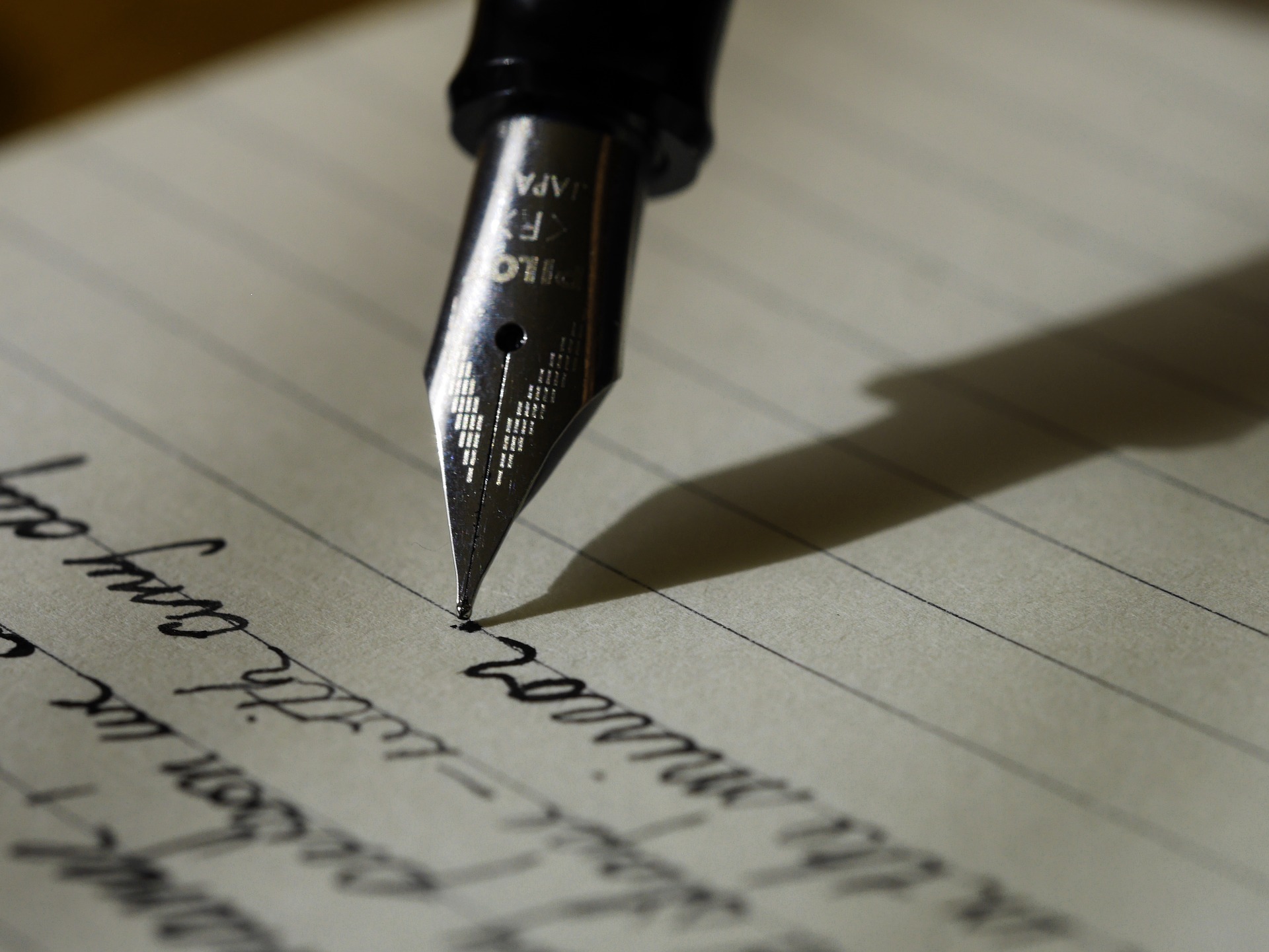
Photo by Dmitry Demidov on Pexels.com

I know it feels weird to interrupt the partying and celebration with discussion of writing. But after today’s news, and after a hell of a week, I feel so energized to write. With that in mind, I finished the outline of my next story today, and I’m looking forward to starting it. So, I shall take a moment of your time to talk about writing.

As I said, I just finished an outline for a new story. And, as you can guess from the title of this post, it’s going to have two protagonists. Or, to be more specific, it’s going to be told from the points-of-views of two protagonists. One is a US Army major who has had his fair share of combat experiences. The other is a thirteen-year-old runaway who just happens to be at the wrong place at the wrong time. I can’t say more than that.

Now, plenty of stories are told from multiple points-of-view. All you have to do is look at the typical bookshelf full of fiction tomes and you’ll find at least three or four books where we see events from the perspectives of two or more characters. But then there are stories where you take for granted that the story is told that way. And then there are stories where you remember how perspectives differed from character to character. Where the multiple POVs is a main feature of the story.

It’s that sort of story I’m aiming to create.

The Bartimaeus books by Jonathan Stroud. Great example of this kind of distinctive-voice storytelling.

Thankfully, I’ve had plenty of teachers over the years with this sort of storytelling. From the (sadly underrated) dark fantasy series The Bartimaeus Trilogy to the literary satirical comedy that is The Falls by George Saunders (read that short story for two separate classes at OSU, and it’s still good), the strong voices of each narrator has a profound impact on the reader. By the time the story ends, you feel like you didn’t just read a story. You read a story and got to know these characters intimately.

That’s what I hope to do. I’m going to be switching between POVs nearly every chapter, and I have to make each protagonist’s voice as distinct as possible. It’s going to be a challenge. I’ve written several stories told from the POVs of multiple characters before. Every author has at least once. But often, it reads like variations of the author’s normal writing voice.

Take IT, for example. There are multiple characters in that story, and many of them get to tell things from their POV. Plus, King narrates things for a few chapters, especially in the early parts of the book when Georgie and the young gay couple are attacked. And it’s a great book with great and memorable characters. But you wouldn’t call every narrator/POV character distinctive from the rest, would you?

Well, that’s my challenge with this story.* With any luck, I can take what I’ve learned from the stories I’ve read and apply it to this next story. Thankfully, there’s only two protagonists, so that should help. (Actually, that might be an important ingredient, having only two leads. Keeps things simpler).

But all that starts tomorrow. For now though, I’m off to shower, pour some wine, watch a scary movie, and dance to “The Touch” by Stan Bush (great song from the 1980s to listen to right now). Until next time, my Followers of Fear, party hard and pleasant nightmares.

What are your tips for creating multiple, distinct narrators? What stories do you think of that do this well? Let’s discuss.

*That, and keeping this story from becoming the length of a novel, but one problem at a time.

The Hunger, looking rather snug with my spices and seasonings.

After reading The Deep earlier this year, it was only a matter of time before I read Alma Katsu’s other book, The Hunger, which follows the Donner Party. Which, if you don’t know who that is, were a caravan of settlers who got snowed in the mountains of California in the winter of 1846-47 and had to resort to cannibalism to survive.* And this October, I made it part of my Halloween reading.

As I said above, The Hunger follows the Donner Party, a pioneering wagon train led by George Donner and his family as they head west to California. However, this isn’t a simple retelling of a horrific tale. Something’s following the wagon train, picking off members. As tensions rise and odd events pile up, it becomes clear that’s something afoot. And it could be human. It could be animal. Or it could be something man has never classified before. Whatever it is, one thing’s for sure: it is very, very hungry.

The Deep was good, but The Hunger was even better. It’s a slow burn, but what’s burning away isn’t just the plot, but the sense of ease. As you go further along in the story and more strange and terrible events occur, you start to feel this awful tension. You’re going to get to the inevitable, but it’s not going to be what you expected. And you have no idea what’s going to happen while on your way there.

Speaking of which, the twist on what the source of the terror was at the end was great. I wasn’t expecting it, which is saying something for me. And when I finally did get an idea of what it was, it left me extremely satisfied. As well as worried about what could happen if such a thing were to exist in this world, but I think that was what the author was going for.

I also liked the characters. Alma Katsu has a talent for taking these huge casts and giving the majority of them enough development to make you like them. George Stanton, trying to outrun his past; Tamsen Donner, suspected of being a witch, when all she wants is to fill a great void within her; Elitha Donner, who hears voices no one else does; Mary Graves, who wants adventure in the great wide somewhere; and Edwin Bryant, who knows so much more than he lets on. These, and others, are characters I came to care for, even as I knew what was likely to happen to them.

There were a couple of downsides to this novel. One was that there were chapters where the reader was taken to significant events in the characters’ pasts, events which likely had an effect on them joining the wagon train. Some of these were relevant to the story and fleshed things out, but a few, especially earlier chapters like this, felt unnecessary.

That, and if you’re here for the actual Donner tale, it should be obvious by now that The Hunger isn’t that. Not a downside, just a different kind of horror based on a real-life horror.

All in all, The Hunger by Alma Katsu is a deliciously terrifying novel. On a scale of 1 to 5, I’m granting it a 4.7. Grab a copy, order a steak dinner, and get ready for a slow ride across the US to the land of frights. Trust me, you won’t regret it.

*When I would describe this plot to people who asked me what I was reading, I would follow it up by going, “Om nom nom nom nom!” Totally worth the reactions I got.

I know you’re all expecting me to recount my adventure at the Bellaire House over the weekend. Believe me, I’m working on it and will have that out as soon as I can manage it. In the meantime, I’ve some other things to take care of. Including a special announcement. One I’ve been sitting on for quite some time.

Some time ago, I was asked by Jason Stokes, owner of publisher Gestalt Media, if I wouldn’t mind taking part in a project called Haunted. The project is a collection of audio recordings of various people, quite a number of them creative types like myself, recounting their experiences with the paranormal. Given that I go to haunted locations at least once a year and I have plenty of stories to tell, I said yes.

It’s been agony keeping this in for so long. But I’m pleased to announce that Haunted, as well as its print companion guide, will be released on Thursday, October 15th, 2020. You can check out the art for the collection below.

Pretty awesome, right? And the collection will have music in the background, each track written and fitted for each story by Mombi Yuleman, a musician specializing in dark, cinematic ambient music. The track behind my section is called “Lizzie Borden.” Gee, I wonder what it could be about?

Anyway, you can expect links to both the collection and the companion guide as soon as they’re up. I hope you’ll consider checking Haunted out when it’s available, and leaving reviews so people know what you think. I’m really excited for you to hear about some of my paranormal experiences,* as well as those of these others.

I also hope you’ll check out Gestalt Media’s other works, which you can find on their website. It’s a great company devoted to putting authors first, and even did fundraising for their authors after the pandemic hit and cut into many authors’ incomes from events. They also were behind Dark Tides, a charity anthology that benefits victims of the Virginia Beach shootings and their families. I can’t think of a better reason to support a company.

Thanks for supporting, my Followers of Fear. I hope you’re as excited as I am about Haunted. I promise to share the links as soon as I have them. In the meantime, I’ll be busy uploading videos and photos, writing blog posts, writing stories, editing stories, making moves and making deals, summoning demons, raising hellhounds, and a million other things (and that’s just the writing-related stuff). I’m having a busy October!

Until next time, pleasant nightmares!

*Obviously, the Bellaire House won’t be among the ones included.

I’ll admit it: I haven’t read any of Clive Barker’s books yet. I’ve seen some of the film adaptations, especially Hellraiser, but not his books. I know, shame on me. What kind of horror fan am I? Well, I’ve downloaded the first volume of Books of Blood on audio book.

But before that, I watched a new adaptation of his famous collections of short stories, Books of Blood on Hulu, which tells three interconnected tales involving the titular book.

Now, I’m not usually one for anthology movies. Or maybe I just haven’t shown enough of an interest. But this one was really good. The first two stories are very well-written, particularly the first one, “Jenna.”* The settings look great, and the acting never feels hammy or terrible. What special effects there are, they’re done so nothing looks silly or fake.

And of course, there’s blood. Lots and lots of blood. Enough to not make a liar out of the title.

That being said, there are a couple of negatives to the film. While there’s plenty of scary imagery and tense moments, there wasn’t any point until near the very end where I felt frightened. And while the stories were well-written, you could see the twists for most of them coming and the last one, “Bennett,” had no surprises at all.

And while the stories were interconnected, I wasn’t really satisfied with how a couple of them were connected. I would have liked more emphasis on the connections and how each story could play into and influence each other.

But on the whole, Books of Blood is a decent enough adaptation of the source material. On a scale of 1 to 5, I’ll give it a 4. If you like horror anthology movies, this might be something to put onto your watchlist.

Just be careful not to watch it while drinking red wine, tea made for you by someone else, or stay at a bed and breakfast while watching it.

*Not sure if any of the stories in the film are based on stories in the books, but I think I’ll find that out if I enjoy Volume One and decide to continue with the series.

October is usually associated with Halloween, and obviously I’m doing everything I can to make sure you don’t forget that. But it is also National Disability Employment Awareness Month, when the United States recognizes how peoples with disabilities have contributed to the country and to our various industries over the years. This year especially, we are marking both the 75th anniversary of NDEAM, as it’s often abbreviated, and the 30th anniversary of the Americans with Disabilities Act (ADA) becoming a law.

And it’s good we have this month, because there are so many people with disabilities throughout the world and history who have contributed to our society. Harriet Tubman led dozens of slaves to freedom and acted as an armed scout and nurse for the Union Army, suffered from neurological issues due to a childhood traumatic brain injury; Franklin Roosevelt became President of the United States and led the US through some of its toughest crises, all while dealing with the aftereffects of polio from a childhood condition; Albert Einstein had a learning disability; and author Flannery O’Connor wrote enduring fiction while suffering from lupus.

Not to mention there’s a growing list of entertainers and athletes with disabilities inspiring us everyday. Magic Johnson, the basketball player, has dyslexia; Gaten Matarazzo and Millie Bobby Brown from Stranger Things have cleidocranial dysplasia and deafness in one ear, respectively; and Elton John has fought bulimia and epilepsy for years. And more amazing people with disabilities are emerging every day. Check out this video of a dance company, half of whose members have disabilities.

I point out all these people because, as Ms. Hamamoto points out in the video above, one in five people have a disability of some sort. Yet, despite the passage of the ADA and the many opportunities this law opened up for Americans with disabilities, this country isn’t always very inclusive. In fact, opportunities and services available for people with disabilities can vary greatly from place to place.

This astonishes me, because becoming disabled is something that can happen to anyone regardless of sex, race, nationality, class, religion, political leanings, ethnicity or age. In fact, the likelihood of getting a disability grows as you get older. It can happen because of genetics, because of an accident, a side effect of an illness, or other causes. Lately, I’ve heard of people who get over COVID-19, but have side effects such as still being unable to taste or suffering from multiple headaches a week. These can, and likely will, be considered disabilities in the years to come.

And many members of the American military come back or discharge with disabilities. These can range from physical, such as war injuries, to mental or psychological, such as PTSD.

You might not even realize that someone near you has a disability. The majority of them are invisible. You may only see their struggles, if anything.

And yet, so many people don’t want to think about the disabled. Services for the disabled can be underfunded. Many homes aren’t always built with the disabled in mind. Education in general is often not given the funding it needs, and when it comes to budget cuts, special education is often on the chopping block. And there’s so little education on disability in general, that people may hold a stigma regarding disability for years: that disability is contagious; that they’re useless; that they brought it upon themselves; that the best thing to do with disability is to ignore it or hide it away or treat it as an annoyance.

As a person with several disabilities–some congenital, others acquired in adulthood–I’m aware of how lucky I’ve been. I’m gainfully employed at an organization where close to twenty percent of the workforce has some form of disability (as well as accommodations for them). And throughout my life, I’ve been able to receive services that help me with my disabilities. So I feel it is important to not only make disability more visible, but also to advocate and help out when I can.

Which is why I’d like to close out this post with some links to help my fellow peoples with disabilities. The Department of Labor’s Office of Disability Employment Policy (ODEP) has numerous resources for the disabled, and many states have programs or offices for the disabled, such as Opportunities for Ohioans with Disabilities in my state. If you are or know a college student or recent graduate with disabilities, then might I recommend the Workforce Recruitment Program, or WRP, a great program that pairs students and graduates with disabilities with internships in the federal government, and which sometimes turn into jobs (please use Firefox when operating on the site). And the Job Accommodation Network, or JAN, has numerous listings of individual disabilities and what accommodations exist out there. My office uses this site all the time, and we find it quite helpful.

And these are just a small sample of resources for the disabled, a group that should never be discounted or forgotten. Because not only can you become disabled at any time in your life, but because no matter the disability, you matter. You contribute. You make the world a better place. And if people forget that, then it’s up to you and to the rest of us to remind them.

What resources for people with disabilities are you aware of? What has your disability experience been like?

One thing I can always count on with a Junji Ito collection. The artwork is always fantastic. And this latest collection of short stories, Venus in the Blind Spot, is full of some of his best work.

Now if you’re unfamiliar with Junji Ito, he’s a manga artist who specializes in horror, and is well known for illustrations that terrify and creep the hell out of readers. Hell, sometimes I don’t feel comfortable leaving his books on the night stand beside my bed without something to cover them, the illustrations are that terrifying. I’ve read quite a bit of his work, and I’ve reviewed some of those stories and collections here on the blog, such as his adaptation of Mary Shelley’s Frankenstein and his masterpiece Uzumaki (click here and here for those reviews).

His latest publication in North America is Venus in the Blind Spot, and I loved just about every story within. The majority of the stories revolve around obsession, especially romantic or sexual obsession. The titular story follows the members of a UFO society as their obsession with the founder’s daughter becomes skewed after they lose the ability to see her. There’s also the fan-favorite The Enigma at Amigara Fault,  which I’ve read before but was excited to find again. It revolves around finding something strange that’s just right for you, and the insanity of not claiming it, of not finding out its secret. Even if by doing so, you potentially doom yourself.

My favorite stories were Billions Alone, a creepy body horror story about people being found sewn together that’s perfect for the current pandemic, and The Licking Woman, a weird story about a wild woman whose monstrous tongue contains a poison that kills all whom it licks.

And like I said, the artwork is fantastic. Ito-sensei’s work is never concerned with looking visually appealing like other visual artists. Rather, he wants to provoke a reaction. Fear, disgust, horror, unease. He wants to disturb your inner Zen. You can see this especially with three of the stories which are adaptations of works by other authors. Yes, they’re not his stories, but he puts his all into making sure his art brings out all the terror contained within the words.

Famous image from “The Enigma of Amigara Fault,” which is some of Ito’s work at its best.

That being said, the collection isn’t perfect. While there are colored pages and colored panels, they show up inconsistently, and it’s a little annoying. Sometimes I can’t even tell they’re colored, as I’m red-green colorblind and the panels use colors I can’t always see. One of the stories, The Principal Post, is one I’ve never really liked nor understood why it was published. And there’s a story about Ito-sensei himself and the influence of another artist, Kazuo Umezu,* on his work that I liked, but which might annoy fans seeking another scary story.

But all in all, Venus in the Blind Spot is an awesome, freaky and unsettling collection. On a scale of 1 to 5, I’d give it a 4.5. If you want to see a Junji Ito collection at its best, you can’t go wrong here. Open it up and get ready to experience the madness.

Are you a fan of Ito-sensei’s work? Did you read this collection? Are you excited for all the adaptations of his work in production? Let’s discuss.

That’s all for now, my Followers of Fear. I’m off to work on my own stories and see if I can’t disturb someone else’s inner Zen. Until next time, stay safe, pleasant nightmares and why is there a woman with a giant tongue outside my building?

*Highly recommend his series The Drifting Classroom. It’s like a sci-fi version of Lord of the Flies, and just as brutal.

My table at the Indie Author Book Expo in Des Moines this past year. I’m hoping to have wonderful experiences at the events I’ll be attending this coming year as well.

I know it’s early. We still have three months and nine days left of 2020. I also know that, with COVID-19, any planned event is subject to change or cancellation. And there’s no telling when this pandemic will end. But I want to be optimistic and hope things work out before these events happen.

Plus, I’ve already talked about one of these events on most of my other social media in order to help get more vendors there. And if you want to get this stuff on people’s calendars, you gotta get the word out as early as possible. Before they put weddings and bar mitzvahs and other conventions on their calendars.

What was I talking about? Oh right. So, I’m signed up to be a vendor or author at a couple of conventions and book fairs next year. And I’m letting you know about them in case you’d be interested in them or going to them.

First, there’s Paranormal and Psychic Convention 2021, or ParaPsyCon 2021. This is an annual event at the Ohio State Reformatory in Mansfield, OH. You know, the haunted former prison where they filmed the Shawshank Redemption. The one I’ve been to twice and filmed some of my best haunted footage at. It’s from May 22nd-23rd, 2021,* and all it takes to get in is admission to the convention is to pay for admission to the prison. You can find out more on their website here.

Fun fact: I was actually supposed to be at this convention earlier this year. But we were in the early days of the pandemic, and the convention organizers were wise to cancel it. They then offered to put me on the vendor list for 2021, and I accepted. I’m hopeful that by then, things will be a bit safer and we can go to the convention in peace.

Then the month after, I’ll be at an event hosted by Indie Author Book Expo, or IABE, the very same group who hosted the expo I went to in Des Moines back in July. However, this time, I’ll be at IABE Chicago in Chicago, Illinois. It’ll be held on June 19th, 2021 at the Quarry Chi on E. 75th street. Not sure what the parking situation is, or if this location has been used as a film set, or if it’s haunted. But hey, doesn’t mean it won’t be a good time. You can find out more about it, as well as the other events IABE will be holding next year, on their website here.

I’ll be at both events, selling books,** doing Tarot readings, meeting readers, writers and others alike, and just trying to have a good time. So, if you’re able to come to either, please do. I’d be happy to see you.

And if I sign up for any other events, I’ll be sure to let you know well in advance that I’m attending. Don’t know if there will be. Some won’t happen unless the pandemic gets better. Others won’t let you sign up unless you’ve had a book published within a certain time period, so my attendance will depend on what occurs over the next year or so. We’ll see what happens.

Anyway, that’s all for now, my Followers of Fear. If any of you are able to make these events, I hope I’ll see you then. Until next time, stay safe and pleasant nightmares.

*Same weekend as StokerCon, I know, but I already had this on the calendar. What are you going to do?

**And some other things. I’ve had a few ideas on other items I can sell alongside my books. And I’ll probably think of a few more before the first convention.

What a mouthful of a title. Let me explain:

Back in college (I want to say 2012), when featured blog posts were advertised to WordPress users under the feature “Freshly Pressed,” I read a blog post from a father who recently had a run-in with someone else’s spawn. I can’t remember much about the blog post in question. I can’t remember the blog or blog post’s name, the blog’s general theme, or anything of that sort. However, one detail stands out in my memory and it’s why I’m writing this blog post:

After reprimanding another person’s child for selfish (and maybe violent? I can’t remember that well) behavior at a children’s playground, the child’s mother came to apologize. And the parent described the mother’s face as “crunchy.” You read that right, crunchy. For someone’s face.

I tried pressing the author in the comments about what he meant by “crunchy.” What makes a woman’s face crunchy? But no matter how much I tried or he tried, he couldn’t describe it better than “crunchy.” I’m guessing he doesn’t spend a lot of time trying to understand the meanings of adjectives in order to mix and match them in stories and not use the same word over and over again. That’s more of a creative writer thing, not a parent blogging about their experiences kind of thing.

Anyway, I put the issue aside, but every now and then, I would come back to it and wonder how you could describe someone’s face as “crunchy.” About two weeks ago, I decided to finally search for answers and decided to discuss it with my various writers’ groups online. And I got some feedback that proved quite helpful.

Among my writer friends and colleagues, there were three main responses:

  • The author really meant “scrunchy,” not “crunchy.” This would make more sense, as it’s easier to visualize someone’s face scrunch up.
  • He meant she was a crunchy-type person, as in a sort of neo-hippie that eats granola and lots of other natural foods that are crunchy when eaten (hence the nickname).
  • The person’s face was so covered in lines, that you could almost hear those lines crunching whenever their face moved.

Honestly, given that I mainly asked horror authors for their feedback, I’m surprised that only one person made a wisecrack about cannibalism, and the woman’s face looking like a crunchy snack. Like a Cheetos snack or a Crunch bar.

And now I’m hungry. Dammit.

What people tend to think of when they hear the word “crunchy.” Not in regards to people’s faces.

Anyway, of the responses listed above, it was a variation of the last one that rang right to me. One author commented that she’d seen people whose skin texture was like cornflakes due to too much exposure to the sun and applying too much beige make-up to “make up” for it. Given my vague memories of the original blog post and the context the author used for the woman he was conversing with, this felt right. In fact, it lines up with the image I conjure in my head when I think of the woman from this blog post.

So, that’s the description I’m going with. In fact, I’ve already figured out how I could work it into a story someday, as well as which story I’d like to use it in. And perhaps which foolish person who got on my bad side and received the ultimate punishment of getting a hateful character based on them to use the description on.*

But damn, it was a crazy trip just to get to the right description. At least I finally found a description that works for me and I can work into a story someday. And I got to write a blog post that hopefully was edifying and enjoyable. Not a bad way to spend a Sunday morning, right?

That’s all for now, my Followers of Fear. I hope this post was amusing. So, until next time, what are some other weird or mystifying descriptors you’ve come across in your reading? Any that you’ve struggled to find an answer for? Let’s discuss.

And until next time, stay safe, pleasant nightmares, and no eating people’s faces off. It’s generally frowned upon in Western society.

*Don’t mess with me. My retribution is not only dangerous and eternal, but safe from lawsuits owing to that little clause in the copyright section stating it’s a work of fiction and that any connections to real persons, places or events are just coincidences.

I first read the source material by authors Richard and Billy Chizmar in the Dark Tides Charity Anthology (which I highly recommend and not just because proceeds go to charity) back in April. I found it terrifying, psychologically thrilling. I even expressed on Twitter that I thought it might make a good movie, though I doubted one would be made right after the release of The Lighthouse. Then about a month or two ago, I found out a movie had not only been made, but would be coming out on September 1st. I had some free time, so I rented it off YouTube and sat down to check it out.

Widow’s Point follows Thomas Livingston, an author and paranormal investigator who is doing an investigation of the infamous Widow’s Point lighthouse in Harper’s Cove, Maine. The lighthouse has witnessed numerous murders and suicides over the years, making many speculate it’s haunted. Livingston and his crew arrive to stay the weekend and hopefully make some quick cash. Too bad he’s going to get so much more.

I feel like I was watching a Stephen King miniseries or TV movie from the 1990s, with a bit of classic Doctor Who serials. Yeah, on the surface it does seem a bit hokey and amateurish, and the one or two special effects are laughable. But it’s a lot of fun to watch, and I keep smiling when I think of the film and my experience watching it. Also, since all of the actors were unknown to me and looked like people I might see on the street, it gave the film a weird sort of plausibility. Like, this could happen to average joes. Add in a little suspension of disbelief, and you can believe in the story.

On top of that, there were some scary moments. Particularly when Livingston, played by Craig Sheffer,* is undergoing psychological stress and his mind is really beginning to snap. Those moments gave me some chills, I’ll tell you. And a lot of attention is paid to historical detail with flashback scenes detailing the lighthouse’s history, which I loved as a fan of history.

But there are things I didn’t care for. Like I said, the special effects were laughable, and I disliked how the filmmakers tried to give an explanation to the lighthouse’s evil, rather than leaving it mysterious like in the original short story. Sometimes less is more, and it certainly would have been more here.

All in all though, Widow’s Point is a nice guilty pleasure horror movie to start the Halloween season with. On a scale of 1 to 5, I’m giving it a 3.5. It probably won’t make you shit your pants in terror, but it’s entertaining and will scratch that horror itch. It’s on DVD and streaming sites, so give it a go if you’re interested.


That’s all for now, my Followers of Fear. I’m off to work on one of my own stories. Until next time, stay safe and pleasant nightmares!

*By the way, I want this guy to narrate an audio book of one of my stories someday.

The other day, I was scrolling through my Twitter feed and I saw a tweet from a fellow writer in the writing community (or #WritingCommunity). This was the tweet.

Now, if the tweet hasn’t loaded properly into this blog post at the time you’re reading this, it’s from writer Rey Roland using the hashtag @rrowlandwrites and goes like this:

#WritingCommunity do you think that characters have to make mistakes in a story?

I found the question stimulating, so after some back and forth between us, I decided to do a full post on the question (hope you don’t mind, Rey).

So, can and should characters make mistakes? First, let me start with can: yes, characters can make mistakes. In fact, there are plenty of stories where characters make mistakes which become integral to the plot. And yes, characters should on occasion make mistakes, though it depends heavily on the story. A character shouldn’t make a mistake just for the sake of making one when it serves no purpose to the story. Otherwise, the readers will think it’s weird.

Of course, this leads to an even bigger question: is there a benefit to having characters make mistakes? Actually, there are multiple benefits to having a character who makes mistakes.

For one thing, characters who make mistakes are easier to empathize with. Not to say characters incapable of making mistakes can’t be empathized with, but it does make a character more human and easier to identify with for the audience. The possibility of a reader continuing with a story can depend greatly on their connection to the protagonist, so showing them as being like the reader–more human–can be an advantage.

Edmund Pevensie’s mistake was a major driver of the story.

Another reason to have characters make mistakes is that it can help the story along or add to its complexity. Sometimes, it’s even the catalyst of the story. In The Lion, The Witch and The Wardrobe, Edmund makes the mistake of falling under the White Witch’s spell, and betraying his siblings adding both an extra dilemma to an already difficult situation and giving the character a redemption arc during the story. And in the manga Death Note, Light Yagami tries to eliminate suspicion of himself as the murderer Kira by killing the FBI agent following him, as well as the other FBI agents following other suspects. However, this eventually just leads to him becoming a prime suspect again, a problem which lasts the rest of the series.

Of course, it isn’t just protagonists who make major mistakes. Minor characters make mistakes all the time, and they often benefit the plot significantly. In Ania Ahlborn’s novel The Devil Crept In, the protagonist’s mother makes the mistake of not treating her son’s obvious mental issues, which has major consequences before, during and after the story. And in Harry Potter and the Order of the Phoenix, Cho Chang’s best friend Marietta Edgecombe tells Umbridge about Dumbledore’s Army, leading to the organization’s dissolution, Dumbledore’s exile and Umbridge’s assent at Hogwarts, and boils to appear on her face in the shape of the word “SNEAK.”

And villains make mistakes all the time. Often, that’s how their downfall begins. Often, these mistakes are due to the villains’ pride, ignorance, or some other character flaw. Voldemort doesn’t believe anyone will find his Horcruxes; Bane talks too much and doesn’t watch his six; Annie Wilkes is so obsessed with her Misery Chastain novels, she falls for Paul Sheldon’s trick; the White Witch doesn’t read the instructions carefully and misses the deeper magic in the Stone Table; Kaecilius also doesn’t read the instructions and misses what actually happens when you join Dormammu’s dimension; and the Wicked Witch allows water in her castle for some reason, even though she has a serious water allergy (I guess the book version thought Dorothy would never think to use water against her?).

As you can see from the above, not only can and should characters be able to make mistakes, but there are numerous benefits to doing so. Whether to include one or not depends on the author, character(s), and story in question. However, if an opportunity comes up and you think it’ll ultimately benefit the plot, I say do it. Who knows? It could be a major turning point in the story, and the moment readers talk about for years to come.

I hope you found this post edifying, my Followers of Fear. I had fun writing it. And I hope Rey Rowland (whose Twitter page you can find here) enjoys reading this. Thanks for the mental stimulation.

That’s all for now. I’ll check in with you all very soon, I’m sure. So, until next time, stay safe, pleasant nightmares, and DON’T TAKE THAT ACTION! IT’S THE KIND OF MISTAKE THAT’LL LAND YOU IN A HORROR STORY! AND NOT ONE WRITTEN BY ME.