Posts Tagged ‘authors’

My latest article from Self-Published Authors Helping Other Authors has just been released. This particular post is called The Inner Dialogue: A Method for Figuring Out Your Stories. This details the method I used to figure out how to rewrite Rose after two-thirds of the story had to be thrown out. It’s a rather unconventional method, but it works really well. So if you’re curious or you’re looking for a new way to break writer’s block, this artile might be helpful to you.

And after you read the article, if you like what you see, consider checking out the rest of the articles on Self-Published Authors Helping Other Authors. This site has plenty of helpful articles on writing, editing, publishing and marketing all by yourself, no matter what your budget, as well as articles on keeping your spirits up during difficult times and not getting bogged down by negative trends in the writing world or by rejections or a lot of work. And it’s done by self-published and hybrid authors for self-published and hybrid authors. Give it a chance and see what it can do for you.

That’s all for now, my Followers of Fear. Until next time, pleasant nightmares.

Video Rage, Book 2 of the Reborn City series

So as I promised in my last post, I have another post out today. And this one is a special one. Two years ago today, I published Video Rage, the second book in my Reborn City series.

If you’re not familiar with the Reborn City series, it’s a science fiction trilogy that I started writing back in high school. The story follows street gangs living in a dystopian future, in particular a gang called the Hydras whose leaders have very unique abilities. The novels explore themes such as prejudice and self-fulfilling prophecies, gang violence and drug addiction, and overcoming the expectations of others and of yourself. I published the first book, Reborn City, back in November 2013, and the second book, Video Rage, came out on June 1st, 2016, right before I started working in my current position.

While the books only have a very small following, those who’ve read them have had very enthusiastic things to say. Here’s are some of the reviews for Reborn City:

It’s a neat exercise in trying to see through the eyes of someone different from oneself. It incorporated a lot of fly comic-book-esque tropes. A good beginning effort of an up an coming new author who has some cool ideas to explore.

–Amazon Customer

This is not a genre I typically delve into, but I took this book on vacation and couldn’t put it down. The plot had me turning pages at quite the clip. The characters were unique and interesting and the imagery had me creating my own visual of what Rami’s interpretation of the future looked like. For first time novelist, Rami Ungar, this was an outstanding showing of talent and commitment to his passion of writing. Looking forward to seeing what he comes up with next!
–MU
This was really a page-turner; I was hooked from the start and read it in a day. While not perfect, this is an auspicious debut novel from a good author. I look forward to reading the rest of the books in this series when they come out!
–Josh M
And while it doesn’t have as many reviews, Video Rage has also received a warm reception:

From what I understand, this is book 2 in a series. That being said, I had expected a cliffhanger of an ending. I’m not a fan of cliffhangers, but in this particular book, I think the author did an excellent job of finding the balance between making the story stand complete within itself while ending the story on a note that let you know another book was coming. Personally, the ending was one of the most intriguing ones I’d read in a long time. It didn’t leave you to figure it out for yourself (which is something I hate). The author let you know what was happening and why while leaving enough to be answered in a future book.

That all being said, the overall book was an enjoyable read. I especially liked that a former bad guy turned things around and redeemed himself. Those types of characters are one of my favorites. I had hoped in Reborn City (Reborn City series Book 1) that he would, and it was very satisfying to see that fulfilled. I also liked the underlying theme in the novel that what the media tells people through the major outlets is slanted by government agendas. In this book, it was up to the main characters to find an alternative way of getting the truth out.

I think this book is best read after reading Reborn City (Book 1) because it really helped to have the background on the characters, and I think this book is far more effective if you have the foundation Book 1 gives you. The science fiction geek in me really loves the genetic aspect. And so that I don’t spoil anything, I will say the real bad guy in this series does a nice twist in this book along that line.

–Ruth
I was really looking forward to the continued journey of the Hydras and Rami was able to produce. Zahara is my favorite character and her development from an insecure girl into a strong woman came out clearly in this book. Some other character development was really unexpected but the book moves at such a fast pace that it didn’t hold me up at all. The story line is quite imaginative and, as usual, there isn’t much predictability there. I think that is what draws the reader in – you just need to keep going to find out what weird twists and turns happen next! Looking forward to continuing this journey with Rami and the Hydras.
–Michele

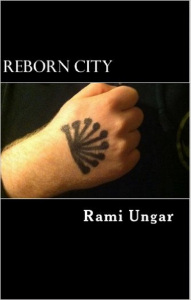
Reborn City, Book 1 of the Reborn City series.

If any of this has piqued your curiosity, I’ll post the links for the books below. Please check them out if you’re interested. And if you do end up reading them, please let me know what you think. Email, blog comment, review online, I’d love to hear your feedback, positive or negative.
That’s all for now, my Followers of Fear. I’ll probably have another post out tomorrow. Until next time, happy reading and pleasant nightmares.
Reborn City: 

Available on Amazon, Createspace, Barnes & NobleiBooksSmashwords, and Kobo

Video Rage:

Available from Amazon, Kindle, CreatespaceBarnes & Noble, iBooks, Smashwords, and Kobo

Before I give you the news I hope you’re all eager to hear–the latest on my novel Rose, which is to be published by Castrum Press–I want to first share something I was told recently. Now, I’m not sure if this is true and I haven’t been able to find any corroborating evidence, but according to someone I talked to online, in the first draft of Carrie by Stephen King, Carrie actually grew horns and sent bolts of electricity from her eyes at some point in the story. This was later dropped during the revision process of the novel.

Okay first off, I kind of want to see that version of Carrie, not just in book form but in movie form as well (I still maintain that the 2013 film is the superior adaptation, and you know the horns and lightning bolts would’ve looked awesome in that film). Second, it shows that even King’s works, including one of his greatest, require extensive revisions. And that made me feel a whole lot better about the revisions I have to do for my own story.

Now, if you’re unfamiliar with Rose, it’s a novel I’ve been working on since my senior year of college, when I wrote it as my thesis project. It follows a young woman who finds herself turning into a plant creature (and that’s just the start of her problems).

I’ve mentioned before that my publisher asked me to do nix the many flashback sequences in Rose, essentially throwing out one-third of the book, and another third that was dependent on that first third. Although I was understandably more than a little disappointed about that, and it even brought my mood down quite a bit at times, I decided to try and find a new direction for the story that didn’t rely so heavily on flashbacks. Somehow, after a lot of head-scratching and extensive use of a method of brainstorming I’ve been wanting to try for a while (I’ll write an article about it for Self-Published Authors Helping Other Authors soon enough), I managed to find a new direction and plot for Rose that I thought made for a good supernatural thriller.

I sent a new outline for the story to my publisher, and just today they got back to me. I was really worried that they might not like the new direction, but the tone of the email was really enthusiastic. They just asked me to keep in mind some things about chapter length and a few other things, and wished me luck.

I can’t tell you what reading that feedback did for my confidence. The closest I can get to is by saying that it felt like a weight had been lifted off of my shoulders.

And since I’m on vacation for the first third of June (not going anywhere, I’m just having a relaxing stay-cation at home), now is the perfect time for me to get back to work on Rose. I plan on getting through at least the first seven chapters of the novel, and then start on the new material for the novel. All that, along with more than a few blog posts I’ve been wanting/meaning to write for a while, and of course the normal stuff one does while on vacation (sleep, watch TV & movies, read, hang out with family and friends, run errands, have tea and scones with a succubus you’ve been seeing on another plane of reality, etc.), should keep me pleasantly occupied during my vacation.

So as you can see, Rose is still coming along. It may take some time, but I still think we can get the book out before it starts to turn chilly again (though in my state, that can happen even in summer). And I think when I get it done and on the shelves, it’ll surprise more than a few people. Especially those who’ve read earlier versions of the story.

That’s all until morning, my Followers of Fear (got another post I need to work on after I’ve gotten my much-needed sleep). Until then, pleasant nightmares. I’ll see you soon.

My copy of “The Creepypasta Collection,” as edited by MrCreepyPasta

A couple of years ago while I was in Germany, I became acquainted with a growing genre of horror known as creepypasta. Creepypasta, for those of you who are unfamiliar, are horror stories, images, videos, music and games that originate on the Internet and are meant to be spread around as memes. Sort of like viral Internet-born campfire ghost stories (see my original post from 2015 if you’d like a more in-depth explanation).

While I had to end my acquaintance with the genre rather abruptly (job searching and then landing a busy full-time job, as well as trying to write my own stories, doesn’t leave that much time for perusing the Internet for horror stories), I never forgot about this strange world of creators making and sharing these scary stories, sharing characters and creating entire mythologies out of some of them (Slender Man, anyone?). So when I found out there was actually a couple of anthologies of creepypasta available in book format, which meant I could read them on my lunch break, I decided to get a copy and dive in to see back in.

What did I find?

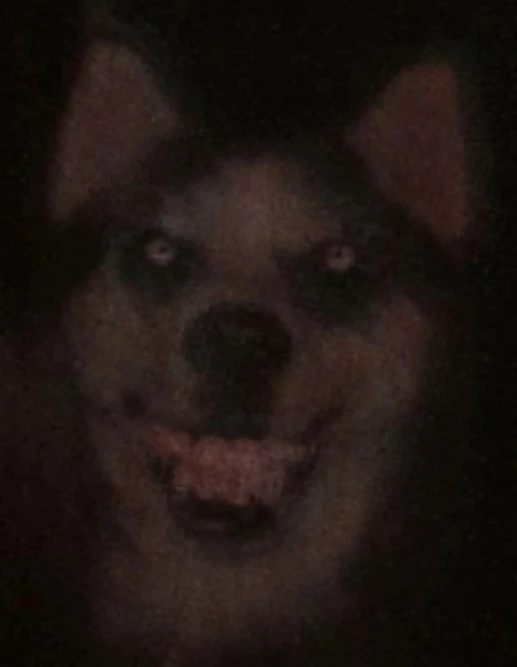
Well, like every anthology I’ve ever read, there were some stories that spoke to me more than others. A few I didn’t find that scary at all, but others definitely filled me with that feeling I get from good horror, and even set my imagination alight at times. There are writers in that anthology who would and have done well writing commercial fiction (in fact, some of the contributors listed in the back of the book have published or self-published stories). My favorites in the collection were “When Dusk Falls on Hadley Township” by TW Grim, which reminded me of a Stephen King short story; “Smile.Montana” by Aaron Shotwell, featuring the infamous creepypasta character Smile Dog; “Bedtime” by Michael Whitehouse, a classic of creepypasta fiction that really got my imagination going; and my top favorite, “She Beneath the Tree” by Michael Marks, a Lovecraftian tale that I loved from start to finish.

So yeah, if you’re curious, you should give the collection a read. 4.5 out of 5. As the cover promises, these are stories you can’t unread. And I’m not sure you’d want to.

But I found more than just stories in this collection. I also noticed some things about the genre, especially the pieces in the anthology, that showed me just how different they were from more “mainstream” horror stories. For one thing, the narration in the stories struck me as being more…realist in nature. Not like Realist fiction, which is set entirely around stories that happen in the real world, but like they really believed that the things they depicted in their stories could actually happen. In a lot of horror fiction, even by the greatest writers out there, you get the sense that, except for maybe stories involving serial killers, the authors don’t really believe that what they’re writing about could happen. But creepypasta writers seem to feel the opposite. I got the sense, even with some of the more supernatural or strange stories, that the authors really believed that what was happening in their stories could happen in the real world, and treated it as such. And this shown through especially with the first-person narrators.

When something like Smile Dog can be treated as if it’s real, you know you’re reading something different.

This is something I really admire in creepypasta, because it just gives these stories another layer and gives them the power to really make you wonder if some of what happens in these creepypastas could happen. Some of my own stories are based on my own beliefs of what could be out there, and I like to think that gives them this quality of strange realism to them. Seeing that quality brought out so well with these stories is a great guide for me personally as a writer, so I’m glad I exposed myself to them.

Another thing about this anthology is that it made me realize something: the creators of creepypasta are not too different from self-published and hybrid authors. The latter try to recreate the quality and success of books published by traditional presses without having to go through all the hoops that come with the traditional method and presses. They’re trying a new way to achieve an old goal. And a major component of this is through the Internet to reach readers and advertise. Basically, to spread the word.

Similarly, creepypasta creators are trying to recreate something as well. When I called creepypasta viral Internet-born campfire ghost stories, that was a really apt description. They’re recreating the feeling of telling scary stories around a campfire, and spread it farther than any campfire could. And their chosen medium, the Internet, is perfect for that. Spoken word can be used on the Internet, but so can the written word, images, video, music and so much more. They use the Internet to advertise terror as well as any self-published/hybrid author can to advertise their books. Is it any wonder that one can so transition easily into the other?

Overall, I’m glad I took this dive back into the world of creepypasta. It opened my eyes to things that I’d never realized before, gave me ideas for stories, and caused my respect for creepypasta creators to grow immensely. And while I may never write true creepypasta, I can see creepypasta-esque stories or ideas infiltrating my future work. Just like creepypasta, you never know until it happens. And by then, it’s likely too late.

That’s all for now, my Followers of Fear. I’d love to talk a bit more on the subject, but a hole in the fabric of reality has appeared in the fabric of my carpet, so that either means something really pleasant, or something really bad. I’m going to go find out.

Until next time, pleasant nightmares!

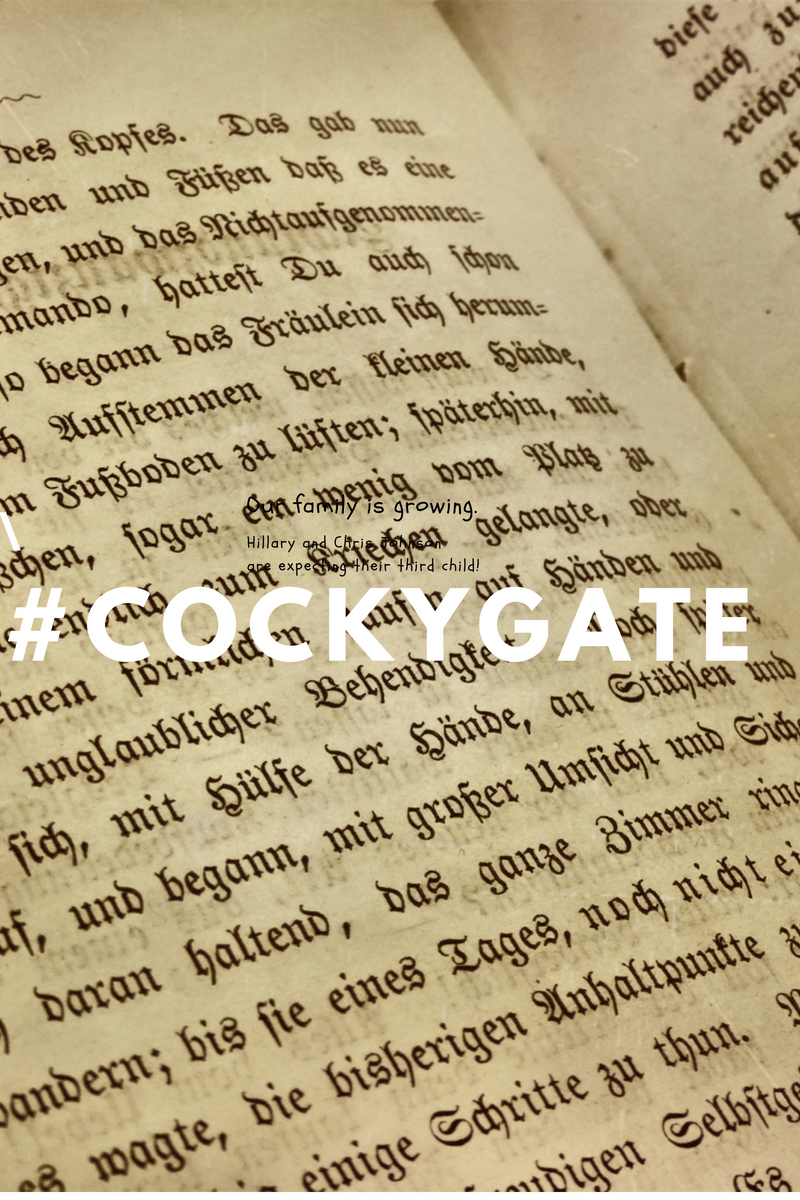
I was really eager to publish this earlier, but I felt like the #Cockygate issue deserved more attention, so I wrote about that first. That being said, I’m so happy to announce that I’ve finally reached a thousand followers on my blog!

And, oh my God! I have no idea where to begin talking about this. I mean, I’ve been writing this blog for nearly seven years, through school and job-searching and travels and working and ups and downs and so much more. And yesterday, during the tail end of a family thing, I just got a notification. Someone had decided to be my one-thousandth follower, even if they didn’t know it. The feeling of surprise was enough that I didn’t know how to respond (especially considering my family and I were trying to get somewhere while in the midst of a huge crowd). I’m still not sure how to respond.

Well, I guess the best way to respond would be to do the polite thing and say, thank you. Thank you to every one of you who has followed me for these nearly seven years. A big reason why I’ve been able to make it this far, in blogging and writing in general, is because I’ve had the support of so many people, especially the many people who’ve followed my blog over the years and have become this group I love to call the Followers of Fear. You’ve been there for me, encouraged me when I needed it, discussed with me issues ranging from the mechanics of writing to the simple day-to-day life to questions of right and wrong, and so much more. Some of you have even become good friends to me, and a few of you I’ve even had the pleasure of meeting offline. One of my earliest followers/friends even introduced me to my publisher, which I’m so incredibly grateful. And some of you even read my books when they’re published, which means a great deal to me. Hopefully you’ll want to read Rose as well when that comes out.

So thank you to all of you who’ve subscribed to my blog over the years. It means the world to me. And an especially big thank you to Bette A. Stevens, Maine Author, who was the thousandth follower to subscribe. Thank you so much for signing on, Ms. Stevens. I checked out your blog just now, and it is very colorful and lovely. I hope you and everyone else reading my blog enjoy my posts for ages to come.

I wish I had something else for you guys. I don’t really have a contest or anything like that prepared. I’m planning on doing one for Rose when that comes out, but nothing for this particular event. However, I’d instead like to hear from you. There are a thousand from you now, and I only regularly interact with a small fraction of you. So tell me, whether you’re a frequent commenter or just someone who hasn’t had much to say, who are you? How are you? What do you blog about? What do you like about my blog? What’s exciting going on in your life? Please tell me, I’m very curious to know.

Well, that’s all for now, my Followers of Fear. Thanks again for following me, and I hope I continue to give you quality reading material for ages to come. Until next time, pleasant nightmares.

I wasn’t planning on writing another post about this subject, but I got so many updates about the subject, I felt I should chime in. And I would’ve published this post earlier, but I had a family thing to attend, so that took up a bit of time. Well, no time like the present. Let’s talk Cockygate.

Now, for those of you who don’t know, or don’t have time to read my last post on the subject, let me give a bit of background: Faleena Hopkins is a romance author who writes a series of books called the Cocky Brothers series (though apparently it’s gone by several names in the past). Recently she applied for a trademark for the word “cocky,” with somehow got approved by the Patent & Trademark Office. Technically speaking, this only allows her to have control of the word using a particular kind of font on her book covers, but she’s taken this to extreme levels, and has sent cease and desist letters to authors who use “cocky” in the titles of their books, telling them to either change the names of their books, take them off Amazon, or face legal action. The authors targeted are mainly self-published writers who can’t afford a legal battle, and changing a book’s title is hellishly hard (imagine the insanity that might come from trying to change the name of the Harry Potter books, for instance). This puts them in a really difficult position.

As you might expect, when word got out about this, things escalated quickly: authors quickly called out Hopkins on this move, calling it extortion and bullying; the hashtags #cockygate and #ByeFaleena (ha! that’s still funny) started trending on Twitter; the Romance Writers Association asked anyone affected by Hopkins to send proof to them and started consulting with an IP lawyer; and Hopkins, who apparently once said that anyone who uses stock photos after she uses them is copying her (that still boggles my mind), posted a video online trying to defend herself and instead dug herself deeper into a hole.

Among other things. Yeah, this is one screwed up situation. And this has not only people angry at Hopkins, but afraid of the future: if you can trademark any word in a title, it’s possible no one will want to publish stories because they’re afraid they could get sued by a trademark owner for using a common word.

However, people have been fighting this, and keeping the story alive. And as time has gone on, there have been further developments in this case. Here are just a few:

  • A novelist and retired lawyer named Kevin Kneupper has come together with a bunch of other authors/lawyers to try to get the Patent & Trademark office to toss out Hopkins’ trademark using a petition for cancellation, which I applaud them for doing and hope they are successful.
  • The creator of the font Hopkins uses for her books came out and stated that anyone who uses his fonts isn’t allowed to apply for trademarks using his font. So, Hopkins is telling people they’re infringing on her trademark while at the same time breaking the rules of usage for the font she uses. Someone needs to read the fine print before telling someone else to do so.
  • Amazon has stated they won’t kick books off its website that have been targeted by Hopkins while they wait to see how this whole thing unfolds.
  • A company called Rebellion Games tried to get a trademark on the word “Rebellion,” (just the word, as far as I can tell), and Mr. Kneupper apparently convinced them to reconsider (and suddenly I want to interview him for my blog and/or name a character in my next novel after him).
  • Hopkins uploaded a video that’s since been taken down (but this is the Internet, so nothing ever goes away), where she said people were calling her and her fans stupid, and then said that meant they were calling her and her fans autistic. Um, say what? As far as I can find, no one brought up autism being mistaken for stupidity before you did. And as someone who’s on the spectrum, would you kindly leave my community out of this? IT HAS ABSOLUTELY NOTHING TO DO WITH WHAT YOU’VE BEEN DOING!!!
  • In the same video, Hopkins also said someone had insinuated that she was part of the KKK (proof please?), and said she would never be a Klansman, as she’s descended from a slave. Again, what does that have to do with you trying to trademark a word? And from what I’ve been hearing, some of the authors that have been targeted by the cease and desist letters are writers of color. And you’re not immune from criticism just because one of your ancestors was a slave. Heck, some of your critics may also be descendants of slaves.
  • Hopkins’s books have apparently slid from the bestseller lists. Apparently there are consequences to doing something like this. Who knew?
  • And most recently, Hopkins’ lawyer has sent Kneupper, along with fellow authors/lawyers Jennifer Watson and Tara Crescent, a letter stating that he’s going to be filing a lawsuit against them and seeking a Temporary Restraining Order against their Petition of Cancellation.

Now, this last one happened on Friday apparently, so with a three-day weekend, I have no idea what might develop before Tuesday, if anything. The legal process for this sort of thing can be frustratingly slow. However, this latest development just goes to show just how far Hopkins will go to try to keep her trademark and the power she feels this has given her. She’s determined to make herself seem like an innovative businesswoman who’s being victimized by a mean gang of authors trying to protect her brand.

Well, let her. She may have some supporters (some, but not many), but the longer this drags on and the more she tries to make herself seem like the victim, the more we’ll see her for the bully she is. And with the movement against what she’s doing growing and gaining allies every day, even if God forbid she does succeed in getting her copyright, she’ll just find herself isolated and hated. And in the end, that’s a victory no one wants.

I would like to applaud everyone who’s come forward about Hopkins targeting them. Your bravery is a true testament to your resiliency and spirit. Remember, if you’ve been targeted, email carol.ritter@rwa.org and share your story. Together, we can protect your hard work from what’s happening.

I’d also like to applaud all the other authors and readers out there who have said they won’t stand for this chicanery, and are fighting it every day, on and offline. And I’d like to give an especially big hand to Kevin Kneupper, Jennifer Watson, Tara Crescent, and the other writers/legal experts lending their talents to this case. Words cannot express what you’re doing to defend authors and fiction writing in general. Thank you for all you’ve been doing.

When further updates come along, I’ll likely put out another post. Until then, keep your eyes peeled for more chicanery, and remember, we do have the power to fight back against this. We just have to be brave enough to use it.

I talk a lot about my writing career. Not just on this blog, but everywhere else: when I was at school, at social events, at wherever I happen to be worshiping (usually it’s at a synagogue, but occasionally I’m at other places), when I’m hanging out, and of course, at work. I’ve mentioned to more than a few people at work that not only am I a writer, but I’ve told them that Rose is getting published by a publishing company. The vast majority of people I’ve talked to about it have been very excited to read it, even if horror is not their normal genre (though I think Rose would be more classified as a supernatural thriller at this point). It really boosts my mood when people say that, and makes me want to be an even better writer.

Today, a coworker from another office and I passed in the hallway at work. She asked me about updates on Rose, and I told her that my publisher was hopefully going to get back to me this week about some revision suggestions I’d made. She got that “how cool!” look on her face and told me to keep her informed. She then dropped this on me: she’d been telling her kids about me, as I was proof of success for “following your dreams.”

Well, this really got my thinking. I mean, I’m flattered and all, but do I really deserve to be called an example of following your dreams? To my coworker, I probably am. After all, to non-writers, getting the book accepted by a publisher counts as living the dream. But to me, I haven’t accomplished my dreams yet.

That’s not modesty on my part, I’m just not sure I can say I’ve reached my dreams. At least not at this point. My dream has changed over the years, from being the next JK Rowling to the next Stephen King to just being able to make a living off of writing and maybe writing full-time, which is where my dream is that today. And I’m not there yet by any means. I still work a 40-hours a week job to pay my bills (sometimes longer if I have to stay late to finish up certain projects). And while Castrum Press wanting to publish Rose is a big step in the right direction, the book still has to come out.

I guess what I’m saying is that I’m still following those dreams. I’m still working to make it so that I’m in bookstores, to get lots of people to actually want and look forward to reading my books. And I say “books,” because it’s probably going to take several books, if I’m very lucky, to be able to write full-time. It’s rare for authors to be able to write-full time, and even rarer just after the first book. If I somehow manage to make that happen, then hooray. But at the moment, that’s still several years in the future.

I guess I’m still chasing my dreams. Right now, I’m on the right track, and I’m an example of how hard work, lots of revision and rejection, a bit of backbone, and a Plan B if you don’t happen to be one of those overnight success stories (aka employment) can pay off a little. But of successfully chasing your dreams? Well, we’ll see where I end up in the next few years. Fingers crossed it’s a better place than where I am now, even if I’m still not writing full-time.

On an unrelated note, you remember how in my last post, I talked about getting a statue of Cthulhu? Well, my boss took a look at it this morning and okayed me to keep it in the office. To which I say, “Yay! Now I can really start turning my workspace into a den of horrors!” But seriously, it’s nice to really be able to personalize my workspace in such a way. Before now, it really didn’t have that much to say, “Oh, this is totally Rami’s desk. You can just tell by looking at it.” There’s a lot of rules to how one can decorate their workspace at my job, so being able to just have Cthulhu there is a big deal for me. Perhaps in the future, I can also put some other cool stuff around my desk to really help me feel at home while I work.

Until then, I’m cool with just Cthulhu. Besides, he looks so cool there, doesn’t he? I think he does, anyway.

That’s all for now, my Followers of Fear. Thanks for letting me ramble on about this stuff. Until next time, pleasant nightmares!

Writers write. If it’s possible to boil our craft down to one simple truth, no matter what our backgrounds or specializations are, it’s this: writers write. And often, we really love doing it.

Occasionally though, there are times where we writers hate writing, or find ourselves becoming disillusioned with it. This can happen for a number of reasons, but in my general experience, writers tend to go through these phases where they just don’t want to write when the business side of writing, or things in our personal lives, starts having a negative effect on the act of writing itself. Recently, a friend of mine talked about how, for a while, writing was starting to lose its appeal to her, to the point where she wasn’t enjoying storytelling and was thinking about quitting. She later realized that was because, in order to keep her sales up, she was writing stories that she wrote to sell well.

Of course, all writers who sell their work write stories they think will sell well, but it’s not usually the main goal. Usually, we write stories we ourselves want to read or stories we feel we need to tell and would have fun doing it. My friend was writing stories that were designed to sell, but were not necessarily stories she enjoyed writing. Her field was becoming so crowded, she felt she needed to write this way in order to compete. But all it really did for her was make writing less of a fun activity but a chore.

It was only when she realized that she needed to get back to writing stories she felt passionate about and decided to stop doing stories calculated to do well in a crowded field that she started to enjoy writing again.

Similarly, I’ve been feeling a little out of sorts with writing for a while now. I still enjoy the act, and I’m not sure there’s anything that would make me hate writing, but then some things came up:

Back in March, when I found out Rose was going to be published by an actual publishing company, I was ecstatic. I was on a high that lasted for a whole week and a half, like pure joy had somehow been pumped into my bloodstream. But soon after that, the company sent me back my manuscript with notes, and the feedback they gave me…well, they noted many issues with Rose. Issues that really brought down my high. I’ve been working on this novel for about four years now, and just seeing so many problems pointed out wasn’t pleasant.

The fact that the novel needed so many rewrites didn’t help either.

Not only that, but there was some stuff in my personal life that I was dealing with, personal stuff that I’m still dealing with. I won’t go into details (not because I’m not comfortable talking about it, it just doesn’t feel like the right time to do so), but the first couple of months of 2018, while still full of good things for me, had some unexpected obstacles and issues that weren’t widely reported outside of a close circle of a select number of individuals.

It’s crazy how this anime could get me out of my funk so easily. God, I love you, Sailor Moon.

Those obstacles and issues, as well as seeing all that needed fixing with Rose, just sort of brought down my enjoyment of writing in general. And I wondered how I would get it back.

This evening though, I had the weirdest pep talk from the most unexpected source: Sailor Moon (bare with me here). As you guys know, I LOVE Sailor Moon. It’s one of my favorite anime ever, and I’ve loved it since I was a kid. Recently, the first half of Season 4 was released on DVD with a new, more faithful dub (meaning original Japanese names and no editing to make the story more appropriate for children), and this week my copy from the library came in, so obviously I’m bingeing it this weekend.

Here’s where the pep talk comes in: one of the episodes from that season involves a friend of Sailor Jupiter who happens to be a novelist. The novelist has recently suffered some personal setbacks, and they’ve made it difficult for her to write. But by the end of the episode, through the intervention of Sailor Jupiter (and a vision of a winged unicorn, but that’s beside the point), she regains the will and inspiration to write.

All throughout that episode, I felt like it was talking to me. I saw myself in the writer, and every time a character offered her encouragement, I felt like I was the one getting the encouragement. By the end of the episode, I felt like a huge weight had been lifted off of me. Yes, I still have personal things to deal with, and Rose still needs a lot of work, and they’ll continue to plague me for the foreseeable future. But I’ve got it in me to keep writing and editing and get this story to the point where my publisher will put it out there. And after that, I have over a thousand stories I could pick from to tell, with a few more coming to me each month. The possibilities are endless!

And all because I decided to binge-watch Sailor Moon this weekend (one of these days, I’ll have to blog about how much this show and its characters mean to me).

So what’s next? Well, I’m going to go back and rewatch that episode, and I’ll see if I can keep myself from crying while I watch it. And after that? I think I’ll email my publisher, and we’ll talk about my proposed edits for Rose. And then I’ll get back to writing. Because after all, I am a writer. And what do writers do? Why, write. That’s what we do.

And that’s what I’m going to do, now with a renewed sense of purpose. And I can’t wait to get started.

I’m sure that a lot of people are going to be confused by that title, and probably find it funny. Unfortunately, this is a serious topic that requires some discussion, so I thought I’d take a couple minutes to spread the word on what’s been going on.

Recently, it’s come to light that a romance writer named Faleena Hopkins placed a trademark on the word “cocky” (as in…you know), and has allegedly been sending cease and desist letters to authors who use the word “cocky” in their book titles. Of which there are many, and according to the letters, this is a form of copyright infringement, and authors should change the names of their stories or face the consequences. From what’s been going around, most of the authors who have received these letters are not big enough to actually take on a legal battle with other authors, rather than any big names in the romance field.

This is some grade-A bull. You can’t just copyright a single word and tell people they can’t use it in their book titles. You can copyright a specific word or words using a specific font (like nobody can use the word “Potter” with the Harry Potter-title lightning bolt script or the words “Star” or “Wars” with the Star Wars script without incurring the wrath of JK Rowling or Lucasfilm’s representatives), which is normal business practice. However, you can’t just copyright a single word, no matter the font, font size, or context, and say anyone who uses it in a story’s title is committing plagiarism or copyright infringement. Which is why nobody can sue me for naming my novel Snake, or why when Rose comes out, nobody can sue me for naming it that way.

And you know who else agrees with me? Lots of other authors, apparently. When I saw this trending on Twitter, I got curious and found plenty of other writers who were willing to explain to me what was going on and point me to links which went further into detail about this issue, which has been dubbed Cockygate, and who have also made the hashtags #cockygate and #ByeFaleena (get it?) trending topics. Thanks to them, I was able to find this article from Pajiba, as well as this video from author Bianca Sommerland, one of the first to break the story open. And the consensus seems to be the same as my opinion of this situation: it’s grade-A bull, and kind of sounds like bullying or blackmail.

I mean, imagine if this was allowed to happen. We could copyright all sorts of words, and anyone using those words would owe me money. I mean, imagine if I trademarked the word “the.” So many people would owe me money, it would be ridiculous! I’d have good friends and big names who would be liable to legal action for a commonly-used word. It’s ridiculous.

And apparently the Romance Writers’ Association is getting involved now, because they’ve been consulting with an IP lawyer and are asking anyone who’s received one of these cease and desist letters to send information and screenshots to Carol Ritter, their Deputy Executive Director (carol.ritter@rwa.org). That’s how seriously this is being taken.

Hopkins herself, who in the past has also claimed that anyone who uses stock photos (so everybody, basically) after she uses them is copying her (say what?), has taken to social media to defend herself. She hasn’t denied that she’s trademarked “cocky,” but has said that she’s done it because some of her readers have downloaded ebooks with the word “cocky” in the title thinking it’s related to her Cocky Brothers series, only to find out it’s someone else’s book. She’s also called those calling her out as “bullies.” First off, you can return downloaded ebooks and purchase the right one. And I’m sure the majority of your readers are generally intelligent people. They can figure that out for themselves. And second, if you really are doing something shady, then the people who object to it aren’t bullies. They’re legitimately upset.

In a way, this reminds me of Lani Sarem, the author who tried to game the New York Times bestseller list and fell hard (you can read my articles on Self-Published Authors Helping Other Authors about that little incident by clicking here and here). She too engaged in something that rang of dishonesty in order to ensure the success of her work. People online found out and started investigating and spreading the word, leading to her book being removed from the NYT bestseller list, and her name becoming something of a joke. We’re seeing something similar here, only what Ms. Hopkins is allegedly doing is even worse, because it affects the most vulnerable authors out there by threatening them with legal action.

As this is still the early stages of this controversy, we’re bound to see further developments. And whatever happens, I hope a message is sent far and wide. We authors are usually a supportive bunch. But if we find out one of our own is doing something awful for the sake of money or fame, we will not take that sitting down. We will push back, and the offenders will not like that. After all, the pen is mightier than the sword, is it not?

Please contact Carol Ritter at carol.ritter@rwa.org if you or someone you know has received one of these cease and desist letters. You don’t have to live in fear of legal action. You can take the power back.

I’ve been reading a lot of articles about how Hollywood is coming to see big horror films are, and that they are looking into making more. It’s even been compared to the explosion of superhero films that came about after the Dark Knight trilogy and Iron Man showed how popular and profitable superhero films could be. Since I am a horror fan in addition to a horror writer, I thought I’d weigh in on the subject.

First off, this explosion in horror is not exactly out of the blue. Studios have been making horror films since the early days of film, and they keep making them every year. There’s obviously always been an interest and a profit to be made in horror. It’s just lately we’ve had a slew of horror films that have shown studios and audiences that horror can be extremely profitable, mainstream, and even deeply thematic. We actually first started seeing this trend years ago with films like the Paranormal Activity series, which kicked off a huge fad of found-footage horror films, and with Blumhouse Productions, which proved you can make horror films cheaply and still have critical and box office success. This is especially so with their Conjuring film series, which in itself is a cinematic universe.

But late 2016 and 2017 brought on a slew of horror films that really brought these points home. Split, with its surprise ending technically making it a superhero film, and Get Out, with its commentary on race on par with some Oscar-nominated films, brought horror into the mainstream in new ways. Later in 2017, Annabelle: Creation and It proved massively successful beyond anyone’s wildest dreams, and in 2018, films like A Quiet Place are raking in the dough and proving how powerful horror can be in creating terrifying atmospheres and emotional narratives.

And this is just scratching the surface: Stephen King stories are being optioned at record rates (where’s my adaptation of The Library Policeman?); some of Netflix’s biggest recent original films have been horror movies; and studios are developing more horror movies than ever before. It: Chapter Two starts filming this summer, and a new Halloween film is getting released this year. So while I may say yes, horror is kind of the new superhero film, it’s not because they suddenly became profitable. The potential has always been there, it just took some very specific successes with deeper cultural resonance to really bring that potential to the attention of studio heads.

Remember, don’t do what The Mummy did. Not if you want your horror movie to actually be successful, let alone spawn a franchise.

So yes, the horror genre may be the new superhero film, with every studio wanting its own successful films, film series, or film universe. But to steal a superhero film quote, “With great power comes great responsibility.” So while I have no pretensions that studio heads or directors or writers or whatever will see this post, let alone take its message to heart, I thought I’d offer some advice advice on getting into this horror boom. After all, as a horror fan and a creator, I want the horror boom to continue. The more good horror out there, the better. So here are some of my ideas for ways to make sure the boom doesn’t fizzle out:

  • Focus on telling a good scary story. This seems obvious, but some companies get so caught up in having a successful film or franchise, they forget to make a good horror film. Remember last year’s The Mummy? That film was convoluted, packed to the brim, and not at all scary. Not a good start for a film that was supposed to be the launching point for an entire cinematic horror universe. Which was the problem: Universal was so concerned with getting their franchise off the ground, they forgot what let Iron Man get the MCU off the ground: a good film in and of itself. If Iron Man had not led to the MCU, it still would’ve been an excellent superhero film. The Mummy should’ve been made that way, but unfortunately, it wasn’t, and now the Dark Universe is sunk.
    So remember kids, focus on a good story first, franchise a distant second. At least said franchise is up and running, of course.
  • Take chances on new/indie directors and stories. A lot of great horror films have come from the indie scene and/or from new/emerging directors. It Follows and Babadook were both very successful horror films from directors with less than three films under their belts, and the former was from the indie scene. Get Out was from Jordan Peele, who had never done a horror film before in his life.
    And all these stories are original plots. In an age where every other movie is a sequel, remake, or some variation on a familiar story or trend, adding something new to the horror canon has the ability to draw in a diverse audience, rather than just the smaller audience of devoted fans and some possible new ones.
    So take a few risks. It could lead to some big returns.
  • Adapt more than just Stephen King. Yeah, I’m happy for the many Stephen King adaptations being made (Library Policeman movie, please?). But there is such a thing as too much of a good thing. Even his Royal Scariness: I got sick of him back in high school because I read too much King and had to take a break for a few years. I still make sure to space out my dives into his stories nowadays. And if that could happen to me with his books, imagine what it could do to audiences with too many of his movies.
    The point is, there are a number of horror writers out there whose works should be adapted. Scott Thomas’s Kill Creek is one of the best novels I’ve read so far this year; Ania Ahlborn’s Within These Walls would make a great Blumhouse movie; Junji Ito has plenty of stories that could make great films; and as I noted in a previous post, HP Lovecraft is in the public domain and would make for great cinema. It’s something to consider.
    And before you ask, “What about your works, Rami?” I would be flattered if someone showed interest in adapting one of my stories. However, I don’t think that’s a possibility at this stage of my career, so I’m not going to get my hopes up. Still, I’d be flattered.

Horror is finally being given the attention it deserves from Hollywood, and I couldn’t be happier for it. However, it’s going to take a lot of work, and a lot of good stories, for horror to continue to thrive. I hope that filmmakers old and new are up to the task.