Posts Tagged ‘authors’

Well, it’s been a year since I last had a Lovecraft binge (see Parts 1, 2, and 3 for my previous binges). And while I didn’t read any actual Lovecraft stories in the year (holy cow, that long?) since my last binge, he was certainly never far from my mind. I read a lot of fiction influenced or modeled after his work, including the Lovecraft/YA novel Awoken* (read my review here), shopped around my own Lovecraft-themed story The Red Bursts (still working on that), and wrote an article about why there’s not more adaptations or even a cinematic universe based on his work. No, surprise, after all that I was ready for another dive into his work. And boy, did I enjoy the eldritch swim.

So if you’re not familiar with HP Lovecraft (and I’d bet good money that you’re not), he was an early 20th-century author whose ideas and stories proved very influential on storytellers like Stephen King, Guillermo del Toro, and Allan Moore, among others. He’s considered the father of cosmic horror, the idea that humans are basically ants in our universe, that there are beings and truths so great and terrible that even glimpsing them can cause madness and death. It’s pretty bleak stuff, if you think about too much about it (which I have).

So this time around, I read “The Case of Charles Dexter Ward,” Lovecraft’s only finished novel, “The Colour Out of Space,” “The Dunwich Horror,” “History of the Neconomicon” and “The Whisperer in Darkness,” as well as several fragments, one letter excerpt, and one parody story, but I won’t go over those. And I got to say, these were definitely some of the most enjoyable of Lovecraft’s stories. They were consistently creepy and kept me engrossed in the story, as well as with the most accessible language (dude liked to pretend he was a contemporary of Poe, rather than a contemporary of Ernest Hemingway). Or am I just used to his style now?

The interesting thing about these highlighted stories is, they also mark Lovecraft’s shift from pure horror to science-horror. Sure, he’s done that before–“Herbert West: Reanimator” is the story of two men trying to discover the key to bringing back the dead using science, a theme also explored in “Charles Dexter Ward,” but more thriller and magical than science-fiction–but here there was definitely a more sci-fi element in his work. “The Colour Out of Space” and “The Whisperer in Darkness” both involved aliens, with the former involving a sort of alien infection and the latter involving aliens that have been visiting Earth for centuries.

Why did Lovecraft make this shift? Well, around the time these stories were written–late 1920’s and early 1930’s–was also the birth of science fiction as a proper genre. Pulp magazines like Amazing Stories and Astounding Stories were huge sellers, and since pulp rags like these were where Lovecraft normally published his work, he would’ve been aware of the young genre and its exploration of humanity’s possibilities through space exploration, technology, and aliens. It’s no surprise that he’d take elements from those stories and give them a freaky twist. And lo and behold, it led to Lovecraft writing some of my favorite works by him (especially “Colour Out of Space.” God, that was freaky, considering that what happened in that story could maybe happen in real life).

Honestly, I’m glad I decided to check out HP Lovecraft two-and-a-half years ago. Sure, his early works can be hit-and-miss, but as time went on, he got better. And by this point in his bibliography, he was very good at writing stories that stayed in your mind. It’s a shame he didn’t achieve more of a following during this time, because maybe then we’d have more works by him (sadly, he died in 1937 at barely forty years of age), and he’d be more well-known today.

And while I’m done with my latest binge, I’m looking forward to my next one, whenever that is. Especially if the stories from this point on are as good as the ones I read this time around. And seeing as At the Mountain of Madness is the next story in my collection, I’d say that’s a definite possibility.

Have you read these stories or others by Lovecraft? What are your thoughts on them?

*Funny story about Awoken: so I follow this woman named Lindsay Ellis on YouTube (check out her channel here) who does a lot of videos on our media and culture. Yesterday she uploaded a video about whether or not the hate over the Twilight franchise was warranted. During said video, she mentions she and friend/frequent collaborator Antonella “Nella” Inserra wrote Awoken as a parody of Twilight, only with Lovecraft characters instead of vampires. My mouth hit the floor. I had no idea that the novel was a parody of Twilight, let alone written by those two women under a pen name. Though now that I think about it, it explains quite a bit.

I reached out to both women on YouTube and Twitter, letting them know that I read the novel, my ignorance of its authorship, how much I actually liked it, and that I reviewed it on this blog. They asked for a link, and I sent it to them. Since then, I’ve gotten hundreds of views from their readers/viewers on that one review, and the number of reads is still growing. Wow. Didn’t expect that. Pretty cool. Probably won’t last a week, but it’s still cool.

Also, I learned about Poe’s Rule: if you write a parody of something, unless you ad a healthy dose of comedy, people will think it’s serious fiction in a particular style. Which is apparently what happened to me, as these readers are telling me. Good to know.

Well, I didn’t expect this to happen today. I figured it would happen at some point this week, but I never expected to get through the last three chapters so fast (especially since one of those three is thirty-three pages long). But yeah, I finished the fourth draft of Rose, the one edited with beta reader feedback! And all in a single month. Damn. I’m kind of proud of that rate of progress.

So if you’re among the many new Followers of Fear who are hopping onto this blog recently (hi! How are you? Are you enjoying my ramblings and opinions?) and you have no idea what Rose is, it’s a novel I started writing in college as my thesis project. The story is about a woman wakes up with amnesia and starts turning into a plant creature (and that’s just Chapter One). I did two drafts of it during my senior year of college, left it alone for a year, tried to pick it up again after I got my job, found progress very slow and dropped it, picked it up again this past summer with a new plan of going about editing the story, got through the third draft in four months, had some great beta readers look at the book and give me their feedback, and then somehow edited the book in a month (still gotta toot my horn on that one).

And you know what? This has been the most challenging story I’ve ever had to work on. I know I’ve said that before, but it’s the truth. Throughout the writing and editing process, this story has mutated more than the titular character does (because how else are you going to describe what she’s going through?)! Even during the very first draft, the story went through major changes. I initially had a different direction entirely for the story, which involved a lot more elements of Japanese folklore than appears in the novel (already heavily influenced by Japanese folklore), and involved some apocalyptic elements too. Thankfully, my thesis advisor helped me see how unfocused that direction would’ve been, and how much more intimate and scarier it would be if I went in another direction. This ended up being the route the story took, and if my beta readers can be believed, it’s a good thing I did, because the novel works the way it is now.

But honestly, that’s just the tip of the iceberg. So much changed with each draft, sometimes during the editing of a draft. Elements were added, subtracted, moved about, propped up and knocked down every day as the writing and editing needed. I added an entirely new plot element to the third draft to both add some length to the story and to foreshadow something that would be revealed later about one of the character. In the fourth draft, I changed the location of one minor element just so it wouldn’t seem unnecessary. I even wrote a whole new chapter for the third draft because I I needed it to do some necessary revelations about the antagonist.

Hopefully this happens to Rose very soon.

I keep thinking of those weird metal amalgams where if you add the right sort of current to it, you can change its structure (I’m pretty sure that’s a thing). Rose is very much like that: ever-changing with each new iteration, and hopefully becoming better each and every time.

Now that I’ve made that deep metaphor, I think I’ll talk about page and word counts, because I like talking about that. And while the shift from second to third draft was pretty dramatic, owing to the fact that I added about forty-thousand words of material to the story, third to fourth wasn’t that dramatic. If anything, it’s a bit smaller: the third draft was 266 pages (8.5″ x 11″, 12-point font, Times New Roman, double-spaced) and 84,677 words. The fourth draft was 264 pages and 84,390 words. A total drop of two pages and 287 words. I honestly thought it’d be a bit more, but I guess I was wrong.

So what’s next for Rose? Well, after four drafts and great feedback from my beta readers, I’m going to try looking for a publisher. I’ve been doing my research and I’ve got a few leads that I think could pan out, so hopefully I’ll have news within the year to share. And in the meantime, there are a couple of short stories, one novelette, and a blog post for Self-Published Authors Helping Other Authors I’ve been waiting to work on till I was done with the fourth draft, so I’ll likely start on those tomorrow. Hopefully I can get them all done before any publisher takes an axe to my door in their eagerness to publish me (I wish!).

Well, Followers of Fear, that’s all for now. It’s getting late, I’m tired, and I’ve got a big day tomorrow. I’ll let you know how things are going as they happen. Until next time, pleasant nightmares!

I’m far from perfect. And there are lots of areas I can be better (especially my impulse control when it comes to sweets). However, this post will be focused on the writing aspects I can improve upon.

There are a couple of reasons why I want to talk about that here. One is that for personal things I want to improve upon (damn you, sweet tooth! Damn you to hell!), I only talk about those sort of things here when it’s really important. Like if I’m really struggling with my choices in life, or if I want to talk about being on the spectrum. And at the moment, there’s nothing in my life I feel like talking about here at the moment. Second, this is a blog for a writer, so it makes sense that if I’m going to talk about improving stuff, it’ll be about improving my writing. And finally, while a lot of people I know in real life and even a few people online treat me as THE writing expert, especially when it comes to fiction writing, I’m far from an expert. If I were an expert, I’m pretty sure I’d have several bestsellers out by now, a few of them would have been made into movies already, and I’d be writing full-time in a nice three-bedroom, one-and-a-half bath house (I have goals that I aim for).

Point is, as a writer there are areas I’d like to improve in, so I thought I’d list some of those and ask for your feedback. Many of you who follow this blog are writers, and have much more experience than I do. Perhaps you’ve dealt with some of the issues I’ve dealt with, and have some tips on how to deal with them. Anything’s possible, right?

1. I’m addicted to adverbs and gerunds. Now if you don’t remember most of the fancy terms from grammar class, adverbs are words that end in “ly” (wildly, musically, horribly) and gerunds are words ending in “ing” (ending, writing, killing). And I overuse them in my writing (see? Did it right there). One of the biggest criticisms I got from Rose, truth be told, is that I overuse them. In fact, I almost used “actually” instead of “truth be told” in that last sentence. And in the one before this, I started writing “nearly” before I switched to “almost.” And in that last one, “I switched” started as “switching.” And before that–oh, you get the idea!

A couple of years ago, I wrote a post about how I had a similar problem with semicolons. I overused them, especially when they weren’t needed. Once I recognized the problem, I was able to correct it. But I have a feeling correcting these issues won’t come so naturally (see?). For one thing, while the semicolon issue was about fixing incorrect uses of punctuation, what I’m doing here isn’t technically wrong. These are speech patterns used everyday, you just don’t see them in a lot of fiction to the extent I use them. At least, not really good fiction. So one thing I’d like to do is know when to use adverbs and gerunds, and when not to use them.

2. Passive vs. active voice. I have a lot of trouble telling those two apart. Which is bad, because editors and publishers tend to prefer active voices in fiction, and I somehow always end up writing in passive voice. What’s the difference? Is there a video I need to watch or something that explains this? Help!

3. Writing snappier action. This is something I’ve taken steps to improve, but it’s still a work in progress. I tend to write these long sentences that illustrate a character taking a certain action. Example: “She stood, walked to the kitchen, and placed the glass in the dishwasher.” It’s a good sentence, but for fiction, this is better: “She put the glass in the dishwasher.” Boom! And if I’ve already established that the character is on the couch, it works even better. It shows the same amount of action with less words.

I’m trying to implement this sort of snappy action into my stories. Editors and publishers seem to like it, and when there are limits to how many words a submitted story can have, it’s helpful in reducing the word count. Still, it’s going to take some work. This, like the adverbs and gerunds and possibly the passive voice thing, are deeply ingrained habits.

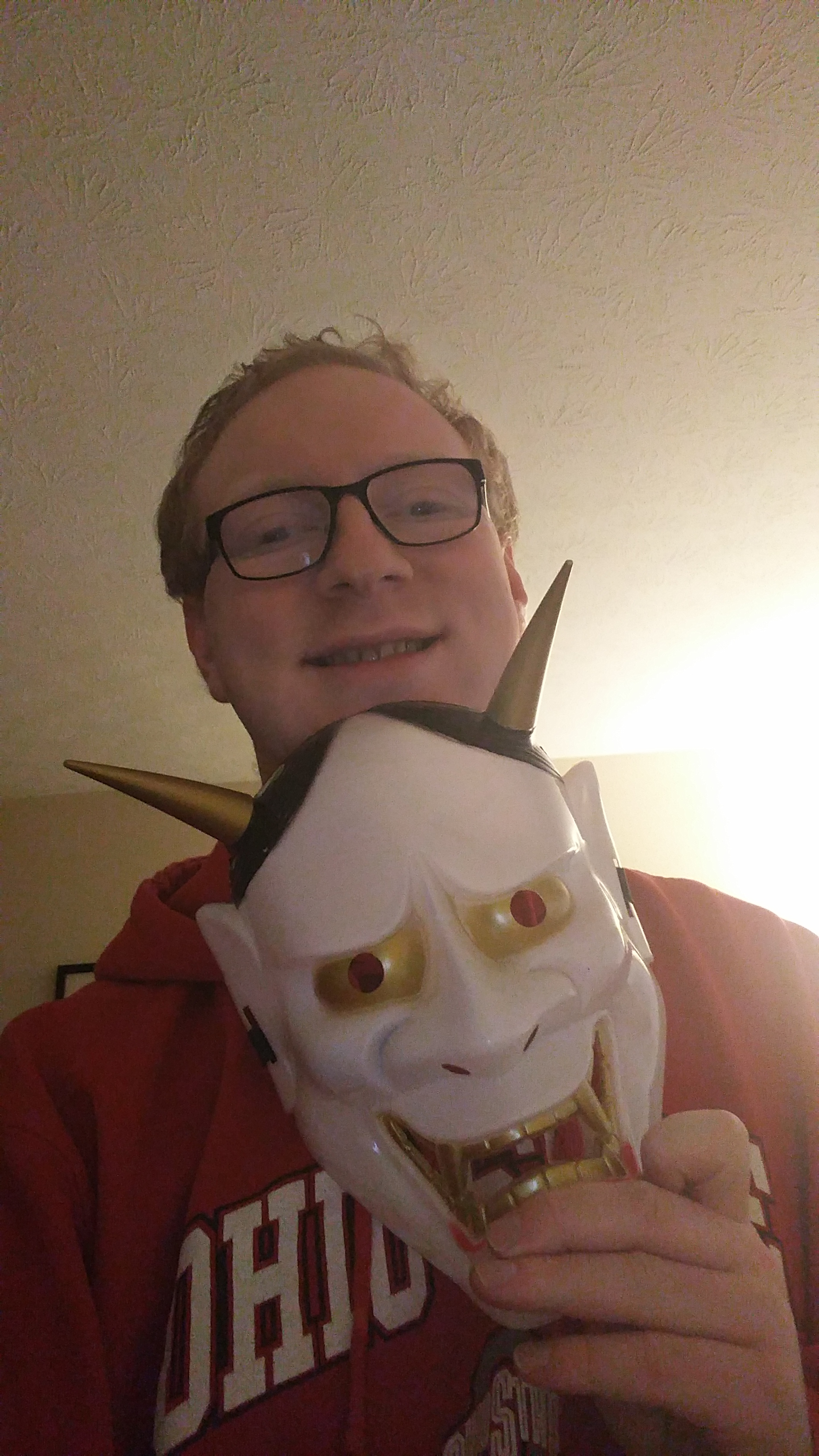
No reason to add this photo. I just want to show you my new author profile pic.

4. Short story writing. I’ve written novels or works meant to be novels for most of my life. That’s what I mostly read, so that’s what I mostly wrote. I’ve learned how to write short stories and read plenty of them since high school and college, but I’m still not as good at them as I am at novels. Which is sad, because I’ve had many, many ideas for short stories and novelettes over the years. And since I’ve spent most of my time on novels, I’ve written only a few short stories, and not many of those have been published.

What I want to do is write more short stories and novelettes, get better at writing them, and get a few of those published. Is it necessary, especially since I prefer novels? No, but a lot of authors I like do great short fiction, so I’d like to do great short fiction too. Good news is, I’ve been reading a lot of anthologies lately, and I should have a bit of time after I finish the fourth draft of Rose. That should give me time to practice.

5. Not listening to my anxieties. All writers deal with anxieties, especially with how their work will be received. Sometimes I let them have too much control of my mind, and I start freaking out Just yesterday, I got panicky over whether certain characters in Rose might be called tacky stereotypes. After a lot of discussion online with friends and colleagues, I don’t believe they are, but the worry ate at me for a while.

The important thing for me is just to be a bit more confident in myself, and the stories I write. And I should work on techniques to combat those anxieties when they try to tear at me. Because at the end of the day, I’ve still written some decent fiction. And I won’t let doubt or fear keep me from improving it and making it into possibly publishable fiction.


Well, those are the things I want to improve on with my writing. What are your suggestions on fixing those issues? Let me know in the comments below.

That’s all for now, my Followers of Fear. I’ve only six chapters of Rose left to edit, so I’ll hopefully get started on the next one tonight. Until next time, pleasant nightmares!

Go to any slasher movie. I guarantee someone will do something stupid. And I also guarantee there’s a reason behind why they did it.

So yesterday I was doing some edits on Rose* and one of the points in the beta reader notes stood out to me. In that particular point, my friend/colleague/beta reader Joleene Naylor pointed out that it was taking the titular character Rose a lot longer to figure something out about the scene that Joleene had figured out much earlier. My immediate first thought was, “Well, it’s horror. Everyone’s a bit slower in horror.” And that thought really stuck with me. Yeah, the characters in horror aren’t always the brightest bulbs in the closet, are they? People in slasher films take too long to realize there’s a killer hunting them around a lake notorious for murders and disappearances, the family stays in their haunted house and might even pretend things are normal even if it’s obvious there’s demonic possession at work, dumb teenagers run upstairs when they should run out the door. They either realize something well after the audience has realized something, or they make really dumb decisions. And it’s such a well-known trope, it gets parodied quite a bit in our media, like in this Geico commercial.

This got me thinking: is this intentional on the part of horror writers? If so, why?

Well, I thought about this throughout the day (couldn’t write this before because I had to go to bed and then to work), and I think that what’s happening is intentional. However, I don’t think the intention is to make the characters stupid idiots.

First, let’s consider something: we’re the audience, and the characters are characters. In our daily lives we’re not keyed up, checking to see if horror-movie circumstances everywhere we go (and if we are, we’re usually recommended to see a doctor about that). It’s only when we sit down for a horror story that we start looking for signs of horror, because that’s what our brains are trained to do. Similarly, unless they’re enjoying a horror story or think they’re in one, characters won’t typically see all the signs of something evil around them unless that evil chooses to make itself known.

There’s also the fact that authors have to tell a story, and often the stories they tell have to be of a certain length. For example, I classify a novel as sixty-thousand words or more, so I have to figure out how to keep a novel going for that long. One of the ways to do that is to make the characters figure things out much slower than the audience, either by only giving them clues slowly or later in the story, or by actually making it so they can’t connect the dots until it’s convenient for the story. And considering that part of the appeal of horror, the thrill of the mystery and the unknown as well as our reactions to it once exposed, this is a sound strategy.

Okay, so making characters slow on the uptake is part imitating people in the real world, part storytelling tool. But what about stupid decisions?

Well, that’s actually pretty easy to answer: they’re under stress. When a character is being chased by a killer or trying to get away from a ghost, they’re under unimaginable pressures. So unless they’ve been trained to think under pressure, like in the Army, they’re not going to make a rational decision. They’re going to make split-second decisions that they hope will ensure their survival, and because it’s a horror story, they’ll likely make the wrong decision. Unless the author says otherwise, of course.

And even if they’re not in a stressful, life-or-death situation, the need for survival can cause us to do very stupid things sometimes, as well as our characters. Polly Chalmers, one of the protagonists of Stephen King’s Needful Things, keeps a charm around her neck, despite suspecting that there’s something alive in it and it’s twisting her personality somehow, because the thing is easing the debilitating pain of her arthritis. In other words, fulfilling a need to help her live.

Sometimes a character acts a certain way either because they’re imitating real people, or the author needs them to be that way.

So it’s not that characters in horror stories are dumb or slow. They’re victims of imitating people in the real world as well as the author’s discretion in storytelling. And we the audience, free of those issues, are able to pick up on things they can’t or won’t for a little while longer.

Of course, we will continue to call characters stupid and wonder how they could not do the smart thing. That just comes with the territory. But perhaps the next time we sit down for a scary movie, we’ll also consider what the characters are going through, as well as what the storytellers behind them decided was best for the characters and their story.

That’s all for now, my Followers of Fear. Hope this gave you plenty to think about. I had fun just thinking of it. Until next time, pleasant nightmares.

*Speaking of which, the editing on Rose is going very well. Yesterday I got through four chapters, bringing me halfway through the fourth draft. At the rate I’m going, I could be done before the end of the month. And after that, hopefully it’s a short wait till I find a publisher. God-willing, anyway.

My latest article from Self-Published Authors Helping Other Authors, How to Write an Interlude, has just gone live on the site. I don’t see a lot of discussion on this topic, so I thought I’d write an article on the subject (it beat writing another article about Lani CSarem and her con job, anyway). Click on the link, and learn all about writing interlude chapters in your novels.

And while you’re at it, why not check out the rest of the site? Self-Published Authors Helping Other Authors is a wonderful site that is written by authors for authors to help them write, edit, publish, and market, no matter their background, budget, or story. It’s great, it’s free, and it’s quite edifying. Believe me, I’m not just a contributor, I’m a client (so to speak).

That’s all for now, my Followers of Fear. I hope you enjoy the article, and I hope to have another post on this blog out very soon. Until next time, pleasant nightmares.

So good news, folks: as of around 6 PM today, I’ve received feedback from both of my beta readers for Rose, which means I can start the fourth draft of the novel! Why is the fourth draft so significant, you may be asking. Well, this is the last draft I plan to do until I get an agent and/or publisher! And I think that is significant enough to write a blog post (which would’ve been written earlier this evening, but I was at my dad’s for Hanukkah dinner).

Now if you have no idea what Rose is, it’s a novel I wrote as my thesis in college, which I started working on again earlier this year and finished editing back in October. The story follows a young woman with amnesia whose body starts going through incredible, magical changes. The only person she can rely on for help and information about these changes and about herself is a young man who says he’s her boyfriend, but he’s keeping things from her, and things are not at all what they seem.

Yeah, it is not a fun story. Not by a long shot. But I think it’s a good story, made even better after the most recent draft, which fixed a few issues with the story and doubled the word count (don’t less that scare you, it’s shorter than the second Harry Potter book).

Of course, before you start submitting it to publishers or agents, you want to make sure your novel is actually good. Not just good in your opinion, but in others’ opinions, and that’s where beta readers come in. They take a look at stories you write, and let you know what works, what doesn’t, and give you feedback on what can be made better.

One of my beta readers for Rose was my dear friend, Joleene Naylor.  She read the novel in about a month, and got back to me with a ton of notes, as well as plenty of feedback. Overall, she enjoyed the novel. She thought my characters and their development was deep and reminded her of anime characters, which are often complex and never completely good nor completely evil, but often a mix of both (you can now tell who inspired that post about why writers should check out anime). That made the characters within Rose not only multilayered, but often very surprising. For one particular character, Joleene hated him at first, but then she found out some things about him and actually became kind of sympathetic towards him. Then she learned some more things about that character, and her feelings changed again. It’s very hard to do that in fiction, to have your emotions about characters change that rapidly, and Joleene liked that.

However, she did have some thought about a few things, including grammar and word usage, and she thought some things could be fixed, changed, or worked around in order to make the novel that much better. Her feedback makes a lot of sense to me, so I’m going to be incorporating a lot of it into the story.

My other beta reader got back to me earlier today, and I was very glad to see his feedback. Who is this beta reader? Believe it or not, he’s my chiropractor. As many of you know, I have back problems, so I’ve been seeing Dr. Black since June to remedy them (and the progress has been amazing!). You see someone so much, you get to talking, and it turns out Dr. Black is a huge horror fan, so obviously we got to talking about Stephen King, HP Lovecraft, and my writing. When I was getting close to finishing Rose, he offered to read it as a horror fan, and I said I’d like that.

This is what a beta reader or two can lead to: a published novel.

Now, Dr. Black is not a writer, but a reader. However, it is important to have the feedback of readers, as they are who we write for. And Dr. Black did give his reader approval. He thought the novel kept his attention throughout, and that he especially enjoyed the flashbacks in the novel. I’m glad he told me that, because those were parts I actually worried about. Flashbacks are difficult to do, and different readers and writers react to them in different ways. I’m glad Dr. Black enjoyed them, and what they added to the story.

He also mentioned one issue he had in the story while reading one chapter, which I hadn’t realized was a problem, so I’ll make sure to fix that up so that the end result won’t have that same problem.

So I have both of my beta readers’ feedback, and I can start on the fourth draft. To be honest, I’m really glad I finally have all that feedback. I haven’t really been in a writing mood lately, waiting on getting that much-needed feedback. Sure, having my laptop in the shop for over a week didn’t help, but even when I had it, I just wanted to work on Rose (even if I was working on a great story in the meantime. A story I’ll have to put on hold for now, but whatever. I’ll get it done eventually). When you put this much work into a novel, and you think it has so much potential, you really want to see that potential fulfilled, I guess.

And now that I’ve gotten my feedback, I’ll put out a couple of blog posts I’ve been meaning to write for a while, and then I’ll get to work. I doubt it’ll take very long to get through this time, so hopefully that means I’ll have some good news soon.

Thanks to Joleene and Dr. Black for their valuable feedback. It means so much to me that you took the time to do this for me.

And thanks for keeping in touch with me, my Followers of Fear, and following my progress of this novel. I hope that if it comes out, that you decide to pick up a copy and that you enjoy it. Until next time, pleasant nightmares and Happy Hanukkah!

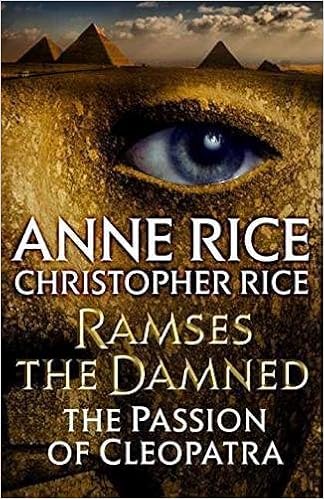
I haven’t read the original Ramses the Damned novel since I was bar mitzvah age, but I remembered enough of the details (and remembered more during the reading of the book) to be very excited upon learning earlier this year that Anne Rice had written a sequel twenty-eight years after the original with her son, author Christopher Rice (whose books I need to put on my reading list one of these days). And now that I’ve read the Rices’ first collaboration, what do I think?

Well, you know how George Miller revisited the Mad Max franchise with Fury Road several years after the last entry, with a new cast and crew to help shape his vision, and the results were pretty awesome? It’s kind of like that.

 Ramses the Damned: The Passion of Cleopatra revisit Ramses and Julie Stratford shortly after the events of the last novel, preparing for their engagement party and their lives as globe-trotting immortals. However, news that Cleopatra is still alive reaches their ears, and there’s a chance she still holds a grudge against them. And as if that weren’t enough, new forces threaten the immortal couple, including an ancient queen whose very existence will turn the immortals’ world upside down.

Honestly, I could not tell this was a collaborative work. This may be because I’m unfamiliar with Christopher Rice’s work, but it’s more than likely he’s very good at imitating his mother’s style. Whatever the reason, the novel has a great story and moves along at a nice pace. The expansion of this fictional world to include new elements and characters didn’t feel forced or weird, and the twists and dramatic moments really allowed you to feel the surprise and attention when they occurred. You can’t complain about that.

And let’s talk about the new characters, because they were great! Bektaten’s addition to the cast was a real shake up, as was her companions Enamon and Aktamu (I hope I didn’t butcher those names trying to spell them). There’s a gravitas to them that leaps off the page and commands respect not just from characters, but from readers. It’s as if their many centuries have allowed them to transcend many human flaws and become something more. Imagine what they could be like in our modern world! It’d be truly something to see.

But of course my favorite new character (and possibly my new favorite character) is the aptly named Sybil Parker, an American author whose dreams cause her to be roped into this strange and magical world.* From the moment she appears on the page, she is just so interesting to follow, as her part in the story is so full of mystery and a bit of intrigue. And her arc, going from this timid homebody to this brave young woman who doesn’t bat an eye at immortals, was masterfully written. 

I don’t have any real problems to point out with this story. Possibly a bit more of Elliot Savarell would have been nice, but that is probably nitpicking on my part.

All in all, Ramses the Damned: The Passion of Cleopatra is a great return for a story we had thought finished long ago. On a scale of 1 to 5, I give the novel a 4.8. Pick it up, and get wrapped up in the story (been waiting a week to make that pun, and it was worth it).

But tell me, what did you think of this novel? What immortal creatures will we get from Anne (and possibly Christopher) Rice next year (I’m hoping angels)? And which Christopher Rice novel should I put on my reading list? Let’s discuss.

*Sounds like my dream life right there. Well, hopefully the former will be achieved someday soon.

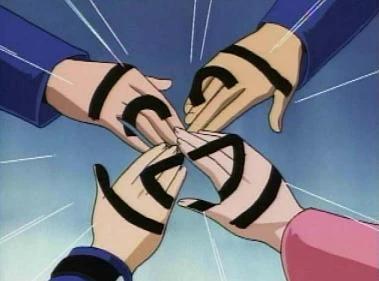
“The Power of Friendship!” as symbolized in Yu-Gi-Oh’s famous hand smiley face.

So yesterday I watched a YouTube video about a common trope in fiction (you can check it out HERE), which is (say it in your heads with a big, echo-y voice) “The Power of Friendship!” Now, if you aren’t familiar with the trope and you didn’t have time to watch the video, “The Power of Friendship” is a trope in which the bonds of friends is so powerful, it becomes a power in and of itself, capable of cosmic-like acts such as giving heroes power ups, stopping psychic mind readings, snapping people out of brainwashed states, and occasionally even defying gods. This power shows up in a ton of popular media, including a ton of anime and manga (the Fairy Tail series  practically is nicknamed “The Power of Friendship” manga).

Now the video I linked to goes into much more detail about the various intricacies of this trope (go watch it if you do have the time, the channel that produced it is awesome), but I wanted to focus on one particular aspect of “The Power of Friendship” trope that the video didn’t go into: how it surfaces in the horror genre. Or rather, how it doesn’t surface in the horror genre. At least, not all that much.

So if you didn’t watch the video (and you’re missing out!), the trope works like this: you have friends, and those friends can help you out of a bad situation, whether that be isolation or a powerful demon overlord is about to destroy the Earth and your power alone is not enough to destroy the demon’s power. It can be a metaphorical power to help a character out during a bad patch, like the former situation, or it can be a literal power and the equivalent of taking one of those mushrooms in a Mario game, like the latter situation. Thus, “The Power of Friendship!” And you can kind of see why it shows up so much: we all wish we have that power, or believe our relationships are that powerful.

But horror doesn’t feature this power as much as other genres, and there’s a reason for that. Horror is horror. It incorporates the darker aspects of the world around us and sometimes amplifies them for maximum effect. And in real life, friendships aren’t as powerful and as lovely as in fiction. In the stories, friendship is powerful and unyielding. It can overcome all sorts of obstacles, and the more you try to destroy it, the more it bounces back and kicks bad guys in the ass. But in reality, friendships grow, cool, and break all the time. It can take only a little bit to destroy a friendship, and a lot to repair it once it’s broken. Horror writers not only recognize that, but incorporate that into their stories. And it’s such a well-known fact about life, writers don’t draw attention to it, because it’s so well known among readers.

That’s not to say that “The Power of Friendship!” doesn’t show up in horror fiction at all. For example, Stephen King’s It pretty much says that the friendship of the seven main characters is what allows them to fight the malevolent entity in their town.* It just doesn’t say it as loudly as other media does, and also tells the reader that the characters’ friendship, while powerful, can be broken or is less effective if they aren’t all in sync or allow their fear to divide them. This is what leads to that one infamous scene in the novel, and is also shown in the new movie after the first fight with It.

Weirdly enough, the power of love or family is shown more than the power of friendship in horror, and I’m not quite sure why. Perhaps it’s because love and family, unlike friendship, has a more powerful evolutionary purpose, and therefore is given more power in fiction in general. If you’re willing to do more to save your perfect partner for creating offspring or the lives of your offspring, it’s going to show up more in stories than the grouping of creatures of the same species to ensure survival.** Hell, a lot more of my stories revolve around romance and family than friendship. One of my stories even involves a friendship gone bad, but that’s about it.

If “The Power of Friendship!” can be portrayed as it was in It, you can include it in horror stories more effectively.

That doesn’t mean we can’t include “The Power of Friendship” in horror stories. It can be used, but it’s more effective if used as it was in It: not overstated and a bit more realistic.  Showing a friendship form, grow, and overcome obstacles in a story, without drawing too much attention to it and showing how fragile the friendship can be under certain pressures, will work fine for the horror audience. If you go for overblown storytelling and basically say, “The Power of Friendship can overcome anything,” it will take the audience out of the story. Let the friendship’s strength demonstrate itself, rather than shoving it in through dialogue or just outright stating it. In other words, show, don’t tell.

While still not that common a trope in horror, “The Power of Friendship” can be part of horror. It may require being handled differently than in other genres, and with a bit more realism (weird for “realism” to show up in horror, but there you go), but it’s not impossible. You just need the right touch, and “The Power of Friendship” can best even shapeshifting entities that take the form of clowns.

That’s all, Followers of Fear. I’m in a bit of a blogging mood right now, so expect more posts from me soon. Until then, pleasant nightmares!

*There’s also some sort of power up thanks to a turtle from another universe, but let’s not get into it, shall we.

**Best explanation I can come up with given my aromantic nature and already jaded worldview.

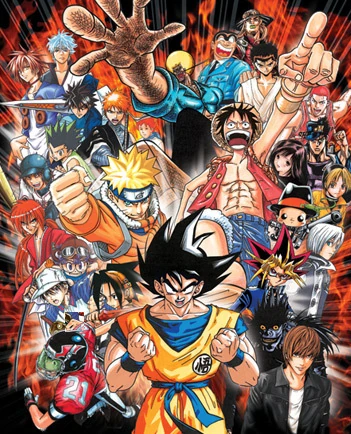
Recently, someone familiar with my writing compared some aspects of my story with anime. This, for me, was a huge compliment, because I am a hee-yuge fan of anime and manga. I’ve read and watched more series than I can count, and I consider some of the stories I’ve read over the years as having a very beneficial influence on my writing style, allowing for better storytelling and characterization. And I believe wholeheartedly that anime and manga can up the game of other fiction writers out there, even experienced ones with plenty of novels or short stories under their belts.

“But wait,” I hear my readers saying, “how can silly Japanese cartoons up my writing game?” Well, my dear Followers of Fear, just like Harry Potter is more than just children’s fantasy stories, and just like I’m more than a dude who enjoys scaring people silly (I actually have a growing doll/figurine collection and enjoy the ballet and the theater), don’t let first impressions about the media get in the way of looking a bit deeper. Anime and manga have so much more to them than meets the eye:

1. It’s an art form. We see literature as important creative works that are a reflection of and an influence on society. So is painting and illustration. But for some reason, the combination of the two mediums are never treated as highly, even when they lead to huge box office and critical success with movie adaptations. And in my opinion, that’s just wrong. Creating decent literature or decent art is extremely difficult, no matter the genre or what is being portrayed. Imagine what must go into doing both well at the same time! If one is good but the other is bad, the series, comic book or animation, will suffer, so these artists are basically combining the two art forms in order to create something appealing to audiences. That is worthy of respect (especially when you consider that manga and anime don’t always get to rely on characters that have lasted 80+ years and have established fanbases).

That being said…

2. There are a multitude of stories to choose from. Despite often going into very deep subject matter, comic books and animation have this reputation for being more family or child-oriented than adult-oriented. And although comic books have been recognized for their serious and mature themes and content, for the most part it’s hard to find animation that, even when aimed at adults, isn’t comedy or relies a lot on comedy. I can only think of one or two off the top of my head.

Anime and manga, on the other hand, span a wide multitude of genres and age ranges. Yes, some are comedic or have lots of comedy elements, but there are plenty of stories that are extremely serious or even plain portrayals of normal lives. Death Note (not the crappy American version) goes deeply into questions of whether the ends justify the means, especially in terms of curing societal ills, all while presented as a psychological cat-and-mouse thriller. Great Detective Conan (or Case Closed, as it’s known in the US), has nearly a thousand chapters/episodes focusing on a kid solving murders a la Sherlock Holmes observation and deduction. With the Light tells the story of a family raising a child with autism. Tell me if any of that sounds like silly cartoons for children.

And that’s just the tip of a very big iceberg. There are all sorts of stories out there, romantic to comedic to scary to inspirational to musical to educational to even some where you wonder who was mad or indecent enough to make them (I’m looking at Makura no Danshi for the former and Kodomo no Jikan for the latter. Google at your own risk). If you can think of it, there’s a chance there’s an anime or manga based around it.

So if you’re looking for inspiration for a new story, try the Japanese. Chances are, there’s a story that could inspire your next work.

3. Characterization. In Western stories, characters are often pretty much defined from the moment you meet them as good or bad guys. Within a few minutes, you not only have a pretty good idea of where they align, but how you feel about them: love, hate, support, fear, root for them to get the girl. This doesn’t usually change, except perhaps if they’re a twist villain revealed in the third act. Rarely do you see a character whom you aren’t sure whether to love or hate, whether they’re good or bad. A character who straddles the fence, in other words, and you’re never sure where they stand until near the end.

If a medium can make me wear this sweatshirt 25 years after a show’s premiere, shouldn’t you at least consider checking it out?

Anime and manga, however, do this very well. They’re very good at telling stories about characters whom you’re not sure how to feel about them, because they’re able to take the time with these characters and show various sides of them over the course of the episodes or chapters. Sasuke Uchiha from Naruto is a prime example: at various points he’s a hero, a villain, a tragic antihero, etc. And you’re never sure whether to hate him or cry for him or what (generally I don’t like him, but that’s just me). And even when a character isn’t given this treatment, they’re often given great character development. Often characters are all good with a few flaws, or all evil with a few good qualities, but anime tends to branch out. You’ve got protagonists who are defined by their anxieties, or heroes who do horrible things but are doing it for good reasons you even sympathize with.  It ranges quite a bit, and it’s done quite well.

4. And finally, it’s entertaining. We all write stories for a variety of reasons, but at the core of it, we want to engage and show people a character worth following, a story worth getting into. And anime and manga do that a majority of the time. Sure, some stories do fail in that regard (looking at you, Clannad), but the vast majority have been tales that have endured the test of time and continue to pull in new audiences. Pokemon is twenty years old and Sailor Moon is twenty-five, but they still continue to entertain and even produce new content. Clearly, there’s something about these mediums that pull people from around the world in far past childhood.

And any medium that can have that sort of influence is worth checking out, if you ask me. Even if it’s not normally up your alley.


And that’s just a few of the reasons writers should check out anime (there may be a Part 2 someday). But tell me, were there any reasons I missed? What series do you find entertaining or influential? Or do you need a recommendation on where to enter the medium? Let’s discuss in the comments below.

Until next time, my Followers of Fear, pleasant nightmares.

At the time this post is being published, it is the American holiday of Thanksgiving. Despite the holiday’s questionable origins (a discussion not for this blog), this is a holiday for being thankful for all you have. And while a lot of us are surprised by how fast this year has gone by (seriously, how the hell is it already late November?), for many of us it has been a stellar year. I know that’s the case for me. I’ve got plenty to be thankful for this year.

And if it’s not too much trouble, I’ll run down some of those things I’m grateful for (I swear, this won’t be too long, and I’ll try not to turn it into bragging):

  • I’ve published two stories, the sci-fi novelette Gynoid and the fantasy romance short story What Happened Saturday Night, on Wattpad, and both were very well received. I also wrote half of the novel Full Circle, edited the entirety of Rose (and will probably edit it again, as soon as I have feedback from both my beta readers), made good progress on a new story, and had more ideas for other stories than I could ever write.
  • While I work on my writing, I also have a good job that allows me to do really rewarding work with a great team. That job also has great pay and benefits, so I can afford to pay my rent and my bills, never go hungry, and even put away some cash into savings. And every now and then, I can even afford a little splurge for things like wall art, a new addition to my doll/figurine collection, or even awesome shows (heck, sometimes the job gets me discount to awesome entertainment in town).
  • Speaking of rent, I have a great apartment in a good area near where I work. I can afford to live on my own, and do what I want within my apartment, so I don’t have to worry about anyone seeing me at my kookiest. And since I’ve lived here for nearly a year and a half, I’ve had time to settle in and make it my happy place, a great place to relax, be creative and occasionally entertain friends (Joleene Naylor knows what I’m talking about).
  • My health has improved greatly since the New Year. I’ve been eating healthier, cutting back on the sweets, and so have lost about thirty extra pounds. My back problems have also improved, thanks to the ongoing treatments of a really good chiropractor and my improved diet. I feel better than I have in ages, and as long as I keep things up, I’ll continue to get better (though I doubt I’ll ever be fit enough to be a prima ballerina or a bodybuilder).
  • I don’t have a driver’s license, but I’ve made incredible progress towards getting one. And with a bit more practice, especially with maneuverability and parking, I could have my license within the next year (though whether a car comes with that is another issue entirely).
  • I live close to my family, and we’re all on good terms for the most part (though I would not want to live with any of them again if I can help it). I also have plenty of friends, and I’m glad to have their love and friendship everyday. I know that if I need them, they will give me their support, and help me through another day.
  • Finally, I have you, my Followers of Fear. Over the six-plus years I’ve been blogging, you’ve stood by me, seen me at some of my best and worst moments, and posted your thoughts and encouragement, and even bought some of my published work. And over this past year, Rami Ungar the Writer has grown significantly, to the point where I’m less than fifty followers away from hitting the thousand follower milestone. It gives me such joy to write for and interact with you guys every day, and I hope I can continue to do so for ages to come.

Of course, this is just a fraction of the many things I’m thankful for, but I’m thankful for them all nonetheless. And I’m glad I’m aware of them and thankful for them, because I can think of a number of people who are just as lucky as me, or even luckier, and yet are miserable. They’re not satisfied with what they have and they constantly want more.

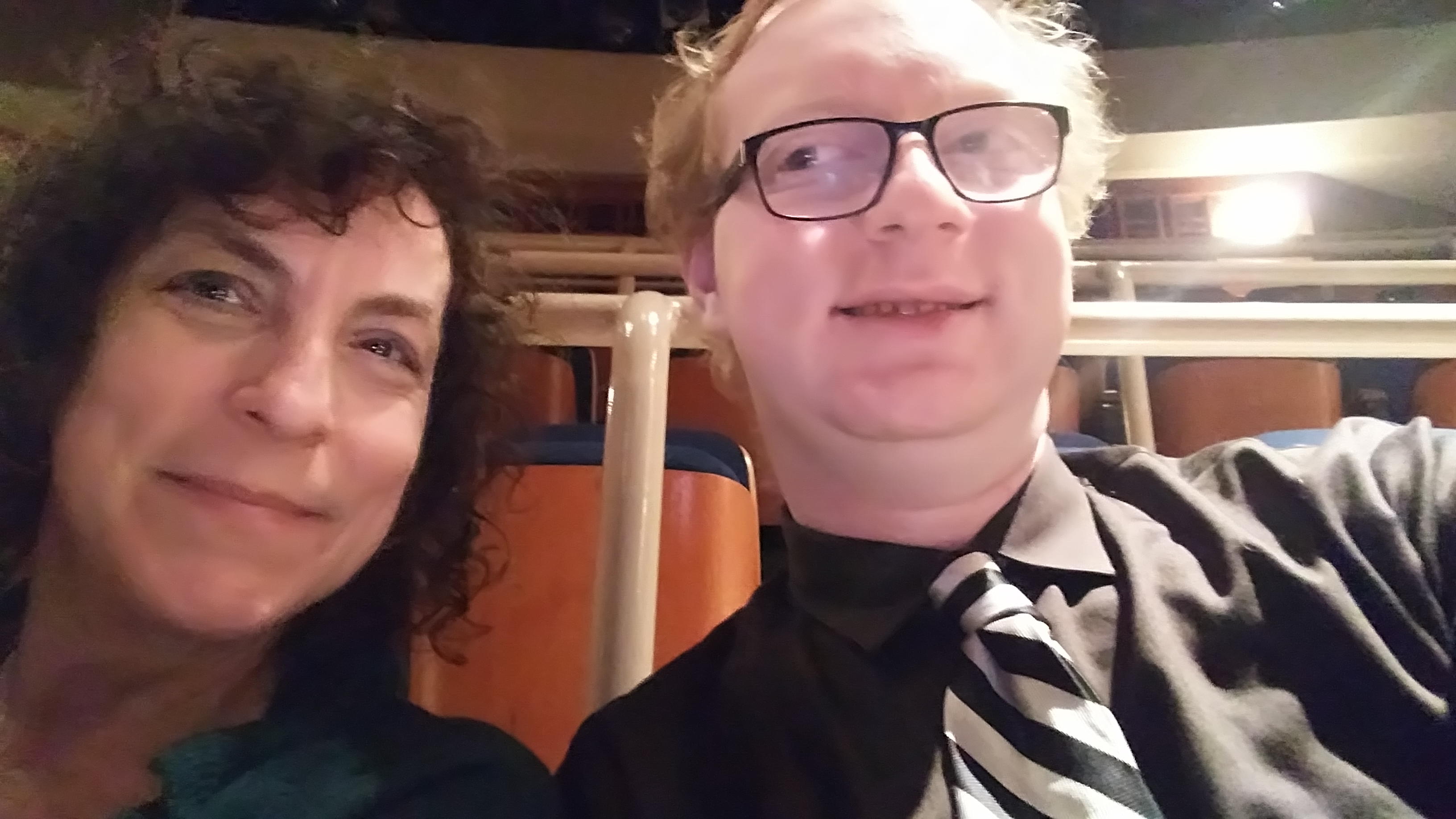
My mother and me when we went to see Swan Lake this past weekend. Not only was it an incredible show, but I got to experience it with someone I dearly love and who gets me on so many levels. I’m incredibly thankful for her and our relationship together. Also, I’m looking at the button on my phone camera, in case you’re wondering where my eyes are looking.


Now, there’s nothing wrong with wanting more than what you have. I want to expand my readership, write more stories, and get more of them published. Heck, I wouldn’t mind being able to write full-time if I could. But some people, they just don’t appreciate what they have. They could have a loving family, a big house (or several), a nice car (or several), and enough money for vacations abroad and fancy gadgets and whatever. But they aren’t happy. They want more. More stuff, more sexual partners, more fame and prestige. A friend once told me he talked to a man who was depressed because he didn’t receive as big a Christmas bonus as someone else in their office, even though he felt they did the same work and the same amount of work. Both bonuses were in the five-figure range, which boggled the both of us. How could anyone be in a position where that sort of money is given as a Christmas bonus and NOT be happy?

And that’s why I’m thankful for one more thing: I’m thankful that I can recognize what I have. Some people can only recognize what they don’t have, and that bites deeply into their happiness. They may feel good when they get a promotion or they bed someone deeply attractive or they get that new house on the Italian coast, but it’s only a temporary drug high, and the crash they feel after the high wears off just leaves them as empty as before. It’s not a true happiness, not at all.

And that’s why I’m grateful for one more thing: that I’m capable of recognizing all that I have and that I’m grateful for. Yeah, I’m not rich or famous (though I could be someday), but I’m glad for everything I have. I worked hard to get it, and I know it could be taken away all in an instant with one bad day. So when something new comes into my life–a new follower, some good news on the writing front, the chance to do something fun with friends or family, or even a new doll for my collection–that drug high will go away, but a good feeling will remain. I’m grateful for it all, and I hope I remain that way for the rest of my life.

So this Thanksgiving, my Followers of Fear, let’s all be grateful for what we have, and express that gratitude as best we can. Because we could have nothing at all, or we could have plenty and not realize it. I prefer to have some stuff, and be glad that I do have them. And if you ask me, that’s a good way to go about things.

Happy Thanksgiving, and until next time, pleasant nightmares.

Me being thankful for all that i have. And thank you, Sailor Moon, for constantly giving me so much to work with, from entertainment to story ideas to illustrative GIFs.