Posts Tagged ‘films’

Oh come on, did you think I wasn’t going to do this? It’s a tradition, and whether you like it or not, I’m doing it! So strap in, and let the villainous torture begin!

So if you don’t know, every June or so I like to rank the top ten villains in fiction that have really impressed/scared me. Villains are always a central part of horror stories, so it’s important to see what makes a villain memorable, or strong, or terrifying. What makes a good villain, in essence. Some years are easier than others to rank, but with each entry, there’s always something to notice with a villain.

Before we begin, let me remind all who read this that no villain from my own work, or any real life person, will make it on this list (otherwise this would just be political views and shout outs to my own characters). Also, SPOILERS!

Ready? Okay, here we go! #10-6!

#10: Tom Martin/Alex Whitman (Scream TV series)
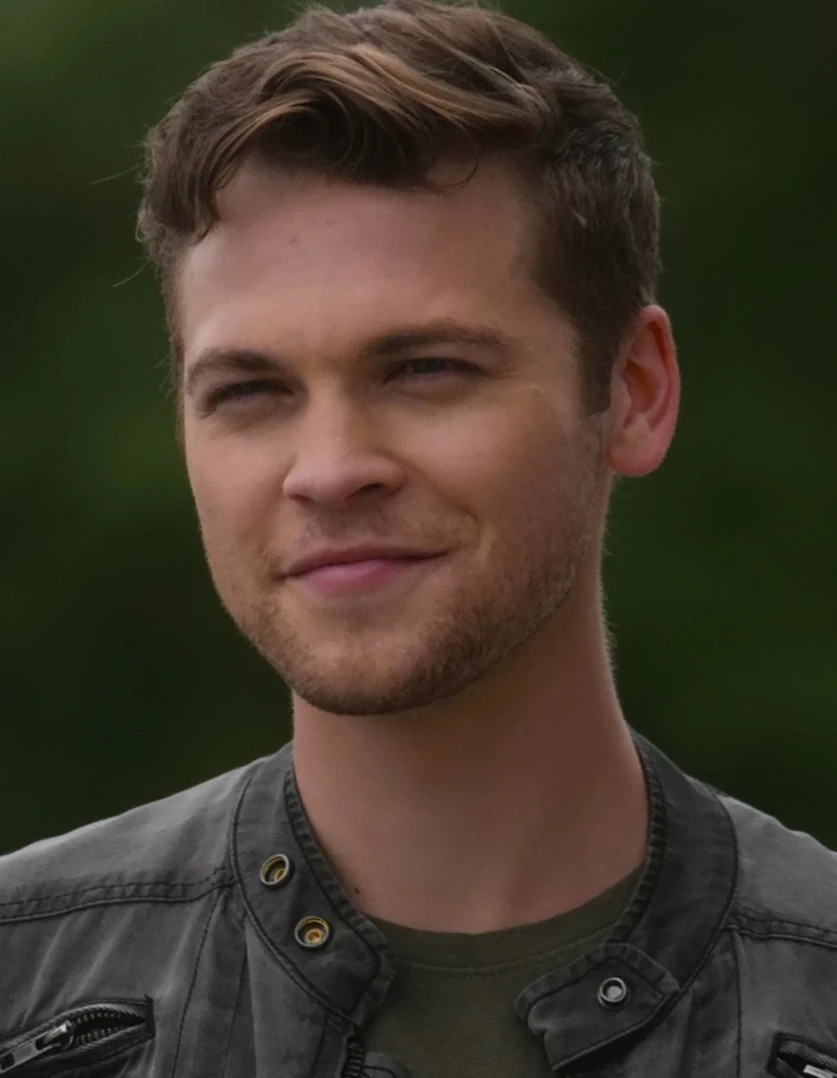
Scream is a twisty slice of TV-horror awesomeness, and while not everyone loved its Halloween special, I certainly found it a fun break from the show’s normal format. One thing I really liked about the Halloween special was Alex Whitman, a rich young man whose parents died tragically when he was young and who strikes up a sweet romance with protagonist Emma Duvall. Or at least, that’s what we think at first. After a huge twist in which the suspect we thought is the new Brandon James Killer ends up dead, it’s revealed Alex Whitman is actually Tom Martin, a disturbed young man who witnessed his parents’ gruesome death as a child and was warped by all the attention relating to his survival. He sees Emma as a kindred soul, and tries to get close to her by any means, including murder.

What makes Tom a great villain is that he’s so sympathetic! Even after he’s revealed to be dangerous and out of his mind, we feel sorry for him, because his backstory is truly heartbreaking, and there was real chemistry between him and Emma. It’s very hard to make a despicable killer into a sympathetic character (believe me, I’ve experienced that struggle firsthand), and Scream did it really well. It’s a good character for the series to go out on.*

#9: Garrett Douglas (Teen Wolf season 6)
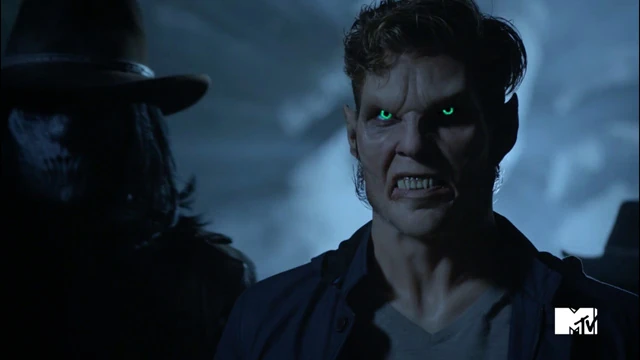
Teen Wolf has had many villains show up on this list, so it shouldn’t surprise anyone that they got one on this year’s list too. Garrett Douglas is a former captain in the SS–yes, the SS, as in the Nazis–who tried to control the ghostly Wild Hunt, supernatural beings who kidnap people and erase them from existence to replenish their numbers. His attempts to do that led to him being held captive for nearly seventy years by the Dread Doctors from season 5, but he escaped after the latter fell, and set out once again to put the Wild Hunt under his thumb. This time he very nearly succeeded, nearly turning the town of Beacon Hills into a ghost town in the process.

While the Wild Hunt were the main villains of the story arc, they were just an elemental force trying to replenish its numbers for survival. They looked scary and had terrifying powers, but they weren’t menacing or evil. Douglas, on the other hand, was a sadistic power-hungry madman, and he was willing to sacrifice whoever he needed to in order to accomplish his goals. That’s a villain right there. However, compared to other villains on this list and on the show, he’s not as intimidating, and he doesn’t rely on his own power, so he ranks rather low. Better luck next time, Teen Wolf. I have confidence in you.

#8: Amunet (The Mummy 2017 film)

I gave this movie a harsh rating in my review (read that HERE), but honestly Amunet was one of its saving graces. Played with convincing power by Sofia Boutella, Amunet is a powerful undead sorceress who made a deal with the god Set for power. Resurrected in the 21st century, she’s willing to sacrifice anyone in order to bring about an apocalypse and become Queen of the Damned (see what I did there?).

What makes her a great villain is that she’s so convincing! You really feel her rage, her lust, her desire for power. And then you see her power at work: she’s influencing Tom Cruise, using animals as weapons, turning people into obedient slaves with kisses or even just with an animal bite. She’s a force to be reckoned with, and proves that even if you have a bad movie, you can have a great villain.

#7: Kevin Wendell Crumb (Split)
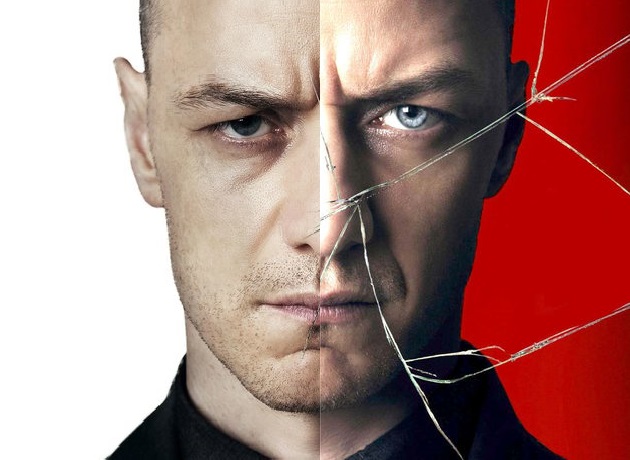
I’m not sure if this is one villain or 23 villains or what, but either way, they’re all here. A man with disassociative identity disorder, some of Kevin’s personalities go rogue and take over his psyche in order to bring out a new personality known as the Beast, who causes pain and suffering in the belief that such horrors purify. Kevin and each personality is played with amazing skill by James McAvoy, making each feels real and fully formed. But it’s his darker personalities, the ones that set out to cause destruction by kidnapping three teenage girls from a mall parking lot, that really scare you. You can feel their belief in their godlike Beast, and then when you inevitably see the Beast, he’s a powerful force that makes your heart beat from start to finish. Kevin and his personalities’ place on this list is well-deserved. Cannot wait to see him again in two years in Glass.

#6: The Shadow Kin (Class TV series)

Give it to the Whoniverse to come up with memorable villains. In Doctor Who‘s new spin-off Class, the Shadow Kin are beings made of fire and brimstone, who believe their existence in the universe is a cosmic mistake, as they cannot stand bright light and must travel as gas and shadows. In revenge, their goal is to eliminate all life from the universe by infecting the shadows of their enemies and then killing them. These villains appear throughout the show’s first season, at first only to kill off the refugees of one of their battles, but when their king becomes biologically linked to one of the show’s protagonist, it sets off a literal shadow war as the Shadow Kin battle for control of their king’s power and the planet Earth. Definitely a dangerous villain who kept us on the edge of our seats, wondering what would happen and where the Shadow Kin would appear next.


And that’s all for now, Followers of Fear. I’ll have #5-1 out soon. Until then, what did you think of the Top 10 so far? Do you have any favorite villains from this past year. Let’s discuss in the comments below.

*I’m not counting the upcoming third season, because they’re basically rebooting the story with new characters and setting. Um, WTF? You didn’t even wrap up the original story! You had loose threads leading up to the third season! And we know the third season is going to be the last season, so why change things up like that? Why not just wrap things up and let it be like that? TV execs! They’re sometimes the worst people to direct the courses of their own properties.

From the get-go, when Universal announced it wanted to create a cinematic universe based around their classic monsters, many people thought it was intriguing…but there was a lot of room to go wrong. These monsters have been done to death, and bringing them back is difficult to say the least. So this first outing for the new Dark Universe had to be very good if it was going to convince moviegoers that this was worth their money.

Unfortunately, I don’t think The Mummy is a good opening feat. For one thing, it takes way too many cues from the Brendan Fraser film that came out when I was a kid, especially during the early third of the film. In fact, 2017’s Mummy feels like a poor copy of that film at times. It’s especially bad with the characters: none of them are very well-developed, while Fraser’s Mummy‘s characters were so developed they felt like people you actually know. The worst is Jennifer Halsey (for some reason leading archaeological digs but isn’t written as a doctor), played by Annabelle Willis, who’s only purpose is to drop exposition and be screaming arm-candy for Tom Cruise’s Nick Morton. Speaking of which, Morton is no Rick O’Connell: while the latter is rough but well-meaning, Morton’s character is inconsistent, going from kind of nice guy to scumbag. Personally, I didn’t like him.

There’s also issues with the story. Like I said, the film feels like a copy of Fraser’s film at times, right down to the slightly more skewed slant towards action-adventure rather than horror. I really wish some of these monster films based on classic characters would stay more focused on horror, rather than trying to take cues from Indiana Jones. And like action-adventure films, there are a number of things that don’t make sense, including a major plot hole when the villain Princess Ahmanet’s backstory is revealed (anyone who knows anything about infant mortality rates during that time period will figure it out quickly). In addition, the humor is also used inconsistently, spliced oddly in during tense points. It’s funny at the time, but it feels odd later on.

But there were some good things about this film. Sofia Boutella as the Princess Ahmanet is both alluring and terrifying. She’s very good at coming across as a confident villainess, and the make-up on her makes her look powerful, sexy, and terrifying all at the same time. The film also tends to pick up in terms of terror and storytelling as it gets along, leading to a very good, if slightly predictable, final battle. Except for maybe the mummies/zombies that Ahmanet summons to help her (because of course she does, this is a contemporary mummy film), the effects are actually very good. And while the references to the Dark Universe have been criticized by some as shoehorned in, I thought they were inserted in very well. Heck, there’s even a surprise character who I could see getting their own film someday.

All in all, The Mummy isn’t a good first outing for the Dark Universe franchise. On a scale of 1 to 5, I’m giving it a 2.5 out of 5. If you’re going to see it, watch it not expecting much. Honestly, I think if they tried for a traditional or even a psychological horror film rather than what they made, the result would’ve been much better. However, if this film does well enough to warrant further films in the franchise, I think Universal will learn from the mistakes of this film to make any further ones better. One would hope, anyway.

That’s all for now, my Followers of Fear. I’m off to finish my birthday with some slightly better films and TV. Until next time, pleasant nightmares!

Think of every childhood monster you thought might be in your closet or under your bed or anywhere else a monster might hide during the day. What did your child-self know about the monster? Probably only that it was big, that it only came out at night and wanted to eat/kill you, and that maybe only the nightlight kept it away. Perhaps there were certain details, like fur or scales or whatever, but that was the extent of it. You didn’t know if the monster had any weaknesses, or where it came from, or why it chose your closet/bed/whatever. The monster just was, it wanted you, and you were only able to keep it away during the day. And it terrified you.

Now perhaps as a young child, you simply weren’t capable of thinking that any of that other stuff might exist for your monster. But if you confronted a creature like that as an adult, a monster where all you knew about it was its location, its active period, and its diet of humans, but nothing else, you’d be freaked. Because a monster is scary, but a monster that you don’t know how to fight is even scarier.

And that can be applied to nearly any antagonist in horror. The less is revealed about it, the scarier it is.

Case in point: vampires. When I first learned about vampires, my knowledge of what they were was limited to that they came out at night and didn’t like the sun, that they drank human blood (which could sometimes create other vampires), and that they could turn into bats. For a few years, that was all I knew about vampires, and they terrified me. If I ever came upon one, the only recourse I had was to try and survive till daylight, or I was dead! But when I found out that vampires were susceptible to stakes, garlic, crosses, and required invitations into private residences, they became a little less scary. Why? Because they were easier to deal with, and things that are easy to deal with are less terrifying than those that aren’t easy to deal with.

Contrast that with many of the works of the manga artist Junji Ito. I’ve had the opportunity to look at a bunch more of his work since reading his masterpiece Uzumaki (read my review of the manga here, as well as my review of the film adaptation here), and his works rarely tell us the hidden history or how to deal with the monsters featured within. He only gives us enough of a look to get the modus operandi of the monster, and then weaves the story around that. One of his works, Tomie, revolves around an immortal girl whose beauty often drives people to murder her/for her, and who keeps coming back to life no matter how much you kill her. We never get a full explanation of how she is able to do that. Is she some sort of genetic aberration? An undead creature brought back by a grudge? Ito doesn’t tell us, and forces the reader to wonder at the possibilities, as well as how much is being kept from us about these mysterious monsters.

Tomie, one of Junji Ito’s signature characters.

And that is terrifying. And Ito is well aware of that. He knows that the less you know about an antagonist, the more possibilities there are, and that makes the horror more effective. And not just Ito: HP Lovecraft, Stephen King, Adan Ranie, and other horror authors, including me, are well aware that adding a bit more mystery to our horror stories, and not letting the readers see beneath the proverbial hood of the monster, heightens the fear the reader will feel.

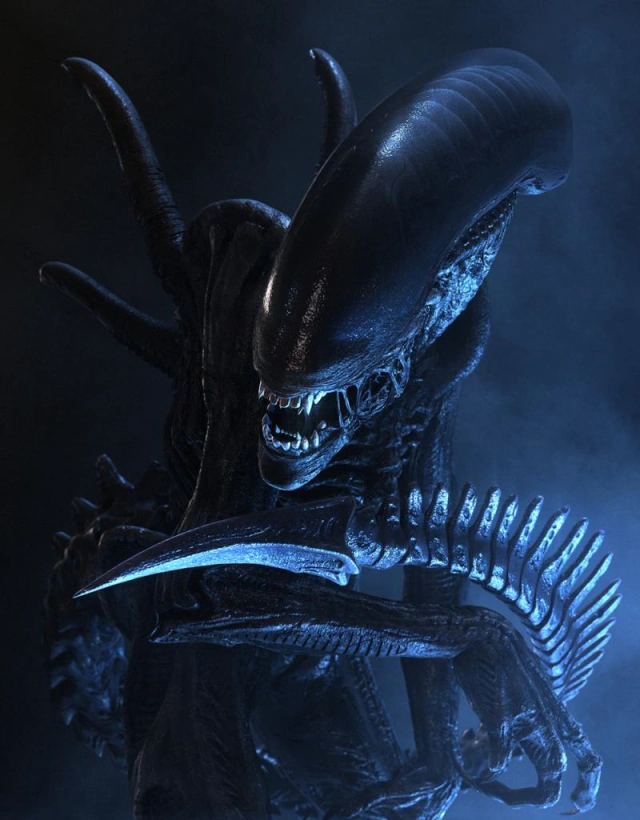
And this is the main reason why I was disappointed with Alien: Covenant this past weekend, as well as the catalyst for this post. Granted, that movie had a number of problems, but one thing that Covenant and its predecessor Prometheus both do is try to give an origin story to the films’ real stars, the Xenomorphs. When it comes to antagonists in horror getting origin stories, it’s on a case-by-case basis, and in the case of the Xenomorphs, I’ve actually come to dislike the idea of giving them an origin story. Part of their power is that, even for man-eating monsters, they’re so divorced from what humans perceive as normal. In fact, the name Xenomorph means “strange form,” and it’s that strangeness that makes them so terrifying and iconic.

So when Prometheus and Covenant try to explain them to us in origin stories, they put them in contexts that we can understand, robbing Xenomorphs of what makes them so amazing. Granted, it’s a question everyone who’s seen the original films has asked at some point: “Where do the Xenomorphs come from?” But it’s not a question that has to be answered. The fact that they had such a shady origin to them was part of their mystique, causing our minds to wander and wonder if maybe, somewhere in that until origin story, there’s a dark truth out there waiting to make us wet our pants. And now, that sense of wonder is gone, because these movies have given us an origin that, rather than being dark and terrifying, is at times confusing and at other times lame.

What I’m trying to get at is that sometimes–not all the time, but a significant portion of the time–you don’t need to reveal everything about your monster. Sometimes, keeping some mystery around adds more to the story, and keeps the source of our terror effective. And in a horror story, keeping things terrifying is one of the most important aspects of horror storytelling.

If you’ve been following this blog for a while, if you know me in real life, or you read the things I post on my personal Facebook page, you know that I can be a funny guy. I love a good pun, a funny story, or a well-done prank. Or all three, if it can be done. And I try to insert humor into many facets of my life, much to the enjoyment of some and the exasperation of most others. Where do I get this reverence for humor? I’ll tell you: when a mommy and a daddy really like each other, they–

I’m sorry, but my lawyers tell me I’m not supposed to go into that. Let’s just say it might be a family trait, and leave it at that.

But guess what aspect of my life doesn’t see that many laughs? Surprisingly, not my writing. I actually don’t tell a lot of jokes in my stories. Yeah, imagine that! I don’t put jokes in my horror stories. In fact, my funniest story so far may be Video Rage: it’s got protagonist Zahara making a jab at male lead Rip’s manhood, and at a later point, main cast member Kevlar makes some bondage jokes when speaking to a Native American healer. That’s it.

Okay, now some of you non-horror fans may be reading this and be like, “Isn’t that par for the course? It’s horror.” But that’s the thing: just like how not all horror authors are dark, pessimistic creeps, neither are all horror stories devoid of humor. Stephen King, one of my biggest influences, often finds way to insert humor into his work. Ever read his novel Needful Things? That book is chock-full of comedy! There’s even a plot thread where two housewives buy objects from the antagonist that they believe are connected to Elvis Presley, and they start having hallucinations that the objects let them have a sexual/romantic relationship with Elvis! It’s freaking hilarious! And that’s just one example out of many.

But not just King: a lot of other horror stories make use of humor. One of my favorite Dean Koontz novels makes use of witty observations and funny turns of dialogue to great effect, adding a bit of levity to a very dark thriller. Buffy the Vampire Slayer often has tons of jokes and funny lines. Many slasher films from the 80’s and 90’s have funny moments (hell, Nightmare on Elm Street is often as funny as it is dark). And there are so many more examples of horror stories which sprinkle comedy in to alleviate tension and fear for a few seconds before starting it up again.

So why doesn’t my work have more laughs? Well, there may be a couple of reasons for that. One, in almost Freudian fashion, may stem from a childhood incident. And by childhood, I mean high school, but at this point in my life, the only difference to me is height and hormones. Back before Twilight poisoned the vampire genre, I tried my hands at several vampire stories. One of them was an epic, multidimensional vampire story, which for a while I was getting help with from an English grad at OSU my dad put me in contact with. During one email session, he noted that the story had a lot of humor in it. Every other line was a joke, and he said as a wishful horror writer, it should be more serious. I took that to mean no jokes, and cut the humor from that story in a snap. You may be thinking, “That doesn’t sound like that big a deal!” But to me, it may have been a huge deal. In fact, that memory is what I keep coming to when I think of where humor stopped showing up so much in my writing. You could say it forever scarred me (cue dramatic music!).

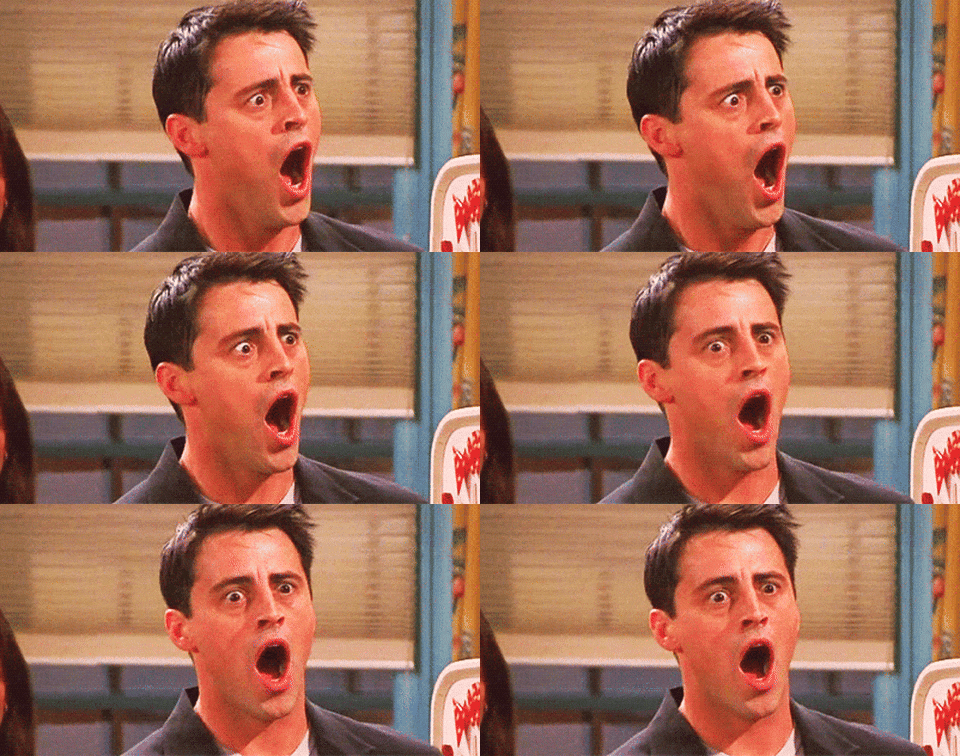
Another reason why I might not write that much humor into my stories is because of the type of humor I excel at. You see, my humor tends to be at its best when it’s situational. It’s like I’m living in a sitcom, and every word spoken has the opportunity for a funny line if I know where to look. That’s my mindset. My favorite jokes to pull on people usually reflect that. You’d be surprised how many times people have asked me how I’m doing, and I tell them, “I’m pregnant.” The reactions! They look something like this:

“YOU’RE PREGNANT?!!”

That being said, being a situational humor guy doesn’t always translate well to my fiction. I’m a plotter, which means I plan out the entire story from beginning to end. Keeping such dark stories in mind, from beginning to end, you don’t have much room to think of funny moments to add. You’re more likely thinking of the sad past of the protagonist and the arc they’re going through with this horrifying story.

Or it could just be the old adage, “Tragedy is easy, comedy is hard,” and all the stuff in the last couple paragraphs is a bunch of bullshit. That’s always possible.

Whatever the reason, it’s not that big a deal. Every author is comfortable with different amounts of humor in their work, and I’m comfortable with minimal amounts in mine (though if I ever write for Doctor Who, that might change). Besides, there’s a good chance if I tried to force more humor into my work, it would suck. In fact, I’m sure it would suck. Last night, I tried writing a horror-comedy short story about a tour of hell. The first paragraph was kind of funny, and then everything after that…not so much. Hence why I’m writing this post.

In any case, I think I’ll stick to what I’m good at. That’s what people like, and that’s what I like, so no problem. I’m sure I can fulfill all my writing dreams by not forcing jokes into my serial killer stories.

Or I could just stay at my job for the rest of my life and never make a thousand bucks off my work, but I don’t like to think like that.

If you write, how much humor do you put in your stories? What do you even think of humor in non-comedy fiction, anyway?

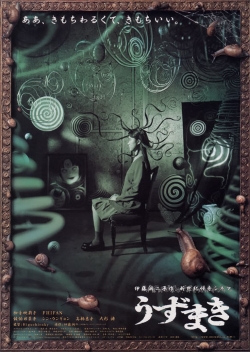
Back in January, I read and reviewed Uzumaki, a Japanese manga by Junji Ito about a small town that comes under a curse centering the idea of a spiral. It was as scary as it was out there (see my review here), and I had mentioned that I would like to get my hands on the film version and see how that compared. Well, some Amazon gift cardd money and a lost package later, I finally watched Uzumaki today. So how does it compare to the manga, andd how does it hold up as a film in general?

Well, it definitely ties down the strangeness of the manga. Uzumaki, like I said, is an out there story, and the film does a very good job of bringing that forth, using odd camera angles, weird visuals, and strange little special effect touches to really add an atmosphere of unreality to the film. There’s this one moment where two characters are walking down a hallway, and they pass a bunch of people standing against the walls just staring at their shoes, and neither character notices the people on the walls, or vice versa. It’s very odd, and kind of unsettling.

I also thought the actors did a very good job. The characters aren’t that multifaceted, but for an hour and a half movie, they work.

Unfortunately, that’s where the film’s biggest problem is: time. The film is an exact 91 minutes, and that means there’s only so much room to tell a story. And unfortunately, with a large story like that of Uzumaki, there’s only so much material that can be done. The end result makes the film feel kind of lacking. In the manga, you get the full scope of this curse. In the film, it feels more like a weird series of events with only mild connections, like walking to work everyday and seeing someone different each day do a dance at a different part of your walk. You might think it’s a weird and there’s a common cause, but your might not go out of your way to find out why this is happening. And that’s where the film ultimately fails.

I also found that some of the edits to the film are a bit more distracting than they should be. There’s one moment where they do a transition that looks like someone’s spray-painting a new scene into the film, and they use a cartoon-y sound effect to go with it. Not that scary. There’s another moment where a girl puts out a cigarette on a wall, and there’s a mini-explosion from the crushed cigarette’s tip. Um…why? It makes no sense. I know this film is going for that surreal sense of horror, but there’s a limit to what you can do without going into goofy territory.

I honestly think that if you’re going to adapt Uzumaki, you should do it as a TV miniseries rather than a movie. That leaves enough room for not only all the material that was cut from the film for time, but gives us more opportunity to get to know the characters and see them react to the strange events going on around them. And you know, I honestly would like to see that. With TV miniseries making a comeback on cable and series with shorter episode orders like American Horror Story being so successful, I honestly think an Uzumaki adaptation for TV would do very well.

On a scale of 1 to 5, I’m giving Uzumaki‘s film adaptation a 3.2 out of 5. Great at atmosphere and creating a sense of unreality, but too short to really leave a lasting impression. Honestly, you’re going to be better off reading the original manga, so go check that out and get lost in the spiral there instead.

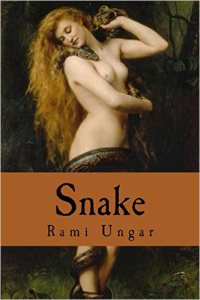
It’s always nice to receive feedback on my stories, and often that comes in the form of online reviews. Not only does this tell me what I’m doing well and what I can improve on in future stories, but a review can occasionally persuade people to check out the book and give me a small boost in readers. And today, I received a new review on my thriller novel Snake. That definitely brightens up my day!

Now if you’re unfamiliar with Snake, it’s a novel I wrote and published between Reborn City and Video Rage. It’s a thriller novel with horror overtones that was highly influenced by the movie Taken, by suspense/thrillers I was reading in college, and by slasher movies I saw during that time period. Here’s the blurb from the back cover of the book:

How far will you go for love and revenge? When a young man’s girlfriend is kidnapped by the powerful Camerlengo Family, he becomes the Snake, a serial killer who takes his methods from the worst of the Russian mafia. Tracking down members of the Camerlengo Family one by one for clues, the Snake will go to any lengths to see the love of his life again…even if it means becoming a worse monster than any of the monsters he is hunting.

Pretty cool, right? And today, I got my eighth review of the novel on Amazon, which was a nice surprise for me. Especially considering that the last time I checked on the novel, one of the reviews, the most recent, was taken down. Yeah, I’m not sure why that happened. I just look, and apparently Amazon took it down. Dammit Amazon, I’m trying to grow a following! How rude.

Anyway, this new review gave Snake four stars, and was left by a reader named sherri. Here’s what she had to say:

A very good read. The mixture of horror and suspense were on point. I now want to read more of Ramis great books.

Oh, how sweet! And I really hope you do read more of my books someday. And this mirrors what other readers have said about Snake:

This book is another awesome creation by Rami. This book is scary and brings the reader to the depths of how evil the human character can be and how anyone can be driven to commit acts of torture. The author does a wonderful job of developing the plot and characters and there are certainly twists and turns. I highly recommend reading this book if you love a good frightening thrill.

–ENJ

Rami Ungar makes a promise to (the reader) in all his writings: he WILL scare you, and if he does “his job is done.” Snake will scare you. I am a huge Stephen King fan, so this should give you some idea of my tolerance level for gore, death and mayhem – I was scared. Rami takes you into places you would never have believed possible, and manages to pull his hero (and eventually his heroine) out of them against all odds. If you like to be scared. If you LOVE to be scared. You should read this book.

–Angela Misri, author of Jewel of the Thames

I really enjoyed this book. When I selected “dark” for the mood, it was almost a toss up with suspenseful. You knew early on who the mafia killer was, but the question of how he was going to find his girlfriend and rescue her was suspenseful. I ended up choosing “dark” because of the level of violence our main character used in getting to the girlfriend. But he was a complex character. Even though he definitely had the dark side to him, there was a surprisingly good side to him, too. You don’t really see this until later on in the book. So early on, you might think this is an unredeemable character. But one of the most intriguing characters are those who aren’t what they initially seem, and for this reason, I enjoyed this character. The pacing was just right. It wasn’t rushed, and in no way did I ever feel it dragged, which is awesome for a book that was over 500 pages in paperback.

This book is violent, and it contains sexual situations. Some of it can be cringeworthy. So I wouldn’t suggest this for young readers. I’d recommend this only to adults. If it was a movie, it would be a strong R. There’s also swearing. These things don’t bother me as a reader, but I know it bothers some, which is why I mention it. But if you don’t mind these elements, I think you will enjoy this book. It’s a great thriller.

–Ruth Ann Nordin, author of The Reclusive Earl

If any of this has made you want to read Snake, you can find links to it below. And if you do decide to read the book, let me know what you think with a review. Positive or negative, I love receiving feedback from readers.

That’s all for now, my Followers of Fear. I may have another post out later this week, so watch out for it. Until next time, pleasant nightmares!

Available from AmazonCreatespace, Barnes & Noble, iBooksSmashwords, and Kobo

Back in January I got into another Lovecraft binge (see my thoughts on that here), and during that binge I read one of Lovecraft’s most famous stories, “The Call of Cthulhu.” Around the same time, I found out there was a movie version of that short story that was made in the style of a 1920’s silent film, matching the period of when the story was written, and knew I had to see it. Which turned out to be easier said than done: it’s not on any streaming service I can find, copies at my library had all been lost or damaged to the point they needed to be taken out of circulation, and I did not want to illegally stream it on my laptop. Finally, with some Amazon gift card money, I managed to buy my own copy, and after Amazon lost the package and had to send me a new copy (was that Cthulhu’s work, I wonder?), I finally got to watch the film with dinner this evening!

“Call of Cthulhu” tells the story of a man as he recollects becoming the executor of his late great-uncle’s estate, and how he discovered his uncle’s research on a cult devoted to the worship of a being known as Cthulhu. As the man goes deeper into the mystery of the cult and even conducts some research himself, he finds himself falling deeper into a rabbit hole of madness and despair that has no way out, and some things waiting within.

Firstly, this movie looks and feels like a 1920’s silent film. It was filmed using Mythoscope, a process that combines older and newer techniques to produce a film that looks like a silent picture but with much better special effects, and it looks great. You can tell that a lot of work went into making this film just right. And what’s truly amazing is that this film was made almost in a DIY sort of way: sets were made with cardboard, tape, and even a few blankets, with cast and crew sometimes working in miserable condition and using props bought off eBay to make this work. If you watch the film and then watch the behind-the-scenes video, like I did, you gain such a deeper appreciation for how well executed this film is.

Another thing I really enjoyed about this film are the actors. They are great at their work! As it’s a silent film, much of the storytelling is done through expression and movement, like in a ballet. You never once doubt for a moment that the actor are feeling the emotions they are trying to convey to us, and that just makes the film all the more amazing. It also helps that these actors are not Hollywood stars. In a major motion picture, the narrator of the story might be cast as Tom Hanks or someone else who’s good at playing an everyday guy put into extraordinary circumstances. The actors in this movie, however, often look like folks you see on a daily basis, and that instantly makes them more relatable to me.

If there’s one thing I didn’t care for, it might be Cthulhu himself. Or maybe I do care for him. I’m kind of split on my opinion of him when he finally appears. On the one hand, he doesn’t appear on film that much, even at the climax of the story, and when he does, it’s often very quick or he’s seen as a shadow. The stop-motion used to animate him is also very well done, and he looks like how he might be styled in a 1920’s film. That’s very good. But, he is the film’s big bad, and I like to feel even jut a little intimidated by the big bads I see in film. And whenever Cthulhu is on screen, I’m just not intimidated. I guess if I had lived in the 1920’s (an age where Lon Chaney’s version of the Phantom of the Opera was so terrifying to audiences, people actually fainted in their seats or ran out the theater screaming), I might have found the stop-motion terrifying, but I’m from the age of CGI, so it takes more to terrify me. So I’m honestly unsure of whether the stuff with Cthulhu himself adds or takes away from the film.

But all in all, this is a great film, an artistic masterpiece courtesy of the HP Lovecraft Historical Society (do they have a museum to the guy yet?). And when you consider that the original short story has been called “unfilmable,” and the conditions during production tried to prove that assertion, you learn to love it even more. On a scale of 1 to 5, I’m giving “The Call of Cthulhu” a 4.8 out of 5 (as well as the title of “one of my new favorite films”). Find yourself a copy, and enjoy the experience.

Now I just need a good adaptation of Shunned House. That story is SCARY! And it feels like the sort of story that would translate very well to film.

That’s all for now, my Followers of Fear. Join me next week when I watch another Lovecraftian-influenced film. No, not Guardians of the Galaxy Vol. 2 (though I probably will see that next weekend with my sister). It takes more than a tentacled monster to make it a Lovecraftian story. No, I mean the film adaptation of Junji Ito’s terrifying manga, Uzumaki.

You know, I think every horror writer has a story that has a title that sounds a lot like this one. “The Woman in the Coffin”; “The Pit and the Pendulum”; “The Lady in the Water.” Okay, that last one isn’t a horror story, but it is pretty horrifying. And you get my point, right?

Anywho, in my last post I said I was going to take a break from Full Circle and work on a few short stories. This is the first of those: “The Woman in the Coffin,” a short story about two cousins living in the English countryside who find a coffin with, you guessed it, a woman inside. In a way, it’s similar to my previous short story “Buried Alive,” which also revolved around someone buried in a coffin, but the whole coffin thing is really where it ends. Especially when you consider what the woman in the coffin in this short story does.

Do you think I have a thing for coffins? I have always wanted one that I could convert into a bed. That would be cool.

Anyway, I had a lot of fun writing this story. It only took me four days to get it down, which is a record for me (though considering this is my first short story written almost entirely with Dragon software, maybe this will be a new norm). I also had a lot of fun writing British characters. Normally my characters are in the States and talk like they’re from the States. I had to draw on all my years of reading British literature and watching British films and television to make it sound like they were actually British and not Americans in a British setting. I’ll probably have to work on that further when I get to the editing phase with this story.

It’s also shorter than most of my short stories, at about 6,550 words (for me, that is short. Most of my short stories average around 8,000 words). And I think there’s a lot of material I could cut out without sacrificing quality. If I can do that, I think it’ll be much more likely that a magazine or an anthology will want to publish it. And wouldn’t it be cool if that happened?

Anyway, it’s getting late, so I’m going to sign off. Next I’m going to edit my short story “The Playroom,” and then I’m going to write a quick short story that takes place in a location we’ve all heard about and hope never to visit. Hopefully I’ll be done with all that in the next two weeks.

Until next time, my Followers of Fear. Pleasant nightmares!

Lately I’ve been pondering something. Well actually, I’ve been pondering a lot of things, including how kissing is treated in different genre fictions and if swallowing the prize in a cereal box makes you a specially marked package (I ponder a lot of things, some of which are strange and some of which may appear in future blog posts), but this one thing in particular I’d like to explore. In a YouTube video I watched recently, the host of the video pointed out that a lot of movies start out with a protagonist walking in on their spouse having an affair, and how that is supposed to start a journey of transformation. This actually caused me to have an epiphany: a lot of fiction–not just movies–revolve around, or start off with characters being in, being caught, or thinking about having an adulterous relationship.

Like, a lot. A whole lot. Like if it’s not a main focus, then there’s a good chance an adulterous relationship will show up in a story at some point or another. I can think of four Stephen King stories that involve affairs as major plot points. One of the most popular TV shows out right now has an affair as a major plot point (*cough* Scandal *cough*). The novel Gone Girl, one of the most compelling mystery/thrillers of the past decade, has an affair as its catalyst. Adultery is freaking everywhere you read/view/listen!

So this got me thinking on three points. First, why do affairs show up so much in fiction? Second, is this a good trope, or a trope that should be done less? Perhaps even phased out? And third, how often do adulterous relationships appear in my own fiction?

Well, that first point is rather obvious (unfortunately). Adulterous relationships show up so much in fiction because they happen so much in real life (unfortunately). Of course, affairs have happened since the beginning of monogamy, but I’m not so sure they were discussed as openly as they are these days. Affairs were considered vulgar things, so the only places they were really talked about were places where it was okay to discuss that sort of thing: bars, raunchy plays (William Shakespeare was actually considered a very dirty and lowbrow for his time), and the occasional dirty poem (yes, those did exist). In polite society, they were only quietly discussed, and that kind of reflected how often adultery was discussed in fiction, and how it was treated when it was brought up.

Scandal, which revolves around an adulterous relationship (still love you, Olivia).

Nowadays though, for whatever reason, we’re a lot more comfortable discussing adultery. In fact, rather than being something discussed in hushed whispers, adultery can be a major and accepted talking point. When a celebrity or a politician, especially one who preaches family values, is caught having an affair, it gets discussed ad nauseum in checkout lines and on national TV. Websites that facilitate adultery are at the center of major scandals, and advice columns around the world regularly feature letters from people who had discovered their lover has a side lover. There are even people who think that having an affair is healthy, natural, or no big deal. It’s a thing, and it’s pervasive (unfortunately).

And as fiction tends to reflect the real world up to a certain extent–last I checked, there aren’t any real exiled queens with dragons calling her “Mother”– it makes sense that adultery would show up in a lot of fiction.

So that answers the first question. What about the second question? Is the adultery trope a good one, or is it overused to the point that we might want to use it less?

Well, that’s a tricky one. Affairs are so common (unfortunately) that it would seem weird to take them out of all fiction. It’s like war or murder; they’ve happened, and they will continue to happen, so you might as well base a story or two around them. Like it or not, adultery is a part of everyday life, so it will show up in fiction.

I think the thing to keep in mind is just to avoid certain clichés with adultery. Any mystery writer will tell you that the lover killing the victim over jealousy or an affair has been done to death (pun intended), so perhaps one should avoid using that cliché, or find a way to use it so that it actually comes as a surprise rather than being expected, like in Gone Girl. Another cliché to avoid is how finding out your lover had an affair is a signal to go on a journey of self-discovery, or to try something new and exciting. Like I said above, the cliché has been done quite a bit, and it really doesn’t make sense. Affairs can change lives, but I don’t think they are one of those events that suddenly change how you look at life or at yourself. A near death experience, or the realization that you become everything you didn’t want to be, maybe. But walking in on your spouse? I think that’s a more likely to cause a shouting match. Maybe an alcohol binge or a murder, but probably not a journey of self-discovery.

And while we’re on the subject, nearly all the affairs in that cliché I mentioned involve the wife or the girlfriend doing the cheating, which is odd because most affairs involve the husband or boyfriend. That’s not some anti-male sexism, that’s just statistics. We could balance it out a little more.

I guess the answer I’ve come to is that if you’re going to have an affair in your story, and it’s going to be a major plot points, make sure it’s not subject to tiresome clichés we’ve seen a thousand times.

And now to my final point how much does adultery show up in my own fiction? And yes, I have to make this a major point of this post. This is my blog about my writing, and all authors who share their work with others are a little narcissistic, including me. Can you blame me?

Surprisingly, not that much. I’ve thought about a number of stories I’ve written since I was ten years old, and of those, adultery shows up in maybe three or four. Only to really come to mind. One was a vampire novel I wrote in high school that was really me exploring my own sexuality before I was aware of it (see this post for more details), and the other was a recent short story. In the latter example, I only spent about a paragraph on the affair. It serves as one of the reasons why another character commits a double murder, but it’s far from the main focus, which is actually the environment of the characters. I actually have plenty of story ideas that involve adultery, but I haven’t gotten around to writing them, and they are a minority among all the other stories I’ve come up with but have been written yet.

Whether we like it or not, adultery will continue to appear in fiction for a long time to come.

I think this might be because adultery is just not an issue I want to focus on. Outside of a few shows I watch, I’m not very interested in adultery. This might be because I’m not interested in romantic relationships in general, or because they’re just other tropes that I would prefer to work with. Not only that, but adultery is rarely that scary. I am all or a writer, I prefer to write about scary things. Monsters, ghosts, the horrors that mankind is capable of, the fear of things that could happen to us if things were just a little different. Unless you’re dating a psychopath or something, adultery is not really that scary. The biggest fear is getting caught, and in most fiction, that is what happens. Not much incentive for a horror writer to focus on adultery. Or at least not this horror writer.

But who knows? Adultery could show up in more stories in the future. My style is still evolving, so anything is possible.

Adultery is sadly very common, which means it will continue to show up in fiction for generations to come. However, the way we use adultery in our fiction can be highly a versatile, and that ensures that it won’t be a trope that will get tired anytime soon. Just avoid the clichés, and if you don’t care to use adultery in your stories, don’t. For every writer who isn’t comfortable running about such a subject, there is always one who is.

What’s your take on adultery in fiction?

If you read my review of the first Ouija film, you’ll remember that I didn’t have a very high opinion of it. It was by the numbers, unimaginative, and most of the fun came from surprise cameos, which was sad given that most films from Blumhouse Productions are generally very good. I blamed the fact that Michael Bay’s production company was involved, and that guy tends to destroy anything related to toys and/or things people grew up with in the 1980’s (seriously, is that a thing?). I also mentioned in that review that I was not looking forward to the sequel they were already making, which I felt would probably be worse.

Surprise surprise, when the trailer for the sequel turned out to be a trailer for the prequel. And it looked good! Really good!

So good, that I wanted to see it in theaters (didn’t happen, unfortunately). When the library ordered it though, I immediately reserve the DVD. And over dinner I watched it. And I have to say, it was actually better than the original.

Note: I will be discussing the original film in this review, so if you haven’t seen the first movie and might still want to see it, you might want to stop reading this review.

So Origin of Evil takes place in the 1960s, and follows the little girl who we meet as a ghost in the first film, and her family. Her mother is a false psychic who genuinely believes she’s helping people, and has her daughters help her with her scam. One day, the mother buys a Ouija board in order to spice up her act, and proceed to test it out in her home. This leads to the younger daughter getting possessed, and from there things get strange.

As I said above, this was a much better film than the original. For one thing, it’s a period film, and Blumhouse is generally very good with those kinds of films (watch The Conjuring and Annabelle films if you don’t believe me). The sets look gorgeous, and the attention to detail is amazing. Even if at times the historical setting feels like window dressing, it’s a very good window dressing. I also thought the actors did an adequate job. These aren’t the same actors that played the ghosts in the first film, but since in the first film it was just important that they look scary when the CGI was used on them, it doesn’t really matter. And as I said, they did a very good job. Lulu Wilson, who plays the younger daughter, is exceptionally good at playing both an innocent child and a terrifying possessed creature (especially when they add CGI).

And of course, the prequel explains very well how the events of the past lead to the events of the first film. If they didn’t do that, I would have said they’d wasted money and film making a movie.

That being said, there are several things that could’ve been done better. Origin has the same issue as the first film where they have good jump scares but suffer when it comes to creating an atmosphere. The filmmakers also tried to evoke that old, 1960s feel by adding little touches to the film to make it seem like it was made in the 60s: little black circles and vertical lines appear at random during the film, and some of the cuts to new scenes have that jumpy quality reminiscent of old films. However, they do it so inconsistently that it’s more distracting than anything else. If maybe they had filmed it so that it looked from the 60s, and had that characteristic hiss in the background, then it probably would’ve worked better.

I also thought there were a couple of things that didn’t make sense. In one scene, the priest character gets possessed or influenced by the little girl, and then a minute later the possession or influence leaves him. Just like that. They don’t explain why that happens, and it sticks out like a sore thumb. And remember how in the first film, the surviving sister is in an insane asylum? And how the events of her childhood did drive her insane? Well in the prequel, they don’t really show how she gets that way. I think it’s supposed to hint that just everything she went through drove her mad, but she didn’t seem any different than any other heroine in these kinds of horror movies. Scared? Yes. Grief stricken? Yes. Insane? Not so much, but they plop her right into the mental asylum and show her as seriously messed up by the events of the film.

Filmmakers, I shouldn’t have to mention this, but this is a visual medium. And in a genre where there are a lot of people going through terrible things, you have to show them losing their grip on reality. Otherwise, it doesn’t work. If someone on the street sees me walking down the other side of the street and I pass behind a lamp pole and when I’m on the other side, I have horns, giant bat wings and a tail, even if they know who I am and I’m a freaking vehicle of terror, they’re going to have questions. It’s like that.

All in all, though, Ouija: Origin of Evil is a much better film than its predecessor. And while I don’t think we’ll be getting another film in the series (despite having a slightly higher budget, the prequel did not make as much at the box office as the original), it’s a good film to go out on. On a scale of 1 to 5, I give Origin of Evil a solid 3.0.

That’s all for now, my Followers of Fear. I’ll probably have another post out before the weekend is over, so keep an eye out for it if you want to know how I’m doing with Full Circle. Until then, have pleasant nightmares.