Posts Tagged ‘films’

Well, this has been a busy day today. Met with the Ohio chapter of the HWA for a very productive meeting, ran some important errands for stuff happening at work and in the Jewish calendar, watched a movie with dinner, and…oh yeah, got the first short story of 2020 out of my way. It looks like I’m making good progress on those writing goals.

“Primordial Nuclear Soup” is a science-horror story about a team of scientists and their military escort who go into a nuclear power facility two years after a meltdown, and what they encounter there. It was inspired by a YouTube video I watched going into some of the science about the Chernobyl disaster, and was further influenced by a certain Stephen King story and a certain Godzilla movie (neither of which I can reveal without giving too many hints about the story). It’s about sixty-five hundred words long, so it’s not super long. And as it’s partially science-fiction, there will hopefully be plenty of magazines or anthologies that would consider publishing it.

I had a lot of fun writing this short story, but it was also challenging. I thought I knew which way it was going to go, but the story ended up going in different directions than I expected. I was actually pantsing for the last half or so, but it ended up working out in the end. Maybe that’ll give it a bit more surprise for any readers.

For now though, I’m going to see if I can’t get someone take a look at this story before I edit and submit it anywhere. I want it to be in top shape, after all.

As for what’s next, I’m going to do some research into essay writing for that essay I mentioned wanting to write. If I feel up to the task, I’ll write that essay. If not, I’ll move onto my next story. After all, I have nine short(er) stories I mean to work on, and I’ve already figured out which one I’ll be tackling next. Should be good to get it out, considering how long it’s been knocking around this twisted head of mine.

Well, it’s late, and I’ve got work in the morning. Goodnight, my Followers of Fear, and pleasant nightmares!

So the other night on Twitter, I see Richard Chizmar (you know, that author/publisher I interviewed a while back?) tweet about this movie, The House of the Devil, saying he had to stop watching it thirty minutes in and could only finish it by the light of day. Obviously, I’m intrigued, so I went and reserved a copy from the library. And I finished it in one sitting after dark, so I think I can brag about that? Wait, I live in an apartment with noises, and part of the reason Mr. Chizmar couldn’t finish it was because he was watching the film in a dark, quiet house. Obviously, there’s a difference.

Anyway, on with the review!

Set in the 1980s and “based on true events,” The House of the Devil follows Samantha, a college student struggling to make ends meet. In desperation, she answers a babysitting ad she finds on campus and takes it. However, things get weird when she gets to the house. And once she’s alone with her charge, she learns that there’s more afoot than meets the eye.

Ladies and gentlemen, I may have a new favorite horror film!

So first off, this really does feel like a horror film from the late 70s/early 80s. In addition to the normal signs of a 1980s-set story (teased hair, Walkmans, and music from the best era for music ever, etc.), the movie was filmed with 16mm film, giving it that slightly filtered quality we know and feel so nostalgic about. Add in some yellow credits and some pauses during opening credits, and I could almost believe this film was made over thirty years ago rather than just eleven years ago.

I also love how this film builds tension. I know I use the term “slow burn” quite a bit, but it fits here. Director Ti West takes his time laying the groundwork and establishing our main character Samantha (wonderfully played by Jocelin Donahue, who embodies natural 80s beauty as much as Natalia Dyer in Stranger Things). Once we get to the house, things switch to showing Samantha’s increasing unease and paranoia. The camera work in these scenes is great, showing the heroine exploring the house multiple times, as if she’s not sure she’s really alone, while at the same time the camera films things in a voyeuristic way, like we’re the ones stalking Samantha, allowing us to share in her unease.

And that final third! Whoo-boy, things go zero-to-sixty real quick, and it is scary and thrilling to watch. I also like seeing how Samantha strikes a great balance between terrified final girl and willing to fight back. Usually in these films it’s either they’re screaming their heads off or they’re angry vengeance personified, so it’s a nice change to see a compromise.

As far as problems go, this film might be a bit too slow and quiet at times for some viewers. If you prefer your horror film have faster paces or not so many quiet points where characters just talk, this may not be the film for you. Also, there are some flashing imagery at the beginning of the final third that might trigger people with photosensitivity. It’s not as bad as IT: Chapter Two was, but it’s still something to keep in mind.

All in all, The House of the Devil is a wonderful homage to the slasher and suspense-horror films of the 70s and 80s. On a scale of 1 to 5, I’m giving it a 4.8. Settle into the couch, order a pizza and prepare for one of the best horror films you haven’t heard of. You won’t regret it.

Unless you have nightmares. In which case you may regret it.

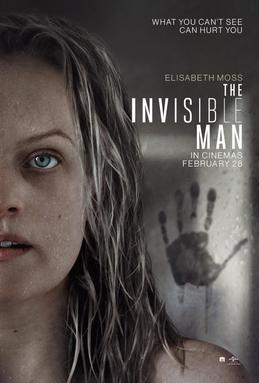
I’ve confirmed that this film, while co-produced and distributed by Universal, isn’t part of the Dark Universe. Yeah, it has a Universal Classics Monster, but it’s safe to say Universal’s attempt at a cinematic universe around its monsters is deader than Frankenstein’s body parts pre-assembly. I can also confirm that this book barely resembles the book it’s based on, but you probably knew that already. All that being said, let’s begin the review.

The Invisible Man follows Cecilia Kass, who leaves her abusive ex-boyfriend Adrian Griffin. Not too long afterwards, Adrian kills himself and leaves Cecilia with a generous amount from his trust. However, weird things start happening around our heroine. First it’s small things: a portfolio goes missing, a meal catches fire, a floorboard creaks. But then things get crazy. Soon Cecilia figures out Adrian is back from the dead, and has found a way to turn himself invisible. And he’s determined to make Cecilia’s life a living hell.

Best thing about this movie is its lead actress, Kate Moss. She plays the psychologically damaged woman in survival mode so well, it’s scary in and of itself.

As for the rest of the movie, I will give it this. There’s a tension in it. The jump scares pair very well with the anxiety of not knowing what’s in the empty spaces around the characters. I think everyone in the theater were on edge during scenes when Moss was walking around, looking for her stalker.

And thank God, most of the effects are practical rather than CGI. In fact, CGI is used only when absolutely necessary, and I’m always happy when a movie goes that route rather than packing in as much CGI as possible. I mean, oy vey!

Still, this film wasn’t perfect. There were quite a few predictable parts that I saw coming a mile away, as well as a few plot holes that I couldn’t help but notice. Those factors kind of brought the film’s score down for me.

Speaking of which, I’m giving 2020’s The Invisible Man a 3.1 out of 5. If you want to go see it in theaters, go right ahead. Just be aware, you’re not getting anything that’s going to stick with you once you leave the theater. Hopefully, the sequel they’re making is better. Yes, they’re already planning a sequel. The Invisible Woman. Elizabeth Banks is set to star, direct and produce. Given her roster, I’ll give it a chance.

That’s all for now, my Followers of Fear. I’m going to figure out what to do with the rest of the evening. Probably either write, read, or scare my neighbors silly. We’ll see what I come up with.

Until next time, pleasant nightmares!

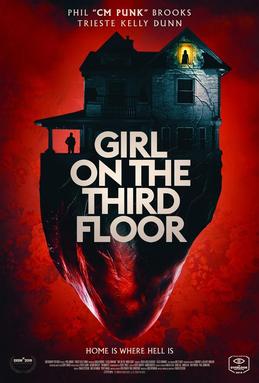
I heard about this film last year, but couldn’t see it for a couple of reasons.* I kept an eye out for news about it, but for the longest time, the only places you could watch it were on Amazon and YouTube, and for a price. And then this week it popped up on Netflix. Cue the need to watch it. Which I did this evening. And the wait was worth it.

Girl on the Third Floor stars wrestler-turned-actor CM Punk as Don Koch, an ex-lawyer with a checkered past, buys an old Victorian house in the suburbs with plans of renovating it for his pregnant wife. Problem is, not only is Don still living the party life to some degree, but his new home seems to have some interesting features. Nearly every wall has black goo pouring out of it, pipes and wall sockets leak a milky fluid that looks like a certain other well-known milky fluid, and a strange woman named Sarah keeps appearing around the property. Soon Don and his wife find out their house is way deadlier than they ever could’ve imagined.

I’m told this is director Travis Stevens’ first film, and I have to agree with critics that he’s done an excellent job. A Gothic horror story,** Stevens sets up a slow burn that’s entrancing. It’s as much a psychological horror as a supernatural horror story, following Don as he tries to make things up to his wife while still being a frat boy, and how those choices affect his stay in his new home. Combined with some bat-shit crazy supernatural occurrences, it’s pretty scary.

On top of that, the principal actors, particularly CM Punk, are great in their roles. I totally believed in his role of Don, and loved watching him see the dominoes drop due to his choices and actions. Also, Sarah Brooks as Sarah Yates has an amazing emotional range and really works as the driving force of the movie. I applaud you, Ms. Brooks!

Oh, and let’s not forget the house. The house is itself is a character, and the film does a great job in bringing that character to the fore.

If there’s one thing I could’ve done more with, I wanted more of the history of the house. We got some explanations, but I wanted more on the spirits and where they came from. There’s more to that house than meets the eye, and I feel like we only saw one layer to it.

Overall though, I’m giving Girl on the Third Floor a 4.3 out of 5. It’s a creepy slow-burn that’ll pull you in from start to finish. Get on Netflix, move inside, and be prepared to never move out again.

*Chiefly because the one theater it was playing at is right next to Ohio State, there was a home game that weekend, and you don’t want to drive near campus during a home game. Trust me, it’s the wrong kind of nightmare.

**I’m running into those all over the place. It’s interesting to compare them to Toyland.

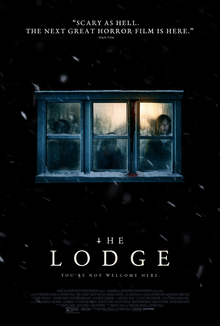
I’ve heard a lot of good things about The Lodge, including that it was a new classic in the genre (or something like that. I may be paraphrasing). With the last couple of horror films I’ve seen since my last film review being average or below and not worthy of a blog post (*cough* Fantasy Island *cough*), I had high expectations. At the very least, I hoped it was worth the cost of parking at the nearest theater it was playing at.

The Lodge follows Aiden and Mia, a pair of siblings living with their father following the sudden death of their mother. On their trip to their family cabin for Christmas, their dad’s girlfriend Grace comes along to get to know the kids better. The kids are less than thrilled, partly because Grace is the lone survivor of a suicide cult headed by her father. However, when the kid’s dad has to go back into the city for work and has to leave Grace with the kids for a few days, several days of madness ensue. One that will push Grace to the brink, and maybe take the kids with her.

Oh my God, this film is terrifying!

The Lodge takes storytelling and suspense hand-in-hand and creates an atmosphere where everything feels up in the air. If horror is fear of the unknown and loss of control, then this film succeeds. I saw hints of twists that were to come early in the film, only to quickly forget them even when I see them again because the film convinced me nothing was certain. Add in creepy imagery, strange happenings, and jump scares that are few and out of left field for their utmost effectiveness, and you’ve got one hell of a horror movie.

The four central characters also do an excellent job in their roles. Aiden is played from Jaeden Martell, who played Bill Denbrough in the IT movies, so he’s used to horror films, and puts it to use here. His sister is played by Lia McHugh, who also have a history in horror, so they bring the experience. But more than that, they know how to play siblings brought close by tragedy, to the point that I forgot they were actors.* Riley Keough also is excellent, showing the stress of the situation on a woman already psychologically and emotionally vulnerable so well. It’s honestly a delight to watch.

I can’t think of anything bad about the film. Doing so would be nitpicking. I will let you know that if you prefer horror films be filled with CGI and lots of jump scares (the opposite of me), this film may be a bit too intense for you. Trust me, most of the theater were freaking out in our seats. Even when nothing was happening on screen (or seemed to be happening, anyway).

On a scale of 1 to 5, I’m giving The Lodge a 4.8 out of 5. Nerve-wracking, twisty and twisted, you’ll be freaking out from the first jump scare to the haunting ending. Grab a blanket and someone to watch it with, and get ready to squeeze their arms tightly. Believe me, it’s that scary.

*And maybe wondered their relationship was incestuous. Hey, it’s an R-rated horror film, boundaries are hazy at best if it helps the story along.

You ever read a book that came out well before you were born, or a book that came out a few years ago but set well before you were born, and throughout the book a character or even the author expresses viewpoints that, if expressed today, would not go over well? The sort of views that would make you go, “Anyone who says that today would only be applauded by the lowest dregs of society. The rest would villify them.”

It’s an unfortunate part of the writing process, but sometimes writers will have to write stories where those sorts of views are expressed, even if not their own. I’ve had to do it several times over the course of my writing career, usually from the POV of a neo-Nazi or a white supremacist. It’s necessary, but it’s always a trial to do it. God help me if I ever have to read something like that out loud.

I bring this up because as I said in a previous post, I’m busy doing research for a story to go into the short story collection I’ve been putting together. That story is set in Victorian England, an age that, as many of you know, I’m a big fan of. You guessed it, I bought a bunch of new books to better understand that age. And this week, while I was reading one book and seeing information I’d previously learned in another volume repeated here, I realized that, to a certain extent, I will be putting these attitudes of the age into the story.

Including the ones I find reprehensible.

There are generally four ways writers include these sorts of ideas and beliefs into their stories. An author may include a character who’s already very forward-thinking or contrarian, taking on viewpoints which their peers will not get or abhor, but the audience will sympathize with and allow them to pity the characters who don’t think like that (think Wonder Woman’s attitudes regarding WWI-era norms and gender roles in her movie). Other times, characters may start with one attitude and then evolve to a different one over the course of the story as part of a character arc (Villetta Nu’s arc in the anime Code Geass: Lelouch of the Rebellion towards non-Britannians). There are characters whose whole point in existing are to present a contrasting view, usually as something for a protagonist to work off of or a driver of the plot (think Big Jim Rennie in Stephen King’s Under the Dome).

And then there are times when the author says, “Screw it, there’s no way around this,” and just portrays those attitudes as authentically as possible. I have a feeling with this story, I’m going to have to go with this route.

The books I’m using as research. I think they’ll be quite helpful in creating the level of detail I’m looking for.

I still haven’t worked out the details of this story, other than the time period and certain elements/characters. I don’t know how much of the Victorians’ beliefs and attitudes will make it into the story, or which ones for that matter.* Still, they’ll be there throughout the story for the sake of authenticity. It’ll be weird writing them into a story when they may go against everything I stand for. But for the characters, they’ll be the norm, and as true as the fact that the sun rises in the east and sets in the west.

The cognitive dissonance will be a mind-fuck.

But if the dedication to authenticity helps make the story good, then I won’t have any complaints. That’s what’s important in the end, isn’t it? Even if I have to write in a discussion on how chloroform subverts God’s commands on childbirth.**

What are your thoughts on including attitudes and beliefs that you don’t agree with in your story? Any fun reminiscences on the subject?

*Did you know that it was considered dangerous to give children fruit while they were young? It was believed the sweet taste would excite them and lead to delinquent behaviors. Also, while germ theory was starting to enter public consciousness, it was a slow process. In 1865, the Female Medical Society published statements asking doctors to take more steps to decrease death in women by childbirth. The medical journal The Lancet responded by calling their suggestions for cleanliness “erroneous,” and asserted that these deaths were caused by women leading immoral lives, which could mean anything from engaging in prostitution, feeling sexual desire, or enjoying pickles too much.

**Yeah, that was a debate in the 19th century. Did chloroform, when used in childbirth, prevent women from feeling the pain God ordained for women? What an age!

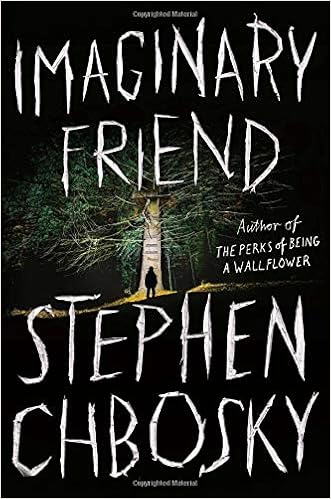
Over the past couple of months, people in the horror-themed Facebook groups I belong to have been raving about this particular book. I looked it up and it sounded up my alley, so when I had an Audible credit, I downloaded the audio book. But before I started it, I found out the book was written by the same guy who wrote the novel The Perks of Being a Wallflower, as well as wrote/directed its movie adaptation. Really? Isn’t that a sweet, YA rom-com? How do you jump from that to horror? (looks up what that book is really about.) Oh. That’s pretty dark. Yeah, I can see how the dude transitioned to horror.

Imaginary Friend follows Kate Reese and her son Christopher as they leave Kate’s abusive boyfriend and move to a small town in Pennsylvania. However, soon after they move there, Christopher disappears in the woods near his school. He reappears a week later, unable to remember what happened to him, except being led out of the woods and back to civilization by someone called “The Nice Man.” While Kate is happy to have her son back, and things start to improve after he returns, Christopher has changed. He’s smarter now, unable to sleep, and suffers from headaches a lot. And he’s in contact with the Nice Man, an invisible being who instructs him to build a treehouse in the woods he disappeared in, and to do it before Christmas. If he doesn’t, something bad will happen. To the town, to his mother, and to him.

This one was hard to put down. I normally only listen to audio books while at work, but the story was so intriguing and out there that I listened to it while checking email and cooking dinner. Imaginary Friend feels a lot like Stephen King novels like It or Needful Things, these huge stories based around weird concepts that are both scary and hard to put down. I mean, you got a kid who goes missing in the woods, and then when he comes back, has to build a treehouse to save the world from the Apocalypse. And that’s just what I feel I can tell you without spoiling too much.

I also have to give Chbosky credit: I had a hard time predicting what was going to happen as we got further into the story. Every little piece of the puzzle had the potential to surprise me, and quite a few did. During the “darkest hour” of the book, when things are at their most pessimistic, you felt the misery and the tension as the situation deteriorated. And that climax! Woo-boy, that was epic. Like, the final battle of an Avengers movie epic.

Not only that, but the characters are very well-developed. Also like some of King’s books, especially earlier ones, just about every character is well-developed. I felt like I’d known some of these characters my whole life, from Kate and Christopher Reese to the two or three old ladies suddenly regaining their faculties after years of dementia.

I do have one major gripe about the book: as the story goes further on, the novel takes on an…evangelistic air. It’s not like the Left Behind books, where it’s trying to get people to become born-again, but the story leans more in that direction than in the direction of The Stand or Supernatural. I don’t think the goal is to convert me: rather, I think Chbosky is using his Catholic upbringing to give the story a particular authenticity and philosophy other non-evangelistic Ultimate-Good-versus-Ultimate-Evil stories don’t have. There are some interesting ideas on the nature of guilt, our relationship to God, and how to find different kinds of salvation presented in the story.

Still, there were times when I was like, “Dude, scale it back a bit. I’m starting to get how people feel when I start ranking villains in horror, and they’re not horror fans.” That’s happened before, and it’s gotten awkward.

On the whole though, Imaginary Friend by Stephen Chbosky is an engrossing horror novel that’s weird in the best of ways and full of terror and twists. On a scale of 1 to 5, I’ll give it a 4.4. Pick it up and see for yourself. You’ll never look at treehouses and deer the same way again, but you’ll have a hell of a ride thanks to it.

Fiction writers tell two types of lies. There are the more obvious ones, our stories, those big stories of a thousand words or more that readers (hopefully) come just because we wrote them to entertain them. And then there are the smaller lies that usually go unnoticed. The ones where we gloss over or totally ignore reality so our stories can continue in peace. Not big things, like the existence of shapeshifting clowns or the ability to turn a human woman into a plant creature with a magic book. I’m talking about the small stuff. Things so small, people usually don’t question them or their viability.

A common example: you ever see an action film and someone with a machine gun lets off hundreds of bullets at their enemies without pause? Maybe they’ll switch guns at some point, but each of those guns still seem to have millions of bullets inside their cartridges and can go shooting for several minutes at a time.

The reality is a lot more boring: a machine gun may shoot off bullets for stretches of four seconds at a time, after which you probably will have to reload the gun. Not to mention that if your machine gun actually did go for shooting sprees for the entire length of a fight scene, the barrel would probably explode into flames.

Another famous example are silencers. Don’t want your gun to be heard by nosy civilians? A silencer will turn that gunshot into a mouse fart! Not really. In reality, a gunshot is not easy to quiet. Even the best silencer will only turn a gun into a loud crack, which you can still hear from quite a distance.

And you know those scenes in cop and comedy movies where a cop gets tasered in the chest and then their body and limbs shake like mad? Okay, stun guns only work about sixty percent of the time at best, and you never want to aim for someone’s chest, because while they’re considered “less lethal” than guns, they can still cause some heart trouble if aimed at the chest. Most cops aim for someone’s back, and then if they’re lucky, the electric shock will paralyze the target. By lucky, I mean the lines hit home and most of the electricity penetrates further than the skin.

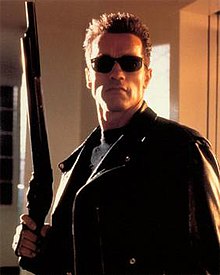
Action movies are huge offenders at this stuff. Still love most of the Terminator and Die Hard films, though.

And these are just a small list. Cop movies involving shoot outs and explosions rarely feature the staggering amount of paperwork those shoot outs and explosions require officers to fill out. Medical dramas going for crazy or risky procedures? Not without talking to the insurance company or finding a safer method first. Bulletproof vests? They don’t stop bullets, just catch them, and it’s still going to hurt like hell. Not to mention getting shot by a machine gun, even if you wear a vest, is probably going to leave you dead (sorry, Back to the Future fans).

I actually used one of these last night in the latest chapter of my novel-in-progress Toyland (for obvious reasons, I won’t spoil which one).* I had to do some quick research to make sure one of the above was being written right. And then when I realized there was no way to do that authentically, I was like, “Screw it. Who’s going to know? Even if they do, they’ll either forget or suspend their disbelief.” And then I wrote it how people would imagine the scene.

Why do writers do this? Simply because they can get away with it. The details are small, and even those in the know will usually just let it slide for the sake of enjoyment of the story. Rarely does it actually bug someone to the point they put the book down/stop the movie. Usually when they’re glossing over giant details do people in the know stop enjoying the story (happened to me with Criminal Minds after I found out what FBI profilers actually do on a daily basis).

So forget the little lies, and ignore the minor deviations from reality. You’ll enjoy the story more. Or you’ll stop watching Criminal Minds and move onto other shows. Either way, other people will still enjoy the story you’re telling.

Authors, what little lies in your stories have you told lately? Any you laugh about now?

*Speaking of which, Toyland‘s coming along well. I split some upcoming chapters in two for pacing, which means more chapters to write, but I’m still making progress. I may have to push the deadline back again, this time to the end of February, but it’s still going well. Also, the novel is over eighty-thousand words right now (for context, Harry Potter and the Sorcerer’s Stone is around seventy-seven thousand words). I have the feeling by the time I finish this book, it’s going to be close to one hundred thousand words. Not a whopper, but quite the literary feat.

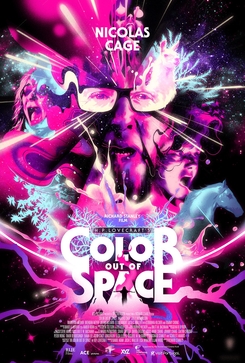
The Colour Out of Space (yes, with a “u” in Colour), is my fifth favorite HP Lovecraft story (click here for my Top 8 Lovecraft stories). There have been a couple of adaptations of the film over the years, but they’re either foreign films that are hard to come by, or are really bad for one reason or another. So when word popped up in late 2018 that Nicholas Cage was going to star in a new adaptation of the film, directed Richard Stanley in his first major outing since the 1990s, fans of Lovecraft, horror and/or film in general were piqued. We only got more excited as news from the film trickled back to us. When the trailer came out, I immediately knew I had to see this film.

I got back from seeing it a little while ago, and I’m happy to report, it was well worth the wait. This film is freaking terrifying!

Color Out of Space follows the Gardner family, who are living on the family farm and have converted it into an alpaca farm.* One night, a meteor lands on their property, giving off a strange, colorful light. Soon after, lightning strikes the meteor several times during a storm, the meteor disappears, and then things get weirder from there. The animal and plant-life start changing shape and color, technology goes haywire, and the family starts acting unhinged. All of it can be traced to a mysterious light. An entity. A color. From out of space.

If you’ve seen the film Hereditary, Color is a lot like that. It’s a slow, excruciating build with the characters going through a downward spiral, punctuated by moments of strong terror that left me petrified in my seat. The use of CGI is sparing, used only when practical effects in the style of The Thing aren’t possible. And by the way, those practical effects are amazing! They create some truly horrifying visuals, and Richard Stanley knows when–or even if–to truly reveal the mutated monster. There are also a lot of excruciating scenes involving bodily harm that left everyone in the theater freaked out, including me (not easy to do), and they added to the film in the best way.

As for the actors, they all do an excellent job. This might be the first time I’ve actually enjoyed Nicholas Cage in a movie, as they managed to balance his noncommittal acting style with his crazy acting style in a way that works. It’s funny to see him go from “normal” to acting like a bitchy teenager, but it’s also horrifying because you see how it’s connected to whatever’s affecting the family. The rest of the actors are great, embracing their roles and really convincing you they’re going through this tragic event.

Did I mention that Colin Stetson, who did the music for Hereditary and will be doing the music for the upcoming anime adaptation of Uzumaki by Junji Ito, did the score for the film? Will, he did and it works really well. Sound plays as much a big role in this film as visuals, and Stetson’s score adds the perfect touch to the atmosphere.

First time I’ve actually liked Nick Cage in a movie. How about that?

My only criticisms are that there’s a scene involving the Necronomicon (yeah, there are quite a few Lovecraft Easter eggs in this film) that I feel wasn’t given the best payoff. That, and the character of Ezra, played by Tommy Chong of Cheech & Chong fame, felt kind of extraneous. If you cut him out of the film and have one of the Gardners say some of his lines, it wouldn’t change much.

All in all though, this is not only an excellent adaptation of Lovecraft’s work, it’s a great horror film that’s both faithful to the spirit and text of the original story and terrifying to watch. On a scale of 1 to 5, I’m giving Color Out of Space a 4.8 out of 5. Any fan of Lovecraft, or of horror in general, should come away satisfied (or freaked), so buy a ticket and get ready to see the first great horror film of 2020.

(I already plan to buy the Blu-Ray when it comes out. And I really hope the disc is more colors than just blue, if you get my meaning.)

*Yes, it’s an alpaca farm. And it’s that kind of farm for more than just laughs. Also, the family “dog” is a wolf-dog. Trust me, I researched it. What kind of family owns alpacas for farming and a well-behaved wolf-dog used for herding, I don’t know. It would make for a great reality show, but I digress.

You know, when the trailers for this film hit, the response was pretty lackluster. “Oh, it’s got Kristen Stewart in it and it’s a disaster film about an underwater sea base that’s about to be destroyed. They have to find a way to survive. Whoop-dee-freaking-do!” But then word among the horror community started saying…positive things. And later rewatches of the trailer made it look cool. So I decided to see it, though I couldn’t do so till this weekend because I was sick last weekend.

Underwater follows six workers on an underwater sea base seven miles below the surface of the Pacific Ocean, drilling for resources to bring above. However, a mysterious quake causes major damage to the base, meaning they have to navigate the failing base and find a way back to the surface or die. But there’s something else down there with them. And it’s not going to stop till they’re all dead.

I’ve heard a lot of comparisons to John Carpenter’s The Thing and Alien with this film, and I have to say, not only are the comparisons apt, they’re justified.

One of Underwater’s strengths is how it creates its atmosphere. Soon after the movie starts, we’re thrust into the destruction as we watch a residential section of the base succumb to water pressure and shifting earth. From there, we’re right in the middle of the action as the characters have to navigate dark and narrow passages filled with water and debris. And while the situation itself is urgent, the movie takes its time, allowing us to get to know these characters as well as building a feeling of tension and encroaching doom. Realistic sets and dirty water further the feeling of claustrophobia and the horrific death just beyond the walls. Somehow, that tension is kept up even when the characters are walking across the open seafloor in suits. Probably because those suits are a thin barrier between life and death as well. Add in some well-placed jumpscares that are never excessive, and it’s damn tense.

As for the creature or creatures in this film, they are the fun innovation that change this film from just another disaster film to a Lovecraftian horror fest. Their reveal is very slow, and even when fully revealed, the darkness of the sea leaves them with a bit of mystery. Fans of certain HP Lovecraft stories will recognize the creatures. Whether you do or don’t, however, there’s no denying how scary and deadly these creatures are, and they make the film worthwhile.

As for the characters, they’re serviceable for this film. For once, Kristen Stewart’s deadpan expression works pretty well with her character Norah Price, who defines herself as a cynic trying to get by. TJ Miller as weird, funny guy Paul does okay jokes. He and the character Rodrigo, played by Mamoudou Athie, both enjoy anime. Other than that, you can’t say much about these characters, but for the purposes of Underwater, that’s just fine.

That being said, the film does have its issues. There are a few moments where the tension reaches a lull, and during those moments I felt restless and a little sleepy (though that might be because I had to wake up earlier than planned this morning). And I would have liked to see what life on the base is like on a normal day. You know, when it’s not in danger of flooding and crumpling into dust. We only get a minute and a half of seeing the pre-destruction base at the beginning of the film, and that’s mostly filled by Stewart monologuing and saving a daddy long-legs from a sink.

Altogether though, Underwater is a tense, Lovecraftian thrill ride, a modern-day The Thing, almost.* On a scale of 1 to 5, I’m giving it a 4. If you have a chance, go to the theater and prepare to dive into a world of terror. Most likely, you’ll find yourself pleasantly entertained, and more than a little scared.

*And not just in quality. The Thing actually did poorly with critics and at the box office after its release. It didn’t become a classic until it hit home video. I have a feeling Underwater will go through a similar process, though I would like as many people to see it in theaters as possible.