Posts Tagged ‘journalism’

I just published the other article I wanted to write before I started working on Rose. How to Deal with Idea Fragments is exactly how it sounds: tips on working with characters, concepts, or images that could be great stories but you don’t have enough material yet to really call it an idea. I took a lot of the material for this article from personal experience, and I’m hoping that it proves very helpful to writers everywhere who may struggle with these fragments on occasion.

Go check out the article when you have a moment. And if you get a moment, why not check out the rest of the website? Self-Published Authors Helping Other Authors is a fantastic blog from independent writers, by independent writers, and for independent writers. There, you can find articles on writing, editing, publishing and marketing, all without having to use a big publishing company. I’ve found it extremely helpful in the past, and I’m sure you will too.

That’s all for now. I’m going to try to get some work done on Rose today. I actually started work on the third draft late last night, and while I didn’t make a lot of progress, I at least started the process. Hopefully I can get it a little further along today, right my Followers of Fear?

I’m pleased to announce my latest article from Self-Published Authors Helping Other Authors has gone live on the website. The article, PJ Boox: A Bookstore for Indie Authors, is an update on the Gulf Coast Bookstore I wrote about last year. Apparently since that article, Gulf Coast has gotten a new name and a bigger space, and its got some pretty nice options for indie and small-press authors.

If you get a chance, check out the article. And if you’re a self-published author, I highly recommend you check out the rest of the website. Self-Published Authors Helping Other Authors is a website from indie authors, written by indie authors, and for indie authors. It’s a great place to get tips on writing, editing, publishing, and marketing without the help of big presses.

That’s all for now. Unless something else comes up between now and Friday, I’ll see you all for everybody’s favorite ritual. Until next time, my Followers of Fear. Pleasant nightmares!

I read an article on BuzzFeed yesterday that really upset me. According to the article, emails from the University of Chicago’s chapter of Alpha Epsilon Pi, a historically Jewish fraternity, had been released and revealed a culture of racism and Islamaphobia within the chapter. The N-word was used prolifically, Muslims were called “terrorists” or “towel heads”, a vacant lot next to the fraternity’s house was called “Palestine”, and some of the brothers turned MLK Day into “Marathon Luther King Day”, celebrating with drinking and eating at a fried chicken place.

Over the past couple of years, stories about fraternities and some of the disgusting things going on within their walls have been coming out. Every time I’m absolutely disgusted, but this one hit me in a number of ways. For one thing, I have friends who are part of the Ohio State chapter of AEPi. They are good people, upstanding young men connected to their heritage and active in the broader community. To think they are in any way associated with this scandal just horrifies me.

Alpha Epsilon Pi’s University of Chicago branch is in deep trouble for the emails that have been uncovered.

But that’s only one level that this hit me on. Because this story also brought back memories from when I was young:

I went to a Jewish overnight camp from fifth grade to tenth grade. During my last year or two there, I noticed a disturbing trend among the boys in my year. Swearing was a regular part of camp culture–even the counselors swore on occasion–so saying “shit” or the F-bomb didn’t make me bat an eye. In fact, I reveled in it. We were being adult, we were being naughty. It was great.

But then I heard my friends calling each other “n***er”, and occasionally “faggot” or “fag”.

Understand, there were no black kids or staff on the camp, at least not as far as I know. This was also well before I realized I was bisexual. And my friends assured me their black friends were cool with it.

Even if I believed them, I still told them that I wasn’t comfortable with it, that they shouldn’t say it, or at least not around me.

Maybe it’s because I was bullied a lot back in the third grade (most of it verbal) and it left a big impact on me, but I’m sensitive to when people use words to hurt others. Especially those words. As much as words only have meaning if we give them meaning, these words do carry a meaning bred in deep history, and the meanings are not easily separated from the words. Every time a white person uses the N-word, they’re saying that African-Americans are lesser beings, second-class citizens and do not have the same rights as people with light skin. Every time someone calls a Jew a kike (like when, after a soccer match between my all-Jewish high school and a school of mostly African-American Christians, the opposing team began using the word after they lost the game and things nearly came to blows), that someone is calling the Jewish people a strange people, a parasite that takes money and power and killed the Christian God. Every time someone calls someone else a fag, they’re saying that there’s something inhuman or strange or obscene about being LGBT. And every time someone–not just a fraternity brother–calls a Muslim or a Palestinian a terrorist, they’re saying that entire religion is incapable of being peaceful, that their whole goal is destruction. That’s all completely wrong, and there’s not excuse to use those words.

Even if I had been as eloquent then as I am now, I doubt that would’ve swayed my friends, because they continued saying those words without any care to my feelings. Even when the head counselor of our year had a discussion with us one evening about how disgusting we were being. Even after, while on a field trip to the city, my friend said the N-word and it was almost overheard by a passing black man. They just went on saying all those nasty words and by doing so, they were saying it was okay to say words charged with prejudice and not care whom it might hurt.

For the first time today I wondered if any of my camp friends ended up at University of Chicago, and then at the school’s chapter of AEPi. Those camps have the effect of bringing Jewish teens closer to their heritage. Maybe some of my friends went there and brought some of their bad habits with them.

Believe it or not, this is some of the nicer things this sort of uncaring attitude can lead to.

The only time I approve of those words are when they’re used in mediums like literature or film to illustrate a particular time period or mindset, like in Huckleberry Finn or even in my own Reborn City. The rest of the time, there’s no good reason to say that trash. Not only is it hurtful to the people those words denote, they are harmful to the people saying those words, desensitizing them to the effects of these words. At best, that leads to dumb crap from fraternities and doddering old men in front of cameras or near cell phones. At worst, that leads to hate groups, violence, and lynchings or shootings in churches.

My hope that in the wake of this scandal, people–especially students and teenagers–realize that you can’t be blase about saying the N-word or calling people terrorists because of where they’re from or what their beliefs are. They’re hurtful. They’re damaging. And I hope that maybe the backlash these students will get will teach them and others what happens when you’re not cognizant of the feelings of others.

And I hope my friends from those long ago days aren’t members of that fraternity, and that they learned long before this what your words can do to themselves and to others.

My first article of 2016 for Self-Published Authors Helping Other Authors, How I Could’ve Done A Better Sale, has just gone live. This shows some of the lessons I learned the hard way from the 2016 New Year’s Sale, which I’m sad to say did not sell as many books as I would’ve liked. So here’s where I thought I went wrong and what I plan to do in the future so that next time I can really get people interested in my books.

So if you have a chance, check it out. And while you’re there, check out the rest of the site. Self-Published Authors Helping Other Authors is a wonderful website dedicated to helping as many independent authors as possible write, edit, publish, and market their books efficiently and with as little cost to themselves as possible. You should seriously check it out.

My latest article from Self-Published Authors Helping Other Authors is Finding a Narrator on ACX. I gained a lot of experience in the matter over the four months it took me to find mine, so I thought I’d share that experience with a helpful article. Perhaps it’ll get noticed by the company, like the last article I wrote on them did. If so, I hope they don’t think I’m a girl again when they tweet about it. That was hilarious, but I don’t like to be mistaken for a woman when I’m not at a costume party or have some other good reason to cross-dress.

Anyway, check out the article if you have the chance. And while you’re there, check out some of the other articles on Self-Pub Authors, which is written by independent novelists and designed to help you write, edit, publish, and market on your own while saving money and maintaining quality. Believe me, it is great. I wouldn’t write for it if it wasn’t.

That’s all for now. Have a great day and I’ll see you later, my Followers of Fear. Preferably I’ll see you with good news while I’m at it.

Becket image

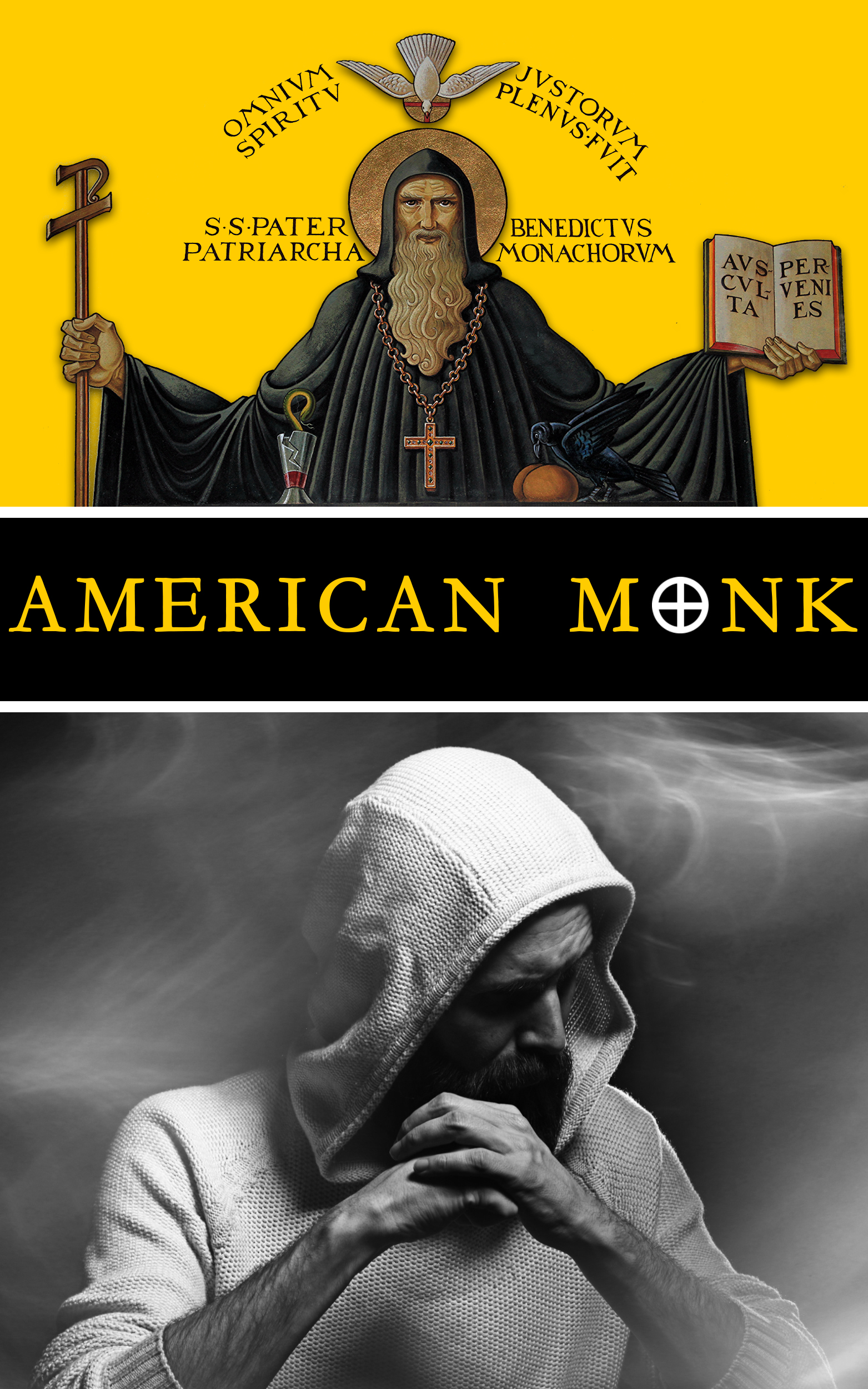
Some of you may remember my previous interview with author Becket, an indie novelist who likes vampires, was once a monk, and works for Anne Rice. Now he’s got a new book out, American Monk, a memoir about his years in a monastery growing closer to God and living in a brotherhood of similarly-minded men.

Welcome back to my blog, Becket. Happy to have you here. Now, your new book is American Monk, which chronicles your time as a monk in a Benedictine monastery. Why did you decide to write this memoir?

One day on my Facebook page I decided to make a post about my experience in the monastery. People responded well to it, so I made another one the following week. I kept up that have it for about half a year, at the end of which I decided to compile all my Facebook posts about the monastery into a memoir.

Why did you decide to become a monk in the first place? And why did you leave the monastery?

I wanted to be a monk because I want to deepen my relationship with God. The monastery was a wonderful place to do that because it was a house conducive to my personality type, an introvert and a scholar. I stayed in the monastery for five years, at the end of which time I was given the choice to make solemn vows, which is like the marriage commitment. It would’ve been for the rest of my life. The monastery was wonderful, but I also felt called elsewhere, although I did not know what that was at the time. So without any hard feelings, I left the monastery and began working for Anne Rice.

What’s a day in the life of a Benedictine monk like?

Monastic life is built around routine. We wake up early in the morning and begin our day with prayer. Our morning prayer lasts for about an hour and a half, and then we would go to breakfast. After that it was time for work. We worked most of the morning until the hour to celebrate the solemnity of the mass. After mass we had lunch. And after lunch we spent the afternoon committed to more work. Our day ended in the evening with prayer. After prayer we went to dinner, and after dinner we had a community time together, where the monks gathered together in one room and enjoyed one another’s company. Finally, we had night prayer and that it was bedtime.

American Monk

In memoirs like these, I’ve noticed that the vignettes within generally run the range from humorous to serious to tragic to inspirational and everything in between. Do you feel that this is true of yours? 

My memoir is meant to be inspirational. I hope that people read it and grow in their relationship with God, because the monastery was a place where a truly began to understand who I was in the divine plan. I am still learning the depth of my relationship with God. In many ways, the monk I was is still inside me, and perhaps he is a better monk than I used to be.

 Does Anne Rice make an appearance in American Monk at all?

She makes an appearance in the beginning and at the end, and in one chapter in between, but the memoir mostly deals with my experience with the brother monks.

What are you working on these days?

I just finished the first draft of my next music album as well as the first draft of a novel appropriately titled The Monk, about an African monk who suffers the stigmata and works as a miraculous channel of God’s love in the world.

When not writing or working with Anne Rice, what are you doing these days? And is there anything on your wish list you think you could be doing in the near future?

I spend time with God, my girlfriend, and my two cats. For the future, I have a few projects that I am working on and I am praying that God will give them success for His Glory.

Well thanks for joining us Becket. Glad to speak with you. And if you’e interested in reading American Monk and other works by Becket, you can check out his website, as well as find him on Facebook and Twitter.

And if you’d like to read more interviews with other authors and with some of my characters, you can head over to the Interviews page for those.

Hope you enjoyed reading this, my Followers of Fear. I certainly had fun putting it together.

I just published my latest article from Self-Published Authors Helping Other Authors, and it’s a very special article: Tips For Surviving NaNoWriMo. For those of you who don’t know what that is, it’s National Novel Writing Month, a yearly tradition in November where authors try to write an entire novel of 50,000 words or more in 30 days. To say the least, it is insane and requires a lot of work to get through in one piece. I thought I’d write an article on how to get through it and still keep all your fingers on your hands. So if you are participating or thinking of participating this year, it might be a good idea to check out the article. Maybe something I’ve written will prove helpful to you.

And while you’re over there, check out the other articles on the site. Self-Published Authors Helping Other Authors is a website by indie authors for indie authors and has hundreds of articles meant to help writers of all backgrounds and levels of experience write, edit, publish and market effectively without going broke in the process. You might just find an article helpful to you on the site.

All for now. I’ve got stuff to take care of, so I’m off to take care of them. Until next time, my Followers of Fear!

joleene naylor 2 (1)

I think this interview has been a long time in the making, and I’m glad it’s finally happened.

Today’s author is a woman who you might have seen commenting a lot on this blog. She’s an author of several vampire novels, as well as a contributor to Self-Published Authors Helping Other Authors, and a contributor/editor/compiler/whatever to the Ink Slingers’ anthologies, including Strange Portals and the recently published When the Lights Go Out. It’s Joleene Naylor, and I’m looking forward to hearing what she has to say!

Welcome to the blog, Joleene. So tell us, what are your short stories about and what inspired them?

Unforgotten is about a pair of old school chums in the UK who go on an annual trip every year on the same date. This years’ trip is complicated by Gordon’s missing wife and the ghost of a little girl who wants to be found. It’s actually based on a dream I had. It started out the same: in a car discussing having been interrogated by the police. Only there was no ghost girl.

In Beldren, a group of former indentured servants decide to take what they feel they are owed from an easy mark; a household of women. Their plan is perfect except for one thing: the women are vampires.  This one was inspired one night when a pickup kept going around and around past our house and my brother got nervous they were “up to something” and I thought, “I wonder what would happen if robbers broke in and found out the people of the house were serial killers? Or vampires? Hmmmm… That could be an interesting story…” Hopefully it is.

I read the first one and liked it, so I have high hopes for the second one. Now what else have you written?

1 - shades of gray - 250 (1)

The Amaranthine vampire series. Shades of Gray is the first, and the newest is book seven, Clash of Legends. I’ve tried to make the story creepy and disturbing, and at times bloody and horrific, instead of just the usual romantic sop that a certain YA book has turned the vampire genre into. There’s no sparkling and no high school, just blood, fighting, and vampires who feed on humans and burn in the sun.

Are you a traditionally or self-published writer?

Self published because I want to own the rights to my own work.

What got you into writing in the first place?

My mother was a writer and poet, so it never occurred to me not to “make up stories”. My brother and I used to make (and illustrate) books for fun when we were children. (I also used to draw book covers and catalogs, complete with product descriptions – I was strange.)

What is it about scary stories that you think draw people in?

People enjoy being scared – safely. We like that little “Oh!”, the tiny burst of adrenaline and that aftermath giggle, but we like when we know we’re not *really* in danger, and a scary story can give us that.

Are you working on anything these days?

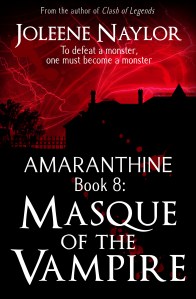
I’ve reworked Patrick: A Prequel, but I need to edit it. I am also working on Masque of the Vampire, the eighth book in the series, and the Tales of the Executioners short story collection. There are four of those, three are available for free through most retailors (except Amazon) and the fourth, Beldren, is included in the When the Lights Go Out anthology.

What is some advice you would give to other writers, regardless of their level of experience or background?
FRONT COVER (1)

Write what you want to read because if you want to read it, then edit the heck out of it. Change words, shorten scenes, add scenes, delete scenes. The original version may seem like a masterpiece to you, but it isn’t – it’s a rough stone that needs cut down and polished in order to shine.  That may be hard to admit sometimes, or to acknowledge, but it’s the truth for everyone.

If you were stuck on a desert island and could only take three books with you, what would you take?

I think short story collections give you more bang for your buck when it comes to being stranded for a long time, so: The Complete Tales of Edgar Allan Poe, The Faun and the Woodcutter’s Daughter by B. L. Picard, and right now I really, really, really want to read A Candle in Her Room by Ruth M Arthur, only I can’t find a copy priced at anything I can afford, so in fantasy land I would have it. Alternately, if it has to be a book I owned, I’d swap it out for My Sweet Audrina by VC Andrews.

Well, thank you Joleene for joining us today. Really enjoyed picking your brain. And readers, if you want to check out more of Joleene, you can find her on her website, her blog, her Facebook page, on Twitter, and on Goodreads.

Also check out the Interviews page for my talks with other authors and even some characters.

And make sure to check out When the Lights Go Out, available from Amazon, Smashwords, Barnes & Noble, Kobo, and iTunes. It’s the perfect way to start the Halloween season.
You’re probably wondering what the title of this post means. Well, it’s the title of my latest short story, so you can stop wondering “Did this guy start doing some sort of study or documentary or something and not share it with us? That’s very unlike him.”

Anyway, “A Project in Western Ideals” is a short story I just finished at 9,123 words and follows a girl who is being slowly turned into a human Barbie doll by a woman who is more than she seems. The story’s title comes from a phrase that appears a lot in the story, and I felt that it fit the story so well, that I should use it for the title, especially since I didn’t like any of the titles I’d used before, like “Perfection” or “My Perfect Body”.

The story was inspired by a woman in Russia named Angelica Kenova, who is a human Barbie. I first heard about her prior to leaving the States for Germany, when I read an article about her. According to the article, her parents control almost every aspect of her life: they buy her clothes (most of which are kind of sexy and form-fitting); they control her diet and how much she exercises; they even accompany her on dates! And while the article didn’t give any hints about how Ms. Kenova felt personally about this lifestyle (for all I know she likes being her parents’ toy), I did get the impression her parents were the driving force behind how she became this:


Yeah, that’s an actual person, not a doll. I even have trouble telling the difference sometimes. And hearing about her story, I started wondering what sort of parents would help and encourage or possibly even force their daughter to go down this route despite the numerous health issues that doing so can cause. This led to “A Project in Western Ideals”, which explores a young woman going through this sort of transformation, and not through her own choice.

As far as my fiction goes, it’s not as dark anything I normally write (I let my protagonist share her deepest thoughts with the audience and she is pretty funny without intending to be), but it does deal with the health problems of trying to look like Barbie and how it’s ultimately creating a fake version of yourself (read this article to get an idea of how bad it is for you if you’re curious). I also think the main character is a lot of fun and I enjoyed writing her.

However, I do think that the climax and ending could use some work. As they stand now, they feel clunky to me and don’t match up to the beginning of the story. The beginning could have some stuff cut out from it too, and I’d like to explore the antagonist a bit more as well, get a bit more of the crazy that makes her do this to my protagonist.

Well, we’ll see what happens when I get to the second draft. And by the time I do, I’ll probably have had some ideas on how to better this story. And I definitely want to make this one better, because with a bit of work, I think it could be one of the highlights of Teenage Wasteland (speaking of which, I’ve got seven stories so far set for that collection at various stages of readiness for publication, including this one. With time, I think I could get a few more in and truly make it an extraordinary read).

In the meantime though, I said this was going to be the last short story I’d write before starting work on Laura Horn again. However since I’m about ten days from leaving Germany and heading back to Columbus, I think I’ll hold off on starting any big projects until I’m back in the States, writing or editing. Instead, I’ll edit a few short stories (none that need to be rewritten, that’s basically starting from the beginning again) and get to work on LH once I’m home and settled back in.

Well, Yom Kippur, the Jewish Day of Atonement is in a few hours. I’m going to have the biggest meal I can in anticipation of the fast nd see you again before What’s Write For Me tomorrow afternoon (or tomorrow night if you’re me). You all have a wonderful day, my Followers of Fear. I know I am.

My latest post from Self-Published Authors Helping Other Authors is out. This time, it’s When Should You Release a New Book? No seriously, when should you? I pondered that question, so I went to find out the answer myself. And this article is the result of what I found out. So if you’ve ever wanted to know when you should release your new book, this might help.

If you like the article, read some of the others on the site. Self-Published Authors Helping Other Authors is full of helpful advice on writing, editing, publishing, and marketing independently and doing it well. I should know, I’ve benefited from it in many different ways.

All for now, my Followers of Fear. Things to do, people to scare. Bye!