Posts Tagged ‘novel’

Before you read anything else, just check out this video below.

Now that you’re either laughing yourself silly or wondering what the hell that was,I want to say something important. Three years ago, in a library down the road from where my mom lived, I decided, after much thought, to go on WordPress on create a blog. I didn’t know what would happen. Heck, I didn’t even really know what I was doing! My whole first post, and the first few that came after it, had lower case titles! I had no idea what the difference was between a page or a post, and I did not have categories for the first few posts. It took me even longer to figure out what tags were and why they were so important.

But I learned. I kept blogging. At some point within the first few weeks, I started gaining followers. Just one or two, but they stuck around. I gained more followers. I blogged more and more regularly, finding excuses to publish posts. I tried not to get discouraged when days or weeks would go by and I’d have only one or two views in that entire period. I made more friends, got several new followers, published three books, started writing for Self-Published Authors Helping Other Authors, went abroad, wrote two more books that need to be edited as soon as possible, began work on a thesis, and survived three years of college. And these days, I average at least nine views a day, which makes me plenty happy (I love knowing people are checking out my work)!

You want to know something? I still have no f**king idea what makes a good blog post. I’m not kidding. Every time I think to myself “People are going to want to read this” , or “This could get Freshly Pressed with the right tags” or even “This probably won’t be one of my more popular posts”, more often than not I get surprised. Just the other day two of my posts got more views than I expected. I was like, “Say what?”

Anyway…

A lot has changed in three years. Not just me, though I’ve definitely grown a bit and maybe have gotten some nicer glasses. Basically I’ve grown a nice following. At the time I’m writing this, I’ve got 24.459 views, 1,922 comments, at least 1500-1800 likes (they stopped notifying me of likes after I passed 1337, but I guess-timate it’s around the range I quoted), and 645 followers. I also have 121 followers on my Facebook page and 66 followers on my Twitter feed. I’m very happy that all this has happened (especially the Facebook page and Twitter feed, I’m really surprised that anyone are into those).

So in honor of this great occasion, I’m announcing a week-long sale. From August 2nd to August 9th, all my e-books on Amazon and Smashwords are available for $0.99 to download. So if you’d like to read my books at a discount rate, now is the opportunity to do it. Just type my name into either website, and you’ll find my work. And if you do decide to read any of my books, please let me know what you think once you finish them. A comment or a review, positive or negative, I’d love to know what you think. Just as long as you’re not trolling me or anything. I’d hate that.

And if you see a different price than what I quoted online, check back later. The websites can act funny sometimes.

That’s all for now. I’ve got work to do, so I’m going to do it. Have a great day, my Followers of Fear!

Every now and then I look to do a post musing on the mechanics or subtleties of writing fiction, and today is one of those days. And as you can tell from the title of this post, I want to talk about unreliable narrators, those strange voices in the books we read (and occasionally in the films and TV shows we watch) whom we can’t always trust.

According to that awesome source of usually-factual info that is Wikipedia, an unreliable narrator is a narrator, usually in some medium of fiction or another, whose veracity has been called into question. Usually this happens very early in the story, where the narrator may make a plainly false or delusional claim, or it may happen elsewhere in the story, perhaps near the end where a twist in the story turns everything we thought we knew upside down or slowly through hints that are given to us in the narration. Stories with unreliable narrators can feature a single narrator, or multiple narrators giving their own versions of events, or even a supporting or side character who tells a story in such a way that we question whether or not they’]re being entirely truthful about what happened.

A great example of an unreliable narrator is Patrick Bateman from the novel American Psycho. As a man suffering from psychoses and the occasional hallucinations, Bateman makes a great unreliable narrator. Other examples include Nell from Wuthering Heights, most of the characters from the Japanese movie Rashomon, and Ted Mosby from How I Met Your Mother (according to show creator Craig Thomas, anyway). Oh, and any story that has children narrating it could possibly have unreliable narrators, because kids sometimes remember things incorrectly.

(If you want to think about it though, every one is an unreliable narrator, because no matter how they see events, they are biased, they may mis-remember details, and they may cover things up in order to make themselves look good or to hide their own guilt. But let’s not get too philosophical about this. Otherwise we’ll be here all evening)

One of the characters in my thesis project, the antagonist, is an unreliable narrator. Because of his mental problems and his infatuation with protagonist Rose, he sees things through a very certain light, so when he tells a story it is often through that lens, which probably won’t reflect reality too well. As I’ve never written a story from the point of view of an unreliable narrator, so exploring the device through this character should be interesting. (Or have I used unreliable narrators before? Technically, any time I tell a story from the protagonist’s first-person point of view, it could be construed as unreliable, but i’m not sure if it counts. Oh darn it! Now I’m an unreliable narrator of my own writing career!)

But why are unreliable narrators used so much? And why do they appeal to readers and writers alike? It’s a very difficult question, and I’m not sure I have an answer. Perhaps for writers, it’s the chance to tell a warped version of events. When we tell a story, especially through the lens of an omniscient or almost-omniscient third-person narrator, it’s almost expected that the story being told is what actually happens, one-hundred-and-ten percent factual. Even when the story is limited to the viewpoint of a single character, that third-person narrator’s portrayal of events is assumed to be accurate. Heck, even when we read a novel told in the first-person, we tend to see the depiction of what happens as true. Especially if we like the character.

An unreliable narrator allows the writer to break from that, to tell a story that might not be accurate, and that the reader and maybe even the writer will have to guess how true the story is or how much we can trust the narrator to tell the truth. In fact, maybe that’s what the reader gets from these sort of storytellers: they have to figure out how trustworthy the storyteller is, or where the line between truth and the storyteller’s own delusions or beliefs is laid down. It’s like solving a mystery or a puzzle, in a way, and the only way to really solve it is to read on until you finish the story. And even then, you might not be able to tell how reliable the narrator is (which is why there are e-forums to discuss these issues).

In any case, I’m going to enjoy exploring the antagonist’s own unreliable stories and seeing how much we can or should believe him. It’ll make for an interesting discussion point when talking about my thesis with my adviser during the next semester.

What do you think of unreliable narrators?

Have you ever used them in your own writing? How did it go?

This morning I started work on my next book, which will double as my thesis for my senior year. Well, that’s not quite accurate. Truth be told, I came up with the idea for my thesis back in autumn last year, and then while searching for a thesis adviser, I fleshed it out a bit more, deciding what would happen in this or that scene or whether I wanted this or that event to happen at the beginning or ending of the story. And after I found my adviser, I had to make some decisions so I could know what books I would order for research and therefore why I was applying for a small grant to afford said books. And after I got said grant and returned from Europe, I worked hard on Laura Horn so I could get that done before I began work on my thesis.

Well, this morning I began in earnest to start researching and outlining my thesis. I stopped by the English Department to make sure everything was in order for the following year, stopped by another department so I could possibly do some more research for my main character, and then started on the first draft of the outline, of which I’ve made a little bit of progress on.

Now, some of you might be asking yourselves, “Is he going to tell us what his thesis is about?” Actually, I’ve decided to be cruel and not tell you at all. You’ll have to wait until the book comes out.

Just kidding! No, my book is called Rose, and follows the story of a grad student named Rose Taggert. On the night of Rose’s engagement party, she gets killed in a hit-and-run. This leads one of her students, who has an obsessive infatuation with Rose, to kidnap her body from the morgue and resurrect her using nature-based magic. The way he resurrects her though leaves Rose dependent on him for her survival, which causes the young man to believe they are in a relationship. With Rose trying to find a way out of her situation, she is set against impossible odds, and may not be able to overcome them.

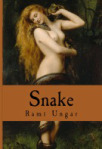
How’s that for a setup?

Rose is the first full supernatural horror novel I’ve written in a while. Reborn City and Video Rage were sci-fi stories, while Snake and Laura Horn were thrillers, the former having some obvious horror undertones. I’m looking forward to diving into some full on horror. I know how the novel begins and I know where it’s going to end, and I know some of the things that’ll happen in this story, I just have to flesh out the rest. The thing about some horror stories, this one among them, the main character or characters have to face seemingly insurmountable obstacles in order to escape the evil plaguing them. Sometimes they do it successfully, other times they don’t. The thing is, you’ve got to make it about the protagonist dealing with the great evil at each and every turn and looking for ways to fight back against it. And sometimes fighting back will do more harm than good, leading the reader to wonder how they will continue on with the odds against them and read on.

So believe me when I say, I will be looking for some great ways to make Rose’s life difficult. Or second life, I guess. Either way, it’ll be very exciting for the reader (I hope).

I’ll be doing periodic updates on the progress of Rose, with the ultimate goal being finishing the first draft before the school year is up and I graduate (oh my God, I can’t believe how close it is! It’s sneaking up on me). Tonight, I hope to resume my work on the outline and get that done by the end of the week. First though, I’ve got some other things to take care of, including another blog post to write up. As usual, my life won’t slow down any time soon.

Wish me luck, my Followers of Fear!

When I was a kid, I read the Goosebumps books, as did a good number of other kids in my generation. Some of us even watched the TV series based on the books. Back then, they were, although not traumatic, pretty scary. When you look back at them now though, you realize that not only do they seem somewhat tame, but the stories have plot holes that only a kid would miss (like why haven’t the authorities figured out there’s a theme park that is being run by homicidal goblins and called in the National Guard?). Still, one tends to have fond memories of those books.

Which is why when I heard recently that there is a movie being made based on those books with Jack Black set to play author R.L. Stine (who happens to be from Columbus, by the way), I got a little excited. In fact, here’s an interview with Jack Black from San Diego Comic-Con on the movie, about a week or so after filming ended.


I’m certainly going to look forward to this movie. I’ll probably laugh at most of it rather than being scared, but I wouldn’t be surprised if something in the movie made me jump out of my seat. And when you add in the news that CBS Films had bought the rights to the Tales You Tell in the Dark books with the hope of producing a movie based on them and that MGM is developing an animated Addams Family movie, it gets me excited.

But these are kids stories. Why should any of us care? Most of my readers (I assume) are past Goosebumps age, and if any of them do like a good horror novel or movie or TV series, they’re more likely to read a Stephen King novel or see As Above, So Below when it hits theaters or try and guess what’ll happen in the new season of American Horror Story (I have a feeling most of that speculation will be wrong).

Expect this freaky mask, plus Slappy the dummy and a few others to make it into the new movie.

Remember in the video above, how Jack Black was talking about how his kids like being scared but they don’t like blood or any of that other stuff? We were all like that once. We wanted to be scared, but we didn’t want to have our heads messed up too badly (though mine was plenty messed up to begin with). Goosebumps, Tales You Tell in the Dark, or even Are You Afraid of the Dark?* were all like gateways into the world of horror for youngsters, allowing them to be scared while also allowing them to have fun. And getting a love of horror through kids horror is way better than a first exposure through a King novel or through watching Scream. Even when you’re an adult, those stories can turn you off from the genre if they’re too intense.

Heck, those books even helped me out a little. I remember once in third grade our teacher reading to us a story from Tales You Tell in the Dark that had me terrified and excited all at the same time. And later on when I got really into Goosebumps, they may have been getting me ready for when I would sit down and read Interview with the Vampire and later It, which were key to me deciding to become a horror writer.

So when Goosebumps (and Tales You Tell in the Dark and Addams Family, if they ever get past the development stage) reaches theaters, adults with or without kids will go to see their old favorite stories come to life on the silver screen. And if any of them have kids, they’l come along to, maybe leading to another generation of horror lovers. And maybe even the next generation of horror writers and filmmakers.

Well, that’s all for now. Join me tomorrow though, because then I plan to reveal what my next big project–which also doubles as my thesis for my senior year–will be. Should be exciting. Have a good night, my Followers of Fear.

*That last one I’ve watched a few episodes of recently. It’s actually got some pretty solid stories in that show. A few even resemble Stephen King short stories in the way they’re told.

I’ve just released my most recent article on Self-Published Authors Helping Other Authors. This one is about ACX, a service from Audible and Amazon that allows you to meet producers for audiobooks and turn your book into one. I thought it’d make for an interesting article, so I did some research, trolled their website several times, and made a few phone calls to the company itself to get some questions answered. What I ended up getting is one of my lengthiest articles, but hopefully also one of my best.

If you would like to find out more, click here to read the article. And if you want to, please check out the rest of the website. Self-Published Authors Helping Other Authors is a website by self published authors to make indie publishing easy and cost efficient. Check it out if you are or are interested in becoming a self-published author. You never know what sort of helpful article you might come across.

And before I forget, I’ve got a question: how many of you would be interested in buying an audiobook version of one of my books? And how much would you be willing to pay to purchase an audiobook version if one were available? Just chucking that question out there for anyone interested.

That’s all for now. Have a great day, my Followers of Fear! I hope to have one or two more articles out soon, so keep your eyes peeled for them.

Only the worst of the worst get to hang out here.

Yesterday we took a look at my choices for #10-6 for my top villains list for 2014. Today we look at the Big Bads, the worst of the worst, the folks and creatures we should all fear in our sleep. These top 5 villains are the ones that have amazed, impressed, and/or terrified me the most.

And remember to click here if you’d like to compare #10-6 and #5-1 from last year. Here we go! Mwa-ha-ha!

5. Jennifer Blake (from Teen Wolf)

Once again we have another villain from Teen Wolf, this one from the first half of season three. At first, you think the only thing that the main characters have to worry about is a pack of Alpha werewolves, but then Jennifer Blake comes into the picture. At first just an innocent English teacher who becomes Derek Hale’s love interest after a close encounter, she is actually the Darach, a Druid gone bad, and she has all sorts of dangerous magic on her hands, which she enhances through elaborate human sacrifices. All in the name of revenge against t;he Alpha werewolves who betrayed her several years ago. Her devious tactics, her theatrical flare, and the lengths she’s willing to go are enough to put her above the wily Nogitsune, who was only out for some twisted laughs.

4. The Murder House (from American Horror Story)

I’ve always maintained that a setting can be as much a character as your other characters, and that especially goes for haunted houses. In this house in particular, we feel it as a character, a force with a devious and wily personality for drawing in the innocent and guilty alike, twisting their minds and then trapping their souls forever. All for a very dark purpose that isn’t revealed until the very end of the first season of the groundbreaking FX show. Trust me, you do not want to spend the night in this place. EVER!

3. Dr. Oliver Thresden/Bloody Face (from American Horror Story: Asylum)

Movie and TV serial killers are hard to make unique. A few even come out looking like carbon copies of Jason Voorhees or Michael Myers. In AHS‘s second and much darker season, they not only give us a serial killer with character development, but with a soul. Dr. Thresden originally arrives at Briarcliff Manor to perform a psych evaluation on protagonist Kit, who is believed to be the infamous serial killer Bloody Face. Dr. Thresden ends up staying on to help update Briarcliff’s outdated methods to treating insanity. He takes a special interest in leading lady Lana Winters, a lesbian who, after some failed aversion therapy, he deems sane. After helping her to escape the asylum though, he reveals himself to be Bloody Face, and he is looking for a woman to be his mother, his real mother having abandoned him years ago. With an unhealthy preoccupation for human skin and for his mommy, Bloody Face may at first seem like a bad copy of Leatherface, but in reality he’s unique in so many ways. Played by actor Zachary Quinto, it’s no wonder this character was nominated for so may awards, and won a few as well.

2. Hannibal Lecter (from the books by Thomas Harris)

Our only returning villain from last year, Hannibal Lecter earns his spot for his incredible ability to continue to terrify and manipulate us on the NBC show Hannibal. Honestly, watching Mads Mikkelsen perform in the iconic role is a dark pleasure. In this previous season, he managed to keep the authorities dancing around him, even as some of them began to suspect that he was the Chesapeake Ripper. What’s most horrific is that he almost manages to get protagonist Will Graham to become just like him, a monster without a conscience who likes to see what happens on impulse. And the way he sets things in motion is like watching a Rube Goldberg machine in motion, only with people involved. Until the very last episode and the awesome twists and turns, you’ll be on the edge of your seat wondering what will happen next I’m looking forward to season 3 next year. I hope they can keep up the fun!

1. The Weeping Angels (from Doctor Who)

Our winner this year for Top Villain is another creature from Doctor Who, but this one is slightly stranger and more sinister than the Daleks. The Weeping Angel is a strange being. It can only move when it isn’t seen, thus it keeps its hands over its eyes in case its working with one of its own kind. When they take their hands off though, they reveal monsters that are anything but angelic. And you literally can’t even blink in front of them, because they can move even between the opening and closing of your lids to get you. Once they do, they’ll send you back in time so that you die maybe hundreds or thousands of years before you were born, while they feed on the displaced time energy that results from your timeline into the future being erased. Created by show runner Steven Moffat, these are probably one of the Doctor’s most terrifying enemies, enough to make my sister scream in fright when they feature in an episode. If you ever watch the episode in which they debuted, Blink, you’ll know why.


That’s all for this yer. Join me in 2015 for another Top 10 list. Maybe making the list will be thesis deadlines, because that will be one of the scarier things I’ll have to deal with in this coming school year.

Anyway, hope you had fun reading my Top 10 Villains list. Have a good day, my Followers of Fear. And let me know what you think of the list. Who do you think should have gotten on? And was there anyone here you agreed or disagreed with? I’d love to hear your thoughts.

After a year, a week, and two days, with twenty-six minutes before midnight, I am finally finished with the first draft of my fourth novel Laura Horn. I wish I hadn’t had to take so many breaks to focus on schoolwork (not to mention writing was nearly impossible during my study abroad trip), but I’m glad I was able to get it done. And even though it’s a first draft and obviously will need a lot of editing when the time comes for that so it can look something resembling publishable quality, I’m quite happy with the result.

For those of you who are not very familiar with LH, it follows the story of a girl with a very traumatic past who, through an odd series of accidents, stumbles upon a conspiracy that could destroy the United States of America. With a few good friends to help her, she sets out to save her nation from the threat that looms over it, and confronts her demons as well.

So it’s kind of like White House Down or Olympus Has Fallen, only it’s got less explosions and a little more character development. Actually, a lot more character development. Our titular character goes through a lot of changes throughout the book, and it’s astounding even to me, the guy who created her, how much she changes in the course of the story.

It’s also a lot more thriller than I tend to write, but my next big project will be some pure psychological/supernatural horror, so it all pans out in the end.

Anyway, I’m happy to announce that I’m finally done with LH, and that in a few months (schedule permitting) I can start editing the book and getting it ready for eventual publication. I’ll be setting up a page for the book on this blog with the notice “Coming Soon”. With any luck, I can have this book out sooner rather than later, and maybe work on a sequel or two (I have a couple planned out, I just need to commit to them).

So now for the page and word counts. I wasn’t actually too far off. I did say the three chapters that would make up the epilogue would be around five-thousand words and it turned out to be more like nine-thousand, but hey, it could’ve ended up much longer. Anyway, the Epilogue in total was 32 pages and the word count ended up as just under eighty-nine hundred. That brings the total page count to 356 pages and 94,774 words. About average for a Rami Ungar novel. Of course, these counts might change drastically by the second draft, but this is a good placeholder until then.

In the meantime, let me tell you guys what projects I plan to take up next (though they may or may not be in this order):

  • Work on the outline for the novel that’ll be my senior thesis (more on that at another time)
  • Edit Video Rage
  • Write several articles on writing for Self-Published Authors Helping Other Authors
  • Write a few blog posts I’ve been putting off so I could finish LH.
  • Write several short stories, and hope I can get a few of them published in magazines
  • Start assembling a new collection of short stories
  • Experiment with writing erotic fiction (yes, I plan on doing that. I meant to do it earlier this summer, but things got in the way).
  • Try and get through the many books I still have to read for pleasure.
  • And just have a good time as usual.

Not too hard to do, right? At least, I hope so.

Anyway, that’s all for now, my Followers of Fear. It’s late, so I’m going to read a little and then sleep. It’s my day off tomorrow, so I’m going to find plenty of time to celebrate before I get back to writing (it’s a work hazard, I just can’t stay away from it). Anyway, that’s all for now. Have pleasant nightmares tonight. I know I will be!

When most people hear that I work, they ask me where I work. I inevitably reply, “I work part-time at the financial aid office at OSU.” What I often forget to add is, “I’m also a fiction writer in my spare time.” The reason I bring this up is because I recently read this article on the Huffington Post (which you can check out here) in which she learns that her friends don’t see her as working because she writes full-time, and reasons why writing full-time should be considered working (some of those reasons I will reiterate here).

The thing is, writing is work. Hard work. Some people envision writers as sitting on their butts with a notebook, typewriter, or a laptop and watching a story unfold before our eyes. In their minds, we might as well be playing video games or watching Netflix for all the energy we’re expending.

The reality is far from that image. Here’s my process for writing a novel, for example: I outline the story, which usually takes a couple of weeks depending on how crazy my life is. Then I do my preliminary research, which is usually done when I’m not working at the office or doing schoolwork (so summers make a great time to do research because I’m not in classes, but sometimes I’m not lucky enough to be in summer when I do research). Then I start to write. And there’s nothing more daunting than the blank page at the beginning of a project. My novels are usually upwards of eighty-thousand words, so seeing that first blank page is terrifying. I have to force myself to get the first words onto a page and from there try to get into a groove.

Usually I’m doing schoolwork and working part-time while I’m writing, so I often save my writing during the evenings, and usually during the commercial breaks when I have something on TV I really want to watch. So how much I get done is dependent on time, how distracted I am, if anything else comes up in my life, and a million other things. With this sort of schedule, writing a novel can take anywhere between six months (which was the case with Snake) to almost two years (as was the case with Reborn City). I’m in the final chapters of Laura Horn, and I’ve been working on that for over a year, taking breaks for all of life’s crazy moments.

And that’s another thing: sometimes I have to take a break from writing in order to work on school or anything else going on in my life. When that happens, it usually takes longer to get words down on the page. As was the case with RC and is the case with LH.

Your average writer.

And if I need to do some additional research? That takes a bite out of writing time too.

And after I finish a novel, it usually requires one to three more drafts before I’m ready to publish it. Even then I usually send it to someone (usually another author and a friend, though in the future I might be looking at professional beta reader/copy editor to help me with the technical stuff) to make sure I haven’t missed any plot holes or horrible typos. Then I design the interior and the cover, apply for a copyright, and set a release date.

And after the book comes out, there’s all the marketing to do. Heck, even before the book comes out, I’m advertising in every place I can so that as many people as possible will know about the book and maybe want to read it. I’m blogging, Facebooking, tweeting, updating business cards, e-mailing, slipping mentions of my new book into articles, updating my resume, telling people by word-of-mouth, and asking people who do end up buying the book that once they’re done, I’d really appreciate it if they’d write a review or do something else to let me know what they think. And that’s just the tip of the iceberg when it comes to all the marketing I have to do in order to get word of my book out there.

Because let’s face it, I don’t have a team of advertising professionals. I’m self-published, so part of the territory is that I’m doing all my advertising on my own. It isn’t easy, but it’s something I take upon myself so that my book can sell well and people will read it.

Does that sound like sitting on my butt playing video games or watching Netflix? No, it’s work. We don’t have time cards or an office cube or water coolers, and very rarely anything like a regular paycheck. But yeah, we are working. It’s as grueling a job as working in the Sales Department or on an assembly line or going to a meeting with execs from another company. Our job just allows us the perks of setting our own hours and picking our own projects.

In summary.

So I think from now I’ll be adding that writing is my other part-time job when people ask me where I work. And I hope people who read this article who aren’t writers will realize we’re not just relaxing in our living rooms or home offices (if we’re lucky enough to have those) playing solitaire or watching funny cat videos on our computers. We’re working, and we’re working hard.

Still don’t believe me? Then go ahead and write your own novel that’s halfway decent, and then tell me it’s not work. I’ll wait.

How do you feel about writing as work?

Has anyone ever mistook what you do for free time? How did you respond?

As any author can tell you, there’s no one way we get our ideas. In fact, we get our ideas from everything: stuff that goes on in our lives, the people we know, current events, books, TV shows, movies, video games, from a phrase, from a place, from something we like or something we hate, and from more things than I can list. It’s the actual spinning of the story that can be rather difficult. We have the start of an idea, but we need to build up the story around it. Who’s the protagonist, what’s going to happen, where and when is it going to happen, why is it happening, etc. And depending on the author, the idea, and where it came from or what it consists of, the story based on the idea can come either very quickly or take a while.

For me usually it doesn’t take too long to come up with a story once I have the idea. There’s one notable exception however, and that’s when the idea revolves around a character and nothing else. By this I mean a character pops into my head, maybe no more than just an image but still a character, and I want to write a story around that character. And it isn’t easy for me to come up with that idea.

Other inspirations don’t take that long. I saw the movie Schindler’s List and came up with a whole book series based around the idea of someone actually leading a rebellion against the Nazis. Remember when I went to the Sky Steele show a week back? I had an idea from something we talked about after the concert involving a supernatural crime story. And a creature featured in a fantasy TV series I watched last year inspired a story about how religion can actually kill you. All of this happened within minutes or hours of being inspired.

But starting out with an intriguing character and little to nothing else? It takes me days to come up with a story to match. In fact, of the last ten ideas for novels I’ve had, half of them were based around characters and took me days to actually come up with an idea I could write down on my list of feature-length ideas (I’m up to 145 of those, by the way. Unless I can become successful enough to write full-time, I’m not sure I’ll be able to write them all!). They all started with one or two characters, maybe a setting, but all of them took days to come up what they would be doing or what would happen to them. The most recent one, which I first started trying to brainstorm a story around on Tuesday, I finally got something today.

Sometimes, the gears in my head turn so loudly, you can hear them.

What happened was that I saw this Halloween-themed video (which I will have to post about when October rolls around) and I got a little scared by it. Not only that, but I also kind of fell in love with one of the characters in the video and decided to base an entire Halloween-based story around her. Just one question: what kind of story? Finally figured out today to base the story around ancient myths about Samhain, the holiday Halloween is based on, but up until then I could not think of a single thing to base the story around. Well I did, but none of them really worked for me. I couldn’t see myself writing something around those other story possibilities, let alone anything I thought would be good. I’m glad that I was able to finally come up with something though, or might have gone a little madder than usual.

You know, as much as I love getting ideas for stories, I hope that in the future these sort of ideas, the ones that take several days to form and usually start with a single character, pop into my head less often. And when they do, I hope it takes less time to come up with a story based around them.

What about you? What sort of ideas do you struggle to create stories around?

What do you do when you’re struggling with an idea and can’t think of anything?

pat bertram

Today’s interview is with an author who has a lifetime of experience and some really great books too. Pat Bertram is an author with Second Wind Publishing, whose books include the thriller novels More Deaths Than One and A Spark of Heavenly Fire, as well as the non-fiction book Grief: The Great Yearning, a book about dealing with grief based on personal experiences. Pat also is an administrator and active participant in a Facebook group for suspense and thriller writers, and has two blogs, one of which she writes posts for at least once a day.

I was lucky to have a chance to ask Pat, whom I consider a friend, some questions on her life, her writing process, and what she’s up to these days.

How did you get into writing in the first place?

When I was in my mid twenties, I set out to be a writer. I quit my job, gathered up paper and pens, and sat down at the kitchen table to write. I thought writing was a type of automatic writing, that I just needed to put pen to paper and words would come. Didn’t happen. When I tried to force words on the page, I discovered I had no talent for writing, so when real life got in the way, I let go of my desire to write and turned my mind to other things. About fifteen years ago, I had some predicaments I wanted to work through, so I decided, talent or no, that I would write the story, which I did. And it was terrible! During the subsequent years, I have learned how to write, to pace a story, to write sparse but picturesque prose, but most of all, I have learned how to rewrite and edit.

How would you characterize the stories you write?

The unifying theme in all of my books is the perennial question: Who are we? More Deaths Than One suggests we are our memories. A Spark of Heavenly Fire suggests we are the sum total of our experiences and choices. Daughter Am I suggests we are our heritage. Light Bringer suggests we are  . . . ? So, perhaps my genre is “identity quest,” though I can’t see that as ever being a big draw. My only hope is to build an audience for “Pat Bertram books.”

What is your writing process?

I have no real process. When I do write, it’s usually late at night because all is quiet. I don’t set a daily goal — the words come hard for me, so I’m grateful for whatever words I manage to get on paper. Oddly, considering this is the electronic age, I still prefer to write longhand, though I am gradually doing more writing on the computer. As for the story, I know the main characters, I know the beginning of the story, I know the end of the story, and I know how I want the characters to develop, but I don’t flesh out the individual scenes until I start writing them.

You blog at least once a day, and you often talk about your personal life, both the good and the bad. What gives you the courage to share such information with your readers?

Before my life mate/soul mate died, I wrote innocuous — and fairly impersonal — posts about the books I read, the stories I was writing, general thoughts I had. After he died, I was shocked both by the true scope of grief and people’s ignorance of the process, so I made it my mission to tell the truth of what I was going through to help dispel the myth that after a couple of months, life goes on as it did before. I gained so much by opening up, that I have continued to be open as other traumas enter my life, such as my efforts to cope with both my aging father and my dysfunctional brother.

Are you working on anything at the moment?

Yes. When the members of my dancing class found out I was a writer, they suggested I write a book about them. It’s been fun —  all the characters have real life counterparts, so it has become something of a group project.

What is some advice you would give to potential writers?

Writing is not always about writing. Some authors can sit down and let the words flow and lo! There is a story! Other authors have to think about what they’re doing. So ask yourself, what story do you want to write? Why? What do your characters want? Why? How are they going to get what they want? Who is going to stop them getting what they want?

If you were stuck on a desert island and could only take three books with you, what would they be?

Three blank notebooks. And pencils, of course.


If you’d like to find out more about Pat, you can find her at her personal blog Bertram’s Blog and on Pat Bertram Introduces, where she interviews authors, publishers, and even book characters, as well as on her Facebook page.