Posts Tagged ‘proper decisions’

I’ve been trying to think of the words to say for hours. I’ve been wondering if I should say anything. I’ve wanted to throw myself into anime or a book or into any form of entertainment, because sometimes the made-up worlds are better than the real one we inhabit. In the end though, I had to say something. I think I knew I was going to the moment I heard what happened today. And I had to let you know, I’m afraid in a way I don’t like to be.

Earlier today, a man named Robert Bowers opened fire at Tree of Life Synagogue in Pittsburgh, Pennsylvania. Three different services for three different congregations were being held that morning, with nearly a hundred people in the synagogue. Eleven people were killed and several more were injured, including four of the police officers who showed up to subdue Bowers, who has made numerous statements on social media about the Jews and “invaders,” aka immigrants and refugees. Tree of Life has been active with organizations that help out immigrants and refugees, including most notably HIAS, which may have played a role in Bowers’s selection of Tree of Life as his target. He has been captured and is awaiting being charged, including federal hate crime charges.

I found out about the shooting this afternoon while out with my cousin, who is here in Columbus for an internship. A friend sent me a link to an article about it. I felt my blood go cold, but I didn’t tell my cousin. I didn’t want to ruin the day for him. I’m sure by now he knows. And he’s probably as scared as me.

This is the second mass shooting in the United States that has been associated with one of the facets of my identity. The last one was when Pulse was shot up in Orlando, Florida, two days after my twenty-third birthday. Pulse was a gay nightclub. Fort-nine people died. I’m bisexual. I wasn’t affected directly, but I was affected.

This was worse. I’ve been Jewish, knew I was Jewish well before I was aware I was bisexual. I feel connected to my religion in so many ways. In college, I studied the Holocaust and have pursued it further since. I’ve noticed the climb in anti-Semitism in the United States over the last two years.

And I knew people from Tree of Life. In high school, my synagogue’s youth group would meet up with other youth groups from throughout the region several times a year to hang out and be Jewish as a group. Tree of Life would sometimes join us.

And before my family moved to Columbus, we considered living in Pittsburgh. We even visited to look at houses and to see what the schools and synagogues were like. I don’t remember what synagogue we were considering joining, but for all I know, it could’ve been Tree of Life. And even if it wasn’t, who knows where I might’ve ended up worshiping later in life. Who knows what might’ve happened if my parents had decided Pittsburgh was a better choice than Columbus?

I’m afraid. I’ve known for a while how anti-Semitism in the US and around the world have been making a comeback. I knew it was real. But it’s no longer that far removed from me. It struck close today.

I’m terrified. But I don’t want to be terrified. And, as happens when I’m scared, I have to fight and conquer what scares me.

We need to do more to stop monsters like this poor excuse for a man. Or more like him will copy him. And many more may die.

The Anti-Defamation League said this was the deadliest attack on the Jewish community in this country, and that it’s “unthinkable that it would happen in the United States of America in this day and age.” I say that it was not only thinkable, but more than likely to happen at some point. And that’s the problem we need to fix.

People are going to offer thoughts and prayers and suggest armed guards to stop this from happening again. The thing is, the people at Tree of Life were thinking and praying. Among our liturgy are prayers to be kept safe from the enemies of our people. And many synagogues already have security in the form of retired or off-duty police officers. And as we saw at the Stoneman Douglas shooting earlier this year, the presence of an armed guard doesn’t always deter a violent man with a gun and a goal in mind.

I’m a big believer in the phrase, “Actions speak louder than words.” I also believe that if you take a step towards a goal, the universe takes a step with you. And I think it’s high-time we treat this chronic disease we’ve been dealing with in the United States for far too long. Very soon, Americans everywhere will have the chance to set the course of our country for the next couple years. I’m asking every American reading this, and all the ones who aren’t, to take advantage of this opportunity to set this course. And to please set a course that involves making the requirements to own a gun as stringent as the ones to drive a car, as well as increased care and research for mental illness, and for higher tolerance for all peoples, not just the Jewish people.

Because in the end, we are all one humanity. Forty-six genes in every cell, five fingers and toes on each limb, same organs and blood that is red and carries oxygen to our cells. And if we can’t make members of our species realize that, what good are we as a whole?

I also encourage you to donate to HIAS and other organizations that try to foster understanding and help those less fortunate than others. Because in the face of hate, the most powerful weapon we have is love. So show love.

Make your voice heard.

Take action.

Because all evil needs to triumph is for good people to do nothing. And we can’t allow that to happen.

Be brave. Fight back against evil. And above all, be safe.

Thanks for listening.
My latest article on Self-Published Authors Helping Other Authors, “What Do You Wear to an Author Event?” has just gone live on the site. As these self-evident titles of mine show, this one is about what authors should wear to a reading, book signing, or if you somehow end up on national television (which hopefully doesn’t involve urine released during a nervous mood). It’s a question I’ve had to wrestle with recently with Rose’s eventual publication on the horizon. Someone suggested to me I might want to consider dressing up a bit more now that I was at a new stage of my career, and of course I wondered if that was necessary.

The answer will shock you.

Please go and check out the article if you have a moment. And if you have the time, check out the rest of the site. Self-Published Authors Helping Other Authors is an excellent site with helpful and introspective articles from self-published and hybrid authors on how to write, edit, publish and market efficiently and effectively. No matter your genre, experience and background, you’ll find an article with information that you’ll find truly helpful. Believe me, I should know. I’m not just a contributor, I’m a reader.

That’s all for now, my Followers of Fear. I’ve got stories to work on, so I’m going to get on those. Until next time, pleasant nightmares!

I’ll admit I’m a few days late to this, so perhaps the news has already gotten around and this post is unnecessary. But for those of you who haven’t heard, it seems that the saga that has been called Cockygate has reached its resolution. And you know what? It’s really good news.

Now if you haven’t heard, Cockygate got started around late April/early May in response to the actions of Faleena Hopkins (or as I prefer to call her, Lady Voldemort). Hopkins, a romance writer who wrote the “Cocker Brothers” series, tried to get a trademark on the word “cocky” when used in book or series titles. Now this word has, not surprisingly, been used in book titles well before Hopkins applied for her trademark, but that didn’t stop her from applying for it, and then going after independent authors that can’t afford lawsuits to either take the word “cocky” out of their book titles or take them off Amazon (seriously difficult either way you look at it) or they could face legal action.

And you wonder why I call her Lady Voldemort.

Two things happened after news of this broke: several authors and companies tried to copy Hopkins, and the majority of the author community rose up against her, with the hashtags #cockygate and #ByeFaleena (get it?) going viral within days. The Romance Writers Association started looking into legal action. Kevin Kneupper, a novelist and retired lawyer, came out of retirement to fight Hopkins on this and force her and others imitating her to back down. He was joined by romance writer Tara Crescent and Jennifer Watson, a promoter for the CockTales anthology, whom Lady Voldemort had named in a lawsuit.

And so for about three months, this thing has been going on, with lots of authors wondering if, in a world where you can trademark any single word in a title, if it’s even worth it to write.* There have also been a slew of stories published with the word “cocky” in the titles in protest, and they’ve done quite well for themselves. And of course, everyone’s been watching the courts to see how this will play out.

Well, for the past few weeks, there’s been talk of both Hopkins either accepting a settlement or getting her butt handed to her by a judge. And this past week,  we got news. Hopkins agreed to an unspecified settlement and has withdrawn her trademark on the word “cocky.” If you go to the US Trademark and Patent Office’s website, it’ll say “invalidation pending” on Hopkins’s trademark.

Make no mistake, this is a victory for authors to be able to title their stories whatever they want without fear of legal repercussions. There are still plenty of imitators trying to get their own trademarks through, but Hopkins is the original, and this victory sends a message to her imitators and her opponents. So while there are still legal hurdles to get through with the former, us in the latter know that with enough people caring, we can overcome these monsters and get our stories out there without fear of being sued for using a simple word.

And as an author who could’ve easily been affected by this (seriously, type into Amazon the words “Snake” or “Rose.” If someone did this to me, I could be in trouble), I’d like to thank Mr. Kneupper and all the authors, lawyers, Twitter activists, and readers who lent their time and energy to putting up this fight against Lady Voldemort. You did the creative community a huge favor, and I hope we can always count on your love and strength when we need to fight assholery like what we’ve experienced this summer.

And to Ms. Hopkins herself, I hope she’s happy. The terms of the settlement aren’t known, but whatever they are, I hope she’s satisfied. Because this saga has led to her reputation being shredded. She set herself up as a bully and manipulative monster who went after authors without money or legal mettle. And during these three months, she’s only dug herself further into a hole, calling people who use stock photos after she does “copycats” (WTF?) and alleging people who call her fans and supporters stupid are equating them with having autism (um, excuse me?). Now she’s become a byword for a monster, a nasty character who tries to take advantage of other writers, of being greedy and willing to use underhanded tactics to get ahead.

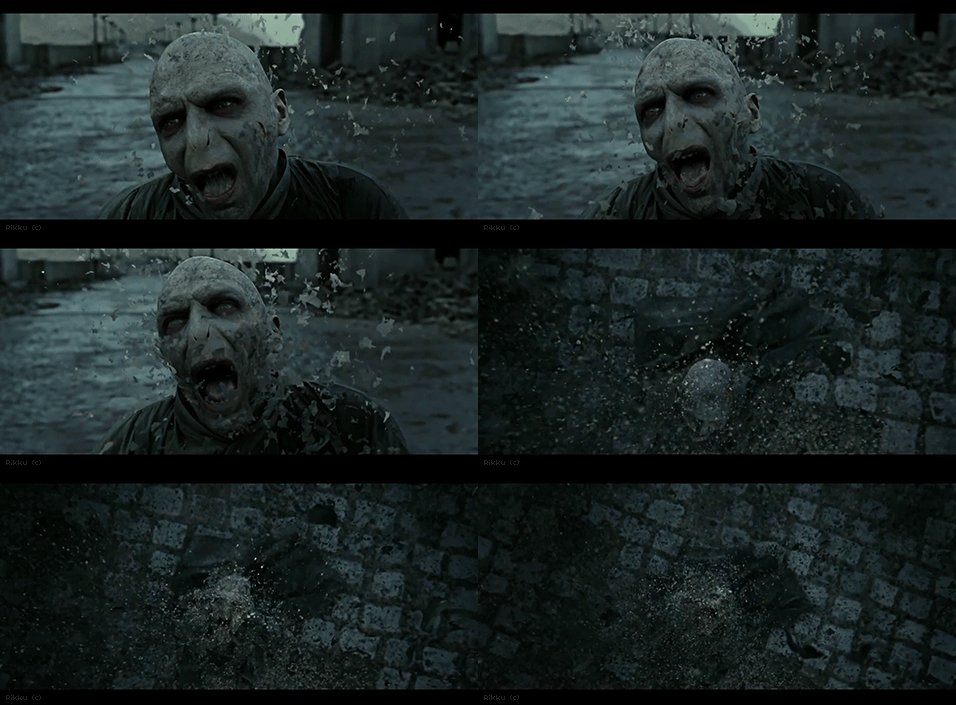
And while I try not to wish bad things upon people I disagree with, I really hope that Lady Voldemort’s writing career goes like the GIF below from now on.

Thanks for reading, Followers of Fear. Hopefully this is the last time I ever have to mention Cockygate or Lady Voldemort ever again (though if I have to, I will). In the meantime, I wish you a good weekend and warn you to expect more from me this weekend.

Until then, pleasant nightmares!

*I mean, imagine if instead of proper titles like “Harry Potter” or “Star Wars” getting trademarks, someone could trademark a word like “the.” Just “the” in any title, and it holds water. You run into all sorts of trouble from the get-go!

For my earlier posts on Cockygate from May 5th and May 28, click here and here, respectively.

I’m just going to skip over all the preliminary stuff and just get to the good news: the Romance Writers Association and the Authors Guild won a court ruling on Friday against Faleena Hopkins, the notorious romance author who put a trademark on the word “cocky” and then sent letters to authors who had books with “cocky” in their titles, threatening legal action if they didn’t take their books off Amazon or change their books’ titles.

Now, if you read my post from last week, you may remember that Hopkins’s lawyer had sent Kevin Kneupper, the novelist and retired lawyer who’s leading the fight against Hopkins, along with author Tara Crescent and publicist Jennifer Watson, a letter with intention to sue them, as well as filing a Temporary Restraining Order (TRO) against the Petition of Cancellation for the trademark. Since then, it’s also come out that Hopkins was asking for another TRO against the publication of a collection of stories called Cocktales: The Cocky Collective, which was named as an obvious protest against her trademark (Jennifer Watson was incorrectly named by Hopkins as the publisher of the book in the papers filed for the TRO).

On Friday June 1st, several things happened:

  1. Kneupper was dismissed as a party to the lawsuit Hopkins’ lawyer filed, meaning he’s free to continue fighting against the trademark.
  2. Hopkins did not get her restraining order, so the petition and all the other legal battles against her can continue.
  3. Finally and most importantly, for the moment books with the word “cocky” in the title can be published, including the Cocktales anthology.

In other words, Hopkins lost, and she lost big. And while there’s another court date in September, and presumably this is when the decision on her trademark will be decided once and for all, it’s still not looking very good for Hopkins. As stated in the article the Authors Guild put on their website:

In ruling against the author Faleena Hopkins, who claimed exclusive rights to “cocky” for romance titles, Judge Alvin Hellerstein of the Southern District of New York, stated that he did not believe that Hopkins was likely to succeed on the merits.

In other words, the judge says that Hopkins’s trademark is on pretty weak legs.

Now, there’s still a lot of work to do. For one thing, while people can still publish their books with the word “cocky” in the title, the final decision won’t be made till September at the earliest. That gives Hopkins, her lawyers, and her supporters (yeah, there are some out there) to come up with legal strategies for the trial and for any potential appeals, both from her side and the other side. And unfortunately, there are a number of copycats out there trying to get trademarks on common words used in titles. It’s a hot mess.

But this is a bright spot in the ongoing saga of #Cockygate. I’ve heard from many authors who have expressed fear over the outcome of this controversy, and what it could mean for them if they couldn’t write because they could incur legal repercussions for using an everyday word in their story’s title. Hopkins’s defeat on Friday gives us all a little bit of hope that we can continue to not only write our stories, but give them almost any title imaginable and not have to worry about getting sued for it.

So with the trial not till September, what can we do now as authors? Well, we can continue to show our support for Kneupper and the legal team fighting Hopkins, as well as the RWA and all of the authors who’ve been affected by Cockygate (remember, if you’ve received a letter from Hopkins, contact carol.ritter@rwa.org for assistance and guidance). This can be something as casual as sympathetic messages online, or buying, reading, and reviewing the books of those involved/affected (a single sale and review can do an author a ton of good, believe me), or even donating your time and skills to the legal battle.*

You can also spread the word on Cockygate and any developments in the scandal. The more people who know what Hopkins is doing, the more we can rally against her or anyone else trying to copy her. The louder our voices, the stronger we are, and the better positioned we are to affect positive change.

And finally, if you’re a writer, continue writing. Don’t let fear get in the way of telling the stories you were born to tell. Like the people behind Cocktales, when we decide to put something out in defiance of bullies, we make a statement that we’re not going to take this sitting down.

That’s all for now, everyone. If there are any other significant developments, I’ll post about them. Until next time, pleasant nightmares.

UPDATE 6/3/18 @ 7:18 PM EST: Erica Unsophisticated Blood Thirsty Wolf Fisher (@monet5280) informed me over Twitter that both Ms. Crescent and Ms. Watson’s lawyers are working on a motion to dismiss, which will be due in on June 22nd. In addition, Ms. Hopkins has to respond to the Petition of Cancellation from Mr. Kneupper no later than June 23rd. So it looks like things will be heating up longer before it starts to get cold again. Here’s hoping the end of June brings more good news like what we saw on Friday.

*Just be careful before you donate to any legal fund for those affected or claiming to be for any legal teams against Hopkins. There are a ton of people out there who have no qualms against taking advantage of those suffering in order to make an easy buck.

I wasn’t planning on writing another post about this subject, but I got so many updates about the subject, I felt I should chime in. And I would’ve published this post earlier, but I had a family thing to attend, so that took up a bit of time. Well, no time like the present. Let’s talk Cockygate.

Now, for those of you who don’t know, or don’t have time to read my last post on the subject, let me give a bit of background: Faleena Hopkins is a romance author who writes a series of books called the Cocky Brothers series (though apparently it’s gone by several names in the past). Recently she applied for a trademark for the word “cocky,” with somehow got approved by the Patent & Trademark Office. Technically speaking, this only allows her to have control of the word using a particular kind of font on her book covers, but she’s taken this to extreme levels, and has sent cease and desist letters to authors who use “cocky” in the titles of their books, telling them to either change the names of their books, take them off Amazon, or face legal action. The authors targeted are mainly self-published writers who can’t afford a legal battle, and changing a book’s title is hellishly hard (imagine the insanity that might come from trying to change the name of the Harry Potter books, for instance). This puts them in a really difficult position.

As you might expect, when word got out about this, things escalated quickly: authors quickly called out Hopkins on this move, calling it extortion and bullying; the hashtags #cockygate and #ByeFaleena (ha! that’s still funny) started trending on Twitter; the Romance Writers Association asked anyone affected by Hopkins to send proof to them and started consulting with an IP lawyer; and Hopkins, who apparently once said that anyone who uses stock photos after she uses them is copying her (that still boggles my mind), posted a video online trying to defend herself and instead dug herself deeper into a hole.

Among other things. Yeah, this is one screwed up situation. And this has not only people angry at Hopkins, but afraid of the future: if you can trademark any word in a title, it’s possible no one will want to publish stories because they’re afraid they could get sued by a trademark owner for using a common word.

However, people have been fighting this, and keeping the story alive. And as time has gone on, there have been further developments in this case. Here are just a few:

  • A novelist and retired lawyer named Kevin Kneupper has come together with a bunch of other authors/lawyers to try to get the Patent & Trademark office to toss out Hopkins’ trademark using a petition for cancellation, which I applaud them for doing and hope they are successful.
  • The creator of the font Hopkins uses for her books came out and stated that anyone who uses his fonts isn’t allowed to apply for trademarks using his font. So, Hopkins is telling people they’re infringing on her trademark while at the same time breaking the rules of usage for the font she uses. Someone needs to read the fine print before telling someone else to do so.
  • Amazon has stated they won’t kick books off its website that have been targeted by Hopkins while they wait to see how this whole thing unfolds.
  • A company called Rebellion Games tried to get a trademark on the word “Rebellion,” (just the word, as far as I can tell), and Mr. Kneupper apparently convinced them to reconsider (and suddenly I want to interview him for my blog and/or name a character in my next novel after him).
  • Hopkins uploaded a video that’s since been taken down (but this is the Internet, so nothing ever goes away), where she said people were calling her and her fans stupid, and then said that meant they were calling her and her fans autistic. Um, say what? As far as I can find, no one brought up autism being mistaken for stupidity before you did. And as someone who’s on the spectrum, would you kindly leave my community out of this? IT HAS ABSOLUTELY NOTHING TO DO WITH WHAT YOU’VE BEEN DOING!!!
  • In the same video, Hopkins also said someone had insinuated that she was part of the KKK (proof please?), and said she would never be a Klansman, as she’s descended from a slave. Again, what does that have to do with you trying to trademark a word? And from what I’ve been hearing, some of the authors that have been targeted by the cease and desist letters are writers of color. And you’re not immune from criticism just because one of your ancestors was a slave. Heck, some of your critics may also be descendants of slaves.
  • Hopkins’s books have apparently slid from the bestseller lists. Apparently there are consequences to doing something like this. Who knew?
  • And most recently, Hopkins’ lawyer has sent Kneupper, along with fellow authors/lawyers Jennifer Watson and Tara Crescent, a letter stating that he’s going to be filing a lawsuit against them and seeking a Temporary Restraining Order against their Petition of Cancellation.

Now, this last one happened on Friday apparently, so with a three-day weekend, I have no idea what might develop before Tuesday, if anything. The legal process for this sort of thing can be frustratingly slow. However, this latest development just goes to show just how far Hopkins will go to try to keep her trademark and the power she feels this has given her. She’s determined to make herself seem like an innovative businesswoman who’s being victimized by a mean gang of authors trying to protect her brand.

Well, let her. She may have some supporters (some, but not many), but the longer this drags on and the more she tries to make herself seem like the victim, the more we’ll see her for the bully she is. And with the movement against what she’s doing growing and gaining allies every day, even if God forbid she does succeed in getting her copyright, she’ll just find herself isolated and hated. And in the end, that’s a victory no one wants.

I would like to applaud everyone who’s come forward about Hopkins targeting them. Your bravery is a true testament to your resiliency and spirit. Remember, if you’ve been targeted, email carol.ritter@rwa.org and share your story. Together, we can protect your hard work from what’s happening.

I’d also like to applaud all the other authors and readers out there who have said they won’t stand for this chicanery, and are fighting it every day, on and offline. And I’d like to give an especially big hand to Kevin Kneupper, Jennifer Watson, Tara Crescent, and the other writers/legal experts lending their talents to this case. Words cannot express what you’re doing to defend authors and fiction writing in general. Thank you for all you’ve been doing.

When further updates come along, I’ll likely put out another post. Until then, keep your eyes peeled for more chicanery, and remember, we do have the power to fight back against this. We just have to be brave enough to use it.

I’m sure that a lot of people are going to be confused by that title, and probably find it funny. Unfortunately, this is a serious topic that requires some discussion, so I thought I’d take a couple minutes to spread the word on what’s been going on.

Recently, it’s come to light that a romance writer named Faleena Hopkins placed a trademark on the word “cocky” (as in…you know), and has allegedly been sending cease and desist letters to authors who use the word “cocky” in their book titles. Of which there are many, and according to the letters, this is a form of copyright infringement, and authors should change the names of their stories or face the consequences. From what’s been going around, most of the authors who have received these letters are not big enough to actually take on a legal battle with other authors, rather than any big names in the romance field.

This is some grade-A bull. You can’t just copyright a single word and tell people they can’t use it in their book titles. You can copyright a specific word or words using a specific font (like nobody can use the word “Potter” with the Harry Potter-title lightning bolt script or the words “Star” or “Wars” with the Star Wars script without incurring the wrath of JK Rowling or Lucasfilm’s representatives), which is normal business practice. However, you can’t just copyright a single word, no matter the font, font size, or context, and say anyone who uses it in a story’s title is committing plagiarism or copyright infringement. Which is why nobody can sue me for naming my novel Snake, or why when Rose comes out, nobody can sue me for naming it that way.

And you know who else agrees with me? Lots of other authors, apparently. When I saw this trending on Twitter, I got curious and found plenty of other writers who were willing to explain to me what was going on and point me to links which went further into detail about this issue, which has been dubbed Cockygate, and who have also made the hashtags #cockygate and #ByeFaleena (get it?) trending topics. Thanks to them, I was able to find this article from Pajiba, as well as this video from author Bianca Sommerland, one of the first to break the story open. And the consensus seems to be the same as my opinion of this situation: it’s grade-A bull, and kind of sounds like bullying or blackmail.

I mean, imagine if this was allowed to happen. We could copyright all sorts of words, and anyone using those words would owe me money. I mean, imagine if I trademarked the word “the.” So many people would owe me money, it would be ridiculous! I’d have good friends and big names who would be liable to legal action for a commonly-used word. It’s ridiculous.

And apparently the Romance Writers’ Association is getting involved now, because they’ve been consulting with an IP lawyer and are asking anyone who’s received one of these cease and desist letters to send information and screenshots to Carol Ritter, their Deputy Executive Director (carol.ritter@rwa.org). That’s how seriously this is being taken.

Hopkins herself, who in the past has also claimed that anyone who uses stock photos (so everybody, basically) after she uses them is copying her (say what?), has taken to social media to defend herself. She hasn’t denied that she’s trademarked “cocky,” but has said that she’s done it because some of her readers have downloaded ebooks with the word “cocky” in the title thinking it’s related to her Cocky Brothers series, only to find out it’s someone else’s book. She’s also called those calling her out as “bullies.” First off, you can return downloaded ebooks and purchase the right one. And I’m sure the majority of your readers are generally intelligent people. They can figure that out for themselves. And second, if you really are doing something shady, then the people who object to it aren’t bullies. They’re legitimately upset.

In a way, this reminds me of Lani Sarem, the author who tried to game the New York Times bestseller list and fell hard (you can read my articles on Self-Published Authors Helping Other Authors about that little incident by clicking here and here). She too engaged in something that rang of dishonesty in order to ensure the success of her work. People online found out and started investigating and spreading the word, leading to her book being removed from the NYT bestseller list, and her name becoming something of a joke. We’re seeing something similar here, only what Ms. Hopkins is allegedly doing is even worse, because it affects the most vulnerable authors out there by threatening them with legal action.

As this is still the early stages of this controversy, we’re bound to see further developments. And whatever happens, I hope a message is sent far and wide. We authors are usually a supportive bunch. But if we find out one of our own is doing something awful for the sake of money or fame, we will not take that sitting down. We will push back, and the offenders will not like that. After all, the pen is mightier than the sword, is it not?

Please contact Carol Ritter at carol.ritter@rwa.org if you or someone you know has received one of these cease and desist letters. You don’t have to live in fear of legal action. You can take the power back.

I’ve been reading a lot of articles about how Hollywood is coming to see big horror films are, and that they are looking into making more. It’s even been compared to the explosion of superhero films that came about after the Dark Knight trilogy and Iron Man showed how popular and profitable superhero films could be. Since I am a horror fan in addition to a horror writer, I thought I’d weigh in on the subject.

First off, this explosion in horror is not exactly out of the blue. Studios have been making horror films since the early days of film, and they keep making them every year. There’s obviously always been an interest and a profit to be made in horror. It’s just lately we’ve had a slew of horror films that have shown studios and audiences that horror can be extremely profitable, mainstream, and even deeply thematic. We actually first started seeing this trend years ago with films like the Paranormal Activity series, which kicked off a huge fad of found-footage horror films, and with Blumhouse Productions, which proved you can make horror films cheaply and still have critical and box office success. This is especially so with their Conjuring film series, which in itself is a cinematic universe.

But late 2016 and 2017 brought on a slew of horror films that really brought these points home. Split, with its surprise ending technically making it a superhero film, and Get Out, with its commentary on race on par with some Oscar-nominated films, brought horror into the mainstream in new ways. Later in 2017, Annabelle: Creation and It proved massively successful beyond anyone’s wildest dreams, and in 2018, films like A Quiet Place are raking in the dough and proving how powerful horror can be in creating terrifying atmospheres and emotional narratives.

And this is just scratching the surface: Stephen King stories are being optioned at record rates (where’s my adaptation of The Library Policeman?); some of Netflix’s biggest recent original films have been horror movies; and studios are developing more horror movies than ever before. It: Chapter Two starts filming this summer, and a new Halloween film is getting released this year. So while I may say yes, horror is kind of the new superhero film, it’s not because they suddenly became profitable. The potential has always been there, it just took some very specific successes with deeper cultural resonance to really bring that potential to the attention of studio heads.

Remember, don’t do what The Mummy did. Not if you want your horror movie to actually be successful, let alone spawn a franchise.

So yes, the horror genre may be the new superhero film, with every studio wanting its own successful films, film series, or film universe. But to steal a superhero film quote, “With great power comes great responsibility.” So while I have no pretensions that studio heads or directors or writers or whatever will see this post, let alone take its message to heart, I thought I’d offer some advice advice on getting into this horror boom. After all, as a horror fan and a creator, I want the horror boom to continue. The more good horror out there, the better. So here are some of my ideas for ways to make sure the boom doesn’t fizzle out:

  • Focus on telling a good scary story. This seems obvious, but some companies get so caught up in having a successful film or franchise, they forget to make a good horror film. Remember last year’s The Mummy? That film was convoluted, packed to the brim, and not at all scary. Not a good start for a film that was supposed to be the launching point for an entire cinematic horror universe. Which was the problem: Universal was so concerned with getting their franchise off the ground, they forgot what let Iron Man get the MCU off the ground: a good film in and of itself. If Iron Man had not led to the MCU, it still would’ve been an excellent superhero film. The Mummy should’ve been made that way, but unfortunately, it wasn’t, and now the Dark Universe is sunk.
    So remember kids, focus on a good story first, franchise a distant second. At least said franchise is up and running, of course.
  • Take chances on new/indie directors and stories. A lot of great horror films have come from the indie scene and/or from new/emerging directors. It Follows and Babadook were both very successful horror films from directors with less than three films under their belts, and the former was from the indie scene. Get Out was from Jordan Peele, who had never done a horror film before in his life.
    And all these stories are original plots. In an age where every other movie is a sequel, remake, or some variation on a familiar story or trend, adding something new to the horror canon has the ability to draw in a diverse audience, rather than just the smaller audience of devoted fans and some possible new ones.
    So take a few risks. It could lead to some big returns.
  • Adapt more than just Stephen King. Yeah, I’m happy for the many Stephen King adaptations being made (Library Policeman movie, please?). But there is such a thing as too much of a good thing. Even his Royal Scariness: I got sick of him back in high school because I read too much King and had to take a break for a few years. I still make sure to space out my dives into his stories nowadays. And if that could happen to me with his books, imagine what it could do to audiences with too many of his movies.
    The point is, there are a number of horror writers out there whose works should be adapted. Scott Thomas’s Kill Creek is one of the best novels I’ve read so far this year; Ania Ahlborn’s Within These Walls would make a great Blumhouse movie; Junji Ito has plenty of stories that could make great films; and as I noted in a previous post, HP Lovecraft is in the public domain and would make for great cinema. It’s something to consider.
    And before you ask, “What about your works, Rami?” I would be flattered if someone showed interest in adapting one of my stories. However, I don’t think that’s a possibility at this stage of my career, so I’m not going to get my hopes up. Still, I’d be flattered.

Horror is finally being given the attention it deserves from Hollywood, and I couldn’t be happier for it. However, it’s going to take a lot of work, and a lot of good stories, for horror to continue to thrive. I hope that filmmakers old and new are up to the task.

Just like the last time I posted about this subject, I’m pretty sure someone is reading that post title and is very, very confused.

So if you’re unaware, there are two styles of writing fiction that most writers can be divided into: pantsers and plotters. To put it simply, plotters like to plan out as much as they can before and during writing, while pantsers tend to plan out only a few things, and leave the rest up to whatever they come up with in the moment. Some people do a mix, but for the majority, they usually fall into one camp or the other.

I’m a big plotter, but for a while I’ve been experimenting with more seat-of-my-pants style writing. I wanted to see if that led to situations within stories that felt more natural, more “organic” than something that might feel forced for the sake of the plot. And my experiment yielded an interesting conclusion: except for some short stories (and not many, mind you), I can’t pants for the life of me. And believe me, I tried. I tried to let situations rise as organically as possible and go with the flow. However, what ended up happening more often than not is that I would just sit there in front of my computer, trying to figure out what comes next. Then I’d get distracted, and I’d end up watching a few videos or reading clickbait articles, and then I’d realize that it’s time to make tomorrow’s lunch and get ready for bed, and only a little work has been done, and that just sucks!

I didn’t fully realize how bad I was at pantsing until I was writing an email to my publisher. We were discussing changes I could make to Rose, and I mentioned that I’d really have to think about what changes I would make, as, and I quote, “I can’t pants to save my life.” It wasn’t until I really wrote out those words that it dawned on me how true they were. I can’t pants to save my life. Except for the rare short story, I need an order and an idea of where I’m going. Otherwise, I just can’t write, let alone make a compelling story.

So I’m back on mainly plotting out my stories. But I’m not sad about that. Like I said, I’m a plotter, so it feels good to be writing in a way I know that works for me. And I’m happy for another reason: this experiment in pantsing was a success in a different manner than what I expected. Thomas Edison once said that his thousand failed light bulbs weren’t actually failed light bulbs, but discoveries on how not to make a light bulb. Similarly, I discovered some more of my limitations when it comes to writing, and how I can improve in the future. Far from a complete and total failure.

And if you have a specific way you write, don’t feel pressured to change it because other writers write differently. We all have our areas and our methods that work for us. If you want to experiment and try something new, go ahead and try it. You never know what’ll happen. But never feel that you have to change how you do things. You could end up going from quality work to not getting anything done at all.

Have you tried both pantsing and plotting? How has it worked out for you?

That’s all for now, Followers of Fear. I know my posts have been a bit more spaced out than usual lately, but I’m hoping to have more to post about in the new month. Hopefully even a couple pieces of good news (fingers crossed). Until next time, pleasant nightmares!

I’m not sure if I’ve ever mentioned this, but Rose has a lot of flashback sequences and other dips into the past within the story, especially in the last two-thirds. I did this for a number of reasons: exploring the characters’s pasts; making them more complex; and just an opportunity to write some sequences to add to the horror element of the story. And there are a lot of horrifying things in those sequences, things that I can’t go into without revealing too many plot details, but they did make my beta readers gasp and stare at the page wide-eyed. They were horrifying moments in the story.

Not to mention, I think that flashbacks can be scary if done right. A good example of this is Gerald’s Game by Stephen King: while the protagonist’s current situation is scary enough, going into her past midway through the story and seeing how her father abused her as a kid was horrifying in its own right. Another good example would be the movie Oculus: that film flashes between the present and the past throughout its runtime, and it’s freaky no matter what year it is (see my Rewatch Review of that film).

Well, it looks like I didn’t do the flashbacks right for Rose. In the notes on the fourth draft from my publisher, they mentioned that all those flashbacks are just bad stuff happening to those characters, and while that stuff is horrifying, it’s not scary. I’ve had a lot of back and forth with them on this, and after a lot of thought, I can see where they’re coming from. After all, while in the real world “horrifying” can be a synonym for “scary,” especially in relation to current events, in fiction that’s not necessarily the case. Think about it this way: Harry Potter is horribly mistreated by his relatives, and what he goes through is horrifying. But if you ask any normal Potterhead what person or creature from the books they would be scared to face, the Dursleys wouldn’t rate very high on that list. The dementors, Voldemort and his Death Eaters, or the basilisk, sure. But the Dursleys? Considering most Potterheads are Muggle in biology and can’t perform magic, anyone who had to face them would probably be invited into Privet Drive and served tea and cookies in front of the TV!

So while showing how many terrible things happened in the characters’ pasts may be horrifying, it might not be scary. And considering how much experience my publisher has and how well-received their books are (have you checked out The Cronian Incident by Matthew Williams yet?), I’m taking this piece of feedback to heart.

I won’t lie, though, I’m a little disappointed, and I’ve been wondering where I went wrong. Or maybe to phrase it better, I’m wondering how I might have done the flashbacks better.

Well, in the case of Gerald’s Game, whose flashback is most similar to mine, they only do one big flashback sequence, not several. That way, it doesn’t become a repetitive cliche or trick. That, and its connection with the current events of the story: the protagonist’s abuse by her father is very much connected to her current predicament, on psychological and symbolic levels as well as literal levels. And with Oculus, the horror behind the story–a cursed/haunted mirror–is scary no matter when it happens. Spinning a tale of two siblings who experience the mirror both as children and adults, and then going back and forth between those two experiences, makes for some great psychological/supernatural horror.

And maybe that’s the thing: connection. In both those examples, the flashbacks, no matter how they’re staged, have very strong connections to what’s happening in the story’s present. Of the ones in Rose, while they do have connections to the characters’ pasts, only one of them has a direct correlation to the current events of the story. And that one’s told to us by the antagonist rather than shown in flashback. And that’s why the flashbacks in this story didn’t work as well as they could have.

So what’s next? Since so much of the novel is in flashback, I may have to do a whole lot more revising. Hell, I may even have to rewrite a good chunk of the novel. Which isn’t something I’m unfamiliar with: as many of you may recall, I had to go back and start over on the first draft back in college because the first attempt went in a direction that didn’t help the story.

Still, it’s a little annoying, and I haven’t figured out exactly what I’m going to do for these changes (though I have ideas). Hopefully, whatever I come up with, it’ll come out for the novel’s betterment, and bring it one step closer to publication.

Fingers crossed.

I’m far from perfect. And there are lots of areas I can be better (especially my impulse control when it comes to sweets). However, this post will be focused on the writing aspects I can improve upon.

There are a couple of reasons why I want to talk about that here. One is that for personal things I want to improve upon (damn you, sweet tooth! Damn you to hell!), I only talk about those sort of things here when it’s really important. Like if I’m really struggling with my choices in life, or if I want to talk about being on the spectrum. And at the moment, there’s nothing in my life I feel like talking about here at the moment. Second, this is a blog for a writer, so it makes sense that if I’m going to talk about improving stuff, it’ll be about improving my writing. And finally, while a lot of people I know in real life and even a few people online treat me as THE writing expert, especially when it comes to fiction writing, I’m far from an expert. If I were an expert, I’m pretty sure I’d have several bestsellers out by now, a few of them would have been made into movies already, and I’d be writing full-time in a nice three-bedroom, one-and-a-half bath house (I have goals that I aim for).

Point is, as a writer there are areas I’d like to improve in, so I thought I’d list some of those and ask for your feedback. Many of you who follow this blog are writers, and have much more experience than I do. Perhaps you’ve dealt with some of the issues I’ve dealt with, and have some tips on how to deal with them. Anything’s possible, right?

1. I’m addicted to adverbs and gerunds. Now if you don’t remember most of the fancy terms from grammar class, adverbs are words that end in “ly” (wildly, musically, horribly) and gerunds are words ending in “ing” (ending, writing, killing). And I overuse them in my writing (see? Did it right there). One of the biggest criticisms I got from Rose, truth be told, is that I overuse them. In fact, I almost used “actually” instead of “truth be told” in that last sentence. And in the one before this, I started writing “nearly” before I switched to “almost.” And in that last one, “I switched” started as “switching.” And before that–oh, you get the idea!

A couple of years ago, I wrote a post about how I had a similar problem with semicolons. I overused them, especially when they weren’t needed. Once I recognized the problem, I was able to correct it. But I have a feeling correcting these issues won’t come so naturally (see?). For one thing, while the semicolon issue was about fixing incorrect uses of punctuation, what I’m doing here isn’t technically wrong. These are speech patterns used everyday, you just don’t see them in a lot of fiction to the extent I use them. At least, not really good fiction. So one thing I’d like to do is know when to use adverbs and gerunds, and when not to use them.

2. Passive vs. active voice. I have a lot of trouble telling those two apart. Which is bad, because editors and publishers tend to prefer active voices in fiction, and I somehow always end up writing in passive voice. What’s the difference? Is there a video I need to watch or something that explains this? Help!

3. Writing snappier action. This is something I’ve taken steps to improve, but it’s still a work in progress. I tend to write these long sentences that illustrate a character taking a certain action. Example: “She stood, walked to the kitchen, and placed the glass in the dishwasher.” It’s a good sentence, but for fiction, this is better: “She put the glass in the dishwasher.” Boom! And if I’ve already established that the character is on the couch, it works even better. It shows the same amount of action with less words.

I’m trying to implement this sort of snappy action into my stories. Editors and publishers seem to like it, and when there are limits to how many words a submitted story can have, it’s helpful in reducing the word count. Still, it’s going to take some work. This, like the adverbs and gerunds and possibly the passive voice thing, are deeply ingrained habits.

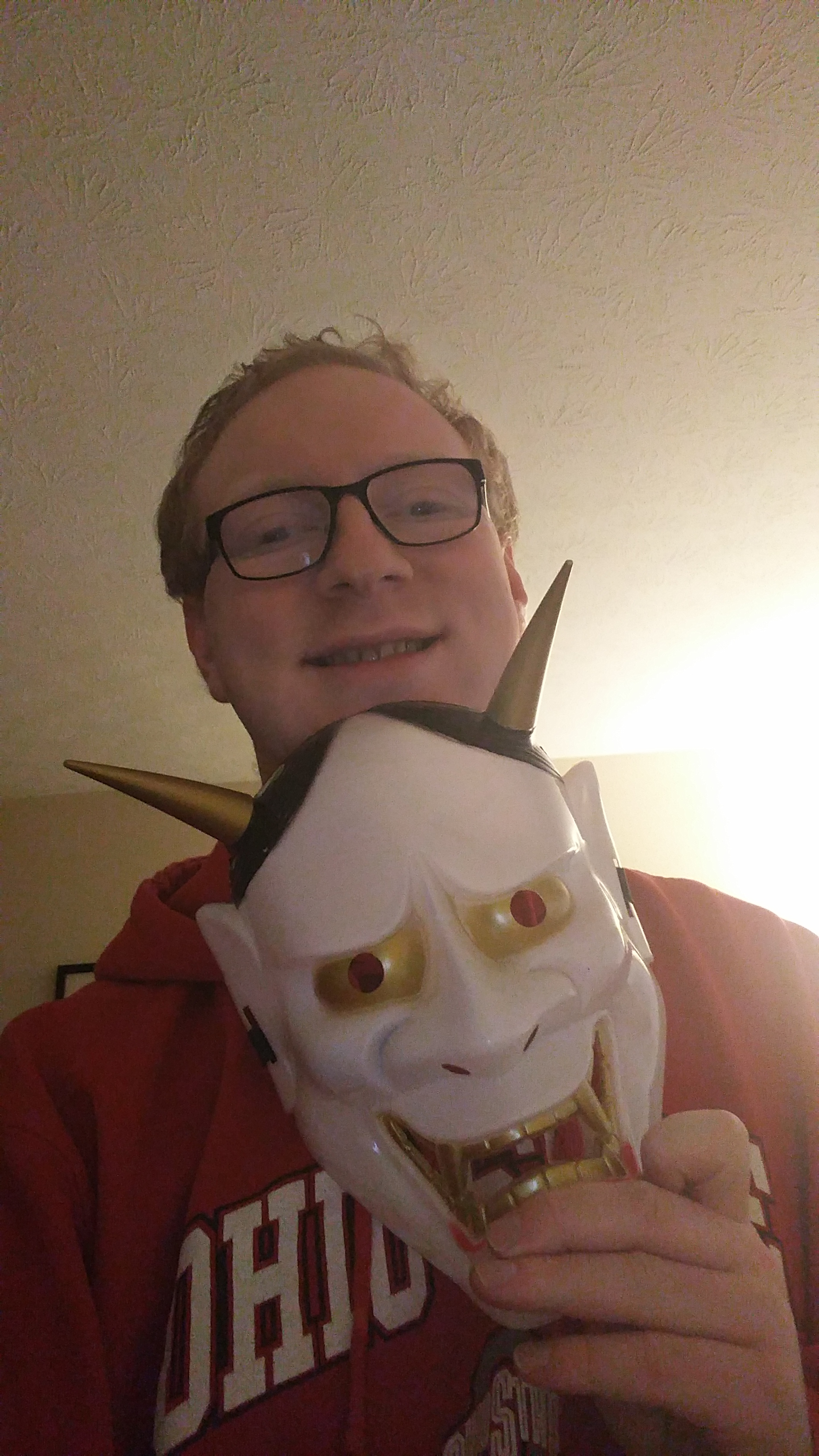
No reason to add this photo. I just want to show you my new author profile pic.

4. Short story writing. I’ve written novels or works meant to be novels for most of my life. That’s what I mostly read, so that’s what I mostly wrote. I’ve learned how to write short stories and read plenty of them since high school and college, but I’m still not as good at them as I am at novels. Which is sad, because I’ve had many, many ideas for short stories and novelettes over the years. And since I’ve spent most of my time on novels, I’ve written only a few short stories, and not many of those have been published.

What I want to do is write more short stories and novelettes, get better at writing them, and get a few of those published. Is it necessary, especially since I prefer novels? No, but a lot of authors I like do great short fiction, so I’d like to do great short fiction too. Good news is, I’ve been reading a lot of anthologies lately, and I should have a bit of time after I finish the fourth draft of Rose. That should give me time to practice.

5. Not listening to my anxieties. All writers deal with anxieties, especially with how their work will be received. Sometimes I let them have too much control of my mind, and I start freaking out Just yesterday, I got panicky over whether certain characters in Rose might be called tacky stereotypes. After a lot of discussion online with friends and colleagues, I don’t believe they are, but the worry ate at me for a while.

The important thing for me is just to be a bit more confident in myself, and the stories I write. And I should work on techniques to combat those anxieties when they try to tear at me. Because at the end of the day, I’ve still written some decent fiction. And I won’t let doubt or fear keep me from improving it and making it into possibly publishable fiction.


Well, those are the things I want to improve on with my writing. What are your suggestions on fixing those issues? Let me know in the comments below.

That’s all for now, my Followers of Fear. I’ve only six chapters of Rose left to edit, so I’ll hopefully get started on the next one tonight. Until next time, pleasant nightmares!