Posts Tagged ‘reflections’

So that lovely and occasionally terrifying thing known as the Internet has informed me that April is Autism Awareness Month, and as someone who is on the spectrum, I felt I should contribute something.

The only question is, what should I contribute? I haven’t had any experiences like when I was asked to give advice on how to help someone’s autistic relative; I haven’t been prompted to record a video or anything like the one below, detailing a specific issue involving disability (by the way, that video recently passed the one-year anniversary of when it was uploaded, and also passed five-hundred views soon afterwards. I find that pretty cool); I haven’t had any revelations about my relationship with my autism; and no one’s asked me point-blank if I’m autistic recently. What’s there to talk about? What can I say that not only needs to be said, but I feel strongly speaking my mind about?


Well, I guess one subject I can broach is how autism affects adults, especially in terms of job searching and job security.

A lot of people associate autism with children. When they associate it with adults, I think the popular image is low-functioning adults who are being taken care of by their parents or at facilities. And while there is a segment of the adult autistic population that do need that sort of care, the popular image ignores the segment of the population who don’t require full-time care from facilities or parents, those who can and seek to live independently. And they face their own unique challenges and issues.

Now, I”m just going off my own experience and the experiences of others who have or are related to people with ASD, but the fact that we’re either experiencing or hearing about this says something.

I’ve mentioned before how, between October 2015 and about March or April 2016, I was on the worst job search I’ve ever experienced. Every day I would send out resumes and applications, only to either not hear anything back or to be passed over after being interviewed. One reason this may have happened is because I was open to my potential employers about the fact that I have ASD, and that it sometimes made social situations awkward. I have no proof, but it’s possible that knowing my diagnosis may have scared them off. People have this association with people with disabilities in general that we’re unable to do anything. And even if we’re skilled at something (sciences, writing, mathematics, painting, music, whatever), our needs are too much for them to handle as employers.

The reality, I assure you, is much different. At work, part of my job is being a disability advocate, and I can attest that people with disabilities not only do things, they do them very well. Not only that, but employers who treat disabled employees well find that not only are these employees hard-working and loyal, but several times less likely to turn over than the general population. Not only that, but accommodations for their disability usually aren’t burdensome: a quiet or obstacle-free workspace, or flexible schedules, or leave for medical appointments. And when it does cost money for accommodations, it’s usually not expensive. Seriously, I help handle accommodations at work. I rarely see the cost get anywhere near five-hundred dollars.  My own accommodations cost the organization nothing: I just listen to my iPod or audio books while I work (I pay for any new music or audio books) and I have a chair designed to ease my back pain (we already had the chair to begin with, so it didn’t cost any money to give it to me).

But still, a lot of employers are wary of employing the disabled, especially folks with ASD. They have this idea of a Rain Man-type character, someone who may excel at one very special skill, but needs all sorts of help in every other area of life and can’t do anything but certain tasks. For many autistic adults, this simply isn’t the case. Each of us may present our diagnosis differently, but it doesn’t affect each and every one of us that badly, and we are suited for a variety of tasks.

I’m lucky that I was able to get a job in an office where everyone is kind and gets that I’m not always the savviest person socially, in an organization that emphasizes disability hiring, accommodation, and inclusion. But not many people like me are that lucky. They have trouble finding jobs because employers see their disabilities as a huge barrier. I’ve heard from friends who’ve had this experience, as well as from others. And not just with jobs: I’ve heard from people who have told me that they or their relatives had had trouble finding services that help them cope with their ASD once they reach adulthood or when they’re diagnosed in adulthood. There’s plenty of help for minors, but for adults, it can be a challenge.

So this Autism Awareness Month, I’m writing a post urging people not only to support autism awareness, research, and therapy, but also to rethink how we approach adults with autism (and disabilities in general). The majority of us aren’t helpless individuals. We’re hardworking and want to be part of society. You just have to give us the opportunity, whether that be funding for programs that offer counseling, education, and job training to autistic adults, or actually giving a job to someone with autism. Quite possibly, you’ll be amazed at what you receive in return.

Thank you for reading, and have a good month of April.
I’ve been thinking a lot about what’ll happen after Rose comes out. Specifically, what sort of stories I’ll work on once I’m done with Rose.

I know that’s a crazy thing to think about at this point. I’m still doing revisions on Rose for the publisher, and likely they’ll have me do more revisions before we get to publication, and then there’s the publication, and then a whole ton of marketing and other work just to make sure the book is read and sold and reviewed and whatnot. Thinking about future projects should be the last thing on my mind.

But of course, being “logical” has never been one of my strong suits, and dreaming about the future has been what’s helped me get to this point anyway. So why not wax on about what might happen after Rose?

Well, there are a number of short stories I’ve been thinking about working on. I very much want to edit Hannah, the ghost story I wrote back in January, and I want to write a few stories that have been circulating in my head for a while. I also want to eventually get back to the novelette I was working on that was giving me so many challenges, and see if I can get a bit further in that, if not finish it up entirely. It may end up becoming one of those stories where I revisit it every now and then to see if time has given me a clearer vision of how to improve and/or finish it (I’ve got a few of those). And I’d like a few months to spend on all of those, just to see what I can come up with, and if any of it is publishable.

And of course, I’ve been thinking about what sort of novel I’d like to write next, when I’m ready to write a novel. Probably, that won’t be immediately: Rose has challenged me in ways I’ve never been challenged by a story, and I want some time to refresh my mind before I make a commitment to a project that I could end up working on for years and years. But I have some ideas on what sort of novel I’d like to write next, when I am ready to make that sort of commitment.

For one thing, it won’t be a sequel to Rose. I could write one, and I have ideas I could develop into a sequel for Rose, but I don’t want to return to the world of Rose just yet. Especially when I can’t guarantee I can make the story better or on par with the original so soon after finishing the original.

For another, I’m not yet ready to return to the world of Reborn City. Yeah, I know there are a couple of big fans of that trilogy who want the final book, Full Circle, already (I know a few of you are probably out there), but I’m just not ready to get back to that yet.

And finally, I want to do something that’s different. Think of it like houses: I don’t want to try selling Castrum on a house that’s basically the same one they bought, just on a different block and with a different coat of paint. I want to sell them a house that’s just as good as the first one, but an entirely different design, while still retaining the Rami Ungar architecture (is this metaphor getting too weird/complicated, or does it still work?).

All these books are different from one another. I want to do the same with my books as well.

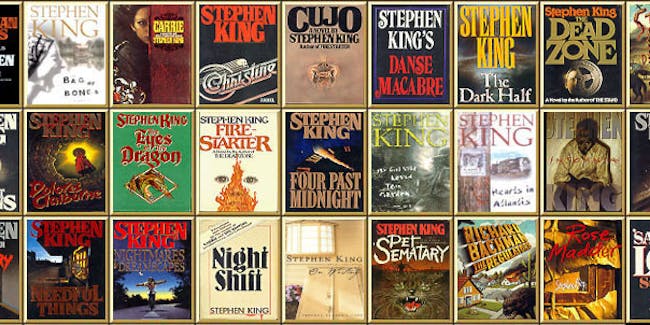
I mean, look at Stephen King: he followed Carrie (a psychic girl who gets revenge on her psychotic religious mother and the bullies at her high school) with Salem’s Lot (vampires invade a small Maine town, and a writer and his allies have to stop them), and then went on to write The Shining (a family that includes a psychic four-year-old becomes the winter caretakers at an isolated hotel haunted by something dark and evil) before creating The Stand (a super-disease causes most of Earth’s population to die off, leaving the survivors to engage in an apocalyptic war between the forces of good and evil). None of those are carbon copies of the other, so I want to do something very distinct from Rose.

And I have a few novels I can choose from. I have more ideas than I know what to do with, so I have plenty of options, but there are a few stories I can think of that would make great projects. There’s one in particular I’d like to work on when the time comes, but it’ll depend on a number of factors, including if I have to pitch something to the publisher (I’m not sure if that’s something I have to do, but it’s something I’ve thought about).

Still, there’s plenty of time to think about all that. I just know that when the time does come to think about all that, I’ll have plenty of ideas to work with and consider. Hopefully whatever I choose, it’ll make for some good reading.

In the meantime, I’m off to work on Rose for a little bit. Here’s hoping I can make some good progress before I have to hit the hay tonight. Until next time, my Followers of Fear, pleasant nightmares!

Last week I had a dream that started pleasantly and ended up being kind of nightmarish: it involved me and a friend of mine from high school navigating an area with lots of rivers and creeks on surfboards. We were looking for a mythical golden treasure trove that many had searched for and failed. We’d heard the treasure we were looking for was cursed, but we went searching for it anyway, because nothing bad has ever come from seeking and finding cursed objects. Somehow we found the treasure where so many others had failed, split it up between us, and go home. However, soon after that, weird stuff starts happening: things move on their own, the faces on the coins change shape, and that’s just the start of our problems. Well before it gets really bad though, my friend and I realize that we have to return the treasure to where we found it.

At some point, someone in the dream says I could write a story about what’s happened to us. To which I replied, “Someone already did. It’s called Pirates of the Caribbean.”

After we agree to take the treasure back, I woke up. It didn’t take me long to figure out the main message of the dream (besides the fact that I can point out when my situation resembles a famous film in my dreams). You see, the night before I’d taken a swipe at starting the fifth draft of Rose, based on my publisher Castrum’s comments and suggestions. I got about a page in, and I hit a metaphorical roadblock. I couldn’t figure out how to advance. So I ended up going to bed not sure how to move further in editing this novel while at the same time integrating my publisher’s suggestions (many of which I agree with and think could elevate the quality of the novel).

That dream was my subconscious giving me a rather creative presentation of my doubts and anxieties regarding the editing and publishing process for Rose: that signing with a publisher was a really bad idea, that there’s nothing I’ll be able to do to make this novel publishable, that even if I somehow get it released, it’ll suck and anybody who reads it will leave bad reviews. A dark side to achieving my dream and finding a publisher, represented expertly by cursed gold.*

And then on Saturday, I tried again. And it went extremely well. I got thirteen out of sixteen pages in that chapter done. Yesterday, I got the last three pages done, plus all eleven of the next chapter (and while taking in a double feature on the Blu-Ray Player in the afternoon). And then today, I got another chapter done within a couple of hours. That’s an average of a chapter a day! Take that, conscious and subconscious fears involving working with a publishing process.

Obviously, these are still early stages of the fifth draft, and I’m going to encounter moments where I’m not sure what to write or how to integrate a suggestion from the publisher. Luckily though, my publisher has been great about answering any questions I have (thank God they don’t see me as a pushy American) and offering feedback to my ideas on how to integrate their suggestions. And with these last three chapters, I’ve been able to move forward mostly on my own. And with time, I’m sure I can get through the rest without trouble, and well before May 16th. I just have to keep being creative and persevere.

Obviously, doubts about what I’m doing and where I’m going will plague me throughout my writing career from here on out. I’ve passed a new turning point in my career, and it’s a whole new playing field from here on out. But the next time I feel those worries start to get to me, I’ll remember the dream about the cursed gold, and the productive weekend that followed. And I’ll just keep editing through my doubts.

And while I still have your attention, I’d like to give a shout out to my good friend and fellow novelist at Castrum, Matt Williams. He just finished writing his novel The Jovian Incident, Book Two of the Formist series, and will hopefully have it out later this year. I can’t wait to read it, as I really enjoyed the first book, The Cronian Incident, which currently holds a 4.7 out of 5 on Amazon based on 12 reviews. If you would like to read some hard-boiled detective fiction in a futuristic universe, this series may be the one you’re looking for. Check it out and leave Matt a review while you’re at it.

Until next time, my Followers of Fear, pleasant nightmares (hopefully none that resemble popular contemporary movies, though).

*Still not sure why I was using a surfboard to navigate rivers and creeks (obviously a reference to the various paths we authors take to finding a publisher), as well as why that particular friend was with me (I love the guy and it always seems like no time has passed at all when we see each other, but he’s not a fiction writer, so I can’t think of why he would be in the dream).

I started this series of rewatching movies I previously disliked with an Asian horror film, and it seems I’m ending it with an Asian horror film, albeit from a different country. I swear, that wasn’t intentional.

But before I get into the review, I want to thank you all for keeping up with this series and making it a success. Watching films I’ve hated has been no easy task. It’s time-consuming and can be almost physically painful to watch some of these duds. If it weren’t for the constant reads, likes, and comments you guys gave me, I would’ve probably stopped after film number 3 or 4. So thank you for being there and enjoying these rewatch reviews. I hope you got something from them (particularly ideas about which films to enjoy and which to avoid). I certainly did (some of which my doctor can’t find a diagnosis for).

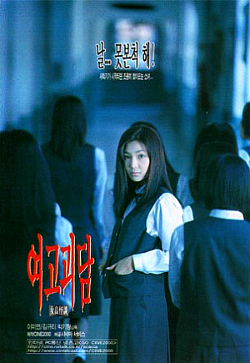
So onto the final Rewatch Review, the 1998 landmark South Korean horror film, Whispering Corridors.

WHAT IT’S ABOUT: The film follows Ji-oh, a strong-willed but slightly superstitious artist at an all-girls high school and Eun-young, a young teacher who was once a student at the school. They become aware that there may be a ghost at the school targeting teachers. As Ji-oh tries to figure out if perhaps she’s connected to the deaths, Eun-young knows she has a connection to the deaths, and must try to stop them before they get any worse. Both women will find out, they both have a connection to the deaths, and to the ghosts causing them.

WHY I DIDN’T LIKE IT: I was watching a lot of Asian horror films when I saw this one, and I thought this one didn’t compare well to the others I’d seen at the time. Just not scary enough, and too much focus on daily life instead of spooky, scary spirits.

WHY I REWATCHED IT: I found out this was one of the first horror films made in South Korea after the end of the dictatorship, and that it came with a lot of commentary on that time and on the South Korean school system, which made me see it in a whole new light. It also started a successful series of horror films set at all-girls schools, one of which involves a ballet school (and you know I’m a sucker for ballet) and was influential on Korean horror and Korean cinema as a whole. And finally, I needed a tenth movie to round out the series. Hence, Whispering Corridors.

THOUGHTS: Okay, it’s not as intense as other horror films I’ve seen, but it is a decent film.

For one thing, the story does set up a great mystery: it’s established early in the film that the ghost is masquerading as a student, and does a good job of making you guess who the ghost is. And while the body count in this film is small, they’re shot well and at times executed (pun intended) very creatively. All this contributes to create a unique, fairly creepy atmosphere.

There’s also the non-supernatural horror in the film: the school system itself. As I said above, the film features heavy commentary on the South Korean educational system, in this case the darker sides coalesced into one school. A number of the teachers make the school into an uncomfortable place to be. They’re often verbally abusive, set the students against one another and, in the case of one teacher, physically abuse and sexually harass students! I mean, my God! And all on top of a rigorous education philosophy designed to emphasize academic excellence to the point of crowding out everything else. To say the least, it’s horrifying.

That being said, the film does have its problems. The pacing can be very slow, with lots of moments involving people just talking rather than anything supernatural and/or exciting. I know some horror stories are slow-burns, but I don’t think this one should be one of them. Also, the ending is a little sappy, with a special effect that I’ve seen done better in other films.

But that’s the extent of the problems I’ve found. And considering other films with more problems that I’ve seen, I’ll take that.

JUDGMENT: I’m glad I made this film part of this series. On a scale of 1 to 5, I’m giving Whispering Corridors a 3.7 out of 5. Not the scariest movie I’ve ever seen, but I recommend seeing it. In a good way, it’s like Texas Chainsaw Massacre: while it may not be that terrifying, you should see it for the impact it has. And I guarantee that if you do see it, you won’t be as disappointed as you might be with TCM.

Just be aware that this is an extremely difficult film to find. Not kidding, I had to jump through a few hoops to find this film (hopefully the sequels will be easier to find). And you’ll likely have to go through a few too to get this one. Just warning you.


And that brings an end to the Rewatch Review series, for now anyway. We had laughs, we had tears, we had screams of terror or boredom. And who knows? I may do this again someday, if I can find enough films to rewatch and the will to go through it again. But right now, I think I’ll try getting through my Netflix queue.

I have not been blogging much in the last week or so, though I’ve read just about every blog post that shows up in my inbox. This is partly because I haven’t had anything I’ve felt passionate enough to blog about and because of time constraints, but it’s mostly because of the story I’ve been working on lately. You see, this story is challenging me as a writer, and the challenge has me engrossed, more so than a test engrosses Hermione Granger around exam time (oh Harry Potter, you always give me something when I ask). It’s so engrossing, that it’s taking up all my creative energies, leaving me unable to blog or even come up with new ideas for stories (though I already have more ideas than I know what to do with, so that’s not a huge problem).

Some of you may remember that I started working on a story I thought might become a novelette or novella in between drafts of Rose back in October or November. After finishing the short story Do-Over the other day, I started working on this story again, and as I said, it’s been challenging. On a number of levels, actually: for one thing, there’s an anthology I’ve heard about that’s looking for stories of a certain word length, so I’m trying to write this story to keep it within the anthology’s word limits. Yeah, I know I should let the story be whatever length it’s meant to be, but after expanding Rose to twice its word length last year because it was suggested I do just that, I feel like I can aim for a certain word count and still get a good story out of it.

Another reason it’s challenging is because of the narrator. Like Rose, I’m telling this story through the eyes of a first-person narrator, which means I’m reliant on her as a narrator to tell the story and to create a good horror ambiance. But at the same time, she’s got a history, a personality, and observations that she’s putting into her story. It’s less like I’m writing the story and I’m channeling my narrator as she’s telling the story, though I do have the power to go in and make changes as needed. And creating that horror ambiance while balancing my narrator’s voice and what she feels is necessary to put into her story, such as her interactions with her husband, isn’t that easy.

Did I mention that this story also takes place over thirty years before I was born, in a state I’ve only visited once? Well, it does, so in addition to being a horror story, it’s also historical fiction, and I’m working hard to recreate an age and place I’ve never experienced, with all the fashions, technology, and attitudes in place. It’s a lot of work, to say the least.

And on top of that, you have all the normal challenges of storytelling: making a story interesting, pacing, showing vs. telling, dialogue, word choice, et cetera, et cetera. I’ve got my work cut out for me.

But honestly, I think it’s all worth it. Because in my experience, if a novel challenges the writer, it’s going to be a better story in the end. Look at Rose: that novel challenged me every time I worked on it. The first draft alone, I had to go back to the very beginning and start over again because I had to totally reroute the path the story was taking. During the third draft, I added forty-thousand words, a whole new plot line, and even a character or two just to make the story not only longer, but better. And in the end, I created one hell of a story that I feel has a great chance of publication. Hopefully with this story I can get a similar outcome.

Stories can be challenging to write sometimes. It may be difficult to get the words on the page, but in the end, with a lot of work, I think it can lead to a really compelling story. And I’m looking forward to seeing if, after a lot of blood, sweat and tears, I can wrangle out a good story here.

You know, you often get great horror films. You get great science-horror films. And every now and then, you get a great horror film that makes you think, like Get Out or As Above, So Below. But I’ve never seen a science-horror film that’s not only good, but made you want to speculate so much about its deeper meanings and the questions it raises.

Based on the novel by Jeff VanderMeer,* Annihilation focuses on Natalie Portman as a biologist who goes on an expedition with four other women into “The Shimmer,” a place where everything is mutating and changing and no previous expedition has come back alive, after her husband returns from there gravely ill and seriously changed. Once inside, they will be tested in ways they cannot even imagine, and discover something horrifying.

This was an absolutely amazing movie. For one thing, the main cast (which is all women but not treated like a huge deal at all by the film, which I love) are all absolutely amazing. They really make you believe they are these characters, even if they aren’t given that much development. Gina Rodriguez, who plays Anya Thorensen, was especially great, and seeing her transformation through the movie is worth the ticket price alone.

Visually, this film is a feast. There’s so much to look at and take in, but it never really feels overwhelming. Sometimes the imagery is beautiful, sometimes it is baffling, and sometimes it’s creepy, but you’re never going to look away because you want to take it all in. And as for atmosphere, this film does a really good job of just building up an air of strangeness. So much of what’s in the Shimmer is unreal and surreal. It’s unknown to everyone, and the characters have to guess most of the time as to the meaning of things. And that’s what they’re doing: guessing. Very little is confirmed, and so much is unknown. So you kind of feel their fear and paranoia as they start to wonder what is real, what is happening, how it could be happening.

But what I love most about this film is how intelligent it is, and how it makes you wonder. As I said, very little is confirmed with this film. A lot of what we see, we the audience have to draw our own conclusions and decide what is happening, or what the deeper meaning is. Or if there is a deeper meaning. Or if what we’re seeing is actually real. It’s so strange, but at the same time so thought-provoking. And it’s been a while since a film made me wonder this much, made me want to examine it more.

If I’m going to ding the film on anything, it’s the CGI. Except for the film’s climax, the CGI doesn’t work well. It’s not awful, but I feel it would work better in a video game instead of in a live-action film. I would’ve preferred if they’d tried for a more animatronic approach, like with the Jurassic Park films.

On a scale of 1 to 5, I’m giving Annihilation a 4.5 out of 5.  A visual thrill-ride of the strange and otherworldly, fronted by a great cast. Definitely check it out and get lost in a world of the hallucinatory and engaging.

*By the way, I tried listening to this book on audio. But the narrator’s voice made me sleepy, so only so much of the novel actually made it into my brain. From what I remember though, the novel and movie differ on a lot. But in a good way.

I did not finish watching the Netflix show 13 Reasons Why, owing to how depressing it was (I like dark stuff, but that show just took the joy out of living!). But in recent weeks, one scene from that show, a surprisingly not-sad scene, has been coming back to me. In a flashback, the main character Clay is critiquing another kid’s essay, and notices the latter uses the word “unique” several times. When the other kid asks why that’s an issue, Clay says that if everything is unique, it means nothing is unique. And on the surface I agreed with that sentiment, but I didn’t realize how it applied to my own writing until almost a year later.

As many of you know, I recently finished a fourth draft of my college thesis Rose, and that I had the novel beta read by a couple of people, including my colleague and good friend Joleene Naylor. One of the things she pointed out was a problem throughout the novel, and which I’ve been trying to avoid in subsequent stories, is repeating words, especially adjectives. Apparently I’ve been using the word “unique” several times in a single chapter or paragraph, though “unique” wasn’t usually the word I used.

Actually, it tended to look something like this (not an actual line from the novel, but I think you’ll get the idea):

Rose stood in place, refusing to show her fear. Angrily, Paris placed the book on the table.

See how I used “place” twice? A better way to write this might have been:

Rose held her ground, refusing to show her fear. Angrily, Paris placed the book on the table.

See the difference? And I had to do this throughout the fourth draft, identifying where I repeated words in close proximity to one another, and then coming up with a better way to say it.

And I feel like this is a really common issue that writers have to deal with at some point, or possibly at several points, in their careers. Despite our reputations for loving really big words (verbose, callipygian, penultimate, etc), when it comes to fiction, we tend to just use everyday words. After all, we’re normally writing for everyday people, not for a small niche of scholars or people associated with a small religious movement. So if a simple word, like “unique” or “place,” fits the bill for telling the story, we’re likely going to use it. And we’ll use it again and again, if it’s the first word that comes to mind.

But as the above points show, you have to vary what words you use in order to tell a story and not distract the reader. And that’s something I’m trying to learn how to do as a writer. You know, along with learning how to write good short stories. And writing good stories in general. Again, I leave that up to the feedback of my readers. But this is getting a lot of emphasis as well. Because as great as a story is, the language it’s told through can determine how successful it may be. Imagine if Harry Potter had been published and it read like a sixth grader had written it. I guarantee it wouldn’t be the phenomenon it is today and I might not have been inspired to be a writer (unless JK Rowling was in the sixth grade when it was published. Then she’d be the Mozart of literature).

So while I may never actually need to know twelve different ways to say “unique,” hopefully in the future I can avoid making mistakes like the ones above. And if I do (because let’s face it, no author is perfect), I hope I have a good group of editors and beta readers around me to point out those mistakes.

And if you’re an author who makes this mistake, the only way I can think of to avoid it is to do what you’re already doing: think about the words you use. Just do it a bit harder when it comes to the individual words themselves. At least, that’s what I’ve been doing. And I think it’s been working.

That’s all for now, my Followers of Fear. Expect another post from me (or maybe even two) very soon. Until next time, pleasant nightmares.

Last year, I saw my first ballet, Romeo & Juliet, performed live on stage here in Columbus. Since then, I’ve gone to see a production of Swan Lake, watched a video online of Fall River Legend, based on the Lizzie Borden case (no need to guess why I looked up that one), and last night I went with my mother to see Giselle live on stage. And I have to say, after a year of watching/attending performances, I’m pretty much a committed ballet fan.

So if you’re keeping count at home, I’m a Jewish horror writer who’s openly bisexual, who enjoys nerdy things like superhero movies and anime/manga, reads plenty of scary stories, collects dolls and figurines, enjoys Buckeye football, has attended heavy metal concerts and listens to a lot of 80’s music, is on the autism spectrum and advocates for disabilities, knows how to cook and bake and enjoys it, and also enjoys going to the ballet. If there’s a stereotype I fit neatly into, I don’t know what it is!

But back to ballet. How did I get into it? Well besides possibly having a thing for tutus (but come on, who doesn’t?), I’m not sure when my interest in the medium first arose. I think it might’ve been from an episode of Sailor Moon I saw when I was a kid back where the episode revolved around a ballet teacher (Sailor Moon, how many ways do you continue to influence me?). Before that, I’d dismissed ballet as for girls, but after that episode, I started to wonder if there was something to like.

And then of course, the desire to check it out went dormant, because the only filters I had for experiencing ballet were through my sisters and their direct-to-video ballet movies and specials. But I think the desire awoke again in college. I’m not sure what the catalyst was, but by senior year, I wanted to go see a production from BalletMet, Columbus’s premiere ballet company, and ballerinas started appearing in some of my story ideas (one of these days I’ll hopefully write most of those ideas). However, I could only really afford to see a show after I was employed long enough that paying for tickets wouldn’t break my bank account (turns out they’re actually pretty affordable compared to other forms of live entertainment, but I didn’t know that until recently).

Thus last April I saw Romeo & Juliet, and absolutely loved it. The combination of music, acting, costume and choreography to tell a story was beautiful and mesmerizing, and at the end, actually a little heartbreaking. I even had an idea for a ballet a day or two after seeing the show (BalletMet, email me! We’ll make an original production people will love!). It’s no surprise I’ve made a point to see more shows since then. And after watching a few shows, I’ve noticed some interesting things about the medium:

  1. It’s not just an art form, it’s also a sport. Ballet requires feats of the body that are similar to what athletes go through. They train for several hours a day, several days a week; some dancers need to build their upper body strength, especially for lifting other dancers; some leaps and dance moves look right out of a gymnastics or track and field competition; and dancers get some of the same injuries professional sports players get. It’s definitely a lot more involved than just twirling around on a stage and looking pretty, as some people might think.
  2. The stories are often simple. Not to say they’re stupid or without depth, but the stories in ballet are often a lot easier to understand than something like Game of Thrones, which is based a lot in various histories, plots, intrigues, mythologies, etc and would be difficult to convey through dance alone. They’re more often based in love stories or fairy tales, things everyone can get without much difficulty. And that’s good, in my opinion. After all, despite being considered “cultured,” ballet is supposed to be an art form for the masses to enjoy (ironic, given that the form first arose as a way to instruct Italian noble children on how to act in court). It makes sense that the stories would be aimed at the masses, rather than at only a tiny segment.

    The Willis at the end of Giselle last night.

  3. Ballet is a lot like watching a silent film. Because ballet is entirely without dialogue (with a few exceptions, like the first act of Fall River Legend), facial and body language is almost as important as being able to dance. Joy, rage or anguish, it’s important to convey how the character feels in any situation. In that sense, dancers are very much like modern silent film actors (without the make-up that makes them look like serial killers, of course).
  4. Filler moments. This is what I call moments when ballet extends certain scenes with dance routines not necessarily connected to the plot. As I said, ballet is sans dialogue, which would be used to lengthen plays or musicals. So instead they have longer dance sequences that may not be connected to the plot. In Swan Lake, there’s a sequence where Odette and Siegfried are offstage and the other swan dancers do a dance for a few minutes before the protagonists arrive back on stage, for example. It doesn’t really have much to do with the actual conflict of the story, but it’s very well done and extends the ballet so we feel like we got our money’s worth.
    Not that this is just something done to extend the show’s runtime. At times, it makes sense to have these filler moments. For example, Giselle takes place during a fall harvest festival. During the production I saw last night, there were various dance sequences in the first act where only male dancers would dance, then female dancers, then children, then lovers, etc. And this feels like something that would happen during a village harvest festival, various dances that different groups of people would take part in. This makes the illusion of the show feel more real and not just a performance.

    The main characters of Giselle.

    And at other times, filler moments allow for some amazing creativity and storytelling: in Romeo & Juliet, when Juliet is deciding whether or not to take the potion to fake her death, they actually show her struggling with whether or not to go through with her choice, and then is confronted by the ghosts of Petruchio and Tybalt, as if to remind her of what she’ll be apart of if she doesn’t take the potion. That’s not something you’d see in the original stageplay, and is something that could only be born from a performance without dialogue. Similarly, during the second act of Giselle, when we meet the supernatural spirits the Willis, we get some interesting dance moves that intimate to the audience that these are ghosts that act as one on a mission. It is really amazing.

As you can tell, I’ve gotten a lot out of going to the ballet. And with more shows out there to find and watch, I hope I can see them and get even more from them. The creativity, blending of music, dance and storytelling, and the devotion and work put into productions is why ballet has endured for so many years, and why it will continue to endure and evolve over time. And if you get the chance, I highly encourage you to go take in a show. You never know what you may experience.

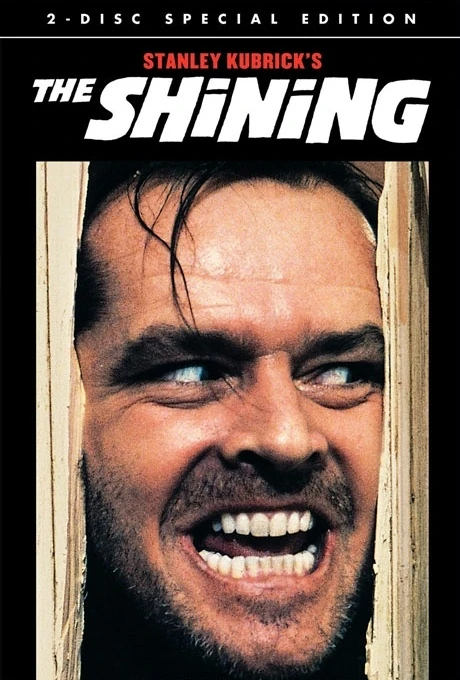
The Shining is considered one of the greatest horror films ever made, based on one Stephen King’s greatest novels. It’s still widely enjoyed today, has been very influential on a number of films and filmmakers, and has led to numerous theories about its deeper meanings, ranging anywhere from the Holocaust or Native American genocides to faking the moon landing. Yet when it was released, audiences and critics didn’t care for the film. Variety actually called it “a disappointment,” and Stephen King himself hates this film with a passion. Director Stanley Kubrick himself has garnered controversy for overworking and even abusing cast and crew during the production of this film.

I disliked this film immensely after I saw it in middle school, which was right after I read the novel. But I’ve since learned a lot about the film’s production and influence. And given the reasons I hated the film (see below), I’m wondering if my opinion needs a change. Let’s find out.

WHAT IT’S ABOUT: The Shining follows the Torrance family, who have come to the historic Overlook Hotel to be its winter caretakers. Isolated and cut off from the world, the Hotel’s supernatural side comes out to play, leading to a horrifying descent into madness and murder.

WHY I DIDN’T LIKE IT: It strayed too far from the source material. Not kidding, I hated the film simply because of how much changed from book to movie, to the point it drove out all my other reactions to the film (I can be a real purist sometimes). I actually preferred the 1997 television miniseries based on the movie because it was more faithful to the book,* and no other reason.

WHY I’M REWATCHING IT: Well, you hear so much about how great the film is, and you learn a bit about its production and legacy, and you realize how much a movie differs from its source material isn’t always a bad thing. Kind of warrants rewatching it.

THOUGHTS: That was a rather unsettling slow-burner, wasn’t it?

I’ll give the film this, it knows how to set up a creepy atmosphere with great visuals and sound. For one thing, the hotel is so distinct that it’s a character all onto itself. But it’s the way that Kubrick films the hotel and the characters in it that’s great. The whole film is shot with a wide-angle lens, which means we always see the characters alone in these vast spaces. On top of that, when close-ups are done, the wide-angle lens distorts the characters’ faces, giving the film a sense of surrealism and unreality. Add in the soundtrack, which sounds more like several clashing soundtracks playing at once. Heartbeats, eerie chanting, electronic music, symphonic pieces, all playing at once. It is creepy as hell.

I also like the reveals of scares. The camera always focus on the characters’ reactions to a scare before they show the scare. We see Wendy’s reaction to what Jack has been writing before we actually see it. We see Danny’s reaction to the little girls before the little girls are actually shown. That’s not something normally done in horror.

And finally, the film takes its time setting up the horror. It doesn’t rush in to showing us the gruesome haunting nature of the Overlook, but gives us time to see how isolated the characters are before introducing elements to show how their insanity is growing/the hotel is alive. It’s pretty effective.

However, I did have some issues with the movie. For one, the actors and the characters they portray. I didn’t care for either, really. Jack Nicholson is pretty good at playing a madman, but in my experience, that’s all his performances, and there’s not much transition between normal Jack Torrance to insane Jack Torrance. Shelley Duvall as Wendy…I don’t know what it was, but I just got annoyed with her every time she was on screen. And Danny Lloyd as Danny (ha!) was passable, but let’s face it, the character in the movie isn’t as fleshed out or as deep as he is in the movie. You could change the actor out, and it wouldn’t make that much difference, because Danny in the movie is very flat.

On top of that, I wasn’t ever that scared by the film. True, seeing Jack go after his wife and son with an ax is pretty threatening, but he doesn’t actually hurt them or get close to doing so. And while the film is good at keeping that creepy atmosphere going, it never truly escalates to the point where I feel myself shift from terror.

And like I said, the novel is phenomenal. Was it really that necessary to make so many changes from the source material? Also, what’s with that photo in the last shot? Was Jack reincarnated from a previous caretaker? Did he travel through time? I don’t get it! Explain movie! Explain!

FINAL JUDGMENT: I have a feeling this opinion is going to rile some people. On a scale of 1 to 5, I’m giving The Shining a 3.5. It’s creepy and visually creative, but the actors/characters aren’t that great, and the lack of terror, unexplained final shot, and important changes from the source material are issues that detract from my viewing.

Sad to say, it’s just not a film for me.


Well, at least I got that film out of the way. And with The Shining watched, I only have two films to go. Though I have a feeling this next one might be painful to watch…

Until next time, Followers of Fear, pleasant nightmares.

*And now I may have to get that miniseries again just to get a fresh opinion (Rewatch series 2?). And I’ll have to rewatch Room 237, the documentary on The Shining movie and people’s interpretations of it. And maybe reread the book? It’s been at least a decade, so I don’t remember it that well. And I should really get to reading Doctor Sleep, the sequel to The Shining. Especially since a movie version’s on the way.

I have a lot of work ahead of me.

I’ve mentioned it before, but short stories are often hard for me. And one aspect of writing those that I often have trouble with is the very first part of any short story. Openings. They give me grief.

With novels, I have a lot of room to maneuver around. After all, even a short novel is around sixty-thousand words (and mine are never that short). With all those words, I can take a lot of time and space just setting up the scenario of the story. Take my novel Rose, for example: if we count Chapter One as the opening, that’s sixteen pages and nearly five-thousand words just devoted to setting up the story. And I’m very used to writing this way. I like long, expansive stories. I grew up on a diet of Harry Potter, and in my teens delved into the novels of Anne Rice, Stephen King, and Dan Brown. No one could accuse those guys of being short.

But if I’m writing a short story, the highest word count to still count as a short story is ten-thousand. And if I want to get published in most magazines, the limit is usually around six-thousand. So while I’m used to opening a story with about five-thousand words, or half the length of the longest short story, I now have to try to contain my openings into a much shorter length.

The struggle is real.

Because of this need for brevity, one of the things I sometimes end up doing when I write a short story, at least in the beginning, is to use a lot of exposition. And in some stories, exposition is good. It helps fill in essential information. But in other cases, exposition is just…bad. Instead of actually presenting the story,  the author is just explaining things. Telling you stuff. It’d be like if instead of actually showing Harry Potter growing up, learning about his heritage, and going to Hogwarts, it’d be like JK Rowling wrote, “There was a boy named Harry Potter. One day he found out he was a wizard, his parents died saving him from an evil wizard, who disappeared and gave him a scar in a process, and then he went off to wizard school.”

I often worry that when I do exposition in short stories, it’s the latter kind. Which probably means it is the latter kind. That may be cynicism on my part, but when you’re still inexperienced at something, you’re prone to making mistakes. So perhaps I really am using exposition, and in all the wrong ways too.

Luckily, there are a few things I’m trying to remedy that. One is that I’m keeping in mind something important: I’m writing first drafts. And first drafts are always terrible. Even if they contain intriguing stories, they’re rife with issues that require lots of fixing. This is why we writers edit, multiple times if necessary, before we publish. Heck, Rose had to go through four drafts before I felt it was ready to be sent out to a publisher. And likely if a publisher does like it, they’ll probably have me do a fifth or even a sixth draft before they’re ready to publish.

So if I feel an opening needs work, I can edit it in the next draft, and remove any bad exposition or other problems with the opening I spot.

Hopefully I can improve this part of short stories.

And sometimes, I don’t even need to wait (and this is my second method, by the way). Sometimes a way to fix a short story’s opening comes to you just while you’re writing it. On Friday, I started a new short story that I think has potential. I think I got four hundred words in before I stopped, but then I was like, “Is this really the opening I want?” And as I thought about it, it wasn’t. But how to fix it? And yesterday at some point–I think it was right before I saw Winchester–a way to change the opening occurred to me.  I think this is the right way to open the story without going into exposition. So the next time I work on the story, I’m going go back and rewrite the opening, see if this produces better results. And if it doesn’t, there’s always something new to try. Or I can go back to my original opening. After all, it’s a first draft. I can make as many adjustments as needed.

And finally, I’m reading a lot more short stories than I’m used to. I learned how to write novels partly from reading novels, so reading short stories should help me get an idea on how to write them. I’ve already listened to two anthologies on audio book, and I just started reading the Stephen King collection Night Shift on Friday. So far, they’ve been very helpful, but I’ll need to read a lot more to get a better sense of short story writing.

And finally, I just need more practice. After all, you become a writer by writing in the first place, and continuing to write no matter what. With any luck, more practice with short stories will lead to better ones. Hopefully, anyway.

I’m still trying to be a better short story writer, and openings are still hard for me. But with practice and exposure to good ones, I can hopefully make some progress on that. And who knows? Maybe even produce some stories that a magazine will be proud to publish. Anything’s possible, right?


That’s all for now, my Followers of Fear. I’ve been looking at a screen for most of the day, so I’m going to take a break and read something. Until next time, pleasant nightmares!