Posts Tagged ‘reflections’

So I recently got back into reading The Complete Fiction of HP Lovecraft, after about a year’s gap since I last dove into his work on my Kindle. I actually got from 15% to 32%, which for a 1112-page book is pretty good, if you ask me.

Now, if you don’t know who HP Lovecraft is, he was kind of the King of American Horror between the reigns of Edgar Allen Poe and current monarch Stephen King, though he didn’t really achieve any sort of fame or influence until after his death. When I read him last year, I found his style old and outdated, and while some of his stories were actually pretty creepy, others were just strange or boring (see my thoughts in Thoughts on Lovecraft: Part 1).

So what were my thoughts one year later, having read several more stories? Well, he still prefers to write like a contemporary of Poe, one of his main influences in writing, which I find still rather irksome (I could parody it here, but I did that well enough in Part 1, so why try and repeat it?). I’m not that big a fan of that style, as I find it stuffy and somewhat boring, so occasionally that made for an annoyance to get through.

And Lovecraft is still a proud and unrepentant racist and xenophobe. Seriously, “The Horror at Red Hook” manages to drag so many non-white ethnicities, including Kurds and Yazidis, through the mud.

And he’s the only author I’ve ever met who’s used the word “eldritch,” meaning sinister or creepy (why didn’t he just use those words?).

But other than those problems, the tales I read in this section of the book were much better than the ones I read in the last one. Sure, the short story “Azathoth,” which was the first mention of the Elder God, is actually just a fragment of a novel Lovecraft never got around to finishing, which was annoying. Imagine, I get to the end of that short piece, and I was like, “Wait, that’s it?” Thank goodness for Wikipedia, which explained to me why I shouldn’t be so angry.

And there was that story, “Imprisoned with the Pharoahs,” which got a little dense with the language and made it annoying to get through, though as a fictional account of one of Harry Houdini’s adventures, it is pretty cool in retrospect.

But other than those two, these were very good stories. They were creepy, dark, and had some pretty nice twists and turns in them. I can see why a few of them have been adapted several times into movies or radio plays and the like. “Herbert West–Reanimator” is a fun tale about one man’s growing obsession with overcoming death and extending life (very Frankenstein), and how that obsession causes a domino fall of events that shows the readers the price of obsession. “The Lurking Fear” felt like a Stephen King novel from an earlier age, filled with elements of insanity, the supernatural, and insane tastes. And “Shunned House” needs to be made into a movie by Blumhouse Productions, because it is freaking scary! It’s a vampire novel that hearkens back to the days when vampires were barely human, and is probably the best of the stories by him I’ve read so far. Imagine a movie version, with James Wan in the director’s seat! No one would see it and think of vampires with Twilight or any of that other sentimental crap out there ever again.

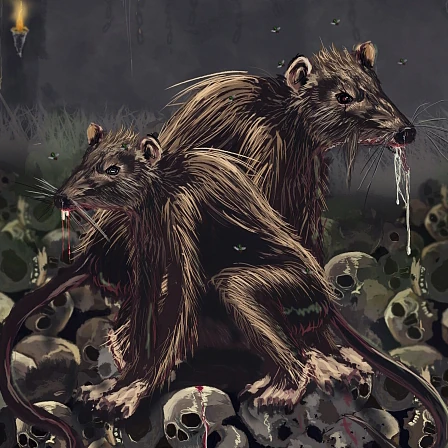
Eek! Rats in the walls! Now I can’t sleep.

Also, “The Rats in the Walls” is great if you want to scare anyone around a campfire. Just saying.

You know, the more I read of Lovecraft’s work, the more I see why he’s been so influential. Sure, his early stories could be rather pointless or silly, and never approached scary, with the exceptions of a few, like “The Tomb” and “The Temple.” But as time went on, as tends to happen, he got better. He figured out what worked and what didn’t. He learned how to get into our heads and make us tremble, make us wonder. He pushed the envelope for his day, introducing elements of cannibalism, satanism, gods that care nothing for us except maybe as snacks. And he did it so well.

And even now, after I’ve decided to take a break from him, I still find myself getting inspired by him. I’ve already gotten a few new novel and short story ideas from his stories, particularly “The Lurking Fear.” I have no idea when I’ll write them, but I think that when I do, they may even chill me.

So yeah, I think I’m definitely a Lovecraft fan now. Last year I wasn’t so much of a fan, but now I think I am. He’s definitely grown on me. And I think I may visit him again someday, perhaps even before the end of the year. Especially if he gives me so many good ideas. And if you like a good scary story and can handle some old-timey writing style, then I suggest you visit Mr. Lovecraft too.

Well, that’s all for now. I’ve got my own stories to work on, so I’m going to get on that. In the meantime, I hope you have a scarily good time, my Followers of Fear. Until next time!

Never shall I forget that night, the first night in camp, which has turned my life into one long night, seven times cursed and seven times sealed. Never shall I forget that smoke. Never shall I forget the little faces of the children, whose bodies I saw turned into wreaths of smoke beneath a silent blue sky. Never shall I forget those flames which consumed my faith forever. Never shall I forget the nocturnal silence which deprived me, for all eternity, of the desire to live. Never shall I forget those moments which murdered my God and my soul and turned my dreams to dust. Never shall I forget these things, even if I am condemned to live long as God himself. Never.

Elie Wiesel, Night

This is really hard for me to write. I actually cried a little when I found out. It feels like I lost someone dear to me. A few minutes ago, a friend of mine sent me a message over Facebook. It was a New York Times article, telling me that Elie Wiesel had died. He was 87.

My only response was “No.”

Now if you’re unfamiliar with who Elie Wiesel was, he was a Holocaust survivor who was liberated from Buchenwald concentration camp in 1945, one of three survivors of his family. Ten years later, he wrote a 900-page account of his experiences in the camps, which was later shortened to the 127-page memoir La Nuit, later translated into English as Night. As time went on, and Night gained attention, Wiesel became a well-known speaker on the Holocaust, as well as other subjects, including Israel, genocides across time and the world, and human rights. He also wrote over 56 more books, helped to found the United States Holocaust Memorial Museum (where, on opening day, he famously interrupted one of the speakers, I think President Carter, by saying that all the niceties were meaningless when there were horrors being perpetrated in Yugoslavia), received the Nobel Peace Prize in 1986, started the Elie Wiesel Foundation with his wife, Marion, to fight intolerance and prejudice, and taught at Boston University as the Andrew Mellon Professor of the Humanities.

I first met Mr. Wiesel as a boy. Not in person, though I would do that when I was a teenager. My father had a copy of Night, along with his other books Day and Dawn, in his office in the synagogue. My dad gave it to me, though I can’t remember why. Perhaps I’d been asking questions about the Holocaust, or maybe he just thought I’d get something out of it. Either way, I did. I read Night several times over the many years, stealing to my dad’s office after services on Saturdays to read the story of a fifteen year old boy who had experienced so much at such a young age.

I only realize this now, but Wiesel became, in my mind, one of the older kids whom I looked up to and hung out when I saw them. There were plenty of guys and girls like that when I was a kid, teens who tried and became real role models for the rambunctious young me. I always looked up to those kids, and Wiesel became one of them, esteemed more than any of the others.

I later got to meet this hero in my mind, though he was not the young man I always imagined in my head. I think I was twelve or thirteen at the time. My synagogue has a yearly event where some big speaker is invited to speak to the congregation. That year, we were excited to have a huge coup in our speaker.

I think I remember seeing him for the first time, and remembering how small and old he was. At my age, I was around the same height as him. It was quite the contrast from my mental image. But he was so kind. And even though my vocabulary wasn’t that big at that age, I knew that, the moment I shook his hand, I was shaking the hand of a giant. He was like the titular character of my dad’s favorite Yiddish short story, “Bontsha the Silent” (you can read a full PDF in English here), in which the main character finds out that if he only opened his mouth to complain about the world, he would’ve shook the heavens, only in this case, Wiesel made use of his power, and it resonated.

Sadly, I only remember a little bit from that evening. It was ten years ago, and you don’t tend to remember much from that age, even when it’s from great men. I do remember, quite clearly, that he started with a story about how a woman and her friends thought they recognized him on the street, only to conclude that it couldn’t possibly be him. I think you can tell a lot about a titan when they begin a speech with a humorous story.

And that’s what Elie Wiesel was. A titan. A giant. A being that was more than what “man” could ever constitute. He spoke louder than Bontscha ever felt the need to, and the world shook in response. It took notice. He made the world notice Bosnia, Darfur, all the horrors of the many genocides over the years, and then some. Through his foundation and his many books and speaking engagements, he educated the world, molded minds to be more cognizant of both the great evils and the great goods that human beings were capable of, and encouraged them to take action.

And that night, I got to hear him speak, I got to enjoy desserts with him and the rest of the VIPs at the event that night, and I even got a photo with him. When he left and I got the chance to say goodbye (we were both leaving at the same time), it was like using a huge force go by.

He wasn’t the friend I had in my mind. That was the only encounter I had with him outside of the books he wrote. But he was so much more to me and to so many more people out there. Perhaps one could make the argument that he was the greatest Jew of our modern times (sorry, Jon Stewart), and one of the greatest living people to boot. Across the world, people will hear the news and they will feel his passing. They will cry, like I did. They may even tear their clothes, a tradition in Judaism on the passing of someone important. And that’s what’s happened. Someone important has left this world. A great titan, in a form that spoke of gentleness and tolerance, has gone onto the next life, and we have all suffered a great loss because of it.

In the Jewish tradition, we often put a special suffix after the names of people who have died: z”l. It means zichrono liv’racha, which means “may their memory be a blessing.” The Holocaust was a horrible event, a memory that mankind would rather forget, but it produced one of the greatest people I’ve ever had the pleasure of meeting. And we shall remember him, and his memory shall be a blessing, encouraging us to be better in all circumstances. And I shall definitely try to live up to those lessons, even more in Wiesel’s death as I did in life.

Goodbye, Mr. Wiesel, z”l. We shall miss you so.

Baruch Dayan Ha-emet.

(Again, slight spoilers on this one, so be careful going own. You may learn something you were hoping to be surprised about)

Well, we’re back. I’m listing the five greatest villains I’ve seen throughout the past year. Will your favorite appear on the list? Who will win the number one spot? And will I use a real person or one of my own villains (no on both of those)? Let’s dive in!

Also, check out #10-6 if you haven’t already.

5. The Society (Red Rising trilogy)

The society pyramid

Big thanks to Kat Impossible for introducing me to this series and getting me hooked on it.

Now, if you’re not familiar with this trilogy, let me explain the premise: imagine about 700-1000 years in our future, mankind has evolved and divided itself into colors: Blue, Green, White, Pink, Red, Obsidian, etc. And on the very top are the god-kings, the Golds, who use the system they helped create to become rich and powerful.

But even if the Golds are the ones who benefit most from this system, and even if there plenty of Golds who alone would qualify for this list (I’m looking at you, Jackal!), none of them on their own are the true villains. If you ask me, the Society as a whole–one that enslaves some of its citizens, and kills others in order for the strongest to survive and rule–is the true villain. It’s a system that takes the very essence of humanity and destroys it for the sake of economic power and prosperity, where those who are compliant can get power even if they’re not Golds or any of the other High Colors. The Society molds the monsters it creates, and the people who fight against it, all at once.

For that reason, I’m nominating an entire civilization for #5 on this list.

And if you haven’t read this series, I highly recommend you do. The characters are awesome, you never see where the story will go, and it constantly finds ways to surprise you and keep you reading. I highly recommend it for anyone who has a thing for science fiction, or just good stories in general.

4. James Patrick Marsh (American Horror Story: Hotel)

I said in my review that AHS: Hotel was my favorite season of the series so far, and March was a big part of that. Played by perennial series mainstay Evan Peters and based partially on real-life serial killer HH Holmes, March is a serial killer who builds the Hotel Cortez to be the ultimate murder palace. After his early death, he mentors other killers as a ghost, inviting people to stop in his hotel to learn the art of murder from him, and even doing a few kills here and there as well.

There are so many reasons to love him as a villain. For one, he’s just so much fun! He’s like Walt Disney turned into a murderer, full of old-fashioned charm and bravado. He’s literally the sort of person you would want to meet in a bar and have a drink with. Whenever March appears on screen, he steals the scene, and no one seems to have more fun with him than Peters himself, who looks like he’s having so much fun playing this murderous hotelier.

Another good reason to like this guy is that everything that happens in the show, you can trace back to him. Even when he was alive, a lot of his actions tended to have far-reaching effects, some of which are felt in the modern-day events of the season. I love a villain who only needs to flip a single domino and then sits back to watch the chaos unfold, and March does it with just a few words and a charming smile. His spot on this list is well-deserved.

3. Whitney Frost (Marvel’s Agent Carter)

Season 2’s villainess is definitely a unique woman, and that’s why she’s so high up on the list. An actress who moonlights as a world-class genius physicist for her husband’s company, Whitney has always been told that, as a woman, her value is in her looks, not in her brains, and is upset when her film roles start to dry up because she’s considered “old” (though if you ask me, her best days are still ahead of her). Because of that, she helps to develop, study, and eventually become one with a strange and destructive substance known as zero matter, which allows her to break down and absorb the people and objects around her. After that, she starts using zero matter to gain power, creating even more so that she can become even stronger.

What’s interesting is how she’s such a contrast from series’ lead Peggy Carter, and yet so very similar. Both are women, very pretty women, and because it’s still a male-dominated age, men continually underestimate them and think they’re better off as secretaries or housewives. However, Peggy proves herself time and time again by taking on the cases and getting the bad guys, while Whitney uses crime, her looks and brains, and zero matter as a way of gaining power in order to validate herself. She’s kind of a dark Agent Carter, in a way, and her evolution through the season and her war with Peggy Carter make for a fascinating battle of the beauties. For that, I give her #3 on this list.

2. Helmut Zemo (Captain America: Civil War)

The penultimate entry on our list is another Marvel villain, this time Baron Zemo’s film portrayal in Captain America: Civil War. Now, I know that the film version, portrayed by Daniel Bruhl, is extremely different from the comic book version. The thing is, I don’t read the comic books (too many continuities and canons to keep track of), so I really have only this version to go on.

And what a version it is. He goes to great lengths and does such elaborate things to carry out his plan. And what is his plan? Simple: to manipulate the Avengers so as to fracture them. And he does it! He breaks the Avengers apart with more fireworks than any boy band could muster, and he almost gets away with it! In fact he does, he just gets captured at the end. This probably makes him the most effective villain in the MCU, and definitely worthy of the Number Two spot on this list.

And he does it all because his family was murdered in Age of Ultron. That’s anger and dedication mixed with patience and intelligence. Seriously, the #2 spot is definitely deserved.

1. The Dread Doctors (Teen Wolf)
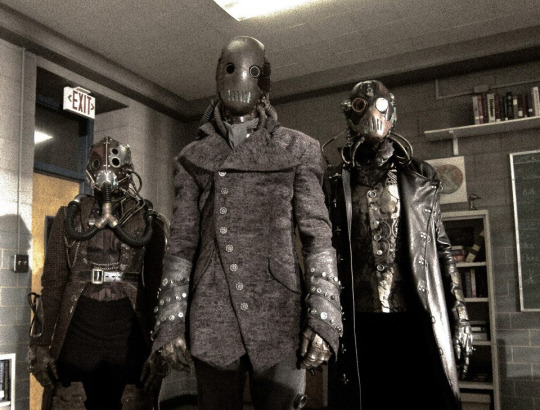
Teen Wolf has produced three members of this esteemed list, including last year’s #1 spot. And this year, without a doubt, goes to Season 5’s villains, the well-named Dread Doctors, who I knew as soon as I saw them were going to be somewhere high up on this list.

A group of long-lived mad scientists who have taken the supernatural powers of the world and bent them to their own purposes, they produce hybrids of humans and the various creatures that the show’s famous for. A mix of steampunk fashion, Dr. Frankenstein, Venice plague doctors, Darth Vader, and a few other things, they take teens from Beacon Hills and experiment on them. And all for a very sinister purpose.

Creepy, ephemeral, and willing to go to any lengths to reach their goals. I seriously wish I’d created the Dread Doctors before the show did (or wrote the novel about the Dread Doctors that appears in the show). They deserve the #1 spot, and if you haven’t already, I seriously think you should go online and find some footage on them. You might get some nightmares from it, but it’s definitely worth the risk.


That’s this year’s list. But tell me, what did you think? Did you enjoy the list? Any entrees you disagree with? Who do you think should’ve made the list? Let’s discuss.

(The following post may contain spoilers for certain TV shows and movies. Be warned before going in)

It’s that time of year again. I’m counting down the Top 10 villains that have seriously impressed me over the past year. I’ve been doing this for the past three years, and now I’m on the fourth year, so I’m very excited. Anyway, this year I had a hard time choosing villains for this list. Not because there were so many great villains (though there are plenty of those), but mostly because the villains felt slightly lackluster this year. Only a few really stood out this year for me. Not sure why, but it is what it is. Maybe this coming year, we’ll see some much better villains (especially with some creepy horror games coming out this year and all that).

So without further ado, let’s jump into the first half of these villains. Remember, I’m not including any villains of my own creation (that’s cheating) or any real-life people. These are fictional villains, and they’re the cream of the crop.

Also make sure to check out the lists from 2015 (Parts 1 & 2), 2014 (1 & 2), and 2013 (1 & 2) and see which villains made the list those years.

Let’s begin.

10. Lex Luthor Jr. (Batman v Superman: Dawn of Justice)

A lot of people had some mixed feelings about this movie, and more than a few hated this rendition of Superman’s arch-nemesis, played by Jesse Eisenberg. However, I personally enjoyed this film, and I enjoyed watching Eisenberg play this version of Luthor. For me, he felt like a villain I would create: rich, intelligent, but psychotic and willing to go to great lengths to reach his goals, including creating great and terrifying monsters. Perhaps this villain being Lex Luthor might not have been Zack Snyder’s best choice, and perhaps his goals were a little convoluted, but he was still fun for me, and I feel he should be on this list.

9. The Pale Man/Edgar Mullens (Haunter)

This movie came out in 2013, but I only saw it this past month, and IT SCARED ME! And the villain, the Pale Man/Edgar Mullens, played by Stephen McHattie of Pontypool fame, was a big part of it. A serial killer who died in old age and continues to kill in the afterlife, he enjoys keeping the souls of his victims trapped and repeating their final days on this Earth until he kills him. His soft, silky confident voice and that chilling but pleasant smile, that casual manner he shows at nearly every moment, make him so terrifying to be watch. And when you find out the full extent of his crimes, it’ even worse.

Haunter‘s definitely worth a viewing, and this guy’s definitely worth hiding behind the couch from.

8. Jim Jacobs (The Veil)

Based on Jim Jones of Jonestown infamy, Jim Jacobs and his ghostly followers are the antagonists of Netflix’s horrifying creation The Veil. A preacher who believed it was possible to free oneself from the cycle of life and death, he had a very radical interpretation of theology that actually turned out to be true, but before he and his followers could free themselves, the local authorities interfered, leading to the deaths of everyone involved. Now their ghosts wait, and watch, and hope for the day when they can finish their work.

What’s even freakier about this guy is not only is he able to deliver on his promises (that’s a first), but that you actually like him! Yeah, even as he scares you, you find yourself liking him. Not hard to imagine why though: he looks like John Lennon, has a pleasant voice with a Southern accent, and he makes it sound like everything will be alright, even if everything you’re watching is horrifying!

But what really clinches the deal is how he closes out the movie. I won’t give it away here, but he has this really triumphant moment, talking about how his people will now usher in a new era in humanity’s history, and then in the same tone of voice, remarks on the day’s weather! And it closes out the film so well.

If you’re at home and you want a good scare, join Jim Jacobs for a service. You will become a believer!

7. The Nightcomers (Penny Dreadful)

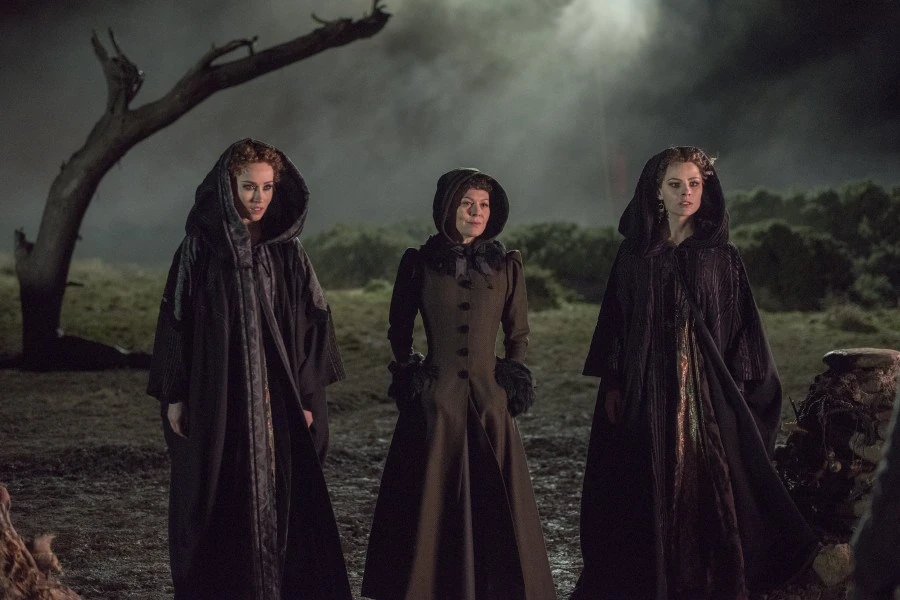
When is the third season hitting Netflix? Anyway, second season’s villains, the Nightcomers, are freaky to behold. Witches who are in league with the devil, they are a family coven who are out to do harm to the show’s protagonist, Vanessa Ives. They are led by Evelyn Poole, a woman who sold her soul simply to be beautiful (you know, that old chestnut), and her daughter Hecate, who has her own agenda in this Apocalypse-bringing cult.

What’s scariest about them though is not just their magic and their allegiance to the devil, but their true forms: hairless women with big, gaping holes in their bodies, like a monster slashed them wide open but didn’t kill them. I would not want to meet them in a back alley, no matter what era it was.

6. Piper Shaw (Scream TV Series)

I don’t know how many of you have watched the TV series reboot of the 1996 slasher cult classic, but Scream is a very solid TV series (loving Season 2, by the way), and has done better than anyone ever expected (even me, who thought the first episode was completely silly the first time I saw it). And the woman behind the mask in the first season, Piper Shaw, is a force to be reckoned with.

A reporter for a true-crime podcast, she arrives in town to cover the murders taking place, and befriends a few of the main characters, including protagonist Emma Duvall. However, it’s revealed in the last episode that she’s the killer, which I did not see coming, and that she has a very good reason for becoming a serial killer (not that there’s ever a good reason, but you get my point). What makes her a great villain though, is how she manages to insinuate into the characters’ lives, become someone they can count on as an ally, and then when she reveals herself in the last episode, it is such a shock.

I don’t know how the rest of the series will do, but Piper Shaw is part of why the first season was such a success, and I encourage you to check out the show if you haven’t already.


That’s all for now. I’ll post #5-1 when I get the chance. Until then, what do you think of the villains on the list this year so far? Any you would have included? Let’s discuss, Followers of Fear.

I’m both shocked and, at the same time, not surprised that I’m on this topic again. I was really hoping to talk about something writing related this morning, but events this weekend have caused me to shift gears. So prepare, because I’m about to do one of my world-famous gun violence posts!

Now if you’re unaware, on Friday evening at 10:30pm in the city of Orlando, Florida, singer, YouTube star, and “The Voice” contestant Christina Grimmie was shot by a deranged fan who apparently drove from St. Petersburg with the express purpose of killing her. Grimmie’s brother (without a gun of his own, no less) tackled the shooter to the ground, probably preventing more people from being killed. Grimmie later succumbed to her injuries and died, leading to a powerful outpouring of grief on the Internet. Even I, who only had a casual acquaintance with Grimmie’s work, felt her passing deeply.

Just a little over twenty-four hours later, a man armed with an assault rifle entered the Pulse, a popular Orlando gay bar and dance club, and started shooting, leading to a hostage situation that ended with the shooter’s death. The latest numbers show fifty confirmed deaths and even more injuries, making this the worse shooting in American history, worse than Newtown and Aurora. All this happened despite the fact that an armed police officer (a good guy with a gun) was on scene at the club.

All this, barely a day and a half apart, in the same city, in a state with very lax gun laws and a high amount of gun violence. Both shootings involving guns.

I wrote last year after a spate of shootings that America’s gun problem is like a chronic illness, a constant condition that plagues and grieves us, and needs treatment to be fixed, even when the treatment isn’t always available or the subject doesn’t want to admit there’s a problem, let alone that they need treatment. And that comparison still holds water nearly an entire year later. America is plagued by shootings. We’re the only developed nation with this much gun violence, to the point where it’s almost considered normal. Guns are causing more deaths than the United States should have.

These aren’t toys. They’re not meant for anything creative.

Now, I know some people will say, “But Rami, how can an inanimate object cause murder? People cause murder.” Well, people cause murder, that’s true. But guns, like missiles and military drones, are designed to facilitate killing. They’re made with that express purpose. The first firearms were used for military purposes, and so were the cannons and flintlock rifles that came later, with hunting being a secondary use for the latter. They were invented for the strategic purpose of taking enemy life, not for baking cookies or improving home decor. This is in direct contrast to knives, which unless made for military purposes like the Marine Corps Ka-Bar combat knife, has other primary uses like cutting and preparing food.

There’s no argument around this. Guns are made for killing, whether it’s animal or human life. 

In the next couple of weeks, we’re going to be seeing renewed calls for restrictions on gun sales and ownership, as well as push back from the NRA and other Second Amendment advocates trying to frame this as a mental health issue (in the case of Christina Grimmie’s killer) or as an issue with ISIS or Muslims (early reports indicate that the shooter at the Pulse had ISIS leanings). And while I do believe that mental illness and terrorist ideologies may have played a part in these tragedies, Christina Grimmie might still be alive if the deranged fan had gone at her with a knife instead of a gun, and I doubt fifty people would be dead if the killer had a knife. Maybe a couple people, but after the first few attempts at stabbing, someone’s bound to tackle this guy.

And it’s hard to argue mental illness or terrorism when a man uses a gun to intimidate his wife, which happens all too often, unfortunately.

The problem is, both these tragedies, and so many more, have been made possible by the use of guns.

Luckily, there is treatment for this problem. In Australia, Canada, England, Japan, and many other developed nations, gun violence is at waaaaaay lower levels than in America. The difference is that they have restrictions on who can have guns and what kinds of guns. Not a blanket ban on all guns, but some restrictions are in place. And I’m sure, that if America were to institute similar restrictions, we would see the same results. In fact, states with more gun control measures have lower instances of gun violence than states that do not. If we were to implement the same thing on a nationwide level, imagine how much the loss of life could be lowered.

And for those who say that gun control measures don’t work because bad guys will still get guns, so it’s best to give the good guys guns instead, I have this to say: if there are still people who run red lights, do we throw out traffic laws and just let people drive as they wish without consequences? If a boat or a house has a leak and water comes in, do we destroy the boat or the house and say they were useless and never would have worked? No, we prosecute the people who run the red lights for violating traffic laws. We patch up the holes so that water can’t get in. And if people are still getting restricted weapons and committing acts of violence with them, then doesn’t that prove even more that they’re criminals, and that they were willing to go to unsavory means to commit acts of violence? I think it does.

Not to mention, how do you know who’s a good guy and who’s a bad guy? It’s not as if the good guys are marked in green and the bad in red when they pull out their weapons. And in a crowded room where everyone has a gun? Really hard to tell!

It’s time to put a stop to displays like this.

Treatment is available. We just have to be brave enough to take it.

Otherwise, we’ll continue to have incidents like what we experienced this weekend, and families will wake up without loved ones because tragedies that could’ve been prevented weren’t. We need to admit that there’s a problem, we need to take measures to stop the problem, and we need to do this now. Not tomorrow. Not next month. Not next year, or in another years.

Now. Let’s push for expanded background checks, closing gun show loopholes, and banning assault weapons or other military-grade weaponry on the open market. Let’s also put aside funding for research into gun violence for the CDC, and expand the requirements needed to purchase and use a gun (a yearly gun safety course, for example, sounds sensible enough). If we can do that, I’m sure we can prevent more innocent losses of life.

Or we can go on as we have been doing. And we can’t allow that, under any circumstances.

Note: Immediately after finishing this, I saw a report that a man with weapons in his car had been arrested in LA near the Pride Festival there. Thank God law enforcement caught him, or who knows how many people might’ve been killed.

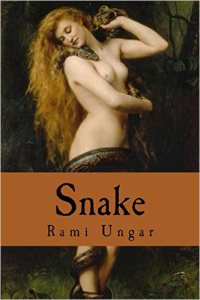
Cover of Snake by Rami Ungar

As I mentioned before, today is my twenty-third birthday. Wow, twenty-three. Technically, I’m still pretty young, but I feel old. I’m already paying bills and rent on my own apartment and starting a job. Ah, adulting. How you make me feel older than I am.

And as I mentioned in my last post, it’s also been two years since I published Snake, my second novel. This book, which was inspired by movies like Taken and eighties slasher films, as well as all the suspense novels I read in my first year or two of college, is the story of a serial killer who goes after members of a powerful New York mafia family, and the reasons why he does this.

It’s definitely one of my more “what the fuck?”-worthy stories, as well as one of the ones I had the most fun writing. At the time I wrote it, I just wanted to create a very thrilling, violent story involving a serial killer whom people would find themselves cheering for (like I said, “what the fuck?”-worthy). I did a lot of research into serial killers and psychopaths, even consulting with a forensic psychiatrist who helped me figure out what an actual criminal profiler would say about the crimes, as well as a lot of rewrites and reworking of the plot. The end result was one hell of a bloody, exciting thriller-horror novel.

True, there are some things I would’ve changed in the final product if I could go back (technically I could, but I don’t do rewrites after publication unless absolutely necessary), but yeah, it’s a good novel. And that’s not just my own ego telling me that. Here are some reviews, a few of which are by friends and other authors [WARNING! Some of these reviews do contain spoilers. Please be advised]:

Well, I took yet another vacation where I made my family “just wait until I finish this chapter.” This page-turning read was another great effort by Rami. He is not afraid to take risks in plot twists and turns, character development and he takes the reader on quite the journey in this book. So looking forward to his next creation!

–Michele K

This book is another awesome creation by Rami. This book is scary and brings the reader to the depths of how evil the human character can be and how anyone can be driven to commit acts of torture. The author does a wonderful job of developing the plot and characters and there are certainly twists and turns. I highly recommend reading this book if you love a good frightening thrill.

–ENJ

Rami Ungar makes a promise to (the reader) in all his writings: he WILL scare you, and if he does “his job is done.” Snake will scare you. I am a huge Stephen King fan, so this should give you some idea of my tolerance level for gore, death and mayhem – I was scared. Rami takes you into places you would never have believed possible, and manages to pull his hero (and eventually his heroine) out of them against all odds. If you like to be scared. If you LOVE to be scared. You should read this book.

–Angela Misri, author of No Matter How Improbable

I really enjoyed this book. When I selected “dark” for the mood, it was almost a toss up with suspenseful. You knew early on who the mafia killer was, but the question of how he was going to find his girlfriend and rescue her was suspenseful. I ended up choosing “dark” because of the level of violence our main character used in getting to the girlfriend. But he was a complex character. Even though he definitely had the dark side to him, there was a surprisingly good side to him, too. You don’t really see this until later on in the book. So early on, you might think this is an unredeemable character. But one of the most intriguing characters are those who aren’t what they initially seem, and for this reason, I enjoyed this character. The pacing was just right. It wasn’t rushed, and in no way did I ever feel it dragged, which is awesome for a book that was over 500 pages in paperback.

–Ruth Ann Nordin, author of The Mistaken Mail Order Bride

I guess people really like it. Which is good, because I have plans to someday write a sequel. I just have too much right now to devote time to one. Though considering the experience I had with the first book, I’d probably have a blast getting the second one written and going back down that creepy-as-hell rabbit hole.

So if you would like to read Snake and see if it’s as good and as scary as these lovely reviewers have made it out to be, I’ll include the links below. And if you do decide to read the book, please let me know what you think. Positive or negative, I love feedback from readers (and it makes me a better writer to boot).

That’s all for now. I’m off to have birthday celebrations with my family. I’ll see you around, my Followers of Fear. Have a great weekend.

Snake: AmazonCreatespace, Barnes & Noble,iBooksSmashwords, and Kobo

A screenshot of "A Project in Western Ideals."

A screenshot of “A Project in Western Ideals.”

Life’s been going very good for me. I moved into my new apartment (the kitchen’s still a work-in-progress and I still need to take out all the boxes to the dumpsters behind the parking lot, but I’m working on it), I put out a new book (and so far, I think it’s doing well), my birthday’s coming up (yay me!), and I start my new job a week from Monday (I’m planning on making a very good impression). And to top it all off, I’m editing again!

Yeah, remember when I was like, “I’ve just finished a novel and I just don’t feel like doing any work?” Well, a couple days ago I started doing something I hadn’t done in about a month or so: editing. To be specific, I began editing “A Project in Western Ideals”, the short story I wrote last summer about a girl being turned into a human Barbie doll. As of last night, I’mabout three-fourths of the way through the story, though an ending that satisfies me still alludes me (you’d think after having an ending with witchcraft, and then two endings involving an alien-like organism, I’d find something that worked! Apparently not). I’m going to try to finish the story tonight, though I’ll need an ending that works. I wonder if I change the beginning…

Anyway, after that I plan to get right back into my novel-as-a-thesis, Rose. As you well know, I started on the third draft of that story a couple of months ago, after almost a year of not working on that story (I was busy in-between drafts). but I couldn’t get through the first chapter before I had to work on Video Rage again. Now that that’s out and I’m out of the funk that settled over me after I completed the final draft of VR, I’m looking forward to getting back into that book and doing all the work that needs to be done. A lot needs to be changed, and quite a bit needs to be added, but I think I’m up to it.

The writing space in my new apartment. Pretty sweet, huh?

The writing space in my new apartment. Pretty sweet, huh?

You know, I think writing is a lot like every other skill or profession: there are times when you are in love with it, and times when you just don’t want to deal with it. There are times when you are amazing at it, where everything you write is worthy of publication and awards, and times when everything you write is dreck. I had my phase, where I just couldn’t write anything besides a blog post. But now it’s over, and I’m ready to start something new. Maybe that’s because so many new things are happening in my life. I moved into a new apartment, complete with my own little writing space (you can see it on the right). I’m starting a new job a week from tomorrow. And my birthday is coming up later this week, among other things. Basically, with so much energy of the new in me and around me, how can that funk not be lifted?

So expect a bunch of updates on the writing life in the weeks and months to come. I’m going to definitely try and get Rose done before it’s time to get ready for National Novel Writing Month. Wish me luck in the meantime, my Followers of Fear. I’m definitely going to need a little bit of luck in the weeks and months to come.

I was honored by my friend and colleague, Ruth Ann Nordin, to do a guest post on her blog in honor of the publication of Video Rage. The post is about building worlds in fiction, and has some tips I hope people find very useful. Check it out, and leave your thoughts in the comments.
And thanks again to Ruth for letting me do this. I hope we can work together again sometime.

Ruth Ann Nordin's avatarRuth Ann Nordin's Author Blog

Quick note from yours truly:

I’ve never had a post about world building before, so I’m really excited to feature someone who is excellent at this storytelling technique.  Rami Ungar is one of the nicest people you’ll ever meet, and if you enjoy thrillers and/or horror, why not check out one of the books listed below this post?

Thank you, Rami, for doing this post for this blog!

Now for Rami’s post:

Building a Fictional World

Setting is one of the most important aspects of writing any story, especially speculative fiction such as fantasy, science fiction, and horror. In many ways, the setting of a story is another character, because it interacts with the characters on almost every level of the story. Doesn’t matter whether it’s modern-day Columbus, Ohio, or Victorian England, or the moons of Jupiter, or the fantastical land across the waters that elves come from. One can’t…

View original post 1,288 more words

The other day, I posted about my recent adulting experiences (how typical is it of the Internet era that the age and mode of responsibility is now a verb that I fully embrace as part of the English language?). Funnily enough, after I wrote the first draft of that post (yeah, there were a couple of drafts to that strange, slightly stream-of-consciousness post), I realized that during all the times I listed stuff I was doing that counted as “adulting”, I didn’t list writing. For some reason, writing doesn’t count as adulting.

This struck me as kind of odd. Why doesn’t writing, an activity that is essential to just about every business and so many different professions, not count as adulting? Well, actually it is. Typing up forms and reports, sending emails, writing a speech. Those are all adult activities, and they’re so important that the basics are taught to us from a very young age.

But creative writing–writing fiction, creating poetry, and maybe even journalism–are not treated as adulting activities. And I think that’s because, unless you’re making quite the income from these activities, people don’t treat them as a job or as an activity up there with paying your bills or making your own meals. I’ve talked about how people don’t see writing as a job before (too bad that post didn’t change as many minds as I would like), and a lot of the points I made in that post still hold true. People still don’t see writing as on par for a job.

There are a number of reasons for this. One is that people think of authors and see someone sitting in front of a notebook/typewriter/computer and magically bang out a story with little to no effort. Now, the reality is very different, but perceptions are hard to break, and the belief persists that writers are hardly expending any effort in their work. And as adulting kind of involves expending energy and doing hard work, the definition is at odds with the perception.

This isn’t considered an adulting activity.

Another reason that people might not see writing as adulting is because it’s filling a creative urge that most associate with our inner child. I know, this might be a bit of a stretch, but at least hear me out. At some point in your childhood, you likely sat at the table with a bunch of paper and paint or crayons and churned out picture after picture that your parents put on the fridge and treated it like a freaking Picasso. And after you learned to read and write and maybe understood some basic storytelling, you may have created short stories based on fairy tales or some giant robot anime (asking your parents on how to spell certain words) and then listened to them act like you’re the next F. Scott Fitzgerald after you told them those stories.

I think to some degree that urge to be an artist or storyteller when we were children stays with us as we grow older, and we creative types indulge in the urge, only we write/paint/create much better than we did as children (usually). So when writers are busy working on a story, people see it as partaking in a vestige of our childhood that’s somehow stayed with us through the years. And childhood is the exact opposite of adulthood, which means it’s has nothing to do with adulting.

Now considering all that, should writing be something we want considered as adulting? After all, adult things usually have some sort of prestige to them. Perhaps since so much goes into writing and publishing fiction, it should be an activity worthy of being called “adulting.”

My opinion: HELL NO! Why? Because of what constitutes as adulting already: paying your bills, handling moving into a new home, working a 9-5 job and enrolling your kid in that day camp so they aren’t cooped up with the Xbox all summer and you can go to that 9-5 job. These are activities that are either boring, or annoying as hell. You’d just rather not deal with them. So when writing isn’t considered an adulting activity, I treat that as a good thing. Because you know what? As difficult as writing can be, it should be fun! It should be something pursued for joy and for the sake of creation and connection, not because it’s a task that has to be taken care of at some point if we don’t want to upset our lives.

So let’s not call writing an activity worthy of being called adulting. Let’s just keep it as a fun, creative outlet that you can occasionally make some money off of, and leave it at that.

Do you think writing should be considered adulting? Why or why not?

What are some other activities that should or not be considered adulting, and why?

I move into my new apartment in a week. I’ve been running every which way getting ready. No one was available to help me move or rent a U-Haul, so I hired a moving company. Costs a lot, but it’s worth it for the service. Plus rent up front for the first month. Another big payment. And the new bed was a big payment. And the cable is also going to be a big payment. I don’t think gas will be that much, but you never know.

It’s a good thing I’m starting my new job on June 13th. It’ll be good to get working, earn some money and also make a difference. And this internship has a good chance of transitioning into a full-time position, which would be wonderful. Of course, I have to work hard, and make a good impression, and not screw up. And that’ll be a challenge, but I’m sure I can handle it. I just have to remember people’s names and hope they don’t mind that sometimes social situations go over my head (the stories I could tell, but don’t want to).

God forbid I should have to search for another job after this, because I like working and I hate searching. And with a new apartment, I can’t afford to not be earning money. So I must do my best in this new job and make the most of the opportunity.

Before all that though, I have to prepare for the move. I’ve already bought towels and sheets from Target. They were at a good price too. And the cashier at the register told me where I could go to get a garbage can at half the price of the store I visited, so I’ll be visiting that place most likely tomorrow. Saves me a trip to Bed Bath & Beyond or another trip to Target.

Still, not everything’s as easy as I would like it. I still have to figure something out with the furniture, because a lot of people are willing to let me have their old furniture, but all but one person says I have to pick it up myself. Figuring that out is going to be a challenge. Hopefully it won’t be another payment.

Speaking of payments, I’ve got cell phone bills and loans to repay and a credit card to pay back. I also have to pay groceries, cook my meals. I can afford to pay a bit more for quality food, but I can’t be doing too much or I’ll do myself financial harm. Still, need to eat healthy if I plan to live well past forty. And speaking of health, I have this weird back problem and should see a physical therapist for it, but I don’t know any, and they cost money, and without a driver’s license or a car it’ll cost money just to get there, I bet.

Speaking of that, I need to put more work into getting my license. Of course, that’s dependent on how much practice I get with my parents, and they’re not always available to do driving practice. Still, my sister managed to do it while working a full-time job and attending classes. I’ll just be working full-time. But even if I get my license soon, I’ll still need to afford the car. The point in my life where I’m ready to do that is still likely very far off, but it’s still something I should plan for and aim for.

Thank God I’m not in  relationship right now. I’m actually not sure if I’m even interested in having a romantic relationship, but I guess it would be nice. Still, no rush. Besides, who has the time or money when you’re trying to establish yourself as an independent adult? In fact, whoever feels I should make it a priority needs to keep their feelings to themselves.

Adulting seems to be making lists and getting items crossed off those lists. It seems like refining that mental calculator in my head that keeps track of my finances, making it that much more accurate and that much better at deciding what’s necessary and what’s not. It seems to be looking forward to taking a break or having a nap on a Saturday afternoon, something my dad does pretty regularly and which I never thought was my thing but now I’m starting to believe there may be more to the Saturday afternoon nap than I gave credit for. Am I starting to become my dad? God, there’s a scary thought right there.

I always thought that when I became an adult everything would be easy for me. Instead it’s a lot of working and worrying and making things happen so that I’m not running up the walls and into an asylum. I’m reminded of an article I read years ago in The Onion, about a man who almost has fun in a party but can’t because he keeps remembering all his obligations and worries.

I should print out that article and hang it out in my new office. Might remind me to chill every now and then and remember all the good stuff in my life, all the reasons to stay relaxed and not get too uptight. My family and friends. A good TV show or movie. All the books to read and all the stories to write. All the people who enjoy what I have to write, whether I’m blogging or putting it out in a book. My community. My faith.

Life changes. You grow up. You get older. You gain more responsibilities. You gain new responsibilities, and you drop a few by the wayside as well. But you still find ways to remember what’s important in life. and I certainly will do my best to keep all that and more in mind.