Posts Tagged ‘scary stuff’

You know, horror sequels get a bad reputation for getting silly or boring over time. Now, there are some that do give this rep some credibility (looking at you, Jason Takes Manhattan). But among horror sequels, there are some truly great gems that have as much punch, or sometimes even more punch, than the originals. And Insidious: The Last Key is one of those sequels, not just for being scary and creepy, but also for keeping things interesting with a character-driven narrative.

In this entry in the Insidious series, Elise Rainier (played by unacknowledged Hollywood treasure Lin Shaye) is called back to her childhood home to defeat the evil spirits that live there and which haunted her childhood. As she and her two stalwart companions Specs and Tucker delve deep into the hauntings in the house, they will not only uncover horrors from the Further, but from this world as well, and from Elise’s own dark memories.

This was a seriously solid horror movie. The best part of it, of course, is Lin Shaye’s performance as Elise Rainier, along with the character’s own arc in this movie. The arc itself is kind of similar to Elise’s arc in the last film–that she’s dealing with trauma and has to overcome it to save a life–but here, the scars are so much deeper, and the raw emotion you feel from Shaye as Elise opens them up makes it seem all so new. You feel her pain, you feel her wanting to make amends, and when you see her triumphs, you share in them.

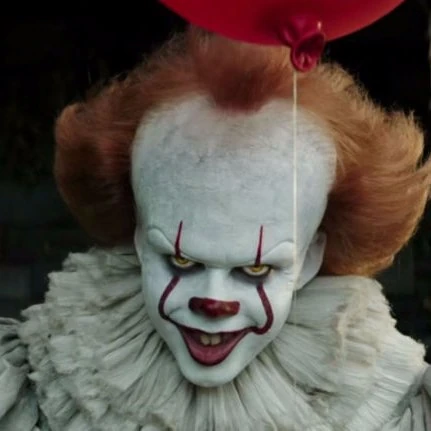
As always, the atmosphere in these movies is creepy, the right balance between tension and jump scares. The creepiest part, in my opinion, is the antagonist, The Man With the Keys, or Key Face as he’s listed on Wikipedia. This is such a freaky looking demon, and unlike the Man Who Can’t Breathe from the last film, who got scary once you could see him in the light, The Man with the Keys is freaky no matter when you see him. In the light, out of the light, he’s so scary. I think if you put him up next to Bill Skarsgard’s Pennywise and had a contest on just visual terror, it’d be a very close call.

I also like, in addition to the many keys we see in the movie, there is just so many key-shaped imagery in the movie. Pumps, signs, etc. They’re all key-shaped, kind of tying into the theme of the movie of opening up old wounds and opening up the past.

I also thought that new character Imogen (whose name only makes me think of the song “Hide and Seek” by Imogen Heap) was an interesting addition. Not giving anything away, but her presence in the film could be a hint of where the franchise could go from here, given where this film takes place in the series’ timeline. Especially if Lin Shaye wants to finish her time with the series with this film or with the next one.*

Was there anything I didn’t like? A few things. I honestly thought the climax wasn’t as epic as it could’ve been. Not only that, but a few things we saw in the trailers didn’t show up in the film, which is always annoying. And finally, Specs and Tucker, our supposed comic relief, just weren’t that funny.

But all in all, Insidious: The Last Key is well worth plunking down cash for a ticket. On a scale of 1 to 5, I give it a 4.4. Check it out, and open yourself up to some terrifying storytelling.

That’s all for now, Followers of Fear. We’re likely going to have a bunch more reviews this month, so I hope you’re ready for recommendations and opinions. And if the trailers I saw in the theater are any indication, I’m going to have a lot to say in 2018.

Until next time, pleasant nightmares!

*I’m assuming that we’re going to get a sequel, given that already the film has made back its budget and then a bit two days after coming out.

Aokigahara forest.

On December 31st, YouTube star Logan Paul visited Aokigahara, a forest in Japan that is visited by thousands of tourists, families, and school trips, but has a dark side. Aokigahara is a popular suicide spot, to the point that its nickname is Suicide Forest. The Japanese government has even posted signs throughout the forest encouraging visitors to choose life rather than take their own lives. While there, Paul and his friends came across a hanging body, filmed it, and posted the video on YouTube (the body’s face was blurred out). The video quickly went viral, garnering a lot of negative controversy. Within a day, Paul took down the video, and issued an apology over Twitter, but people are still very upset and there has been a lot of talk online about his actions.

Before I get into the main thrust of what I wanted to talk about with this post. Firstly, I am about to talk about a sensitive subject, and I am going to approach this with as much care and respect as possible. Still, I am an imperfect being and I make mistakes, like everyone. So if I say something that offends you or that you disagree with, please understand that is not what I intended. I’m just trying to make sense of a difficult topic in a world that doesn’t make sense that often, and sometimes I miss things that cause misunderstanding between others and myself without meaning to. So please bear with me as I try and explore a topic that a lot of people have strong opinions about.

Second, there are two things about me I would like to tell you all. One is that I have experienced depression before, and a couple of times it made me think of suicide. Those times when I considered suicide, it was because I had toxic people in my life who made me miserable. I still remember the crushing despair, the feeling that things were never going to get better, and the thought that I could just make it all better by leaving this life and falling into–I don’t know. Something better. It took the extraction of these toxic people in my life, as well as the help of a lot of good friends and family to help me find happiness and hope again.

The Yahrtzeit candle I lit at Sachsenhausen.

The other thing I would like you to know is that back in 2014, I visited Sachsenhausen, a concentration camp twenty-two miles north of Berlin as part of my study-abroad trip. Around thirty-thousand people died at that camp while it was operational. When I arrived, it struck me as a very tranquil place. There was lots of grass and trees, the sun was shining, and there were only a few buildings left from when the camp was operational. But you spend enough time there, and this pall of despair settled over me. It was like the prisoners had felt over seventy years ago had seeped into my very body. An hour there, and it was just hard to even breathe there. I lit a Yahrtzeit candle, a ritual candle in Judaism for memorializing the dead, at a wall used by firing squads. And when I left, I was glad to get out of that anguish-infected place, even as I was glad to have visited a place connected to the history of my people.

Now to the point of why I’m writing this blog post. You see, a month before I went to Sachsenhausen, I wrote a blog post about haunted locations I wanted to visit, and Aokigahara was on that list (even before it became a suicide hotspot, the forest was well-known as a place for hauntings, hence why it was on the list). Given that, I feel like I have a responsibility to talk about this controversy, as well as my desire then, and now, to visit Aokigahara.

Obviously, what Logan Paul did was extremely disrespectful, the equivalent of taking a photo of the corpse at a funeral, or a selfie at Auschwitz or at the Berlin Holocaust Memorial. It shows total disregard for the deceased and their loved ones in favor of quick-lived social media attention, and should be discouraged at every opportunity.

However, there is nothing wrong with wanting to visit Aokigahara in itself (hold your comments, let me finish). As I pointed out above. Aokigahara is visited every year for totally innocent reasons. However, no matter what reason you go to visit the forest, it should be done with respect. Any death is horrible, and suicides are especially tragic. We can never know what is going through someone’s mind or what is happening in their lives, let alone someone dealing with depression and suicidal thoughts. Not unless we’ve been there ourselves, and sometimes not even then. But in every case, it is terrible, and shouldn’t be treated lightly.

With that in mind, anyone who visits the forest should do so with respect and cognizance for what has happened there, the same same way I approached visiting Sachsenhausen. Be respectful of what has happened and is happening there, understand that depression, suicide, and the forest itself has affected a lot of people in horrible ways, and if God forbid you do come across a body, leave it alone and notify the authorities. Only take photographs or footage if it is to help the authorities find the deceased, not for views or likes or whatever. Other photographs can be taken of the forest, or of the tourist attractions there such as the Narusawa Ice Cave and Fugaku Wind Cave, but definitely not of the bodies.

Remember, 1-800-273-TALK.

This is how, if I am ever lucky enough to visit Japan and I end up visiting Aokigahara, I will approach the forest. Not for ghosts, not for likes, and definitely not for suicide, but to pay respects to the dead and to draw attention to the ongoing struggle of suicide the world over. I may even bring a Yahrtzeit candle or some incense to burn, provided I can make sure it won’t cause a forest fire or injuries. Because what happens in this forest is a tragedy, and should be treated as such, no matter who you are or what your background is. Even as I enjoy the beauty of the forest and the tourist sites, I will remember these people, and hope they find rest, even as I hope others find the will to continue on and live.

And if you’re dealing with depression or suicidal thoughts, please know that things do get better. There were times when I thought my life couldn’t get better, but it did, and now, my life is great. And if you keep living, there’s always a chance your life could get better too. Every day is an opportunity for improvement. All it takes is the will to continue on. I support you, I’m there for you, and I hope you take this message to heart.

And again, if I said something wrong or caused offense, I beg your forgiveness. It is not my intention to cause any hurt feelings. I only want to make sense of something horrible and help those in troubled times. Thank you for reading.

If you’re dealing with suicidal thoughts, please also call the National Suicide Prevention Hotline at 1-800-273-8255. The counselors there will help you through this crisis, and help you find the light to fight off the darkness.

I’m not going to lie, 2017 was a tough year in a number of ways. In some ways, it even rivals 2016, which everyone agrees was kind of a shit year, pardon my language. We dealt with really horrible terrorist incidents, learned that some of our most beloved figures in entertainment and other industries were secretly monsters, and saw terrible devastation from hurricanes that left communities without good food, water or electricity. This and a whole lot more affected so many lives, and definitely not in a good way.

However, there were a lot of good things about 2017 too. Many of the things I described above caused people to come together and fight. Not too long after the bombing at Ariana Grande’s concert in Manchester, she and several high profile artists put on a charity concert to raise over ten million pounds for the families of the victims. After the shooting in Las Vegas this October, thousands rushed to donate blood at the Red Cross, with lines reportedly snaking around city blocks and lasting up to six hours, and millions were raised for the families of the victims! Plus in response to the shooting, Massachusetts banned bump fire stocks, which were used in the attack, and several bills were introduced into Congress to hopefully prevent attacks like this from happening again.

Throughout the year, men and women came together to protest sexism and the treatment of women in America and abroad, with marches throughout the year. The revelations of Harvey Weinstein led to dozens of women and men to open up about their experiences with sexual assault and harassment, catalyzing the #MeToo movement and leading to the ousting of several serial abusers from a variety of industries for their crimes which, up till now, they could get away with, and started a conversation that is continuing today about how to combat sexual assault by powerful people who use the system to get away with it. Heck, voters in Alabama came together to keep a man who has been accused of assaulting multiple teen girls from becoming a Senator despite widespread support for him. That’s huge!

A Red Cross station post-Las Vegas shooting.

And while Puerto Rico and other areas of the world are still recovering from natural and man-made disasters, a lot is being done online and offline to help. Thousands are still sending money, supplies, and even solar power equipment (looking at you, Elon Musk) to help Puerto Rico out of the rubble. Despite the United States pulling out of the Paris climate agreement, many corporations, cities, and even states have said they will continue to abide by the agreement’s guidelines in order to combat global warming, which likely contributed to the many hurricanes we saw this year. And plenty of people each day are pressing for relief to peoples in trouble, both at home and abroad, from their leaders. It’s amazing to see that happen.

I could go on (I really want to speak about the entertainment industry’s positive contributions this year), but I fear this post will go on too long if I do, and there’s quite a bit I’d like to talk about. I’ll just summarize by saying that there was a lot of positive things that happened this year. And while the bad stuff does sometimes seem to overshadow the good, it’s important to recognize the good and cheer ourselves for what we accomplished, as well as what we can accomplish in the coming year. Which seems to be plenty, if we put our minds to it.

On a more personal note…

2017 was a pretty good year for me. Yes, the things I listed above, good and bad, may have affected me at times (they affect everybody, don’t they?), but in terms of my own personal life, I had a very good year. A lot of positive things happened to me , and if you don’t mind, I’ll just highlight some of the big ones:

  • My health seriously improved this year. I lost about thirty pounds of unneeded weight, which means I’ve had to take fewer sick days and I’m less likely to develop certain diseases. My back pain has also lessened tremendously, thanks partly to weight loss and to seeing a chiropractor. I can now move as I used to pre-back pain, and while I’m still working on improving my back and my health, the fact that I’ve accomplished this much already is a great motivator for me.
  • This was a good year for writing for me. I got halfway through the first draft of Full Circle (still on break from that until I feel ready to tackle it again), finally pushed out a new draft of Rose, and even wrote and edited some short stories. I also published two short stories, the science romance novelette Gynoid, and the LGBT fantasy romance story What Happened Saturday Night. Not only that, but over sixty new people started following this blog, putting me within striking distance of the thousand-follower milestone! For me, that is huge, and I can’t thank you guys enough for making that happen.
  • As many of you know, I work for a supply organization in a role that involves getting disabled employees accommodations and organizing events to highlight the diversity in our workforce. As of December, I’ve been with the organization for eighteen months, and it’s been great. I’m doing work that helps people with a great team around me, and I get great pay and benefits too. What’s not to love?
  • I went on the best vacation ever to Massachusetts with my dad back in July, and it culminated with a night at the famously haunted Lizzie Borden Bed & Breakfast. I cannot even begin to tell you what a big deal that was for me.
  • All the movies I was super-excited to see this year were awesome, as I’d hoped. Especially the new version of It. That was the It we deserved.

And those are just a few of the highlights of 2017 for me. Yeah, it was a good year. And I hope 2018 goes just as well or even better. Especially if any of these happen:

  • More good news on the writing front, particularly with a fourth draft and maybe the publication of Rose, as well as several new stories and hitting the thousand-follower mile marker.
  • Continued improved health.
  • Continuing to do well at work.
  • Maybe a bit of travel, and definitely a bit of fun, whether that be going to shows or seeing friends.

And that much more.

So guys, I want to wish you a Happy New Year, and to remind you that, as hard as 2017 is, it’s 2018, and there are endless opportunities to have a better year. You just have to be brave enough to try and make a change.

And again, thank you all for being my Followers of Fear and reading my work. I’ve grown so much over the past couple of years, and you guys have been there for every accomplishment and lesson I’ve experienced. I hope you’ll continue to support me for this year too as I try to accomplish all my dreams and scare people silly.

Until next time, pleasant nightmares.

Guillermo del Toro’s films are very much like Tim Burton’s films: there’s a distinctive feel and style to them that sets them apart from other films. A tendency towards the strange and the dark, creatures not oft experienced by man nor treated that much in modern fiction, etc. And such is the case with his latest venture, The Shape of Water, which del Toro says was inspired by when he saw Creature from the Black Lagoon as a kid and was disappointed that it wasn’t a romance between the Creature and Julie Adams.

I have to say, all these decades later, the concept has aged well.

The Shape of Water follows Elisa, a mute custodian at a government facility in Baltimore in 1962. One day, the facility receives an amphibian-man creature from South America, which is kept in a room that Elisa cleans. The two start interacting and romancing, leading to a plot to save the creature from the facility and those who would do him harm.

There’s a lot going for this film. For one thing, it’s beautiful. Everything from the sets to the costumes looks right out of the late 50’s, early 60’s, the lighting is used in different ways to highlight moods and atmosphere, and there are even throwbacks to classic films from that period, including a short musical number that I feel like was inspired by the ones American Horror Story does every couple of seasons. The acting is also pretty stellar: Sally Hawkins as Elisa is wonderfully expressive through facial expressions, body language, and sign language. Octavia Spencer (can that woman do no wrong?) and Richard Jenkins as Zelda and Giles, Elisa’s friends, are full of pathos and charm. And Michael Shannon as the antagonist Strickland, while feeling like a hammy caricature at times, is entertaining to watch on screen.

And oh my God, the make-up on the Amphibian Man (which is his listed name in the movie, I checked). That is award-winning stuff. It looks so real, and as far as I know, mainly CGI-free. That’s really impressive.

All that being said, there were a couple of issues I had with the film. For one, once you kind of understand what sort of film you’re watching, you can kind of guess the plot. It’s been done before, though not with Amphibian Men. So if you can guess the story archetype, you probably will guess where the story is going to go.

There’s also this theme of tolerance and the difficulties of otherness that pervades the film, which you would expect. There’s the Amphibian Man, which isn’t even human. Elisa is mute, Zelda is black, and Giles is gay. Obviously, the filmmakers are going to bring this up. And I’m not opposed to that, I love stories that explore the difficulties of being on the outside for no other reason than being who you are. The problem is, the theme is handled differently from scene to scene. In some scenes, like a scene midway through the movie at a diner, it’s handled very well. But at other times, the handling feels kind of clumsy, which kind of brings down the impact of the theme.

Regardless, this is a wonderful film. If you’re going in for a science-fiction/horror story, you won’t get that. But if you go in for a visually appealing and well-done love story with some sci-fi elements, you’ll end up getting your money’s worth at the theater.

On a scale of 1 to 5, I give The Shape of Water a 3.8. Take a dip into a strange new world, and see for yourself if there’s something to love here.

Now if only del Toro could do an adaptation of At the Mountains of Madness, which he tried to do a few years ago (but only after I’ve read that particular HP Lovecraft story). That would be awesome.

Ever since I stayed overnight and experienced paranormal activity at the Lizzie Borden Bed & Breakfast back in July, I’ve kind of become a bit obsessed with the case and the hauntings that occurred because of the murders. The latest manifestation of that obsession is reading the latest fictional retelling of the events (of which there are several, believe me), See What I Have Done by Sarah Schmidt, who says she was inspired to write it after recurring dreams of Lizzie’s spirit visiting her. I first came across a review of this in Entertainment Weekly, and as soon as I saw it, I knew I had to read it.

See is a fictionalized account of the story of Lizzie Borden, who in 1892 was accused of murdering her stepmother and father with an ax and was acquitted due to lack of evidence and investigator bungling. The story is told from the perspectives of Lizzie herself, her elder sister Emma, their live-in maid Bridget, and a violent drifter named Benjamin, all of whom tell what they were up to on a hot, fateful day in August 1892 in Fall River, Massachusetts.

I have to say, See is not the usual sort of historical fiction I read when I delve into that genre.

Firstly, the four narrators are each given a unique personality and desires, so that it doesn’t entirely sound like just one person narrating four different people. Lizzie is a spoiled youngest child with a hell of a lot of quirks (to say the least); Emma is an older sister who has become constricted by her responsibility as Lizzie’s older sister and as a Borden and wants to run to a new life; Bridget is overworked, and is trying to leave for her homeland of Ireland, despite Mrs. Borden’s attempts to keep her; and Benjamin is a man who sees the whole world as his enemy, and can’t wait to take a swing at the world. Working with one first-person narrator and making them unique is hard enough, so it’s great that for a debut novel, Schmidt distinguishes them so well.

I also liked how flawlessly she manages to weave these four narratives, especially Lizzie, Bridget and Benjamin’s narratives, together on the day preceding and the day of the murders. Telling overlapping storylines, where several characters are in the same place and experiencing things at the same time, has always struck me as a monumental task which requires skills I’m not sure I have yet (if it’s actually easier than I think, let me know in the comments below). Schmidt did it like a pro, to which I applaud her.

But my favorite part is the descriptions Schmidt has her characters use. I’ve never seen descriptions like what she uses. She turns nouns like “termites” or “critters” into verbs (is there a word for that?), and…you know what, let me quote from the first page:

I breathed in kerosene air, licked the thickness from my teeth…My heart beat nightmares, gallop, gallop, as I looked at Father again…Pear skin crisped in my mouth…

How different was that? I have never heard any of these things described this way in fiction, and it’s kind of refreshing to hear. And Schmidt does this throughout the book, particularly with food. She goes all out to describe the food and the sensations of eating in a variety of ways. You really have to read it to believe it.

Now was there anything I disliked? A few things. I was kind of hoping going in that this would be a thriller of sorts that revealed an interesting take on an old theory or even better, a new scenario for the still-unsolved murders. What I got was more of a dissection of the Borden family, showing through several different eyes how grating these people have become on each other, and how it might have been a factor in the murders. And while the portrait painted is beautiful and quite telling of both the author’s vision of and what the family might’ve really been like, I thought the ending where the killer is revealed rang a bit hollow. Like I said, I wanted a new scenario or an interesting take on one of the standard theories for the case, and the way it was eventually portrayed fell a little flat for me.

And as much as I liked the unique descriptions in the book, some of them are used repetitively throughout the novel. I can’t count how many times things, especially fingers, are described as sticky, or how many times heat “itches” at someone. To quote some of my editors, variety in words and phrases throughout a story is important.

And what was up with the dislike for Lizzie and Emma’s uncle John? I get why Abby and Andrew Borden dislike him, he’s probably a bad reminder of Lizzie and Emma’s deceased mother, but why do Emma and Bridget dislike him so much but Lizzie adores him? There’s a lot there that I would’ve liked explained.

But all in all, See What I Have Done is an excellent debut for a new novelist. Putting a score on this book on a scale of 1 to 5 was difficult, but my head kept coming back to a 3.8. Engaging, atmospheric, and full of wonderful prose. Check it out, and ax yourself if you’re ready to dive into Lizzie’s madness.

And yes, I intentionally made that pun. And I stand by it. Goodnight, everybody!

I’m halfway through this series I’ve been doing of rewatching and reevaluting horror films I previously disliked to see if I missed something. And for those of you who are keeping score, I found I now love Perfect Blue, hate The Strangers more than I did the first time, don’t really have a different opinion on The Witch, and feel underwhelmed by The Texas Chainsaw Massacre. And I’ve just finished watching my fifth entry, Oculus. What did I think? Let’s find out.

WHAT’S IT ABOUT: Oculus follows Kaylie and Tim Russell, a pair of siblings who witnessed their parents murdered by the spirit in a mirror as children. They return to their childhood home ten years after those events with the mirror in tow, Kaylie determined to prove that the mirror is haunted, Tim believing he hallucinated everything he experienced as a child. Weaving between past and present, Kaylie and Tim unearth dark memories, old wounds, and eventually, must decide if they are facing they’re own insanity, or an old and intelligent evil.

WHY I DIDN’T LIKE IT: Simple: the ending. I really liked these siblings, and without going into spoilers (though I could be forgiven for them, this film has been out for four years), I didn’t like how the ending treated them. Plain and simple, it just poisoned the film for me.

WHY I REWATCHED IT: An online critic I follow on YouTube did a video a while back of the Top 11 New Halloween Classics, and Oculus got #7. That alone was enough to get me interested in a rewatch. And when I did this series, Oculus was definitely on the list.

Thoughts: How did I hate this movie? It was awesome!

Now, I won’t go into full review mode, but this movie is almost entirely flawless. The concept alone is pretty ingenious, but it’s done in a way that puts you right in there with the characters. You’re seeing their memories as they remember them, at the moment they’re remembering them. And you’re experiencing what they’re experiencing the moment they’re experiencing it. It leaves you not only wondering what is real and what isn’t, but also makes you feel the paranoia and terror of the characters, who by the way are played amazingly by their actors. Especially Karen Gilliam as Kaylie Russell (we love you, Amy Pond!).

I also like how the film isn’t afraid to use a bit of body horror. There were definitely moments where I had to look away because I was so freaked out by what I was seeing, and these moments are never excessive in terms of gore or number of uses.

Add in some great camera work, ambiguity, and CGI that really deposits itself within the uncanny valley, and you got yourself a creepy horror film.

And as for that ending, it’s been four years, and I’ve done some just like it in that time. It’s honestly a good way to close out a horror story, especially if you care about these characters. It makes the ending that much more gut-wrenching. To sum it up, I now approve of the ending.

Judgment: This is definitely a masterpiece in horror filmmaking. On a scale of 1 to 5, I’m giving Oculus a well-deserved 5. Check it out, and see the horror through the looking-glass.

That’s all for now, my Followers of Fear. The next one in this series should be entertaining, at least. And if it’s not, at least the sequels are supposed to be betterthan the original. I’m talking Evil Dead.

Until next time, Happy Holidays and pleasant nightmares one and all.

So good news, folks: as of around 6 PM today, I’ve received feedback from both of my beta readers for Rose, which means I can start the fourth draft of the novel! Why is the fourth draft so significant, you may be asking. Well, this is the last draft I plan to do until I get an agent and/or publisher! And I think that is significant enough to write a blog post (which would’ve been written earlier this evening, but I was at my dad’s for Hanukkah dinner).

Now if you have no idea what Rose is, it’s a novel I wrote as my thesis in college, which I started working on again earlier this year and finished editing back in October. The story follows a young woman with amnesia whose body starts going through incredible, magical changes. The only person she can rely on for help and information about these changes and about herself is a young man who says he’s her boyfriend, but he’s keeping things from her, and things are not at all what they seem.

Yeah, it is not a fun story. Not by a long shot. But I think it’s a good story, made even better after the most recent draft, which fixed a few issues with the story and doubled the word count (don’t less that scare you, it’s shorter than the second Harry Potter book).

Of course, before you start submitting it to publishers or agents, you want to make sure your novel is actually good. Not just good in your opinion, but in others’ opinions, and that’s where beta readers come in. They take a look at stories you write, and let you know what works, what doesn’t, and give you feedback on what can be made better.

One of my beta readers for Rose was my dear friend, Joleene Naylor.  She read the novel in about a month, and got back to me with a ton of notes, as well as plenty of feedback. Overall, she enjoyed the novel. She thought my characters and their development was deep and reminded her of anime characters, which are often complex and never completely good nor completely evil, but often a mix of both (you can now tell who inspired that post about why writers should check out anime). That made the characters within Rose not only multilayered, but often very surprising. For one particular character, Joleene hated him at first, but then she found out some things about him and actually became kind of sympathetic towards him. Then she learned some more things about that character, and her feelings changed again. It’s very hard to do that in fiction, to have your emotions about characters change that rapidly, and Joleene liked that.

However, she did have some thought about a few things, including grammar and word usage, and she thought some things could be fixed, changed, or worked around in order to make the novel that much better. Her feedback makes a lot of sense to me, so I’m going to be incorporating a lot of it into the story.

My other beta reader got back to me earlier today, and I was very glad to see his feedback. Who is this beta reader? Believe it or not, he’s my chiropractor. As many of you know, I have back problems, so I’ve been seeing Dr. Black since June to remedy them (and the progress has been amazing!). You see someone so much, you get to talking, and it turns out Dr. Black is a huge horror fan, so obviously we got to talking about Stephen King, HP Lovecraft, and my writing. When I was getting close to finishing Rose, he offered to read it as a horror fan, and I said I’d like that.

This is what a beta reader or two can lead to: a published novel.

Now, Dr. Black is not a writer, but a reader. However, it is important to have the feedback of readers, as they are who we write for. And Dr. Black did give his reader approval. He thought the novel kept his attention throughout, and that he especially enjoyed the flashbacks in the novel. I’m glad he told me that, because those were parts I actually worried about. Flashbacks are difficult to do, and different readers and writers react to them in different ways. I’m glad Dr. Black enjoyed them, and what they added to the story.

He also mentioned one issue he had in the story while reading one chapter, which I hadn’t realized was a problem, so I’ll make sure to fix that up so that the end result won’t have that same problem.

So I have both of my beta readers’ feedback, and I can start on the fourth draft. To be honest, I’m really glad I finally have all that feedback. I haven’t really been in a writing mood lately, waiting on getting that much-needed feedback. Sure, having my laptop in the shop for over a week didn’t help, but even when I had it, I just wanted to work on Rose (even if I was working on a great story in the meantime. A story I’ll have to put on hold for now, but whatever. I’ll get it done eventually). When you put this much work into a novel, and you think it has so much potential, you really want to see that potential fulfilled, I guess.

And now that I’ve gotten my feedback, I’ll put out a couple of blog posts I’ve been meaning to write for a while, and then I’ll get to work. I doubt it’ll take very long to get through this time, so hopefully that means I’ll have some good news soon.

Thanks to Joleene and Dr. Black for their valuable feedback. It means so much to me that you took the time to do this for me.

And thanks for keeping in touch with me, my Followers of Fear, and following my progress of this novel. I hope that if it comes out, that you decide to pick up a copy and that you enjoy it. Until next time, pleasant nightmares and Happy Hanukkah!

Going with a classic this time around, as well as one of the most polarizing films in horror. Some love it, some hate it. I hated it at first, but I think it’s time I see if my opinion needs to change. After all, this was one of the earliest slashers and is considered a staple of horror movies. Maybe it’ll give me a jump.

WHAT’S IT ABOUT: A pair of siblings and their friends go to the former’s ancestral home to make sure their grandfather’s grave wasn’t a victim of recent grave-robbing in Texas. They later come across a house filled with a cannibalistic family, including the chainsaw-wielding Leatherface.

WHY I DIDN’T LIKE IT: In high school, I had heard this movie hyped so much among horror fans. When I finally could get Rated R movies on my own library card, I was disappointed. I didn’t jump, or feel any atmosphere. I wasn’t scared. It just felt over-hyped.

WHY I REWATCHED IT: You learn more about its production and legacy, you see some remakes and one sequel. You wonder if you missed something. Hence a rewatch.

THOUGHTS: I didn’t care for it.

Yeah, I was more aware of the film’s importance in the horror genre, but I still didn’t find myself enjoying it. It took the film forever to actually get going and become interesting. And even then, it was cheap to the point of noticeable (I refer you to the meat hook scene), there were lots of awkward close-up shots of girls freaking out, and more shouting and screaming than was probably necessary…from the villains. When damsels in distress scream, it’s fine with me, it’s kind of expected. But villains being so loud and annoying…yeah, I don’t care for it.

Yeah, it was quite the shocker in 1974, and that was the point. The film was meant to shock the 70’s movie-going audience. And it did, which lead to it becoming so famous and getting so many sequels and remakes. But to me, who is used to more gore and shock and terror from later slashers, it just feels tame and boring.

JUDGMENT: 1.5 out of 5. Watch it to see what it did for horror, but honestly, once you’re past a certain age and seen enough horror films, you’re just not going to get scared.

Don’t kill me in the comments for hating my opinion. It is what it is.


Next time around, I’ll be taking a look at a film that has become a staple for Halloween, but I had one particular problem with it that ruined the experience for me. It’s time to rewatch Oculus.

“The Power of Friendship!” as symbolized in Yu-Gi-Oh’s famous hand smiley face.

So yesterday I watched a YouTube video about a common trope in fiction (you can check it out HERE), which is (say it in your heads with a big, echo-y voice) “The Power of Friendship!” Now, if you aren’t familiar with the trope and you didn’t have time to watch the video, “The Power of Friendship” is a trope in which the bonds of friends is so powerful, it becomes a power in and of itself, capable of cosmic-like acts such as giving heroes power ups, stopping psychic mind readings, snapping people out of brainwashed states, and occasionally even defying gods. This power shows up in a ton of popular media, including a ton of anime and manga (the Fairy Tail series  practically is nicknamed “The Power of Friendship” manga).

Now the video I linked to goes into much more detail about the various intricacies of this trope (go watch it if you do have the time, the channel that produced it is awesome), but I wanted to focus on one particular aspect of “The Power of Friendship” trope that the video didn’t go into: how it surfaces in the horror genre. Or rather, how it doesn’t surface in the horror genre. At least, not all that much.

So if you didn’t watch the video (and you’re missing out!), the trope works like this: you have friends, and those friends can help you out of a bad situation, whether that be isolation or a powerful demon overlord is about to destroy the Earth and your power alone is not enough to destroy the demon’s power. It can be a metaphorical power to help a character out during a bad patch, like the former situation, or it can be a literal power and the equivalent of taking one of those mushrooms in a Mario game, like the latter situation. Thus, “The Power of Friendship!” And you can kind of see why it shows up so much: we all wish we have that power, or believe our relationships are that powerful.

But horror doesn’t feature this power as much as other genres, and there’s a reason for that. Horror is horror. It incorporates the darker aspects of the world around us and sometimes amplifies them for maximum effect. And in real life, friendships aren’t as powerful and as lovely as in fiction. In the stories, friendship is powerful and unyielding. It can overcome all sorts of obstacles, and the more you try to destroy it, the more it bounces back and kicks bad guys in the ass. But in reality, friendships grow, cool, and break all the time. It can take only a little bit to destroy a friendship, and a lot to repair it once it’s broken. Horror writers not only recognize that, but incorporate that into their stories. And it’s such a well-known fact about life, writers don’t draw attention to it, because it’s so well known among readers.

That’s not to say that “The Power of Friendship!” doesn’t show up in horror fiction at all. For example, Stephen King’s It pretty much says that the friendship of the seven main characters is what allows them to fight the malevolent entity in their town.* It just doesn’t say it as loudly as other media does, and also tells the reader that the characters’ friendship, while powerful, can be broken or is less effective if they aren’t all in sync or allow their fear to divide them. This is what leads to that one infamous scene in the novel, and is also shown in the new movie after the first fight with It.

Weirdly enough, the power of love or family is shown more than the power of friendship in horror, and I’m not quite sure why. Perhaps it’s because love and family, unlike friendship, has a more powerful evolutionary purpose, and therefore is given more power in fiction in general. If you’re willing to do more to save your perfect partner for creating offspring or the lives of your offspring, it’s going to show up more in stories than the grouping of creatures of the same species to ensure survival.** Hell, a lot more of my stories revolve around romance and family than friendship. One of my stories even involves a friendship gone bad, but that’s about it.

If “The Power of Friendship!” can be portrayed as it was in It, you can include it in horror stories more effectively.

That doesn’t mean we can’t include “The Power of Friendship” in horror stories. It can be used, but it’s more effective if used as it was in It: not overstated and a bit more realistic.  Showing a friendship form, grow, and overcome obstacles in a story, without drawing too much attention to it and showing how fragile the friendship can be under certain pressures, will work fine for the horror audience. If you go for overblown storytelling and basically say, “The Power of Friendship can overcome anything,” it will take the audience out of the story. Let the friendship’s strength demonstrate itself, rather than shoving it in through dialogue or just outright stating it. In other words, show, don’t tell.

While still not that common a trope in horror, “The Power of Friendship” can be part of horror. It may require being handled differently than in other genres, and with a bit more realism (weird for “realism” to show up in horror, but there you go), but it’s not impossible. You just need the right touch, and “The Power of Friendship” can best even shapeshifting entities that take the form of clowns.

That’s all, Followers of Fear. I’m in a bit of a blogging mood right now, so expect more posts from me soon. Until then, pleasant nightmares!

*There’s also some sort of power up thanks to a turtle from another universe, but let’s not get into it, shall we.

**Best explanation I can come up with given my aromantic nature and already jaded worldview.

Well, I’m back at this again, with an odd film for my third outing. You see, I watched this film last July, and I even wrote a review. So why am I watching it again and making it part of the Rewatch Review series? Well, here’s why:

WHAT’S IT ABOUT: A Puritan family is forced to move out into the wilderness and start a farm on the edge of a forest. There, a witch sets into motion events that will change the fate of this family, especially the teenage daughter Thomasin, forever.

WHY I DIDN’T LIKE IT: Well, I actually did like it. I gave the film a 3.8 out of 5. That’s a good score. However, I went into the film with different expectations based on the title (the titular witch is actually very peripheral to the story), and I had a hard time without subtitles understanding what anyone was saying, which affected my enjoyment of the film.

WHY I REWATCHED IT: Over the past year and however many months, I’ve thought a bit about this film, and how my enjoyment of it was skewed by the fact that I had totally different expectations going in. I wondered if maybe, f I rewatched the film knowing what it’s really about–not the witch, but the family she affects–I’d enjoy it more. So when I decided to do this series, I put this film on my list.

THOUGHTS: I guess I did enjoy it a bit more, but I wouldn’t raise that 3.8 any higher.

The Witch is a good film, and I go into detail why in my review. It’s faithful to the time period in all the best ways, the psychological aspects are handled very well for a first-time writer/director, and the actors are all good in their roles. With great setting and music, it’s a pretty damn good horror flick. And if you watch it with the subtitles and don’t get miffed by the witch only being in the film for about two or three minutes, you’ll enjoy yourself thoroughly.

I did notice this time though that sometimes the lighting makes it hard to make out what’s going on, though. Like seriously, I know you’re in the middle of the woods, but maybe still use some lights so we can see the characters? Thank you!

JUDGMENT: My opinion doesn’t change, but I’m glad I watched it the way it was meant to be watched. It’s still a good movie, and if you get the chance, check it out. Just remember: subtitles! Those thick accents will puzzle you to death if you allow them to.


Well, that’s all for this entry in the series. Honestly, it was shorter than I expected it to be. The next one will probably be a bit longer, at any rate. After all, I’m watching one of the first slashers ever. That’s right: The Texas Chainsaw Massacre. Bring it on!