Posts Tagged ‘scary stuff’

I finally watched the final episode of American Horror Story’s seventh season (one day I’ll be able to give a review right after the season premiere or finale on my own cable package), and I have to say, this has definitely been an interesting season. When people heard that the new season was going to be about the 2016 American Presidential Election, after months of speculation that it would be about either a cruise or something else ocean-related, we weren’t sure what to expect. Would it be preachy and lean towards one end of the political spectrum or the other? Would Trump, Clinton, or some other political figure be featured as a character? And would Sarah Paulson play Trump (if she did, she’d be great at it, no doubt)? And as further details came out, namely that it would be about a cult that arose in the wake of the election and focused on people who felt isolated and galvanized by the election, we got intrigued. Could this actually work as a season arc? Could this be good?

Well, before I get into that, let’s go a bit deeper into the plot. Returning to a normal mode of storytelling after the reality TV show format of Roanoke and being perhaps the most down-to-Earth season in the show’s history, Cult follows two very different people who become intertwined in ways neither would believe. The first is Allie Mayfair-Richards, a business owner and mother with liberal leanings and crippling anxiety who isn’t dealing well in the post-election climate. The other is Kai Anderson, a charismatic young man who begins to gather a group of devoted followers around him as he pursues power in local politics. As their lives start to intersect, they’ll not only make permanent impressions in each other’s lives, they’ll make impressions in the very surface of American politics.

I loved this season. Yes, the first two episodes were kind of slow and clunky, more devoted to commentary than to actually scaring the viewer, but after that the story and scares really picked up. The writers kept things very intimate, so that while this may have seemed like a big story about national politics and American political culture on the surface, it felt incredibly intimate, letting us into the lives and minds of these people. As per usual with American Horror Story, the story was twisty as heck, keeping you guessing where the story would go from one episode to the next and being unable to figure out most of the time where things would go. And after the second episode, they managed to keep the political commentary from getting too over the top. In fact, I think they managed to capture the spirit of American politics very well in this season: confused, divisive, changing from day to day and week to week. Things come up and down, change and merge and break, and become so muddled that you don’t know how it all started. All this was captured very well in this season.

And oh my God, that ending! That’s going to stay in my head for a while.

Beware this guy. He is a villain par excellence.

I also really enjoyed the characters. Obviously, the two main ones are exaggerated distillations of the stereotypes of the liberal and conservative voters, with Kai representing some of the darker views of what Donald Trump is to some Americans, but they also feel like real people whom you want to watch and see where they want to go from episode to episode. Each major character is given time to develop so that they feel real to the viewer, and you feel their struggles and/or death. I especially love Beverly Hope, played by Adina Porter (who played my favorite character last season), whose struggles within her workplace, followed by her struggles within a cult that changes drastically from the time she joins to the time she escapes. Kai is also just terrifying to watch. You know what his final goal is, but you never know what to expect from him from moment to moment. He’s like a pinball, causing something every time he touches something. He makes for a great villain. And watching Allie go from this weak, paranoid woman to this strong, somewhat devious fighter was just stunning.

Now, were there any parts I didn’t care for? Well, as I said, the first two episodes didn’t jibe with me, they were more devoted to commentary and set up than actual scares. Those could have been done better. Another issue I had was that I felt the final episode was kind of predictable. I mean, once I saw where it started, I kind of knew where it was going to go (except for maybe that last scene). I expect better from American Horror Story.

I also didn’t care for Lena Dunham playing Valerie Solanas in the seventh episode. Now, I have nothing against Lena Dunham. I think she’s a great crusader for a number of important issues, and I admire her for the success she’s had in the entertainment business. But sadly, I’ve only seen her in a couple of roles, not enough to get a gauge on whether or not I like her as an actress. And in the seventh episode, she just felt miscast. The episode was written brilliantly, the character she played was interesting, but she just didn’t fit well into the role, to the point that she was annoying (I don’t mean that in a sexist way, I just mean she didn’t fit the role and it had a negative impact. Don’t go after me in the comments).

And finally, I felt like the clown costumes could’ve used an explanation. Yes, the character Meadow designed the costumes, but why clowns? Why not a minority abused by the right, or ninjas, or just people dressed in dark clothing? It’s hinted that it has something to do with Twisty the Clown, who makes a surprise guest appearance in the first episode, but we never find out why the cult decides to commit crimes in custom-made clownsuits. I would’ve loved an explanation on that, especially since clowns figured so much in the advertising for the season (speaking of which, where are the bees? They show up a lot in the ads and the opening theme, but barely in the show proper).

This needed more of an explanation.

But other than that, American Horror Story: Cult was a great entry into the series. On a scale of 1 to 5, I give this season a 4.2, as well as the designation of my second favorite season so far (Hotel‘s still the best). It’s engaging, thrilling, and different from any other season so far. Plus it does a better job of talking about oppression and women’s empowerment than Coven ever did, so good on the writers for fixing that mistake. Check it out, and see it for yourself.

Now as for Season 8, details are scarce beyond that it will come out sometime next year, and that Sarah Paulson will return for her eighth consecutive season (yay!). I’m still hoping that I’ll eventually get an Orphanage or Academy/School-themed season. I’m curious as to how, if the theory about each season being a circle of Hell is true, how those themes might apply to those circles that are left. And I’m wondering who will be coming and going for the next season (Lady Gaga! Kathy Bates! Please come back!).

Well, that’s American Horror Story for you. It leaves you wondering up until the moment something happen, and then it blows us all away.

Voice. Sometimes, I feel this can be the hardest thing to create in a story, especially when you’re writing in first person. You, as the writer, have to create this unique person, someone with a personality, desires, fears, likes, and pet peeves. And then you have to give them a unique speaking voice, including vocabulary and word choice, syntax, grammar, accent, and all that can be really difficult. A lot of us have that distinct writer’s voice* in our heads that is always arranging our sentences on the page (or on the blog post) in a way that reads like what we consider good literature.

And it’s even more hindered when you consider where our writer voices come from. You see, I have this hypothesis that every writer’s storytelling voice is born when they read a great story and the narration resonates with them on a deeper level. This could be their own voice reading their first chapter book as a child, a parent reading to them a fantasy novel by their bedside and making the story come alive, or an audio book narrator with a great speaking voice behind the words. No matter how many other stories we may read or listen to later in life with their own amazing narrative styles–the childlike humor and observations of Alice in Wonderland, Stephen King’s odd characters and descriptions, or the three women from The Help and how they each view their situation from vastly different backgrounds and dispositions–it will always be this original narrator who contributed the base DNA for your writer’s voice, and whom a part of you will always spend a good amount of time both trying to emulate in power and break away from so you don’t sound like a copycat.

For me, I always go to Jim Dale’s narration of the Harry Potter audio books. Harry Potter was a big part of my childhood, and caused me to start writing in the first place. My first attempt at writing was something like a Harry Potter gender-bend fanfiction. And Jim Dale made the text come alive, in ways the movies and the books alone couldn’t. Whenever I wrote, in the back of my mind, I was comparing and contrasting to Jim Dale’s work. And while I’ve managed to develop my own voice, it’s still a fight that goes on in the back of my head up to this day.

So basically, I’m fighting Jim Dale in my head while trying to create an original narrator’s voice on the page.It’s an image perfect for a Family Guy cutaway gag.

Struggling against this guy in my head every time I write.

So what can you do when you’re trying to create a distinct voice for your narrator or narrators? What do you do when you want to make Skeeter sound different from Abilene and Abilene from Minnie, or Cormoran Strike from Harry Potter, or Lestat from Louis? And can I come up with any other characters for comparison? The answer to the latter question is yes I can, but I’ll stick to the former if you don’t mind too much.

As many of you know, I’ve been working on a new story while I wait to hear back from my beta readers. And as I mentioned in a previous post, I’m taking a more organic approach by writing this story without much planning and seeing what evolves from that. And weirdly, that approach has allowed me to tap more fully into my narrator’s head. I’m not exactly sure why, but I think it might have something to do with the plotting vs. pantsing thing I talked about in that previous post. When I’m plotting, I think out every detail of the story, not leaving much room for change or experimentation. Thus, the narrator’s voice becomes secondary to telling the story I want to tell, in the way I want it to be told, and the narrator’s voice ends up as something close to default writer’s voice.

But while I’m pantsing it (or plantsing it, as my friend Kat Impossible informs me), that particular mental clamp isn’t in place. Thus, without having to worry about getting my story from Point A to Points B, C, D, E and F (I’m not even sure if I have a Point F at this point), I can focus more on my narrator and develop her voice. I’ve actually discovered through, just by letting my character be herself and make her observations about the world, she’s a pretty frank and kind of funny. At one point, after saying “her heart fluttered,” she says she sounds like a romance novel, which she hates reading, and her friends consider that a horror “on par with the bombing of Pearl Harbor.” I wrote that in, and I ended up laughing!

I might have to pants/plants my stories more often in the future.

But what if you already write by pantsing or plantsing, or plotting is the only style that works for you? Well, I might have a few suggestions:

  1. Write out the traits of your narrator. If your narrator is a character in the story,  then obviously they have a personality (unless this is an 80’s movie, in which case they’re bland and white). Think about them and what their role is a story. What do they want? What do they stand to lose if they fail? What’s in their past? Who do they hang out with? Figuring this out can give an insight into the character and therefore to the voice that they give.
  2. Have a conversation with the narrator. I forget where I got this, but it’s a good one to use. Grab some paper and a pen, and have a conversation with your character. Ask them questions, and then write down what you’d imagine their responses to be. It seems a little mental, but it’s pretty effective, and can be used for other issues in a story (motivation, plot holes, etc).
  3. Spend time narrating scenes in your head. I’m the kind of guy who spends a lot of time planning the story in my head before I write it (the consequence of having a full-time job and only one me to write). Consequently, there are scenes I’ve written and rewritten several times over in my head. During that time, a character’s personality, worries, beliefs, and of course their voice will emerge through several mental revisions. By the time you get the actual writing, you already have the narrator’s voice down pat.

Voice is always difficult to get right for any narrator, but there are a variety of ways to help you get that voice. Whether it’s writing something differently than usual, or having an imaginary conversation, you can discover your narrator and their voice. And from there, you can make your story that much better.

What do you think of finding a narrator’s voice? Do you have any tips for doing so?

*The writer’s voice, by the way, is very different from our speaking voices. I’m never this eloquent in real life. I actually stammer a bit, my mind racing to get the best sentence out while my mouth is already saying the words. It’s quite annoying, and sadly the only time I’m not plagued with it is probably when I’m telling a joke (usually a stupid one). Oh, wouldn’t it be nice if we could speak like we write blog posts or stories? It might make a few things easier.

My boy, HP Lovecraft

So today as I was heating up dinner, a thought passed through my head that sometimes passes through there (along with, “Oh, that would make a great story,” “I’m hungry,” and “These miserable mortals must be destroyed! Rise up and cleanse the Earth of them!”). The thought was, “I wish there were more HP Lovecraft adaptations. He’s got a lot of material to work from.” This thought was followed, rather unexpectedly, by “Why wasn’t there an HP Lovecraft cinematic universe? You’d think it’d be perfect for film studios. The stories literally take place a multiverse, possibly the very first multiverse!”

Now, if you’re wondering who HP Lovecraft is, you’re not alone. He’s criminally under-known (a word I just made, so copyright). What’s important to know is that he was a writer from the early half of the 20th century who wrote horror stories based around powerful cosmic entities and truths from beyond the stars whose exposure to humans can cause insanity, destruction and death. This is called cosmic horror, and Lovecraft practically invented it. And while you might’ve never heard of HP Lovecraft or cosmic horror (though I talk about him often enough on this blog), you’ve probably seen the wide results of his influence. Ever wonder where the ideas for the Demogorgon or the Shadow Monster and the Upside-Down from Stranger Things come from? Those all are at least partly inspired by Lovecraft’s creations. The weirder, more interdimensional aspects of the works of Stephen King, such as the last two-hundred pages of It or the Dark Tower series? Lovecraft helped inspire them, especially his Dream Cycle stories in relation to the Dark Tower books. And that thing with a mouth full of teeth coming out of my hotel room toilet? That’s actually a demon crocodile, where the hell did that come from?

Point is, Lovecraft has influenced a lot of horror fiction, and even some things not normally considered horror, such as Marvel comics villains. Now excuse me, I’ve got to take care of that demon crocodile.

Still here? Good. Well, you’d think that with such a bibliography and legacy, you’d think Lovecraft would have several adaptations, right? Maybe even a cinematic universe, considering he has one of the earliest multiverses in fiction? Wrong, actually. There are actually only a handful of direct HP Lovecraft adaptations, the most well-known being Re-Animator, and the story that’s based on is kind of in its own separate mini-universe (kind of like Deadpool in the X-Men movies). But wait. If his ideas and the works they influence are so ubiquitous that we’re getting major Netflix shows and box-office record-breaking movies based on them, why aren’t his works being made into more movies? And why isn’t there a cinematic universe, when there’s a gold mine right there for it?

Thank Lovecraft for this guy.

Well, there are a few reasons for that. One of the reasons is that movie adaptations, and especially cinematic universes, are made from properties that filmmakers feel will make them money (now there kind of’s an evil god to rival Cthulhu, am I right?). In the past, movies based off of HP Lovecraft stories have only done moderately well at the box office, mostly as cheesy B-movies, and that’s on a good day. Even Re-Animator only earned around two-million, and its budget was just about half that. So if a major film studio were to make a major adaptation of a Lovecraft story, they’d have to believe that a Lovecraft story could bring in a major profit. And if past adaptations are any indication, it’s not a risk studios are willing to make (let alone a cinematic universe*).

Another issue is that, to be frank, Lovecraft stories don’t always translate very well to cinema. They’re often centered around one person’s experience, and the events surrounding that person aren’t always told in a structure that lends well to movie storytelling. Hell, some of them don’t even work with literature storytelling (*cough* Dream-Quest of Unknown Kadath *cough*).  If you were to adapt some of these stories, you’d have to do a lot of work just to make some of them look good as a screenplay. And even when doing comic book adaptations sometimes involves tweaking entire story arcs just because of copyrights and other aspects, not everyone is willing to do that.

And finally, HP Lovecraft is under-known. Well-known properties, even if there’s no reason to think they’ll be money-makers, are more likely to be adapted than something that few people have heard of. William Shakespeare movies usually don’t make tons of money unless major stars are attached to it, but some of his plays are so well-known and loved that they have multiple adaptations and there’s a good chance more will come in the future (I’d like a Titus Andronicus adaptation, please). But if a work is lesser known, or its appeal is too esoteric, it’s likelihood to get adapted is pretty low.

And all these factors are in the way of more Lovecraft adaptations.

Great adaptation of Lovecraft’s best-known story, The Call of Cthulhu.

Still, that doesn’t mean there haven’t been Lovecraft adaptations in recent years. And not all of them have been cheesy B-films. The HP Lovecraft Historical Society (yes, that’s a thing) has previously made great adaptations of The Call of Cthulhu (which I own and reviewed HERE) and The Whisperer in Darkness that were made to look like they were filmed in Lovecraft’s time. Guillermo del Toro nearly made a big-budget adaptation of At the Mountain of Madness, one of Lovecraft’s better-known works, and there’s a chance he may try to make it again someday. And with Lovecraft’s appeal staying steady and possibly even growing, there’s a chance other studios, including independent ones, will make their own adaptations. One article I read even said that a lot of international indie studios are not only making Lovecraft films, but showing them at film studios.

And even if Lovecraft films aren’t being directly adapted, as I’ve said, his ideas are appearing all over the place. I’ve already mentioned the works of Stephen King and Stranger Things, and those are only the tip of a large iceberg. The Hellboy films all feature Lovecraftian monsters, as do a number of major video games like Amnesia: The Dark Descent and Bloodborne. And I recently saw a film heavily influenced by Lovecraft called The Void, and while I had some issues with it, it definitely had its points, including great atmosphere and practical effects. Stuff like this will only keep Lovecraft in the public consciousness and maybe someday lead to further adaptations of his work.

So maybe HP Lovecraft won’t have a cinematic universe anytime soon. But he’s clearly got staying power, and that means there’s always a chance we could see more films by him as time goes by. Some of them may even come from major studios and perhaps even be great successes. As nearly everyone says, you never know what the future holds. Maybe even an adaptation of Shunned House? Please?

What do you think of HP Lovecraft adaptations? What would you like to see adapted? Let’s discuss.

That’s all for now, my Followers of Fear. The demon crocodile (whom I’ve named Alathla) and I are off to cause terror in a major metropolis area. Until next time, pleasant nightmares!

*Though from what I hear, cinematic universes are on the way out the door, thanks to the massive mistakes studios like WB and Universal have made with the DCEU and Dark Universes. So…never mind?

I did not expect to do a review today. I didn’t even expect to see a new movie this weekend! But then I found out that the fourth or fifth Stephen King film to come out this year (he really is in the middle of an adaptation renaissance) was out on Netflix, I was like, “I gotta watch this. I gotta watch this, and I gotta review it.” So I watched 1922. And what did I think?

Well, it was nothing like I expected. I’ll give it that much.

1922 follows a farmer who plots with his son to murder his wife after she threatens to force them to leave their farm and move to the city, and the consequences of their plans. It’s based on a novella that I’ve only read half of (I was just coming off a huge Stephen King binge, and at the end of those, I just get sick of his style), and I honestly didn’t know it was being adapted into a movie until I saw the trailer last month. I wasn’t too excited, because while the trailer was good, I felt a lot more hype for movies like It and Gerald’s Game. Who knows? Maybe it would blow me away.

Too bad I found it average.

I think the film’s biggest problem is its first half hour, in which the farmer and his son kill the wife (spoilers). They cram that whole thing into about twenty minutes or half hour, from the introduction to the main characters to the murder. Now, usually movies about murdering someone take more time to do that, introduce the characters and then get to the murder. This gives the filmmakers time to introduce us to the characters so that we, the audience, can connect and empathize with them. This time is also used to explain why the characters feel murder is necessary to accomplish their goals. Otherwise the audience won’t understand, and that takes them out of the story.

However, 1922‘s filmmakers are in such a rush to get to the actual murder, they skip over all that. Instead, they use narration and jumpy shots of the characters thinking or pacing or staring into space to try to get all that across, and it’s done poorly. There’s a phrase we writers use: “show, don’t tell,” and that applies to movies too. We only get so much interaction between the characters during this time, in favor of the jumpy shots and narration, and by the time we get to the commitment to murder, we’re just like, “Wait, I have a hundred questions and points I’d like to bring up! I seriously don’t get why this murder needs to happen!”

After that first half hour though, the film does even out, becoming a much better horror film. The pacing becomes much more even, and they dispose of the jumpy shots. It actually makes for a really well-plotted thriller, in which we really see how this murder, as well as some of the consequences–expected and otherwise–psychologically damage the farmer and his son. The actors do a good job of making their characters seem real, and the use of the supernatural in this film isn’t too over-the-top or distracting. It’s actually pretty creepy at times.

Still, there’s nothing during the time after the first half hour of the film that makes the film extraordinary. No terrifying corn chase scene, no stalking of the main characters that makes you feel a chill. It’s just average psychological thrills and family drama, and we’ve seen a lot of it before in a hundred films, books, and TV shows.

Still, it’s better than the first half hour.

On a scale of 1 to 5, I give the film 1922 a 2.5. It’s a horror film, but there’s better material out there, Stephen King or otherwise. Go watch that instead.


That’s all for now, my Followers of Fear. I’ll try to make the next blog post I put out either something about my life or about examining something in writing or horror that’s worthy of discussion. Until then, have some pleasant nightmares and a great weekend.


It’s always satisfying to finish a manuscript. No matter the length, it’s satisfying to know that you’ve put in so much time, sweat, blood and creativity into writing a story and that it’s finished, that you were able to get over your fears before starting, keep going, and see it to the end. And after attempting a third draft a little year ago, failing miserably, and taking a year to work up the courage to try again, it’s especially satisfying. Hell, I even bought fancy honey-wine to celebrate this momentous evening.

Now if you’re unfamiliar, Rose is a novel I originally wrote as my college thesis. It follows an amnesiac woman named Rose whose body starts to go through incredible, terrible, magical changes. The only source of information on her condition is a man who claims to be her boyfriend, but he’s got some terrible secrets and isn’t all he claims to be. It’s a dark and bizarre story, with themes of dependence and abuse, perception and memory, in a story influenced by Stephen King’s Misery and Japanese mythology.

It’s also been the most challenging story I’ve worked with. I had to scrap my first attempt to write it because I made the story too bizarre, sprawling and complex, then go back and make it a bit simpler and contained. Then I had to write an entire first draft, then a second draft within a few months. Then I had an internship in Germany and a job search, followed by an attempt at the third draft. That draft, as I said before, was a complete and utter disaster due to the lack of routine I had at the time. I took it up again back in late June, after I needed a break from sci-fi and Full Circle and, with a routine, I managed to get through the draft in about four months, incorporating the suggestions from my thesis advisors to great effect while I was at it.

And I’m very proud of this draft. Every time I’ve worked on this story, it’s changed significantly. Plot points, emotional connections, characterizations, they’ve all gone through some incredible rewrites. With this particular draft, I feel like I’ve been editing the work of a different author, giving his work a much-needed makeover. I even added an original chapter to the manuscript, which also took the top spot as the longest chapter in the novel (I spent two week with Dragon Speech-to-Text software writing that chapter so it wouldn’t take a month or longer). And while this story is far from “done” (my high school English teacher said that stories are never “perfect,” because that’s impossible. But they can be “done,” where you can’t do anything more to improve it. It’s just “done”), it’s definitely in a much better shape than it was at the end of the second draft. It’s a draft I’d actually be proud to show other people.

Now before I show you what’s up next for Rose, indulge me in my bad habit of looking at page and word counts. Which with this novel is actually necessary: my advisor told me to double the word count of the novel when I did the third draft (I’m pretty sure it’s double the word count now, not add ten or twenty-thousand words). So how did I do with that? Well, at the end of the second draft in spring of 2015, the page count was (with 8.5″ x 11″ pages, double-spaced, Times New Roman 12-point font) 164 pages. With the third draft, the page count is 266 pages, an increase of 102 pages. With the word count, the second draft was a whopping total of 48,914, a respectable novella-length story. In the third draft, I got the word count up to 84,677, a good-size novel,  just a bit shorter than Harry Potter and the Chamber of Secrets. And I like to think that every new word was necessary. I really had the chance to delve deeper into the characters, as well as the events that made them who they are. All in all, I think it’s a more fleshed-out novel.

Of course, critics, readers, and editors are free to disagree with me. We’re a democracy, we’re allowed to do that, even if others don’t like that.

And that brings me to what’s next for Rose and for me. And I have a few ideas on that:

  1. No return to Full Circle just yet. I’m still not ready to return to the world of Reborn City and finish the trilogy. Yes, the first draft needs ending, but I need a bit more time and a bit more horror before I do any more sci-fi. And since I don’t exactly a legion of fans breaking down my door to know when the story will be out, I think I can afford to take some time (George RR Martin wishes he was me in that respect).
  2. Beta readers and submissions. I have a couple of beta readers who have agreed to take on Rose, read it and give me some feedback (I’m sending the manuscript to them right after I’m done with this post, as well as backing up my flash drive so I don’t lose the novel). The plan is to take their feedback and incorporate it into the novel if I feel it works for the story. And after that, I’ll start submitting Rose to publishing houses and agents that specialize in horror. Hopefully it’ll find a home soon, and I can get it published. After that…well, I’ll see when I get there.
  3. Some shorter works. I have a list of short stories and novelettes that I keep so I don’t forget any of the fabulous ideas I have. It’s currently 57 pages long and closing in on 800 ideas. I figure I should at least get through some of those, as only a few of them are crossed off with at least having a first draft written out. I already have another list of stories I’d like to work on in particular, and I’ve picked my first from that list. I might even get started on it in the next week, after I do a bit of research for it. And maybe after a few of these stories are written, they’ll get published. Fingers crossed, right?

And that’s where things stand right now. I hope you continue to stay with me as I move onto the next stage of this novel’s evolution, and maybe write the next stage of my writing career. Until my next post, goodnight Followers of Fear, and pleasant nightmares.

Fun. That is the best way to describe this movie. Lots and lots of fun.

Happy Death Day is a comedy/horror film starring Jessica Roethe and Israel Broussard. Written by Scott Lobdell and directed by Christopher B. Landon, the movie follows Theresa “Tree” Geibman (Rothe), a selfish sorority girl who is murdered on her birthday by a masked killer, only to wake up at the beginning of her birthday. When she’s killed again by the killer and wakes up at the beginning of the day all over again, she decides to solve her murder and catch the killer before he finally finds a way to permanently kill her. It’s Groundhog Day with a horror twist, and in the best way too.

And yes, they do reference that movie at one point in the movie. After the film’s proven just how good it is despite the familiar premise.*

Honestly, I have very little to pick at with this movie, it was that good. The writing is stellar, balancing humor, horror, mystery and the growth of protagonist Tree with a deftness that you don’t normally see from first-time screenwriters, and the directing and acting matches just as well. Rothe does a great job showing us the evolution of Tree from a very unsympathetic protagonist to a likable and kinder person, and Israel Broussard’s Carter Davis as a sort of advisor and love interest is instantly lovable. The rest of the cast is also a lot of fun. I especially liked the character of Danielle, who was great comic relief as the movie went on.

The movie also does a great job of keeping things light when they need to be light and serious when they need to be serious, and Landon does a great job working with Rothe to show her evolution as a character, in both attitude, clothing, and even make-up. Along with great music and other touches, you get a really well-told film. It’s not exactly super-scary (though there were points where members of the audience gasped and screamed), but it keeps you engaged and trying to guess the ending and resolution, which will probably surprise you, especially if you’re not very good at guessing these sorts of things (I am, and even I had a bit of trouble predicting things).

If there was anything I didn’t like, it’s the mask the killer uses. Not that it’s bad, it’s a psychotic, one-toothed baby, it’s creepy as hell. But it’s revealed early on that the mask is actually that of the school’s mascot, and that plenty of people wear that mask. What school makes a baby its mascot? That’s almost as dumb as the Fighting Artichokes (which is a real thing).

But anything other than that is nitpicking. This is a fun thrillfest that will keep you on the edge of your seat till the end of the movie, and I can see it gaining the same sort of cult following as Groundhog Day has (though obviously for very different reasons). On a scale of 1 to 5, I’m giving Happy Death Day a 4.5. Go check it out, and see for yourself how awesome it is.

That’s all for now, my Followers of Fear. I might have another post out in the next day or two, so keep an eye out for it. Until then, pleasant nightmares!

*Funnily enough, I’ve never seen Groundhog Day, though I know the basic gist of it. I’ll watch it at some point, though. I have an idea for a novel with its own Groundhog Day time loop scenario, so I’ll probably see the movie before I start working on that (whenever that is).

So here it is, finally. The first in my Rewatch Review series, in which I look at horror or thriller movies I’ve seen and didn’t like/had problems with and see if maybe I missed something the first time. I’m kind of just winging it with this first one, with no fixed plan on length or how deep I’m going into these films and their respective qualities, but at the very least, I hope if you haven’t seen these films, you get an idea of whether or not it’s worth checking out. And if you have seen any of these films, you’ll get an idea of what my thoughts are on them these days.

With that out of the way, here are my thoughts on Perfect Blue!

WHAT’S IT ABOUT: Perfect Blue is an anime film that follows Mima “Mimarin” Kirigoe, a Japanese pop idol singer who, on the advice of her agency, is reluctantly leaving the pop idol industry to become an actress on a TV show.  Experiencing a crisis of identity and followed everywhere by a violent stalker, things only get worse for Mima as events conspire to blur her perceptions of reality and fiction, leading to a violent and horrifying head where not just her own life is at stake, but her very identity as well.

WHY I DIDN’T LIKE IT: I thought it was too trippy when I first saw it in college, and it kind of dragged at points. I had expected something much more dynamic, and this felt more slow-burn to me.

WHY I REWATCHED IT: I saw a video essay on the movie a while back, and it pointed out some interesting things about the film that made me want to go back and give it another chance.

THOUGHTS: I’m glad I rewatched this film, because it is really good. I’m actually a little disappointed that I didn’t care for it when I saw it in college. It’s a great psychological thriller, and there’s a lot to talk about on several different levels (I’ll stick to the film quality and not to diving deeper into the psychological aspects. I’ll leave that to the video essay I mentioned above).

First off, the animation is different from most anime, which is very stylistic. The artwork isn’t exaggerated or distinctly cartoony, full of jumpy animations and wild reactions. If you think of most anime, like Sailor Moon, Pokemon, and One Piece as analogues to cartoons like Family Guy or Looney Tunes (just examples for the non-fans out there, don’t kill me, fellow anime lovers), then Perfect Blue‘s style is more analogous to early Disney films, particularly those of Cinderella and Snow White (the latter is actually a lot darker than you probably remember it if you go back to watch it). It’s very grounded and scaled back, with very few characters actually looking pretty, cute or cool. The only ones who do are characters directly involved in the entertainment industry, and that makes the movie feel real to us. It’s a world very much like ours, with violence like ours, and people just like ours. So when you see something violent within the film, the realism makes it all the more powerful. This isn’t just animation, this feels like it could happen. Maybe it has happened, and it’s amazing to see animation portray that.

Speaking of the main character, Mima is presented to the audience with extraordinary skill. There’s no exposition or anything, but who she is and how she feels is made clear to us, which makes her real to us. We’re shown quiet moments for her, such as grocery shopping or getting to and from work, presented in contrast to her life as a celebrity, and that really conveys to us just what sort of character Mima is. And that’s good, because the central conflict is around who she is: Mima has trouble dealing with the fact that she’s been talked into changing careers, and isn’t sure who she is now that she’s changed. With the struggles of her new acting career starting to get to her, as well as visitations from her stalker, Mima’s own grasp on reality starts to go. She starts to lose track on what’s part of her new TV show, which bears some resemblances to her own mental struggle, as well as starts to see a phantom version of her pop-idol persona. And so do we, the audience, unable to tell what is real, what is part of her show, and what is part of her tortured pscyhe.

And when that happens, we feel Mima’s inner anguish. We’re right there with her, trying to unsuccessfully figure out what’s real and what isn’t. And when we can’t come up with those answers with Mima, it only makes the terror of the moment and of the unreality of the situation that much stronger.

JUDGMENT: If you think that anime can’t be deep or anything other than silly cartoons, you need to watch Perfect Blue. It’s a twisted story of a girl trying to find herself under the most terrifying circumstances reality can give her, full of gorgeous but realistic animation, intense scenes and visuals (I’m talking to you, screwdriver scene!), and great questions on the idea of our true selves versus the personas we create for ourselves (that’s a subject for another post). Definite 4.5 out of 5. Pop it in and see what the rabbit hole uncovers.


That’s all for now, my Followers of Fear. I hope you enjoyed the first entry in the Rewatch Review series, and I hope you join me when I get my hands on 2008’s The Strangers.

Well, when a lot of time goes by, I get itchy and want to do a blog post, something that happens when you have blogged steadily, usually releasing one or two posts a week, for the past six years. And since my last post was nearly a week ago, I thought I would pop in and say…I have nothing really to say.

Okay, I do have things to say. Anyone who’s been around for a while knows I ALWAYS have something to say. The thing is, nothing feels right at the moment. I could do an update on Rose, but I have not reached a point or done something with the story recently that merits a full post. I could do a post about some aspect of writing or horror or the macabre (especially the latter two since it’s October), but there’s no subject I feel particularly passionate about to write about. I could do something about current events, goodness knows I’m confronted with enough idiocy every day to make plenty of posts. But those posts usually bring trolls by the dozen to my blog, and I don’t even want to summon the energy to ignore them if I can help it (plus with my current job, we’re encouraged to not get too political because some of our clients wouldn’t care for that). I have two potential articles for Self-Published Authors Helping Other Authors, but I’m saving those for after I finish Rose. And as for my personal life, which does occasionally get a post here, just nothing’s happened that I feel like I need to speak about. There are a few things I would like to talk about eventually, like hobbies I’ve taken up in the past year, but I feel like I need more material before I do.

As you can see, I’m a creature of mood and need. I have to be in the right mood to write about certain subjects, and I have to have accomplished something or have the material for a post if I really want to do other subjects.

I’m also a creature in general, but you probably knew that already. What kind, you’re about to ask? You’re probably better off not knowing that.

Regardless, I feel like I have to talk about something, so I’ll talk about my life at this moment. And…it’s busy. My life is very busy.

Yeah, that doesn’t seem like a big thing, but honestly, it’s amazing how much is going on with me right now. I recently got a small promotion at work–nothing big, just a pay raise and a few more responsibilities. I certainly don’t have a cushy new job title or office–and that’s made me very busy. I even had to travel recently to take a week-long training for one of the duties I’ll be taking on, and I’ll be going to another training very soon (as soon as I get through all the paperwork). And right now at work we’re in busy season, as the new fiscal year has started, and we’re wrapping up all the old so we can get into the new. I had to stay at the office late today just so I could take care of my own workload and have less to do tomorrow. And this may be something I have to do more often as the month goes by.

On the bright side, not all of this busy-work is from work, and not all of it is as grueling as work stuff can be. Take, for example, Rose. I am utterly absorbed in the last three chapters, and I am making such great progress with them. I could be done in a couple of weeks, barring nothing unexpected happens. And when that happens, I have two beta readers who are eagerly waiting in the wings to read Rose and give me feedback. Not to mention a lot of people I’ve talked to who don’t necessarily like horror stories, but are interested by the description I give of the book. I think if I can get this story published, it’ll really strike a chord with a lot of people. And if I’m able to get with any of the publishing houses I’ve scoped out, who knows? I could end up with a wide audience like I’ve always dreamed.

And that’s just the tip of the iceberg that is my life. I’m also in the middle of a bunch of books, I’ve got a social life that can get hectic, and a few other things besides. But hey, that’s life, isn’t it? And I’d rather be busy and happy about it than what I was during my job search, which was frankly pretty miserable. I didn’t like not working, living in my dad’s house and feeling judged every time he came home to find out I wasn’t employed. Plus having my savings account dwindle every month due to bills wasn’t that great. No sir, I’m happy I’m this busy, because it shows how good my life has become and how much it can still improve.

And if the feelings I have about Rose are true, perhaps improvement is just around the corner.

What’s your life like? Are you keeping busy, and with what? Let’s discuss in the comments below.

That’s all for now, my Followers of Fear. I hope to have a new post out Sunday, but we’ll see what life throws at me. Until next time, pleasant nightmares!

If you’ve known me for any amount of time, you know I’m a huge fan of horror. I read horror novels, I write horror stories, I sometimes write articles examining various aspects of horror, I watch YouTube videos about dark and creepy subjects, I decorate my apartment with horrifying artwork and dolls and stuff, I…well, you get the idea. And of course, I watch plenty of horror films and shows.

And as every true horror fan knows, it can be hard to find good horror sometimes, particularly in the movie department. We fans watch a lot of horror movies that are really bad hoping that they may be good and even give us a few nightmares (or in my case, some good inspiration). I sometimes think of it examining piles of shit looking for gold nuggets, only you can’t tell the difference without special examination (imagine if that was the actual case. Nobody but the really desperate would ever look for good horror movies!). And I’ve seen plenty of bad horror films over the years while looking for good ones. I’ve even written about them, on occasion.

But lately there’s been something I’ve been wanting to try. You see, some of those horror films that I’ve hated, I’ve heard lots of people praising. They tell me the shit is actually gold. I’ve even seen some very thorough examinations of these films, in essays and videos, and the writers/creators of those videos have made me wonder if maybe I should rewatch some of these films, and reexamine my opinions of these films.

So now that I’ve seen It and there aren’t that many horror films coming out in the next couple months that I’m absolutely dying to see and review, I think it’s time to do what I’m going to call the Rewatch Review series. I’m going to watch ten films that I’ve hated and/or given bad reviews in the past, and see if my opinion has been changed. Some I may have watched in the wrong light, others I just think I missed something the first time around. Either way, I’m going to take a look again and then let you know if I’ve got any new thoughts to share.

And with the first film waiting for me at the library even as you read this, I should be able to start watching in earnest soon. It may take some time, depending on how quickly I can get these movies, but either way, you’re going to get something from me.

As for what these films are, I’ll list them below. When I’ve written my (hopefully changed) thoughts on each movie, I’ll post a link to this article. That way, if you want to read all my thoughts at once, you’ll have that option (though I don’t know if anyone’s THAT bored!).

Perfect Blue (1997)
The Strangers (2008)
The Witch (2015)
The Texas Chainsaw Massacre (1974)
Oculus (2013)
Evil Dead (1981)
Nosferatu (1922)
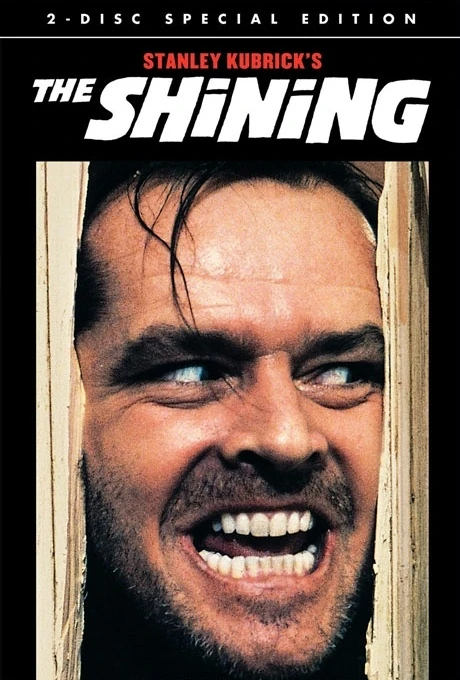
The Shining (1980)
Mama (2013)
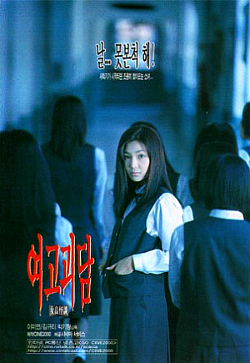
Whispering Corridors (1998)


Why did I dislike some of these films? You’re going to have to wait till I actually write about them. Haven’t I reviewed a few of them before? Yes. Why am I reexamining them if I already reviewed them? You’ll have to wait till I watch them. And that’s all I’m saying on the subject.

That’s all for now, my Followers of Fear. I’m heading off to bed. Until I write again, pleasant nightmares.*

*And if you have any, let me know. I might write a novel based off it.

I’ve literally been waiting seven years for this movie, since I first heard rumors of a remake. I got hopeful when Cary Fukunaga was brought on board to direct and when he started casting, felt my spirits plummet when he left, felt concern when Andy Muschetti replaced him (I did not care for his film Mama), felt a little hopeful again when I saw the first photos of Bill Skarsgard as Pennywise, and felt really hopeful and excited when the first trailer came out. I waited for months and months, possibly building the film up more in my head than I should. When the time came, I invited friends to come see It with me. And finally, the day came. I showed up early to make sure my friends and I got good seats. And then the show began.

I can say with zero hesitation that this is the It film we deserve.

So if you’ve been living under a rock since 1986, It is a Stephen King novel about a small town haunted by a monster that takes the form of a clown, and the seven brave souls who fight it, first as children and later as adults. There was a TV miniseries done back in the 1990’s that was absolutely terrible (how do you take a King novel and put it on ABC primetime? That’s like trying to take a rabid wolf and pretend it’s a puppy dog!), and now we have a feature film, focusing on the children’s portion of the story. And it tops the miniseries in every way possible.

Now, I’m not going to say this is the scariest film I’ve seen. I actually found Annabelle: Creation to be much scarier in terms of jump scares and atmosphere than It was. However, that doesn’t mean It‘s not a scary film. It did have some scares. The problem is, I’m so well-versed with the source material, I could guess where they would do jump scares or anything like that, and it’s difficult to get scared when you know what’s likely to happen next. However, there were a lot of other people who found the film terrifying, so one should consider my reaction an outsider.

And I did get scared at points. More on that below.

My ticket.

I also liked how this was a much more faithful adaptation. Besides taking place in the 1980’s rather than in the 1950’s, this movie sticks pretty closely to the novel. But more than that, it sticks to the spirit of the story, delving into the darkness the TV miniseries couldn’t because of the channel it was on. The film’s not afraid to go as dark as possible (without risking the R rating, of course), showing actual lost limbs and hinting at sexual abuse, among other things.

But while the film is more faithful to the book, that’s not to say there’s no deviation beyond a change in decade, and this is where the story gets scary for me. Especially during the final third of the film, they change a few things in order to make the story flow better, and I think that’s when I find the film not only the scariest, but the most effective. Not only that, but the film uses Dutch angles, lighting and music quite effectively to emphasize dark or creepy or weird scenes, highlighting the strangeness and horror of the story. Whoever had the bright idea for that knew what they were doing.

The film also had its funny moments, and they weren’t distracting at all. I like it when a horror film is able to do that.

I also loved the actors. Bill Skarsgard as Pennywise the Dancing Clown kicks Tim Curry to the curb! Whereas Curry played the character much more comically, here Pennywise is creepy as It should be. Not only is Pennywise’s whole look here freaky as hell, but paired with Bill Skarsgard mastery of a menacing manner, and a slight lisp, and you can’t helped but be freaked by Pennywise. Even when he’s dancing (and yes, Pennywise actually dances in this film, something we haven’t seen in the book or the miniseries), he’s scary. Best Pennywise ever, and I want to dress up as him for Halloween, if not this year then the next.

Me being silly after the film with friends.


The kids are also great. Every single one of them is masterful in making you believe they are these characters, who are given time to grow and develop throughout the film’s two-hour run time. My personal favorite was probably Beverly, played by Sophia Lillis. She was such a great character, one of the strongest of the Losers Club but also one of the most vulnerable due to her home situation, and I loved that about her (as well as how kick-ass she can get). I also liked Finn Wolfhard of Stranger Things fame, who captured Richie Tozier’s dirty mouth and stupid humor just perfectly. And Jack Dylan Glazer did a great job of capturing Eddie as a hypochondriac who grows into a much braver child. And oh God, Nicholas Hamilton as Henry Bowers was such a scary guy!

Honestly, the whole cast was great, and I could go on with how much I loved them.

My Losers Club for the day. Thanks guys!

There were a couple of things I didn’t like, sadly. For one, the CGI was actually more distracting than scary, and a few more practical effects might’ve been better. I also thought that the filmmakers could’ve pushed the envelope in the third act at a part where the characters are trying to find Pennywise, though as it is that part is very good. And finally, I thought one scene would’ve been better with dramatic music than a song by The Cure (I know this takes place in the 1980’s, but do we really need a montage?).

All in all though, I’m very glad we got the version of It that we did. Faithful, well-told, heartfelt, with great characters and wonderful scares. On a scale of 1 to 5, I’m giving Andy Muschetti’s 2017 adaptation a 4. Go check it out, start floating down here, and pray the sequel is just as good.