Posts Tagged ‘Stephen King’

“Within These Walls” by Ania Ahlborn

I’m honestly surprised I haven’t heard of Ania Ahlborn before. I got a recommendation from Audible a couple of months ago to try one of her books, and I ended up getting the paperback version after I finished A Storm of Swords. I’m glad I did, because Within These Walls is one of the scariest books I’ve ever read, on par with the likes of Stephen King.

Within These Walls follows Lucas Graham, a true-crime writer whose career has reached its peak and has since spiraled down into the dust. He gets a letter in the mail from Jeffrey Halcomb, an incarcerated cult leader whose followers killed themselves back in the 1980’s, offering to give Graham his previously-unheard story if Graham promises to live in the house that Halcomb’s followers killed themselves in. With his marriage on the rocks and no other options, Graham and his teenage daughter pack up and head out to the house in Washington, where they find that Halcomb’s promises to his followers of eternal life might be more than just talk.

It’s going to be hard to summarize all that I loved about this book, but I will try. First, it’s hard to put down. The story twists and turns, making you guess where Ahlborn is taking her book every moment. I also liked how she could capture the voices of each of her different POV characters. Lucas comes across as both desperate and obsessed, consumed by the promise of Halcomb’s story and what it could do for his life. Flashbacks told through the eyes of Audra Snow, one of Halcomb’s followrs, really break your heart as you see her fall under Halcomb’s spell. But best of all are the chapters told through the eyes of Jeanie, Graham’s teenage daughter. Teenage logic and thought processes are contradictory, ruled by emotional swings, and not always bound by the rules of the real world, and Ahlborn captures that so well with Jeanie. It actually taught me a couple of things about writing for that age group, something I’ll hopefully keep with me in future stories.

But really, the best part is the scares. Every scare is perfectly done, like something out of a horror movie. In fact, this would be a great movie. Why isn’t this a movie yet? From the initial move-in to the house, to the powerful, climactic end, every spooky scare will chill you and make you worry for the characters and for your sleep. It’s just wonderful.

The one problem I had was that I would’ve liked Graham to maybe investigate some of the house’s history as well as Jeffrey Halcomb and his followers. There’s documents in between a few chapters that go over the house’s history, among other things, but I think it would’ve been interesting if Graham had read some of those and had been affected by them. But it’s a small point, so whatever. I still enjoyed the book.

All in all, Within These Walls a 4.8 out of 5. It’s scary, it’s exciting right till the end, and I will definitely be checking out Ahlborn’s work in the future. If you like a good horror novel, this might be the one for you.

Oh by the way, after I finished this book, I watched a movie over dinner called The Veil about a cult with strange, supernatural happenings, which I only found out after I started watching it. And both the book and the movie were probably inspired by Jim Jones and the Jonestown Massacre, which I read up on this afternoon after I heard the new Outlast horror game was inspired by the happenings at Jonestown. That’s like four Jonestown-related things in one day. I seriously hope that’s a coincidence and not God giving me a sign for what I should do with the rest of my life.

Angela Misri

Angela Misri

Twice already I’ve had the great fortune to talk to my friend Angela Misri about her detective character Portia Adams, and the books she’s written with her. I’ve also had the pleasure of reading and reviewing both books, and I have to say, Angela knows how to tell a compelling mystery story in the tradition of Sherlock Holmes.

Which is why I’m glad to welcome her back and talk to her about the third Portia Adams book, No Matter How Improbable, which I’m sure will be as excellent as the first two books.

RU: Welcome back, Angela. It’s good to see you here again. Now, in the first book, Jewel of the Thames, Portia comes to London, starts a new life, and realizes her heritage. In the second book, Thrice Burned, Portia makes a big decision about her life and her career, as well as facing new challenges in her life. What can we expect for her in the third book, No Matter How Improbable?

AM: Where the first and second books were very much about discovery and building confidence, book three has a central theme of loss. Loss of friends, loss of family, loss of the comfort of anonymity. This book will force Portia to develop as a person amongst all the other humans around her. She no longer doubts herself as a detective, but she finds herself doubting her relationships, which for a highly intelligent introvert can be debilitating.

RU: I bet. And speaking of Portia, characters often change between books. How has Portia changed between Books 2 and 3?

AM: I would say that she has grown to have more confidence in her abilities, she’s more grounded and she knows what she wants to do with her life. She is also starting to see the value of friendship and relationships, something she never had as a child.

RU: Moving onto the mystery bits of the book, can you give us a hint of what sort of cases Portia will be handling?

AM: Ha! I can indeed! One of the casebooks will involve an Italian Princess (hence the beautifully designed book cover by Emma Dolan), one will harken back to a story from the original Sherlock Holmes canon and the last casebook will cause Portia to lose not one, but two of her close friends. How’s that for a hint?

RU: It seems that Portia’s growing more popular every day. Can you tell us about some memorable fan experiences and the growing fan base around the character?

AM: I have been very lucky in my fans who show up again and again for each book event, and bring their friends, and take my books to their classes and do book reports, and so many other things. It’s hard to pick one interaction, but I recently got an email from a woman in Texas asking for a signed copy of Jewel of the Thames for her daughter’s birthday. She said her daughter read it cover-to-cover and it’s her favourite book. I wrote back suggesting I instead send her a birthday card containing a signed bookplate sticker that she could just put in her daughter’s book (to save them a bit of money). She wrote back to say she needed a new copy of Jewel because her daughter had ‘worn out’ her copy. That is such an incredible compliment to an author.

RU: Will there be a fourth book, and when can we expect it?

AM: There will indeed be a fourth book, but I’m currently negotiating the contract, so I am not sure when it will be out. I can tell you that the first casebook in the fourth book comes back to Portia’s roots – it’s set in 1932 Toronto, Canada.

"No Matter How Improbable" by Angela Misri

“No Matter How Improbable” by Angela Misri

RU: Ooh, I love those sorts of stories. They tend to dredge up so many memories! So with Portia’s growing popularity, can we expect a Portia Adams TV or movie adaptation? Anything like that coming out anytime soon?

AM: My agent continues to look for those opportunities, but nothing yet – keep your fingers crossed!

RU: What are you working on besides Portia Adams these days?

AM: I have a zombie book and a contemporary detective novel (not YA) too that I am working on. I also have a chapter in an upcoming Sherlockian anthology that I just sent in to the editors.

RU: Are there any subjects or characters you hesitate or refuse to write about in your stories?

AM: I’m not big on sex scenes in books (either that I am reading or writing) and I will never write a rape scene because I think it’s too disturbing. I also will probably never write about the death of a child because as a mother, I can’t imagine putting those words on a page.

RU: What do you do when you’re not writing?

AM: I’m a digital journalist, so I freelance articles, build websites and digital strategies for clients and I teach at various universities in Toronto.

RU: Is it difficult balancing time between being a full-time writer and a full-time human being these days?

AM: No more so than any other kind of balancing – no stage of my life has had just ONE thing in it. From student to mother to writer, I’ve always balanced my main focus with other things I needed to do. I will say that it took me nearly 6 months to establish a routine as a writer that worked for me.

RU: Finally, let’s assume you got the chance to collaborate with any writer of your choosing on a story or a series. Who would you pick? (And if you say me, I will squeal like a teenage girl at a One Direction concert.)

AM: You, of course Rami, if I had the ability to write horror like you do, I would pitch you an idea so fast your head would spin. Or if we could collaborate on a story where I write the basic mystery and you write the horror… I don’t know, I think it could be neat.

I’d probably pick the same person you’d pick – Stephen King. Or Mark Gatiss in my case, but I’d probably be way too intimidated to string a sentence together. Thanks for asking!

RU: AAAAAAAAAAAAAAAAAAAAH! *cough* Excuse me. Well, thank you for joining me Angela, and I hope to see you back here soon.

No Matter How Improbable will be available for purchase in Canada on March 22. For all those outside of Canada, please email the author herself for a copy. Also check out my interviews for Jewel of the Thames and Thrice Burned to get links for those books. If you’d like more from Angela, you can visit her website, A Portia Adams Adventure. Trust me, it’s well worth checking out.

And if you’re an author wanting to do an interview, check out my Interviews page and leave a comment. We can discuss it there.

Have a good one, my Followers of Fear!

I would like to blame thank my good friend Kat Impossible from Life and Other Disasters for tagging me in what clearly looks to be a ton of fun. It’s the Burn, Rewrite, or Reread Book Tag, which doesn’t actually involve burning but is like a book version of Kiss, Marry, Kill.

Alright, here are the instructions:

  • Randomly choose three books.
  • Choose which of these three you would burn, rewrite, or reread.
  • Do three rounds of this, and then tag someone to do the book tag as well.

Alright, here I go. Let’s see what I come up with:

ROUND ONE

Burn: Day Four by Sarah Lotz. Oh my God, what a book that promised to be good but ended up being a great waste of time. Sure, it started out okay: cruise ship stalls in the middle of the ocean, everything’s in chaos. Quick pace and lots of interesting stuff going on. But then when it slows down after the initial chaos (because things can’t always be quick-paced after a ship breaks down), it just gets boring, with little to no clear direction of where the autor wants the story to go and an ending that is just bizarre (and not a good way). It’s enough that I probably won’t ever read a book by Sarah Lotz again (and considering the reviews online, I’m better off not).

Rewrite: A Head Full of Ghosts by Paul Tremblay. If you read my review of that book, you know that I liked it but I wish it could’ve been a bit scarier. Especially since Stephen King recommended this book to me (why, Your Royal Scariness? Why did you say it was so scary? It wasn’t!). Anyway, if I could I’d rewrite this one and maybe make it a bit more on the scary side. How? I don’t know, some changes in atmosphere, a few more parts where the older sister acts like a creepy possessed girl. It’s a thought.

Reread: Battle Royale by Koushun Takami. You know what I just realized? All the books in this round I’ve listened to as audio books. Also, I’ve actually reread Battle Royale already, but that’s because it’s one of my favorite novels. The language is flowing, nearly every character in the fifty-or-so large cast gets really fleshed out, and it really makes you think on a while bunch of different levels. Plus it does in one book what the Hunger Games wishes it could do in three. So I’ll probably end up rereading (or re-listening to) Battle Royale again someday.

ROUND TWO

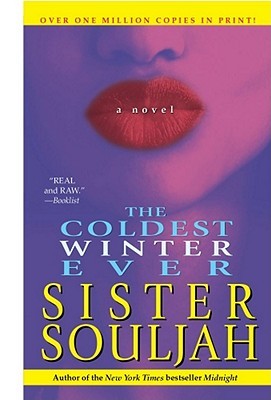
Burn: The Coldest Winter Ever by Sister Souljah. No offense to Sister Souljah, I admire her work, but I did not enjoy her debut novel, about the daughter of a big-time drug king who suddenly finds herself without money or connections and tries to come out on top as her world falls around her. Not only was the main character totally unsympathetic (imagine a novel narrated by an even more annoying Veruca Salt from Charlie and the Chocolate Factory, and you have Winter Santiaga), but it’s basically one big morality tale about why you should walk the straight and narrow and stay away from drugs and hustling and all that or it’ll come back to haunt you. Yeah, I think there are a few memoirs out there that told that story better.

Still, I will say that the book’s language influenced me when I was writing Reborn City and I wanted to really show the dialect of West Reborn. That’s one thing I’ll always be grateful to Sister Souljah for.

Rewrite: Destroyer of Worlds by Mark Chadbourn. This was the last book in a trilogy, the trilogy itself being the third trilogy in a trilogy of trilogies that took our modern world and placed it into a mystical universe mixing Celtic mythology with Eastern philosophy. It’s a wonderful series, but the last trilogy had its problems. Especially the last book, which felt rushed to the point that characters who should’ve gotten some character development got none at all, barely a mention in one case. I really think this book could’ve used a hundred or so more pages to really tell the story the way it should’ve been told, and if I could I might help out with that.

Reread: The Amulet of Samarkand by Jonathan Stroud. If you liked Harry Potter, you should love the Bartimaeus trilogy, which is kind of like Harry Potter but is told in three books (plus a prequel) and is slightly more grown up than HP. The story of a magician’s apprentice who summons a demon to help him get revenge on another magician and the mayhem that ensues when he and the demon get embroiled in a plot against the British government is pure fun, with a wisecracking demonic narrator and a world that is beautifully constructed and mirrors our own in interesting ways. I’ve reread the trilogy before, and I’m always entertained when I do. Check out the first book. You might just find the same gem I found as a kid.

And finally…

ROUND THREE

Burn: Wuthering Heights by Emily Bronte. Honestly, I’ve had to read this novel twice for classes, and each time I wasn’t at all surprised that Emily needed a review by her famous sister Charlotte to get this book noticed by people, because it sucks! Not only is the narration and style annoying, but the story drags, and a lot of what happens makes you scratch your head. Seriously, did the Lintons never consider calling the local sheriff when Heathcliff kidnapped his niece and tried to marry her off to his sickly son? Like I said, I’ve read it twice, and I don’t plan to read it again. It may be a classic, but it’s a classic that never should’ve been one.

Rewrite: Your Heart Belongs to Me by Dean Koontz. Koontz has written some great novels–I love the Odd Thomas series, though I’m behind on the books, and The Face would make an amazing movie, it’s that good–but this one really got me angry. It started out with promise: guy who made money off the Internet needs a heart transplant, but he’s very low on the donor list. His new doctor gets him put high up on another list, and he gets a new heart. Thing is, the person who gave up their heart for him might be coming back for it. Yeah, sounds like a ghost story, but it turned out to be some weird spy thriller tied up in a Christian morality tale. I kid you not, if Koontz had stayed with the ghost story element instead of switching things up about two-thirds in with the spy twist, I might’ve really liked this novel. And now you know how I’d rewrite it.

Reread: The Alchemist by Paulo Coelho. This is a wonderful novel about following your dreams and fulfilling your personal destiny in this grand world, as told through the eyes of young shepherd Santiago as he goes on a journey to Egypt after having a dream about finding treasure at the pyramids. I read it as a teen and it blew me away. If given the chance, I’d love to reread it again, because it’s such a beautiful story that gets you on so many different levels. If you haven’t read it, this is definitely one you should check out, especially since it’s been translated into so many different languages. Trust me, you won’t regret it.

And now, the people I tag:

Have fun! And make sure to link back to me when you post these.

That’s all for now, I’ve got a busy day ahead of me and I’m going to get to it. Wish me luck, my Followers of Fear!

It’s Friday again, so you know what that means. It’s #FirstLineFriday! Also known as “that blogging trend Rami Ungar’s trying to start with mixed results.” Here are the rules:

  1. You write a post titled #FirstLineFriday (hashtag and all)
  2. You explain the rules like I’m doing now
  3. You post the first one or two lines of a potential story, story-in-progress, or completed or published work.
  4. Finally, you ask your readers for feedback.

This week’s entry comes from another story I came up with in high school, and it has some influences from both Stephen King and some slasher movies from the 80’s. Enjoy:

She had to hide, and quickly too. Mitch was coming, and he sounded angry.

Thoughts? Comments? Let’s discuss.

That’s all for now. I’m glad the weekend is here, especially since that means Star Wars has finally arrived. I’m going to see the movie Tuesday during a matinee performance. Should be good (but if anyone spoils the film for me, I will make them regret it). Have a good weekend, my Followers of Fear!

Recently I read an article about eleven recent novels that Stephen King apparently found scary. Being the fan of His Royal Scariness that I am, I checked out the article and found this book at the top of the list. The premise sounded interesting, so the next time I had a credit for an Audible audio book, I got A Head Full of Ghosts by Paul Tremblay, which is about a young woman who tells us her memories of when her elder sister started showing symptoms of schizophrenia, but when treatment after treatment seems to fail, the family comes to the conclusion that the sister is possessed, and somehow a reality show documenting the family’s attempts to exorcise their daughter evolves.

Like I said, it sounded interesting, and it was, though I wouldn’t call it scary. I mean, there are a few moments that can be terrifying, but even imagining them as a horror movie in my head, I didn’t really feel that it was as scary as King hyped it up to be.

Still, A Head Full of Ghosts is definitely not a dull read. In fact, it’s quite entertaining. The main character and narrator, Meredith “Merry” Barrett, is one of the most enjoyable types of narrators, the unreliable kind (see my post on unreliable narrators). Eight years old at the time of the events of the novel, she tells them anew to a writer for a new book in the year 2030 (which apparently still values paperbacks and blogs. I find that reassuring). As she tells us early in the novel, she misremembers a lot of what happened, due to the passage of time and of course what everyone has told her has happened.

To a certain extent, most of the characters in this novel is unreliable to a degree. We can’t tell what’s up with the older sister: is she possessed, is she schizophrenic, is she something we don’t have a word for? The things she says and does, you get a lot of conflicting signals. I have my guesses, but you really don’t know at all, right up to the end. The father is struggling because of unemployment (I sympathize) and has recently rediscovered God and begins to see everything through a religious lens with disastrous results. The mother seems to be perpetually grumpy and wavering between trying to be in control and trying to be responsible as her life unravels. The priest from the Catholic Church seems priestly, but underneath that you get a sense that he’s milking this situation for his own reasons. It’s amazing how little you can actually trust these characters.

My favorite parts of the novel involve segues into a blog by a horror fan (a woman after my own heart) where she gives us an idea of what watching the reality show was like, as well some good ol’ scholarly examination of some of the show’s deeper meanings. And all with a snarky voice too. These segments are hilarious and fun, but they also help us as readers put the story and characters into context and prepare us for future events in the novel.

Another part I enjoyed about the novel is just seeing Merry and her family experience her sister’s illness/possession/whatever and then the craziness that is being the subject of a reality show, how fame has its downsides, how the show and the ordeal brings out the worst in her family, how her relationship with her sister becomes strained by all these events. It’s a very engrossing evolution.

One problem I do have with this novel (besides the fact that I never really found it scary) is that we never really see Merry outside of the context of her family or the show. Not even when we see her as an adult, because it’s fairly obvious that her family and the show has affected the adult she’s become. I would’ve liked to see Mary outside of the context of the family or the show, maybe in the company of friends or her soccer program. Those aspects of her life are mentioned, but they’re not really delved into, and I think she would’ve been a fuller character if we saw that her family and what’s going on around it isn’t entirely what defines her.

Oh, that and I didn’t particularly care for the audio book’s narrator. I mean she was good, especially when she was voicing the older sister, but when she does male voices, especially the father character’s voice, it sounds like every daughter’s impression of her embarrassing father or teacher. Just not convincing at all, more comical than anything.

All in all, I give A Head Full of Ghosts a 3.9 out of 5. It’s not as scary as I’d hoped it would be (or maybe I just listened to it wrong), but it’s psychological, it’s entertaining, and you want to see it through to the end. If you’re looking for a book that’s like The Exorcist with a modern twist, this might not be for you. But if you want to read something with dark subjects but you’d like to sleep at night, I think you’ll find this book fits the bill.

Smile Dog, a creepypasta character.

Recently I’ve been delving into a genre of horror that’s grown up on the Internet, and I have to say some of it is quite impressive. I’m talking, of course, about creepypastas.

Now, for those of you who’ve never heard of this and think I’m talking about a Halloween treat, a creepypasta is actually kind of like an Internet campfire ghost story, scary stories designed to shock and terrify and that originate online.  They’re sometimes accompanied with images, audio or videos, usually distorted or featuring or gore or creepy imagery, in order to intensify the effect. The name “creepypasta” comes from “copypasta”, a slang term for text that is copied and pasted around the Internet multiple times.

And even if you’re not familiar with creepypastas in general, you may have heard of some. Slender Man, whom I’ve written about on this blog before, has been the subject of numerous creepypastas in the past, to the point where some creepypasta-devoted websites no longer upload new literature about ol’ Slendy. There’s also the novel Penpal, which started out as a series of creepypastas, and Candle Cove, a story that’s reportedly being adapted to television by the Syfy channel.

Slender Man has been featured in a variety of creepypasta.

Now while the length and quality of creepypastas, like every other type of fiction, vary from one to the other, there are some ways to categorize them:

  • Anecdotes: as far as I can tell, these are the most popular of the creepypasta story form. The narrator(s), often anonymous, talks about a scary legend, a new story, or something from their past. The anecdote stories are often told in the epistolary format, or in the form of a letter or journal entry, though this being an Internet phenomena they’re more often told as blog posts or Reddit threads. They’re certainly my favorite form of the genre.
  • Rituals: As the name suggests, these are things you can do to make something terrifying happen to you or someone you know. Examples include the Midnight Game or Bloody Mary (which I’ve tried on numerous occasions, and I’ve never seen any results). Sometimes these rituals have a short backstory, but they can vary, like with the Bloody Mary game. And as you can guess, these are quite fun at parties.
  • Lost Episodes: This form has kind of fallen out of favor but it has some pretty famous creepypastas. Lost episodes usually describe a missing scene or episode from a famous TV show, usually a comedy or children’s show, that depicts a character acting very strangely and violently, usually ending in that character killing themselves or the other cast members. Often times the episodes, when they are supposedly found, feature strange or distorted audio and video, and occasionally are rumored to cause violent behavior in viewers. As you can guess from the description, these are pretty formulaic and repetitive, which is why they’ve lost popularity, though some are quite well known among creepypasta devotees.

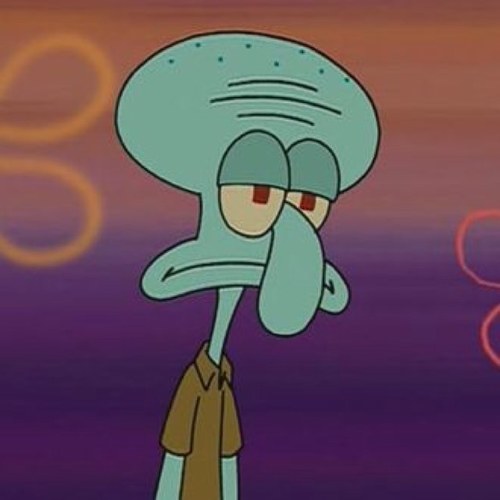
Squidward Tentacles from Spongebob Squarepants has been the subject of a Lost Episode creepypasta. You can probably guess the rest.

As I said above, there are entire websites devoted to the creepypasta genre and droves of fans, some of whom create their own stories and upload them online. What makes this genre so popular? Well, I’m still pretty new to the genre, but I think that there are several factors that may explain this popularity. One is that creepypastas tend to be a bit more extreme than mainstream horror. They’re often accompanied by scary imagery or some other strangeness, and that adds to the creep factor. There’s also the very subject matter of creepypastas: with some stories, you can take elements from them and create your own stories. Slender Man is a character who’s been featured in a variety of media, and plenty of people have made creepypasta based on him. And then there’s the virality of creepypastas: you’re encouraged, by their very nature, to keep sending them around and around the Internet. There’s a certain power in that very concept that’s exciting, and encourages creators as well as readers.

It’s especially interesting when you consider that this is a genre born on the Internet, which has the reputation of having content geared towards people with short attention spans, and also is sometimes considered the gathering place of creators who couldn’t make it in the “real world” (eye roll please?).

Personally, I think creepypastas are quite entertaining. Some of the stories are very good, very creepy, and I enjoy listening to readings of popular creepypasta by YouTube artists. I know some people find them too extreme or that they lead to violent behavior (a subject for another time, not going into it here), but I see it as no different than enjoying a Stephen King story or going to see the latest scary movie. Just a different format with different rules that I would like to learn (though not write; by the very nature of creepypasta, I wouldn’t have as much creative control or make some side income off my work. Maybe I’ll try writing in the style though for a novel someday).

If you’d like to try some creepypasta, here are some good ones I’ve come across. If you check them out, let me know what you think:

Are you a fan of creepypasta? What is it about them that you like or dislike?

What are some creepypastas that you’d recommend trying?


You know what there are a lot of these days? Fictional universes where characters from a variety of diverse works are all brought together into a single work or series of works where they interact with one another in various ways. From HP Lovecraft’s Cthulhu Mythos, to the many different iterations of DC and Marvel comic book worlds and their film and television counterparts, to the shared elements of Anne Rice’s vampire and witch series and Stephen King’s interconnected multiverse and then some, there are a lot of these shared universes these days. Heck, there’s even theories from everyday people about how different works by certain creators are all secretly part of the same story (examples include this Pixar theory and this theory on the majority of Joss Whedon’s work).

So I’m wondering, what is the reason behind all of these interconnected story worlds? What makes storytellers and creators of all different mediums want to have such expansive universes where everything is secretly connected and you have to create a huge conspiracy layout on your wall with tape and string and stuff?

Well, I think some part of it is money. At the end of the day, most storytelling is a business (except for maybe some of what appears on YouTube), and if two characters in separate stories are making profits for a creator or their business, they may try to bring the characters together if it’s feasible and if the fans want to see it. Heck, that’s kind of the reason for most comic book crossovers and the movies based around those crossovers. Fans enjoy seeing Superman and Batman work together or Tony Stark mentor Spider-Man or whatever, so the companies give them what they want and get a profit back.

That’s not to say that all of it is money or that money’s the biggest motivator (unless you’re a Hollywood studio, of course). Another big part of it is the creators. They love their characters, and many would like to see those characters they’ve invested time and effort in come together in an awesome story. How would they play off each other? What sort of trouble would they get into with each other and how would they pull themselves out of it? And how would they grow after meeting each other? I think a lot of writers create these crossovers just so they can answer these questions. They may make multiple volumes to continue asking those questions, adding new characters or situations to continue creating exciting new stories and dynamics. It can be pretty enticing to do that with characters you love so much, and I bet audiences enjoy it as well.

In fact, I’ve imagined doing that with Snake and Laura Horn. Yeah, I have. I’ve mentioned before that I’ve wanted the story of the Snake to continue, and I’ve planned sequels not just for Snake, but for LH as well, including one where the two characters meet and get into a crazy adventure together. And I may be a few books and several years from that crossover, but it’s there if I want to write it, and eventually I will write it. It just sounds like too much fun to pass up.

snake front cover

I really have to get around to that sequel someday soon.

Another reason that creators may do crossover works is just because it makes things easier. Now, I hear you typing in the comments already “How the heck does a crossover or shared universe make things easier?” I know it seems counter-intuitive, but let me give an example: Anne Rice introduced in Queen of the Damned, the third book in her Vampire Chronicles, the Talamasca, an international organization of scholars interested in studying the paranormal. Now, try as I might I could not find any information on why, but when Rice wrote her Mayfair Witches trilogy, she brought in the Talamasca society. Why? Because at some point in the first book she details the entire family history of the Mayfair family and its dozen-plus matriarchs and I guess it made sense to just bring in the Talamasca as an explanation as to why there was an entire history of the family when the family itself isn’t very interested in its history. And it helped with the later books in certain ways to have the Talamasca. See? It was easier to bring in an existing fictional organization concerned with the paranormal than make up an entirely new reason for a third party to document an entire mystical family’s history.

I’ve also heard that’s why HP Lovecraft created the Cthulhu Mythos. He didn’t intend to create an entire cosmology, he just decided it might be easier to work with some familiar characteristics when creating all-powerful monsters, and from there it wasn’t too hard to make the jump to connecting Cthulhu to Yog-Sothoth and any of the other Old Ones. Now, I’m no Lovecraft expert, but I’d buy that explanation.

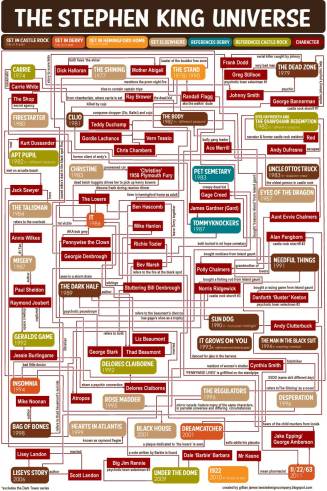
King’s references are so crazy! Check out this chart!

Of course, some authors do it because it’s fun to have a shared universe, for a variety of reasons. You can return to familiar characters and locations by doing so. You can make your readers marvel and go back to another story to say, “Hey, that matches up with so-and-so.” You can create a cosmology or a special reason why a character or characters or place or places appears in so many stories (I’ve got a character or two like that, I just haven’t been able to put them into any works yet. I tried with the human Barbie story and Evil Began in a Bar, but I couldn’t fit them into the former and I haven’t figured out how best to edit the latter yet, so…). And sometimes, it’s just fun to mess with your readers and make them wonder what the heck it all means (I’m pretty sure that’s the reason Stephen King references his other works so much, and the Dark Tower books simply grew out of a desire to create a complex story out of all that messing about).

Whatever the reason someone creates a shared universe, it’s pretty clear that there are plenty of reasons to do so, and that shared universes are here to stay. And whatever the reason behind them, as long as they’re done with love and people enjoy them, I see no reason not to keep doing them. Besides, I may have one or two I’d like to create someday.

Do you have a shared universe in your fiction? Why’d you create it? What has been the result of that?

It’s Friday again, so you know what that means. It’s #FirstLineFriday! Also known as one of the highlight of my weeks. Especially if people like what I put out.

Okay, here are the rules, as usual, for #FirstLineFriday: you write a blog post with the title #FirstLineFriday, hashtag and all, and then you repeat the rules. Then you post the first one or two lines of a possible work, a work-in-progress, or a completed or published work. Final step is to ask your readers for feedback. It’s great fun.

This week’s opening comes from a novel I had the idea for yesterday while walking home and listening to the Needful Things audio book by Stephen King (that was a trippy and creepy book, I tell you). It’s the sort of story that has a really strange mystery to it. I hope when I get around to writing it, I’ve figured out the mystery a bit more. Enjoy:

Any writer, engineer, or psychologist who’s good at their job will tell you that a story, Rube Goldberg machine, or the mind is made up many different and complex parts. Looking back, I think I was stuck in twisted versions of the first two and in danger of losing my own mind, as un-complex as that was at fourteen.

Thoughts? Too long? Suggestions? Let me know in the comments below.

That’s all for now. I’ll try to post a few posts over the weekend. I’ve got a special one planned for Saturday night, believe me.

Have a great weekend, my Followers of Fear!

About a week or two ago my friend Angela Misri posted on my Facebook timeline about a short story contest that Stephen King would be part of. Apparently people could submit short stories under four-thousand words and His Royal Scariness would pick the winner. Unfortunately the contest was only open to UK residents, which upset Angela and me a great deal (I knew I should’ve been born a British lord, but for some reason I decided that being the son of two rabbis was a better deal). However, if I could enter the contest, and it allowed short stories under six-thousand words, this probably would’ve been the short story I submitted.

After extensive editing, of course.

“The Playroom” is a very weird short story about a woman who steals from a mob boss whose casino she works in, and the terrifying results of that little action. I’d go into further detail on what those results are, but then I’d be giving away too much of the story. I will say how it came to be though: I woke up one night, a few days before I decided to take a break from Laura Horn, I think, and this little mini-movie started playing in my head. I don’t know what caused it–I’m pretty sure it didn’t have anything to do with anything I might have been dreaming prior to waking up–but there it was, fully formed in my head, and oh-so strange. I immediately wrote it down and decided to write it as soon as possible.

Which, as I said a moment ago, was when I decided to take a break from Laura Horn. How convenient that all turned out to be.

Anyway,this is definitely one of the weirder short stories I’ve written. And when I say something is weird by my standards, that’s saying something. And you definitely get that weird sense just by reading it, I think. As you go on and you feel yourself falling deeper into a rabbit hole, you definitely wonder where this is going to go. And when you actually find out where it goes…well, I wouldn’t want to give too much away. The first title of this short story gave away so much that I dare not speak it here. The second title was so cliched I couldn’t help but change it (“The Secret Room”–what horror writer doesn’t have a story titled that?). So now I’ve got “The Playroom”. Intriguing, doesn’t give away much, and somehow conveys this isn’t your average horror story.

At least, that’s what I hope is what it says. I’m biased, so what do I know?

Anyway, I think with a bit of editing, this story could actually go from just under fifty-six hundred words to under five-thousand or maybe even under four-thousand without sacrificing quality. As you know, I’ve had trouble keeping my short stories brief without sacrificing quality in the past, so I’d be very excited if I could get this one that short without any problems. There are probably a few sections that could be cut from this story. Or I might keep it as long as it is. With a bit of work, there may be a magazine or two who would like to publish this even if it is longer than what some magazines like to publish.

Before I do that though, I have a novel to finish editing. I think I’ll get right on that in the morning.

So good night, my Followers of Fear, and pleasant nightmares. I know I plan to have a few.

I’m telling you, I have been wanting to see this movie since I first heard of it, and it was killing me inside that I couldn’t see it when I was in Germany…or right after I got home. I was a fan of the books when I was a kid, and some of them even scared me so bad that I needed to take breaks from them. They were my King before I got into King. It really hurt me physically not to indulge in my childhood nostalgia and go see this film. But tonight my dad had some free time, and he was like, “Want to go see a movie?” So I said yes. And suffice to say, I was not at all disappointed (and neither was my dad, thankfully).

Based on the beloved series of children’s horror books by R.L. Stine (who by the way is Jewish, from the neighborhood I grew up in, and went to Ohio State. Coincidence? Probably), Goosebumps stars Jack Black as the author himself, living a reclusive lifestyle in the small town of Madison, Delaware with his teenager daughter Hannah. When Zach Cooper moves next door and becomes attracted to Hannah, he starts investigating the mysterious family next door and accidentally causes the monsters from the Goosebumps books–who are very real–to be released from their manuscripts and go on a rampage. Now Zach, Hannah, and R.L. Stine have to get the monsters back in their books before they tear Madison apart.

Let me just say, this was a movie with a lot of love and hard work put into it (unlike some other films taking advantage of people’s childhood nostalgia I could name). The story is very well written, and even has some twists in it that I didn’t see coming, and I pride myself on usually being able to see the twists in scary movies. The humor is also very good, keeping the mood of the movie light without getting too ridiculous or stupid. And the actors are just great. Jack Black plays Stine as a misanthrope who finds some way to steal every scene he’s in, while Dylan Mimette (who I’ve always liked whenever I’ve seen him in other works like Scandal or Agents of SHIELD) as Zach is funny and sarcastic and likeable, the kind of guy I’d like to hang out with.

The only characters I really had problems with are Champ, Zach’s friend, and Hannah, R.L. Stine’s daughter. Champ is comic relief, and while he’s funny as an awkward teen who just inserts himself into Zach’s life because…maybe he’s lonely and hopes the new kid is too slow to learn to avoid him? I don’t know, but the moments where the humor is a little much do come from him mostly, and he doesn’t contribute much to the story otherwise. As for Hannah…she’s just really there to be a love interest. And unlike River Song from Doctor Who, who was created for that very purpose, there’s not much to her beyond that role she plays. Her actress, Israeli Odeya Rush, is fun and gives off a snarky teen vibe, but that only does so much for the character.

Of course, I can’t forget the monsters. That’s the main attraction, the reason people who grew up with the books came to see the movies, because that’s what they remember most. Now obviously, in a movie that’s an hour and forty-five minutes and has to spend time developing characters and getting to the main conflict of the story, you can only spend so much time on each and every monster, which means a lot of them only appear in big group shots, but even in those you see a lot of work went into them. And for the monsters they focus on, they are great. Yeah, a lot of them are CGI, but even then they’re fun to watch. They make you believe they’re there and that we should be scared of them.  And Slappy the dummy, who leads the monsters, is like a little mini-Joker. He’s not the best villain I’ve seen on film, but as a talking dummy who enjoys causing chaos for chaos’s sake and to get back at Stine, he does the job well.

I could go over some other thoughts I had about the film, but I’ll leave that for the YouTube critics who around next Halloween will be putting out videos going over this movie with a fine-tooth comb. I think instead I’ll just wrap up by saying that this is a fun and wacky horror-comedy, earning a 4.1 out of 5. It may not get kids to read the Goosebumps books if they haven’t read them before, but it’s fun for the whole family and if you know the Goosebumps books already, you’ll enjoy seeing them on screen.

By the way, having the characters from my stories come to life is something of a dream of mine. I always feel like a parent to my stories and the characters within though, so I think if they did come to life I’d have a very different experience than R.L. Stine in the movie did. In fact, if I were to write a story about what that experience would be like, it might start something like this (#ExcerptSunday, anyone?):

The author heard his alarm go off and opened his eyes reluctantly. He wanted to go back to sleep, but today he really couldn’t afford to sleep in, even if he had the day off. So still feeling sleepy, he rolled out of bed, turned off his alarm, and headed to the bathroom. A few minutes later, teeth brushed and freshly shaved, he stepped into the hall, thinking about what he was going to wear and all the errands he was going to run today…when he noticed a tiger in the hallway.

The author froze. Even with his glasses still in his room, he knew what he was seeing. Tawny coat, black stripes, big face with whiskers and yellow eyes. There was no mistaking it. There was a tiger in his house. Am I dreaming? he thought. Am I still in bed?

The tiger padded towards him, its breathing heavy. Before the author could think how best to react, it stood up on its hind legs, placed both paws on either side of his head against the wall, and licked his face. The author, dumbfounded and amazed, could only laugh as the rough tongue scratched gently at his cheek. What is going on? he wondered, pinching himself to see if he was dreaming.

The tiger stepped down and rubbed its head against his stomach. And suddenly the author realized that this wasn’t a tiger, but a tigress. And even stranger, he knew this tigress. He knew her very well. After all, he was her father.

“Lizzy?” he said, hardly daring to believe. The tigress regarded him with intelligent eyes before turning around and padding down the stairs. The author wanted to call after her, but then something black streaked out of his room and past his face. He jumped as the black thing briefly stopped and formed a familiar body in the air before rushing down the stairs. Confused, the author went to his room, and saw someone had laid his clothes out for him.

For a moment, the author did nothing. Then he whispered, “Is this really happening?” Then, “Do I dare believe it?” Quickly the author threw his clothes and glasses on and rushed downstairs, where the biggest surprise of all awaited him:

The black shadow he’d seen earlier and the tigress were there. So was a wolf and a leopard. And scores of children, children he knew to be much more than they appeared. And a masked man dressed all in black, talking to a woman with green skin and pink hair. And a man with a gas mask, and a Grim Reaper, and a raven-like creature, and a hairless cat who sidled up to him and said, “Surprised?”

The author picked up the hairless cat, feeling like he’d ingested some amazing drug without realizing it, and said, “Very. How is this possible?”

The cat didn’t answer, but instead purred loudly and climbed onto the author’s shoulder. Moving through the sea of people and creatures, who all greeted the author with smiles and warm words, he made it to the kitchen, where a teenage girl in a witch’s costume made a plate with a Belgian waffle on it and a mug full of black tea float from the counter to his normal seat at the table. Sitting down, the author thanked the witch and dug in. It was delicious.

“So,” said a man in the doorway, whose face and body were half-transformed into a familiar-looking demon. “Today’s your day off, and we’re all yours till tomorrow morning. How about you blow off the errands and do something fun? Huh?”

The author thought about it as he took a sip of tea. He was aware of so many eyes on him, hopeful and expectant. And then a devilish smile came to his face. He knew just what they were going to do today.