Posts Tagged ‘storytelling’

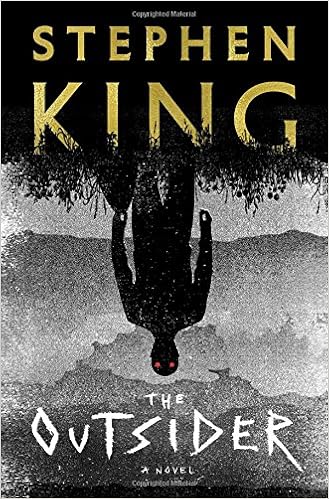
You know, I’ve never reviewed a proper Stephen King story on this blog before. I’ve reviewed plenty of adaptations of his work, but never any of his actual stories. Probably because I’ve either gotten to them too late and so much time has passed that doing a review seems silly (which is true with the vast majority of his bibliography) or I didn’t feel there was enough to talk about to actually write a decent review (such as Gwendy’s Button Box, co-written with author Richard Chizmar). So I’m glad I’m finally able to review one of his books here. And this one is something else: it’s his latest novel, The Outsider.

The Outsider follows Ralph Anderson, a detective in the small city of Flint City, Oklahoma. The novel opens with Ralph and his fellow officers arresting Terry Maitland, a local teacher and boys’ baseball coach who is beloved by Flint City, for the horrific murder of a young boy. The state’s case seems ironclad: there’s not only eyewitnesses, but a ton of physical evidence linked back to Maitland. But soon after the arrest, evidence arises to cast doubt on Maitland’s guilt, and it’s just as ironclad. The contradiction in this case leads to a domino effect as Anderson and his allies try to figure out if the beloved Coach Maitland is hiding a darker personality, or if someone else, someone darker and worse, is at large in the town.

Now before I go into my review, let me just say that this book shares a few characters in common with King’s Mr. Mercedes trilogy, and contains a few spoilers. So if you haven’t read those books yet and would like to be surprised, probably hold off on this book until you’ve read those.

So I have to say, I came away very satisfied with this story. I like how King starts out with this novel seeming like a regular thriller-mystery: he shows the arrest, switching between the action and then showing interviews and documents from the investigation. The Outsider continues in this vein for a little while, but then goes in a different direction that defies your expectations so far. From there it develops into a compelling and strange read with some great characters. I especially liked Holly Gibney, who comes from the Mr. Mercedes trilogy. She’s neuro-atypical, like myself, but is shown to be an integral part of the investigation and makes certain leaps that, without her, the other characters might never be able to. It’s a very real portrayal of someone with disabilities, and I related to Holly on a number of levels. I love those sorts of portrayals of neuro-diverse people in fiction, and I hope to see more in the future.

But probably the novel’s greatest strength is just how hard it is to put down. King takes mystery, the strange, great characters, and much more to make a read that’s hard to put down. Normally I’m able to restrain myself to reading during my lunch break or on weekends, but this novel was so good, I found myself reading it late into the evening at times (which helped me to get to this review today).

That being said, The Outsider does have its issues. One of the biggest ones is that we’ve seen a lot of the concepts used and explored in the book in other King novels, and frankly done better there. I won’t say what, but they’re pretty obvious, and every time they came up, I kept thinking to myself, “This feels like a lighter/duller version of insert-story-name-here.” That, and I felt that the climax could’ve been a bit more epic. It was decent, but I felt it was hampered by too much exposition on the parts of the characters and the story’s villain, who is humanized a little too much (that makes more sense if you’ve read the book). Which, unfortunately, lowers the terror factor with a creative villain that could be as scary as some of King’s other famous villains. I was disappointed about that.

Overall, The Outsider is an entrancing and powerful read, subverting your expectations and leaving you wanting more. On a scale of 1 to 5, I’m giving it a 4.6. Check it out, and get sent down a mine shaft full of the strange and the unsettling.

That’s all for now, my Followers of Fear. I’ve got my own novel to work on, so I’m going to get on that this evening. Until then, pleasant nightmares!
It’s a question every creator wrestles with from time to time. Writers are no exception. We wonder if anything we write is worth reading by anyone other than our family and close friends (who, most likely, will tell you they loved it because that’s what family and close friends do). We wonder if we’re just wasting our time sitting at the computer or in front of our typewriters or in our notebooks, trying to tell stories that range from the mundane to the fantastical and mundane.

In short, we ask ourselves, “Do my ideas suck?”

This may surprise you (I am Mr. Smiles and Jokes and Weird References to Demons and Monsters, after all), but I ask myself this question a lot. I often wonder if I’ll write anything that more than a few people will read in my lifetime, let alone afterwards. It’s a question I’ve been asking myself a lot more lately as I’m in the midst of rewriting a lot of Rose. Although I tell myself that I came up with these changes myself, and that both I and my publisher think they’ll do a lot to help the story and make it a better read, in the back of my head I’ve got this little voice whispering dissent and telling me that what I’m writing won’t amount to much.

And you know what? Sometimes I’m tempted to believe that voice. I mean, thousands upon thousands of novels are published every year, but very few of them gain the attention we wish them to have. Quite a few even get critically panned. It often seems like the field is too big and too difficult to really make a difference in. So why should we try?

But then there are a couple of things I keep in my mind that can, if not shut up that voice, then at least turn the volume down on it. Both of them, not surprisingly, involve Stephen King. The first has to do with his debut novel, Carrie. Did you know when King first started writing Carrie, he actually threw the first few pages into the trash because he was convinced it was trash and would come to nothing. He only kept at it because his wife fished the pages out of the trash, read over them, and said they were good and that he should keep at it. The novel was later published and as we all know, became a huge hit, inspiring two excellent movies (though I prefer the 2013 version), a meh TV movie, and a musical that I wish would get a proper revival and a North American tour. All from a story that King was ready to throw in the trash.

The second story is another King work, Thinner, which he wrote under his Richard Bachman pen name. If you were to give the story an elevator pitch (see my article on elevator pitches for more on that subject) it would probably be something along the lines of “A man is cursed to become thinner and thinner.” And just from hearing that, you might laugh. That sounds like a comedy involving some prissy housewife who thinks if she doesn’t stay a certain weight, her husband will cheat on her and then she starts magically losing weight. It doesn’t sound like a scary novel.

Thinner by Richard Bachman (aka Stephen King); silly sounding concept, great payoff.

But from what I hear (I haven’t read any of the Richard Bachman books yet, though I know I should), it’s a pretty creepy story, one that inspired a movie (quality of the movie is debatable). All from a very simple idea of what happens when weight loss goes really, really bad. It sounds stupid, but it turns into an effective horror story.

And I could come up with tons of examples of this (did you know HP Lovecraft thought The Call of Cthulhu was only so-so? And now it’s one of his most famous works). But they all boil down to one thing: our ideas don’t always suck. In fact, they may only suck in our minds. To others, they may be great, mind-blowing, or even influential. And sure, not all of our stories will turn out to be great, but the vast majority of them, with enough work and a little bit of luck, can become awesome.

And I’m reminded of that every time someone expresses interest in reading Rose. People hear what it’s about, and they want to know more, or for me to tell them as soon as the book is out. If these people really do end up reading Rose, liking it and even letting people know they like it, then who knows? I might be able to shut up that little voice once in my head, at least for a little while.

So if you’re worried that you’re only writing crap, don’t pay your little voice any attention. Just keep writing and polishing and seeing where your story goes. Who knows? You may end up putting out something really amazing, and you’ll be glad you stuck with it for so long.

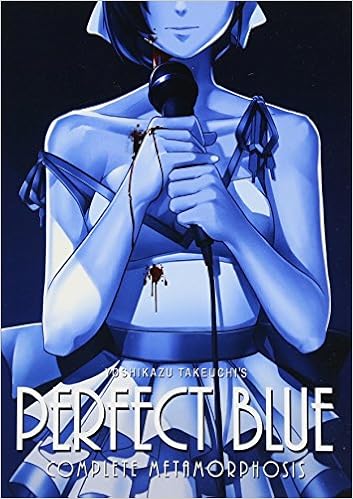
A good number of you probably remember that late last year, I did a series of posts where I reevaluated scary movies I’d previously seen and disliked called the Rewatch Series. The first of those movies was the psychological horror anime movie Perfect Blue, released in 1997. I found that my previous dislike for the film had been based on my not understanding it, and that with a few more years and a better understanding, I found it to be a really good movie.

I’d also known for a long time that the movie was based on a novel, but it wasn’t translated into English and therefore I had no hope of reading it. That is, until I found out a few months ago that Seven Seas Entertainment had licensed and translated the novel for the English-language market. Naturally, I got excited and tried to get my hands on it. And after about four months, I finally did get a copy and sit down to read it.

Boy, that’s different than the movie in more ways than one. But of course, this won’t be a book-vs.-movie comparison (at least not entirely). It’s a review, so let’s get to reviewing.

Perfect Blue: Complete Metamorphosis follows two very different people: Mima Kirigoe, a Japanese pop idol who is trying to leave behind her image as an “innocent” starlet and take on a more mature image; and the other is someone simply identified as “the man,” a man who is obsessed with Mima and her “innocent” image and resolves to keep her innocent by any means necessary. When their paths intersect, their lives will be changed forever.

So right away, I should point out that the movie took a lot of liberties with the original story. Whereas the movie was a deeply psychological story about a young woman struggling with her identity, how people saw her, and how she saw herself after a career change, the novel itself is a very basic stalker story, like what you might find in an episode of Criminal Minds.* The story is mainly told from the viewpoints of Mima, who in this version is okay and even yearns for the changes to her image so she can progress in her idol career, and “the man,” whose sanity erodes the further Mima seems to get away from her innocent image and whose plans get more drastic. There are times when the story is told from the POV of other characters, but they’re always related in some way to the lives of Mima and “the man.”

What I do like about the novel is that “the man,” who in the movie is called “Mr. Me-Mania,” is given more complexity and we see more things from his perspective, why Mima’s innocence is so important for him and some of his ideas about the world. Not only that, but in the movie Mr. Me-Mania is, while intimidating, mostly a passive character, not taking any sort of action beyond stalking until late in the film. But from the beginning of the novel, “the man” is completely active and menacing, committing a horrific crime within the first few pages of the novel. It’s very effective for setting our perceptions of “the man,” and sets things up for the more disturbing actions he takes later in the story.

Speaking of which, there are some really disturbing scenes in the novel, especially as you go later in, that utilize body horror. Now, normally I’m not that big a fan of body horror (I associate it too much with torture porn, which I’m not the biggest fan of), but here it’s done very well, especially when “the man” starts practicing for his plan to “save” Mima. This is followed by a very scary climax, which utilizes tension, body horror, and good old-fashioned chase to effectively keep the reader drawn in and wanting to find out what happens next.

While not the same as the film, the novel is still good on its own merits.

However, the novel isn’t perfect. As I said, the story is a very basic stalker tale. The novel doesn’t go as deeply as it could into who Mima is as a person, and I would’ve liked to go deeper into that, as well as into other aspects of the story (but then again, Takeuchi did say in an afterword that he was simply writing a story around the conflict between an idol’s desire to grow and a fan’s desire to hold onto the image he fell in love with. On that alone, he certainly succeeded). That, and I felt that the novel ended a little too abruptly, without really showing the aftermath of the story’s main events.

Still, t is a decent, if very simple, story of psychotic cat and mouse. And while I like the movie better, I have to say I’m glad I picked up the original novel. On a scale of 1 to 5, I’m giving Perfect Blue: Complete Metamorphosis a 3.8. A gripping story of obsession with plenty of tension and well-written body horror. Take a look and let the story get under your skin (whether you want it to or not).

*In case you’re curious about the author’s feelings about the changes made to the story for the movie version, there’s an afterword at the end of the book written just after the film came out where he seems not only okay with the changes, but also was enthusiastic about the movie itself. Always nice when an author is okay with the changes made from book to film.

I’ve been hearing about this film for a few months now, and the earliest whispers I heard was that it was going to be scary. Some event went so far as to call it an instant classic in the horror genre. Well, with rumors like that, I had to see this one myself. So today I went to the theater, trying to go in without preconceived expectations so as to give it a fair rating.

God, Hereditary is unsettling. And I’m still not sure what to make of it.

Hereditary follows the Graham family: father Steve, mother Annie, teenage son Peter, and 13-year-old daughter Charlie. The film begins with the funeral of Annie’s mother Ellen Leigh, who had a very complicated relationship to her daughter. What follows is a strange and twisting journey as the family experiences tragedy, psychosis, and the strange, all in two terrifying hours.

Where to begin? Well, for one thing, the film is excellent at creating atmosphere. It’s a slow burn story that doesn’t pile on the scary stuff all at once or starts small and then continues to escalate. Instead, it features small instances of horrifying and/or possibly supernatural occurrences, followed by big scary moments that stay with you for ages (one early-ish in the film left my mouth hanging with my hand covering it for several minutes) before retreating back to low levels. It’s a method that I don’t usually see in horror, but it’s quite effective. And when paired with odd camera movements and a soundtrack that’s quiet for nearly half of the film and only utilizes music during the most necessary scenes, the unsettled feeling you get while watching is doubled.

And on top of all that, you don’t really know if what’s happening is actually caused by supernatural forces or is taking place in the characters’ heads. Annie admits that her family has a very dark history of mental illness, and it’s hinted that daughter Charlie possibly has some mental/learning disabilities as well. So is what’s happening on screen actually the work of malevolent, supernatural forces, or is it some sort of shared delusion manifeting in a family under stress? Hereditary makes you ask that question throughout the movie, and you may not be able to answer by the end. All these elements come together to create this really freaky atmosphere that where it feels like nothing is stable, and anything can shift under your feet at a moment’s notice. Heck, the camerawork for this film, like sliding one person to the next and then backing up all in one shot or revealing a character’s reaction to a scare before showing us what’s so scary, feels like something right out of The Shining.

Actually, one wouldn’t be wrong in calling Hereditary a modern-day Shining, as its ability to unsettle and make audiences question the characters’ sanity, along with the excellent tricks of music and camera, are reminiscent of the Kubrick film. Of course, knowing my feelings on The Shining, it won’t surprise many of you to know I like this film better.

Of course, none of this would work so well without a brilliant cast to back it up. There are a number of excellent actors in this film, like Toni Colette as Annie, Alex Wolff as Peter and Gabriel Byrne as Steve, and they all do an amazing job in their roles. But the prize definitely goes to young break-out star Milly Shapiro as Charlie, who embodies the strange, creepy kid almost too well. You watch her, and you can’t help but be mesmerized and afraid. I hope she appears in more horror films (or films in general), because if her performance in Hereditary is anything to go by, she’s going to have quite the career in the future.

If there’s one problem the film had, it was the last couple minutes. I mean, they were passable, but I expected more after everything that came before. Other than that, great film.

All in all, I think the moniker “instant classic” is an excellent one for Hereditary. On a scale of 1 to 5, I’m giving it a 4.5. An unsettling, gripping addition to the horror pantheon that you won’t be able to disengage from and will stay with you long after the credits roll. Check it out, and be prepared for scares.

Before I give you the news I hope you’re all eager to hear–the latest on my novel Rose, which is to be published by Castrum Press–I want to first share something I was told recently. Now, I’m not sure if this is true and I haven’t been able to find any corroborating evidence, but according to someone I talked to online, in the first draft of Carrie by Stephen King, Carrie actually grew horns and sent bolts of electricity from her eyes at some point in the story. This was later dropped during the revision process of the novel.

Okay first off, I kind of want to see that version of Carrie, not just in book form but in movie form as well (I still maintain that the 2013 film is the superior adaptation, and you know the horns and lightning bolts would’ve looked awesome in that film). Second, it shows that even King’s works, including one of his greatest, require extensive revisions. And that made me feel a whole lot better about the revisions I have to do for my own story.

Now, if you’re unfamiliar with Rose, it’s a novel I’ve been working on since my senior year of college, when I wrote it as my thesis project. It follows a young woman who finds herself turning into a plant creature (and that’s just the start of her problems).

I’ve mentioned before that my publisher asked me to do nix the many flashback sequences in Rose, essentially throwing out one-third of the book, and another third that was dependent on that first third. Although I was understandably more than a little disappointed about that, and it even brought my mood down quite a bit at times, I decided to try and find a new direction for the story that didn’t rely so heavily on flashbacks. Somehow, after a lot of head-scratching and extensive use of a method of brainstorming I’ve been wanting to try for a while (I’ll write an article about it for Self-Published Authors Helping Other Authors soon enough), I managed to find a new direction and plot for Rose that I thought made for a good supernatural thriller.

I sent a new outline for the story to my publisher, and just today they got back to me. I was really worried that they might not like the new direction, but the tone of the email was really enthusiastic. They just asked me to keep in mind some things about chapter length and a few other things, and wished me luck.

I can’t tell you what reading that feedback did for my confidence. The closest I can get to is by saying that it felt like a weight had been lifted off of my shoulders.

And since I’m on vacation for the first third of June (not going anywhere, I’m just having a relaxing stay-cation at home), now is the perfect time for me to get back to work on Rose. I plan on getting through at least the first seven chapters of the novel, and then start on the new material for the novel. All that, along with more than a few blog posts I’ve been wanting/meaning to write for a while, and of course the normal stuff one does while on vacation (sleep, watch TV & movies, read, hang out with family and friends, run errands, have tea and scones with a succubus you’ve been seeing on another plane of reality, etc.), should keep me pleasantly occupied during my vacation.

So as you can see, Rose is still coming along. It may take some time, but I still think we can get the book out before it starts to turn chilly again (though in my state, that can happen even in summer). And I think when I get it done and on the shelves, it’ll surprise more than a few people. Especially those who’ve read earlier versions of the story.

That’s all until morning, my Followers of Fear (got another post I need to work on after I’ve gotten my much-needed sleep). Until then, pleasant nightmares. I’ll see you soon.

My copy of “The Creepypasta Collection,” as edited by MrCreepyPasta

A couple of years ago while I was in Germany, I became acquainted with a growing genre of horror known as creepypasta. Creepypasta, for those of you who are unfamiliar, are horror stories, images, videos, music and games that originate on the Internet and are meant to be spread around as memes. Sort of like viral Internet-born campfire ghost stories (see my original post from 2015 if you’d like a more in-depth explanation).

While I had to end my acquaintance with the genre rather abruptly (job searching and then landing a busy full-time job, as well as trying to write my own stories, doesn’t leave that much time for perusing the Internet for horror stories), I never forgot about this strange world of creators making and sharing these scary stories, sharing characters and creating entire mythologies out of some of them (Slender Man, anyone?). So when I found out there was actually a couple of anthologies of creepypasta available in book format, which meant I could read them on my lunch break, I decided to get a copy and dive in to see back in.

What did I find?

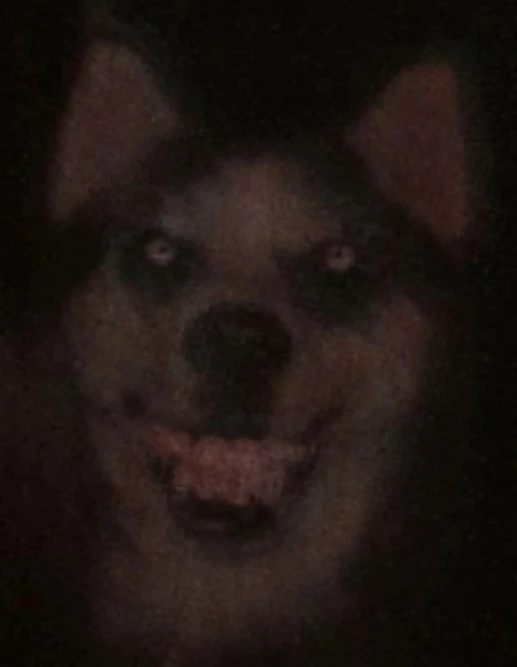
Well, like every anthology I’ve ever read, there were some stories that spoke to me more than others. A few I didn’t find that scary at all, but others definitely filled me with that feeling I get from good horror, and even set my imagination alight at times. There are writers in that anthology who would and have done well writing commercial fiction (in fact, some of the contributors listed in the back of the book have published or self-published stories). My favorites in the collection were “When Dusk Falls on Hadley Township” by TW Grim, which reminded me of a Stephen King short story; “Smile.Montana” by Aaron Shotwell, featuring the infamous creepypasta character Smile Dog; “Bedtime” by Michael Whitehouse, a classic of creepypasta fiction that really got my imagination going; and my top favorite, “She Beneath the Tree” by Michael Marks, a Lovecraftian tale that I loved from start to finish.

So yeah, if you’re curious, you should give the collection a read. 4.5 out of 5. As the cover promises, these are stories you can’t unread. And I’m not sure you’d want to.

But I found more than just stories in this collection. I also noticed some things about the genre, especially the pieces in the anthology, that showed me just how different they were from more “mainstream” horror stories. For one thing, the narration in the stories struck me as being more…realist in nature. Not like Realist fiction, which is set entirely around stories that happen in the real world, but like they really believed that the things they depicted in their stories could actually happen. In a lot of horror fiction, even by the greatest writers out there, you get the sense that, except for maybe stories involving serial killers, the authors don’t really believe that what they’re writing about could happen. But creepypasta writers seem to feel the opposite. I got the sense, even with some of the more supernatural or strange stories, that the authors really believed that what was happening in their stories could happen in the real world, and treated it as such. And this shown through especially with the first-person narrators.

When something like Smile Dog can be treated as if it’s real, you know you’re reading something different.

This is something I really admire in creepypasta, because it just gives these stories another layer and gives them the power to really make you wonder if some of what happens in these creepypastas could happen. Some of my own stories are based on my own beliefs of what could be out there, and I like to think that gives them this quality of strange realism to them. Seeing that quality brought out so well with these stories is a great guide for me personally as a writer, so I’m glad I exposed myself to them.

Another thing about this anthology is that it made me realize something: the creators of creepypasta are not too different from self-published and hybrid authors. The latter try to recreate the quality and success of books published by traditional presses without having to go through all the hoops that come with the traditional method and presses. They’re trying a new way to achieve an old goal. And a major component of this is through the Internet to reach readers and advertise. Basically, to spread the word.

Similarly, creepypasta creators are trying to recreate something as well. When I called creepypasta viral Internet-born campfire ghost stories, that was a really apt description. They’re recreating the feeling of telling scary stories around a campfire, and spread it farther than any campfire could. And their chosen medium, the Internet, is perfect for that. Spoken word can be used on the Internet, but so can the written word, images, video, music and so much more. They use the Internet to advertise terror as well as any self-published/hybrid author can to advertise their books. Is it any wonder that one can so transition easily into the other?

Overall, I’m glad I took this dive back into the world of creepypasta. It opened my eyes to things that I’d never realized before, gave me ideas for stories, and caused my respect for creepypasta creators to grow immensely. And while I may never write true creepypasta, I can see creepypasta-esque stories or ideas infiltrating my future work. Just like creepypasta, you never know until it happens. And by then, it’s likely too late.

That’s all for now, my Followers of Fear. I’d love to talk a bit more on the subject, but a hole in the fabric of reality has appeared in the fabric of my carpet, so that either means something really pleasant, or something really bad. I’m going to go find out.

Until next time, pleasant nightmares!

I’ve been reading a lot of articles about how Hollywood is coming to see big horror films are, and that they are looking into making more. It’s even been compared to the explosion of superhero films that came about after the Dark Knight trilogy and Iron Man showed how popular and profitable superhero films could be. Since I am a horror fan in addition to a horror writer, I thought I’d weigh in on the subject.

First off, this explosion in horror is not exactly out of the blue. Studios have been making horror films since the early days of film, and they keep making them every year. There’s obviously always been an interest and a profit to be made in horror. It’s just lately we’ve had a slew of horror films that have shown studios and audiences that horror can be extremely profitable, mainstream, and even deeply thematic. We actually first started seeing this trend years ago with films like the Paranormal Activity series, which kicked off a huge fad of found-footage horror films, and with Blumhouse Productions, which proved you can make horror films cheaply and still have critical and box office success. This is especially so with their Conjuring film series, which in itself is a cinematic universe.

But late 2016 and 2017 brought on a slew of horror films that really brought these points home. Split, with its surprise ending technically making it a superhero film, and Get Out, with its commentary on race on par with some Oscar-nominated films, brought horror into the mainstream in new ways. Later in 2017, Annabelle: Creation and It proved massively successful beyond anyone’s wildest dreams, and in 2018, films like A Quiet Place are raking in the dough and proving how powerful horror can be in creating terrifying atmospheres and emotional narratives.

And this is just scratching the surface: Stephen King stories are being optioned at record rates (where’s my adaptation of The Library Policeman?); some of Netflix’s biggest recent original films have been horror movies; and studios are developing more horror movies than ever before. It: Chapter Two starts filming this summer, and a new Halloween film is getting released this year. So while I may say yes, horror is kind of the new superhero film, it’s not because they suddenly became profitable. The potential has always been there, it just took some very specific successes with deeper cultural resonance to really bring that potential to the attention of studio heads.

Remember, don’t do what The Mummy did. Not if you want your horror movie to actually be successful, let alone spawn a franchise.

So yes, the horror genre may be the new superhero film, with every studio wanting its own successful films, film series, or film universe. But to steal a superhero film quote, “With great power comes great responsibility.” So while I have no pretensions that studio heads or directors or writers or whatever will see this post, let alone take its message to heart, I thought I’d offer some advice advice on getting into this horror boom. After all, as a horror fan and a creator, I want the horror boom to continue. The more good horror out there, the better. So here are some of my ideas for ways to make sure the boom doesn’t fizzle out:

  • Focus on telling a good scary story. This seems obvious, but some companies get so caught up in having a successful film or franchise, they forget to make a good horror film. Remember last year’s The Mummy? That film was convoluted, packed to the brim, and not at all scary. Not a good start for a film that was supposed to be the launching point for an entire cinematic horror universe. Which was the problem: Universal was so concerned with getting their franchise off the ground, they forgot what let Iron Man get the MCU off the ground: a good film in and of itself. If Iron Man had not led to the MCU, it still would’ve been an excellent superhero film. The Mummy should’ve been made that way, but unfortunately, it wasn’t, and now the Dark Universe is sunk.
    So remember kids, focus on a good story first, franchise a distant second. At least said franchise is up and running, of course.
  • Take chances on new/indie directors and stories. A lot of great horror films have come from the indie scene and/or from new/emerging directors. It Follows and Babadook were both very successful horror films from directors with less than three films under their belts, and the former was from the indie scene. Get Out was from Jordan Peele, who had never done a horror film before in his life.
    And all these stories are original plots. In an age where every other movie is a sequel, remake, or some variation on a familiar story or trend, adding something new to the horror canon has the ability to draw in a diverse audience, rather than just the smaller audience of devoted fans and some possible new ones.
    So take a few risks. It could lead to some big returns.
  • Adapt more than just Stephen King. Yeah, I’m happy for the many Stephen King adaptations being made (Library Policeman movie, please?). But there is such a thing as too much of a good thing. Even his Royal Scariness: I got sick of him back in high school because I read too much King and had to take a break for a few years. I still make sure to space out my dives into his stories nowadays. And if that could happen to me with his books, imagine what it could do to audiences with too many of his movies.
    The point is, there are a number of horror writers out there whose works should be adapted. Scott Thomas’s Kill Creek is one of the best novels I’ve read so far this year; Ania Ahlborn’s Within These Walls would make a great Blumhouse movie; Junji Ito has plenty of stories that could make great films; and as I noted in a previous post, HP Lovecraft is in the public domain and would make for great cinema. It’s something to consider.
    And before you ask, “What about your works, Rami?” I would be flattered if someone showed interest in adapting one of my stories. However, I don’t think that’s a possibility at this stage of my career, so I’m not going to get my hopes up. Still, I’d be flattered.

Horror is finally being given the attention it deserves from Hollywood, and I couldn’t be happier for it. However, it’s going to take a lot of work, and a lot of good stories, for horror to continue to thrive. I hope that filmmakers old and new are up to the task.

In my last update on Rose, I mentioned that I was probably going to do a whole lot of revisions and possibly a ton of rewriting, owing to the fact that the flashbacks were deemed unnecessary to the story and I had to throw them out or modify them. Well, I am rewriting a good chunk of the novel. It’s not what I’d hoped for, but sometimes you have to do what you have to do. And while I’m still trying to figure out the final third of the novel, I have figured out the second third for the most part, as well as other things that I plan to include in the story. And one of those things I plan to use is something I call mini-anecdotes.*

Mini-anecdotes are something I’ve noticed a lot in fiction, particularly fiction aimed for adults. They’re not like flashbacks or mini-flashbacks, but they’re related. A mini-anecdote is when a character briefly thinks of a past experience, usually something that can be associated with the current moment in the story. It’s not a flashback, as it’s not going into the character’s past in order to show them something. It’s more like a quick summary of a flashback. A good example would be in The Shining (which I’m rereading now), when Jack is doing handyman work around the hotel’s playground and park, and thinks back to the park he went to with his dad growing up. This not only gives us a bit more on Jack’s past and who he is as a person, but also gives us a brief illustration about his relationship with his dad, which we learn further about in the novel.

Other great examples of mini-anecdotes can be found throughout the Harry Potter books. In the first book, we learn how Harry’s life has been strange since he was small: ending up on the school roof, his hair growing back overnight, a sweater shrinking as his aunt is trying to force it on him. This isn’t a full flashback, but it gives us a very good idea of what Harry’s life has been like up until Dudley’s eleventh birthday, as well as what he’s like based on his reactions to the strange things around him. And in the third book, we get a brief glimpse of Harry’s relationship with his Aunt Marge, how she also mistreats him and spoils Dudley, and once let her dog chase Harry up a tree while laughing at his misfortune. It’s an illustrative moment on how awful Marge is and gives us an idea of what we can expect from her during her appearance in the story.

Now, I’ve only just started identifying mini-anecdotes in fiction, so I’m not an expert at using them yet. Just as you can”t really be a great writer even if you’ve read hundreds of novels, you can’t immediately use mini-anecdotes even if you’ve seen them in hundreds of books. However, I think I’ve identified a few things that might make using them in Rose a bit easier:

  • They’re brief. Seems rather self-explanatory, but it needs to be stated. Mini-anecdotes are usually only a couple of sentences or paragraphs at most. The longest may be only two pages at most, but they don’t go on for several pages. That, ladies and gentlemen, is a flashback, and as I stated in a previous post, flashbacks can be difficult to use effectively.
  • Little dialogue or details. Mini-anecdotes tend to be very bare bones. They may have a few lines of dialogue, but no long speeches. And certainly not enough detail like the shape of a building or all the thoughts going through a character’s head. It’s more summary, telling vs. showing, than anything else. Going into anything more would be going into flashback, most likely. And as I said, those have strings attached.
  • They’re connected to the present. Like Harry’s early experiences with magic or his aunt, these mini-anecdotes have to connect to the story’s present, either to illustrate a point, give us further insight into a character, or just to help us connect to them more. Having one for the sake of having one will do you no favors. After all, you wouldn’t want to have a romantic scene that suddenly goes into a character’s dislike of geese, do you?

While these won’t help a writer (let alone me) use mini-anecdotes well, they can be a starting point for their use. And if we as writers can learn to use them well, then we can use them to make our stories better and more memorable to readers. And in the end, isn’t that part of the reason we write in the first place?

Do you use mini-anecdotes in your stories? What tips do you have for writing them?

*At least that’s what I call them. I don’t know if there’s a technical term for them. If there is, please let me know in the comments below.

A portrait of King Arthur by Charles Ernest Butler. Probably not what he looked like at all.

So this is a bit outside my normal wheelhouse, but I decided to write a post about it because I’m all fired up about the subject (and really, isn’t that the reason we write anything anywhere?).

Recently, I’ve become very interested in King Arthur. Specifically, I wanted to know whether or not he was real, and how this whole story of him, Merlin, Lancelot and Guinevere, his sister/lover Morgan le Fay and his nephew/bastard son Mordred came to be. I mean, do we really believe a guy who didn’t know he was the bastard son of the previous king was taught by a magician, pulled a sword from a stone, had an idyllic kingdom stretching across Europe for a few years, only for it to be undone by his affair with his sister and his wife’s affair with one of his knights, to be gospel historical fact? I wanted to know the truth, and I wanted to know it as in-depth as possible.

This new obsession of mine started after one of the YouTube channels I follow, Overly Sarcastic Productions, produced a video about Arthur lore, and how that got built up over the past fifteen-hundred years (click here to watch the video, as well as here for their follow-up on some of Arthur’s lesser-known knights). These laid the groundwork for me to get interested in the subject, and to want to find out a bit more. From there, I downloaded a lecture  series from The Great Courses company (college level lecture series you can listen to while you work or drive. Definitely check them out, they’re very informative) on Arthur, narrated by Professor Dorsey Armstrong of Purdue University, and an expert on the subject of Arthuriana.

If you don’t have time to watch either video or to listen to Professor Armstrong’s lecture series (though you should at least spend a half hour on that first video), let me do my best to put it really simply: probably ninety-five percent of what you think you know about King Arthur is complete and utter fiction. There’s some evidence to suggest that during the late 5th and early 6th century, the invasion of the Saxons in England was stopped and in some places reversed, keeping the peace for a few generations, and that someone probably lead a war effort that caused that peace.

This figure was probably the basis of Arthur. The name Arthur, by the way, doesn’t appear until after this time period, but then becomes quite widespread among Bretons. This possibly means that the name “Arthur” wasn’t this figure’s real name, but maybe an acronym, abbreviation, or nickname based on a Celtic or Latin name. A number of figures listed in history annals from around or after that time have been pointed to as possibly the inspiration for Arthur, but documentation from that time is scarce, so no one really knows if any of these figures were Arthur or given that name as a title or nickname.

So, Arthur was possibly real. We’re not sure, because there’s only so much evidence. He could be as made up as Harry Potter, and was a folklore character adapted by the Bretons for their current predicament.

Pages from the Historia regum Britanniae, the first King Arthur bestseller ever written.

At the very least, the legend of Arthur cemented itself and grew over time. From a local warlord to king of all the Bretons, and then other elements started getting added on, such as Merlin, who was probably based on a mad bard who lived a couple of centuries after the Arthur figure. Eventually, a man by the name of Geoffrey of Monmouth wrote this huge book called Historia regum Brittaniae, a pseudo-history of Britain that dealt quite a bit with Arthur. It was spread across the European continent, where other writers from as far as Italy, Scandinavia, and Russia started adding their own spins on Arthur’s story and adding their own elements. These elements include Lancelot, who was the invention of a French writer, Excalibur and the Holy Grail, and Mordred being Arthur’s incestuous offspring. And as years passed, storytellers just kept adding elements and remixing the already-available tales until we have all the Arthur stories available today.

It’s like what might happen if, a thousand years from now, George Washington was known as Walsh; his historicity was debated; he was credited not only with defeating the British but conquering the entire continental United States; had Superman’s powers; and was taught by Mark Twain, who’s been combined with Nikola Tesla and has lightning powers.

Yeah, kind of crazy. Also a huge simplification, but it’s a blog post. What do you expect of me?

Like I said, anyone can add to the Arthur canon. Doesn’t mean it’ll be good.

Anyway, it’s just mind-blowing how great an influence one man who may or may not have existed and probably only ruled a small area of land if he did exist has had on Western society. Most likely, if you’ve lived anywhere English culture has reached, you’ve heard something about Arthur. You just probably never realized that there was so much debate around him or there’s no real canon about him, because so much about him is in flux from storyteller to storyteller.

It’s also very inspiring, in a way. You can write almost any sort of story about Arthur, and it can be considered part of the canon (whether or not it’s any good though, is left up to the storytellers and their audiences). The possibilities are kind of endless, as long as you keep an open mind. I’ve already had an idea for a short story involving the historical Arthur figure and the subsequent works written about him. I plan to write it at some point this year and then submit it to my publisher, Castrum Press, for one of their anthologies (they’re doing some anthologies, BTW. Check them out here if you’re interested. All are welcome to submit). Hopefully it gets accepted, and maybe some people will like it. We’ll see.

Whatever you know or believe about Arthur, it’s undeniable that he’s had an influence on the world. His legend is constantly growing, morphing, and mutating. And all from one man, a man we don’t even know if he was real or not. It’s definitely a mind-boggling, cool, and inspiring subject, and I’m so glad I decided to dive into it.

I hope, if anything, this post makes you curious enough to dive in too.

Whenever Blumhouse is involved in a movie, I usually get interested, as they tend to produce high-quality horror films. When I heard about this film, I got interested both because it had an interesting concept behind it, and because I like Tyler Posey (Teen Wolf fan for life!). So even though it got negative early reviews, I decided to check it out anyway, and convinced a friend of mine to see it with me.

I have a lot to say about this film. Let me try to keep this brief.

Truth or Dare follows a group of college students who go to Mexico for their final spring break. While there, they meet a mysterious man who invites them up to an old Spanish mission for drinks and some good, ol’ fashioned truth or dare. However, when they leave Mexico, they find the game has followed them, and it’s now much nastier: you either play the game, no matter what horrific secrets you might have to share, or what terrible deeds you must commit, or you will die. And the game won’t end till all the players are dead.

Now on the surface, I should have liked this movie. In addition to an interesting concept, the film is incredibly well-written. The story isn’t only compelling, but surprisingly, without plot holes. With very simple tricks, they plug up most of the plot holes that would come up in a horror film, let alone one surrounding a game mainly played by children and horny teenagers. Not only that, but the way the film has these characters expose their deepest secrets is so good at making you feel sympathetic, you almost feel their pain. And when they have to undertake some of the dares, you actually get a little afraid for them.

Not only that, but most of these characters are well-written and multidimensional. Most characters in horror films are ridiculously flat, and especially in ones based around games (*cough* Ouija *cough*). But Truth or Dare actually makes these characters more than flat or stereotypes. They have trouble, they have hidden depths, which is only made more clear when characters are forced to reveal dark secrets. This is especially true with the character of Markie, who at first glance is a happy-go-lucky strawberry-blonde, but in actuality is struggling in a number of ways.

It’s helped by the fact that the actors in these films are all really good. I can’t say any one of them gave a bad performance.

But the film has one big issue: its atmosphere. In horror, atmosphere is essential. And this film  doesn’t really have one, at least not one that lasts. Several times, the film does create some tense moments (keep an eye out for the roof scene), and there are a number of great jump scares. But after the tense moment or the jump scare, I found myself winding back down to normal. And in a horror film, you should be kept at a slight tension at every moment. There should be something in the back of your mind that says, “Oh my God, I’m scared, my heart rate is going to increase a little.” And I never felt that way during this film.

And that really brings down the film as a whole.

Still, if it weren’t for that problem, this film would be terrifying. On a scale of 1 to 5, I give Truth or Dare a 3.5 out of 5. Despite its lack of atmosphere, I honestly recommend seeing it. It probably won’t leave you scared stiff, but it’ll keep your interest and won’t leave you angry at the actors or the directors like other films I could name (*cough* The Friday the 13th remake is a piece of trash, and I would love to chase Michael Bay around Camp Crystal Lake for that ass-terrible excuse of a film. *cough*). Give it a watch, if you feel so inclined, and decide for yourself.

Go on. I dare you.