Posts Tagged ‘storytelling’

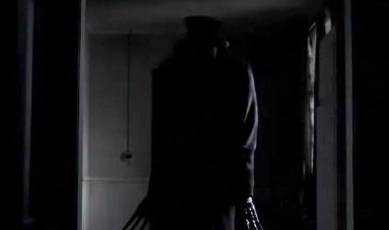
Smile Dog, a creepypasta character.

Recently I’ve been delving into a genre of horror that’s grown up on the Internet, and I have to say some of it is quite impressive. I’m talking, of course, about creepypastas.

Now, for those of you who’ve never heard of this and think I’m talking about a Halloween treat, a creepypasta is actually kind of like an Internet campfire ghost story, scary stories designed to shock and terrify and that originate online.  They’re sometimes accompanied with images, audio or videos, usually distorted or featuring or gore or creepy imagery, in order to intensify the effect. The name “creepypasta” comes from “copypasta”, a slang term for text that is copied and pasted around the Internet multiple times.

And even if you’re not familiar with creepypastas in general, you may have heard of some. Slender Man, whom I’ve written about on this blog before, has been the subject of numerous creepypastas in the past, to the point where some creepypasta-devoted websites no longer upload new literature about ol’ Slendy. There’s also the novel Penpal, which started out as a series of creepypastas, and Candle Cove, a story that’s reportedly being adapted to television by the Syfy channel.

Slender Man has been featured in a variety of creepypasta.

Now while the length and quality of creepypastas, like every other type of fiction, vary from one to the other, there are some ways to categorize them:

  • Anecdotes: as far as I can tell, these are the most popular of the creepypasta story form. The narrator(s), often anonymous, talks about a scary legend, a new story, or something from their past. The anecdote stories are often told in the epistolary format, or in the form of a letter or journal entry, though this being an Internet phenomena they’re more often told as blog posts or Reddit threads. They’re certainly my favorite form of the genre.
  • Rituals: As the name suggests, these are things you can do to make something terrifying happen to you or someone you know. Examples include the Midnight Game or Bloody Mary (which I’ve tried on numerous occasions, and I’ve never seen any results). Sometimes these rituals have a short backstory, but they can vary, like with the Bloody Mary game. And as you can guess, these are quite fun at parties.
  • Lost Episodes: This form has kind of fallen out of favor but it has some pretty famous creepypastas. Lost episodes usually describe a missing scene or episode from a famous TV show, usually a comedy or children’s show, that depicts a character acting very strangely and violently, usually ending in that character killing themselves or the other cast members. Often times the episodes, when they are supposedly found, feature strange or distorted audio and video, and occasionally are rumored to cause violent behavior in viewers. As you can guess from the description, these are pretty formulaic and repetitive, which is why they’ve lost popularity, though some are quite well known among creepypasta devotees.
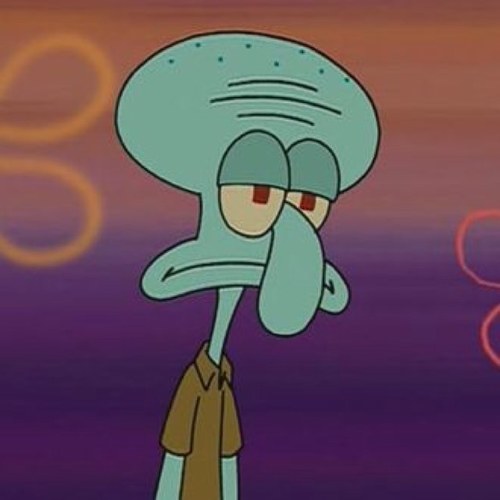
Squidward Tentacles from Spongebob Squarepants has been the subject of a Lost Episode creepypasta. You can probably guess the rest.

As I said above, there are entire websites devoted to the creepypasta genre and droves of fans, some of whom create their own stories and upload them online. What makes this genre so popular? Well, I’m still pretty new to the genre, but I think that there are several factors that may explain this popularity. One is that creepypastas tend to be a bit more extreme than mainstream horror. They’re often accompanied by scary imagery or some other strangeness, and that adds to the creep factor. There’s also the very subject matter of creepypastas: with some stories, you can take elements from them and create your own stories. Slender Man is a character who’s been featured in a variety of media, and plenty of people have made creepypasta based on him. And then there’s the virality of creepypastas: you’re encouraged, by their very nature, to keep sending them around and around the Internet. There’s a certain power in that very concept that’s exciting, and encourages creators as well as readers.

It’s especially interesting when you consider that this is a genre born on the Internet, which has the reputation of having content geared towards people with short attention spans, and also is sometimes considered the gathering place of creators who couldn’t make it in the “real world” (eye roll please?).

Personally, I think creepypastas are quite entertaining. Some of the stories are very good, very creepy, and I enjoy listening to readings of popular creepypasta by YouTube artists. I know some people find them too extreme or that they lead to violent behavior (a subject for another time, not going into it here), but I see it as no different than enjoying a Stephen King story or going to see the latest scary movie. Just a different format with different rules that I would like to learn (though not write; by the very nature of creepypasta, I wouldn’t have as much creative control or make some side income off my work. Maybe I’ll try writing in the style though for a novel someday).

If you’d like to try some creepypasta, here are some good ones I’ve come across. If you check them out, let me know what you think:

Are you a fan of creepypasta? What is it about them that you like or dislike?

What are some creepypastas that you’d recommend trying?


anxiety

What is the trouble with psychological horror? Actually, there’s not much trouble to it. It’s just very hard to do well.

What do I mean by this? Well, let’s look at the definition of psychological horror: “a subgenre of horror fiction, film, and video games (as a narrative) which relies on the characters’ fears and emotional instability to build tension”, according to Wikipedia (I know you’re not supposed to rely on that site for information, but I couldn’t find a better website for a definition). It’s a sub-genre that, rather than relying on a traditional monster that’s out front and center for all to see, the monster is restricted to quick glimpses and shadows. If there’s a monster at all: sometimes the true villain is a character’s own brain, their fear, distrust, paranoia, suspicion, isolation.

I’ve used psychological horror before, particularly in the stories in my collection The Quiet Game (which if you haven’t read, I wish you would) and in the short story “Buried Alive”, which was published in the Strange Portals anthology last year (again, I wish you would read it). And I’ve come to the decision that while it isn’t as difficult as physics or writing comedy, it is walking a very fine line. Almost like a tightrope. And if you fall off, you can wind up veering either into the realm of the comedic with how obvious that it’s all in the character’s head, or it’s just so confusing that you find yourself losing patience with the story.

Let me give some examples (and it’s my blog, so you have to let me give some examples): have you read “Buried Alive”? I’ll keep the spoilers to a minimum for those who haven’t, but like I said above, I use quite a lot of psychological horror in that story, and for the most part, I think that I use it well (so do most of the readers I hear from on this one). For the rest, though…it’s pretty obvious that the circumstances of the main character are taking a toll on her mental state. I don’t think it gets to the point of comedic, but it is obvious, and the point of psychological horror is to make you guess whether it’s all in their heads or if it’s real or…who knows?

Perfect Blue. Trippy, has its moments, but also has its problems.

On the opposite end of the spectrum, there’s the anime film Perfect Blue, based on a novel that I wish was available here in the States. The film is about a singer-turned-actress who starts to confuse reality and fiction when her first acting job takes a turn for the traumatic. It’s a good story, but it’s not a perfect story. There’s a good section of the movie where they spend time trying to confuse both the protagonist and the viewer, and it gets a little difficult to not only what’s going on, it gets difficult to pay attention or be patient with the movie. While I admire the visuals of the movie, and I get what they were going for by showing what the protagonist is going through mentally, and I recommend checking it out if you’re interested, psychological horror shouldn’t get so strange or trippy that the reader gets frustrated with or loses interest in the story.

A great example of a psychological horror story though, manages to toe the line very easily and keeps you guessing as to what’s real or what’s mental delusion. A good contemporary example of this is The Babadook. If you read my review of that movie last year, you’ll remember that I noted that the movie kept you guessing as to whether the film’s protagonists were dealing with an actual monster or a shared psychosis, and I eventually settled on a bit of both because…I’m mostly human, and humans need to categorize things to make sense of the world. And I still say that I don’t know for sure which it is, and that’s one mark of the film’s greatness. You’re never quite sure what’s real and what’s in the heads of the characters, it stays interesting throughout, and it never gets to the point of ridiculous or obvious. All told, it’s great psychological horror.

This movie will surely get you on so many different levels. I’m getting chills just thinking of it.

So how do you psychological horror well? How do you toe that line?

Well, I’m definitely no expert on the subject. I usually deal in traditional horror, the monster is out front and is usually either some twisted form of human or a creature not easily defined by our standards. I dabble in psychological horror, usually making it part of a bigger story. But I can try, and I think–beyond reading/viewing as much psychological horror as possible, both good and bad, and practicing like you want to get to Carnegie Hall, of course–I’d suggest trying to write a story where you’re not sure what’s really happening. Create a scenario where strange things start happening to your character or characters, and you can’t tell what’s real or what’s just in the minds of your characters. Keep it interesting, don’t get too ridiculous or obvious, and just see where the story goes. If you can do that but still be unsure for most of the story of what’s real or not, then it’s likely your reader will be the same and want to know more.

Another marker of psychological horror is that there’s usually a twist somewhere along the way, and if it’s good it’ll change how you view the entire story (a great example is the Korean film A Tale of Two Sisters and its American remake The Uninvited). Characters are also often driven or plagued by powerful internal battles: am I doing the right thing? Is this right or wrong? Are they really out to get me? It doesn’t have to be full-blown persecution belief or fear of some unknown. It can be something as simple as a growing suspicion that something’s off or that our desires are actually evil. Again, A Tale of Two Sisters is a great example of the former.

Not a fan of the movie, but even I admit it shows Jack’s breakdown very well.

And finally, psychological horror is often not the main focus of a story, but part of a bigger story. Take a look at The Shining by Stephen King. Obviously that hotel is actually haunted, and the kid and the cook are both psychic. But a good deal of the story deals with Jack Torrance trying to sort out what’s going on for himself. Is he just dealing with a powerful desire to get wasted again? Is he going insane? Is the hotel playing tricks on his mind? There are scenes where you really can’t tell, and that’s part of the terror. Part, but not the whole thing. After all, there’s all the stuff the hotel is doing to them, right?

Unless Jack, Danny, and the cook are all sharing some sort of shared delusion, or folie a trois, in which case…wow. New conspiracy theory right there.

In any case, it’s something to experiment with yourself. And for me to experiment with more often. Just try and see what happens…or does it happen? You’ll never know until you try.

How do you feel about psychological horror? Do you have any good examples in film or literature you’d recomend? What are some tips for effectively writing in the subgenre?

I just recently finished the second draft of “Gynoid”, a sci-fi love story novelette. During that time, I thought a lot about romance in fiction. Have you noticed that it’s everywhere? In fiction, you find a lot of time devoted to find your one true love, and in real life, you find people not just actively looking for their one true love(s), but even measuring themselves by fictional couples! Our music is rife with love songs or how love is betrayed (the so-called “Song of Songs” in the Bible is one huge erotic love song), and if you go back in time, some of our oldest stories involve love and lovers.

Heck, it’s in a lot of my fiction too! And I write fiction where “love” is more likely intense adrenaline and a shared peril being mistaken for attraction. Snake has a love story that’s central to its plot, Reborn City has a bit of romance in it here and there, and..well, you saw the description for “Gynoid” above.

But rather than speculate on why romance and finding it is such a big thing (I think we can all guess at the answer, right?), I think I’m going to share some of the trade secrets I’ve gleaned over the years from other writers and from my own romantic experience, both writing it and from experiencing it (do not ask me which I have more of. I wouldn’t want to upset anyone) on writing romance in your stories. Why? No particular reason, it’s just on my mind and in my stories so much I feel like talking about it. And I know I might not be the most qualified person to talk about the subject–I know I’m not a romance writer–but I know a bit, and since when has not being an expert ever stopped anyone from talking about anything? (*cough* climate change deniers in Congress *cough*)

So let’s begin on my tips for including romance in your stories:

  1. Give the characters personalities, make them fully-rounded and three-dimensional. I feel like often times some of our most celebrated romances involve people who are just good-looking nice folk and not much else. Romeo and Juliet were a sad emo guy with a thing for teenagers and Juliet was a teenager, Cosette and whatever her guy’s name was were good-looking and nice but they weren’t much else, and Katniss Everdeen…okay, Katniss was at least well-rounded. You knew who she was, what her problems were, what she stood for, and what she was willing to do to overcome those problems. Her love interests, on the other hand, just seemed there so as to add something to the story that the story might have done fine without. I mean, Gale is just handsome and angry with the Capitol, and I can’t tell what Peeta is besides sweet. One minute he’s skillful enough to manipulate the hearts of the whole Capitol, the next he’s too naive to tell that Katniss is using him for survival. Make him one or the other! Seriously, if you’re going to bother putting love interests in the story, I’m going to need a reason to ship either of them besides their attractiveness and professions of love.
    And that brings me to my next point:

    It took a long time, but these two became a wonder couple.

  2. What’s the reason they fall for each other? Please don’t say, “Oh, they’re good-looking”, it’s got to be more than that…or heroin-flavored blood. Take one of my favorite anime of all time, Sailor Moon (yeah, I’m a huge fan of that even so many years on. Moonies forever!): all of the main characters are good-looking. So why does Sailor Moon end up with the male lead, especially when in every adaptation of the story they start out fighting and disliking each other and in some he’s already seeing someone else? Leaving aside backstory exposition, I think they just grow comfortable with each other over time. They realize they can be honest with each other and that their faults are just part of who they are. Cute parts too. And it helps when they find out each other’s secret identities, which shows how courageous and reliable they are to one another, to the point they make a pretty good partnership, in love and in combat.
    Another example I’d like to use is Captain America and Peggy Carver in the Marvel Cinematic Universe (which is my only reference point, I was never much of an American comic books reader for some reason). Heck, at the beginning of their relationship, Cap’s a scrawny guy who doesn’t seem like much of a hero, while Agent Carter is…well, Agent Carter. What forms the basis of their relationship is that Carter likes that Cap wants to help out despite all the barriers facing him, and his sweet and loyal personality, while Cap likes that she’s a unique and confident woman who doesn’t need a man and who also doesn’t look down on him for not being tall and buff. Over time and numerous battles, their relationship grows closer and they fall in love, which ultimately doesn’t end well but I’m sure that if things had gone differently, it would have been a different story.
    Speaking of which, here’s point 2a. Shared experiences, especially combat experiences, can bring a relationship closer. Unless of course you and your supposed lover work really horribly together, in which case fighting will just highlight it and you’ll fall apart at the seams.
  3. There is no point where the relationship becomes perfect. Work is involved. If there’s one thing I’ve learned about relationships in the real world, they’re always a work in progress. Why? Because we’re all works in progress, so our relationships are too. There’s going to be rough times, where the characters struggle or worry that something or someone will come along and the good thing they have going will be ruined. Back to Sailor Moon for a second. Fans agree that the heroine and her man are a strong and stable couple (though whether or not it’s a good coupling, I find people disagree on the subject more than you’d think), but they do have to work at it. Besides enemies that threaten to pull them apart for whatever reason, they have the normal couple troubles: people who seem like better matches coming along, occasional misunderstandings, an unexpected child. Heck, they even broke up for a time during the anime’s second season. Just goes to show that even great couples have ups and downs.
    And the best part is, you can extend these meetings, character explorations, falling-in-love scenes, and ups and downs over several books. In fact, half of the fun of the TV show Scandal is watching the heroine Olivia have an on-again, off-again relationship with the (married) President of the United States. You never know how that one is going to work out. And as long as you can keep it going, the more you get to explore these characters and their relationships (provided fans don’t start to get bored, of course).
    And now that we’ve discussed what makes for a relationship, let’s discuss some content.
  4. Sex is not always necessary. Yeah, I know we live in a hyper-sexualized society where everything has a sexy component to it, and I know I included a steamy sex scene in Snake, but seriously, sex isn’t always necessary. In fact, some people prefer romance stories without anything racier than a kiss or two. There’s actually an entire sub-genre of romance like that, it’s called sweet romance, where the characters don’t have sexual relations before marriage (or commitment too, maybe) and it has a big and loyal following. Besides, some authors aren’t comfortable with sex scenes. I know I wasn’t at first, though I later got more comfortable with them. So if you don’t want to do one, there’s no law saying you have to.

    Love the relationship dynamics of this show!

  5. Also, you don’t have to just have one person love only one other. I know there are a couple of Buffy fans reading this blog. One of the best parts of that show is the characters had many different relationships over the 7 seasons. Buffy herself had three major relationships over the course of the series.  The writers could’ve had her with Angel, her first love, through the whole series, but they allowed her, Angel, and many others to explore other relationships and really mature through that. Same with Teen Wolf, which had two main characters being “meant to be forever and ever”, but gradually changed things up over time. So if you want to, you can have characters wait a long time and go through several relationships before finding the right person.
    Especially with love triangles. I hear there are quite a few series out there where a good dose of fun is trying to find out who the main character will end up with in the end, especially when there’s two really great, fleshed-out characters to choose from (though usually from what I hear it’s whoever the protagonist meets first).
    And this brings me to my final point.
  6. Don’t do it because everyone else is. And no, that’s not a drug PSA (though you shouldn’t do those either. Not even weed, that stuff will mess with your system). Yeah, you see people putting all these different things in their stories–love quadrangles, the other man or woman, unexpected pregnancies, even some sexual exploration. Only put those in your story if you feel they’re what the story needs, not what others say you should put in or what others are putting into their stories. Believe me, that’s how I avoided something really unnecessary romance-related stuff in Reborn City, and that worked out great for me.

I’m going to end it right here, but I have to say, there’s a lot more that I could include in this post. Suffice to say, there are a lot of intricacies to writing romance and love stories (point number 7, a romance has a happy ending, a love story doesn’t have to. Learned that a romance writer friend of mine), and you learn these things over time. But hey, in the end they can lead to some really great stories, and maybe melt a heart or two while you’re at it.

What romance writing tips do you have? Do you feel romance is important to your stories or not so much?

For a while now I’ve been reading The Complete Collection of HP Lovecraft on my Kindle. I figured it was about time, seeing as I haven’t been very exposed to his work up until this point, and the man has been a huge influence on greats like Stephen King, Allan Moore, Guillermo del Toro, and quite a few more. And since I am always looking to learn from other authors, I figured I should spend ten dollars of Amazon gift cards and see what happens.

Well, you get what you asked for. I didn’t realize that when I bought the collection, that it was 1112 pages! The length in itself is not such a problem, I’ve read books that long before. The thing is, Lovecraft…well, he’s hard to get through sometimes, and for a number of reasons. For one thing, there’s his style, which goes a little something like this:

And as I treaded up the stairs, filled with an anguish that panged the organs within my bosom to no end, I found my wife waiting for me in her chambers, her frown prominently featured upon her face. And I knew that my life had been transferred into a situation seriously detrimental and quite hazardous to my health, for that face on my wife at this hour could only mean that she had discovered my liaisons with Ellen the hotel maid from down in the village. I had endeavored to keep our trysts unknown from all but the walls of Ellen’s room, however it seemed that I was not secretive enough, as evidenced by the porcelain my wife volleyed at my head.

Okay, that’s a bit of a parody, but you get my point. Who talks like this?

Also, some of his early fiction isn’t that good. “Memory” is just a weird little flash fiction piece about a ruined city and a conversation between two beings about the city; “The Street” is about the houses on the titular street killing Communists after the street goes from a nice neighborhood to a slum; “Polaris” and “The White Ship” are obviously both dreams taken too literally, and “The Tree” is just not scary.

Also I noticed that so far, very few women appear in the stories. Several characters are mentioned as having wives, but so far the only woman who has any actual significance is the titular character of “Sweet Ermengarde”, and that’s a story parodying popular romantic melodramas of the day! But given that Lovecraft had a strained relationship with his mother, a turbulent one with his wife, and was dominated by his aunts in the later parts of his life, maybe that has something to do with it.

Lovecraft makes you wonder if maybe this guy is coming for you.

However, while I have my problems with Lovecraft’s early work, I have to admit that some of his stories do hit the mark, and even are a little scary. “The Tomb” is definitely somewhat chilling, as is “Dagon” and “The Picture in the House” (the former bears resemblance to Cthullu stories, while the latter has implications of murder and cannibalism). And I actually very much enjoyed “The Temple”, which was very strange and creepy.

I can’t say about the rest of his work, but for the early stuff I think what makes the successes so great is that they leave impressions on you. They make you think to yourself, “Imagine if that actually happened. That would be kind of creepy…” And then you take a look around yourself to make sure that a slippery slimy creature or some guy with wicked magic or something isn’t near you. Lovecraft is very good at leaving those sort of feelings with you. He makes you wonder, makes you think that there’s something just beyond the corners of our eyes or in the darkest parts of our world that we don’t understand, can’t understand, and that any interaction with that something or somethings would be very dangerous for us.

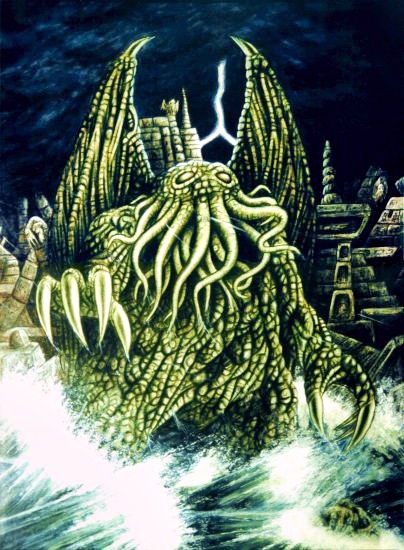
So there is definitely a reason why HP Lovecraft has stuck around and become well-known as a writer of weird and terrifying fiction. And as I progress from his early work to the stuff that he’s more famous for, like “Call of Cthullu” or “The Colour out of Space” or “History of the Necronomicon”, I’m sure I’ll find more reasons to like this guy (hence the reason this post is titled Part 1).

In the meantime though, I think I’ll take a break from his stuff. Like I said, he’s great when he’s good and I’m already learning a lot from him and seeing some of his influence on my work already, but he’s dense and hard to get through, and after so much of prose like my parody paragraph, I need a break if I’m going to continue someday. Besides, I finished on “The Nameless City”, which has that famous quote in it. You know the one:

That is not dead which can eternal lie,
And with strange aeons even death may die.

I can’t think of a better stopping point than on a creepy story that has that weird couplet in it. Can you?

Hollywood is stuck in this phase where the studios are obsessed with sequels and prequels and spin-offs and franchises and remakes and reboots and re imaginings and a million other things. I have mixed feelings on this culture. On the one hand, I love the Marvel movies and a clever re imagining of a classic story or stories (like what Once Upon a Time has done with some of my favorite fairy tales when I was young) is a great thing. Plus who doesn’t love a good adaptation of a beloved novel or comic book or even video game into a movie or TV series?

On the other hand, seeing all these stories continued or retold constantly encourages filmmakers ane viewers to seek out familiar stories that are sure bets to be successful rather than new material that they don’t know will work out for them, when there is new material. And plenty of these sequels/prequels/reboots/whatever, when they come out, they are just awful and you wonder how the filmmakers could do this to beloved properties (see my review of the Poltergeist remake or watch these two dudes review the Smurfs movie if you need further proof).

The horror genre has been a big part in this, for better or for worse. Since the success of 2003’s Texas Chainsaw Massacre remake (as opposed to 2013’s remake of the film), there have been a slew of horror remakes, mainly slashers but quite a few others, and they have been showing up with increasing frequency). I’m focusing on the slashers though, because of the horror remakes the slashers are often the ones I see the most advertising for (an exception being Poltergeist, but we know how that turned out), they have some of the most iconic characters in the horror genre (Freddy, Jason, Leatherface, etc.), they’re notorious for putting out too many sequels of varying quality, even for horror, and they’re difficult to get right, because they rely on blood, guts, and gore to scare people rather than suspense and atmosphere.

And for God’s sake, there’s just been so many of them:

  • Texas Chainsaw Massacre and its prequel (the former was good, the latter awful)
  • Halloween and Halloween II (same deal as TCM in terms of quality)
  • My Bloody Valentine (lacks all that made the original so awesome)
  • Black Christmas (awful murder-porn)
  • Prom Night (awful and nonsensical)
  • Friday the 13th (of all the Michael Bay shit movies, this one is the shittiest)
  • Nightmare on Elm Street (I liked it, but others disagree with me)
  • Leprechaun (more of a re-imagining of average quality)
  • Texas Chainsaw 3D (I liked this too, but not everybody else did)
  • Evil Dead (fun and extremely bloody)
  • Scream (got rebooted as a TV series. Only saw one episode before leaving for Germany, but wasn’t impressed by what I saw)

On TV and in the movies at the same time. Like Kevin Bacon or Viola Davis.

And that’s just the ones that I know of that are out. And believe it or not, there are more on the way: Friday the 13th is getting a new movie as well as being re-imagined as a TV series for CW (haven’t heard anything on the movie, but what I’ve heard on the TV series sounds promising), Halloween is getting a new movie (also looks promising), Evil Dead is getting a TV series set years after the original films (excuse me while I skip it, because I’m not much of a fan of the franchise), and Texas Chainsaw Massacre is getting a prequel exploring Leatherface’s origins (I’m skeptical). There was also talk of a Hellraiser reboot, but there’s been no word in two years on that, so I’m going to say it’s been shelved.

So why are slashers being remade by the dozen? Like I said, they’re difficult to pull off, and they’re formulaic. Plus blood and gore is how they primarily scare you, and a lot of horror fans, including myself, find that distasteful. What makes them so appealing?

I think a lot of it has to do with the characters. Slashers have produced some of the most iconic characters in horror and in cinema: Norman Bates, Jason Voorhees, Michael Myers. Heck, Freddy Kreuger isso well-known that he’s made cameo appearances in movies parodying the 1980’s in one form or another. People love these characters as much as they’re scared of them, they love watching them in action and being terrified of them. They like to sit there and think, “What’s he going to do next? What’s he going to do next? What’s he going to do–AAAH!”

Studios are aware of that, as well as they are aware of how much people go back to see the old films (the better ones anyway) and see these beloved characters do what they do best. With huge fan followings like this, and how easy it is to make a horror movie under twenty million dollars with minimal special effects, they know people are going to come and see the films so they can see these beloved characters resurrected again and perhaps in a movie worthy of carrying the franchise’s name.

The problem with that is, these same studios may just be banking on the popularity of a franchise and its character or characters to draw in crowds. Take a look at Friday the 13th, or another horror movie that Michael Bay meddled in, Ouija (read my review here). Both of those sucked, but yet they still made money. I think the latter was because of very good marketing, but the former had the draw of the first Friday the 13th film in six years, and one not bogged down by sequels’ worth of mythologies. Problem was, they didn’t invest in a good story, like the first film did and most of the early films tried to do with varying success. Instead they gave it a passable story and then added in as much drugs, sex, nudity, swearing, and gratuitous death scenes as possible so that the audiences would stay interested.

The result was a waste of film that makes watching people defecate on public streets look more entertaining. And I’m very worried that these other films that are on the way will do the same thing. They’ll be made with just drawing in fans and their credit cards in mind and the results will be absolutely terrible. And no horror fan wants to see beloved characters treated that way.

Hoping for better films for all these guys, and more.

On the other hand, I like to imagine that some of these filmmakers are huge fans of the franchises and really are trying to give these characters the stories they should be in, stories that are worth investing seven dollars and two hours in. The Halloween movie supposedly has an interesting plot, and the one thing I’ve heard on the Friday the 13th sequel indicates it’ll take place in the 1980’s, when the series started and where most of the better films are set. Perhaps there is hope here.

Well, we’ll just have to wait and see…and pray that along with better sequels/franchises/whatever, we get some new material too (*cough* Hollywood, call me *cough*).

All for now, my Followers of Fear. I have to get ready for the High Holidays tonight, so I’ll be busy for a while, but I’ll write again when I can.

See you next year, and Shanah Tovah (that means “Have a good year” if you don’t speak Hebrew).

I’ve often compared being an author to being the God of a fictional realm. And to some degree that is true, but it doesn’t mean we’re almighty. Often times the story you start writing won’t turn out to be that story. It’ll change or need to be changed. The personalities of the characters will act and react in ways that you didn’t think they would, or you find yourself not liking where the story goes. No matter what you do, this story isn’t going to go the way you imagined. And when that happens, you need to rethink the story a bit.

It’s kind of like one of those dance routines on a dance show (I used to watch So You Think You Can Dance). Often with those dance routines, they’re trying to tell a story. In this metaphor, you and your story are working together, using words and images as dance moves to entrance the reader and get them to watch the whole routine, aka read the whole story. But of course no routine starts out perfect and along the way there needs to be changes. And sometimes those changes need to be rather dramatic if the entire routine is going to work. Maybe its a few moves that need to be changed, other times the costumes need to be changed, and every now and then the song needs to be changed as well. Otherwise this story just won’t work.

Now some of you may be thinking, “He’s treating the story like a living person.” Well, why not? If the Bible is the living Word of God, and if the Constitution is a living document, why can’t a story being written in a notebook (paper or digital kind) be alive either? Many authors know what I’m talking about, they feel that the story is a being working with them as it gets laid down on paper, that it is having as much say as what’s put down and what’s not. Rather than resist it and insist that the story obey its Creator, it’s better oftentimes to just listen to the story and see what it says.

I had this situation occur to me on the short story I’m working on now. I finished the outline thinking it was going to turn out great. Unfortunately after ten-thousand words I started to realize that this story was not what I wanted. I mean on the outline the story was still good, but while writing it out I just couldn’t get into it. At the same time, I could hear the story in my mind, speaking to me. It said I shouldn’t give up on it (like I would do that, this is a good story in concept) but that I should explore a new angle for it.

So I took a break. I thought about it. And I found a new angle to tell the story with. I wrote out an outline today and got a couple pages in without any trouble. It’s a good start, though how well that goes for the rest of the story depends on a number of things. Like how I feel about the story. And how the story feels about the direction we’re going in.

Writing a story, like making a movie or performing a play or producing an album, is a collaboration, and all involved need to be in sync in order to make the story truly work. Sometimes that means acknowledging that, maybe even if only subconsciously in your mind, your story is alive and you need to work with it, not just on it. The results that occur when you do are truly spectacular.

Do you ever feel like your collaborating with another person when you’re working on a story?

What’s that like for you?

Oh, and an update on the audio book of Reborn City: I have posted it on ACX, the company I wrote an article about last year. I’ve also contacted a few narrators I’ve found on the site who I think may be able to give that right touch of magic for RC. Hopefully at least one will respond within the next few days, and then we can get to work on producing some audio book magic. Exciting right?

Of course if you want to get some RC action now, you can check out its page here and then find links to where it’s available. Enjoy!

If you’ve known me for a while, I’m big on trying to correct injustices and inequalities. Racism is a big one for me, and when I hear people say “Racism’s dead” or “It’s not as big a deal as people make it out to be”, I’m among those pointing out why those folks are so wrong. In my own fiction I try to create casts that are very diverse, using characters with different sexual orientations, religions, genders, gender identities, ages, and races, among others.

Which brings me to why I’m writing this post. The past couple of days I’ve been working on a new short story that will probably turn into a novelette, based on how many words I’ve written so far. In it, four of the main characters are white, while one of them is black (and in a relationship with another male character, but I digress). While writing the first scene in the story, I was trying to point out the that Fred, my black character, is black. Why? Because I worry that unless I point it out, they’re going to assume he’s white.

Realizing that I was thinking this made me stop and think about my other works. Why do I take the time to point out a character’s race? Do I do the same thing for my white characters? And why do I assume that they’ll think I’m white in the first place?

On that last question, my roommate here in Germany, who has a background in psychology, was able to provide the answer to this question of mine one morning while waiting for the bus: “Most people tend to transfer their own qualities to others, including characters in stories.” That makes sense to me, and I’ve got a personal anecdote to back it up (I know anecdotes don’t count as scientific data, but bear with me): when I was 17 I spent five weeks in Israel and at one point we passed by a bookstore with some books in English. Having already read through the two books I’d brought with me (no surprise there), I went in, browsed the titles, and bought I, Alex Cross by James Patterson. This was my first Alex Cross book, but sixteenth in the series overall, and at first I didn’t find any indications to clue me into the fact that the protagonist was black. It wasn’t till midway through the book that I realized from the conversation between Cross and his grandma that they were black! Had to really adjust my image of the guy in my head right there, as well as several other characters.

Funny what reading out of order and a few misconceptions can do.

But in this line of thinking, wouldn’t this mean I assume all my readers are white? Well, I know for a fact that’s not the case: while I still have a relatively small readership (both in terms of books and blogging), they come from a variety of backgrounds. Some I know personally and off the Internet, and can attest is that they’re not white. What I worry about is that they’re going to transfer my race, which is white, to my characters. And it’s not a crazy concept: if you had never read or seen Harry Potter and heard about it and then saw a picture of JK Rowling, what would you assume the protagonist’s race was? I’d say you’d guess white.

And in a strange way, I’m helping my readers come to these assumptions. Unless I’m noting how pale a characters’s skin is, I generally don’t do anything to indicate a character is white. In Snake, where a majority of the characters were white, I did very little in terms of description when it came to skin color, and yet I’m pretty sure everyone who read the book was able to figure out my characters’ races just fine. The same in Reborn City: except for noting that Ilse has very pale skin, my white characters didn’t get any indications to clue the readers into their whiteness, while every character of another race did get indicators.

So why is there this collaboration between my readers and I? And do other authors do this?

For the second question, I’d say yes. I’ve seen plenty of other authors do this, including idols of mine like JK Rowling and Stephen King. And for the first, I think it might have something to do not just with the transference thing my roommate mentioned, but also with the society I live in. Think about it: while America may have a black president now and there are more people-of-color in the media than ever before, it’s still a very white-centric society. Because of this, I think that means, along with transference, I don’t feel the need to give indicators for white characters because in America, whiteness is still considered “the norm”, and my readers won’t imagine my characters a different color unless told otherwise because they’ve been conditioned to feel that whiteness is still “the norm.”

And I’m sure that if I were of a different race in a different country or culture, the same concept would apply. If I were Middle Eastern writing in Israel, probably all my characters would be Israeli Jews or Palestinians and I’d give indicators for tourists or Ethiopian or Russian Jews. If I lived in China and was Chinese, I’d probably only give indicators for non-Chinese Asians or Americans or something along those lines.

So to wrap this whole post up, the way my mind works, plus the way my readers’ minds work and the society we were raised in all collaborate in this strange need I have to mark my characters so as not to give my readers a false impression. Funny how that works. Even weirder that it makes sense to me as I write about it, and that I’m not sure whether or not I feel anything about it other than it being strange. Maybe that’s just how one should feel about something like this. Not liking or disliking it, but accepting it as one of those weird facts of life.

Well, I’ve gone on and on about this subject for a while now. Now I’d like your opinion on it. Do you think what I’m doing with non-white characters here is strange? Why or why not? And do you ever do the same thing in your writing? Why? Let me know, I’d love to hear your thoughts, Followers of Fear.

About four times in my writing career, I’ve come up with really great ideas for stories, and I think they’d work at under ten-thousand words, which is what is usually the maximum length for a short story. But as I think about this idea and the story I plan to write with it, or as I try to write it and I run into problems, I realize something important: it has to be longer than a short story. There’s just no way I’m going to be able to put everything I want in this short story within such a small range. This is going to need to be much longer.

In other words, it’s going to need to be a novel.

For me, this is always frustrating to some degree. I have this idea, and I think that maybe I can get it written within a few weeks. And then I realize there’s more than one direction this story can go. And I want to add in so much material, which is impossible with just ten-thousand words. And yet I don’t want to give up any of it! So I cross it off my short story list and put it on my novel list, even though I realize that it might be years before I get around to writing it.

It’s even more frustrating when I’ve already attempted to write this particular idea as a short story. I wrote a story about a man who gets resurrected from death through science. It was great. But it had so much in it, so much hinted at within its pages. When I lent it to a friend, he told me that it would work great as a novel or even as a movie. After a lot of thought, I realized he was right.

And remember “the short story I’ve been struggling with on and off with for over a year”? Also known as “The Murderer’s Legacy”, “Miranda’s Tempest”, and “Strong’s Trial”, I could not get that story to work for the life of me. And with every draft and every change, I felt I was getting closer and at the same time getting farther away from the story that this story should be. Eventually I figured out a way to make this story work, but it meant turning this into a full-length novel. I was just like, “Fine. I’m not going to think of another way this story could work anytime soon, so let’s just keep it as is and hope I get around to it sooner rather than later.”

And last night, I was thinking of outlining this idea for a short story that I wanted to write. I sat down in front of my laptop to start outlining, and just as I put the order of events together in my head, I thought, No way can I get all this in within even twenty-thousand words. This has to be a novel. Aw dammit. Oh well, the story calls for it. What am I going to do?

Yeah, what am I going to do? How many ideas for short stories am I going to have that will eventually need to be turned into novels that might take years to get around to because that’s how busy I get sometimes? I hate it. I wish there was a way I could make these stories work as short stories. Especially that one I was going to work on yesterday, it was going to examine the Israeli-Palestinian conflict!

But it’s just not going to happen. I can’t fit these stories within ten or twenty-thousand words. They won’t work then, they won’t have the same punch if they were novels. There’s a reason I never got a version of Miranda’s Tempest/The Murderer’s Legacy/Strong’s Trial I liked, because I was writing it with a view of making it shorter than it needed to be.

And you know what? Sometimes you just can’t control the story like that. As an author, you have a lot of control over your story, you are its God in a sense. But at the same time, the story has some control over you. Events go certain ways you never thought about, characters act in a different way you thought they would and take things in a different direction. Authors of all types and experience know that this is a thing and that it happens a lot. And when it does, you just have to go with the flow or your story won’t turn out the way you hope.

I just hope someday I have more time than I do now to write, that I can get to these stories sooner rather than later. Perhaps someday I will. I know several writers who started writing part-time and through hard work, perseverance, and a bit of luck, became full-time writers able to devote their full energies to writing. That could be me someday. I’m still young and early in my career. A few more books, some more advertising and reviews. You never know what’s going to happen.

I do wish I had less of these ideas where I think they’ll be great short stories, but later on I realize they need to be novels. As I said above, it’s annoying when that happens.

Do you ever have this problem with a story? How do you feel about it when it happens?

When you do end up writing these stories at the right length, does it normally work out?

Two months ago, I published a post about problems only horror fans have and understand. Since then, I’ve thought of more problems that face the horror community, so I’ve decided to write a post about those problems and try being funny as well as educational. And I’ll probably fail miserably while I’m at it.

And now you’re thinking, “He’s going to try to be funny and educational and fail at it too? EEEK!” I wish you wouldn’t think that, I put a lot of work into this blog post!

1. Not enough Slender-Man media. If you live under a rock, Slender-Man is an Internet meme I’ve visited before on this blog, a faceless being with a tall body and long, lanky arms wearing a suit. The myth varies depending on who’s telling it, but usually he lives in the woods, occasionally has tentacles, and likes to kidnap/scare/sometimes even kill children. It started as a couple of photos made for a contest on an Internet site and has since grown and become a modern piece of Internet folklore.

Sadly, Slender-Man’s copyrighted, and not by the guy who originally created him (who is fine with any adaptations as long as they’re good), but by a third party whose identity is unknown to the public. So if you want to make a for-profit work based on good ol’ Slendy, you need to find this third party and ask them for permission. Which sucks because how can you negotiate a deal with someone you can’t find? Such is the quest to make Slender-Man merchandise.

2. We’re getting our IT adaptation…with a catch. Last time I wrote about this, I mentioned how Cary Fukunaga’s two-part adaptation of the Stephen King classic was cancelled because Fukunaga and New Line couldn’t see eye-to-eye over budget and creative directions. Well, good news, looks like New Line is still trying to make the adaptation. Just two problems: one is it’s probably going to be a single movie. Really? This is a thousand page book! Even a three hour movie will hardly get most of what made one of King’s scariest creations very good.

Even worse, the guy being courted for director is Andy Muschietti, who directed 2013’s Mama. Now a lot of people found that movie scary, but I felt that it was overall not very good. Started out great, but got slow and cliched near the end. So you can see why I’m a little hesitant over this directing choice, especially with only one movie to work with.

Seriously, why not two parts? The Hobbit got three, and it’s one book! And when Peter Jackson adapted the LOTR trilogy, it was a big, risky move. Look at how that paid out!

*Sigh* I really hope I’m surprised by this movie if it comes to be.

3. “Why not a happy story?” This actually happened to me today. I was talking to my boss and we were discussing an ice cream truck that passes through the base every day. I was trying to think of a short story involving an ice cream truck with an original and scary twist. She just looked at me with this funny face and asked, “Why can’t you write a happy story?”

Who says horror stories can’t have happiness in them? Seriously, some of them do end with the monsters gone and the main characters still alive and actually stronger for their struggles against evil. Yeah, some of them end in tragedy. But there are happy endings.

And besides, would a happy story really be that interesting? Once upon a time a bunch of schoolchildren went to play in the flower fields. They picked flowers, and one of the ones they picked turned into a handsome prince. The prince said a witch had turned him into a flower after he refused to marry her, and he would’ve died with the first frost if the kids hadn’t plucked him among the flower fields. So the prince made them all honorary princes and princesses and they were forever allowed into his castle to eat ice cream and ride the horses and learn how to dance like they do at Viennese balls.

I think I might vomit if I don’t fall asleep from boredom.

4. “But don’t you get nightmares?” Another one from my boss (in her defense, I think she ordered a copy of Reborn City today, so at least we know she’s got good taste). Yes, I do get nightmares occasionally. It’s estimated that all adults get at least two nightmares a year. Rarely do I get them from the movies I watch and books I read, though. And I’m willing to risk the possibility that one day I’ll be scared in my dreams because of one of those books or movies. Just means someone’s doing their job in making something super-scary, right?

I’ll even dream about him if it means a good scary story!

5. Horror’s so cliched. Actually, no it’s not. True, a lot of horror stories do have their tropes and conventions that appear a lot: the virgin girl, the slutty girl, the campground, the sin factor, etc. But hey, have you seen people who get upset over Bible films if there’s even a single deviation from even the most obscure text? They want the same story every time! Now that’s a lot of cliches.

And horror doesn’t always rely on cliches. There’s a lot of originality in horror, if you care to look. It Follows, I Am a Ghost, Carrie, Dracula, Interview with a Vampire. All of those were very original, thank you very much.

6. Horror has no depth. Oh, so there’s no depth in a ghost or heads getting cut off? Really? Well, where’s the depth in comedies with fart jokes? Or stories where we all go in knowing the hero and heroine will eventually hook up and that’s the only reason why we paid money for this? Where’s the depth in that?

You’d be surprised how deep a horror story can go. Anne Rice’s early Vampire Chronicles are known for their poetic philosophy and imagery. Some, including the author, has described them as “the agnostic’s search for the truth” (this is a rough quote, I may have phrased it wrong). IT, which I discussed above, deals simultaneously with the loss of childhood innocence and the rediscovery of childhood belief. And don’t you dare tell me that The Shining doesn’t explore the struggle of personal needs and desires versus the good of the group! Think about it!

7. No, I’m not sex-starved and that’s why I enjoy horror. Yeah, horror sometimes is dirty. Doesn’t mean we’re making up for something. Unless you’re the filmmakers behind the Friday the 13th remake, in which case you packed in as many boobs as possible because you wanted people to see the movie AND it was a dry spell (Ooh, new slam on that shitty movie!).

And why are you wondering about our sex lives? It’s none of your business, you perverts!

Yeah, I like these guys. So what?

8. Ghost hunting. Okay, this might just be my problem, but just bear with me, because it’s related. Plenty of people believe in ghosts, interest in horror or not. Some of us believe that it is possible to find out about ghosts using modern-day technology, which is why we support ghost hunters and even watch some of the ghost-hunting teams that have their own TV shows.

So what’s the problem? Some people think ghost hunters are snake oil salesmen and make fun of them and their shows whenever the subject comes up. For those like me who believe in ghosts and maybe even base our ghost mythologies on what ghost hunters may uncover in investigations, it’s hurtful.

Yeah, this isn’t strictly a horror problem. But it’s a problem nonetheless.

~~~

Did you identify with any of these problems? Did I miss any? Was I funny? If not, did you at least learn something?

Well, hope you enjoyed this whatever your reaction. Just thought I’d get out another list. Hopefully I won’t find any more reasons we horror fans have it tough. Have a goodnight, Followers of Fear!

The wait till DVD…oh dammit!

Authors are constantly evolving. Even late in their careers, they’re never not learning new tricks or trying some experiment with their latest story. Check out Anne Rice’s latest stories, introducing scientific elements into what are normally supernatural stories, or JK Rowling going from fantasy coming-of-age series into literary and crime. Heck, His Royal Highness Stephen King is doing hard-crime and has introduced more alien and sci-fi elements into a lot of his recent stories.

Back in January I wrote a post about how I wanted to create the same images in my stories but with less words. As my word counts are still often very high, measuring whether or not I’m actually succeeding based on that. So while I’ve been editing one of my short stories for an anthology I wanted to get published in, I looked at specific paragraphs, looked at how they were pre-editing, and then what they looked like post-editing. What I got looked pretty promising.

Here’s one paragraph prior to editing:

One of the cheerleaders opened a door and Lizzy was thrown in, falling down a set of stairs. As she landed on hard concrete floor, she heard the girls laughing up above. They thought this was funny? She’d be lucky if she came away from this with just bruised ribs!

And here’s the same paragraph after it’s been edited:

One of the cheerleaders opened a door and Lizzy was thrown in, falling down a set of stairs, landing hard on concrete floor, the other girls laughing up above. They thought this was funny? She’d be lucky if she came away with only bruised ribs!

There’s a five-word difference, two sentences have been merged into one, and I changed “just” for “only” in the last sentence. There’s a more noticeable difference in the second example I have:

Suddenly Eric stood up, turning around in a circle to face the cheerleaders with an angry look on his face. Some of the cheerleaders actually shrank away from him, which Lizzy thought was extraordinary: she’d never thought anything but pimples scared these narcissistic twats.

And the edited version:

Eric stood up, glaring at each and every cheerleader in turn. Some of them actually shrank away from him, which Lizzy thought was extraordinary: she’d thought nothing but pimples actually scared these narcissistic twats.

Ten word difference, and if you ask me it creates the same basic image while being less wordy. In fact, I thin it’s written better than the first example, creating much more compelling images than before. And along with these examples, I’ve noticed a few more differences in how I write. For instance, I’m using less words involving the suffix “ing” (otherwise known as a gerund*). I would often write a sentence like this, “Getting up and heading to the cabinet, Lizzy slid back the secret panel and got out the scotch”. Now I prefer writing “Lizzy got up, went to the cabinet, slid back the secret panel, and got out the scotch.” To me, this seems not necessarily smoother, but it sounds better to me. It’s four succinct actions, one after another. Boom, boom, boom, boom, forming images in your head that run in fluid succession, like a scene on a Blu-Ray disc. Plus one word shorter, that’s not bad.

In any case, I feel like this is real good progress for me. Like I’ve said before, I’ve stopped worrying about word count because that sort of worry makes it difficult for me to tell the story as it needs to be told. But if finding ways to tell the same good story with less words can make for a better story, then yes I will pay attention to word count. And as you know, I’m all about telling a great story, so I’ll keep working on trying to tell a good story with less words, see where it gets me.

Hopefully many more stories, a few more published works and a lot of scared readers. Am I right?

That’s all for now, my Followers of Fear. I’ll see you next time, which I swear will be before I leave Germany. Have a good one!

*Funny story I can’t resist telling you, when I was in high school at Columbus Torah Academy, I was taking an English class and we were going over the different parts of grammar. When we came upon gerunds, I commented that the word sounded British (and they kind of do). My English teacher then, for whatever reason, told me to speak British. So I put on my terrible British accent, and start saying all these British phrases: “Pip pip, cheerio.” “Spot of tea and crumpets.” “God save the Queen.” And then randomly the head of the Judaic Studies department at the time, Rabbi Elbaz, a short Moroccan rabbi with this really thick accent, walks into our classroom. I say, “God save Rabbi Elbaz too.” The class laughs, and then Rabbi Elbaz says, “Oy Rami, now God will look into my records and see all the bad things I’ve done.” I swear, the whole class was laughing hysterically until he left! I wish I knew what he thought of it.