Posts Tagged ‘writing’

Trope: a common recurring literary and rhetorical device, motif, or cliche. When referring to a character, it often refers to a common or well-known character archetype of stereotype that is instantly recognizable (ex. the noble hero, the avenging antihero, the slightly clumsy socially awkward girl in a romantic comedy, etc.)

There are hundreds and hundreds of these different tropes, each with their own special qualities and characteristics that are recognizable to many different people. Some of these tropes have even become staples in our own culture and in the stories we tell. However, there are a few that are, for many different reasons, just unusable these days. Maybe they’ve become so overused they’re a cliche, or maybe just the way society is or what psychology tells us makes such a character hard to believe in. In any case, there are character tropes and archetypes, not just in literature but on TV and in the movies as well, that just have to be retired, and I list some of them here.

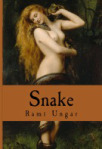
I’d like to thank the people who helped to contribute to this list, including Pat Bertram for her many suggestions (though I have to disagree on serial killers. Sure, they’re overused, but there’s plenty of different ways to write them. Case in point: Snake).

So without further ado, let’s take a look at who/what needs to go:

The orphan who grows up with a heart of gold without any adult intervention whatsoever. Whether it’s Oliver Twist or Harry Potter, this character trope is pretty much the same wherever you go: a kid who grows up in an abusive environment, has never received a smile or a word of kindness from anyone, and yet still grows up with virtues to make statues of angels weep for joy. I don’t buy it. Although it’s possible for a kid to grow up that way (and usually, based on these stories, it’s a boy), it’s very unlikely. Without parental love and affection, kids can grow up to be distrustful and try to find other ways (sometimes really unhealthy ways) to replace the bond they should’ve had with their parents. Like I pointed out the other day, Harry should’ve grown up with some insecurities and trust issues, if not full on sociopathy (I might’ve written him that way anyway).

The drunk, possibly depressed cop. I’m sure there are cops who are drunk and/or depressed. But there seems to be a plethora of them in literature, and they are either meant to be tragic, comical, or go on a spiritual quest where they find the meaning in life, stop drinking, and maybe even get the girl. Unless someone finds a new slant on this trope, or it has got to go.

The killer with an intellectual disability. While I disagree with Pat on the need to get rid of serial killers, there is a strain of that sort of character I think we could do without. This strain are characters who would be classified as mentally retarded, and that’s somehow hinted by the writers (and in film and TV, the directors and actors) to be linked to their violent killing sprees. Leatherface from Texas Chainsaw Massacre is an example, and so is a certain character in the current season of American Horror Story (not saying who, because you know, spoilers). It’s actually rather saddening and disturbing to see this trope constantly resurfacing, because most people with intellectual disabilities are really sweet and wouldn’t harm a fly unless under extreme stress. If you’re going to create a killer with a brain problem, make it someone who kills for their own sick pleasure, rather than suggesting that it might have something to do with some intellectual disability they may have. Not only would I thank you, but I’m sure that many people with intellectual disabilities and their friends, family, and caretakers would thank you as well.

The dystopian dreamboy. I think you could actually extend this to a lot of YA stories as well, but I’m not familiar enough with the genre to make that sort of inference, so I’ll just keep it to dystopia fiction. In any case, this character shows up a lot in dystopian/YA fiction, particularly stories trying to portray a strong, female character (whether or not they do depends upon the story and personal choice). The dystopian dreamboy is very one-dimensional, their whole point is to be a romantic interest, and they have hardly any other aspects to them besides being very handsome, props the heroine up when she’s feeling down, and maybe fights or demonstrates some other helpful skill. Other than that, not much to fill that Wikia page. I’d like to see these characters either more developed or just gone.

The damsel in distress. Like our last entry, this character has very little character development or point besides being a male lead’s romantic interest. Of course, there’s a rich history of this character in literature, so it’s hard to get rid of such an archetype. However, in a world where women are taking breaking the glass ceiling in so many ways, the damsel in distress is the sort of character that we could stand to lose, because all it says is that women need a guy to save them and are otherwise helpless. Either that, or it needs a total revamping, where the damsel is at least somewhat proactive (like Allison from Snake).

The bitch who just needs some love in her life. Again, in an era where women are working hard to break the glass ceiling, this trope could be retired. Not tweaked. Retired. This trope basically says that there’s an ambitious, job-driven woman who is at the top of the business world. But she’s a little lonely, pretty stressed, and more often than not kind of bitchy. That is, until she meets this awesome, handsome guy who is sexually stimulating. And then she realizes as fulfilling as her job is, this guy is what she truly wants, and he makes her a better person, and given a choice between him and her job, she’ll take him. I don’t know, it might just be me, but I think plenty of women can be in business and find fulfillment without a guy. Or have a guy (or girl) and not have to choose between the two to get happiness. I’ve seen it plenty of times. Like my boss.

The barely-Jewish Jew. This is the one that gets my goat. Rachel Berry, Noah “Puck” Puckerman, Howard Wolowitz, Willow Rosenberg, John Munch, Dr. Chris Taub. These TV characters  are all Jewish, but if you looked only at them to form your idea of what a Jew is, you’d think that a Jew is someone who just says a bunch of Yiddish words but isn’t that different than anyone else.  Really, that’s only a small–really small, actually–portion of the Jewish population. I’d really like to see more Jewish characters eating kosher, maybe being involved in synagogue activities or doing Israel activism or something. Show some Hasidic Jews or some modern Orthodox or Conservative Jews who like the Ramones and go to day school (I had a friend or two like that). And for more than one guest episode, thanks! The only character who bucked the trend was Ziva David on NCIS, but the actress who played her left the show, so what’s left?

What are your thoughts on these choices?

What are some character tropes and archetypes that you need to be retired? Any you want to be resurrected?

A truly terrifying time.

I know I don’t usually do back-to-back reviews, but this time around is an exception. Especially since this film is so damn good. It’s actually won a couple of awards and is nominated for plenty more, so I think it’s especially deserving of a review.

The Babadook follows Essie Davis as Amelia, a widow who refuses to confront her own grief over the death of her husband or the fact that her young son Samuel (played with convincing skill by Noah Wiseman), while brilliant enough to do advanced magic tricks and build weapons, has some behavioral problems (as evidenced by the weapons). One day Samuel finds a pop-up book entitled Mister Babadook, about a boogeyman-like creature whose name is derived from the onomatopoeia of two quick raps and three steady knocks. Anyone who sees it will be menaced by it until it kills them. Thus starts a terrifying saga in which both characters toe the line between reality, insanity and a world only barely glimpsed by man.

Jenifer Kent does an excellent job as a first time writer and director on a very small budget, easily weaving together a story where the audience can’t tell if the Babadook is real or a shared psychosis (or folie a deux for those poetic types) between mother and son. Throughout the film you’ll see evidence that it could be either or both (which is what I’m going with). Davis is wonderful, portraying a mother with heavy baggage who is trying to deal with what life has dealt her in the best way possible and suffering from it as well, while young Wiseman should get an award for how well he played such a psychologically demanding role. The atmosphere is great, the exploration of parenthood under rough circumstances is poignant, and the storytelling was executed well. I had to put my hands over my eyes several times because it was so scary.

I hope more people discover The Babadook, because it is a really awesome horror film that reminds one of the original Night of the Living Dead in its power to terrify and to tell a story worthy of analysis. All in all, I’m giving this film a 4.5 out of 5. I’m definitely hoping for more films from Ms. Kent, especially if they’re as terrifying as The Babadook was. And if there’s a copy of that picture book, I would like one.

Not recommended for anyone with a pet (especially a dog) or small children. Or both.

I come from a family where it’s typical for most of us to obsess over certain TV shows, books or movies. One of those things that we love is Harry Potter. Around my mother’s house you will find copies of each book (sometimes more than one), the movies on DVD or VHS, a couple of wands and my mother’s acceptance letter to Hogwarts (apparently you can get those), and a few other knickknacks. Plus two very strange cats. When I told my mom that on Pottermore I’d been sorted into Slytherin, she considered not talking to me for a while (but does that choice surprise any of you?). And at some point soon, my mom and her partner, my stepmom, will be heading down to Florida, where my mom plans to visit Harry Potter World.

But that doesn’t mean that we’re above poking fun at the thing we love or pointing out the flaws. For example, my family is pretty much in agreement that the fact that Harry grew up with the Dursleys and was such a good person despite the abuse and isolation he suffered is very improbable. As I finished the conversation one evening after a long car-ride discussing HP, “At the very least he should have some self-esteem and trust issues. At the very worst he should be a full-on sociopath to rival Voldemort in evil.”

“I grew up in a broken home. Don’t mess with me, baldy.”

One of these days I’ll have to revisit the trope of the righteous orphan in literature, but now is not the time or the place.

The point is, this small flaw is one of a few that people could point out and make a big deal about in the HP series. In fact, if you look at many different works of literature, TV shows, and movies, you’re bound to find something that doesn’t make sense if you really think about it. Even if you don’t count the prequels, there’s some stuff about the Star Wars films that don’t add up (*cough* Princess Leia’s adoption and royal status *cough*). All of Frozen could’ve been avoided if the King and Queen had actually tried to help their daughter instead of trying to shut up her growing powers (but where would the fun in that be?). And don’t get me started on some of the stuff that happens in some comic books and superhero films. Or Hunger Games.

And there are people who LOVE pointing out these flaws to audience, sometimes making it difficult to enjoy these things ever again. How It Should Have Ended, CinemaSins, Nostalgia Critic, so many more. These guys love deconstructing these things and pointing out their flaws. It’s enough to make you want to root out every plot hole you can find in your story so that you don’t get caught in the web of these guys. Or you might just be too afraid to write at all.

The thing is, no story is perfect. Harry Potter is one of the bestselling franchises in the world, yet it’s not free of flaws. And look at Doctor Who! I’m a huge Whovian, yet I’ll admit that it sometimes  falters in the stories it tells (honestly, I thought I’d throw a shoe at the TV after I saw Kill the Moon. What an awful story that makes no sense!). Heck, I’ll admit I have stories that aren’t problem-free. The latter half of Snake has been criticized in the past of being slightly a little hard to justify (though not outside the realm of possibility). And if I learned one thing from my creative writing class, my short stories “Evil Began in a Bar” and “What Happened Saturday Night/Frauwolf”, will need several drafts. Heck, the latter is going to need one more draft before I can even think about submitting it somewhere. Don’t even get me started on the former.

What you have to keep in mind is that you can’t stress over the teeniest, tiniest detail and hoping there’s not something some blogger or YouTube producer or whatever is going to seize upon and make it into a reason to destroy the book. First worry about the big stuff. For example, if you have a plot that basically goes “In a world everyone has a gun but no one uses them, until someone does”, people are going to definitely look at that one and be like, “Say what?” Hash out the big details first. Then worry about the smaller ones. And know that you won’t get them all. Just try and make sure the ones you don’t get are ones that won’t really matter in the end.

“You are of questionable royal lineage and you will need to undergo a blood test. Take her away!”

Sure, Princess Leia’s adoption would probably draw some questions, maybe even the attention of the Empire. Doesn’t mean that it has to draw the attention of the Empire and Leia’s real father Vader. Or that Star Wars isn’t still one of the most awesome stories in the universe (and I count even the prequels, though I’m a little iffy on Episode III).

Keep that in mind for your own work as well. Nothing’s ever perfect, but it can still be great.

That’s all for now, my Followers of Fear. Hope you enjoyed this slightly-rambling post. I’m taking the rest of the night off. You have a good one, and remember to check out my big holiday sale. All books are marked down till December 31st, so check them out now while you got the chance.

Pleasant nightmares.

snake

How far would you go for love and revenge?

Boy, do I have plenty of good news to share with everyone. Including the publication of two of my stories in Strange Portals, today is the six month anniversary of the publication of my second novel, Snake. Maybe because I’ve been so busy this past semester, but it feels like so much longer since that book came out.

For those of you who haven’t heard of Snake yet, it’s a thriller novel following a young man who dons a mask and becomes a dangerous serial killer in order to save the woman he loves. It’s gotten some very good reviews since it came out, and I’m quite proud of how it’s done. Here’s what some people have said since Snake has come out:

Rami Ungar makes a promise to (the reader) in all his writings: he WILL scare you, and if he does “his job is done.” Snake will scare you. I am a huge Stephen King fan, so this should give you some idea of my tolerance level for gore, death and mayhem – I was scared. Rami takes you into places you would never have believed possible, and manages to pull his hero (and eventually his heroine) out of them against all odds. If you like to be scared. If you LOVE to be scared. You should read this book.

Angela Misri, author of Jewel of the Thames

Quite gripping story. enjoyed a lot reading this.

Jyoti

Well, I took yet another vacation where I made my family “just wait until I finish this chapter.” This page-turning read was another great effort by Rami. He is not afraid to take risks in plot twists and turns, character development and he takes the reader on quite the journey in this book. So looking forward to his next creation!

Michele Kurland

And partly in honor of this milestone, but mostly because of the holiday season, all my books are on sale from today December 10th through December 31st. This includes e-books and paperbacks getting marked down. So if you haven’t read The Quiet Game, Reborn City, or Snake yet, this is the best time to do so. Especially if you want or need something new and different to read this month.

So anyway, I hope you decide to check out any of my books, as well as Strange Portals (which, by the way, is free to download). And if you like, or if you dislike, what you read, please let me know. Just leave me a comment or write a review. I would love to hear what you say.

Well, that’s all for now. Happy reading and happy holidays, my Followers of Fear. You are all, as far as I’m concerned, a gift to me.

It’s been a while, but I’ve written a new article for Self-Published Authors Helping Other Authors. This one is called Writing a Blurb for Your Book Cover and has some wonderful tips for writing that little summary on the backs of books that you read before you decide whether or not you want to invest time and money in reading this book.

If you like the article, please let me know. And if you like what you read and want to read more, please check out the rest of the website. Self-Published Authors Helping Other Authors is a website from indie authors, by indie authors, and for indie authors in order to help authors write, edit, market, and publish in an easy and affordable manner. You never know what bit of advice might help you publish that next big novel.

All for now. See you later, my Followers of Fear. I’ve got to get to class.

Some exciting news to share with you all. I’ve been holding off until I had some more details, but it’s out now and I’ve got to share it with you all.

Last month I received word from colleague and fellow author Joleene Naylor that she was putting together an anthology of horror/paranormal/sci-fi/fantasy short stories for a holiday season release and she was looking for submissions. Despite my crazy busy life I did some editing on two short stories of mine, “Buried Alive” and “Travelers of the Loneliest Roads”, and sent them in. I’m extremely pleased, grateful, and proud to say that they both got into the final anthology!

I’d like to thank Joleene for this awesome opportunity (you should seriously check out her blog, the link for which is above), and I’d encourage you to check out the anthology “Strange Portals”, which contains works from several different authors, including AK Stein, Adan Ramie, Roxanna Matthews, Jolene, myself, and many more. Right now the anthology is only available from Smashwords as an e-book (the link to download it is right here), but it’ll be available for Amazon soon (and I’ll be updating this post when it is, so keep an eye out for that update). Did I mention it’s free to download? Well, it’s free to download. So that’s even more incentive to check it out.

Well, that’s all for now. I’m really excited, as you can understand. I’m even listening to my go-to celebration song, “Voodoo Child” by Rogue Traders, playing now, that’s how excited I am. I’m taking the rest of the night off, my Followers of Fear. You have a good one, okay?

*Update: As of December 9th, the Amazon link was posted. It costs $0.99 because Amazon never does anything free, but what are you going to do? Anyway, the link is here if you want to check it out. I certainly will.

I’m not sure how I did it. I’m not sure I care to know how I did it. I just know that I finished the third draft of “What Happened Saturday Night”, formerly known as “Frauwolf”. And boy, what a writing marathon that was! I just didn’t stop writing.

After hearing the criticisms of my classmates, I went through the story, adjusting the first half or so (the half they really liked) and then completely rewrote everything past page 7 or so (the half they disliked). Throughout the editing and rewriting I tried to keep in mind that, even though this was a werewolf story, it was also a story about two people who really care about each other. A story about human interaction, in other words. And isn’t that all literature? It’s about how humans interact with each other and/or their environment. Even in ghost stories, it’s about human interaction, about confronting our fear of mortality and the afterlife.

I’d do well to remember that for future stories, and not try to create an amazing, complicated universe before working on the human aspect. Perhaps now that I’ve written it down I will.

Anyway, I also played around with some of the already apparent symbolism in the story–using a werewolf as a metaphor for awakening to sexuality, I wonder how many others have used that one? Probably a few–as well as switching the story to present tense. I actually had originally planned to do the second draft in present tense, seeing as Rose is written that way as well, but at some point I slipped back into my standard past tense. Well, it’s closer to what I’d planned, and the ending works better now than it did in the second draft, so I’m hoping my teacher approves.

And speaking of endings, when I was typing out the last words of the story, my iTunes started playing “Va, pensiero”, an Italian opera piece as sung by Russell Watson. It’s such a beautiful piece, and it seemed to fit the ending of the story so well.  I think that’s a good sign for this draft.

Anyway, I sent it off to my teacher. She’ll review it and let me know what she thinks. Hopefully I’ll get some good feedback on this story. Because of the LGBT themes, I figure I could send it to a magazine that specializes in that sort of literature. I’ve already found a few that might be good fits. Fingers crossed that they like what I send them.

Well, I’m tired, it’s very late, and I’ve got more work to do tomorrow (still got a thesis to get through, after all). I’ll see you guys in the morning.  Goodnight my Followers of Fear. Don’t let the werewolves bite.

You may also know this story by its original title, Frauwolf. It’s still the same story as well, about a girl who’s a werewolf and who is in a relationship with another girl. And its second draft got critiqued in my creative writing class.

Luckily this time I won’t have to rewrite the whole damn story again, or I might seriously turn into a werewolf myself and go on a rampage  (boy, wouldn’t that make for an interesting horror movie). My classmates found this draft much easier to read and felt that the first half was awesome, that the language was superb and that the emotions between the two main characters felt real. Most of all they were glad I’d changed the story from a crazy fast-paced psycho-drama that left little time to linger on the actual story and made it more about the characters themselves.

The thing they didn’t like is that near the end of the story I add a new character, who happens to be a psychopath, and it just takes the story in a bad direction. Well, in my defense I had only so many days to finish the new draft and I was pressed for time, so when I got stuck I went with what first came to mind.

In any case, I only have about half a short story to rewrite rather than a full short story, and I have to turn in a third draft by next Wednesday. God help me, because I have an eight-page Shakespeare paper due the day before and I still have three and a half pages left. Plus I’m still figuring out where to go with this short story of mine. Boy, is my life crazy!

Well, I’m going to turn in. I’ve had a long day, I’m exhausted, and I need my rest if I’m going to tackle either of these tomorrow. Wish me luck Followers of Fear, because I have a feeling I’m going to need all the luck I can get. Goodnight, everybody.

There are various phrases and maxims that authors just dread hearing. “Nobody wants to read that sort of thing.” “Where do you get your ideas?” “Adverbs are your enemy.” That sort of thing. Here’s one that’s been espoused by creative writing teachers, how-to books, and maybe even your parents since writers have tried to teach would-be writers how to write:

“Write what you know.”

By this, they typically mean draw on your personal experience in life to write your stories. Anything you learned from steady research or anything you made up in your head, please leave at the door before opening up your notebook/turning on your computer/sitting down in front of the typewriter. Please keep this in the realm of experience and what is possible rather than what you imagine. If it’s not based on your actual knowledge and life, then you should stay away from it.

Most writers hear that and want to barf. A few do.

There are variety of reasons why no one wants to subscribe to this rule. Some see their lives as too boring or unworthy for writing about. Others feel that their own lives are too small and they don’t want to restrict themselves to just their own subjective experiences. And many (myself included) are attracted to things that can’t be personally experienced (usually, anyway), so they find that rule way too restricting to actually be usable.

I remember back in elementary school or junior high, my dad, my sisters and I were driving home from somewhere or other, and somehow the topic of discussion got onto the sort of stories I write. My dad suggested that I try, instead of vampires and cavemen and Frankenstein monsters and pirates I try writing a story about my own personal life. My reply was something along the lines of, “So you’re saying I should write a story about a Jewish kid who has rabbis for parents and has three annoying sisters?”

My dad’s reply was, “Um, yeah. Maybe.”

I think in that car ride I swore that I would never write based on what I know if it meant writing that sort of story. Let’s face it, it’s just not in my DNA. I can’t write those coming-of-age stories about a kid learning to be an adult in a community of religious Jews or about a man working his way up the corporate ladder at the expense of his humanity and marriage. Not unless those stories involve ghosts, demons, monsters, or serial killers. Otherwise it’s just boring for me, and no writer wants to write a boring story, one they personally can’t get into.

I also swore that I wouldn’t take writing advice from my dad again, though I broke that promise when he ended up giving me pretty good advice, such as “don’t be afraid to open yourself to new experiences” and “maybe you should look into writing and publishing short stories.” Now there’s some good advice for writers!

Seriously doubt these books were written with the rule “write what you know.”

I also did end up writing about stuff I know, but not in the way a high-and-mighty literary writing instructor might think. Probably not in the way my dad thought either. I certainly don’t write stories about college seniors living with a roommate and trying to get the grades and make ends meet. But I do include what I know in other ways.

For example, in a recent story that I wrote, the protagonist and narrator, in addition to having to deal with being a werewolf, also has to deal with the fact that she has feelings for her best friend, who is a girl. When I was coming to the realization of my own sexuality, I felt the same sort of fear and anxiety my narrator feels in the story, and I had a number of the same questions, such as “Would people accept me as I am?” “Am I really this way?” “How many things could go wrong if I came out of the closet?” Just because it was an element of a werewolf story did not make it any less meaningful or not based on my life.

Another example is one based on something my dad told me once (this is becoming a dad-centric post, isn’t it? Abba, I hope you appreciate all these mentions). He once told me that a great-aunt of his was well known for having dreams where she encountered the dearly departed. This inspired a novel involving a large family of Jews of many generations and their own dealings with the supernatural. I base this work on that story my dad told me as well as my own experiences with the supernatural (and I’ve had some freaky ones, to be sure).

Yes, I have experience with this.

In short, for me writing what I know is taking things I know about or have experience with and making them part of a larger story, often with fantastic or terrifying elements. It’s what works for me, and it’s what I love doing.

Of course, this is my version of how this works. For others, it may be different. There may be writers who write entirely based on what they know and what they’ve experienced, and there may be others who write absolutely nothing based on their real lives (I have a feeling that many fantasy writers are like this). It’s a bit of a spectrum, if you think about it in a certain way.

But like I said, every author is different, and no rule works for every author. “Writing what you know” is a prime example of that. It works for some people, and it doesn’t work for many. It all depends on the author, what they like working on, and how much they want to put their own lives in their stories, among other things. I’m the kind of guy who will take elements of my life or my own knowledge and put it into the stories as part of a larger whole rather than as the entire basis for a story. And that’s just how I work. For others, it’s quite different, but I think that’s good. Because no two writers are the same, and that means that no writer is going to produce the same kind of story.

To me, that’s really exciting.

Do you use any elements from your own life in your stories?

How do you do it?

Back in 2011 and 2012, I did two reviews on different book series that I’d come to enjoy. I was still in the middle of them, but I was pretty much hooked on them, enough that while I hadn’t finished either series at that point, I wrote reviews on both of them. Sadly though, the reviews didn’t really do either series justice. I was still figuring out the components of a good review at that point in my blogging career, so that probably explains why they weren’t as good as they could be.

In any case, I read the last book of one series earlier this year and last night I finished the last book of the other. In honor of these achievements, and because I haven’t done a proper review since August, I thought I’d do a double review on both of these series.

So, let’s begin!

Kieli by Yukako Kabei

Volume 1 of “Kieli”. I swear, the series blew my mind when I first started reading it.

Everyone loves a unique story, something that has never been seen before on the printed page. We felt that way with Alice in Wonderland, Lord of the Rings, and so many other famous stories. Kieli does just that. A light novel series* out of Japan, Kieli mixes just about every genre possible: paranormal, science fiction, steampunk, fantasy, romance, Western, and then some! All while telling a very compelling and heart-wrenching story.

From a young age, Kieli has been able to see ghosts, but she doesn’t tell anyone lest her theocratic society think her a heretic. One day she meets an immortal soldier named Harvey, who is delivering a haunted radio to a battle site so that the ghost haunting the radio can finally be at peace. Thus starts their adventures together, as Kieli joins Harvey on his quest and ends up helping him fight off ghosts, Church soldiers, other immortal soldiers and a plethora of other antagonists. At the same time, Kieli starts learning about her past and about what it means to grow up and be an adult.

While at times it may frustrate readers that Kieli has a hard time separating her own identity from being with Harvey, it’s a compelling story. The characters are troubled and have to learn to sort out their own problems as well as the antagonists facing them, and the mix of genres is done almost seamlessly without looking too weird or contrived, and the relationship between the two main characters feels real. You’ll want to keep reading all the way through the final book, which nearly made me come to tears.

All in all, I give Kieli a 4.5 out of 5. This was a series that made me want to create fantastic worlds like the one depicted int he series, and I wanted to create characters that felt just as vibrant and complicated as Kieli or Harvey. Maybe thanks to Kieli, someday I will.

Book Girl by Mizuki Nomura

The Japanese cover for the first entry in the “Book Girl” series, “Book Girl and the Suicidal Mime”.

Another Japanese light novel series, Book Girl is told from the point of view of Konoha Inoue, a troubled high schooler who actually published a massively popular novel under a pseudonym in junior high. However his success came at the great cost, and he swears never to write again.

That is, until he meets Tohko Amano, a girl who literally eats the stories told in books to survive. After Konoha sees Tohko “eating” a story, she forces him to join the literature club and write stories for her as snacks. That’s only the start of his problems though, because a lot of strange stuff tends to happen around Konoha, including missing students and attempted murders. Against his will, Konoha is often dragged into solving these mysteries by Tohko, who often finds a literary equivalent to the mystery being investigated (such as Wuthering Heights or The Phantom of the Opera, in some cases).

While Kieli made me want to create worlds, Book Girl made me want to tell incredible stories with wonderful language. Nomura is able to weave words together in order to make you feel like you really know the characters, especially Konoha, and become really attached to them, as well as attached to finding out how the mystery is solved, as well as how Konoha confronts his past and learns to stand on his own two feet again. It’s a great series if you happen to love mysteries as well.

For telling a compelling story with wonderful clarity, emotion and language, I give the Book Girl series a 4.8 out of 5. I really will end up missing this series now that I’ve finished it, but hopefully I took enough away from it so as to improve my own stories.

We can hope, right?


Well, that’s all for now. I’ve got some homework to do before I go over to my mother’s house, so I’m going to get to work on that. Happy Thanksgiving, my Followers of Fear. This year, I’m thankful for you guys.

*A light novel is a form of literature that was born in Japan and grew out of the pulp magazine industry. Light novels are usually around the length of a novella (40,000-50,000 words), have dense publishing schedules, are often serialized in anthology magazines before being published as cheap paperbacks, and usually include illustrations, about one per chapter usually. The format is very popular in Japan and popular series have been adapted into numerous formats several times over. There’s also a growing market in the English-speaking world for light novels, and many companies have begun licensing and translating these series for new audiences. I’m hooked on the genre myself.