Archive for the ‘Reflections’ Category

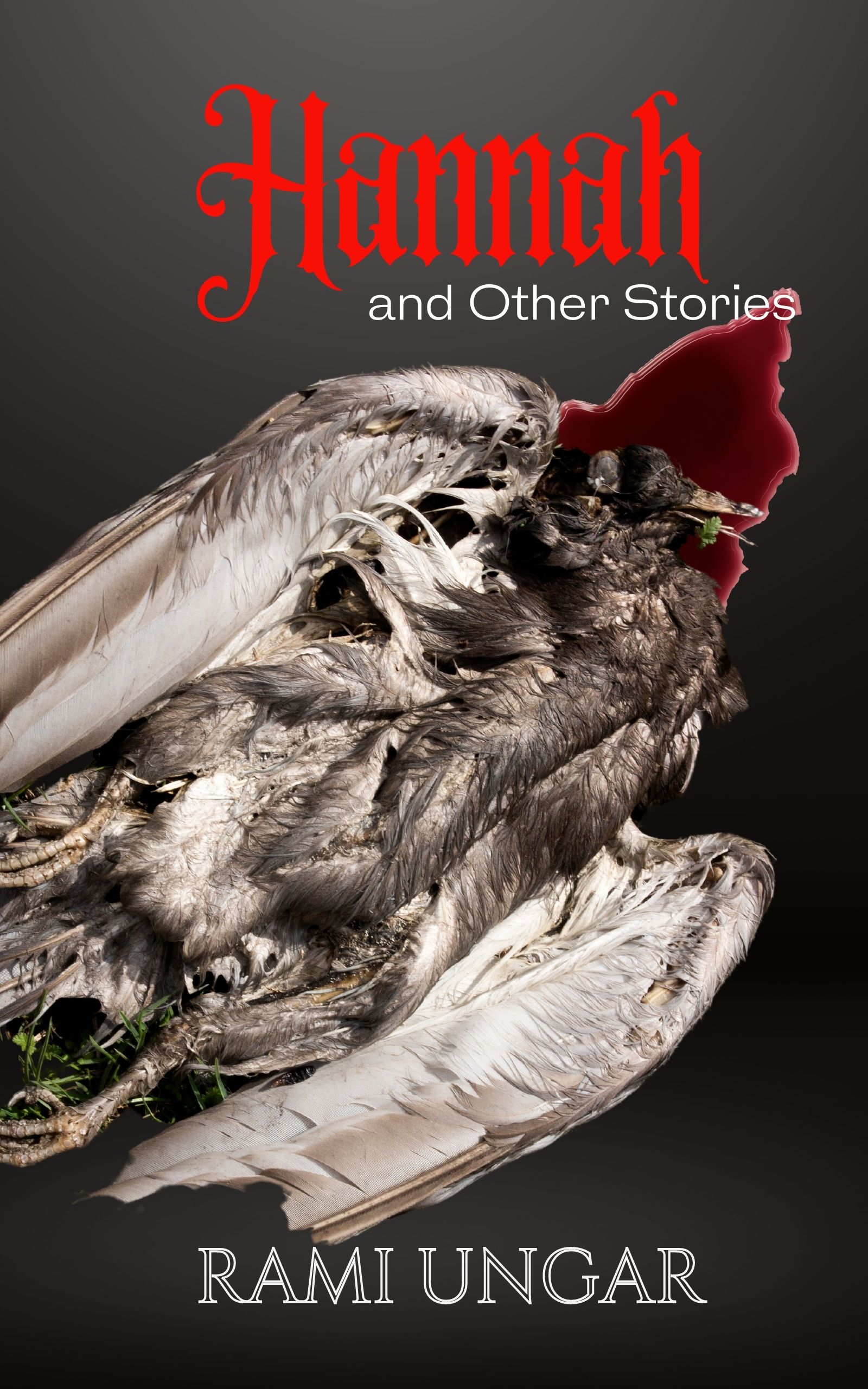
Earlier this week, my publisher got in touch with me and asked me to pick some excerpts from each of the stories in Hannah. Specifically, they were looking for excerpts that reflect the theme of the collection. And that really made me think, because up till then, I hadn’t thought there was a theme to Hannah. It was just a bunch of stories I’d been working on at the same time that I thought might make a good collection if included together.

So, I had to ask myself: is there a theme to Hannah and Other Stories?

Now, if for some reason you’re unfamiliar, Hannah and Other Stories is a collection of short stories that I’ll be releasing later this year in the fall (exact date to be determined). It’s a collection of seven strange and unique stories, ranging from ghost hunters investigating a haunted school, to budding serial killers, to even carnivorous horses. And BSC Publishing Group, the company that will be releasing Hannah, and I have been working hard so as many people as possible are interested to read this book when it releases.

Which brings me back to the point of this post: BSC wanted me to pull excerpts from the stories inside that really speak to the theme of the collection. So, I had to sit back and really think about if there was a theme to the collection. And if so, what was it? There certainly wasn’t when I wrote and released The Quiet Game. That was just me writing stories that interested me and which I thought people would enjoy. I thought with those five stories, I’d be making a good foray into the world of publishing, self-publishing, and horror fiction.

And as mentioned above, I was working on some stories I liked and thought would make a great collection when I put Hannah together. So, was there a unifying theme below it all? Maybe something I only noticed subconsciously when I was choosing which stories to put together? Because there were definitely a few I rejected for one reason or another.

Well, after some rumination, I did realize something: in all the stories, there’s a senselessness to the world. The violence and horrors that occur don’t seem to occur because of some greater plan, or a good versus evil struggle like you see in horror. Shit is happening, and even when you go back through events and see how they start and how inevitable the endings are, you don’t feel like there’s anything guiding the world. It’s just a cruel, indifferent world with cruel or indifferent people and cruel or indifferent circumstances leading to horrific results.

And for many, that’s scary in and of itself. Even those of us who aren’t necessarily religious like to think there’s a higher power or guiding force or principle in the universe. The idea that the universe has none (except maybe a writer with a penchant for dark, sinister and macabre storytelling) is sure to chill more than a few readers.

So, I chose excerpts I felt reflected that. Sure, some of those excerpts featured people being awful (and those scenes are incredibly violent), but in the end, that senselessness and lack of guidance or purpose is at the center of the excerpts.

Hopefully, the excerpts chosen help with the marketing campaign we’re going to do in the months leading up to Hannah‘s release. As I said, I have high hopes for this collection, and I think many readers, whether new to my work or fans for years, will find plenty to enjoy.

And maybe, if I put out more collections in the future, I’ll think harder about themes before I put it together and try to shop it around.


That’s all for now, my Followers of Fear. I actually woke up sick today, so my weekend plans kind of fell by the wayside. Hopefully I can do some of the stuff I wanted to do this weekend. At least I was able to get a blog post out. That was something I wanted to do at some point this weekend.

Anyway, I’m off to heat up dinner. I hope this post got you excited or more interested in Hannah and Other Stories. And while you wait for its release, if you’re looking for something spooky to read, if you want to support my career, or if you want to help me feel better, maybe consider checking out my Published Books page and finding your next read there. Trust me, there’s plenty there to enjoy.

Until next time, good night, pleasant nightmares, Shabbat Shalom, and only 200 days till Halloween! Yes, I’m keeping track, that should surprise none of you.
So, I’m reading Every Woman Knows This: A Horror Collection by Laurel Hightower, a collection of horror short stories I won in a Twitter giveaway. Not very fast, because I get through print books so much more slowly these days than I used to, but I’m making my way through it. And I am in awe that some of these short stories appear to be shorter than five thousand words. Hell, some of the earlier stories in the collection appear less than four thousand.

And I’m sitting there, reading the stories, and I’m like, “How does she do that and make them still so damn good?”

I actually posted that question on my personal Facebook and my Twitter feed. Laurel responded to the Facebook post (we’re friends there), thanking me for posting about the book and being glad that I’m enjoying it. Did not share her secrets with me, though.

I wish she had, because I would love to be able to write stories that short and still be effective. After all, I grew up on Harry Potter and the Bartimaeus Trilogy, followed by books like Interview with the Vampire and IT. The shortest of those books is seventy-seven thousand words. By the time I started regularly reading and writing short stories, my brain was already primed for sprawling plots with deep twists, multiple layers of themes and secrets, and complex character relationships that are explored through multiple pages, chapters and books.

Taking all that out and trying to tell an entire story in less than seventy-five hundred words (what the Horror Writer Association says is the maximum word count for a short story) was a huge switch for me. And honestly, I’ve had varying success. Occasionally, I manage to get a story less than seventy-five hundred words, and sometimes those stories get published, but more often short for me is a novelette between 7,500 and 17,500 words. Not as long as a novel, not by far, but allows me more room to work with those plot elements I like.

Still, I do try to come up with and write those shorter stories, what Stephen King calls “a quick kiss in the dark from a stranger.”* Yeah, it’s difficult to do, but most publications are looking for stories of that range, and I want to get my work into them. And, I like the challenge. It’s another hill for me to climb on my journey as an author. And, occasionally, something I write in this vein is really good.

That being said, if it looks like a short story is destined to be a novelette, or even a novella or novel, I will let it be the length it’s going to be. No sense trying to maim a good story so it can fit somewhere, right?

But I still try. And I’ve gleaned some things in my attempts, like instead of big plots or huge happenings, you focus on small instances or events that may happen to one or two people. Rather than the big moments, like the destruction of It in the sewers of Derry or the fallout of four writers visiting a haunted house on Kansas during Halloween for a publicity stunt (Kill Creek by Scott Thomas, if you don’t know), I should focus on maybe a ghost at the Ohio State Reformatory trying to get information on what happened after he died, or a young man dealing with something evil that’s appeared intermittently in his life. Those might manage to become the kisses given in the dark by a stranger.

Actually, one of those was a kiss in the dark, and some of you may remember it. It’s “Is Anyone There,” which was published last year in That Which Cannot Be Undone, and got mentioned in several reviews as a highlight of the anthology. So maybe I might be closer to my goals than I think.

Just don’t kiss me in the dark. I’m more likely to punch you for that than enjoy it or put it into a story.

What are your tips for writing short stories, Followers of Fear? Do you struggle with keeping them under 7,000 or 5,000 words? Let’s discuss.

Also, be sure to check out Every Woman Knows This by Laurel Hightower. So far, it’s a great collection, and I hope I’ve learned some things by the time I’m done.

*Which, by the way, is a weird idea, isn’t it? You walk down an alley or into a room and it’s really dark and suddenly someone plants one on your mouth before disappearing? Actually, the scenario with the room is the plot of an Anton Chekhov short story, and the character who gets the kiss does have an impression left on him. So, I guess it’s a good metaphor.

Consider this an early Autism Awareness Month post (doesn’t officially start till next Saturday).

As many of you know, and many of you may not know, I’m on the autism spectrum. Have been my whole life.* And honestly, while it has made some things somewhat more difficult to me, I really don’t consider it a disability. Well, it is, but it doesn’t disable me. It’s just made me fight harder and learn new ways to work my way through this strange world of ours.

Anyway, onto the meat of this post: recently, my dad sent me a video of a TED talk, featuring a woman named Rosie King speaking about her own autism and how it’s affected her life. Positively affected her life, by the way. If you can, I highly encourage you to watch the video, which I’ve embedded below, before reading the post. It’s only six minutes long and will really resonate with you.

When I saw this video, I was what the young people call shook. Honestly, it felt like Ms. King, who’s only five years younger than me, was talking about my own life. For one thing, I do feel like I have thousands of worlds in my head. Or thousands of stories, some of which take place in the same worlds as each other (I love shared universes in fiction). My imagination is constantly coming up with new stories, which is one reason I write. If I didn’t, they would stay in my head, constantly shifting and changing until I no longer knew what they were.

And I get what she says about having so much energy and needing to scream or move around or whatever. I used to need to pace to calm down. And I’ve been in situations where nobody wanted to be my friend because I was so different, though eventually some came to understand who I was and be my friend. A few are even on the spectrum like me.

And I am far from Rain Man (never seen it, but I’ve heard enough to know). I’m no math whiz beyond my finances, and I need someone else to do my taxes. I do understand a lot of science, but I’m no specialist. And as anyone can tell you, I’m quite verbal and love a good hug. Social situations can prove challenging, especially if I don’t understand some cue or another. But once it’s explained to me what line I’ve crossed or what the issue is, I usually learn from it.

But the thing that resonates with me the most is the part about “being normal” and saying “you’re so normal” as a compliment. As Ms. King says, “What is normal?” Just a setting on the dryer, if you ask me. None of us fit into a box, but some of us just spill out of the box and spread out in several directions much more easily. It’s because people do spread out that way that we as a species advance, from the sciences and technology to literature and culture.

And while I don’t know how much of a role my ASD has played in making me the person I am, as well as the creative I am, I can’t deny that it has played a role. And like Ms. King, I wouldn’t give it up for anything. Not when it has brought me so much good in my life.

So, I guess in conclusion, if someone’s different in some way, don’t try to change them, or make them fit in a box. So long as nobody is getting hurt and being who they are makes them happy, I see no reason to try to change them. Hell, I’m happy just the way I am. The only thing people tried to change in me is giving me the tools to make my way through this world while still being me. And that was enough.

Until next time, my Followers of Fear, good night and pleasant nightmares.

*And no, it wasn’t caused by vaccines. I was neurodivergent well before that, my mother says so, and you wouldn’t want to call her a liar. Them’s fighting words.

I’ve been asked this before numerous times in one way or another. “What advice do you have for new writers?” Well, there’s one thing that always comes to mind. And the past couple of years, the thing I’ve come back to, time and time again, is this: “You need to carve out the time to right.”

Yeah, that’s the advice. A lot of people want to write, but they say they don’t have the time to write, or that they can’t find the time, or there’s just not enough time in the day. I often reply, “Well, you’re going to have to carve out the time. If you’re serious about writing that story. There’s no time fairy who’s just going to grant you time to write.”

Sounds kind of caustic, and it is. But it’s also true. For one thing, I’ve never seen a single fairy, let alone one that grants time to would-be writers. For another, the time to write just doesn’t find you. It doesn’t drop out of the sky and into your lap. And yeah, there is only 24 hours in a day, with hopefully only 8 of them devoted to a day job and the other 16 sleeping and personal stuff.

Fact of the matter is, if you don’t make time, even just half an hour, to write, you won’t ever get the time to write.

I mean, if you want to cut out sleeping, you’ll find that time, but from a health standpoint you’ll really suffer.

But I understand why people say they don’t have the time. Finding that time can be hellishly difficult. Besides day jobs and sleep, people need to do chores around the home, take care of family obligations, and finding time to relax after a long day.

Still, you can find time. Plenty of others have done it before. Even when he was raising three kids under the sage of six and was living out of a trailer, Stephen King found time to write 2500 words a day. That’s how he wrote Carrie, which later launched him into the stratosphere. And my friend/colleague Angela Misri wrote every day on the bus to and from work in moleskine notebooks. That’s how she wrote her Portia Adams books, and they’ve been pretty successful.

As for me, I write in the evenings between dinner and bed (though on weekends or days off I try to write during that free time as well). I’ve been doing that for years, and it’s how I’ve written some of my best work. Yeah, it helps that I’m only responsible for myself, don’t have kids, and writing helps me destress. But I still carve out that time most nights to get work done, because I want to get those stories done and out there. I want to write for the rest of my life. So I carve out that time.

And if you really want to tell those stories and get them out into the world, you’ll find the time. It may take some changes to your schedules, or maybe some changes in your life, but if you’re serious, you’ll be able to find the time. Like I said, plenty of people have before and plenty of people in the future. That includes me, and that includes you.

How do you find time to write? Did you make changes to your life or schedule to do it? Has it helped? Let’s discuss in the comments below.

That’s all for now, my Followers of Fear. Just wanted to get something out to you sooner rather than later, and this seemed like a good subject to post about.

Until next time, good night, pleasant nightmares, and–oh look, a fairy! Oh, you want to join my Army of Nightmares and help me accomplish my goals? Okay, let’s go! To the dragon bats!

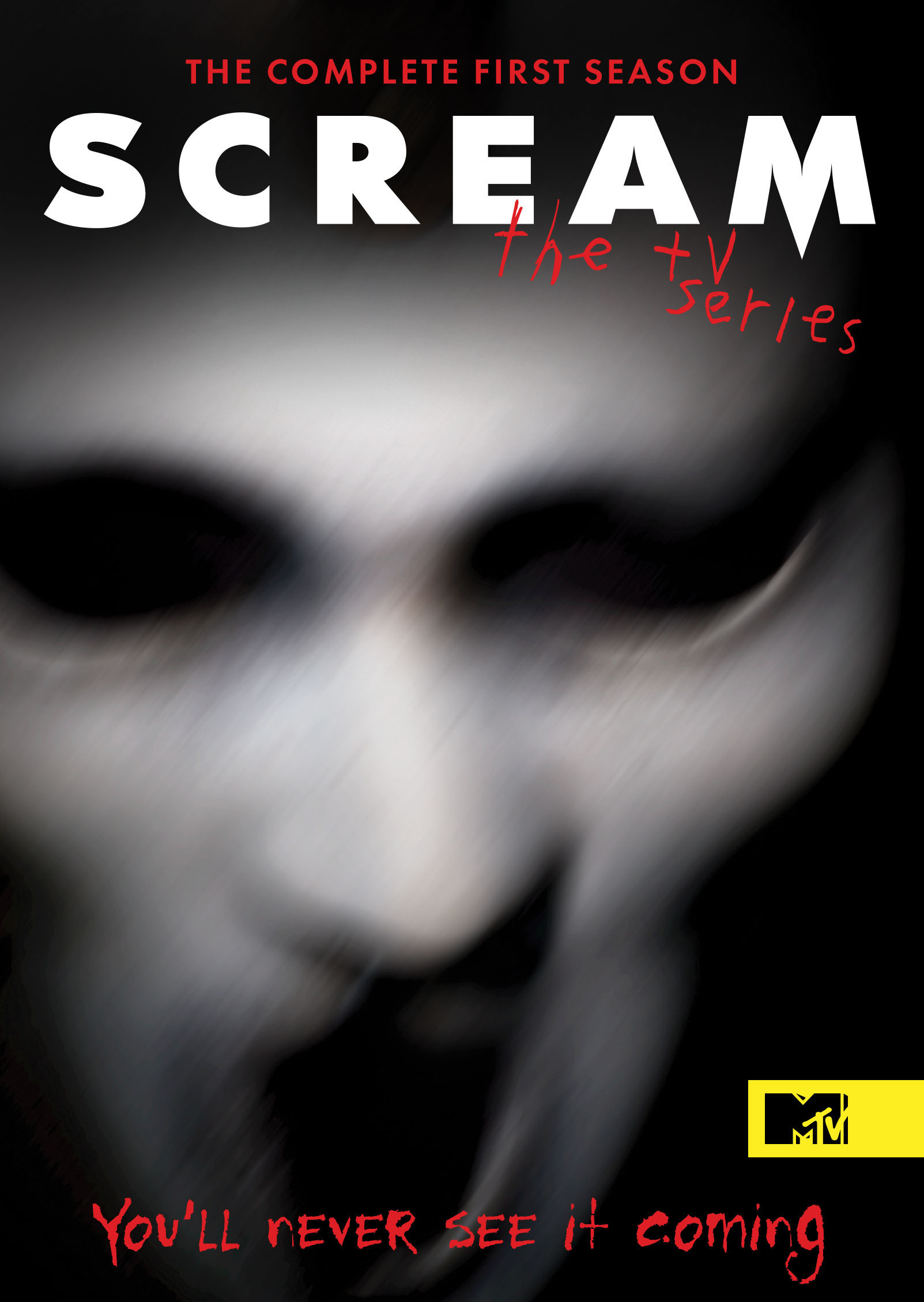
The first season of the Scream TV series. The show deserves more attention, if you ask me.

Odd topic for my two thousandth post, but hey, not every milestone post is going to be something big and amazing. Besides, this needs talking about before Friday.

And what’s Friday? The release of Scream VI, the sixth Scream movie. By now, most horror franchises, especially the slasher franchises, end up on direct-to-video (or DVD and Blu-Ray or streaming, as things now stand). But the Scream franchise, through not putting out sequels every year and making films that tend to age well (seriously, I enjoyed the films I disliked on first viewing more on the second viewing), has stayed in theaters. And the sixth film, set in New York and featuring a Ghostface who appears to be a major fanatic of the Ghostface killers, looks especially amazing. What could be missing?

Well, in all the rewatch of the films and which one’s best, I miss the TV show. Yeah, Scream had a TV show. A lot of people have forgotten that. It was on MTV for two seasons and VH1 for a third season, it was slightly more serious than the movies with less metatextual exploration of horror (but it did have that), and, for two seasons, had a Ghostface whose costume didn’t look clumsy or like it would get in the killer’s way.*

I actually bought the TV show’s version of the costume for Halloween soon after I got my job. I still have the costume, and enjoy wearing it on occasion. I wore it for this post!

What was the TV series about, you might ask? Well, it was a similar setup to the movies. A serial killer, known in this reality as the Lakewood Slasher or the Brandon James Killer, wears a mask based on the face of an accused murderer named Brandon James and starts killing people related to this world’s Sydney, named Emma. And, like the original films, the killings are often inspired by Emma’s family’s past.

There was also some amazing character development, a mystery that kept you guessing, and some really freaky kills and scares that competed with American Horror Story and the Slasher TV series. So, what happened?

I don’t know. I guess the producers got scared that people were losing interest in the second season, because after a Halloween special, they scrapped the ongoing storyline of Emma and her friends and started a new story with the original Ghostface costume for the third season. And that was the season that got critically panned and was followed by a cancellation. So, I guess it was a good decision?

Me in my Scream TV series costume. Creepy, right?

And that’s a shame, because as I said, I remember it being really good for the first two seasons. And while we can never be sure, if the series had decided to focus on the story of Emma and her friends, rather than doing a reboot for a possible anthology series, what could have happened? What if the series got better? At the very least, we might have wrapped up the story.

So, while I look forward to seeing the new film, I would like to point out that the TV show (or at least the first two seasons, anyway), deserve some love and appreciation. Hell, after I finish watching the original run of Law & Order, I’m going to rewatch the first two seasons on Netflix.

Maybe you can join me for a watch? I think that would be a lot of fun. And together, we can maybe show this show some deserved love.

Did you watch the Scream TV series? What were your thoughts of it? Any chance you’ll revisit it with me? What’s your favorite scary movie?

*Seriously, what the heck is with the Ghostface robe? It goes down to your feet and is tight around the legs. Every killer in that costume should trip every time they pursue a victim. Actually, they showed that in the parody film Scary Movie.

For those of you who don’t know, “squicky” refers to something that is very disturbing, disgusting, and/or unpleasant. In horror, it usually refers to something out of what Stephen King calls “the gross-out factor” of horror, with lots of blood and gore and bodily fluids. Occasionally squicky scenes (or at least most of the ones I’ve encountered) also have some sexual element, though not the kind that would indicate any form of healthy sex. Squicky scenes are the ones that make readers think, “Good Lord, what’s wrong with this author?” And they make the author’s parents go, “what kind of freak did we raise that they could come up with this?”

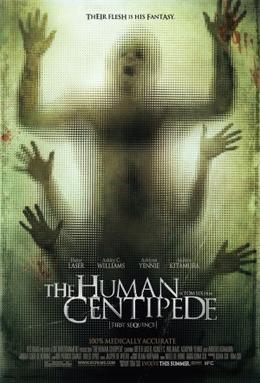
On a personal level, I can go either way with squickiness. Sometimes, like with the Evil Dead remake in 2013, I find that’s part of the charm of the movie. And I’m looking forward to watching Terrifier 2 because its squickiness reportedly caused people to vomit and faint in the theaters (though hopefully not at the same time). But when it comes to stories like Human Centipede and its sequels, where the very concept is squicky, I run the opposite way.*

That being said, I find myself writing squicky scenes more and more in my work. There’s a scene like that in my Backrooms story “It Changes You,” and one of the stories in my upcoming collection Hannah and Other Stories has plenty of squick in it. And there’s a particular story I hope to start writing soon that will have you shuddering from the squick! It’s going to be a blast.

Why am I writing these scenes? Well, part of it is because I’ve seen other authors in the books I read writing them and that has inspired/urged me to try writing them as well. Another is that, in my continual quest to improve as a writer, I’m trying to push myself to step more and more out of my comfort zone and try things that I wouldn’t normally write. And a third part is that, when done right, those scenes make the story scarier and make the story stand out to readers.

That being said, writing those scenes isn’t easy. I’m usually thinking three things when working on a squick moment: is this too much? Is this not enough? And am I using the right words to bring out the full squicky nature of the scene? Since some of these stories haven’t released yet, I can’t be certain. You’re trying to balance several elements like word choice, time spent on a particular moment, translating that horrifying moment from your brain to the page, and how it fits into the story as a whole, among others. A single misstep and people might call you “shocking for shock’s sake” or “exploitative.”

That being said, people are going to call you that anyway. Besides Human Centipede, other films like the Saw movies or Texas Chainsaw Massacre are full of squicky moments and features. I know authors whose books are filled with squick. And you’ll find that each one has both detractors and fans. It just depends on the person, what they’re capable of stomaching, and what personally draws them to the story.

As for advice on writing squicky scenes, I don’t have much, unfortunately. Like I said, I don’t write them too often. But I do think that, unless your main thought when writing a story is, “I want readers to be shocked and grossed out and wincing with every paragraph,” only use squick when it works for the story. If it adds something to the story, great, keep it. If it doesn’t, then perhaps think about whether you should include such a scene.

This entire film is squicky and I want nothing to do with it.

Also, and while it may be stomach churning, read what others have done with squick and try to pick up what makes their takes effective. Once you do that, you can hopefully get some practice in and start creating scenes and stories that, over time, will produce the same effect those scenes produce in other readers and in you.

All that being said, if squick isn’t your thing, don’t push yourself to include it. The thing about horror, there’s a niche for everyone. You prefer things to be gory and gross and shocking, there’s something for you. You like ghosts and psychological stuff? There’s something there for you. You like cosmic beings whose very appearance causes insanity? Yep, there’s something for you.

Anyway, I just wanted to talk about these scenes I’m writing and my thoughts on them. I hope that when some of these stories with their squick-inducing moments release, they’ll be quite effective and add plenty to the story. Now, if you need me, I’m off to watch some scary movies.

Until next time, my Followers of Fear, good night and pleasant nightmares.

Do you enjoy squicky scenes? Do you write them often? What advice do you have for writing and including them in your horror?

*Seriously, you could not pay me to watch those films. Anyone tries, I will smack them into next week and make my escape in the meantime. I’m already screwed up enough, thank you very much! Don’t need to be twisted any further.

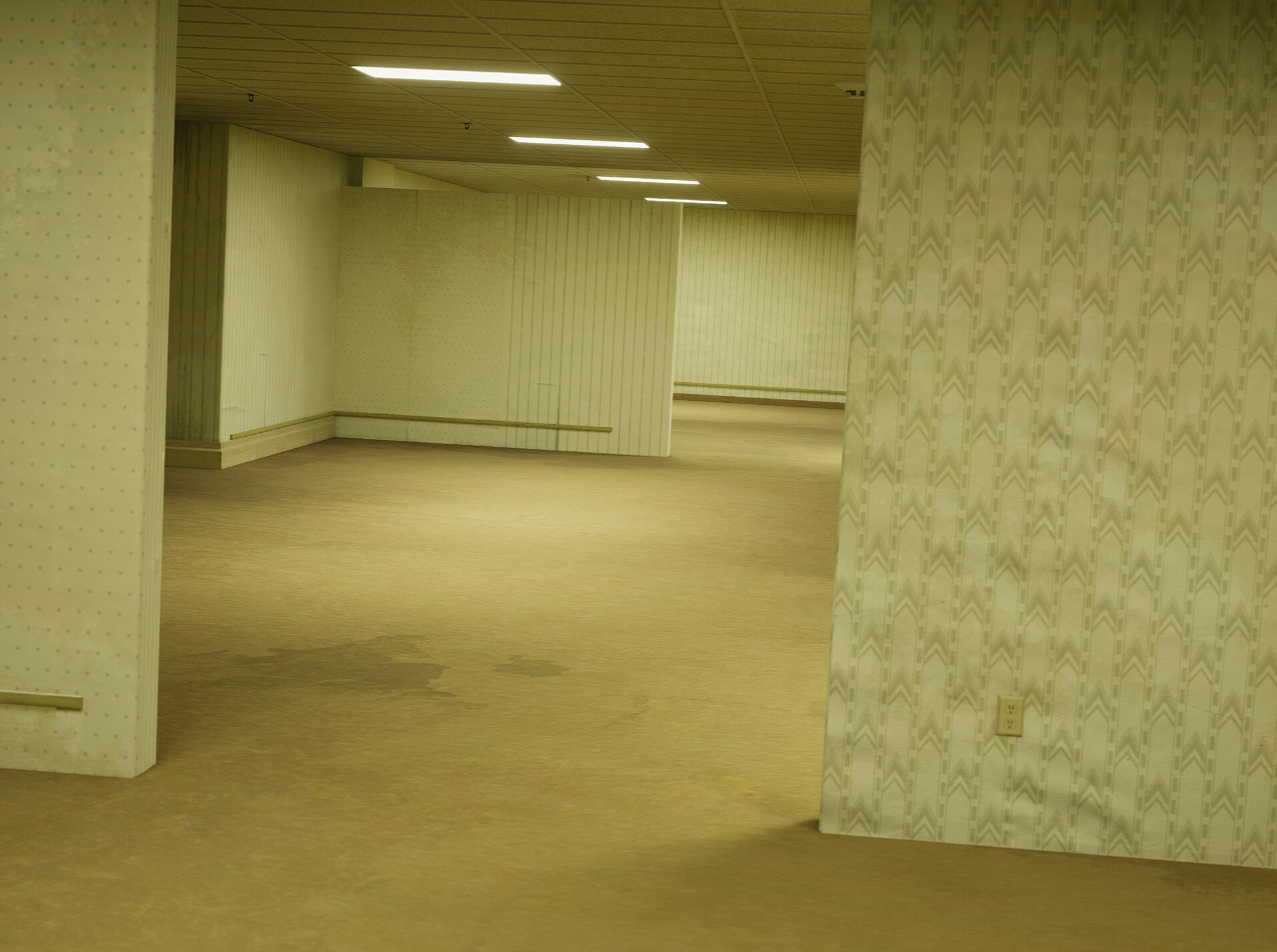
The photo that started it all.

So, I freaked out for a moment earlier this week. I found out that a Hollywood studio was making a movie out of The Backrooms.

If you don’t know what the Backrooms is, it’s an Internet urban legend/creepypasta about a maze that looks like a never-ending office building with the most horrid yellow wallpaper. Supposedly, there are things in the Backrooms that will come after you if you fall, or “noclip,” into them. They were birthed by a photo that was posted anonymously to 4chan, followed by some lines of text that were posted by another anonymous user, so the Backrooms are technically public domain. Anyone can use them to tell stories.

I wrote a novella taking place in the Backrooms: “It Changes You: A Backrooms Story.” And I’ve been planning on editing it throughout the week. However, earlier this week, something came up that made me wonder if I even could or should edit the story. You see, one of the most–if not the most–popular iteration of The Backrooms was created by YouTuber Kane Pixels. He’s created his own mini-mythology through a highly successful YouTube series, the first video of which having over forty-four million views at the time I’m writing this.

Yeah, the new movie is going to be based on his take on the Backrooms, and he’s likely going to be writing and directing as well.

So, my first reaction was like, “Oh shit! Way to go, you’re barely out of high school! Good luck, I can’t wait to see it!” And then I was like, “What does this mean for ‘It Changes You?’ Will it even be worth editing and trying to find a home with a movie on the way?”

In times like these, I look to the experts I know best: my fellow horror writers. So I asked them in one of my Facebook groups. And they pointed out some things that I’d almost forgotten.

First off, plenty of writers and creators are making stories and videos and whatnot off the Backrooms, not just Kane Pixels and myself. Hell, I’ve seen one author posting photos of his own story on Twitter and Hive. I won’t be the last one. And so long as I don’t steal anything to someone else’s interpretation of the Backrooms, it’s fine if I want to release my own version of it.

Yeah, a movie might make things more difficult. But it wasn’t as if they weren’t difficult before. Let’s face it, everybody’s putting out their own versions everywhere they can. So long as I keep trying, my version is well-written and compelling, and

And it’s not as if the movie will be a surefire thing. It could end up in development hell or just never get made. Look at the Five Nights at Freddy’s movie. That thing has been in development since 2015, and it reportedly only just started filming this month! And the Bartimaeus Sequence by Jonathan Stroud? One of my favorite fantasy series from childhood and still beloved. It was supposed to have a movie years ago! But twenty years after the idea was first floated, still no movie out, even though some new studio bought the rights four years ago.

Who’s to say the same thing won’t happen with the Backrooms movie? It might spend several years in development before it actually gets to the production stage, let alone gets filmed and released.

In the meantime, that’s plenty of time for me to make a mark with my version. Not sure if that’ll be on its own as a standalone novella or as part of a collection, but that’s part of the fun of the search: getting to find out what happens and where your stories will end up.

So, this weekend, I’ll get started on editing “It Changes You.” Some friends/colleagues read the first five-thousand words and gave me feedback, so I’ll look over their notes, and then get to work. By the end of the weekend, maybe I’ll have it off to beta readers, and then maybe next month off to publishers.

But for now, I’ve got work. Until next time, good night (no matter what time it may be where you are), pleasant nightmares, and–watch out! There’s a killer behind you as you’re reading this!

Did you know that my first book, The Quiet Game: Five Tales to Chill Your Bones, is coming up on its ten-year publishing anniversary? And that it was around this time of year that I wrote the first drafts of the stories?

It kind of hit me a couple of weekends ago, while vending at ConFusion, that that anniversary was coming up. I was there in the Artists’ Alley, describing each of my books to an interested congoer, and as I mentioned it was my oldest book, I paused. “It’s about…wow, coming up on the ten-year anniversary.” And that really made me think about how much time has passed since that book first came out, as well as all that’s happened since then. Specifically, all the lessons and mistakes I’ve made along the way.

For example, if you look at the cover of The Quiet Game, you might notice there are two F’s in the word “Five.” It’s an error I’ve since become fond of, but it and others have been reminders to me about carefully proofreading my work for mistakes, even when I’m sure they’re perfect.

And marketing my books! I’m still learning how to do it effectively, which is probably why I still need a day job (that’s a joke). But over the years, I’ve learned that you need a lot more than a blog and a book out there to get readers. Nothing ever snowballs till you suddenly find yourself with hundreds of adoring fans. You have to work and try many different things just to get people to take notice, let alone get interested enough to read your book. I’ve learned just how ineffective Facebook ads are for anything except clicks, and I’ve learned that having some advanced readers who are willing to read your work before it comes out makes all the difference. Oh, and that you’ll get plenty more readers when you’re at conventions and you’re being your true self.

And on marketing, I’m still learning things. I think I always will.

You know, you can be reading and writing with an aim to be a professional author since the time you’re a child–like I was–but learning on how to get the work to people is a whole other ballgame. And after ten years, I think I may be in the minor leagues–or at least I’m at a point where I’m somewhat established and known thanks to all those trials and mistakes and revelations I’ve had through the past decade or so.

At least I know one thing for sure: well before The Quiet Game came out, making this blog was a good idea. I created it at a library near my house a couple of weeks before I was set to start my freshman year at Ohio State University. The goal was that I would already have some readers ready before my first book came out (always something I was sure would happen at some point). And you know what? Not only have I discovered readers, I’ve discovered friends and colleagues and interests and experiences that I never thought possible when I was just 18 and starting out in the world. Or when I was 20 and getting ready for that first collection to come out.

Makes me wonder what lessons I’ll learn in the next ten years (I’m not going to speculate on possible mistakes, because I would like to avoid those if possible). And it makes me wonder where I’ll be in the next ten years as well. I hope I’ll have learned enough to make sure that when I release a book, it’s worth the investment for not just me, but for anyone who may have helped me publish it. I hope I may even be writing full-time, or at least much closer to the point where that’s feasible.

And I hope that I have many more Followers of Fear, as well as keeping those who have stuck by me through the years.

Well, that’s all for now, my Followers of Fear. I’ll be working on various projects between now and whenever I check in again. In the meantime, if you haven’t read The Quiet Game yet and want to before the tenth anniversary of its release (when I may have to do something special to mark it), you can find links to it and my other works on the Books page. And if you do end up reading some of my work, please leave a review telling me what you thought. Not only does it help me out as an author, but it helps other readers as well.

Until next time, good night and pleasant nightmares!

So, you’ve probably heard of Winnie the Pooh: Blood and Honey. If you haven’t, let me give you some background, because it’s important to talk about. So, Winnie the Pooh predates Disney and was originally some stories written by AA Milne. Some of those stories became public domain back in 2021, so now anyone can make a story about Pooh Bear so long as they don’t use anything exclusive to the Disney version. A British filmmaker took advantage of that to make a horror film based on the characters, Winnie the Pooh: Blood and Honey. And ever since its announcement, this film has gotten a ton of buzz, so even if it’s terrible, it’s likely going to make bank.

I’m actually going to see it at the one night screening at my theater. I can’t wait.

Unfortunately, not all of the buzz is positive. Recently, one of the actresses in the film, Danielle Roland, said the cast and crew got a lot of hate for being part of the film. Rhys Frake-Waterfield, who directed and co-produced the movie, even got emails saying he should die. You can read the original article here.

Now, I can understand if people are upset about this film being made, let alone the phenomenon it’s become. Winnie the Pooh is a popular character and childhood icon for many people around the world. Seeing him and Piglet used in a horror film might be upsetting. But death threats? That’s going way too far! You’re threatening to kill someone over a fictional character! Might as well threaten to kill someone over the Easter Bunny!

And here’s the thing: no one is forcing any of these people to watch the film. It’s not like men with guns are going to go into people’s homes and kidnap them to the movie theater for the one-night screening, or force them to put it on their various streaming platforms to watch in their living rooms. If you don’t want to go see it, don’t see it. Even better, pretend it doesn’t exist! You can continue to enjoy your childhood bear without having to acknowledge the one that’s going to be taking an axe to a bunch of college students next month.

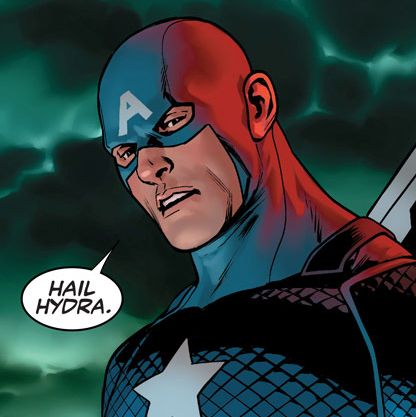
Unfortunately, death threats like this, as well as over-the-top reactions to fictional media of any sort, have become more and more commonplace over the year. Or maybe they’re being reported by news outlets more. Either way, it’s bizarre to read about. When I was in college, I read about people threatening to ruin Charlaine Harris’s career or kill themselves depending on what she wrote into one of her Sookie Stackhouse books. After college, when Marvel had a storyline in the comics where Captain America was revealed to be a Hydra agent, I read articles about people threatening Marvel’s writers for this storyline. One person alleging to be a Marine even said he was going to abandon all his values because of Cap’s betrayal and even become a killer (I seriously hope that was hyperbole). In 2020, when The Last of Us Part II released, people review-bombed the game based on leaked plot points. Part of this was fueled by homophobia (several of the characters in the game are openly LGBT), but a lot of this was due to fans hating the supposed direction of the game. Not only that, but one of the actresses for the game received death threats for playing a villain.

People got way too upset over this one scene.

And now people are threatening to kill folks associated with this new horror film because it’s about a beloved childhood character.

I don’t care about the circumstances or the reasons why. I don’t even care if the people making the threats are serious. I’m more concerned that anyone thinks reacting like this is appropriate. No matter why, you shouldn’t threaten people’s lives like that.

Let me share you a story from my high school days. Back then, I worked for my gym teacher selling tickets to volleyball and basketball games at the door. When I wasn’t taking tickets, I did homework, ate dinner from the snack bar, and read. It was a good gig. One day, however, I was steamed because I had just finished a Dean Koontz novel and absolutely hated its resolution. After the game, I was picked up by my stepmom, who proceeded to drive me home. And as I’m complaining about the book’s ending, my anger radiating off me like heat from a space heater, my stepmom turned around and said, “Rami, it’s fiction! It’s not real! Don’t get so upset about it!”

Well, that shut me up. And it turned out to be very helpful for me, because it made me realize something: as much as I love stories and characters, none of it is real. The absence of these characters and stories from the world wouldn’t change much, let alone their presence. And among all the things to get mad about in the world, a book resolution or how a character is portrayed isn’t one of them.

Since then, as wrapped up in fiction as I get sometimes, I don’t allow myself to get emotionally out of hand because I don’t like the direction. Yes, I’ll share my thoughts on it, but I’m not going to threaten people over it! And if I really dislike it, I just won’t have anything to do with it. My stress levels stay down and everybody stays happy.

And I wish more people would react that way. Or maybe not react at all. If they did, I guarantee we would all be much happier.

(WARNING: The following post discusses some recent movies that not everyone has seen yet. I’ve tried to avoid spoilers, but if you’d rather see these movies without knowing anything, then stop reading now and come back later. You’ve been warned.)

It’s no secret that I’m an eccentric, and I channel that eccentricity into my fiction all the time. I mean, my most popular novel is about a young woman who’s turned into a plant/human hybrid. If that’s not an example of weird fiction, then I’m a high school girl in an anime. And I’m not!

Skinamarink’s poster displayed outside my usual movie theater.

With all that expertise, I can say with certainty that there is plenty of room in fiction, especially in horror fiction, for weird. The novel House of Leaves by Mark Z. Danielewski, is a prime example of this. It’s a story about a documentary about a recounting of one family’s experience living in a home that has a giant labyrinth hidden inside it. The novel is full of footnotes, some of which have footnotes, as well as pages with only a few lines of text, or the text laid out in an odd manner, forcing the reader to hold the book at weird angles. From what I’m told, it makes for an experience both agoraphobic and claustrophobic.*

No wonder that book has an enduring relevance among horror readers, despite the author and some readers seeing it more as a love story than a horror story.

All that being said, there is both a good way to make a story weird and a bad way to make a story weird. Especially in the horror genre.

Some of you may have heard of the new Canadian horror movie Skinamarink. The movie revolves around two children who wake up one night to find that their father, as well as the doors and windows to their home, have mysteriously vanished. There’s been a lot of talk about the film online, with some loving it and others reviling it. I went to see it on Friday, knowing that one way or another, I would get a weird experience.

Well, I did get that weird experience. It’s filmed in a way meant to evoke a child’s perspective and reflect their nightmares, with the majority of shots focused on hallways, things high overhead or on the television in the den. Anything but the characters themselves. The entire film is also filtered to look like a home movie from the 80s or 90s, and the use of effects is minimal and mostly reliant on practical effects. A lot of the dialogue is told in whispers, so subtitles are used throughout the film. There’s no music, and plenty of surreal moments throughout the film, especially near the end.

That being said, everyone in my theater, including me, hated it. I even spoke to someone who was in the theater with me afterwards, and he told me he fell asleep during the film. I can see why: except for a few effective jumpscares, there was nothing to actually unsettle the viewer or keep them tense or focused, let alone scare them.

Since seeing the film, I’ve been characterizing it like someone took the cursed videotape from The Ring and tried to make it into a feature film, but took out what made that video so scary in the first place.

Now, I’m not saying anyone who enjoyed Skinamarink or found it scary is wrong or bad. The wonderful thing about horror is how subjective it is and how there are many different niches to suit every fan. Nor am I shitting on the director for the choices he made. I reserve that for the Friday the 13th remake and its creators, because that film is trash that gets everything good about the franchise wrong. Most of the people involved in it should get a good kick in the pants!

No, what I’m saying is that the weird is emphasized at the expense of the horror. Online, Skinamarink is characterized as “an experimental horror film” and that feels like an apt way of putting things. From the way the film is shot, to the use of subtitles and the story (flimsy as it is), you can tell that it’s all been an experiment by the director to conjure up a unique viewing experience. And in that respect, his experiment was a success. However, in terms of creating an effective horror film, the experiment was a bust.

Hatching is, in my humble opinion, a great example of weird horror done well.

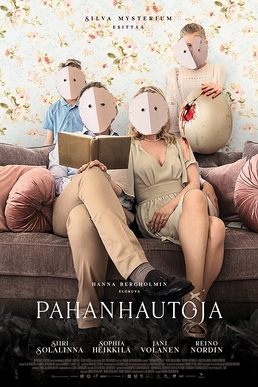
Now, compare that to another recent horror film, Finland’s Pahanhautoja, or Hatching. The film follows a girl who finds an egg in the forest and incubates it, only to end up the caretaker of a large bird/dinosaur monster that she calls Alli. Yeah, that’s weird, especially when you see the ugly-ass creature, which is brought to life mainly with practical effects and puppetry. But it also helps to tell a story about a very repressed girl who is struggling as part of a toxic family dynamic and being ruled by a narcissistic, social media-obsessed mother. Rather than overtaking the story, the weird aspects help drive the story and explore its deeper themes.

And that’s where the big difference between Skinamarink and Hatching is. The former’s weird aspects overtake the film and drown out the horror, while the latter’s weird aspects help out the horror and the story in order to be told more effectively.

To summarize, when telling a story of the weird variety, it’s important to remember that you’re telling a story first and foremost. Thus, while you can add as many weird elements as you want, if they overwhelm the story you’re trying to tell, you risk alienating rather than engaging your audience. And that’s something every storyteller wants to avoid. Including eccentrics like me.

*It’s on my TBR list, but that list is long and I only have so much reading time. Thus, it’s going to have to wait a while till I get to it.


Just a reminder, my Followers of Fear: this coming weekend I’ll be at ConFusion at the Sheration Detroit Novi in Detrot, Michigan. This is a big science fiction and fantasy convention that’ll be held from Friday, January 20th to Sunday, January 22nd. I’ll be there selling books and doing Tarot readings, so if you’re in the area, feel free to stop by and say hi. I’d be more than happy to see you.

You can find out more information about the convention by checking out its website here.

That’s all for now, my Followers of Fear. Until next time, good night and pleasant nightmares.